Posting this story has become an annual Thanksgiving tradition. It happened several years ago. There are no photos because some things should never be seen.
It’s 4 a.m. and I should be sleeping soundly, getting my energy back after two days of cooking in preparation for the big Thanksgiving feast tomorrow (today). Instead, I’m sitting at my computer, counting down 10 minutes, because that’s how long it takes Lysol to kill food-borne pathogens.
All I had to do was empty the brine bucket at 3 a.m., six hours after immersing what will surely be a glorious turkey when it’s cooked to 170 degrees (just to be sure) and presented lovingly to my family. A quick bleaching of the sink, return the turkey to the fridge, and Bob’s your uncle; off to sleepy-land again.
I knew the brine bucket was full. Like, really full. So I was careful, because, as we all know, cross contamination is an ugly thing. The plastic bag I put the bucket on in the fridge, however, had other ideas.
The brine sloshed out of the bucket onto the plastic bag, the plastic bag hit the floor, and a poultry-infused mess splattered everywhere. It left a trail from the refrigerator to the sink, soaking the kitchen floor. It drained down my shirt, into my underwear, down my legs, and all over the counter. A literal trail of horror and unhappiness.
There may be some among you who would do a quick mop-up and think no more of it. That’s not me. Every single drop of cross-contamination welled up around me, like oceans of food-borne illness waiting to happen.
The bleach bottle was in the laundry room, which meant tracking brine through two rooms, cross-contaminating one-quarter of the downstairs portion of my home. But there was no escaping it. I had to do it, and I had to keep track of every single thing my hands, my feet, and my shirt touched during the round-trip journey.
The next hour was spent bleaching the floor, the sink, the counters, my feet, the faucet, the refrigerator, and the laundry tub.
My clothes, of course, had to come off, and I had to wash myself with hot, soapy water to avoid further cross-contamination. All I had was laundry soap, but it would have to do. Mercifully, the tablecloth I was going to launder was still on the washing machine, so I wrapped up in it, just in case anyone came out of their bedroom to see what the hell I was doing. The only thing that would make this night worse was to have my loved ones watch me run through the house naked.
I didn’t want to wake Simon by opening my underwear drawer once I reached the bedroom, so I rooted through the laundry basket, but only found a pair of his old tighty whities. The ones he wears when he’s doing sweaty yard work. They would have to do. I grabbed a clean shirt, put it on, and went back to sanitizing.
Bleach is good, but Lysol is better. I should own stock in Lysol. Just the smell of it makes me relax, and since the required 5 minutes it takes bleach to kill salmonella had passed and the floor was almost dry, it was time to put my best friend to work.
Methodically, like a woman who knows what she’s doing (the kind of woman who wouldn’t have filled that damned brine bucket up to the top in the first place), I sprayed my microscopic enemies and took pleasure in hearing the last of them die.
So, that’s how I came to be sitting at my computer wearing my husband’s underwear, with Lysol all over my feet. It should only take one or two episodes of Are You Being Served to get me back to sleep again, but there are some things you know you’re going to live again and again in your nightmares for several years to come.
I CAN chuckle appreciatively at the fact that the clean shirt I am wearing reads, Nevertheless, She Persisted, but you can be damned sure I’m getting a bigger turkey-brine bucket on Friday.
Happy Thanksgiving. I wish each and every one of you a blessed day and a safe, healthy meal.
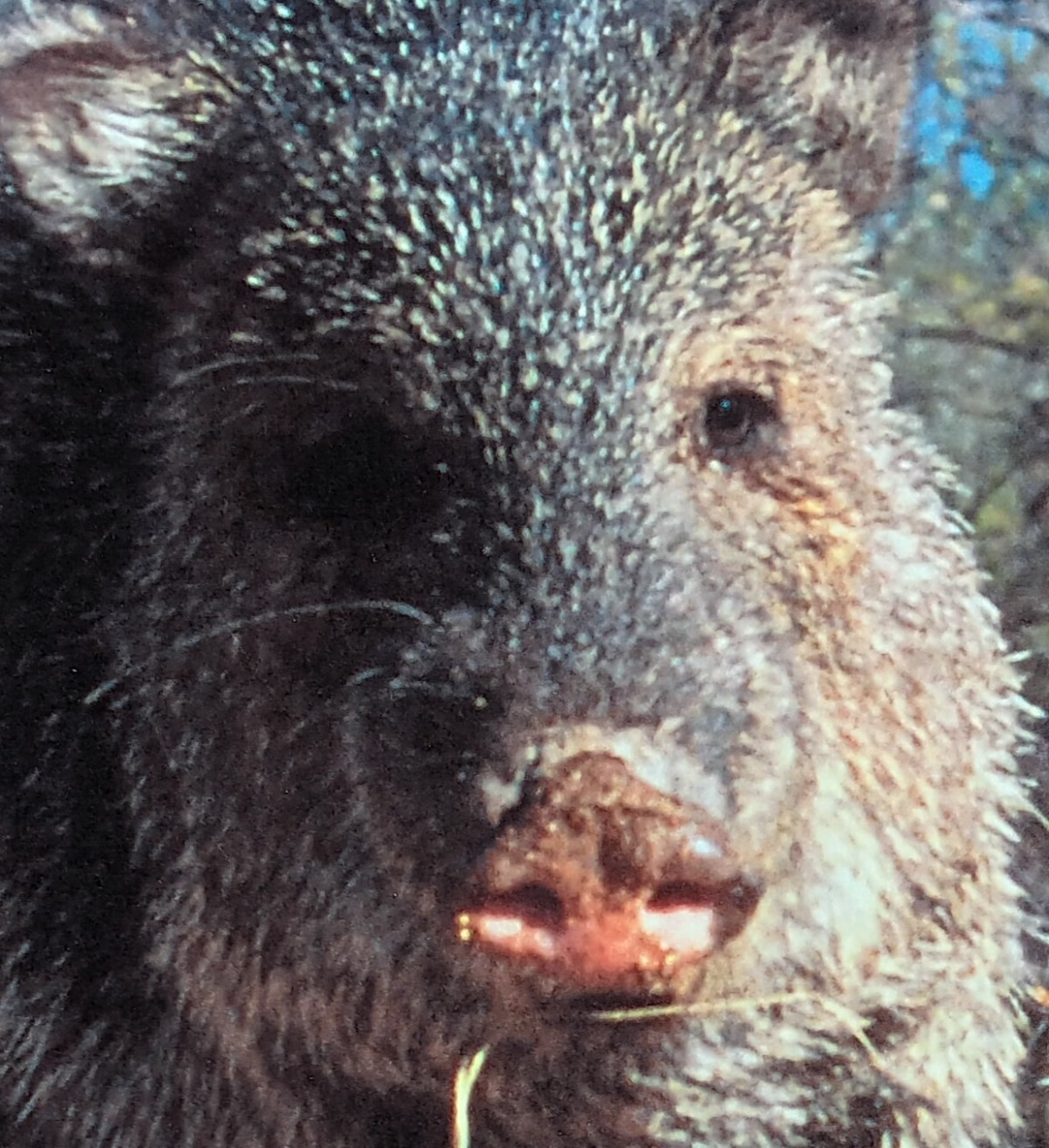
We’ve been in Tucson for exactly one week. We’ve gone out every day – morning, evening, all day long – and every time we’re out we scan the desert’s scrub, the washes, and the roadsides for javelina. Today, we’ve finally accepted the fact that these fat, smelly animals are a lie, and do not exist. At all.
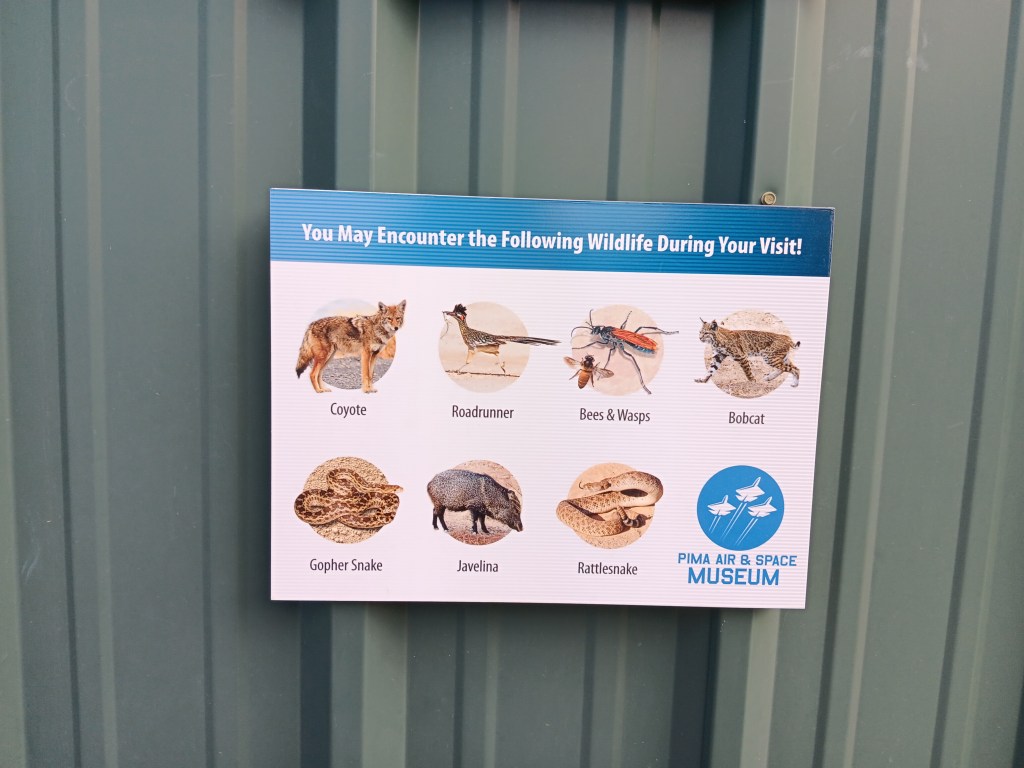
“They’re everywhere!” people assured us. “They get into my trash bins,” one man said. Signs at Pima Air and Space Museum warned us we might encounter some. But we didn’t. Why? Because they don’t exist.
You “may,” but you won’t.
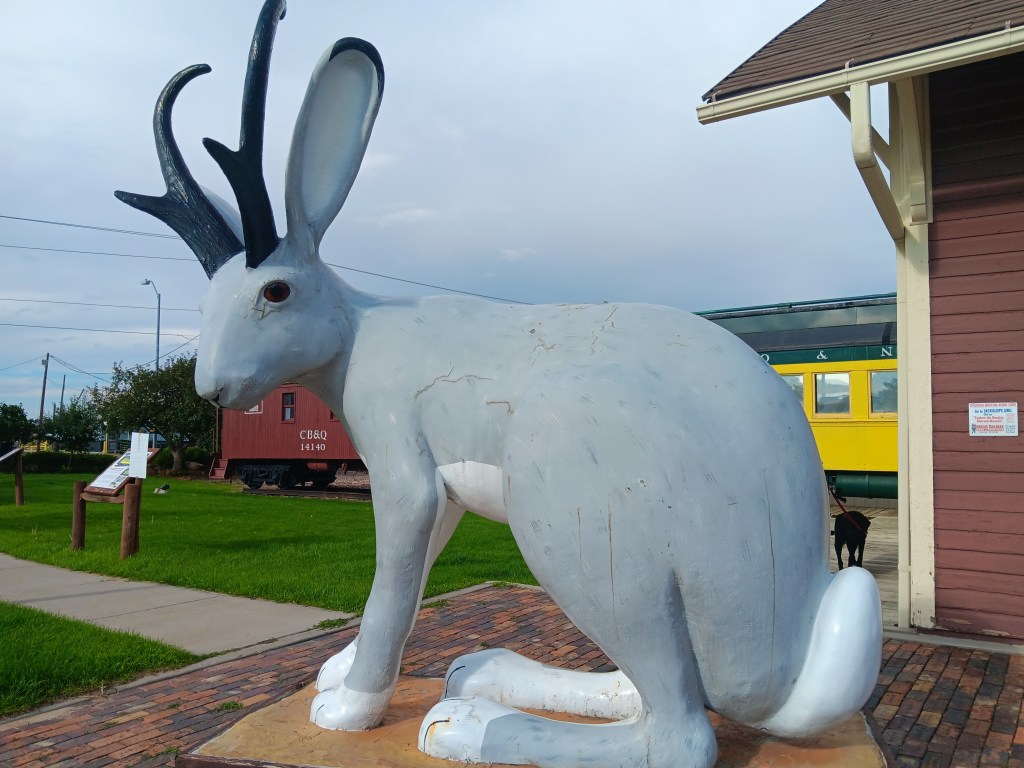
Like the illusive jackalope, they’re a myth perpetrated on gullible tourists. You, like us, probably saw jackalope in backwoods diners, their antlered bunny heads hanging on the wall like some rare and desirable trophy. And you, like us, probably believed –oh, innocent you! – they could, maybe, be real.
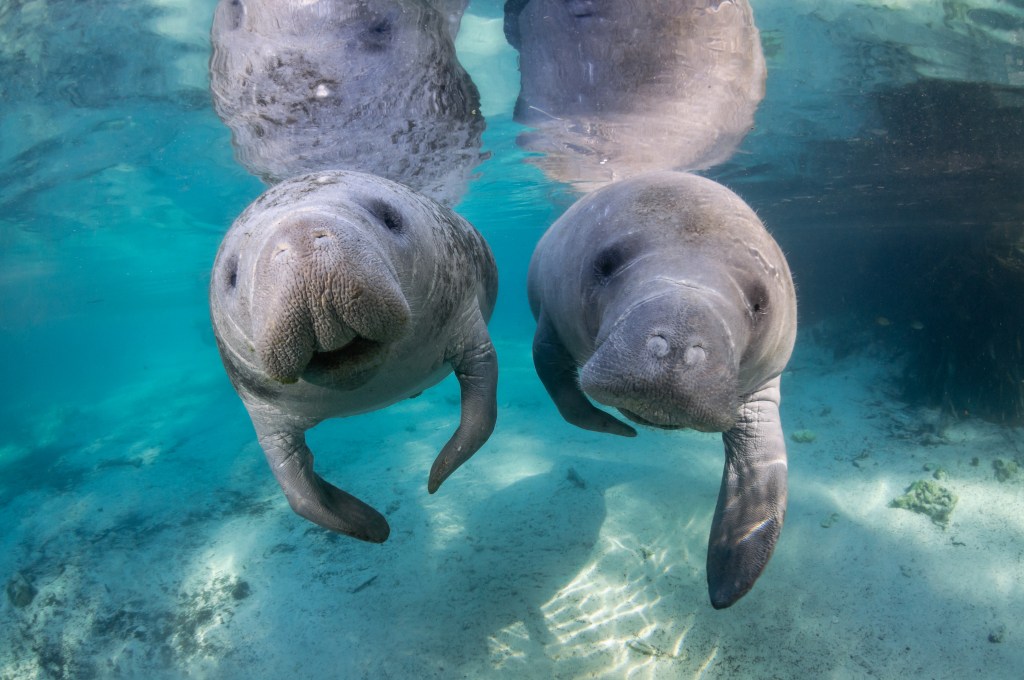
There was a time when sailors making years-long voyages believed they were seeing mermaids, and told their loved ones back home about these sirens of the sea. What embarrassment they must have felt when those who took to the water for short excursions only found manatees.
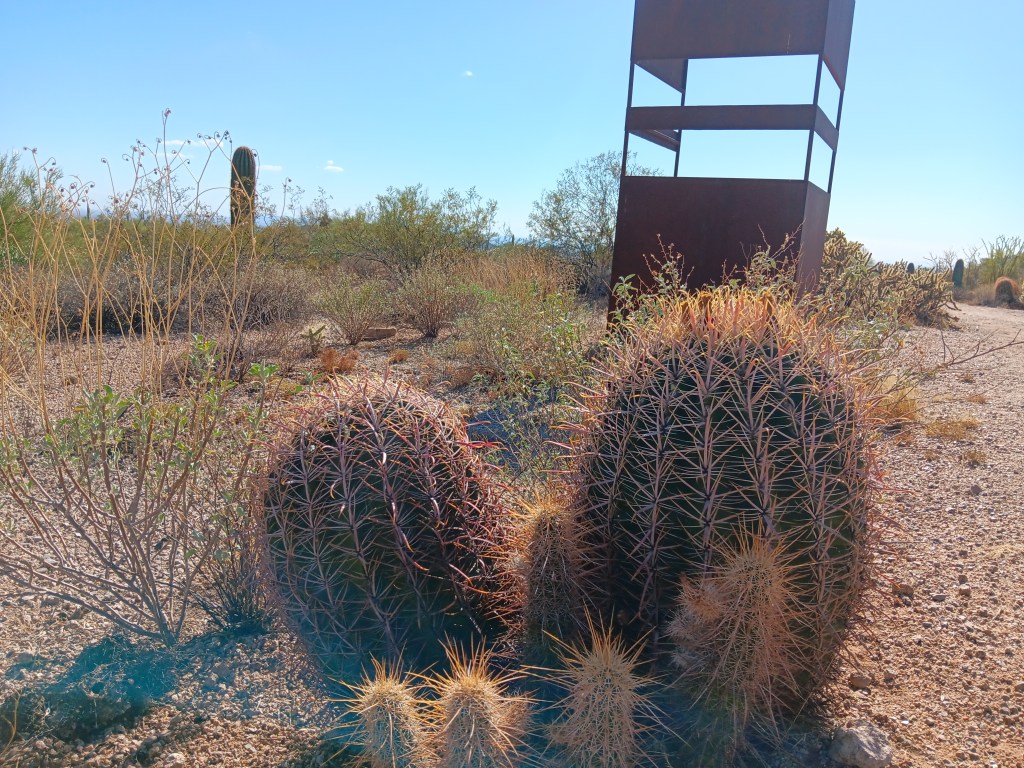
We share that shame, having rejoiced at seeing herds of javelina that simply fell under the category of wishful thinking. Each time, they’ve turned out to be brown, barrel-shaped cactuses.
Not javelina.
And, like manatees and mermaids, that’s probably exactly how the not-trueness of javelinas got started. They’re both brown and prickly, and you don’t want to get too close to them when you’re out hiking in the desert.
We didn’t want to draw the only logical conclusion (javelina = lie) so Simon suggested we make double use of a visit to Seguaro National Park West, which we hadn’t seen yet, and enjoy the park as evening drew close, then stay on until dusk; prime javelina hours.
We made a point of asking for expert advice when we reached the park’s Visitor Center, four minutes before it closed. Where, for the love of gawd, should we go to see the illusive herbivore that looks like a pig but isn’t?
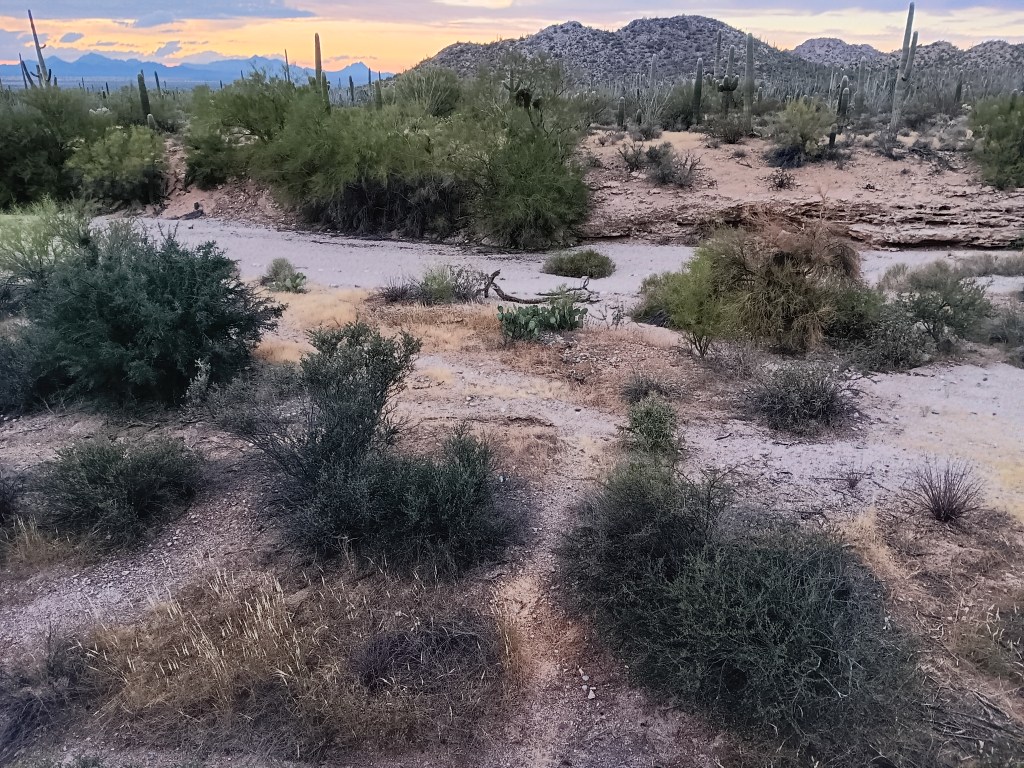
Perfect javelina territory. No javelinas.
“Just go right out to the overlook here,” our good man told us, pointing at a second-story platform connected to the center. “They travel up and down the wash just beyond it in the evening.”
Plenty of room for a stampede.
Yay! Finally – FINALLY! – our dream of achieving this precious sighting would come true!
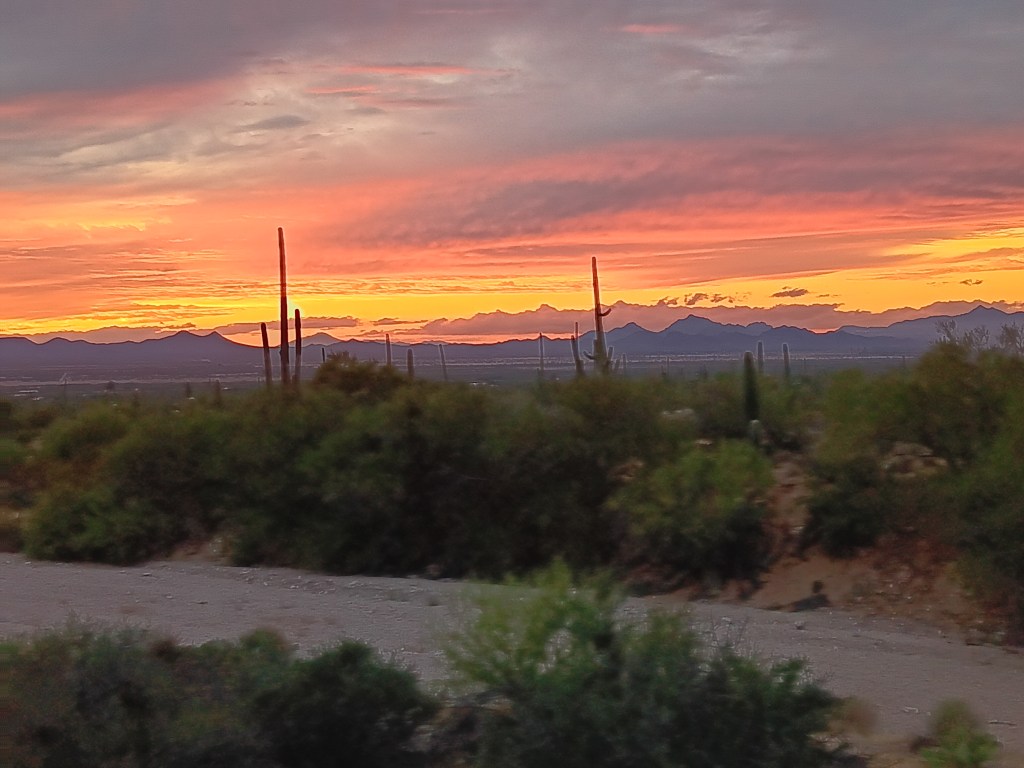
Binoculars and cameras at the ready, we marveled at the sunset that lit up the sky like fire in the direction of California and Mexico, while scanning the wash for activity.
An hour later it was so dark we couldn’t have seen a javelina even if it really did exist. The lie was revealed.
Sure, we saw a “dead” one along the highway on our way to San Xavier del Bac Mission, but it was probably just a stuffed toy thrown out the car window by some careless child. We no longer believed.
We have one more week in Tucson, but frankly, our hearts are hardened. There is only so much pain and disappointment we can take.
Tucson is only 70 miles from the U.S. border with Mexico, and the history in this area is rich with native peoples, changing land ownership with “New Spain,” and the missionaries who came to Arizona with “saving souls” for God in mind.
And therein lies a moral dilemma.
We had soaked up Tucson’s natural side with a visit to Saguaro National Park East and a trip up Mount Lemmon the day before, where the views and an unexpected wildlife sighting were thrilling starts to our touring.
Saguaro National Park is split into two locations; East and West. East isn’t overly blessed with saguaro cactuses due to a killing freeze in 1962.
Simon: “I don’t think I can get the mountains in.” Susan: “How about if I do this?”
It’s a wild and rugged land, with more than just saguaro cactuses. O’odham tribes used the gangly ocotillo cactus on the right for building.
This shows the road going up Mount Lemmon. There were probably more saguaro cactuses on the mountain than there are in Saguaro N.P. East.
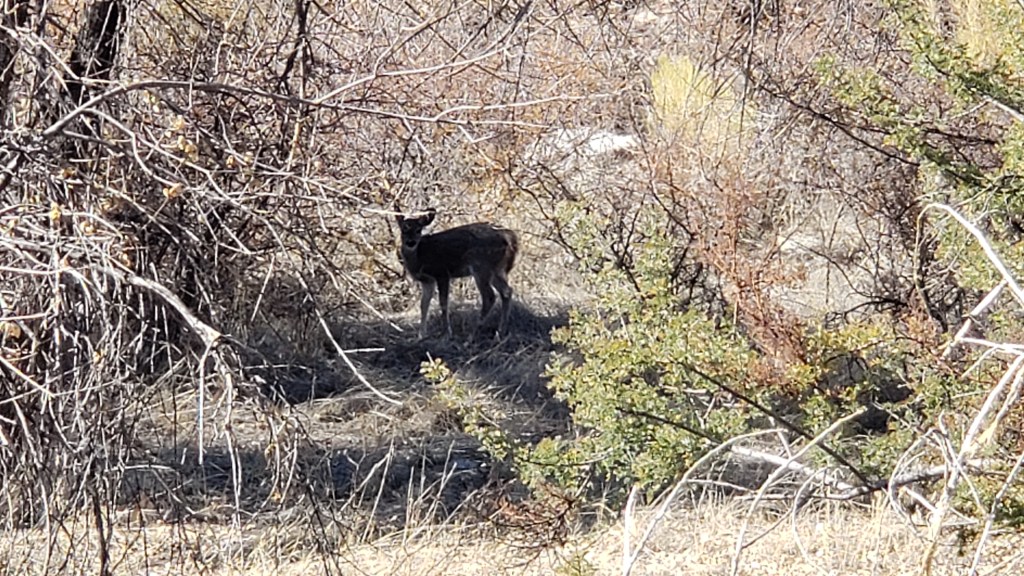
We saw two baby mule deer hiding in the underbrush as we were driving back down Mount Lemmon. Only one can be seen in this photo.
After a quiet day “at home,” the next day, we then headed south toward what was once New Spain territory (along with Puerto Rico, Cuba, Florida, what is now the southern U.S., the Philipinnes, and Central America as far south as Costa Rica), then Mexico, but now part of southern Arizona.
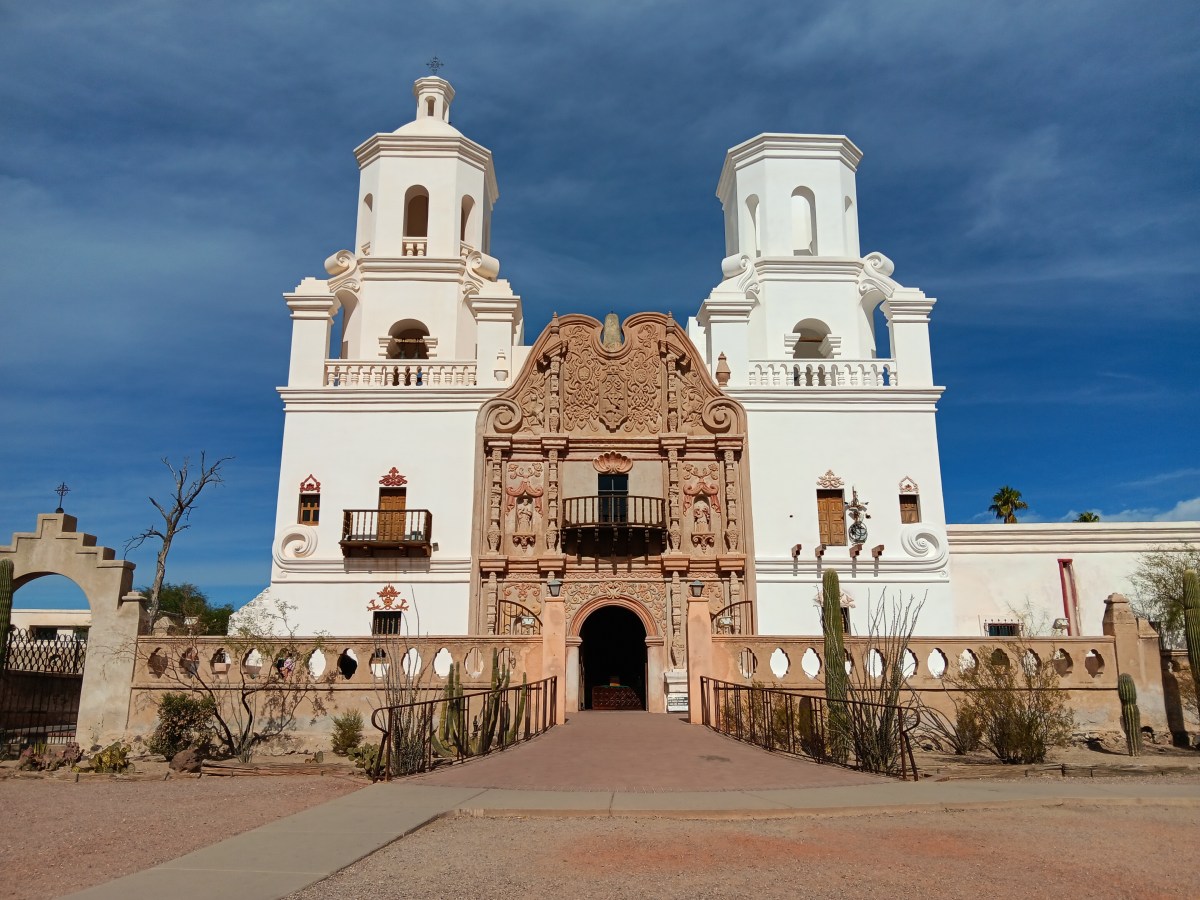
Spain was big on evangelizing, and many missionaries were sent to its dependency, with San Xavier del Bac Mission (completed in 1797) being one of the churches that sprang up to bring the natives to Jesus. I’m not going to go all preachy, though I surely could. Instead, let the Mission’s plaques do the talking: Jesuit Padre Eusebio Francisco Kino “served two majesties – the Church and the Crown. For the Church, the Mission saved souls and spread the Christian faith. For the Crown, they served as training grounds for native people to learn their assigned role as subjects of the King and citizens of a growing New Spain.”
“A mission was much more than a church; it was an entire community designed to teach European ways of life to people living on lands claimed by Spain.”
So much to unpack about that, isn’t there, when compared to the history of those “people living on lands claimed by Spain,” who had successfully thrived in the area for thousands of years. When I asked the docent at San Xavier what the Tohono O’odham tribe’s spiritual culture was like before the arrival of the missionaries, he said, “They were used to converting.”
We set all of that aside and entered each of two churches with the idea that we were experiencing historical places. Let’s take a stroll through San Xavier del Bac first.
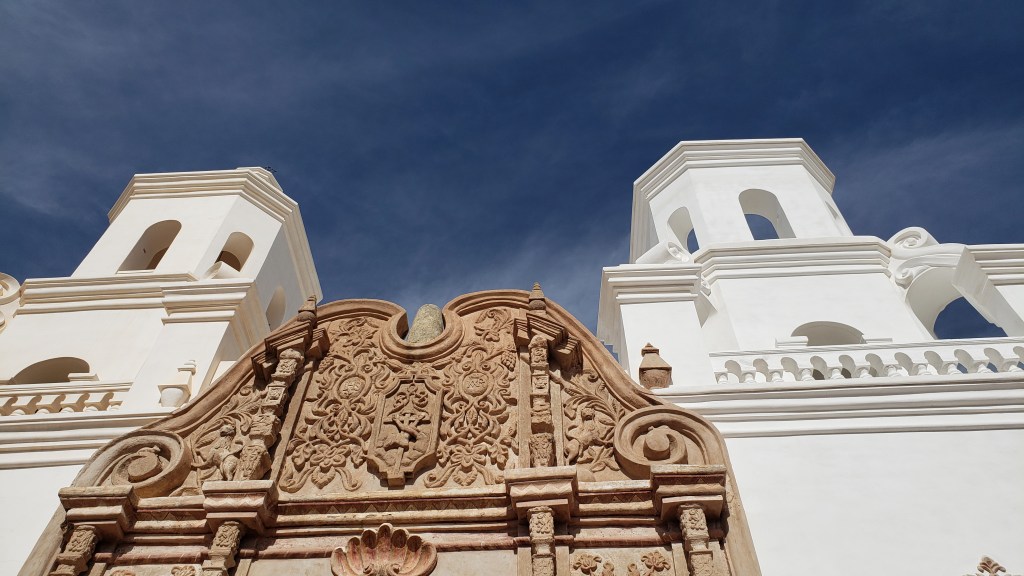
The tower on the right doesn’t have a dome because (say it with me) they ran out of money.
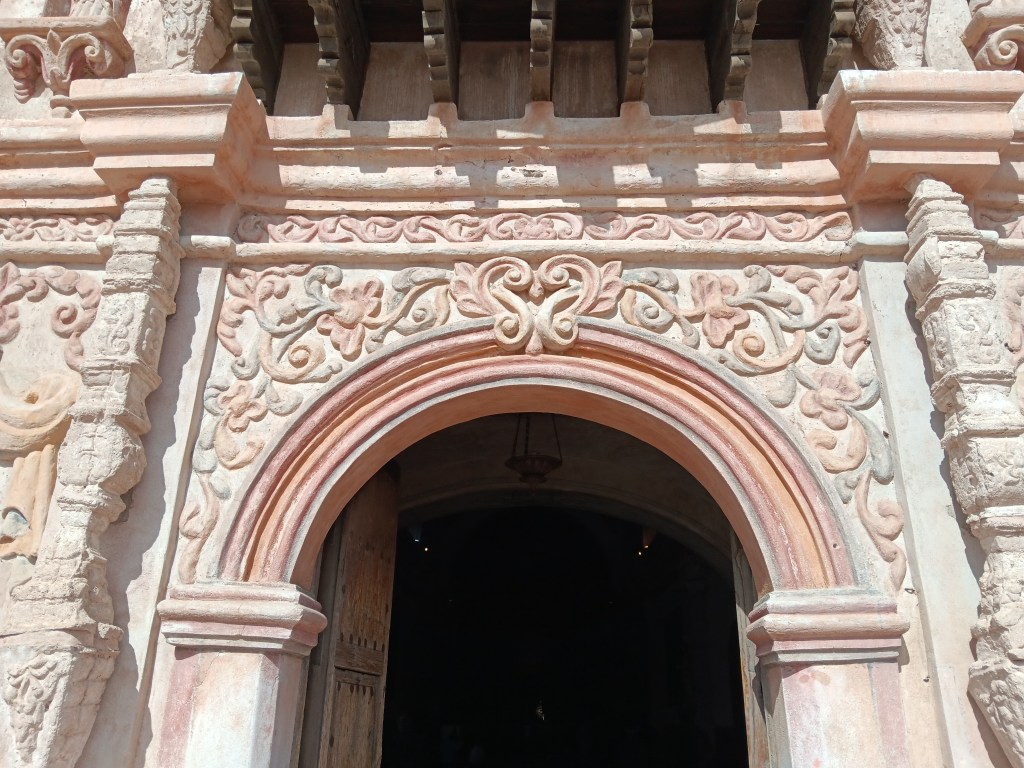
The rainbow is an important image to the O’odham, signifying unity, among other things, so it was used in the entry’s archway.
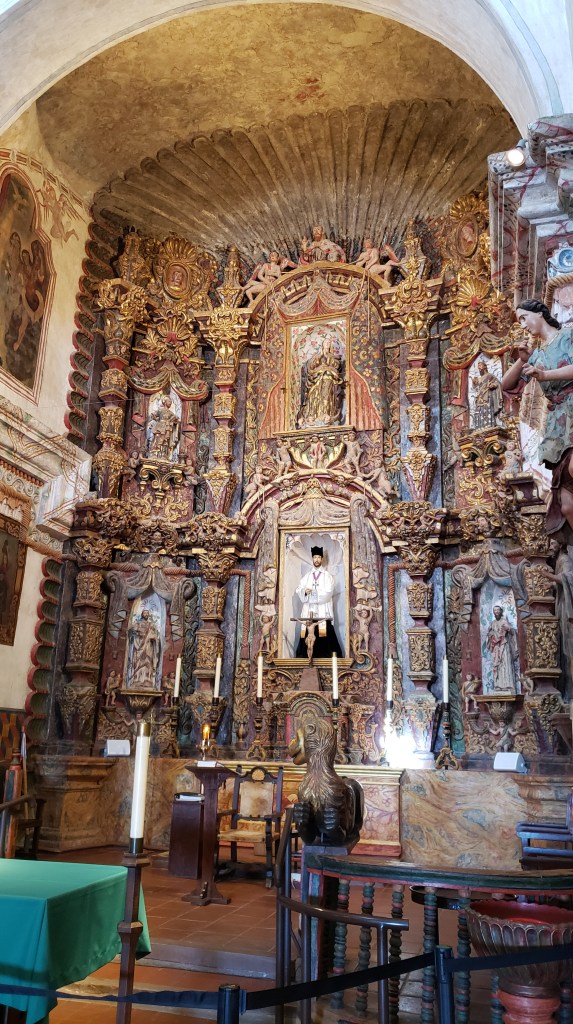
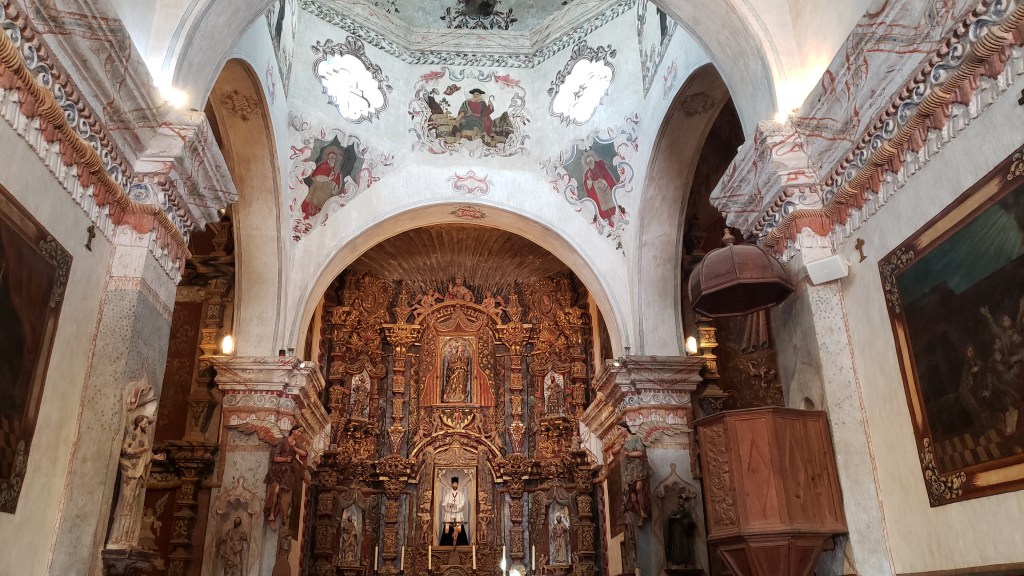
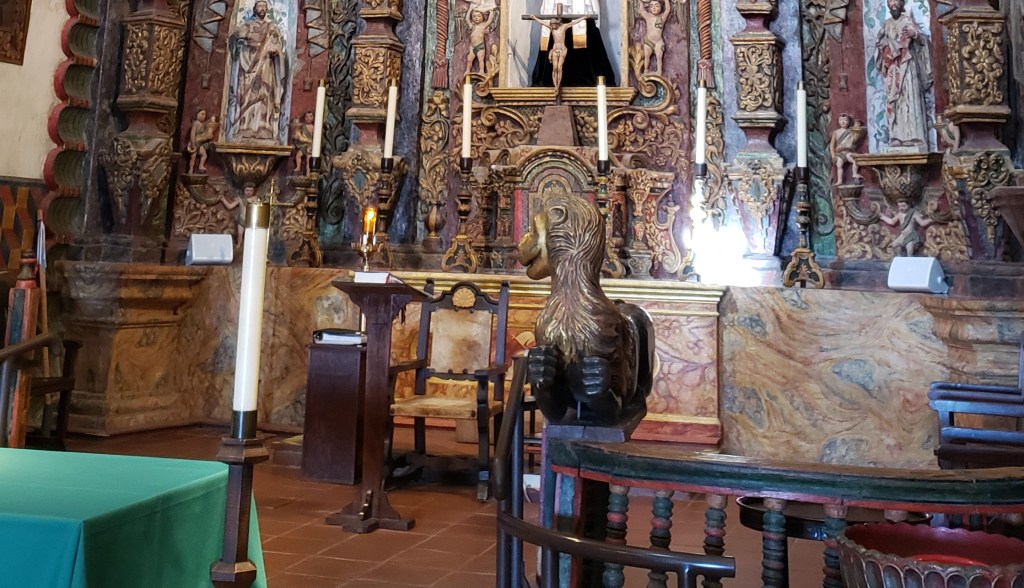
It’s impossible not to notice the two animals flanking the altar. They look like weird cousins of those flying monkeys in The Wizard of Oz, but they’re really lions. Why so wonky-looking? Because the artists who created them had never seen lions, and only had a verbal description of a lion to work from.
According to the docent, the original lions were stolen. These were funded by a woman who sits on the board of directors. She hired Mexican craftsmen to carve the wooden statues, then she let the wood cure for a year, applied gold leaf, and, six years later, these beasts took their place on the altar. That woman? Former U.S. Representative Gabby Gifford’s mother.
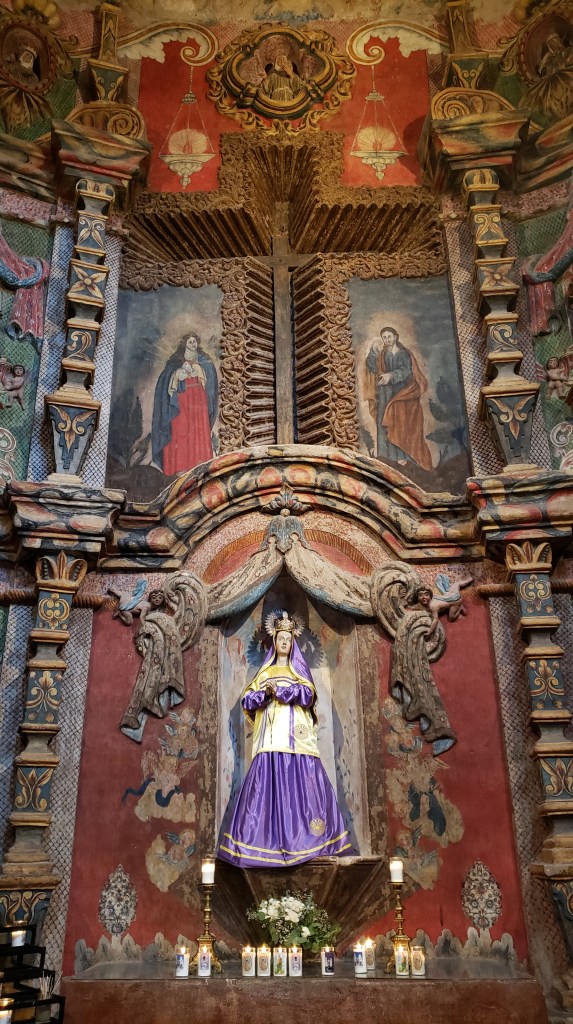
The church honors Mary, mother of Jesus. Here, her dress includes an important O’odham concept through two embroidered “Man in the Maze” images, one on her gold vestment and one on her skirt.
Those round, gold images represent the Man in the Maze.
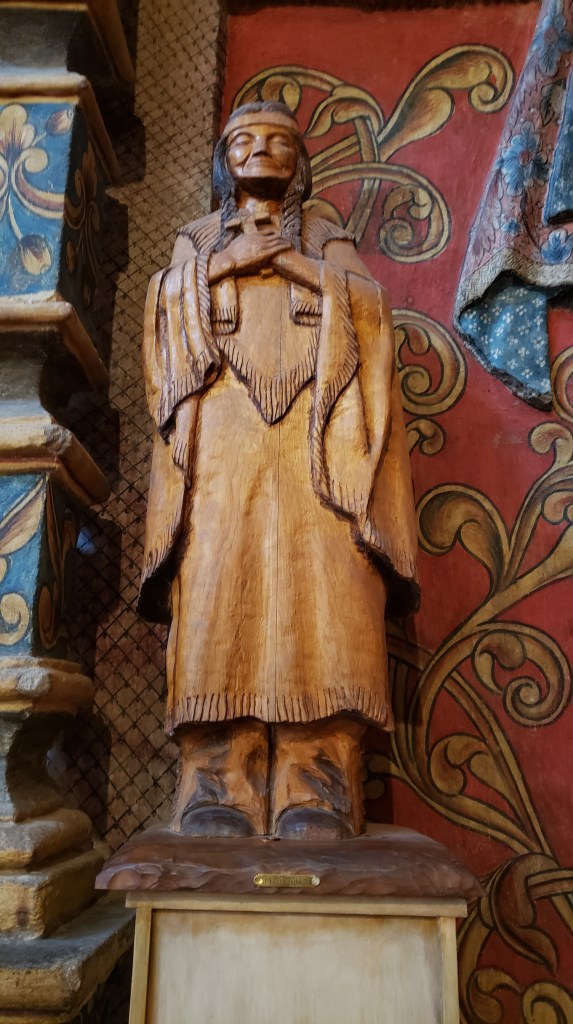
Made of wood and without embellishment, this statue honors Kateri Tekakwitha, the only Native American to have been recognized as a Catholic Saint.
It’s a beautiful church filled with contrasts, arguably rife with cultural appropriation, and it has the devotion of those who worship here. It reminded us of a mission church we visited in Arizona many years ago, on a Reservation that was home to the poorest of the poor. When we commented on the immense wealth that could have fed the community and its children for decades, one of the parishioners said, “Yes, there is a great deal of wealth here, but we find solace and relief from our difficult lives in this place of such beauty.”
Who are we to say that’s wrong? Perspective matters.
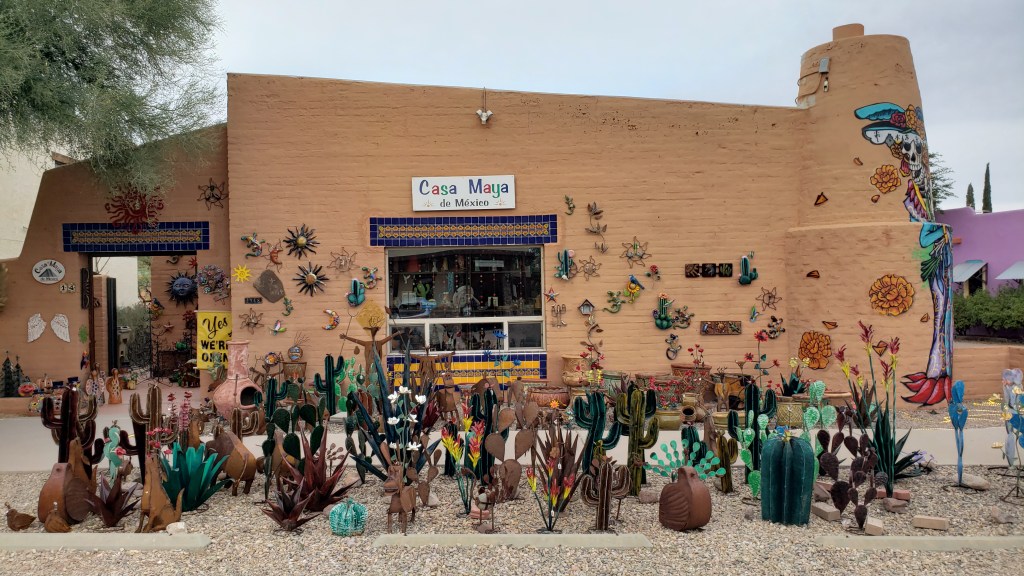
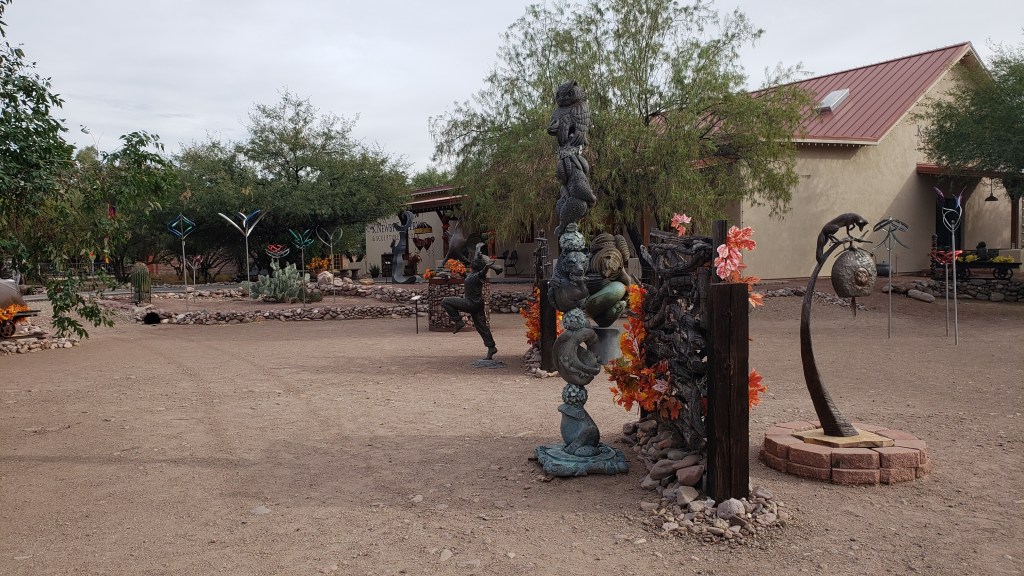
Tubac – a little “village” of shops, restaurants, galleries, and a museum – was next along I-10, and we had a little wander and some lunch there. We try not to bring any more weight onboard Fati, so we admired the artists’ creativity, then headed south again.
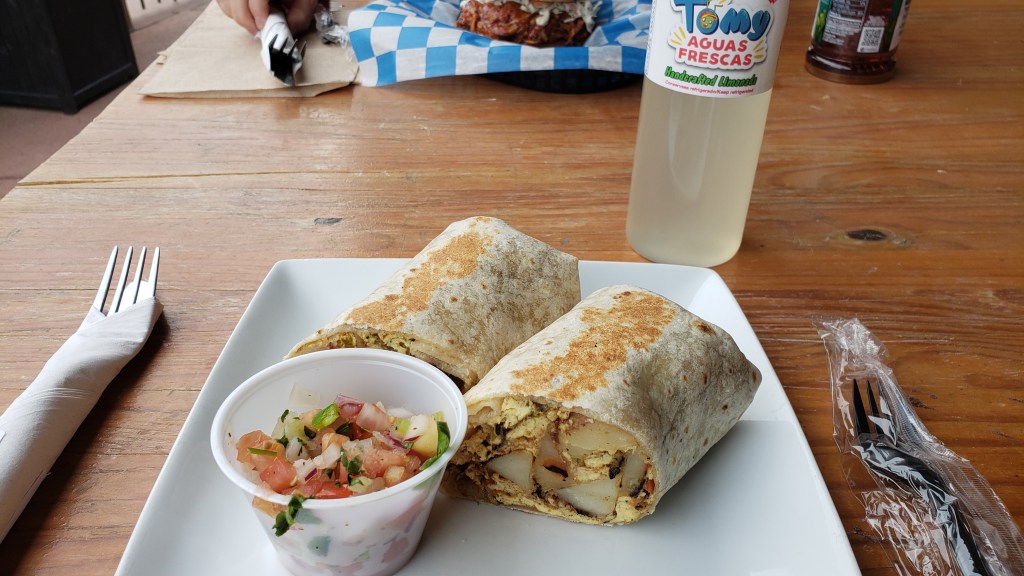
Simon had the breakfast burrito crammed full of…well…everything.
Susan had the pulled pork, and Ruthie ate the bun.
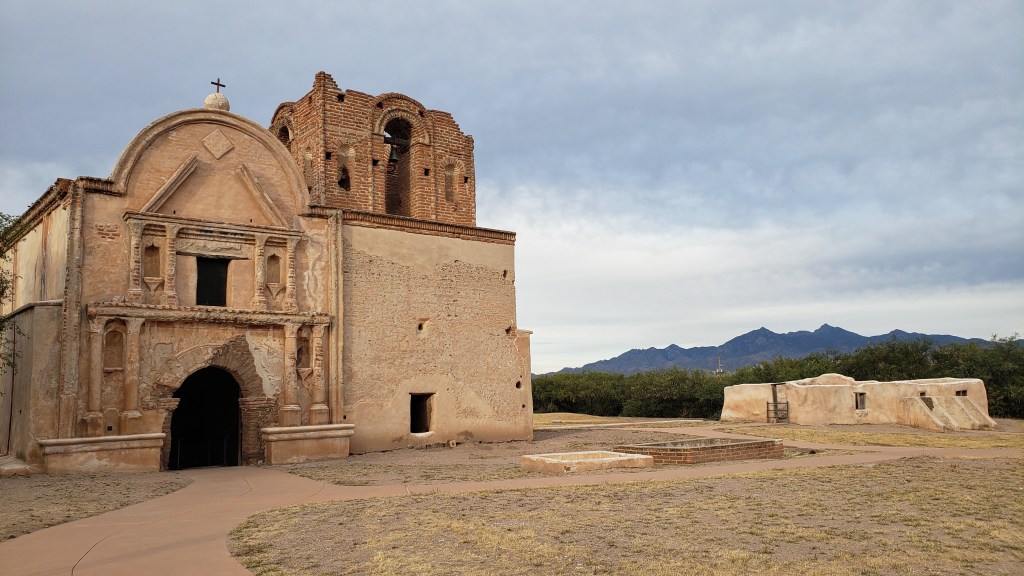
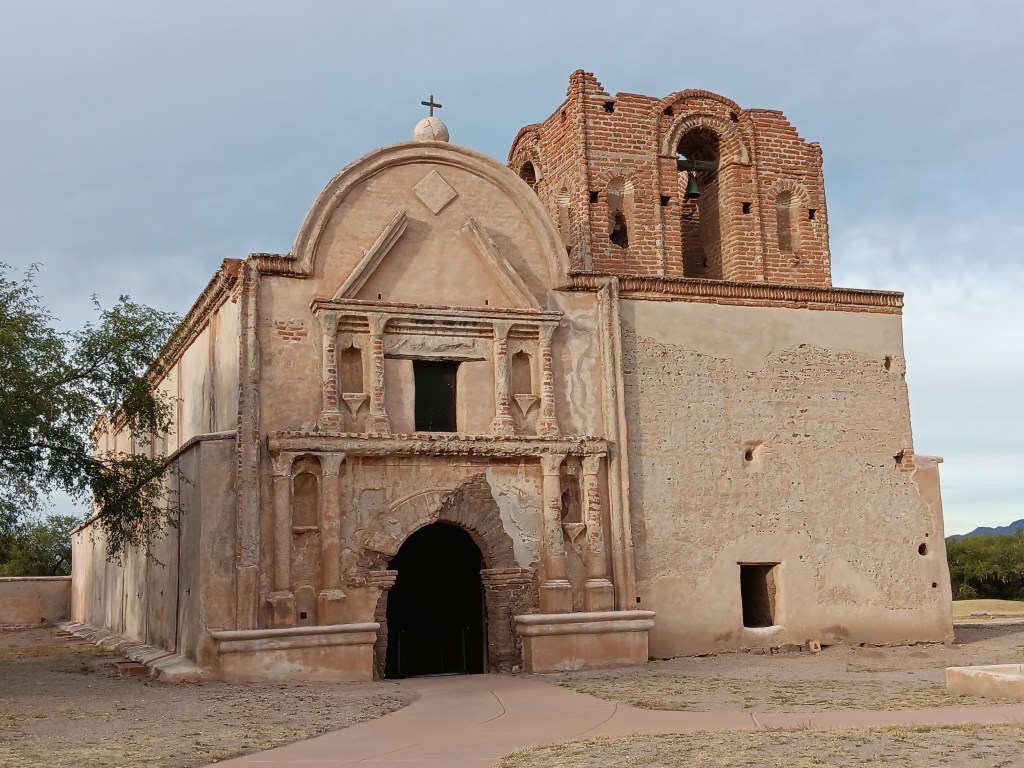
Tumacácori National Historic Park features one of the areas other missions, the oldest in Arizona. Nearly 200 people lived here at one time, and the grounds included orchards, fields, gardens, homes, a “convento” (shared workspace and governmental center, not a nunnery), and a cemetery, as well as the church.
The mission church is on the left, and a later adobe ruin is on the right.
The bell tower on the upper right-hand side of the building isn’t a ruin. It was never finished, as the parish ran out of money before they could complete it.
The church façade originally boasted bright colors – blue, red, yellow, and orange – in the Spanish style, but you can’t really see the colors today.
Tumacácori makes no bones about what Spain’s mission was: “All aspects of daily life were subject to transformation – food, language, clothing, agriculture, and religion.” There is a term for that sort of “transformation” of entire groups of people, and as much as we enjoyed immersing in the history as we walked around, it was hard not to think about the O’odham’s lives before and after “transformation.”
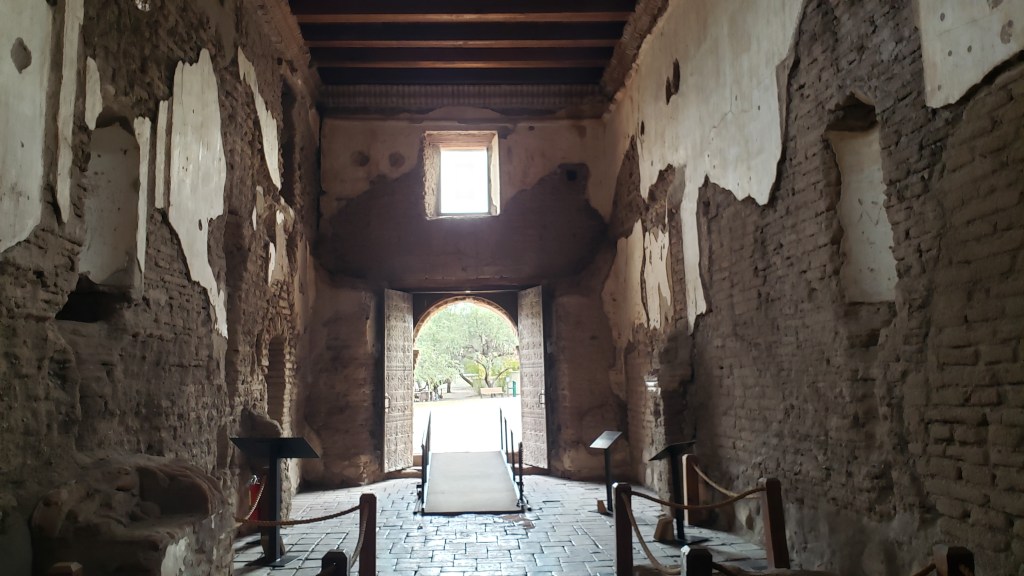
The interior is in pretty rough shape, but it does show the layers involved in creating the building.
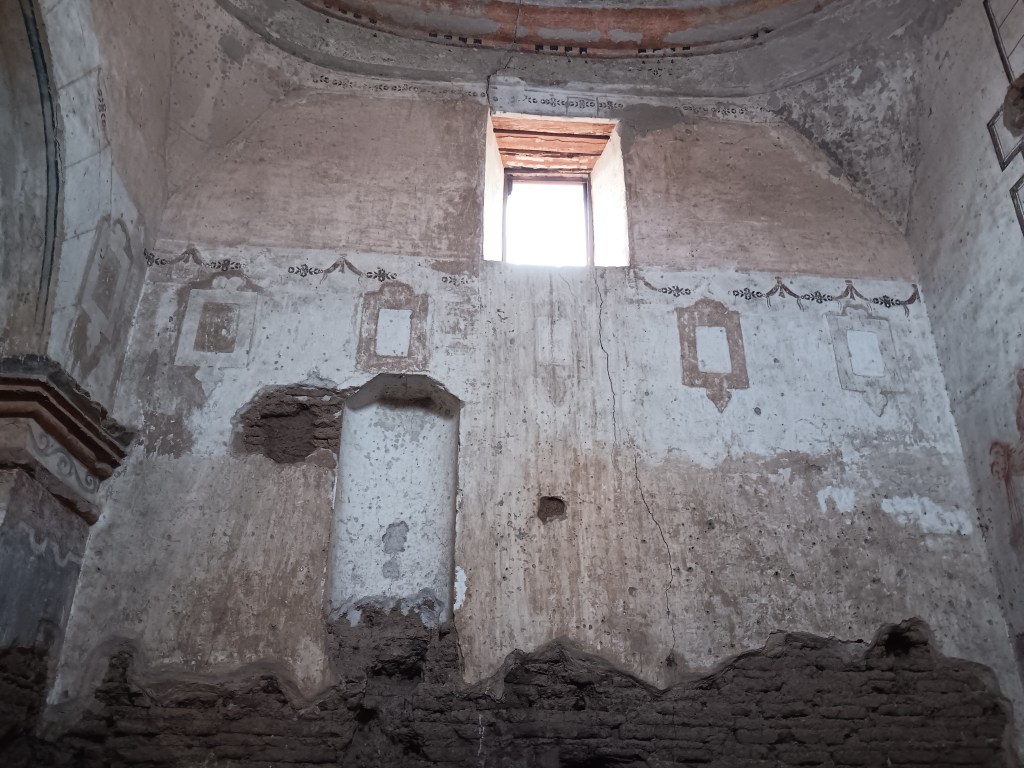
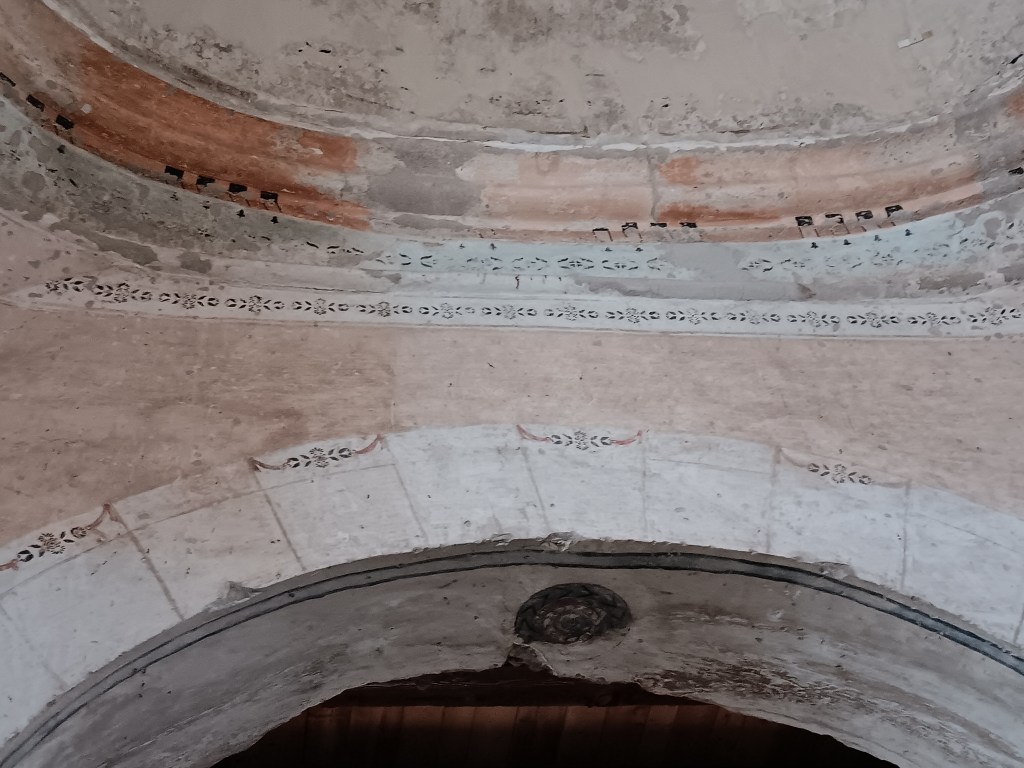
The Sanctuary was also painted and stenciled in bright designs, some of which can still be seen, albeit in faded form.
The squares were “frames” for religious imagery.
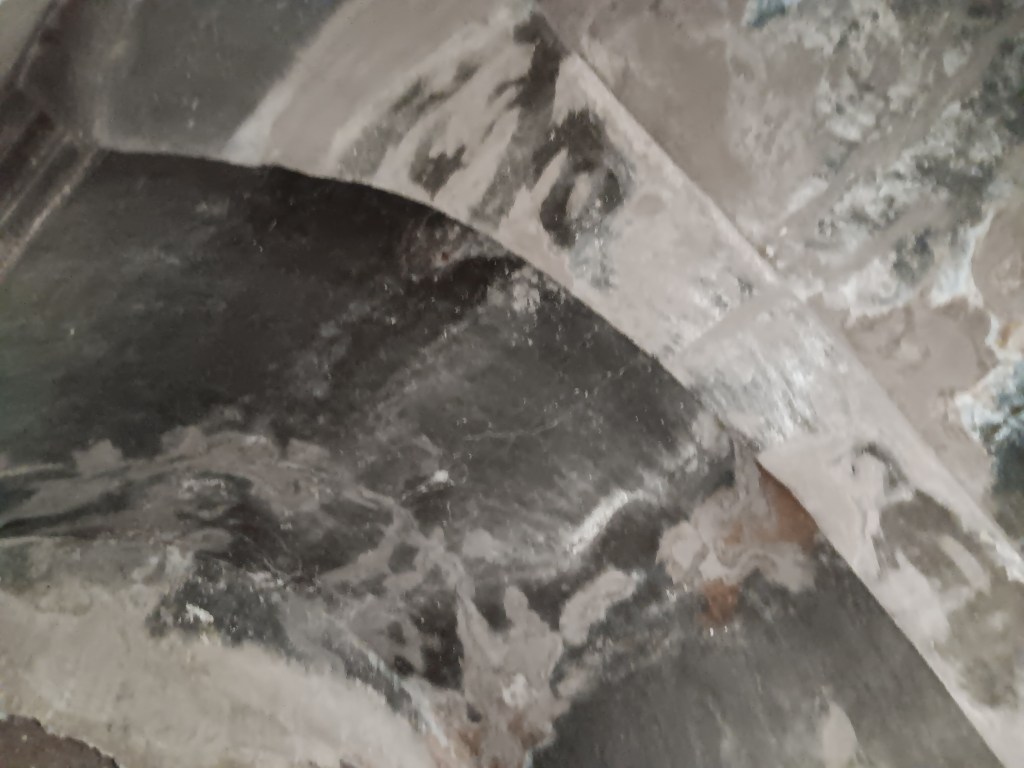
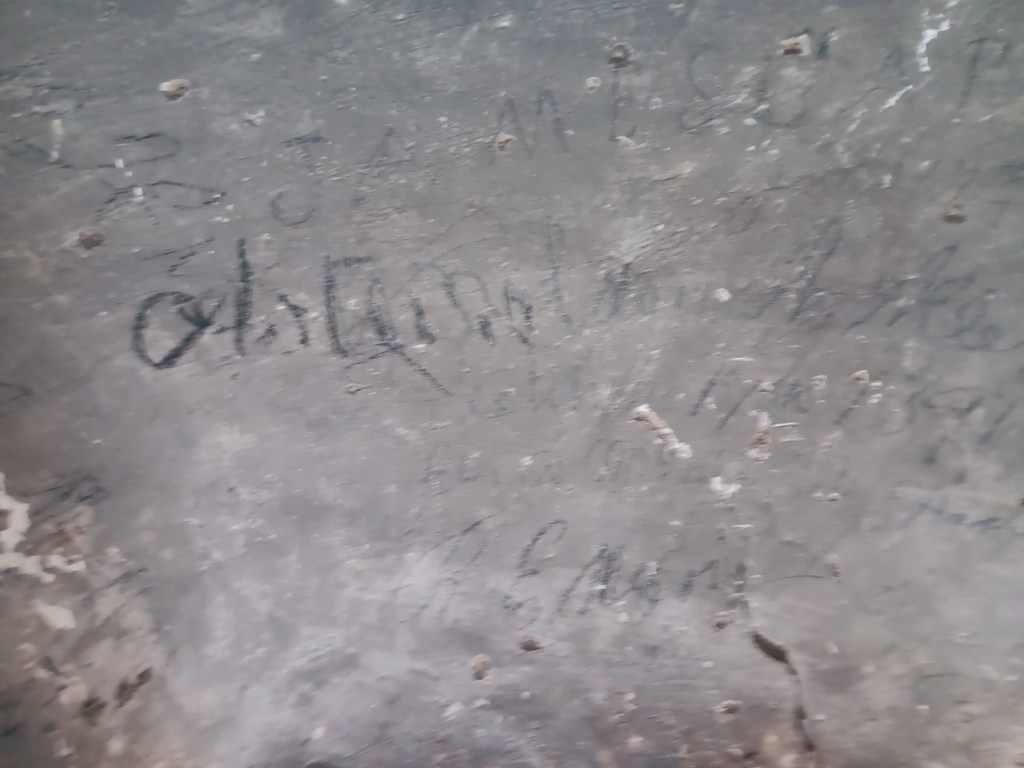
After Tumacácori was abandoned in 1848, the Sacristy became a refuge for cowboys, soldiers, Mexicans, and gold-rush era fortune hunters during inclement weather. Soot from their fires can still be seen on the ceiling, and their names are still on the walls around the door.
Lousy photo, but the black is soot from cooking fires.
Lousy photo, but these are some of the signatures.
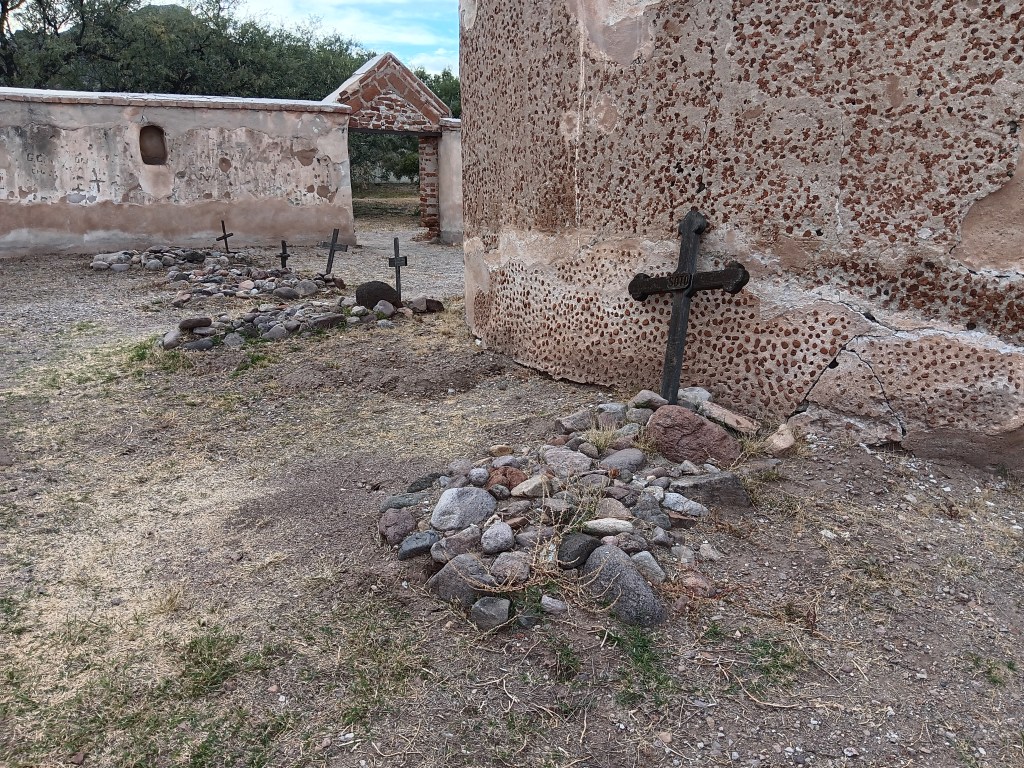
The cemetery bears silent witness to the devastation Apache raids and several epidemics wrought on the community. Most of the human beings originally buried here were children under the age of five.
The ki – the O’odham word for house – provided shelter, while the outdoor wa:ato (brush enclosure) was the place for gathering together and for cooking. The O’odham still sometimes build homes from mesquite branches, ocotillo sticks, the ribs of saguaro cactus, and mud.
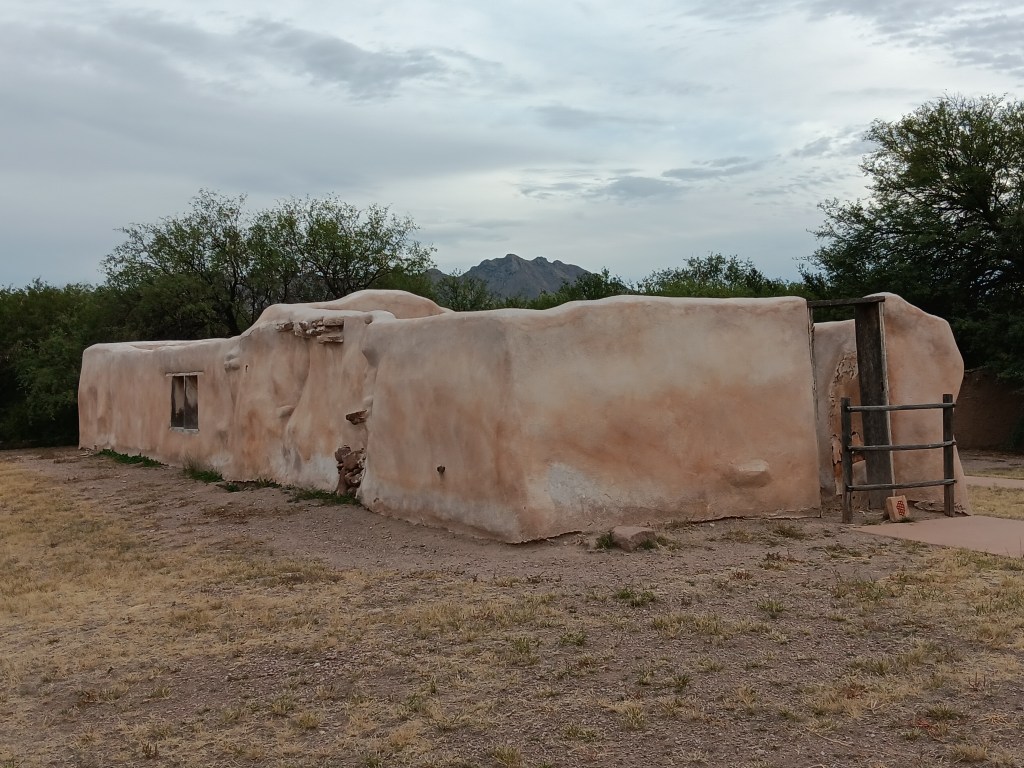
The convento was originally much, much larger. Built of adobe, most of the long, low expanse of it has slowly “melted” away. Now, only a small section (once a storeroom) is still standing.
The mission was abandoned for a year after an O’odham uprising against the Spanish and an intrusive neighboring tribe. Jesuit priests returned in 1753, were expelled in 1767, and were replaced by Franciscans who continued evangelizing until 1822.
The places we visit become a part of us, and, as small pieces of historical information are assembled into a greater picture, we find ourselves contemplating the story that greater picture tells.
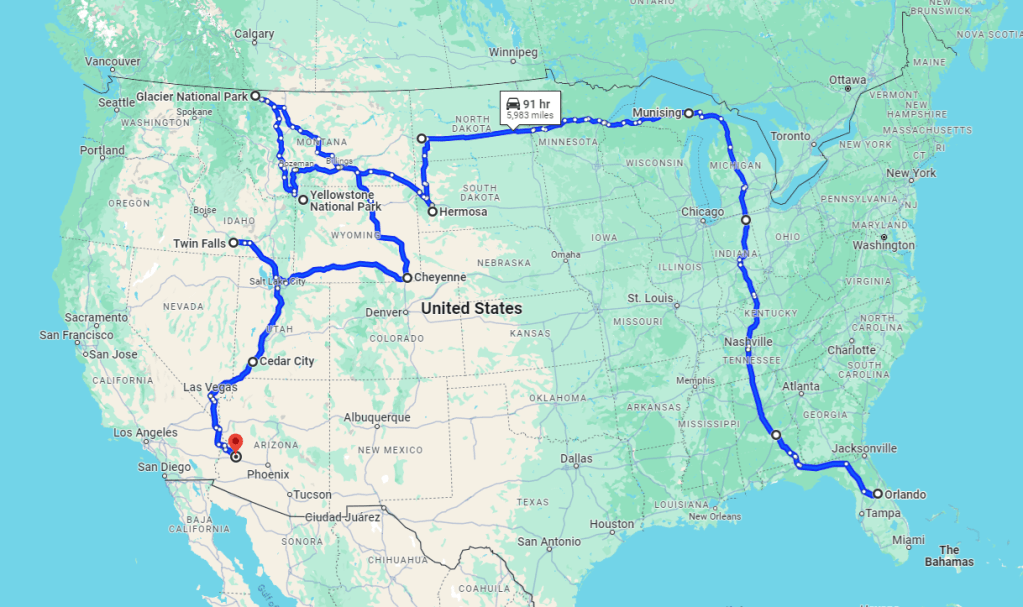
May 14, 2023 seems like a long time ago. In fact, it is just 7,053 miles ago. That’s the 6-month distance we have covered in our “A Year On The Road” RV adventure since leaving home in Florida.
From that original departure point to November 14, we have traveled through 18 states and totaled a mind-boggling 22,319 miles when you add in the mileage we have covered in our little Ford Fiesta, Nippy, as well as that 7,053 in RV Indefatigable (or Fati for short).
This isn’t quite 6 months, as Google won’t allow additional destinations after Lake Havasu in Arizona, but it should show the most recent part of the trip, to current spot Tucson (see below)
The last month has added 545 miles to Fati’s total but also 1,927 to Nippy’s. That means Nippy has now piled up a whopping 15,266 miles to date, so she is proving a real workhorse.
Of course, we should have gone even further afield, as we scrapped plans to head out to Washington and Oregon after reaching Glacier National Park in Montana, but we think that is still a pretty respectable total.
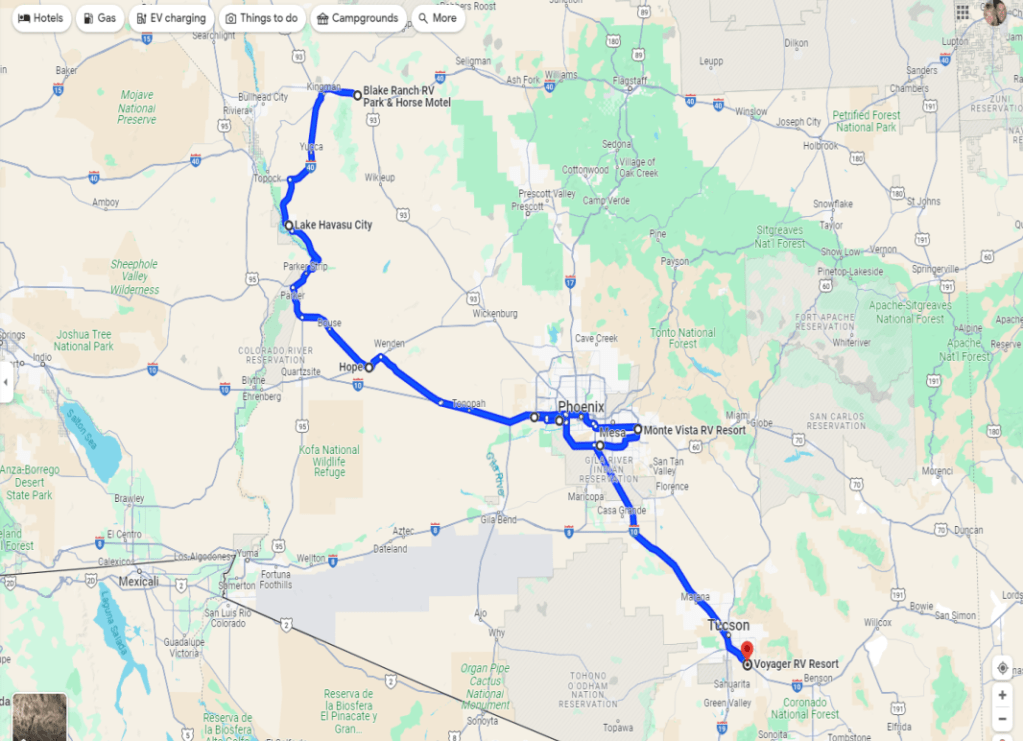
Below are two maps showing just the last month of our travels, from Kingman in Arizona to Tucson, via sparkling Lake Havasu City, Hope, Goodyear and Mesa (with 3 weeks in the greater Phoenix area in all):
From Kingman in northern Arizona, we traveled down the extreme west part of the state before reaching Interstate 10 and heading east to Mesa and then Tucson, with a week in between in Goodyear
And this shows the more detailed version, highlighting an overnight stop in tiny Hope and the (rather confusing) route through and around Phoenix before reaching the chic Voyager RV resort in east Tucson
Monte Vista RV resort in Mesa had been so fantastic we could hardly wait for our visit to another resort within the Thousand Trails membership program once we arrived in Tucson. We’d spend two weeks venturing out to Tombstone, Saguaro National Park, Mount Lemmon, and Old Tucson, and devote an evening (finally!) to Arizona’s spectacular Dark Sky stargazing.
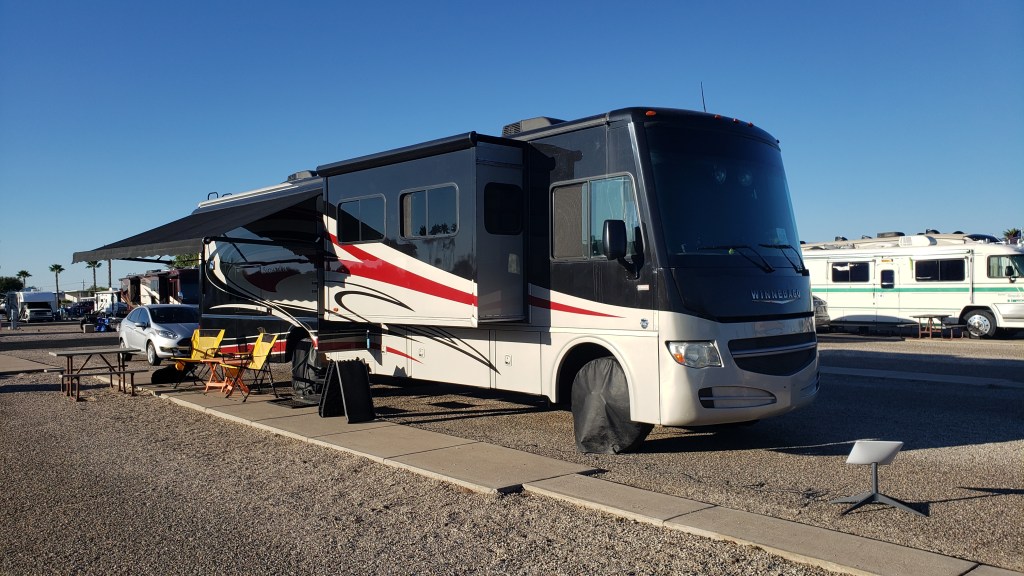
Fati in her natural habitat.
The resort is loaded with activities and conveniences, from pickleball and Amazon delivery and every type of class imaginable, plus the disquietingly-named Fat Willy’s grill. First night’s dinner, sorted!
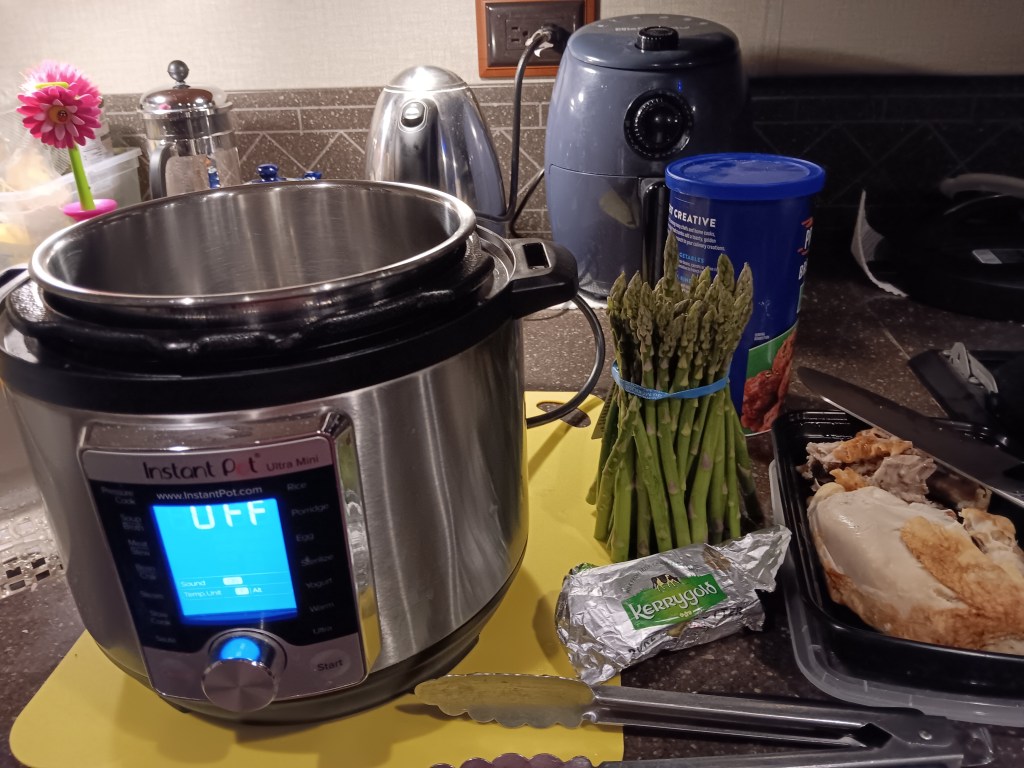
After settling in at our site, we strolled across the street to Willy’s and stood in the restaurant for nearly 20 minutes while no one took the slightest bit of notice. There appeared to be two servers, no host or hostess, and a whole lot of chaos, so we returned to Fati and made spaghetti and meatballs instead. Easy at home with a full-sized stove, it becomes an hour-long process when you have to cook the meatballs in the Instant Pot, then take them out, boil water in the Instant Pot, cook the spaghetti, drain it, and throw it all back into the Instant Pot to heat it up again with the sauce. Moving day is complicated, and all that fuss adds up.
The command center that turns out unbelievable meals!
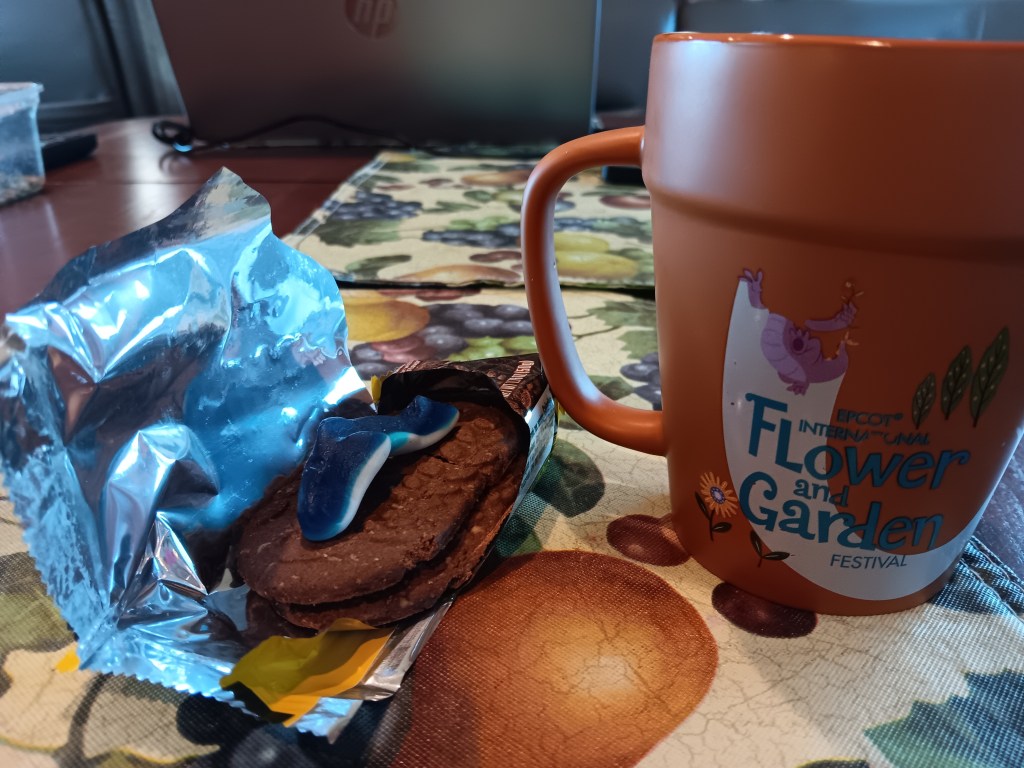
The next day was Susan’s birthday, so with next to nothing in the cupboards or fridge, Simon assembled two BelVita cookies into a “cake,” and topped them with a gummy shark. Happy birthday!
BelVita cake with gummy shark frosting.
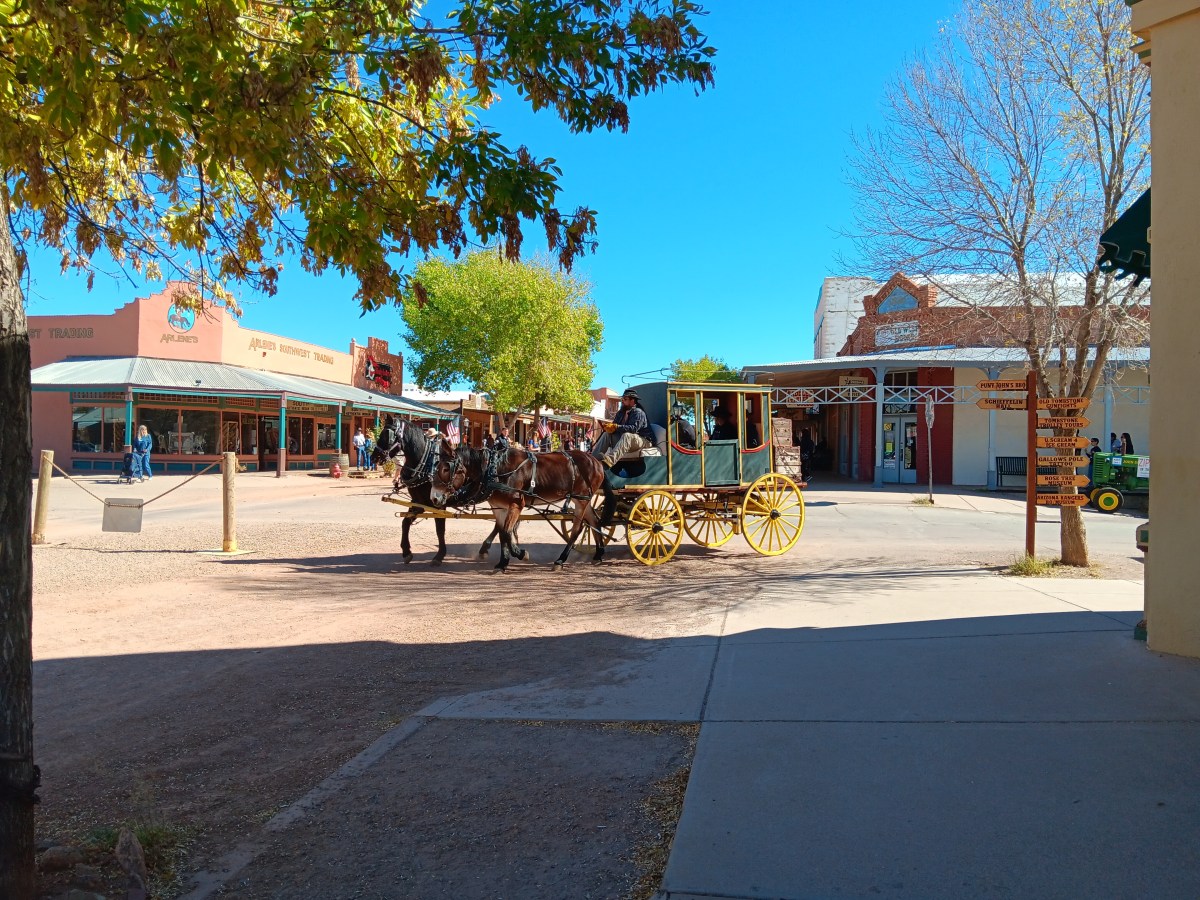
With the promise of a super yummy dinner from a nice restaurant later that evening, we set off for Tombstone. We’d been there once before (twice, for Simon), but today would be different. Because today was Vigilante Day!
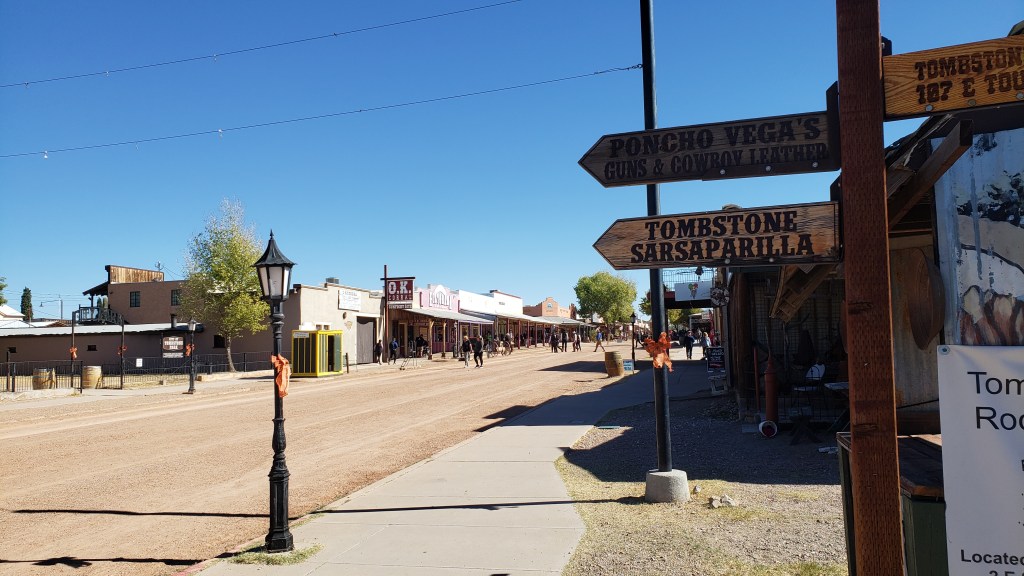
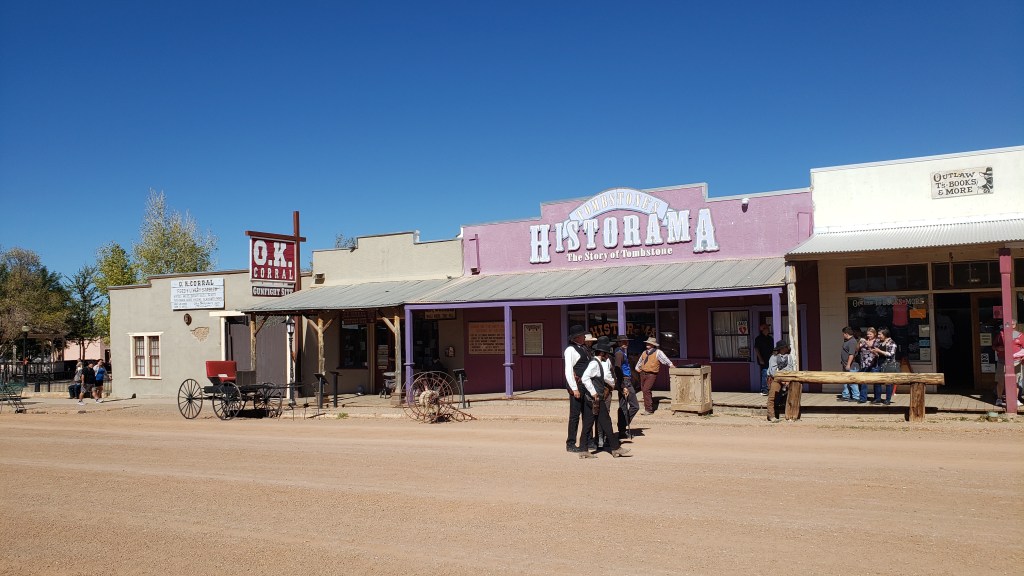
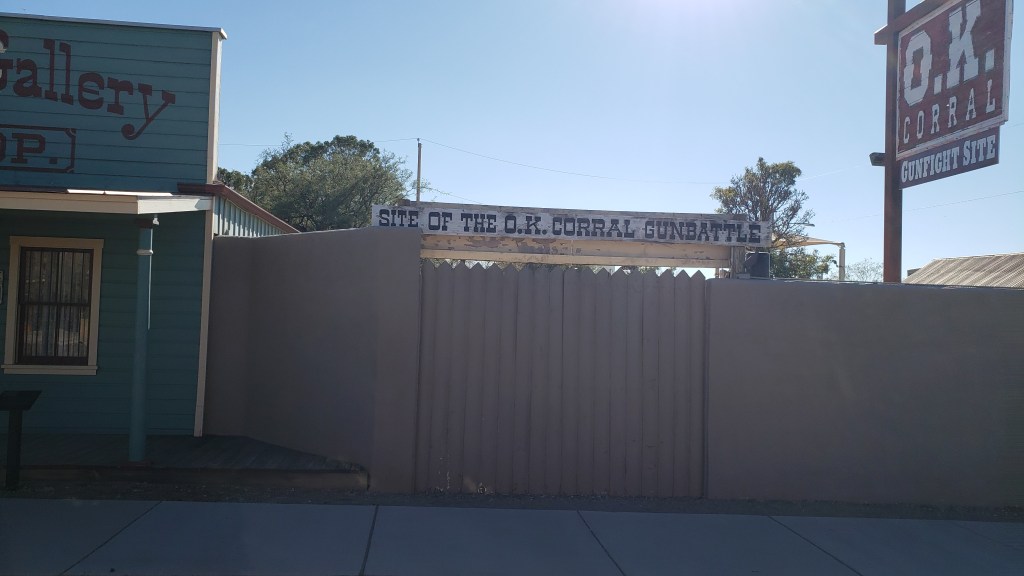
A little show happens each day recreating the gunfight at the O.K. Corral, near that small red sign. The real gunfight happened at the back of the building.
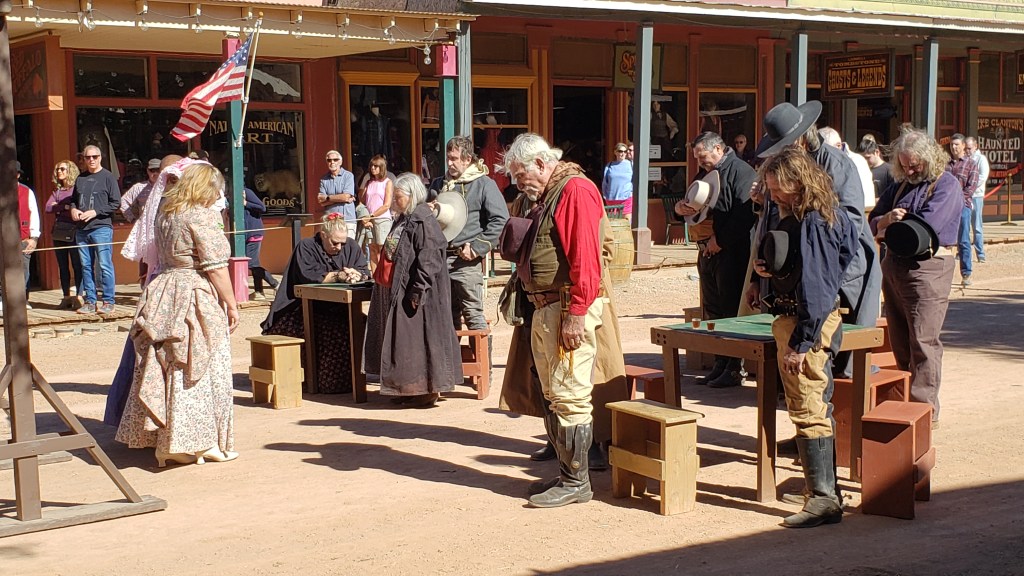
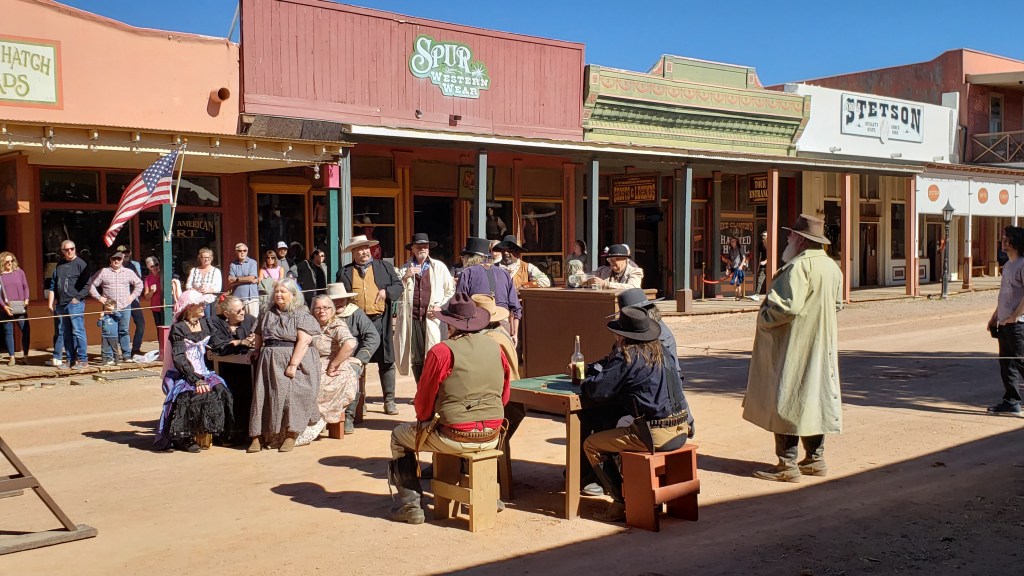
A little vigilante-inspired street skit was just about to commence when we arrived, and we scored a front-row view with Ruthie tucked between us. We’re not sure what the story was supposed to be, but as soon as the gunshots began Ruthie became seriously unnerved, and we knew it was time to move on.
The skit started with the National Anthem
Stuff is happening, but we’re not sure what.
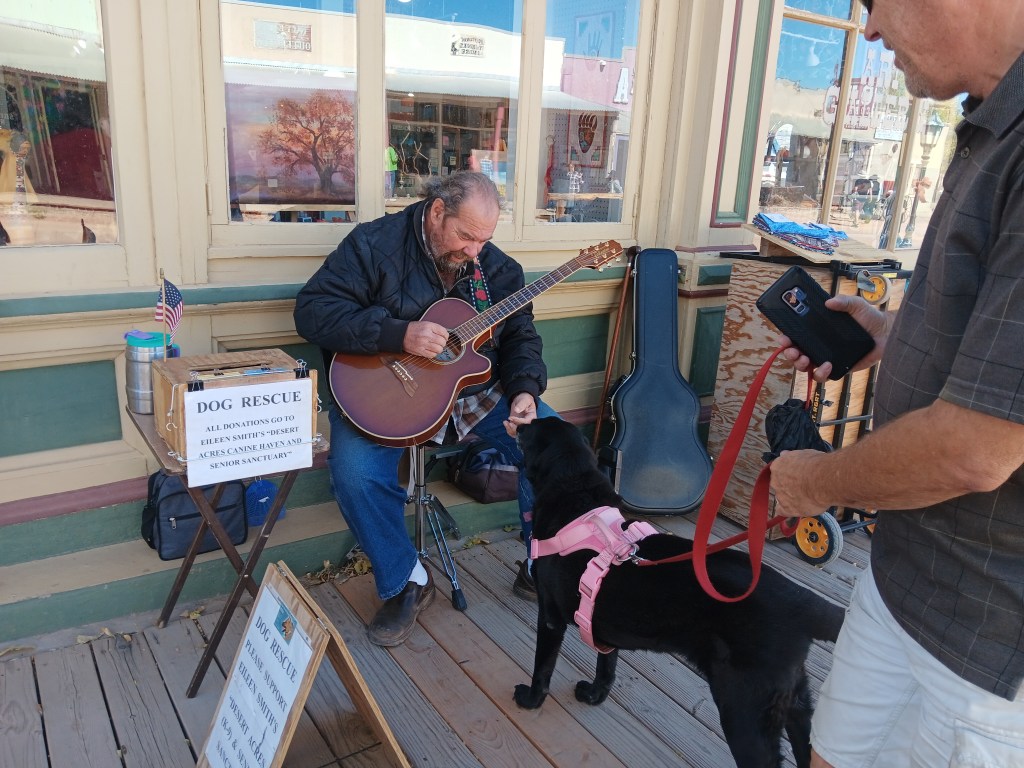
We strolled down the boardwalk, looked in a few shops, stopped every ten steps or so for people to pet Ruthie, and marveled at how much Tombstoners seem to love dogs. She was definitely the star of the walkways, and we heard quite a few stories from locals who own or owned Labs, the “sweetest dogs on the planet.”
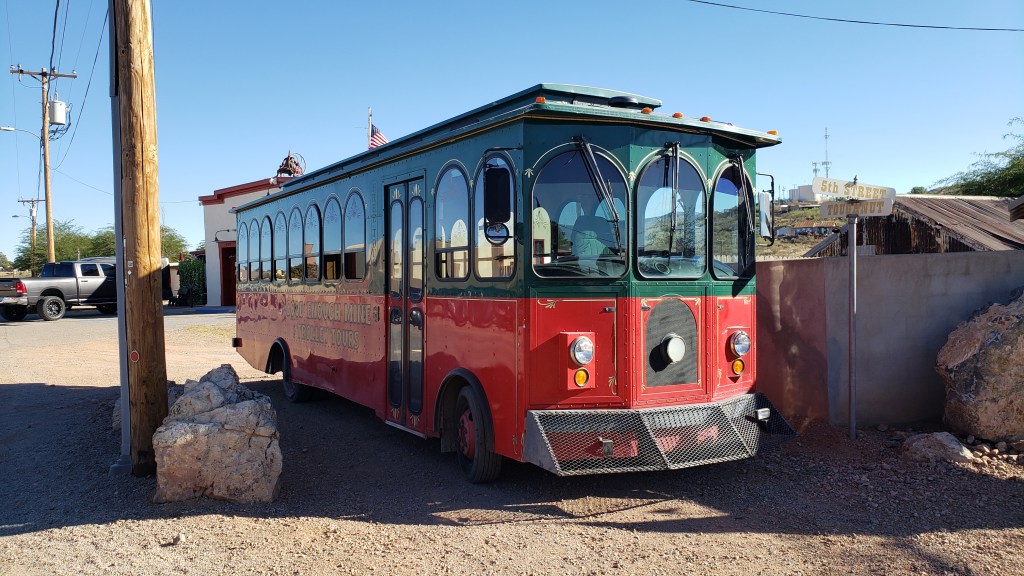
Our sweet dog is slowing down. A lot. But the Good Enough Mine Trolley welcomed her on a pet-friendly 40-minute tour, which would give her a rest and us a great overview of the town and its history.
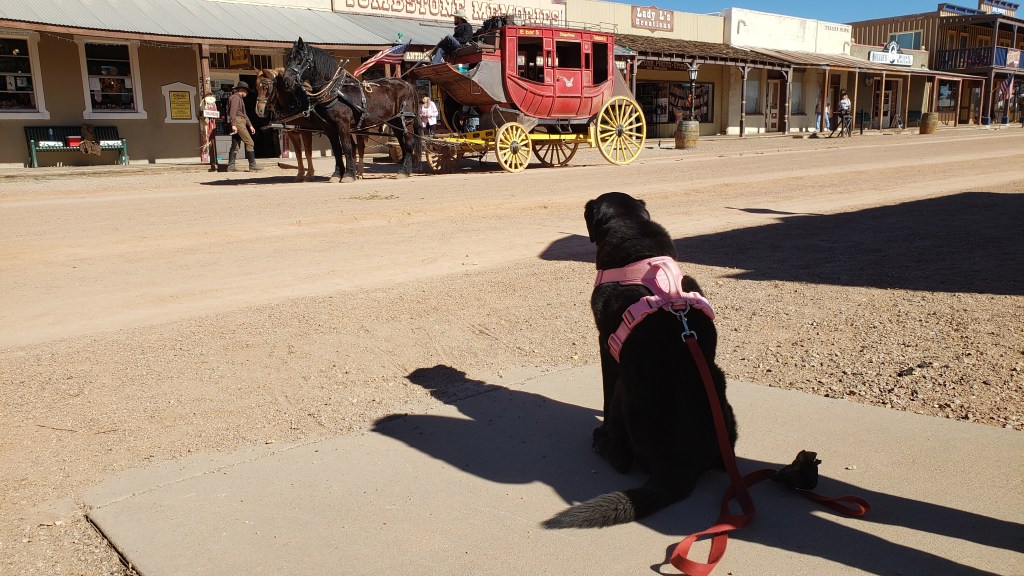
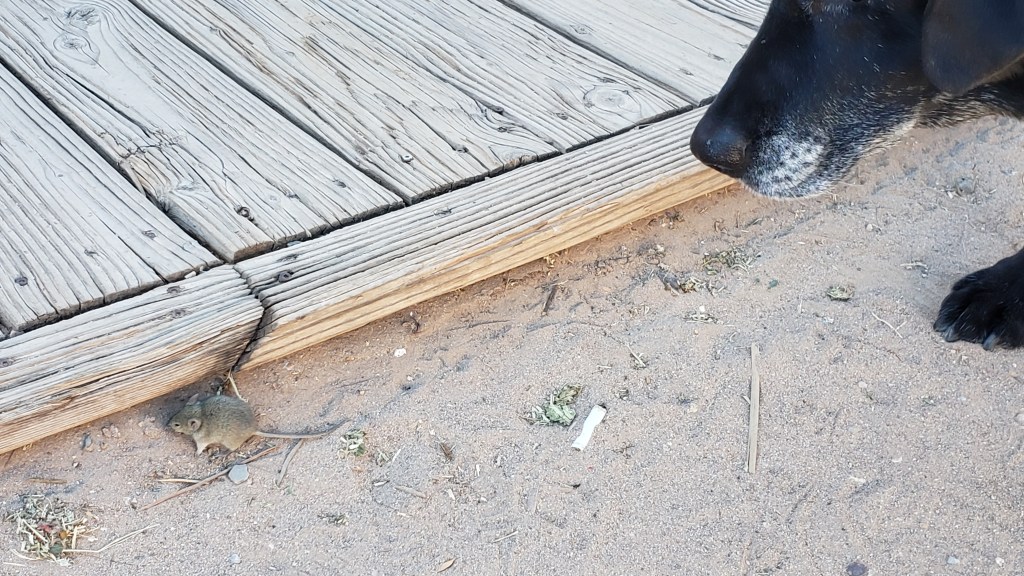
On the way to the boarding location she sniffed out a mouse and took an interest in the horses, then we embarked on what turned out to be a private tour with just us and our driver, George.
“Them’s big dogs.”
“That’s the tiniest puppy I’ve ever seen.”
Last time we were in Tombstone we didn’t make it beyond the main street, but this time we learned about the settlement’s two fires (which earned it the title “the town too tough to die”), its mining culture, its law and lawlessness, the uneasy relationship with the nearby Apache, and “two hundred ladies of negotiable affection” (in reality, mainly poor girls with no other options) who plied their trade in brothels on the opposite end of Allen Street to where the infamous gunfight at the O.K. Corral went down.
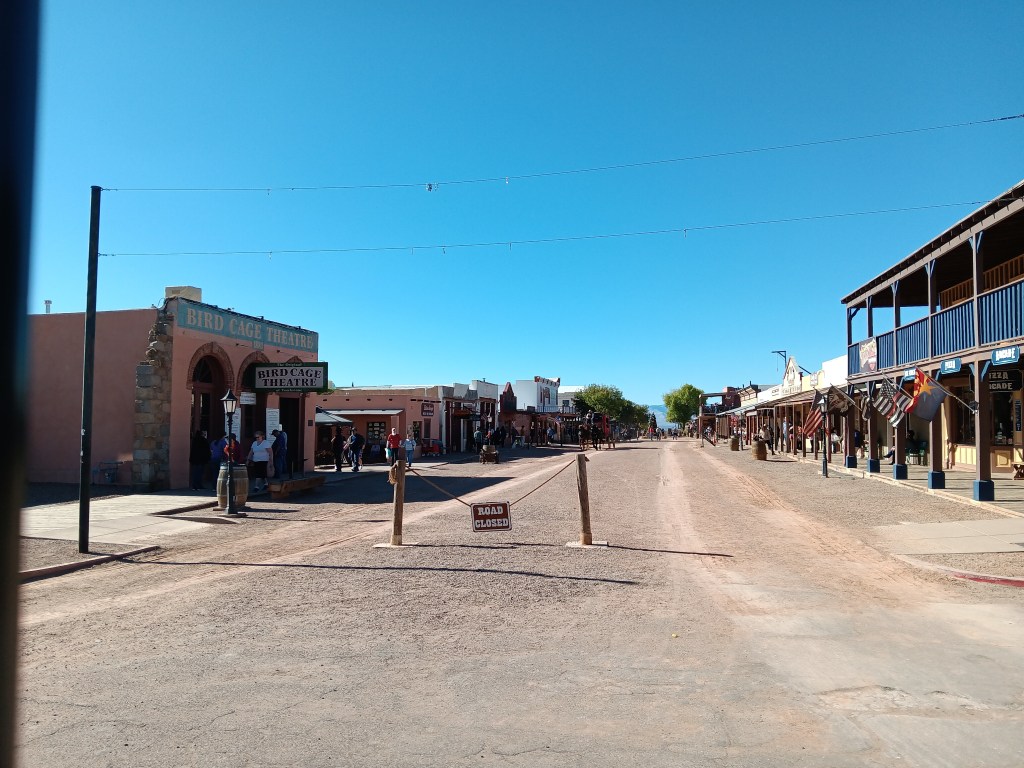
The main tourist street.
The back side of the O.K. Corral. This is where the gunfight took place.
The Bird Cage Theater is where many of Tombstone’s working women worked, at least some of the time. At other times, they worked in tiny “cribs” earning cowboys’ and miners’ cash in a manner deemed less moral than dancers’ revenue stream.
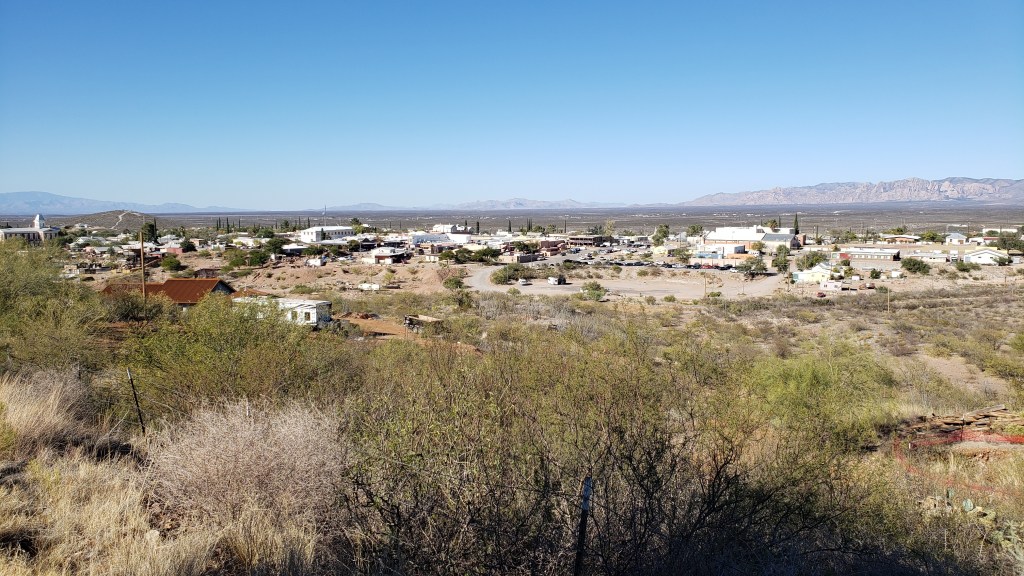
Today’s Tombstone as seen from up on a hill, with the Good Enough Mine (yes, it’s real name) under the ground between the town and the hill.
The tour was far more insightful and far more comprehensive than the mock gunfights in the main tourist district, and we appreciated discovering Tombstone’s history beyond shoot-‘em-ups. George has a website, Tombstone Silver, which has lots of great stories you may enjoy reading.
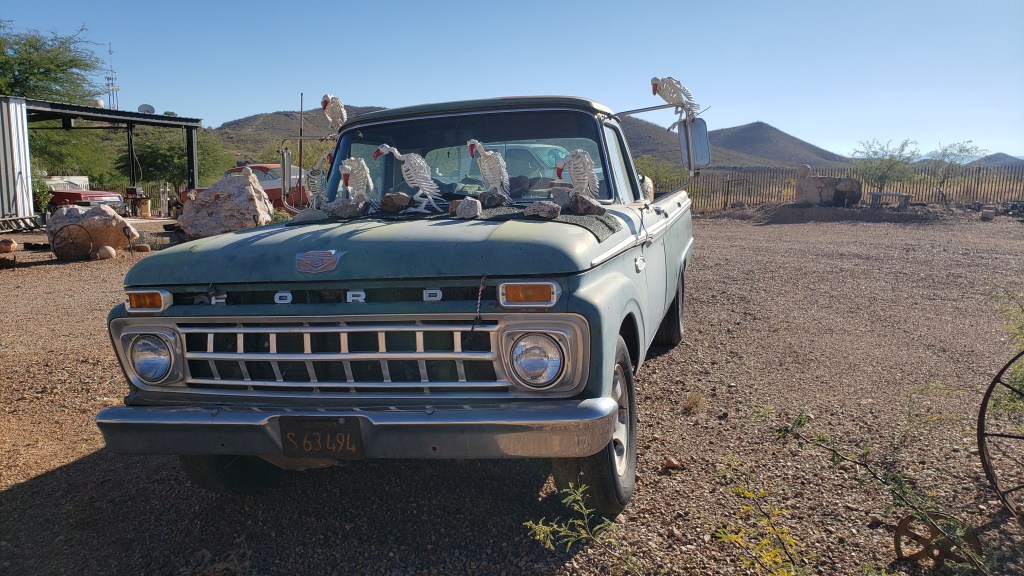
We’re not really sure what the deal is with this, but we admire the creativity.
It was an hour’s drive back to Fati after a long day, and we were ready for that special birthday dinner. I’ll condense the hour spent searching online to find a decent restaurant that was A) closer than 30 minutes away and 2) open, and simply say there wasn’t one. But Simon saved the day. We’d go to the grocery store and grab some soup and bread, then celebrate some other evening, when we were out touring near real restaurants.
While I was heating up the soup in the (say it with me…) Instant Pot, he slipped away into the night and returned with a birthday card, a Moon Pie, and some chocolate ice cream, all purchased at the resort’s tiny convenience store. And honestly? It made my day. He’s a keeper, this one!
“Cleo” is Simon’s name for me. Long, lovely story, perhaps for another time.
Today marks six months since we locked the door to our house in Florida and set off for a year-long adventure in an RV. Here’s what we learned during the past month:
Know your limitations. No matter how much you want to camp overnight in the middle of the desert at Quartzsite, when the ground temperature is 107 and you don’t have the ability to run at least one air conditioner (never mind your fridge) it’s time to re-think things. The fact there’s no one else out there and the locals are complaining about the heat are hints, too. Find a way to get the “flavor” of the experience and book that night in a campground with hookups.
Know the difference between a true limitation and fear.
When you can’t change the situation, change the inner dialogue. Yeah, yeah, we’ve all heard that, but the worst that can happen if you give it a try is that you’ll be right where you were before you tried. Start with “You can do this! You’re awesome, and you’re going to feel fantastic about yourself when you get through it! Go you!” and add to it as needed. Be your own giddy cheerleader.
Have a dear friend who texts you and says, “YOU CAN DO HARD THINGS!” That reminder is priceless. (Thank you, Katie!)
You’re going to see a lot of signs in the Southwest that read, “Watch For Rattlesnakes.” It will occur to you at some point that you don’t actually know how to watch for rattlesnakes.
Sedona, Arizona will get straight to the heart of whatever you’re struggling with. Don’t believe in spiritualism or an afterlife or any of that crap? Too bad. Sedona, Arizona has news for you, and even though it might take months or years of sitting with what it’s telling you, Sedona is going to tell you. Do believe in all that crap? You’ll get there quicker.
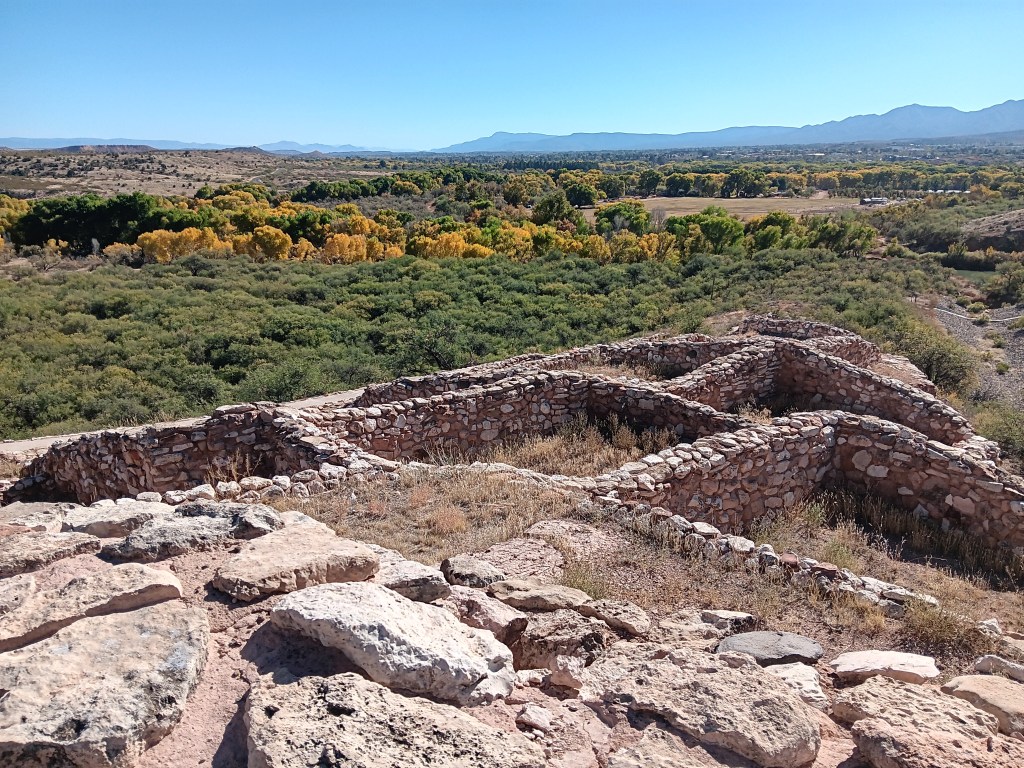
There is so much more history in the American West than we ever imagined, especially in Arizona. It’s astonishing to discover places like Tuzigoot and Casa Grande, which had vibrant, thriving communities more than a thousand years ago. It’s so much more than just “cowboys and Indians.”
If you clean up the dust in the morning, you won’t have to dust again until noon, and again before dinner, and once more before bedtime, and when you get up to pee at night, and it’s like that every single day, because there is so much more dust out West than we ever thought possible.
Your understanding of “be flexible” will change. At first, it meant you might drive further on any given day than you thought you would, or you’d have dinner out rather than cooking in, or you’d have to figure out how to stop that annoying whistling sound through the window when you move from one campground to the next. Now, it’s a philosophy for life. Combined with “forget about blame and focus only on a solution,” it’s pretty powerful.
Wave at everyone when you’re taking a stroll around the campground, and when one of them comes knocking on your door and asks you over for drinks, go. Oh, the happy evenings sharing travel stories! It’ll make leaving the campground very, very hard when it’s time to move on, and there will be tears, but those memories from the trip will be among your best.
When you hit that half-way mark in your Year on the Road, it’ll feel like you’ve been away from home forever, and also that it’s all gone so fast. On to the next six months!
Everyone told us it was beautiful. Everyone mentioned it was magical. But the person who told us “Whatever you’re dealing with, Sedona will sort you out” hit that nail smack on the head. Sedona, Arizona took all the best elements of the places we’ve visited so far, and cranked them up to eleven.
And then the emotional upheaval kicked in.
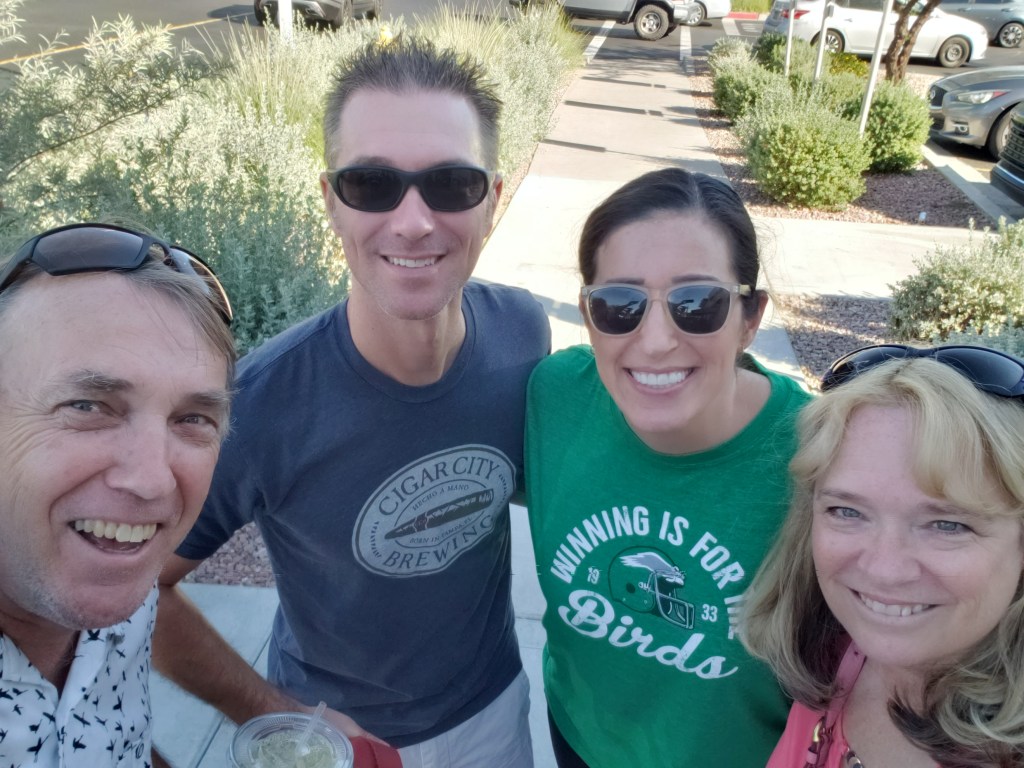
Our two days away from Fati started with lunch at Flower Child with our friends Meredith and Nathan. We knew Meredith from her time at Universal Orlando, and when she invited us to meet up while we were in the Phoenix area, we enthusiastically said, “Yes!”
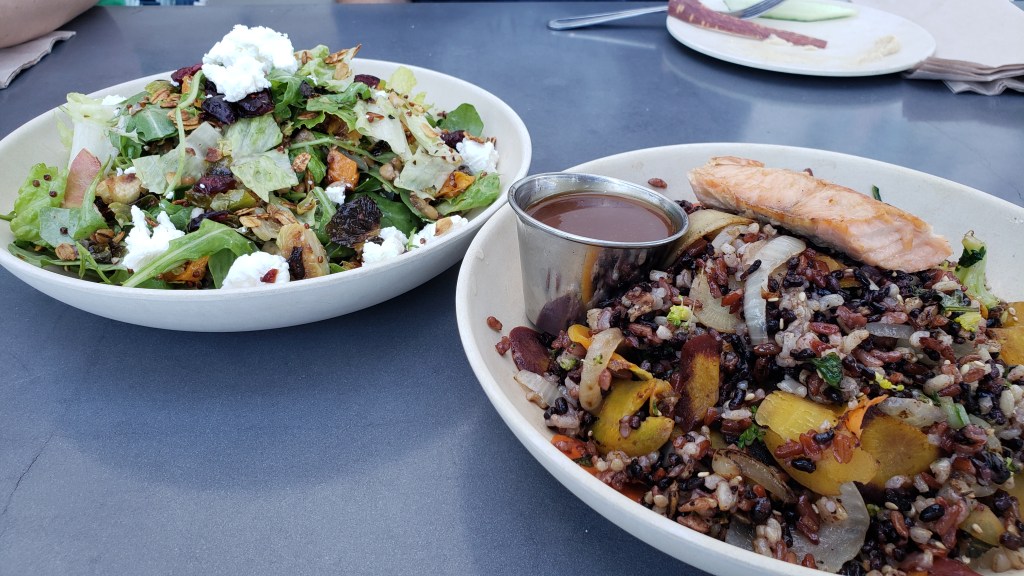
Susan’s brussels sprout and butternut squash salad, and Simon’s Forbidden Rice with salmon
We thoroughly enjoyed our time with them while scarfing down a delicious healthy lunch, and Nathan did us a huge favor by recommending we take Highway 87 instead of Interstate 17 for our journey, not only because it went directly to our first night’s stop in Winslow, AZ, but also because it’s incredibly scenic.
We had been considering 87, and we were so glad he confirmed it was the right choice. It took us from flat desert to mountainous vistas and a surprising forested descent toward Winslow, perfect for driving in Nippy.
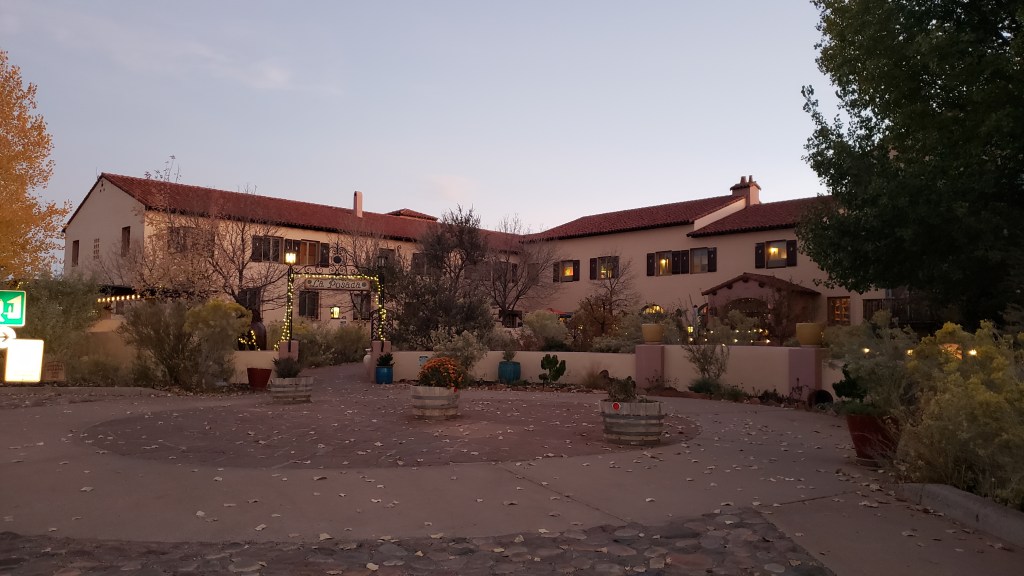
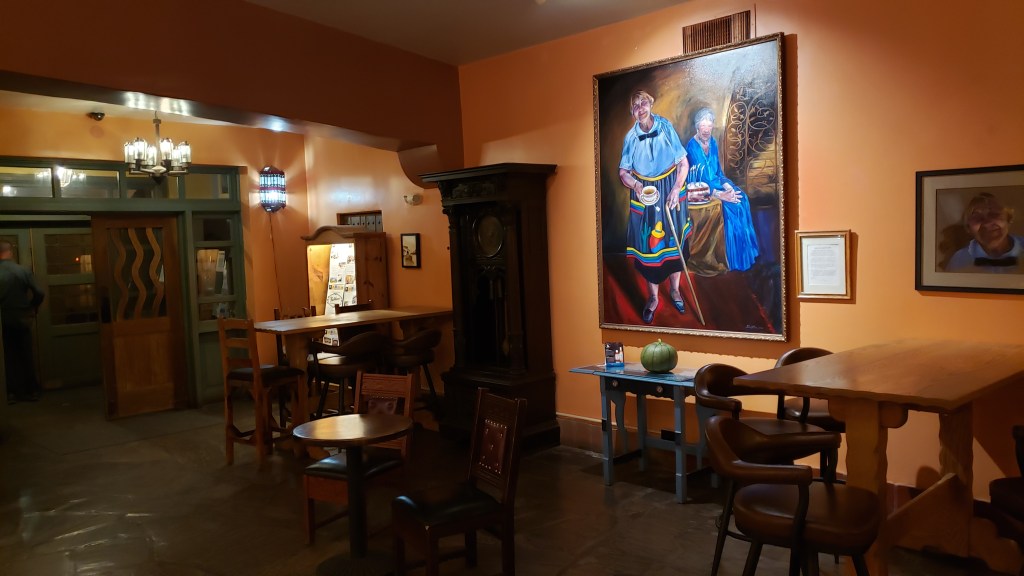
Originally, we were only going to take one overnight in Sedona, but we also wanted to see Meteor Crater National Landmark, so we added an overnight at the fabulous La Posada in Winslow. What luxury, what great music, and what good food!
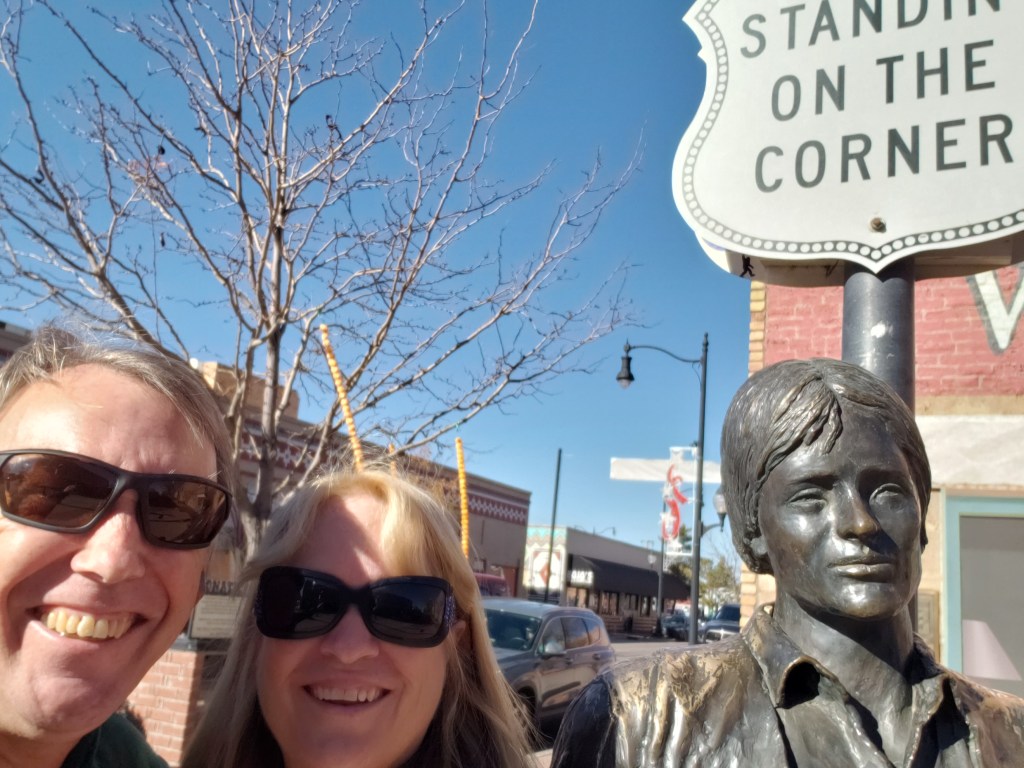
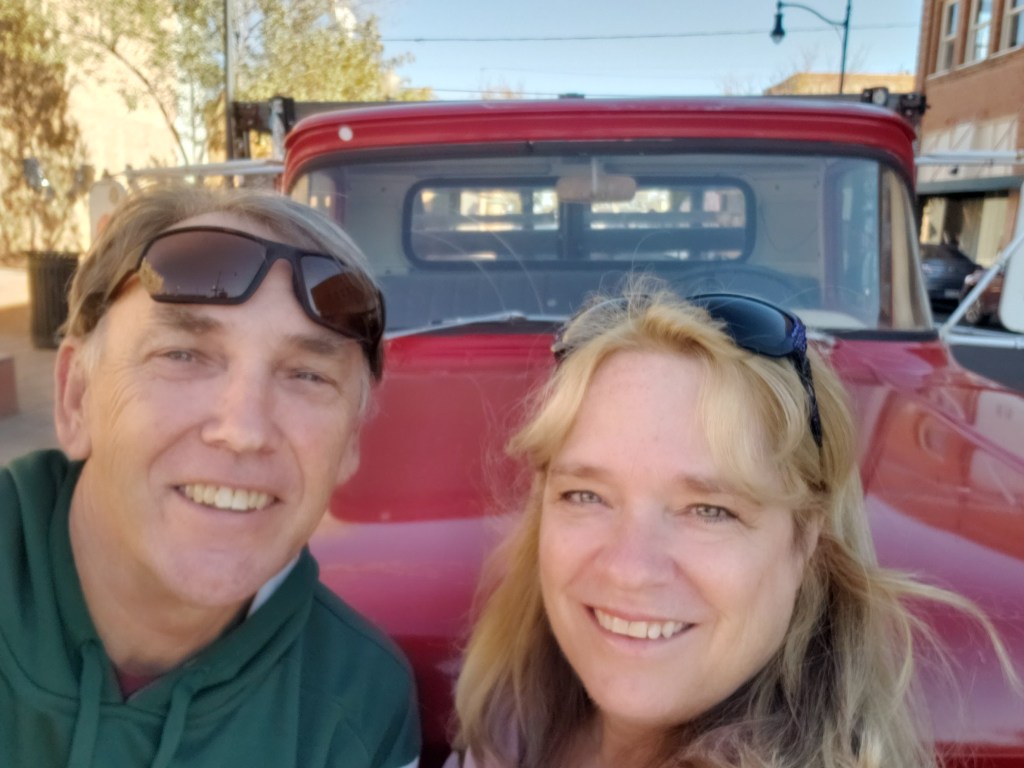
The next morning we took all the necessary photos “standing on the corner in Winslow, Arizona,” including with the flat-bed truck, before heading west to the crater.
The now-famous corner.
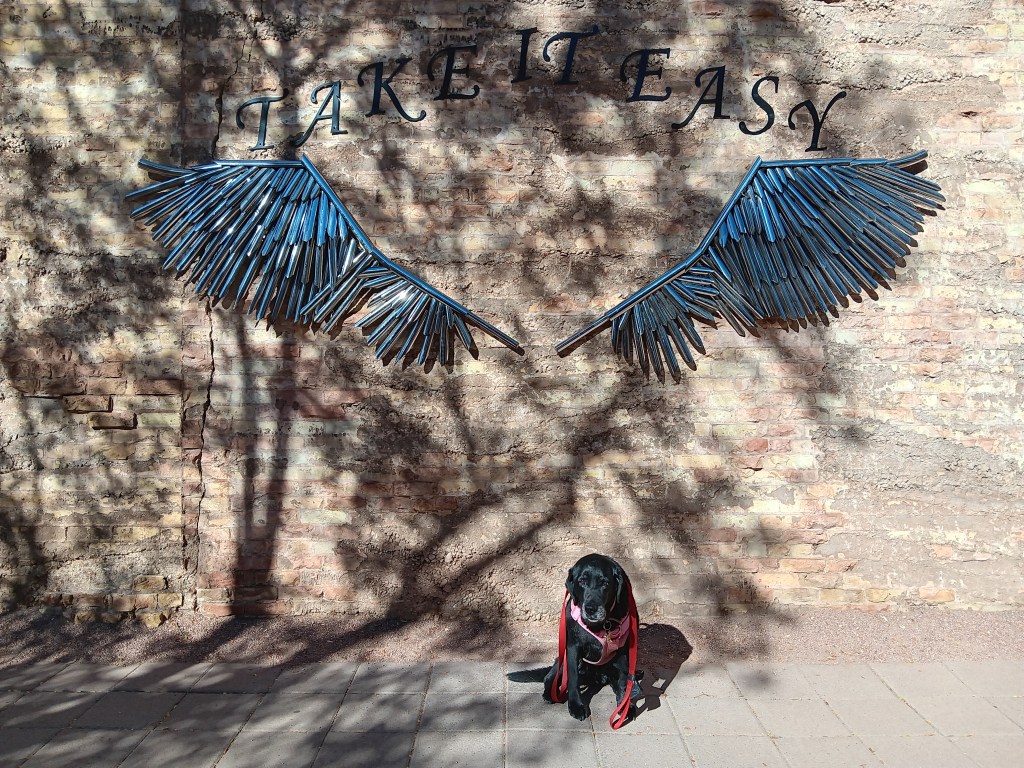
Ruthie wanted her photo taken with the wings. We told her she might be too short, but she’s delighted with the outcome.
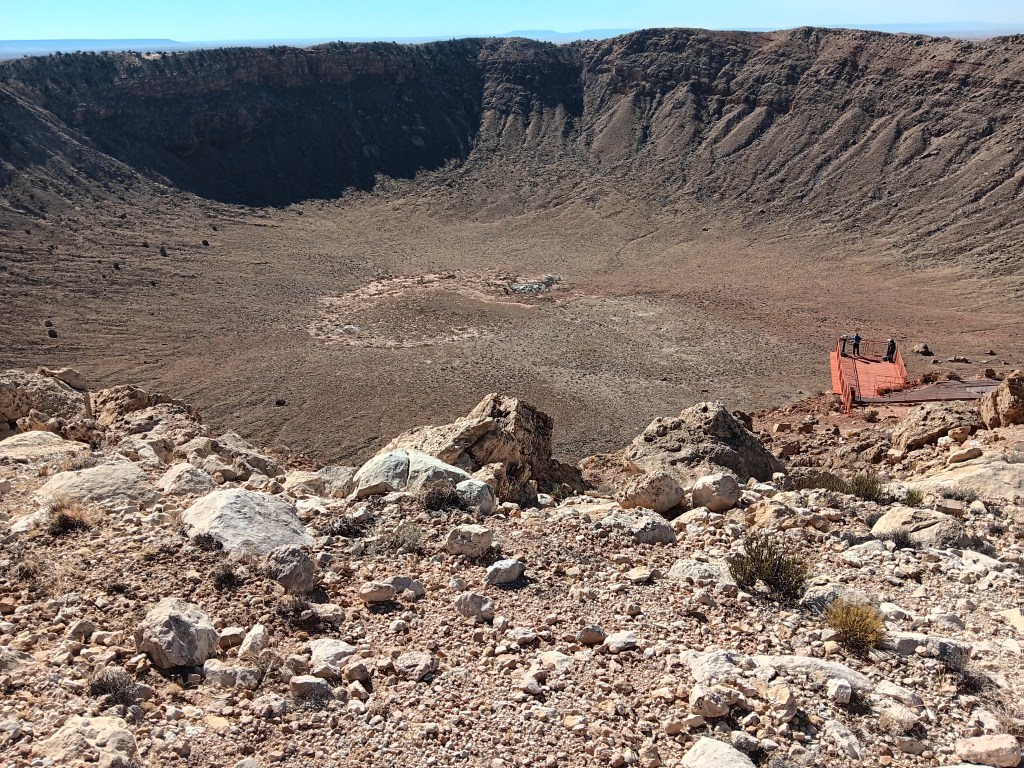
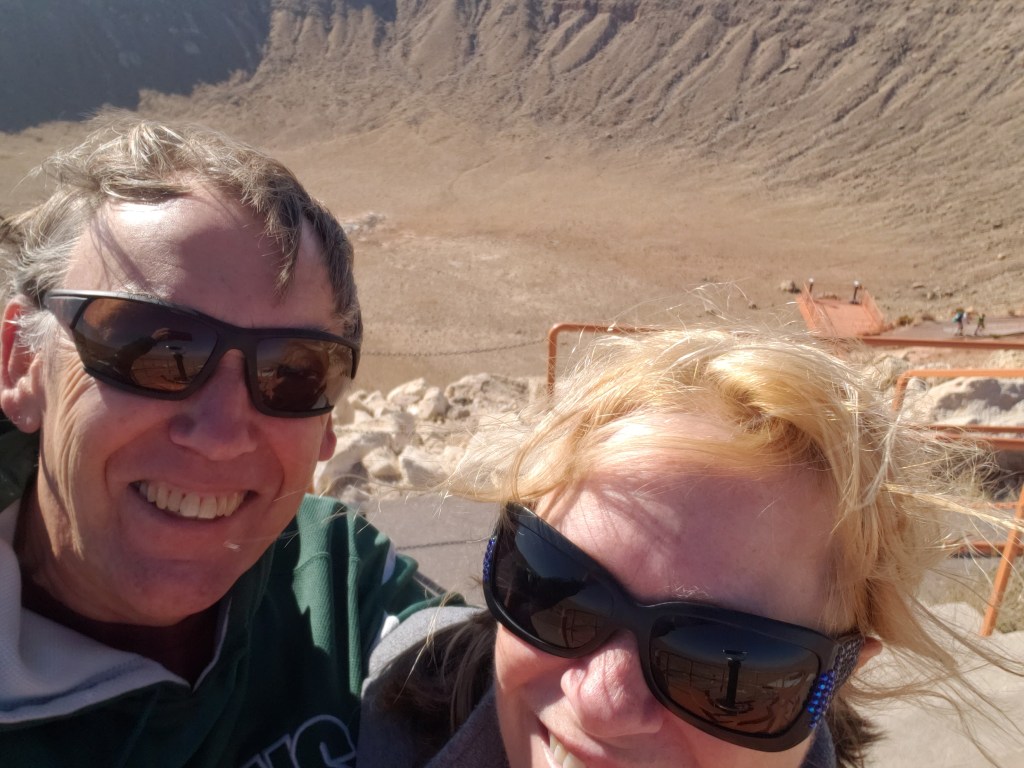
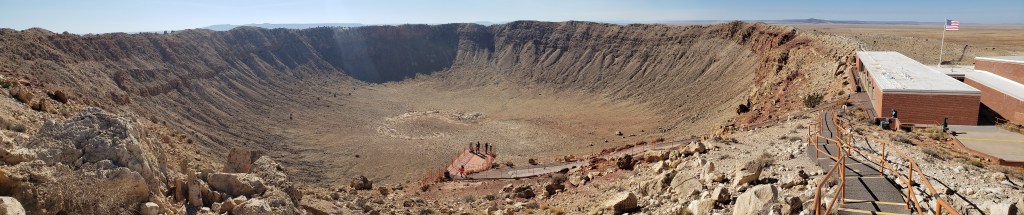
Meteor Crater is big. Very big indeed. The crater is 4,000 feet wide, 700 feet deep, and was created when a meteor hit at 26,000 miles per hour, 50,000 years ago. We stood on the edge and felt the pull of the wind that whips around inside and threatens to suck you in.
The people standing on the overlook give you an idea of how big this thing is.
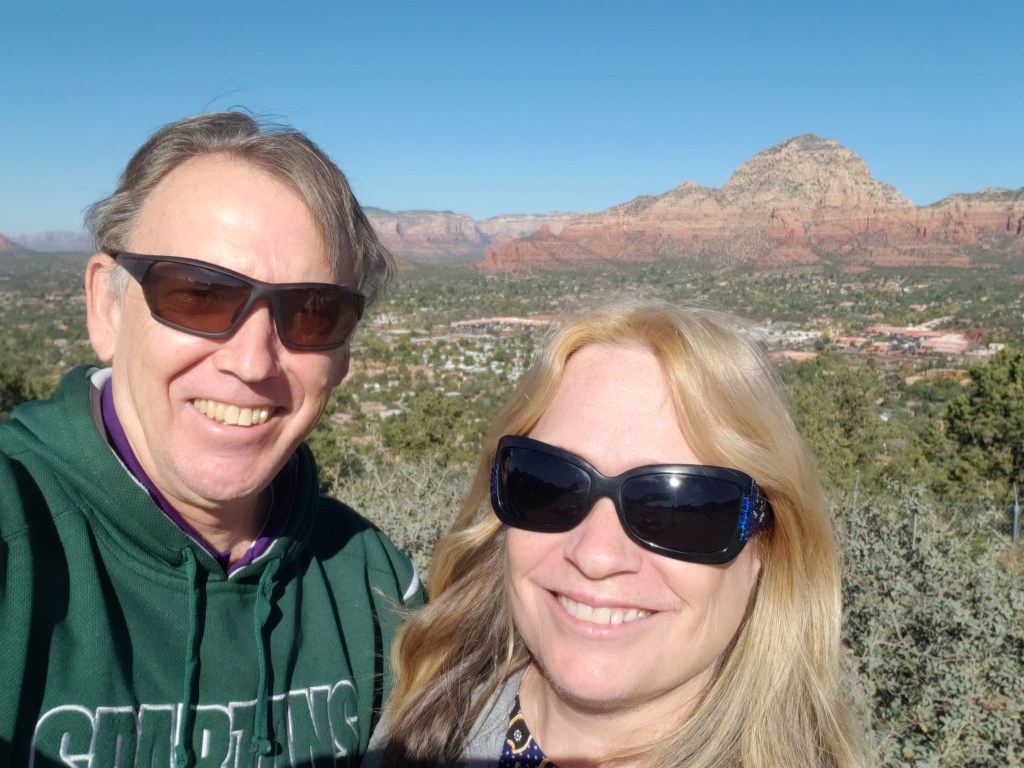
Obligatory Selfie
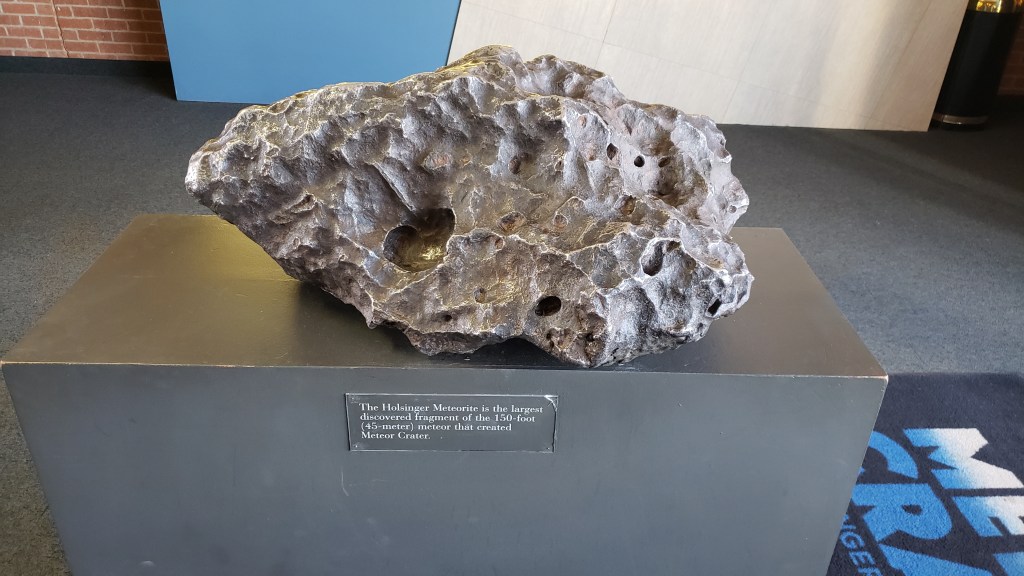
Part of the meteor that caused this whole mishigas in the first place.
Panorama-cam
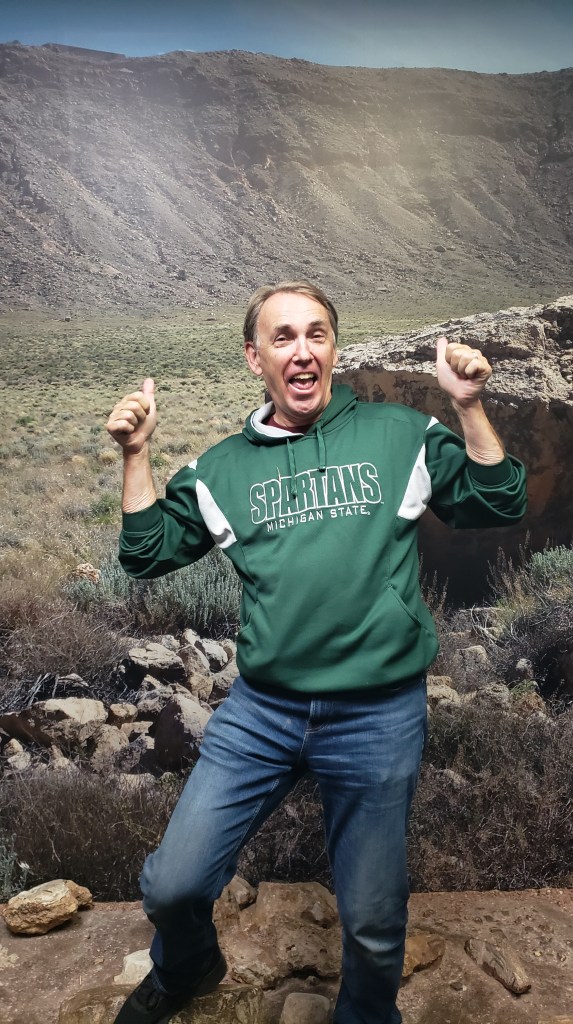
Now, don’t tell anyone – this is strictly between us. Simon and I found an elevator that took us down to the crater floor, and we popped out for a couple of quick photos. No one can know. So don’t tell.*
Then, it was on to the main event. The reason for our trip to Sedona was to bring Susan’s beloved mother back to a place she loved, as one final trip to Arizona. We’d leave it to her to guide us to a spot she wanted to “see,” and we’d do a little ceremony for her there.
Kathy looking out the front window. I could feel her smiling.
We knew nothing about the area, but first Sedona and then a place called Oak Creek Canyon kept coming up as I (Susan) browsed Google’s Arizona map. We weren’t sure where the canyon was, but we’d find it once we got to the city.
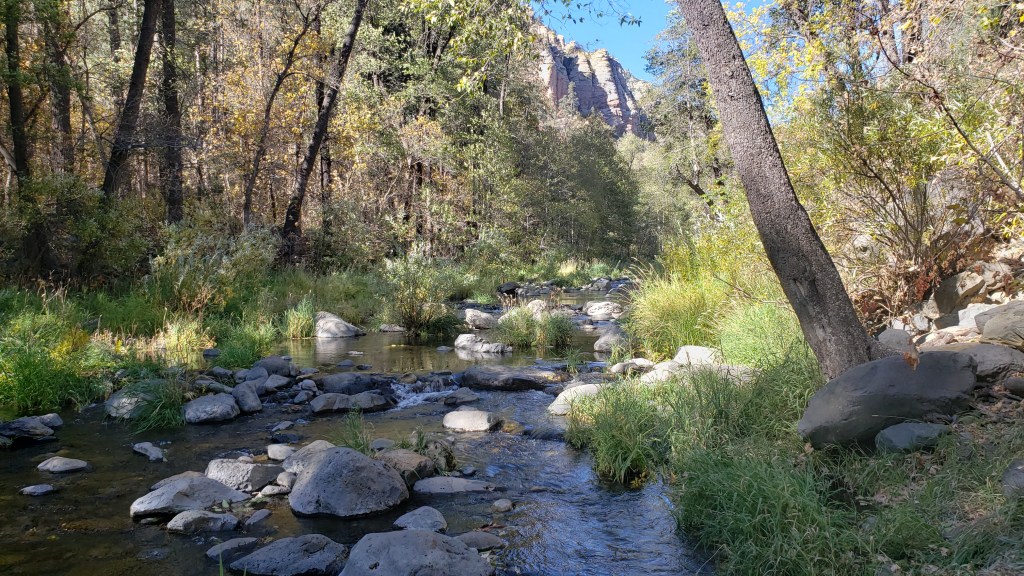
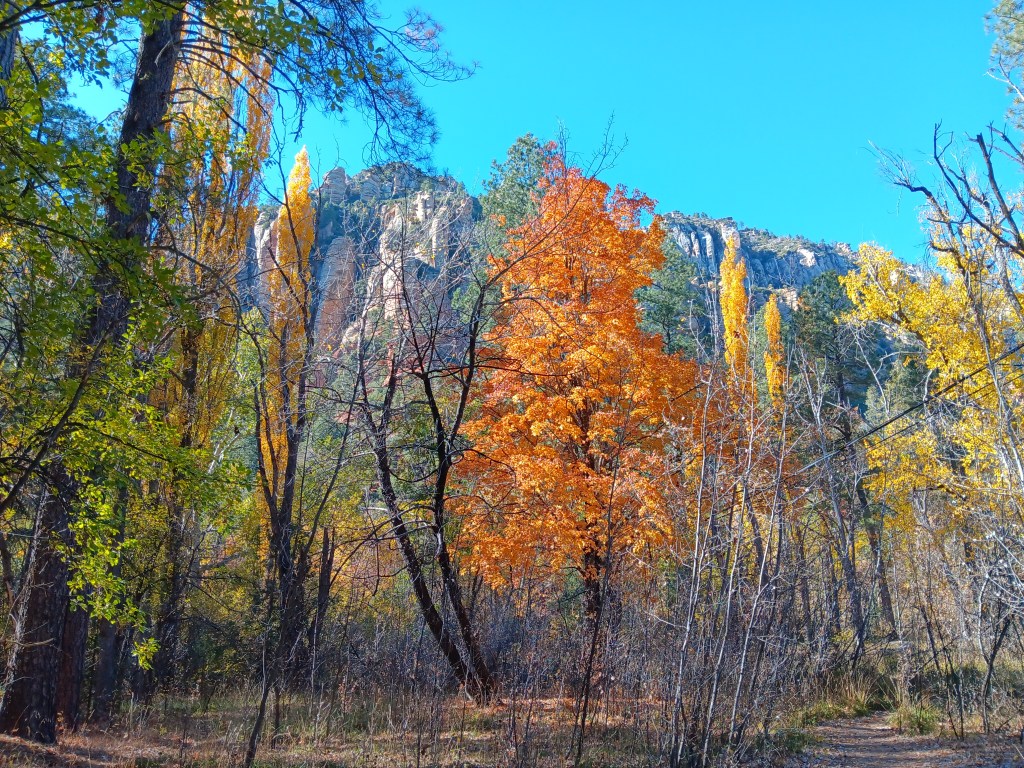
Heading south on I-17, we quickly began to descend out of the mountain along a road with a series of switchbacks, and we couldn’t believe what we were seeing. Glorious hillsides covered in trees showing off their fall colors, towering rock formations that seemed to reach to the sky, and, further down, a river that actually flowed in a state where most rivers are bone-dry most of the time. Could there really be a place on Earth this enchanting? It felt so right.
I was afraid we wouldn’t know where to go. I worried that I wouldn’t “hear” Mom telling me what she wanted. But Sedona sorts these things out, and as we drove through the lower end of the canyon, Mom left no doubt whatsoever where we should pull over, where we should walk, and where we should do our little ceremony.
Holding Kathy up so she has a good view of the mountain.
As we returned to the car, I noticed a sign with a map behind glass. We were in the heart of Oak Creek Canyon.
The canyon was intensely emotional, and sometimes you have to sit with these things for a while, which is what Simon is processing now. Along with grief, Susan felt tremendous joy. Sitting in one of the area’s many vortexes the next day, talking to her mom and dad, her turn for processing started.
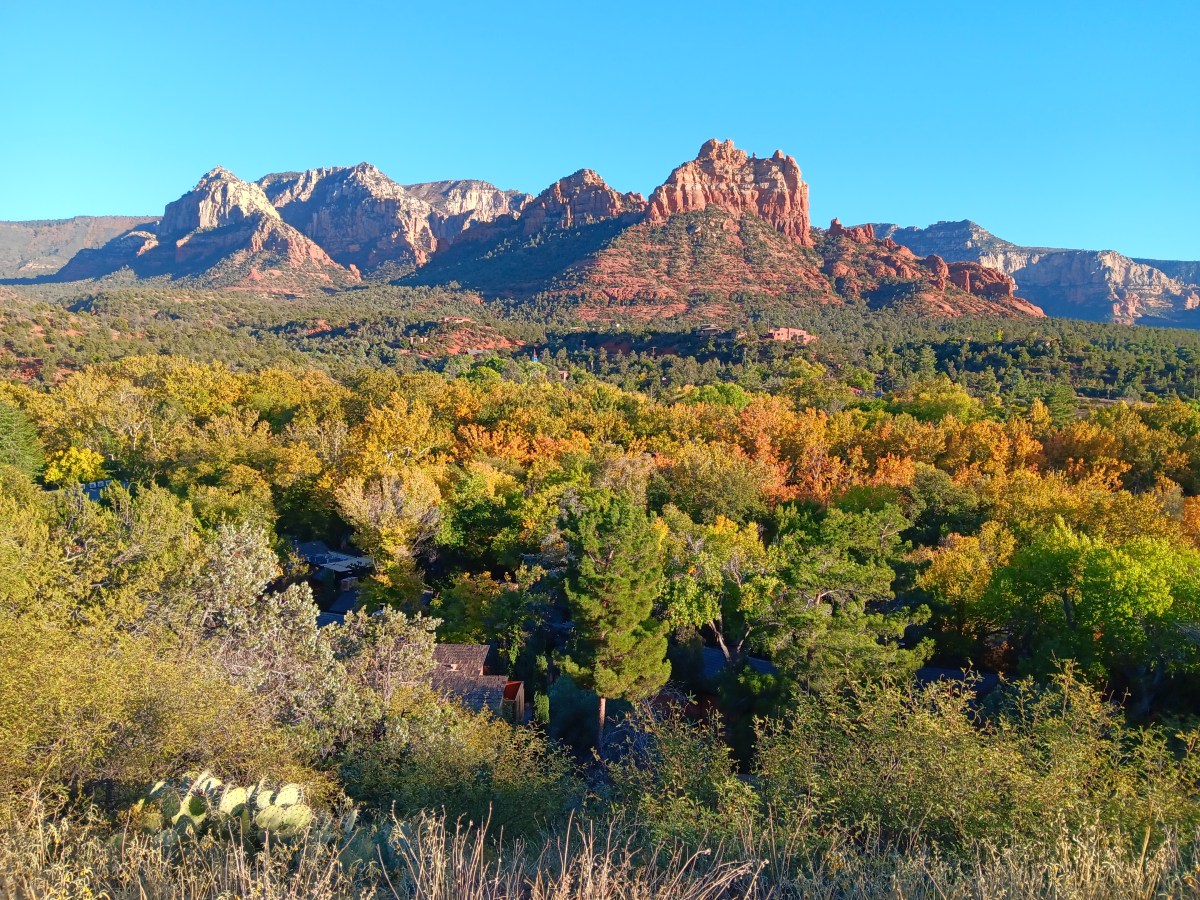
This was my view from the vortex when Mom told me what she wants me to heal in my life.
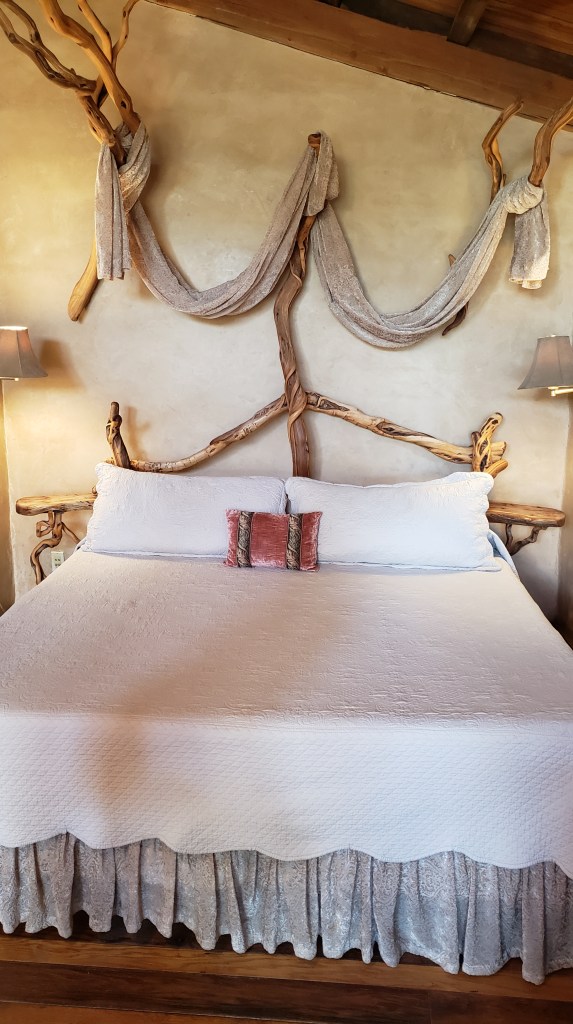
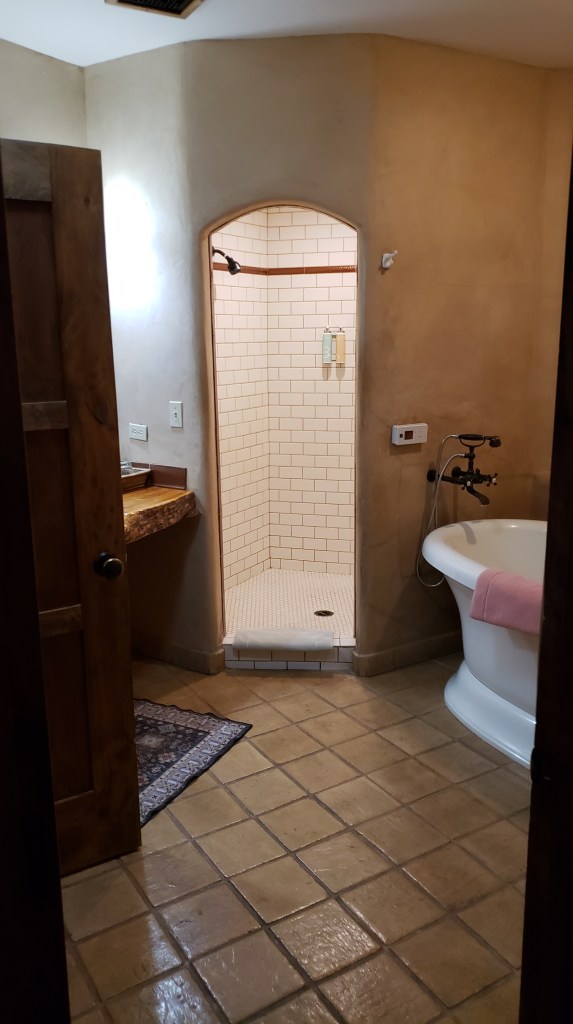
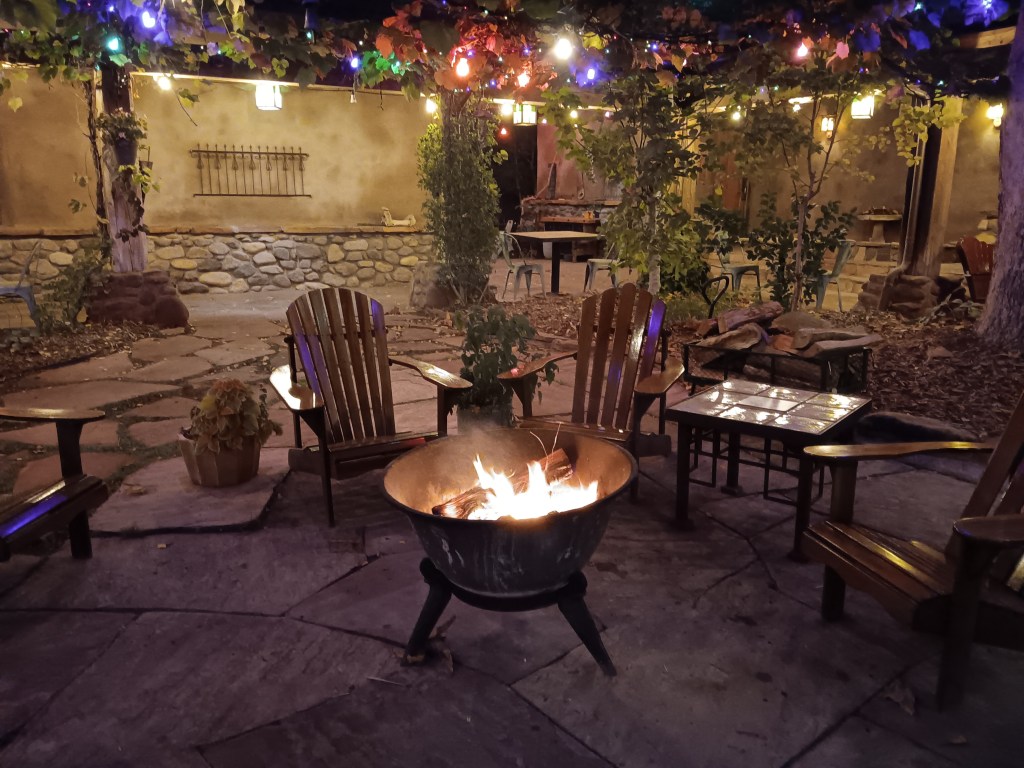
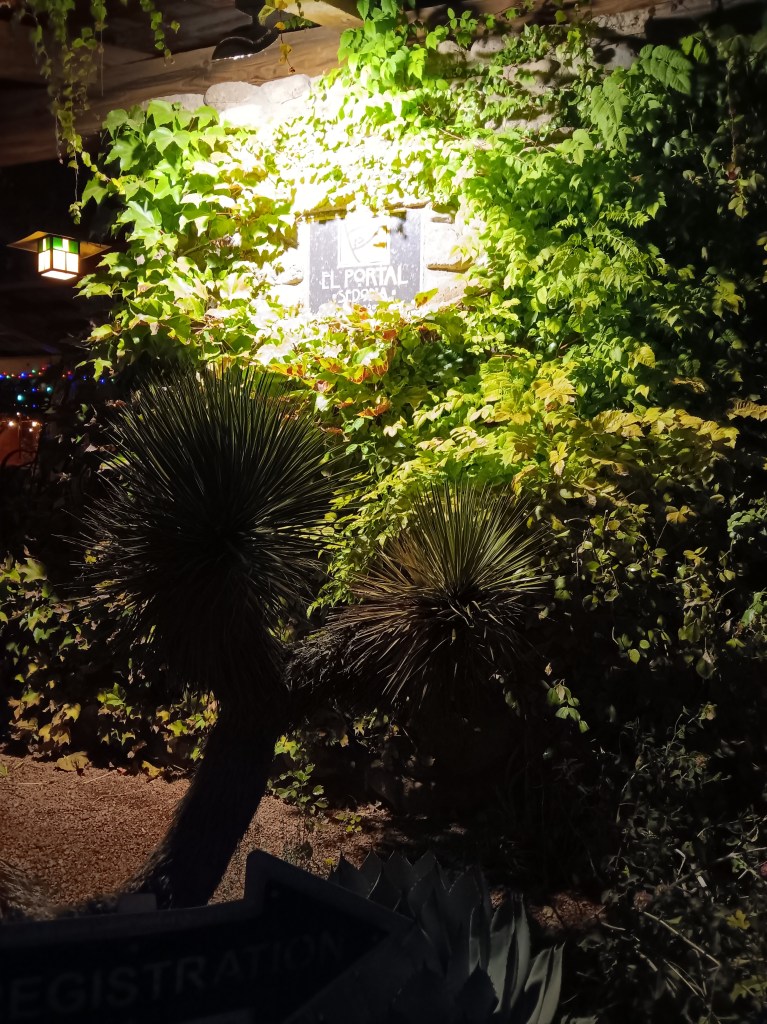
But there was more to discover in Sedona, including the food, and the magnificent boutique hotel, El Portal Sedona, which will absolutely be our choice for a return visit, next time for much longer. We’ve stayed in excellent hotels over the years, but this…this just fit us like the finest of gloves.
Ample room for us and a dog.
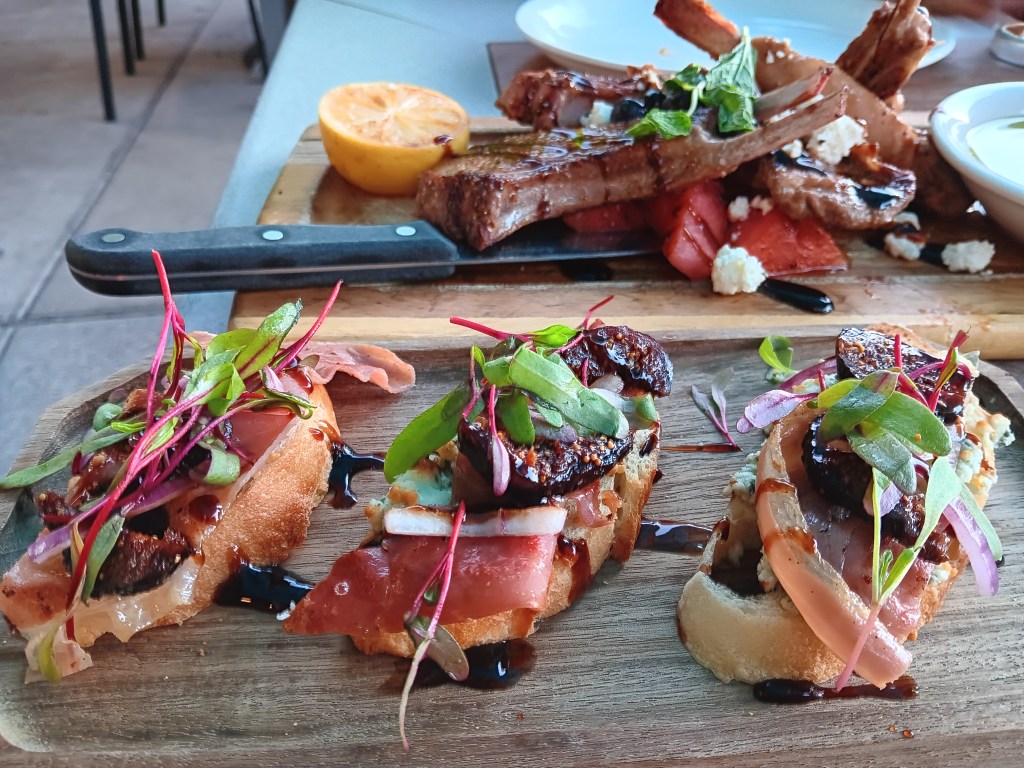
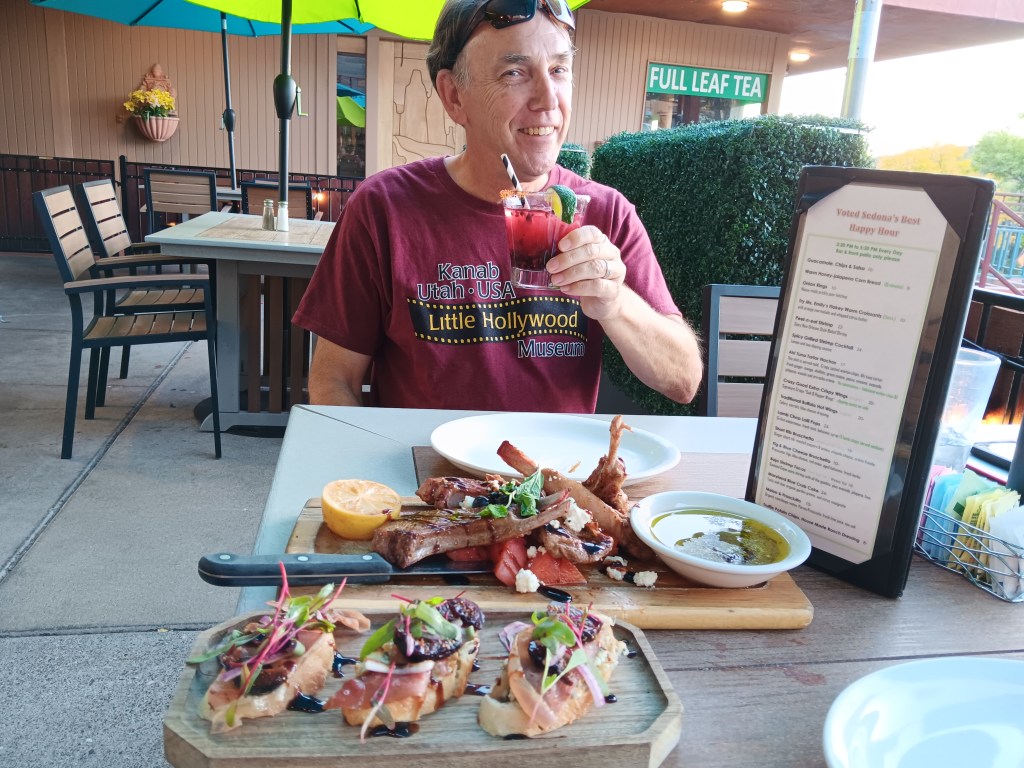
We had dinner that first night at dog-friendly Creekside American Bistro, where we each had a cocktail, and we split Lamb Chop Lollipops and Fig and Blue Cheese Crostini. Superb!
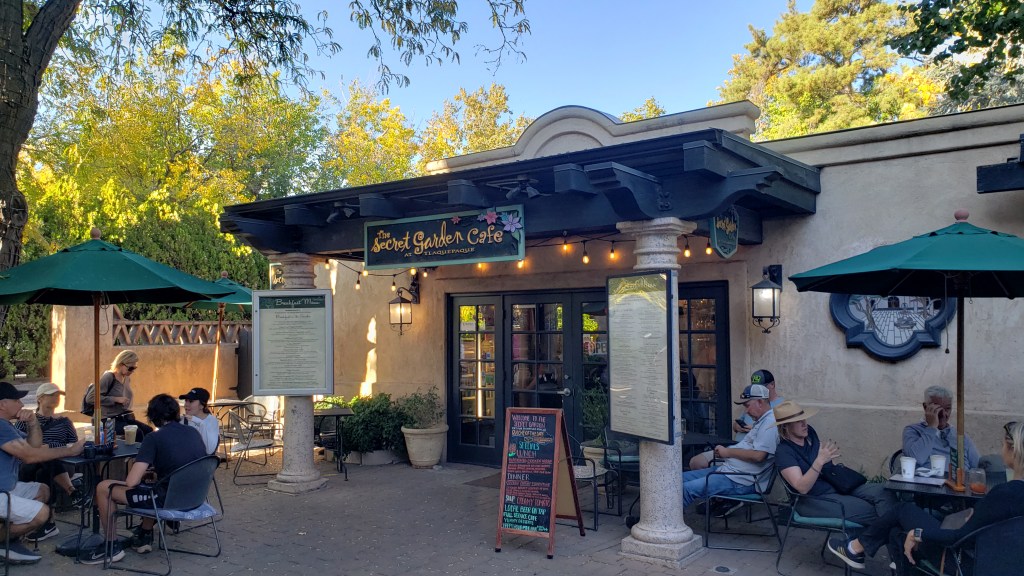
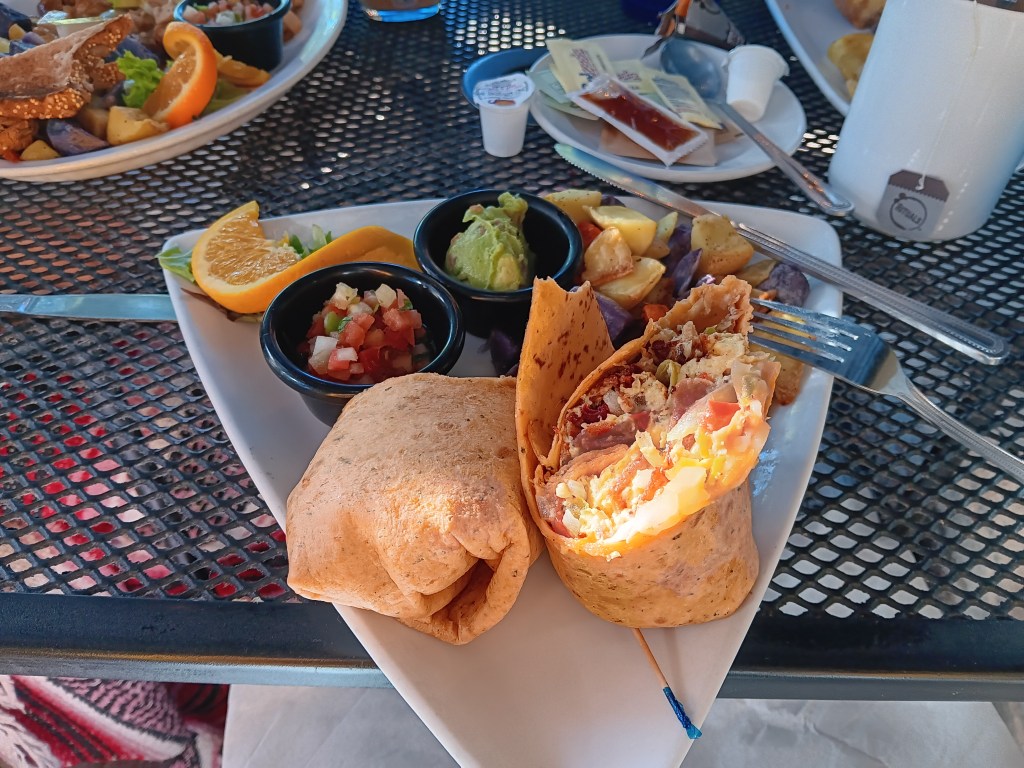
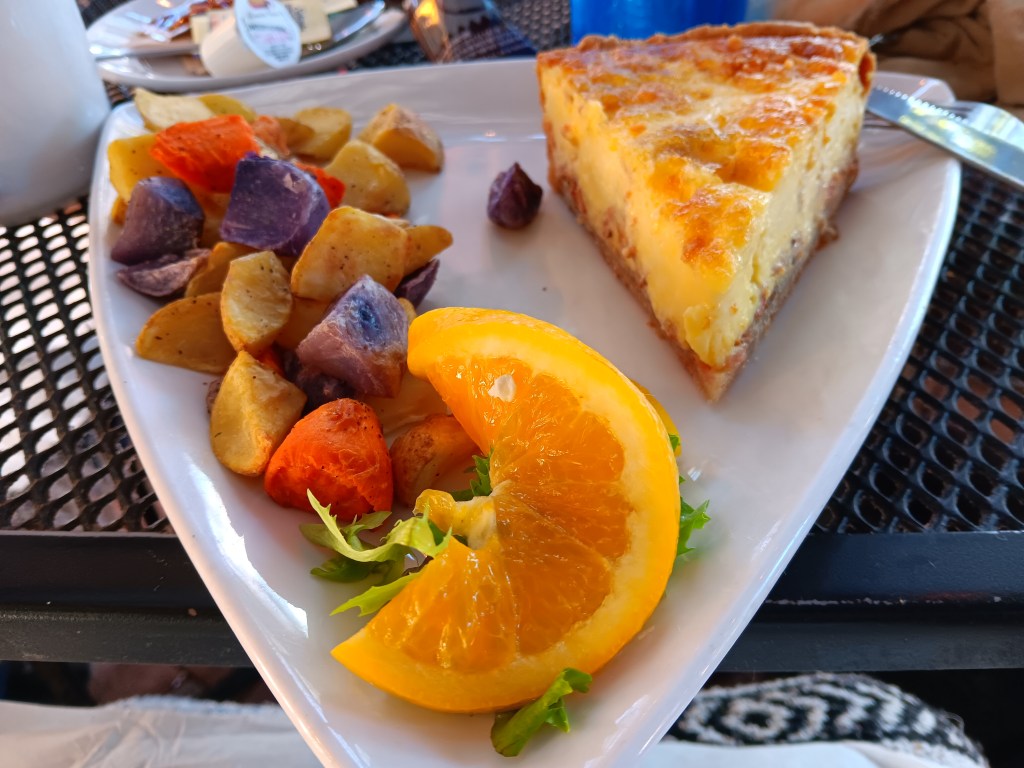
The next morning we ambled over to The Secret Garden Cafe, where Simon chose the Breakfast Burrito and Susan had the quiche. Simple elegance blended with delicious flavors, and we felt truly spoiled.
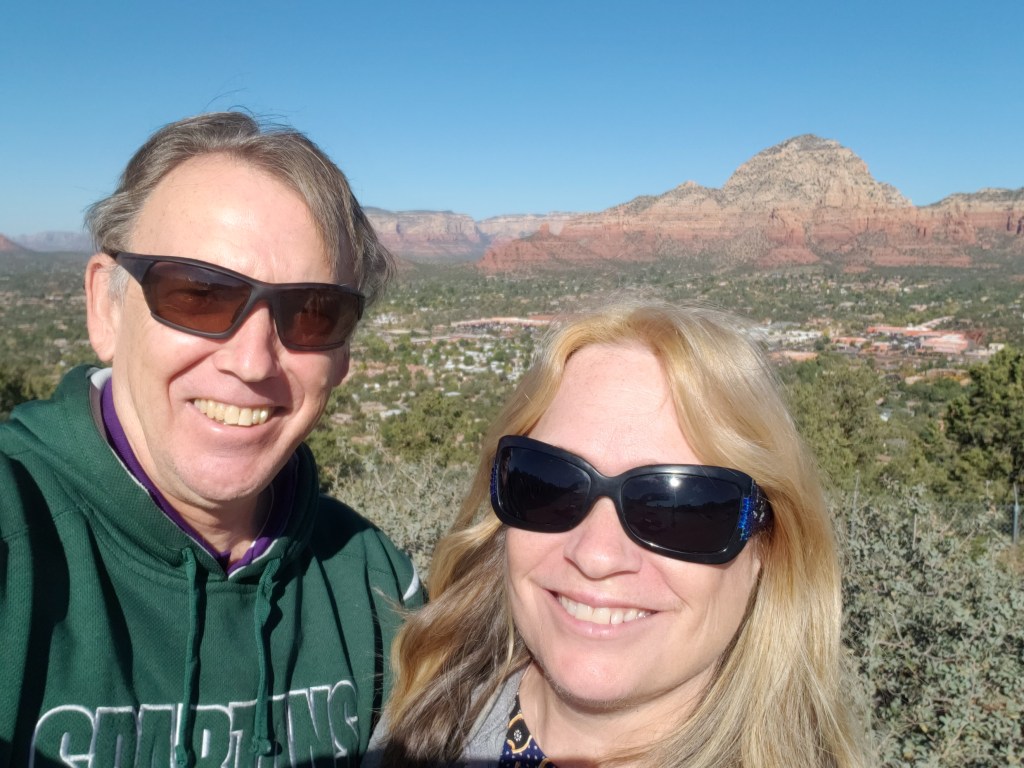
Finally, before we started back to Fati, we took a trip up the hillside to the Airport Overlook.
Can you guess which Magic Kingdom attraction is said to be based on Thunder Mountain, in the background here?
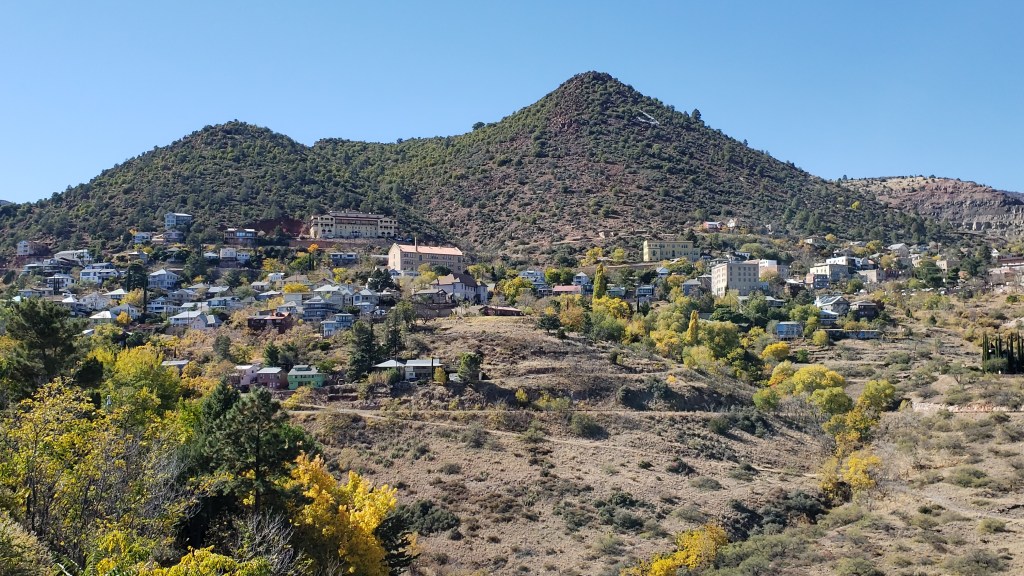
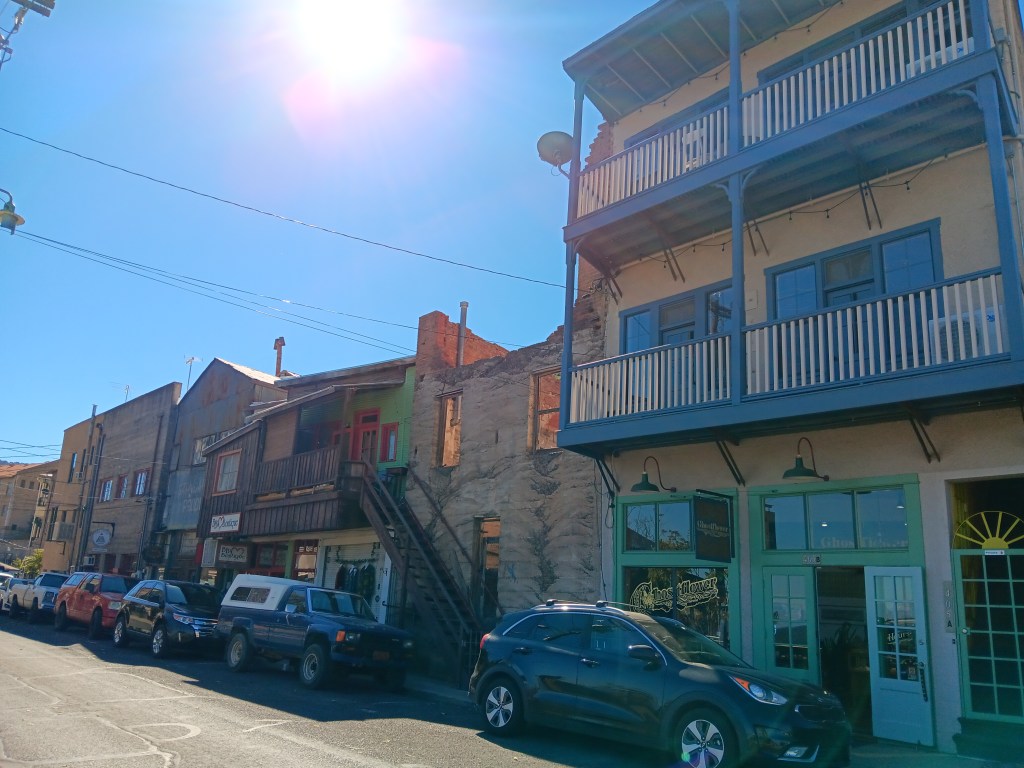
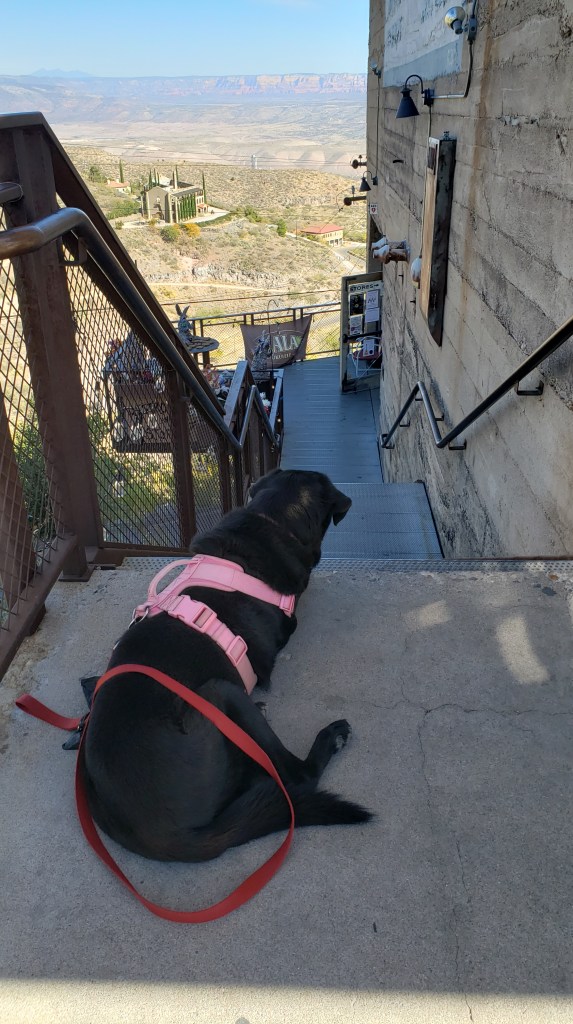
We detoured off of I-17 for a visit to mountainside Jerome, once a mining town full of bars and brothels, now a “ghost town”…
We chose not to drive through Oak Creek Canyon again before leaving Sedona, because there is only one “first time,” and no return trip will ever have that same impact. We want to remember this first visit exactly as it was. Perfection.
*Okay, you guessed it anyway. It’s a photo op in the museum. But our version is way more fun.
We’re like that scene from Monty Python’s The Life of Brian, in which John Cleese’s character, Reg, peevishly asks the members of the People’s Front of Judea what the Romans ever did for them (Answer: medicine, irrigation, health, roads, cheese, education, baths, Circus Maximus, and peace). We kept adding to our long list of things we wanted to discover on this year-long journey, and this time we’re diving into our desire to experience some areas like a local.
We’re also far behind on our blogs, although quite a bit of our time in Mesa was spent just poodling around, sorting out a new mattress, taking Fati in for an oil change and other basic services, and visiting with friends old and new.
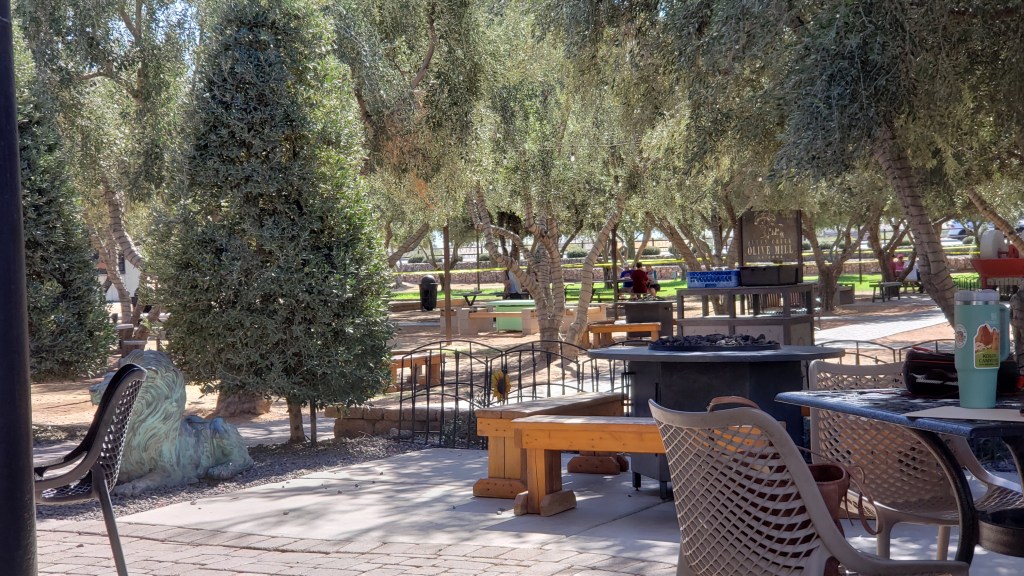
To kick off “living like a local,” we took advantage of the excellent dining options nearby – feeling unbelievably spoiled by the sheer variety of restaurants – with a visit to Queen Creek Olive Mill, a farm-to-table agritourism spot with olive trees, a lovely outdoor café, shop, and informative tour.
Olive Mill is the kind of place that reminds you there is simple elegance in the world.
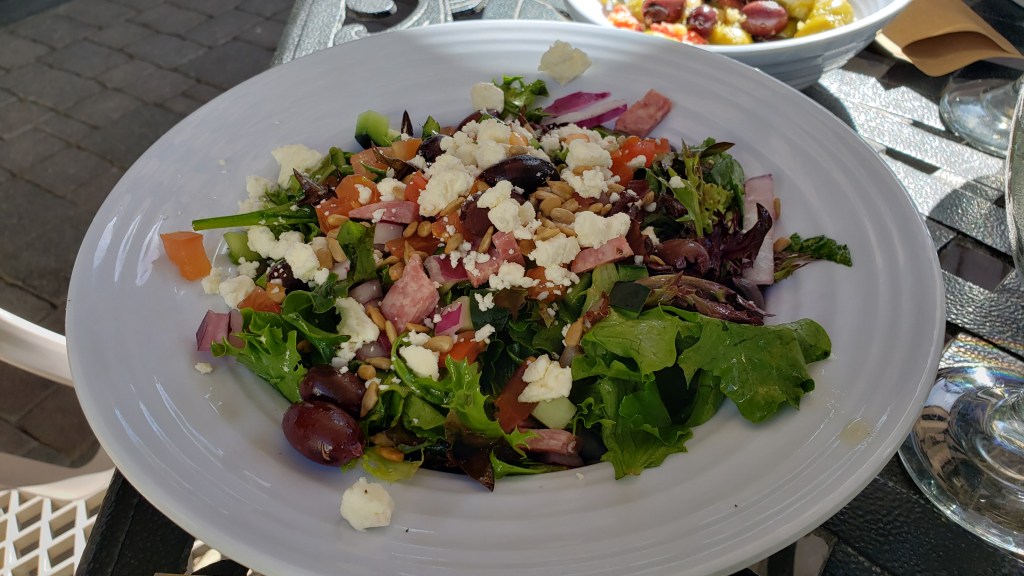
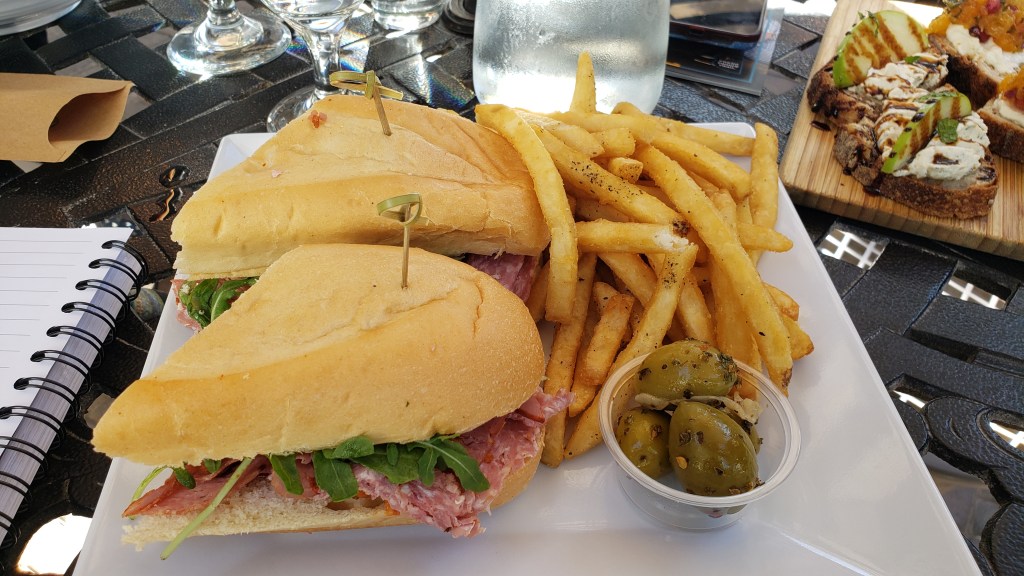
Susan had the Queen Creek Chopped salad, Simon had the Kalamata salami and cheese sandwich, and we split a side of warmed olives in garlic and rosemary, and it was all so luscious we came back a week later and ordered the same entrees.
The chopped salad is dressed with the farm’s own luscious Lemon Olive Oil.
Simon only got through half his sandwich the first time we visited, but powered through and ate the whole thing the second time.
Oh my Lord God Sweet Baby Jesus! These are so delicious!
We were surprised to find out Susan’s second cousin lives not far from Mesa, so we met up with her and her husband twice during our stay, reliving family memories, looking at family photos, and enjoying their company. Heidi has a letter Susan’s mom (Kathy) wrote to Heidi’s mom in celebration of a milestone birthday, and tears flowed while reading it, hearing Kathy’s “voice” again. What joy, what grief, and what gratitude for Heidi sharing that letter!
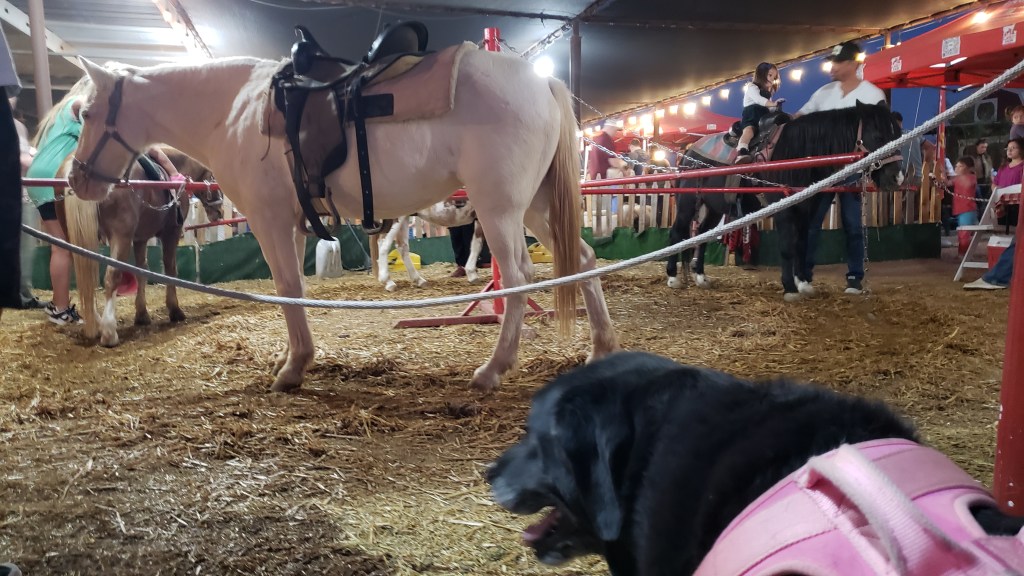
With Halloween practically knocking on the door, we spent two evenings taking in the local festivals. First, the Vetuchio Farms Fall Festival, as wonderfully homespun and nostalgic as it gets.
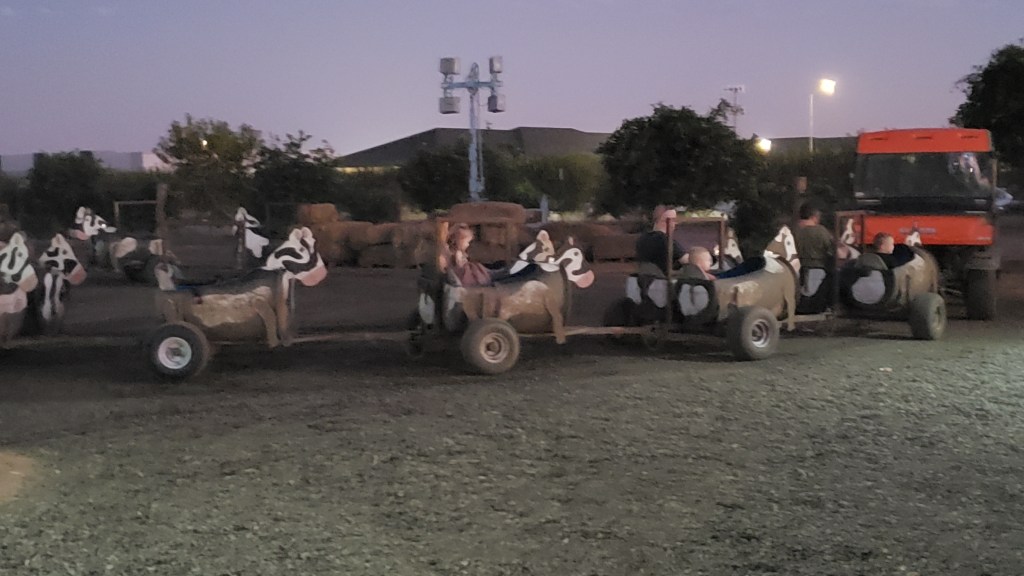
With pony rides, a petting farm, a giant slide, fairground rides, a tractor-pulled train ride, and a corn maze, it takes you right back to happy childhood memories when times were simpler and kids still played outdoors.
“That’s a big dog.”
Adorable little cow train. The line to ride was LONG.
Ruthie took the lead in the corn maze, and she summoned all her super powers to get us back out!
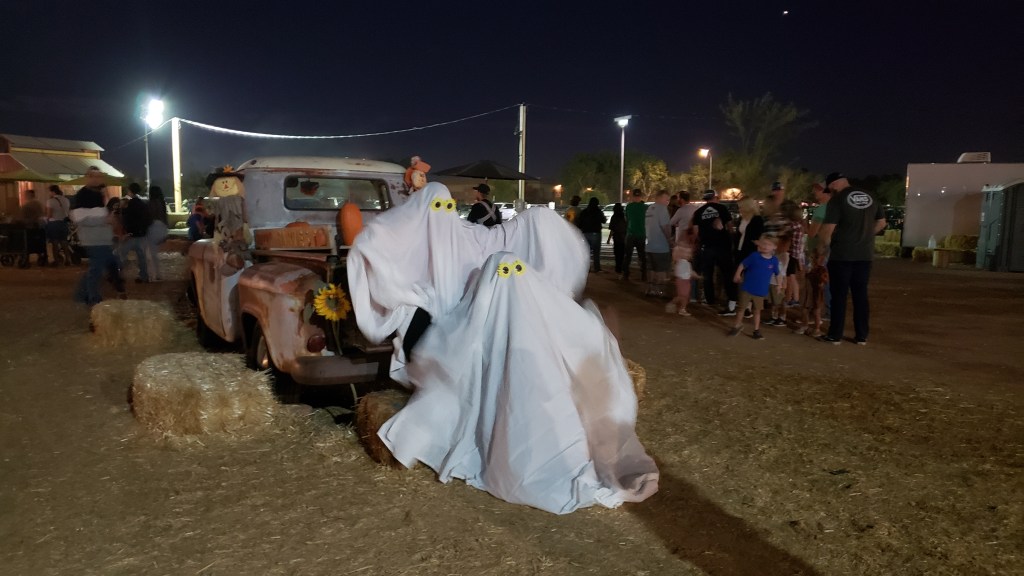
The real locals got into the spirit of the night.
We had a big lunch that day, so we didn’t try any of the food. Instead, here’s a photo of a hapless pedestrian who tried to cross any road in Montana or Wyoming, where speed limits are just vague suggestions.
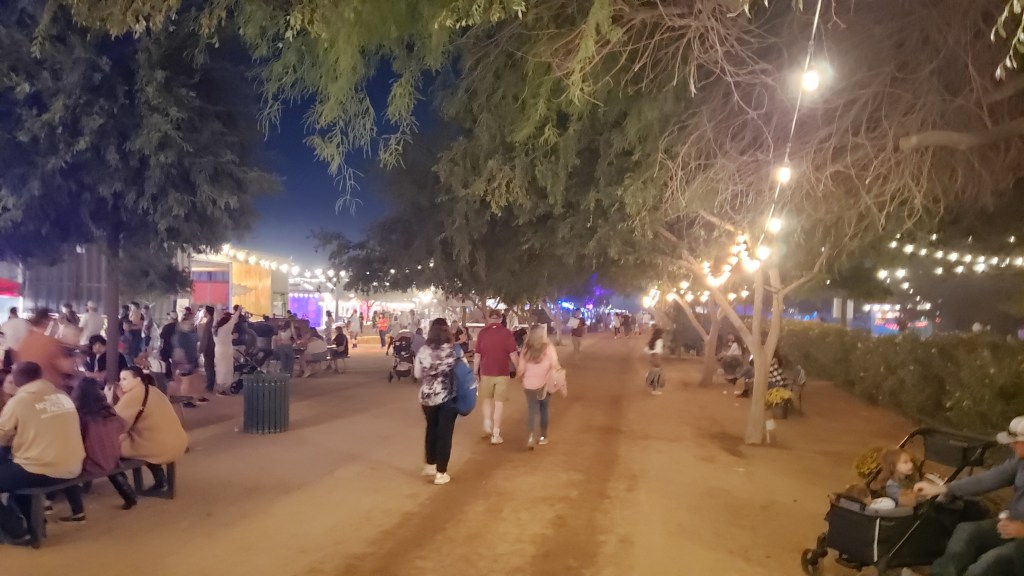
The next night we went to the Schnepf Farms Pumpkin & Chili Festival, where the pig races were high on our must-see list. Bigger and flashier than Vetuchio Farms, there was a lot more to do, but with less pull of the nostalgic. We’re pretty sure the same families we saw the night before were there, and we could understand why they’d want to do both.
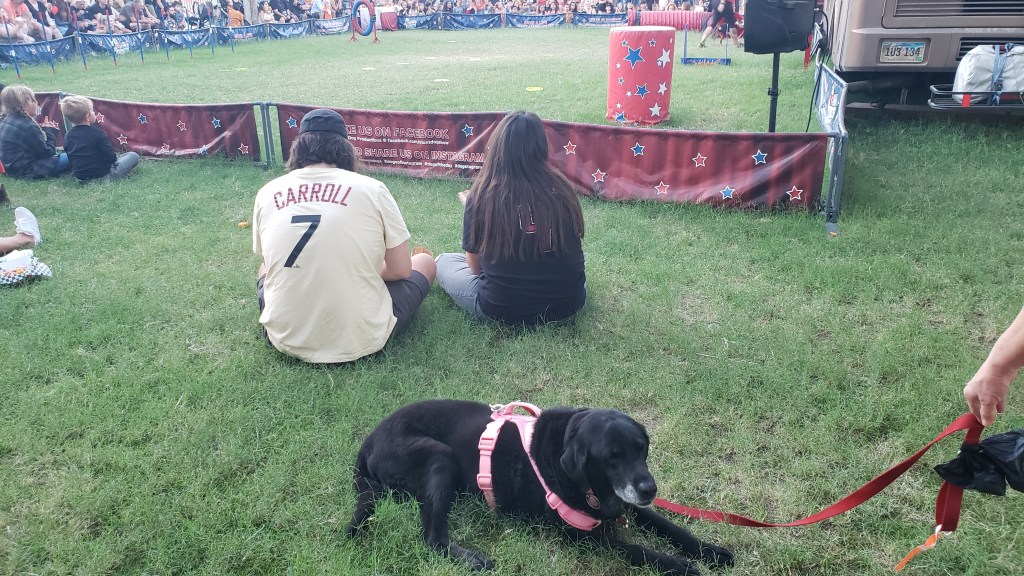
We had time to watch some of the dog agility show before the pig races started, and while Ruthie assured us she has no interest whatsoever in that much exercise, it would turn out to be a real highlight for us.
Ruthie says “No.”
The pig races? Well, they were cute, but short. Five kids were chosen for each race, and they stood along the railing in front of a color that was assigned to each pig. The kid whose pig won the race was awarded a strap-on pig nose. Hilarious for some, humiliating for others, mainly depending on their age. We’ll just leave it there, because it was all in good fun.
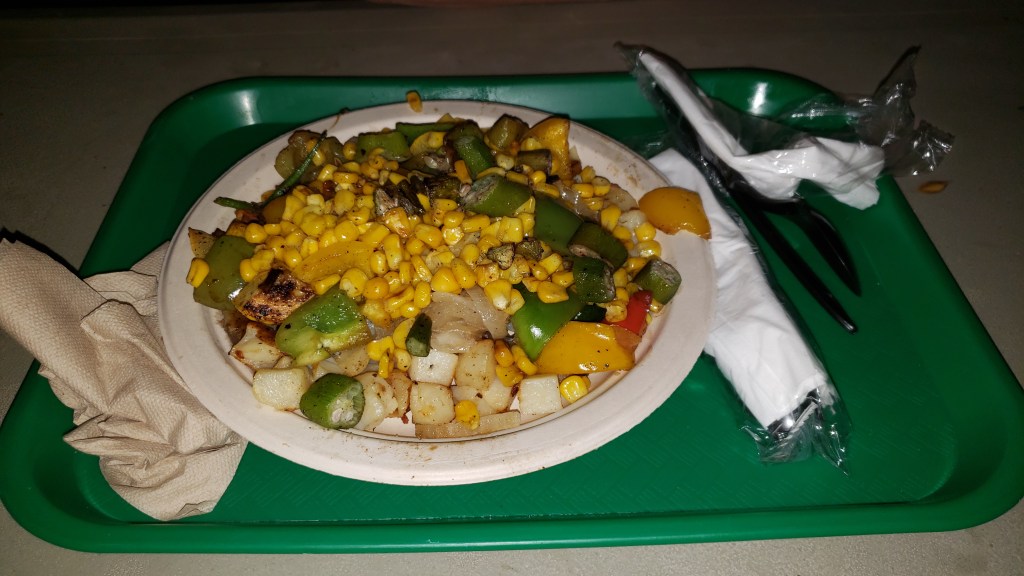
We split a plate of succotash (which, to us, was more like grilled vegetables) and a bowl of chili, and the chili was so good we forgot to take a photo of it before we gobbled it down. Ruthie approved, too, when we let her lick the bowl.
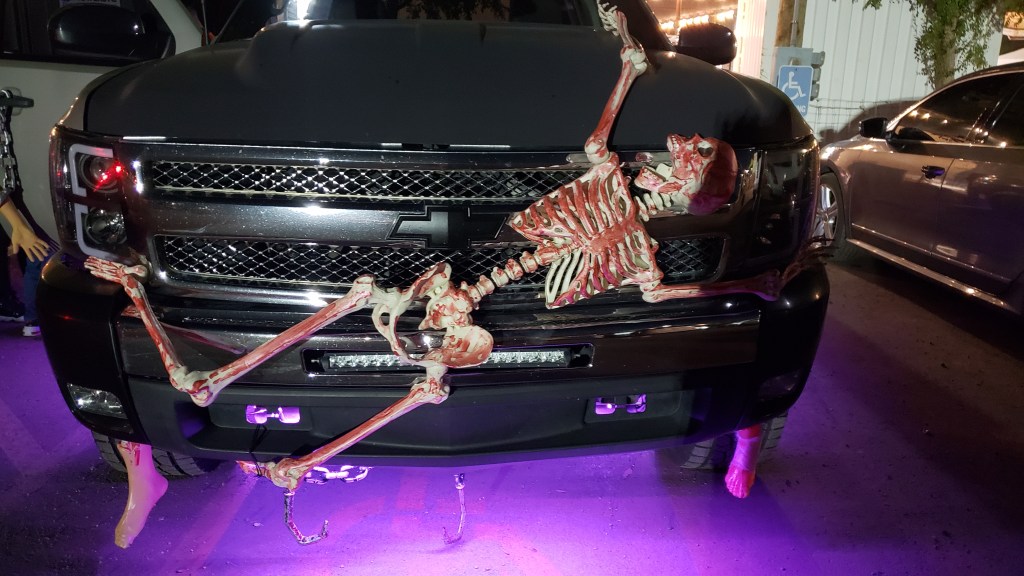
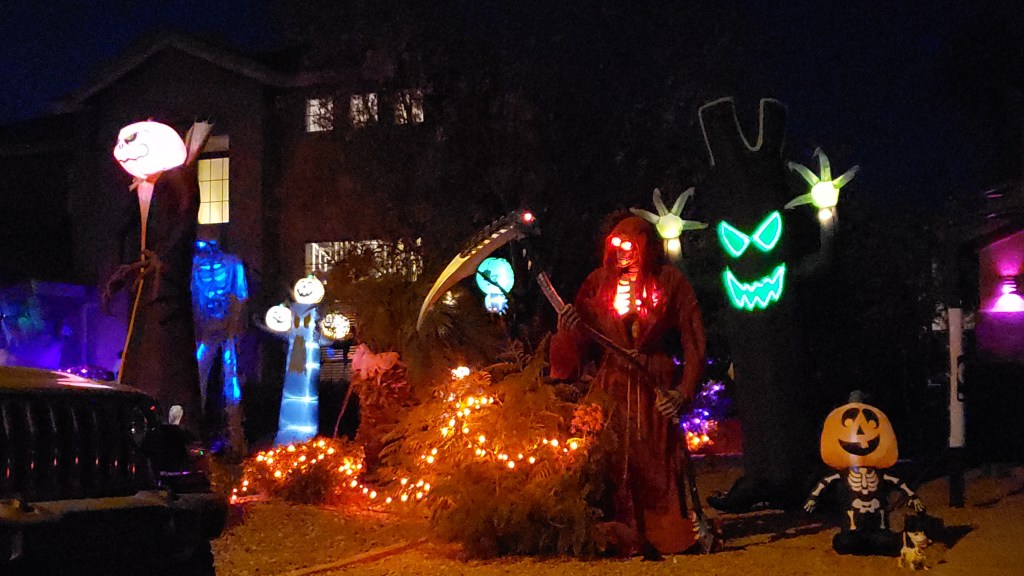
On Halloween night we drove through a nearby neighborhood to see the decorations and the trick-or-treaters. It was the right decision, and made us feel less like we’re so far away from home. Susan especially is trying not to think too much about Thanksgiving and Christmas, the first time she will have been away from Young Son, ever, over the holidays.
We saw a lot of giant Jack Skellingtons
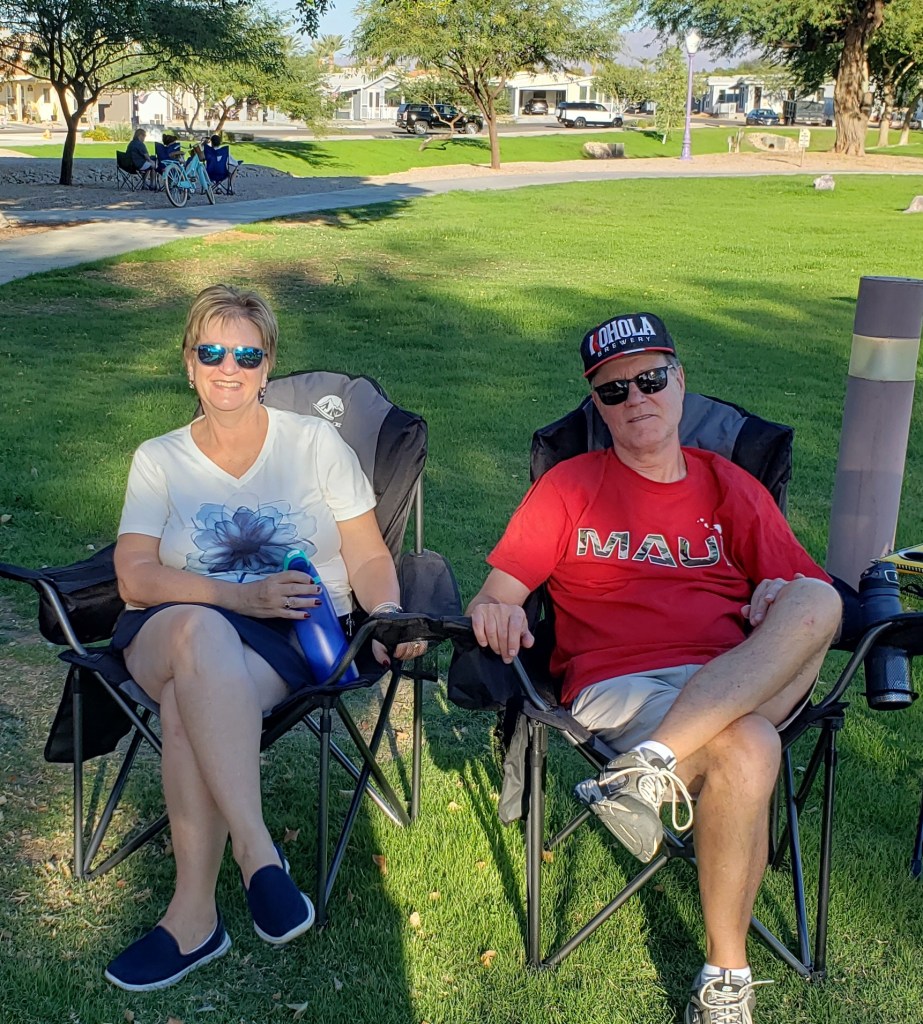
But the experience that made us feel most like we were living like locals were the nights when we crossed the road between Fati and the next row of rigs and spent time around Rocky and Ronda’s campfire, sharing stories, eating popcorn, having a barbeque, and feeling like we were part of a community.
Good neighbors!
Those of you who know our backs have been in agony for the last few months due to our Sleep Number bed whose air bladders never inflated, leaving us sleeping in deep canyons, will be glad to know we finally have a new mattress, after much trying.
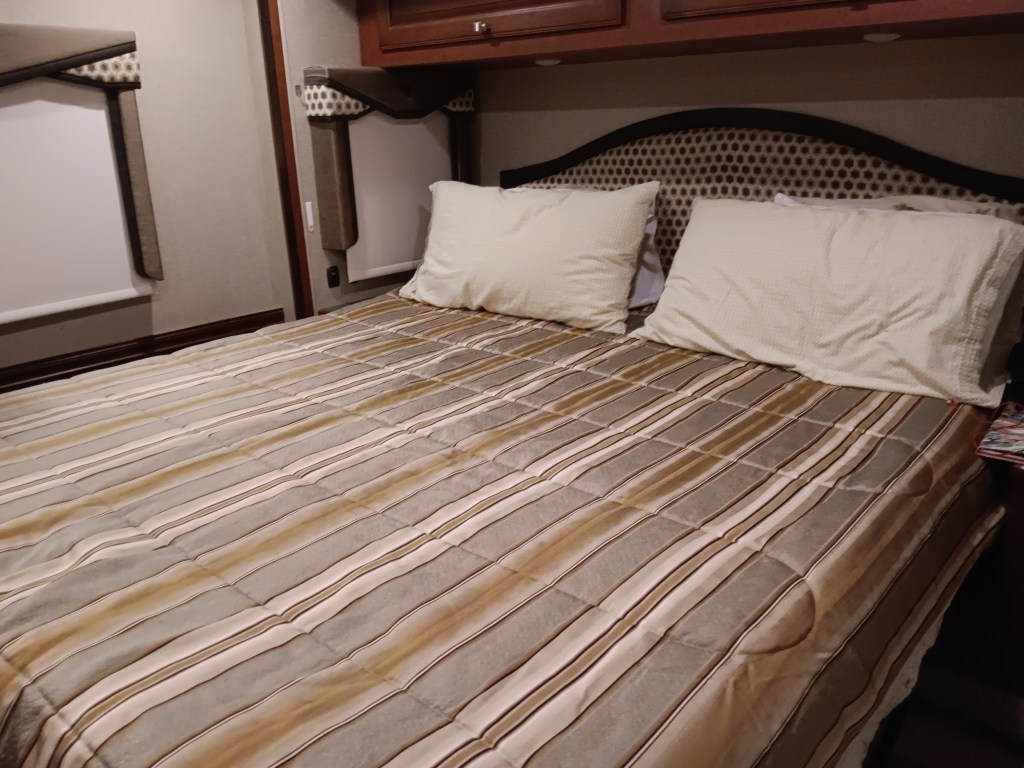
We’d been sleeping on a thick foam pad for a few weeks while waiting for our new mattress to be made and delivered, and when it was delivered to some unknown location rather than the mattress store in Mesa, we had to wait another week for a second one to be made and delivered to our new location in Goodyear. Long story short, we slept well on our new mattress for the first time last night. Yay!
It’s so thick and supportive!
Our time in Mesa was the most social time we’ve had so far, and it was very, very hard to leave. Perhaps a season-long visit is in our future?
Continuing our exclusive series for The Independent, here is the fourth instalment of our Great American Road Trip, charting the scenic splendors of Montana and Wyoming, and the history that underpins them.
Month 4 of our year-on-the road RV adventure took us from Glacier National Park in northwest Montana to the Wyoming-Idah0 border via a wealth of small towns, vibrant wildlife, epic countryside and historic counterpoints. You can read it on this link to the Indy’s Travel section.
“Let’s do the scenic drive from Apache Junction to Tortilla Flat,” Simon suggested on our first full day in Mesa, Arizona. “Yes, let’s!” Susan agreed. We’d traveled that road many years ago, and recalled how flat it was; just a nice, straight shot past a ghost town to a cute Western saloon with horse saddles for seats at the bar.
Oh, the folly of faulty memory!
Our destination’s location deep within Tonto National Forest in the Superstition Mountains should have been our first clue, and the words “scenic drive” should have been the second, but we’re road-drunk and were lulled into a sense of comfort and familiarity by the luxury of Monte Vista campground resort, surrounded by every store, eatery, and convenience we could imagine. Plus, this is the Sonoran Desert, and deserts are supposed to be flat.
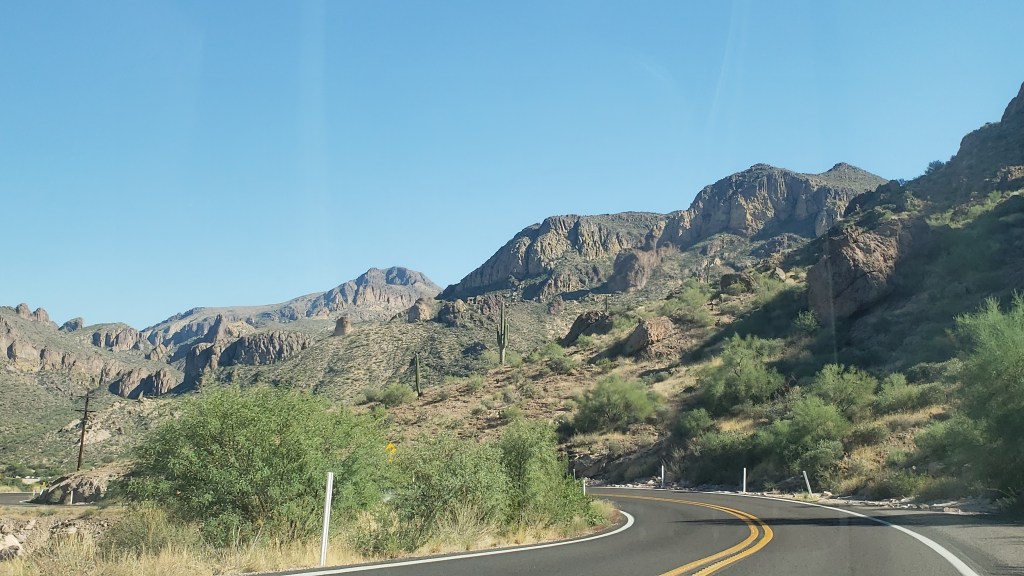
If you’ve been following our blog, you already know what happens next (if not, it’ll be steep drops along a tight, winding road with no guardrails). But part of what happened next, as we ascended into the Superstitions, was that Simon expertly hugged the mountainside on the way up and navigated the middle line as much as humanly possible on the way down, while Susan called on all her newfound coping skills, which, for the most part, added up to an extremely pleasant drive.
Tortilla Flat is the “last surviving stagecoach stop along the Apache Trail,” and the last time we were there it had rained enough for those Flash Flood warnings to matter. The road immediately beyond the tiny strip of shops and the saloon was under water, so we were curious to know what lay beyond it.
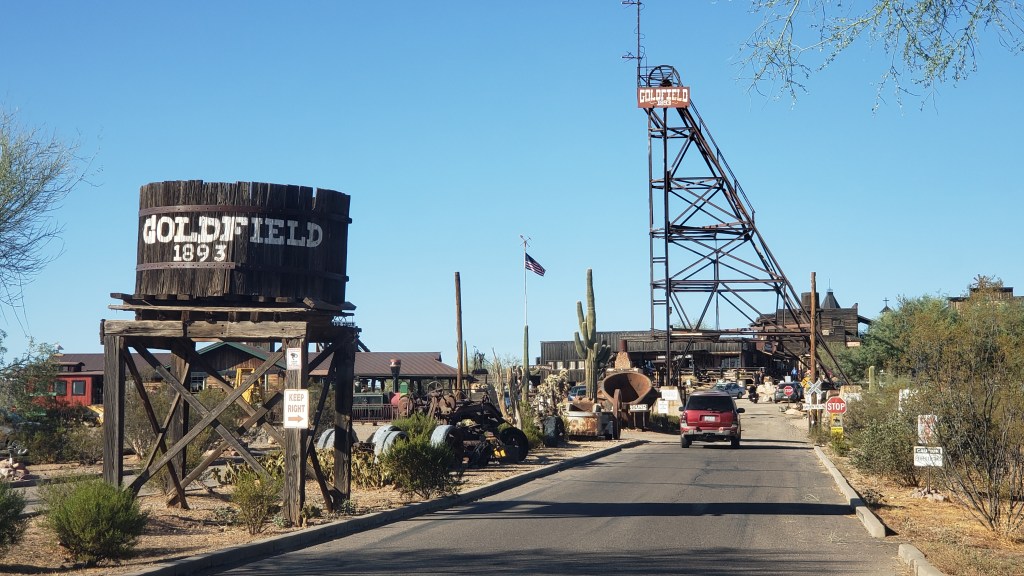
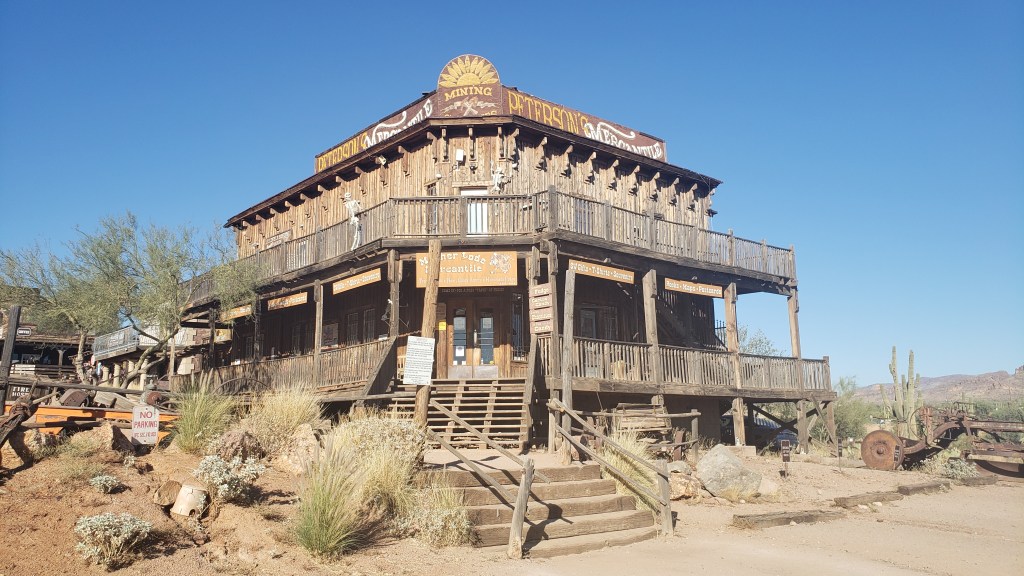
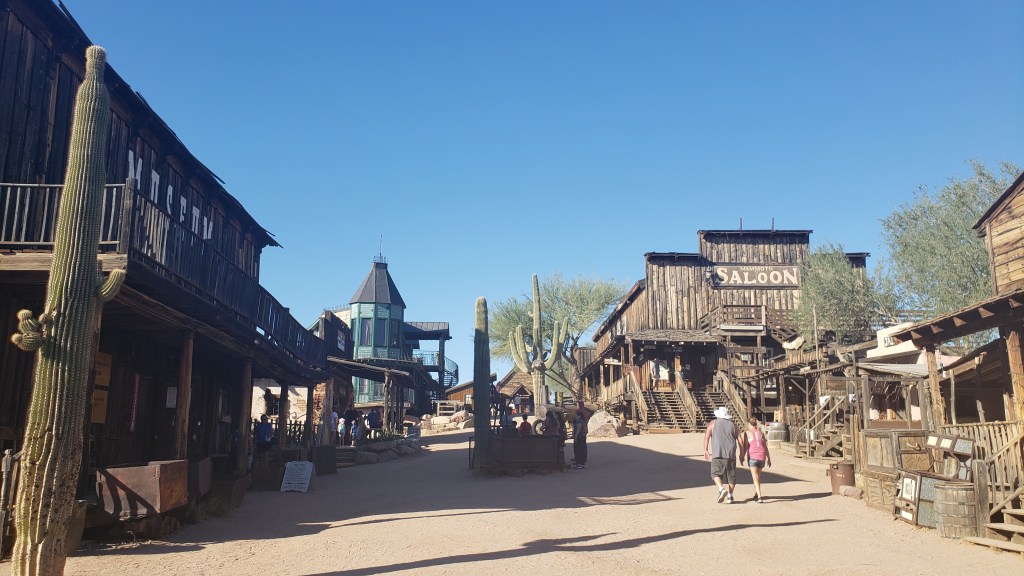
The first stop along State Route 88 after Apache Junction was Goldfield Ghost Town, which was closed the first time we’d been in Mesa, but open – and busy – this time. It’s not a real ghost town, but it was once a mining town that originated in 1892, then died a spasmatic death when the gold vein tapped out. Now it’s a tourist attraction with a saloon, gift shops, tours, and a narrow gage railroad train.
The afternoon was too hot for much wandering along the dusty Main Street, and there were many signs telling visitors what to do if they come across a rattlesnake, so we walked the length of the attraction and back, met lots of people who wanted to pet Ruthie, then headed north-east along AZ-88 again.
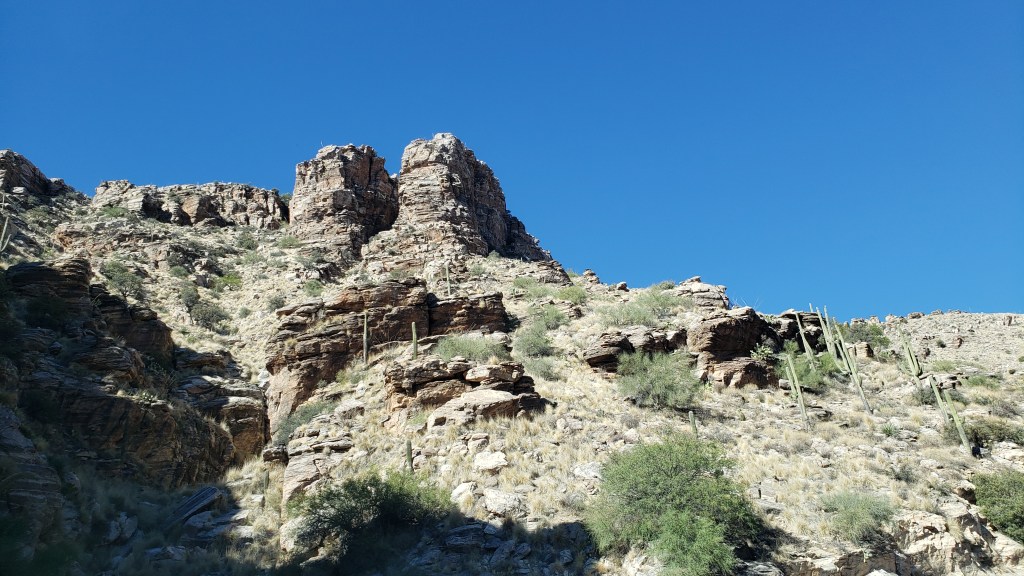
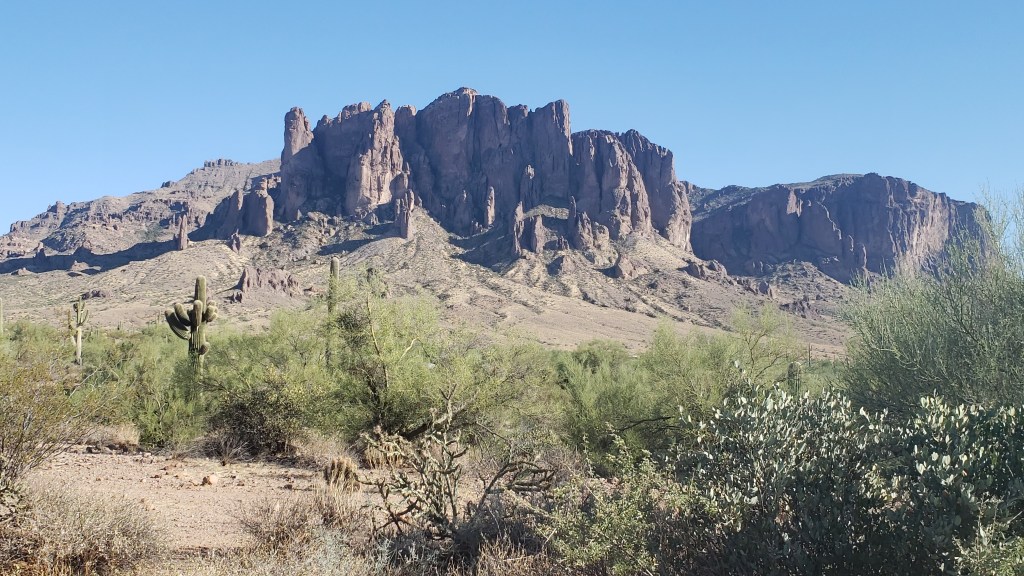
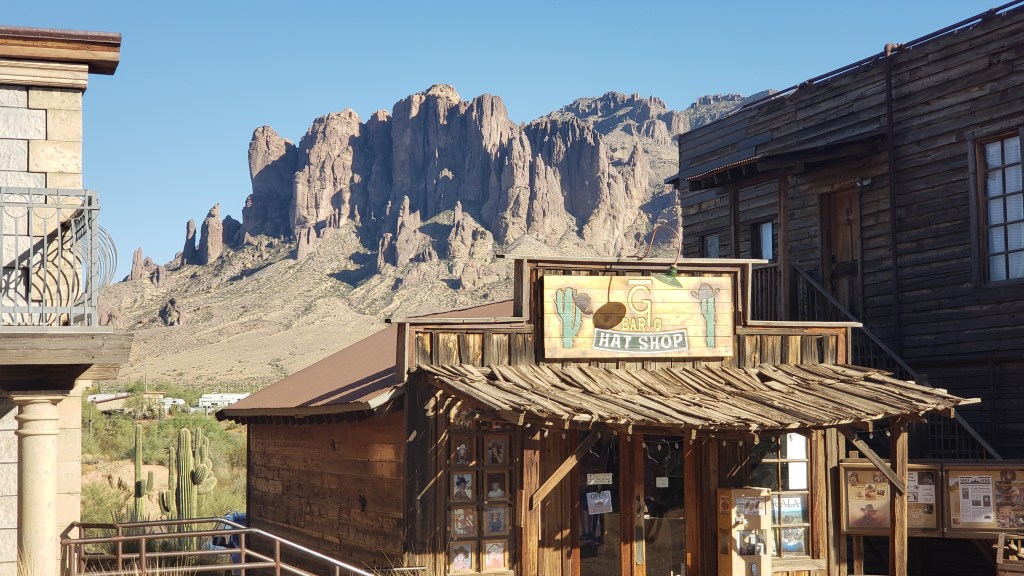
Touristy building aside, it’s easy to imagine a little town springing up here in the shadow of the crumbling mountains.
Our next stop was Lost Dutchman State Park, where the perky attendant assured us we’d be wasting our time if we paid for entry and couldn’t do any of the hiking trails, but she did suggest we take some photos of the mountain as we turned around and exited, which we immediately forgot to do.
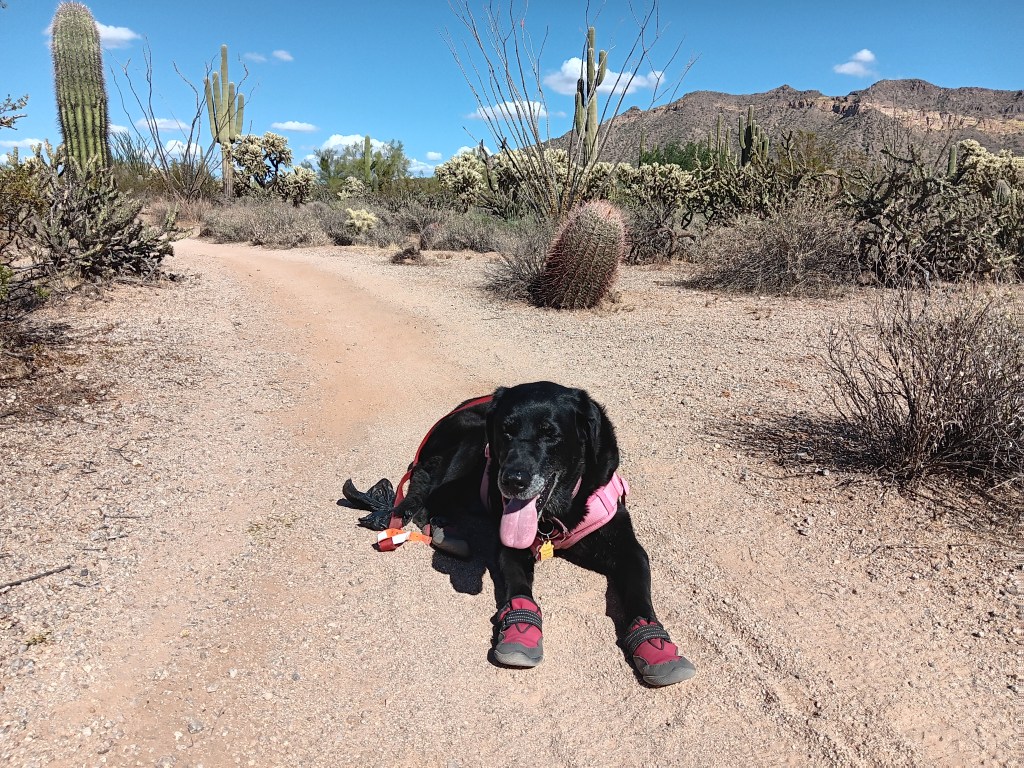
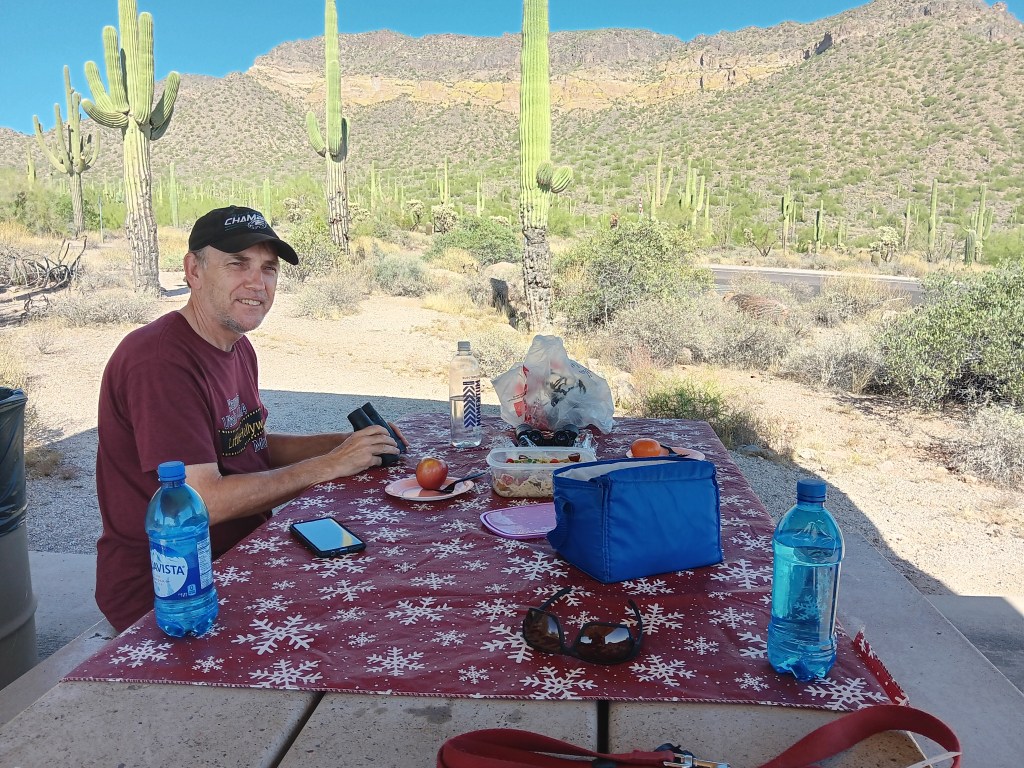
We would visit the Usery Mountain Recreation Area two days later, so this wasn’t a great loss. Having a stroll and lunch in what felt like the middle of desert nowhere, with birdsong all around us, was among the most relaxing things we’ve done so far.
Break time!
Lunch time!
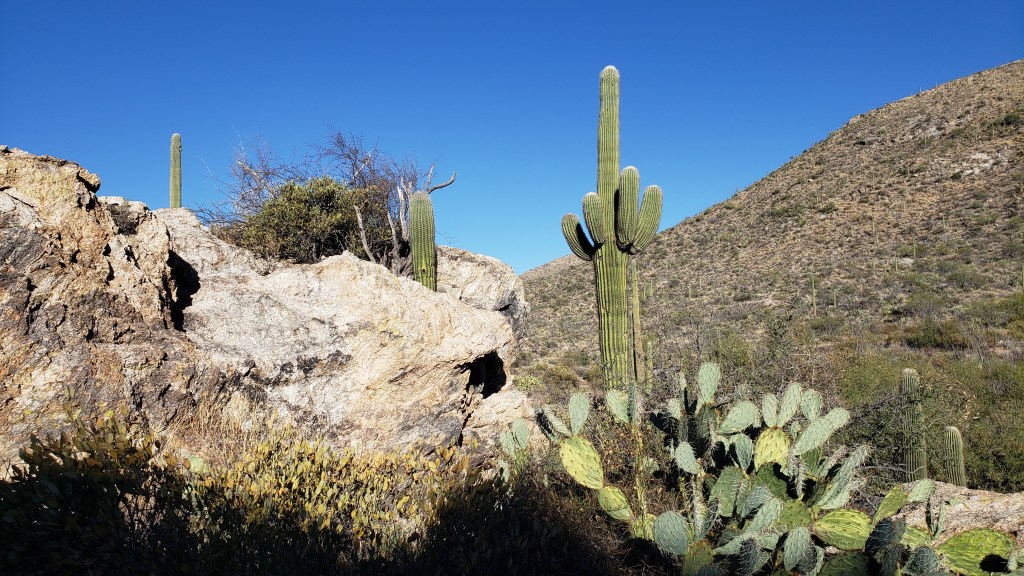
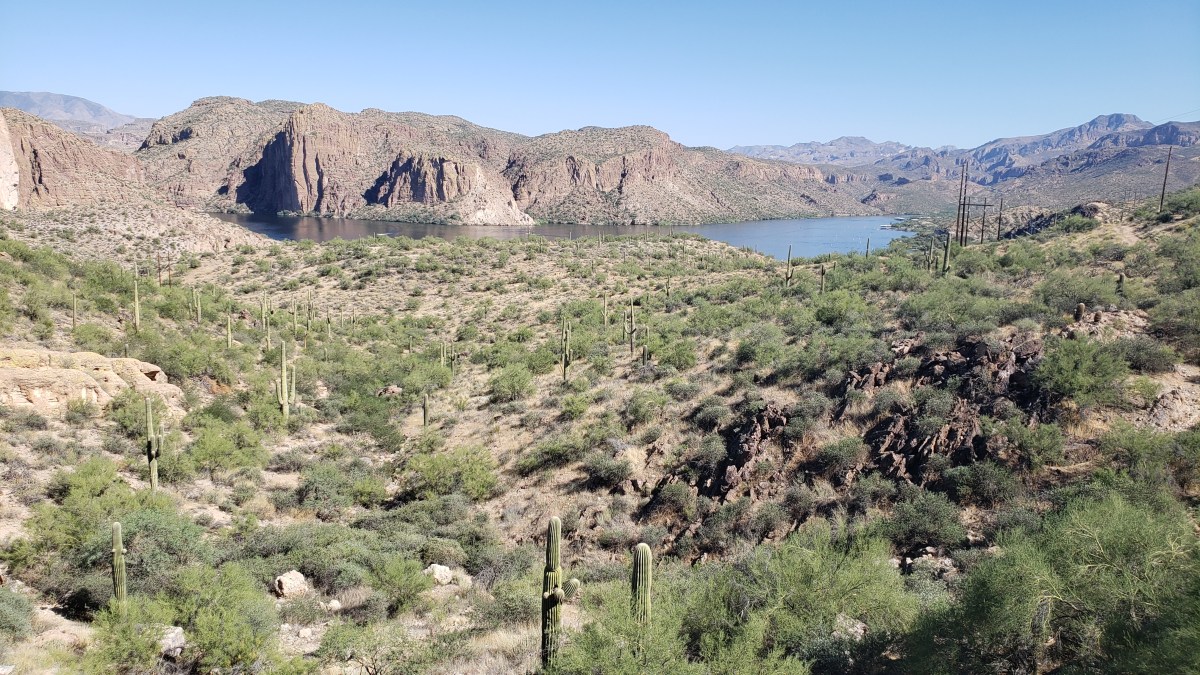
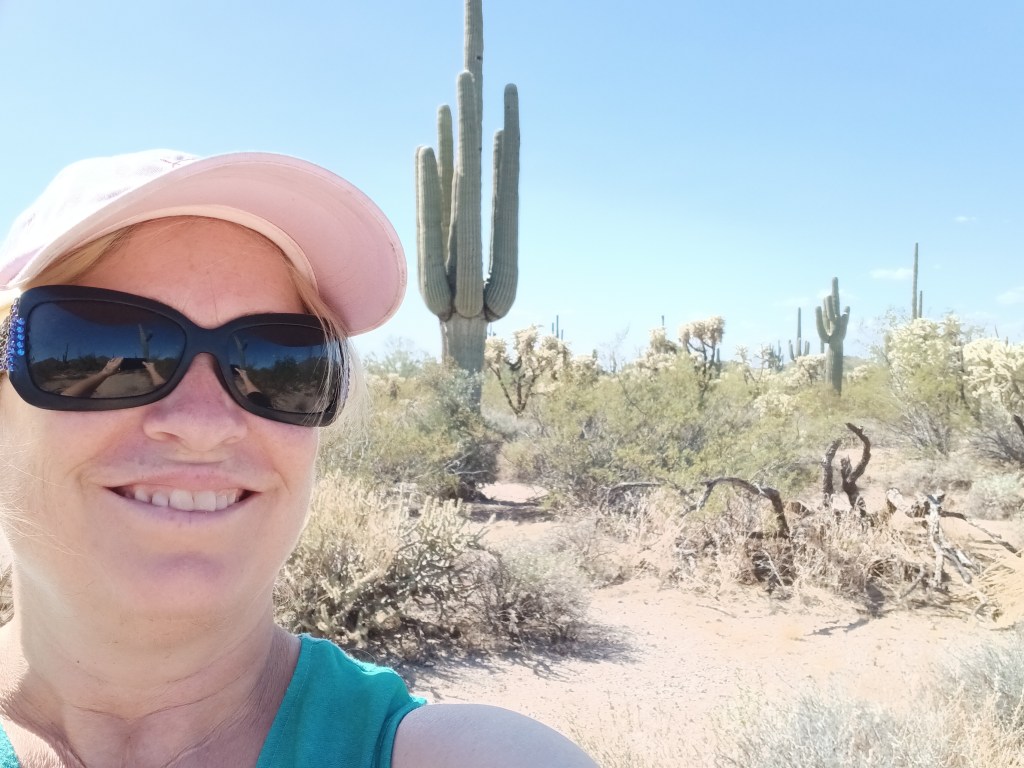
As we wound up the mountainside the views became more expansive, and we marveled at all the Seguaro cactuses, which look for all the world like people, often with too many arms. We later learned that these succulents swell to twice their normal size during monsoon season, much like we do in Florida’s humid months.
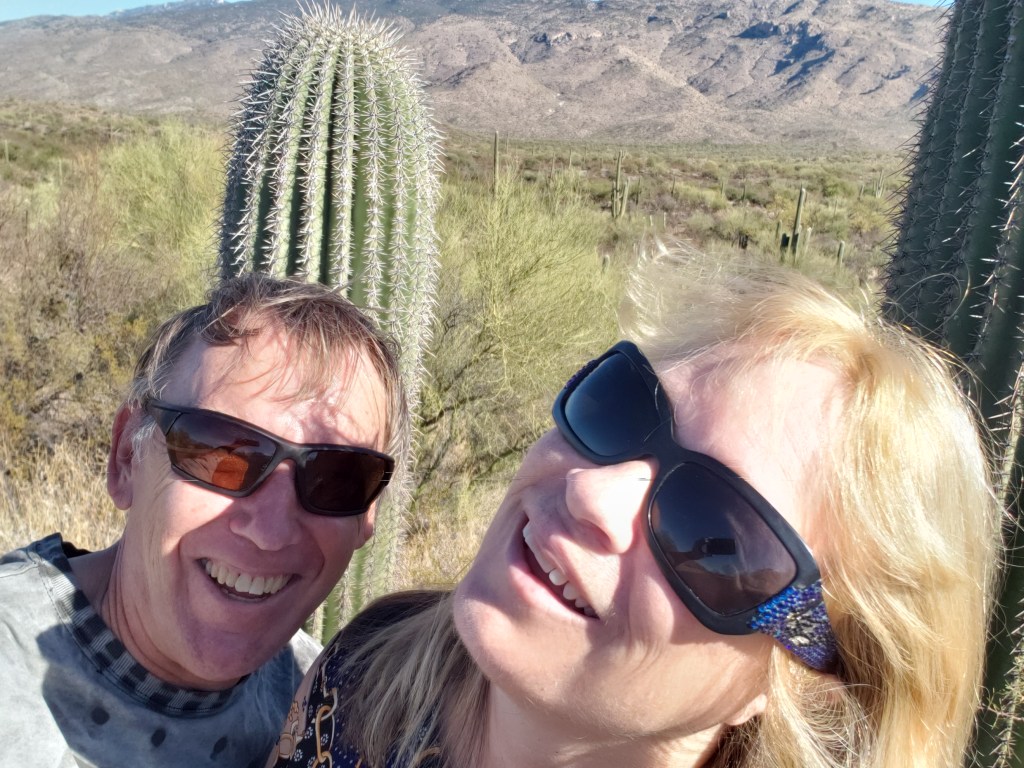
Selfie time!
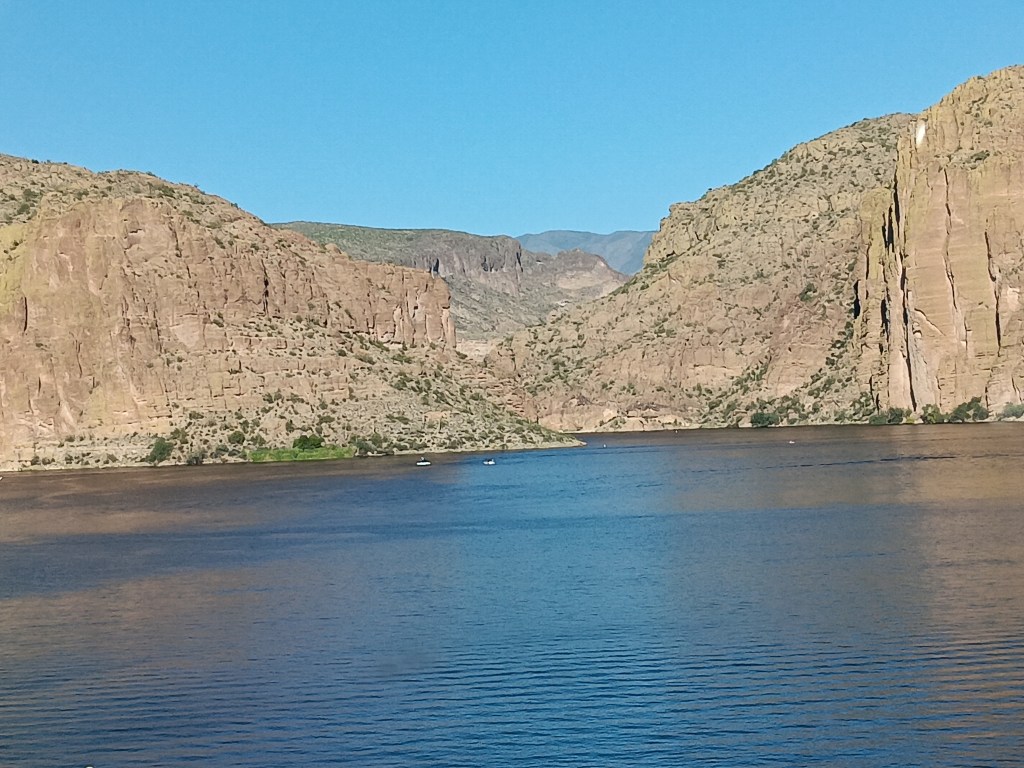
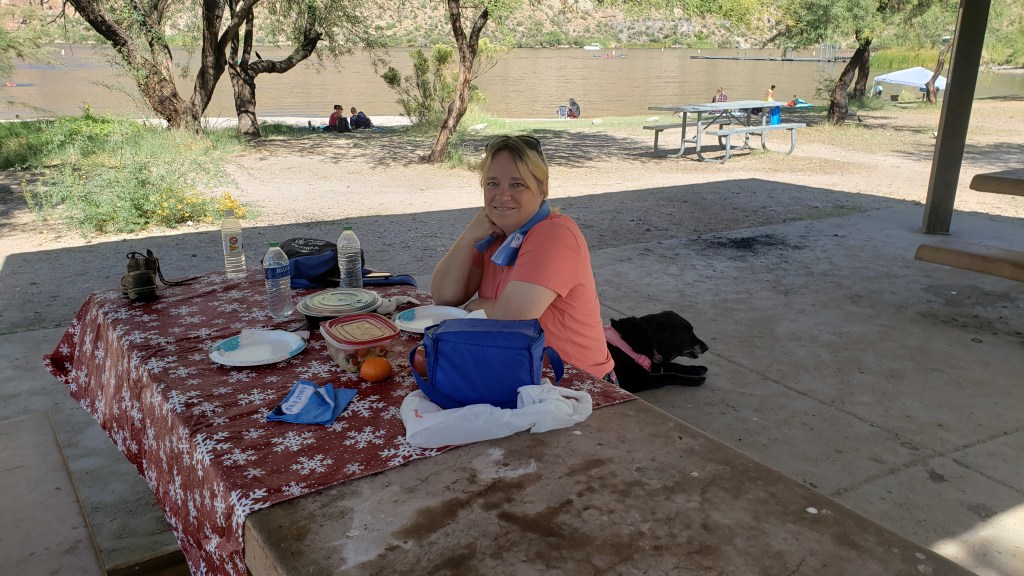
The Canyon Lake Vista offered a view over Canyon Lake (obviously), a manmade waterway that is one of four lakes created when the Salt River was dammed due to the Roosevelt Dam project. Even from the heights, we could see how well-used it was, and we decided to make it our lunch stop.
Lunch time again, but this time on the actual day this blog is about.
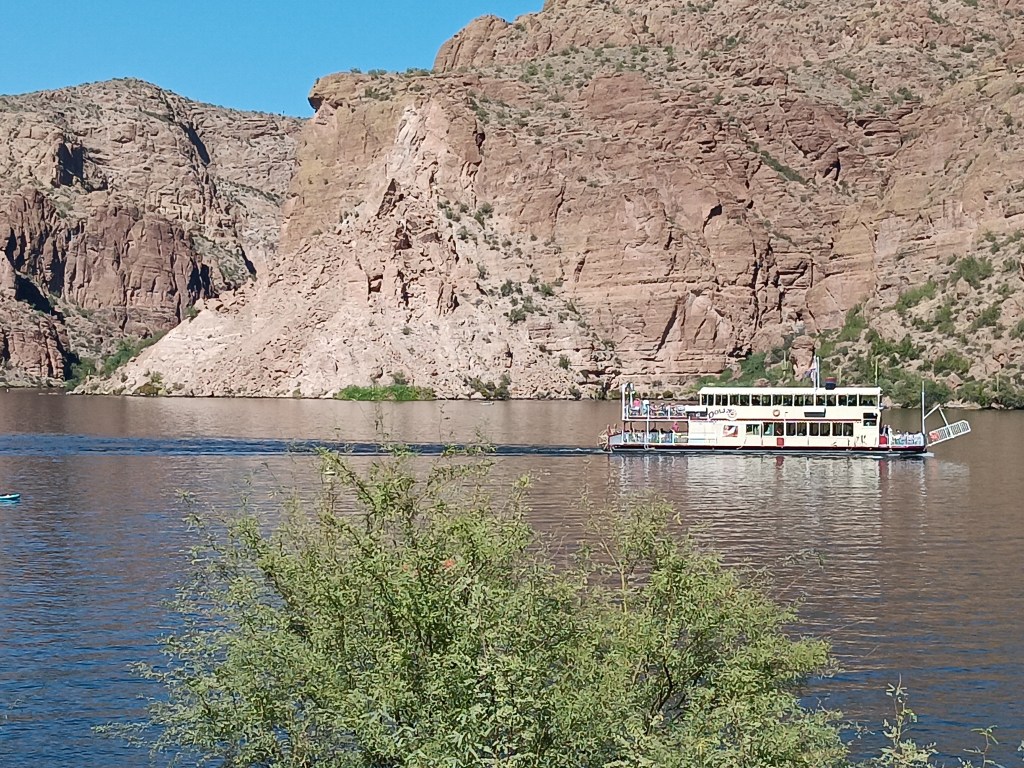
The lake is accessible after a one-lane bridge, which neither of us remembered from our last visit, and once we were settled in at a picnic table in the shade, we spent a happy half-hour boat-watching. Dolly Steamboat tours make their way through the canyon and out into the lake, and locals were out making the most of the gorgeous weather on boats and on jet skis.
The Dolly Steamboats looked very inviting.
Crossing a second one-lane bridge after lunch brought us to Tortilla Flat, which everyone in the whole wide world including us calls Tortilla Flats, because the singular just sounds wrong. It’s a tiny single-street “town” that would be a strip mall if it were in a big city, but it’s got an atmospheric saloon, debatable history, and good ice cream, so we’ll forgive it its idiosyncrasies.
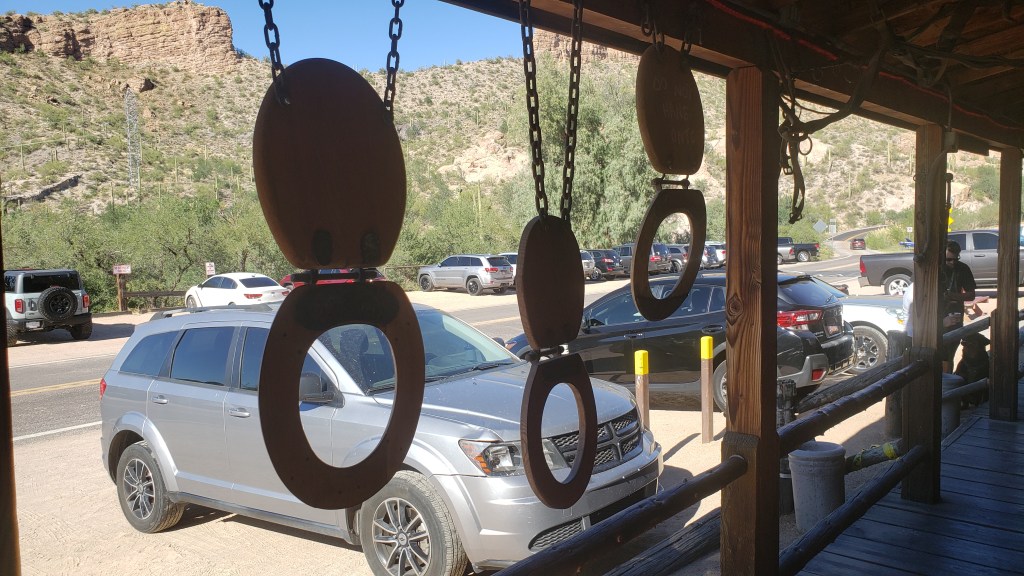
So, these toilet seats are photo ops, and yes, you’re supposed to stick your head in them. We didn’t, though.
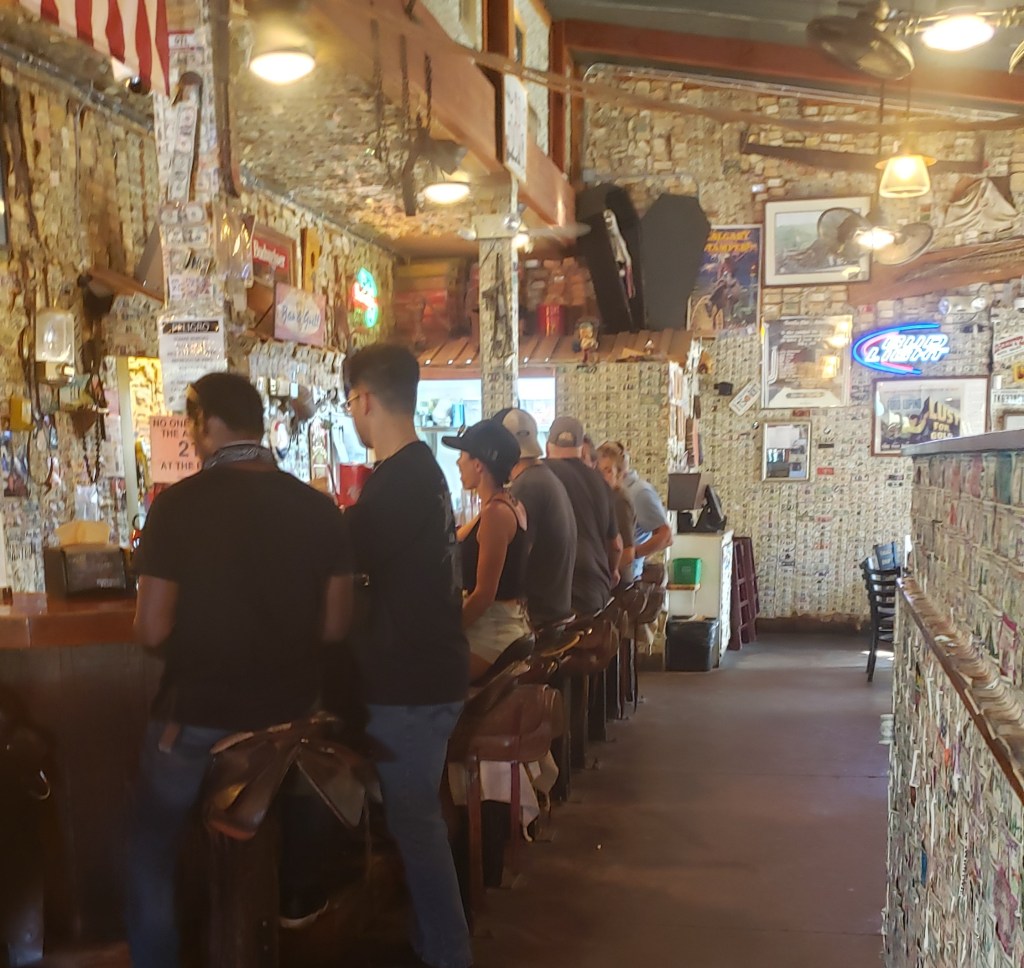
More dollar bills, plus horse saddles for seats.
The tiny burg’s origin story revolves around a treasure trove of gold hidden in the Superstition Mountains by the Jesuits, which everyone wanted although no one knew where to find it. The town wasn’t actually around in the 1600s to mid-1700s, but who doesn’t love a little greed with their legends?
There is no agreement about when the town (really just a freight camp) came into being, but it’s safe to assume it was just prior to or during the 1904 building of the Roosevelt Dam and the road leading to it. Celebrities as varied as Teddy Roosevelt, Clark Gable, and Colonel Sanders of chicken fame have been past visitors.
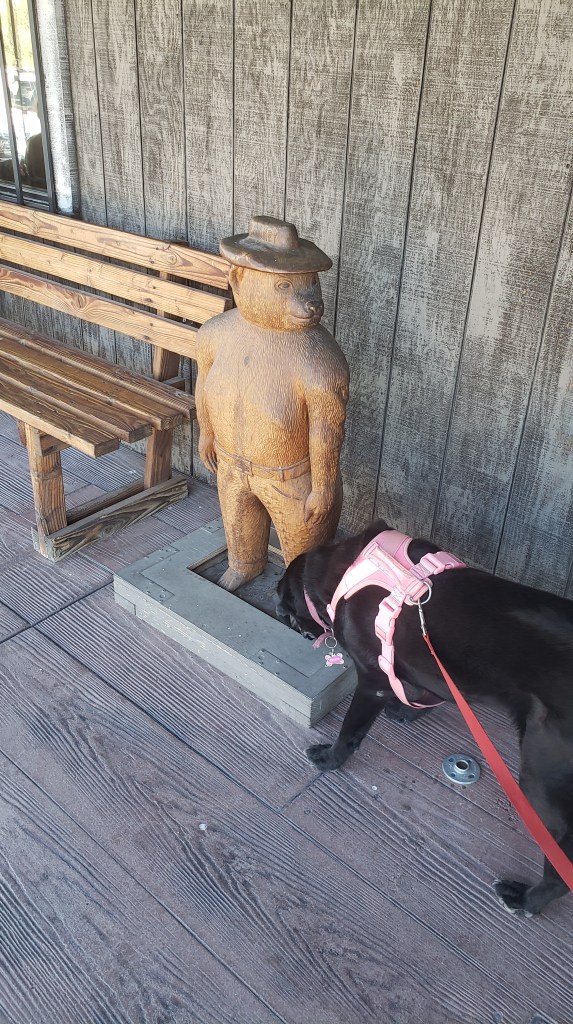
We had a wander along the walkway, where Ruthie met a bear and we had an ice cream cone, but more than anything, we were just happy to be out enjoying one of Arizona’s iconic locations under a cloudless blue sky.
Ruthie Meets Bear In Pants
What about that flooded section of the road we couldn’t pass the first time around? A big, yellow warning sign indicated it was closed. Sometimes you don’t get to travel every road that appeals to you, and we’ve learned to be fine with that.
And Tortilla Flat’s unusual name? The website insists it’s due to a group of people who got stuck during a rainstorm while returning from Phoenix after getting supplies, back when the area was nothing more than a trail running through the flat land. They used up all their supplies, and only had some flour, so they made tortillas to stave off starvation.
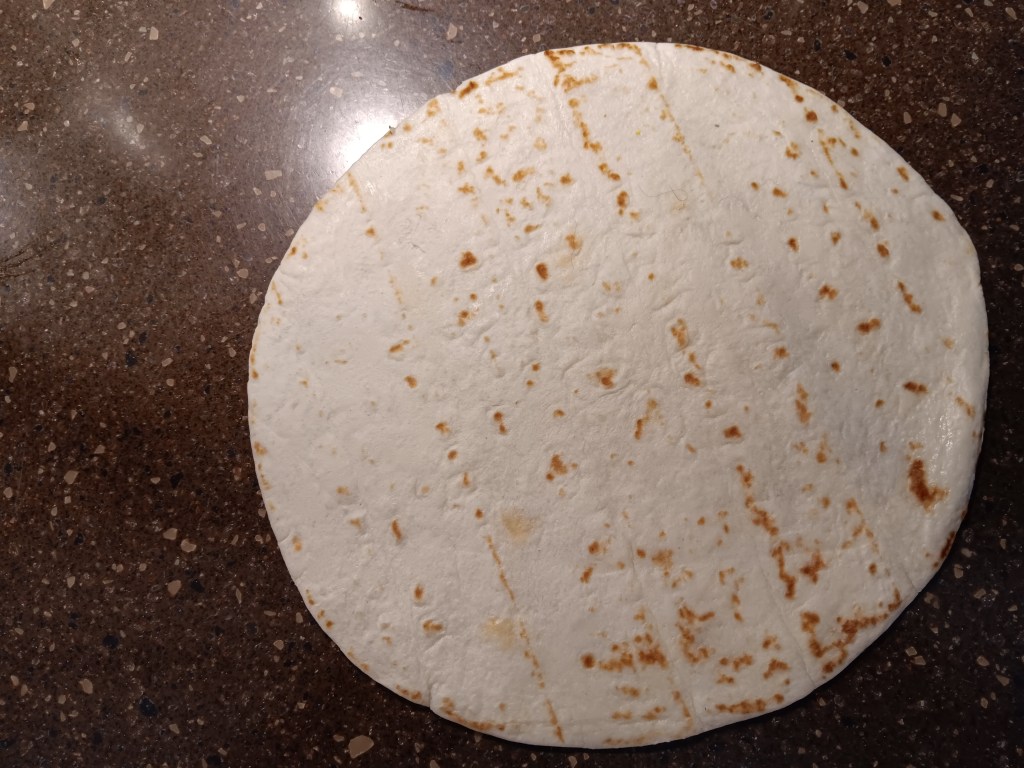
That moment when you realize you have a tortilla in your fridge and decide it makes as good a photo as any.
We’re pretty sure any story you can come up with will be just as convincing, so let your imagination run wild!




























 Veness Travel Media