Missions, Caverns, And A Whole Lotta Food


Our itinerary had been thrown into chaos compliments of Ruthie’s turbo-charged backside, but as things settled down for her, we ventured out again to pick up on the highlights. Some of our plans had to be scrapped, some fell through due to a major college football bowl game that had most of downtown San Antonio in worse chaos than Ruthie’s gut, but there was still plenty to enjoy, if our stamina allowed.
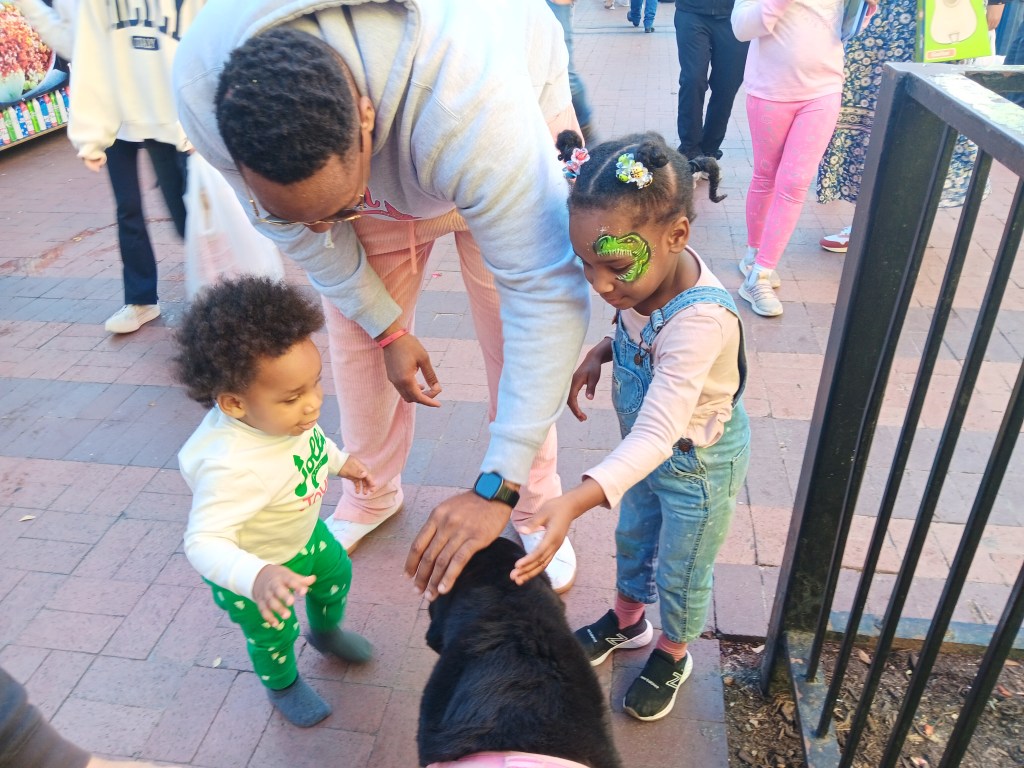
Ruthie gets a lot of love when we venture out. She’s incredibly patient and gentle with children.

Mission San José was known as “The Queen of Missions” for its larger-than-average size, and indeed, the church does cut an imposing figure over the huge courtyard outside. Simon and I both thought a mission was a just church; instead, it’s typically a community with living quarters, trades, agricultural work, and a church. But the mistake is an easy one to make, since the goal of forming the “community” was to convert native peoples to Catholicism, which would then generate new taxes for the King of Spain.
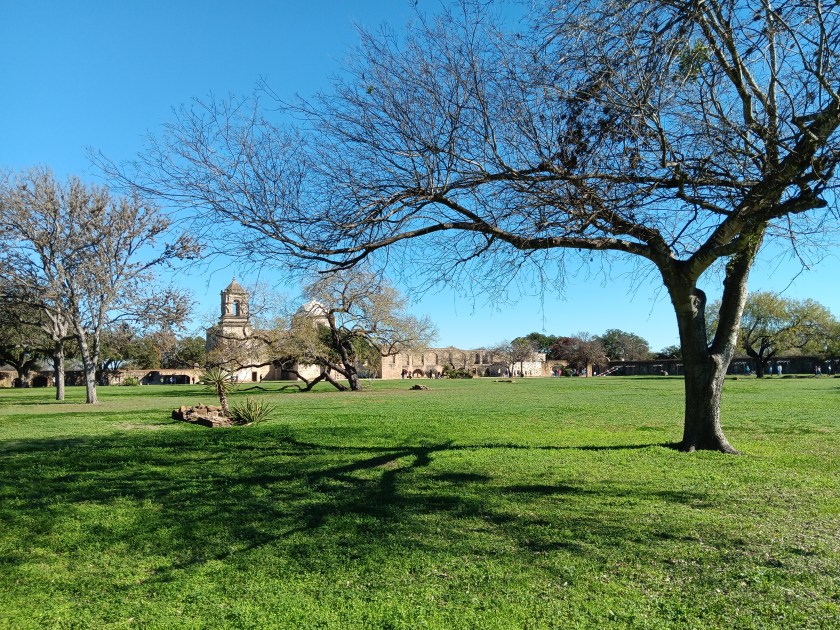

Conversion was the native peoples’ path to safety from the very people who were making them unsafe. Their diets would change, their spiritual lives would change, their clothing and housing would change. And the names they were given at birth? Yeah, those changed, too. The timeless dilemma: what would you do to keep your children and the people you love safe?

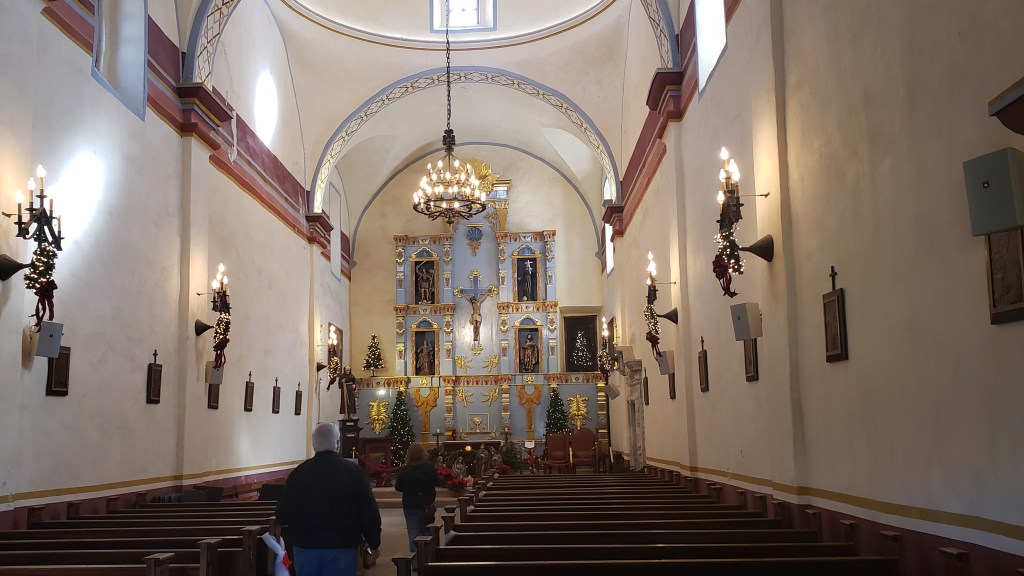
We were part of a guided tour, but Ruthie was getting so much attention we backed off a bit. Even the ranger was (fondly) distracted by her.

Inside the church.

This area formerly housed the missionaries and lay people who ensured the communities’ regimented schedule of toil and thrice-daily prayer were upheld.

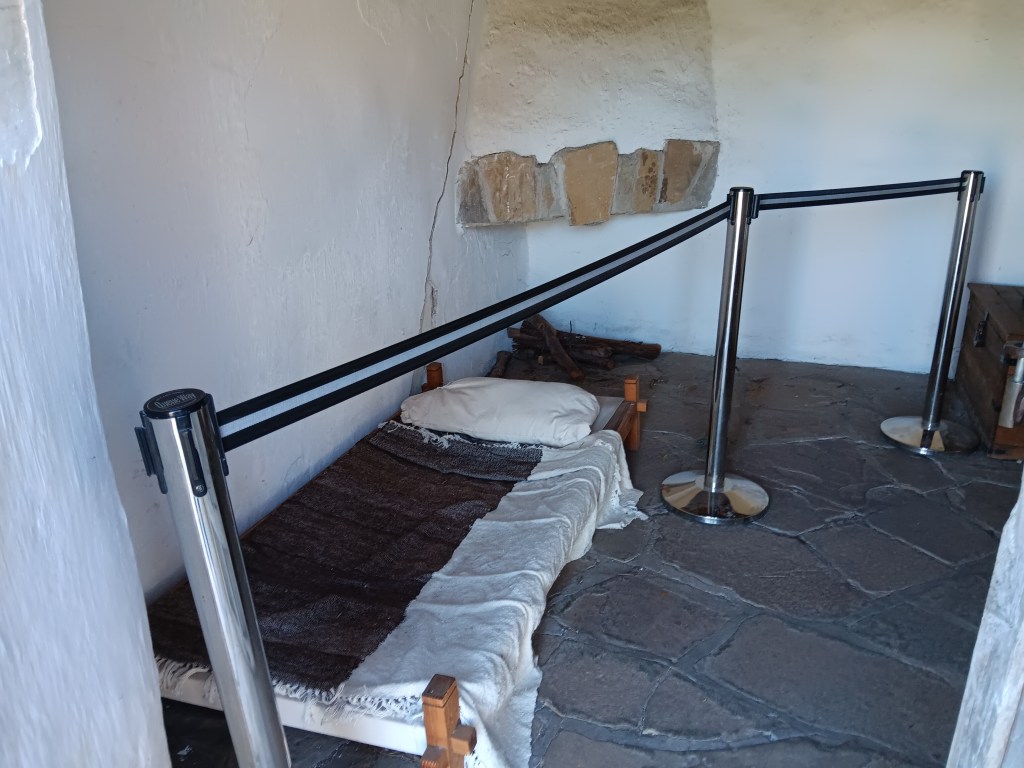
This is one-third of a working family’s “apartment.” Up to 15 people lived and slept in each apartment, spaces so small they wouldn’t even qualify as a “tiny home” today.

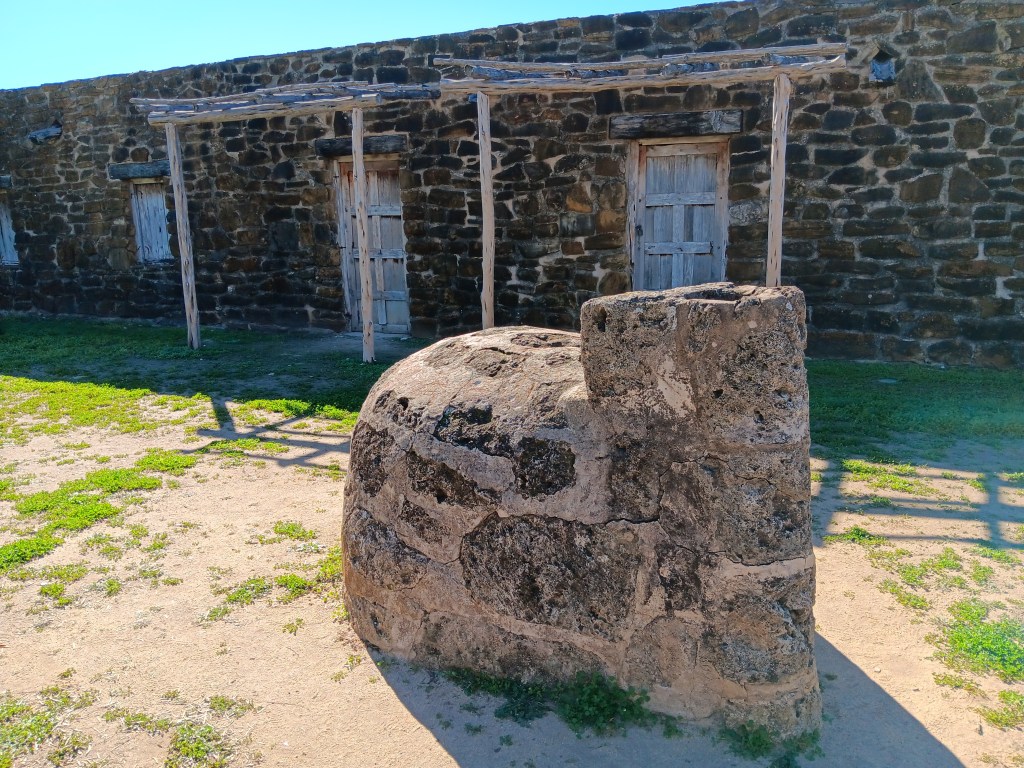
Apartments from the outside. They run the full length of three sides of the compound. The structure out front is a communal oven.

We’d been given a reservation at a downtown hot-spot’s outdoor patio (where dogs are allowed) for lunch the next day, but when we arrived, we were told they weren’t seating anyone outside. The line to get in was, in our estimation, more than an hour long, which just wasn’t going to work, especially since we had plans for the afternoon.
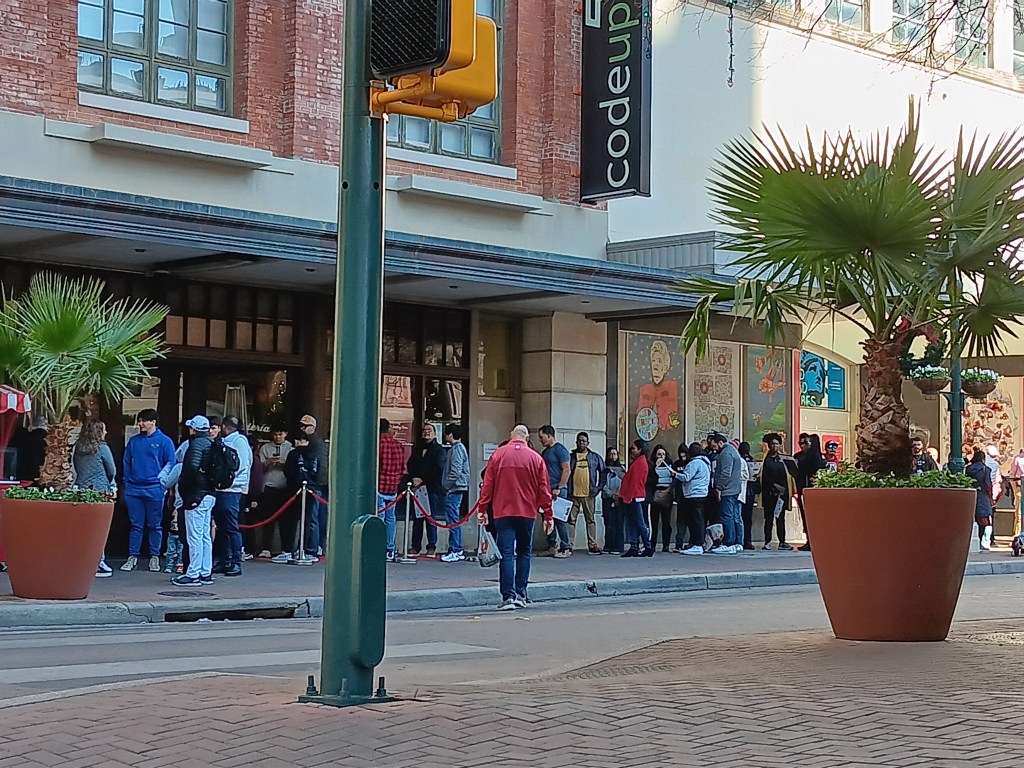
This is about one-quarter of the line waiting to get in.

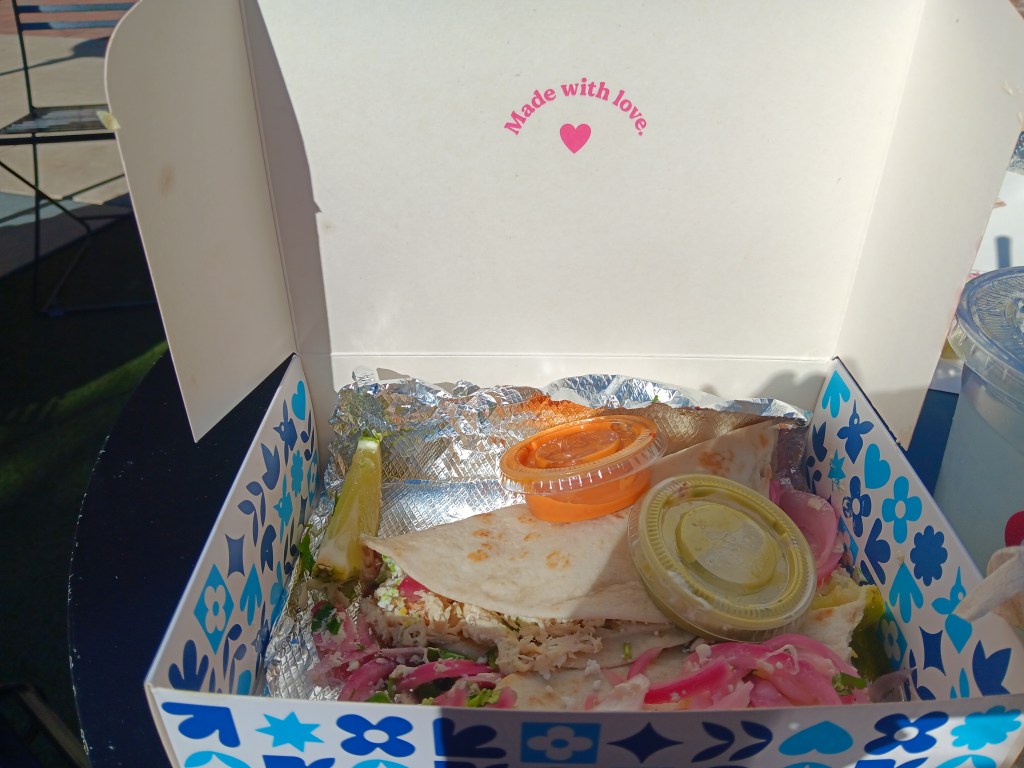
Instead, we returned to the Pearl area and grabbed a quick taco lunch.

In 1960, four students from a nearby college “discovered” what is now Natural Bridge Caverns, and Simon joined a guided tour that afternoon while Susan kept an eye on Ruthie. Kennels were available, but in her still-delicate condition we didn’t want to leave her.
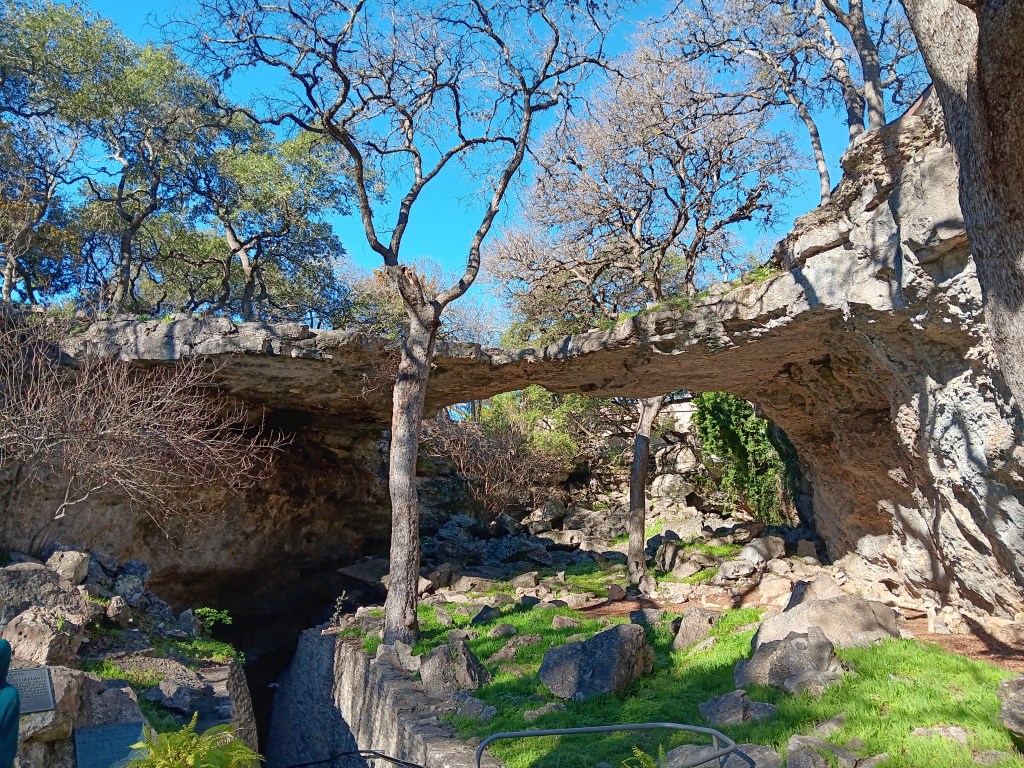
The two flat slabs that form a bridge above the cavern’s entryway were the inspiration for its name.

10,000-year-old stone tools, projectile points, and a pre-historic cooking hearth were discovered in the cavern when the entrance was being excavated. How cool is that?
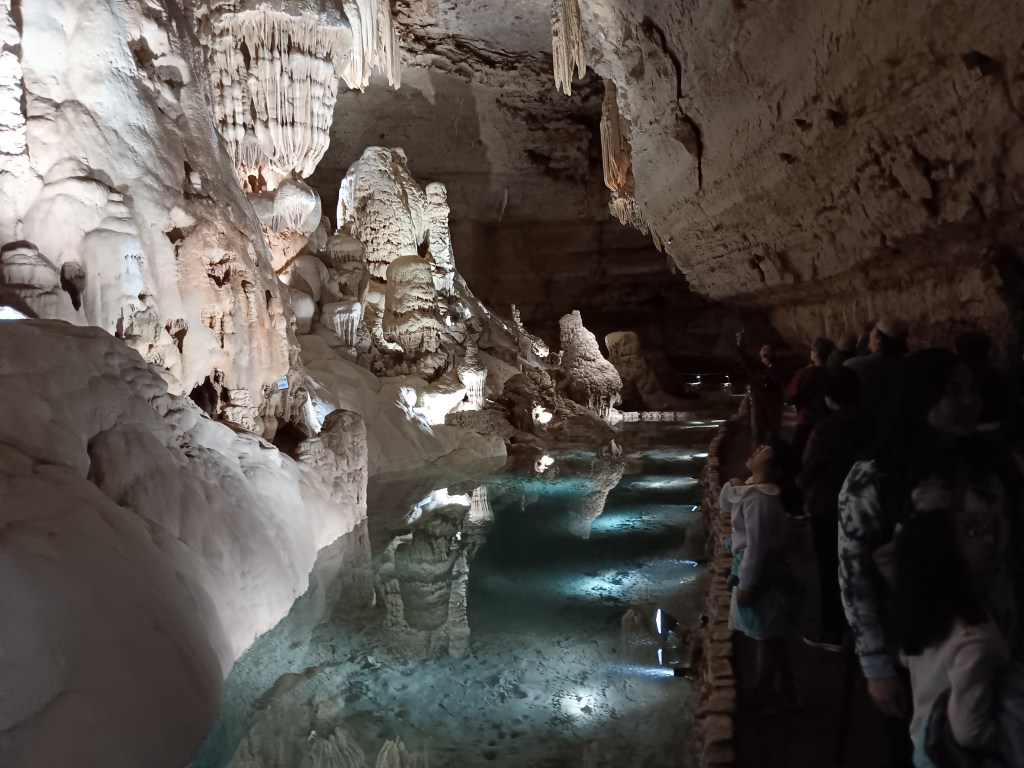
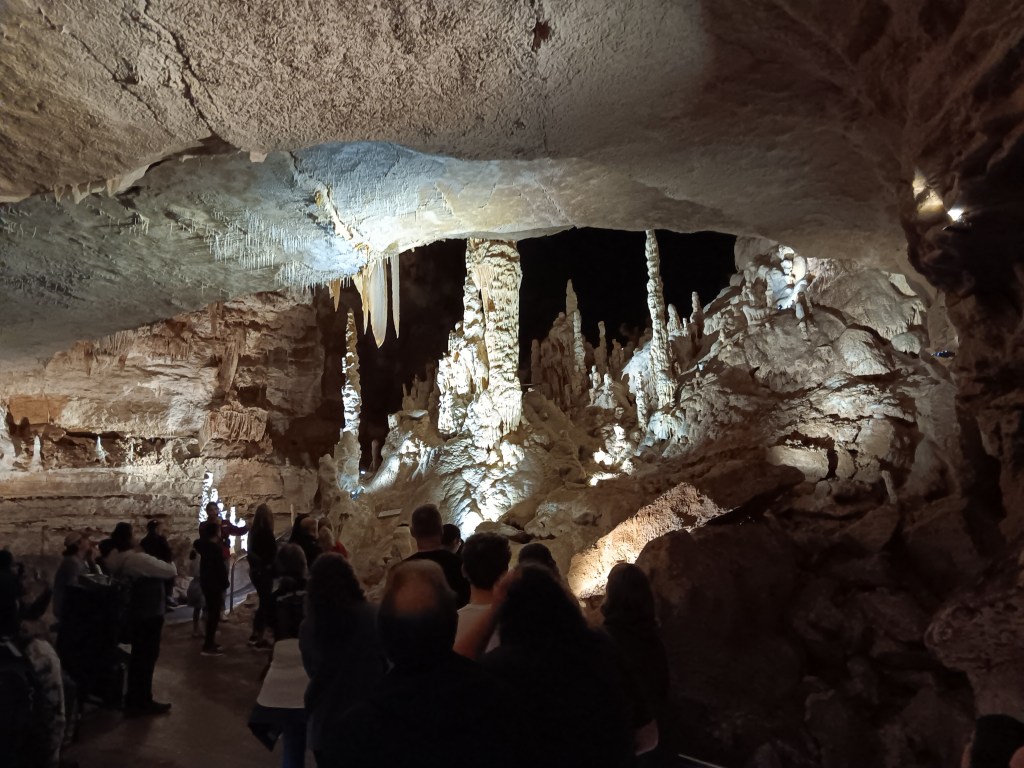
Ponds formed in the lower level of the canyon, with incredibly clear water due to filtration by the surrounding limestone, and the lack of pollution and debris.


You can see the smooth, dark walkway in the center of this photo, which gives you an idea of size.

We were glad we only had a taco for lunch when we reached Backyard on Broadway that evening. Boasting the most enormous outdoor seating area we’d seen at any restaurant, anywhere, we grabbed a picnic table away from a group gathering and a load of excited children, and were rewarded with a quiet meal. It was incredible how little the sound traveled.
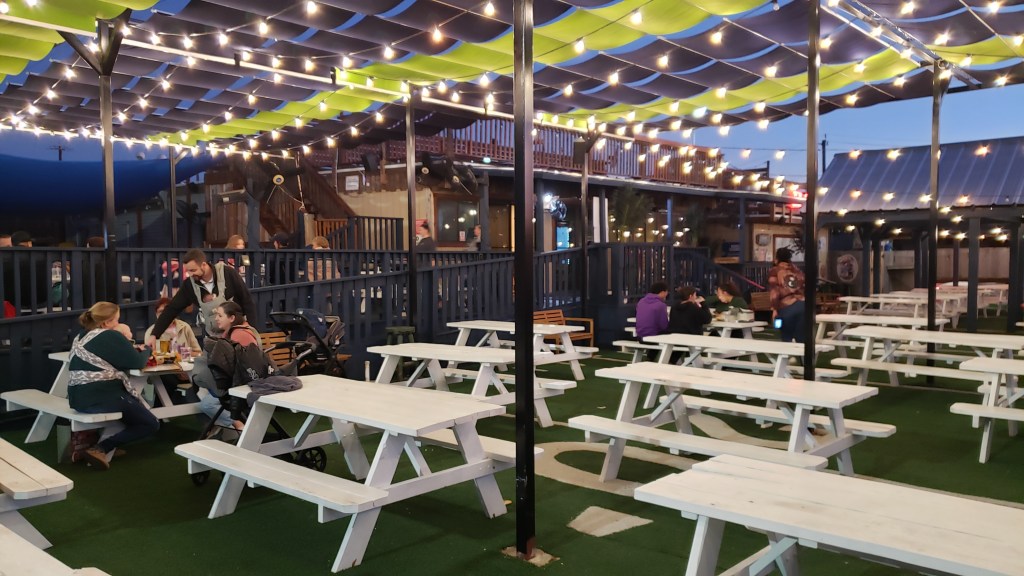
This is about one-eigtth of the outdoor space.

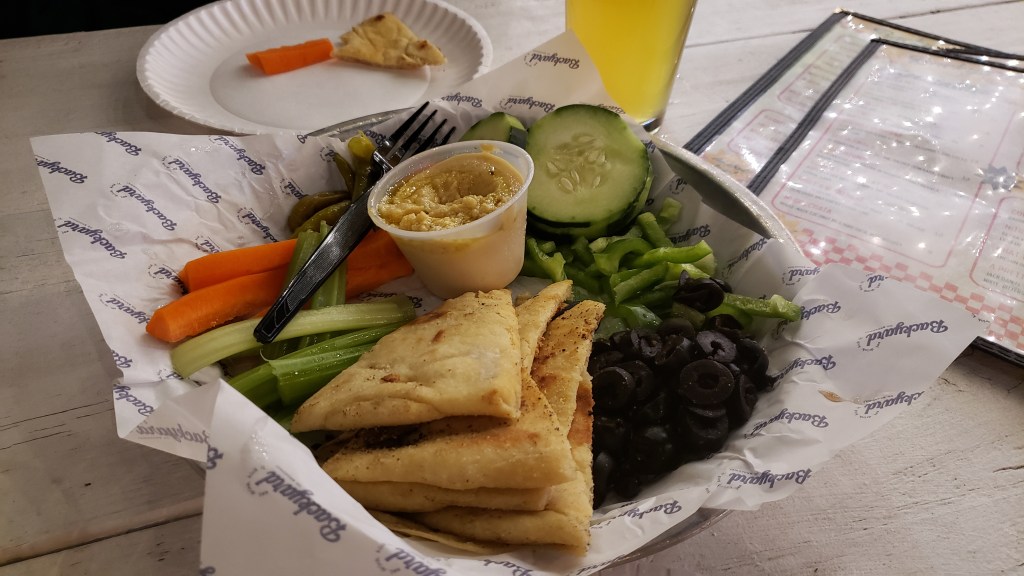
Simon ordered Hummus Spread with veggies to share, and the Viva Las Tejas sandwich (two beef patties, two cheeses, bell peppers, onions, jalapenos, and spicy sauce), which he devoured. Our server also recommended the Sweet Potato Fries, which we both devoured.


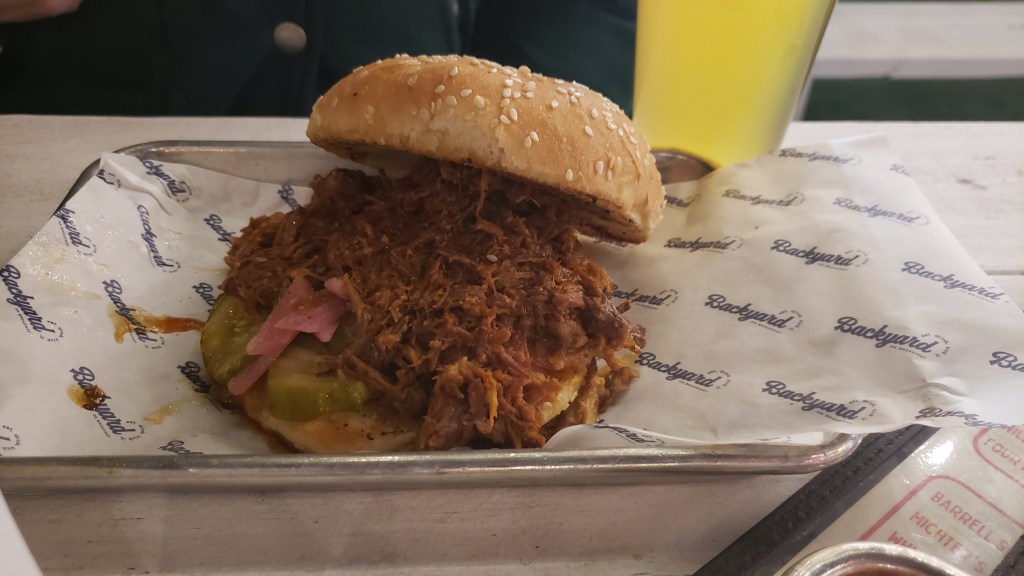
Susan went for the Not Your Father’s BBQ (pulled pork sandwich), and managed about half of it, minus the bun. Damn you, tempting Sweet Potato Fries!

Two Bro’s BBQ Market was our lunch stop the next day, and we’re glad it came as a recommendation, because A) we never would have found it otherwise and 2) we might not have chosen it due to its rather rustic location. It turned out to be one of those “locals” spots that no one wants to reveal so that tourists don’t mob it.

When a meat joint has a skull on their buffet table, you know they’re confident in their beef.

This guy is going to make sure Simon gets all the right stuff.

“What should we try?” Simon asked the manager, and he came away carrying a tray loaded with smoked jalapeno poppers wrapped in bacon; BBQ baked beans; Texas-sized bread slices; a massive Big Bro Sandwich piled high with smoked brisket, smoked pulled pork, and an entire sausage, topped with pickles and coleslaw; and a pint of “Cheesy Chop,” made up of chopped smoked brisket and mac & cheese. Lord help us!
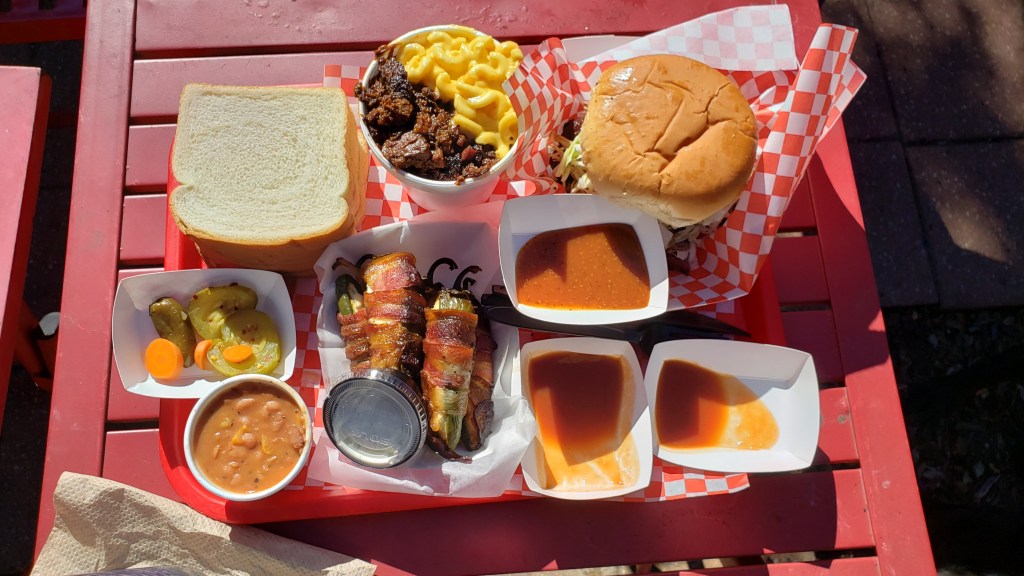
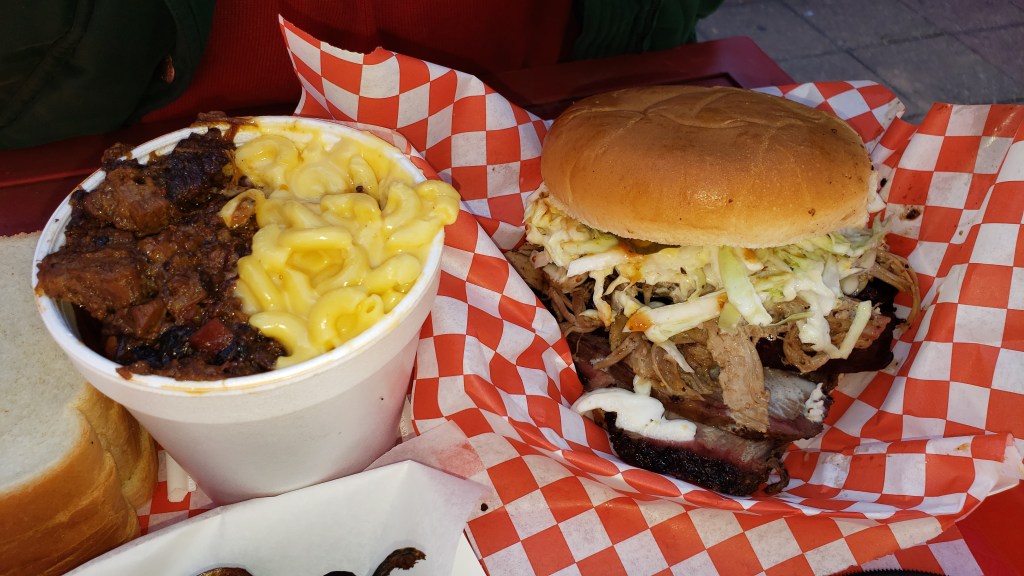
Good God!

Drinks were an informal affair. Simply choose one and push the dispenser button on a Home Depot five-gallon jug. And yes, that most Southern of drinks, Kool-Aid, was an option.

I may have been bundled up a bit, with a shirt, two sweaters, and Puffy Coat. Don’t judge me!

Straight away, we knew we were beaten. After a generous sampling of the obscenely-large sandwich, Simon pulled out a half of the sausage, made it into a smaller sandwich, and we saved the rest for later.

So, that white part at the top of the sausage isn’t the sausage. It’s the graphic on Simon’s sweatshirt. Every time I see this photo I think, “What’s that…?” so I thought I’d mention it.

We ate as much as we could of the rest of it, but it was like mice had nibbled on it. That meal ended up making two more meals the next day, and our microwave still smells like a smoker, more than a week later.
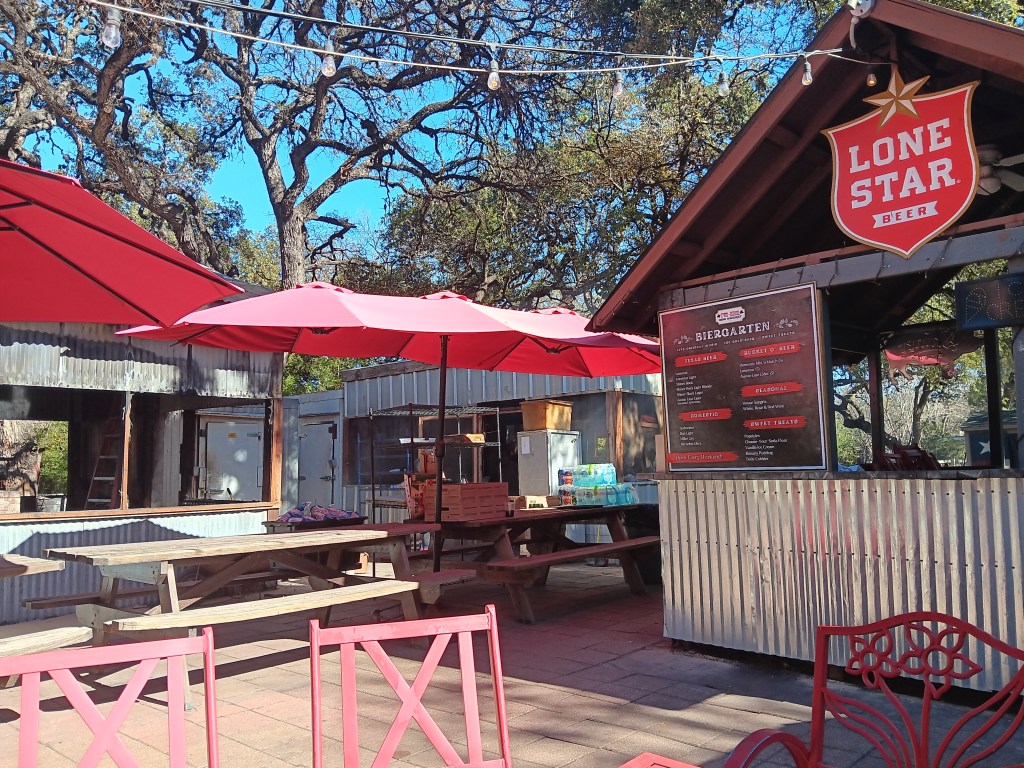
The building at the very back and the one on the left are where the goodness happens. You can smell the meat smokers even when they’re not doing their jobs.

Stuffed to the gills, a long, slow walk around the nature retreat of Phil Hardberger Park Conservancy was in order, where, we were told, we’d find the Land Bridge and Skywalk. The park’s trails reminded us of Kensington Metropark, a favorite place for getting away from it all when we lived in Michigan.
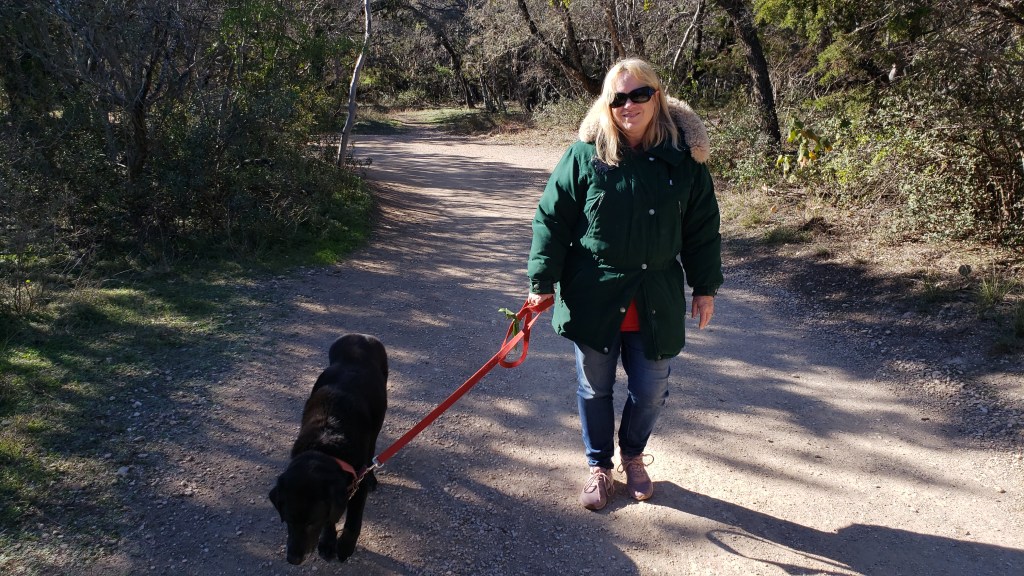
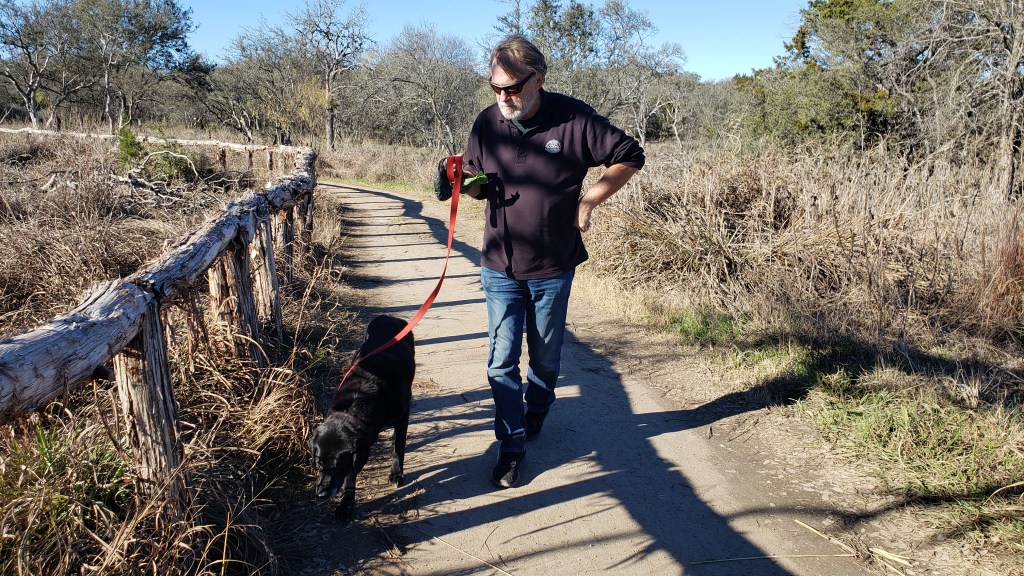
It may have been a bit chilly.

Ruthie engaged in her favorite activity (sniffing).

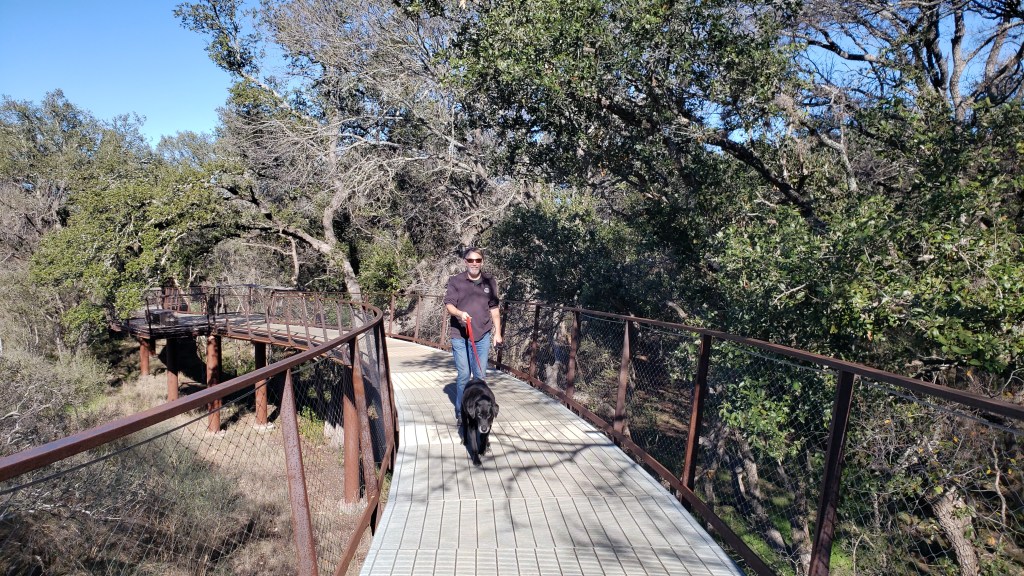
The Skywalk goes on for a long, long way. We only did part of it, since Ruthie really can’t do much hiking and she’d already walked a bit too far to reach it.

We had been booked in for a meal at Breakaway Brewing Company, but we were all food-ed out. Instead, we popped by to sample some of the brewpub’s beers, and ended up having a nice chat with the bartenders. A warm, homey feeling ended the day.
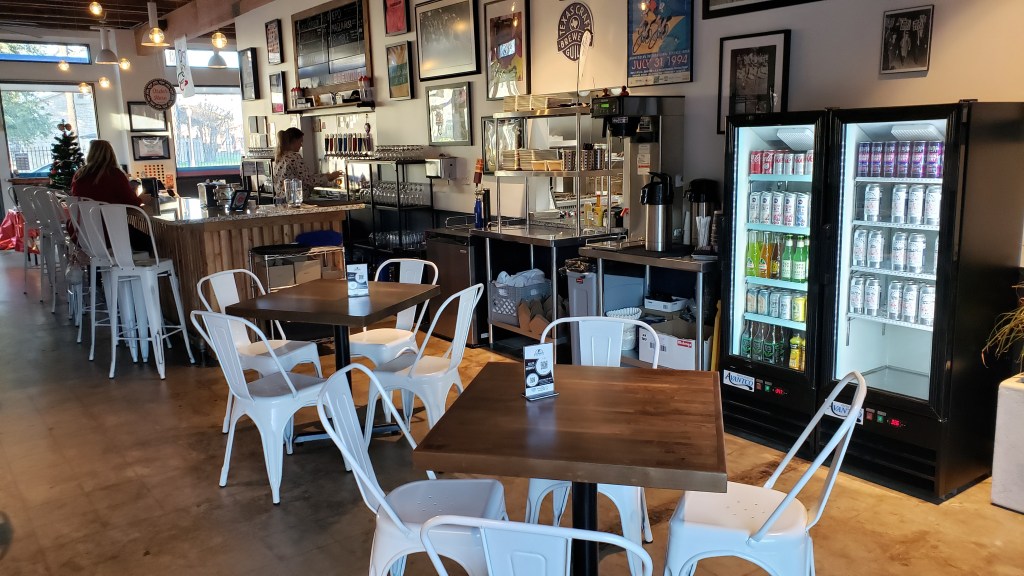
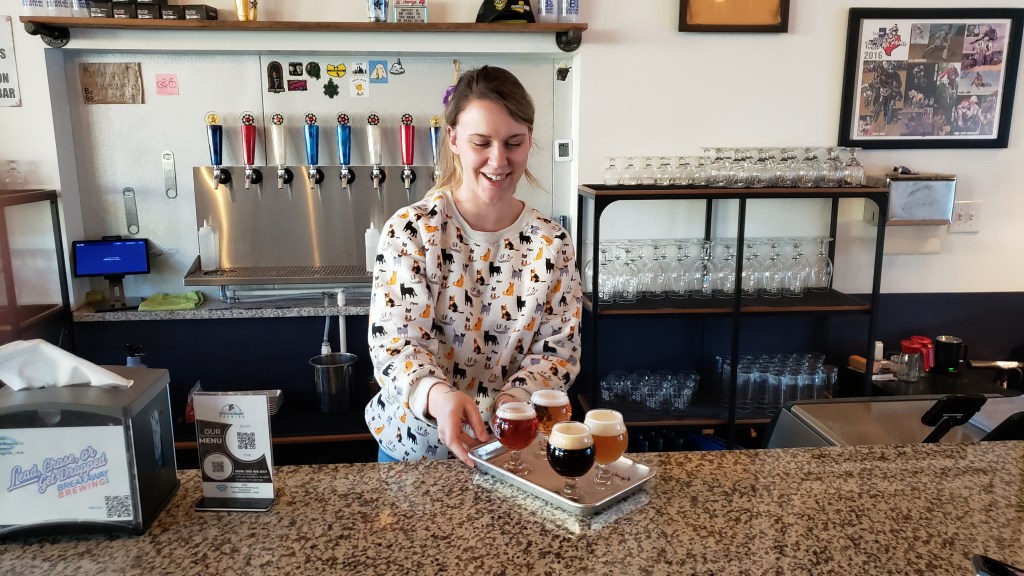
Our bartender was adorable, and knew her beers well. Great choices!

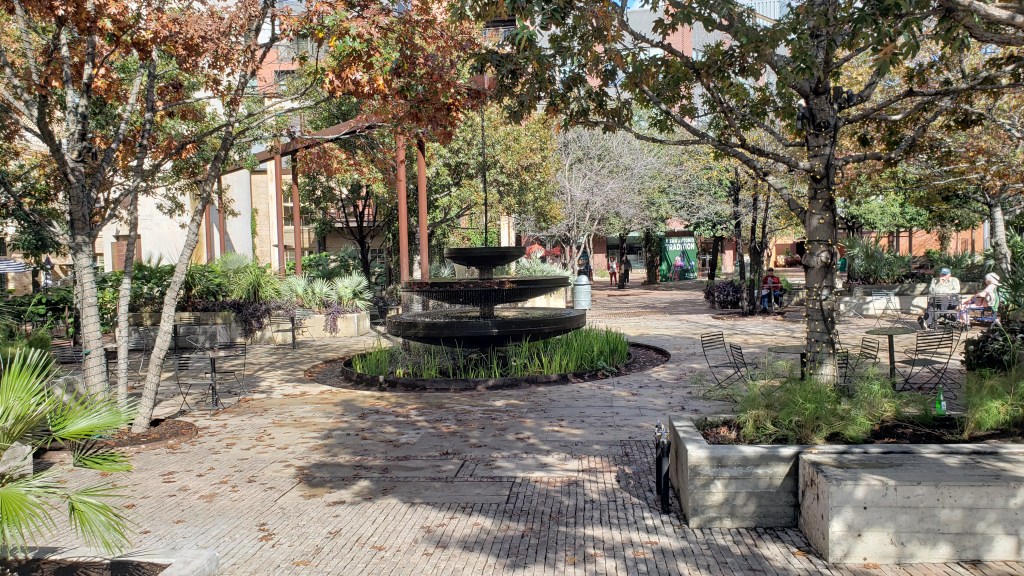
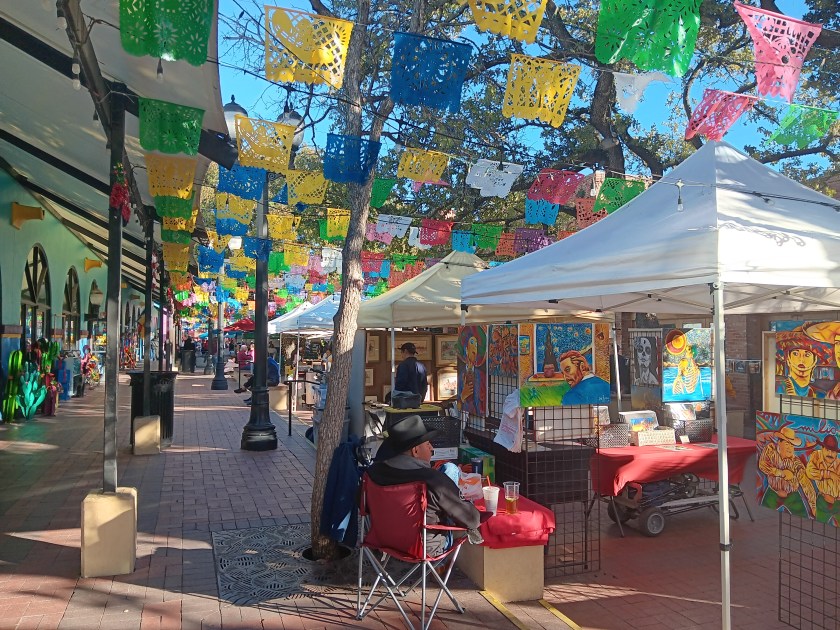
Twice we’d made attempts to visit Historic Market Square in San Antonio (originally a gift from the King of Spain in 1730, and former home of the “Chili Queens” who served up that comforting dish in days gone by), but the chaos of Christmas week made parking impossible. Determined to give it one more try, we headed into town, and finally succeeded.
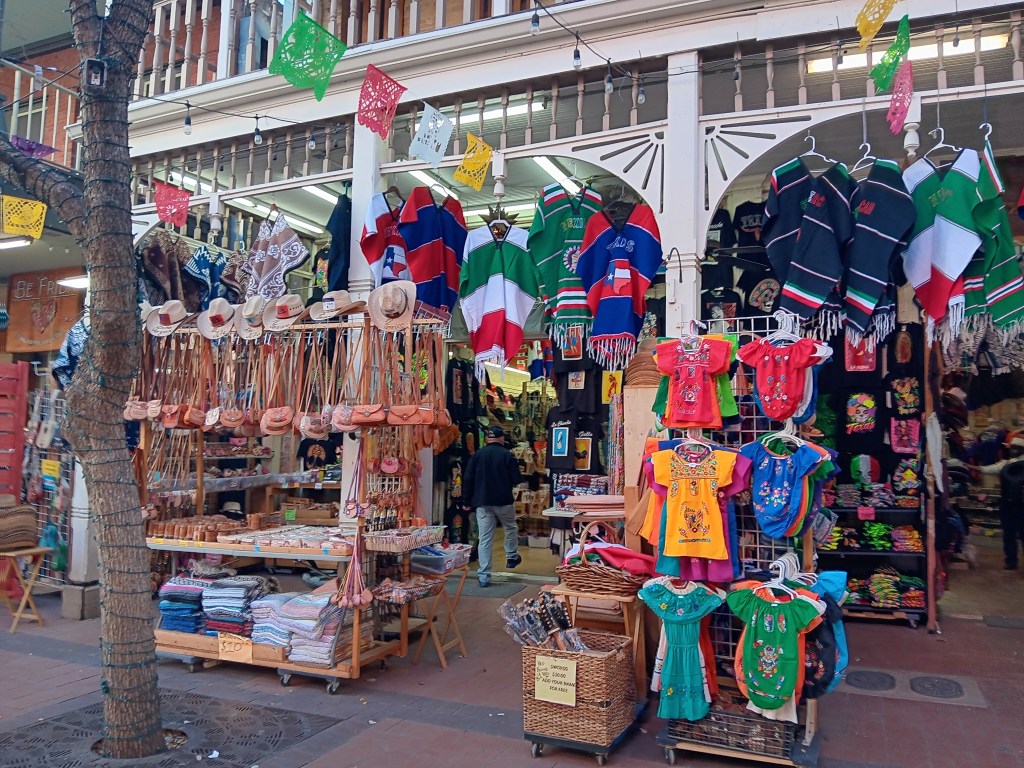
Note the person walking into the shop, to give you an idea of size.

What a fun place, filled with Latin sounds, bright colors, every tourist souvenir you could imagine, lots of umbrella drinks, and a general air of Christmas cheer! We were so glad we made the effort. Take a little stroll with us:

Strollin’ through the market.

Those allergy symptoms Susan had were no longer acting like allergies, and when Simon came down with them we knew we were in head cold territory; the unwitting victims of an unwanted gift. Annoying, yes, but considering all the other cr@p going around, not the worst thing in the world.

We knew we needed a mental and physical break at this point anyway, and our upcoming five weeks in the Donna, Harlingen, and South Padre Island areas of extreme southwestern Texas were arriving just at the right time.
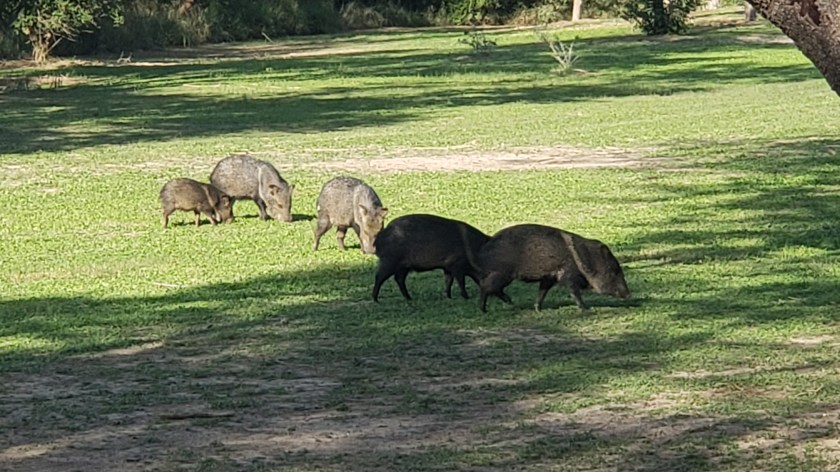
I DO Believe! I DO Believe!


Simon (whispering): Javelina! There’s one walking right out into the park!

Susan (looking): Why would you lie to me like tha…..Ohhhhhhhhhh!! OHHHHHHHHH!


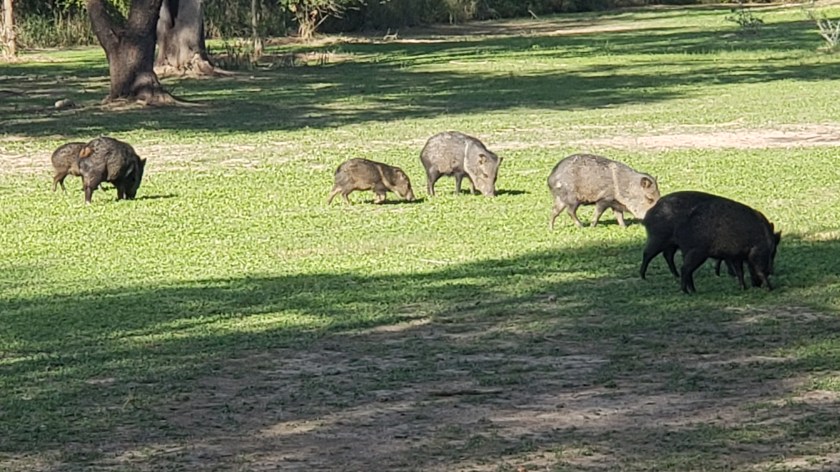
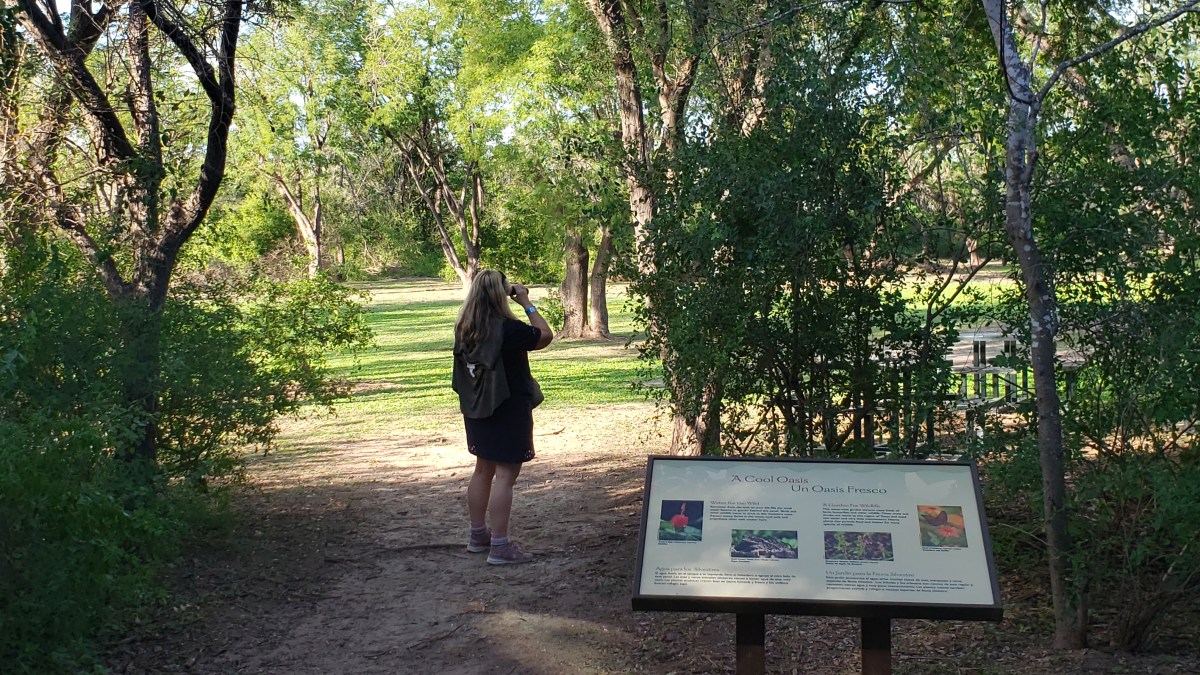
We interrupt our regularly scheduled blog to announce that Texas gave us a wonderful, unexpected sighting of eleven javelina at the Bentsen-Rio Grand State Park bird refuge in the southwestern corner of the state. It then gave us six more rooting around in a ditch along the road.


Clap three times if you believe javelina exist, because we do (clap, clap clap)!

We’ve been looking for them nearly every day for four months and in three states. Texas comes through!

The End.

Merry Christmas! Enjoy The Gift!


Two things inspired us to make campground reservations more than a year in advance when we were planning our Year on the Road: popularity, and the holidays. Yellowstone wins for popularity, and Christmas wins for tough-to-get holiday reservations in warm climates, so those dates were at the top of our list, more than a year in advance.

Susan was up at midnight hitting “Reserve” the moment our dates for Yellowstone opened, and she got one of the last two available sites, just minutes after the booking window opened. She did the same for our Christmas 2023 campground in Castroville, Texas, just outside San Antonio. When our schedule changed after dropping Washington and Oregon, we re-worked it around that booking, and on December 23, 2023, we arrived at Alsatian RV Resort, 16 months after the reservation was made.


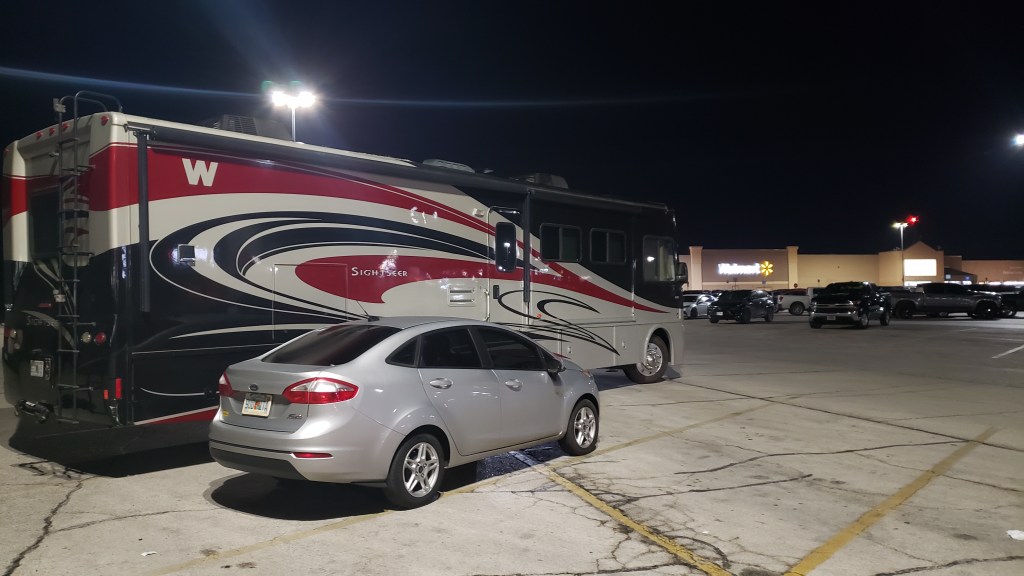
But first we Wallydocked in a Walmart parking lot just outside Amistad National Recreation Area in Del Rio, Texas on the way south, to break up the long journey. Evenings at Walmart are a spectator sport. Nights are a study in tiny-home living with no conveniences; no jacks down for stabilization, no slides out for a flat bed, no water from the faucets, and no heat. It got down to 34F that night.


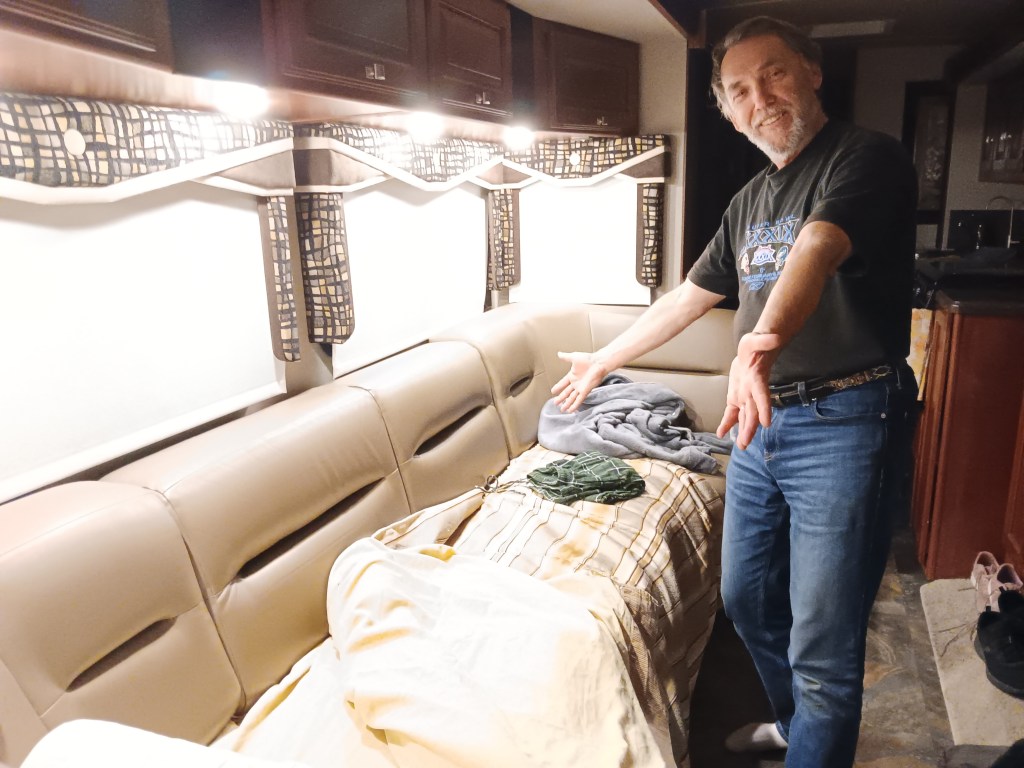
Simon can sleep anywhere, so it’s the sofa for him, wrapped up like a burrito.

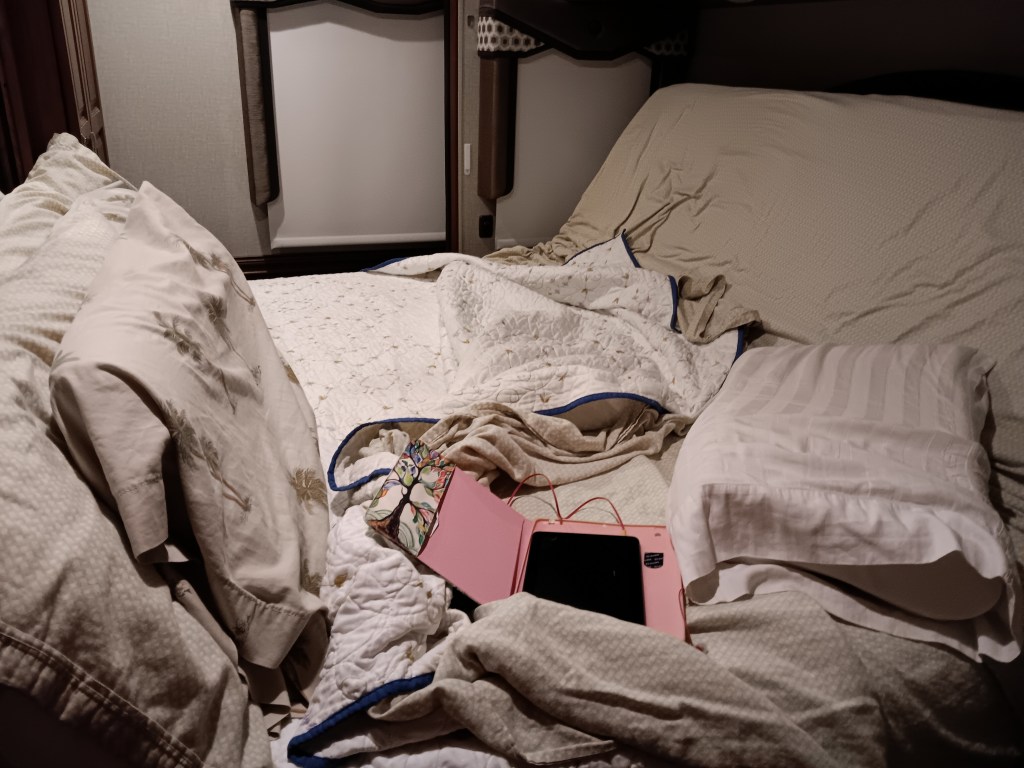
Susan gets the folded-up bed, which sounds comfy but isn’t. Everything that rides on it during travel stays on it at night. There’s nowhere else for stuff to go.

We had a supercharged itinerary during our stay in Castroville, thanks to Visit San Antonio, who searched out all the best things to do and places to eat in the city, with us and Ruthie in mind. Susan’s allergies were in high gear due to all the cedar pollen, but she chose to power through and venture out amongst the people. Allergies aren’t contagious.

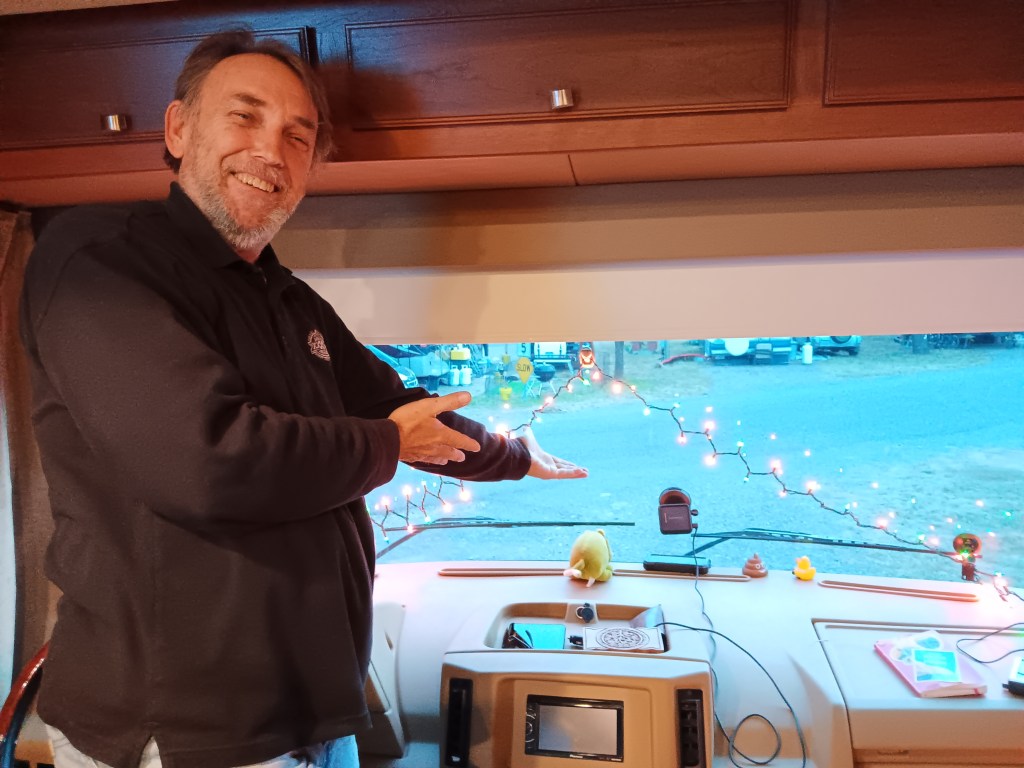
Simon’s Christmas decorating masterpiece.

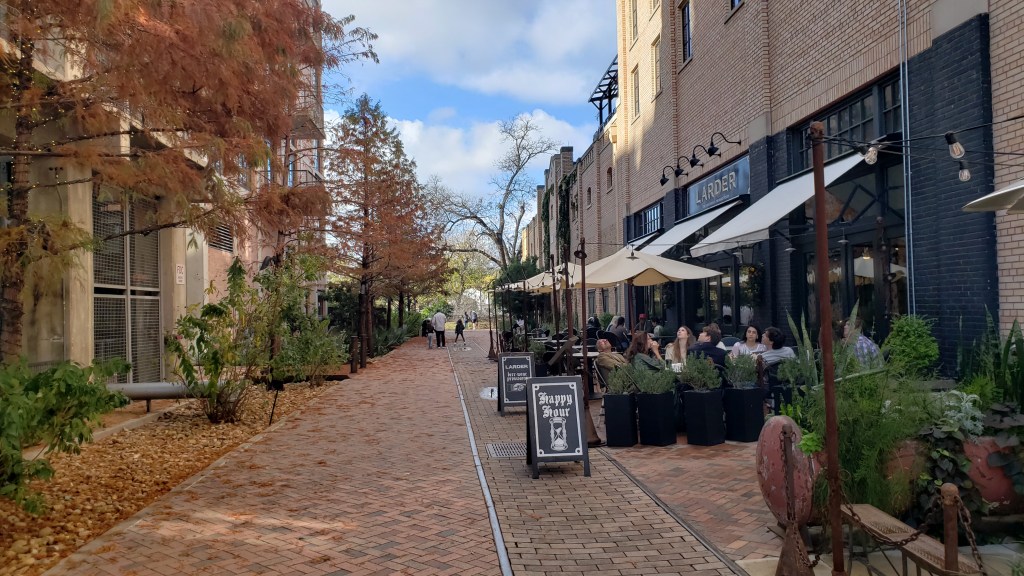
Christmas Eve morning, we were off to Pearl Farmer’s Market at San Antonio’s swish Pearl lifestyle center filled with shops and restaurants, where we could pick up loads of fresh produce for dinner that night and for Christmas Day.


But wait. This being Christmas Eve, the farmers were all home getting ready for friends and family, and didn’t show up. No market today. Still, we had a reservation for brunch at Southerleigh, with patio seating for maximum pre-holiday people watching.


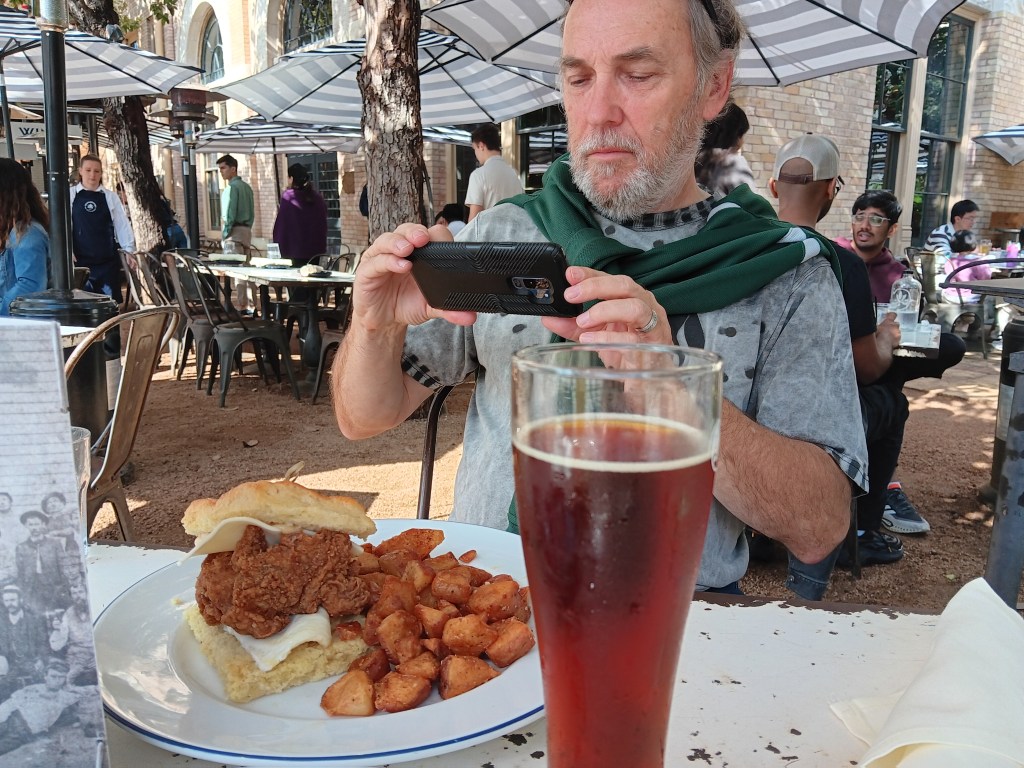
Simon opted for a craft beer and the Southern Fried Chicken, featuring what looked like half a chicken nestled on the most pillowy, fluffy, feather-light biscuit you could imagine, and served with crispy potatoes. In our house, it would feed two. In San Antonio it fed one, with a few sad potatoes left straggling on the plate.


Susan went for a mimosa and the Heirloom Tomato Salad with fresh ricotta, basil oil, and sweet balsamic mustard seeds, which doesn’t sound like much but was pure magic when you’re craving vegetables.


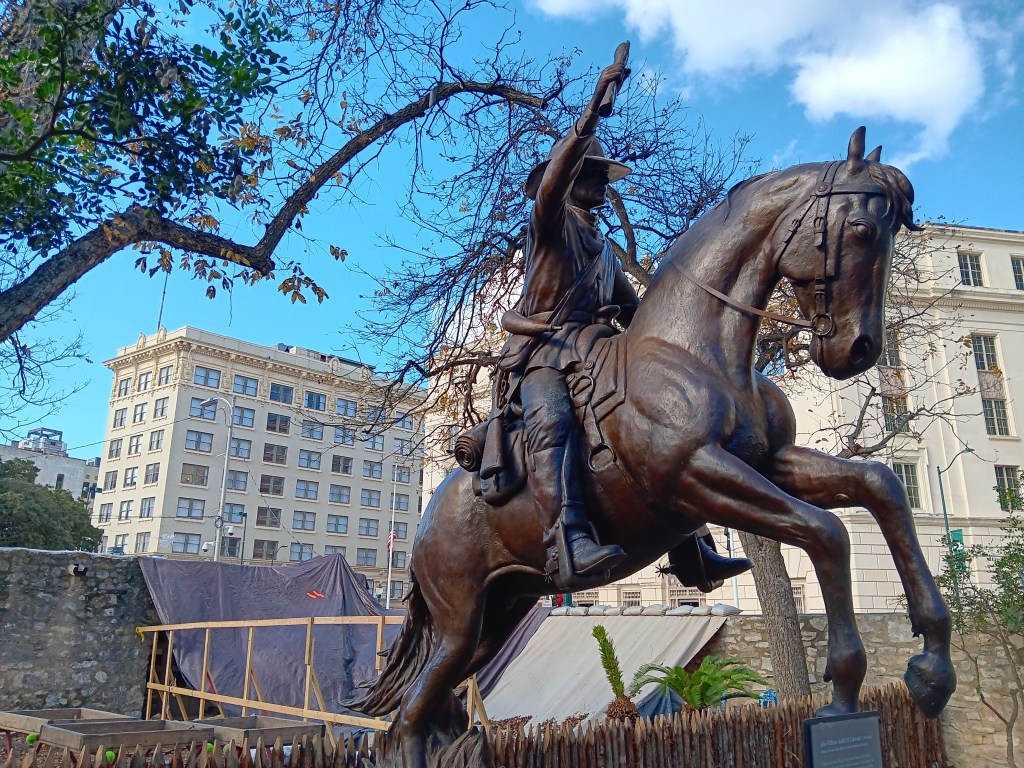
The Alamo (yes, that Alamo) was on our schedule for later in the week, but with time to spare today, we headed a few blocks over for a visit. Now, if you’re like us, you picture the Alamo out in the boonies somewhere, far away from anyone who might have been able to come to the rescue of those poor Texas soldiers and save them from a thirteen-day siege and inevitable death at the hands of the Mexican army.


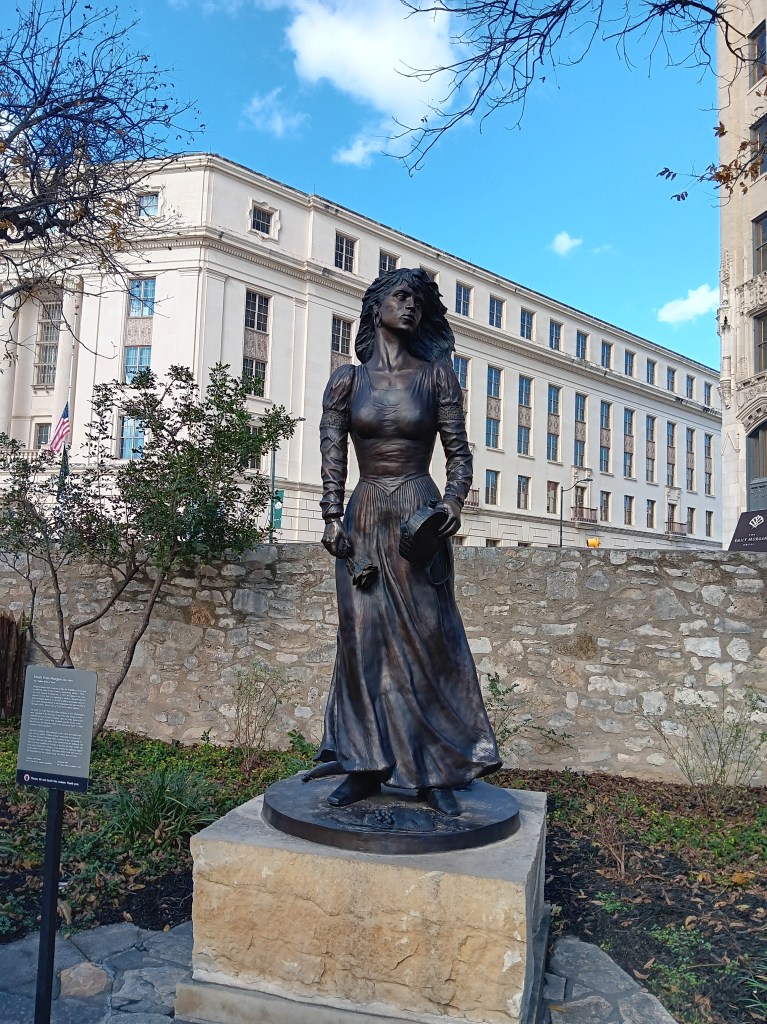
But boonies grow into towns, and towns grow into cities, and the former Spanish mission is now in the very heart of San Antonio. The Alamo is, obviously, on Texan land, having been surrendered by Mexico after further battles, bloodshed, and loss of lives. A courtyard remembers characters from that awful time, some of whom became legends in U.S. history.

John William Smith, San Antonio’s first mayor, who fought in the Texas war for independence.

Emily West, a free woman of color who was kidnapped by the Mexican cavalry and later inspired the song, “The Yellow Rose of Texas.”

James Bowie, pioneer, land and slave speculator, best known for his distinctive “Bowie knife,” and not known enough for his “ownership” of human beings.

David “Davy” Crockett, legendary frontiersman and congressman who, as the song goes, “killed him a bar when he was only three.” He and Bowie both died at the Alamo.

Christmas Day! A day to distract ourselves from being away from loved ones by having a movie marathon, opening our gifts to each other, and enjoying a lovely meal.

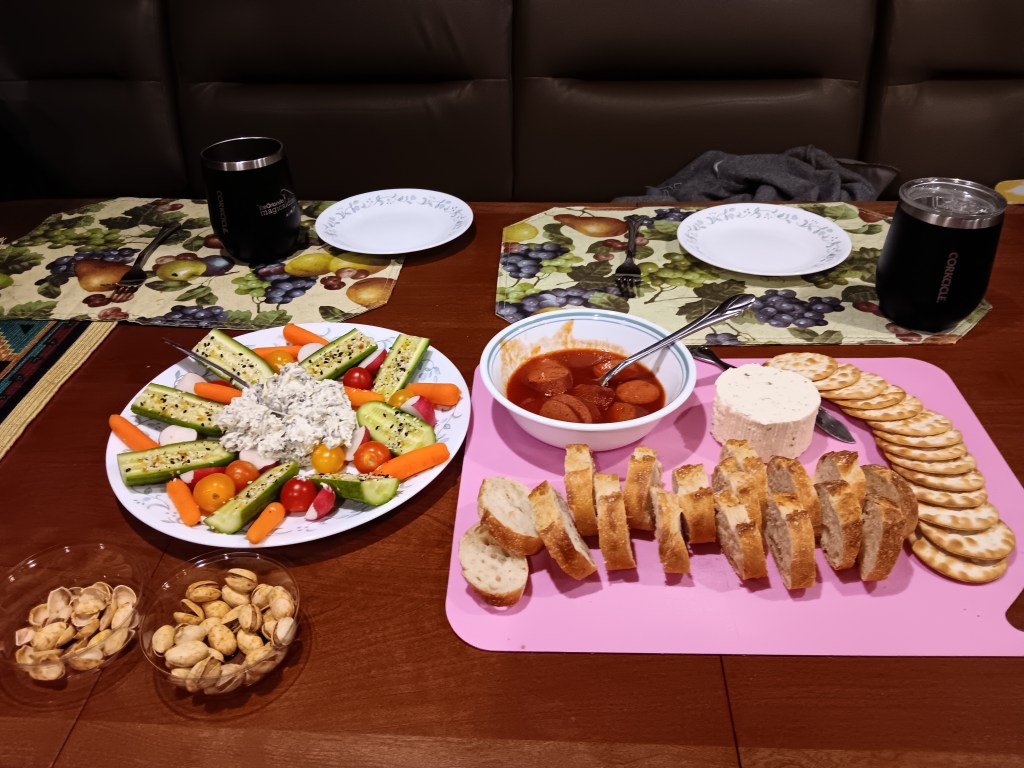
Christmas Eve dinner had been a snacky affair due to all that fried chicken Simon had for lunch, but today we were in for a treat.


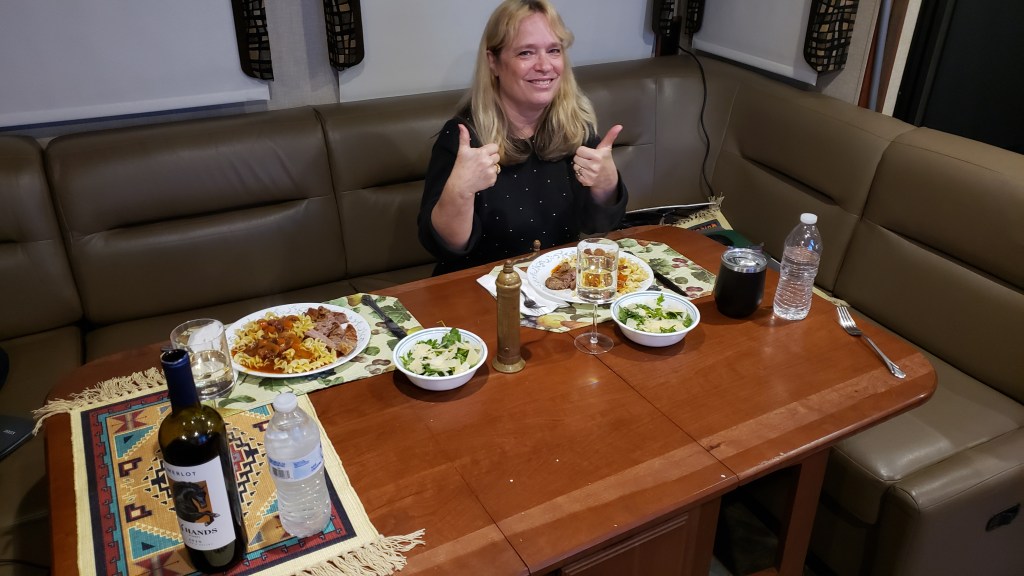
Simon requested Beef Bourguignon, Texas has good steak, and we had that bottle of Lemon Olive Oil from our visit to Queen Creek Olive Mill in Mesa that would make a nice dressing for arugula salad with shaved parmesan. Score!


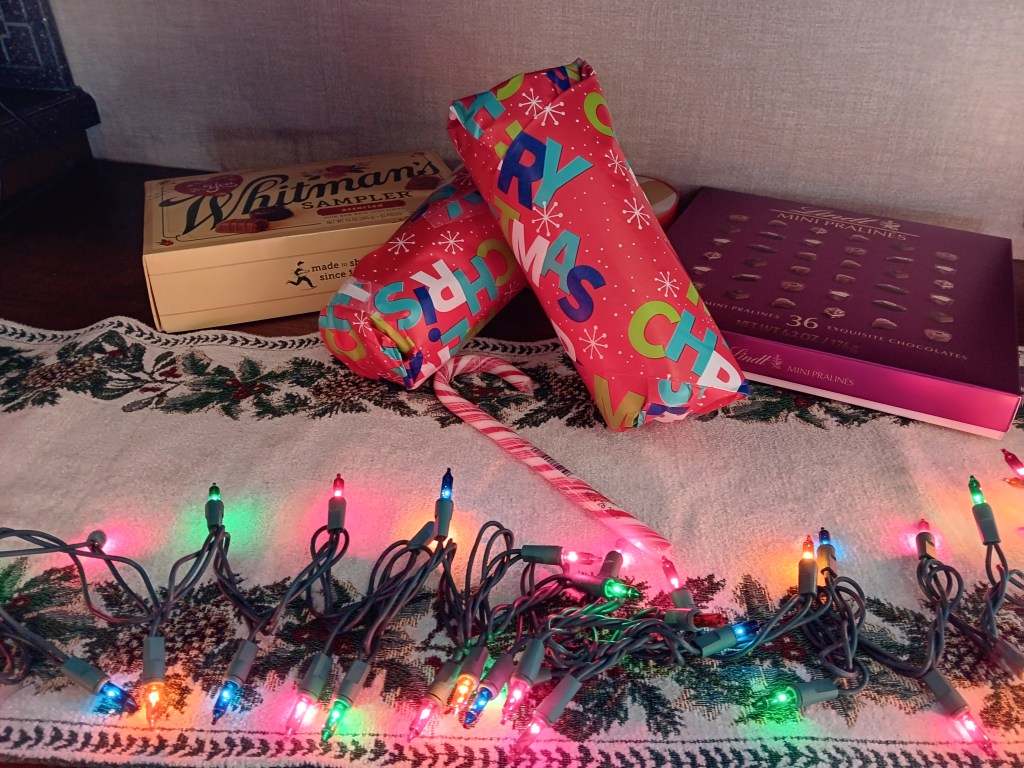
We gave each other new reusable thermal mugs to keep our coffee and tea hot on moving days, wrapped up so we felt special. Simon chose a box of Lindt chocolates while we were out shopping; Susan picked up a Whitman’s Sampler in memory of her childhood, when that was the “fancy candy;” and we threw in a candy cane we’d been given at a previous campground, all of which made us felt as right as we could about the day, given our unusual circumstances.


Ruthie’s digestive tract still wasn’t cooperating, and after several nights of very broken sleep for her and for us, it was time to get her in with a vet. We’d had no luck on Christmas Eve, Christmas day, or December 26, but the wonderful Alamo Area Veterinary Clinic had an opening on December 27, so we rescheduled our touring and got her sorted out. Three medications and 24 hours later, she made a miraculous recovery, so we considered her vet bill a Christmas gift.

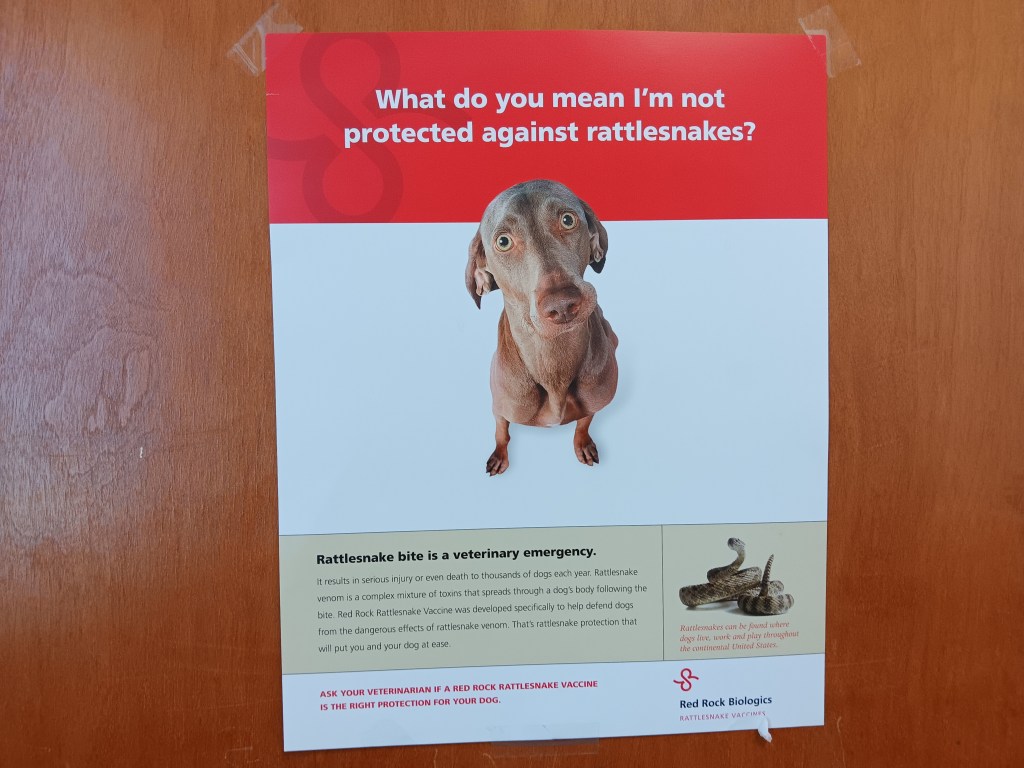
A little light reading while waiting for the vet.

Dr. Baker-Arguelles spent a long time with us and Ruthie, listening to our concerns and explaining the process we’re now in with our pup. And while we expect her to have many more happy months of travel, we know our girl has beat the Labrador life-expectancy odds. Every day is a gift.

Saying Goodbye To The Chihuahuan Desert


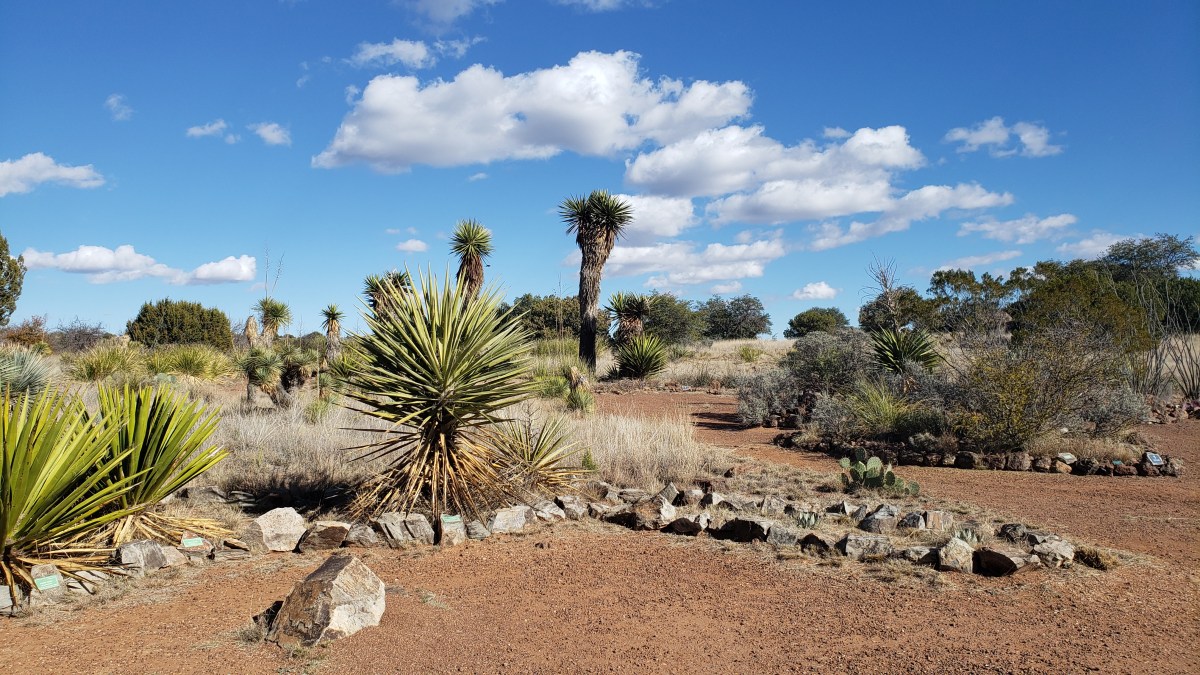
We’d been in North America’s largest desert for weeks, and in eight other deserts for the past six months. Cactus and pronghorn and the swirling dance of dust devils had been our near-constant companions. Our next destination would take us into the plains, then to the Gulf coast, so a final farewell to the arid wilderness was on our dance card.

The things you see in the desert when you haven’t got your gun…

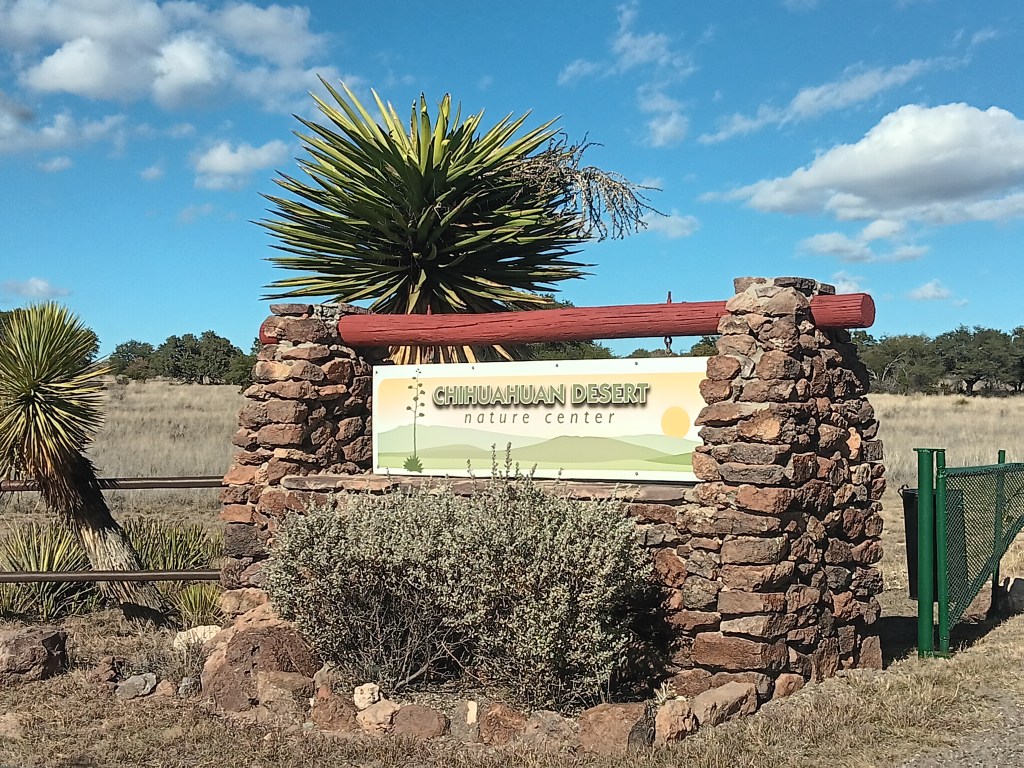
Ninety percent of the Chihuahuan Desert is in Mexico, but it also extends from Alamogordo, New Mexico to just beyond Alpine, Texas in the U.S.. Like a gateway to its northbound entry or southbound exit, the Chihuahuan Desert Nature Center was just up the road from our Alpine campground, so we paid a good-bye visit.


Really, this was the kind of place we should have been to months ago. All of our questions about “What’s THAT” would have been answered. Even so, we spent a happy hour wandering the pathways pointing at plants and remembering where we saw them in our travels.


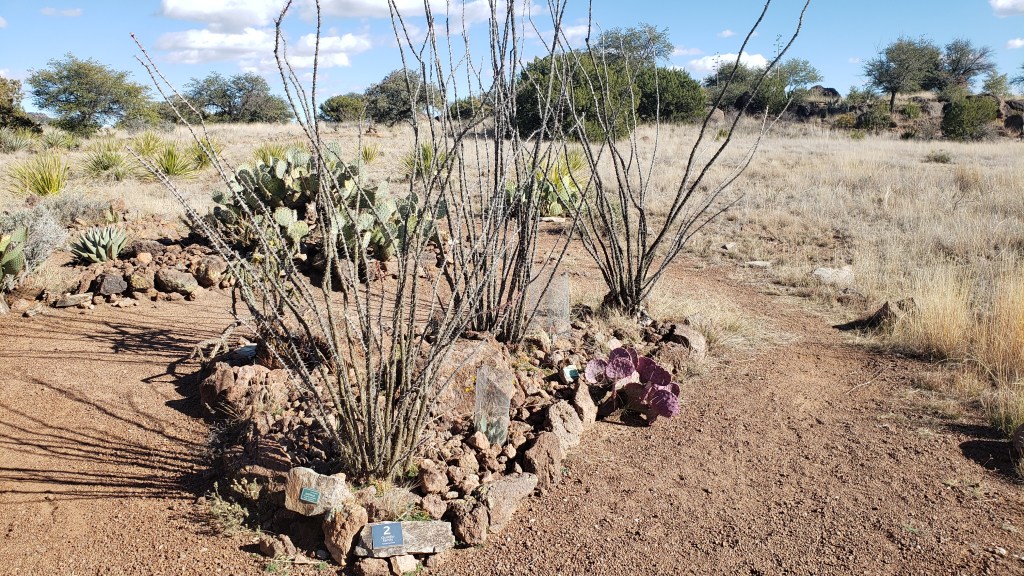
Ocotillo is used for building fences in the western U.S. in the same way thorny brush is used in places we visited in Africa. Fascinating.

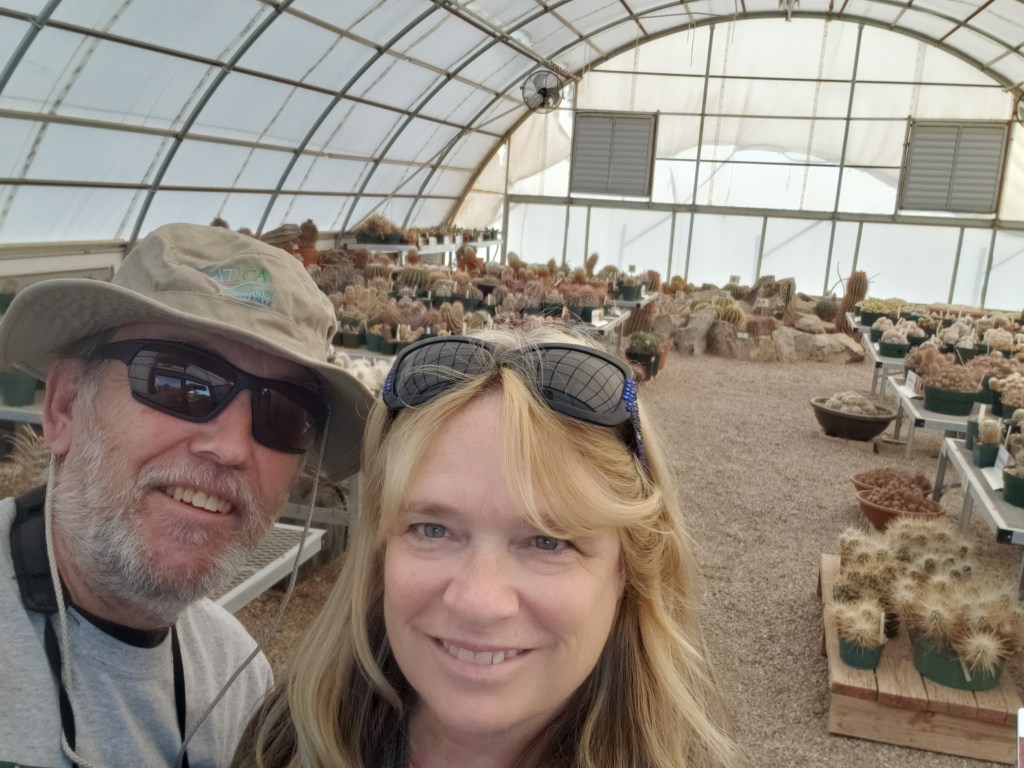
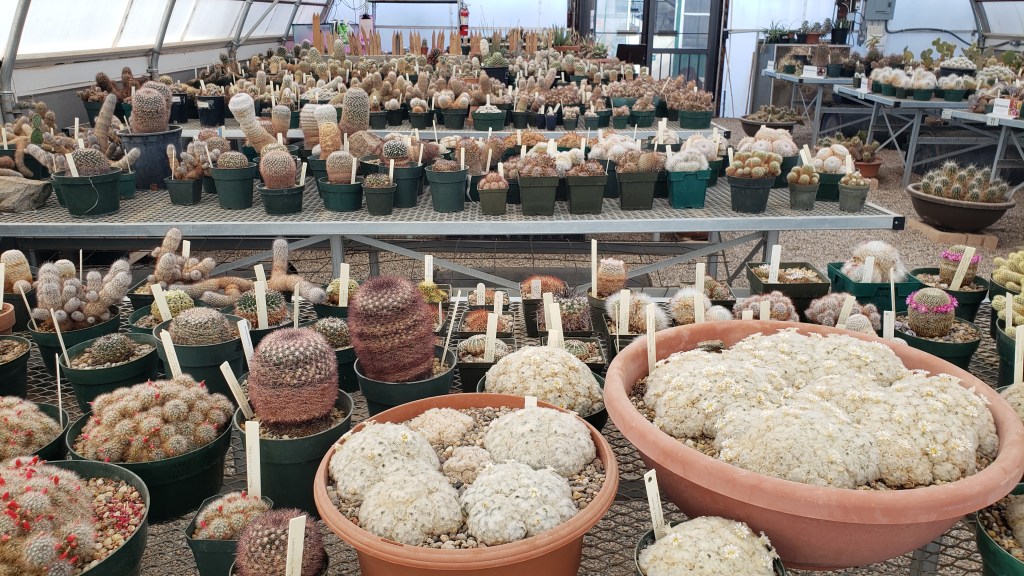
We knew most of the big cactuses and several types of agaves, but the Cactus Museum offered a trip down Memory Lane for Susan, whose parents were Master Gardeners and kept quite a few indoor cactuses over the years.


Ruthie had to wait outside the museum, and she wasn’t happy about it. At all.

Davis Mountains State Park in the town of Fort Davis was not far away, so Simon pointed Nippy in that direction the next day, for a low-key last-look at Texas’s mountainous landscape.

Primarily a spot for hiking and camping, this little state park also had two bird blinds, one of which was in the interpretive center. Here, we saw birds we’d never seen before, though we didn’t see the main draw for visitors, which is the elusive Montezuma quail. Apparently, we were so captivated by what bird life we did see that neither of us thought to take a photo.

Throughout our trip, we’d both been fascinated by the varying geology we were passing (you’ve guessed that if you’ve been following our blogs), and today there was a Ranger talk specific to the volcanic mountains we were in, so he joined the group while Susan continued to bird-watch and keep an eye on Ruthie.

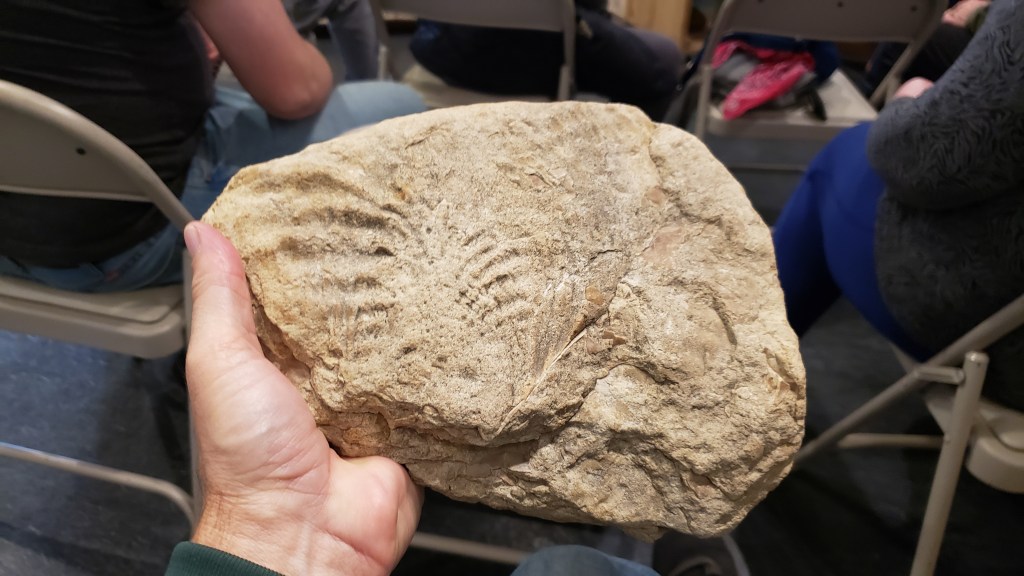
As with all of the southwest, the Alpine area has its share of fossils, this time imprinted in limestone.

This metamorphic rock has been molded and shaped by volcanic activity into a little work of art.

We then drove up the Davis Mountain to see some of the features the ranger spoke about, and to get a good view of the surrounding ranges.


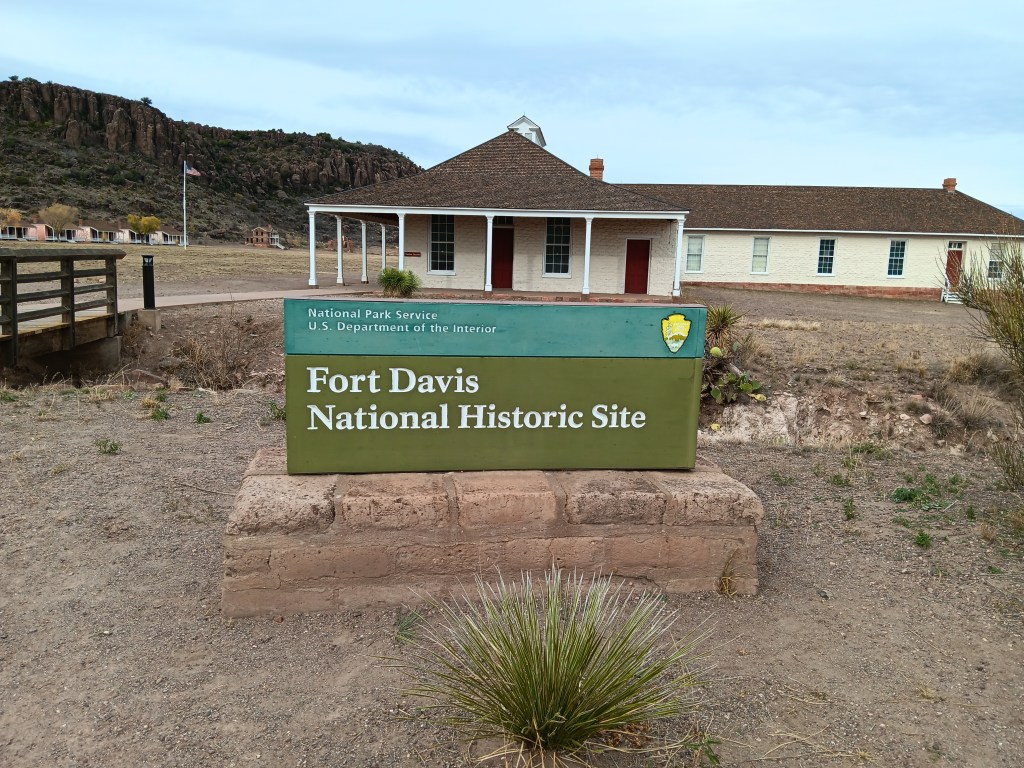
While we were in Fort Davis, a wander around Fort Davis National Historic Site was in order. The compound, established in 1854, wasn’t strictly a military outpost. It was also strategically placed to help protect the mail route and emigrants traveling through this part of Texas.

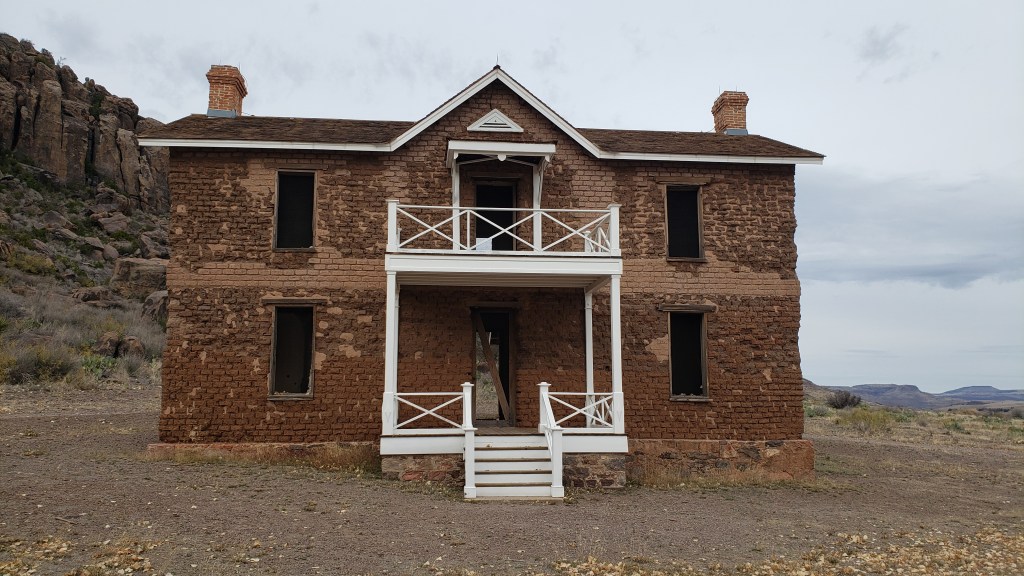
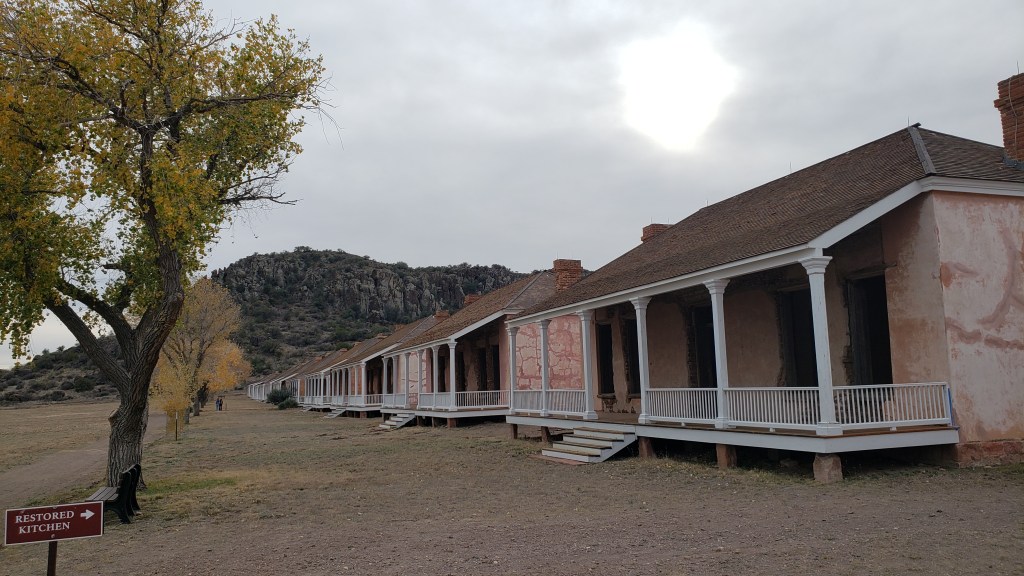
Several original buildings constructed from hand-made bricks are now in ruins, but many have been restored.


Officers’ homes.

Enlisted persons’ barracks.

Somebody fancy lived here.

A small museum told the area’s story, including the role of the “Buffalo Soldiers” who, among their other duties, were assigned to deal with Apache and Comanche tribes that were not amused by having their hunting grounds overtaken.


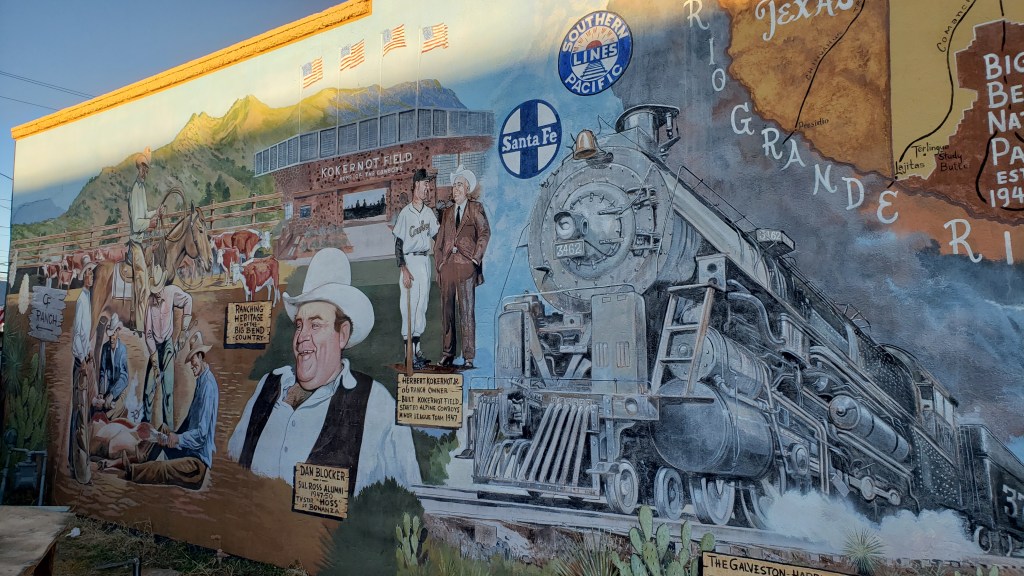
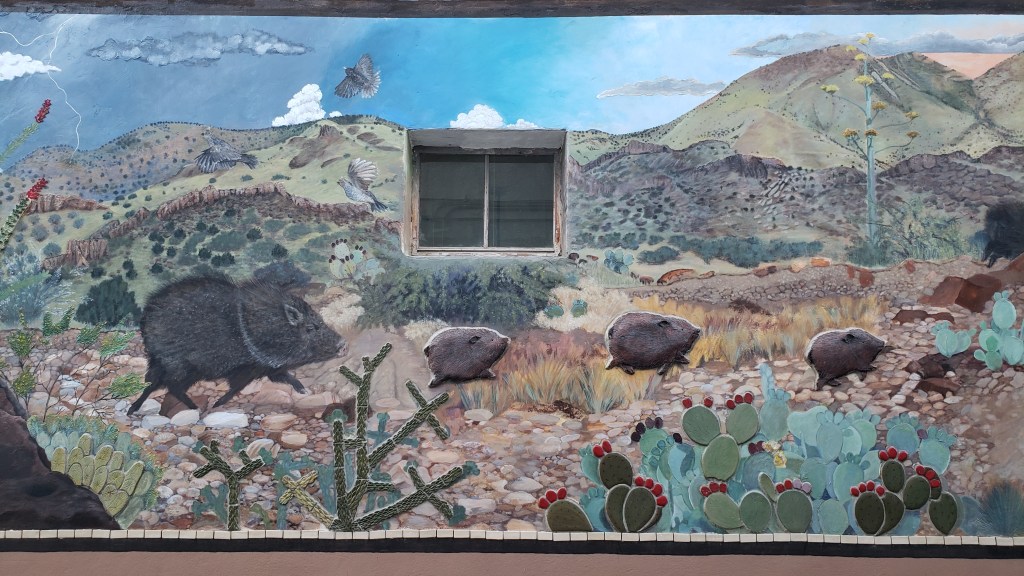
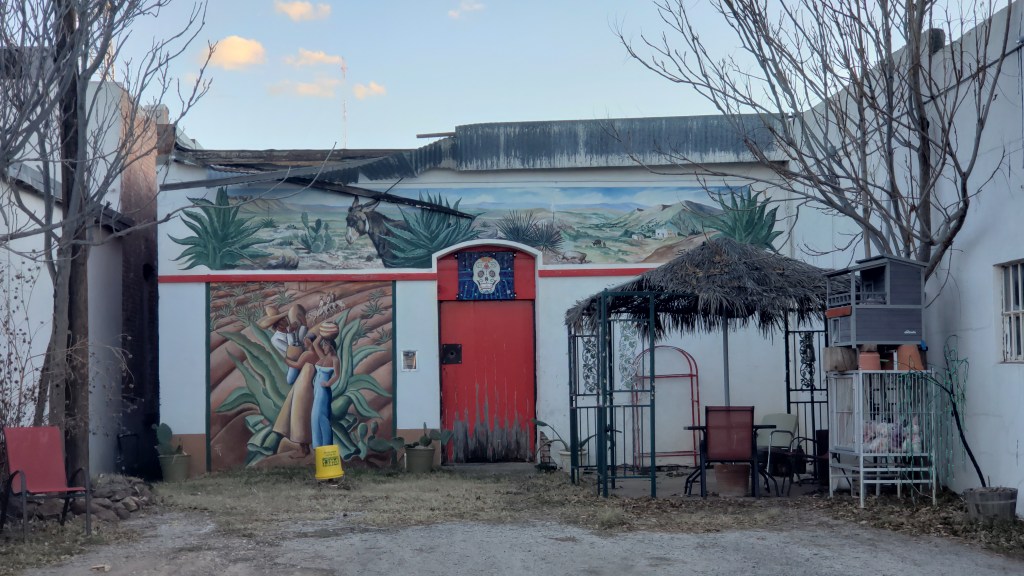
Road-weariness was catching up with us, so the next day we stayed local and did a tour of Alpine’s gorgeous murals.


Susan has fond childhood memories of sitting on her Papa’s lap watching the TV show Bonanza, and her favorite character was Hoss. Who knew he came from tiny Alpine?

Lies!


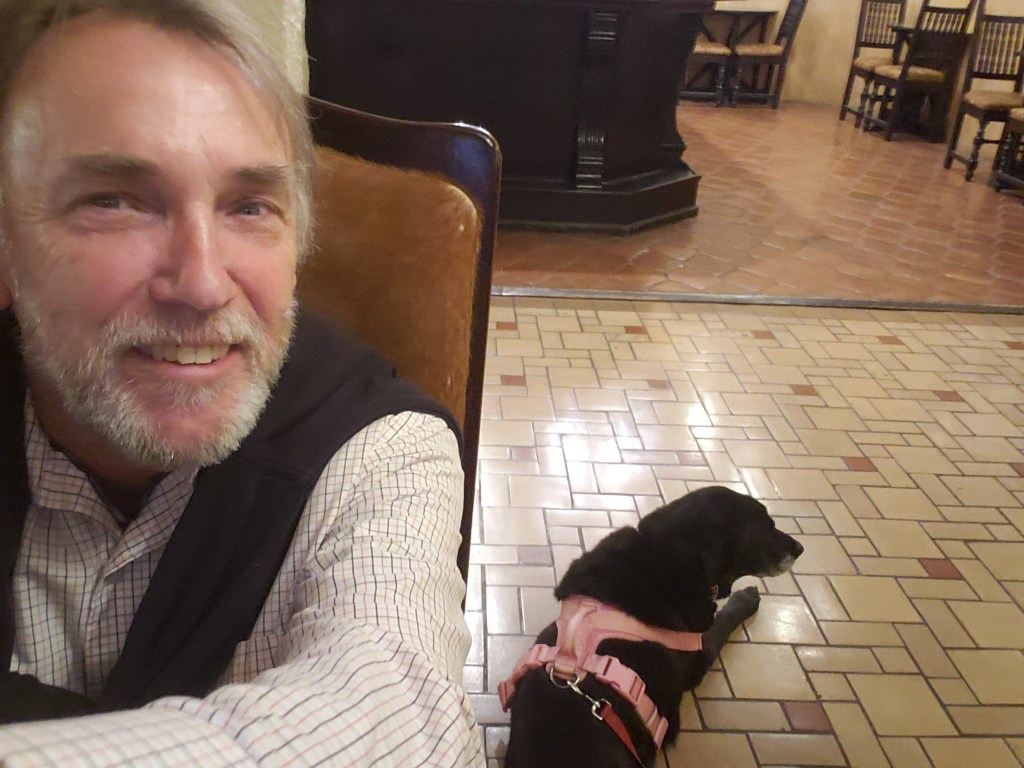
With our evening free, we freshened up and put on real clothes for an elegant dinner at The Century Bar & Grill in the historic Holland Hotel, built in 1928. Knowing we had our pup with us, they reserved a private room for us, but someone arrived before we did and snuck in, so instead we had our own table in the hotel lobby.


It’s a big, comfy lobby.

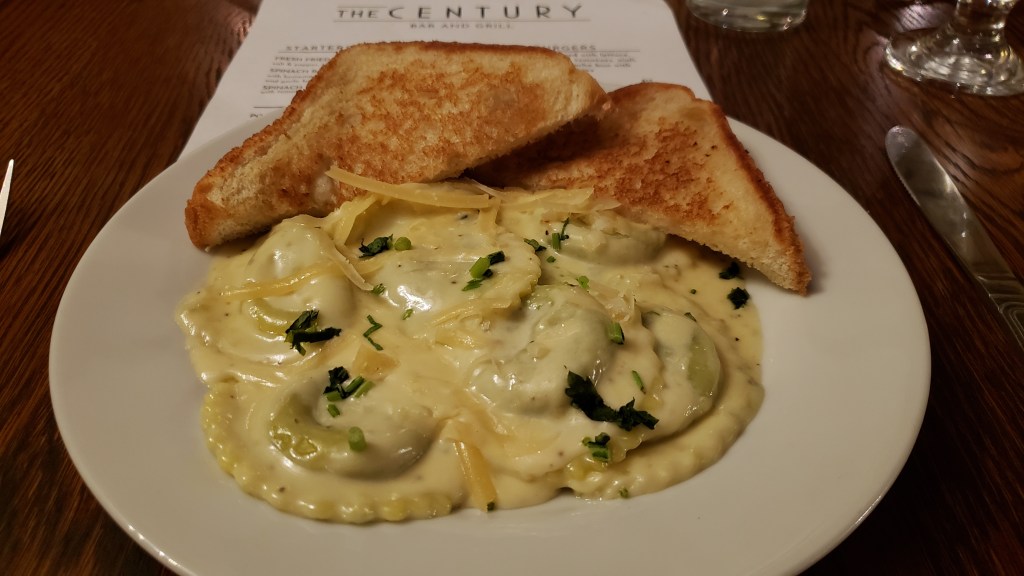
We started with the Alfredo Spinach Ravioli, which was so creamy and delicious we could easily have made it our entire meal.


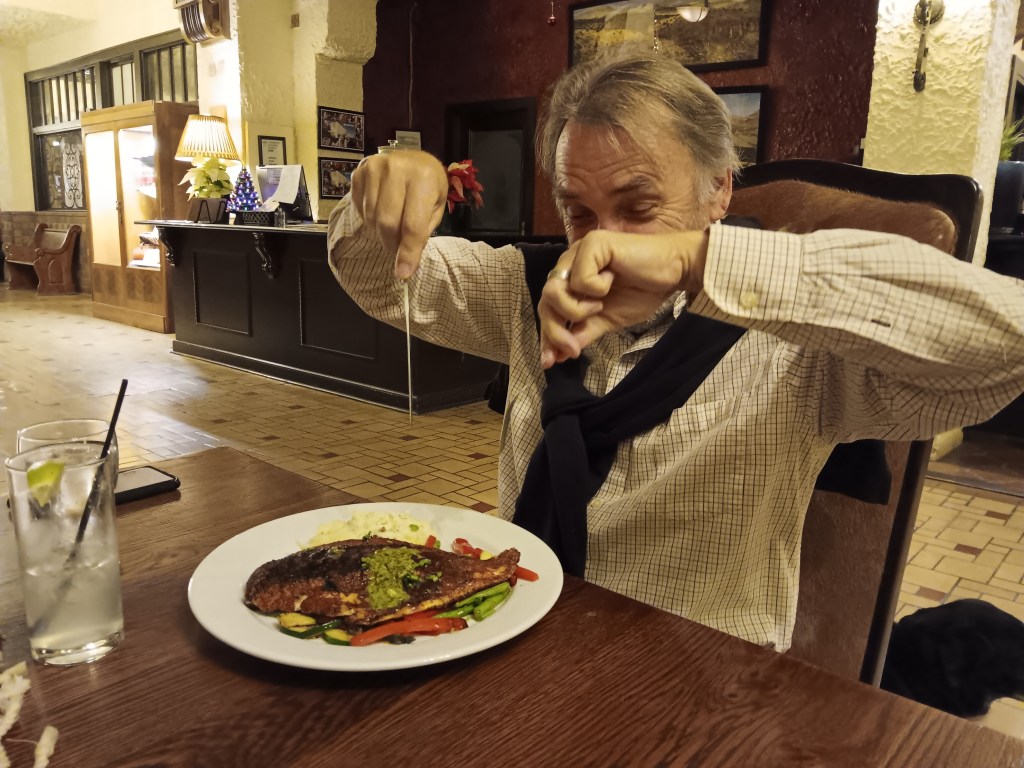
While we were still making “Yummy” noises about the pasta, our entrees arrived. Simon opted for the Cajun Blackened Redfish served with vegetables, smashed potatoes, and house-made remoulade. He declared it one of the best pieces of fish he’d had in forever; nicely spicy without being overpowering, and oh, so succulent.


Let the devouring begin!

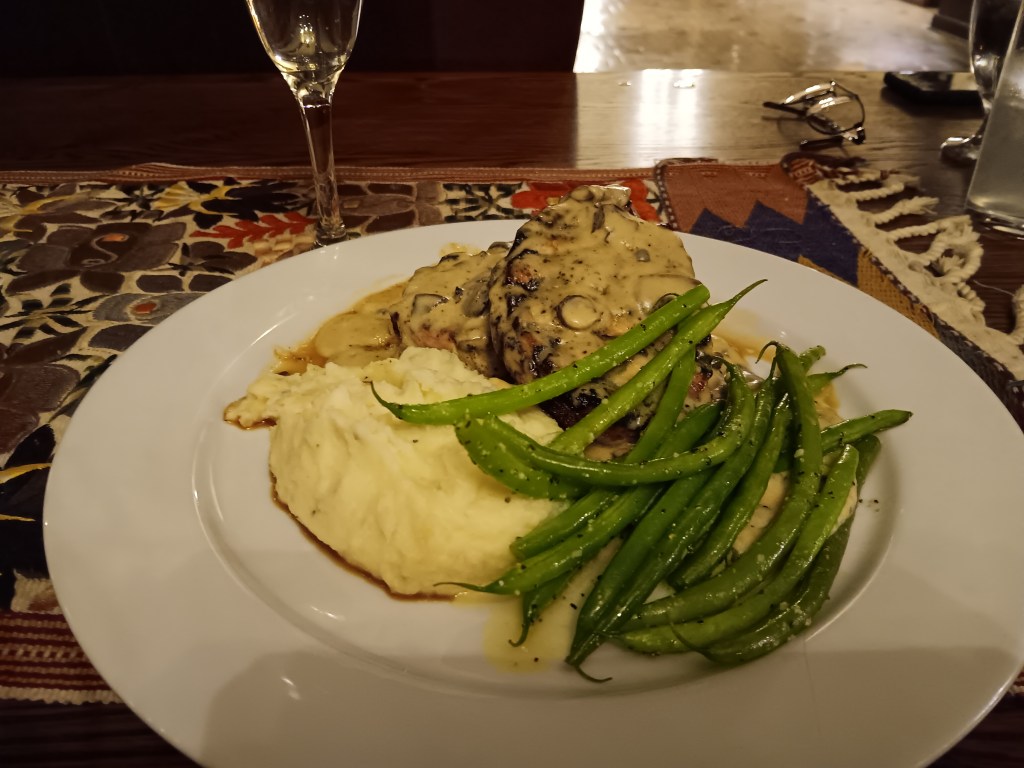
Unable to share in the delights of that spicy dish, which would have been her first choice, Susan went for the pork chops, knowing full well it would become three meals instead of one, since it was huge, with two chops and a mountain of potato. Indeed, the leftovers fed both of us the next day.


Someone wasn’t talking to us after she offered to eat anything we couldn’t finish, but was given NOTHING. Unthinkable!


Finally, we had time to spare and were in an area where we could enjoy Dark Sky at our leisure. Alpine is known for it and we were blessed with a cloudless night, so we headed out after dinner with a view of the Milky Way on our minds. The full moon that shone like a beacon was both beautiful and our undoing. It was so bright, nary a star could be seen. We stood along the roadside in light so effective we could see sad tears rolling down each other’s cheeks (not really).

There would be other chances, and with Christmas fast approaching our moods remained festive in this surprising little town that had captured our hearts.

Welcome To Don’t Mess With Texas!


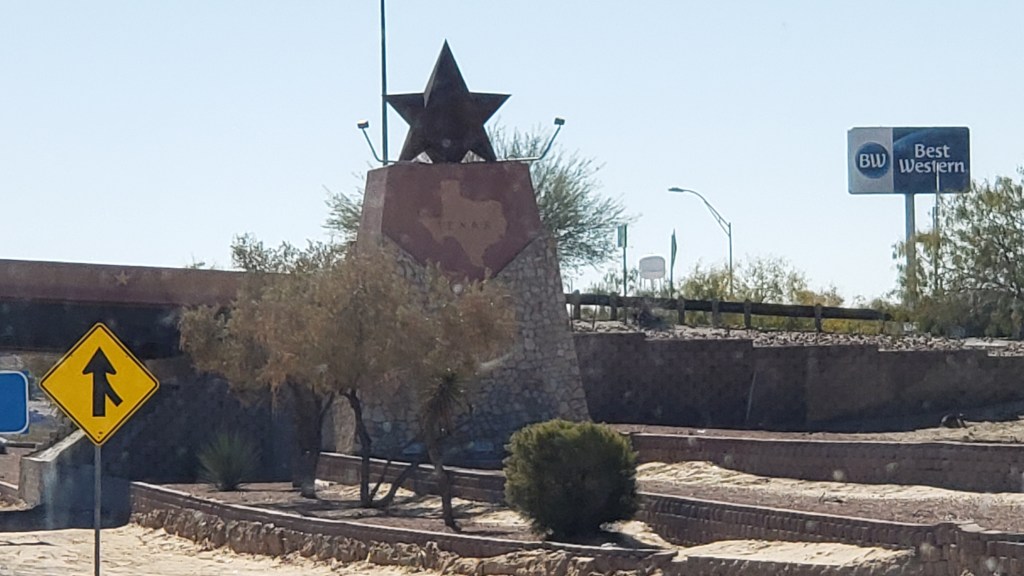
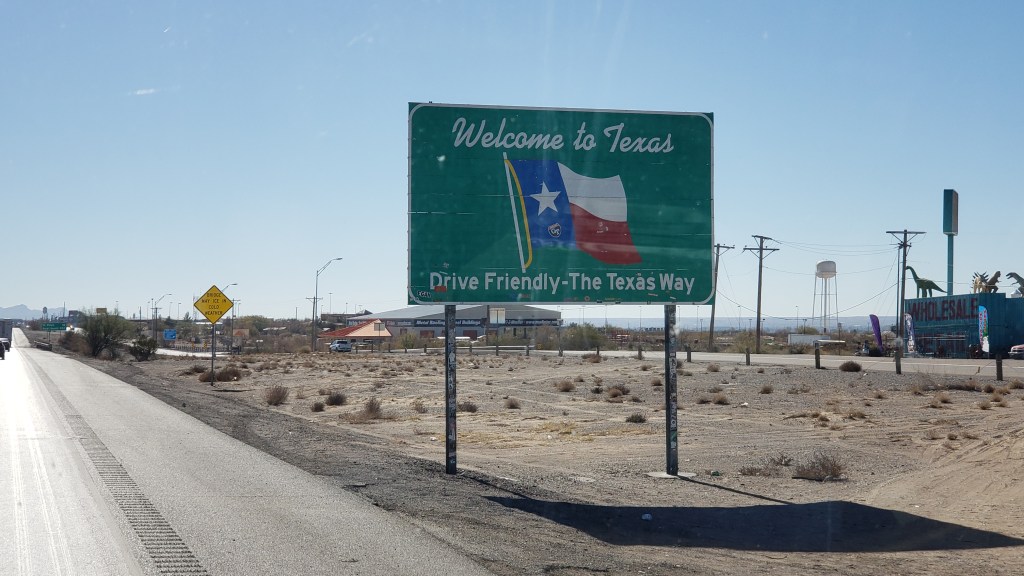
With its hidden state-border crossing sign and slightly aggressive motto, Texas loomed large in our front windshield as we left New Mexico behind for what will be nearly two months in the Lone Star State, waiting out winter.

You have to be right up on this sign before you can make out what it is.

It quickly got a bit less peevish, and this would be an ongoing theme that took us by surprise. We experienced so much kindness and generosity in our first week in Texas.

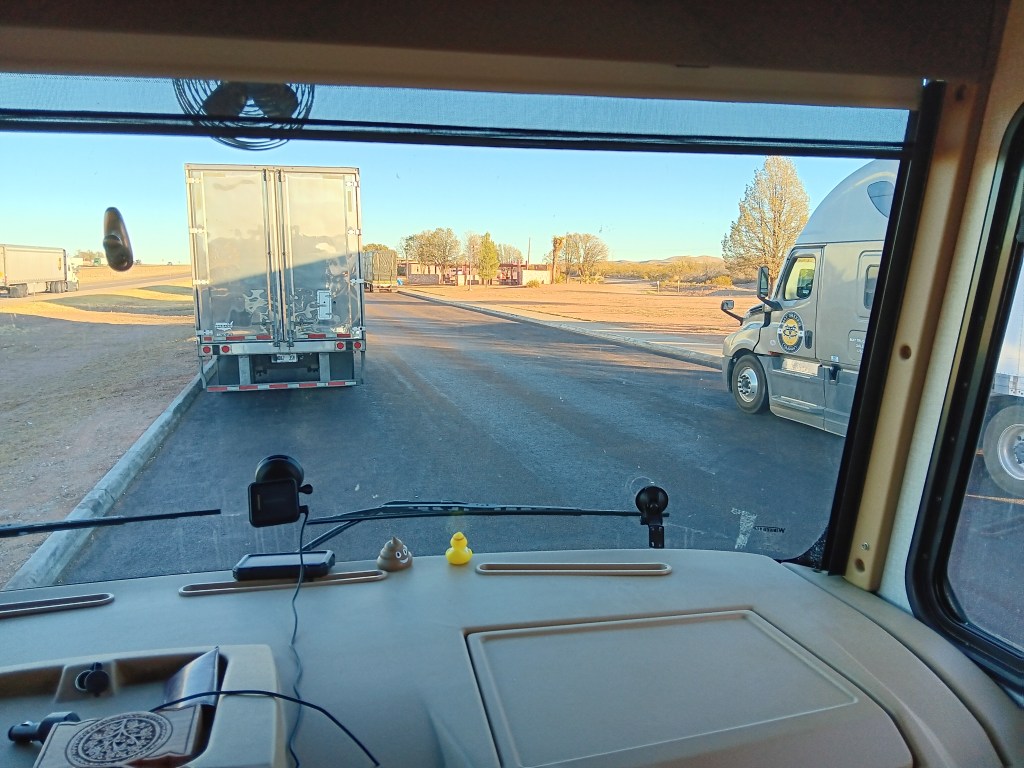
Everything is bigger in Texas, and that includes distances. We try to limit our driving in Fati to 200 miles or less per day, and it was 271 miles to our next campground, so we boondocked at a handy pull-out off I-10 in Van Horn, just a few yards off the highway. There is a long strip of road running parallel to the interstate where trucks and RVs can rest overnight. This was our view:


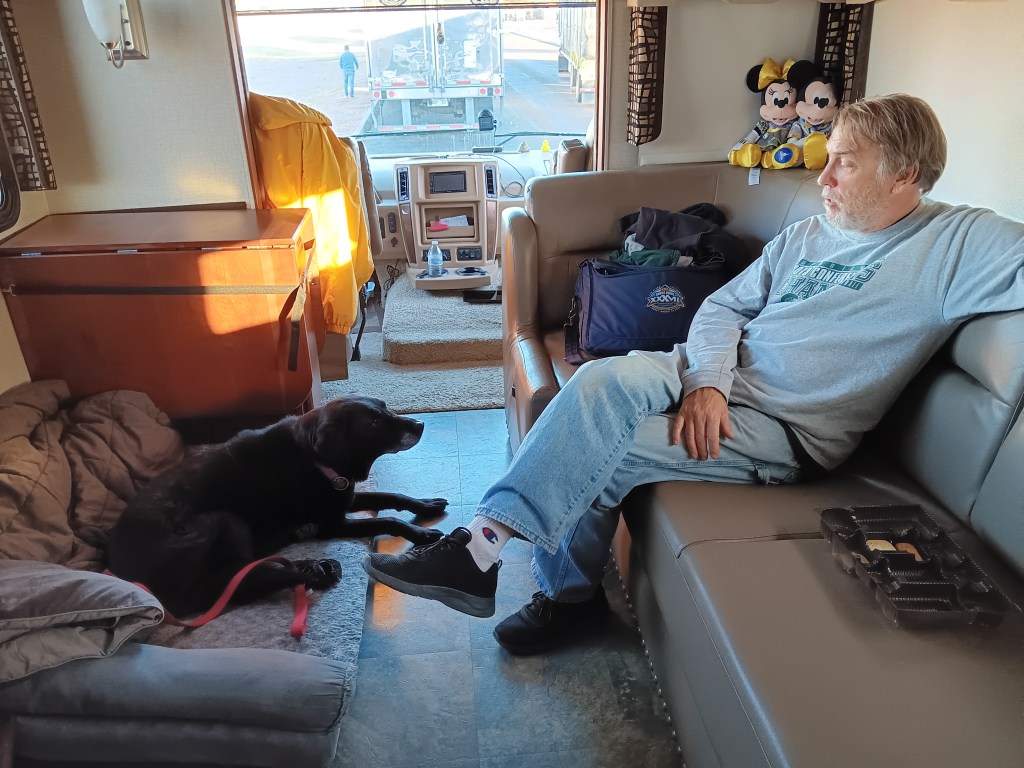
Simon and Ruthie having a discussion about where she was going to take a comfort break that evening, with no dog park in sight.

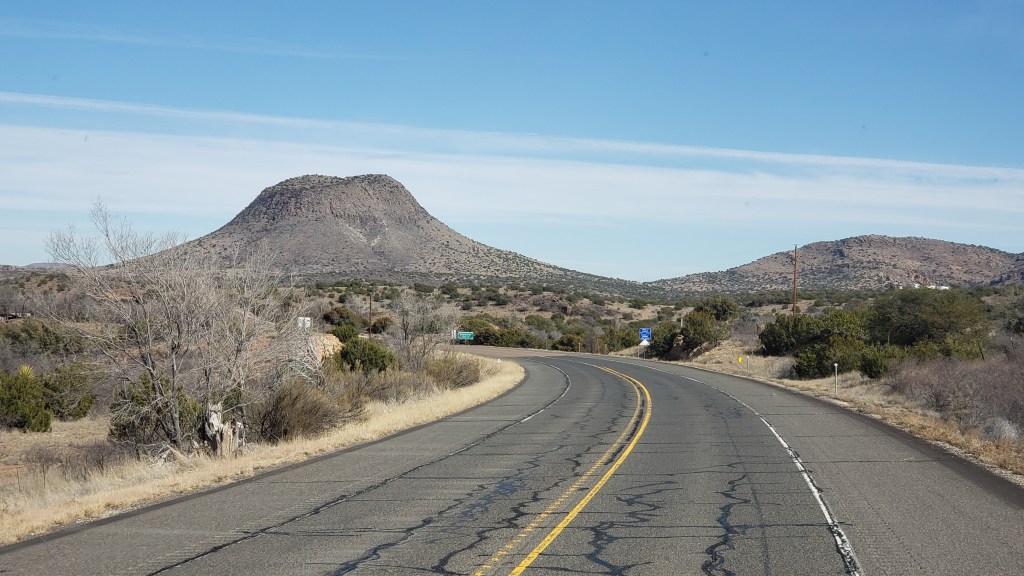
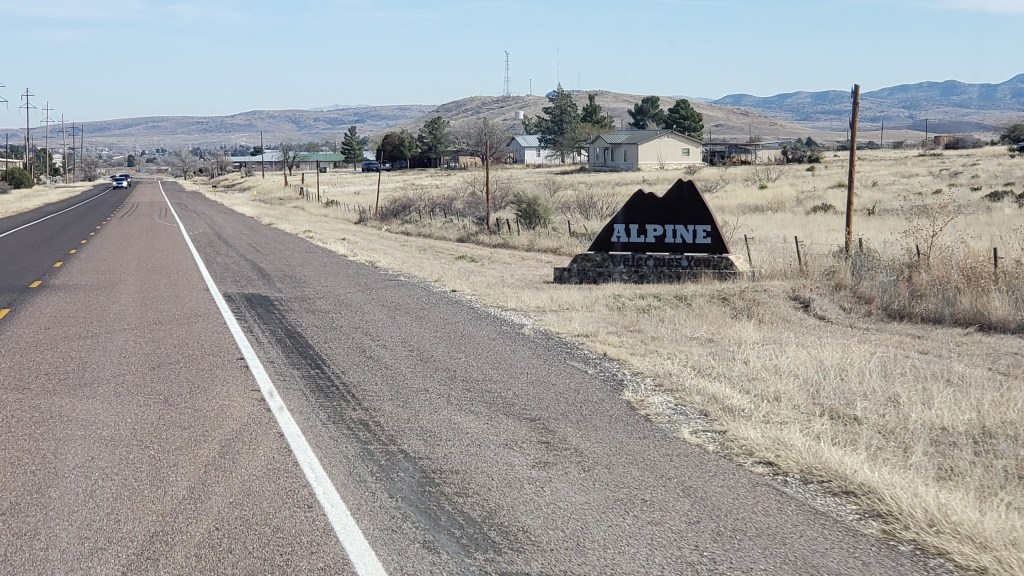
We pushed on to Alpine the next day, and while the name of this little town should have been a hint, we somehow didn’t expect to be surrounded by mountain ranges. Texas is flat, right?

Well, right, but not Northwestern Texas. Alpine is flanked by the Davis and Glass Mountains, and sits at 4,462 feet above sea level. Not exactly the Rockies, but pretty impressive for cattle country.

Volcanic much?

We saw roadkill not far from this sign that had us wondering if our theory that javelina are a lie was wrong. But it was practically the size of a bus, which (fake) javelina are not. We later found out it was a feral pig.

We didn’t expect so many mule deer just wandering around town.

The reason for our four-day stop in Alpine’s peaceful Lost Alaskan RV Park was Big Bend National Park, located in the Chisos Mountains 72 miles to the south. Our base kept us on track for easy access to US-90, without putting extra miles on Fati.

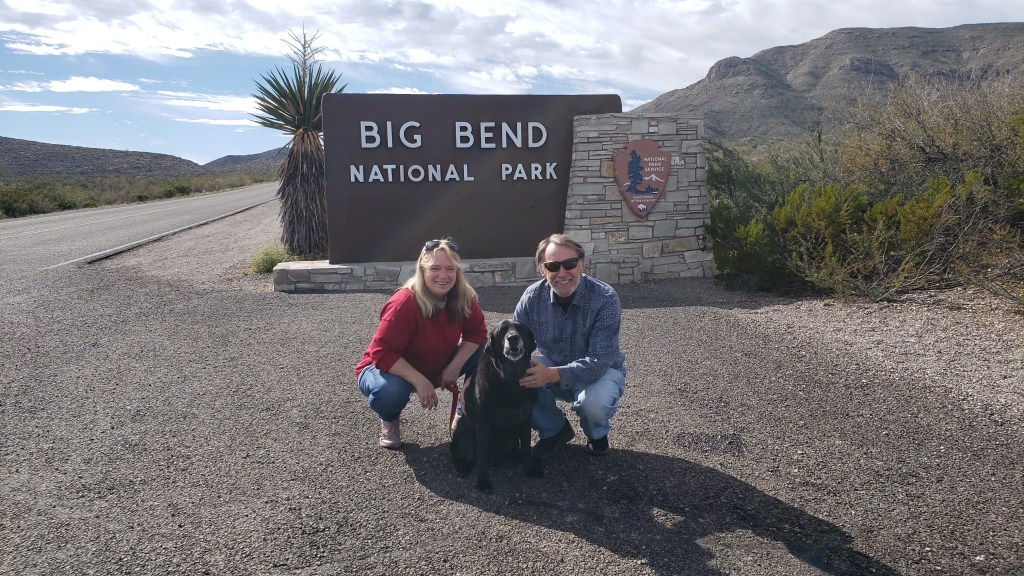
On our way in to the park we stopped at the entry sign, where a biker was taking a photo of another couple. He offered to take our picture, too, and then some genius happened. Ruthie looks away when anyone points a camera in her direction, but this guy stamped his feet over and over, prompting several little woof-etts from her, and produced photos that look like she’s smiling. Brilliant!


Big Bend launched straight into its prehistoric past, being a location where a great deal of fossilized diversity was discovered. A little exhibit and walking trail tell its 130-million-year story, from the time it was a sea to the time when volcanos shaped the land before woodlands took over; from the monstrous sea creature uncovered here to gigantic dinosaurs, Native peoples, spats with Mexico, and the eventual creation of a National Park.

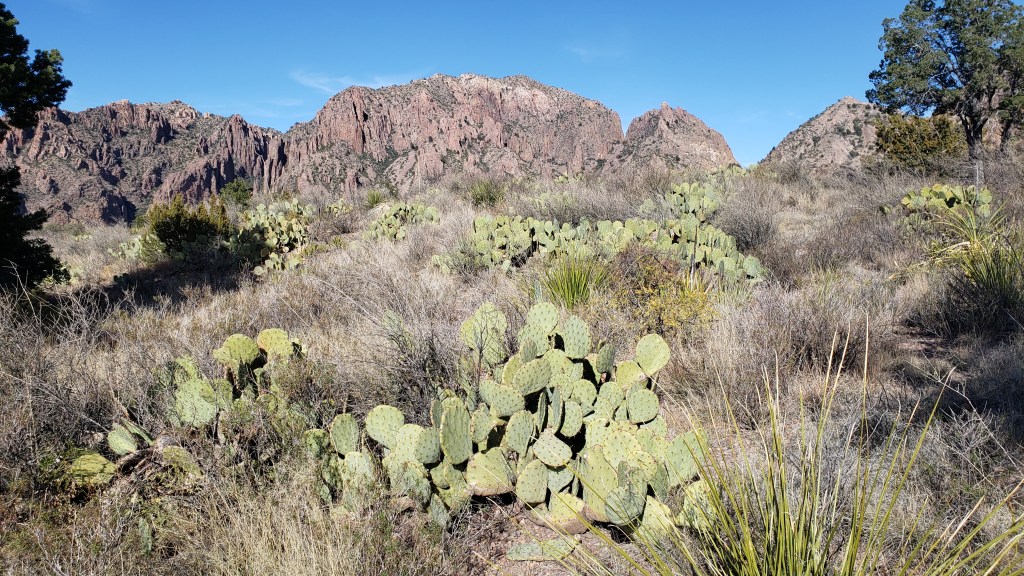
The landscape here is so changeable.

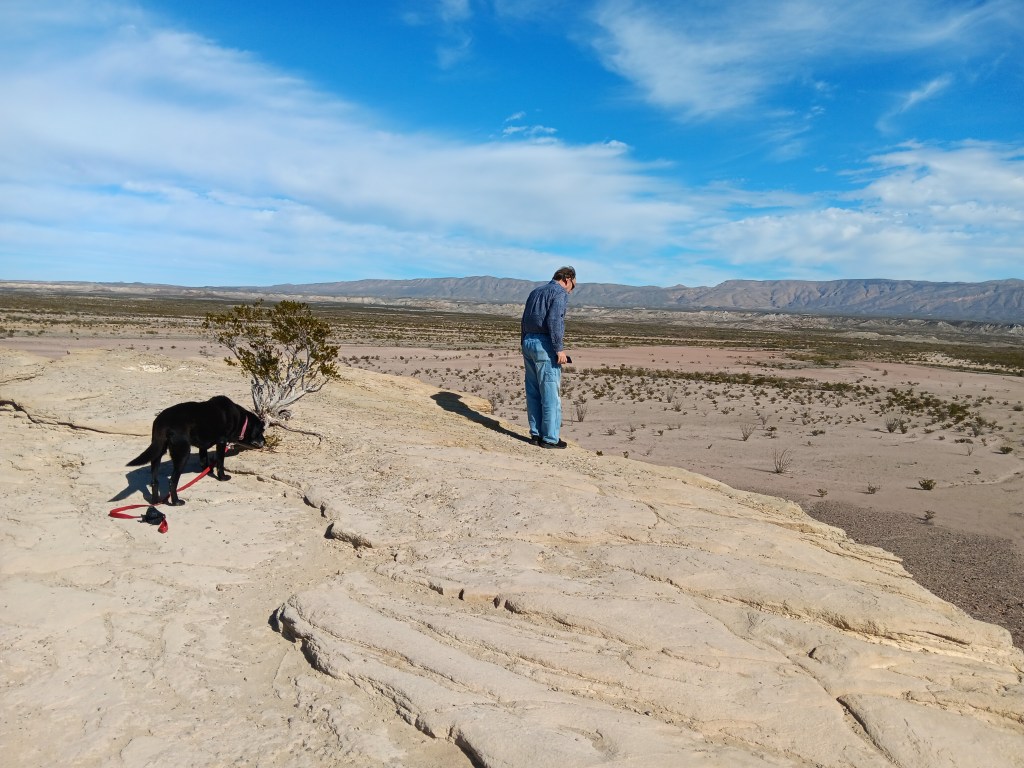
“Simon, NO! Don’t jump!”
This former mudflat was the site of some important fossil discoveries. Rhinos and camels once roamed the land. So did T-Rex.

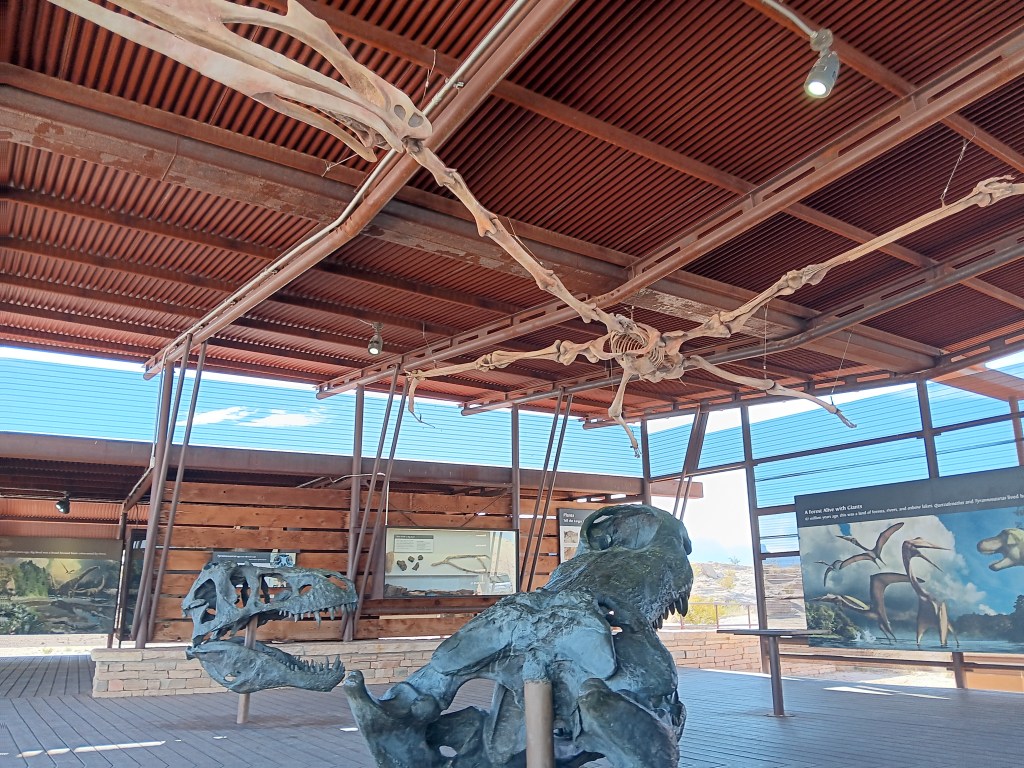
One of its claims to fame was the 35-foot-wing-spanned Quetzalcoatlus northropi, the largest flying creature discovered so far, among other dinosaurs that have not yet been found elsewhere.

The pale bones flying just below the ceiling are so long it’s hard to get them into one shot. The near end is its head.

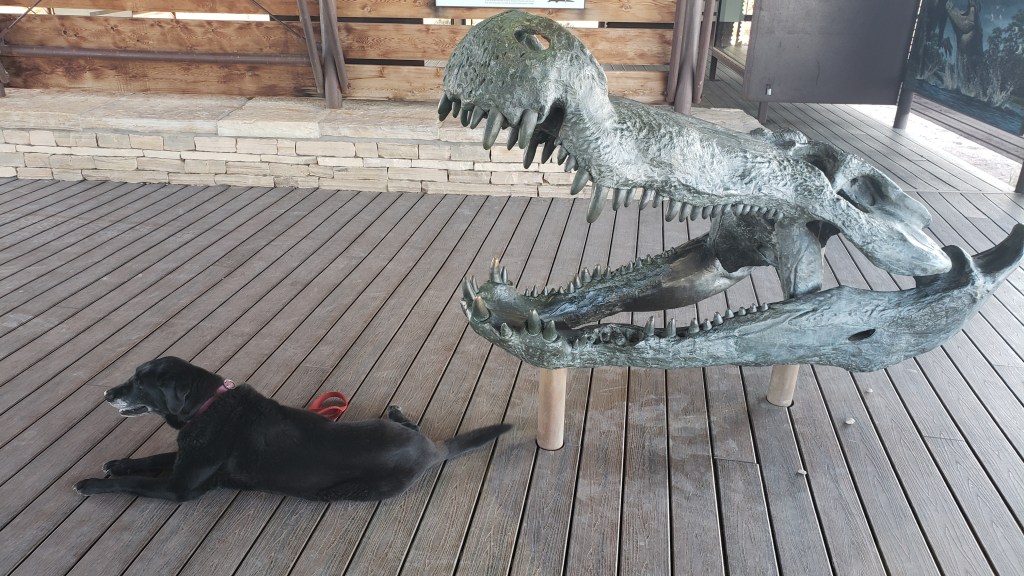
Coming from Florida, we were impressed by the park’s other reptilian claim to fame, clocking in at nearly 50-feet. Deinosuchus riograndens is a dinosaur-munching alligator big enough to take down giant herbivores that waded too close to its massive maw.

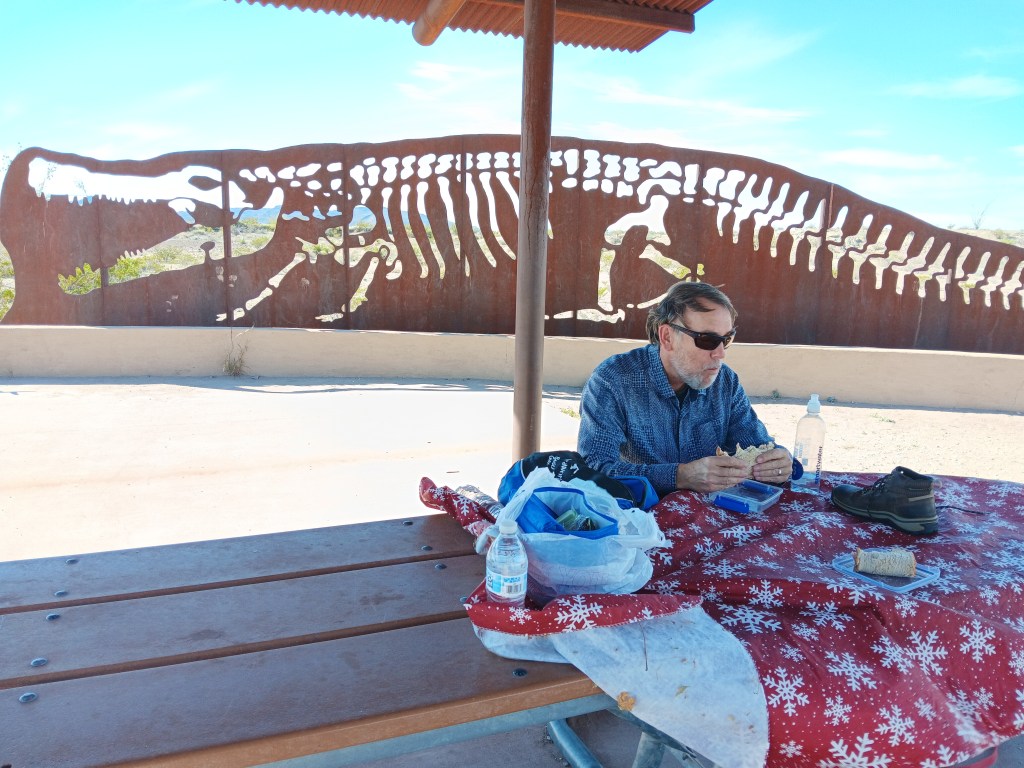
We had our picnic near a life-sized metal cutout of the gator.

Just to give a little perspective of the gator’s size. No dogs were harmed in the shooting of this photo.

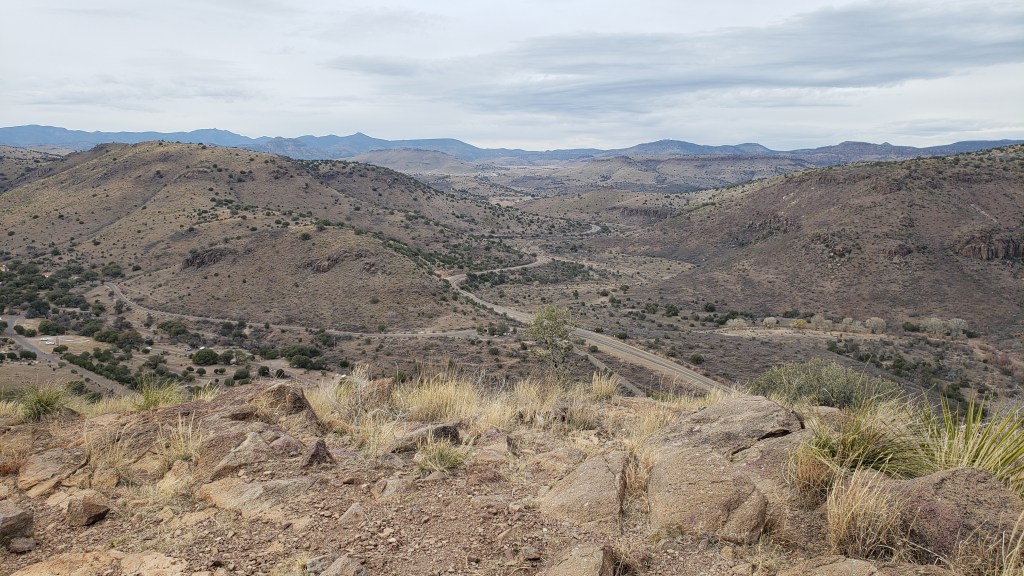
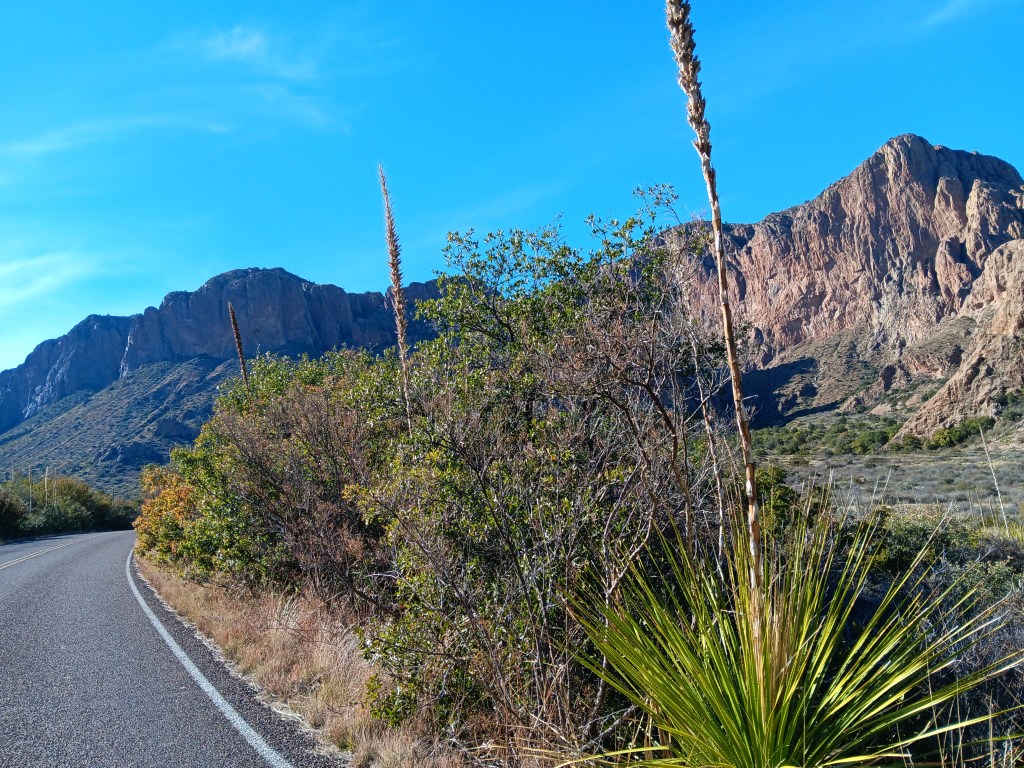
Geologically, Big Bend is partially the result of the mother of all ka-blooeys. Visitors can drive into and hike all around the Chisos Basin, with an overlook smack in the remnants from an ancient volcano.

If you’ve been geology-ing along with us, you’ll know this is a volcanic plug.

Looking back at the volcanic bowl from a road outside the basin.

Breaking free from a larger continent, subsequent land-mass collisions that raised the land upward, the formation of Cretaceous Sea, and other complicated science-y stuff also contributed to the area’s geological face, and we did feel as if we were in some sort of strange jumble of landscapes; as if the planet had grabbed handfuls of topography from around the country and flung them willy-nilly into Big Bend and the surrounding area.

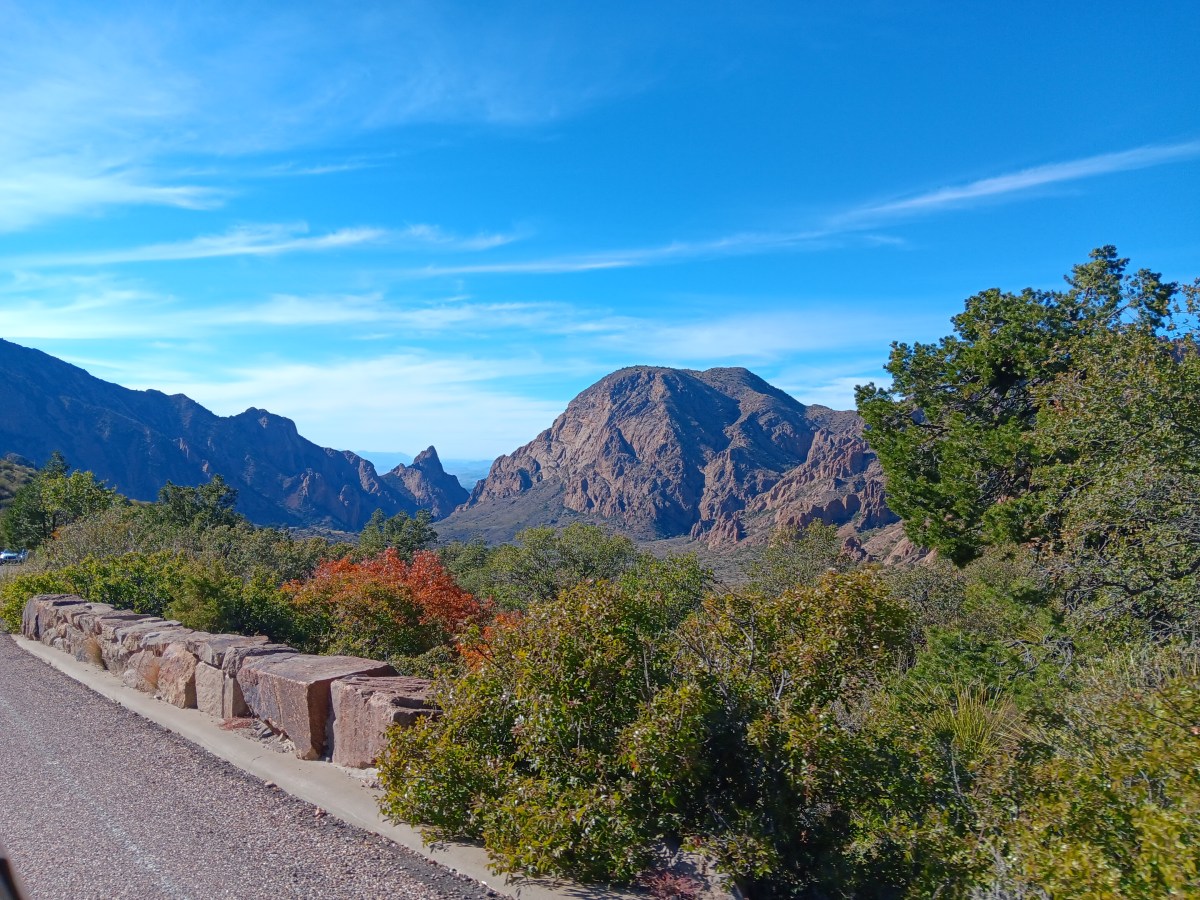
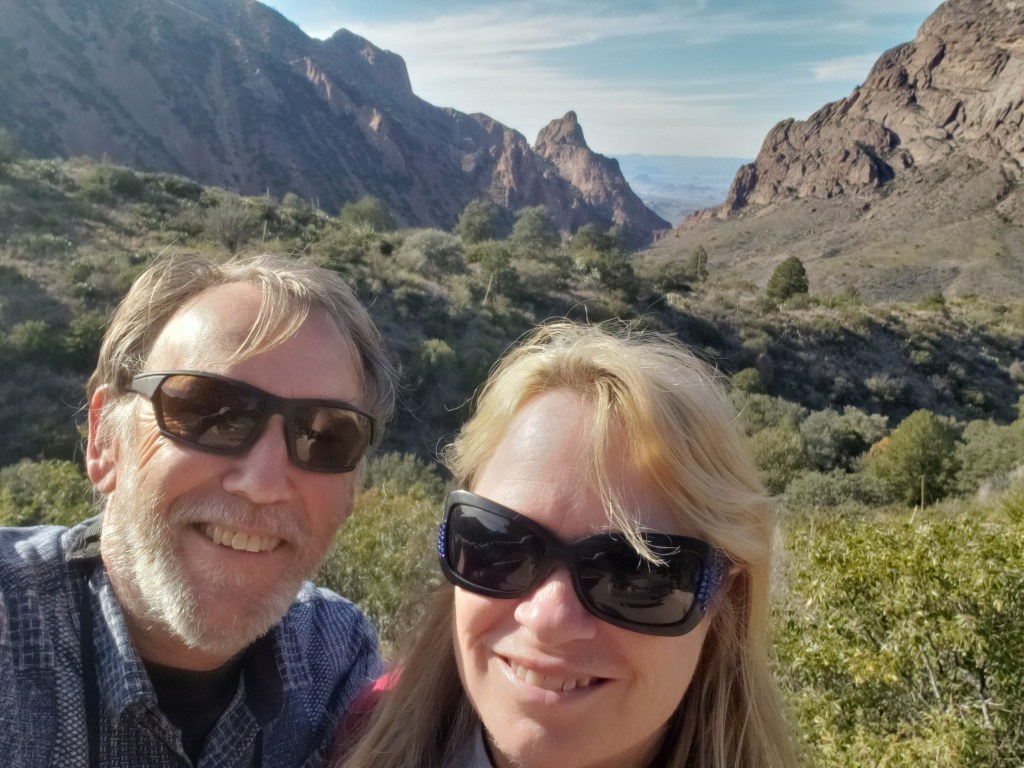
The wedge between the two mountains behind us is known as “The Window,” and it looks beyond the park into Mexico.


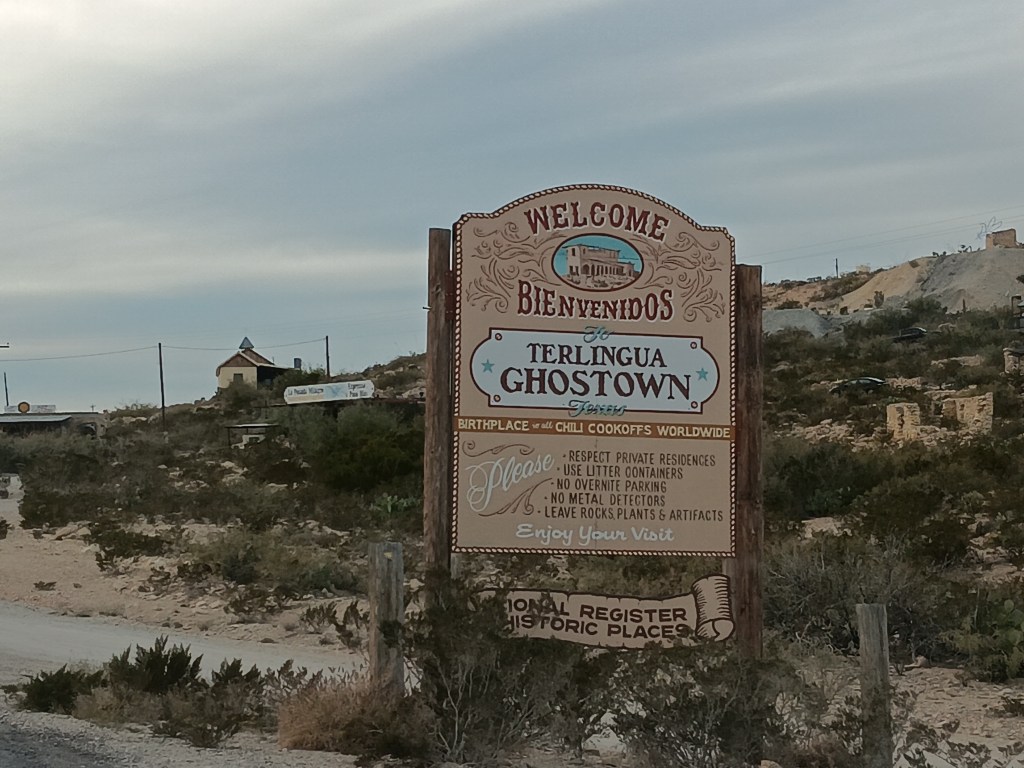
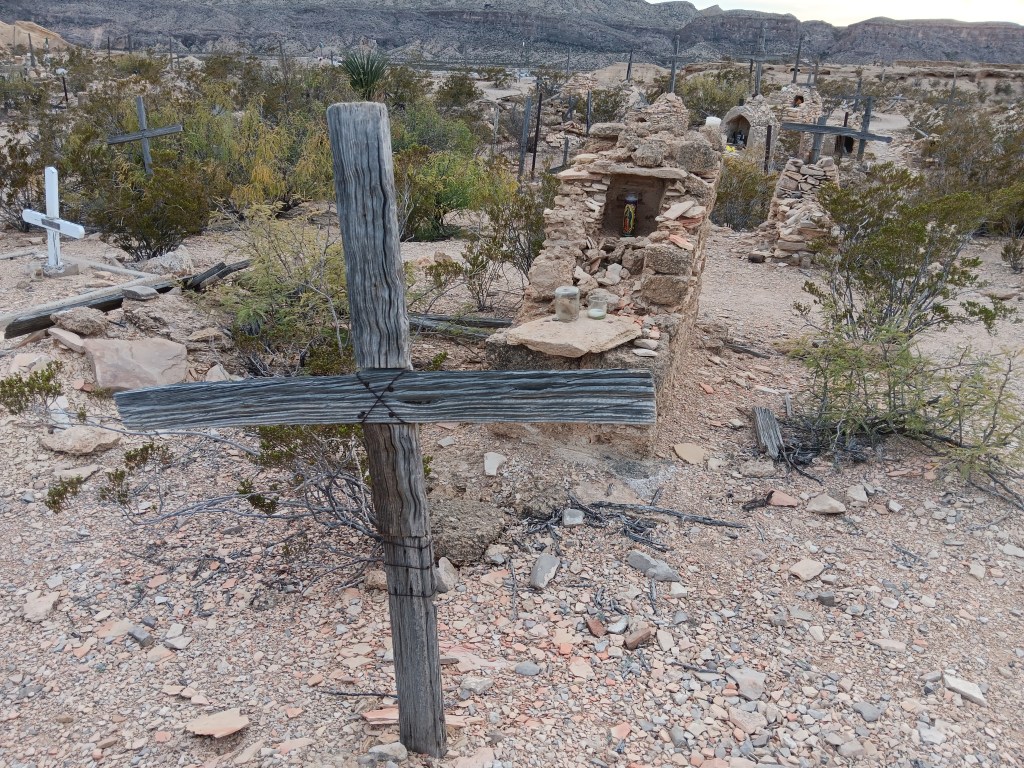
On the way back to Fati we detoured into Terlingua, a mining town turned ghost town. Very little is left here of the original structures, beyond a few crumbling buildings and a cemetery with a few old graves mixed in with the new.


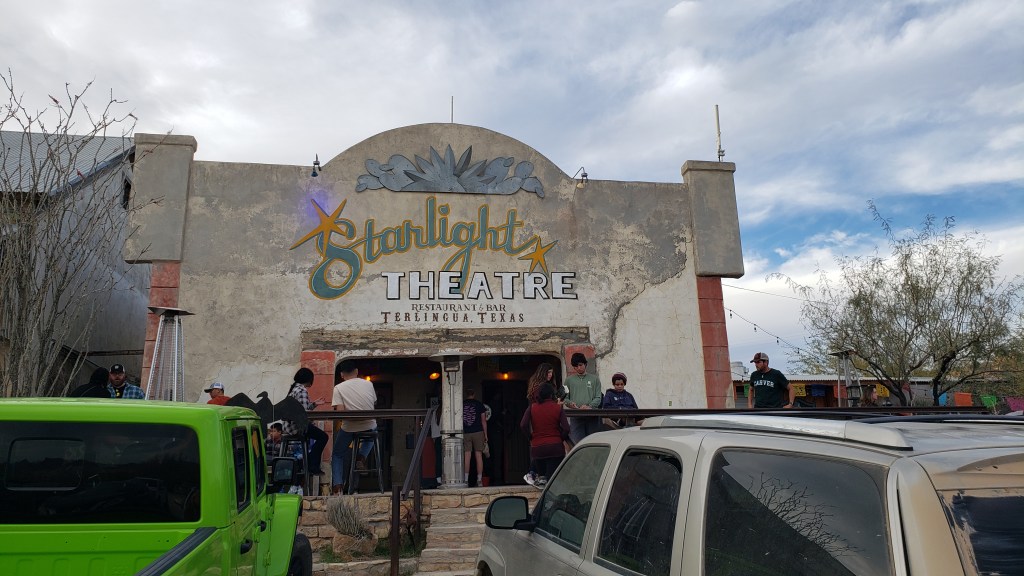
The big draw for tourists is the Starlight Theatre bar. We were going to pop in and be like the cool kids, but it wasn’t open yet. Simon was unceremoniously ordered to back out the door when he stuck his head in to find out when the pleasure of swilling one of their tourist-priced ales could begin.

Fair enough, we’re happy to comply, but also…really? Politeness is free, we’d been looking forward to visiting, and we had a little bit of cash burning a hole in our pockets. We decided not to be cool kids that day.

You can keep your fancy Day-Glo trucks and $14 Margaritas. Don’t Mess With Venesses.

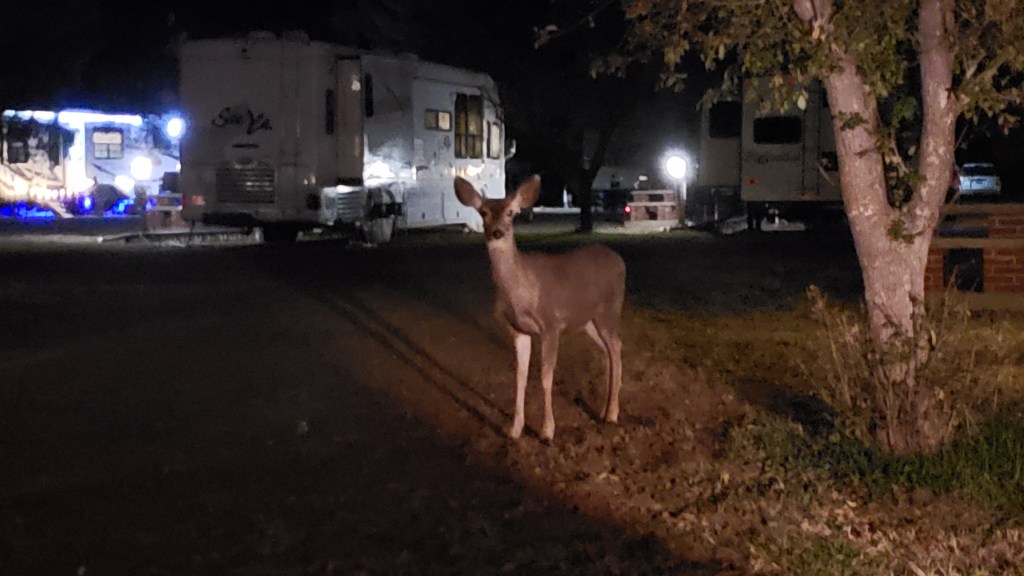
To confirm how right we were with our unreasonably bad attitudes, the Universe rewarded us with mule deer in the campground, not far from Fati, when we returned that evening. A day or so later karma rewarded us with a very sick dog. The two aren’t connected, but maybe we’ll be a bit more patient with our beer money next time.

The Ultimate U.S. Road Trip – Part 5

The latest instalment of our excusive series for The Independent featuring our “Year On The Road” RV adventure is now online, highlighting Month 5 as we reached Idaho and Utah, and the incredible scenery of places like Craters of the Moon National Monument and Bryce Canyon State Park.

You can see the whole story on this link:

https://www.independent.co.uk/travel/north-america/usa/american-road-trip-usa-idaho-utah-b2467275.html#

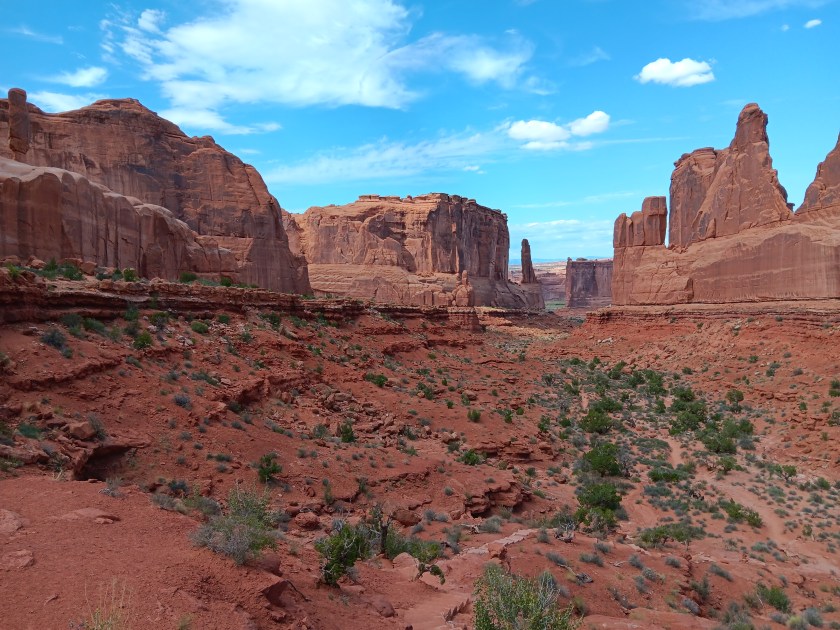
The glory of Arches National Park, one of 12 national parks, monuments and historic sites we visited in stunning Utah

Heading North Into The Great Southwest


Simon wanted a trip up to Sante Fe for its Western and cowboy-movie history, rich cultural reputation, and the chance to see northern New Mexico, which we’d heard was spectacular. Reusable canvas grocery bags packed (because we both thought we brought a carry-on bag for the occasional hotel stay, but didn’t), we locked up Fati and hit the road in Nippy for two days visiting Santa Fe, Taos Pueblo, and Albuquerque.

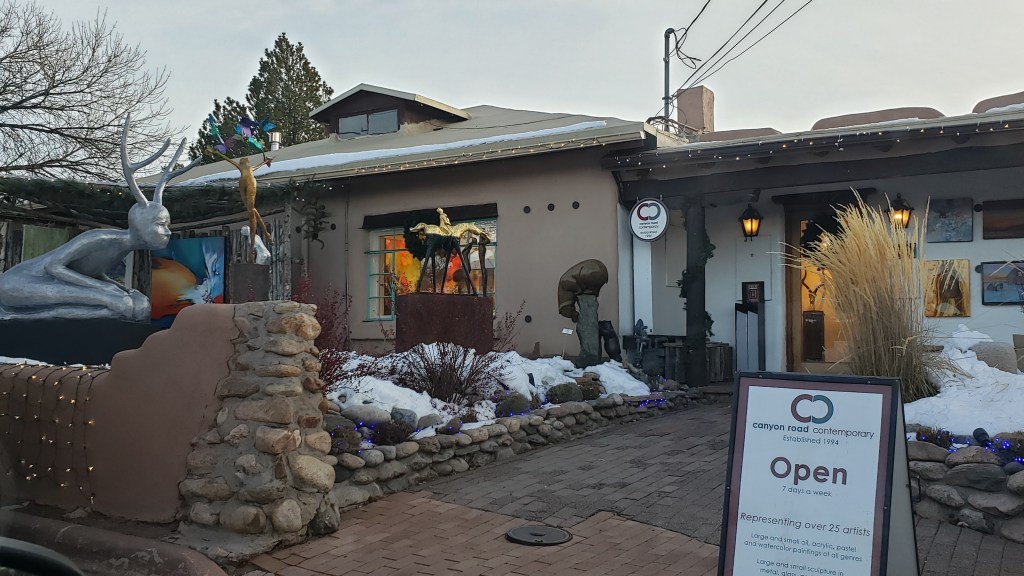
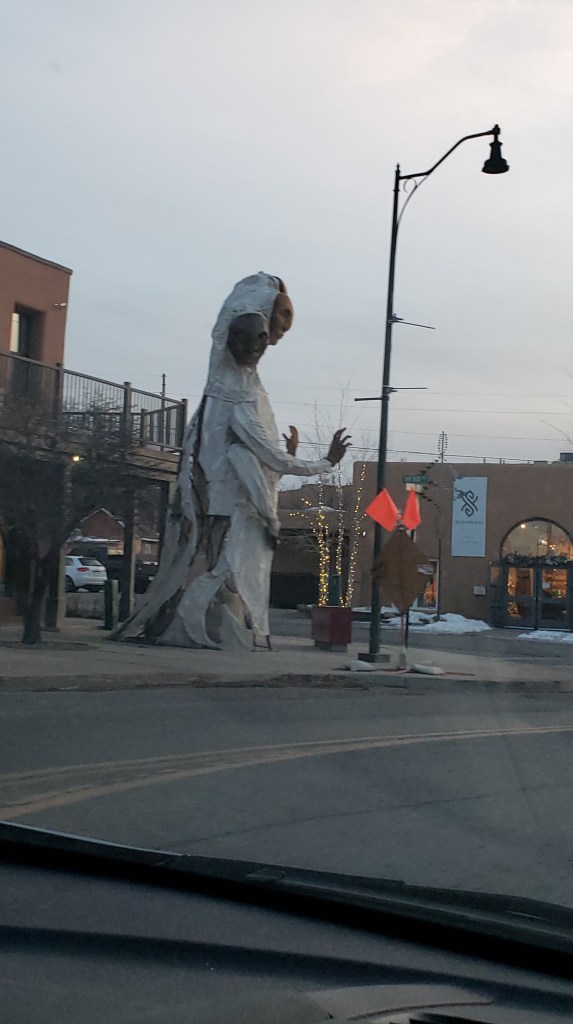
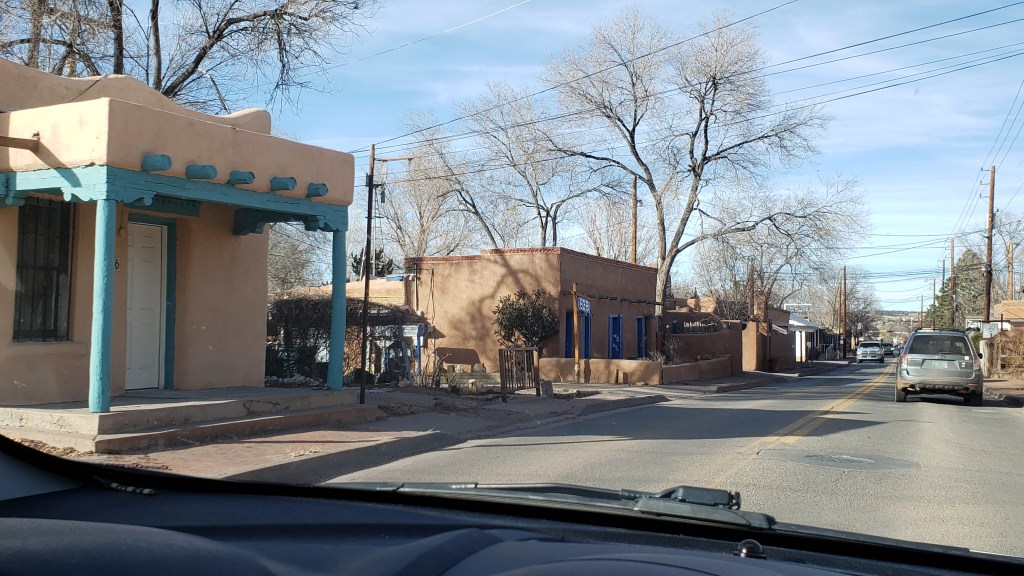
What we found when we got to Santa Fe was even more compelling than we expected. Adobe buildings, a billion restaurants, and art right out there on the street where anyone could swipe it, if they had a crane and a big truck.


What is it about adobe houses? They’re so cute and different and Southwestern, and we were immediately smitten.


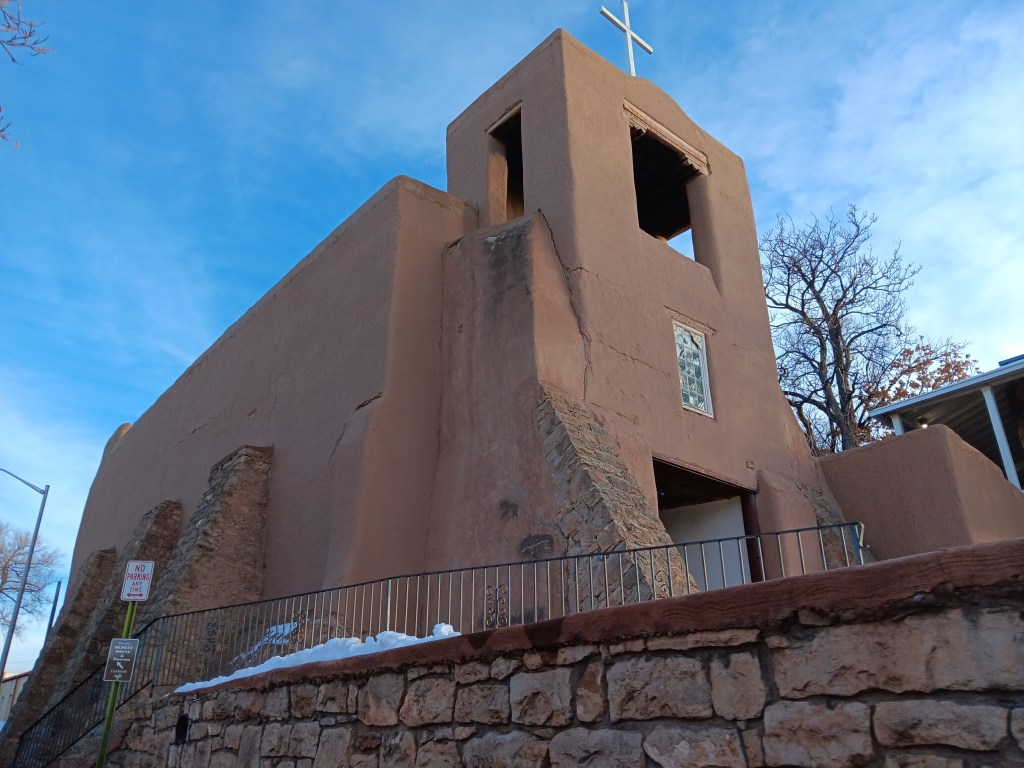
San Miguel Chapel, Santa Fe’s oldest church, dating to 1610 A.D.

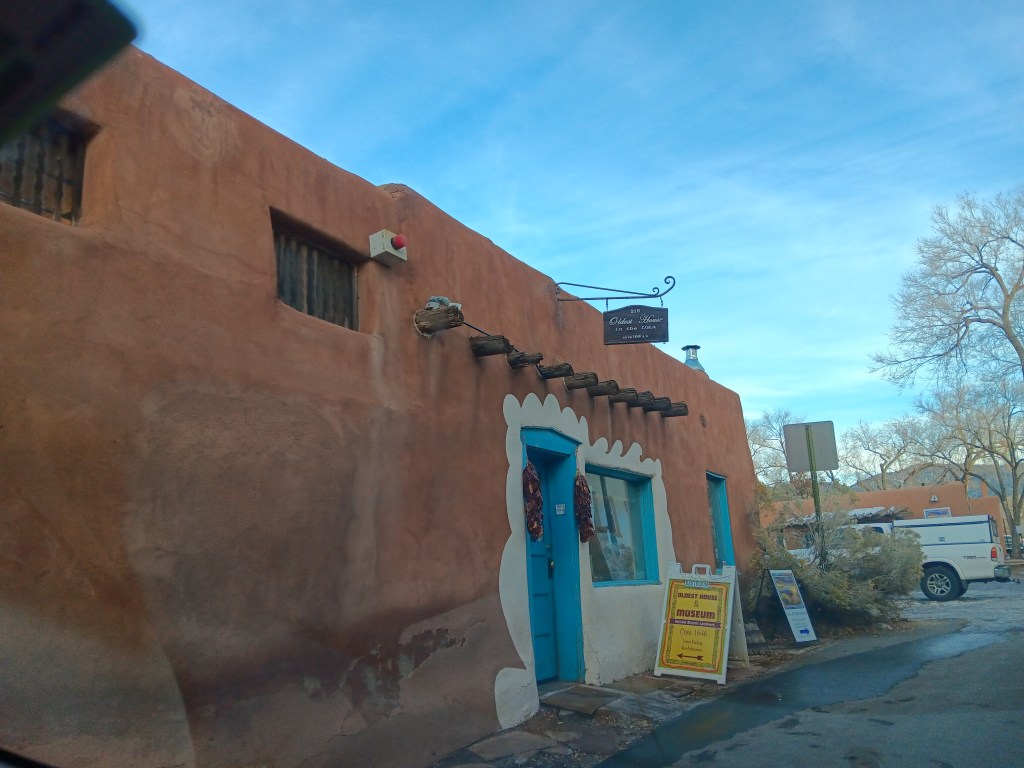
The oldest house in the U.S.A., dating back to 1646 A.D.

We’d been given several recommendations for great dining in the Old Town area. What we didn’t know was that New Mexico closes at 3:30pm. We arrived at our first choice at 3:29pm and got a hard “No” when we asked if they could at least do soup as a carry-out after our 4-plus hour journey.

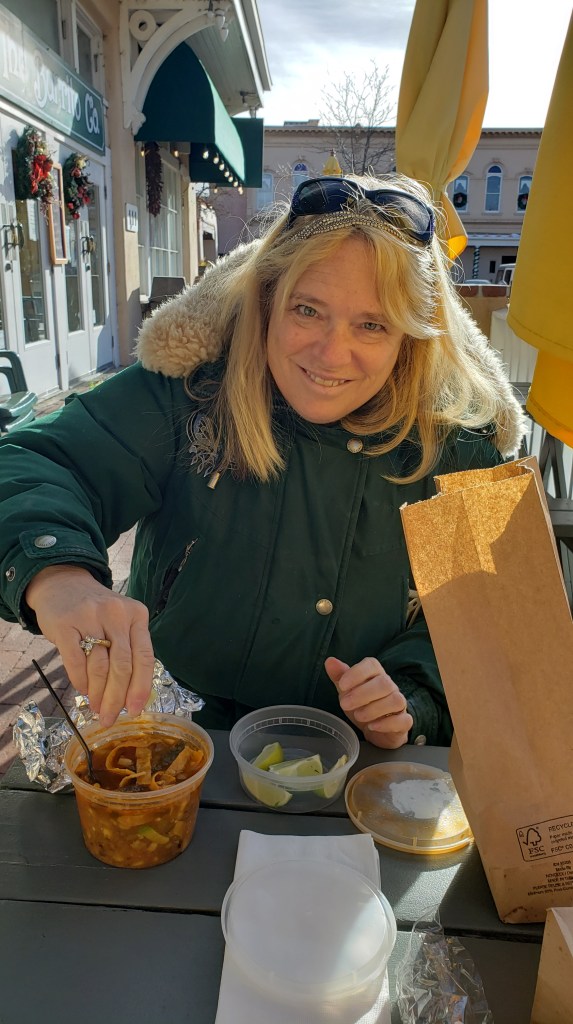
The franchise-sounding Burrito and Co. was open, though, and we’re here to tell you their homemade Tortilla Soup with fresh tortillas and wedges of lime on the side was so warming and delicious, we were almost glad we didn’t have another choice. Oh, the heavenly lusciousness of it all!


Ruthie saying, “Throw some in here!”

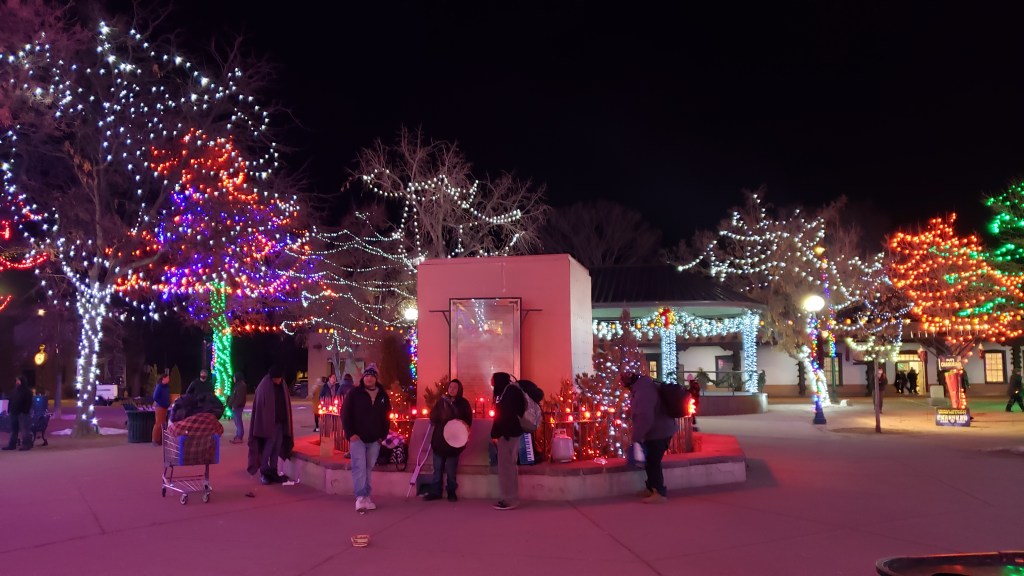
Old Town’s plaza was dressed up for Christmas, and a group of Native American guys were performing traditional chants that evening. They may have been doing it for weekend beer money, as young people are wont to do, but it set a tone so evocative we were spellbound for quite some time. It was the sort of cultural experience we’d been hoping for when we planned this trip, and put a human face on our upcoming visit to Taos Pueblo.

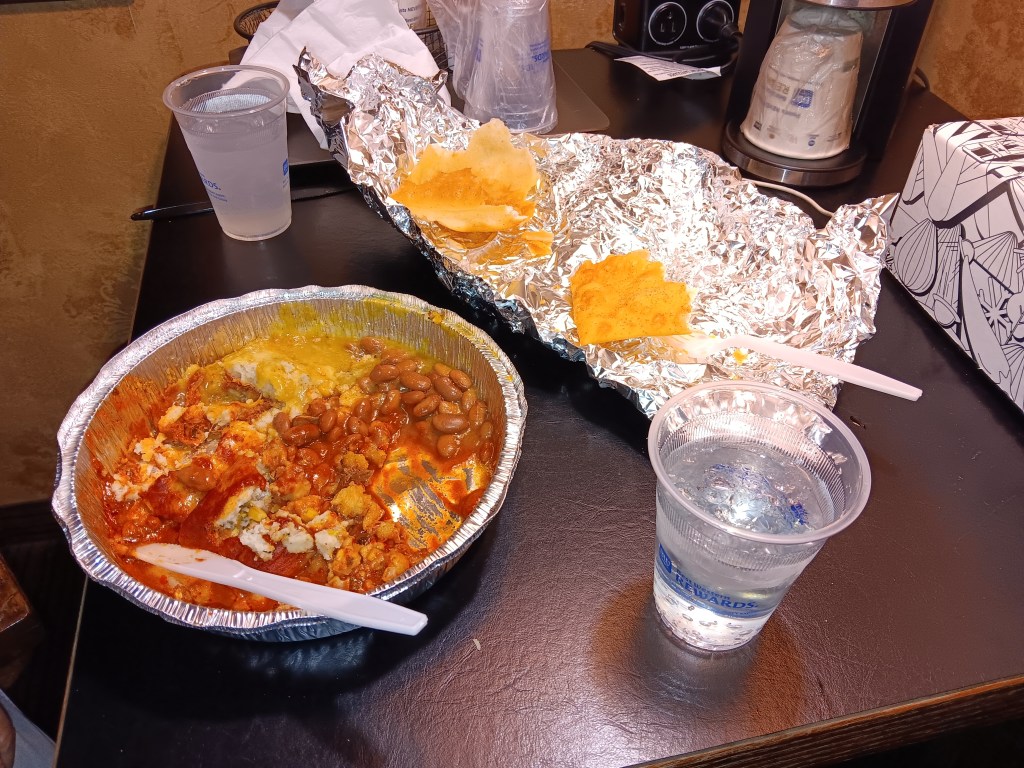
Restaurants reopened for dinner, so we got a carry-out from La Choza. We shared an order of tamales (one vegetarian, one shredded pork,) but Susan can’t do spicy food anymore, and these were up there a bit, so Simon ate most of it and Susan had a few little Biscochito, New Mexico’s official cookie.


The next morning, Ruthie helped Simon get a coffee from the hotel…


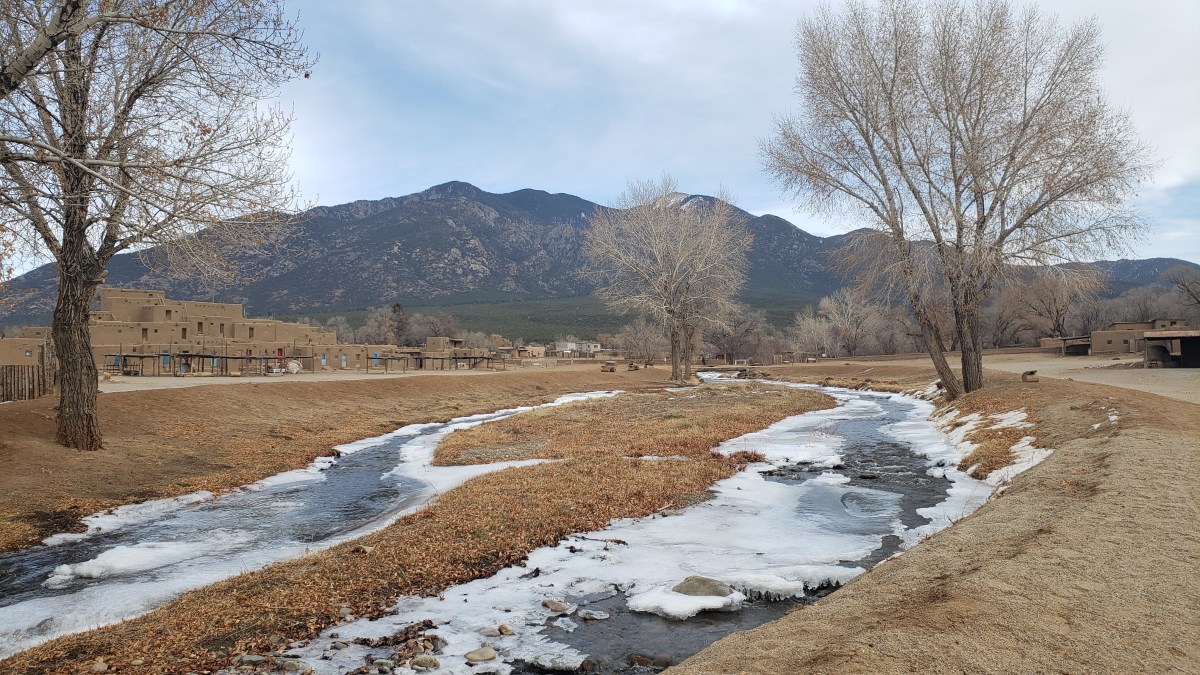
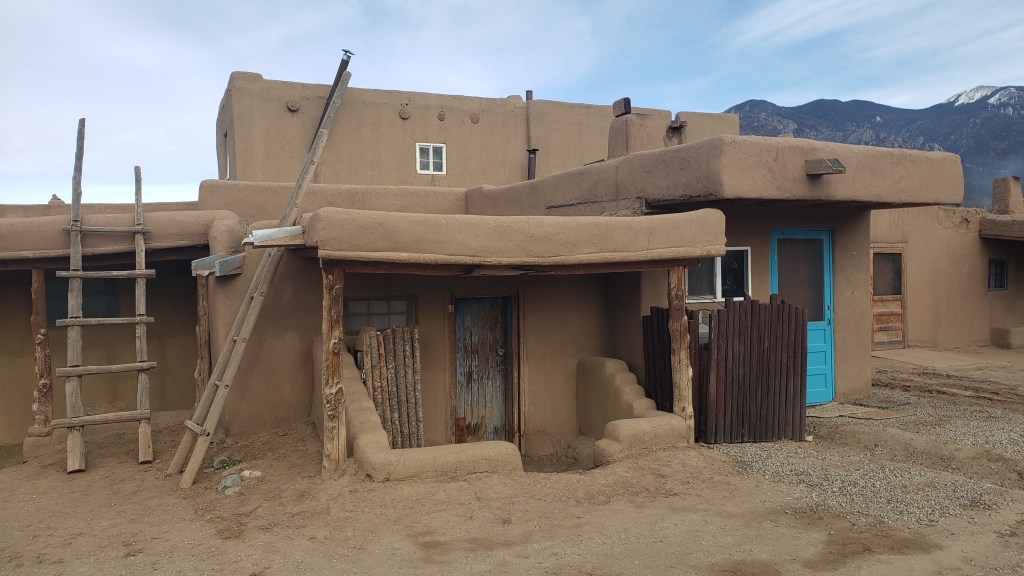
…then we set off for nearby Taos Pueblo. We knew it was a 1000-year-old “living village” with adobe buildings dating back to around 1400 A.D. and shops offering authentic Native American arts. There was a cost to get into the public areas and a code of conduct while visiting (basically, don’t be a jerk, and don’t take photos of residents without their permission).


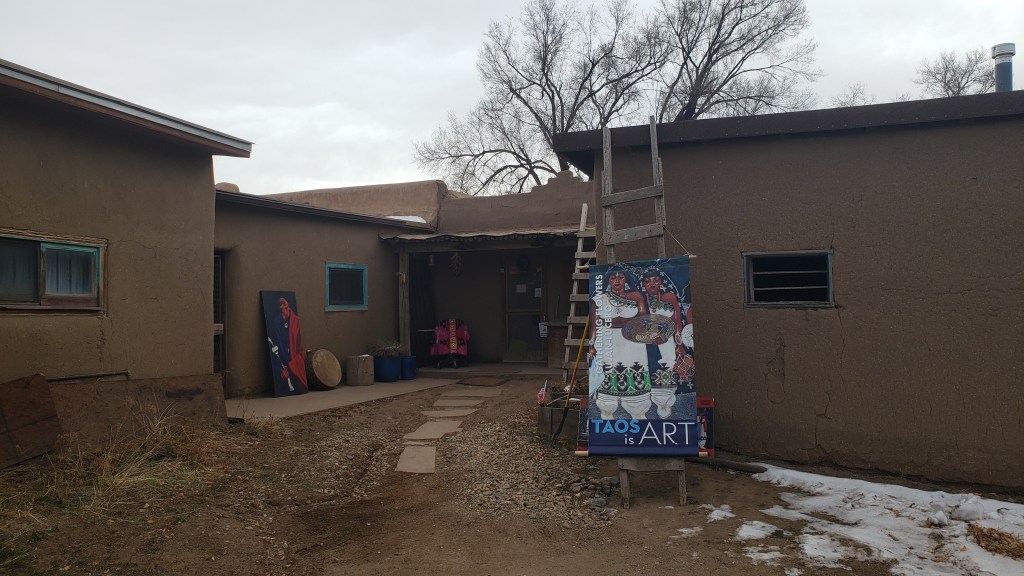
Only a couple of shops were open, but we were primarily there to see the buildings, which have neither water nor electricity. Residents live in modern homes within the Restricted areas, and use their traditional homes during gatherings and events, and as a source of income from selling arts and crafts.


It was a fascinating window into a world that was chipped away so profoundly that what’s left of it in this country qualifies as a National Historical Landmark. That weird mix of awe and of despair for a lost way of life remained with us for some time afterwards.  

With a few hours of daylight left (it was getting dark around 5:30pm) we pointed Nippy to the Enchanted Circle Scenic Byway for some mountainous sight-seeing that would take us back to Santa Fe.


The cute little town of Eagle’s Nest. We stopped at a cafe here for hot drinks, which, I kid you not, took about half an hour to make.

That night we grabbed another carry-out for dinner, but this time we won’t mention the restaurant’s name, because it went pretty badly wrong. Susan worked in restaurants in her younger years and knows things happen, but it’s still disturbing when you get a whomping great shard of broken metal in your El Salvadoran Plate’s tamale.


The photo we sent the restaurant so they knew what to look for. Penny was for size.

It was good while it lasted, but it was back to the biscochito for her. Simon was able to finish his Chili Relleno (just; Susan’s metal was off-putting), but he did place a call to the restaurant, who comped Susan’s meal and went out of their way to figure out where the metal came from (it was the tip of a knife, they later told us). They also threw out all their tamales that night, to save anyone else from a potential E.R. visit while they figured out what had gone wrong.

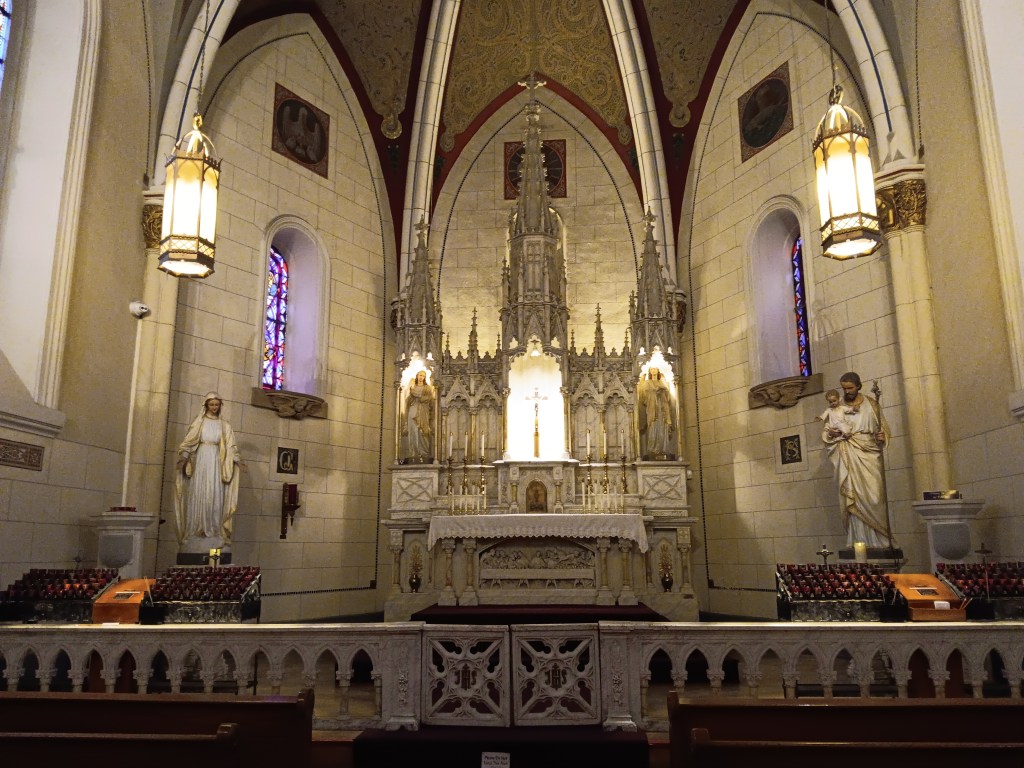
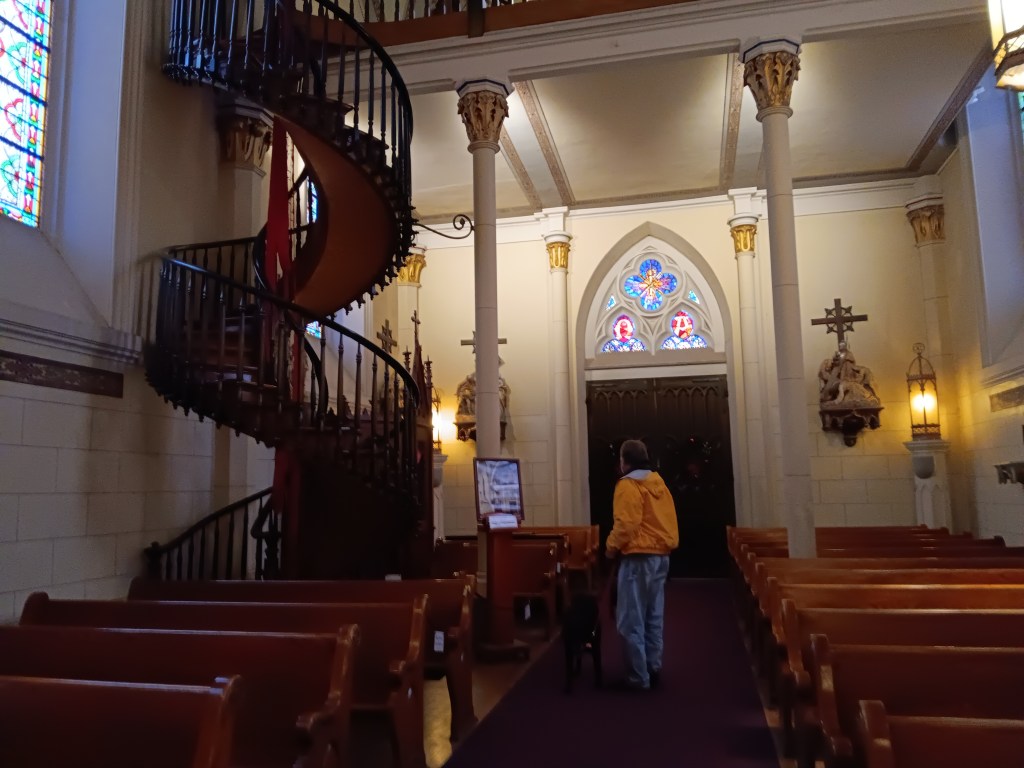
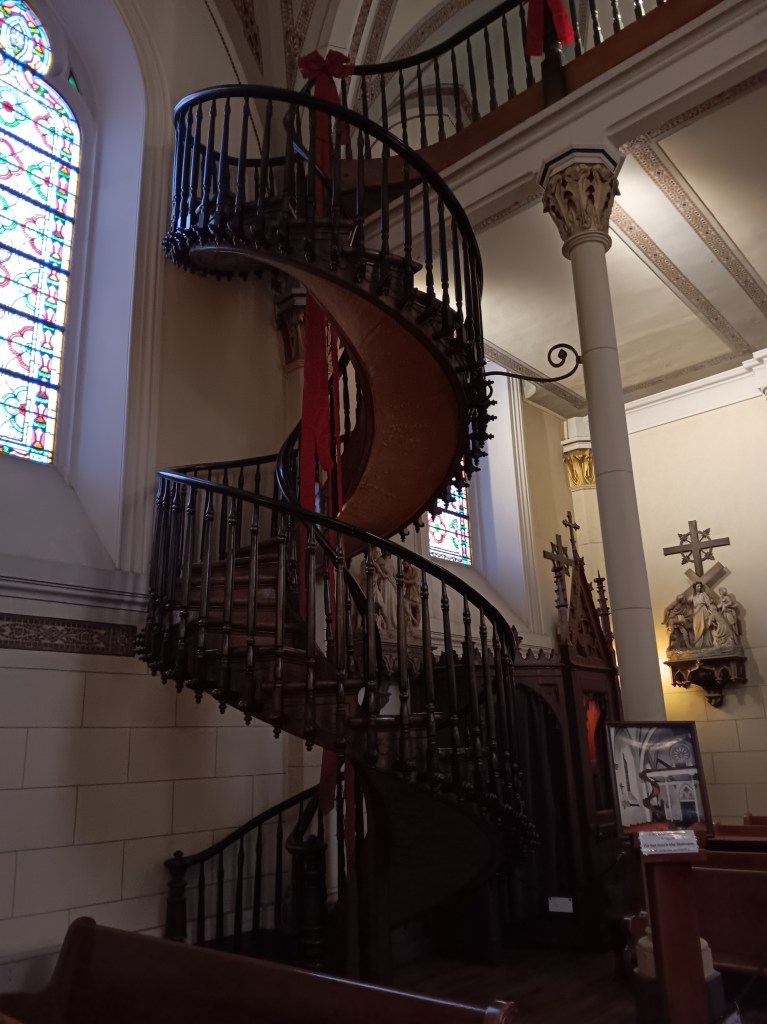
Before leaving town for Albuquerque on our return trip to Fati the next day, we popped into Loretto Chapel to see the “miraculous staircase” built in 1878 by an “unknown carpenter” using wood that is “not of this world.”

As legend has it, the chapel’s 22-foot-high choir loft was not accessible to the nuns running the place, who (presumably because they were wearing habits that anyone could look up) could not use a ladder. They made a novena to St. Joseph, the patron saint of carpenters, and soon a carpenter arrived on a burro with a toolbox and a solution.

He worked for months, then disappeared without saying goodbye or asking for payment, leaving behind a magnificent circular staircase with no nails to hold it together and no visible central support to hold it up. And what the heck kind of wood was it? It certainly wasn’t wood that was available in Santa Fe. There were questions.

The work of Saint Joseph himself, some say. The wood is spruce, scientists insist. Nail-less construction was far from unknown. But it’s a great tale, and a gorgeous example of craftsmanship, wonky structural safety notwithstanding.

The railing wasn’t part of the original build. It was added later, for obvious safety reasons. Those nuns would have been bouncing precariously due to the double helix design (meaning: springy!), with nothing to hold on to.

We gabbed about theories and doubts and storytelling on the way to Albuquerque, but by the time we arrived a serious exhaustion had begun to creep in, and our hearts weren’t in it. It was time to return to Fati and let our brains cool down for 24 hours before making the two-day drive into Texas via an overnight at a Rest Area before reaching our Alpine campground retreat.

Three Crosses, One Outlaw, And A Snowy Sandscape


Ten whole days in Las Cruces, New Mexico! We arrived at the superbly welcoming Las Cruces KOA Journey campground full of enthusiasm for the billion things we had planned, using the city as our base; a list so long that sane people would have taken a month to complete it. But not us! We were ready to pack it in tight and see absolutely everything! YAY!!

Idiots.

We know better, too. For decades we’ve been admonishing excited visitors to Orlando who think they can do it all in two weeks. But this isn’t Orlando, and we’re professionals. Right?

Would professionals take a photo this bad? I don’t think so!

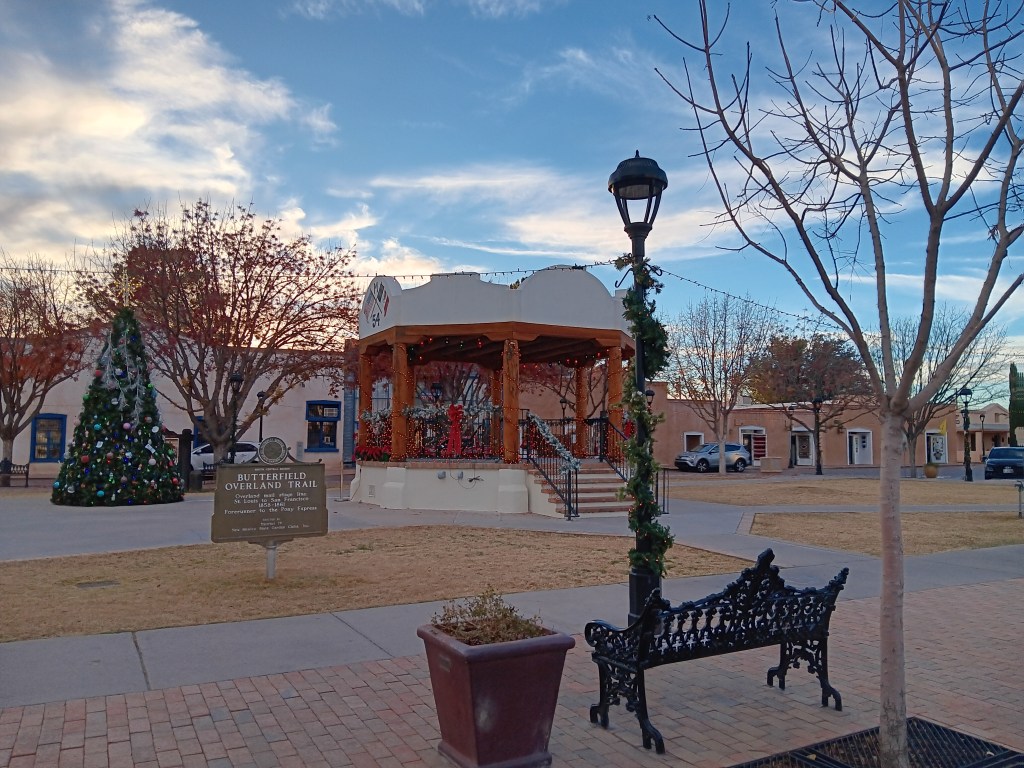
Normally we stay home on our arrival day because breaking camp, traveling in Fati, and setting up again can be taxing, and we like to start fresh. This time, we headed straight to the adorable town of Old Mesilla, not far from our campground, for its Mexican and Billy the Kid history, and its central plaza decorated for Christmas.


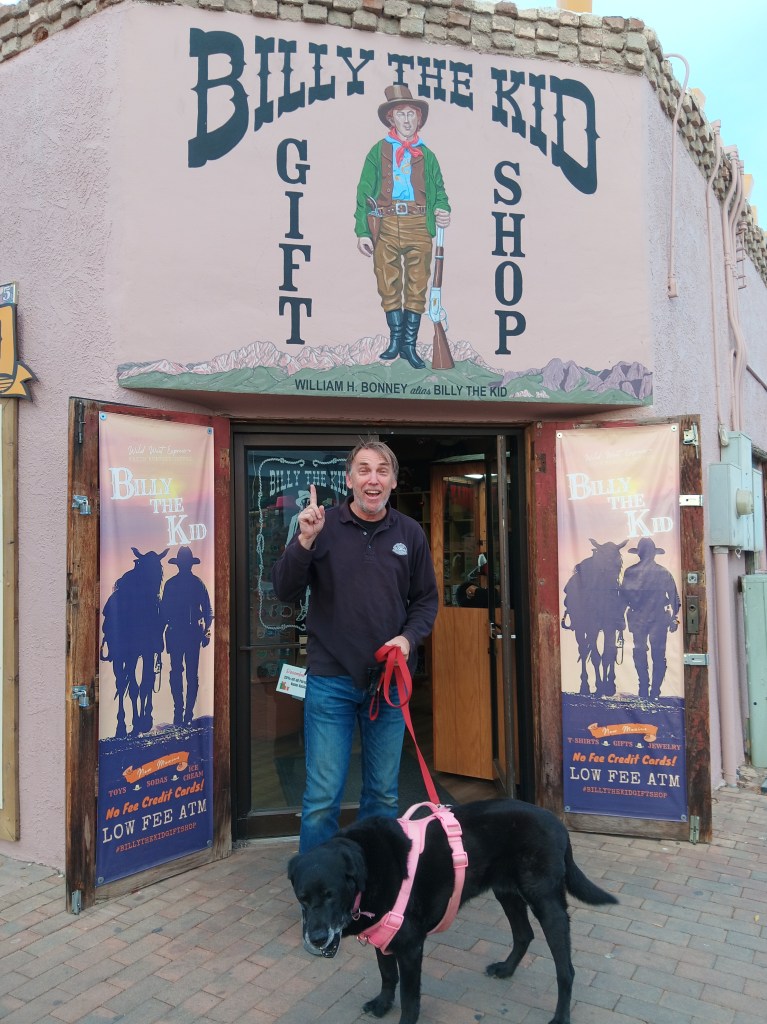
Everything about the tiny burg surrounded by pecan groves worked for us. Cute little one-off shops, strings of red chilis strung along the walkways, and the county courthouse (now a gift shop) in which Billy the Kid was sentenced to hang by his neck until dead for the crime of murder. He escaped, of course, and went into hiding before being shot to death at the age of 22.

We’re not sure what Ruthie is doing, but Simon seems happy.

Ever-aware of not adding any more weight to Fati than absolutely necessary, we broke our “don’t buy anything frivolous” rule and purchased two gorgeous woven placemats with the kind of bright, geometric patterns so prevalent in New Mexico. We use them every day, and they only added a few ounces of weight. We put on more than that just in belly bloat during the hot summer months, so this wouldn’t even register for Fati.

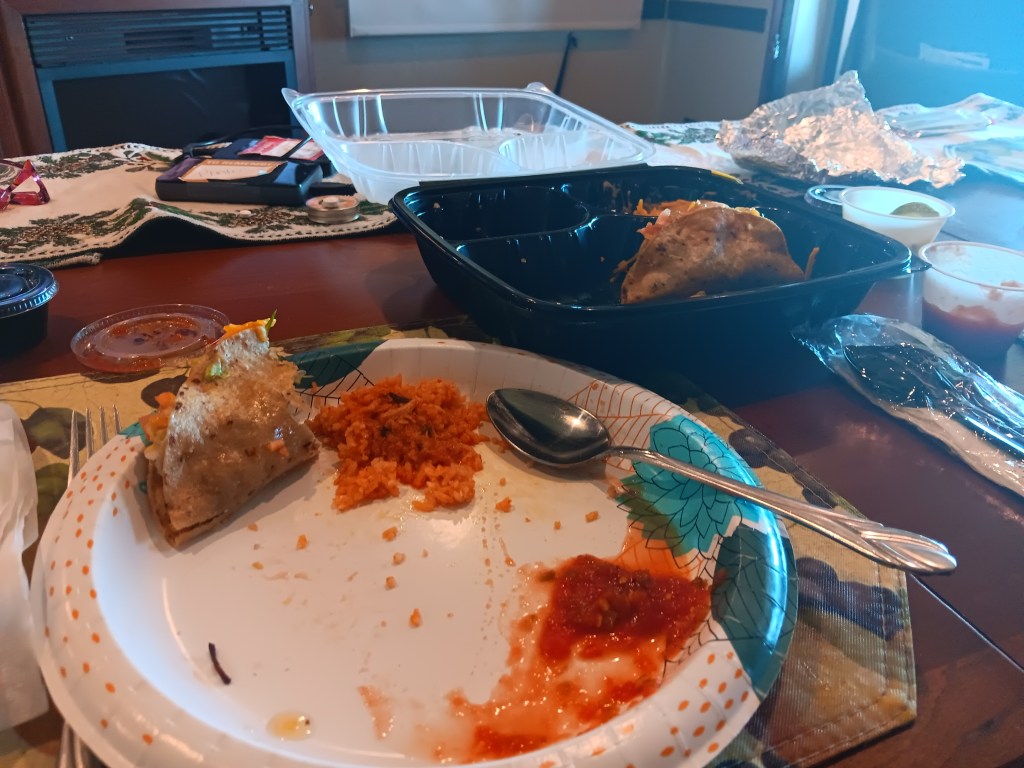
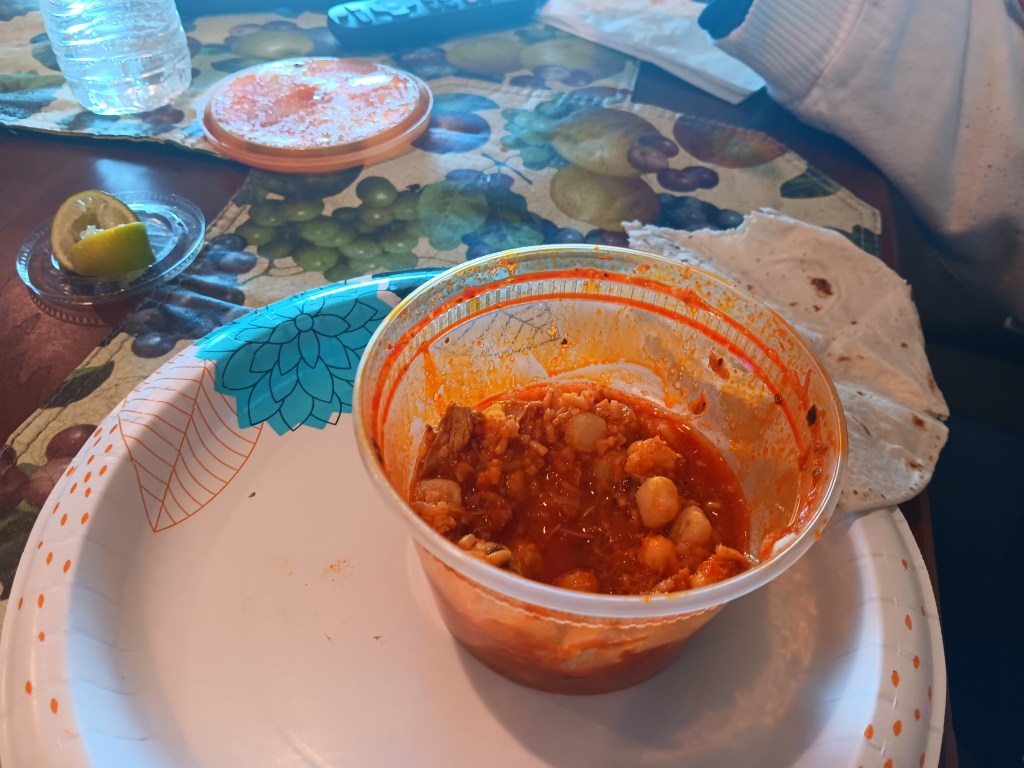
A take-away dinner from La Posta gave us our first taste of New Mexico, with tacos for Susan and Posole stew for Simon. And we’re here to say, that slightly spicy, hearty-flavored stew was the kind of “gimmie more” soup we both love!

We scarfed our food down and didn’t remember to take photos until it was half gone.

So, the tacos were fried (who fries tacos?!). I have no gallbladder. You can guess the unhappy results.

Eat this. All the time!

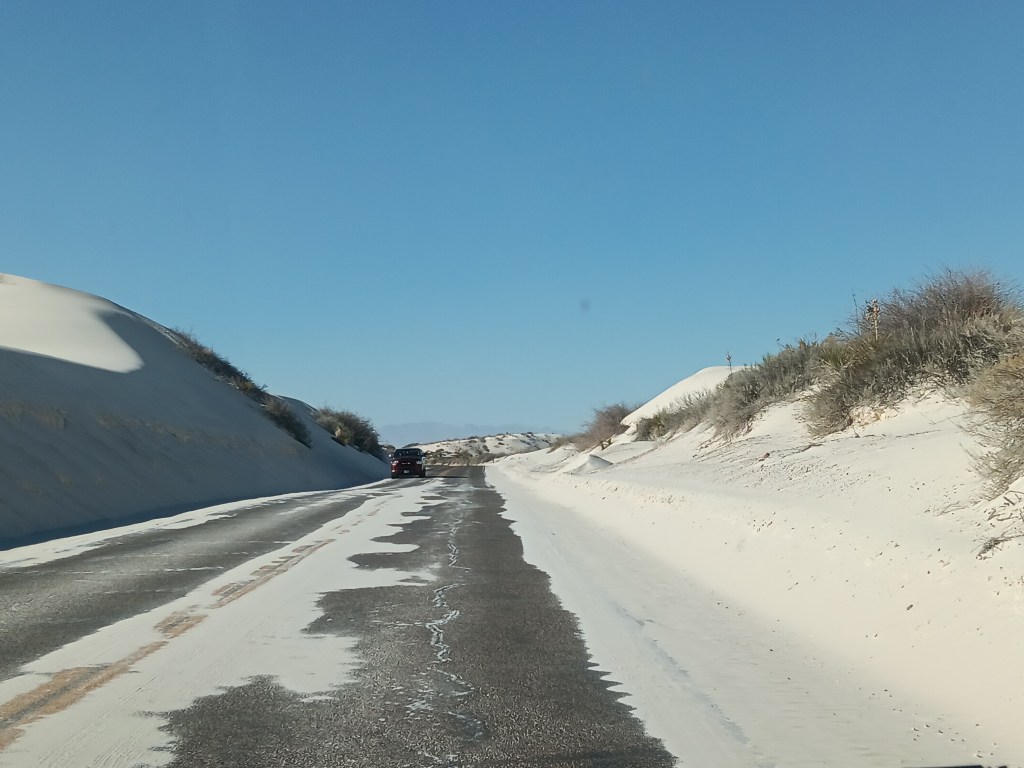
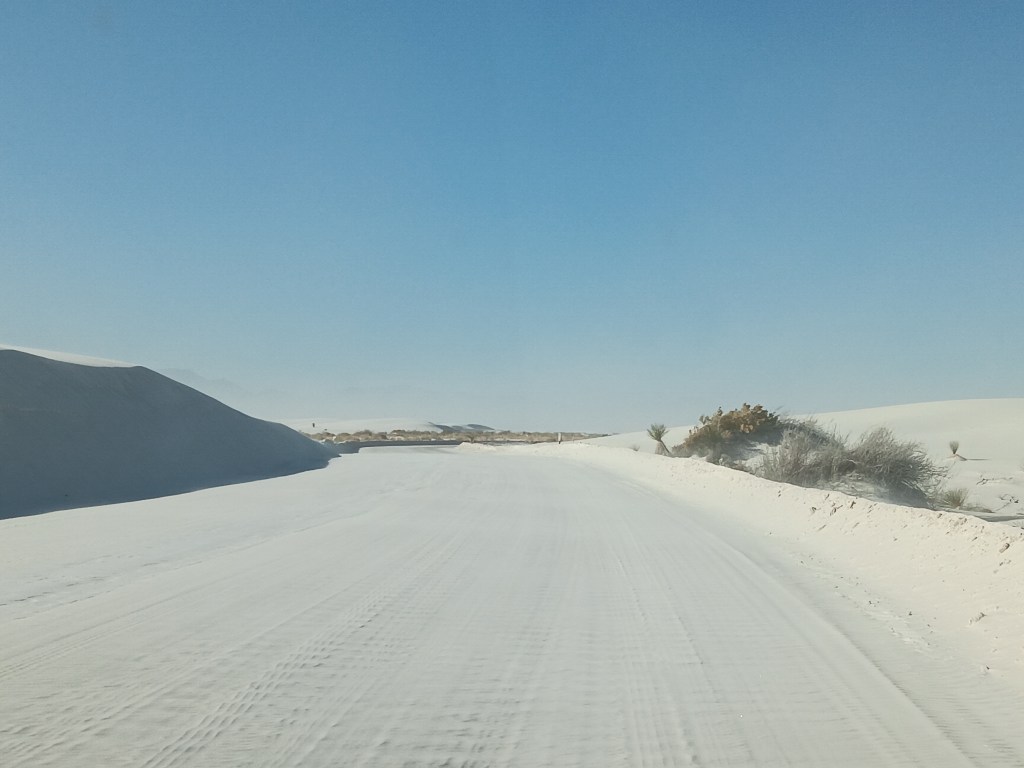
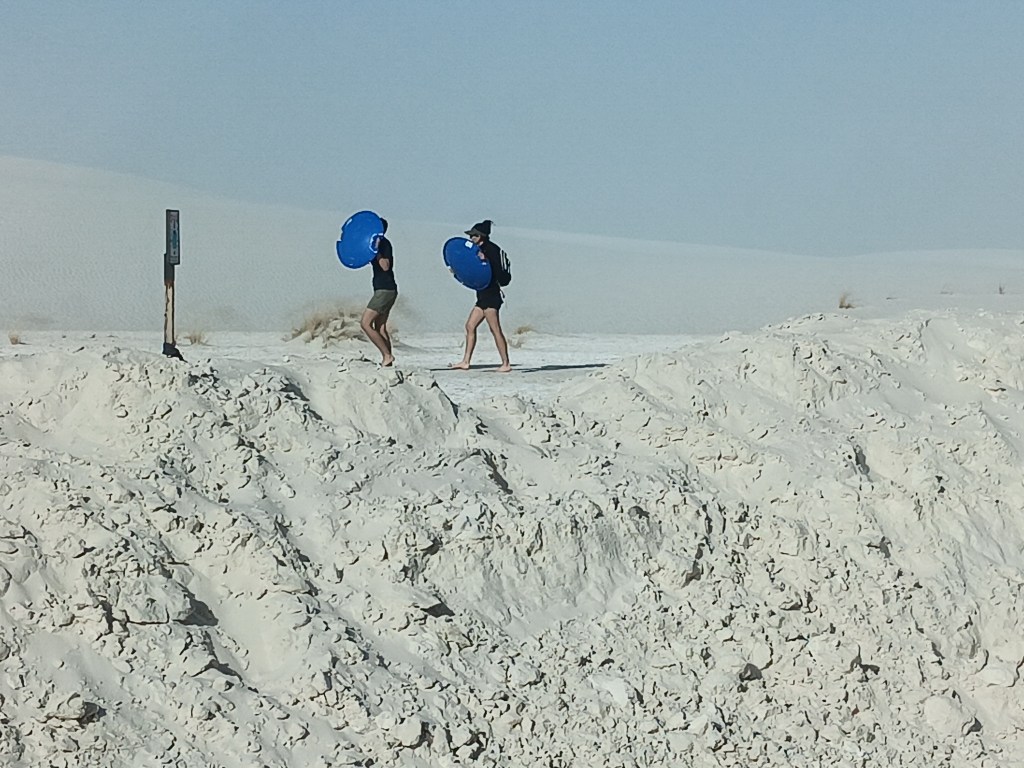
After a blissfully quiet sleep with none of the all-night-long train noise we’d had over the past week, we made White Sands National Park and the nearby town of Alamogordo our first full day’s excursion. We didn’t know what to expect from White Sands, but we didn’t expect the park’s 25-square-miles of dunes to be so completely like a wintery snowscape that we literally had to remind our brains it was pulverized gypsum crystals, not snow, a task made harder by all the people sledding down the slopes (albeit in bare feet and shorts!).


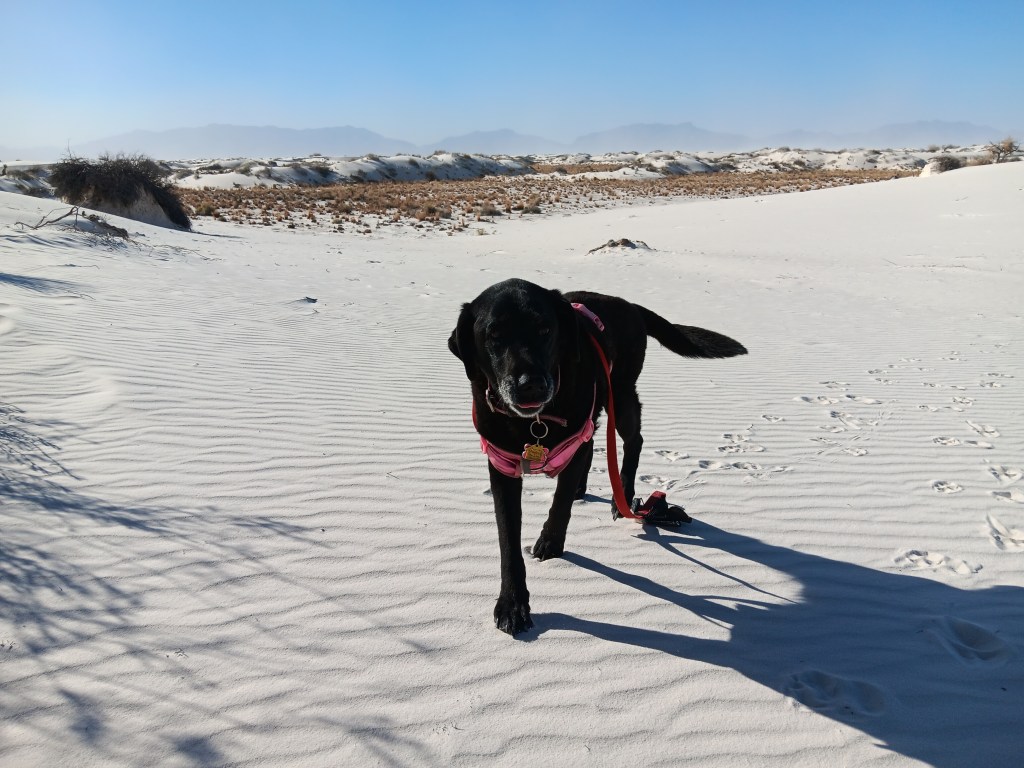
Now, Ruthie hates sand. You know that if you read our Michigan blogs. But this? She LOVED it. She went prancing and dancing and hopping all over the place, full of puppy energy and joy! We continue to wonder if she was a Midwestern dog that got lost from her family while they were on vacation in Florida, and that she was fooled by the familiarity of a snowy landscape.


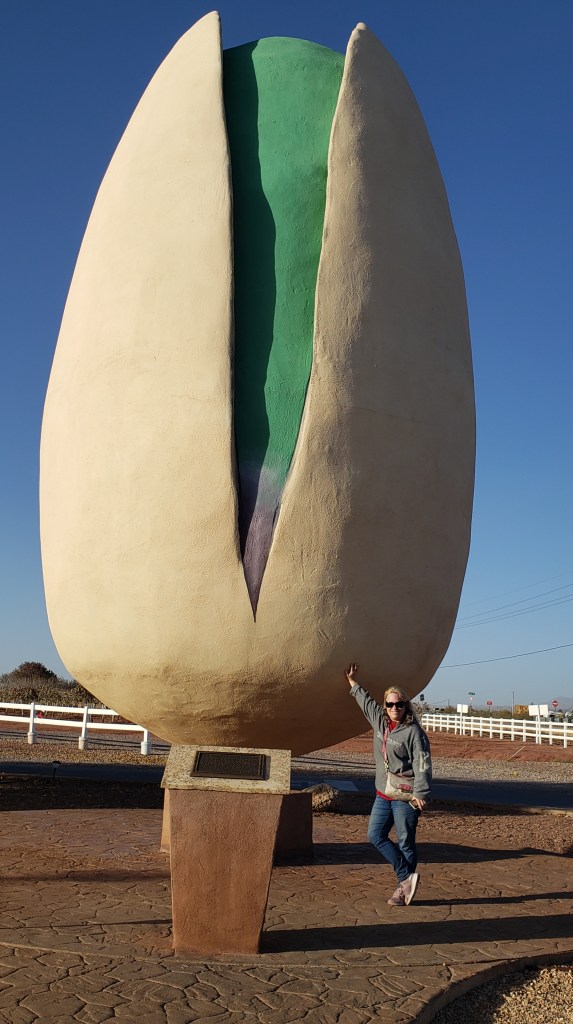
From there we went to Alamogordo, where a giant pistachio convinced us to buy a few packets of the real thing, locally grown…


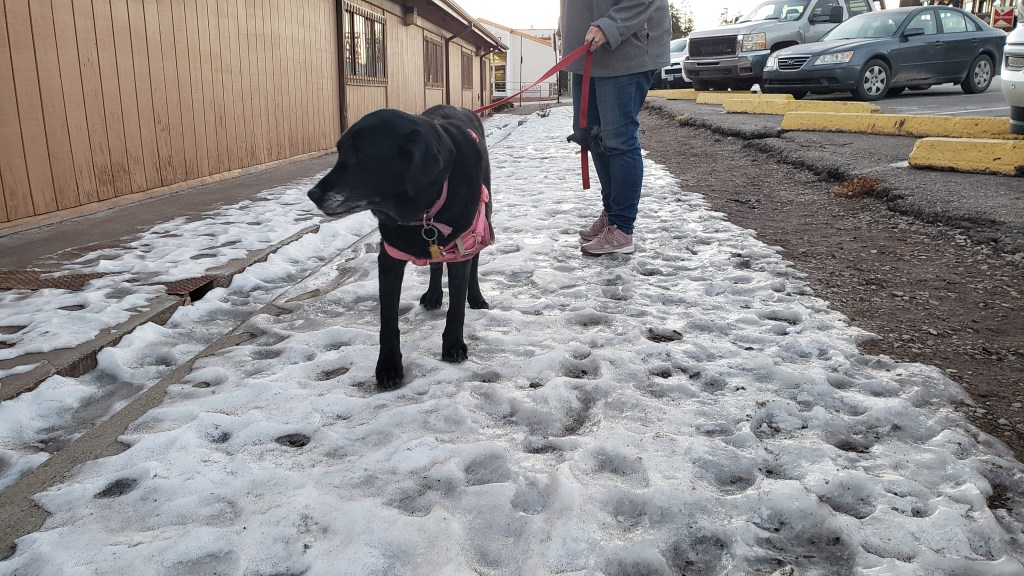
…then we headed up through Lincoln National Forest to Cloudcroft, a place so mountain village-y and so cold it felt like a winter’s day in the Colorado Rockys. Here, Ruthie got to walk on her first patch of real snow (that we know of), and she seemed to enjoy it.


El Paso, Texas, our next day’s destination in Nippy (we’d only be able to drive though it in Fati on our way south), should be an entire blog. It’s iconic. Everyone knows the name. It’s filled with Spanish missions and great Mexican food, and we set off from Las Cruces with visions of authentic cuisine and spectacular history on our minds. But that’s not what we found.
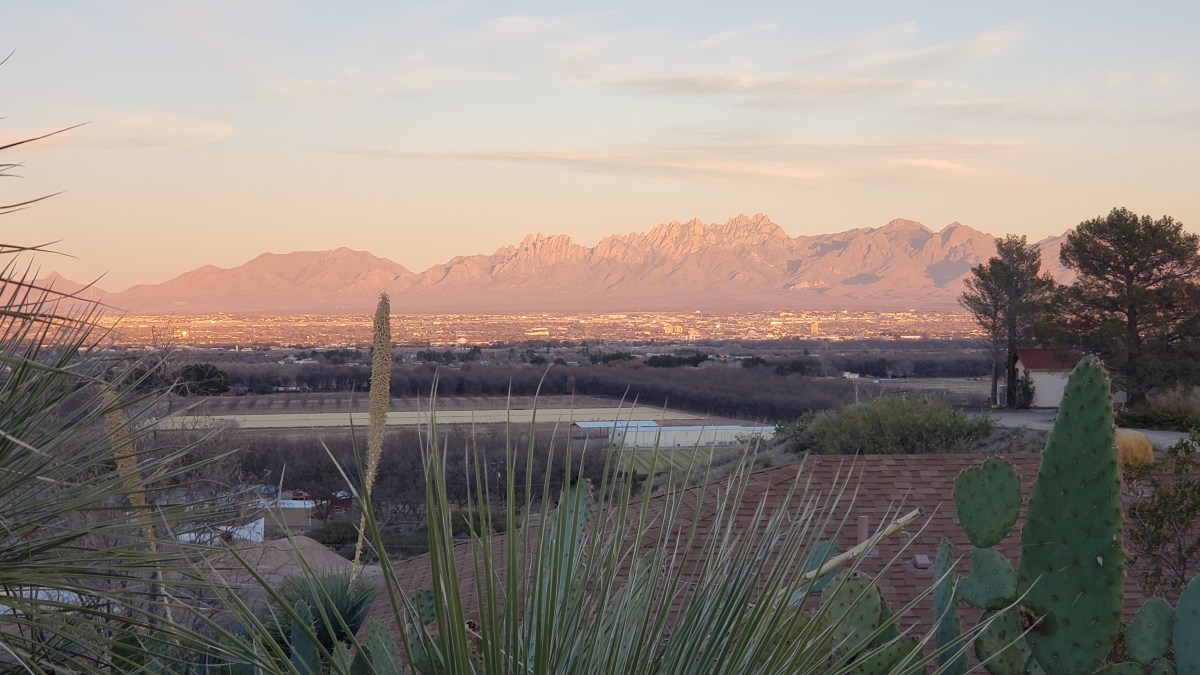
El Paso is a sprawling city. This was taken from high on a hill where rich people live.
We’re certain we didn’t get the best out of El Paso. Everything felt a little bit “off.” It didn’t help that the Visitor Center was located in an area that was entirely boarded up and abandoned, and the center itself had long since skipped town, too.

We tried. We really did. But, for whatever reason, we kept running into closures and locked doors. Need the restroom? Forget it. They’re all locked unless you buy something. We did find a nice market near the Old Town that opened their restroom doors for us, and we were told there is a problem with people experiencing homelessness that has caused local businesses to make the decision to lock up.

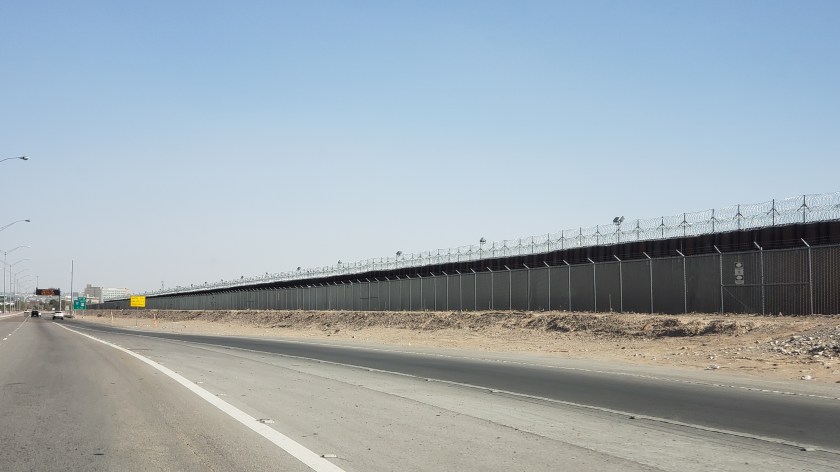
And then there’s that big whompin’ border wall that commands attention no matter where you are in town. It’s like a lurking presence. We bounce back and forth between understanding the necessity and being horrified by the inhumanity of it all.


The yellow sign and the overhead digital sign further along read, “Watch For Unexpected Pedestrians.”

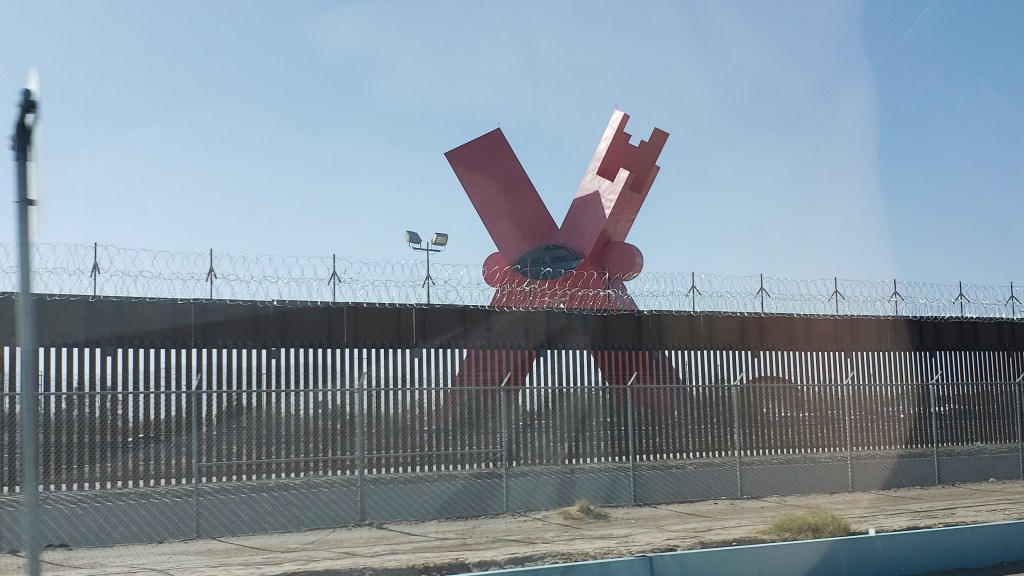
The big red X across the border in Juarez is a sculpture that represents the blending of Spanish and Aztec cultures.


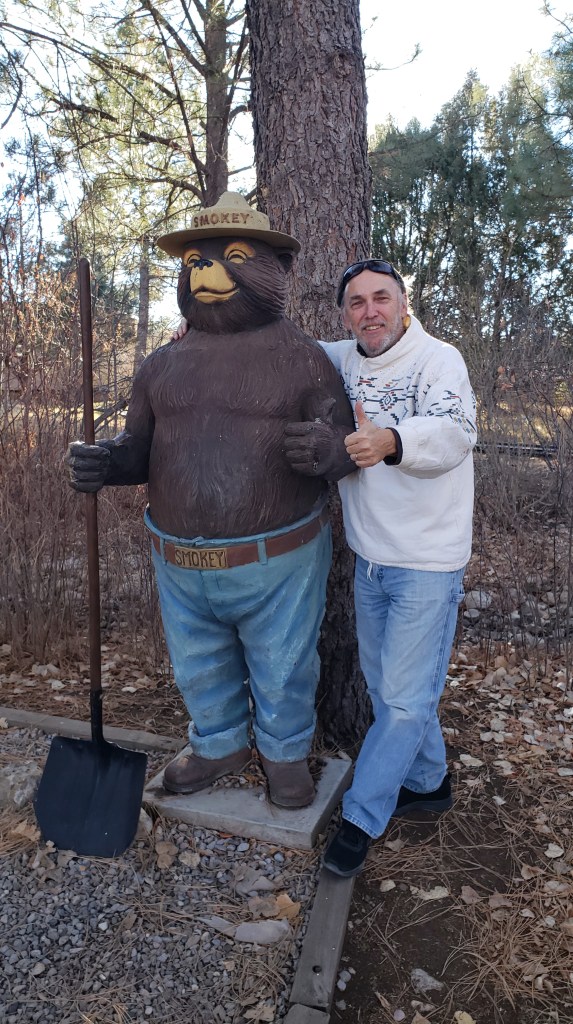
To lift our spirits again, we took to the Billy the Kid Scenic Byway the next morning, hot on the heels of the infamous outlaw. Our launching point was Smokey Bear Historical Park, the burial site of the little bear who was rescued after a deadly blaze and became the nation’s advocate for preventing forest fires.


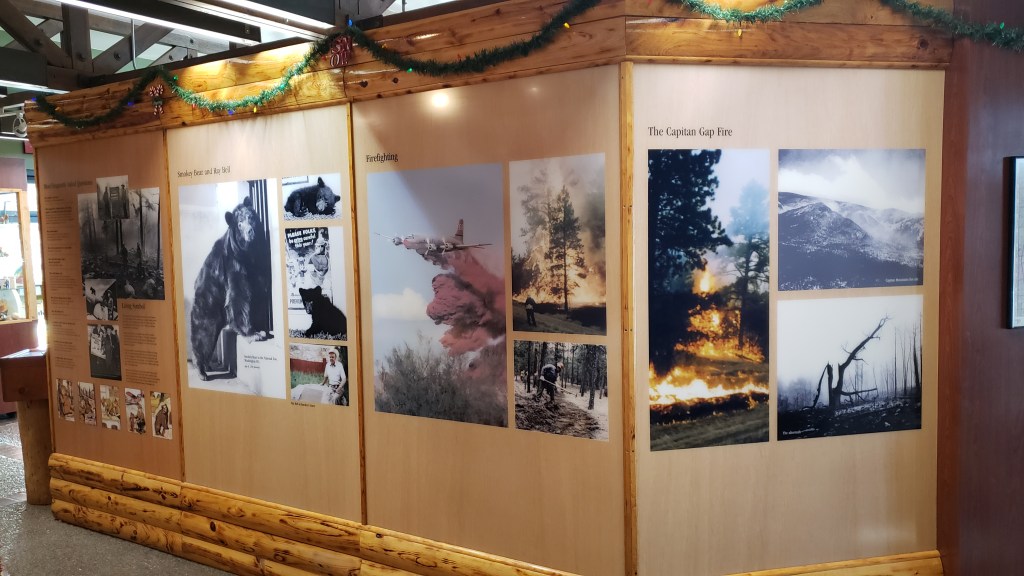
A cute museum told his tale, and honors the country’s longest running advertising campaign (say it with me: “Only YOU can prevent forest fires!”).


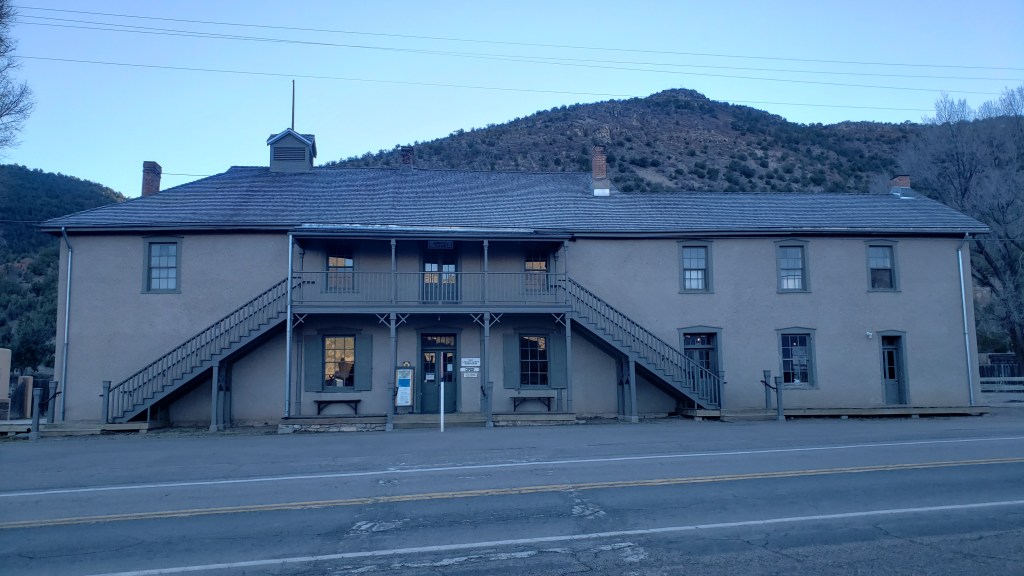
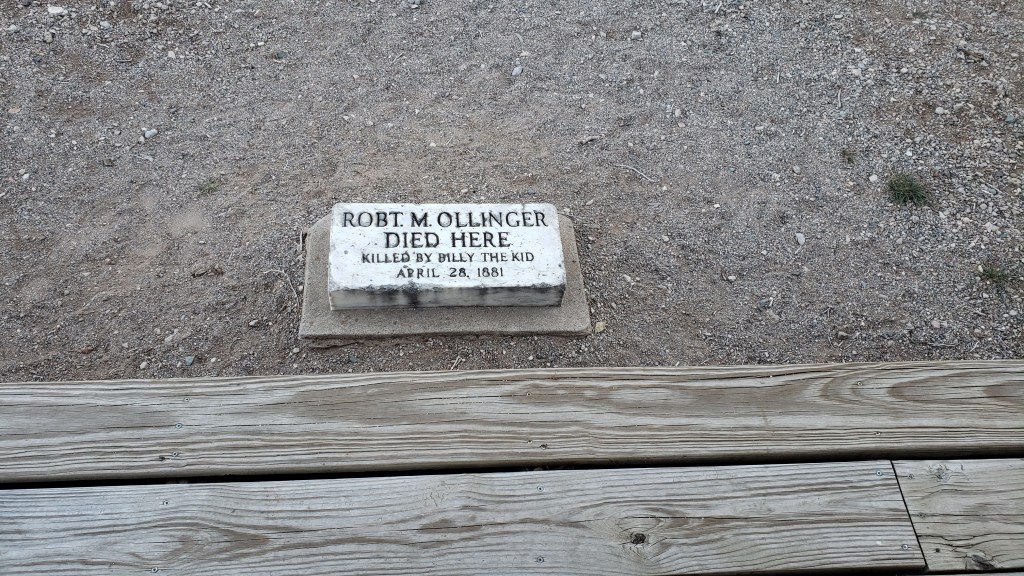
Next up was Lincoln, where Billy the Kid was jailed for murdering a sheriff, and he then shot and killed two deputies while escaping. The tiny burg has hardly changed at all since the 1880s.


Mule deer (or, they might be elk; we never can tell) are all over this town, which added to the yesteryear Wild West feel of the place.


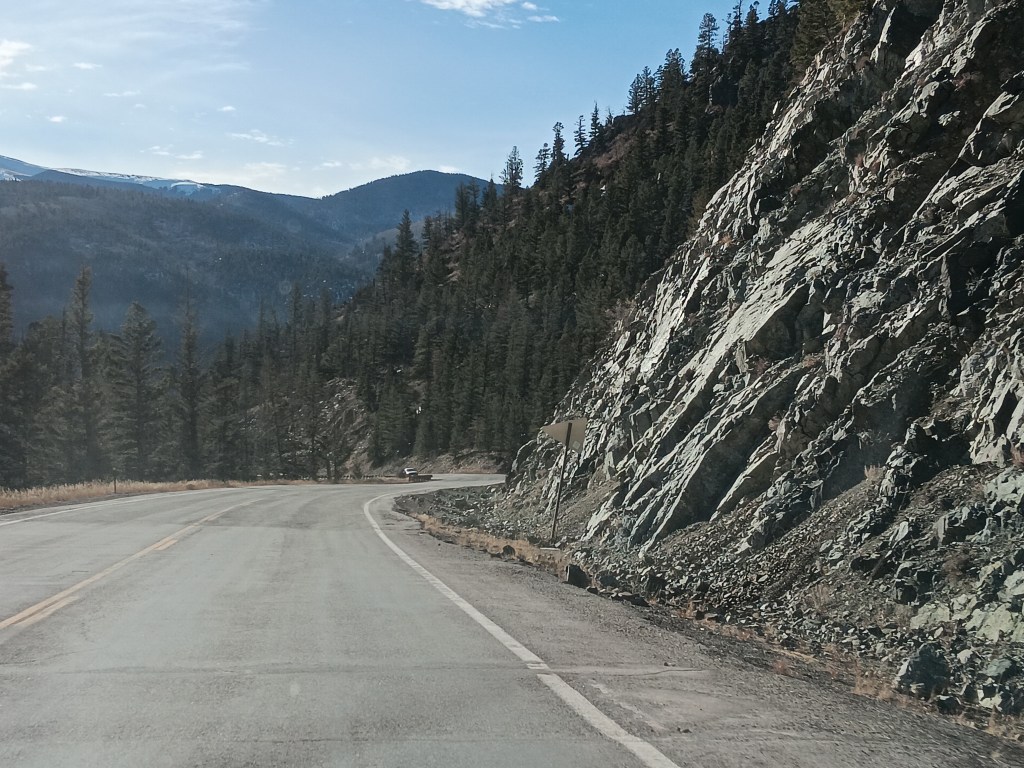
The mountainous drive itself was just stunning, and again, it reminded us how little we know about this country. We didn’t expect such enormous mountains in New Mexico.

But we weren’t done yet. We had two nights booked at a hotel in Santa Fe for a trip in Nippy that would also include Albuquerque and Taos. But we’ll cover that part of our journey in another blog.

Roswell and Carlsbad Caverns were also on our must-do list while in Las Cruces, but as we returned to Fati from Santa Fe we came to an energy-crashing halt. We just couldn’t add another 500 miles to our touring, not to mention having to leave Ruthie in a rented crate while we did a cave tour. It was a bridge too far.

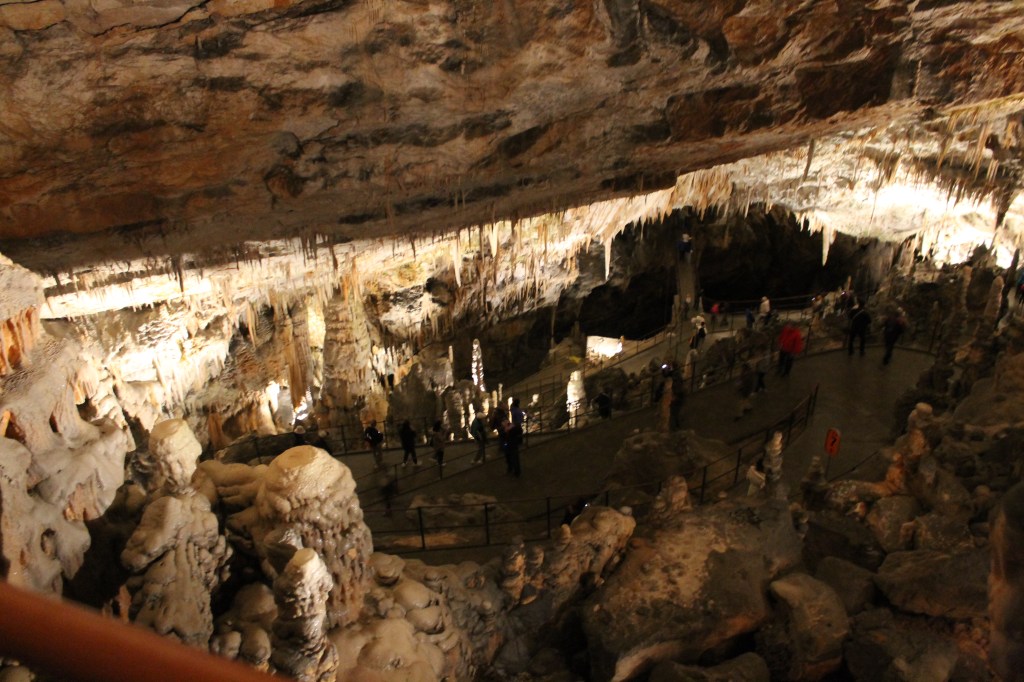
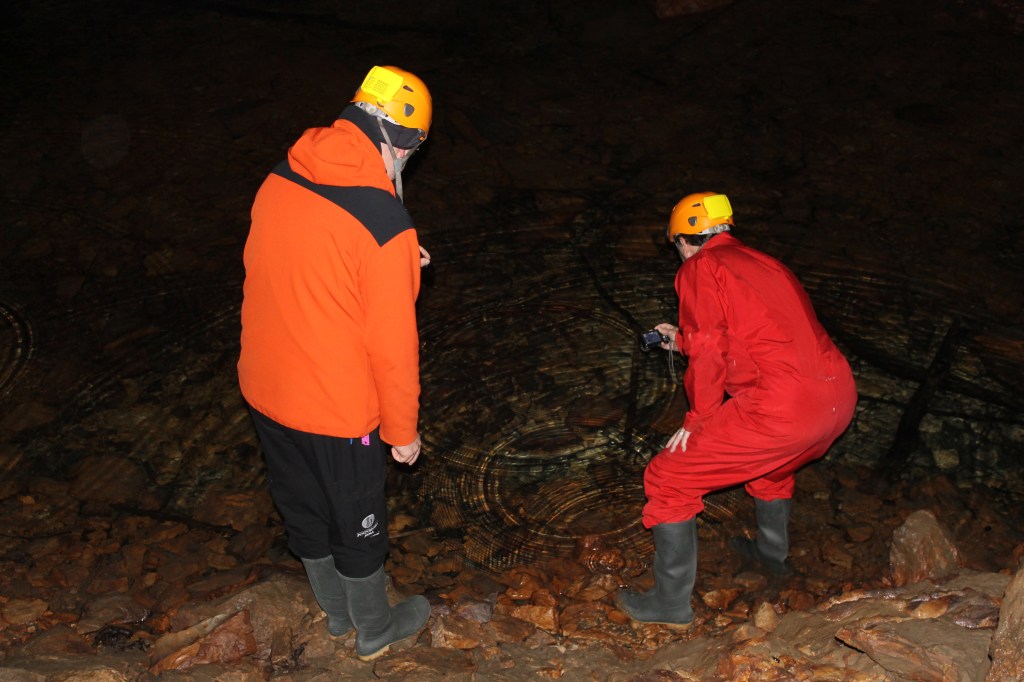
We consoled ourselves by remembering our time in Postojna Cave Park in Slovenia, a spectacular, other-worldly experience during which we were taken “behind-the-scenes” to a pitch-black area where the blind, pure-white, salamander-like Olm (Proteus anguinus) lives. Unbelievable luck allowed us to see this magnificent creature, which lives to 100 years old and only needs to eat every couple of years. We’re not sure anything could top that cave adventure, so that’s the sentiment we stuck with when dropping Carlsbad Caverns from our journey.

One infinitesimal part of the massive Postojna Cave. That thing in the middle is a walkway bridge.

Simon and our guide looking at the tiny Olm that lives in darkness here.

And Roswell? One too many people told us it’s entirely skippable. Two people mentioned issues with crimes against automobiles. We really wanted to go anyway. But we’d been talking about having unfinished business in New Mexico, and we’re sure another visit to the state – next time for longer – is on the cards in the future.

A Year On The Road – The 7-Month Map

Charting our “Year On The Road” RV adventure across America after Month 7

As another milestone rolls around, it’s time to update our ongoing Map of the whole trip and tot up our latest mileage chart.

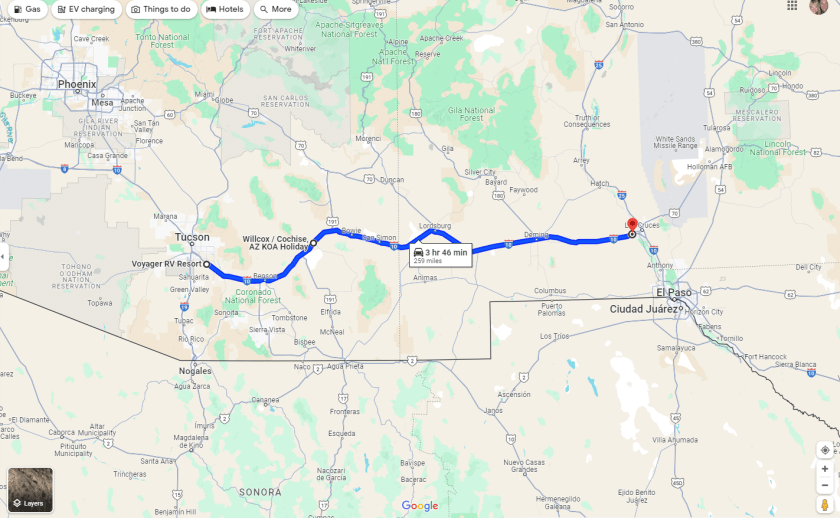
The 259-mile route from Tucson, Arizona, to Las Cruces, New Mexico

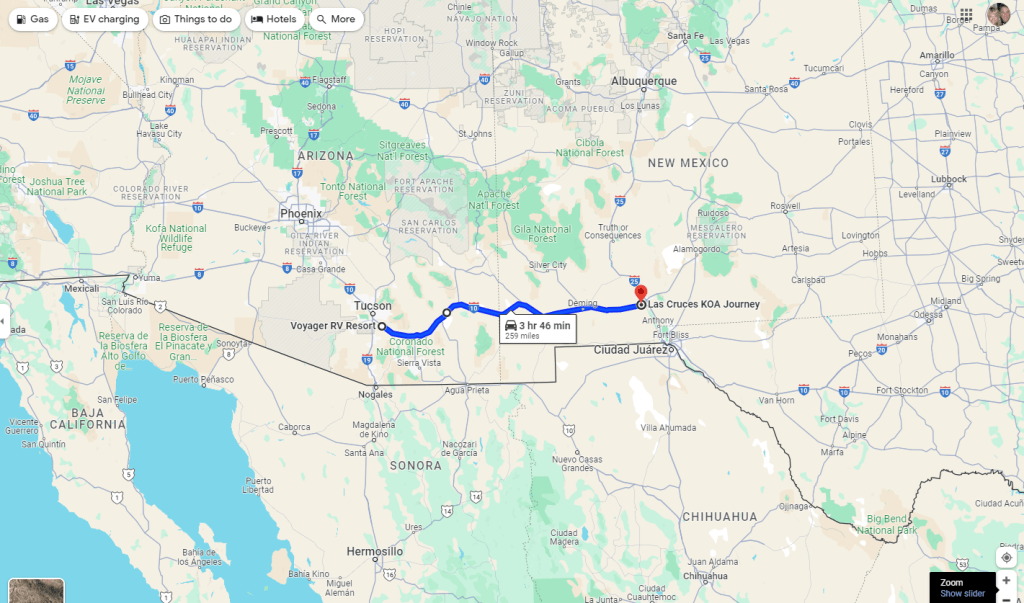
On face value, this has been our least-traveled month, at least in RV terms. We have driven a scant 259 miles in our Winnebago Indefatigable (or Fati for short), starting a month ago in Tucson, Arizona, and reaching Las Cruces in New Mexico, a simple journey almost entirely on Interstate 10. Not the stuff of traveling legend, especially compared to our hectic first two months, when we covered fully 3,849 miles from Florida to Wyoming.

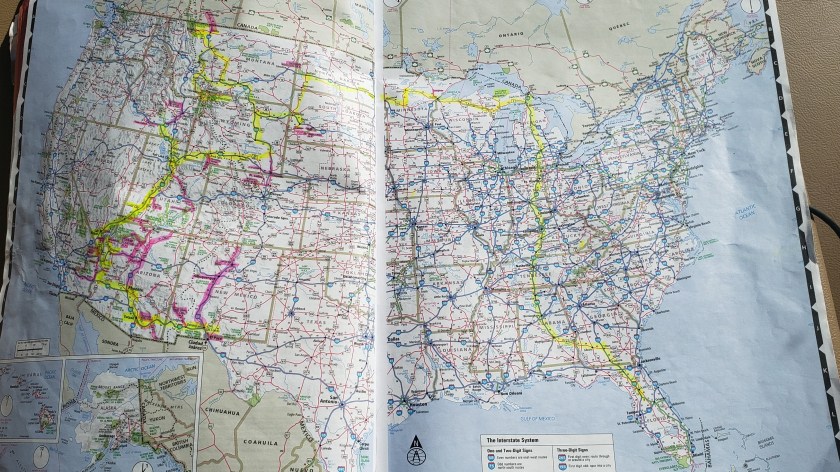
How our Road Atlas looks after seven months of our RV adventure. Our overall route in Fati is shown in yellow, with all our various side-trips in Nippy show in pink

The larger view of the past month’s travels, showing our steady 259-mile easterly progress from Arizona into New Mexico

Even by the standards of the last 3 months (869, 579 and 545 miles respectively), it is a slim return. But the fact is we are now spending longer in specific places (like Tucson and Las Cruces) and doing more of our actual journeying by car (our faithful Ford Fiesta, Nippy). We learned our lesson several months ago, after Fati suffered several mechanical issues with our hectic pace, that it was better to reach a destination from which we could explore by car in all directions, and this last month has been the perfect example of that.

Because, while our RV mileage is WAY down, our travel in Nippy has increased substantially. In month 6, she chalked up a whopping 1,927 miles, and in month 7 we have added an even-more-whopping 2,884, which included long-distance trips to Silver City, White Sands and, especially, Santa Fe. But, with Nippy getting a good 45 miles to the gallon on longer drives, and gas prices in New Mexico the cheapest since we left home ($2.25/gallon on our most recent fill-up), it is an economical and strategic success.

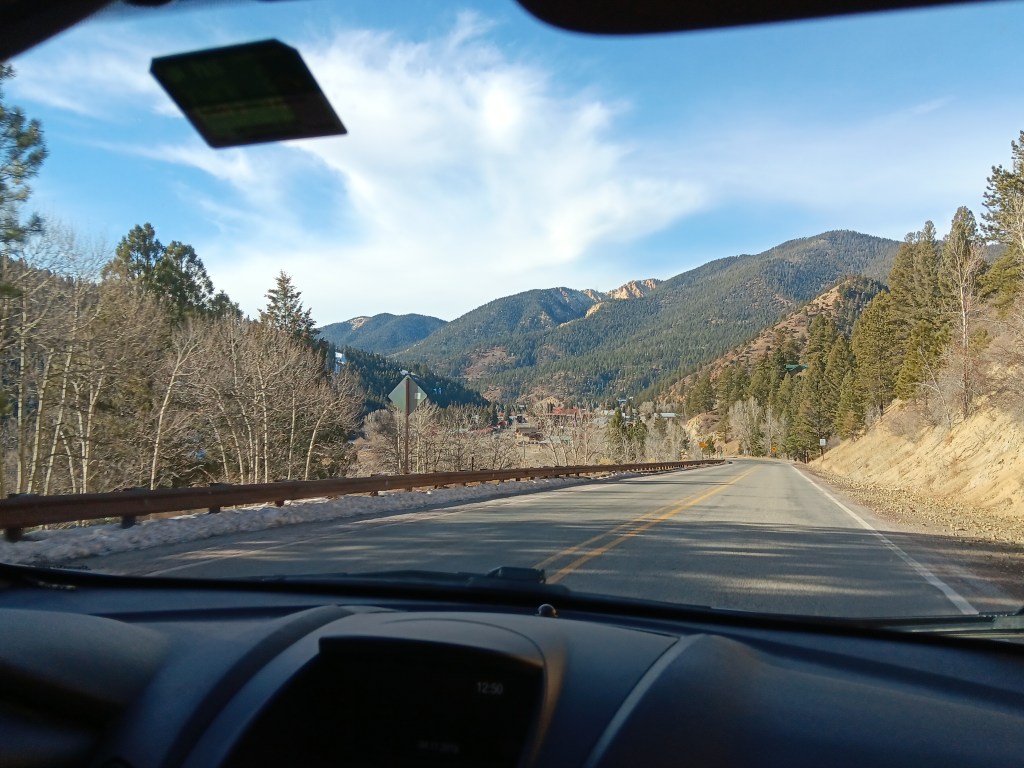
The wide, open and inviting mountain roads of New Mexico, as seen from Nippy’s front window!

What all this means is that we have now traveled 7,312 miles in Fati and a humongous 18,150 in Nippy, for a total of 25,462 miles since we left home.
Next up, we turn south for Texas and a long tour down the western half of the state as far as the Gulf Coast. Probably more miles for Fati than Nippy, but you never know…!

New Mexico In Bits And Pieces


A new day, a new state! We made our way into New Mexico just as the temperature began to plummet, but we had a lot of touring planned, so we added a third layer to our clothing and a fifth layer to our bedding, and made Deming our base for visiting Gila National Forest and a drive to the Mexico/U.S. border.

With a late start to our first full day, we chose San Lorenzo as our afternoon destination. We knew nothing about it except that it was a ghost town, but that was enough for us, and up the Whitehorse Mountain we went.

Deer and another deer. Such excitement!

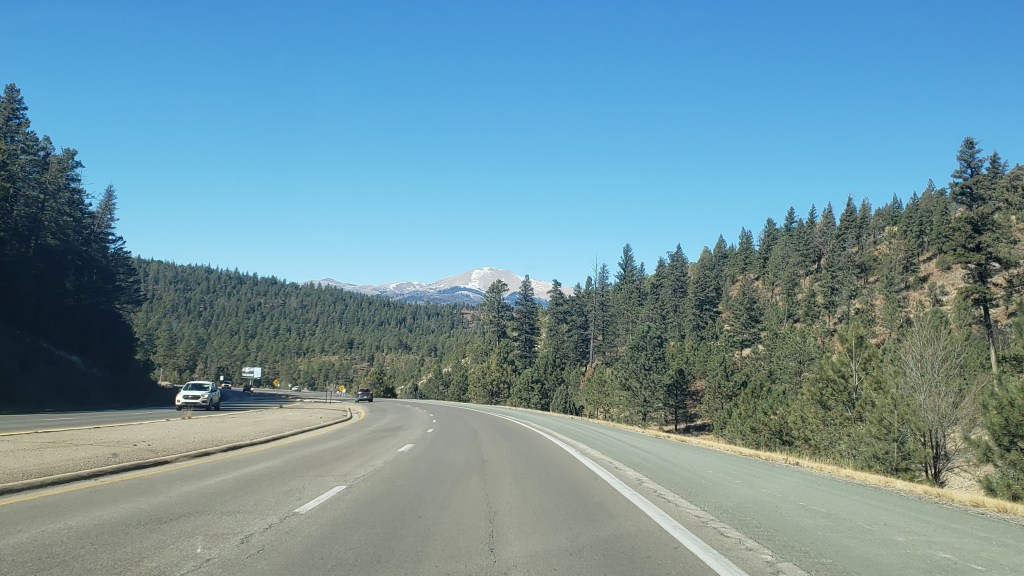
While the drive along the mountain was filled with trees gloriously changing color, grazing deer, and little glimpses of actual water in an actual river, the town itself was not exactly dynamic.

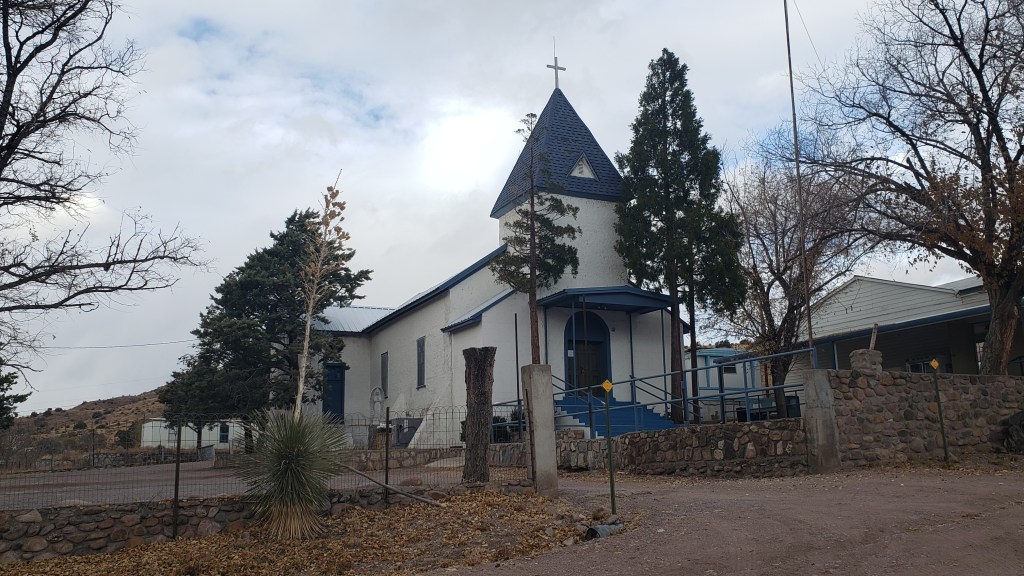
The area was originally home to the Apache Nation. Fewer than 100 people live there now, an adobe church whose original construction dates to 1899 sits at its heart, and an enormous horse ranch that looks like the only money in town takes up most of the land.


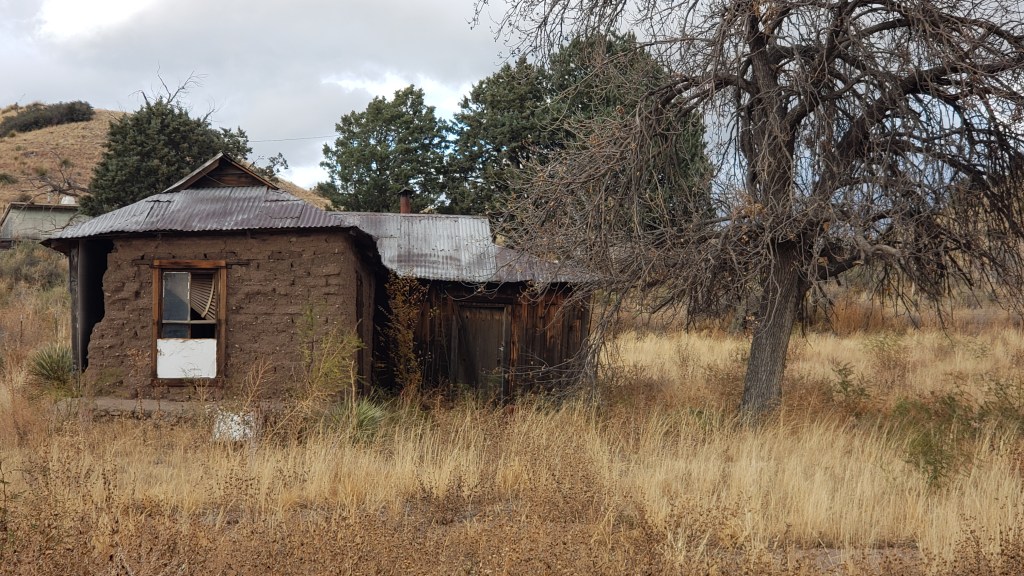
Miners from Silver City and Pino Altos founded the tiny town, and their hand-made brick structures still stand. Most of the buildings in town are abandoned, hence its “ghost town” fame, while the locals prefer (and achieved) the designation “Historic District.”


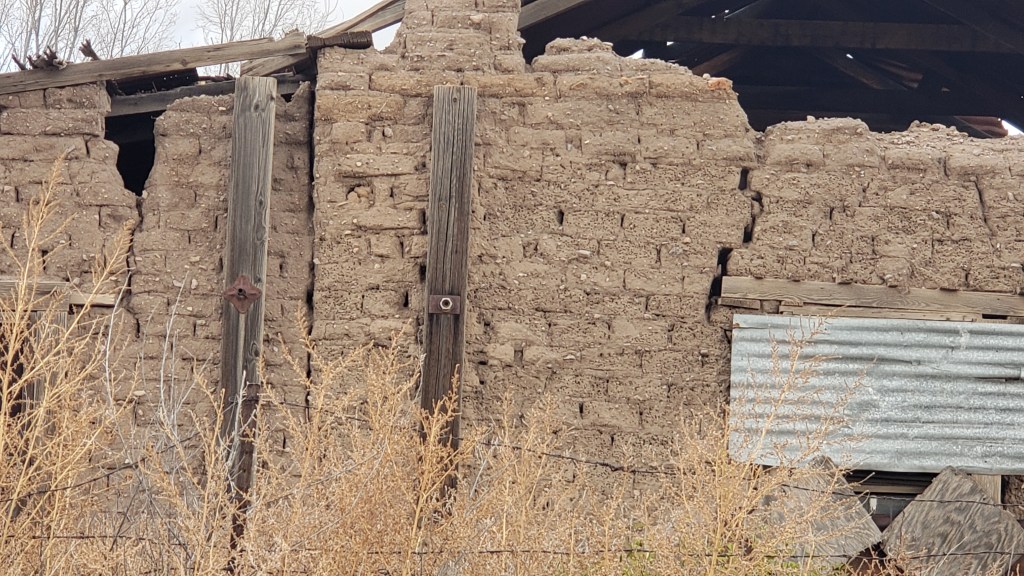
The hand-made bricks tell such a story. Fascinating to see bits of straw and little rocks in their construction.

We crossed the valley into the next small town because Simon was eager to find a Starbucks, or at least a decent coffee shop, but you already know the outcome of that forlorn hope.
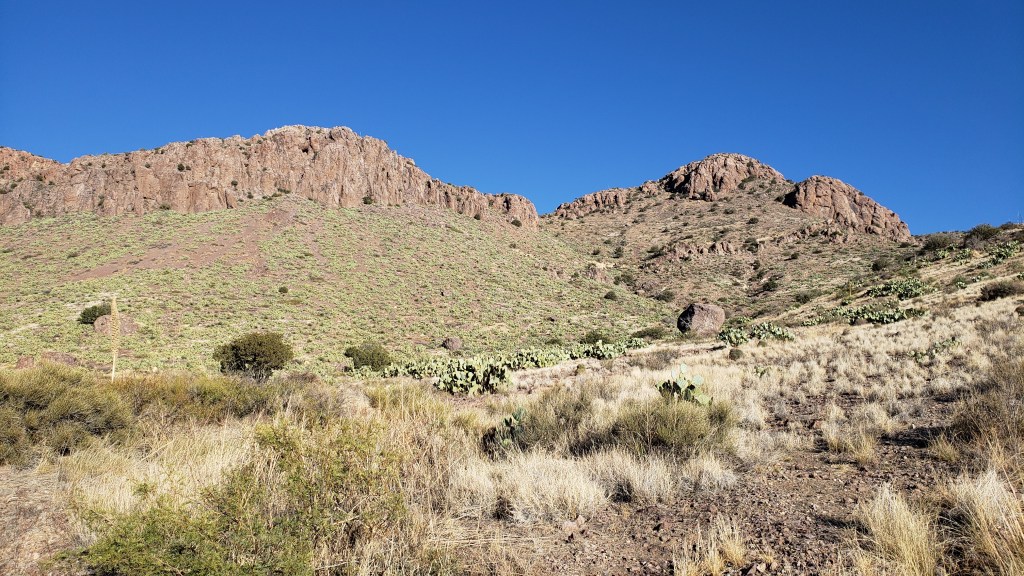
Our next excursion was Rockhound State Park in the Little Florida Mountains (here pronounced Flow-REED-uh from its Spanish influence) just south of Deming, and the park’s information center lady showed us the various rocks that visitors are allowed to collect, from obsidian and quartz to sparkly geodes and the wonderfully named “thunder eggs,” which, of course, Susan was determined to find.

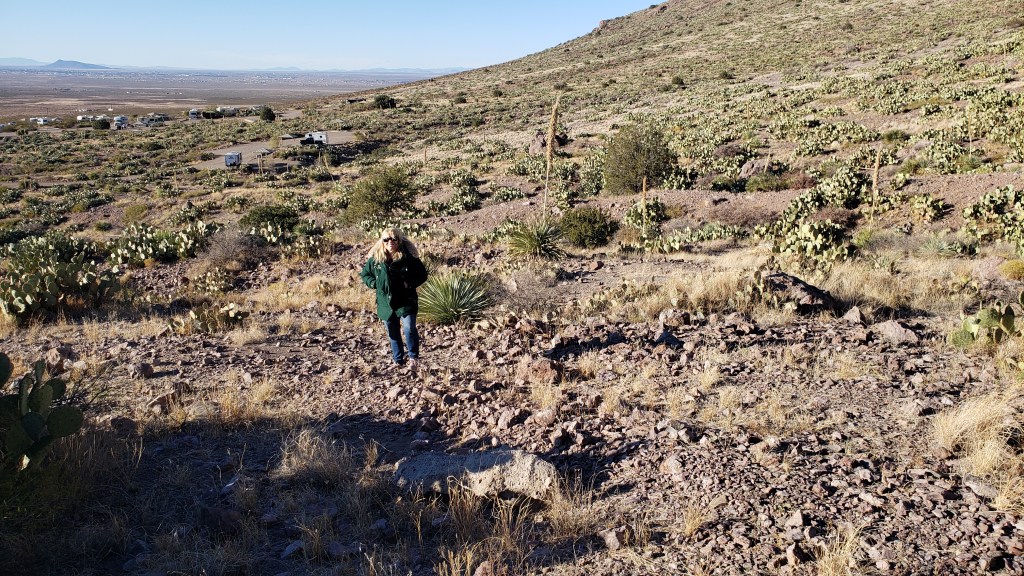
For perspective, that boulder in the semi-foreground, on the right, is about as high as Ruthie would be if she stood on her hind legs on Simon’s shoulders.


Once we were in the dry wash where geodes and thunder eggs are typically found, we immediately realized all rocks look like rocks and we hadn’t a hope in hell of finding anything interesting without cracking them all open.

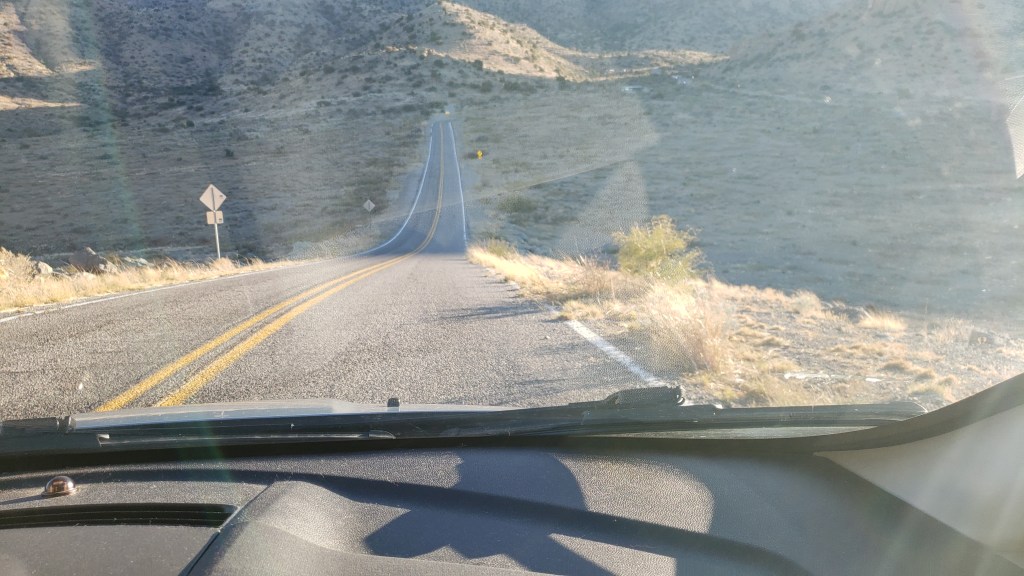
After a short wander, we drove over to next-door neighbor Spring Canyon Recreation Area, where we were told we might find gigantic-horned Persian Ibex, which were brought to the area from Iran way back when, and had recently been spotted. We didn’t see any (of course we didn’t!), but we did marvel at the 17% grade into and out of the park, which was like a roller coaster hill in Nippy, but would have been a horror in Fati.

The 17% grade doesn’t look nearly as daunting in a photo as it does in real life. It’s a LONG way down!

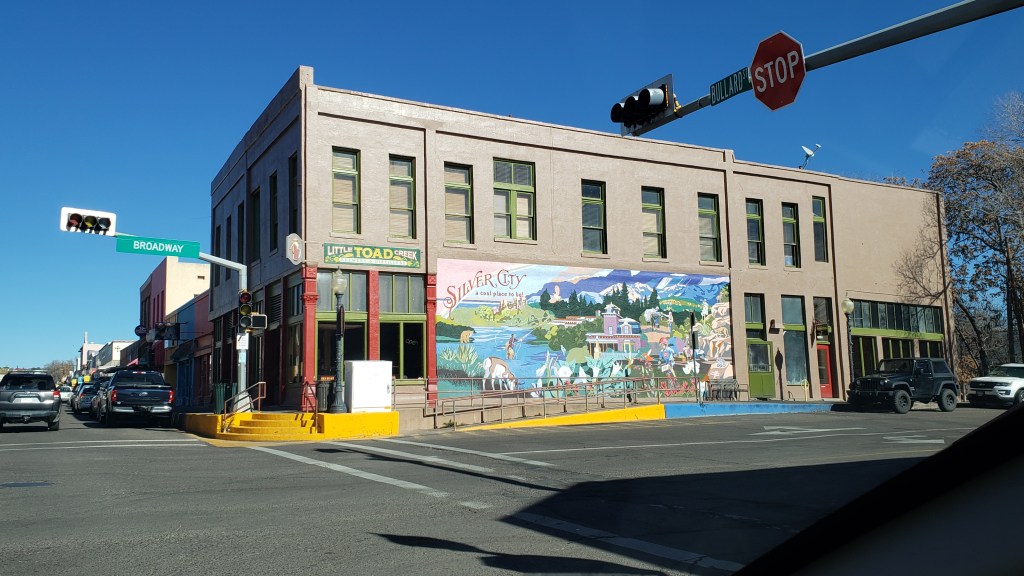
Minor attractions done, our next journey took us to Gila National Forest, the reason we were staying in Deming in the first place. It was a 236-mile round-trip drive, via Silver City, and the Visitor Center lady in Silver City told us we should not miss Catwalk Recreation Area on our way to the Gila Cliff Dwellings. Just head up U.S.-180 to the western side of Gila, and be ready for a short delay due to construction.

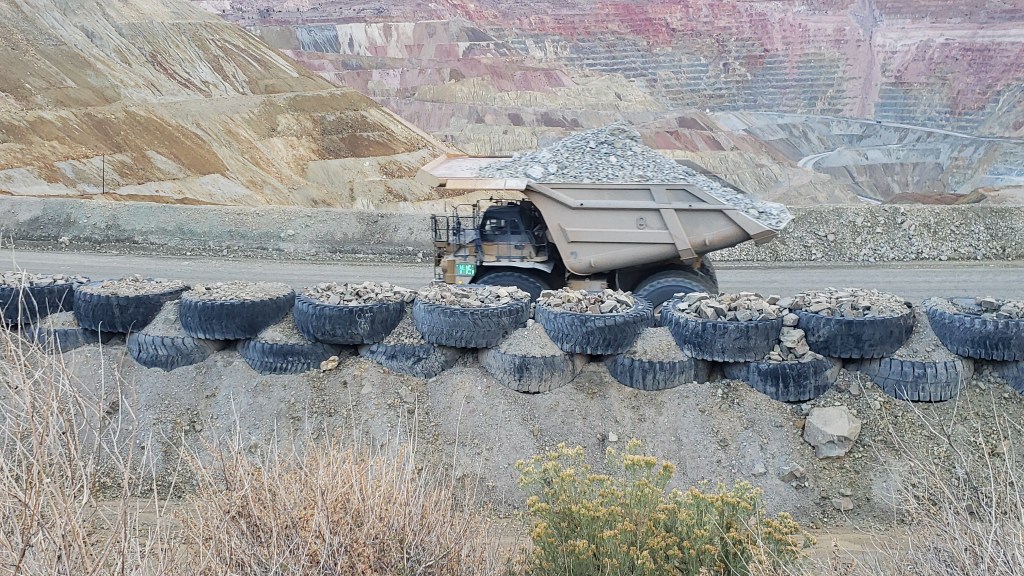
Silver City is a mining town, and that dump truck is gigantic. Its tires are 6 feet tall, maybe a bit taller.

We had already noted a sign in town that indicated the Cliff Dwellings were just 44 miles away, and our good lady mentioned Catwalk Recreation Area would come up first, so off we went.

New Mexico has to be the artsiest state we’ve been in so far. Even their license plates are pretty.

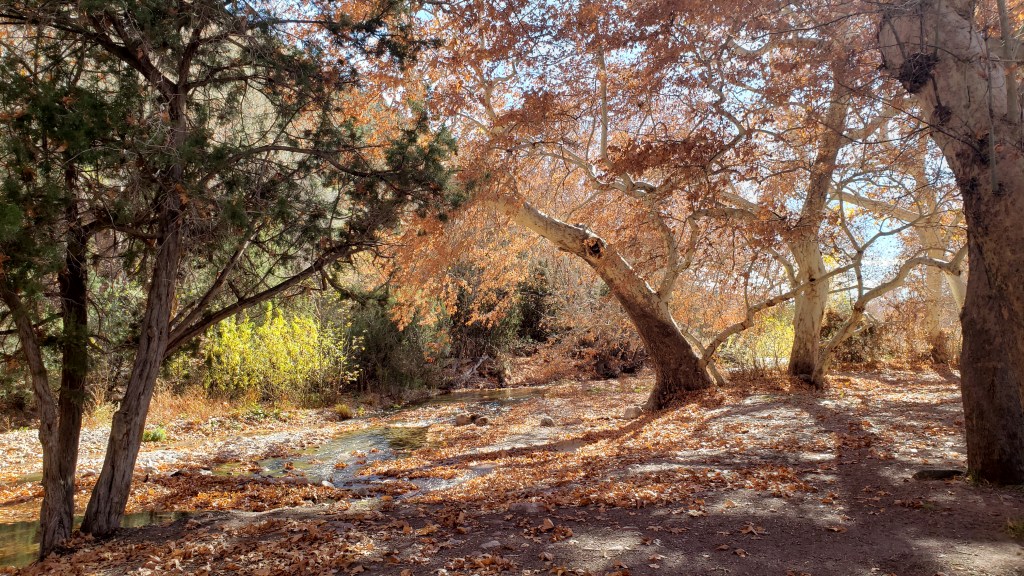
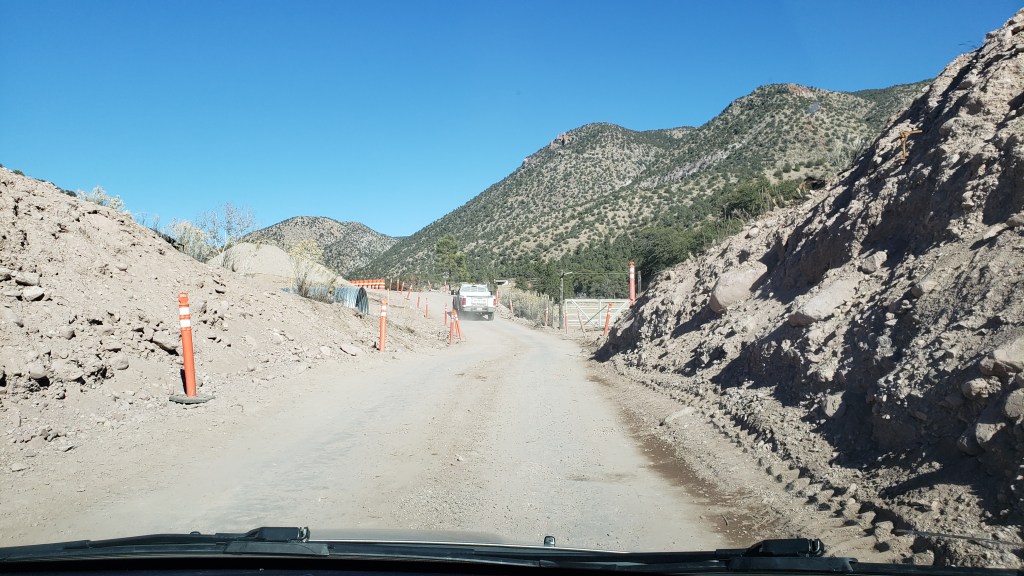
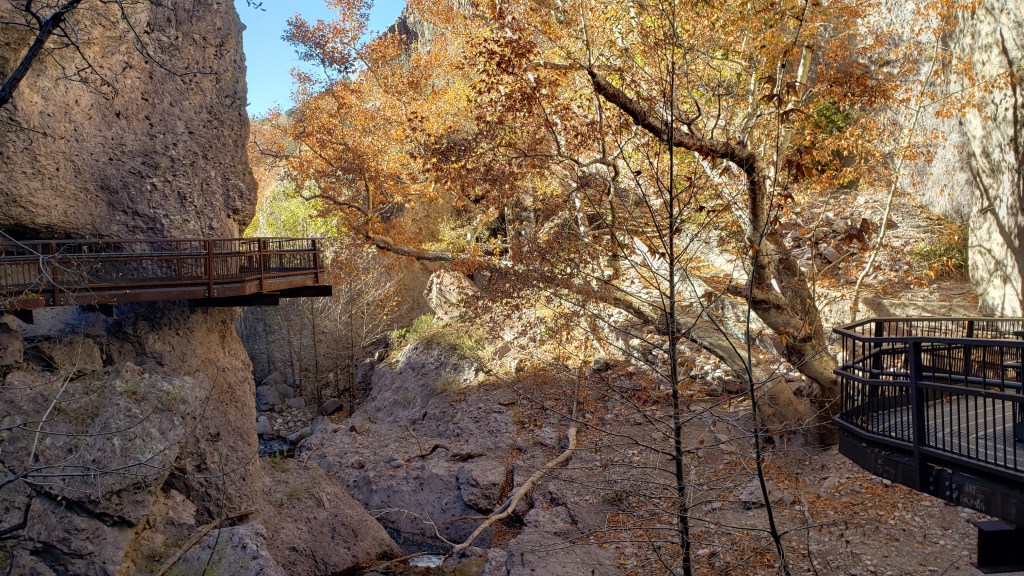
Sixty-five beautiful but confused miles later we saw the first sign for Catwalk, along with an extensive construction area that required us to follow a Pilot car along a couple of miles of torn-up road. Half an hour later we were walking through crunchy leaves along a fall-scented trail in Gila National Forest toward the metal catwalks that are the modern-day descendants of the original wooden planks over Whitewater Canyon creek, which gave the area its name.

Not Simon’s favorite kind of road.

But it would be worth it in a few minutes.

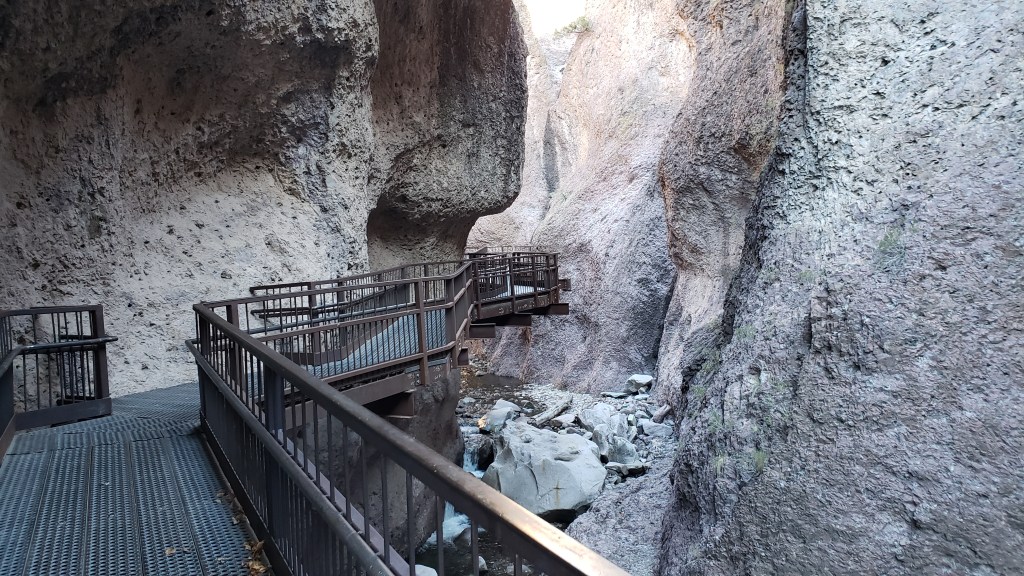
Silver and gold were discovered above the canyon, and mined for ten years, starting in the late 1890s. A pipe transporting water up to the processing plant ran through the canyon, and that’s the area visitors are now allowed to explore via catwalks.

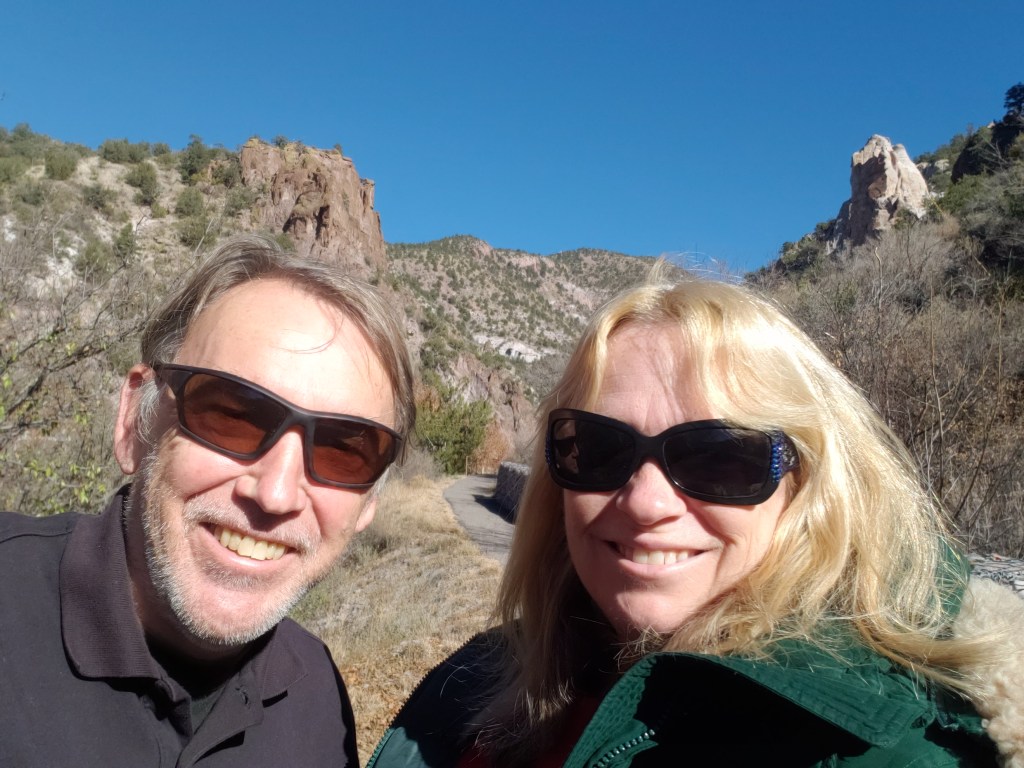
Obligatory Selfie

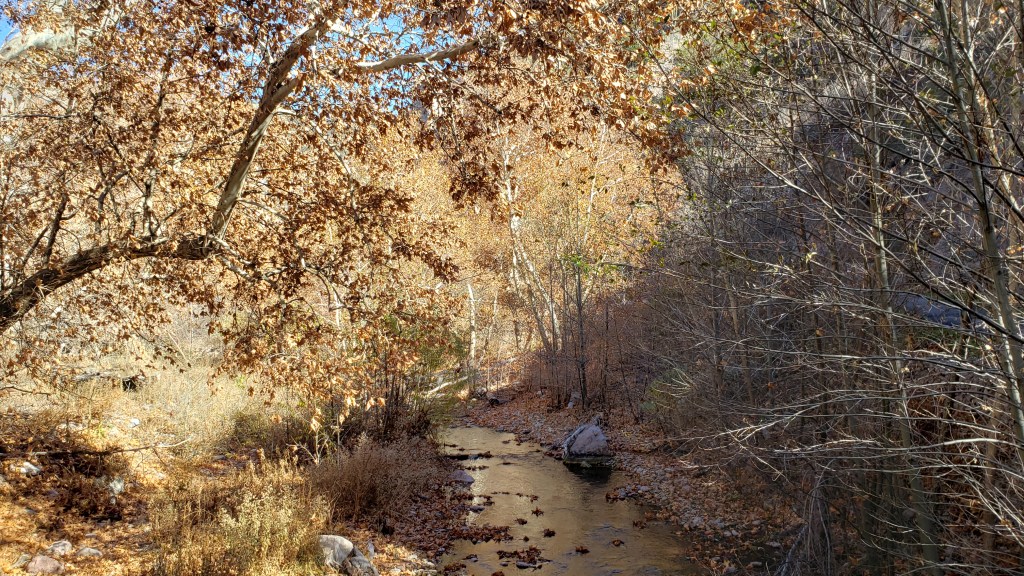
Catwalk starts with a trail along the river, and it was nice to see water, which is scarce around here.

Part of the walkway wound through rocky areas above the river.

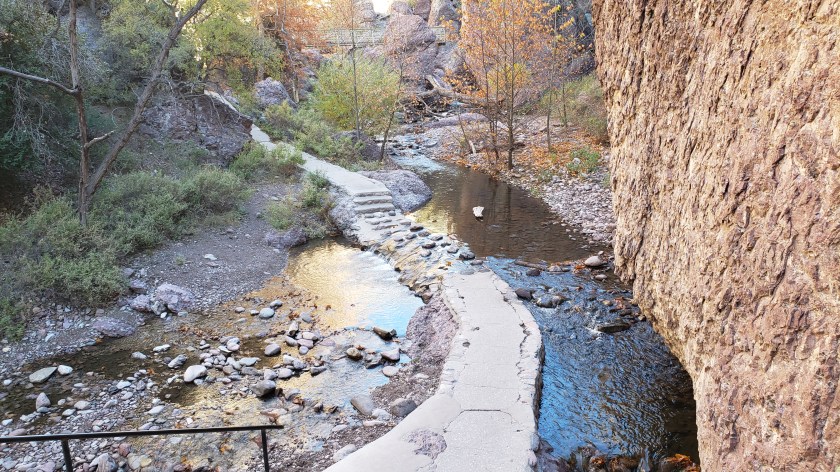
Just beauty, everywhere.

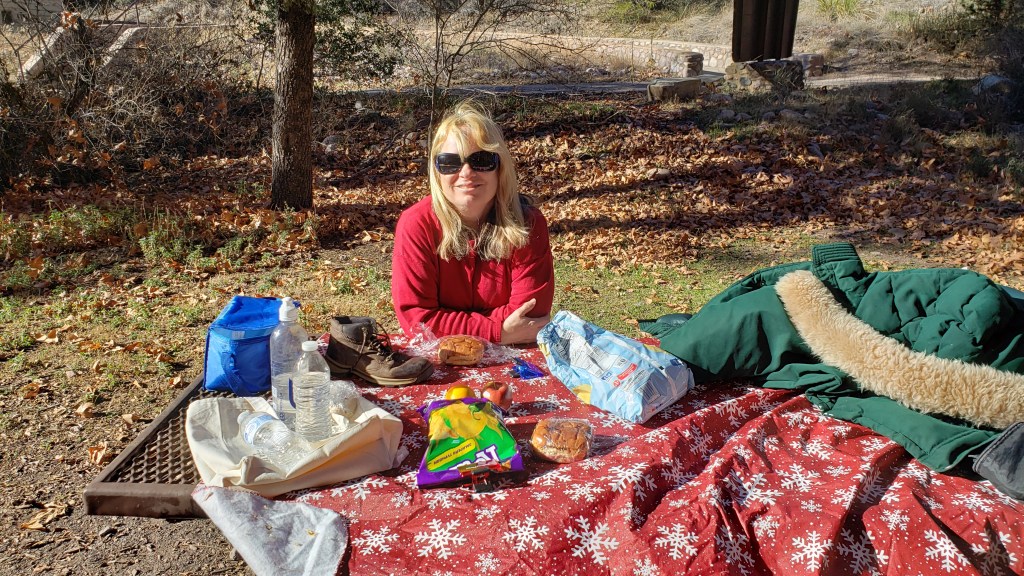
We spent more than an hour walking through the canyon and having a picnic lunch amid a scent that reminded us of Michigan in autumn. What an incredible surprise the experience had been, and how grateful we were for the recommendation. We absolutely would not have wanted to miss it.

It’s not a picnic without the Boot.

As we picnicked, we programmed Gila Cliff Dwellings into our GPS. It couldn’t be far away, since we’d already gone 21 miles further than that sign back in town indicated we would.

But wait. GPS showed another 111 miles to the dwellings. What the….?!

We were on the wrong road. U.S.-180 did indeed lead to Catwalk, but the cliff dwellings were up highway 15, on the eastern side of Gila National Park. We’ll say no more about the matter, other than that we consoled ourselves with the fact that dogs are not allowed on the trail to the dwellings, so we wouldn’t have to leave Ruthie in the car, and that we found superb dessert-flavored coffees at Javalina Coffee Shop back in Silver City to take the edge off our misery on the way back to Deming.

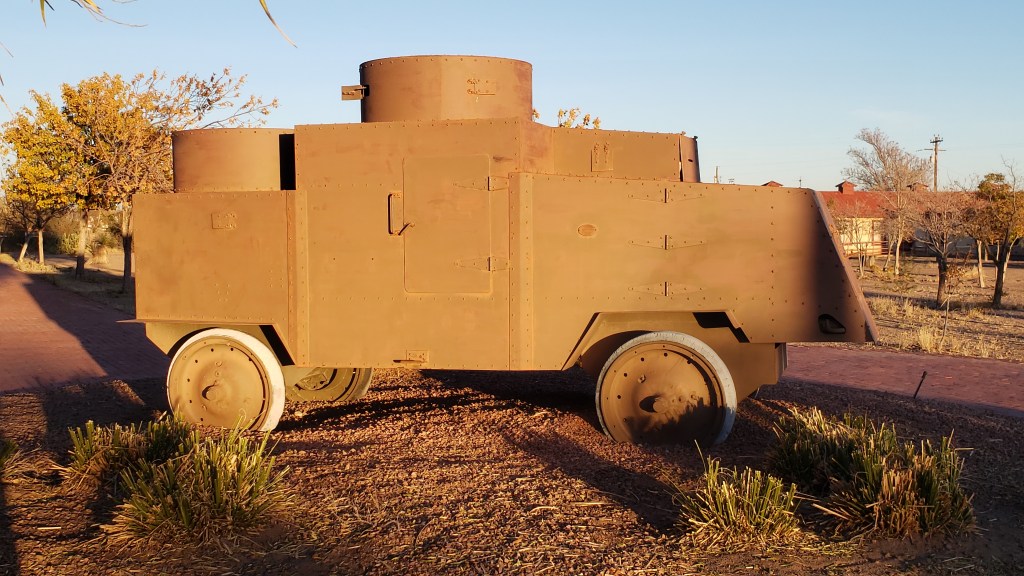
We were definitely on the right road when we made the trip south to Pancho Villa State Park, a little nod to America’s first (and only) armed invasion, compliments of General Francisco “Pancho” Villa, who ordered his soldiers to wreak havoc way back in 1916. General Pershing (of WWI fame) unleashed a massive can of whoop-ass, leading 3.000 soldiers 5,000 miles into Mexico in pursuit of Pancho Villa, only to fail miserably. Villa got his comeuppance a few years later, assassinated in an ambush in Chihuahua.

Tanks have evolved a bit since Pancho’s day.

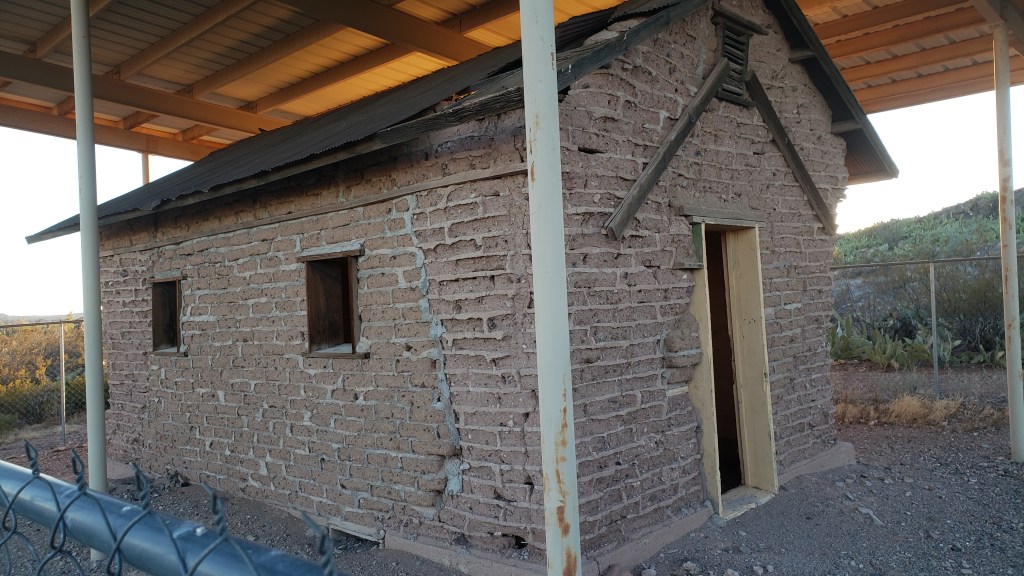
The last remaining homestead at the park. It’s pretty much the only thing here, besides the museum and the tank. And cactus. And rocks.

Deming claims the park as its own, but it’s really located in Columbus, smack on the border with Mexico. While we were there, why not take a look at the crossing? We’d seen it in Douglas, Arizona, while we were staying in Willcox, and in that instance we drove along the wall until we saw the crossing area, where a big gap was open in the wall to allow those working in the U.S. but living in Mexico to move between countries.

Here, the only road for 33 miles led directly to the crossing, which we obviously could not do, especially with a dog. We had no options other than turning around and heading back to Fati, and common sense told us not to take photos.

Instead, here are a few rather unusual sites in Douglas.

Ummmm…metal sculptures. Not sure why.

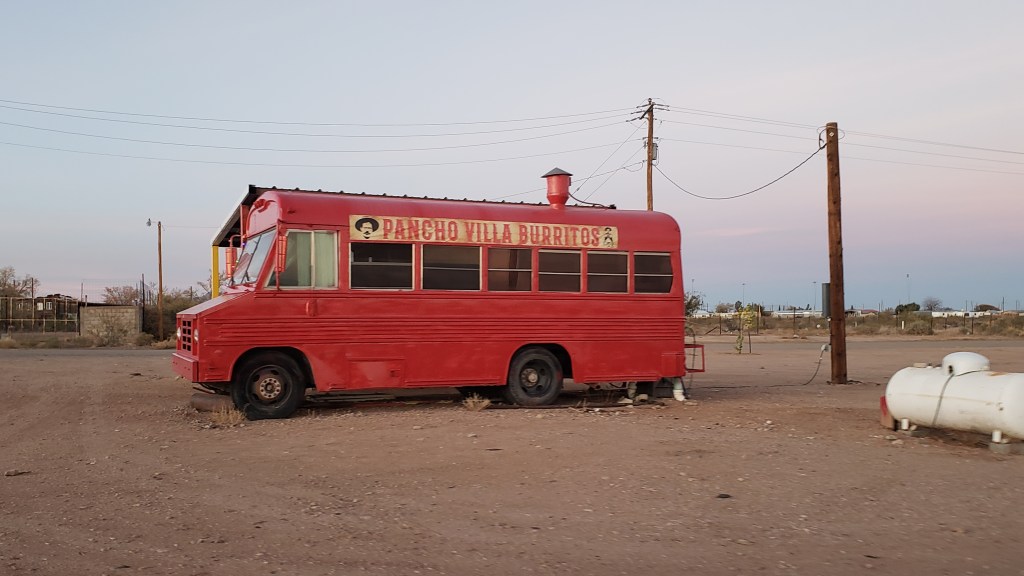
Hands up anyone who would order a burrito from a bus in the middle of nowhere!

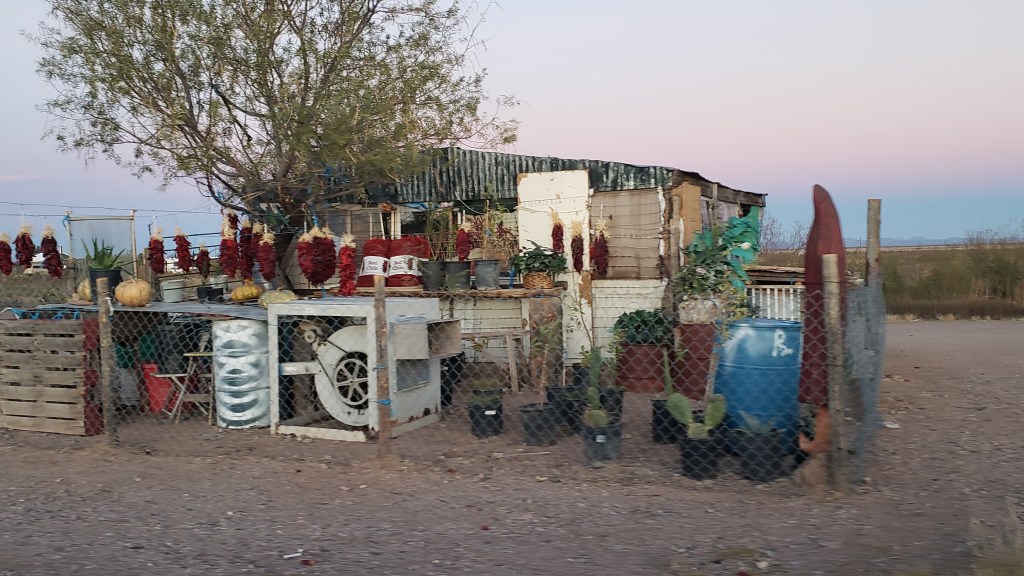
Strings of red chili peppers are such a wonderful constant in the places we’ve been. Susan’s parents brought one back from their travels to New Mexico and had it hanging next to the kitchen, so emotions were felt when we saw them.

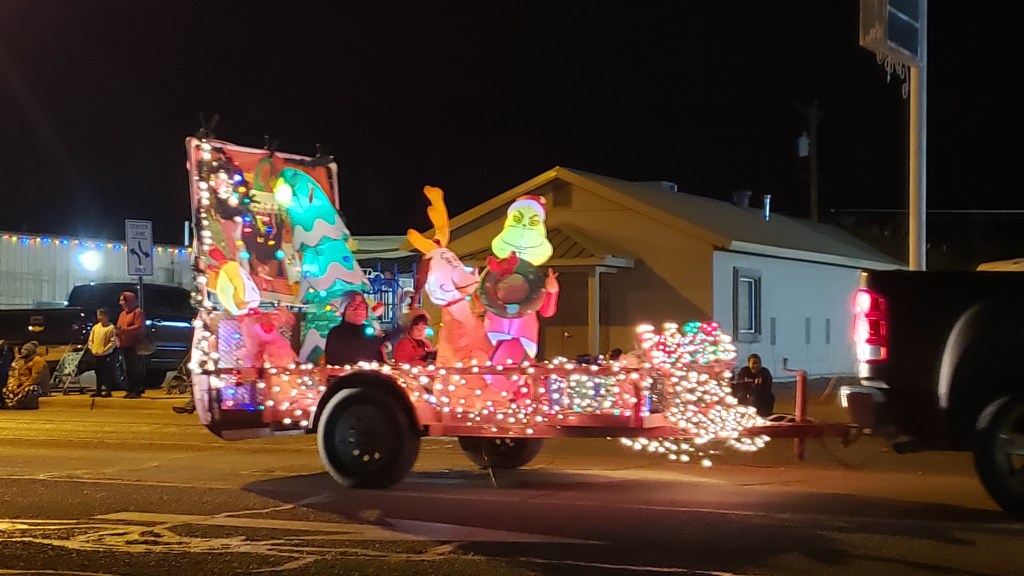
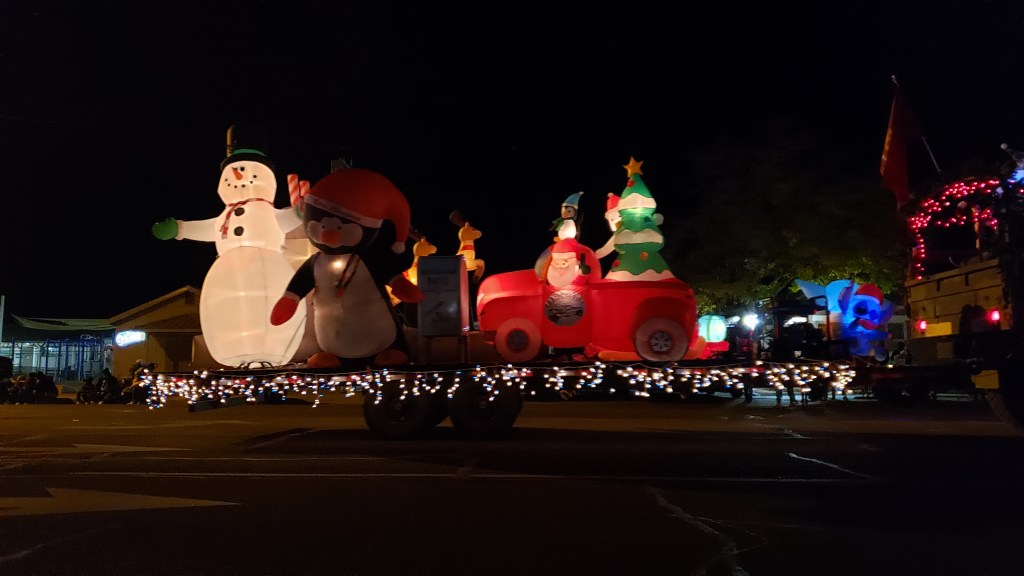
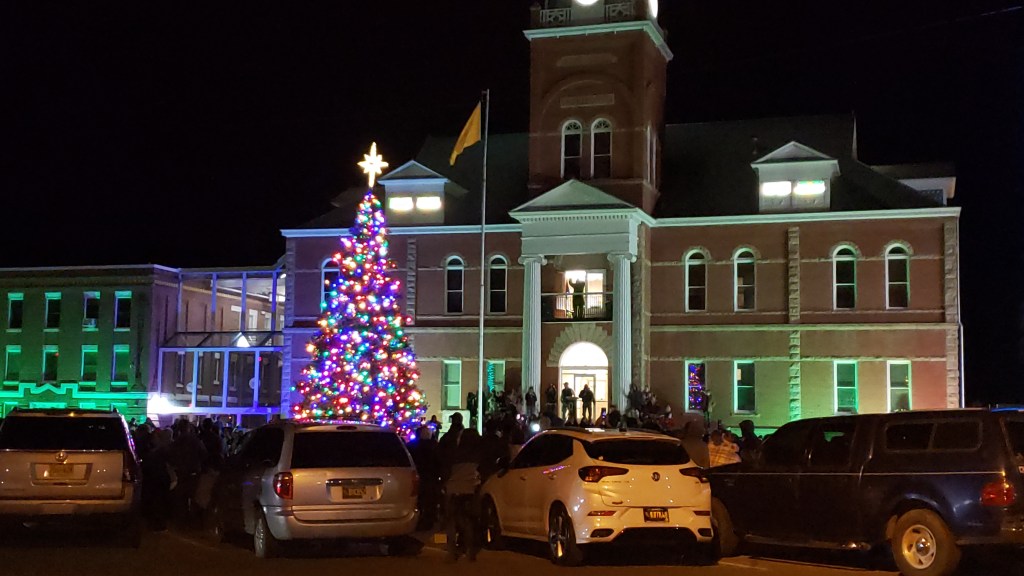
Deming had one more gift in store. Along with a string of multi-colored lights we bought at Walmart to decorate our fireplace in Fati, we got into the holiday spirit by attended the city’s Christmas Market in the afternoon (a short experience, with only a small handful of vendors and even fewer visitors) and attending the Christmas parade and Tree Lighting that evening.

Ruthie did some low-grade “wooooooo”-ing when the police car and fire engine sirens passed by, kicking off the parade.

The Grinch featured heavily. He was in the parade five or six times.


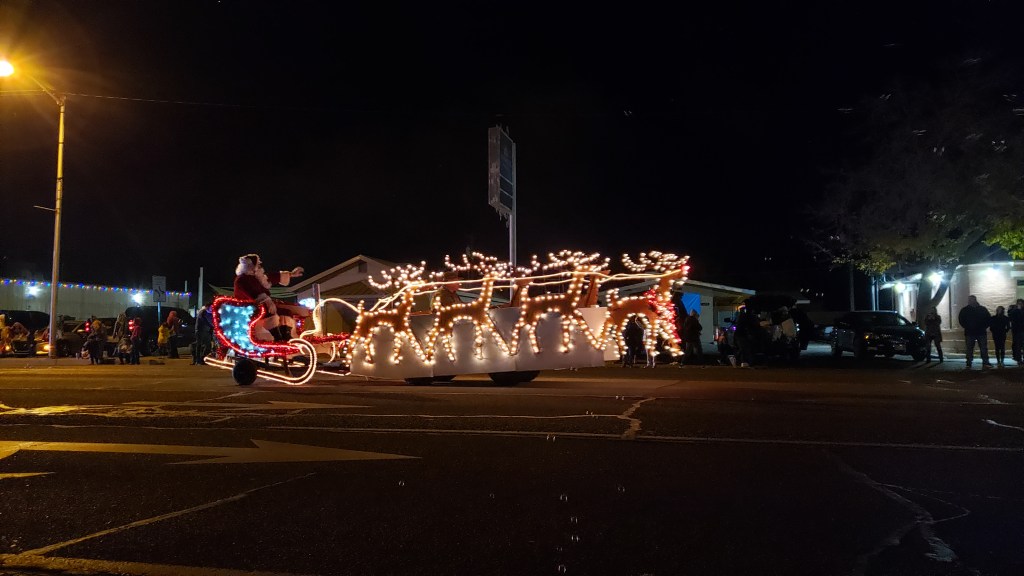
Santa was on hand to wish everyone a very Merry Christmas!

The parade was so charming and homespun and nostalgic, it may have been our favorite surprise of the whole week. We attended the Christmas Tree Lighting afterwards, and departed Deming the next day feeling very much in the holiday spirit.