Tracking Africa’s Big Five

IMG_5575

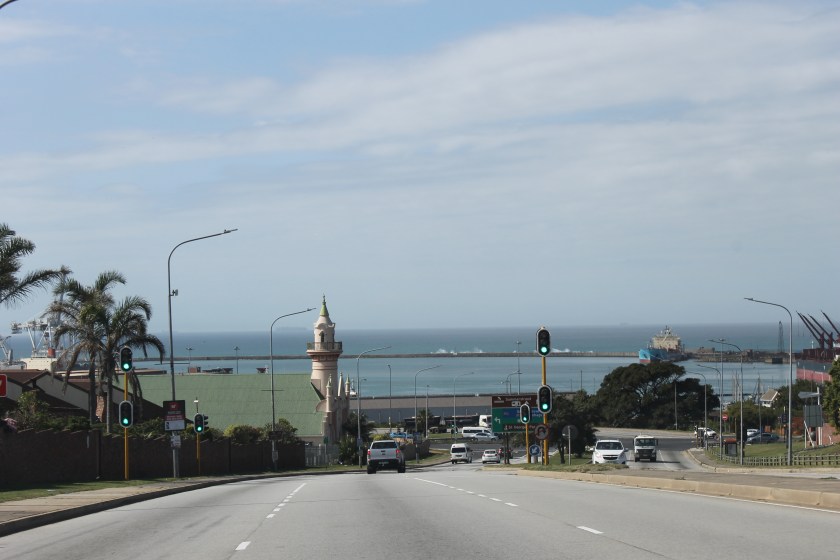
We said a fond and emotional goodbye to David the next morning, and headed back towards Port Elizabeth. We were sorry to leave, but heartened by the idea of today being a real “vacation” day at Addo Elephant National Park. During the pleasant 3-hour drive we stopped at a typical South African service station for a restroom break and a thorough perusal of their snack food. We had missed breakfast, so we sampled the Ghost Pops maize snack and the Diddle Daddle caramel corn, but saved the rest for later, which would prove to be a very good decision.

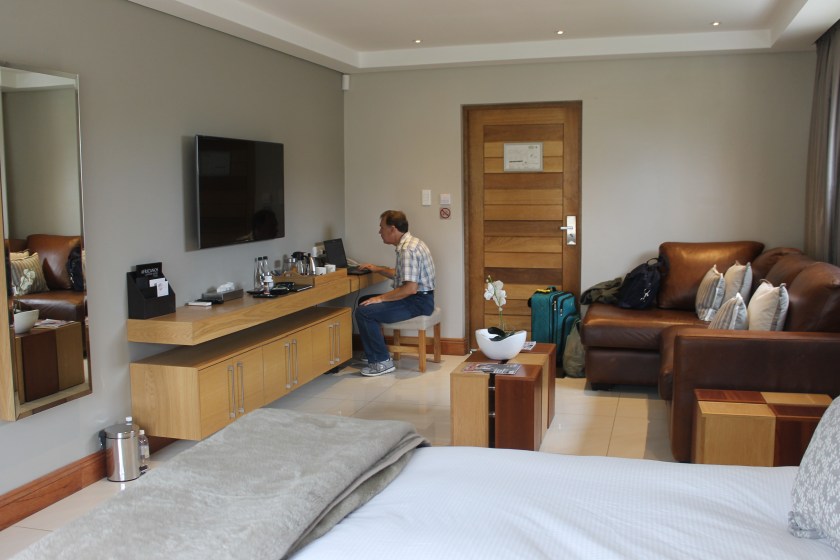
We checked in at Africanos Country Estate and, Wow! It was as smart and stylish as they come. We had a wonderful lunch of chicken tikka wrap and a chicken sandwich in their pretty courtyard, and were then shown to our room, which was immense, and as good as anything in the Four Seasons/Le Meridien bracket.
IMG_6206

We didn’t hang around, though. Addo was awaiting, and we still had a full four hours of daylight to play with. It would be our third “vacation” in 14 years, and we weren’t going to waste a moment!
IMG_5500

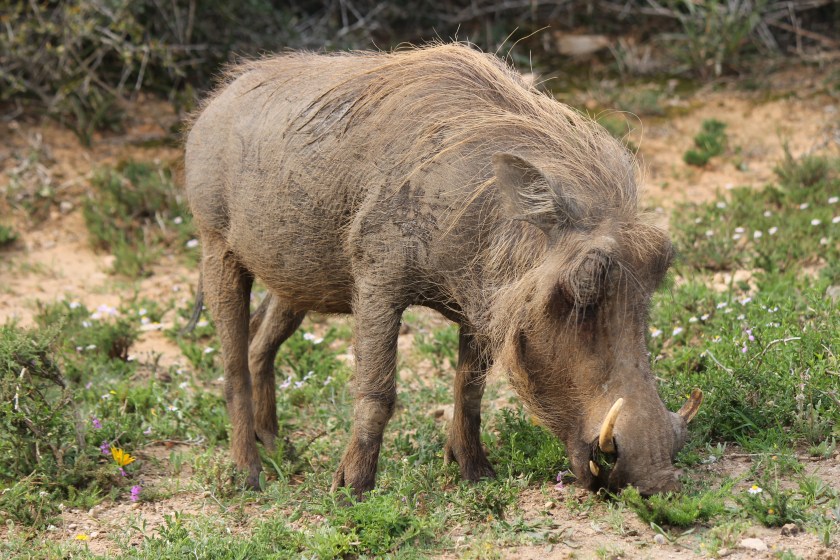
We paid our entry fee at Addo and headed out under our own steam, and in less than a minute we saw what Simon thought was giant boulders in the distance, but our binoculars confirmed were elephants. Then we rounded a corner and spotted something freaky lumbering toward us, and just as we both said, “What is THAT”, we realized it was a warthog. Her babies came trotting up behind her.
IMG_5524 - Copy

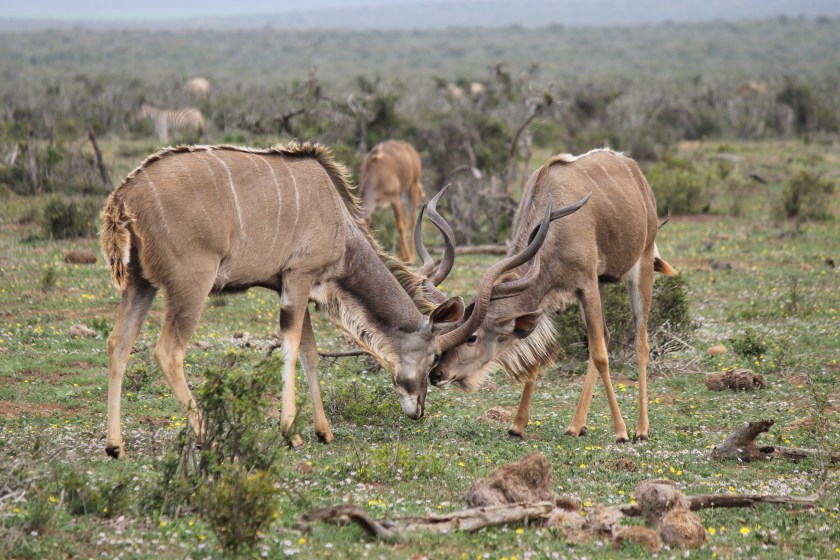
Next we came up on a herd of Kudu, with huge ears and gentle eyes. Most were grazing or just standing there staring at us, but some of the young males were feeling their oats, and were having little sparring matches.
IMG_5546 - Copy

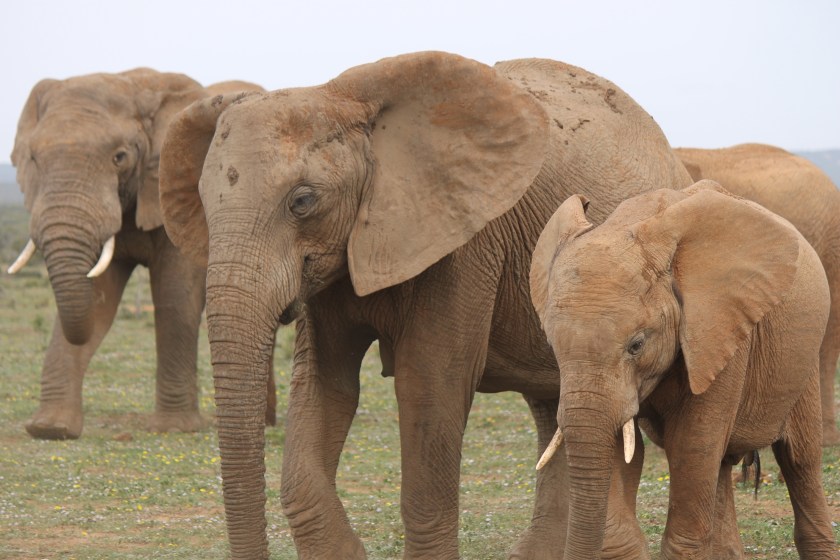
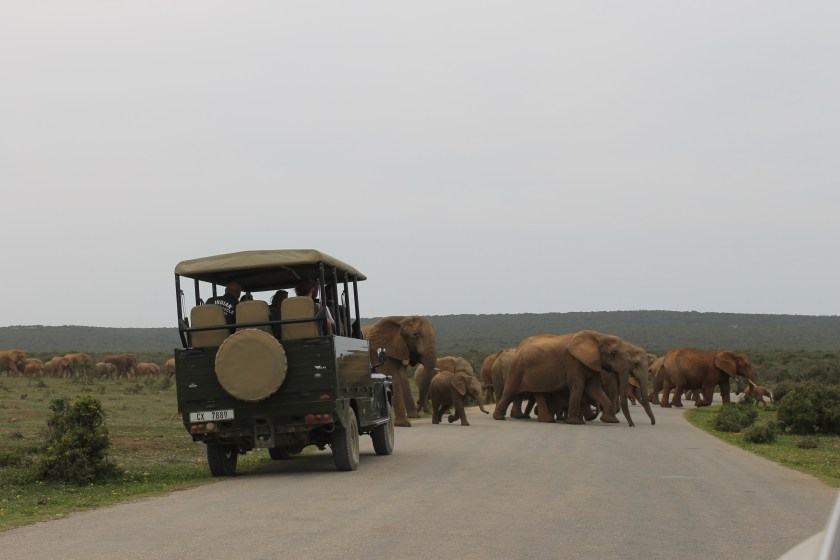
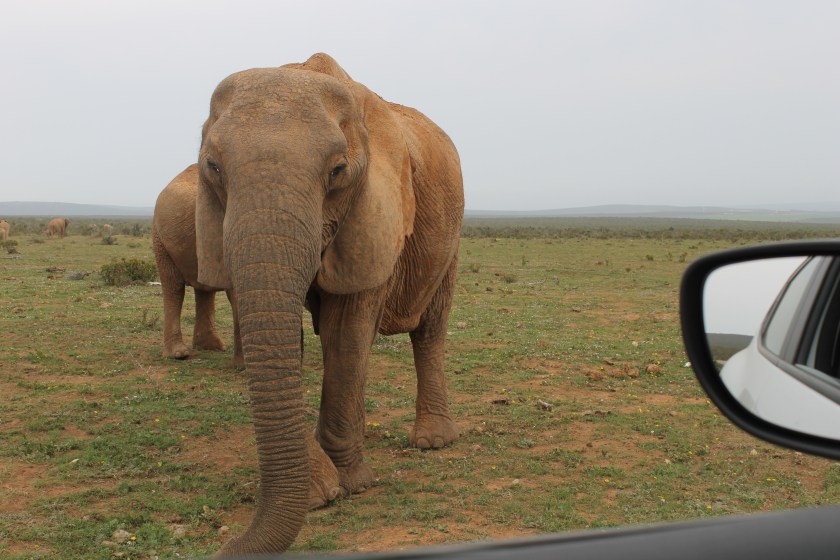
Soon after, we came upon a herd of around 60 elephants off to one side of the road. They were moving away from us, so we watched a closer group of about 8 or so, including babies and yearlings. Suddenly, the larger herd turned and came steamrolling across the veldt, oblivious to the road and traffic, and motored on into the distance. They ended up crossing the street right behind us, while cars and touring trucks were stopped along the road to watch them.
IMG_5587 - Copy

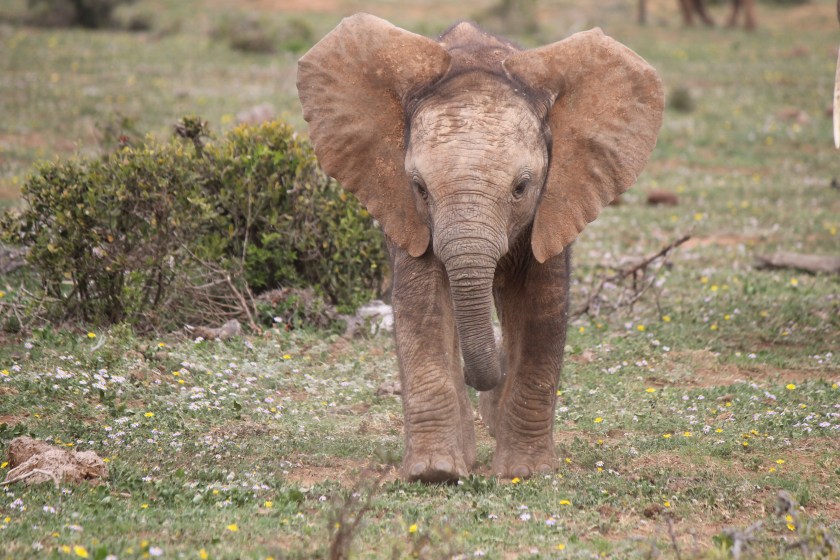
As they continued on, some of the babies were quite funny, running all over the place like toddlers do.
IMG_5573 - Copy

Meanwhile, the smaller group kept getting closer and closer until one of them could have reached out with its trunk and touched our car. Susan rolled up the window just in case it decided to pull her out and trample her.
IMG_5604

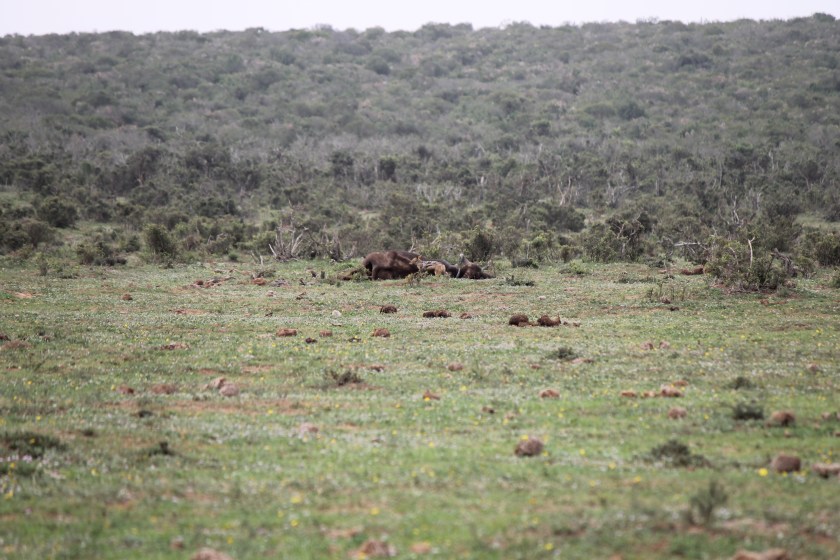
In just a limited drive of, maybe, a fifth of the park, we saw zebra, mongoose, eland and tortoise. We also saw black-backed jackals feasting on the carcass of two Cape buffalo who had been killed the night before. They were ripping and eating quickly, and we would find out why on our game drive the next day.
IMG_5636 - Copy

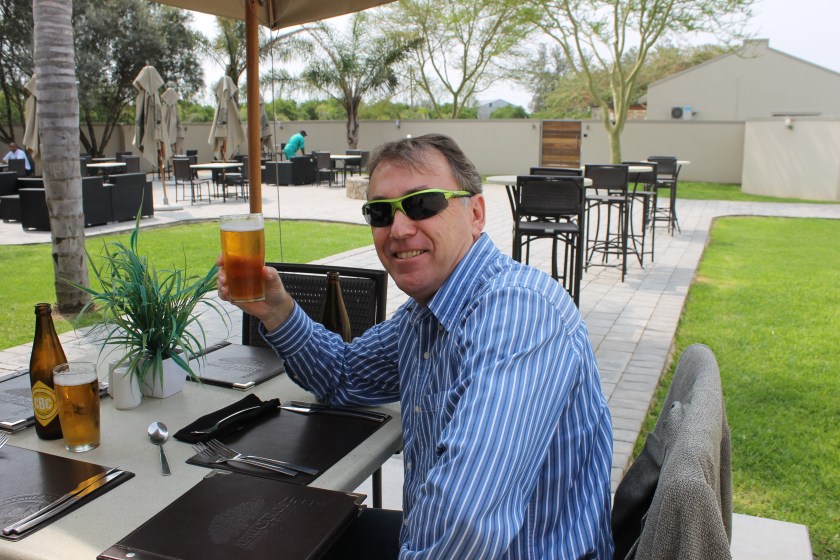
We stayed in the park until closing time, then headed back to Africanos for a first-class dinner washed down with a nice bottle of wine, all for a total of R339 (about $35). An absolute bargain (the wine alone was R105). We were SO impressed with the value and quality of the resort and wished we could stay for a week.

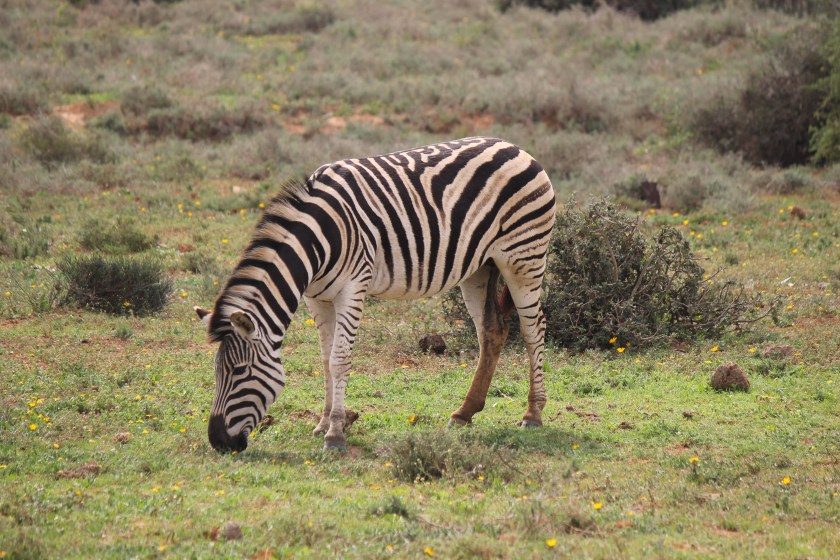
The next morning we had a full-day guided tour booked for Addo and Schotia private game reserve. Our guide Zane (yes, another Zane!) picked us up at Africano’s, along with another couple, Johann and Wendy, from South Africa. We started at 9am in Addo and saw elephant, zebra, Cape buffalo, Red Hartebeest, Kudu, warthogs, dung beetles, and a puff adder.
IMG_5738 - Copy

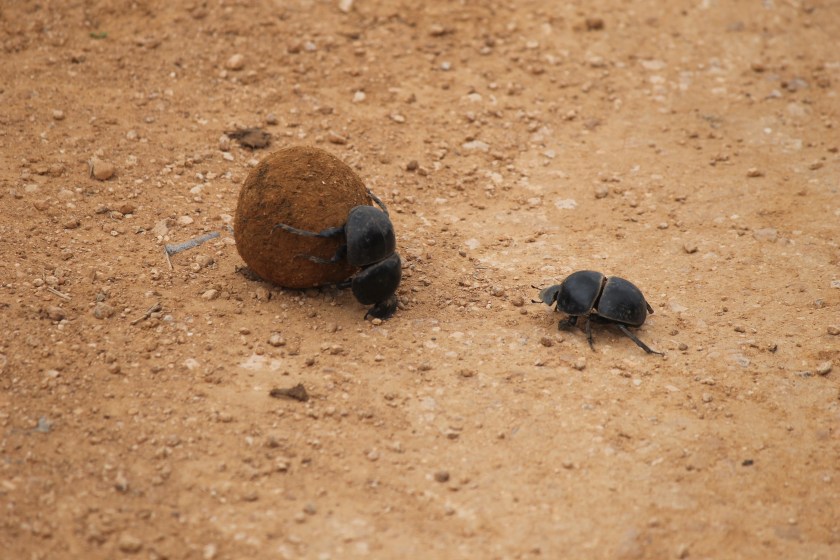
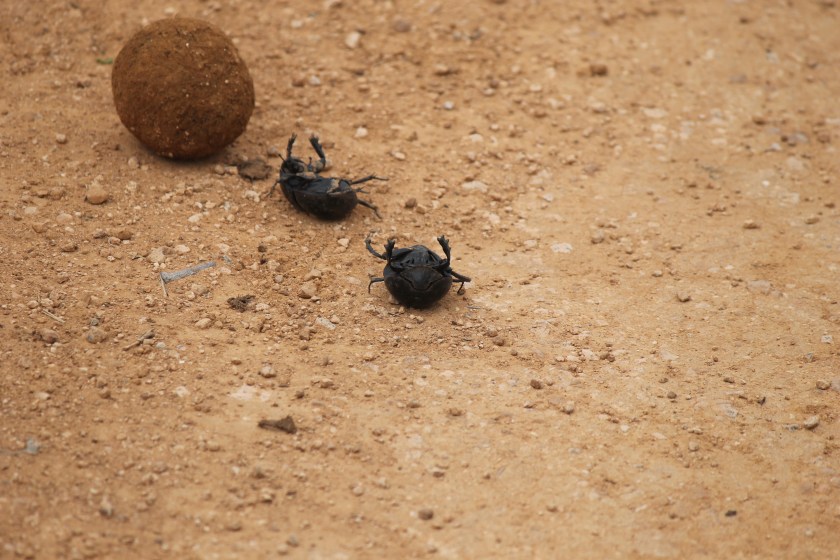
Zane, an ex-schoolteacher, spent a lot of time explaining what we were seeing, which proved helpful when we stopped along one of the park’s roads to watch two dung beetles. The female was rolling a massive poo ball, but kept falling over on her back. Each time her husband looked like he was going to help her get back up, he fell over too.
IMG_5748 - Copy

She would get back up, crawl up the poo ball, turn upside down and start to roll it again, only to fall over seconds later. Zane explained it was the female’s job to roll the ball to some secret location, and the male was there for moral support. We weren’t sure if this couple was on their honeymoon, so they were new at bringing home a poo ball, but they just couldn’t stay upright. We laughed at their misfortune. A lot.
IMG_5751 - Copy

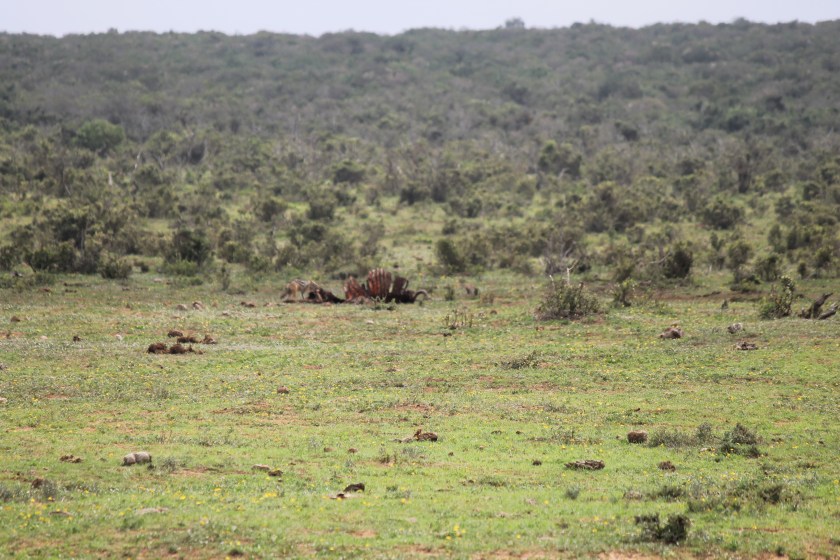
Zane drove us to Hapoor Dam, where we had seen jackals eating dead buffalo yesterday, and today one of the carcasses was nearly stripped clean, while a male lion was lying next to the other one, having eaten the whole back end. His buddy must have eaten the stripped carcass, because he was laying feet-up a bit further back, sleeping it off in the sun. A jackal was pulling the last bits off the ribs.IMG_5741
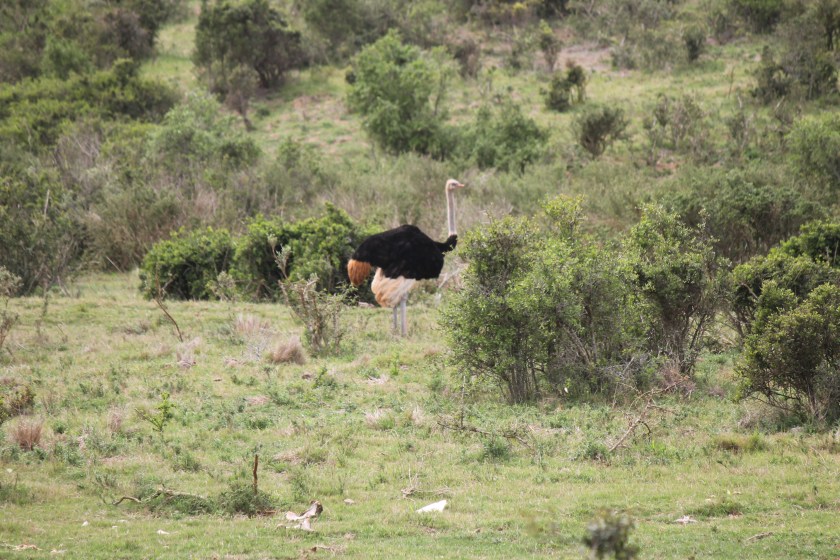
We moved on south, heading toward the Colchester area, and saw our first ostriches, and a secretary bird.
IMG_5812

When we reached Schotia we were treated to a nice lunch of chicken a la king, then toured the park in two parts. First, the main part of the private reserve, which included giraffes, hippos, crocs, wildebeest, impala, springboks, nyla, water-bucks, kudu, Cape Grysbok, and more elephants.

IMG_5893 - Copy

After a refreshment break (rolls with honey, butter, peanut butter or Bovril and coffee, tea, or hot chocolate) we went off to find some lions.

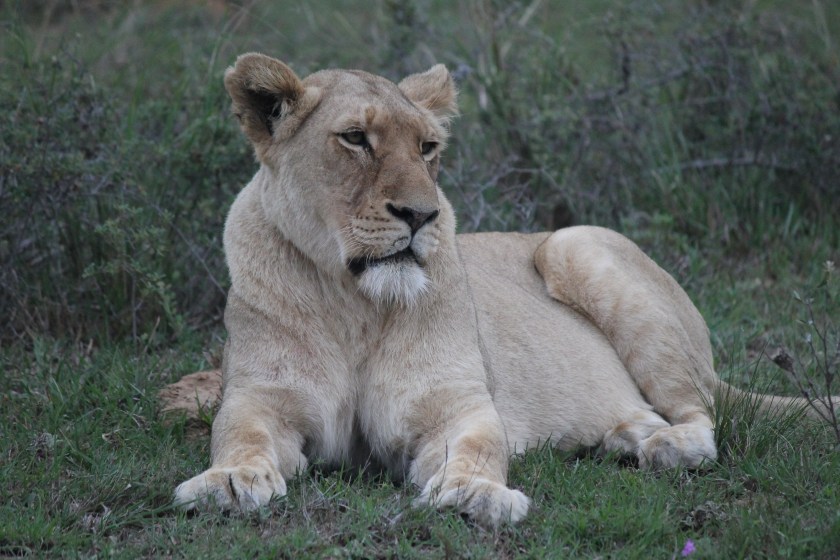
We found a young-ish male lion and his mother, who were relaxing after having killed and eaten an impala. They were completely indifferent to us and our jeep, which was a comfort, since they were very close, and quite intimidating.
IMG_6005

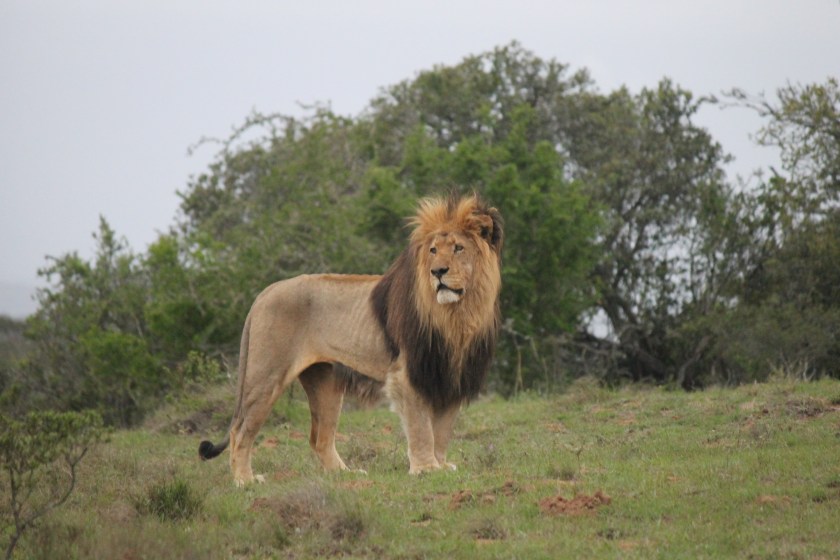
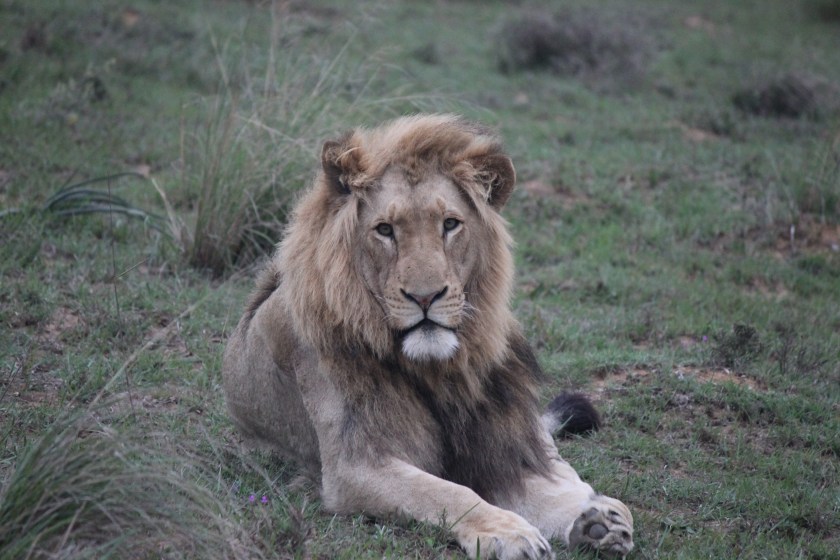
Then we saw the young male’s father. He was huge, with a long, dark mane that went down his back and along his stomach. He walked further up the hill, then started roaring for his wife and son. But they didn’t care. They just laid where they were and he finally laid down, all sad and dejected. No dinner for him tonight.
IMG_6019

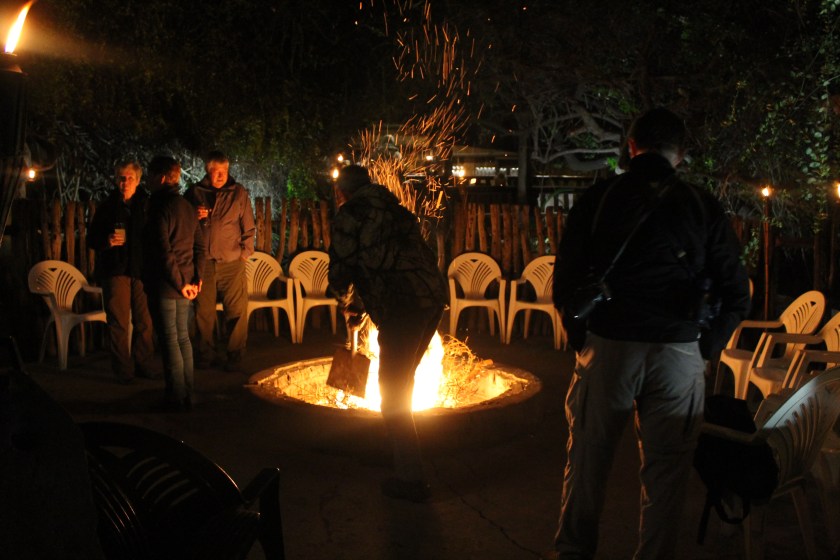
It was our turn for dinner, which was in Schotia’s Lapa, a semi-covered building made of wood and thatch. It was a traditional village-style set-up with a superb setting of open fires and torch-light, with a small stream running through it. The atmosphere was enhanced by a guitar player and harmonica player, and a dog who howled as they played.
IMG_6112

We had tea, then wine, and dinner was rice, oven-fried potatoes, mixed veggies in a cheese sauce, chicken, beef, and gravy. A sticky toffee pudding type of dessert called Mulva Pudding was served, along with a delicious mini shooter cocktail of Amarula, Kahlua, and cream.

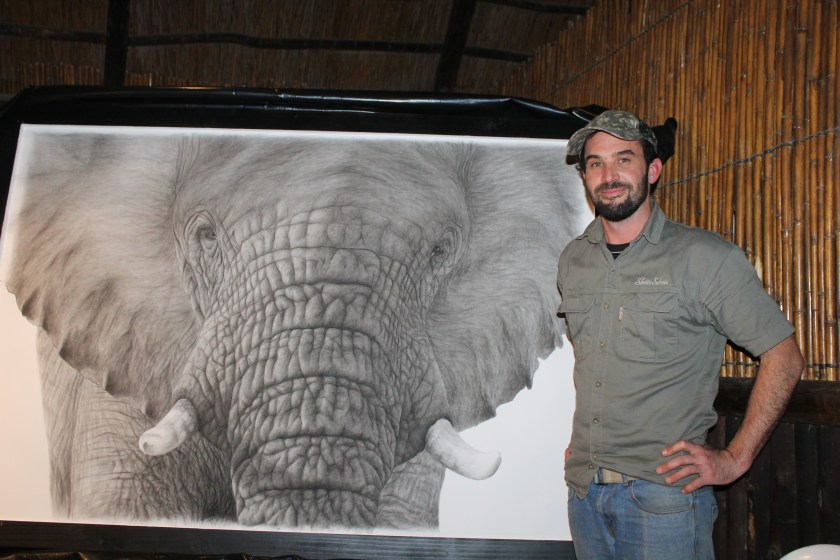
One of the guides is an incredible artist, and we bought prints of two of his pieces—an elephant and a zebra. Too soon, it was time to go.
IMG_6163

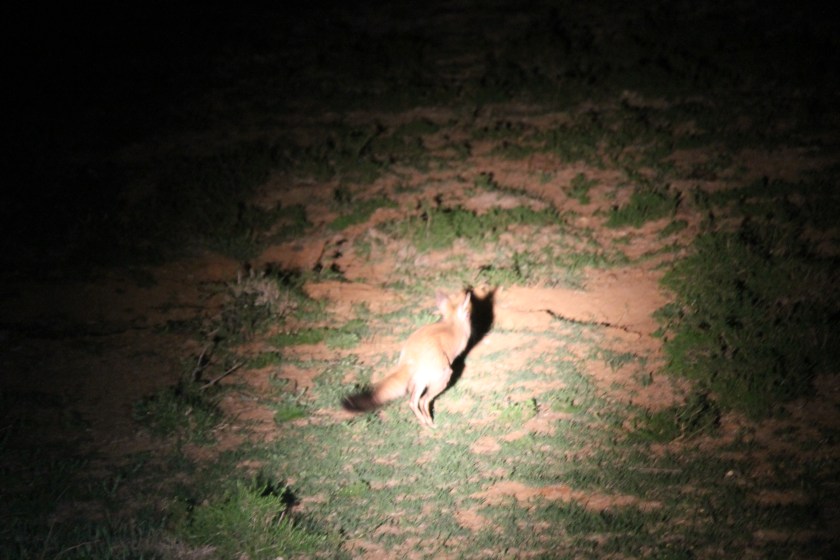
We had done a short night-shine before dinner, and did one again on the way out. Zane said he hoped we’d see “South African kangaroos”, and sure enough we found several of them, with eyes that glowed in our high-powered flashlight beams. Their real name is the springhare, but their back legs are so long and their front legs are so short, they hop like kangaroos when they run away.
IMG_6175

We saw so much, and were so exhausted by the time we got back, that we were just too tired for tomorrow’s early-morning game-drive, so we cancelled it in favor of a good, long sleep. What a truly brilliant day – SO good for the heart and soul to see so much natural wildlife and landscape.
IMG_5989

Next blog: Simon Returns To Botswana

Want to see more photos? Check out our Into Africa album on Veness Travel Media on Facebook. We will be adding to the album as each blog goes up.


Spotting Two of Africa’s Big Seven

IMG_5103

We had been in Johannesburg for six full days, and those bloody hadeda birds really needed to go! There were so many noisy birds that there was no chance of sleeping through the dawn chorus, which went on, and on, and on.

On the sixth morning we were up at 7 a.m., washed and ready for breakfast at 7.30 in preparation for our flight to Port Elizabeth, along the southern coast. There was one more file we needed to look at in St. John’s library, and we needed at least one day with the Alexander Education Committee, so we decided to come back to St. John’s for two days before flying home.

Our view of South Africa from 30,000 feet was bit hazy as we flew down to the coast, but we got a good look at the Transvaal–very flat, brown, dry, and desolate-looking at first, with few villages or cities, until we reached an area with sporadic mountain ranges, many in a circle or partial circle. The landscape gradually gave way to more mountains and more green, then suddenly a beach appeared alongside an inlet, and then we were out over the sea. Port Elizabeth was very built up, and the sea was an incredible bright blue.

IMG_4964

We picked up our rental car and headed west along the Garden Route to Plettenberg Bay, stopping to admire a massive gorge at Storms, the size of which does not translate well in pictures. Suffice to say, Simon couldn’t wait to rush out onto the bridge over the gorge while Susan insisted the fauna on terra firma needed serious inspection.

IMG_4996

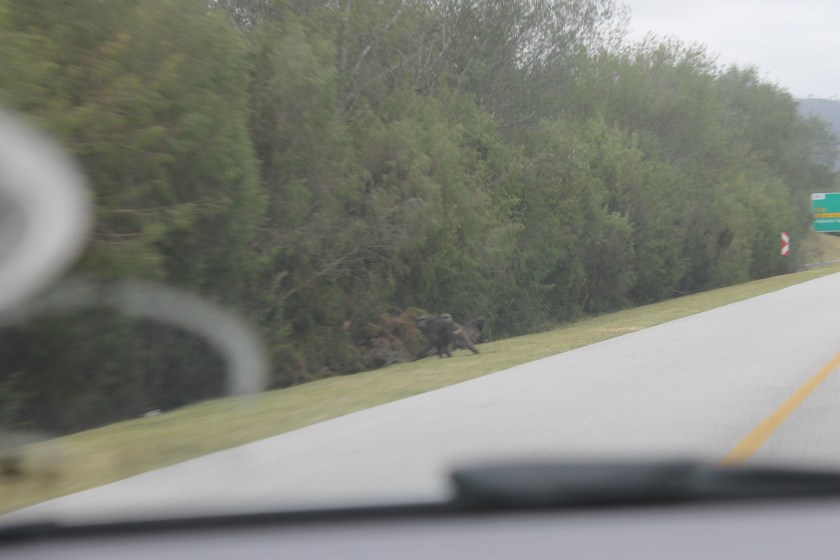
Further west we saw signs along the highway warning not to feed the baboons, and while we were wondering if baboons came up to the road we came across a small troop just off the highway. They were far too quick for Susan to grab her camera, and we ended up with the first of many pictures we like to call ‘The Butts of Africa’. There would be more baboons as we drove, but they were equally quick to turn tail just as the Canon came out. We had just begun to get used to cows, goats, and donkeys grazing along the roadsides and walking out in front of our car unexpectedly, but baboons…that was something special.

IMG_5014

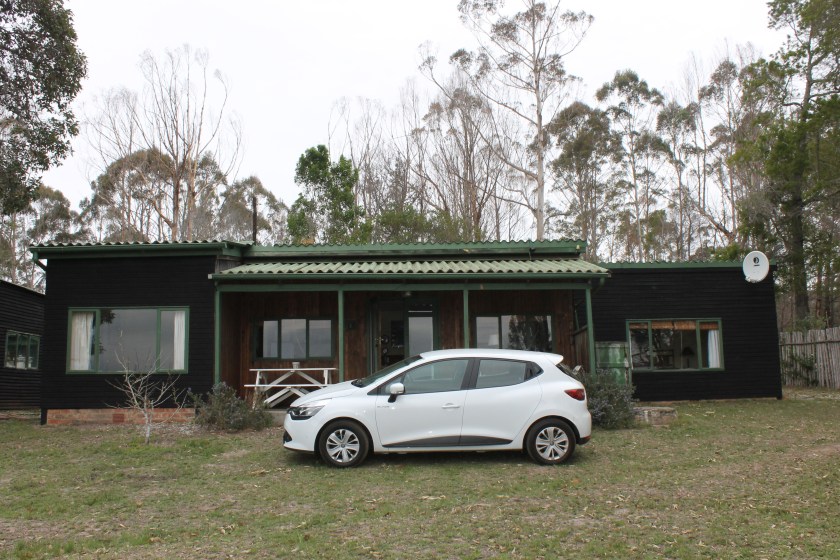
We were staying at David and Hilary Matthews’ guest house, David having been the deputy Headmaster at Maru-a-Pula, and Simon’s math teacher. When we reached their house—a pretty main house and separate guest house, nearly “off the grid” with rain being its only source of water, though it did have electricity—we were greeted by 3 dogs (Tim, Tom, and weenie dog Oscar). David’s nephew, David Matthews from the David Matthews band, stayed there with his wife and 3 kids the week before we arrived.

IMG_5357

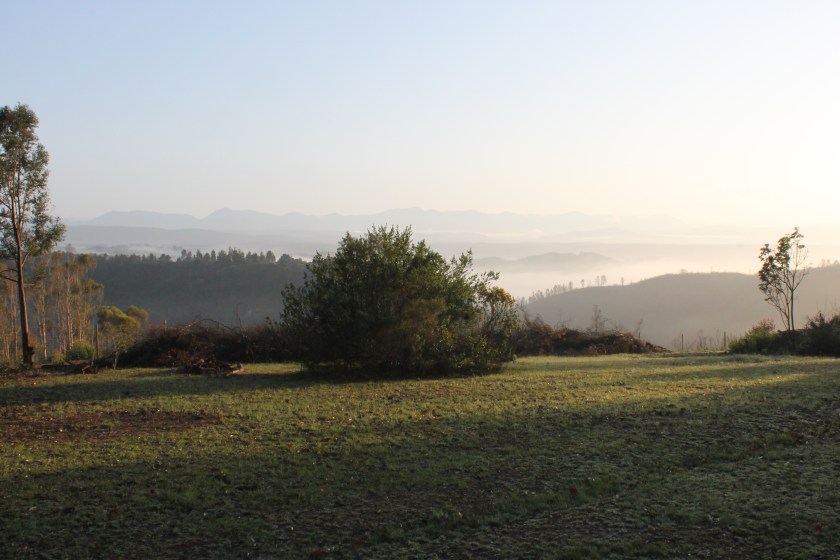
The whole set-up was extremely comfortable, with a jaw-dropping view of the Tsitsikamma mountain range.

IMG_5028

Our main purpose in Plettenberg Bay was to see David Matthews again, and to interview him for the book. We would have three days to do that, and between interviews we were able to enjoy the stunning landscape, which was filled with birds, flowers, and happy, frolicking dogs. Oscar became Simon’s best buddy.

Africa 2 004

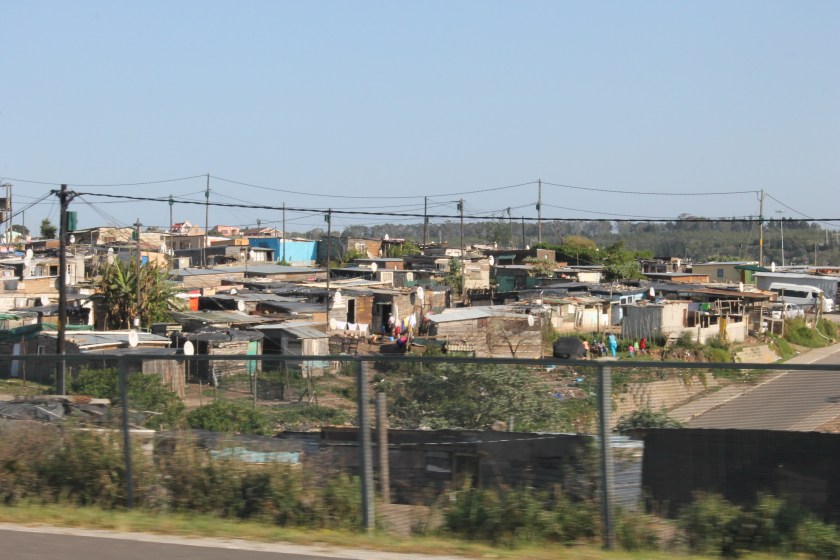
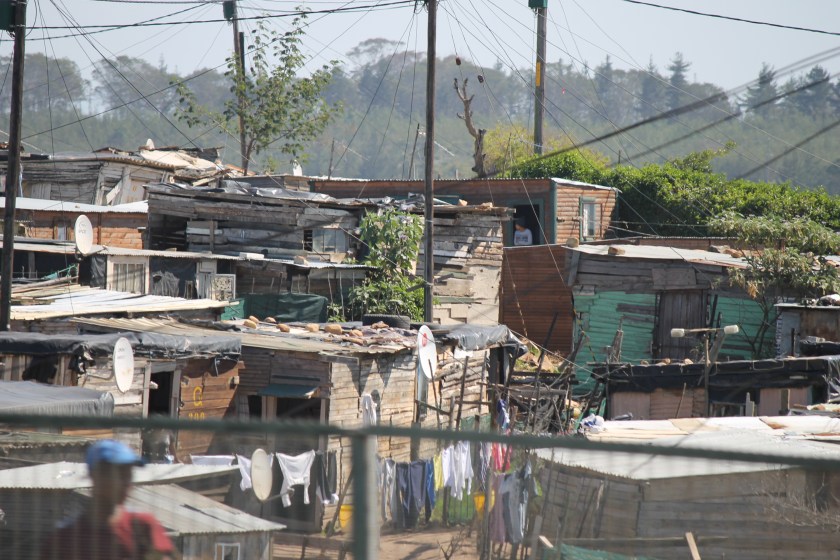
We also had time to drive around the city, and it was there that we had an up-close view of one of South Africa’s “informal settlements”. In the states we would call them slums, but to be honest, there is nothing in the States like the slums we saw in South Africa. Crowded, filthy, and as home-made and ramshackle as it comes, these “settlements” were absolutely heartbreaking; a terrible reminder of what happens to human beings when every right and every opportunity is stripped away from them.

IMG_5036

We would be heartened to hear about the bursaries (payment of school fees) provided by Maru-a-Pula and St. John’s College that pulled a small percentage of the children from slums like these out of their terrible circumstances and gave them the education that would allow them to prosper personally, and in doing so, help their village or their “settlement”. We were disheartened—and terrified—to discover there are worse conditions in South Africa than this. More on that later.

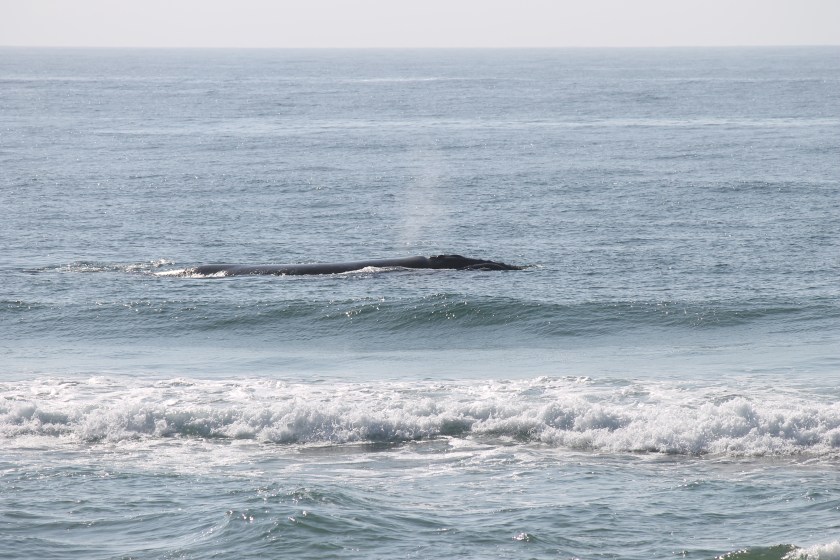
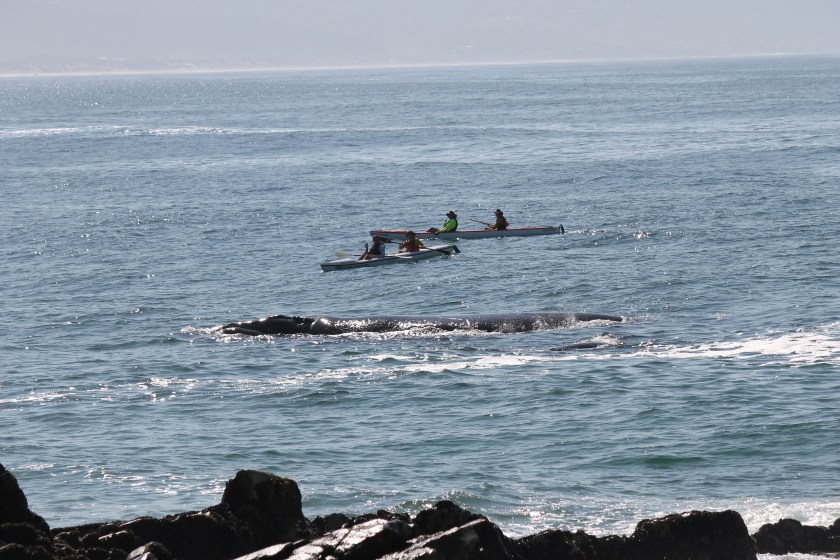
Our first full morning we went to Lookout Deck, a seaside restaurant David and Hilary frequent, and as we sat down Hilary mentioned the fact that it was the bay where the Southern Right Whales come to give birth each September. Even as she spoke, we spotted two whales in the distance, lazily trolling along the bay. During the course of the meal, they moved closer and closer to the Lookout Deck and we were astonished at such a sight as we sat and had breakfast.

IMG_5093

We had driven in separate cars because Hilary had to leave to catch a bus to Cape Town to mind their grandchild for a few days, and David had to take her there, so we explored the bay on our own for a while. We went down a pathway to the outcropping where the whales were hanging out, and spent a happy hour or more watching them, along with several other visitors. The two of them (mother and calf) came right up to the edge of the rocky point of the bay and lolled about in full view. We were able to walk out most of the way to the point, barely 100 yards from the whales, and got a truly stunning close-up of this wonder of nature.

IMG_5234

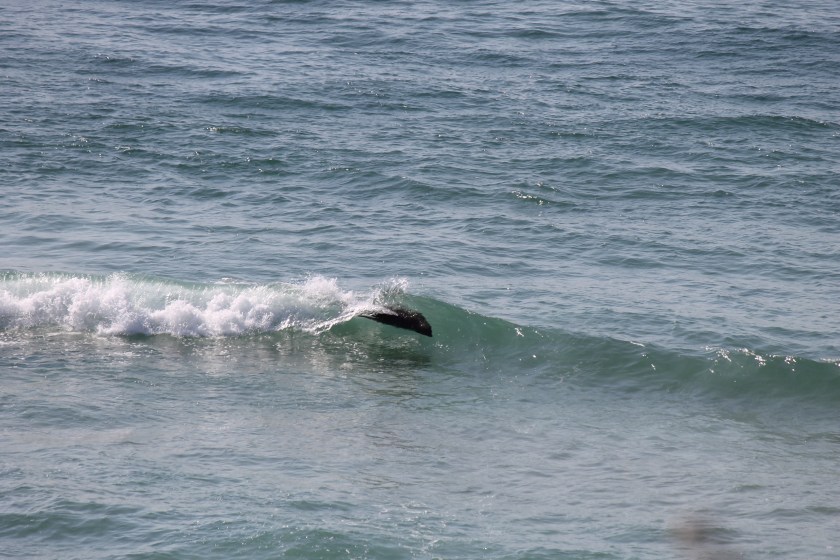
We also watched a seal surfing in the wave, and as we stood there laughing at its antics, a local joined us. During our conversation, she told us to go to Robberg Nature Reserve where we could look over the sea, get a view of the seal colony, and possibly see great white sharks. There was no way we were going to pass up that chance, so that was our next day’s adventure.

IMG_5381

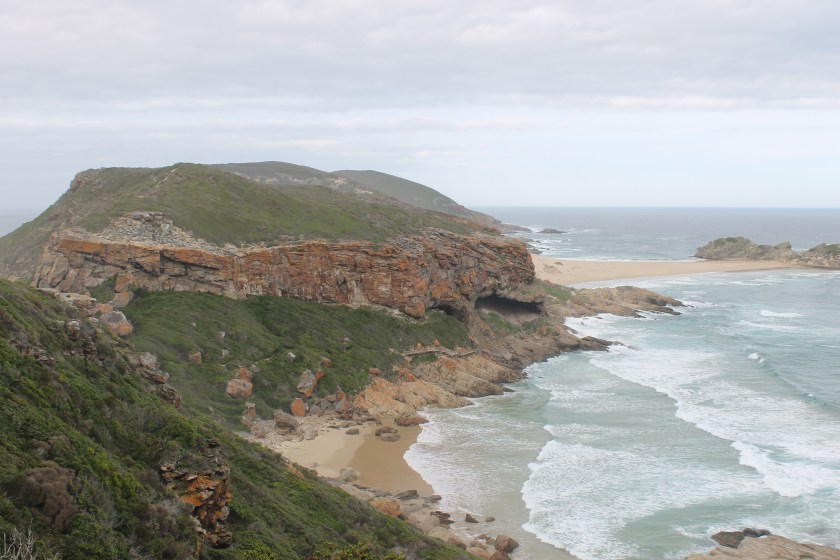
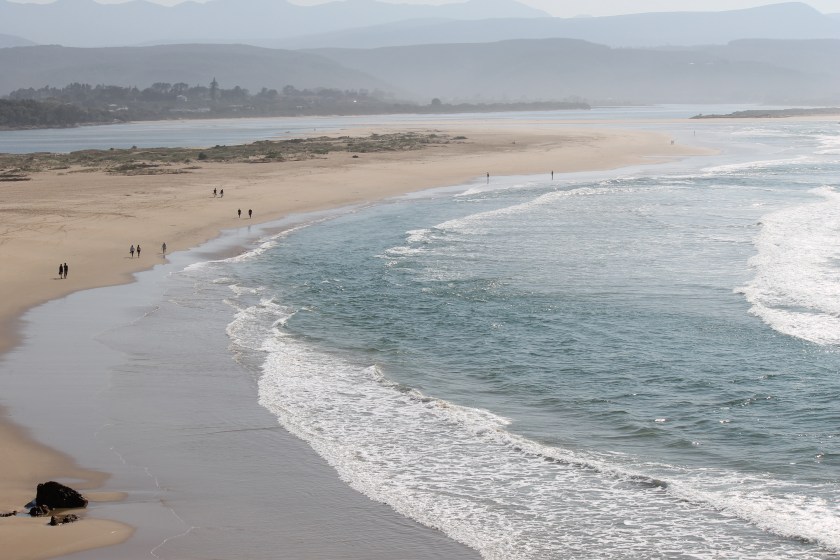
We paid our 80 Rand admission ($5.85 US) and entered the park the next afternoon. Robberg is a big rocky promontory in the middle of the Bay, and it was quite a tough hike along the cliffside, down some very precarious stone stairs, and along a much more secure boardwalk, but it was well worth the effort. As we were watching a group of seals playing in the water among the rocks at the base of the cliff, two women came by and asked if we’d seen the Great White shark trolling along the shoreline. We hadn’t, and were disappointed when they said it had already gone around the bend.

IMG_5392

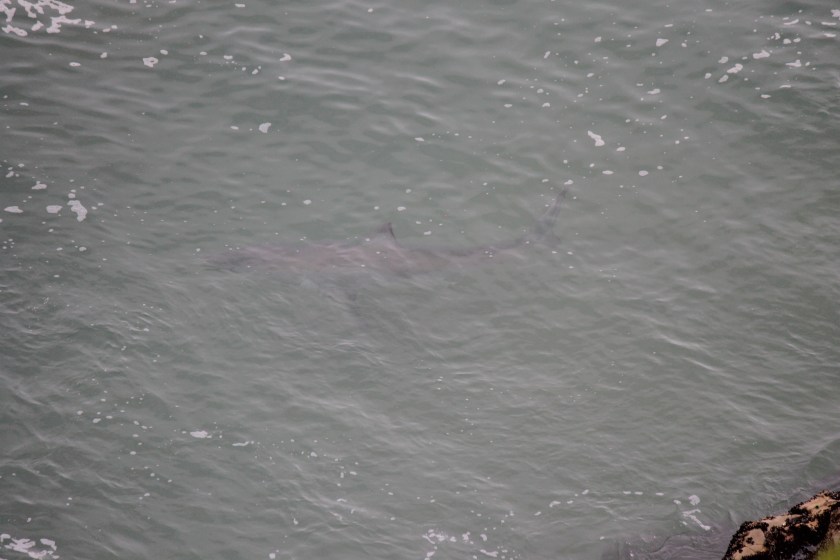
A few minutes later we were shocked to see its dark outline coming toward the seals below us. It was 10 feet long or more, and we could see its tail and fin clearly, and its body a bit less clearly. It cruised back and forth along the shoreline, and the seals were clearly agitated. It couldn’t quite get into the base of the rocks, and the seals weren’t taking any chances, so it was something of a stand-off. Had the sun been brighter we would have had a crystal-clear view. Even so, we could see every move, and we watched it swimming back and forth for about half an hour. It was something we’d hoped for, but didn’t really think we’d see. In doing so, we checked off two of Africa’s Big Seven (Southern Rights and Great Whites). Incredible!

IMG_5411

It started to cloud over and got a bit dark, so we made our way back to the guest house, stopping to watch another group of seals playing in the surf at the lower edge of the long, empty beach. We saw a mongoose running across the road as we left, so we felt pretty lucky for our 80R.

IMG_5114

We had a wonderful lamb dinner with David, compliments of Hilary’s hard work the night before, along with conversation that included the settlements near town. David explained they used their roofs as storage areas, which was why we’d see things like bedsteads or bicycles on them, and how the buildings we saw, if you can call them that, were actually a step up from the worst poverty. True squatters’ buildings were made of cardboard or any other material the people could scavenge. If it had a corrugated metal roof, it wasn’t a squatter’s home.

IMG_5288

It was hard to imagine it could get much worse than the tiny one-room hovels we’d seen. Hard to imagine having to share an outhouse with god knows how many other people. Hard to imagine the filth all around, and your children playing around big junk piles. It was not hard to imagine how bitter and resentful you’d become when the people who took over your homeland were prospering while you lived behind chain link fence in the kind of dwelling most Americans wouldn’t find fit for their dog. I was reminded of our own shame at how we treated the native cultures in the United States. What is the answer? How do you right such tremendous wrong? How do you even start?

They were questions we would ask ourselves again and again, and would find partial answers to as we talked to the people who were actively working to change the situation. But until then, we enjoyed the good company of David, the beautiful place we were blessed to be surrounded by, and the knowledge that we’d be on the track of the remaining Big Five during our upcoming game drives at tomorrow’s destination, Addo Elephant National Park.

Next blog: Addo Elephant National Park, where the wildlife truly goes wild!

Want to see more photos? Check out our Into Africa album on Veness Travel Media on Facebook. We will be adding to the album as each blog goes up.


Into Africa

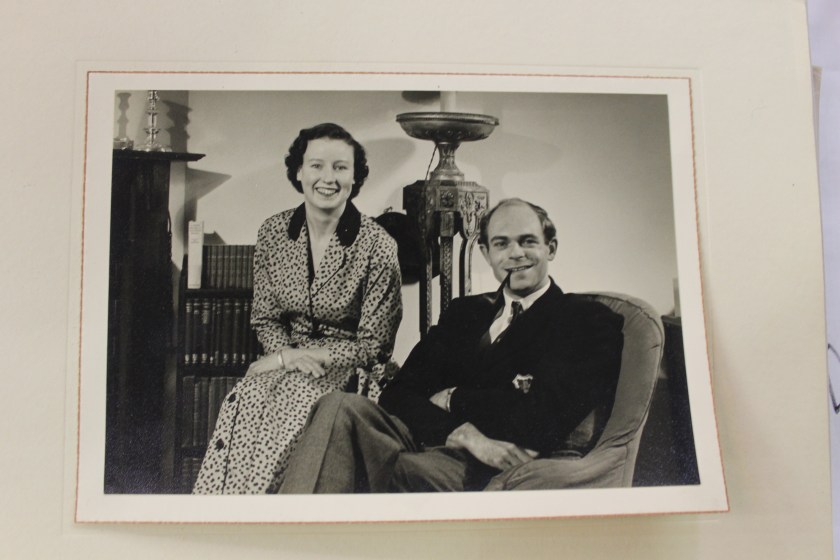
We have been talking about going to Africa since 2010, when Simon reconnected via Skype with Deane Yates, his Headmaster from Maru-a-Pula (translated as “clouds of rain” in Tswana, which symbolically means “blessings”). Listening to their conversations, and having heard Simon talk about his years of schooling in Botswana and the great man and his wife Dot, who not only began the school, but worked tirelessly their entire lives to prove black children and white children could thrive together in a school setting, I said, “His story should be a book. And you should write it.”

With the help of the American Friends of Maru-a-Pula, we made arrangements to travel to South Africa and Botswana to speak with the people who helped Deane and Dot make the school the internationally respected, highly successful environment it is today. Their story will be told in book form. The following blogs will be our story of discovering and rediscovering Africa.

IMG_4874

Saturday, September 2, 2017

The taxi picked us up at 1 p.m. for our easy 1-hour flight to Atlanta and then the long, long leg to Johannesburg. Fifteen and a half hours later, with no sleep overnight and in seats that were the narrowest pitch we’ve come across in ages, which made our legs feel like they were in a vice, we arrived. It was 6 p.m. on Sunday, noon U.S. time.

With only a few agents on duty at Immigration, the lines were enormous. Two hours later we were through, but there was no sign indicating where our luggage carousel was—and no luggage. Thirty worried minutes later we found our cases with some random airport employee, intact and (surprisingly) with nothing stolen. Both of Susan’s bottles of Lysol arrived. Success!

Our shuttle driver for Southern Sun hotel at Tambo introduced himself as Elvis, and said, “You’re tired now, but Elvis is here to take care of everything.” Just by saying that, our stress melted away. From that moment on, we threw ourselves fully into the Africa experience.

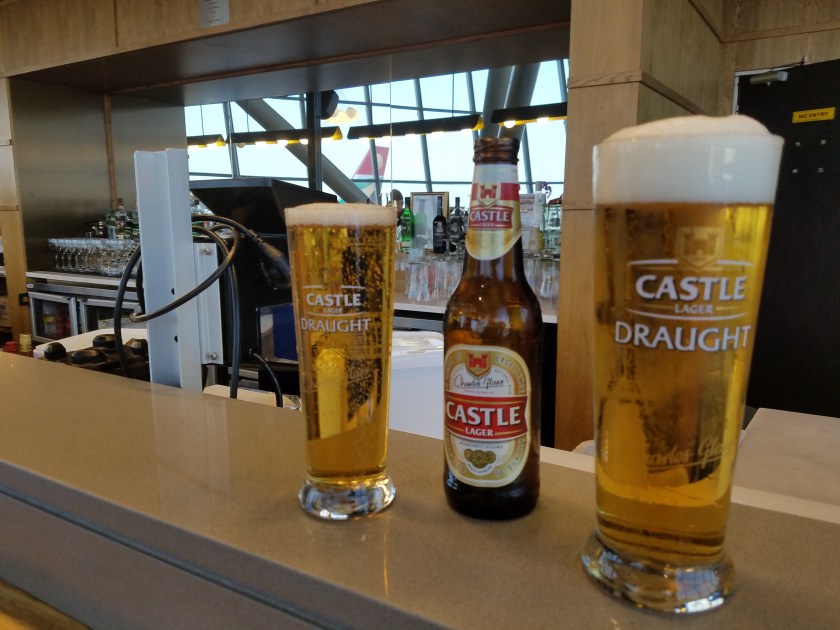
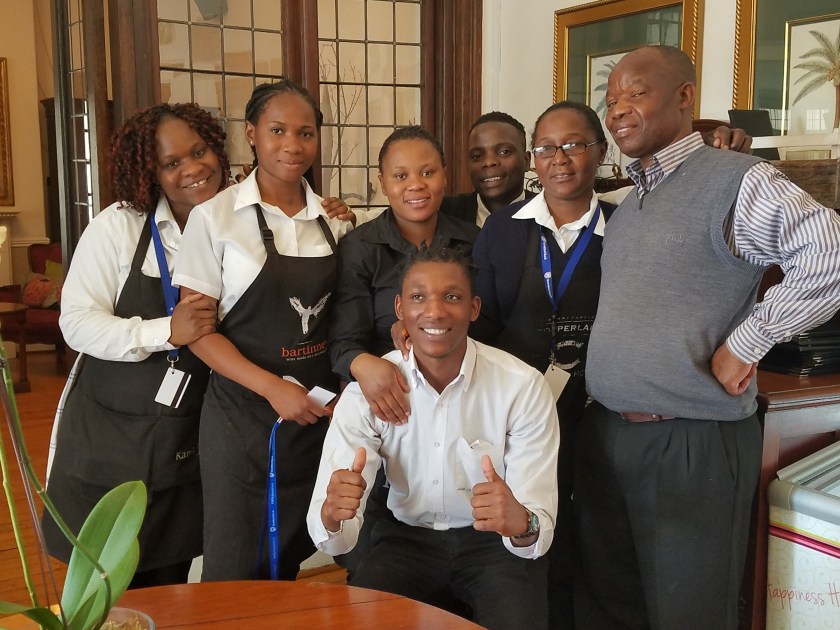
We checked in and made a drink in the bar our first priority. Susan has a lot of food rules, even more so when we travel, and tap water or ice were definitely off the menu. We ordered two Castle beers, figuring that would be a safe choice (no ice), but the first thing the bartender, Zane, did was rinse the insides of the glasses with water. First food safety rule broken!

20171004_165824

The conversation with Zane was lively–from why on God’s green earth anyone in the U.S. voted for “that circus clown” Trump to the personalities of all the U.S. basketball players. He asked where we were going to visit, and when Simon mentioned Sophiatown, Zane said, “It’s just like Cleveland.” We were surprised, and asked if he’d been to Cleveland. He said, “No, but I’ve seen it on TV.”

Our 2 beers came to the equivalent of $3.50, but the company was priceless. We felt an easy friendliness from Zane, which would be a hallmark of our 32 day adventure.

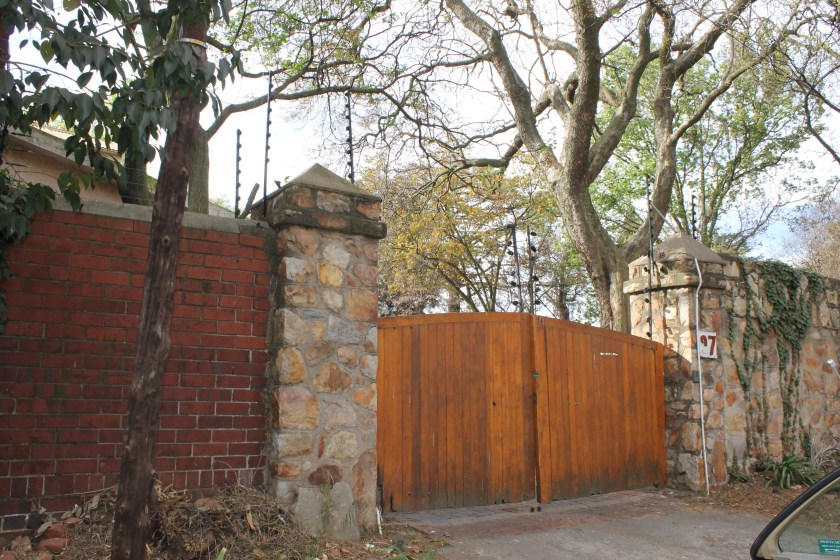
We were picked up at 6.45 the next morning  by Daniel Pretorius (the House-master at our first stop, St. John’s College), and made the 35-min journey to the school through morning rush hour, marveling at how built up, hilly and DRY the place was. All the houses had enormous walls with barbed wire and electrified fences at the top. It was a sobering reminder of the legacy of Apartheid.

IMG_4506

On the way we saw women setting up stands along the road, to sell fruit and other items we couldn’t identify. Mini shuttles zoomed past us like they were being piloted by crazed, drunken drivers. Daniel told us they were locals who started transport companies due to the terrible public transport and unsafe trains, and that hopeful riders used finger signals to let the driver know which route they needed. One woman we saw raised one finger, others pointed two fingers outward, to indicated the route, they wanted, and the shuttles either stopped or sped on.

IMG_4338

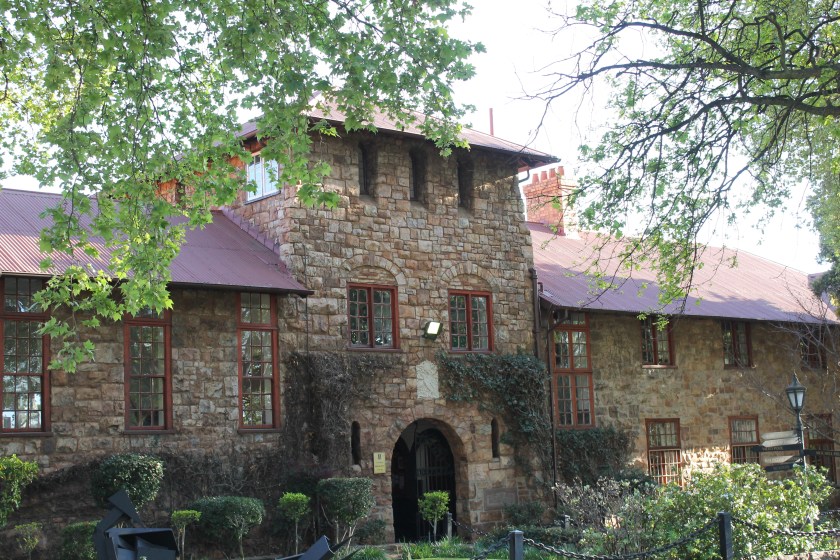
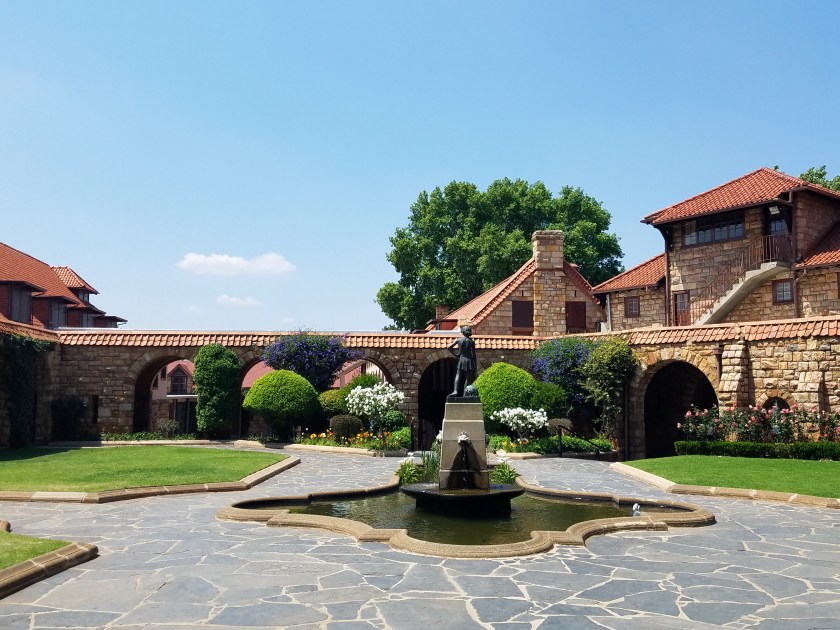
After our rather harrowing encounter with Johannian traffic compliments of drivers whose general level of skill is either absolutely world-class or completely lacking and without an ounce of safety training, we arrived at the school alive. St. John’s College was built in 1907 and has the look of a classic British public school, in a completely self-contained (and secure) campus.

IMG_4345

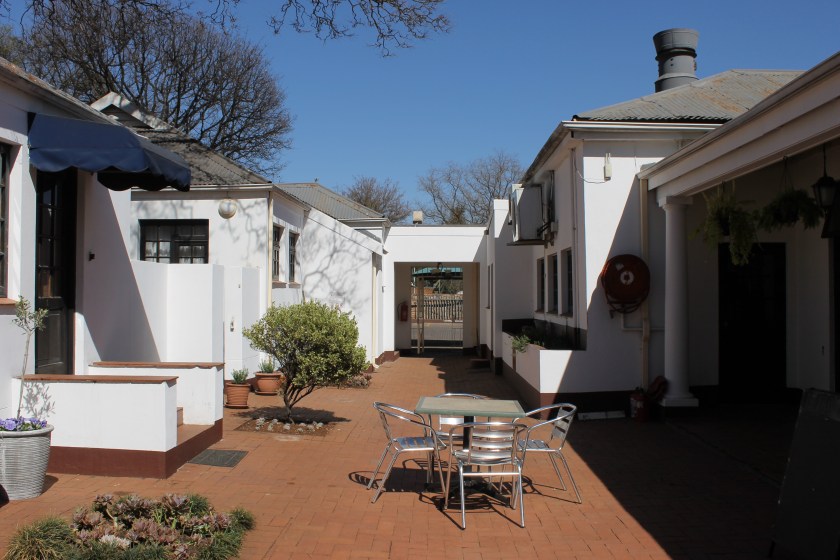
Our accommodation for the next 5 days would be the Old Johannian B&B on the college grounds, just separate to the school. It would prove cozy and comfortable, and gave us supremely convenient access to the library, along with a restaurant just steps away, with indoor and outdoor gathering areas we would use extensively for interviews.

IMG_4367

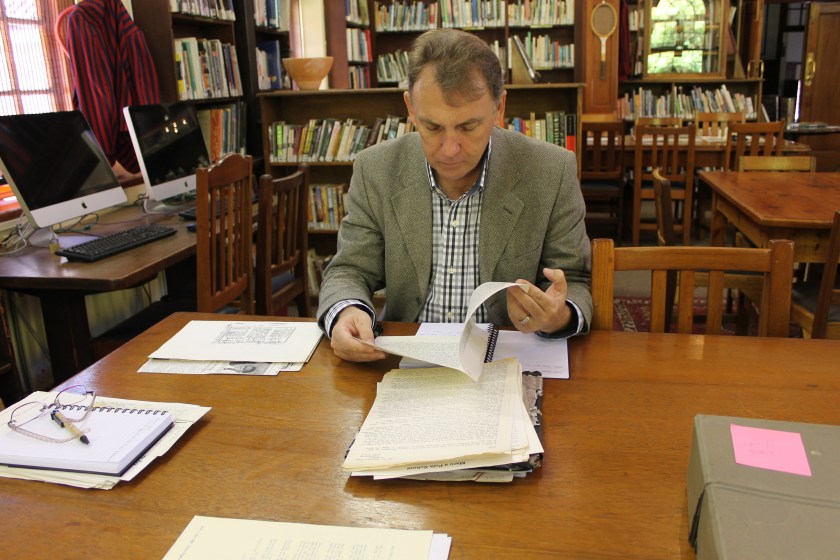
With only 3 hours sleep the night before due to jet lag, we were exhausted. It was much colder than we expected (around 60F), but springtime for South Africa, and there was no indoor heating other than plug-in electric heaters, so our time going through boxes and boxes of material from the school’s archives required several mugs of hot coffee and tea to keep the chill away.

IMG_4384


Still, the next 5 happy, busy days of research and interviews passed far too quickly, and by the time we had to leave for our flight to Port Elizabeth we felt we had made many new friends.

20171004_150118

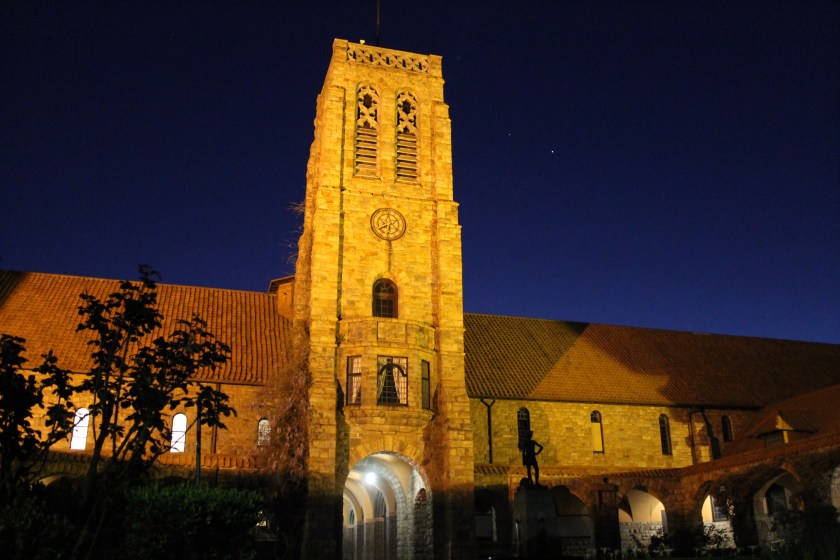
We were thrilled and excited beyond words to finally be in Africa, and the initial impression more than lived up to expectations. It was a rich and fertile source of story material with massive amounts of background and atmosphere, from the noise of the Hadeda (ha-dee-dha) birds, (Africans say the hadeda screech while they fly because they’re afraid of heights), to the bustle of the boys around the school. The Chapel alone was stunning and the brick buildings were redolent of the major English public schools.

20171004_124910

The tower clock chimes; the Chapel bells ring; the organ plays in the background. We’re in a safe bubble of English gentility. It’s hard to remember we’re also in the cradle of humanity, Africa.

IMG_4490

Next blog: Plettenberg Bay, where we see two of the continent’s “Big Seven”…and an unexpected troop of highway baboons!

Want to see more photos? Check out our Into Africa album on Veness Travel Media on Facebook. We will be adding to the album as each blog goes up.