We had been in Johannesburg for six full days, and those bloody hadeda birds really needed to go! There were so many noisy birds that there was no chance of sleeping through the dawn chorus, which went on, and on, and on.
On the sixth morning we were up at 7 a.m., washed and ready for breakfast at 7.30 in preparation for our flight to Port Elizabeth, along the southern coast. There was one more file we needed to look at in St. John’s library, and we needed at least one day with the Alexander Education Committee, so we decided to come back to St. John’s for two days before flying home.
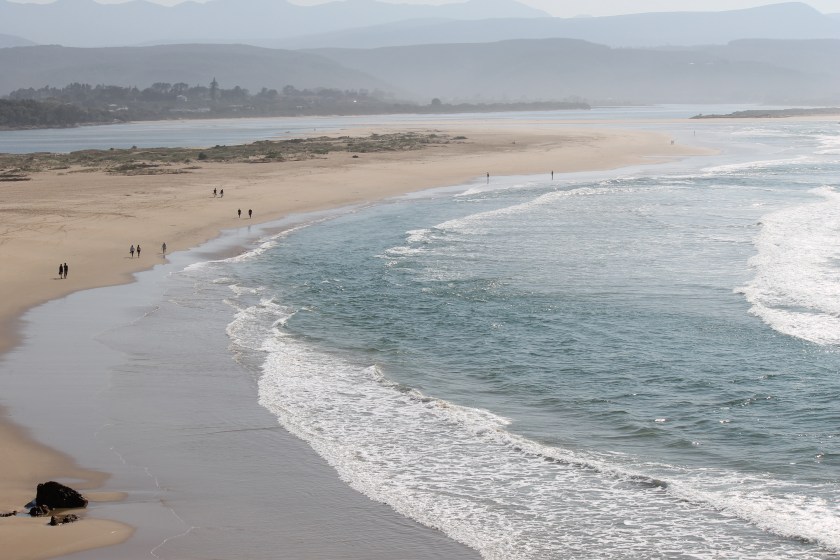
Our view of South Africa from 30,000 feet was bit hazy as we flew down to the coast, but we got a good look at the Transvaal–very flat, brown, dry, and desolate-looking at first, with few villages or cities, until we reached an area with sporadic mountain ranges, many in a circle or partial circle. The landscape gradually gave way to more mountains and more green, then suddenly a beach appeared alongside an inlet, and then we were out over the sea. Port Elizabeth was very built up, and the sea was an incredible bright blue.
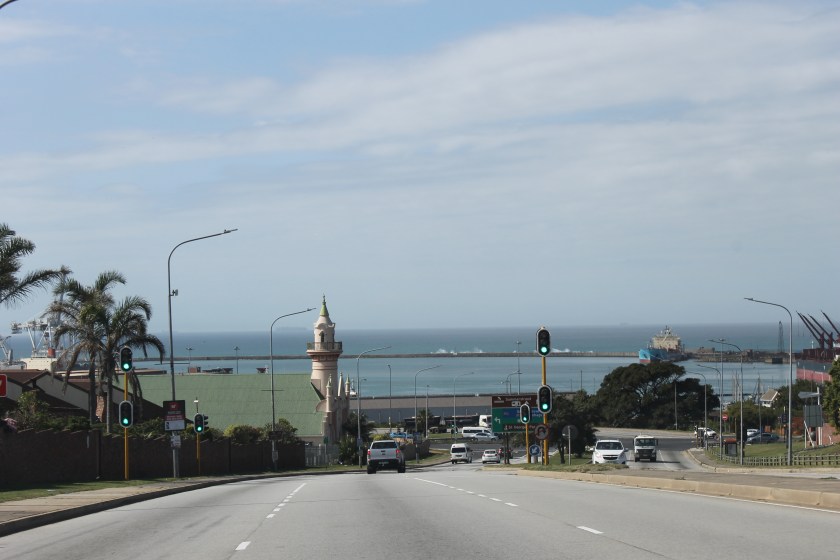
We picked up our rental car and headed west along the Garden Route to Plettenberg Bay, stopping to admire a massive gorge at Storms, the size of which does not translate well in pictures. Suffice to say, Simon couldn’t wait to rush out onto the bridge over the gorge while Susan insisted the fauna on terra firma needed serious inspection.

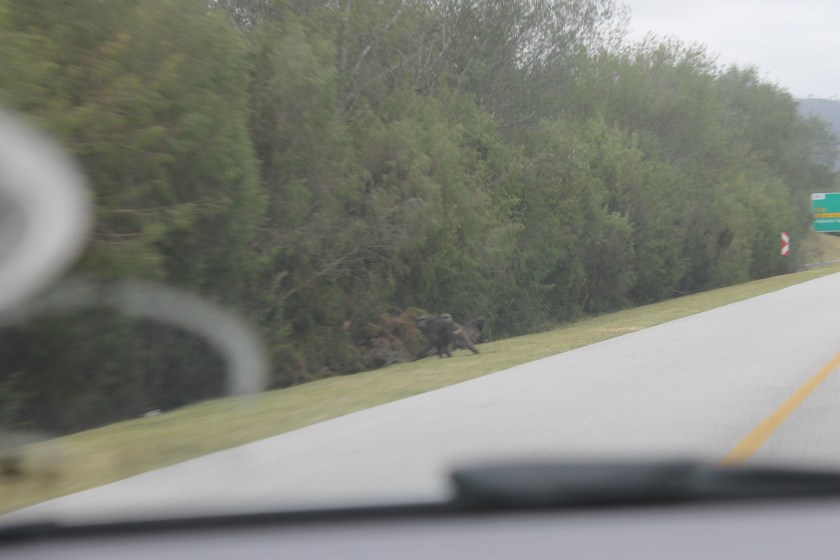
Further west we saw signs along the highway warning not to feed the baboons, and while we were wondering if baboons came up to the road we came across a small troop just off the highway. They were far too quick for Susan to grab her camera, and we ended up with the first of many pictures we like to call ‘The Butts of Africa’. There would be more baboons as we drove, but they were equally quick to turn tail just as the Canon came out. We had just begun to get used to cows, goats, and donkeys grazing along the roadsides and walking out in front of our car unexpectedly, but baboons…that was something special.
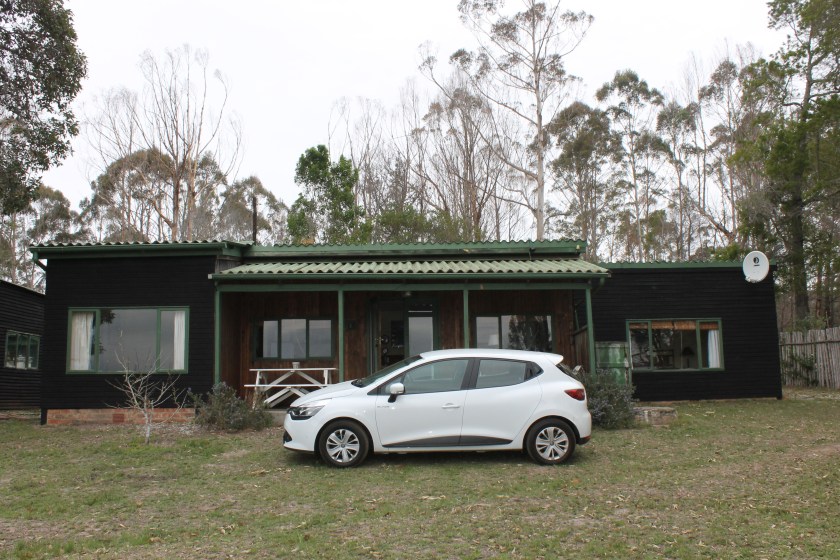
We were staying at David and Hilary Matthews’ guest house, David having been the deputy Headmaster at Maru-a-Pula, and Simon’s math teacher. When we reached their house—a pretty main house and separate guest house, nearly “off the grid” with rain being its only source of water, though it did have electricity—we were greeted by 3 dogs (Tim, Tom, and weenie dog Oscar). David’s nephew, David Matthews from the David Matthews band, stayed there with his wife and 3 kids the week before we arrived.
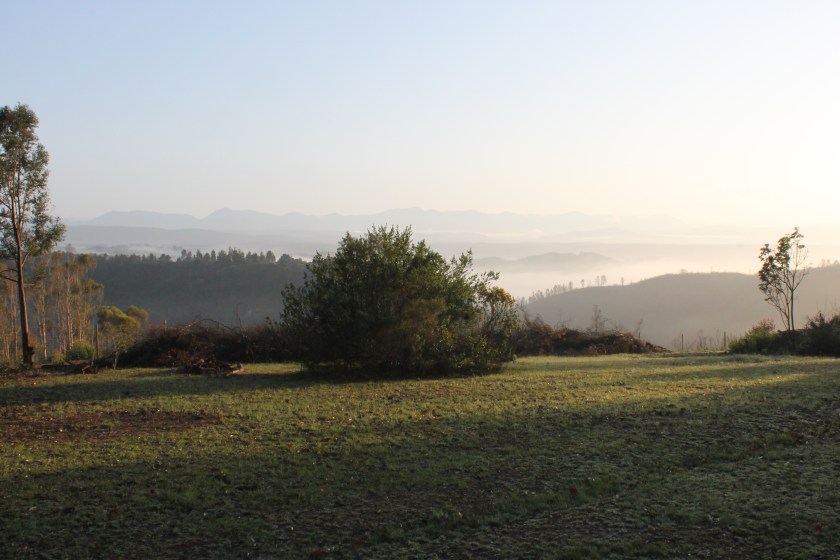
The whole set-up was extremely comfortable, with a jaw-dropping view of the Tsitsikamma mountain range.
Our main purpose in Plettenberg Bay was to see David Matthews again, and to interview him for the book. We would have three days to do that, and between interviews we were able to enjoy the stunning landscape, which was filled with birds, flowers, and happy, frolicking dogs. Oscar became Simon’s best buddy.

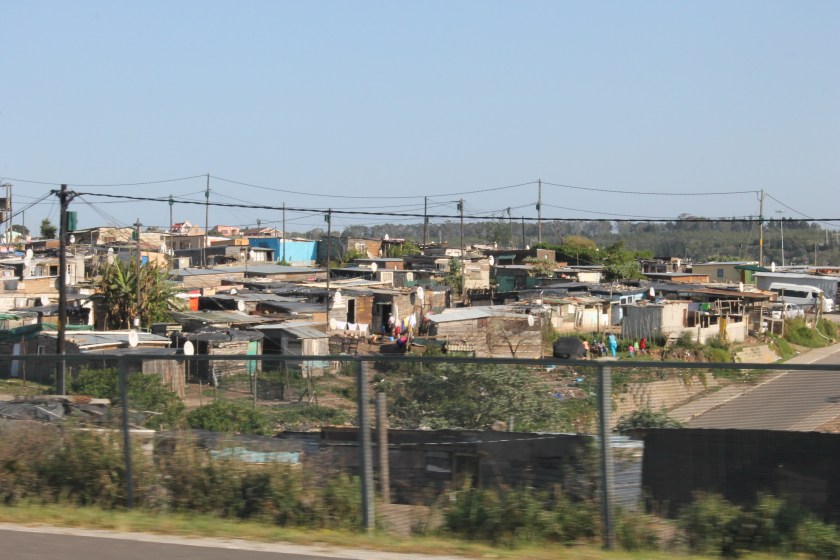
We also had time to drive around the city, and it was there that we had an up-close view of one of South Africa’s “informal settlements”. In the states we would call them slums, but to be honest, there is nothing in the States like the slums we saw in South Africa. Crowded, filthy, and as home-made and ramshackle as it comes, these “settlements” were absolutely heartbreaking; a terrible reminder of what happens to human beings when every right and every opportunity is stripped away from them.
We would be heartened to hear about the bursaries (payment of school fees) provided by Maru-a-Pula and St. John’s College that pulled a small percentage of the children from slums like these out of their terrible circumstances and gave them the education that would allow them to prosper personally, and in doing so, help their village or their “settlement”. We were disheartened—and terrified—to discover there are worse conditions in South Africa than this. More on that later.
Our first full morning we went to Lookout Deck, a seaside restaurant David and Hilary frequent, and as we sat down Hilary mentioned the fact that it was the bay where the Southern Right Whales come to give birth each September. Even as she spoke, we spotted two whales in the distance, lazily trolling along the bay. During the course of the meal, they moved closer and closer to the Lookout Deck and we were astonished at such a sight as we sat and had breakfast.
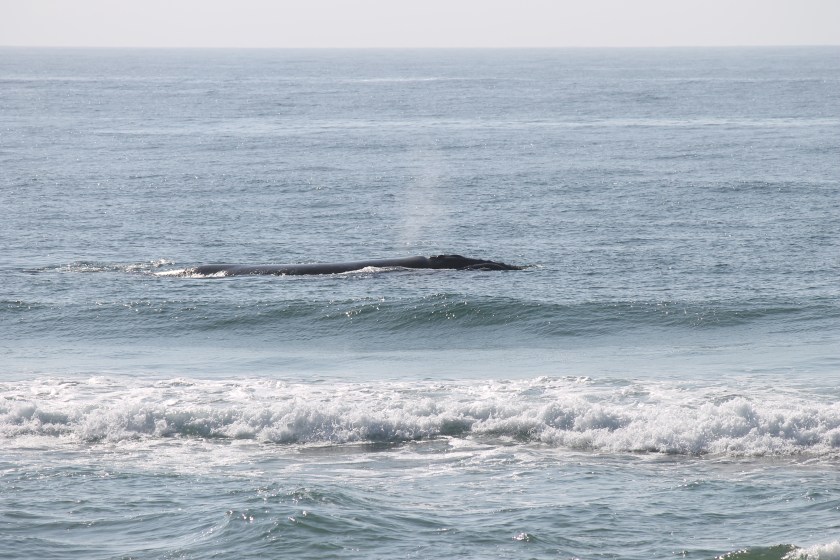
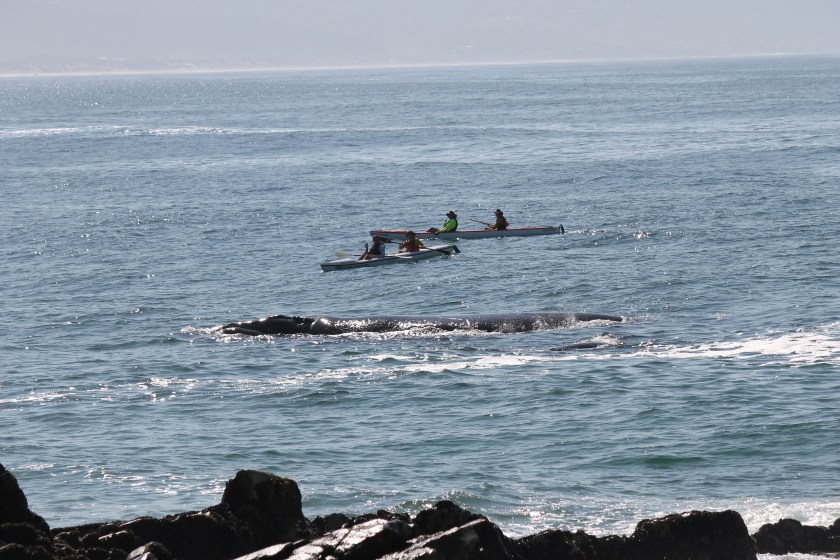
We had driven in separate cars because Hilary had to leave to catch a bus to Cape Town to mind their grandchild for a few days, and David had to take her there, so we explored the bay on our own for a while. We went down a pathway to the outcropping where the whales were hanging out, and spent a happy hour or more watching them, along with several other visitors. The two of them (mother and calf) came right up to the edge of the rocky point of the bay and lolled about in full view. We were able to walk out most of the way to the point, barely 100 yards from the whales, and got a truly stunning close-up of this wonder of nature.
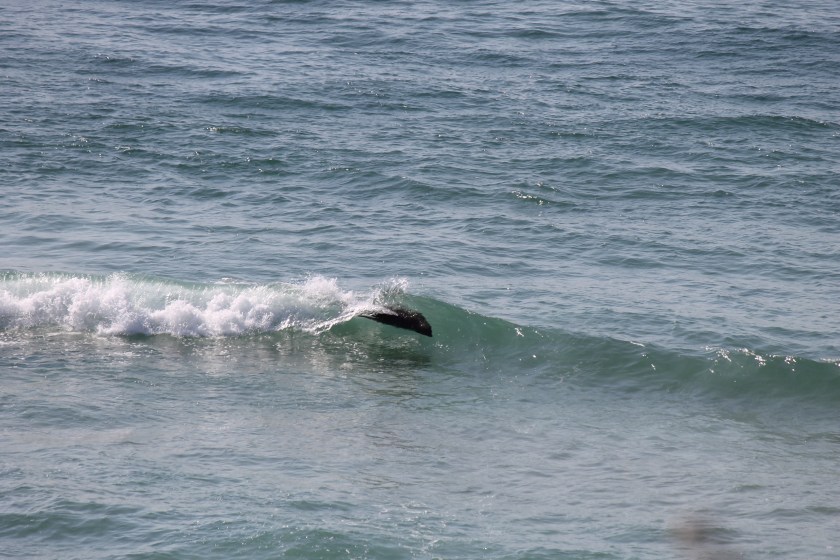
We also watched a seal surfing in the wave, and as we stood there laughing at its antics, a local joined us. During our conversation, she told us to go to Robberg Nature Reserve where we could look over the sea, get a view of the seal colony, and possibly see great white sharks. There was no way we were going to pass up that chance, so that was our next day’s adventure.
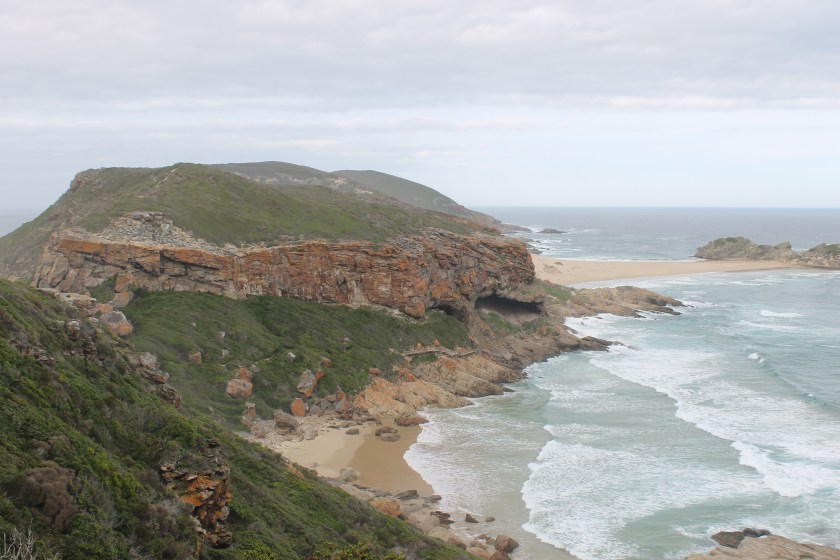
We paid our 80 Rand admission ($5.85 US) and entered the park the next afternoon. Robberg is a big rocky promontory in the middle of the Bay, and it was quite a tough hike along the cliffside, down some very precarious stone stairs, and along a much more secure boardwalk, but it was well worth the effort. As we were watching a group of seals playing in the water among the rocks at the base of the cliff, two women came by and asked if we’d seen the Great White shark trolling along the shoreline. We hadn’t, and were disappointed when they said it had already gone around the bend.

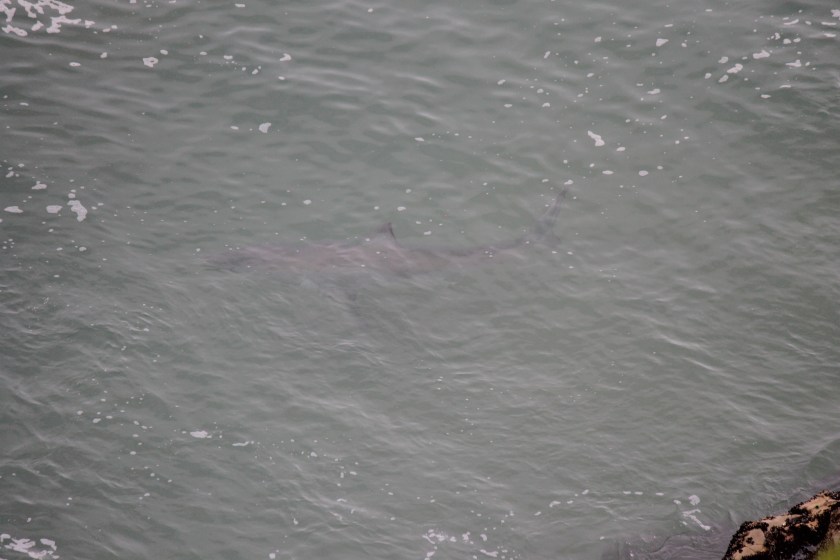
A few minutes later we were shocked to see its dark outline coming toward the seals below us. It was 10 feet long or more, and we could see its tail and fin clearly, and its body a bit less clearly. It cruised back and forth along the shoreline, and the seals were clearly agitated. It couldn’t quite get into the base of the rocks, and the seals weren’t taking any chances, so it was something of a stand-off. Had the sun been brighter we would have had a crystal-clear view. Even so, we could see every move, and we watched it swimming back and forth for about half an hour. It was something we’d hoped for, but didn’t really think we’d see. In doing so, we checked off two of Africa’s Big Seven (Southern Rights and Great Whites). Incredible!
It started to cloud over and got a bit dark, so we made our way back to the guest house, stopping to watch another group of seals playing in the surf at the lower edge of the long, empty beach. We saw a mongoose running across the road as we left, so we felt pretty lucky for our 80R.
We had a wonderful lamb dinner with David, compliments of Hilary’s hard work the night before, along with conversation that included the settlements near town. David explained they used their roofs as storage areas, which was why we’d see things like bedsteads or bicycles on them, and how the buildings we saw, if you can call them that, were actually a step up from the worst poverty. True squatters’ buildings were made of cardboard or any other material the people could scavenge. If it had a corrugated metal roof, it wasn’t a squatter’s home.
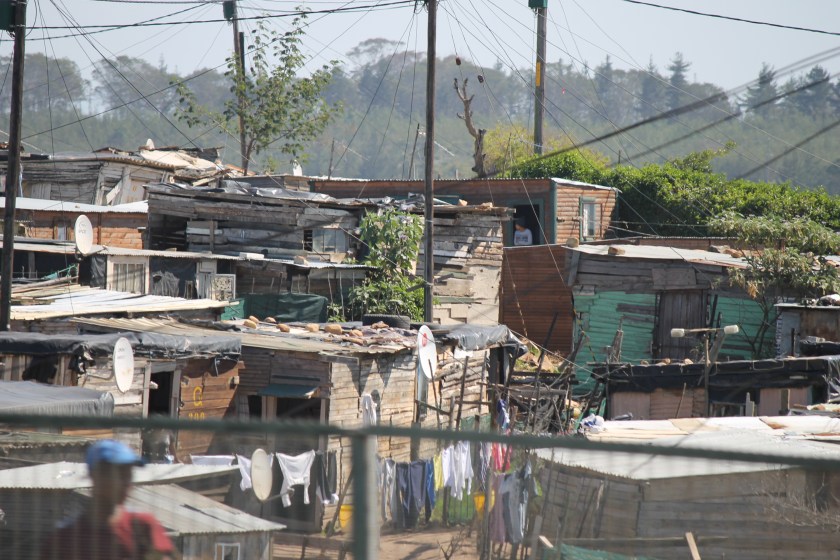
It was hard to imagine it could get much worse than the tiny one-room hovels we’d seen. Hard to imagine having to share an outhouse with god knows how many other people. Hard to imagine the filth all around, and your children playing around big junk piles. It was not hard to imagine how bitter and resentful you’d become when the people who took over your homeland were prospering while you lived behind chain link fence in the kind of dwelling most Americans wouldn’t find fit for their dog. I was reminded of our own shame at how we treated the native cultures in the United States. What is the answer? How do you right such tremendous wrong? How do you even start?
They were questions we would ask ourselves again and again, and would find partial answers to as we talked to the people who were actively working to change the situation. But until then, we enjoyed the good company of David, the beautiful place we were blessed to be surrounded by, and the knowledge that we’d be on the track of the remaining Big Five during our upcoming game drives at tomorrow’s destination, Addo Elephant National Park.
Next blog: Addo Elephant National Park, where the wildlife truly goes wild!
Want to see more photos? Check out our Into Africa album on Veness Travel Media on Facebook. We will be adding to the album as each blog goes up.


