While it’s still barely half-past October, and we haven’t had Halloween yet, let alone Thanksgiving, it is also the case that Orlando is busily gearing up for its busiest time of the year – the Holidays! That’s right, the big Christmas festive season is almost upon us, and that’s the cue for us to set up all the excitement in store in our latest blog for AttractionTickets.com, especially with our UK visitors in store. It all starts on November 2 and there is even more to look forward to than ever before. Don’t believe us? Check out the blog here: https://www.attractiontickets.com/en/latest-news/orlando/walt-disney-world-tickets/lets-go-christmas-crackers
Florida and Orlando have been in the international headlines for major hurricane events in the past few weeks, but that shouldn’t be a major deterrent for our visitors. We discuss why in our latest blog for AttractionTickets.com:
Time goes slow when you’re faced with a major, life-threatening hurricane. With Hurricane Milton churning a destructive path directly towards Florida, the hours take on a slow-motion effect that elongates the temporal nature of things. In short, minutes feel like hours, and hours an eternity.
For three full days, we kept a watching brief – on seven different TV channels! – as what was originally an area with just a “40 per cent chance” of developing into a tropical system flared up in dramatic fashion. With a speed that stunned meteorologists on all seven stations, Milton became a Goliath of the Gulf, a deadly mass of wind and rain.
Its steady move across the super-heated waters of the Gulf of Mexico became a mesmerizing fixation, from Category One to Category “HOW big?” with an inexorable menace. We were on first-name terms with a monster.
Each day, we were told how unusual it was for a hurricane to be barreling due east into the Sunshine State, feeding on the climate-enhanced unseasonal warmth. Each day we learned more about the mechanics and terminology of tropical storms. And each day we considered the options in our tree-lined avenue just northwest of Orlando. Should we stay or should we go?
Over on the coast at one of our go-to beach destinations of St Pete Beach, we heard the Mayor of Tampa broadcasting the bald, grim message of “If you stay, you will die.” She also added: “If you’re in a single-story house and we get a 15ft surge, which means that water comes in immediately, there’s nowhere to go. That home that you’re in ultimately will be a coffin.” They definitely weren’t sugar-coating anything. The storm surge associated with Milton promised to be record-breaking and life-taking, and “unsurvivable” became the word of the day, every day.
A full 110 miles inland, the storm surge was not our concern, albeit we viewed the threats to places we loved, such as Anna Maria Island, Longboat Key and Sarasota, with utter horror. Fresh from the widespread coastal devastation of Helene, no-one was in any doubt of what a direct hit would achieve after the extended ravages of the September hurricane.
But, away from the coast, our concerns were more about the effects of continuous hurricane-force winds on the ranks of the 50ft live oak trees dotted along the front yards of each house in the neighborhood. Oh, and tornados.
Yes, we had been fore-warned over and over again – from 20 years of hurricane seasons – that the storm, once ashore, was likely to generate the destructive forces of EF2’s, the small-scale but utterly devastating side-effects of the big storms; totally unpredictable and completely random. Tornados are the really scary thing about hurricanes, and the idea of one suddenly arriving in the middle of the night is the stuff of genuine nightmares.
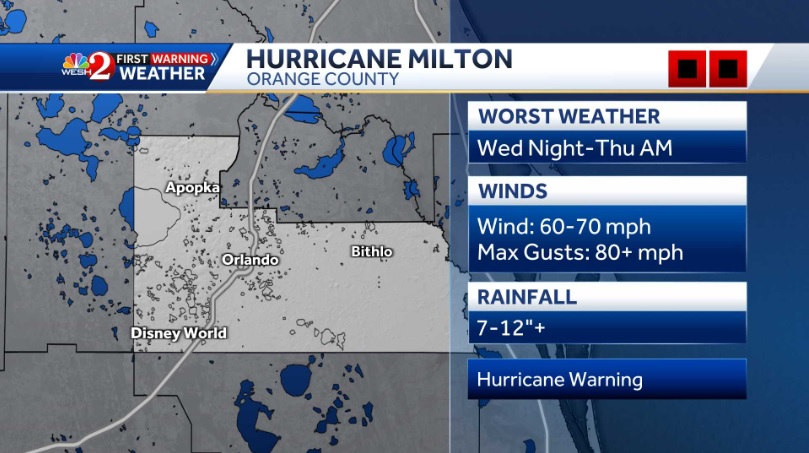
The odds were still in our favor, though. Northwest Orange County stayed consistently on the fringe of the main predicted path. We might get gusts of 80mph, but sustained winds would be “only” in the 60s. It was, in theory, a survivable level of force. True, we also faced up to a foot or more of torrential rain, the kind that comes down in massive sheets at up to three inches an hour, but, with our sub-division on a slope, and two enormous retention ponds to handle the overflow at the bottom of the street, that wasn’t a prime concern.
Therefore we weighed up the odds day by day, and stayed put. In truth, there was really nowhere safe within a few hours’ drive that we could bug out to. The – thankfully – mass exodus from the coast quickly filled up the hotels and motels of north Florida (where there were still places open after Helene), while many from the southwest headed east across Alligator Alley for the presumed sanctuary of Miami, which was just about the only location in south Florida that looked likely to escape the worst ravages of Milton.
Ah, Milton, what an inopportune name. The 17th century British poet of that name never made any mention of hurricanes that we know of, but his most famous work, Paradise Lost, was the kind of harbinger of doom that we could have done without. Our little patio bore rustic signage that insisted “Welcome to our piece of Paradise.” The unintentional irony of Milton’s poem was truly supreme.
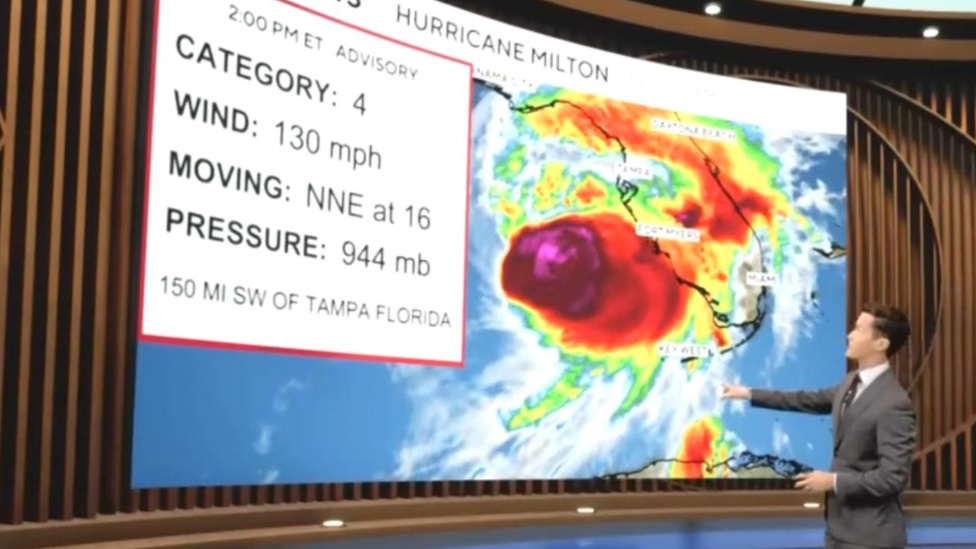
October 9 dawned much as its two predecessors had, overcast and drizzly. The TV stations – each of WFTV 9 Central Florida, Channel 13 Tampa Bay, Accuweather, Weather Nation, Fox Weather, CBS Miami and ABC News Live in turn – all told the same, looming story. Milton was still tracking steadily northeast, dropping from a Cat 5 to Cat 4 but with a widening stormfront as it closed in on land.
There was the possibility of wind shear and dryer air feeding in, though, which provided hope of a late lessening of Milton’s intensity. Wind shear – the enemy of all major storms – was one of the terms we had come to have an intimate understanding of thanks to the meteorological outpourings of the previous days. We cheered for wind shear and rooted for dry air as the possible twin saviors of the state.
Neither force had any appreciable effect on Milton’s forward march, though. As noon passed, the localized rain dried up for an hour, a seeming olive branch for our location from the weather gods. Not so on the coast. The weather radar showed thick, angry orange-red bands of monsoon-like rain, and an increasing smattering of tornado warnings for much of east coast Florida, while those ever-perky meteorologists talked of “tornadic supercells,” “areas of inundation,” “mandatory evacuations,” and “high-tide cycles” (which, apparently, go hand in hand with “record storm surge”).
And still the time crawled on. At 1:00pm it felt like we’d already been awake all day, held in a state of stasis by the oncoming Armageddon. We were getting wind gusts of around 15mph, but nothing to seriously disturb the foliage, and certainly nothing to make us second-guess our decision to stay. Yet.
At 1:05pm we had our first Tornado Watch alarm on the weather radio, a little gadget that makes up for the fact that Florida doesn’t have tornado sirens like the states to the north that experience more – and bigger – tornados as a matter of course. The radio warning would wake the dead, let alone anyone sleeping, hence we don’t expect to get much shut-eye tonight. A Tornado Watch is only an indication that the conditions are ripe for tornados to form. If we get a Tornado Warning, it’s time to hunker down. At 1:20pm, there was a Tornado Warning for Polk County, 70 miles south of us. And then two. And then four. After 30 warnings, we unplugged the radio. You can only listen to the same warning a few times before it drives you plum nutty.
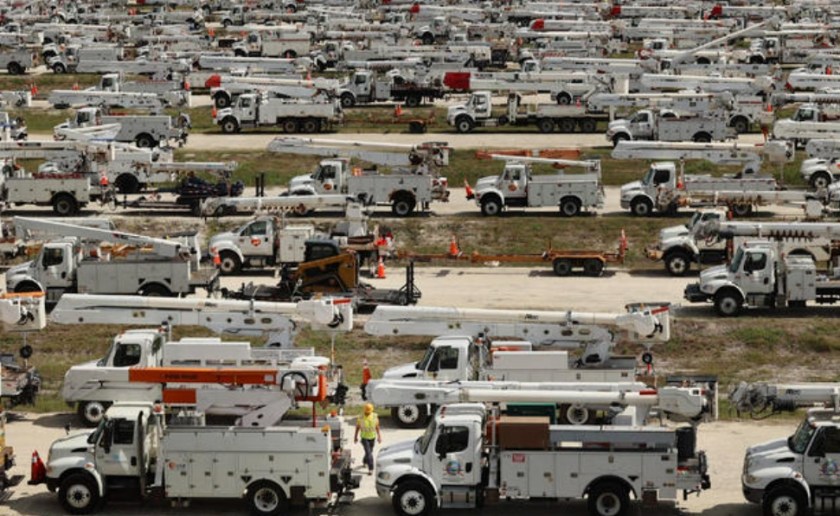
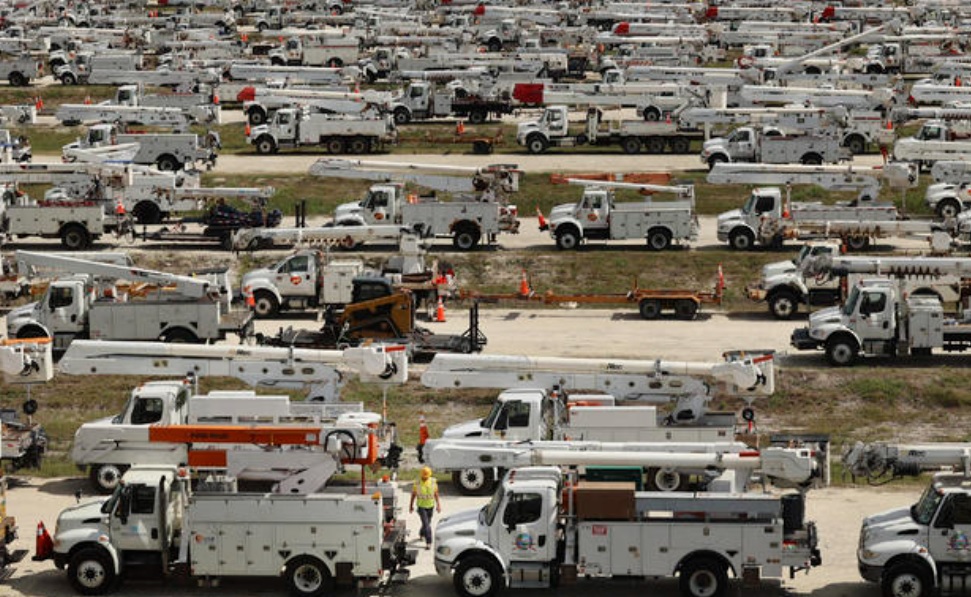
As part of every hurricane preparedness build-up, there are now hundreds of electrical repair crews, all waiting to see exactly where they will be needed
Oh, and before we go any further, for anyone wondering why we don’t just hunker down in the basement against the possibility of an EF2, it’s because there ARE no basements in Florida. None. Here, on what is basically a narrow strip of alluvial sand that sticks out into the sea, if you tried to dig one, you’d have an indoor swimming pool instead of a basement.
At 1:25pm, the first heavy rain arrived. Milton itself was still a good 300 miles away but those outer bands sweeping across the southern half of the state were now starting to stretch their flood-inducing tentacles well to the north, albeit in sporadic bursts.
On local station WFTV, the two main meteorologists were fast working themselves into a frenzy keeping up with a multitude of tornado warnings popping up through south and east-coast Florida and steadily working their way north. Within half an hour, they were juggling with a dozen or more warnings, each one moving steadily closer to Orange County and Metro Orlando.
The word that kept popping up was “Unusual.” It was “unusual” to see such strong tornado indications from the outer bands of a hurricane in October. It was “unusual” to see them on the ground longer than a couple of minutes. And it was “unusual” to be seeing so many in such a short space of time. For the deadly Hurricane Ian in 2022, there had been a round dozen confirmed tornados in Florida in total. Now, we had potentially more than 12 in just a few hours.
Of course, by “unusual” they meant “screamingly extreme and insanely dangerous.” They were just being polite. By 3:30pm, we had the first tornado warning for Orange County, although, happily, it was way over in the rural southeast corner of the county, away from any major population centers. But, with Milton still at least five hours away from landfall, it was a sobering burst of tornadic torment. This, too, was “unusual.” Sadly, for at least six people in the Port St Lucie area, it was tragically fatal, caught by the spawn of Milton in an extraordinary and unforeseen outbreak.
The skies started to darken noticeably around 5:00pm, and not just because sunset was approaching (the actual sundown hour was officially listed as 7:02pm). One of the biggest of Milton’s outer bands was passing across Orange County and the dark-grey, rain-filled skies were being pulled across the region like a gigantic sun shade. Lake Nona, the vibrant, high-tech community in south-central Orange virtually disappeared under a particularly angry orange-red blob on the weather radar.
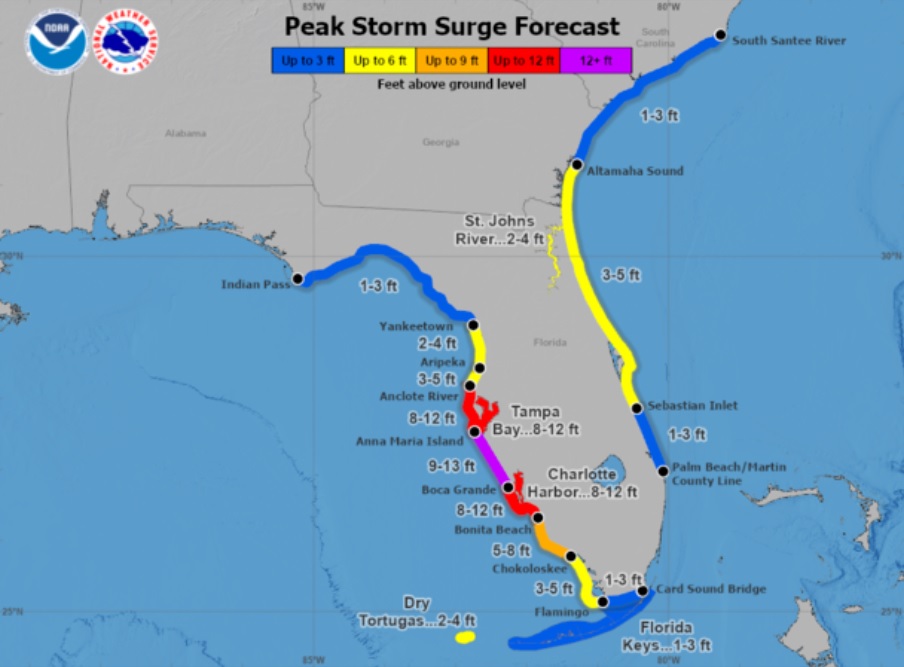
The 5:00pm National Hurricane Center update also gave us an important revision of the storm’s track, for the first time showing it as “probably” coming ashore on or just south of the city of Sarasota, which, if it holds, will be a major relief for a Tampa Bay that had been warned to prepare for a 10-15ft storm surge. Instead, it will be on the flip side of the surge and should escape the kind of ravages that had the mayor giving her dire warnings of death and destruction only a few hours earlier. Beautiful Anna Maria Island may also escape the worst of it, too.
Conversely, Sarasota itself, plus Venice Beach, Englewood, Port Charlotte, Punta Gorda, Fort Myers and the islands of Sanibel and Captiva could all be facing utter ruin from the massive storm surge generated on the southern side of the storm. At this stage, Milton has been fueled by several hundred miles of super-warm Gulf waters, and the evening rendezvous with the Florida coast promises to be apocalyptic for them, possibly even worse than the damage wrought by Ian just two years ago.
By now, we have prepared our little ‘escape room,’ in a corner of the passageway from the lounge into the bedroom. We have hauled a mattress out of the spare room and propped it up ready to jump behind (with some of our essential valuables, documents, phones, flashlights and external hard-drives) in case of a night-time tornado. The bathtubs have been filled with water to use to flush the toilets if the water supply is cut off, and we have a case of bottled water and plenty of fruit and sandwich fixin’s to keep us going if the power also goes out. The fact we are on the underground power grid of the neighboring high school – which is an official evacuation center, and hence has its own back-up generator – is in our favor, though.
At 7:00pm., wind gusts are up to 27mph, but we’ve been told to expect 60-plus during the night, albeit some of the estimates are dropping in light of Milton reaching land a good few hours ahead of the original projected time of midnight to 2:00am, and as a Category 3, not 4. The TV pictures of the Gulf coast are not so heartening, though, while the tornado outbreak to the south and east has the meteorologists scrambling for comparisons. With 17-plus confirmed tornados, it is by far the biggest outbreak the state has ever seen in a day, and there are some eye-popping videos of the twisters crossing main roads, downing power lines and wrecking buildings. This level of tornadic action was definitely NOT on Florida’s pre-hurricane bingo card, and the TV talking heads are at a slight loss to explain this particular extreme. The best they can manage is that the highly-charged outer bands of Milton ran headlong into the wind shear of an advancing cold front descending through the state, leading to this unprecedented spate of tornados.
Rain remains high on the agenda, however, especially in the area immediately north of the eye of the hurricane. The St Petersburg/Tampa area has been warned to expect up to 18 inches of precipitation tonight, with that intense layer of wind-driven cloud also expected to track inland towards us in the Orlando area. Once again, we’re happy to live on an appreciably sloping road, which is most assuredly not the case for most of flat, featureless Orlando.
16 Hours Later…..
We shut down our computers around 9.00pm and hunkered down in front of the TV next to our little “safe space,” alternating the latest news with episodes of The Great British Baking Show to provide some welcome relief from the growing onslaught. The coastal areas looked suitably grim, but it was hard to follow the progress of the hurricane once ashore as the TV stations all wanted to make their reporters the star of the show and, frankly, it became embarrassing watching them venturing out into the wind and rain desperate to prove their ability to defy the weather.
And there was some serious wind and rain. While Milton posiively lashed the coast, it still had plenty left as it moved inland from Siesta Key. By midnight, Orange County was feeling the force, with wind gusts up to 86mph, and sustained winds around 65. Being that bit further to the north, we experienced gusts approaching 80mph and sustained winds at 55-60. And if that sounds just a touch, well, pedestrian, we can certainly attest to no such thing. For fully four hours, the storm positively howled through our neighborhood, ensuring few people got to sleep and we kept casting anxious glances at the rear windows, which seemed to be taking the full brunt of those alarming gusts.
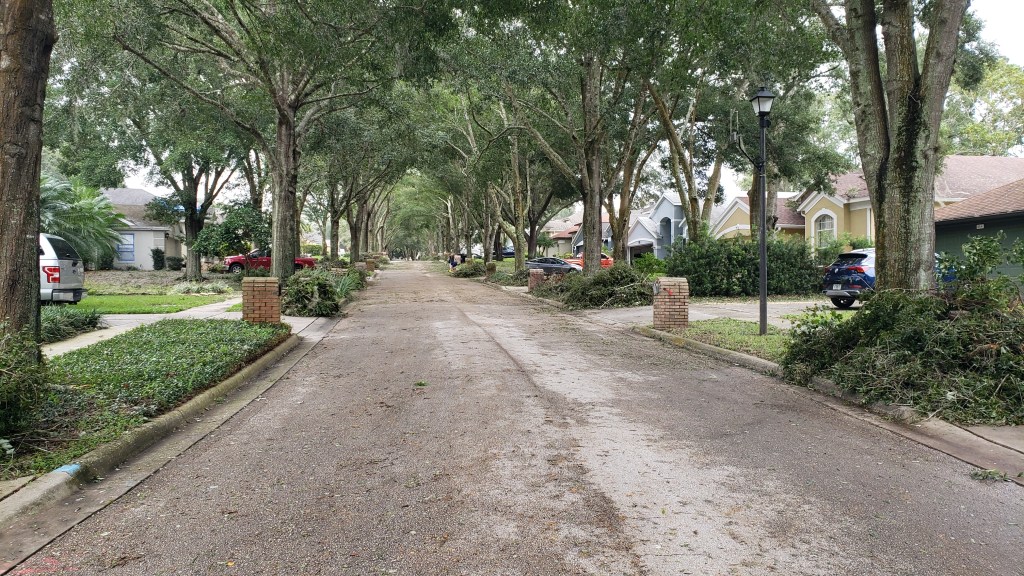
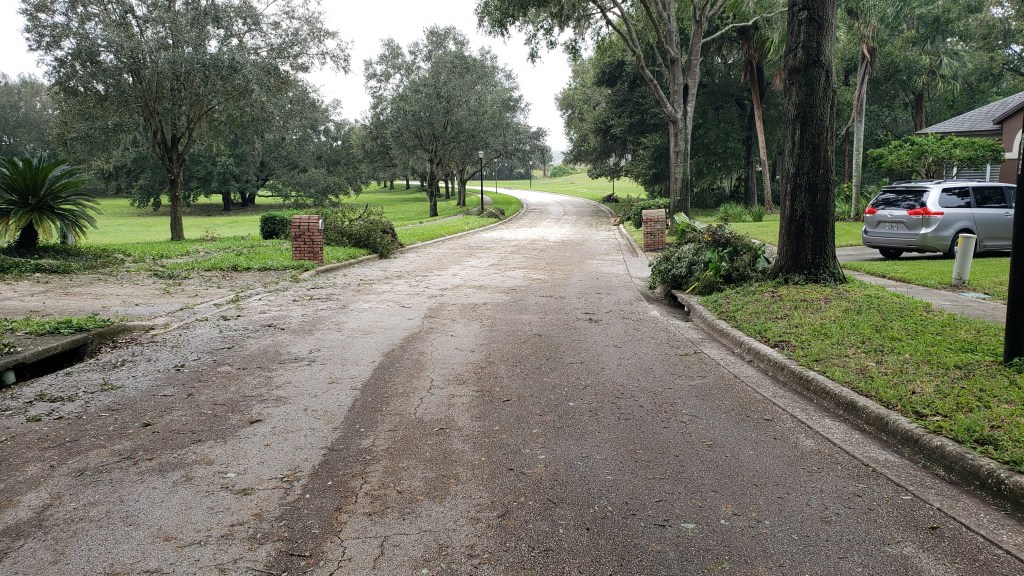
8:00am looking up our street8:00am looking down our street
Surprisingly, there were no further tornado warnings, although our radio kept informing us that “flash-flooding” was occurring in counties across the state. If there was one thing we didn’t need to worry about in our location, it was flooding, so we ended up unplugging the radio again and taking our chances on not needing any further “warnings.” We still had enough to be alarmed about with the way the house creaked and groaned under the constant pressure from the storm, which may have been losing some power but still felt distinctly scary. The occasional muffled thump was also unnerving in the dark, and we wondered what it might be like under a Category 4 storm (like the Great Miami Hurricane of 1926) or even a Cat 5 (like the Florida Keys Labor Day Hurricane of 1935). The thought was absolutely terrifying.
Daylight at 7:25am brought our first real calm since 5:00pm the previous evening. The winds had all but died down, the rain was a mere annoying drizzle, and we could see the malice of Milton. Our street was full of tree debris, mainly leaves and small branches, but with a few more substantial tree limbs mixed in. Our landscape was positively groaning under the weight of 14 inches of rain – which came down like craze-driven sheets at Milton’s height – and we would be able to see, when we ventured to the bottom of the road, that the occasional “thumps” in the dark were a pair of trees that had come down right across the main road out of our sub-division. Amazingly, someone had already been out with a chainsaw, and there was still room for cars to squeeze through.
Driving out of our road, with the two downed trees on the left
The full sub-division had been hit with more trees downed in a handful of places, and general tree debris pretty much lined every road, but there was nothing catastrophic to report, and traffic was able to navigate fairly easily, albeit slightly slower than usual.
More tree debris through the neighborhood
It felt like the whole world had been watching Milton with grim fascination, and there had certainly been plenty to be horrified by, with at least a dozen deaths and large-scale destruction in multiple points along the coast. Flash flooding had been a very real and ongoing concern. Tampa had been spared the full, cataclysmic forecast of doom, but the state’s record outbreak of tornados had added unexpected weight to the disaster-tinged side of the ledger. In short, Milton had lived up to its billing as a monstrous chaos creator, if not quite “the storm of the century” predicted by a few. Unlike Helene, this latest cyclone has not generated the same widespread devastation, but there are places – notably Sarasota, Fort Myers and St Petersburg – that are going to need a lot of help to bounce back.
LOTS of tree debris
In the final analysis, we got a crash course (no pun intended) in hurricane meteorology, a degree-level class for understanding the workings of these monster storms, and we will be even better prepared for the next one. Because we know there will be a Next One, and one after that, and even more besides. Because, despite the efforts of Governor Ron DeSantis and his GOP cronies, climate change will continue to be the biggest issue facing the world, and it cannot just be erased from public discourse and school curriculums. The weather WILL go on being increasingly extreme, and Florida WILL continue to bear the scars. At some point, the public will wise up and Reckless Ron and his ilk will be run out of the state on a rail. And it won’t be a moment too soon.
Looking up our street AFTER a few hours’ of neighborhood clean-upLooking down the street after clean-up
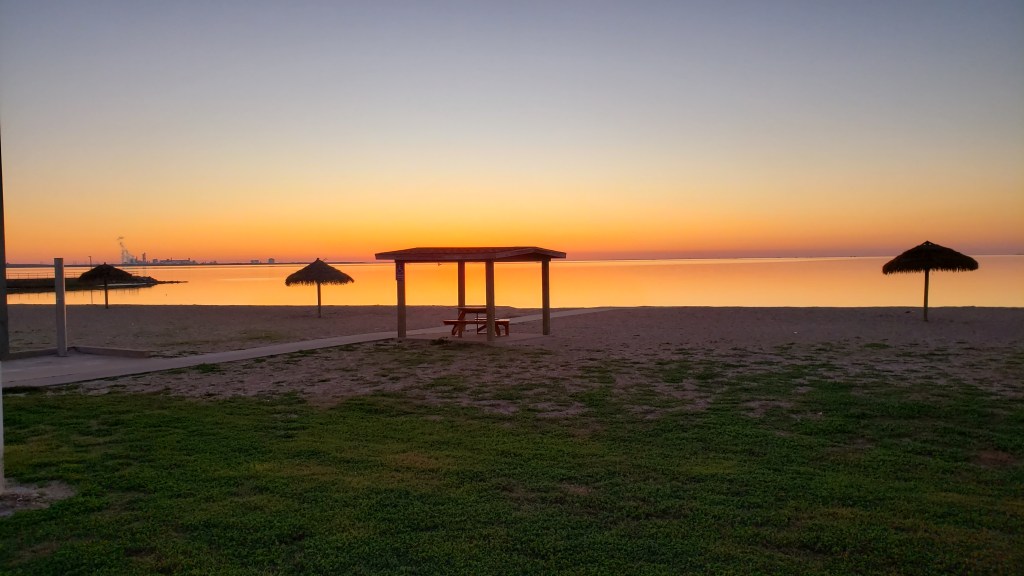
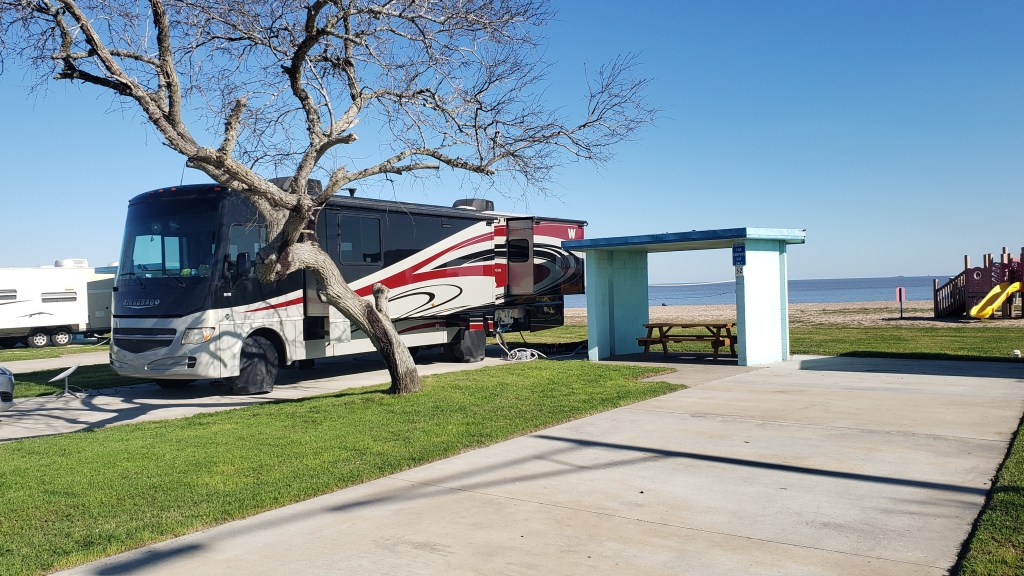
It’s been a while since we posted one of our snapshot videos from the big Year On The Road RV adventure, but here’s one that picks up the story along the Texas Coast, and the surprising, idyllic beach at Port Lavaca.
We were only here a few days, but the Lighthouse Beach RV Park proved a gorgeous place to stay, practically right on the city beach and with great views in each direction.
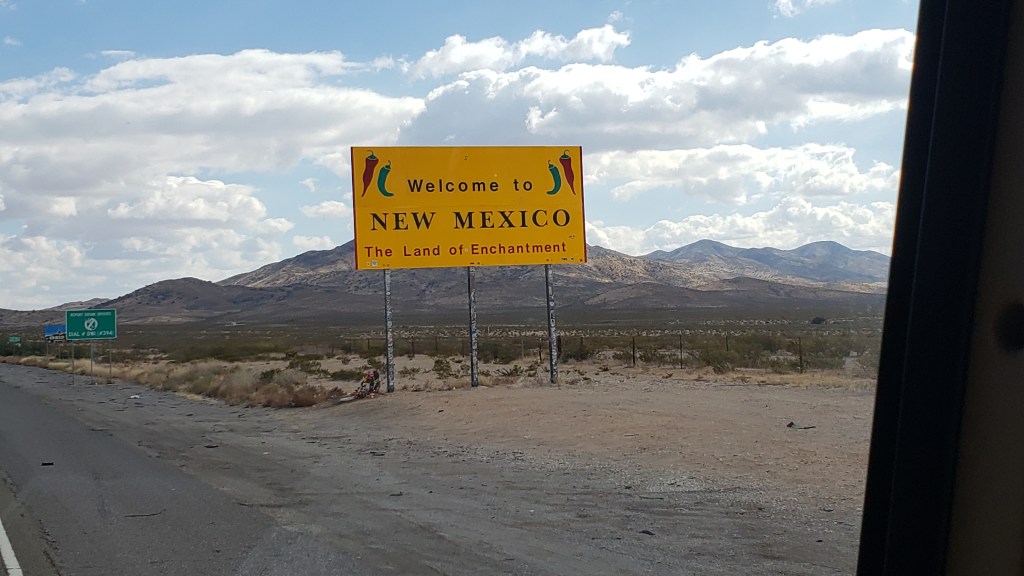
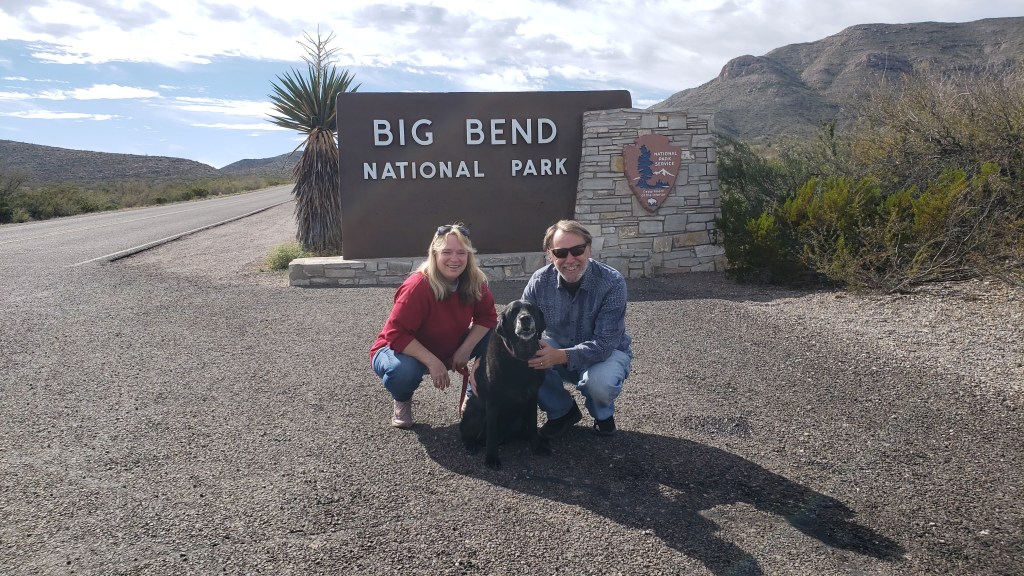
Our big year-long RV adventure has reached the ninth month of the epic journey in our exclusive series for The Independent, featuring the month-long stretch from New Mexico to the southwest Texas coast.
It includes time in superb Santa Fe, stunning White Sands National Park and the cowboy country around Las Cruces, as well as Alpine in Texas, the astounding Big Bend National Park, the city of San Antonio and glittering South Padre Island.
OK, we’re back on our regular Orlando beat, and here is exactly the kind of thing we love about this city…
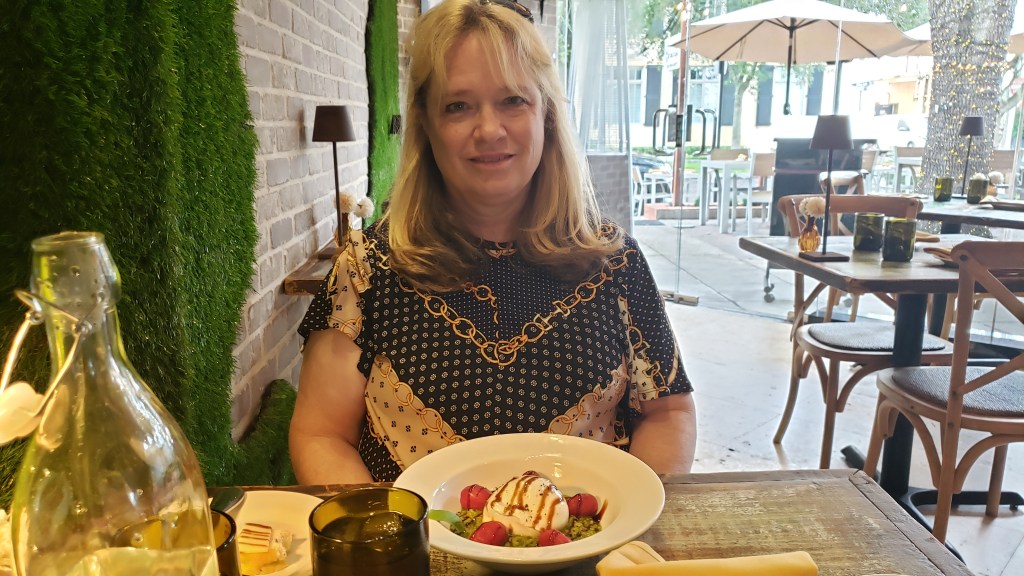
We have just finished digesting our first big taste of this year’s Visit Orlando Magical Dining season (presented by Orlando Health), and we’re ready to make Braccia Ristorante in Winter Park our new ‘Must Try’ for 2024.
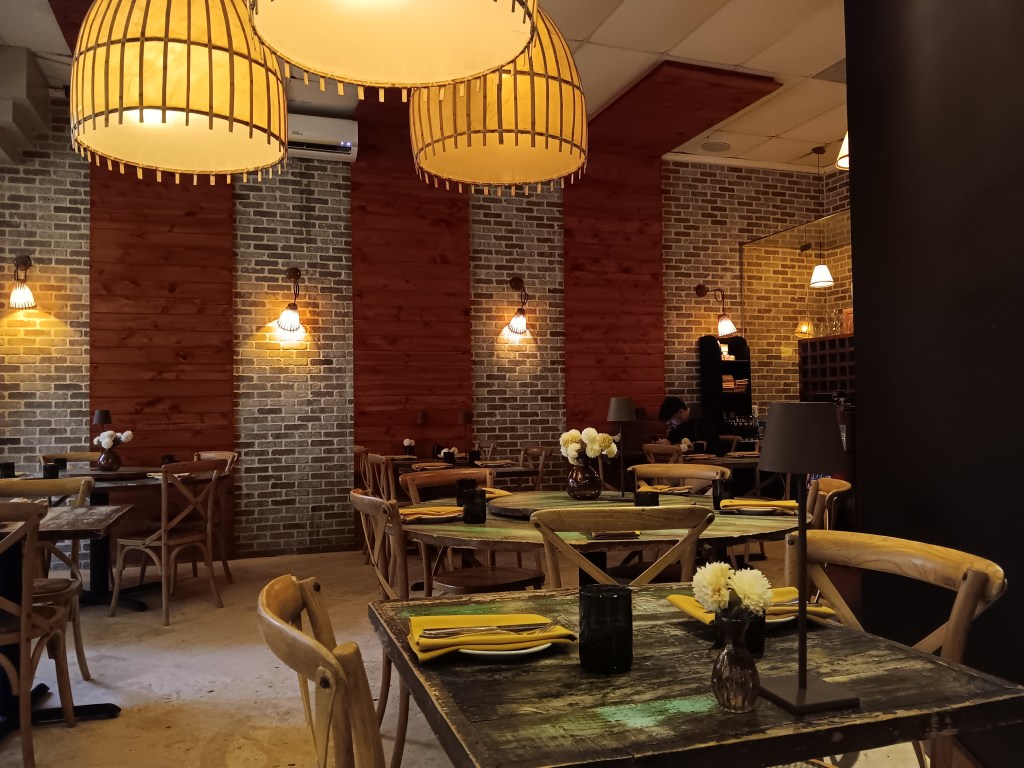
Although it opened in 2015, Braccia’s location, just off Park Avenue on E. Morse Boulevard, means it is a little tucked away and harder to find than most, but it’s definitely well worth seeking out. It boasts a lovely outdoor patio up front, and a cozy and inviting interior, with some rustic styling and hints of the Italian cuisine it specializes in (albeit with a few tweaks from its original Brazilian owner). There has just been a change of ownership, and the liquor license hasn’t transferred yet, but otherwise things have stayed the same, at least for the time being (the new owners have said they plan to “make changes to the product quality,” according to the Orlando Weekly).
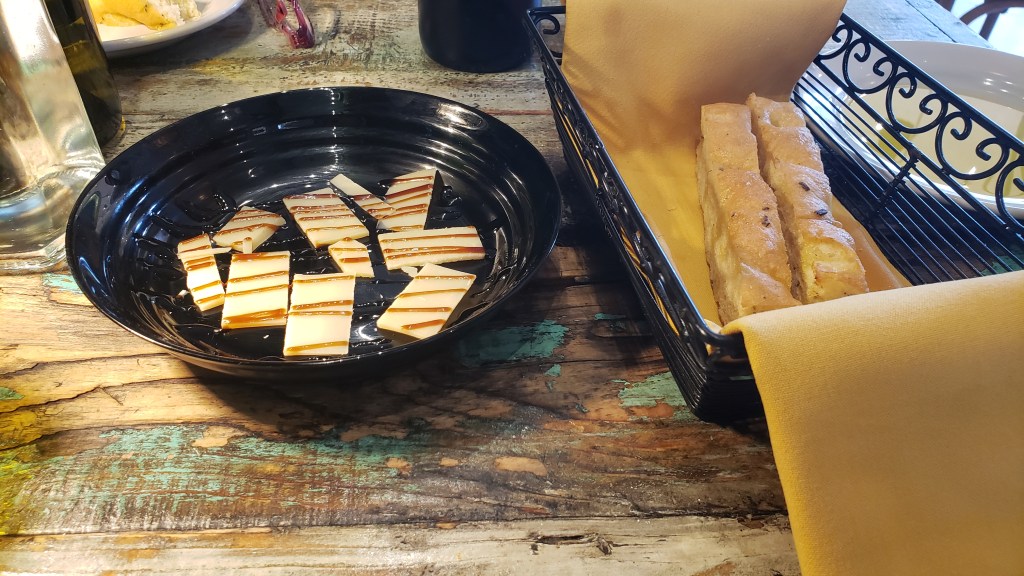
We certainly couldn’t fault the quality, though, or the excellent service, as we enjoyed a leisurely late lunch this week (BTW, we have no external photos, as Winter Park was hit by a positively huge thunderstorm just as we sat down, hence we were happy to be inside!). Some tasty fresh focaccia was accompanied by a tangy amuse bouche of parmesan chips with a balsamic drizzle as an introductory taste of things to come while we decided what to have from the Magical Dining Menu (3 courses for a bargain $40, not including drinks and gratuity).
Braccia’s choice was:
Appetizers – Bruschetta; Caprese Salad; Caesar Salad; Braccia Shrimp. Upgrade: Carpaccio +$5; Entrees – Shrimp Risotto; Pumpkin Ravioli with Salmon; Penne with Parma; Funghi Risotto (add filet mignon or rack of lamb +$10) Upgrade: Gnocchi stuffed with cheese w/filet mignon +$10; Desserts – Lava Cake; Braccia Special; Churros.
Between us, we opted for the Caprese. and Braccia Shrimp; Pumpkin Ravioli with Salmon. and Shrimp Risotto; and Lava Cake and Braccia Special, which gave us a really good spread of the menu.
The Caprese featured a very generous helping of creamy, melt-in-the-mouth burrata with fresh cherry tomatoes in a luscious pesto base and definitely had the taste of Italy, while the Braccia Shrimp came with six plump shrimp in what seemed like a rich pesto broth (they call it a pesto sauce, but it was thicker than most sauces) and was absolutely one of the best tastes of the day.
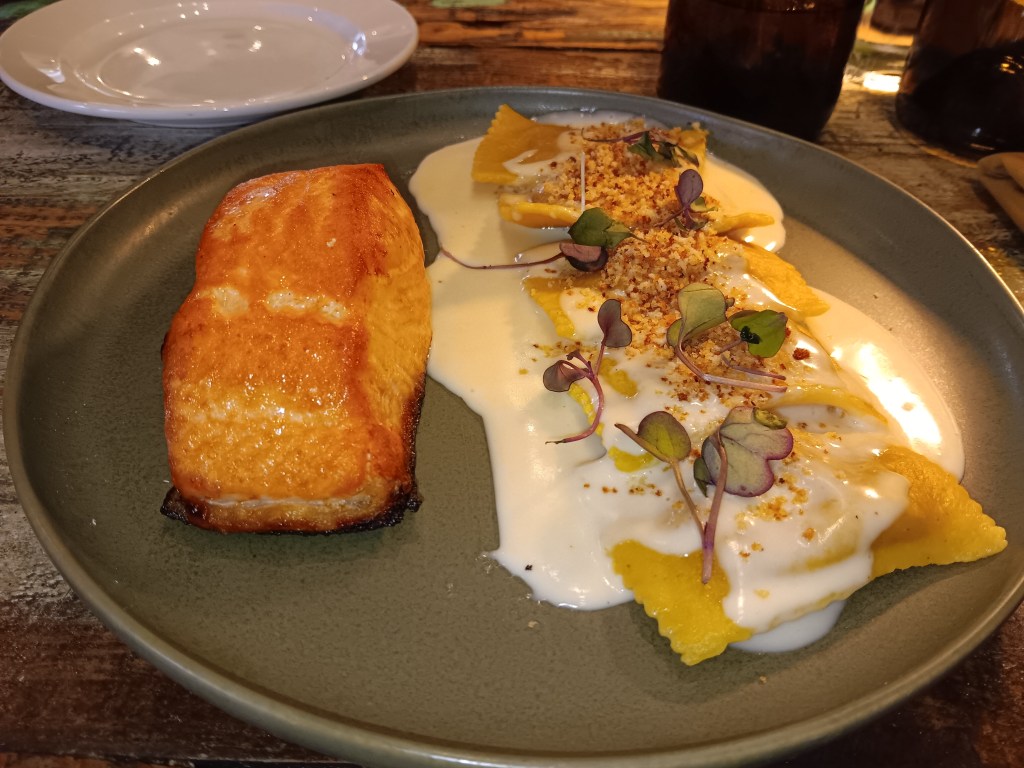
The main courses were quite a contrast – the pumpkin risotto (five elegant parcels of perfectly-cooked in-house pasta in a cream sauce topped with breaded crumbs and leafy greens) was plated alongside a substantial piece of pan-fried salmon that was beautifully succulent and tasty – a really substantial plateful – while the risotto came in a delicate shrimp sauce topped by four extra-large breaded shrimp that had plenty of eye appeal. On the regular menu, the salmon is referred to as a “side” dish, but this was more like having two entrees on one plate! The $40 was looking pretty good at this stage, and it was about to get better.
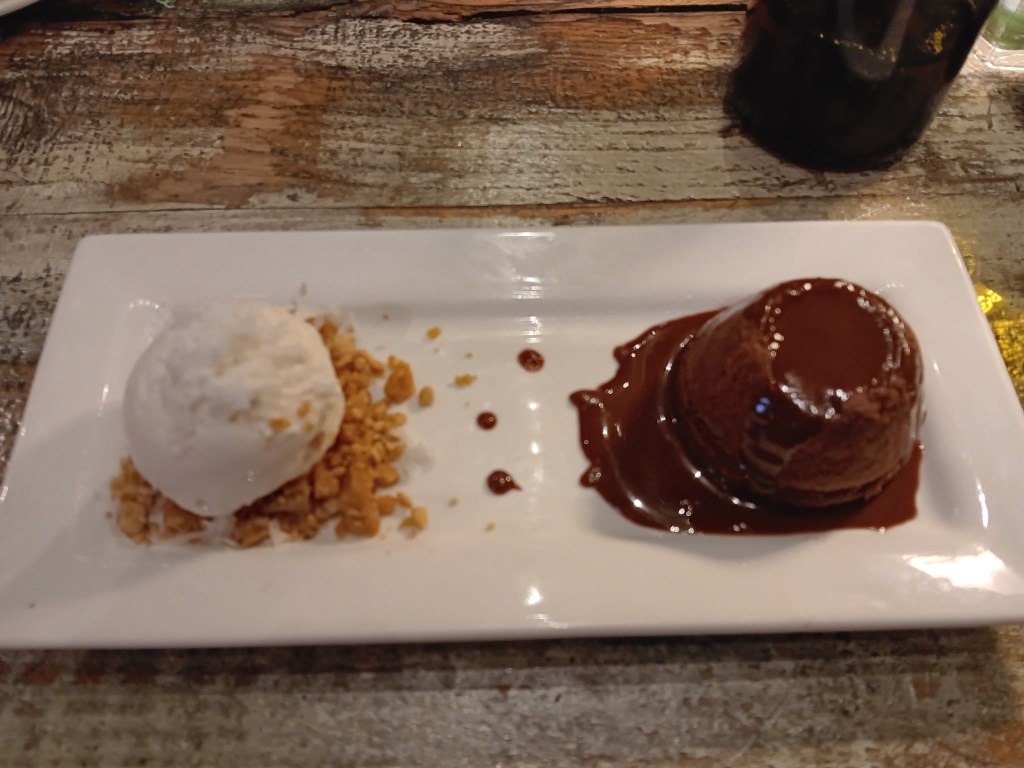
Regular readers will know we rarely (as in, hardly ever) indulge in a dessert course if we’ve had an appetizer and entree, but Magical Dining invites us to push the envelope (!), so we valiantly battled on to the final course. And we’re so glad we did. While the Braccia Special certainly lived up to the ‘special’ part of its name (with a divine blend of their house-made soft cheese ice cream – almost a blend of traditional ice cream and cheesecake – topped with guava syrup and chestnut), the Lava Cake was the undoubted winner. Its ultra-light sponge and perfectly smooth chocolate sauce (which we quickly dubbed mega ooze-worthy) was paired with a delectable coconut ice cream for a taste sensation made in heaven. This would have been worth coming in for on its own, but with all six dishes more than living up to the Magical Dining reputation, this was exactly why we love this program.
To start with, we probably still wouldn’t have discovered Braccia in its off-Park Avenue location, and we almost certainly wouldn’t have gone for that extra course. Hence, at $40 per person, we thought this was outstanding value, for quantity AND quality, and we will definitely look out for it the next time we are in Winter Park.
And remember, $1 from every meal ($2 on each of the $60 menus) goes to the chosen Visit Orlando charity of the year, in this case The Mustard Seed of Central Florida, helping rebuild the lives of families and individuals who have suffered disaster or personal tragedy by providing household furnishings and clothing while being environmentally responsible to the Central Florida community. So your dining dollars also help a great cause.
Need more info – and all of the record 150 restaurants on this year’s list? Check out the full website here: https://www.magicaldining.com/.
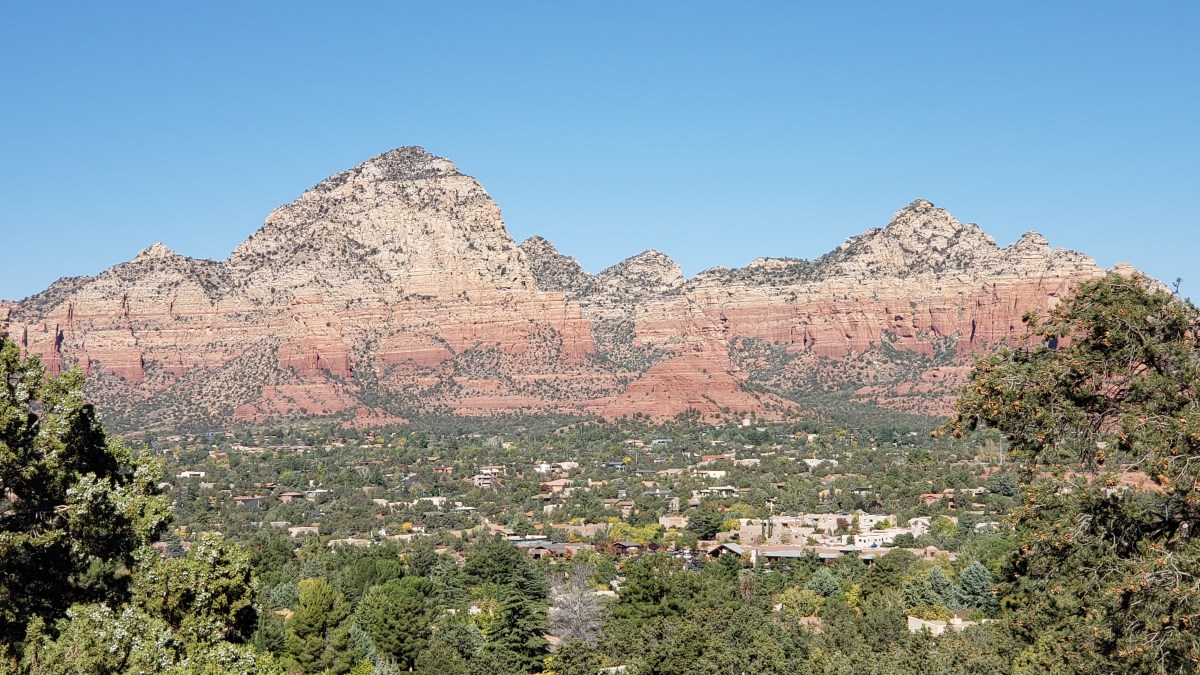
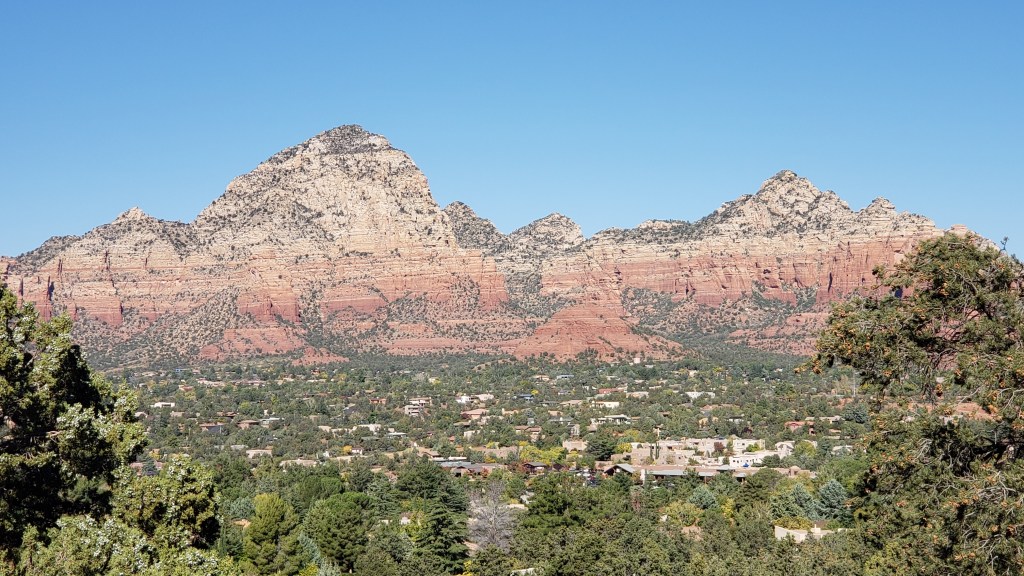
Here’s another look at our recently-completed RV adventure across the US from our exclusive series for The Independent, highlighting the section of the journey across southern Arizona and into New Mexico, with amazing sights that included Sedona, Tucson, Tombstone and the stunning migratory sandhill cranes of the Willcox Playa Wildlife Area:
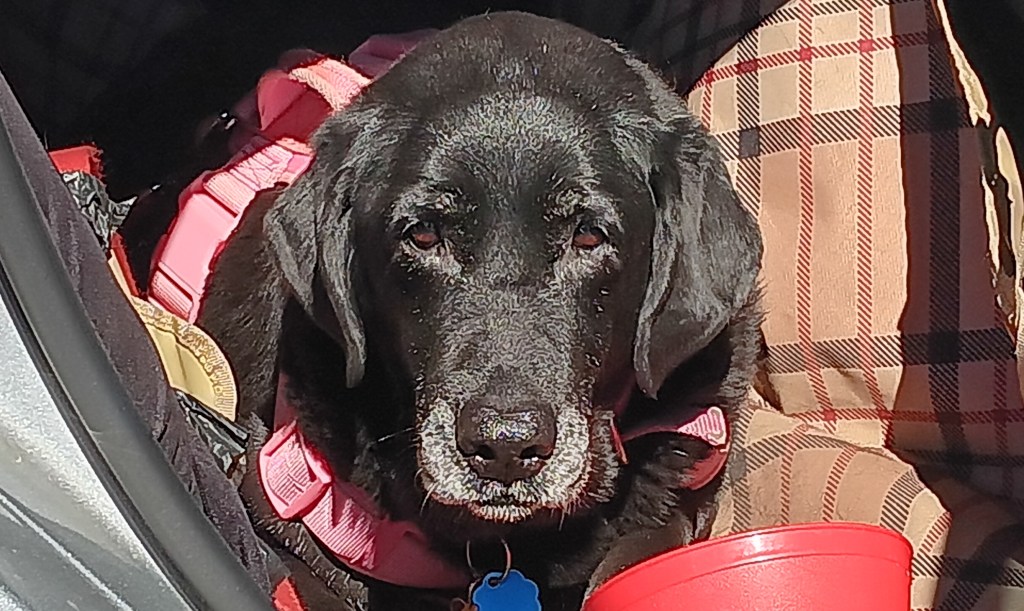
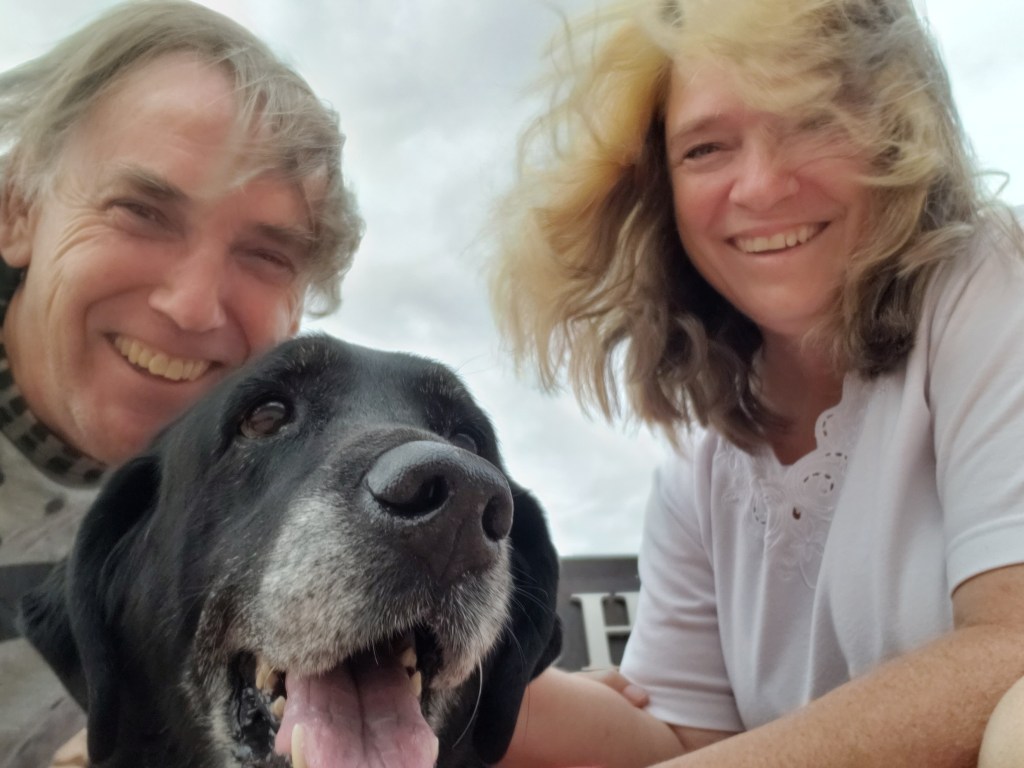
Now that we’re home again, we can finally pay a fitting farewell to our canine companion of the past 10 years. Here are Simon’s words…
I’ve never been lost for words before. You know, spoken, articulated words said out loud, to people. But that’s not it. I can still talk about many things, the important and the mundane. But not about our dog, and the grief it has generated having had to ask the vet to euthanize her.
OK, those are the words I can’t say. I cannot, under any circumstances, in the days and weeks following the act of taking another creature’s life, try to articulate anything about our Ruthie that doesn’t end in tears. And tissues. Lots of tissues. And eyes that feel like they’re full of sand and ash. And a heart that feels like it has a lead weight inside.
“It’s just a dog,” some might say and, in many ways, they are right. It is, or was, just a common or garden household pet. There are hundreds of them in the streets around us, every day, everywhere.
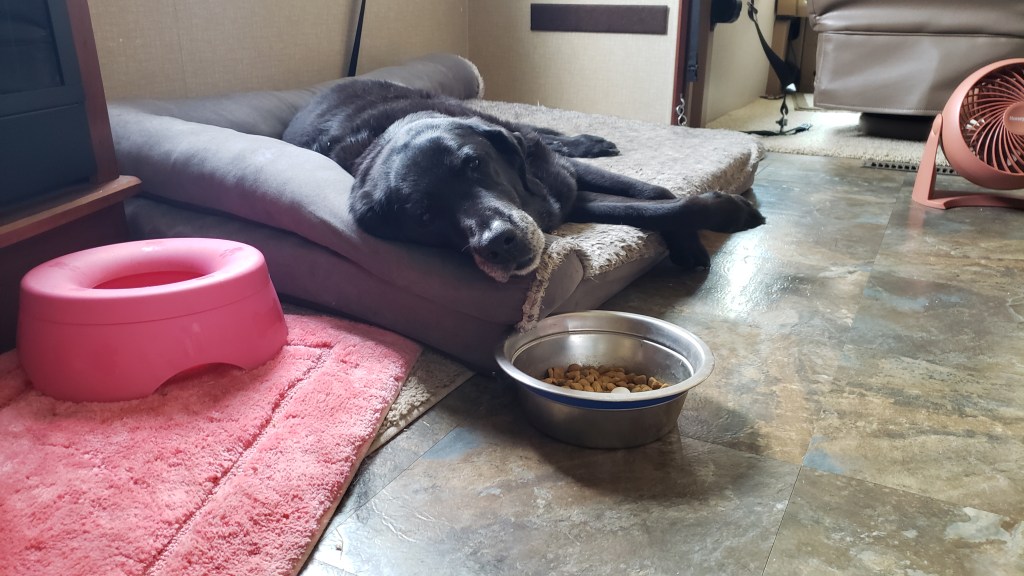
But it was a living, breathing, reactive pet who had been part of our household for nearly 10 years, claimed from a dog rescue center in 2015 and a permanent fixture with Susan and myself ever since.
At 4am on May 26 we had to end that life, that lovely canine companion, in the face of a growing distress that seemed to be escalating quickly and inexorably with no effective cure or palliative measure at hand. The vet agreed with us, but it was still our essential decision, our fateful, conscious act to end a life that had become a tale of torment. It was our call.
But that’s not the issue. Our Ruthie was 15 or 16 – no-one could be really sure; she had been a stray, and the vet’s best guess, from looking at X-rays that showed a fair bit of arthritic build-up, was that she was around six or seven when we adopted her – and that’s a pretty decent age for a labrador, a breed that is often ‘elderly’ by 10 and straight up old by 12. She had already beaten the odds and survived to an age where humans would be gasping for breath.
And that was the issue. She was gasping for breath, not constantly but regularly, and often at night, when everything sounds and feels worse amid the darkness that closes in and amplifies all your fears and concerns. It was a condition called laryngeal paralysis, something quite common in labradors, especially at such an advanced age. We knew it and had been aware of it for at least a year; Susan thinks a bit longer than that.
Either way, it had become a daily reality in recent months, not always obvious but a serious background issue to a dog that was still always up and about, ready for the next adventure, the next place to sniff. And oh, she loved to sniff. She lived to sniff. She spent much of her days sniffing anything and everything that didn’t move, and some that did. She would have been the ideal sniffer dog for the authorities, a regular bloodhound in labrador clothing.
She could always find something to sniff!
She especially seemed to thrive on our travels, both in and around Florida and further afield on trips to Michigan and North Carolina. One of the reasons we decided to take off on our “A Year On The Road” RV escapade in the first place was so we could take Ruthie on the biggest adventure of her life, a chance to really sniff the open road and the vast array of olfactory delights to be had along the way.
In the multi-year planning of the trip, we weren’t sure she would even make it to the start line. Her vet was happy enough for us to take her, but we would need to see other vets along the way, keep her essential medications and vaccinations up to date, and seek out urgent medical advance if she showed major signs of distress.
She did, on two occasions, but both were related to upset stomachs, probably related to too many sniffs in transient dog parks where another dog had probably left trace contamination. On both occasions, she bounced back immediately with the aid of antibiotics, and she was soon ready for the next location, the next new set of sniffs.
But the laryngeal condition was still there, a background menace that occasionally flared into open distress in the form of a coughing fit or heavy panting. One vet described it as “like trying to breath through a straw.” But labs are tough old birds of a furry feather; they are masters at disguising their symptoms and hiding the underlying distress. And Ruthie rarely let her symptomatic guard down. She was a total trooper. To my eye, she had a few moments of concern but then bounced back to her normal nose-dependent best, an elderly example of her breed, sure, but still largely a fully functioning one.
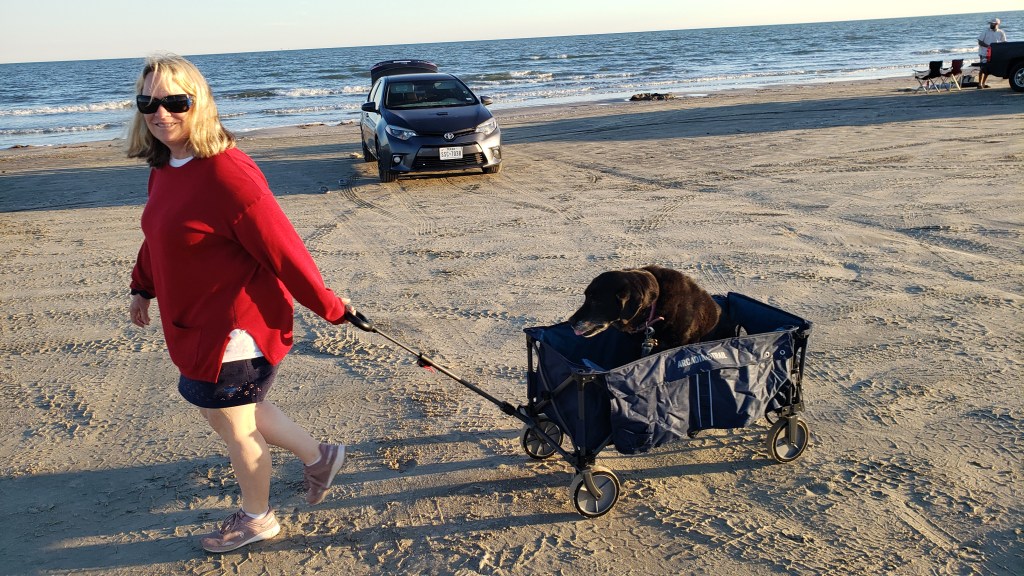
OK, we’d had to compromise. Ruthie was no longer able to undergo any real workout, no more scenic walks and hikes. “Do not exercise this dog,” was the stern warning from her vet back in Orlando, so we had invested in a doggie cart from Petsmart, an $80 adjunct to outdoor adventuring without the strain. We could pull her along, get our own level of exercise, and still stop for plenty of sniffs along the way. On the beaches of Texas and the state park trails of Louisiana and Alabama, she got to admire the scenery while putting in zero effort. Reluctantly, of course, because no dog truly wants to travel without their paws on the ground, but orders were definitely orders, and exercise was strictly off the daily menu.
Taking a ride in the Ruthie Wagon!
However, as the final few months of our extended road trip ticked away, Ruthie had trouble sleeping through the night. She developed moments of incontinence, which instigated the indignity of having to wear a doggy diaper when inside the RV, while her ability to shed great clumps of fur – her enduring canine super-power – seemed to increase. Her age was finally showing, but still she soldiered on, unwilling to sit things out when we reached a new campground and she could at least take her nose on new investigations of the immediate surroundings.
By the last week of our epic 12-month voyage around the country, we had reached the grand finale of a stay in Disney’s Fort Wilderness campground, a fitting exclamation point on our year-long adventure as well as a quiet celebratory moment in a 20-year journey for Susan and I in our Disney/Orlando writing career together. Ruthie met an armadillo and two extra-large chipmunks while also trundling around the extensive grounds in her wagon. Everything came together in one glorious Florida sunset.
Sadly, that sunset was also for Ruthie. Within a week of being home, the laryngeal paralysis was staking an ever-larger claim on our dog. The breathing issue was now flaring up significantly several times a day. Worse, the nerves in her back legs were inducing clear and distressing physical discomfort. The lack of any real exercise had caused her muscles to atrophy to the point where her hips were clearly visible through her fur. We took her to see her regular vet, who prescribed a strong pain-killer but also furnished us with a slightly chilling prognosis. The medication would help, she explained, but we were definitely on a final count-down. It might be two weeks, it might be as much as a year, but we needed to be alert to a point of no return.
As it turned out, she had two weeks.
After the long haul around the U.S., we had to take another long journey almost immediately up to Michigan on family business, something we had postponed in order to take our RV on the road but which was now a pressing concern. We packed a (small) bag and set off for the two-day journey, stopping off in Knoxville, Tennessee, overnight and completing the drive on a late Wednesday afternoon. To our relief, Ruthie slept most of the way, then was awake to some serious front-yard sniffing on reaching our destination. Equilibrium restored, we thought.
Thursday night told us otherwise. Awake and fussing to go out at 3am, Ruthie relieved herself but then struggled to get back to sleep, turning around in her bed multiple times in clear discomfort, and not the usual I’m-not-quite-sure-how-to-get-comfortable routine that most dogs do from time to time. This was the nerve problem writ large and unmistakable, a cry for help I still didn’t fully recognize. Susan was more alert to the issue but, with all the work we had to do on the house, Friday passed without either of us thinking another vet visit would probably be wise.
Friday night was worse. Again she needed to go out in the early hours, but the nerve issue wouldn’t abate for more than an hour, her back left leg twitching in involuntary spasms.
We, or I should say, I, still didn’t read the signs properly. It was the Memorial Day holiday weekend and there was more work to do. We could wait until Tuesday and go and see the vet then, avoiding the ‘emergency’ fees and, perhaps, getting stronger medication that would ease the nerve problem.
At 3am on Sunday that lack of foresight was shown up for the folly it was. Our dog was awake and in unmistakable distress bordering on agony. Even her labrador sensibilities of not showing any pain were wiped away in a clear message. Her twitching and breathing issues were at a head. Even though she couldn’t speak, the look in her eyes said everything. Help me, she articulated. Please help me.
It was a look that ripped at the shreds of our hearts, an urgent message of misery we could no longer ignore. We needed to find a vet, emergency hours or not, and it had to be now. I could curse myself later, but now I had to initiate a solution, the one I had ignored for much of the past week. Susan was readily in agreement.
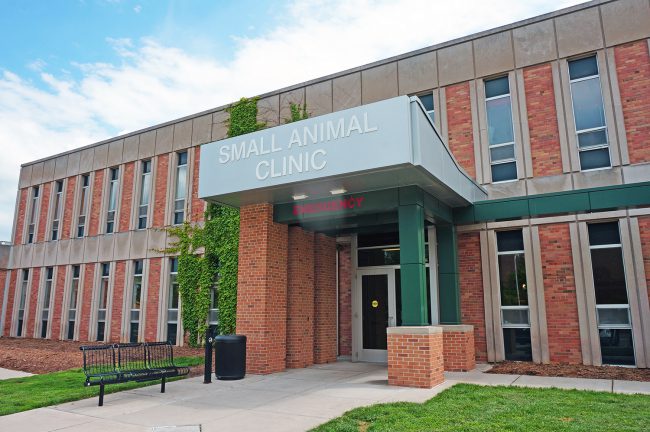
Thankfully – and I do give thanks for this one piece of cold comfort – the attendant small animal clinic of Michigan State University was only 10 minutes away and fully staffed for just such a situation. We were in the car and on the way within a matter of moments (forgetting even to remove my retainer in a rush for the car keys).
Within five minutes we were checked in and awaiting the duty vet’s consultation, our Ruthie showing few signs of her immediate discomfort but agitated all the same (she hates the vet’s and can recognize one straight away). We knew what we had to say to the vet, but it’s the message that all dog owners fear to deliver. Should we or shouldn’t we? Are we reading the signs right? Do we ask the vet to take her life? Do we make The Decision?
The vet was calm and understanding personified. More medications might help, she said, but the fact the previous pain meds hadn’t worked was a clear sign that we had probably passed the point of no return. If that’s what we saw and thought, she would support our decision. We would euthanize.
Now comes the point where it’s hard even to type, let alone talk about it. I had gone through this routine with another dog, some 30 years previous, and it had been a terrible moment, a heart-crushing resolution. This was worse. Much worse. Were we, truly, correct in what we were seeing? Most of the symptoms Ruthie had been displaying had flickered off. There was no clear sign of what we had witnessed just half an hour earlier. Were we sure?
The vet then gave us the one, vital, piece of the puzzle we had been lacking. The laryngeal paralysis was primarily a nerve condition, she explained, and it affected both her breathing and her spine/hip issues, which accounted for the uncontrolled twitching and muscular spasms which made it look like she was trying to run away from her own body. This was the symptom that most alarmed us and which had brought us to the emergency moment.
And then there was The Look. The one that said ‘Help me’ in no uncertain terms. In this final, fateful moment, we had to decide that ‘help’ meant ending her life, not prolonging it. That level of distress was desperately real and desperately unavoidable. The Decision had to be acted upon.
While Susan and I were led to a “comfort” room where we could be with our pet for her final moments, Ruthie was led away to be prepped for the process. There, on a soft blanket printed with cuddly pandas, we communed with our pet. Petting and patting, stroking and soothing, we said our silent goodbye.
And then she licked my face.
Ruthie never licked us. That had never been part of her – many – charms. She could be affectionate in her own way, a kind of stand-offish sociability that never broke out into open affability. We called her The Moody Intellectual for this notable demeanor, a character trait we had grown to love and admire, and which, somehow, perfectly suited our relationship; a partnership in exploration and adventure.
Now she was indisputably saying goodbye with a gesture of pure love and affection that totally melted my heart and remains my abiding memory of a household pet that totally crossed the line from “just a dog” to a genuine family member, a being of real humanity. In the finality of her life, she simply laid down between us and let the life force leave her body, finally at peace with the awful condition that brought us to this terrible fate.
And that’s why I can’t even start to form the words about it without dissolving into more tears and inarticulate sobs – deep, racking sobs – that are my only defense against that terrible decision to take another creature’s life, whatever the evidence to justify it.
Fortunately, we have many, many friends and family members who have rallied around at our distress with an outpouring of love and understanding.
To them, I say a heartfelt ‘Thank you’, along with this (long) message of explanation why I can’t just talk about it. From The Look to The Lick, I was fortunate to have known our Ruthie, but that feeling of having a hole torn in my heart will be a long time in passing.
We’ve already highlighted how Texas really surprised us with the quality – and extent – of its beaches, and we thought it was worth underlining that element of our Year On The Road travels with another snapshot video. This is Whitecap Beach, Corpus Christi, heading towards Padre Island National Seashore (in our previous video). This is where we discovered an unexpected opportunity to go beach driving. So we did…
Whitecap Beach is a gorgeous stretch of 1.5-mile white-sand coastline, sandwiched between Mustang Island and Padre Island; very popular with the locals but easy to find – and drive on
All in all, Texas boasts around 370 miles of beach delights (that’s about 40 miles longer than the distance from London to Edinburgh for our UK friends and followers!), and we thoroughly enjoyed practically every mile of it. The City of Corpus Christi was also a very pleasant discovery, and there was even more in store as we continued our north-easterly route along the coast.
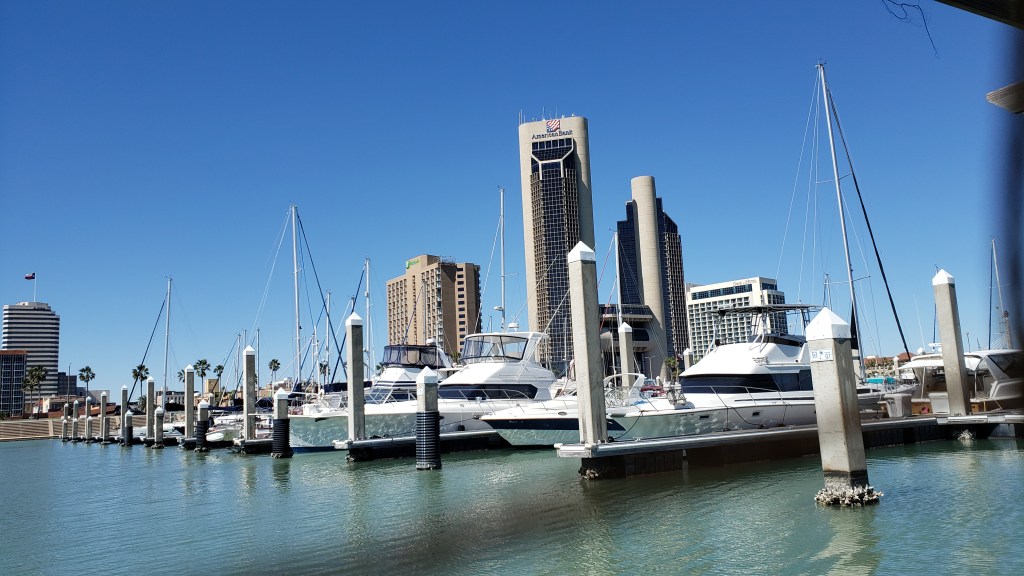
The Corpus Christi downtown skyline – just like Florida!
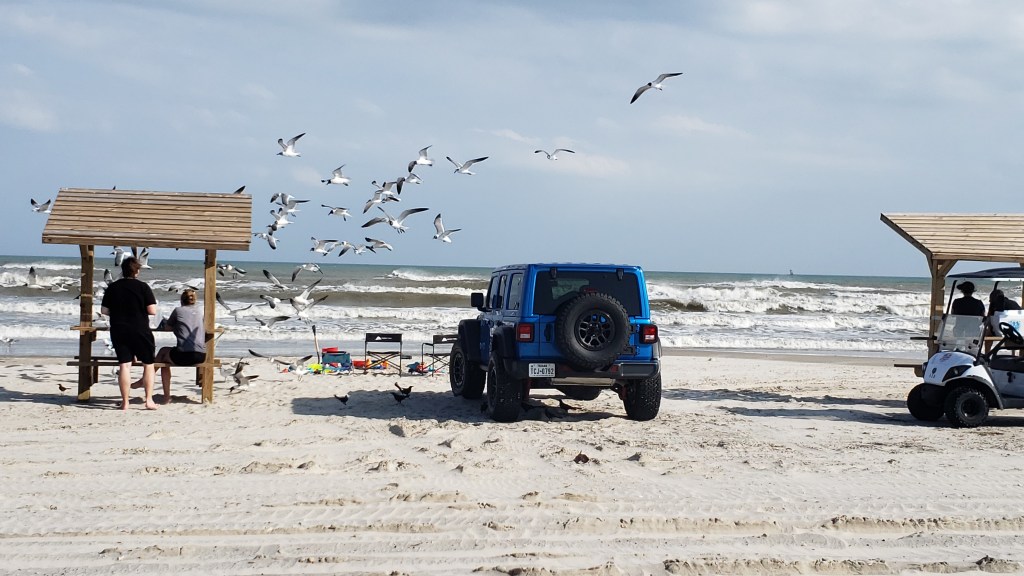
Yes, you can drive on the beach in places on Padre Island. And yes, you WILL attract a ton of birdlife at the merest hint of food!
The travel may be over (for now!), but we still have plenty of material to share from our recently-completed Year On The Road RV adventure, and here is another snapshot video from the Texas leg of the trip, highlighting the wild – and completely natural – Padre Island National Seashore. This pristine 66-mile stretch of barrier island along the south Texas coast is one of the few remaining coastal prairies in America and feels like a true wilderness in its own right, rich for exploring and packed with bird life:
This whole area was completely new to us and we would certainly come back this way again. With the happening city of Corpus Christi and miles of unspoilt, sandy beaches a metaphorical stone’s throw away, it is the ideal blend of urban setting and sheer nature. The video didn’t fully capture the wild spirit of the National Seashore, but you can still feel the windswept wonder of it all.
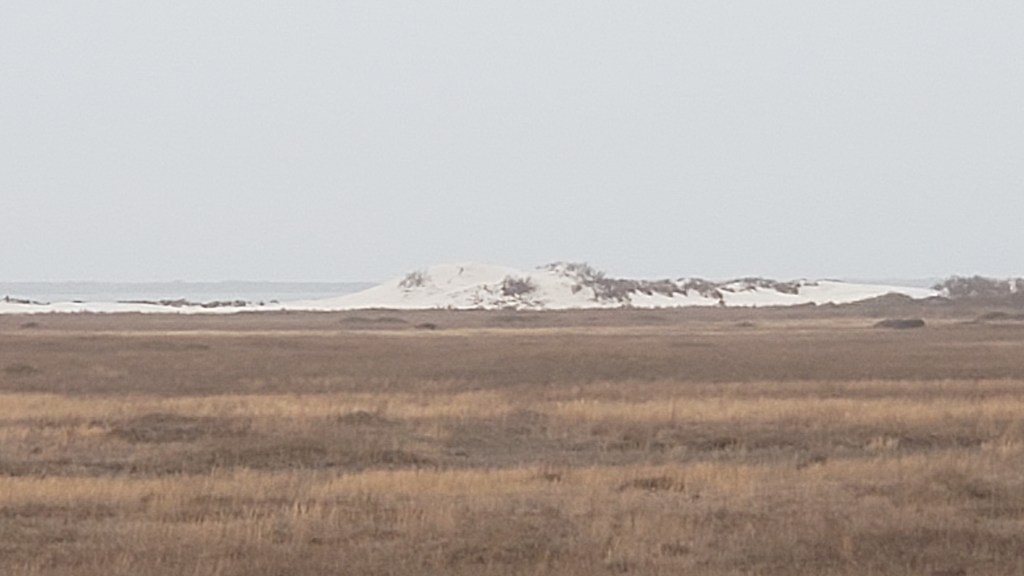
It’s hard to get a full appreciation of the size of the sand dunes along Padre Island National Seashore, but they can top 40ft in places







 Veness Travel Media