
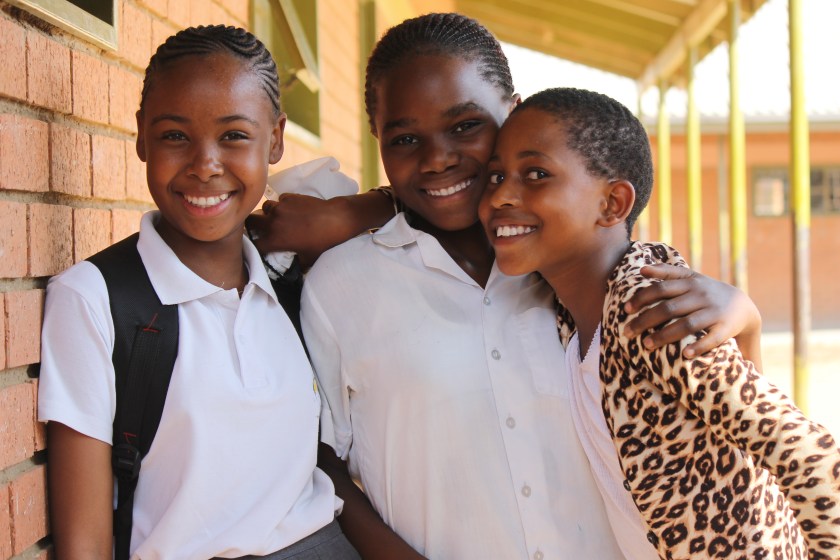
From the very beginning of Maru-a-Pula, students have been required to participate in social service. In the early years, that service was exclusive to the nearby village of Gabane (pronounced, roughly, Huh-BAH-nay). Students made bricks of mud and cow dung to patch huts; helped lay new thatch on roofs; and cooked and cleaned for the elderly and infirm. Today, the range of SPE (services) choice is vast, and we were determined we would do as many as our time allowed.
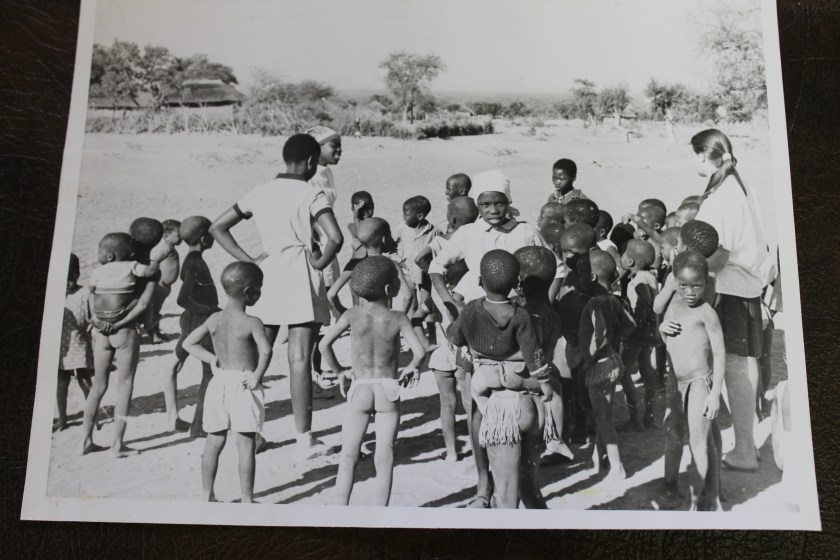
For our first SPE we are off to Galaletsang primary school to assist the MaP students in after-school tutoring, which quickly became a major life experience, especially for Susan, who had never set foot inside that kind of environment before.
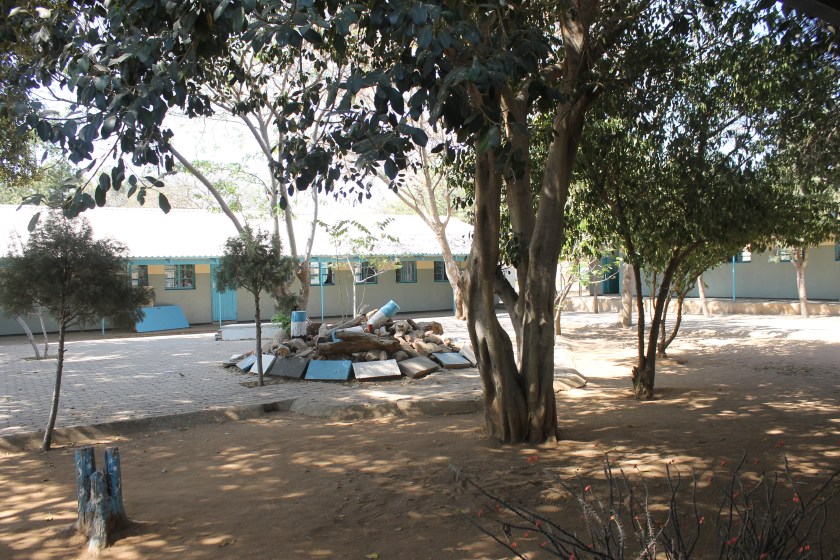
The school was an average government-run school in Botswana, massively underfunded and with 30 or more children packed into each classroom. There were no bright pictures or encouraging sayings on the walls. Some desks only had one leg and were held up by student’s chairs. There was no room for all of the kids to lay their papers and books flat, because too many were crammed in, with too few desks. But they were very polite, and responded to the facilitator’s questions with “Yes sir” and “No sir.” We were introduced, then let loose to assist with homework.

When the camera came out for some classroom photos the kids were SO excited to have their pictures taken. They shouted, “Me! Me!” so after a few photos the camera was put away to stop the distraction.
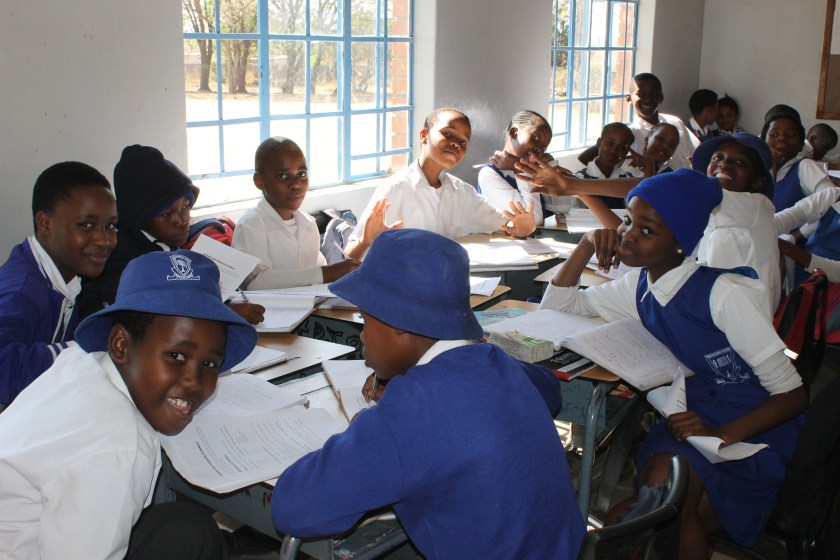
Although we were supposed to be tutoring in small groups for the next day’s lesson, the children asked all kinds of questions, like why Susan’s eyes were green and Simon’s eyes were blue, but everyone they knew had brown eyes. They asked where we were from (big gasp at USA. They appeared never to have met an American), and asked where sharks live in the USA.
The children were, frankly, fascinated by us, and our ‘whiteness’ was a real novelty. It quickly became clear that none of them had encountered a blonde white woman who was willing to let them touch her hair. When they asked and were given permission, forty hands immediately shot out, and their whispered comments were hilarious and delightful.
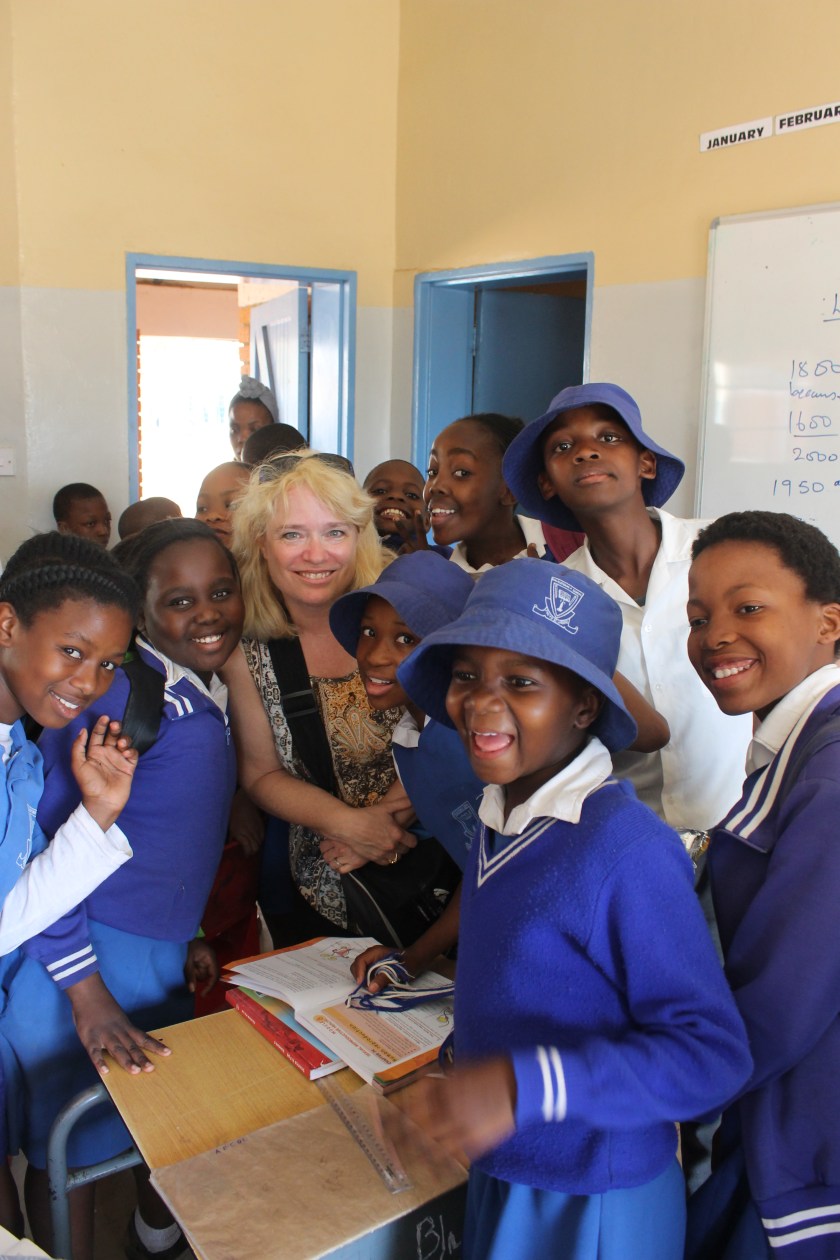
The kids were so eager to learn, but so handicapped by their surroundings. The lack of proper facilities was terrible to see, and the drawbacks teachers had to deal with were huge; trying to make do with so little for so many was an almost insurmountable challenge.
Our hearts broke at their potential and at the statistics that show all but a very few of those bright, eager minds would fall between the cracks before their schooling ends.
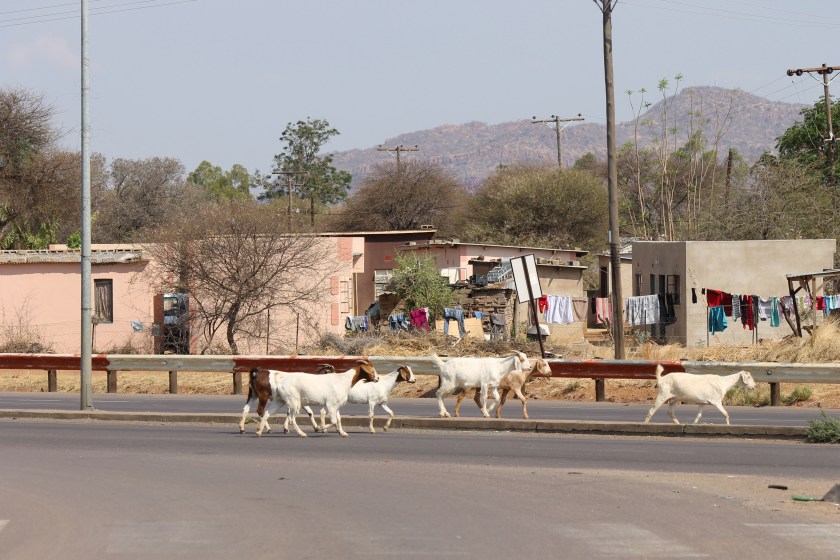
The next day was a day we had both been looking forward to: Simon would return to Gabane, where the school’s social service program first started in 1972. Inevitably, the ‘village’ looked nothing like it used to, but it still had a school that needed extra teaching and people that need feeding.
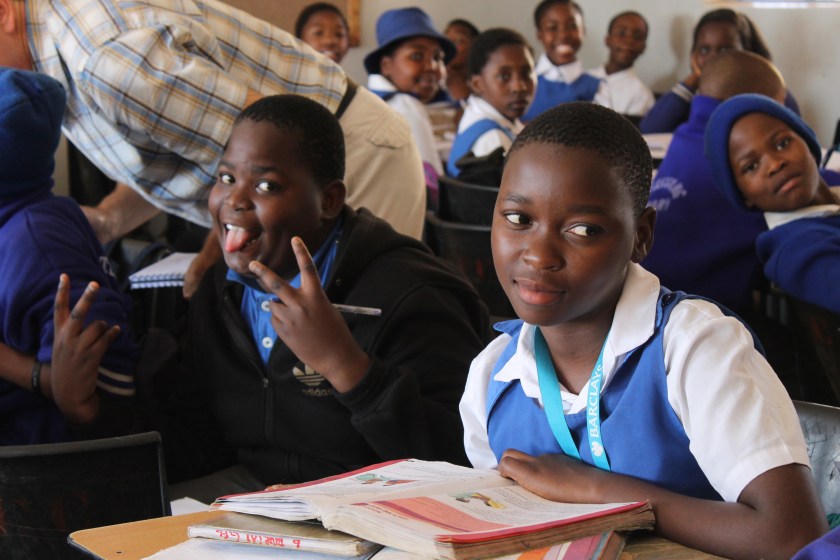
Right from the start it was a different prospect, with far more children and a less constrained atmosphere. There wasn’t a teacher in sight. School had ended and it appeared the teachers all buggered off even though there were at least 100 children still there.
Simon got right into the tutoring, but Susan ventured outside to take a few photographs. Big mistake! In no time flat she was surrounded by curious, eager kids who all either wanted their picture taken or wanted to touch her hair. She took several group shots, then individual shots, but it was odd that only a few children asked to see their picture. The rest were just happy to have it taken. It was quite an onslaught, and she almost literally had to fight her way out.
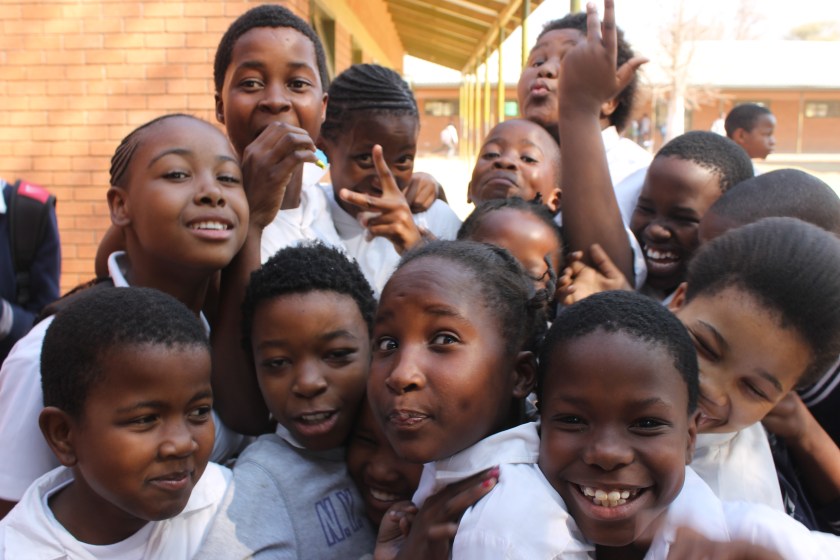
Simon’s lesson seemed to be a success, though, and the kids were quite a riot. Again, they were keen and eager to learn, even if the topics were not the most thrilling.
The next day we participated in an SPE session visiting the Tshwarengara school at Old Naledi, to staff their library for an hour so that children could stay after school for additional learning. The school was given a full library by an international organization, but because the government didn’t provide a librarian, the teachers refuse to stay for an hour after school so the children could access the books. When MaP students come and open it, the children still aren’t allowed to take books out.
It’s frustrating to see this fully-stocked library and know the government can’t be bothered to invest in a librarian and the teachers refuse to stay for one hour after school, once a week each. Just open the damned library!
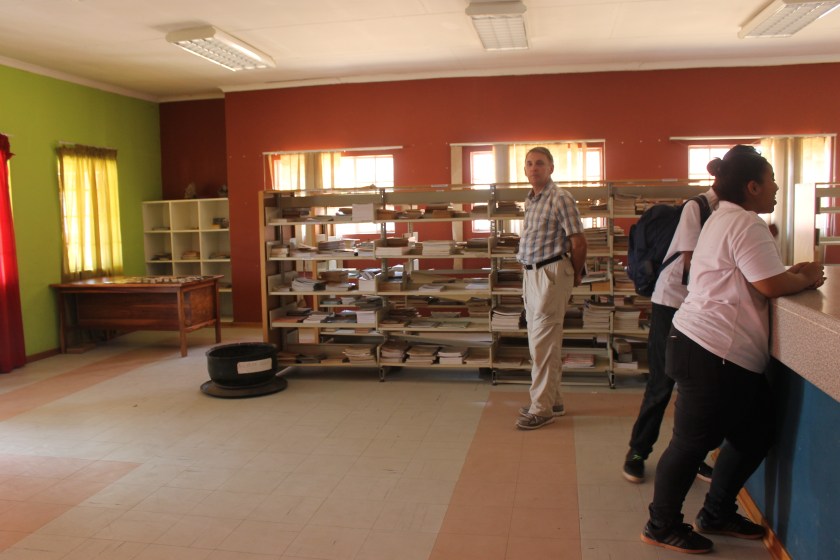
After a half-hour reading aloud from very basic books in English, the children were allowed to work puzzles or play memory matching-games, word bingo (with rocks as markers and worlds like of, laugh, and about), or play a dice game that matches numbered tiles.
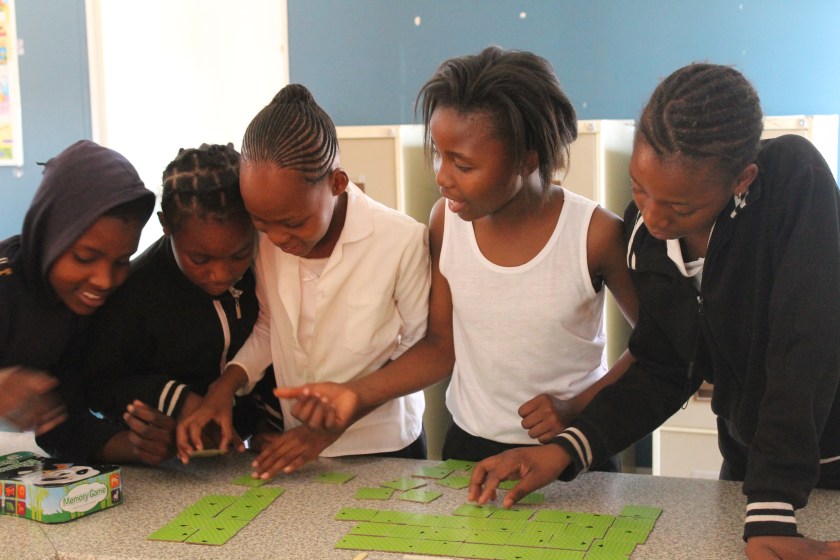
Others played Scrabble Jr, but only matched the letter tile to the words on the board rather than playing the game and taking turns. In some ways they were lucky; most children their age would never have worked a puzzle, as the education system does not value “play” as a teaching tool.
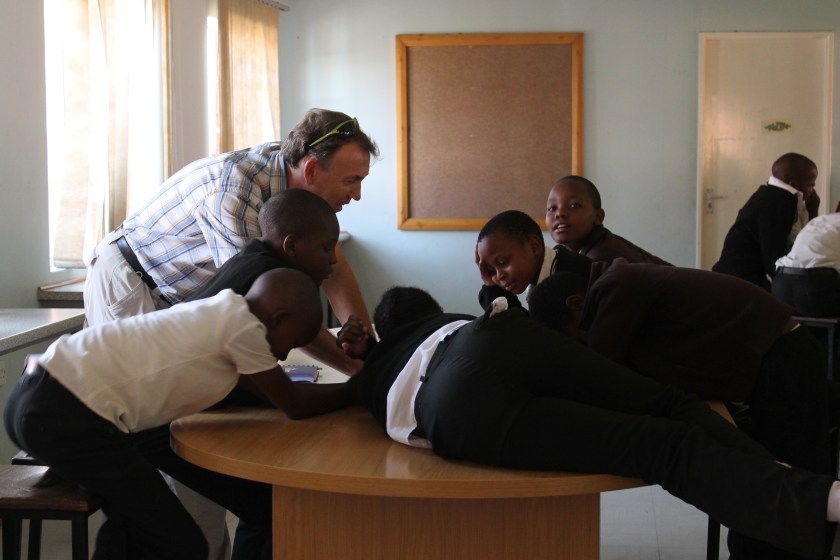
It was all very cooperative, and each time a child succeeded, the other children clapped and congratulated them. It was a real joy to see, perhaps especially because these children were less fortunate than the kids the day before. Some had no shoes.
Our next SPE would be something a bit different, helping tutor children who lost their parents to HIV/AIDS, or had HIV/AIDS. Some of the MaP students belong to a group called Ray of Hope, and the small village of Gamodubu is one of their missions.
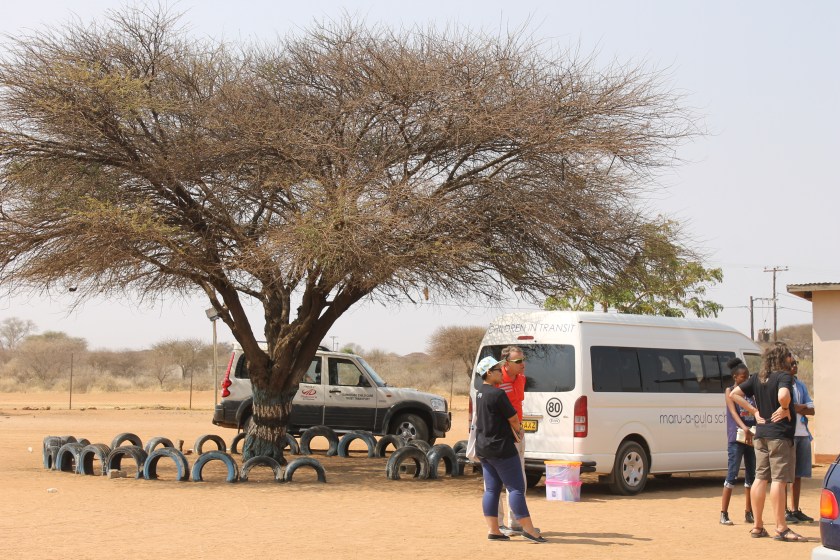
There was some initial confusion when we arrived, as a wedding was due to take place in the community hall where the group usually sets up. The little girls were all dressed up in Disney Princess style dresses for a song the children were going to sing during the wedding, and they were just darling.
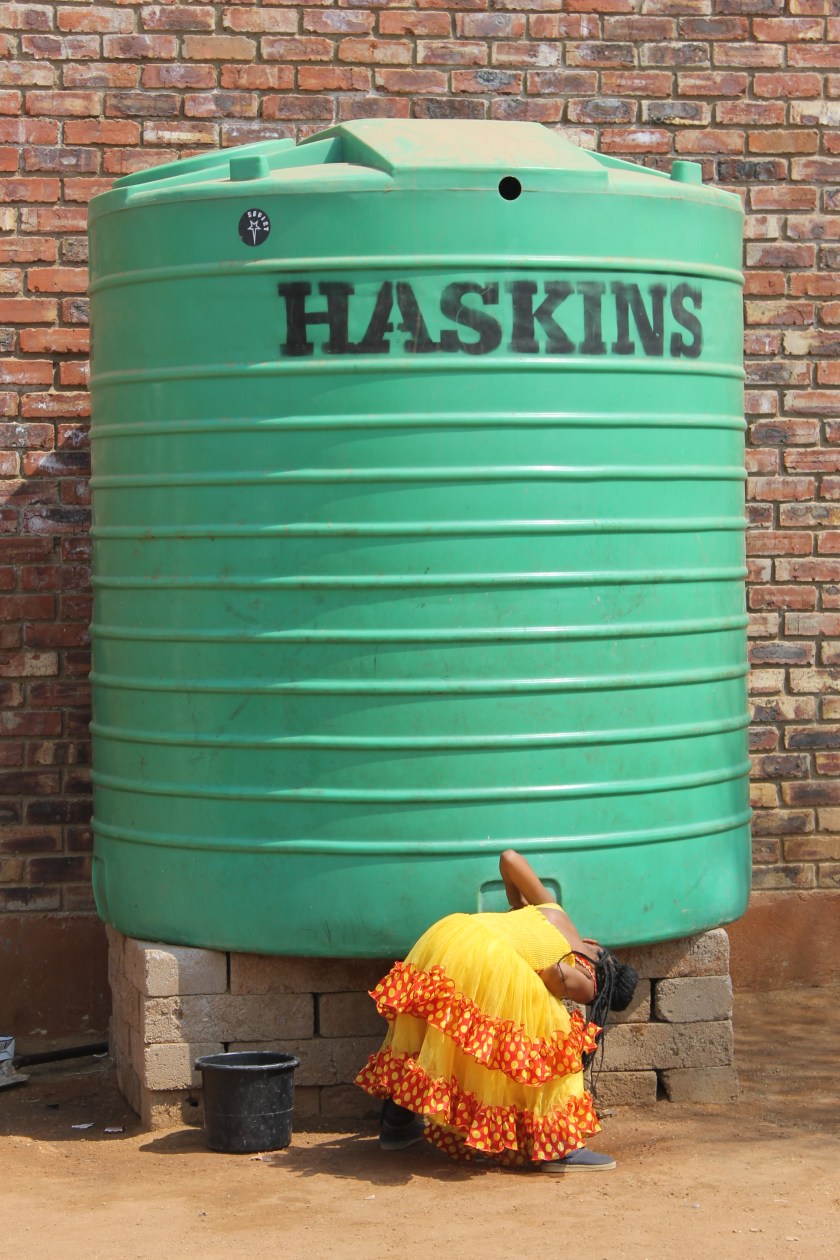
With so many very young children, and so much excitement going on, the center was in utter chaos. Susan’s group of early-learners were learning to draw basic shapes and say the shape’s names in English.
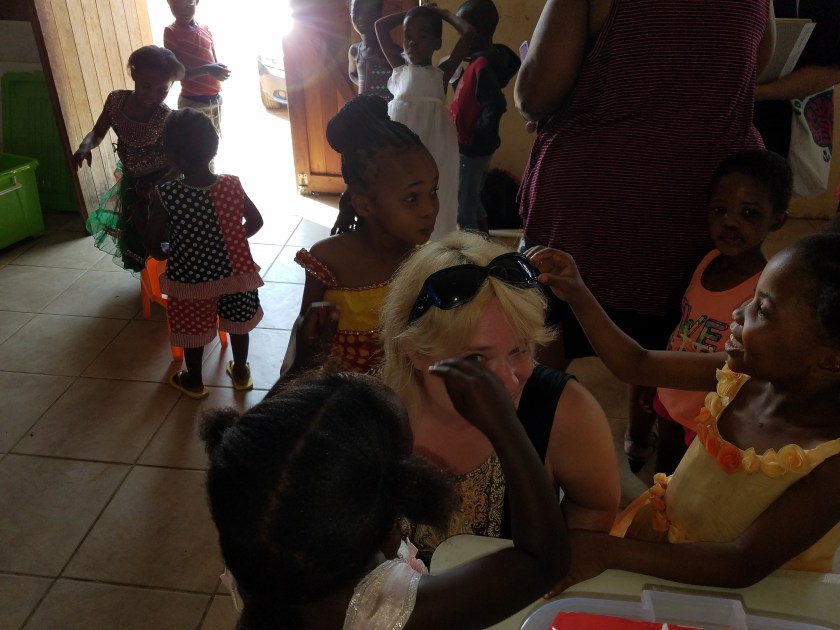
Again, her hair was the subject of much interest, and this time her Shamu sunglasses also deserved serious inspection. Several of the little girls tried them on for size.
Simon was rewarding his kids with a game of “noughts and crosses” after they did their reading in English. His kids called it “Xs and Os”, but when Susan came over toward the end of the session and said, “Oh! Tic Tac Toe!” the boys thought that was hilarious. One boy in particular was captivated by the name, so he wrote it out in English and we repeated it several times so that he would always remember it.
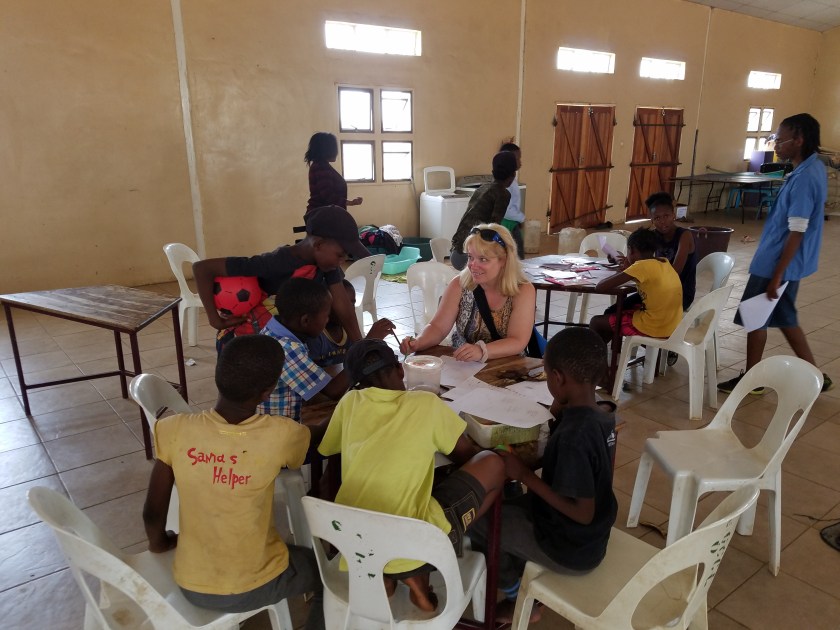
It was a bittersweet afternoon and we marveled at these perfect young people even as we wondered what some of them were enduring in their short lives. How do you thrive when your parents are dead or dying? How do you go on to be healthy and whole when you’re one of many who needs love and care? What is the best way to support people like Shirley, who takes these precious children in?
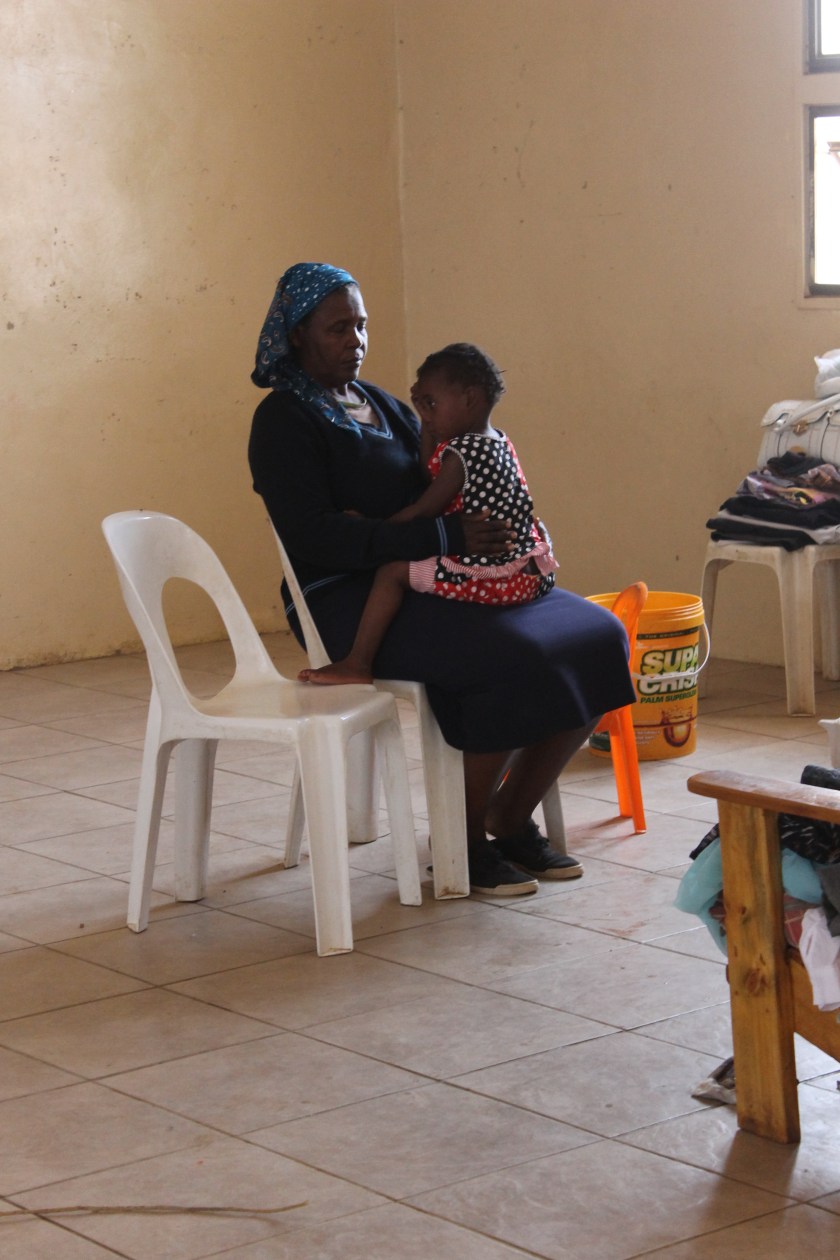
We had long conversations with educators and students during our time at Maru-a-Pula, and gained tremendous insights into the country’s massive educational challenges, and its small successes. Botswana—and by extension, Africa—took hold of our hearts, filling them with joy, and shattering them to bits.
Next: HAPPY BOTSWANA INDEPENDENCE DAY!
Want to see more photos? Check out our Into Africa album on Veness Travel Media on Facebook. We will be adding to the album as each blog goes up.

 Veness Travel Media
What fascinating photos/info on your involvement. These people are so beautiful. The kids seem fully engaged and everyone is happy! I love the animal pics too. It must really have been an emotional experience for Simon. And a very different emotional trip for Susan. Keep the blogs coming. Thanks for sharing this journey with us.
LikeLike