

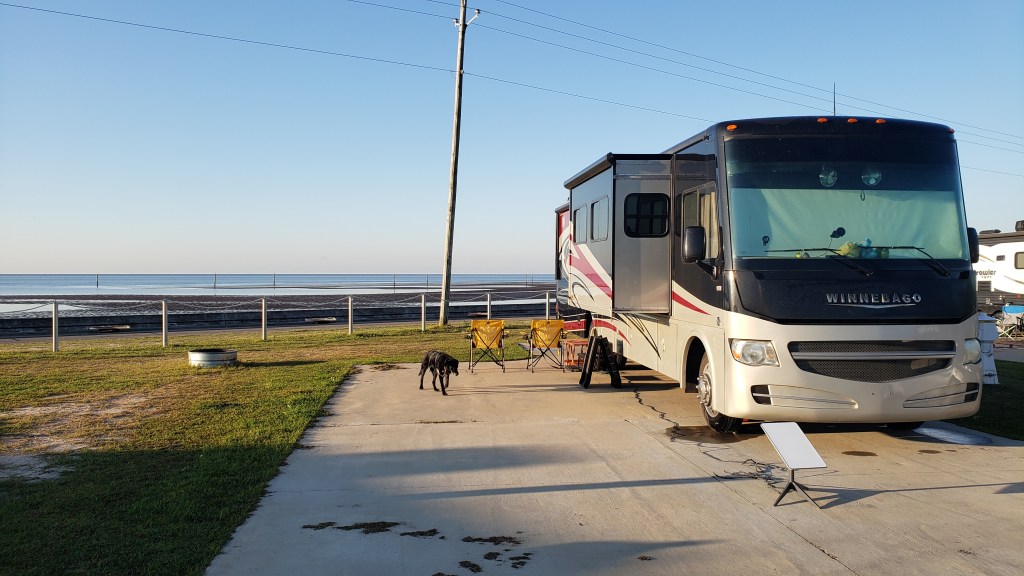
The name Waveland, Mississippi should have rung a loud and distinct bell for us, but as we pulled into our campsite at pretty Buccaneer State Park, with the Gulf of Mexico as our view, we were none the wiser. Over the next few days we’d discover reminders of the great trauma Waveland suffered at the hands of Hurricane Katrina were everywhere, primarily through how the tiny town fought its way back to recovery.
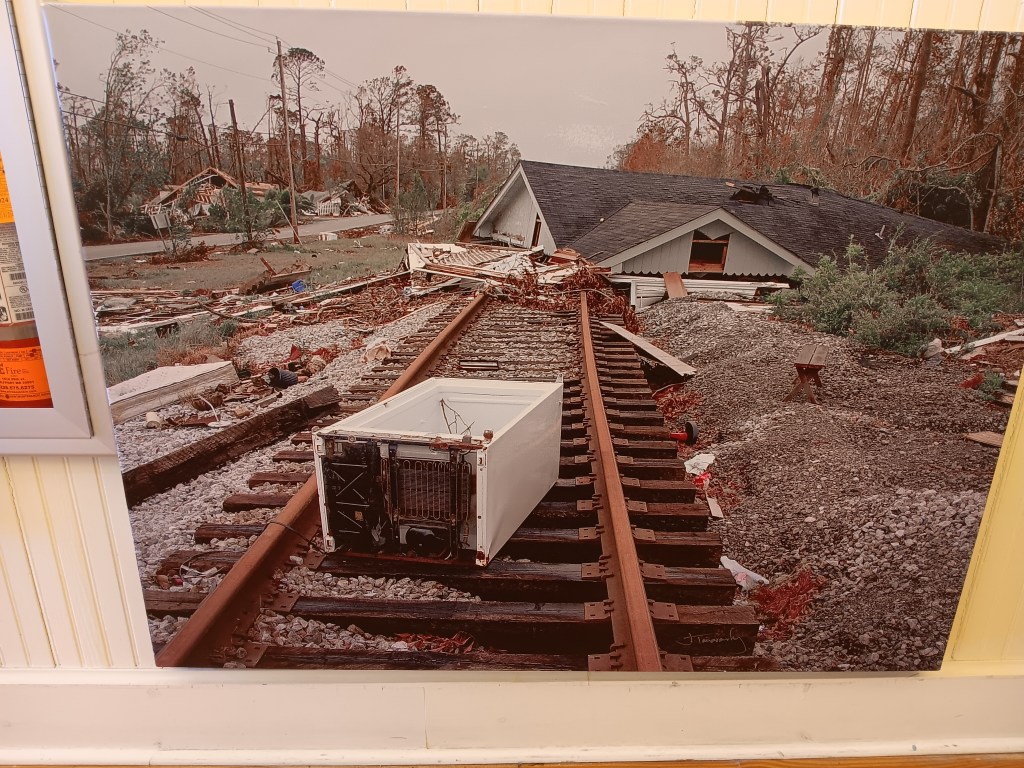
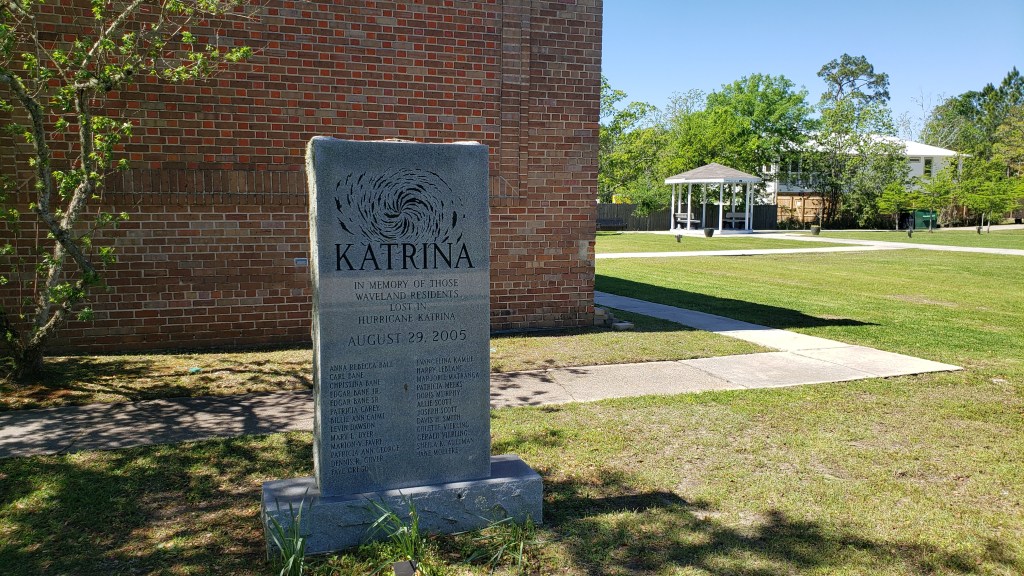
When Katrina passed and its 30-foot storm surge subsided, next to nothing was left of this once-peaceful seaside community. Homes? Gone. Businesses? Flattened. The railroad tracks running through Waveland? Bent and useless metal. It was one of the worst-hit places along the coast. New Orleans got the press, but Waveland also suffered immensely. Twenty-five of her residents lost their lives, including four in just one family.
Our first stop after settling in was the Ground Zero Museum, which remembers that terrible time through photos, artefacts, and a short movie featuring survivor testimony.

The railroad tracks a mile or more inland acted as a mini levee, and some of the homes on the north side of it survived. Everything south of the tracks was washed away.
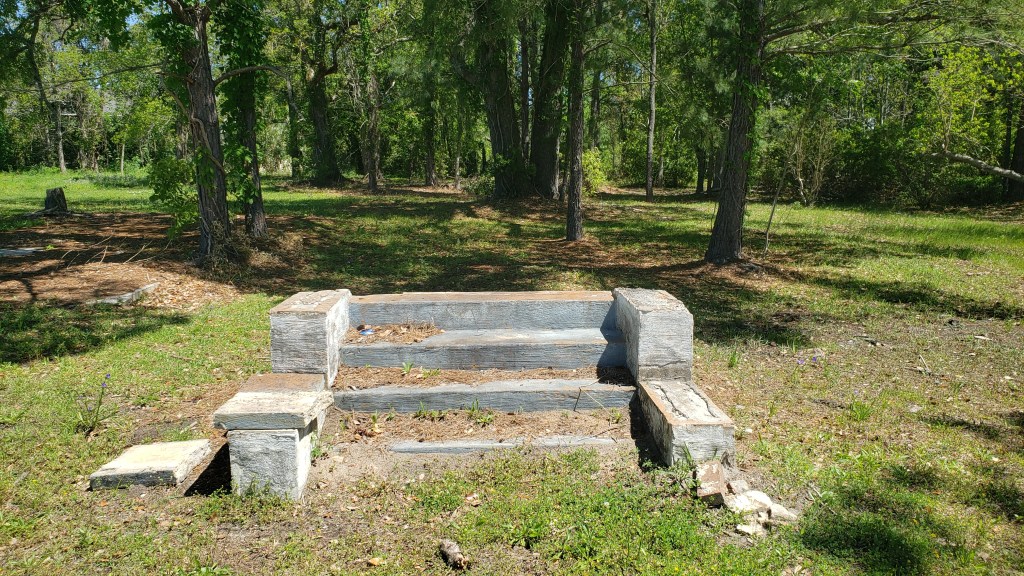
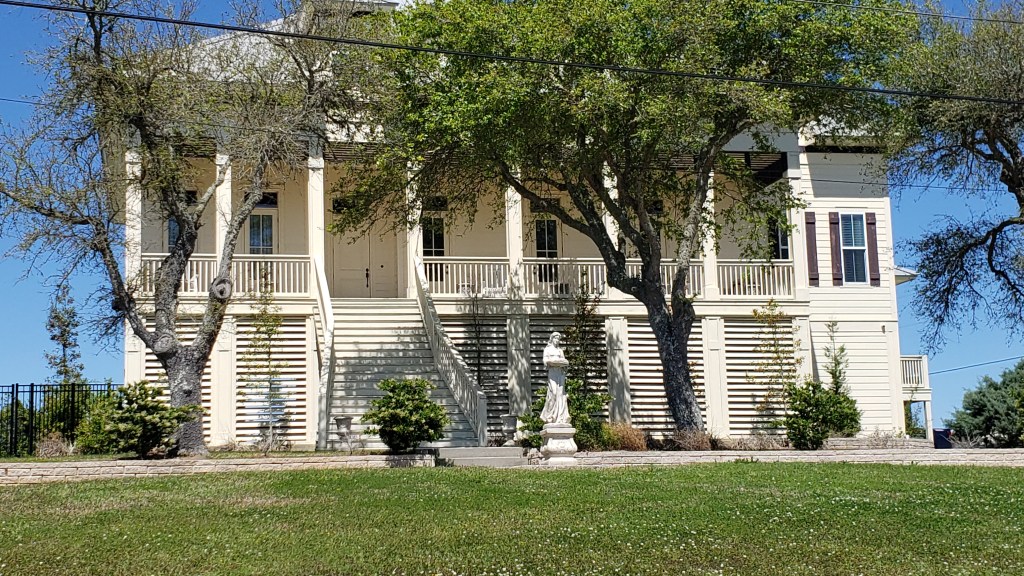
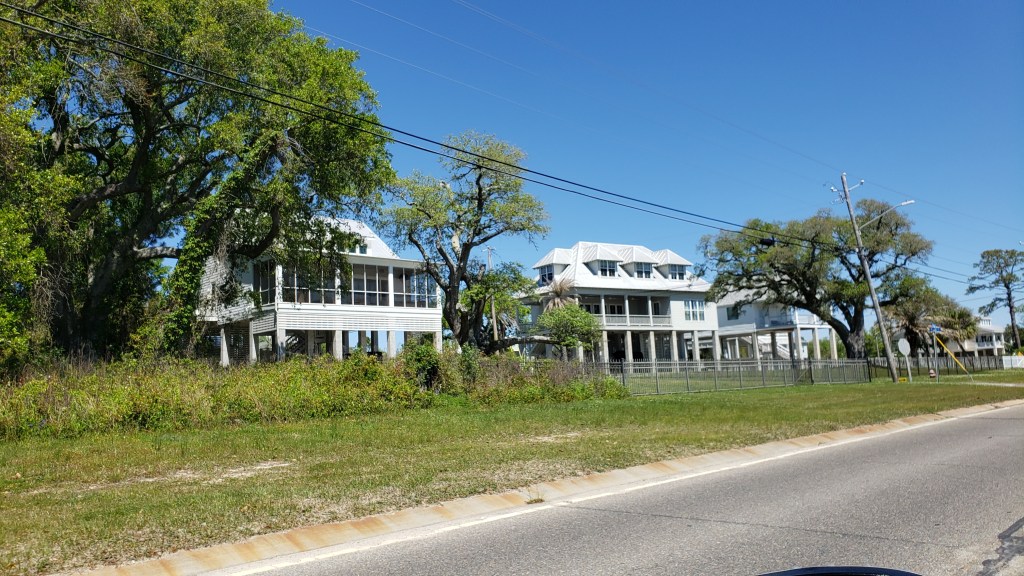
But we found the town’s recovery even more interesting. A long line of huge, expensive homes has gone up along the waterfront (with a road between them and the Gulf), which speaks either to the indomitable human spirit or reckless optimism, and we’re not in a position to make the call on which one it is.
Next-door neighbor, Bay St. Louis, recovered relatively quickly. Settled by the French in 1699 under the name Shieldsborough, Bay St. Louis was held by the Spanish, then the British, and only received its current name in 1875. At one time it was earmarked to be Mississippi’s capital city, but Natchez won, only to lose their title to Washington, which lost the honor to Jackson.
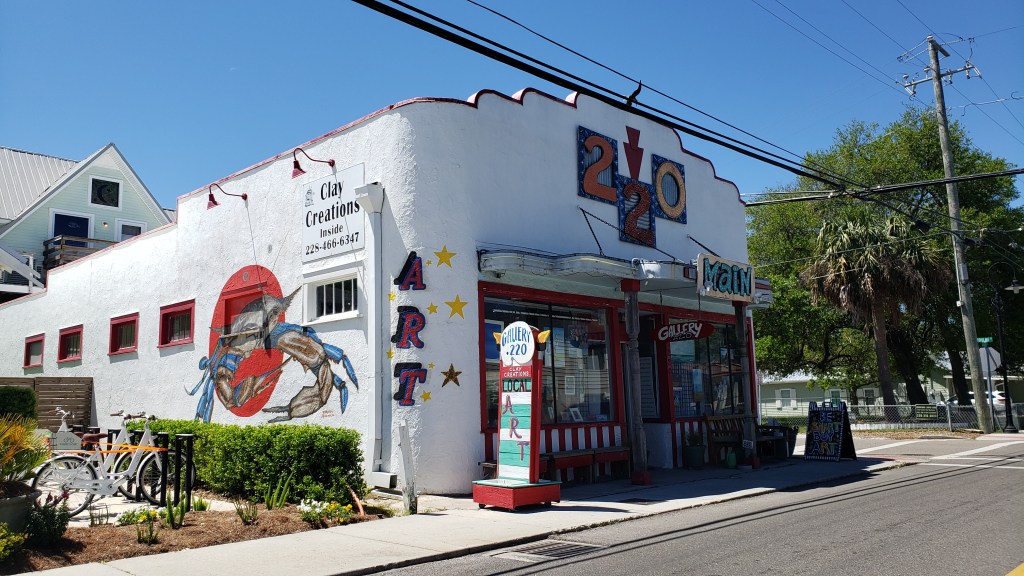
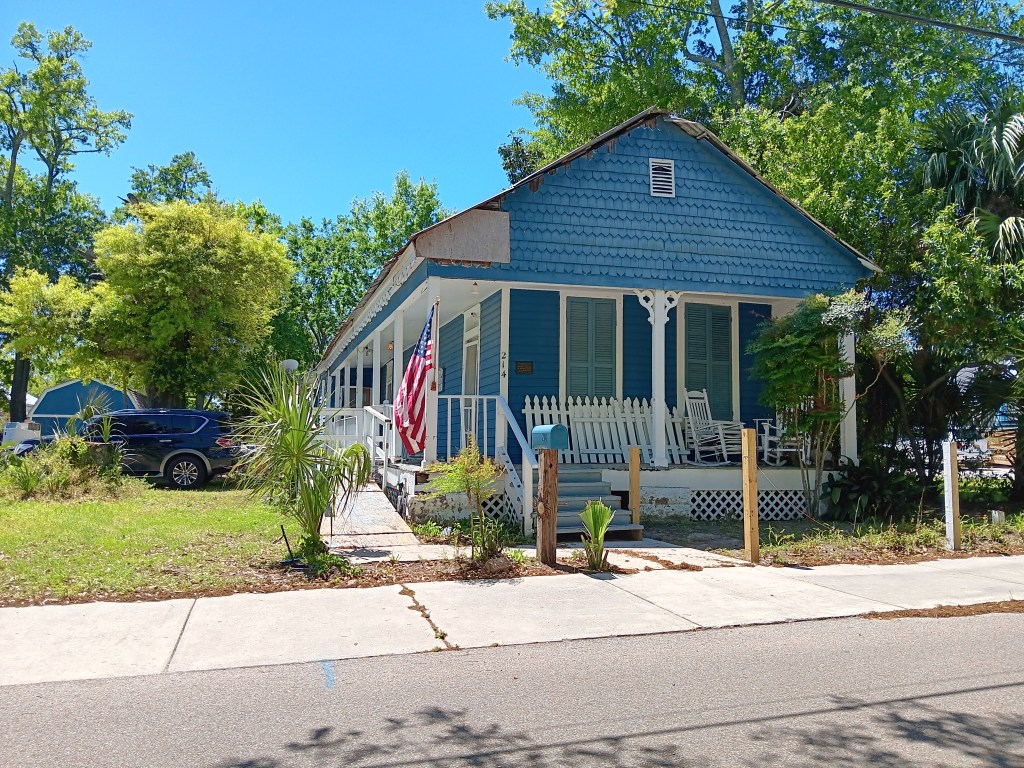
It is now a somewhat touristy area, with shops and restaurants and a fun self-guided tour that takes you past 24 historic sites and buildings, some of which survived Katrina.
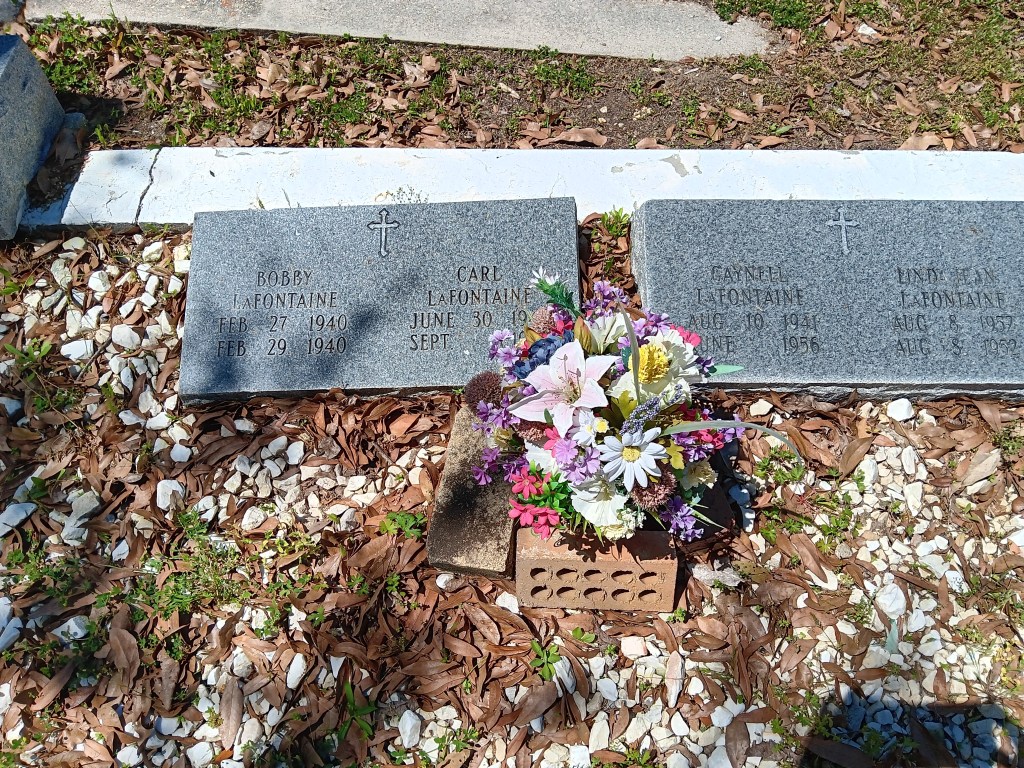
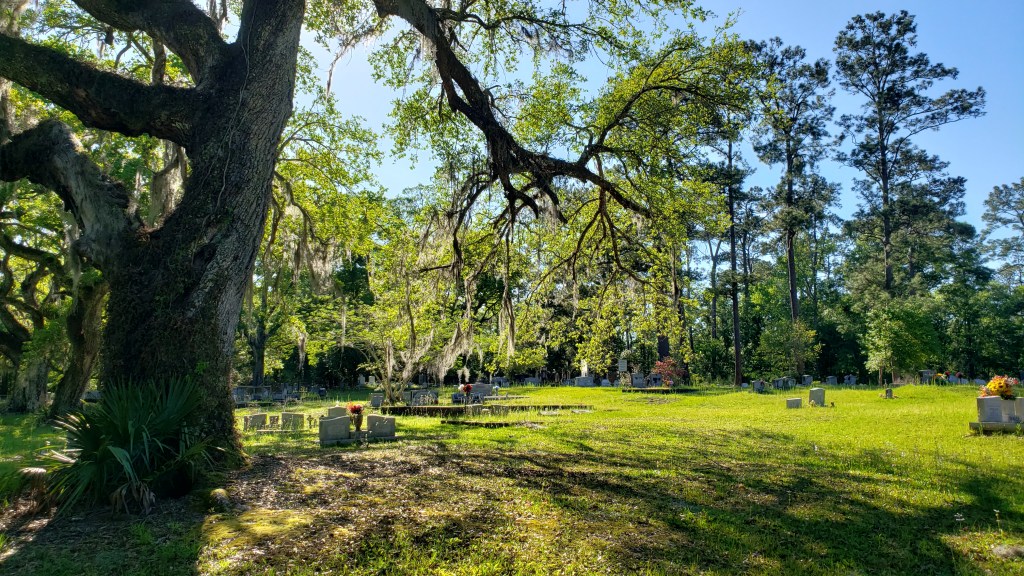
Cedar Rest Cemetery is also on the tour. Here, we found one of the most heartbreaking plots we’ve ever seen. A couple’s four children passed, one on the day of her birth, one on his third day of life, one in his third month, and one in his fifteenth year. Unbearable.
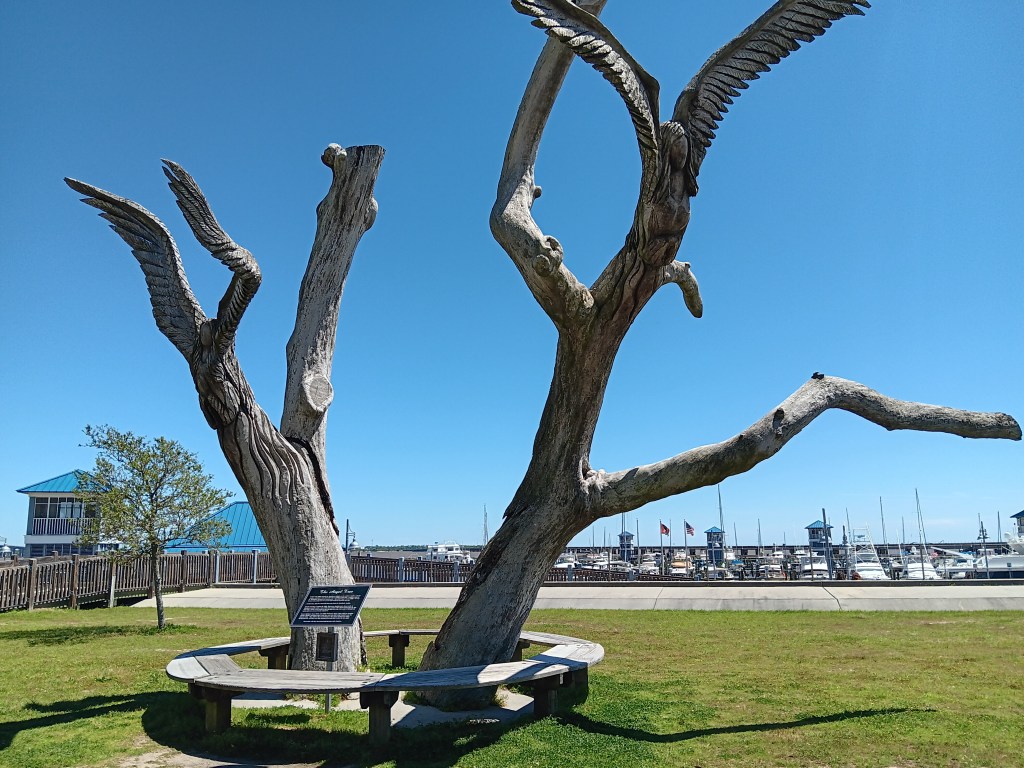
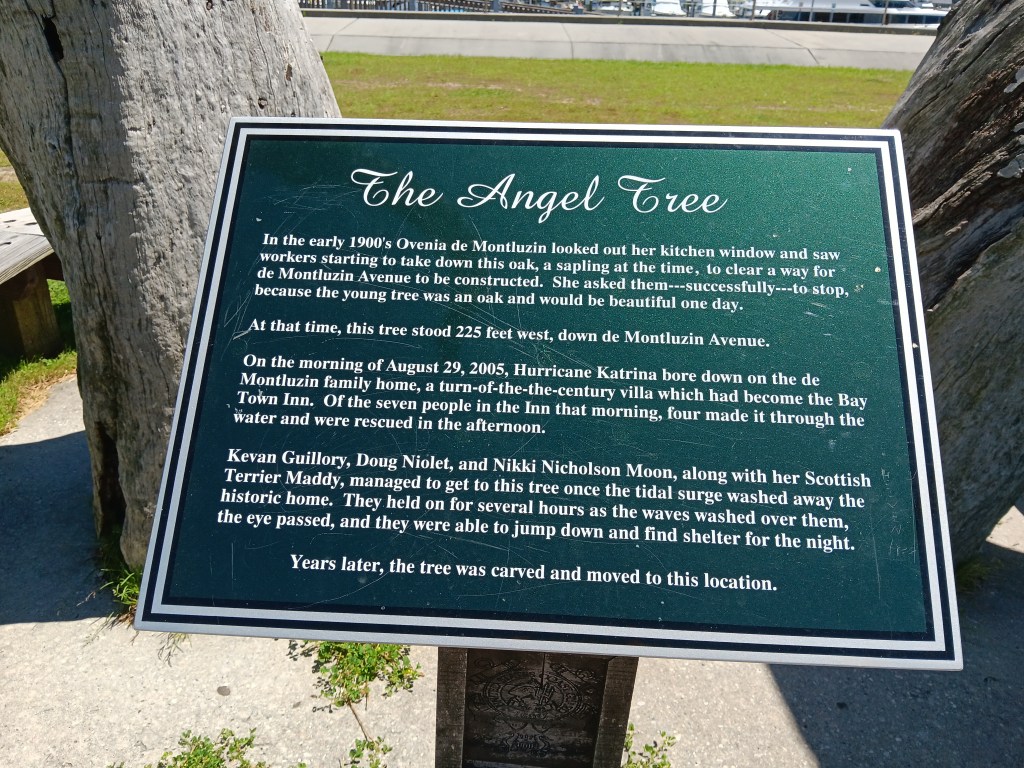
Also located here is the Angel Tree. We’ll let its marker tell you the story.
We took a drive out to Kiln on the suggestion there was an interesting historical downtown to explore, but if there was an actual downtown at all, we never found it. And we tried!
We did find a lovely road lined with Live Oak trees, and a marker for Logtown, founded in 1848 as a community supporting one of the United States’ largest lumber mills. Of course, its 250 citizens still living there in 1961 were “removed” so that the John G. Stennis Space Center could take over the land for NASA’s Apollo Moon Mission Program. *Sigh*
We only had four days in Waveland, but we were so glad we added it to our itinerary. Hearing the waves from the Gulf at night, seeing the locals out fishing, and enjoying the laid-back vibe, especially at sunrise and sunset, revived us after our time in the Big Easy. But we weren’t finished with the beach just yet.
 Veness Travel Media