Why were so many places across the country named after a man who lost one of history’s most infamous battles, a battle aimed at genocide of the native peoples? We don’t know, and we’re not in a position to right the historical wrong or re-frame the story, but we will say the State Park named for Lieutenant Colonel George A. Custer, better known as General Custer, is one hellofa fabulous park.
We could yammer on about the rolling hills and the lush greens that splash across the landscape, as if some insane artist with a passion for the verdant is forever in the process of painting and repainting according to the whims of sunlight and clouds.
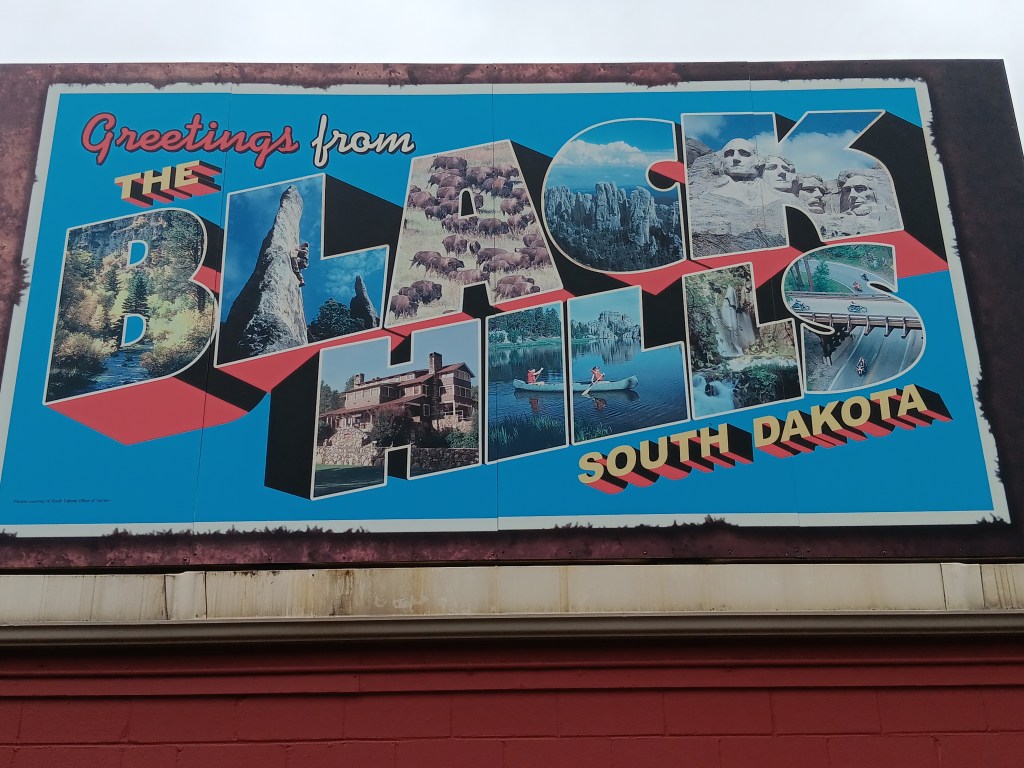
We could wax poetic about the Black Hills specifically, and we could throw in the fact that “hills that are black” is the English translation of “Pahá Sápa,” from the Lakota language of the Sioux people, and that the Black Hills rightful return to the Sioux Nation is a long-standing, contested issue the Sioux are currently losing.
If we really wanted to get all up in ourselves, we’d casually toss in the utterly self-promoting comment that the book, Paha Sapa: Land of the Gods, mysteriously made it into the queue for The Jungle Cruise at Walt Disney World’s Magic Kingdom park, and therefore into Susan’s third edition of The Hidden Magic of Walt Disney World.
But we won’t spend time on those topics, because on our second full day in Hermosa we were all about animal tracking from the comfort and convenience of our car.
We had been lucky enough to see bighorn sheep in the Badlands, and you’ve already read about our encounters with bison in Theodore Roosevelt National Park, so today we were on a mission to track down a herd of majestic elk.
This isn’t an elk
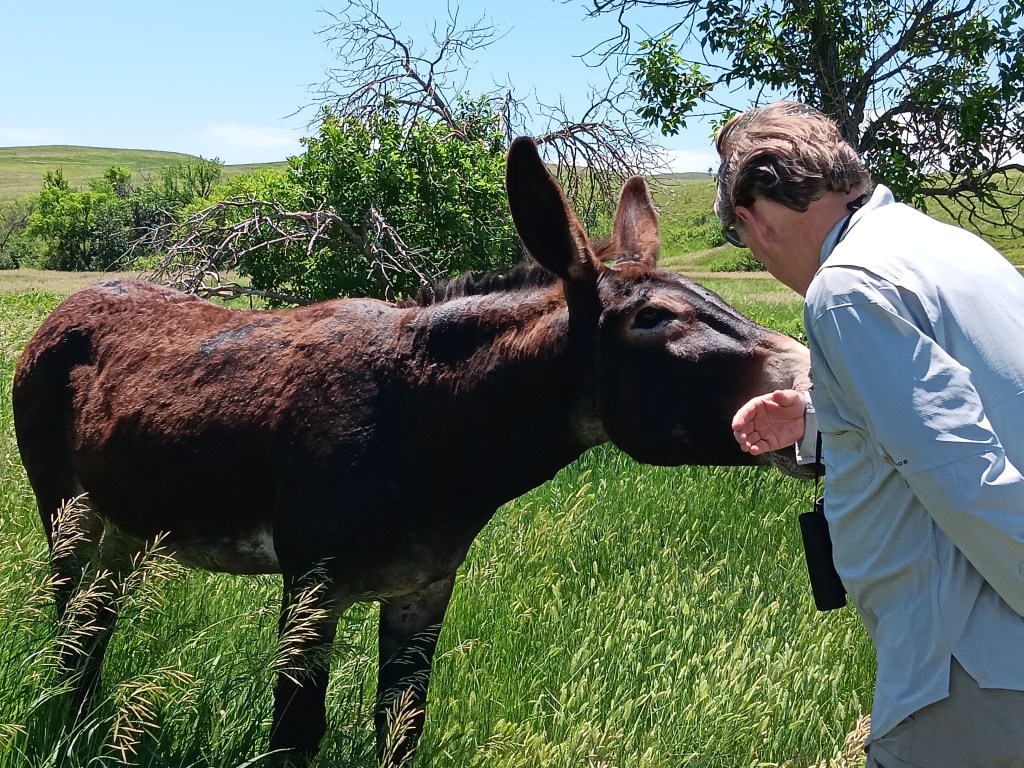
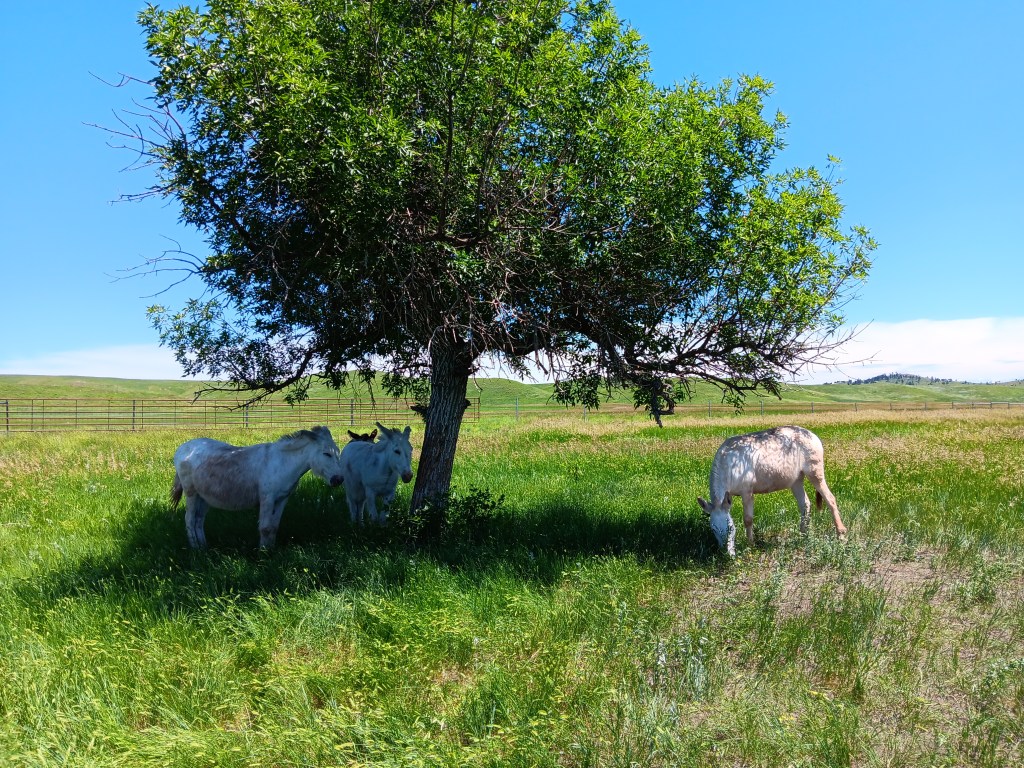
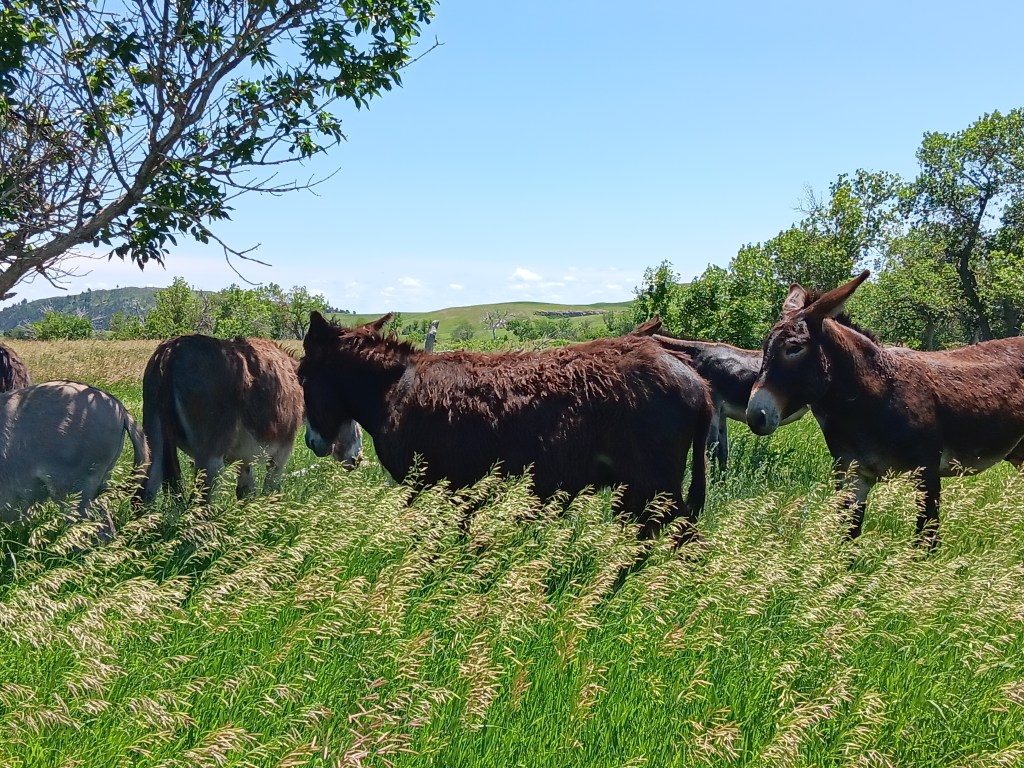
We entered the park’s Wildlife Loop not far from our campground, and first up on our sightings checklist were the burros, fondly nicknamed the “begging burros” for their willingness to eat whatever you’ve brought them (more accurate than “willingness” is “insistence”). Hence, they’re super friendly, and come right up to you rather than waiting for you to approach them.
Their hearty ancestors were pressed into service nearly a century ago, toting tourists and their paraphernalia up Black Elk Peak from the Sylvan Lake Lodge. Only a small herd is left, but they’ve been roaming wild ever since their forebearers’ tourism-based employment end. Most of them are descendants of the originals, but a few of the burros are donated newcomers.
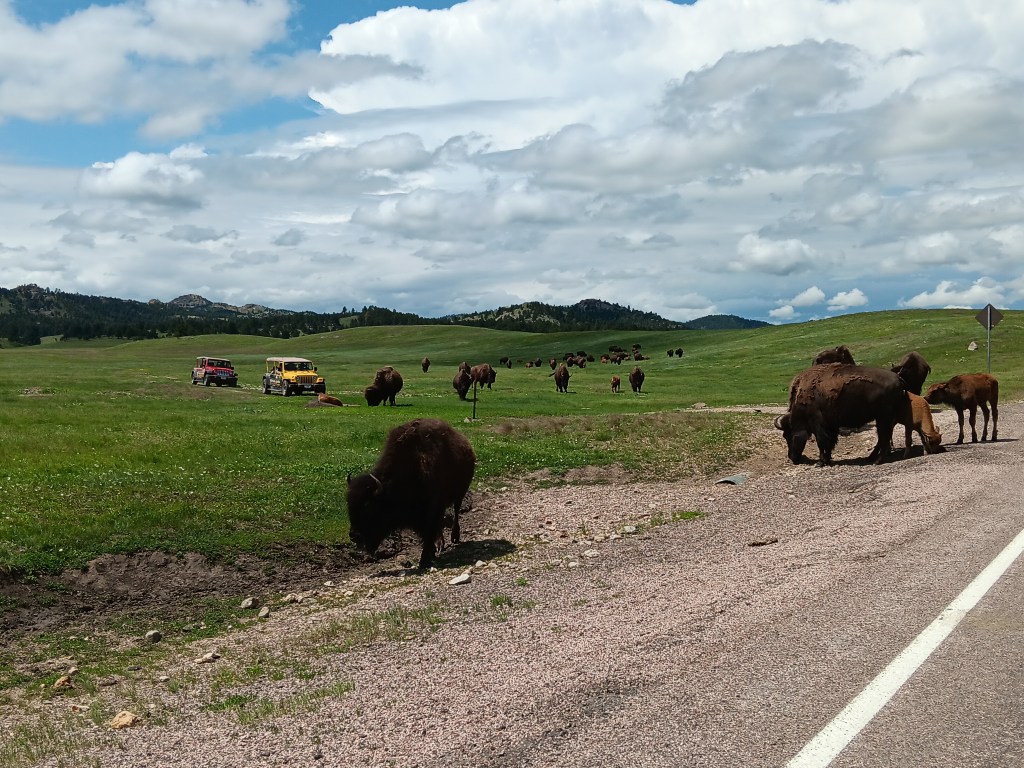
Having frittered away the morning working, it was well past lunchtime when we found ourselves caught up in another bison jam, so we got out our sandwiches and spent nearly an hour enjoying their wanderings, their playful calves, and one truly peevish specimen who wanted to pick a fight with everyone.
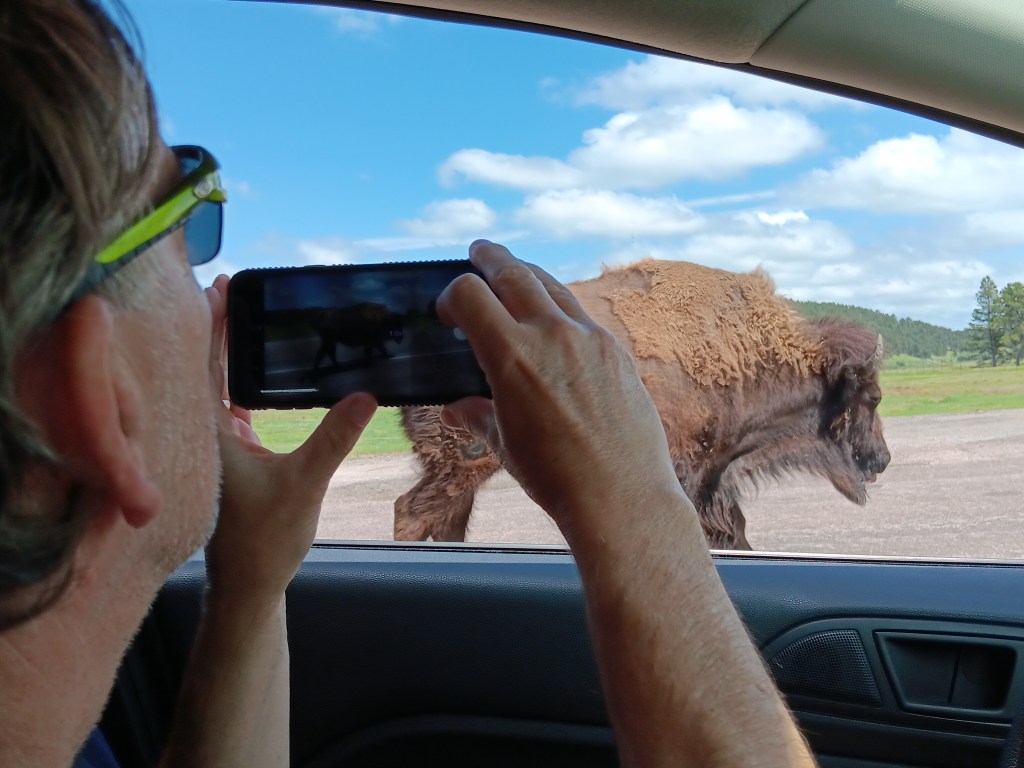
We don’t know what the deal is (probably salt from the roads?), but this herd also had a liking for licking cars, starting with the one parked in front of us. And again, one of the bison gave us the stink-eye through the front window, then spent about five long, long, long minutes alongside Nippy, deciding if it wanted to ram us or just move on.
Scary bison makes a decision
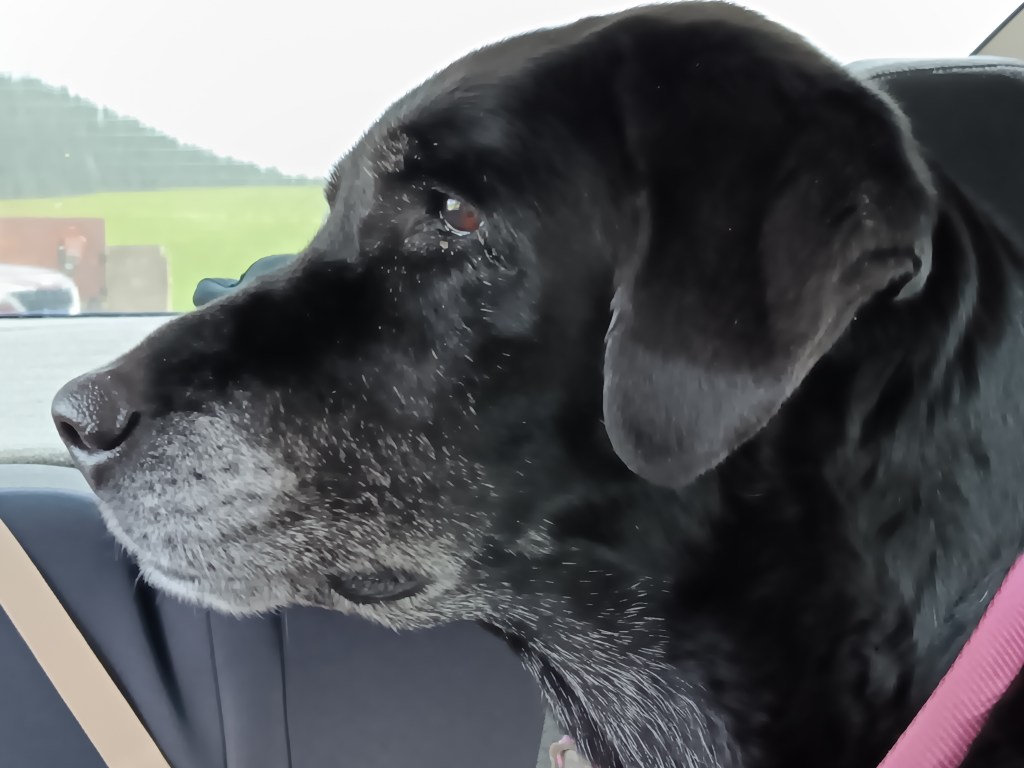
A certain dog in the back seat was riveted, but this time she didn’t bark. She just sat there making little huffing sounds, clearly aware now that the beasts surrounding us were much bigger than she is.
Must. Not. Bark!
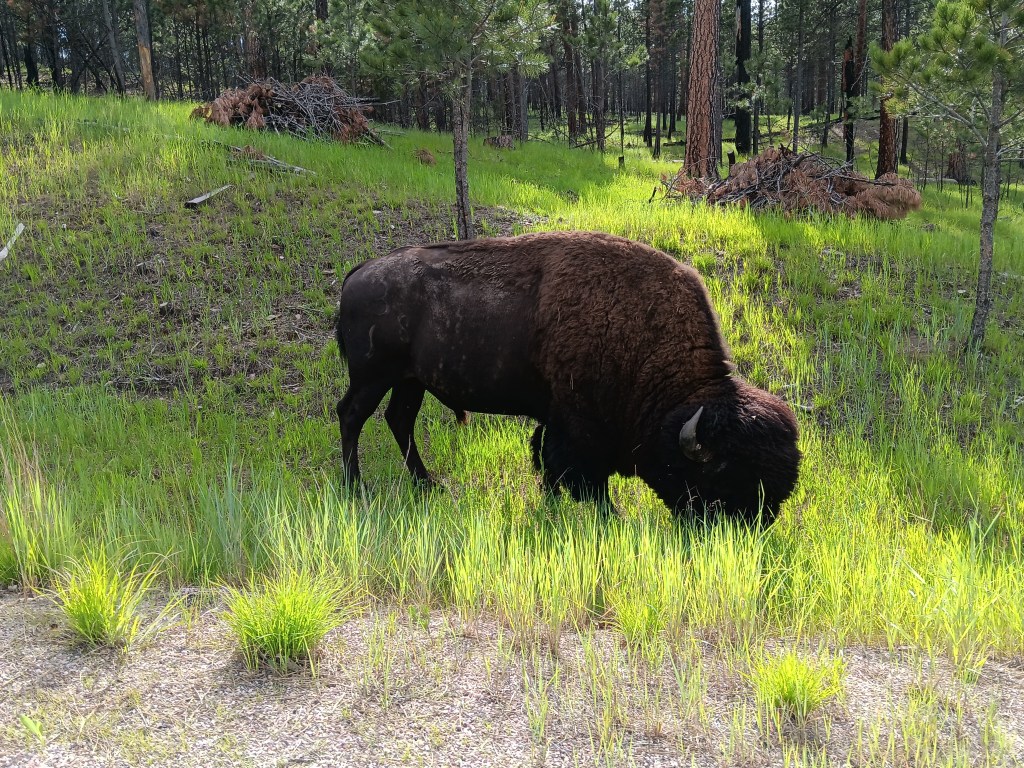
We moved on when they moved on, and had a lone male on a side road nearly to ourselves as we made our way to Custer, with Needles Highway as our next major adventure.
We did stop at Calamity Jane Coffee Shop in the cute town of Custer to help Simon deal with his lack of caffeine, and while I’m not usually a coffee drinker, I got one anyway and it was honestly the best cup of mocha and Joe I’ve ever had. Sadly, Jane wasn’t on hand that day, but her employee was friendly and the bathroom was clean. Score!
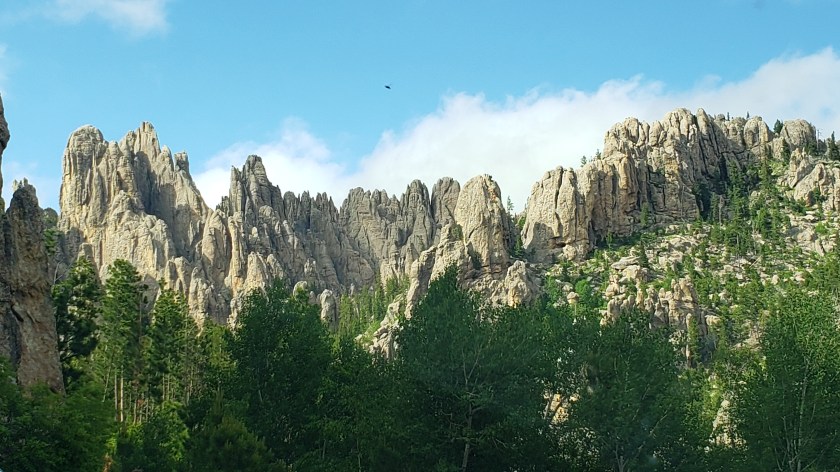
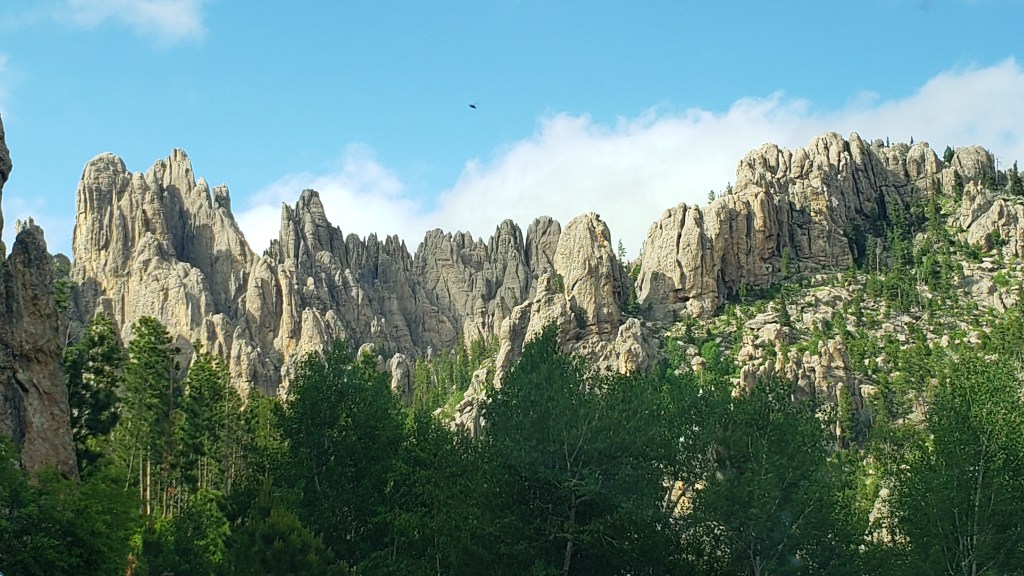
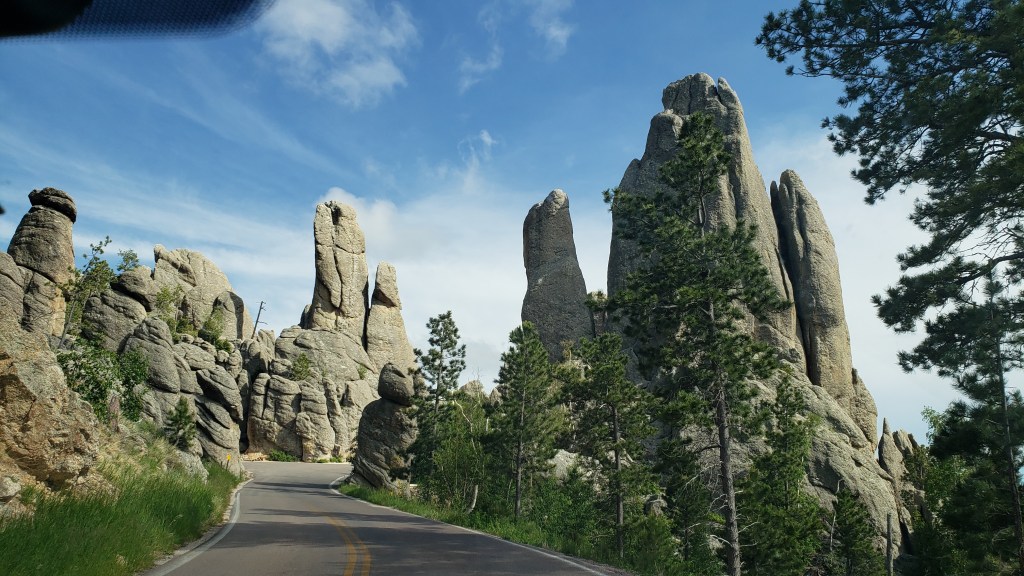
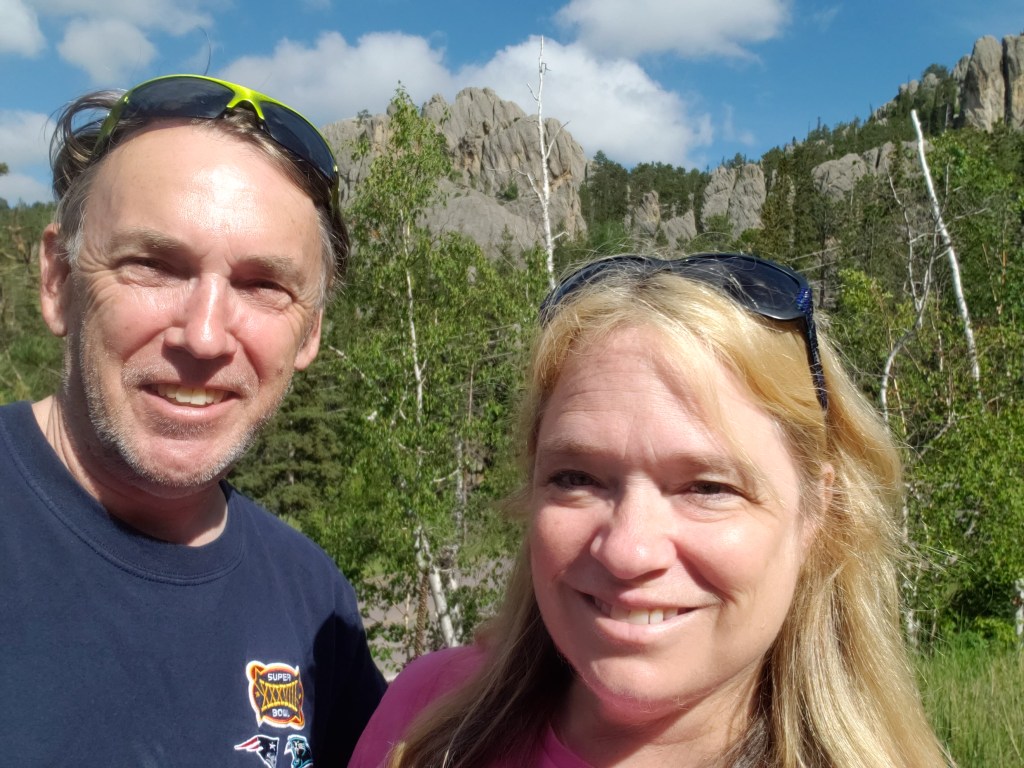
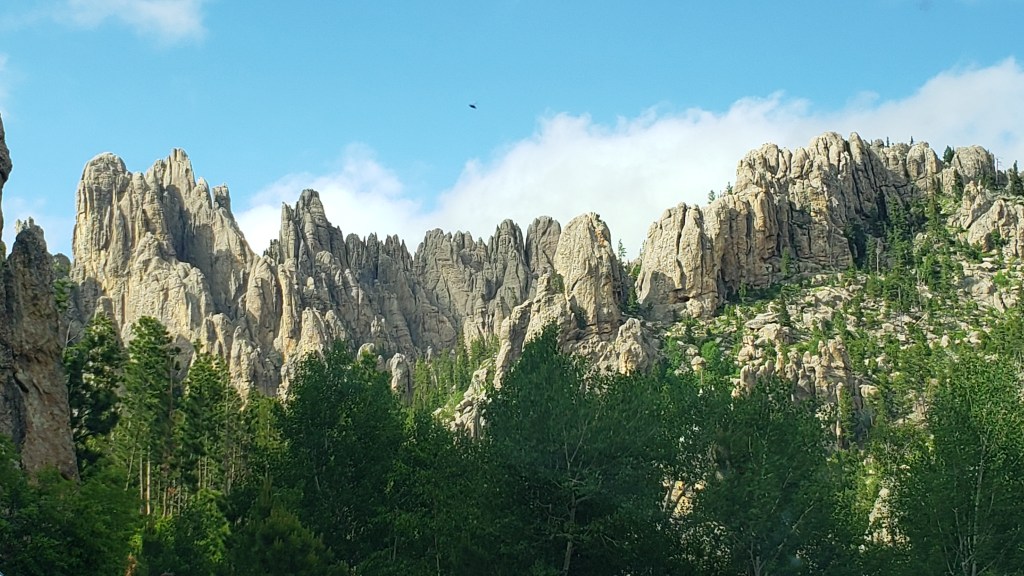
Needles Highway is a 14-mile scenic drive punctuated by the most outrageous granite spires that were pushed up sideways by the forces of nature. Every turn reveals a thrilling aspect, and we goggled at the magnificence and took selfies like the tourists we are.
South Dakota’s governor, Peter Norbeck, mapped out the entire trail that would become Needles Highway on foot and on horseback. It’s so winding, and has so many tight turns, it takes nearly an hour to drive just 14 miles, even longer with stops for panoramic photos. But you want to go slow, because this is prime elk territory, and we’re out for elk sightings today. Right?
There are three tunnels along the highway, carved through the rock by wind, rain, and the area’s harsh winter weather. Each tunnel is impressive, but we’ve never seen a tunnel more impressive than the Needle’s Eye. Nippy is small, but Simon could touch the side of the Eye as we drove through.
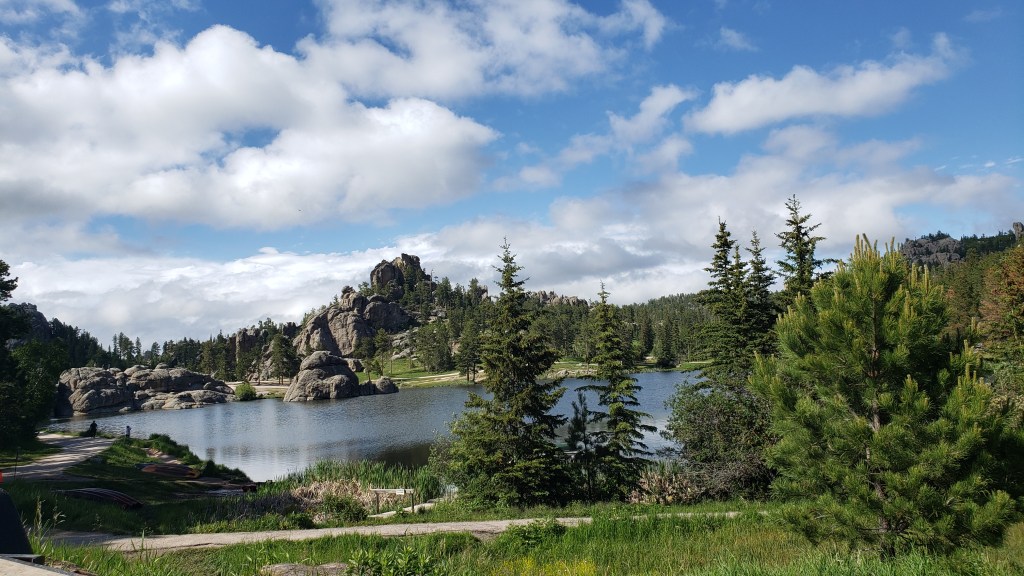
We agreed we’d have to come back and do Needles again, next time stopping at the lovely Sylvan Lake for a stroll and a picnic lunch. When we finally did that a couple of days later, the weather suddenly turned freezing cold, and was hammering down with rain and pounding with thunder and lightning, so we sat in the car and had lunch while feeling very, very sorry for a bridal party running through the storm to get to the lake’s reception hall, with all the girls in sheer, sleeveless formalwear and the bride’s veil whipping in the wind.
This is what Sylvan Lake looked like three minutes before a massive thunderstorm hit
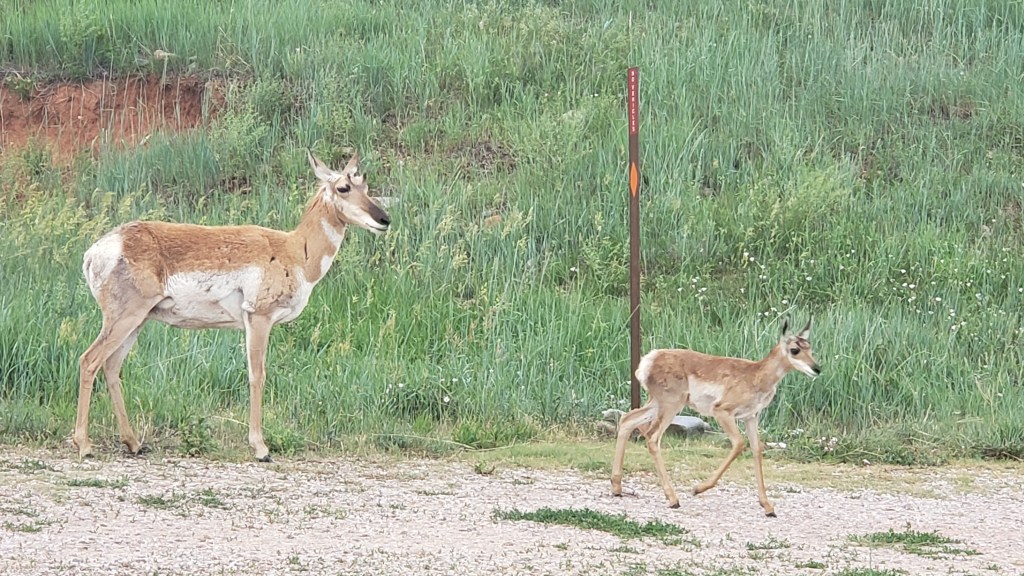
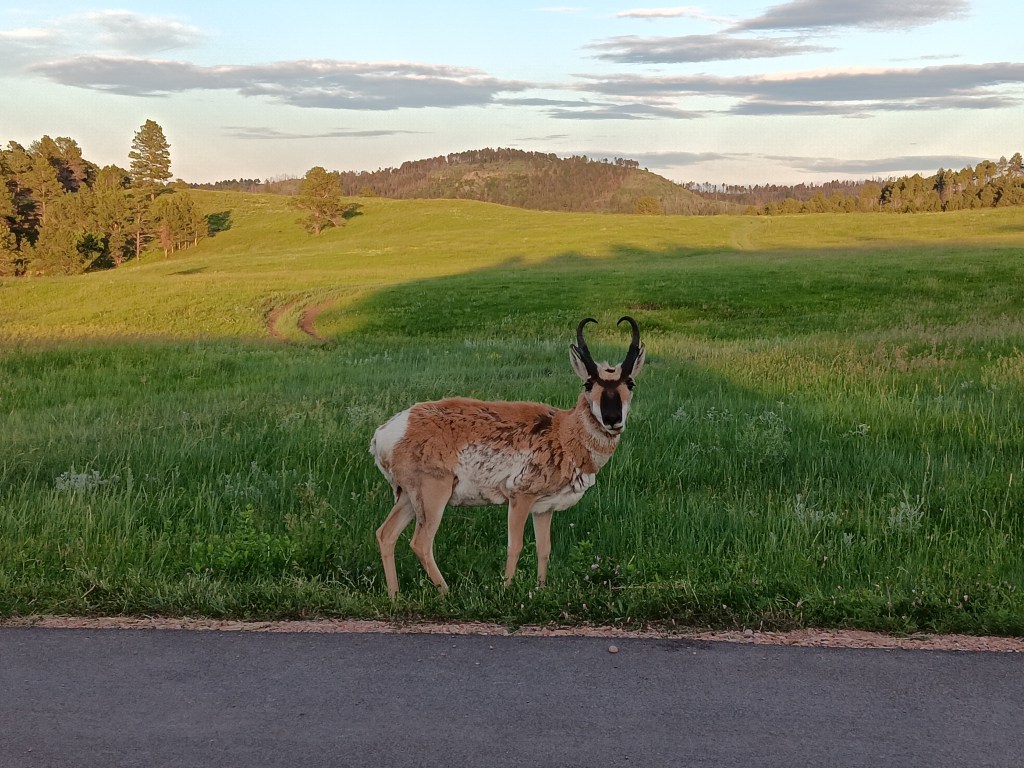
After Needles we went back to the Wildlife Loop, where the Visitor Center assured us we’d have a chance at spotting elk as dusk came on. Instead, we saw deer and lots of pronghorn, including the wonderful treat of a mama pronghorn and her baby, with daddy not far behind.
We made two more trips into Custer State Park after that, determined we’d see elk, but to no avail. To add insult to injury, a couple we got to chatting with at the campground said they’d seen a herd of elk right on the road the previous evening, at around 6:30 p.m., which was about 15 minutes before we arrived at the same spot that same evening.
Would it take until Yellowstone before we’d see elk, or would South Dakota be kinder to us than that? Either way, what a grand and exciting place for wildlife and for absolutely magnificent scenery. But Custer wasn’t done surprising us yet.
We entered the new-to-us state of South Dakota on June 19, eager to see more of the Dakotas after a fantastic stay in the northernmost state in the Midwest. We’ve got a week in Hermosa, then 3 full days in Sturgis, to see Custer State Park, Crazy Horse, the town of Custer, Deadwood, Badlands National Park, Needles Highway, and Six Grandfathers, now known as Mount Rushmore.
To break up the long trip from Medora to Hermosa, we had an overnight stop at Harvest Host location, Belle Valley Ancient Grains in Newell, SD, which felt incredibly rural but was just minutes off the highway heading south.
We learned about the ancient grains owner Brian is farming, and came away with whole Spelt and White Sonora Wheat that we’ll make into grain bowls and hot cereal.
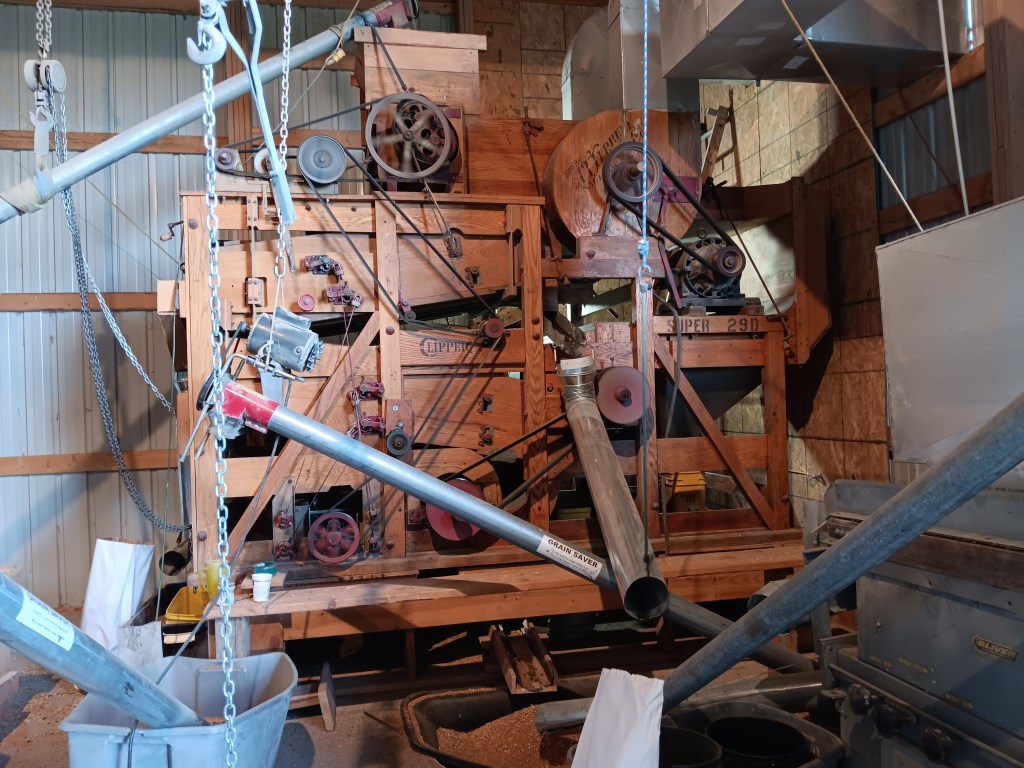
The 1950s machine Brian uses to separate the grain from the waste, before putting it through high-tech machines that finish the job.
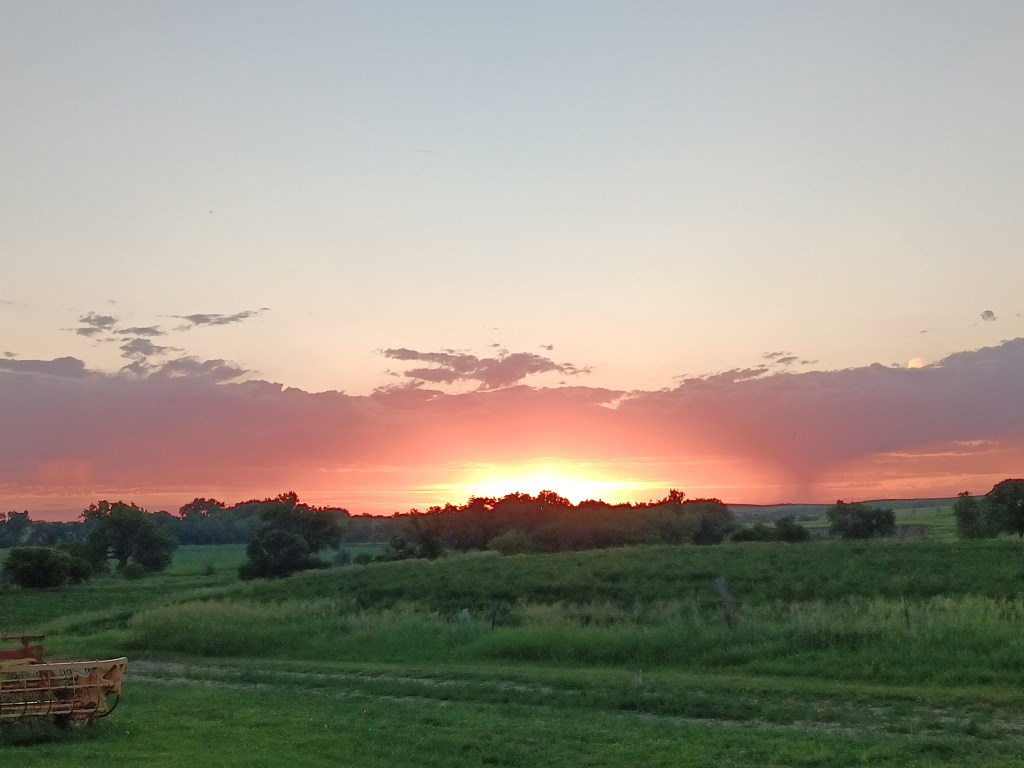
It’s hard to beat a stunning sunset over pastoral land
Then it was on to Hermosa, with a butt-clenching 11 miles through construction cones on a highway with a speed limit of 75mph. You can imagine the number of cars that passed us after the construction zone ended. We’ve decided their honking and single-finger salutes are congratulatory celebrations of how well we navigated a tight lane with harrowing twists and turns, and we felt very special indeed.
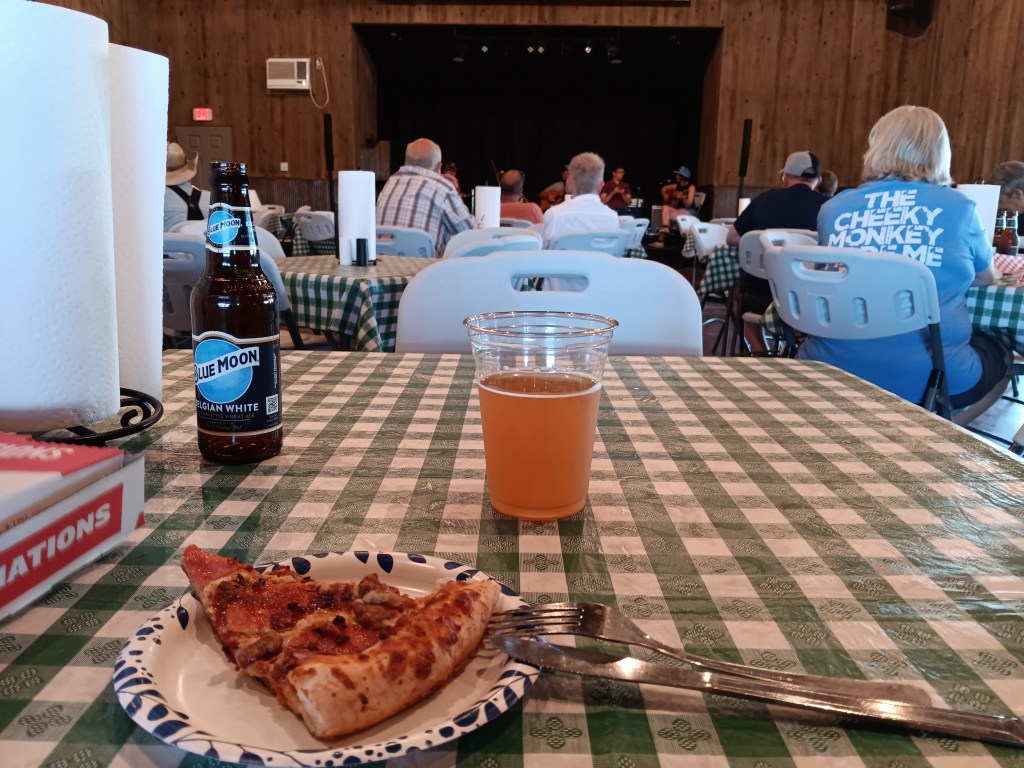
But enough of that, and on to the touring. We settled in at Heartland RV Park, enjoyed a pizza and live music at the campground’s event center, and had a relatively quiet night (rain is loud when you’re in a metal can), then made our way to Badlands National Park the next morning.
Happy boy!The karaoke was good, and the pizza was great!
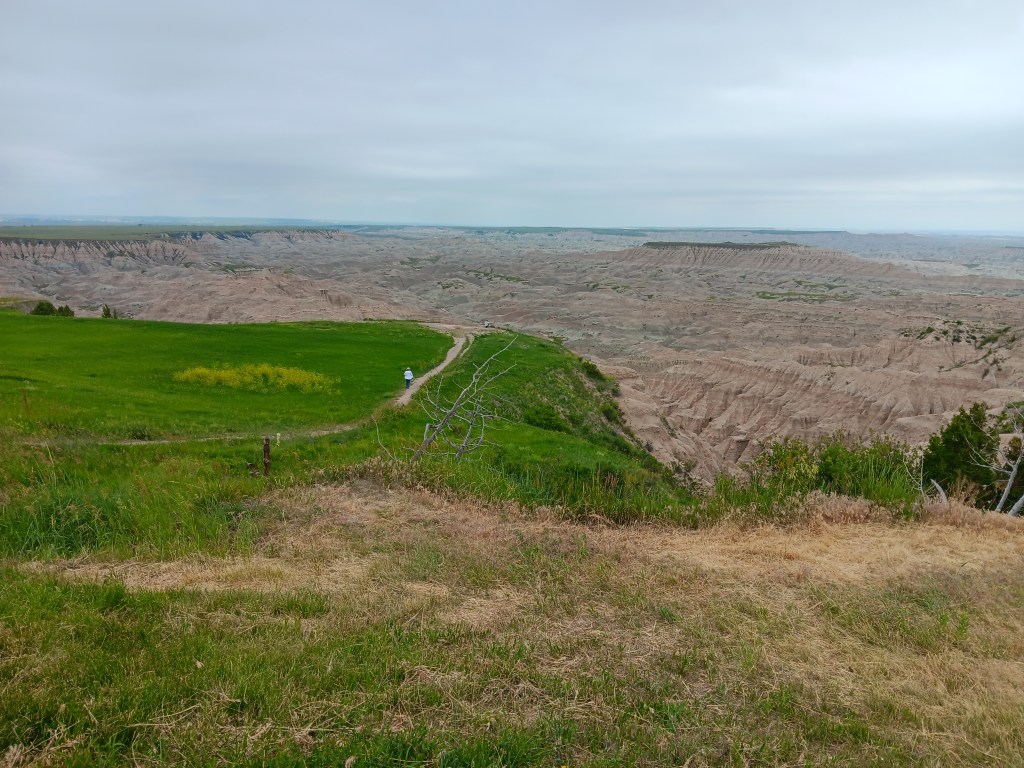
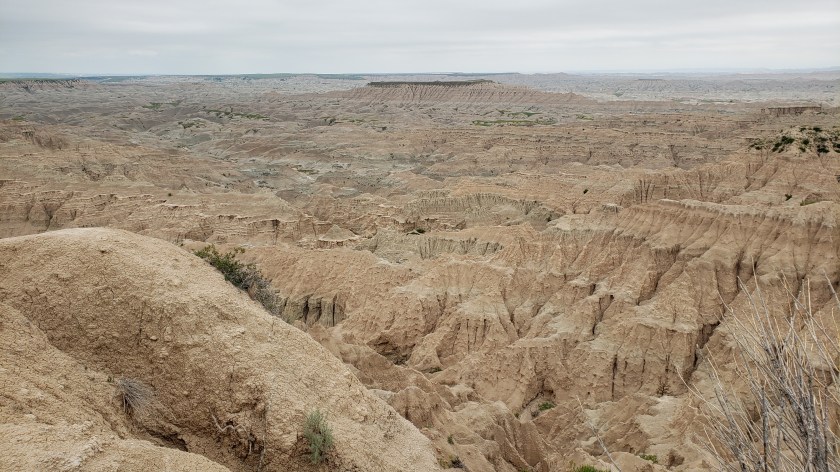
It was quite cloudy and windy all day, but that didn’t deter us. We were on a mission to see something other than the rolling hills we’ve been driving over, and even before we reached the park, the landscaped changed. Immediately off the highway, the hillsides on either side of us opened to two massive valleys, with structures completely different to the ones we saw in Theodore Roosevelt.
For scale, that teeny tiny white dot you can barely see at the end of the dirt pathway on the far edge of the plateau is Simon, and a lady who had just come from the Black Hills is in the foreground.
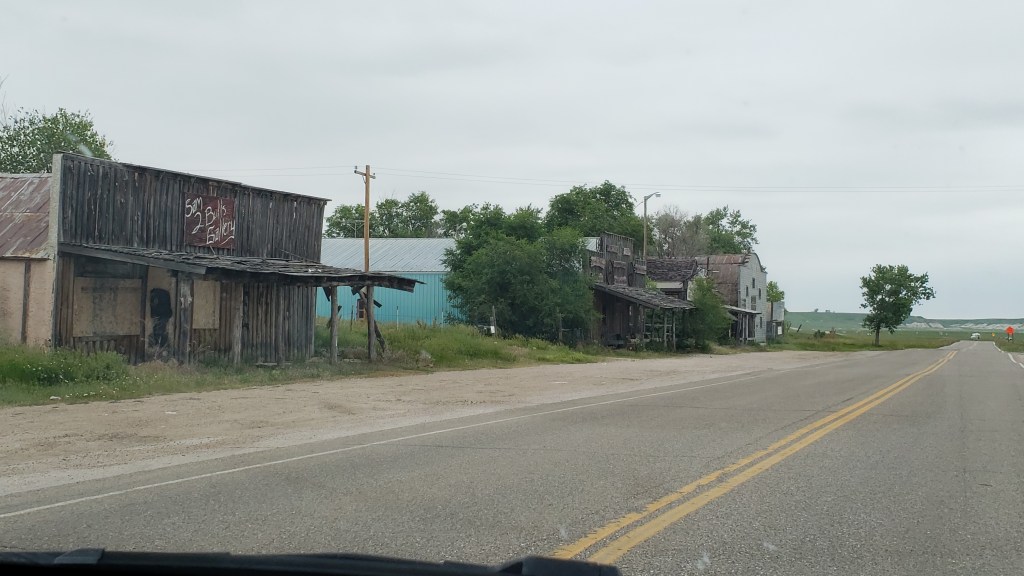
We made a quick stop at the Visitor Center, where they told us we could find gas in the appealingly-named town of Scenic if we needed any, but when we found it, it had obviously been a dead town for years. Decades maybe. The gas station had a price of $5.55 per gallon, so we’re guessing the place drew its last breath back when Jimmy Carter was President. Luckily, Nippy is very sippy, so we didn’t need to fill up until evening.
Is Scenic scenic? You decide!
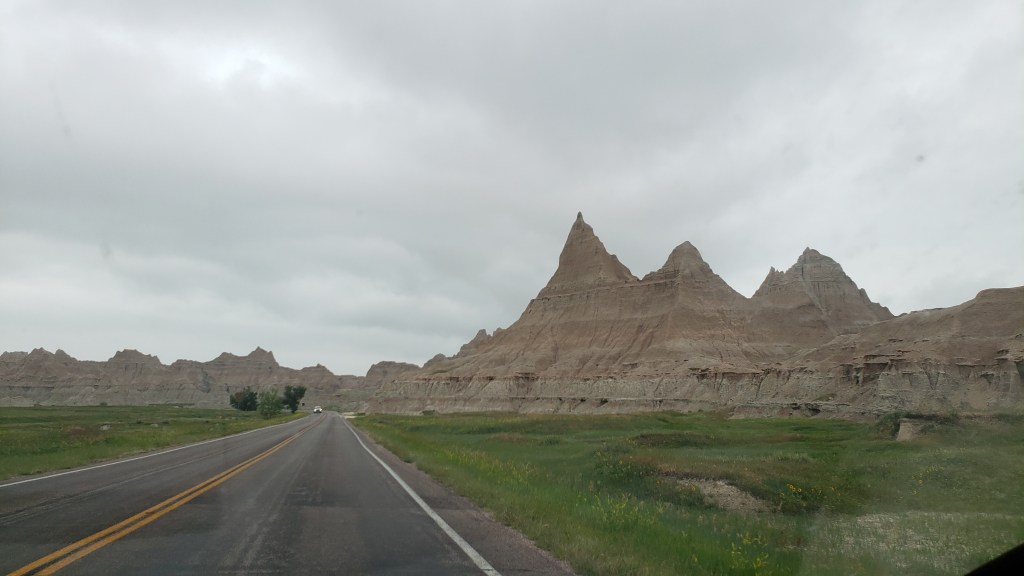
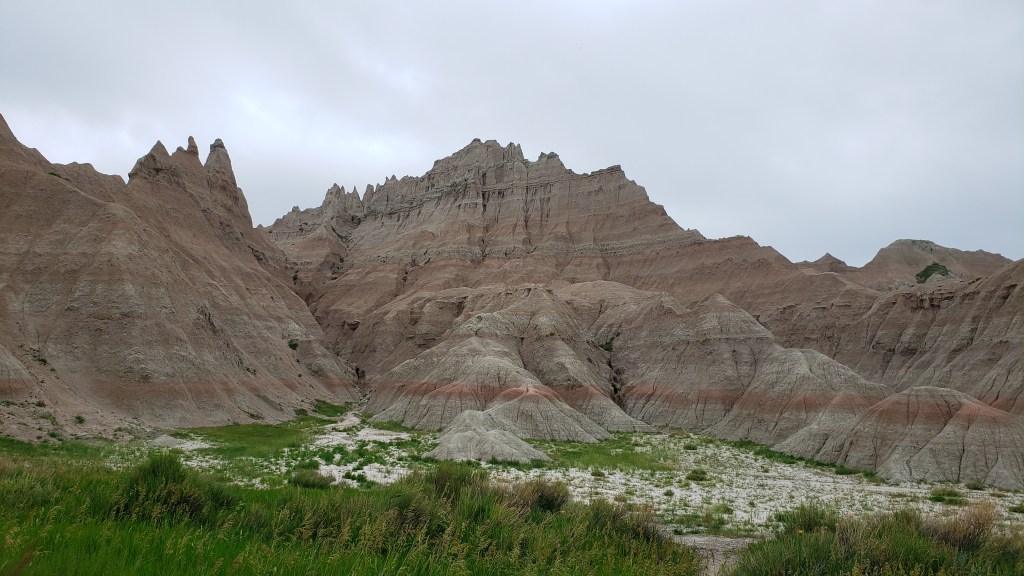
Once we reached the first outcroppings, it was obvious we were in an entirely new landscape. The peaks were sharper at the top and more angular as they descended, with a softer, more “melted” look when we got up close.
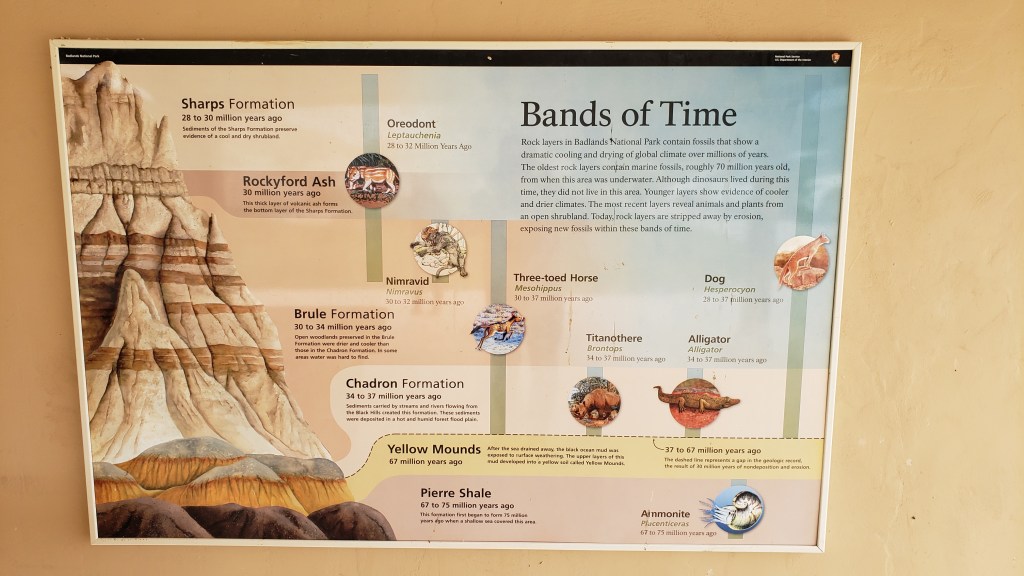
We were given a guide that showed what each later represented, moving from the oldest layers at the bottom to the youngest at the top.
The badlands here were created by runoff that washed into an inland sea as Colorado’s Rocky Mountains rose into existence. We could see the layers when we took a short hike into a wide canyon, and the ground we were walking on was primarily the finest silt imaginable. Just like walking on talcum powder.
The white pathway feels exactly like talcum powder
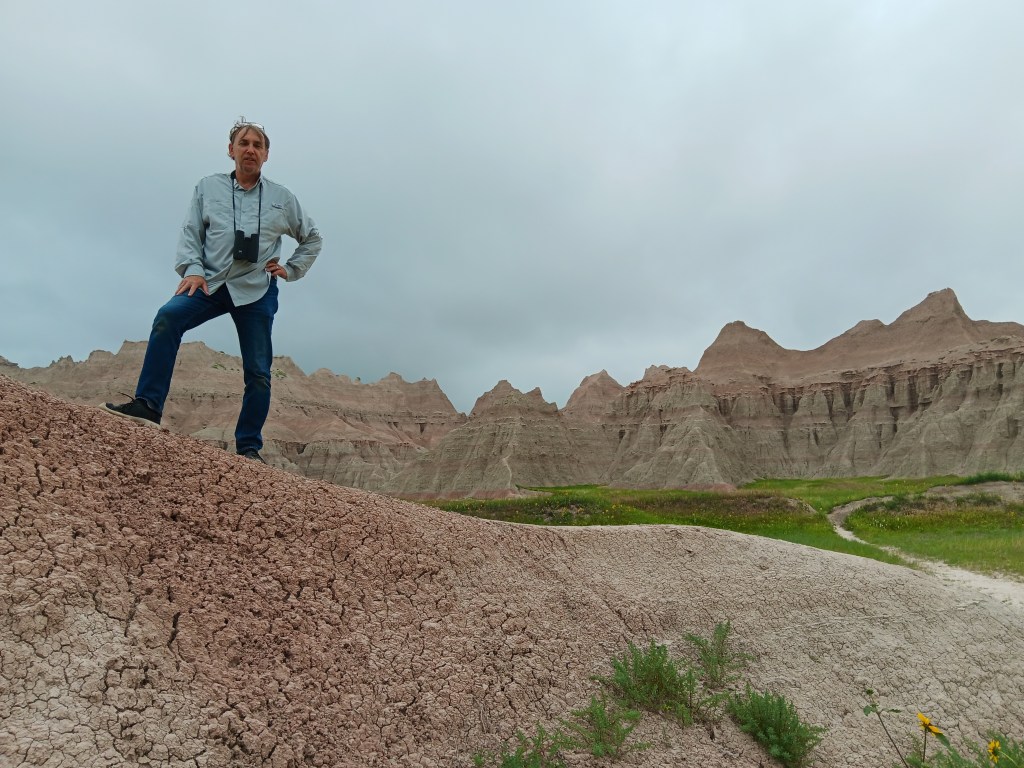
Other areas in the same canyon were like petrified mud, hard enough to create hills you could stand on but also dry and cracked on some surfaces.
This ancient sediment is described as “popcorn” rock
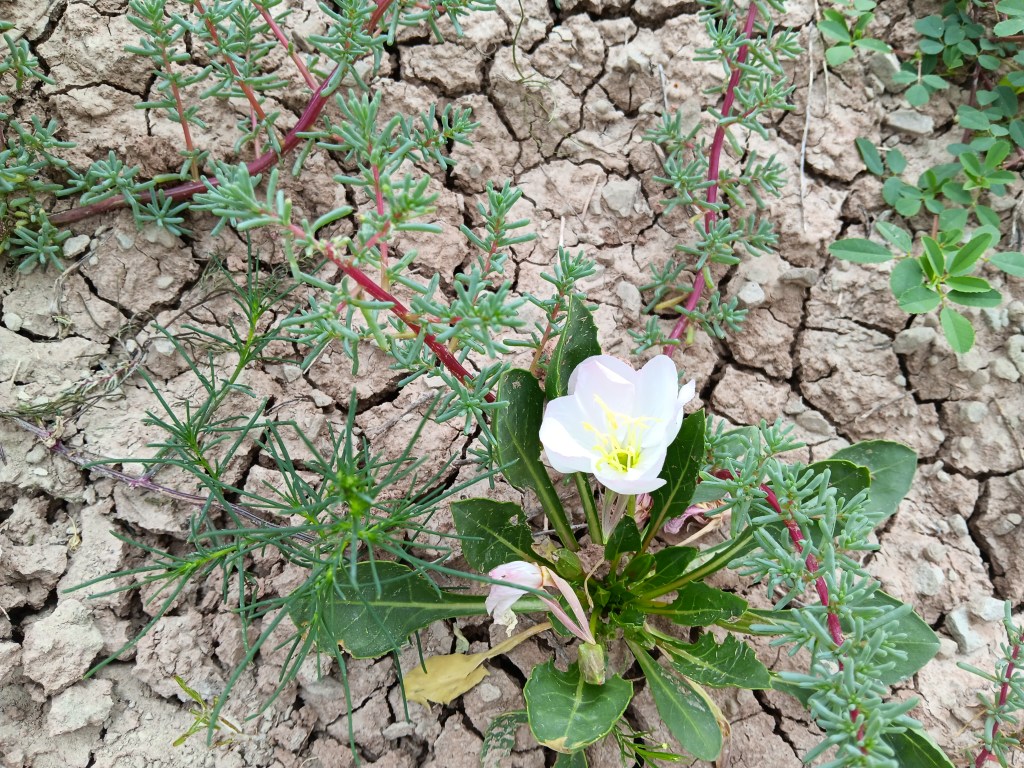
Even on that barren surface, the most delicate flowers have taken hold.
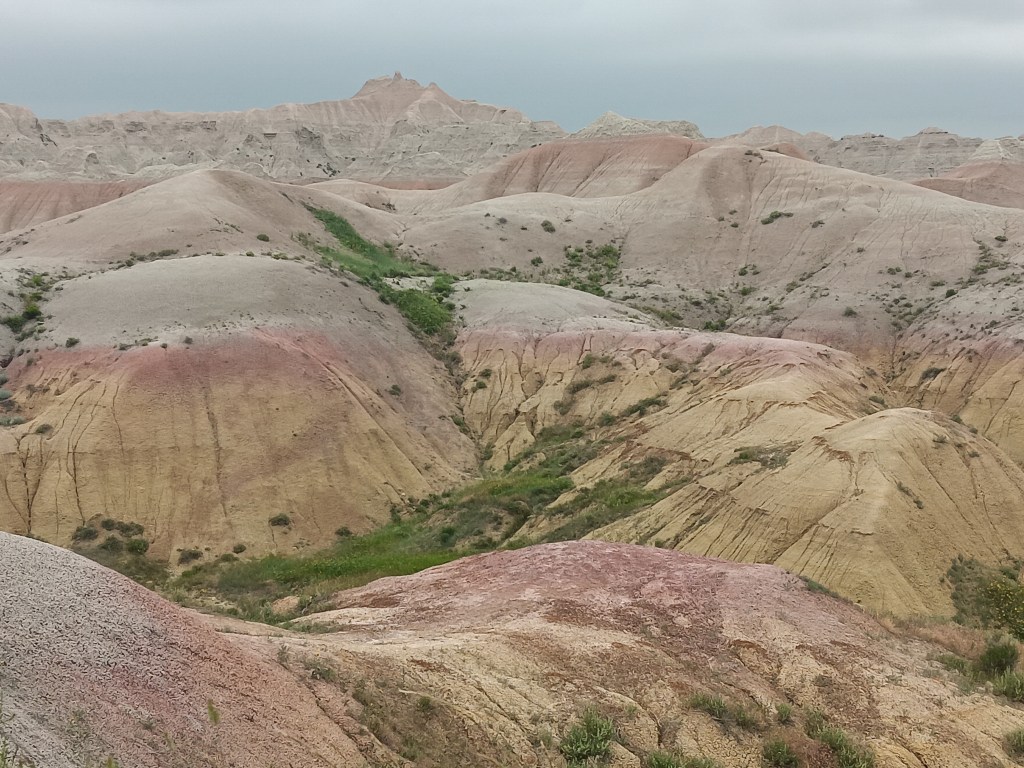
Another surprise were the “yellow mounds” (called paleosols) that were left when the inland sea drained away and chemicals from its plants left staining of yellow, red, purple, and gray. Against the cloudy sky, they’re less striking, but when sunlight hits them they positively shine.
Some yellow mounds we saw were only yellow, while most were multi-colored. We missed the sunlight photos, but you can imagine.
We could post a few hundred photos from the park, but we’ll spare you that and instead share a few from the absolutely bizarre town of Wall, our exit point from the park as we headed north to Hermosa.
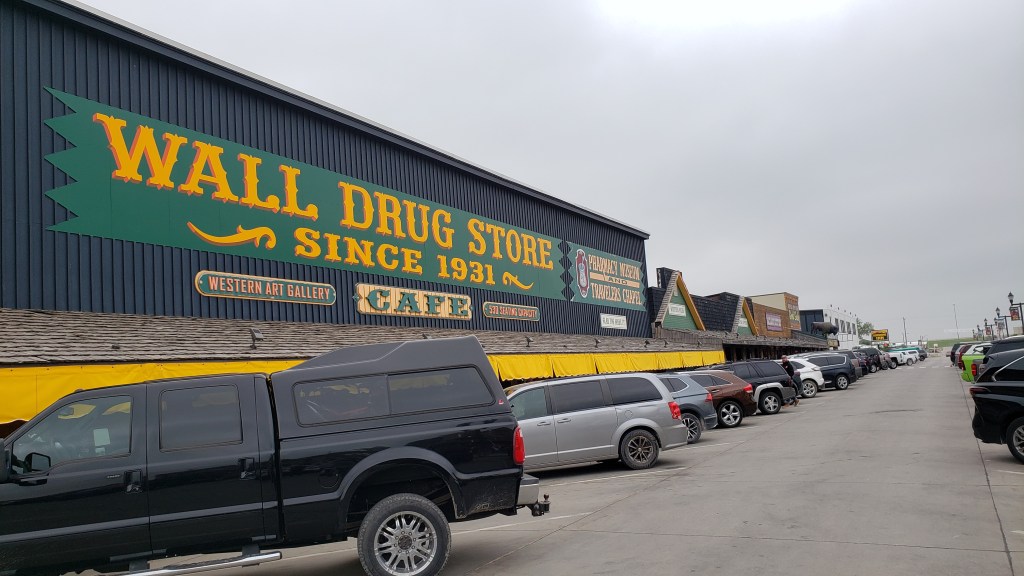
Normally, commercials on TV and billboards along highways have zero impact on us. But Wall Drug Store is too smart for that, and the sheer number of billboards they’ve installed made it inevitable Simon would have to see what all the fuss was about.
Our introduction to Wall
Like Buc-ee’s, if you’ve been there, you know. Wall Drug Store is just…massive. Like, a full city block massive.
Not all of these storefronts are Wall Drug Store, but most of them are
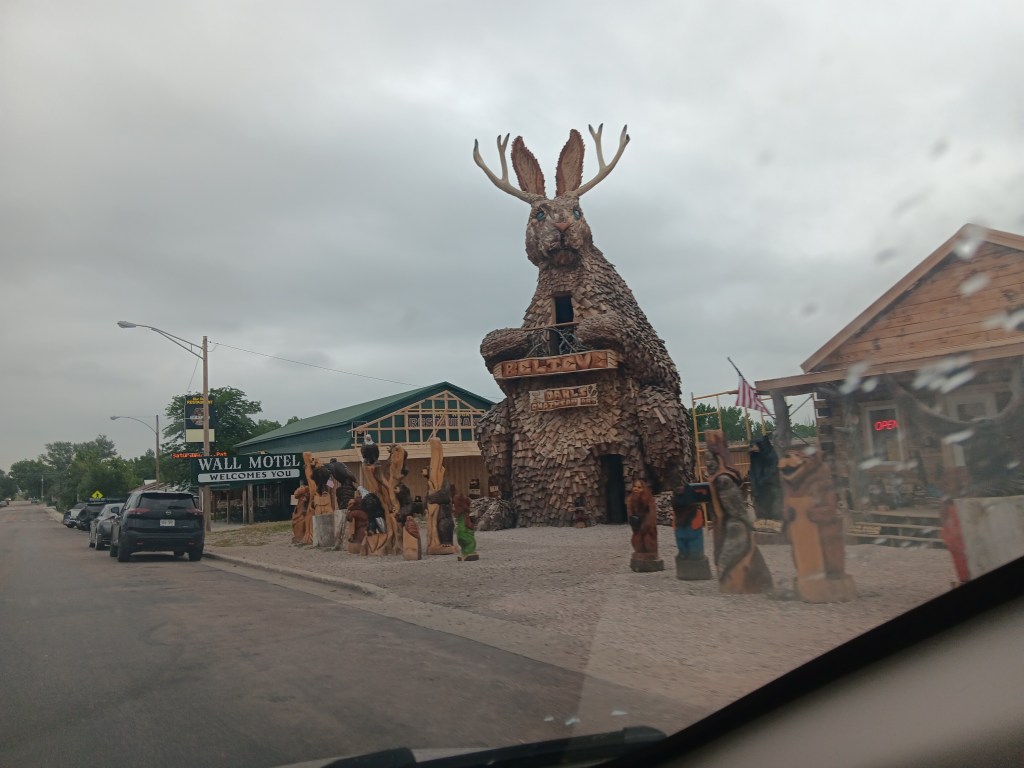
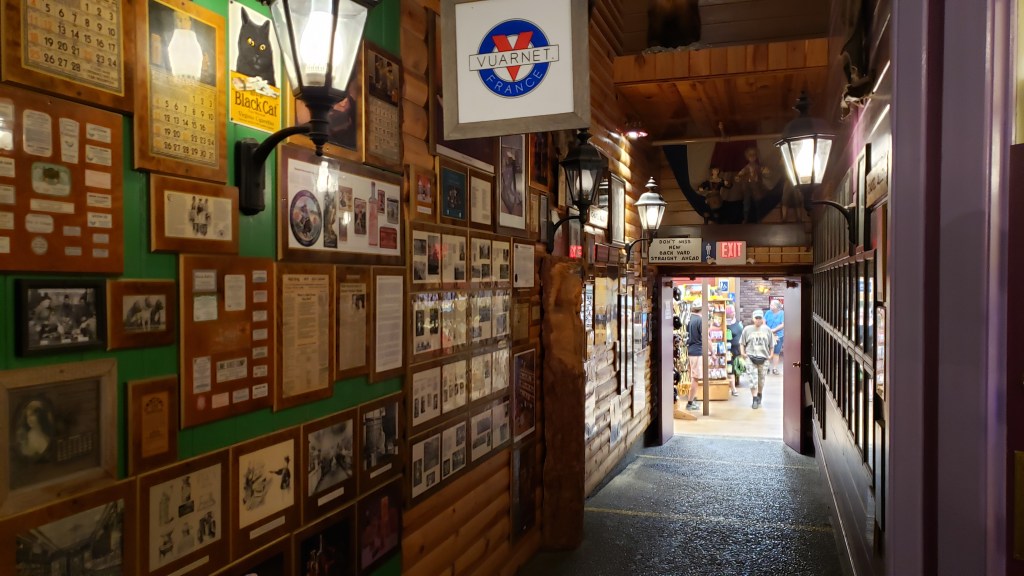
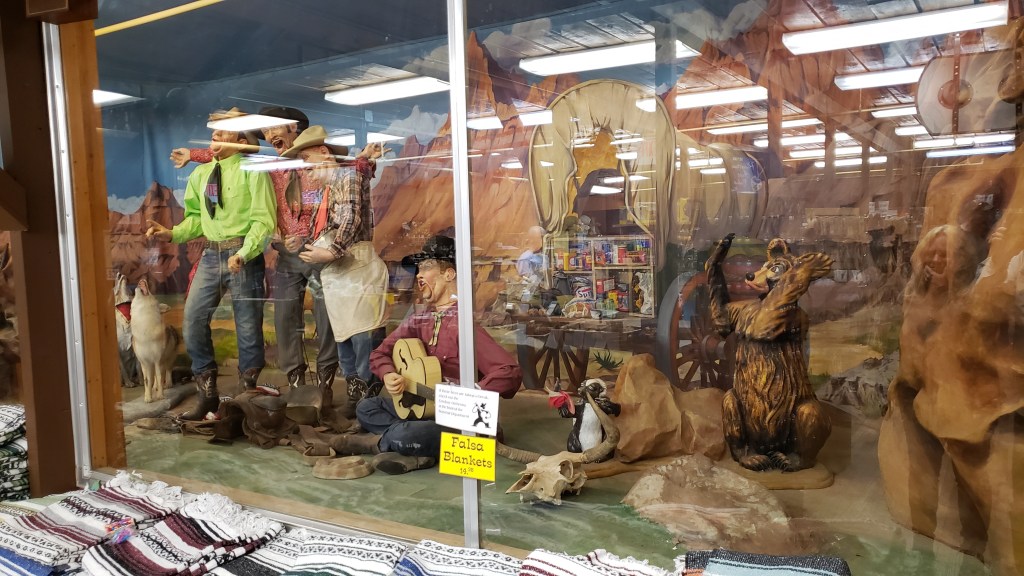
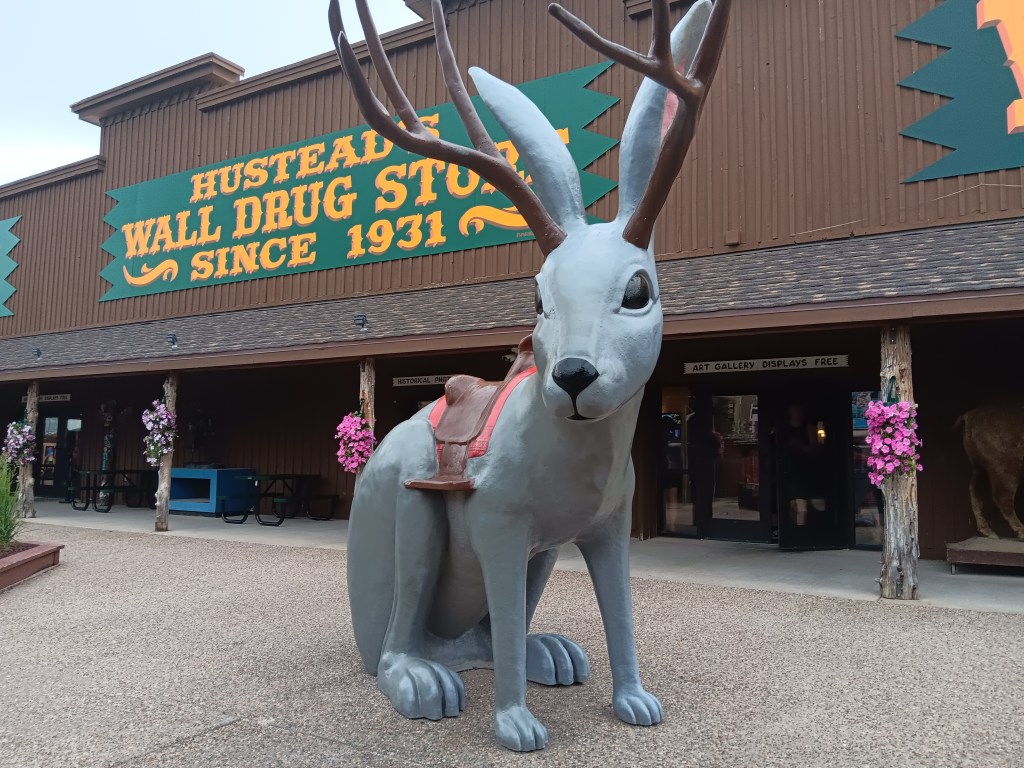
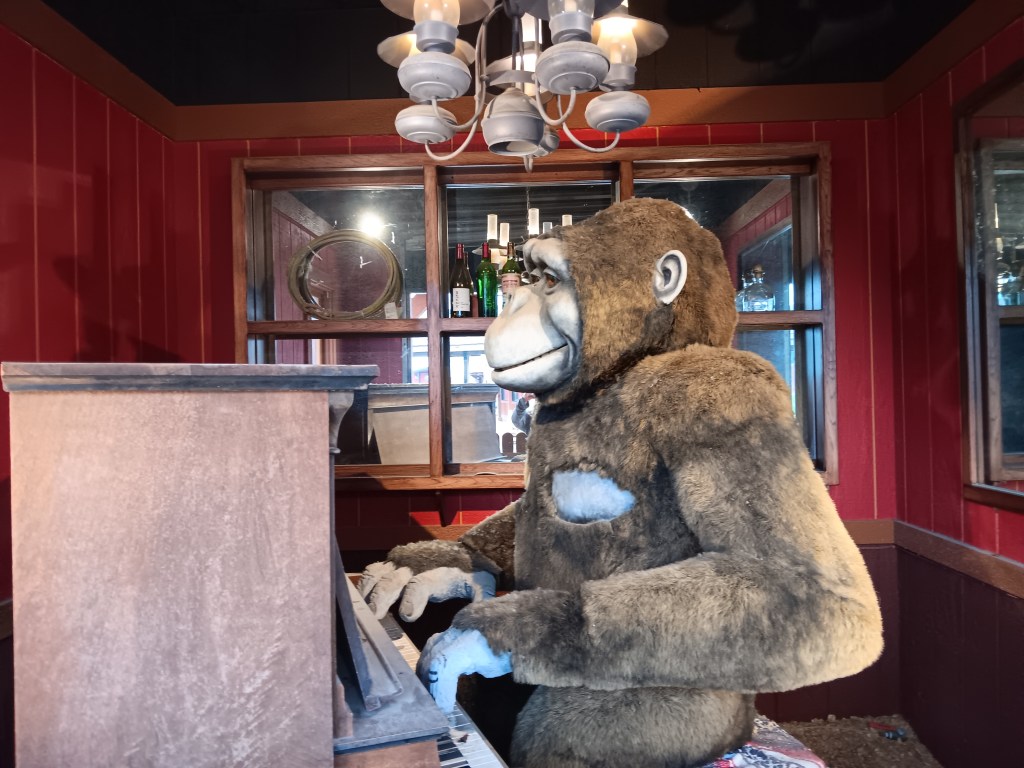
Want a billion shot glasses, T-shirts, cups, mugs, magnets, and every other form of tourist crap you can imagine, all wrapped up in interactive stuff that includes a jackalope the kiddies can sit on, a gorilla animatronic playing a piano, and an insane trio-plus-one of mechanical cowboys singing in a wild-west setting of howling coyotes and an upset bear? Wall Drug Store has all of it and much, much more.
This is a terrible photo, but there was no way to avoid the glare. Still, it softens the full horror.
Why?
We didn’t buy anything. We didn’t even try the “free water” the store so proudly advertises on the front façade. But we’ll remember Wall Drugs with the same fondness we remember that wacky gas station with a beaver as its mascot.
Tomorrow (subject of our next blog) would see us making the first of many trips into Custer State Park, and we’ll just say that at $20 for a seven-day pass, we absolutely got our money’s worth.
Where do we even begin? With the epic wildlife, the rugged buttes and valleys that make up the landscape, or the absolute vastness of this national park that has launched itself into our top favorite places in the U.S.? It’s the easiest blog to write due to our enthusiasm, and the hardest due to the immensity of its impact on our minds and our hearts.
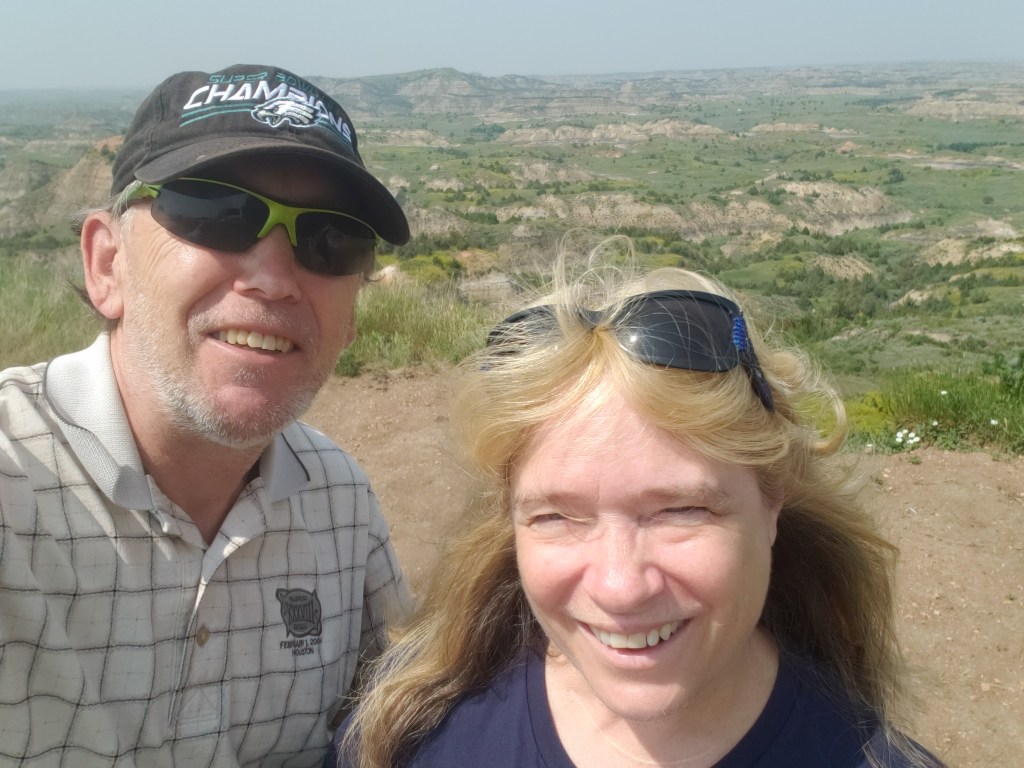
As with all photos, you can’t get the scale of the landscape behind us. It’s just…huge!
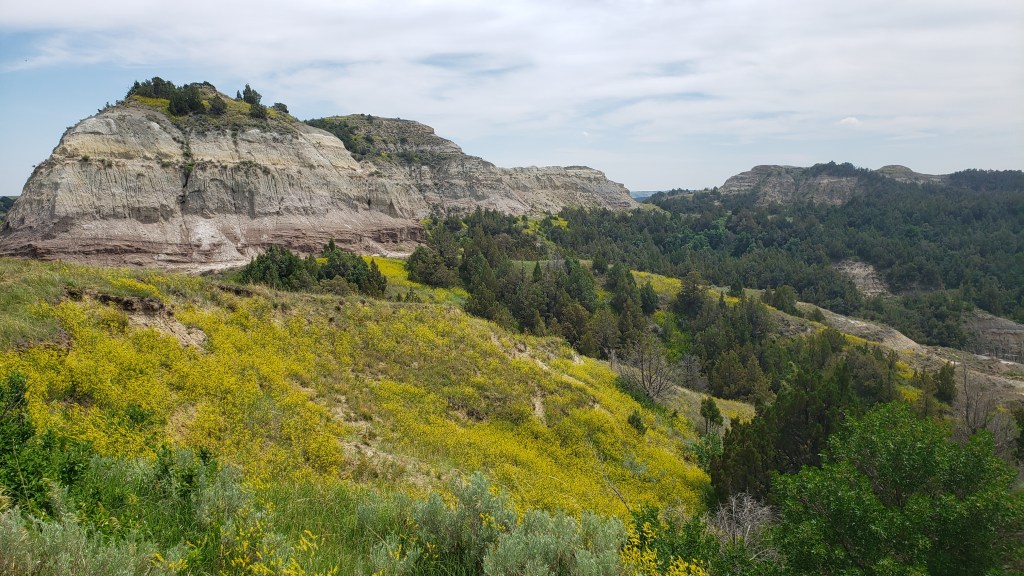
We won’t bore you with the facts around President Roosevelt’s hand in protecting 230 million acres of land and establishing the National Parks system, or the history of the mounds, buttes, ridges, and points that make North Dakota one of the most distinctive landscapes we’ve seen so far, save to say each layer that now makes up the area’s badlands was formed, evolved, and, in some cases, was laid bare over the course of 65 million years. It’s a big number, but as we drove the Scenic Loop in the park’s South Unit, and later, the North Unit, “big” was a word that took on new meaning.
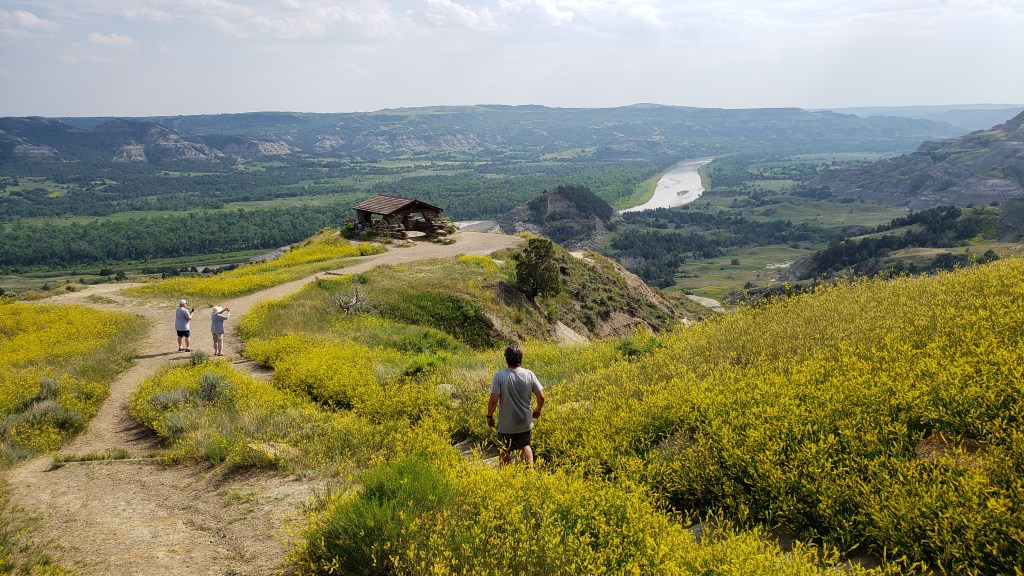
Everywhere you look there’s a gorgeous view to enjoy
Still in awe of the seemingly endless farmlands and prairie lands as we drove from Bismarck to Medora, the small (and very touristy) “cowboy” town where we had a reservation the Red Trail Campground, the landscape changed, and almost without warning we were looking at colossal sandstone, siltstone, and mudstone “mountains” towering over deep valleys with rolling green hills and meandering rivers.
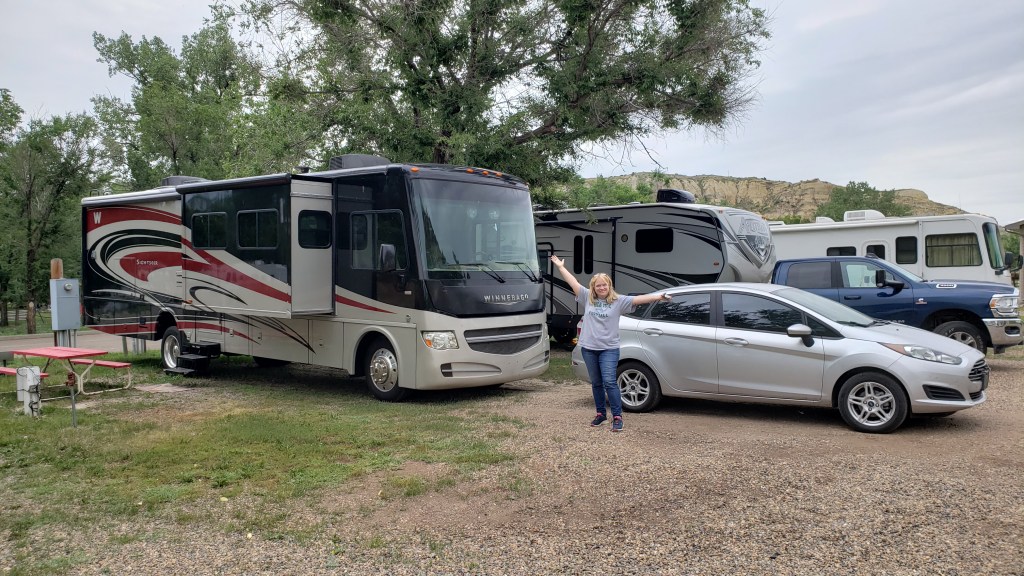
Fati resting after her exertion, and Nippy getting ready for a scenic drive
That morning, as we headed to Medora, we agreed we’d spend the evening and the next day catching up with work, then visit the South Unit on our second full day and the North Unit on our third full day. Obviously, that was a stupid and unrealistic plan, and our first trip into the South Unit saw us chomping at the bit as we entered the park around 7pm on the evening of our first day, lured by the promise of prairie dog towns and a greater chance at seeing wildlife around dusk.
Just minutes after entering the park we came upon our first prairie dog town, where hundreds of the adorable little rodents with almond-shaped eyes and sticky-uppy tails were going about their evening grass munching, while “sentinels” kept watch, throwing their whole upper bodies backwards and their arms upwards while emitting the cutest bark imaginable as part of their warning system.
It was straight out of a David Attenborough documentary, and Simon could have stayed there watching them until dark, but after about 20 minutes and a bit of prompting, he pointed Nippy up the hillside to see what else was in store.
The landscape had us utterly captivated, and over the course of three days we never grew tired of seeing the majestic hills and valleys.
We’re not sure what the flowering yellow plant is, but it smells great!
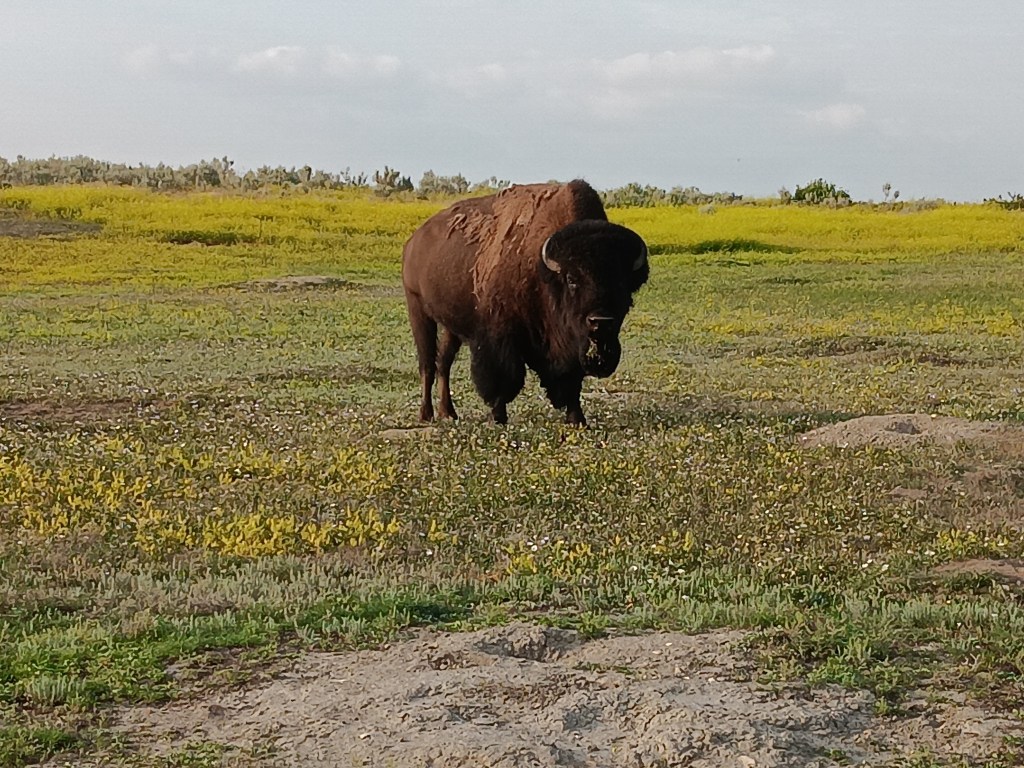
But we had buffalo to find, and again, it wasn’t long before we spotted one, then drove alongside three more, so we congratulated ourselves on our incredible luck.
The lone straggler
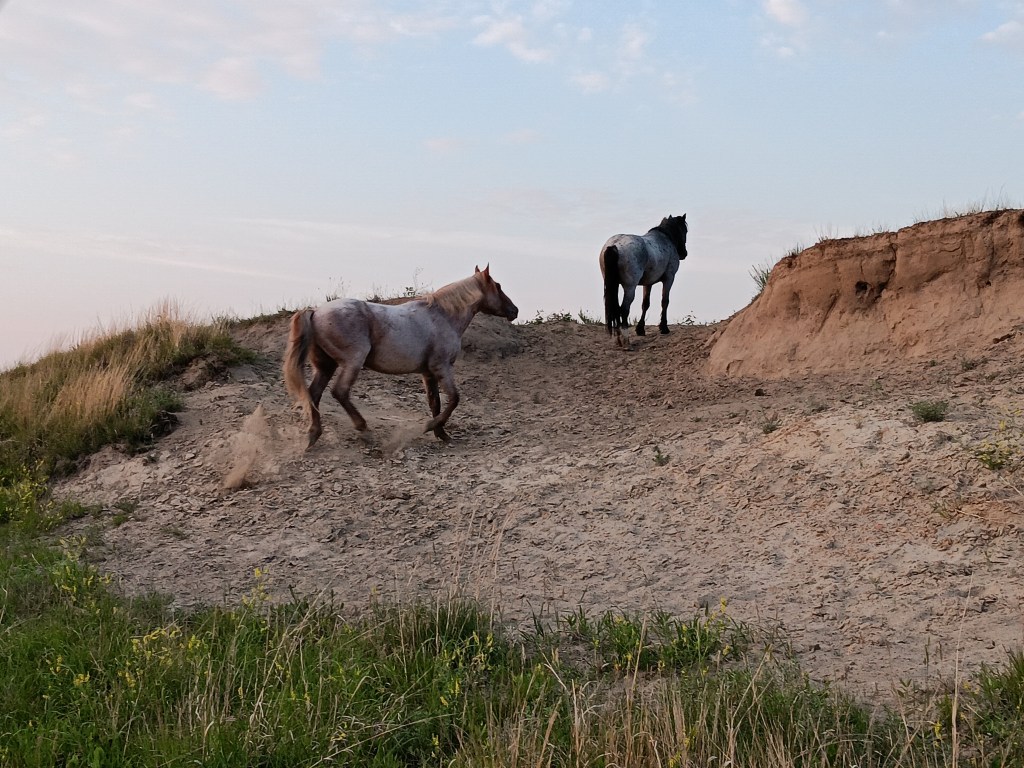
We weren’t going to do the entire drive that first evening (made longer due to the south part of the loop being closed, so it was an out-and-back journey), and just before we turned around we were treated to a small group of wild horses, which capped off an excellent evening of wildlife viewing.
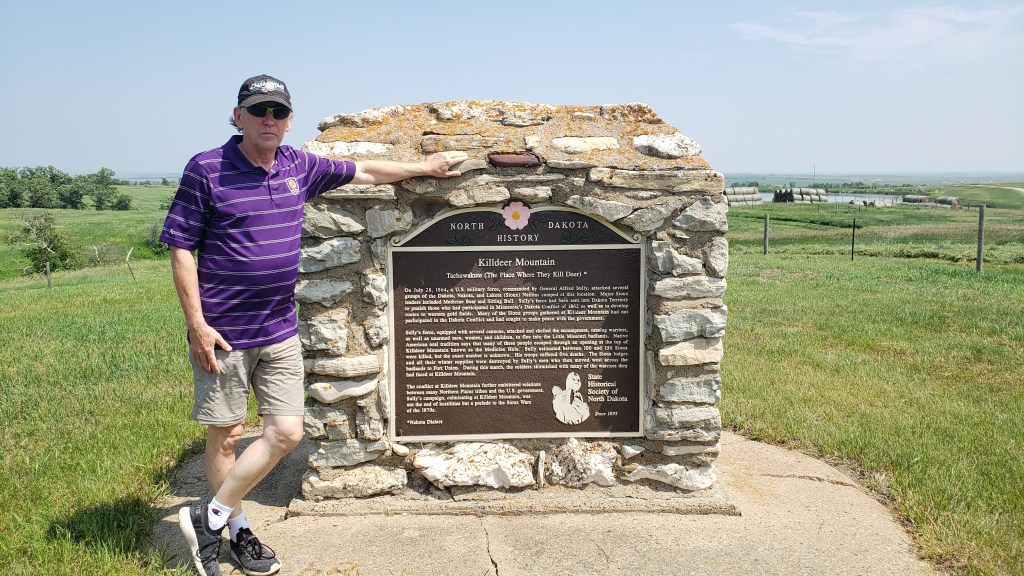
The next day we went up to the North Unit, fueled by the bacon and pancakes I made because I’m no quitter and was determined I’d be up to the challenge. The drive was a bit more difficult due to a stretch of Highway 28 being closed, so we had to detour about 66 miles, round trip, out of our way. Along the way, Simon saw a sign for Killdeer Mountain Battlefield, and being the sort of person who cannot pass anything by if it has even the slighted hint of interest for him (and despite the fact that he’d been wondering about finding a restroom for quite some time), he made the decision to find the battlefield, and he was unanimous in that.
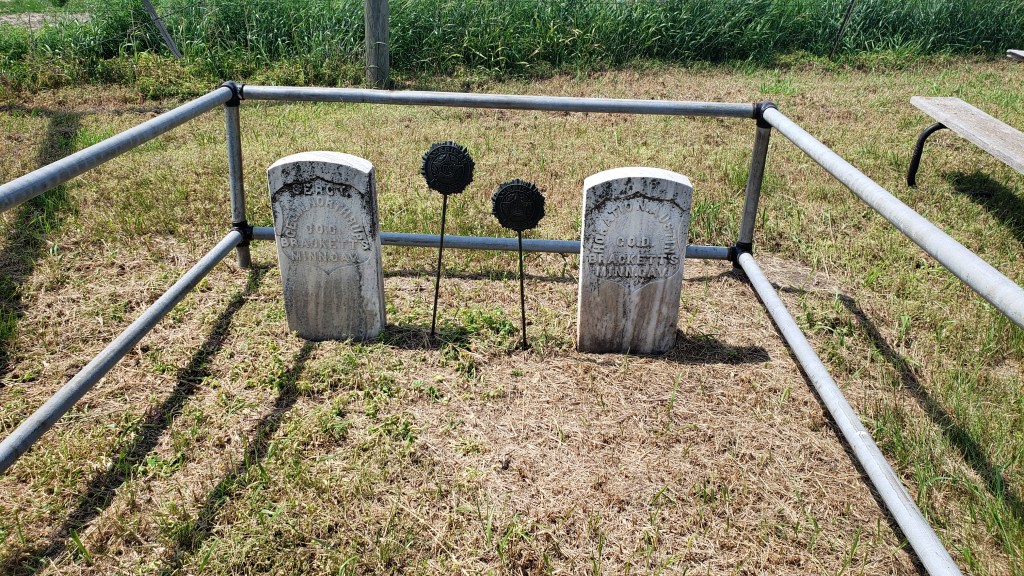
Obviously the fiercest battle in the west
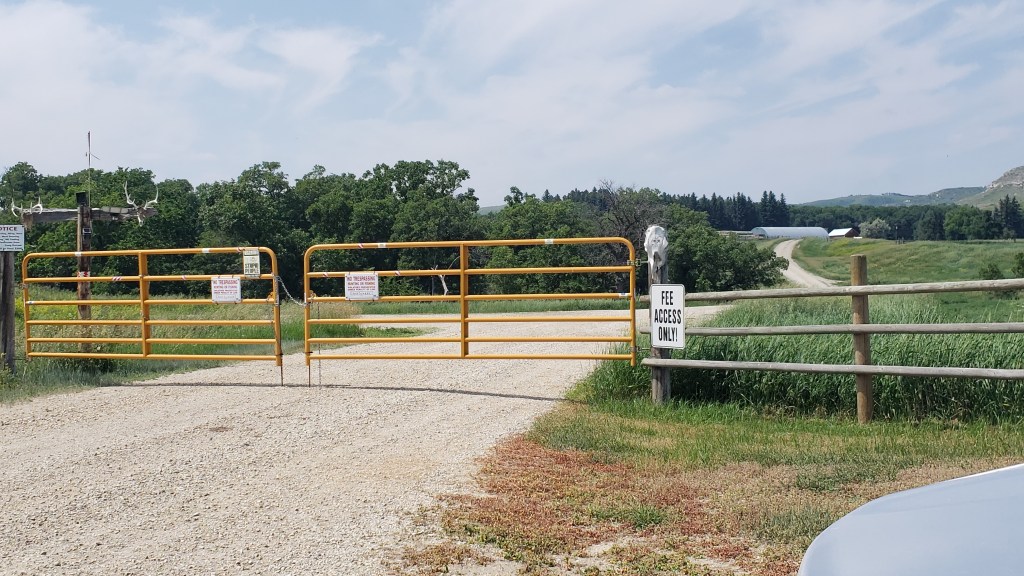
Long, unpleasant story short, it involved 16 miles round-trip on a dirt road (which he hates but thought there might be a restroom at the end of), a farmer and his son who angrily confined us on their property by locking the gate along the road so we couldn’t get out (stupid people that we are, as indicated by the sign on his gate that made some unfathomable reference to Stupid People, and the fact that the obscure battlefield monument was just a foot or two outside his gate and nearly impossible to see), and what can only be called an extremely disappointing monument to a grand total of two people who died on the “battlefield.”
The Stupid People sign, meaning us. This was our view after we unlocked the gate and made our escape when the farmer drove away
Simon’s face says it all.
The opposite of impressed
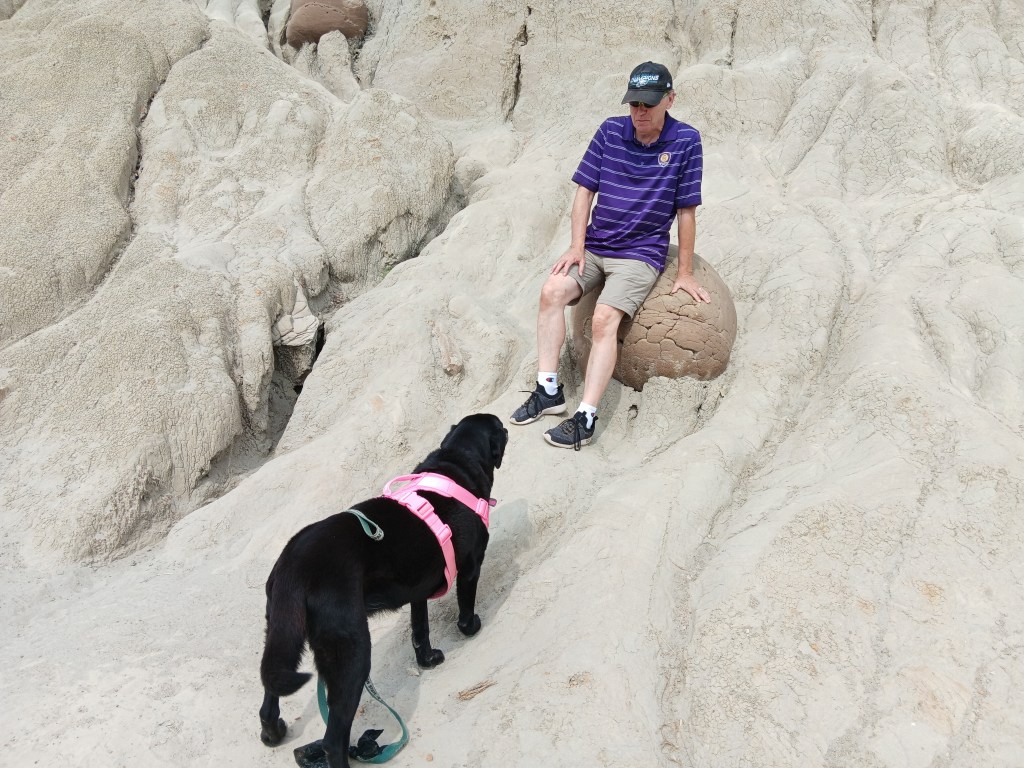
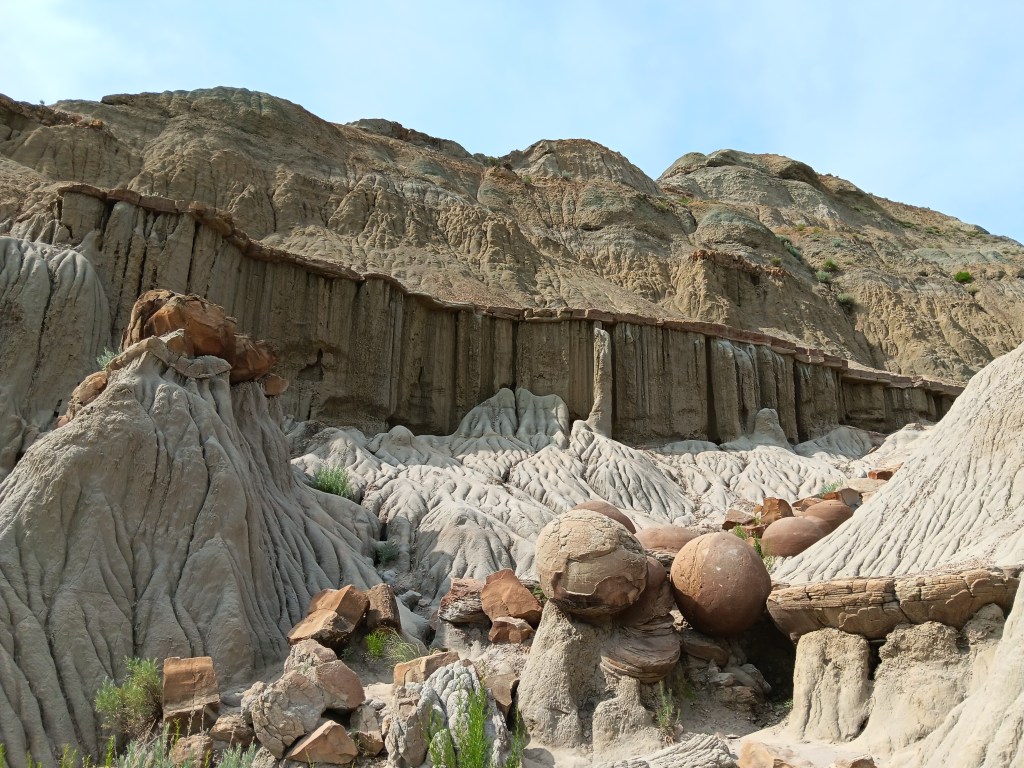
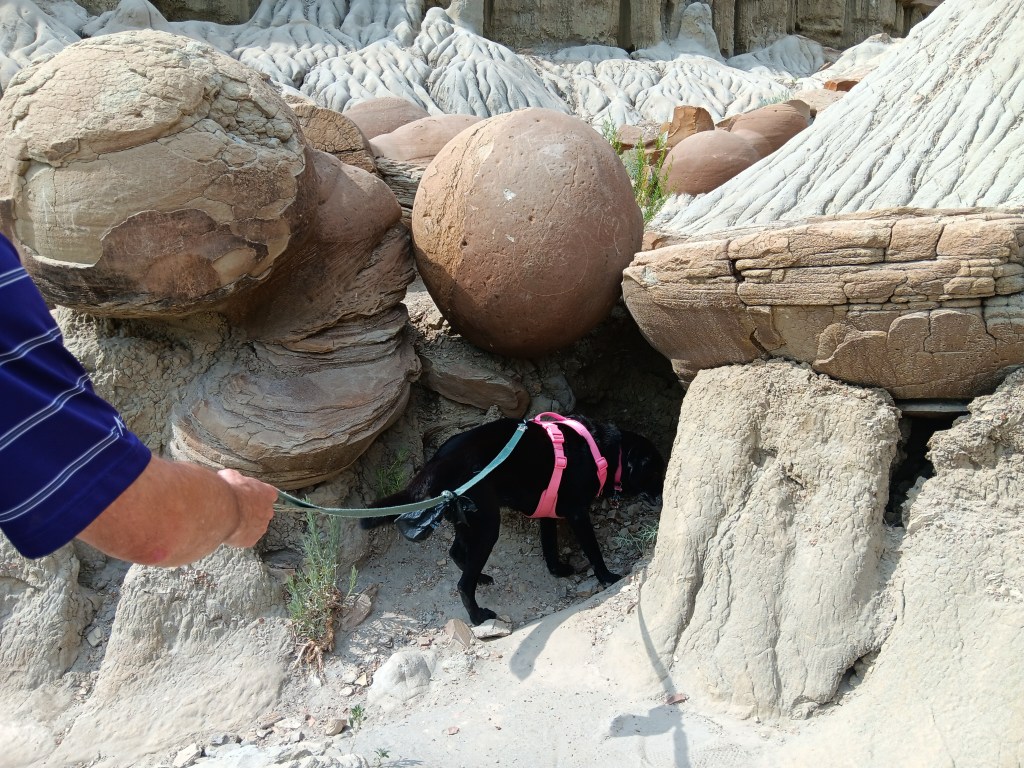
The North Unit is supposed to be the part of the park where wildlife is at a maximum, but we only saw a couple of small herds of buffalo, both at a distance. We did see remarkable “cannonball” rock formations, created by minerals pouring through sediment layers, which Ruthie found as fascinating as we did.
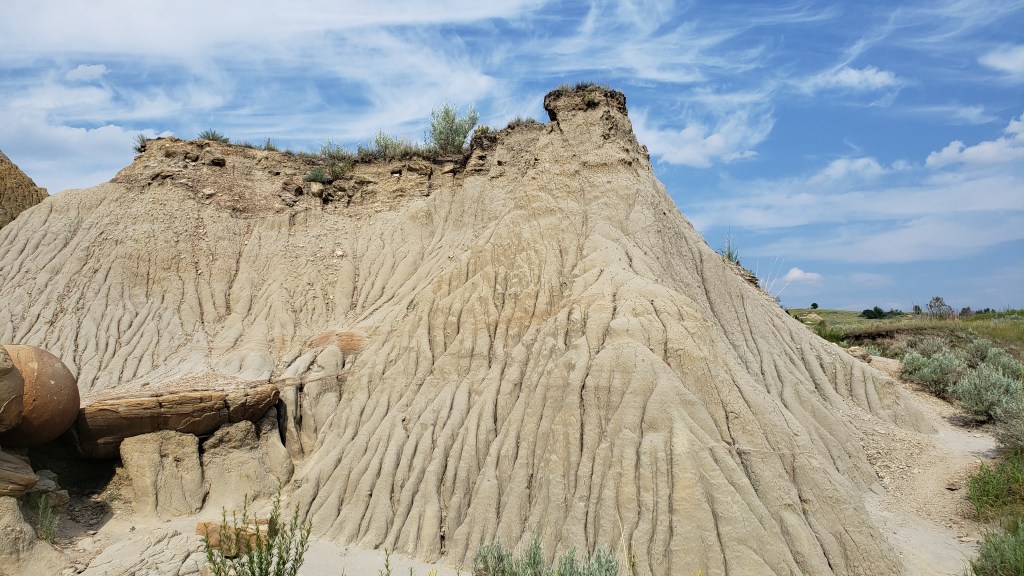
It was back to the South Unit the next day, and as magnificent as the park’s big picture is, the smaller details are equally compelling, and often we felt we were looking at structures created by the hand of Antoni Gaudi, architect and designer of Barcelona’s grand basilica, La Sagrada Familia. In the same way Gaudi’s Nativity Façade seems to be “melting,” so too do some of the water-and-wind-weathered rock formations.
Melty rock
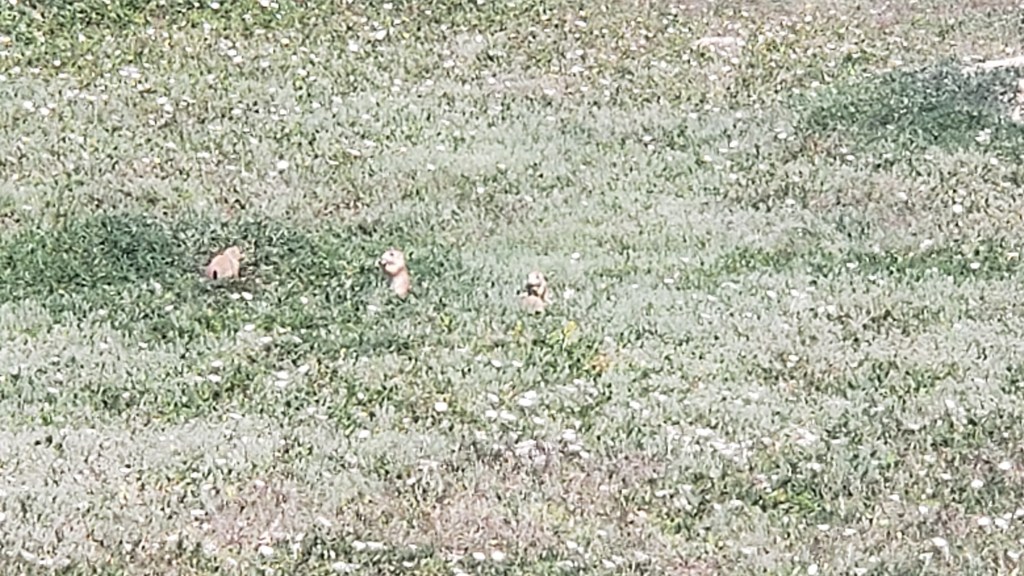
But today nature had three very special gifts in store for us. The prairie dog town, seemingly in just 48 hours, had sprouted dozens and dozens of babies! Tiny and hilarious and full of the joys of spring, they wrestled and barked and made sure their cuteness captivated hearts, and we spent a long time watching their antics.
Terrible zoom photo, but you can see how tiny they are
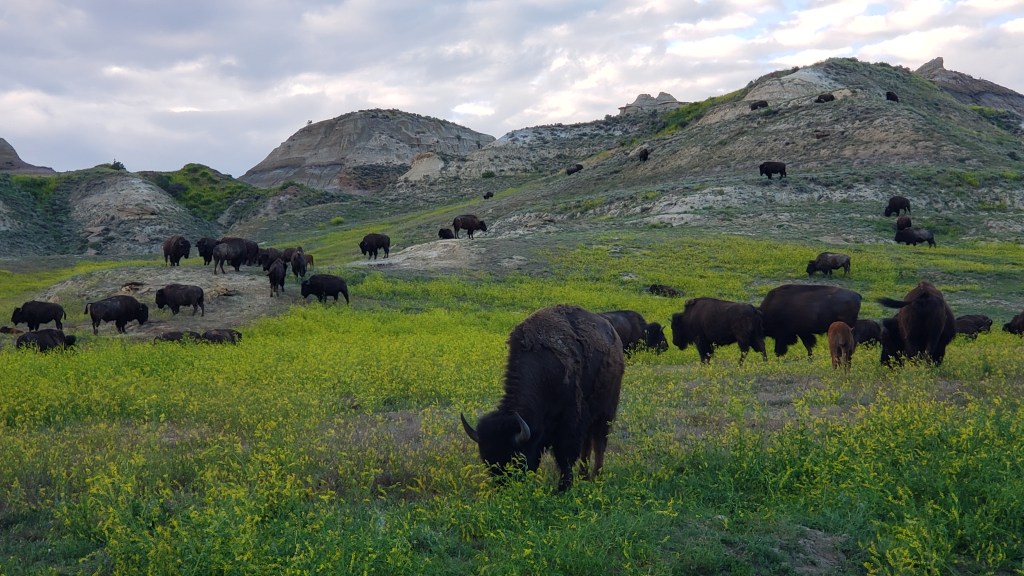
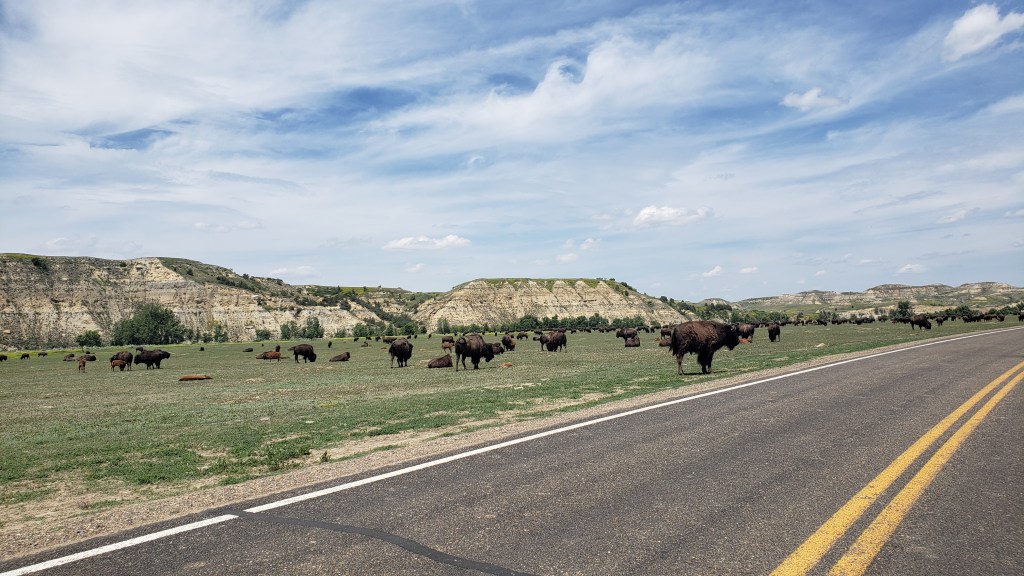
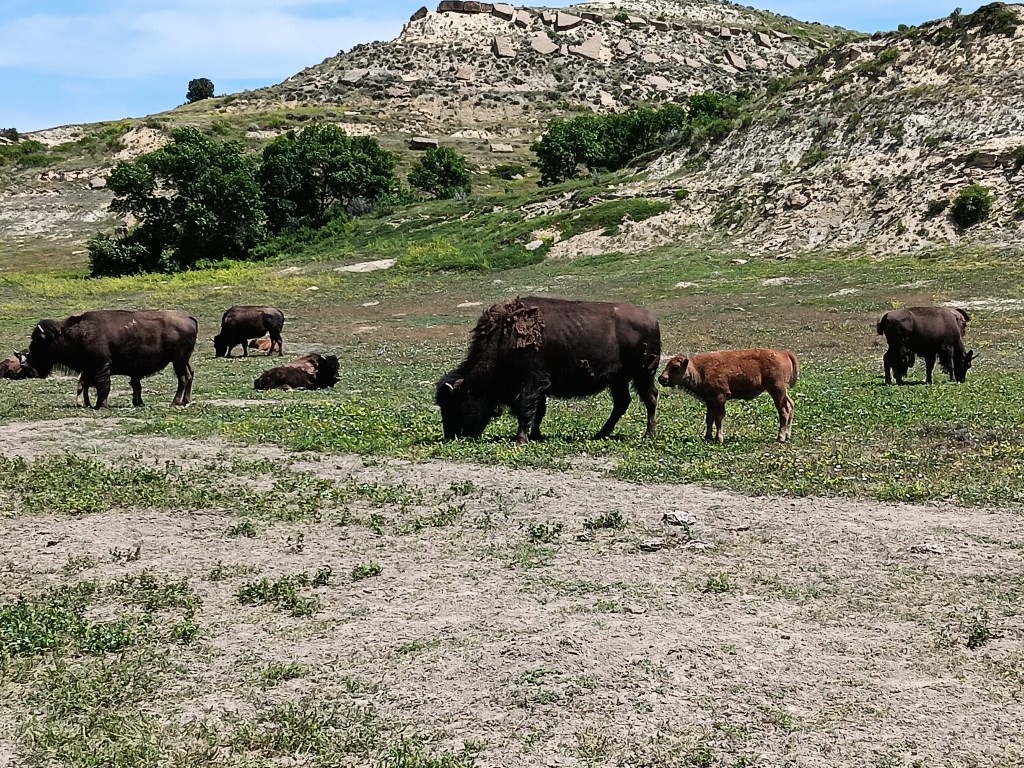
The buffalo took things a step further. As we came down a hillside into a deep valley, there they were, in their hundreds.
One side of the road, with more on the other side, and they just go on and on
We saw so many babies!
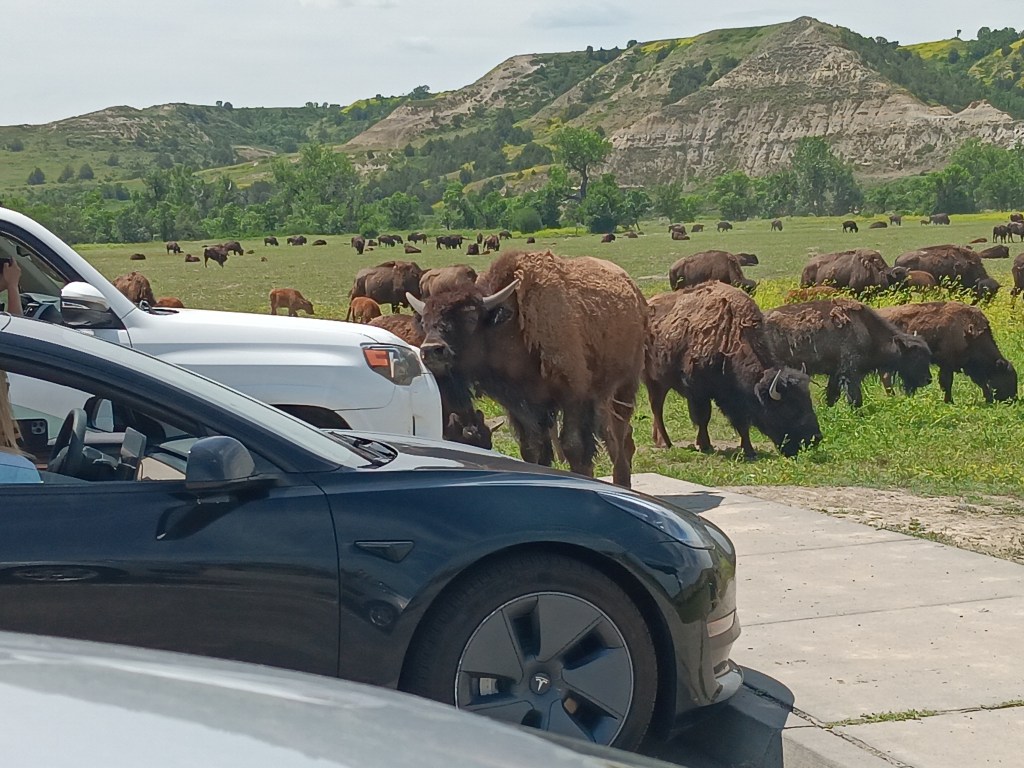
One massive herd took up both sides of the road, and the road itself. We inched our way forward, hoping the people behind us were happy to go slow too, until we found a parking space in the cutout, and that’s when things took an unexpected turn.
This buffalo loves cars. It licked the pickup truck two cars down from us, it rubbed its head against their grate, then it moved on to the car next to us, and finally, as dessert, it began licking our car, chewing on the hookups for our tow bar, and looking us dead in the eye when Ruthie started barking.
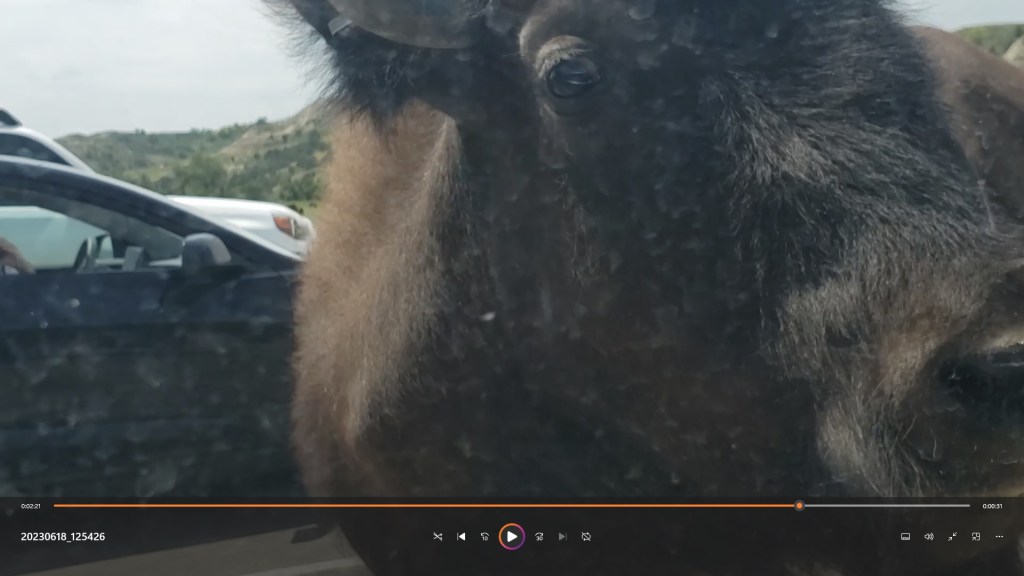
Now, let’s just say buffaloes have huge heads, and those heads have pointy bits. We’ve seen videos of cars the size of Nippy being turned into metal hamburger by enraged buffalo. So when this one came up to Simon’s window and stood there looking at him, we, and everyone around us, wondered what might happen next.
What happened next was, it felt it had made its point without using its points, and it was right. It moved on, leaving us with a thrilling if slightly terrifying memory we’ll treasure forever: The day Nippy got licked by a buffalo.
Eye to eye with a buffalo
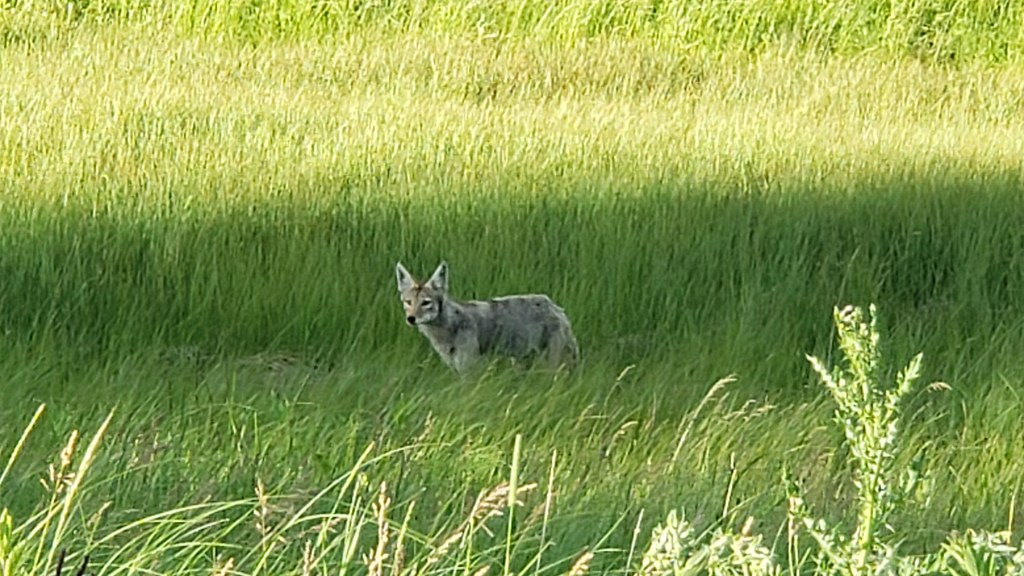
If you’ve read this far, you’ve done well. We did have one more special encounter waiting, when we came across not one but two coyotes prowling a prairie dog town. We thought we might witness the circle of life, but they decided to lay down for a nap instead, which was probably just as well. We weren’t sure we could watch prairie dogs being eaten.
Of course, we have no photos of this encounter. They were just out of reach of our zoom lenses. Instead, imagine two scraggly gray coyotes laying in a field, and you’ve pretty much got the picture.
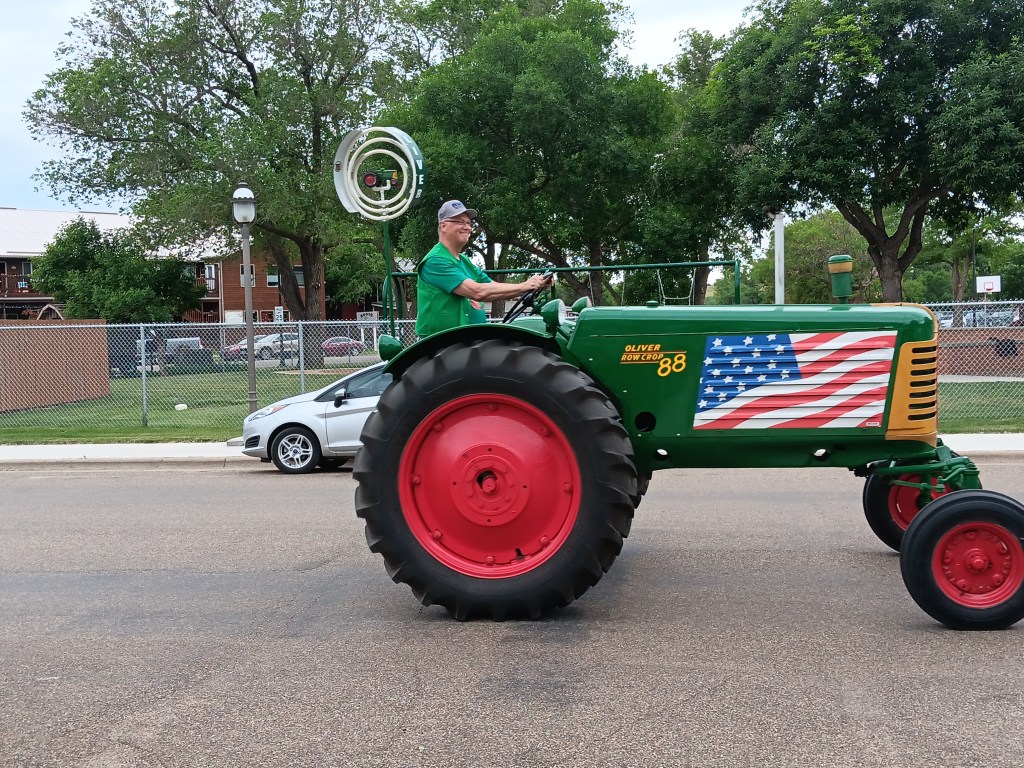
We returned to Medora that evening, a funny little town that was quite touristy, but not obnoxiously so, and while we skipped the $50 per person Medora Music show everyone we’ve talked to since has asked if we saw (we live in Orlando, where shows are second to none but buffalo are non-existent), we did see the tractor parade, and that was enough for us.













 Veness Travel Media