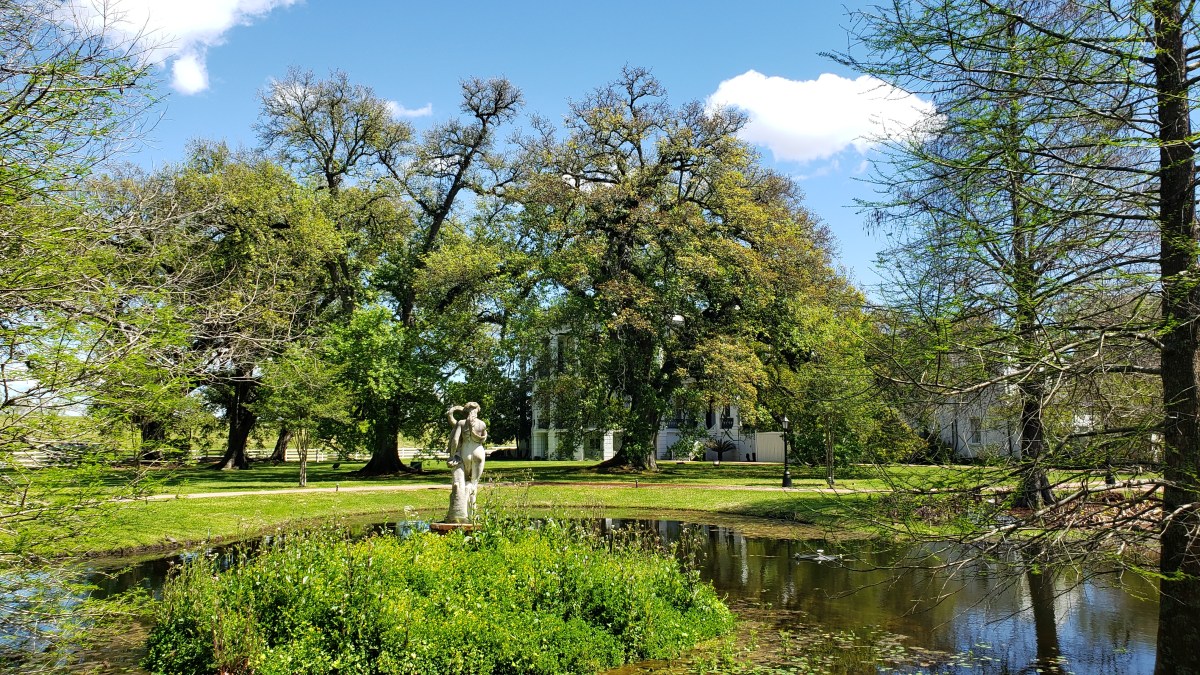
Louisiana was proving to be a state of surprises and contrasts. Human-made refineries amid raw, natural wetlands; the humblest of homes just steps from mini-mansions; and, as we meandered its riverside roads, the undeniable elegance of antebellum plantations, timeless and serene and evoking a certain nostalgia even though neither one of us ever lived that life, but with the specter of their past impossible not to feel.
We’ve seen several plantations that still stand in Georgia, so we were eager to see how Louisiana’s compared. With that goal in mind, each time we toured within Baton Rouge and beyond its borders we looked for plantation homes. Some remain private residences, and some are open for tours or function as B&Bs.

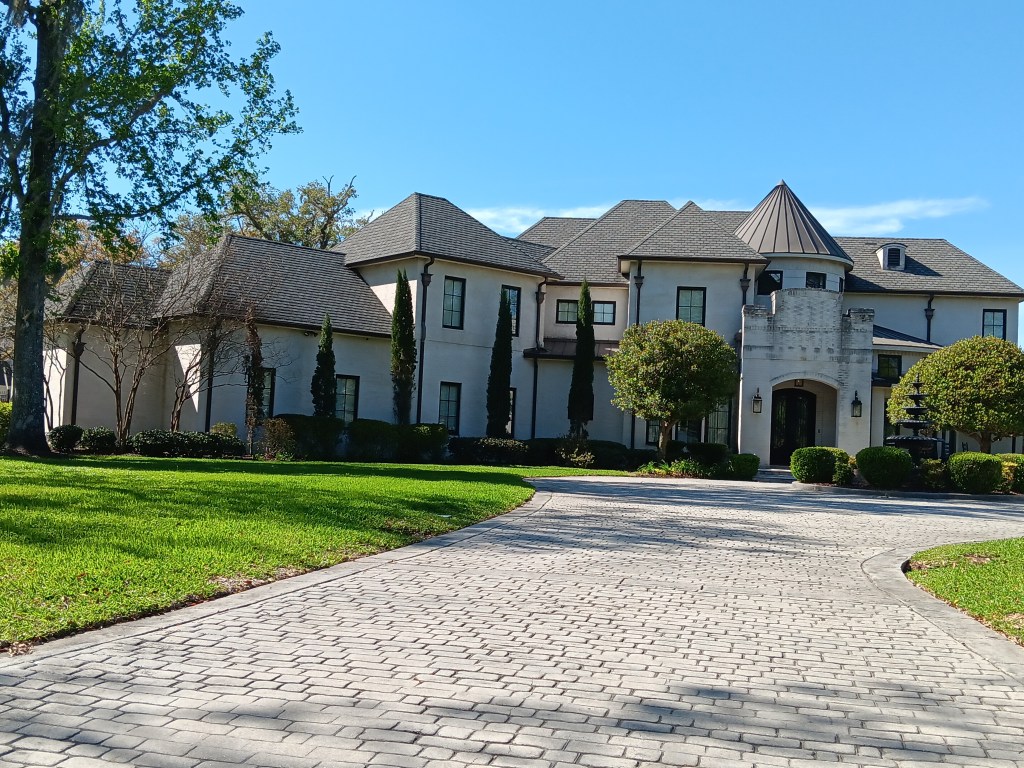
Carter Plantation is a bit of an anomaly. It now sits in the middle of an upscale residential community, and while it would have been considered a relatively large home in the 1800s, it’s fairly small by today’s standards, and certainly in comparison to its immediate neighbors. But it boasts the status of being on the National Register of Historic Places, and is set apart from other plantations because it’s the first in the county to be owned by a free “person of color,” African-American Thomas Freeman. Freeman and his slaves (!) worked its 2,000 acres until 1838.
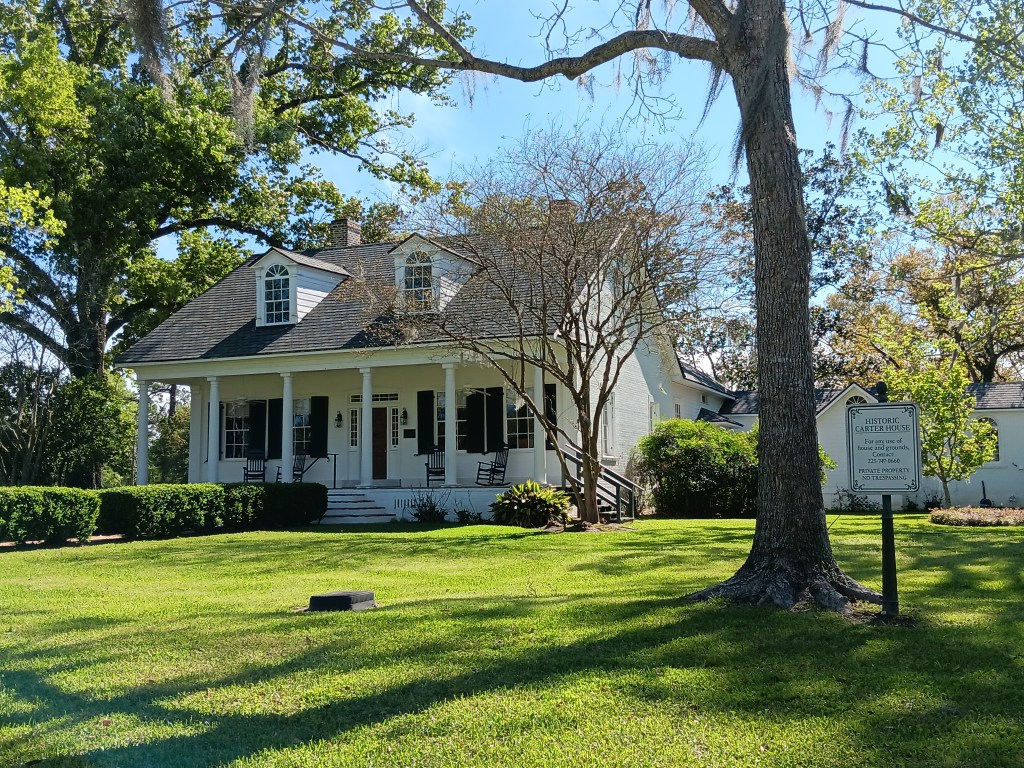
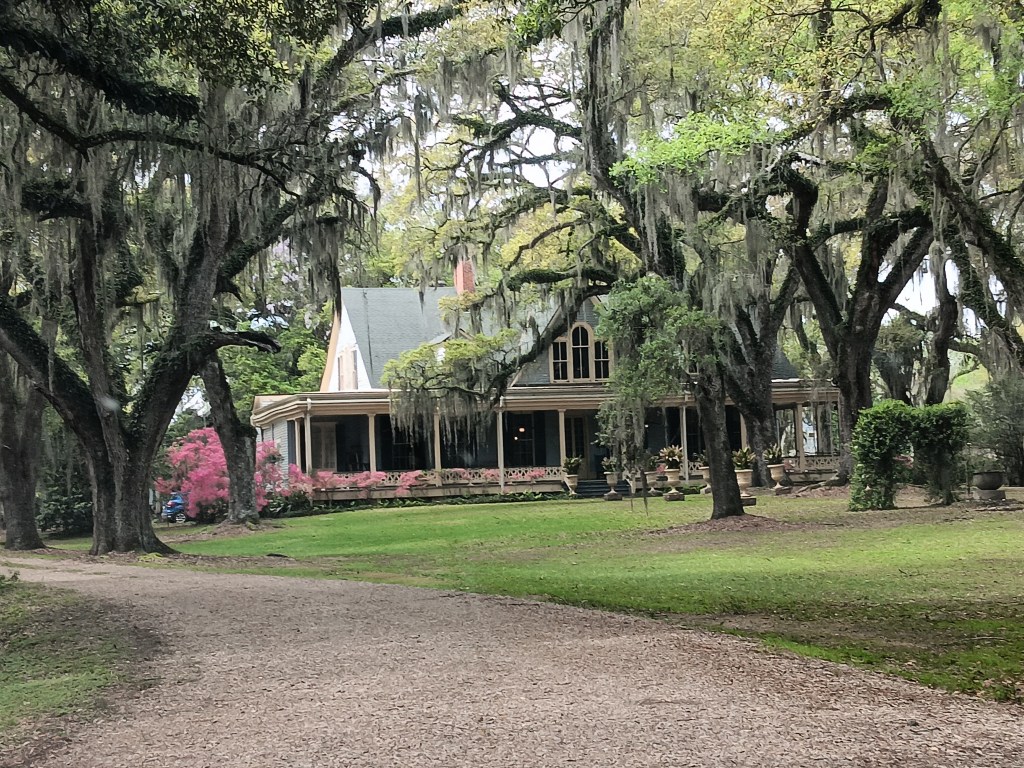
Built in the style of an English cottage in 1790, Butler Greenwood Plantation is also relatively small by Georgia standards, but it was a thriving agricultural concern back in the mid-1800s, when nearly 100 enslaved people worked the cotton, sugarcane, and indigo fields. It’s a private residence, largely unchanged since the 1850s.
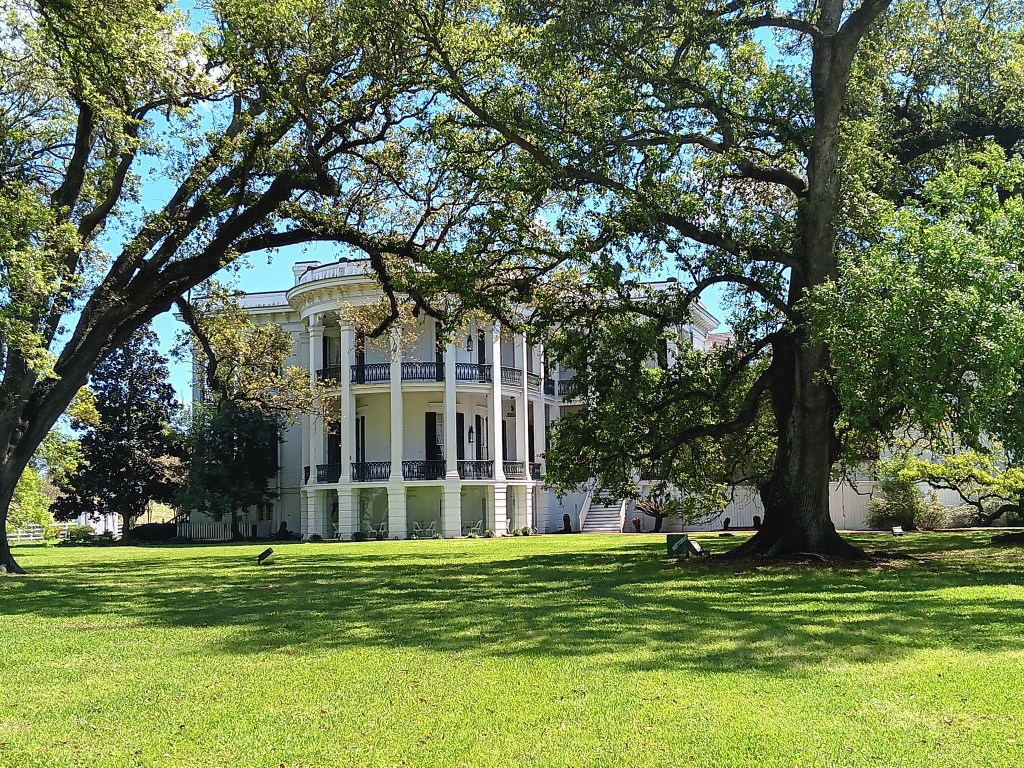
Nottoway Plantation, on the other hand, is exactly the sort of plantation home that drips with the style of its time. You could easily imagine Scarlet O’Hara sitting on the porch with the Tarleton twins complaining about “war talk,” though frankly, my dear, Tara was nowhere near this grand.
Today, it’s the South’s “largest remaining antebellum mansion,” and it’s hard to wrap your head around the size of this place. At one time it held 176 people in enslavement, doing the brutal work of sugarcane production on the owner’s 7,000+ acres. Now, it’s a hotel that also does tours.
Oak Alley doesn’t shy away from its history of enslavement, and it includes an exhibit that tells the stories of the human beings forced into labor in the plantation’s sugarcane fields. Tours of the slave quarters and the Big House are offered, but we arrived too late to take one.
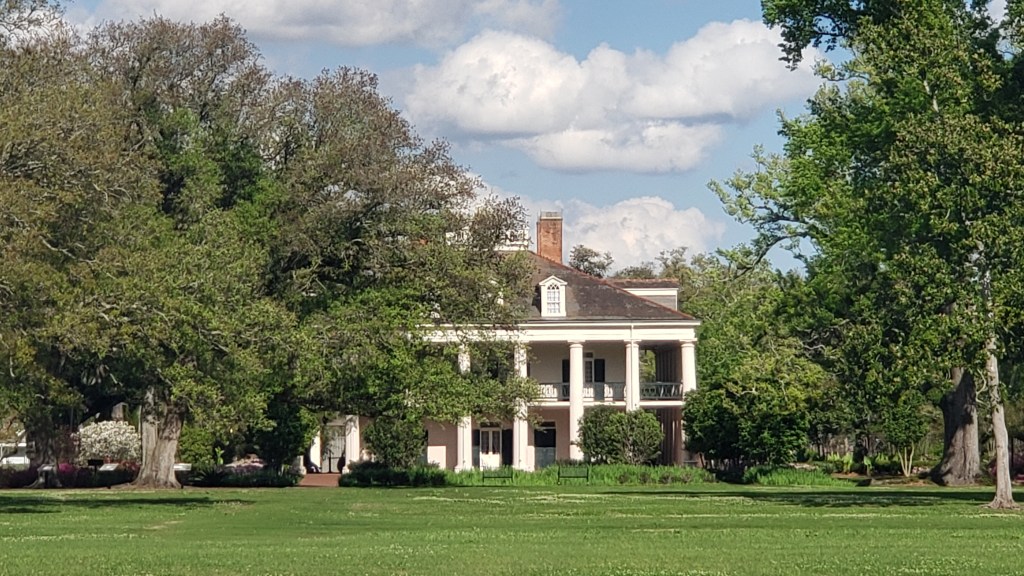
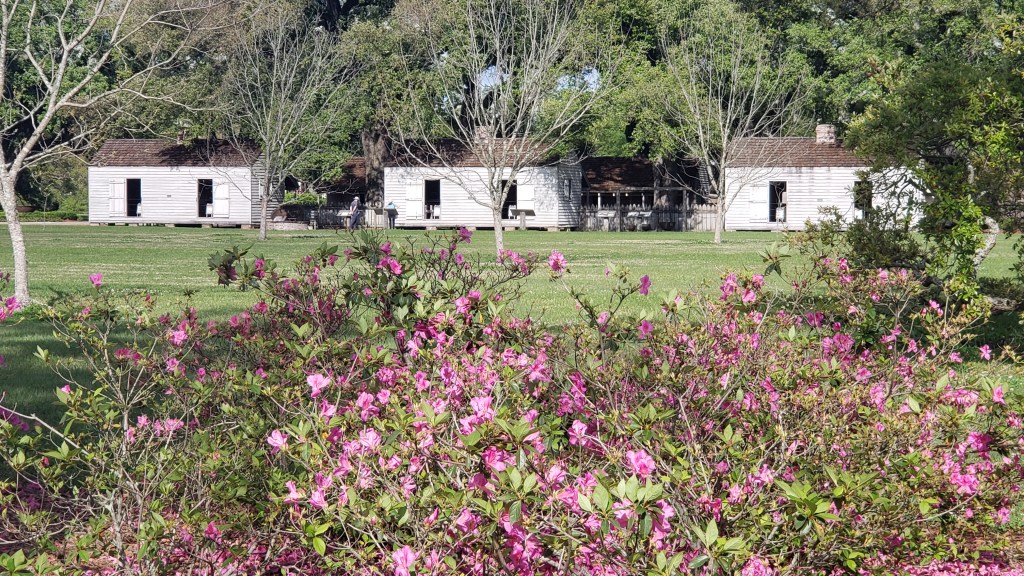
We passed several more over the course of our final week in the areas surrounding Baton Rouge, including the magnificent Whitney plantation, setting for scenes in the movies Django Unchained and 12 Years A Slave. Its history includes some of the most brutal aspects of slavery, but its modern face is turned toward telling that story through the voices and experiences of the enslaved. It is marked out as a designated “Site of Memory,” (in this instance, a location in which a significant point in history, held in collective memory, is contained) as well as being on the National Register of Historic Places.
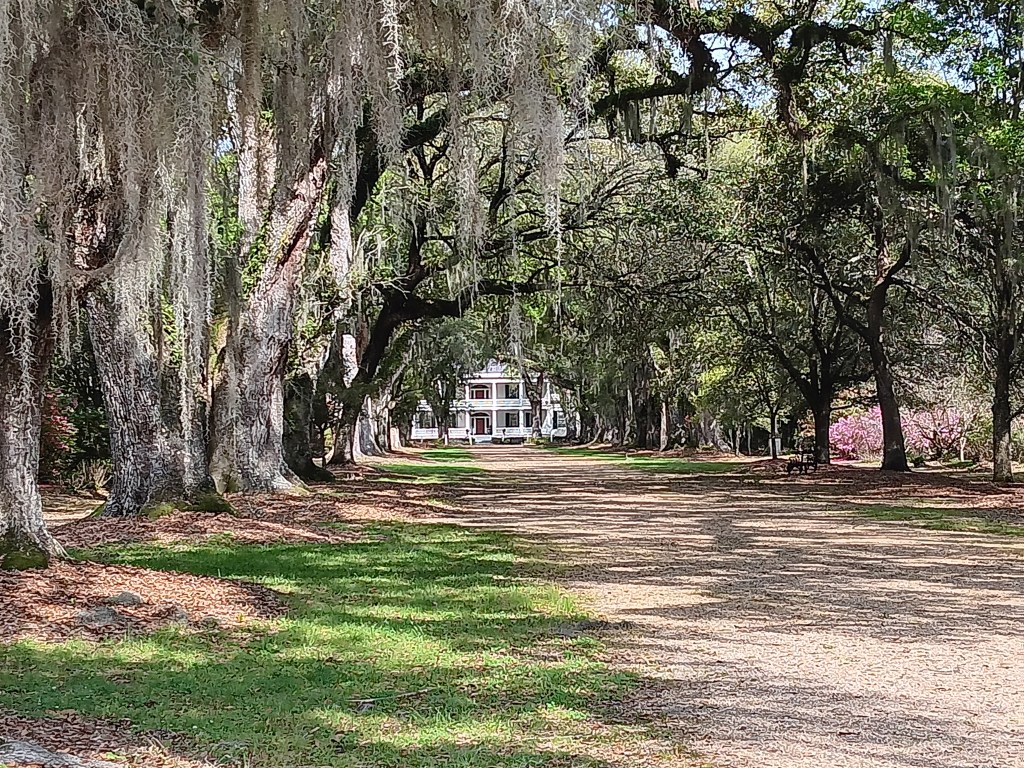
We didn’t discover the names of the following plantation homes along the scenic Great River Road, but they gave us a fairly clear idea of what neighboring homes of wealthy land-owners would have looked like, pre-Civil War.
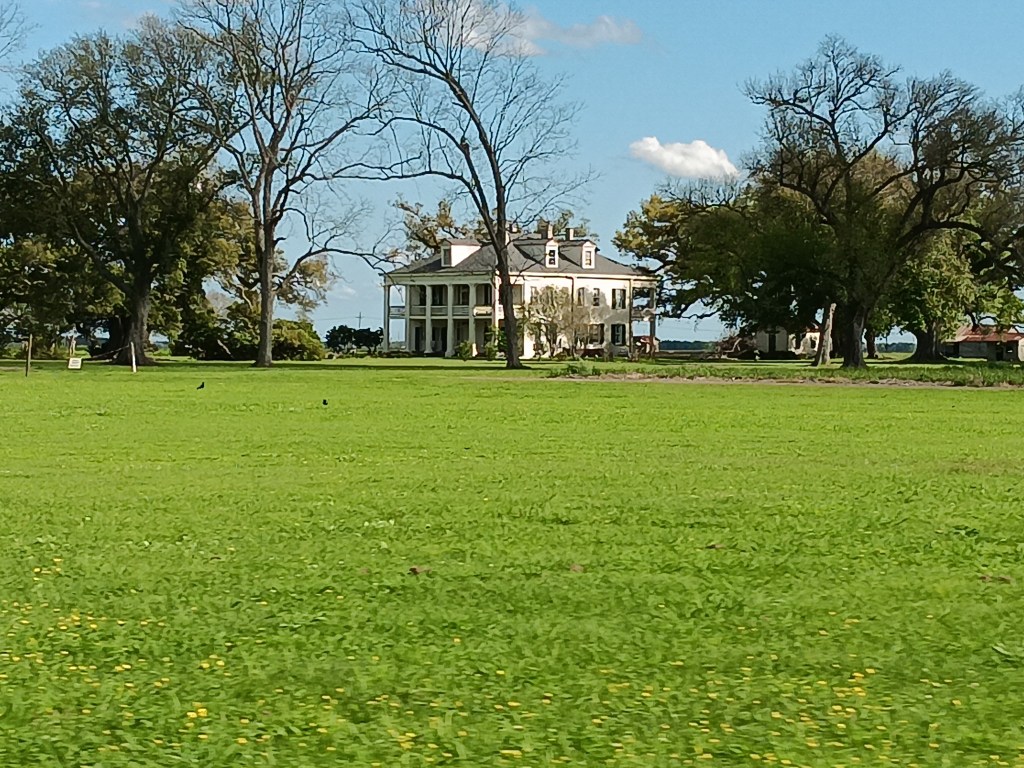
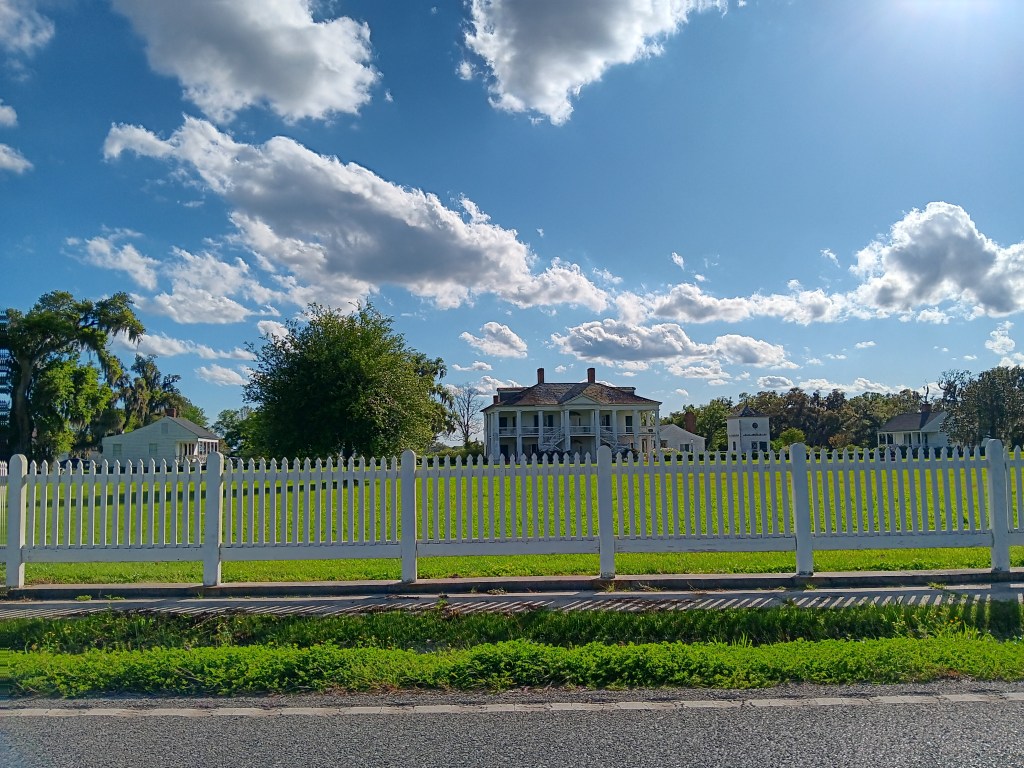
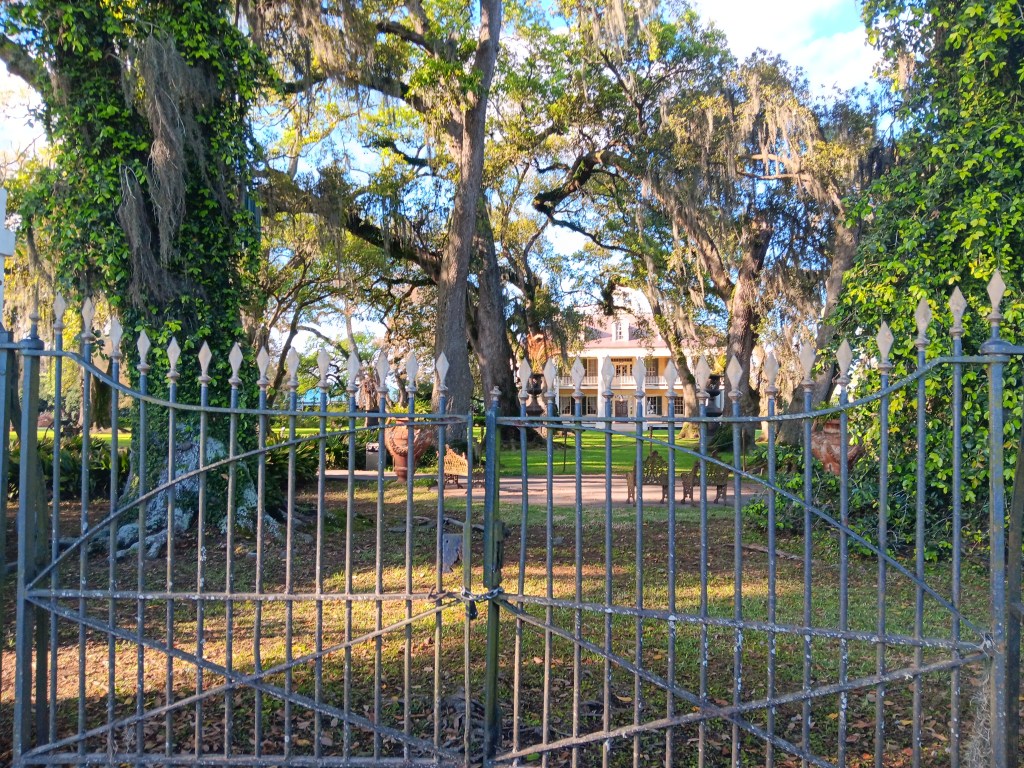
Over the course of this trip we’ve been so appreciative of the places that look the uglier aspects of their past straight in the eye, call it what it is, and strive to educate toward an understanding of those events, unfiltered by bias.
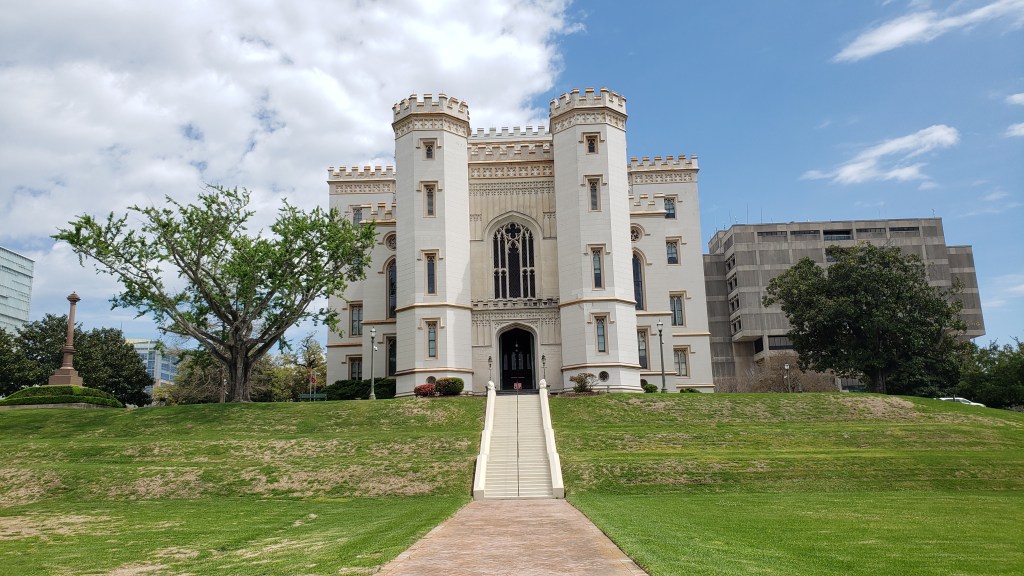
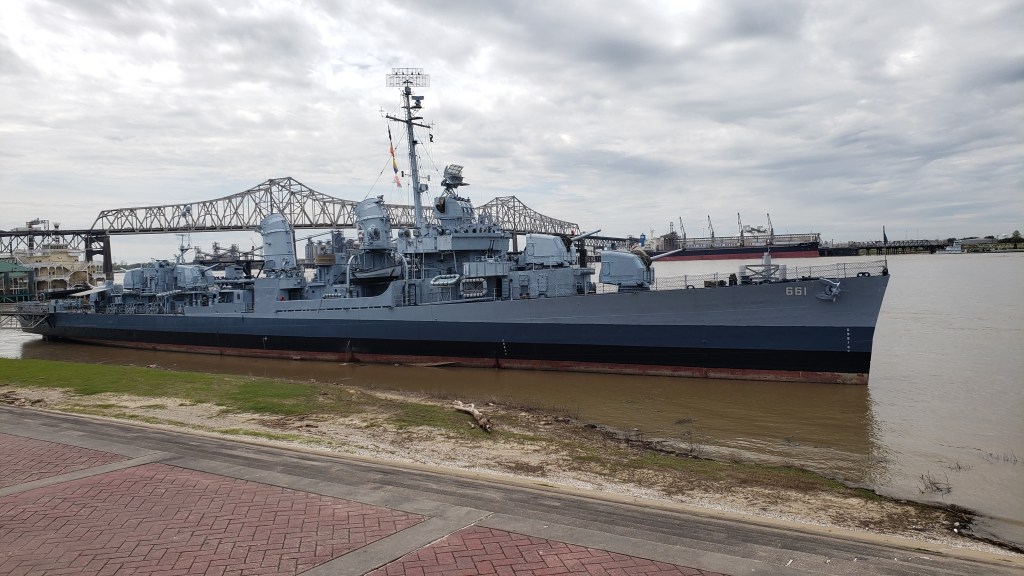
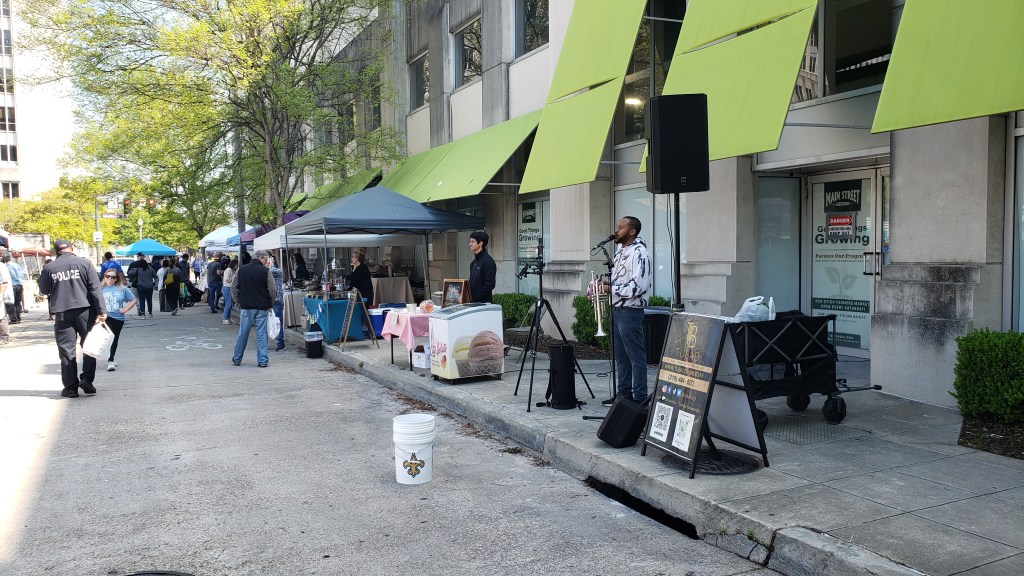
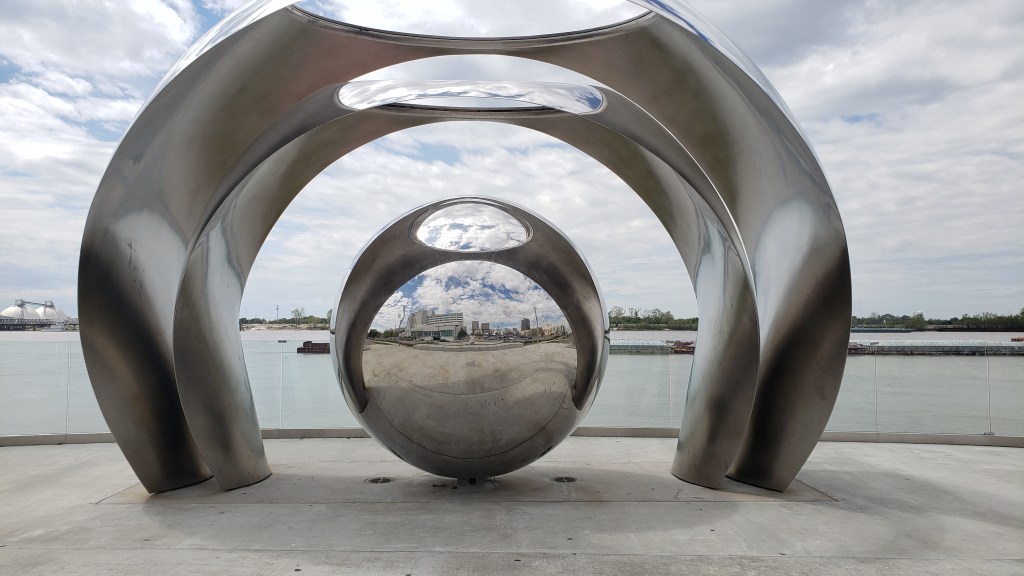
Louisiana is, of course, far more than its past. Our tour of the downtown area turned up lots of interesting sights, including Louisiana’s Old State Capital, the WWII destroyer USS Kidd, Red Stick Market farmer’s market, and the fascinating Sing the River Sculpture, which reminded us of The Bean in Chicago.
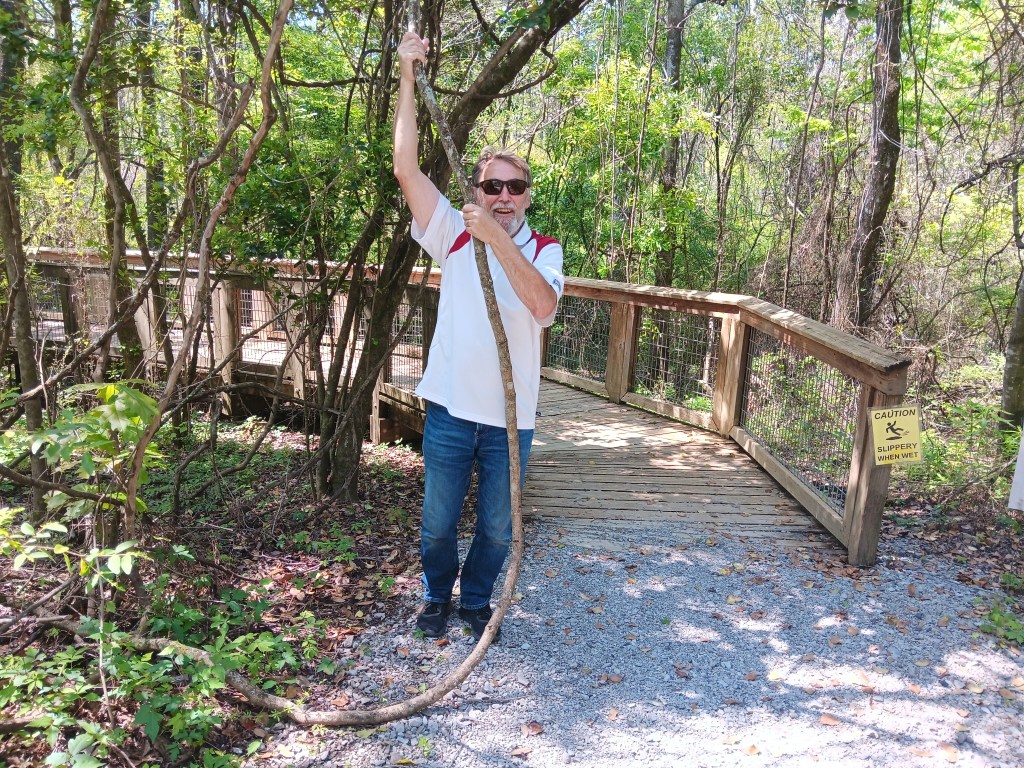
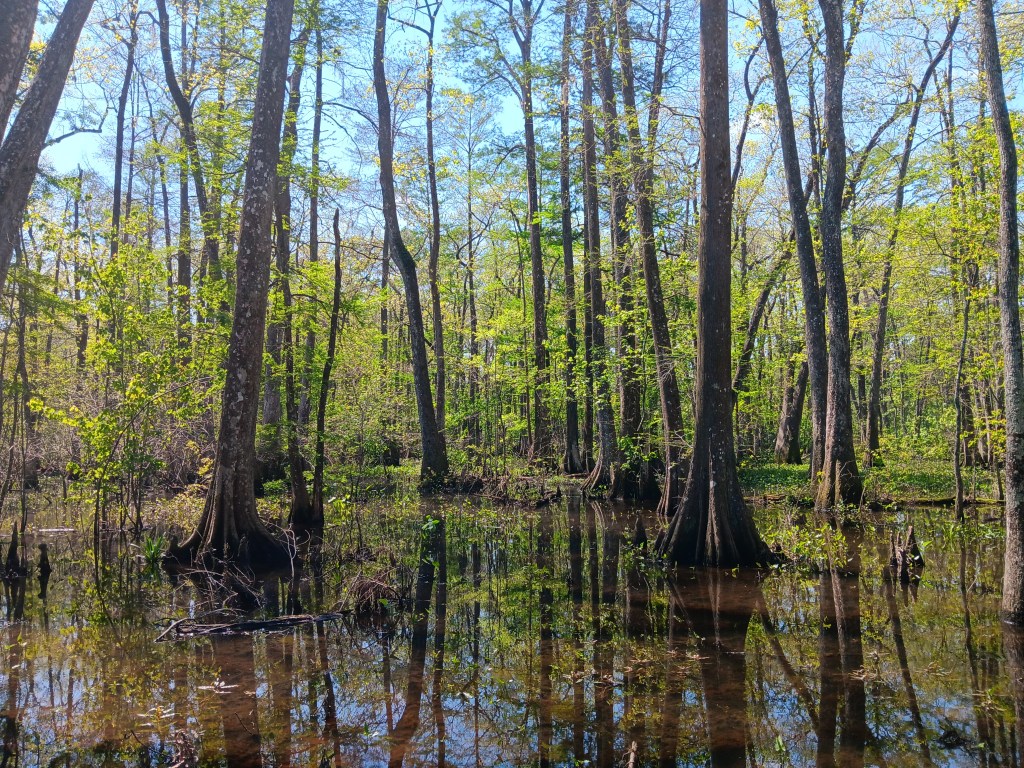
Bluebonnet Swamp Nature Center made for another easy drive and gave us the chance for some fresh air in natural surroundings.

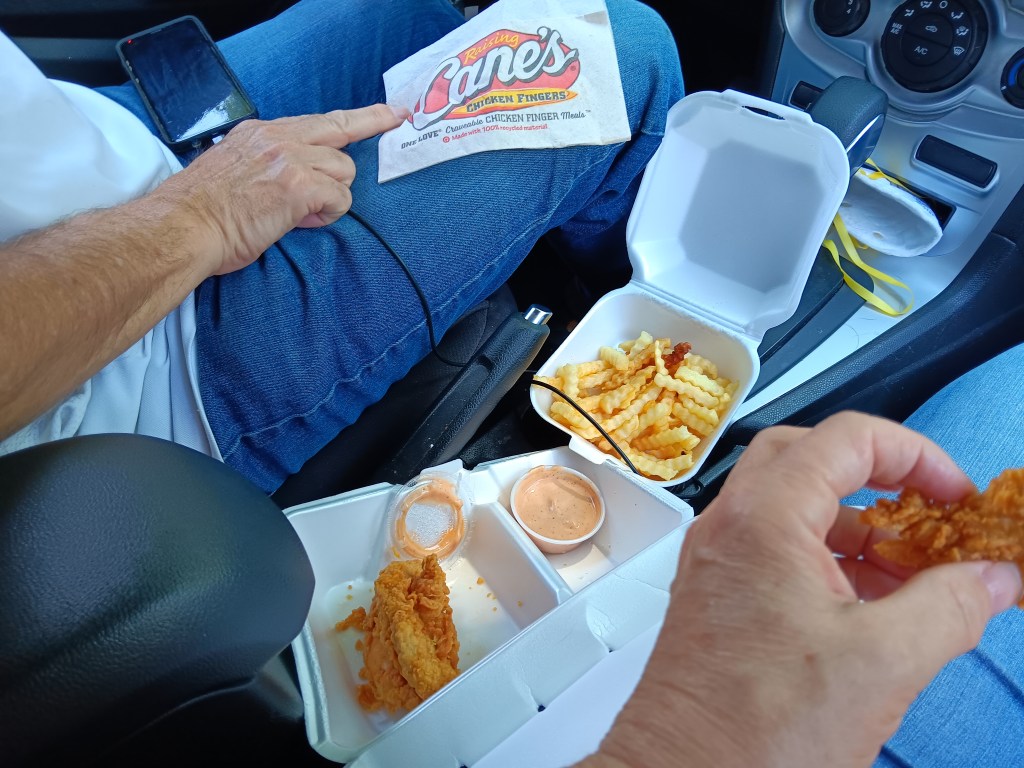
Susan still wasn’t up for much cooking, so we decided to grab lunch at Raising Cane’s Chicken Fingers, which started in Baton Rouge in 1996. We’re not big fast-food people, but we had to agree, these were some pretty terrific chicken fingers, and one order was enough to split (3 for Simon, 1 for Susan).
As our time in Baton Rouge wrapped up, we decided the only area we hadn’t really seen yet was to the north of the city, and a day-trip found us in Natchez, Mississippi, just across the Mississippi River. So often during our travels we’re led to something special, and this road trip was no exception.
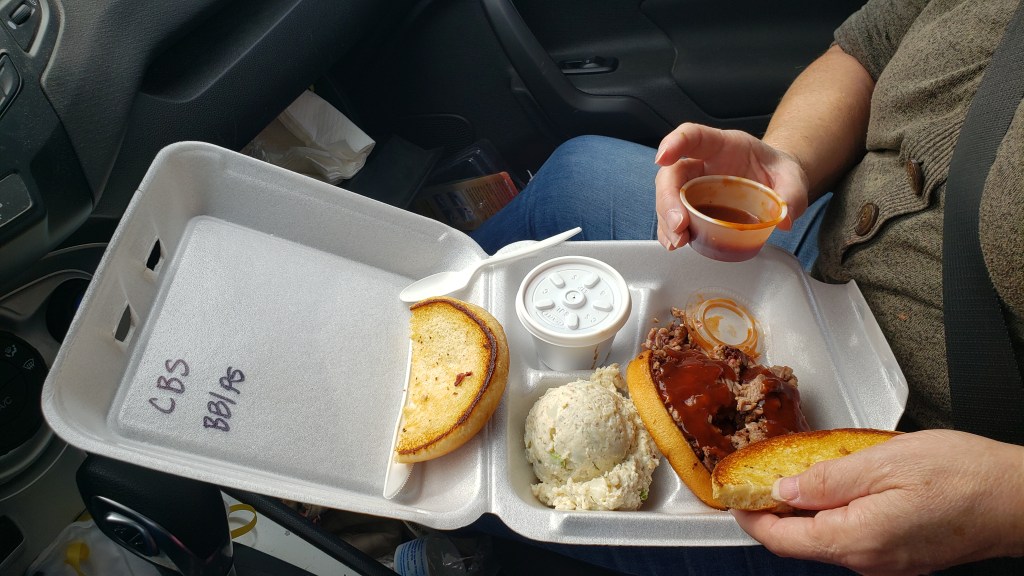
We grabbed lunch at Pig Out Inn BBQ solely based on its funny name, splitting a scrummy chopped brisket sandwich with sides of potato salad and baked beans. It was all delicious, but those beans…Susan could easily have made a meal just of those (which would be a bad idea later that night in a 36-foot space, so she didn’t).
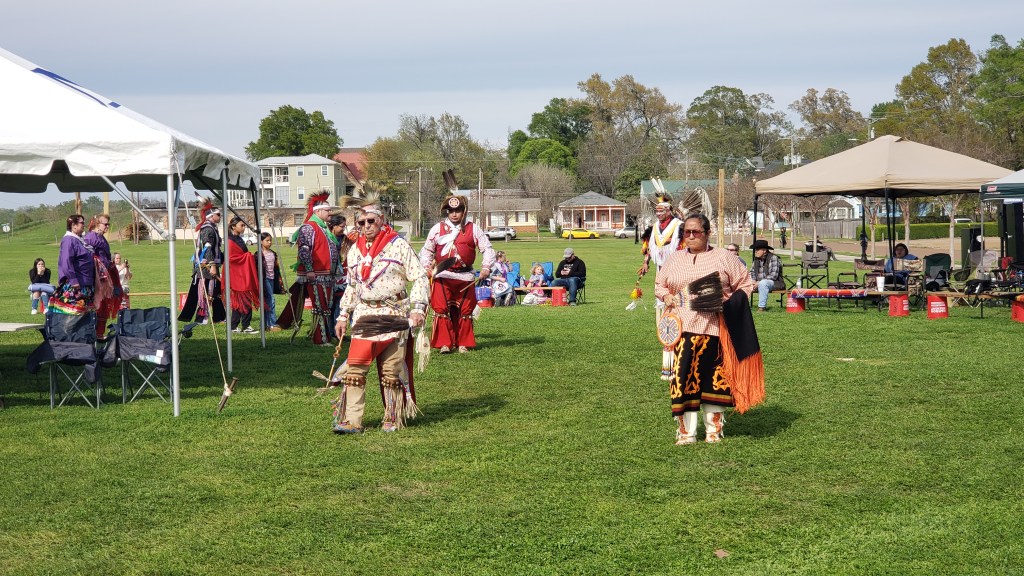
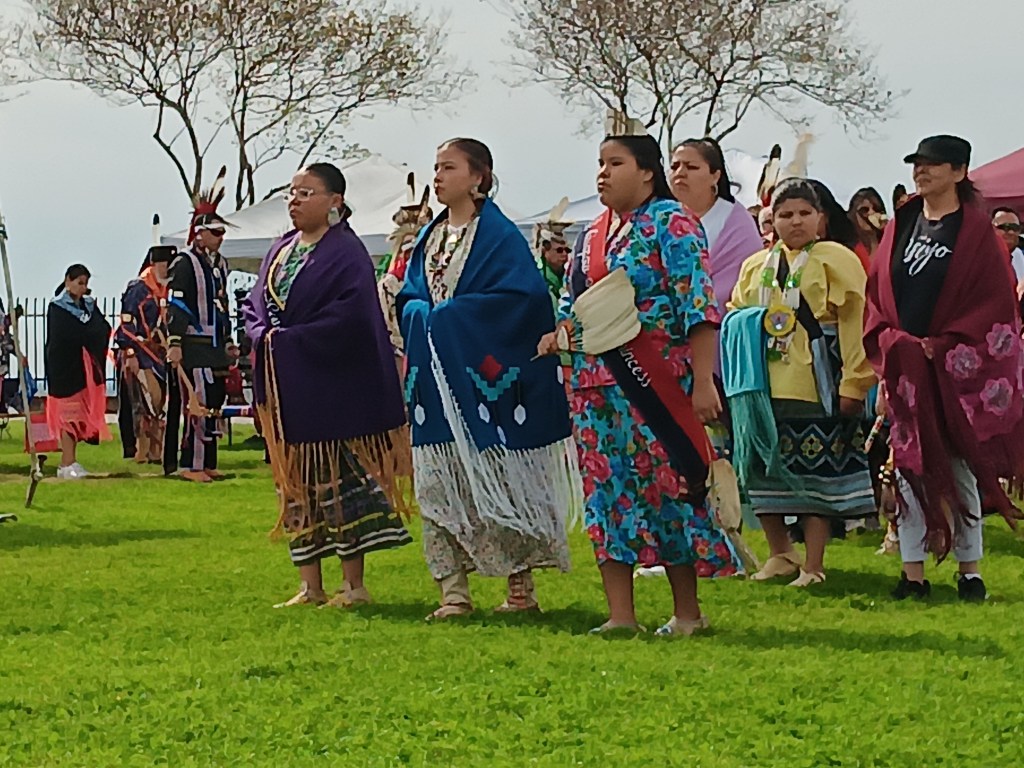
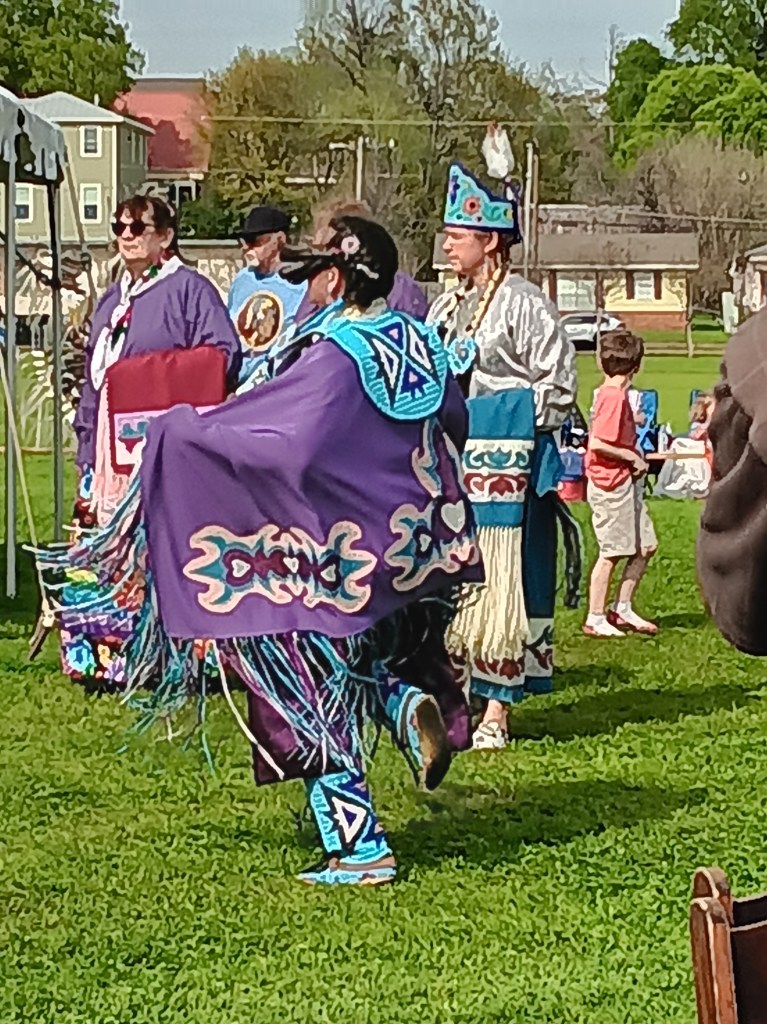
The unexpected highlight of the day, however, was the Natchez Powwow, which we stumbled upon as we walked along the riverside, celebrating culture through dance, music, food, and camaraderie. Everyone was welcome to join some of the dances, but we stayed off to the side, since we had Ruthie with us. We did check in advance to make sure photos were acceptable, and were told we were welcome to take photos and video.

Dances circled a tent in the center of the ring, where drummers and singers were located, and people moved along the dance route in whatever way moved them. Some shuffled, some danced alone, some danced shoulder-to-shoulder, and it was so beautiful we forgave ourselves for getting a bit misty-eyed.

Baton Rouge and its surrounding areas surprised and delighted us, and it’s certainly an area to which we’ll return. We are reminded again and again how blessed we are to experience the events and meet the people that make this country so diverse and compelling.
 Veness Travel Media