Ground Zero


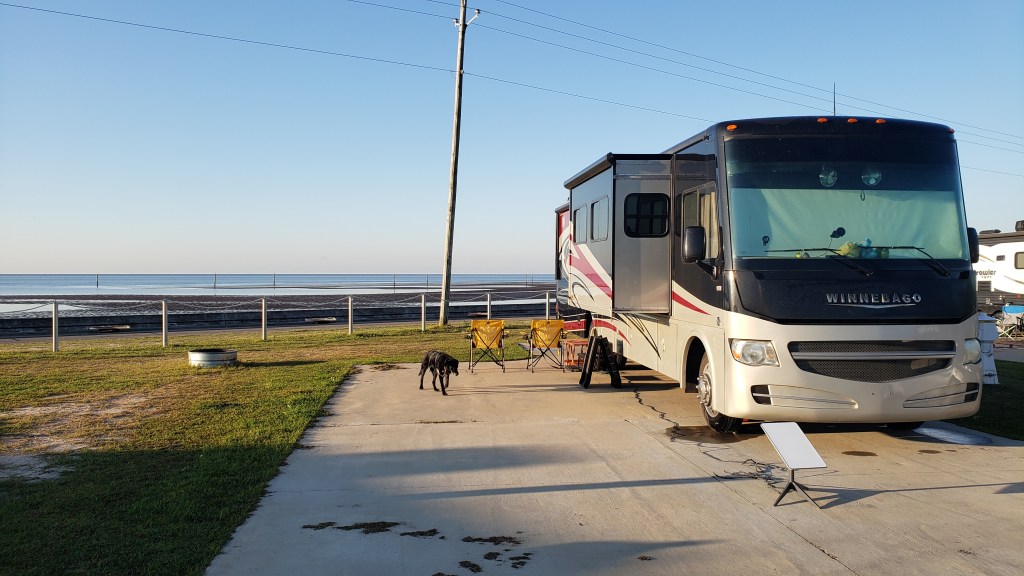
The name Waveland, Mississippi should have rung a loud and distinct bell for us, but as we pulled into our campsite at pretty Buccaneer State Park, with the Gulf of Mexico as our view, we were none the wiser. Over the next few days we’d discover reminders of the great trauma Waveland suffered at the hands of Hurricane Katrina were everywhere, primarily through how the tiny town fought its way back to recovery.
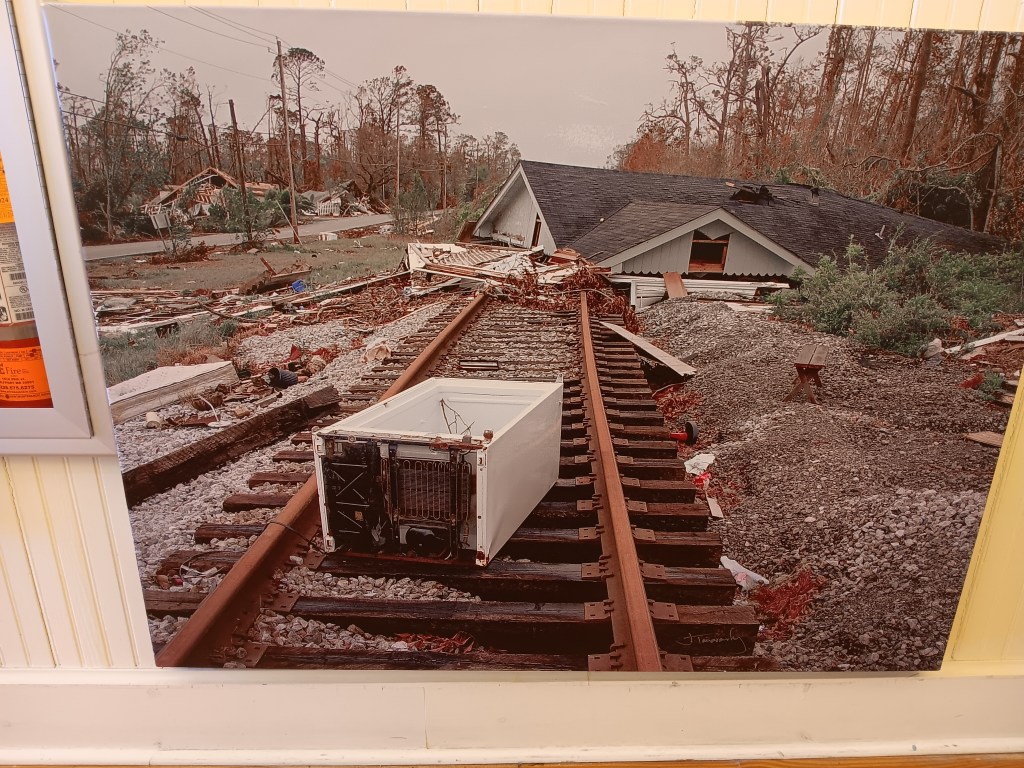
This photo is from the Ground Zero Museum, and it was taken right after Katrina hit.

When Katrina passed and its 30-foot storm surge subsided, next to nothing was left of this once-peaceful seaside community. Homes? Gone. Businesses? Flattened. The railroad tracks running through Waveland? Bent and useless metal. It was one of the worst-hit places along the coast. New Orleans got the press, but Waveland also suffered immensely. Twenty-five of her residents lost their lives, including four in just one family.
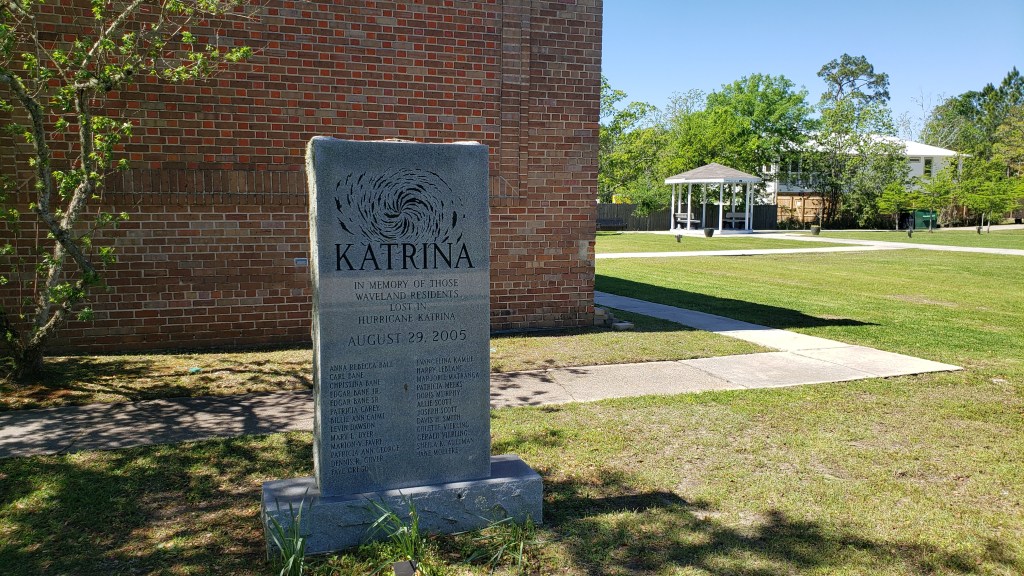
Memorial to the twenty-five residents.

Our first stop after settling in was the Ground Zero Museum, which remembers that terrible time through photos, artefacts, and a short movie featuring survivor testimony.

Also from the Ground Zero Museum.

The railroad tracks a mile or more inland acted as a mini levee, and some of the homes on the north side of it survived. Everything south of the tracks was washed away.
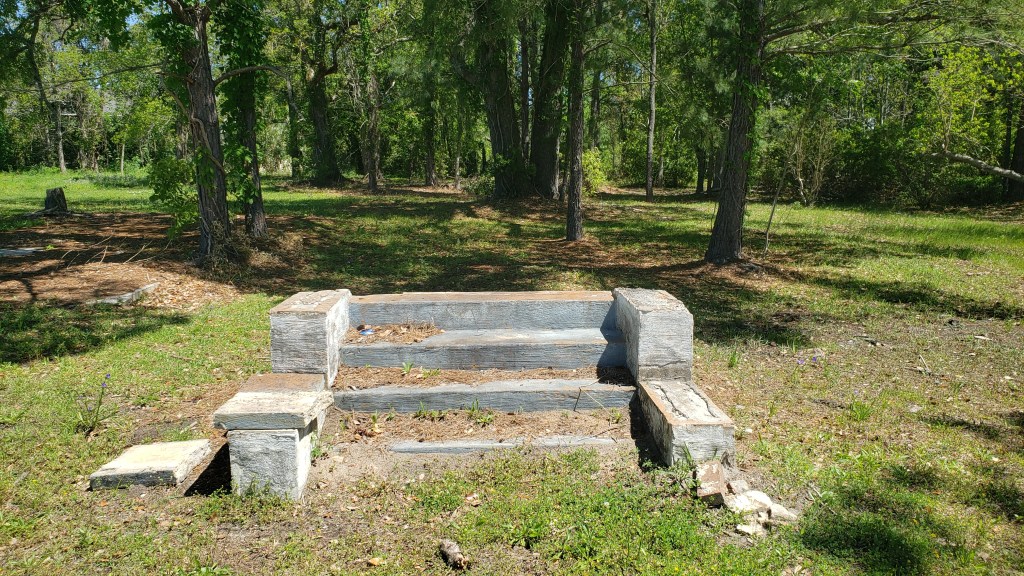
Many plots that obviously once had homes on them still sit vacant.

But we found the town’s recovery even more interesting. A long line of huge, expensive homes has gone up along the waterfront (with a road between them and the Gulf), which speaks either to the indomitable human spirit or reckless optimism, and we’re not in a position to make the call on which one it is.
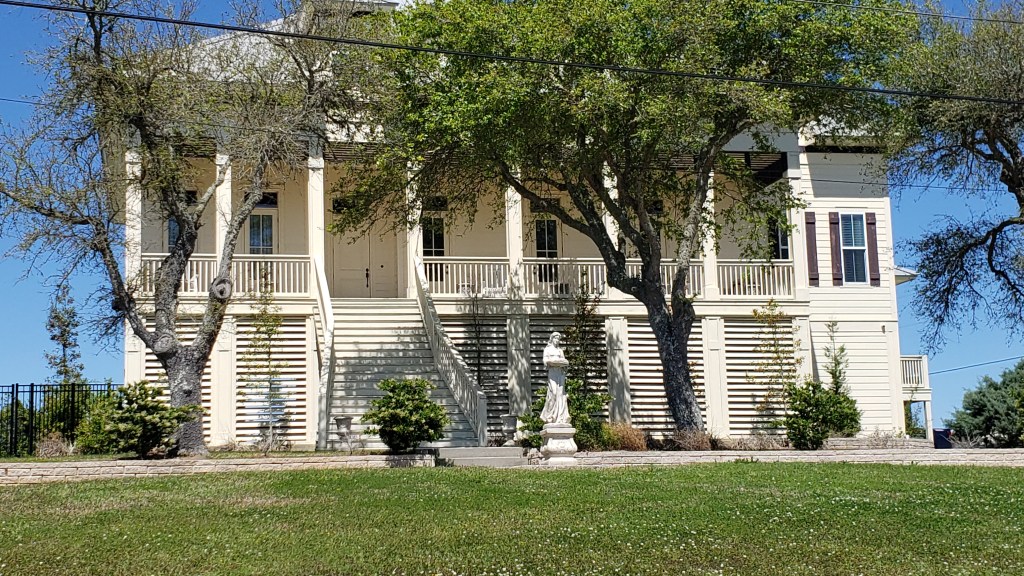
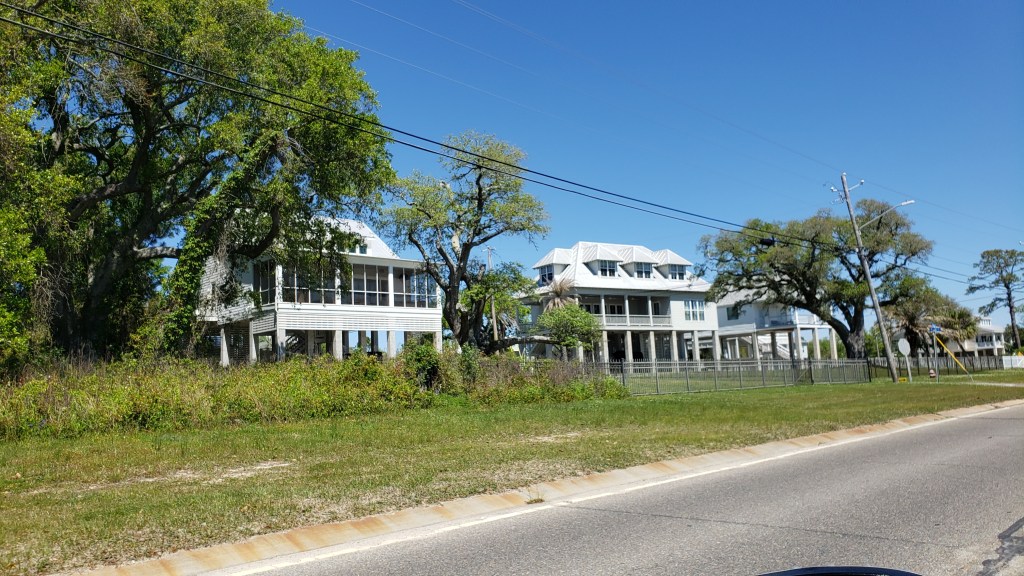

Next-door neighbor, Bay St. Louis, recovered relatively quickly. Settled by the French in 1699 under the name Shieldsborough, Bay St. Louis was held by the Spanish, then the British, and only received its current name in 1875. At one time it was earmarked to be Mississippi’s capital city, but Natchez won, only to lose their title to Washington, which lost the honor to Jackson.

It is now a somewhat touristy area, with shops and restaurants and a fun self-guided tour that takes you past 24 historic sites and buildings, some of which survived Katrina.
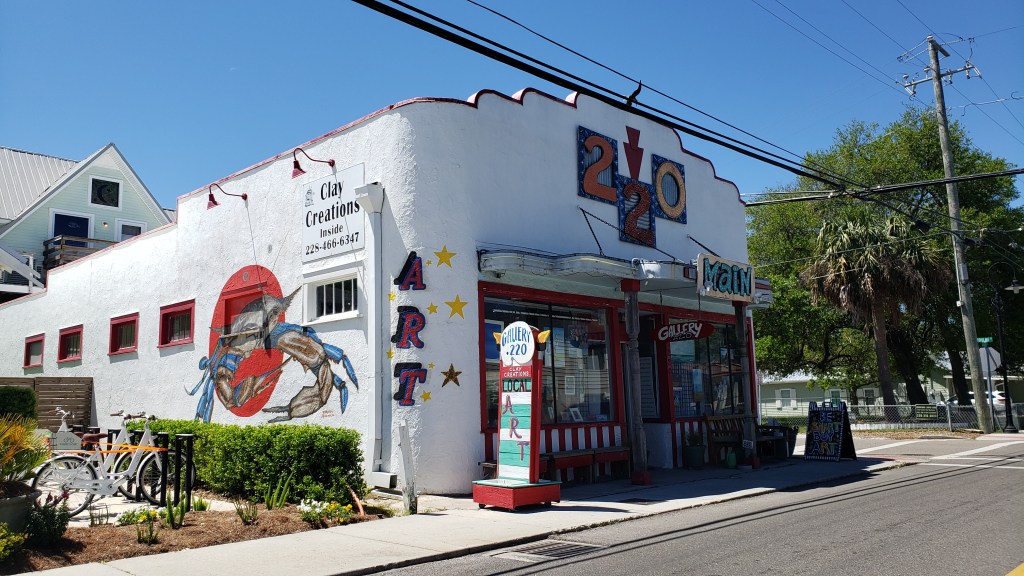
Built in 1929, this artist’s co-op was once a grocery store. It’s said to be haunted.

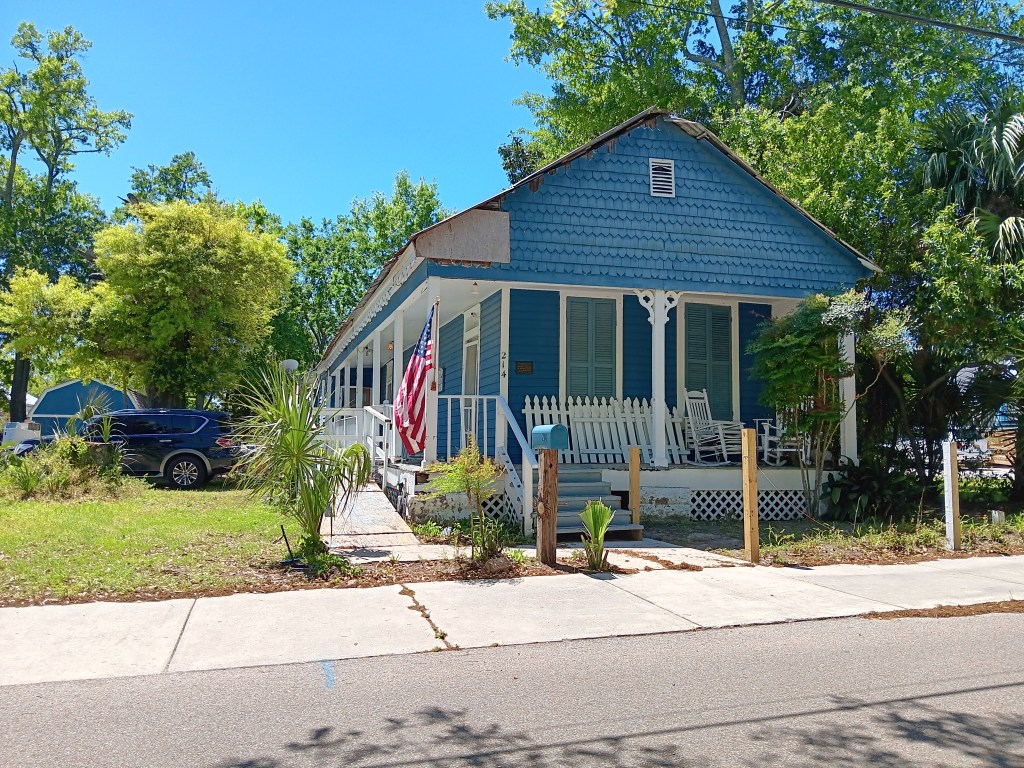
Alice Moseley, who became a famous folk artist at the age of 60, lived here.

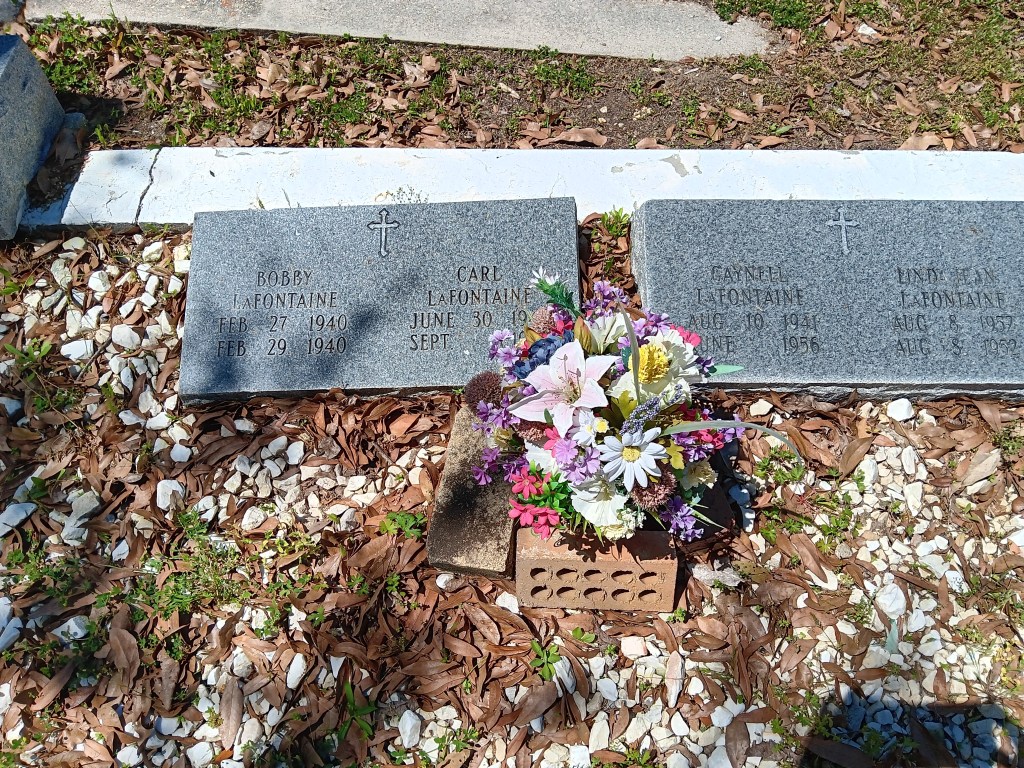
Cedar Rest Cemetery is also on the tour. Here, we found one of the most heartbreaking plots we’ve ever seen. A couple’s four children passed, one on the day of her birth, one on his third day of life, one in his third month, and one in his fifteenth year. Unbearable.

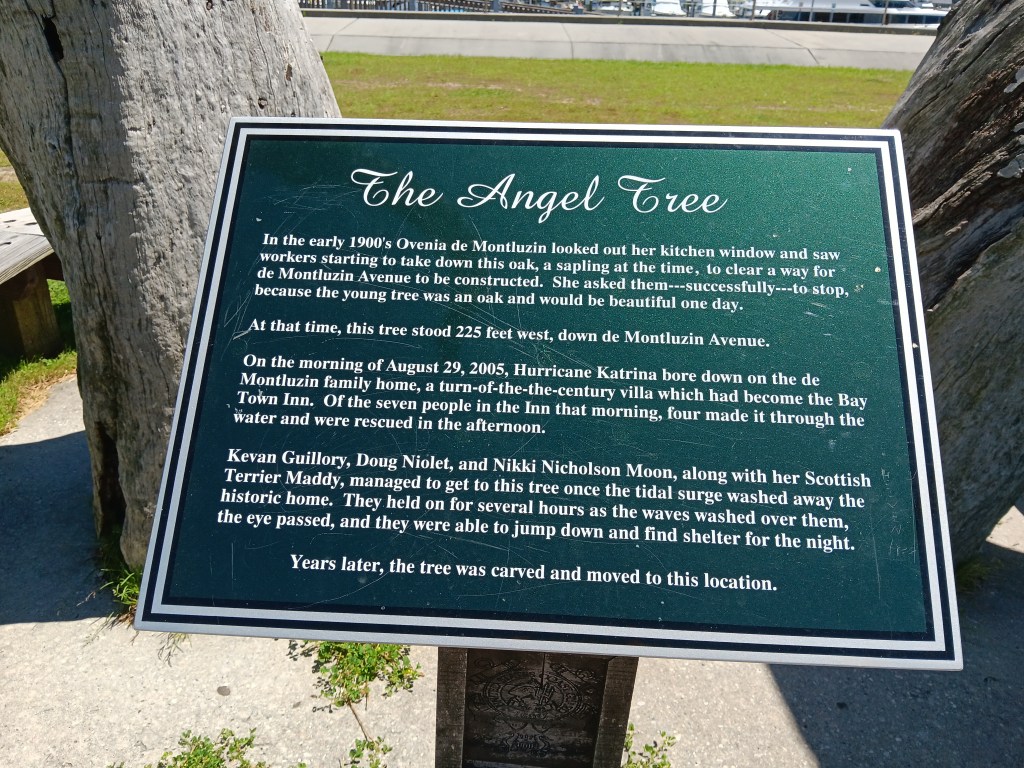
Also located here is the Angel Tree. We’ll let its marker tell you the story.
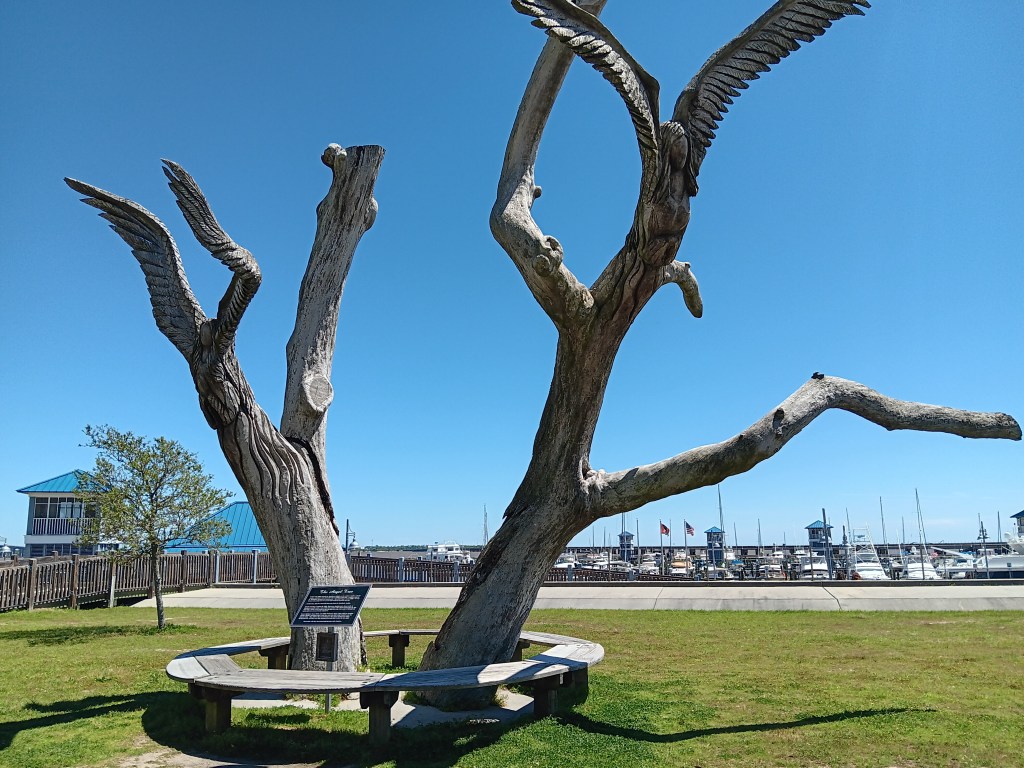
Look carefully and you’ll see two angels carved into the branches. Their wings are obvious, but their faces less so.


We took a drive out to Kiln on the suggestion there was an interesting historical downtown to explore, but if there was an actual downtown at all, we never found it. And we tried!

We did find a lovely road lined with Live Oak trees, and a marker for Logtown, founded in 1848 as a community supporting one of the United States’ largest lumber mills. Of course, its 250 citizens still living there in 1961 were “removed” so that the John G. Stennis Space Center could take over the land for NASA’s Apollo Moon Mission Program. *Sigh*
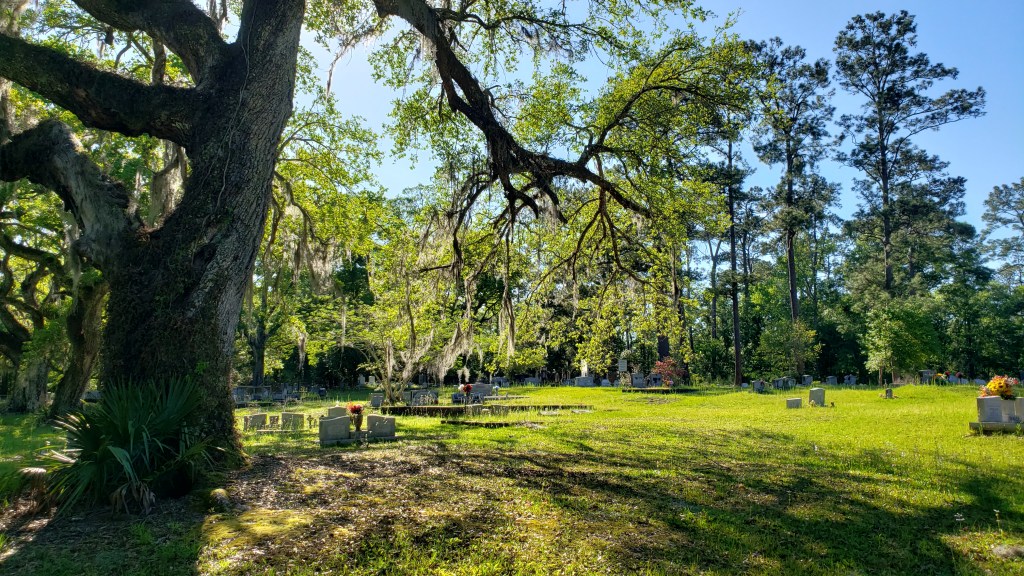
All that remains near the marker is a small cemetery.

We only had four days in Waveland, but we were so glad we added it to our itinerary. Hearing the waves from the Gulf at night, seeing the locals out fishing, and enjoying the laid-back vibe, especially at sunrise and sunset, revived us after our time in the Big Easy. But we weren’t finished with the beach just yet.
Coming To Terms With The French Quarter


Susan: Let’s go to the French Quarter on Sunday. It’s Easter. Everyone will be at home with their families having Easter dinner.
Simon: Good idea! We’ll grab lunch and then get some beignets at Café Du Monde while it’s quieter.
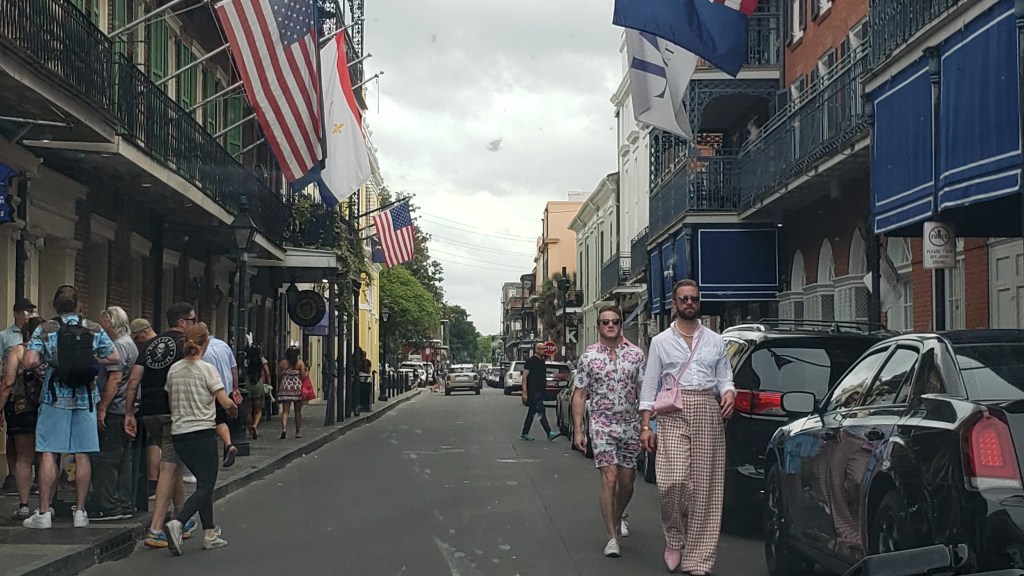
French Quarter: Easter Parade! Gay Easter Parade! Easter Bonnet Contest! Let the parties begin!

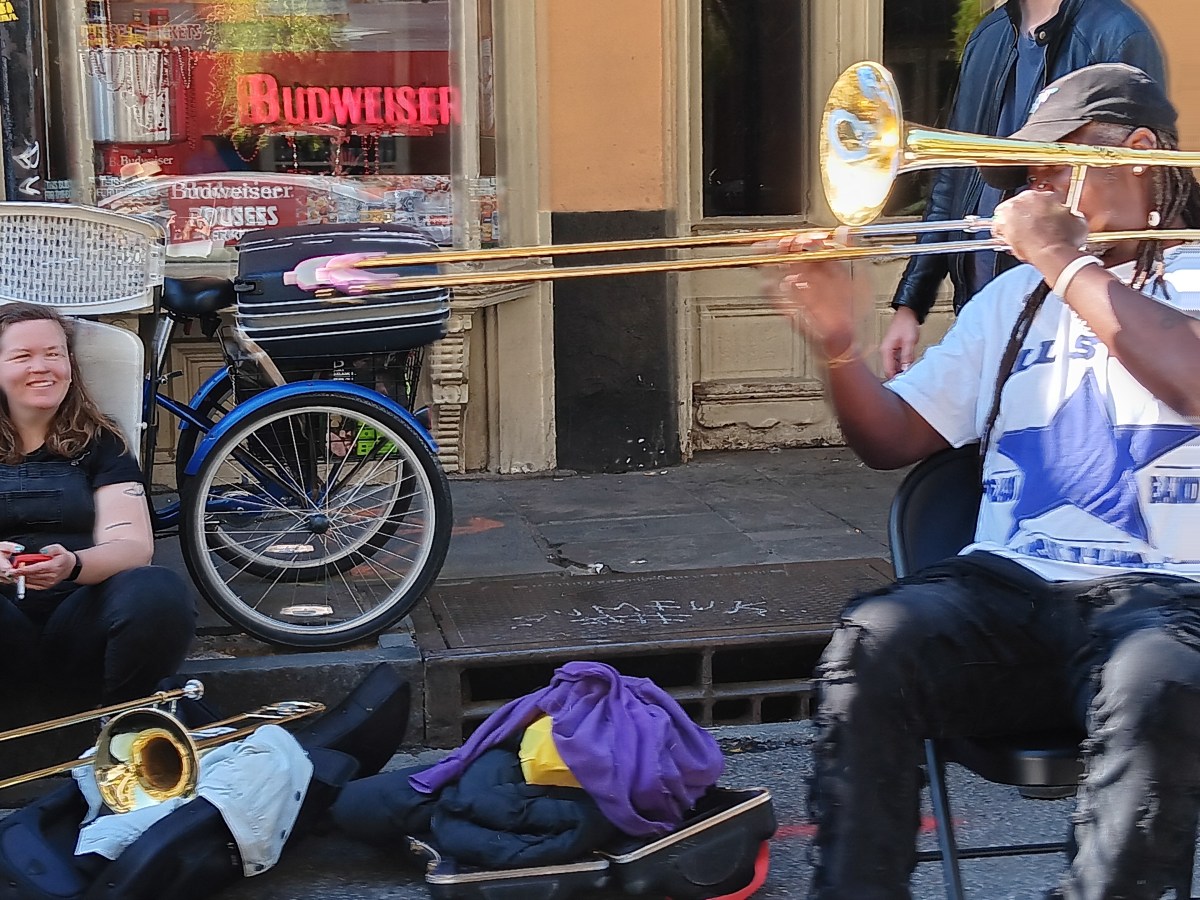
We’d been in the French Quarter twice already, but saved a visit to Café Du Monde and Café Beignet for Sunday, when, surely, the area wouldn’t be so jam-packed with tourists and heavy drinkers.

Wrong.


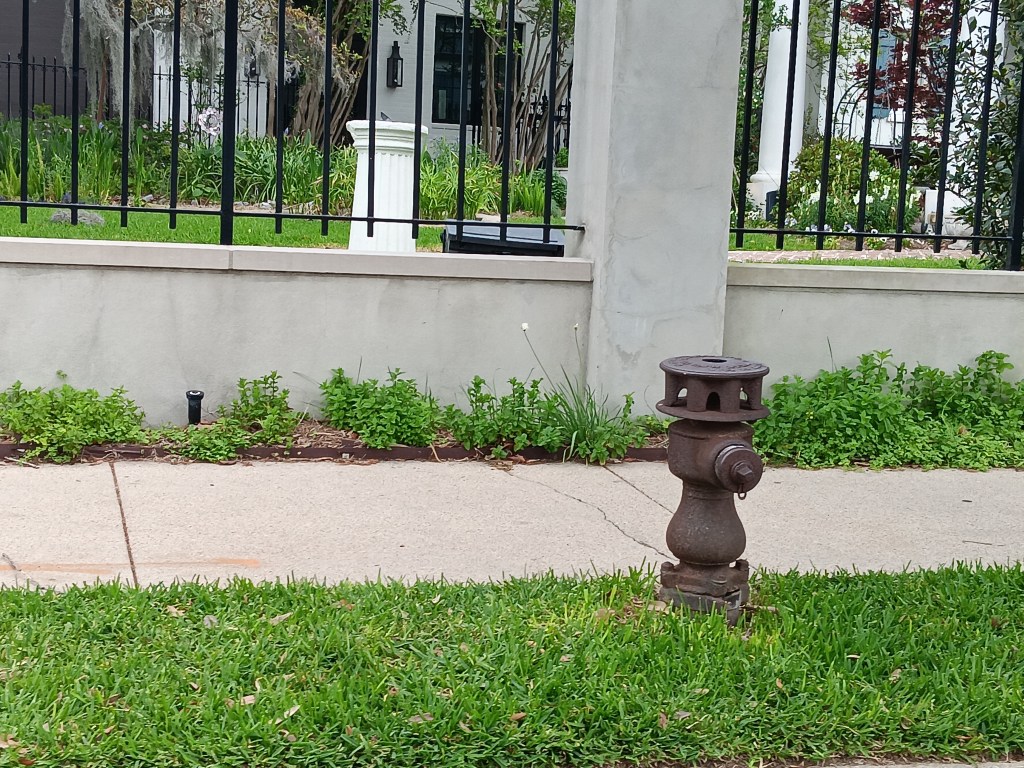
We didn’t know we were wrong when we set off on Easter morning, though, with a few photo ops in mind. First, we wanted to see the oldest fire hydrant in New Orleans, whose technology changed the face of fire-fighting, allowing firefighters to get closer to the blaze and have the ability to pump water right out of the bayou. It took a little doing to find it, but the adorable little hydrant that looks like a character straight out of a Pixar movie was worth the effort.

How cute is this little guy?

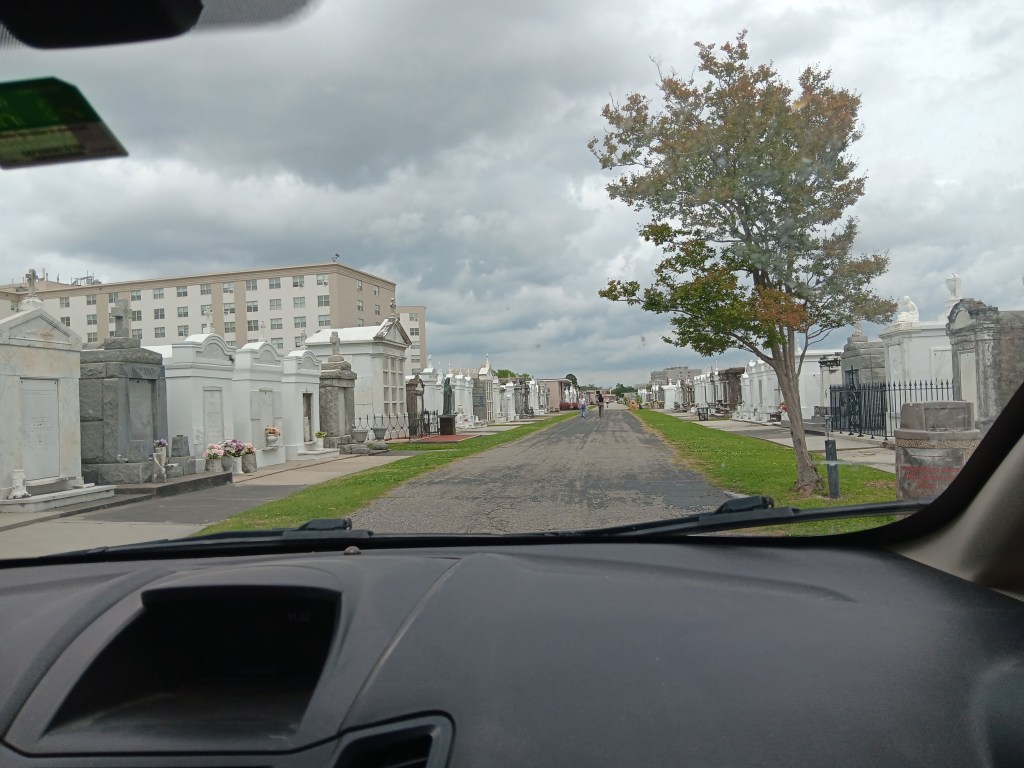
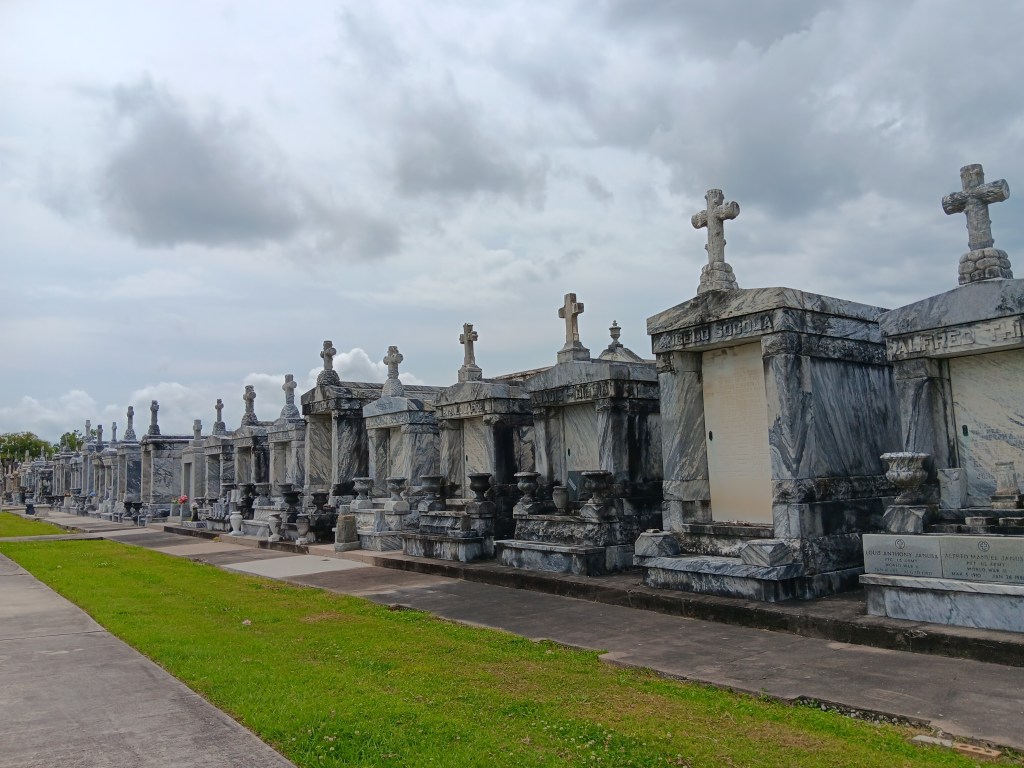
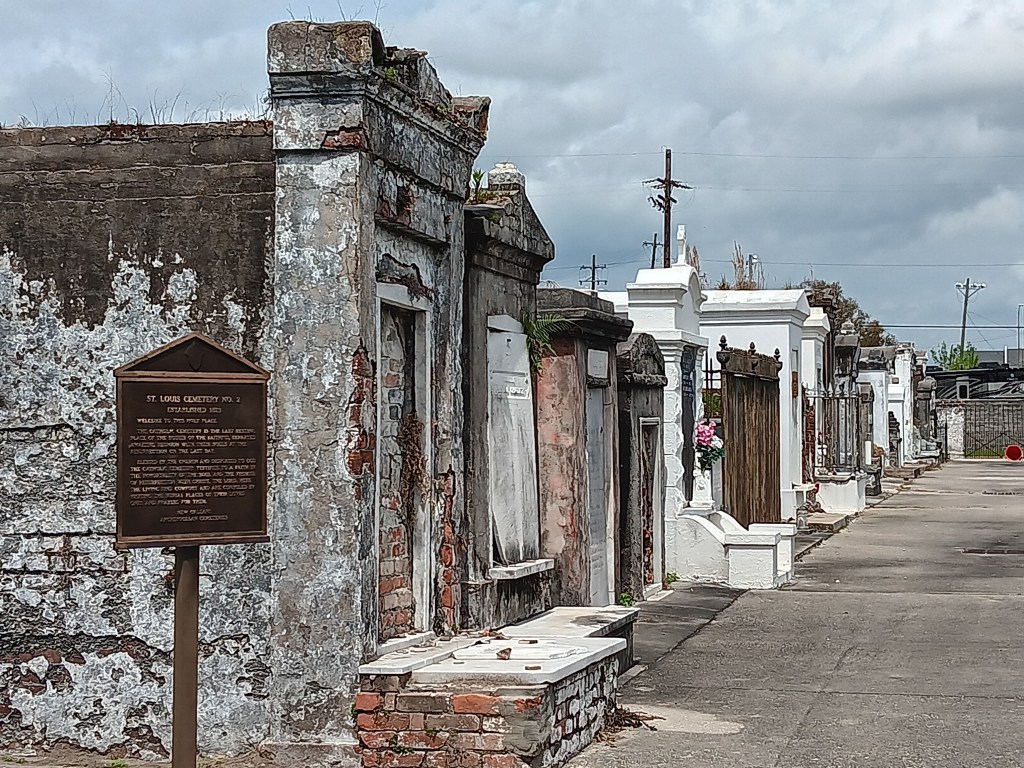
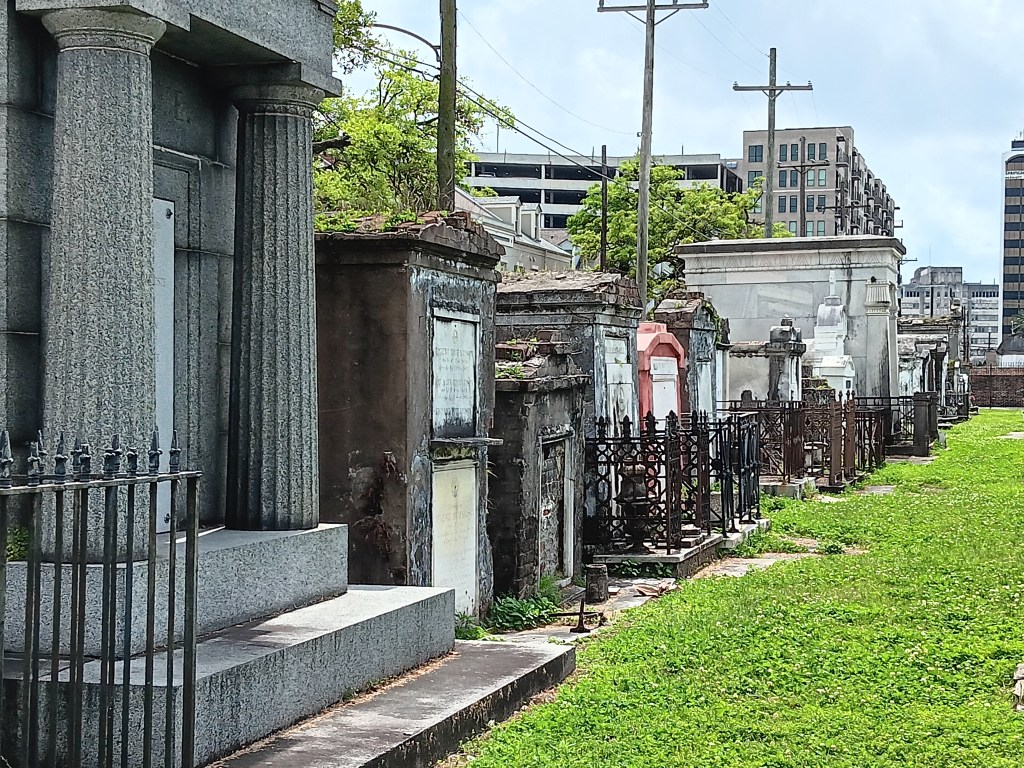
Easter is all about death and resurrection, so what better place to remember that reality than a cemetery? We did a little drive-through at St. Louis Cemetery 3, which felt like driving along a street in Death City, where all the homes are as quiet as the tomb. Many whose Earthly remains are experiencing eternity here were famous New Orleanians.


Cemetery 1, the oldest in New Orleans, is closed unless you take a sanctioned tour. St. Louis Cemetery 2, famous for being the final resting place of many who succumbed to the 1823 cholera outbreak, is also closed, in part because of vandalism, but, if the used syringes strewn around the sidewalk outside are any indication, there is a bigger problem at play.


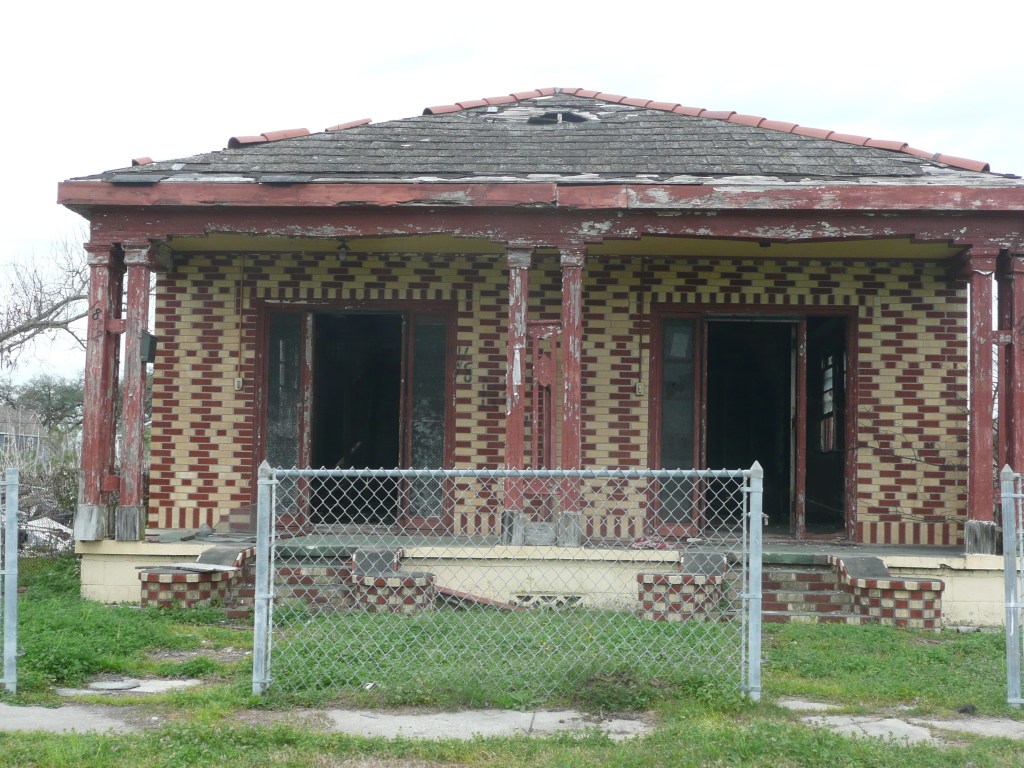
Next on our list was the Lower 9th Ward. We’d been there in 2013, eight years after the horrors of hurricane Katrina, and most of the homes were still in terrible shape, with spray-paint markings on them from the searchers who went into each one to find out if they contained victims of the floodwaters, and how many.

We took this photo during our visit in 2013. This is not the standard Search-And-Rescue X-code, but it appeared to be search dates and number of victims (zero).

Now, nearly 20 years later, the area has mostly recovered. Some devastated buildings and homes still exist, but we only saw one that still had its markings. Some lots remain vacant, but more than anything, new homes have gone up, which was incredibly heartening to see.

Also from 2013. It’s hard to see, but there is a search code on the house, to the right of the left-hand door jamb.

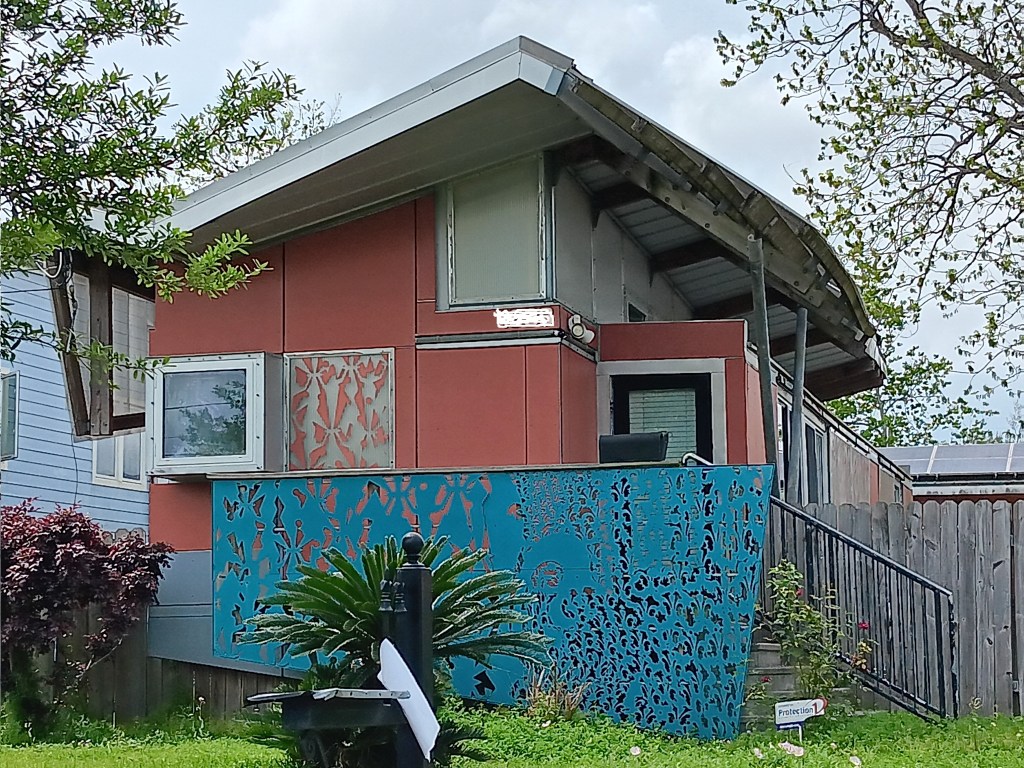
In particular, we were interested in seeing the so-called FLOAT House, a low-cost prototype home designed to rise to a height of 12 feet if, God forbid, another flood-related catastrophe struck. It doesn’t work, of course, and it, along with 190 of Make It Right homes funded by the actor Brad Pitt, which rotted and crumbled in the Lower 9th’s high humidity, stand as good-intentions-gone-wrong for people who had already lost it all. A $20.5 million lawsuit settlement in 2022 helped redress the balance.


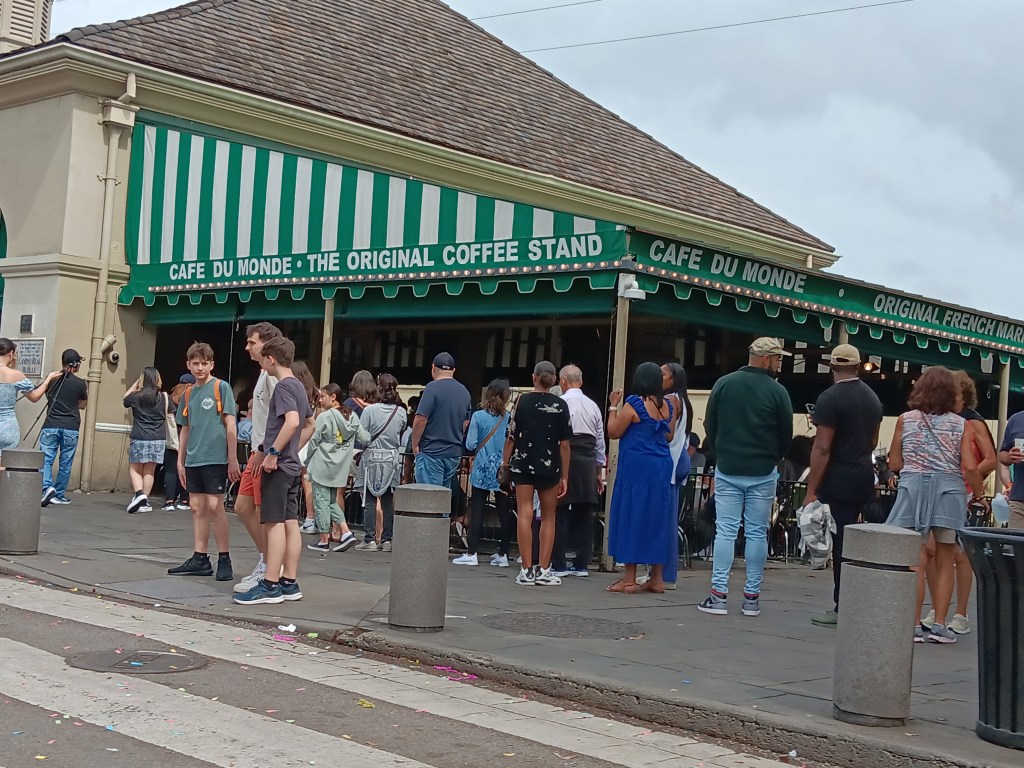
After our failed food runs in the French Quarter, we admitted defeat before we tried a third time, and headed back to City Park for its Café DuMonde branch, and had mugs of hot coffee and steamy beignets in hand in under two minutes. Sitting in the sun with the sounds of the community around us, we pretended we were locals, and thoroughly enjoyed a happy half-hour being normal people.

This is the original location, in the French Quarter, and you’re seeing about one-quarter of the line of people waiting to order. That, and no parking, was why we kept failing.

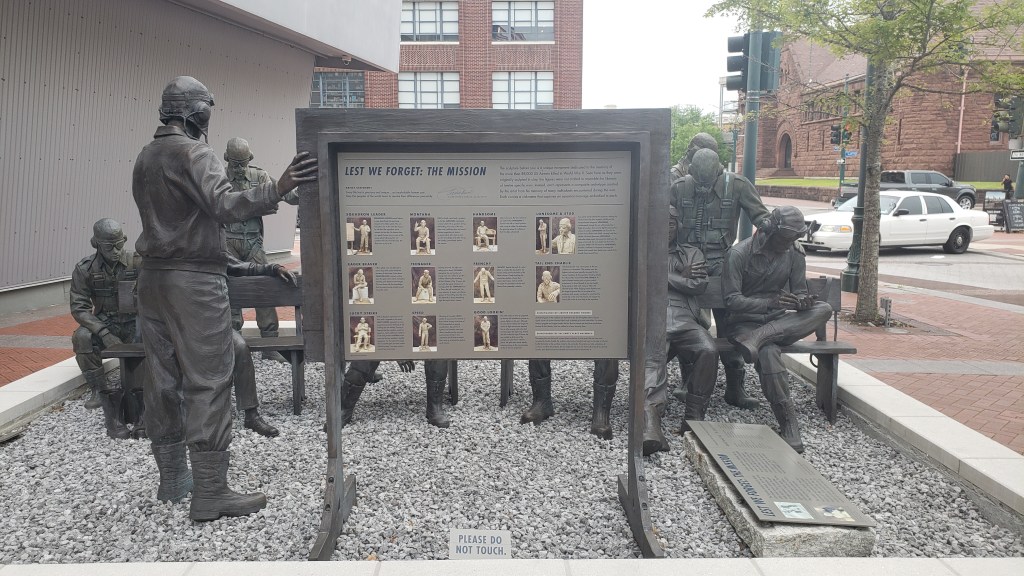
Simon had been to the National World War II museum before, but Susan hadn’t, so we set a morning aside to pay a visit. The museum had a new exhibit, Finding Hope In A World Destroyed, highlighting the Holocaust, recovery and rebuilding, Black service men’s reception upon returning home, and The Monument Men, complete with reproductions of stolen artworks.

We only took photos outdoors, where there are several memorials.

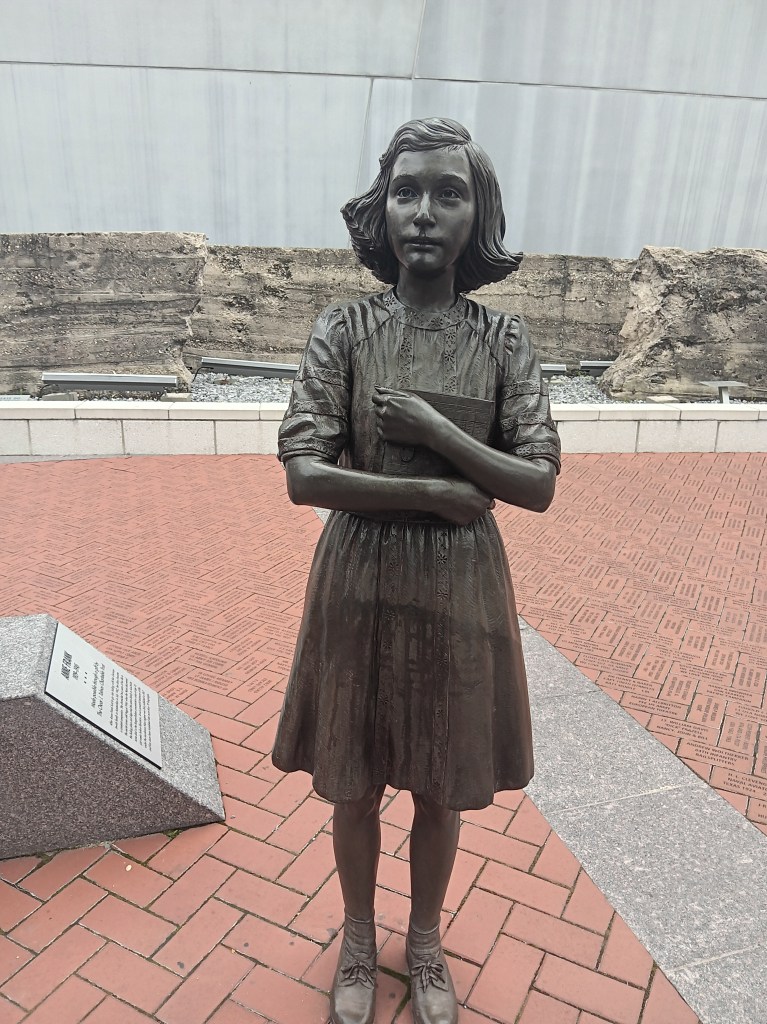
There was also a mockup of the kitchen in The Secret Annex, where Anne Frank and her family hid. The whole exhibit was quite powerful, and it felt disrespectful to take photos, so we didn’t. Susan had studied the Holocaust in depth since she was in her early 20s, but Simon found the exhibit a bit overwhelming. It took him back to our visits to Auschwitz and Dachau, and the painful reality of those terrible times.

Anne Frank perished in Bergen-Belsen concentration camp less than a month before its liberation.

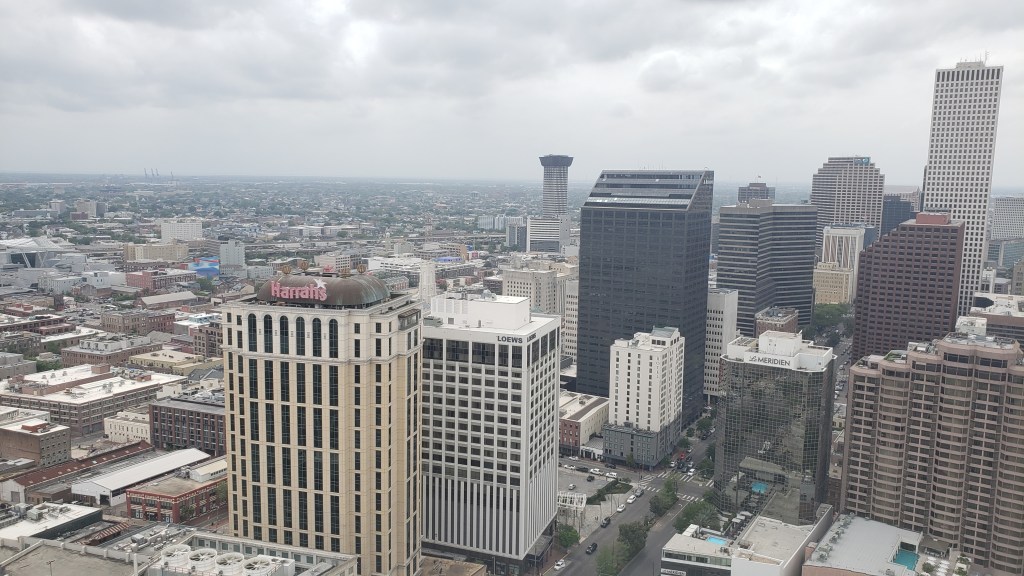
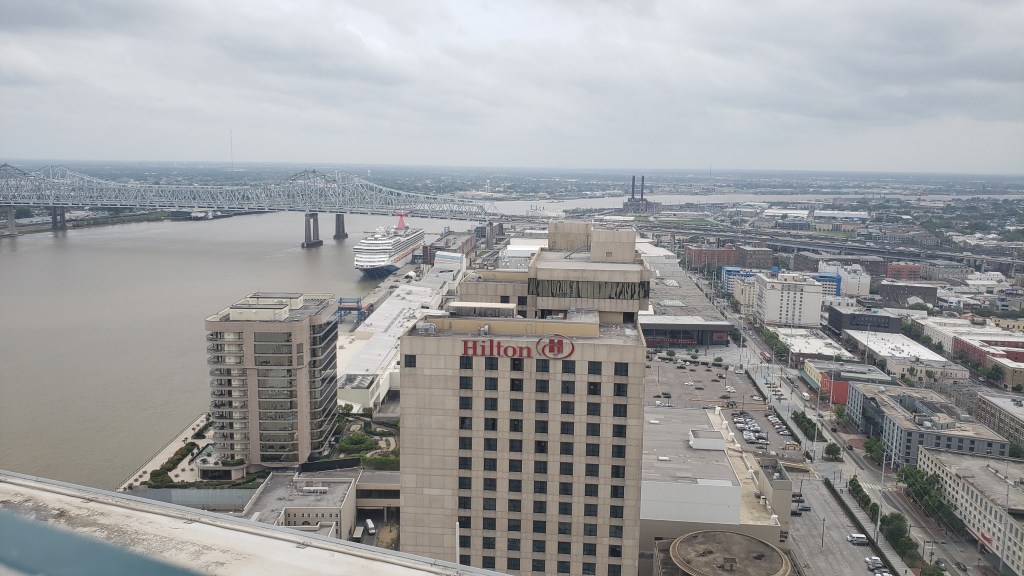
He shook it off with a trip up to Vue Orleans for a 33rd floor overview of the city. Ruthie wasn’t allowed, of course, so she and Susan waited on a park bench while Simon checked out the observation deck.


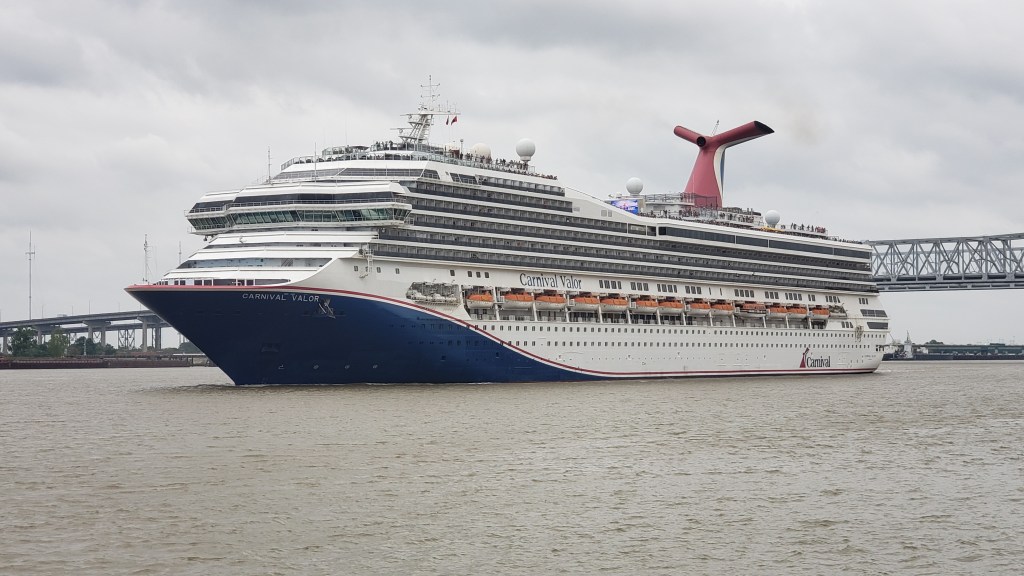
Vue Orleans is in a building right on the riverwalk, and as luck would have it, a Carnival Cruise Line’s ship, Valor, was just making her way out to sea with a whole new group of passengers. We had actually sailed on her with our three boys many long years ago.


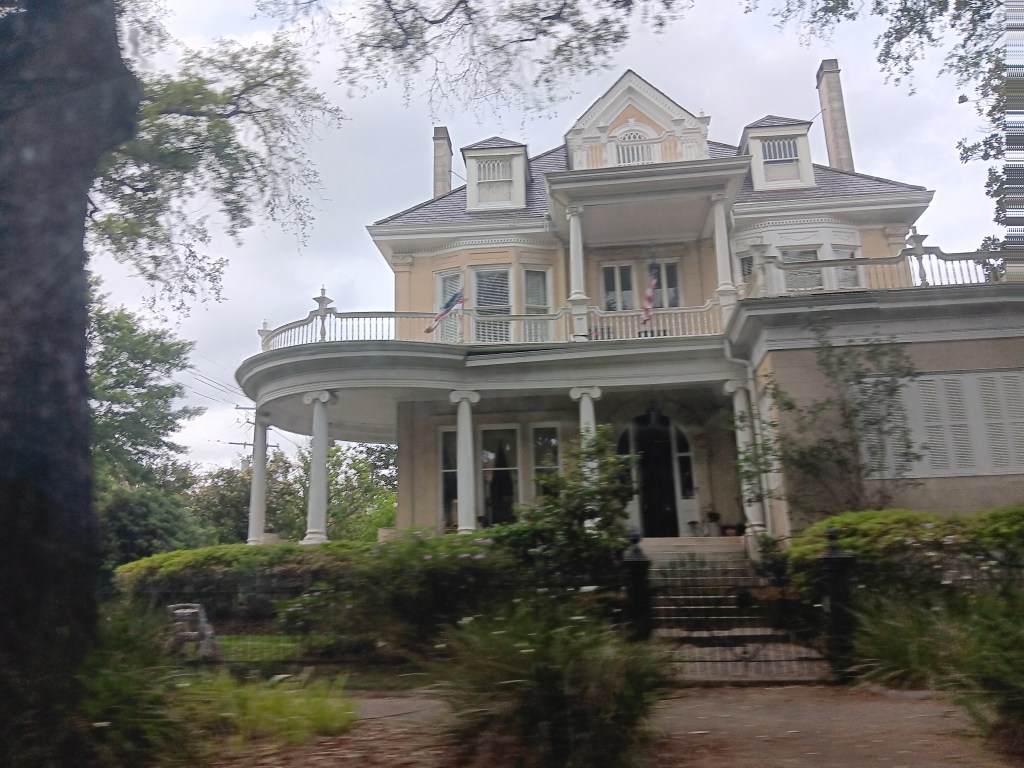
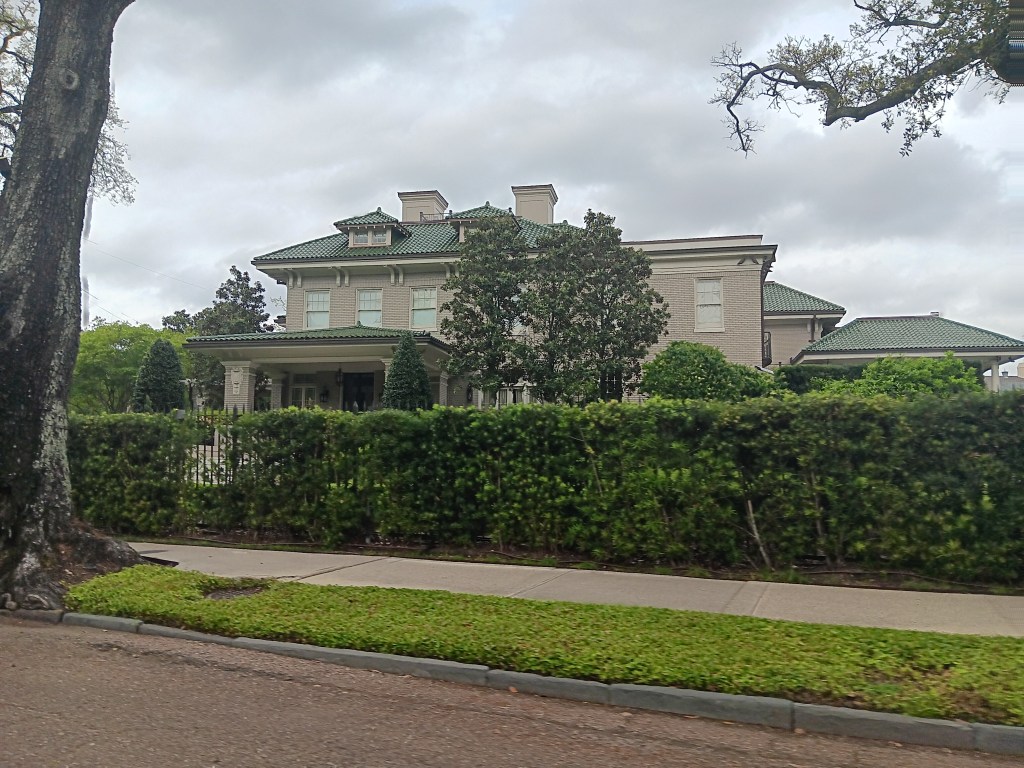
We stayed in the Garden District during our 2013 trip to the Big Easy, an area that, like the French Quarter, is totally reliable. You know what you’re going to see (massive wealth), and we were happy to end our time in New Orleans with a leisurely trip down memory lane.