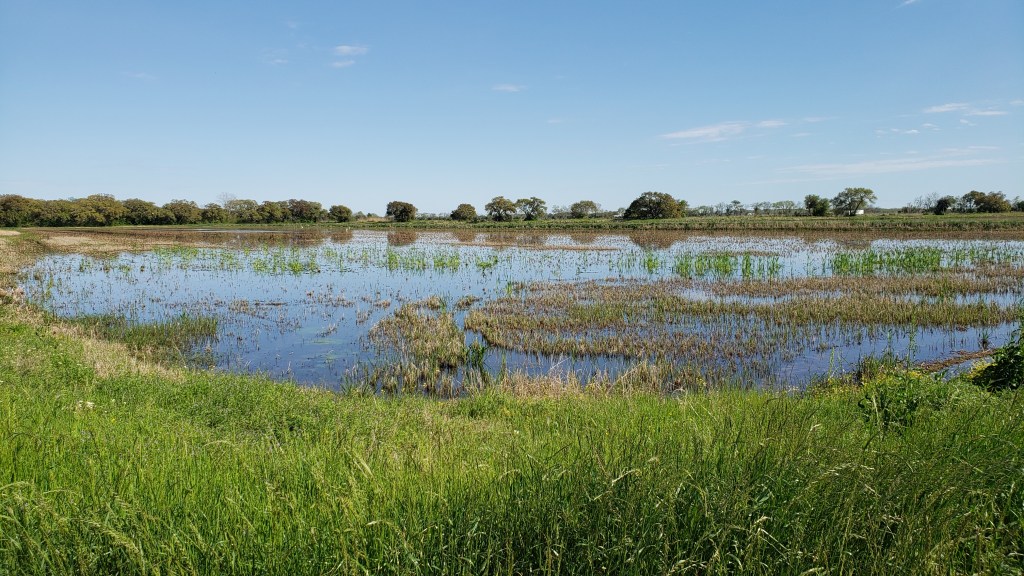
Hello, Louisiana! Home to vast acres of rice fields and crawfish farms, and weird, sticky-uppy stalks that we discovered were sugar cane, one of the state’s primary crops. Hello, Covid, too, which put a major damper on our touring, with its ferocious exhaustion and coughing that had Susan bedridden for four days straight.
The virus’s nasty symptoms hit the night before we moved from Beaumont, Texas to the peaceful oasis of Parkside RV Resort in Broussard, Louisiana, but at that point we thought it was a bad cold, or maybe allergies. We’d been so careful; didn’t dine in restaurants, our touring was all outside and just the two of us (plus Ruthie), so Covid wasn’t at the top of our minds. It was only two days later, when Susan said, “I’d better test to rule it out,” that we knew the awful truth.

During our pre-test time of innocence we took a little drive around Broussard, exploring the downtown area by car. It’s a cute city center, very compact and approachable, and we liked the small-town feel in a place we thought would be much, much bigger. It also offered a hint at the transition Lafayette seems to be going through.
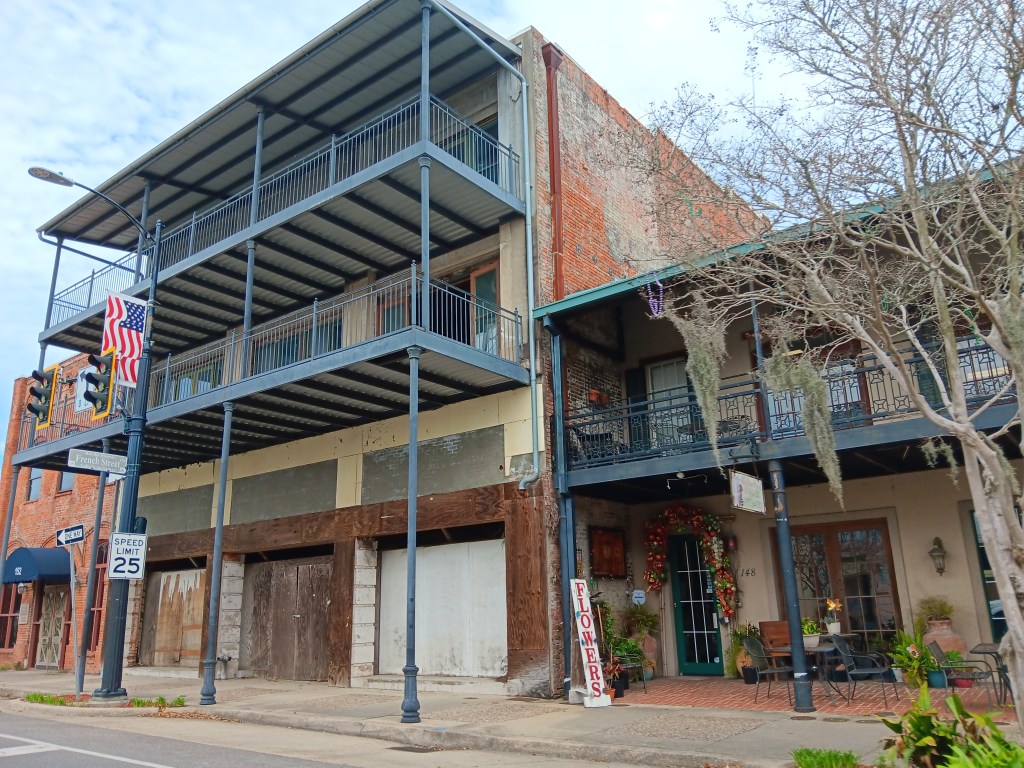
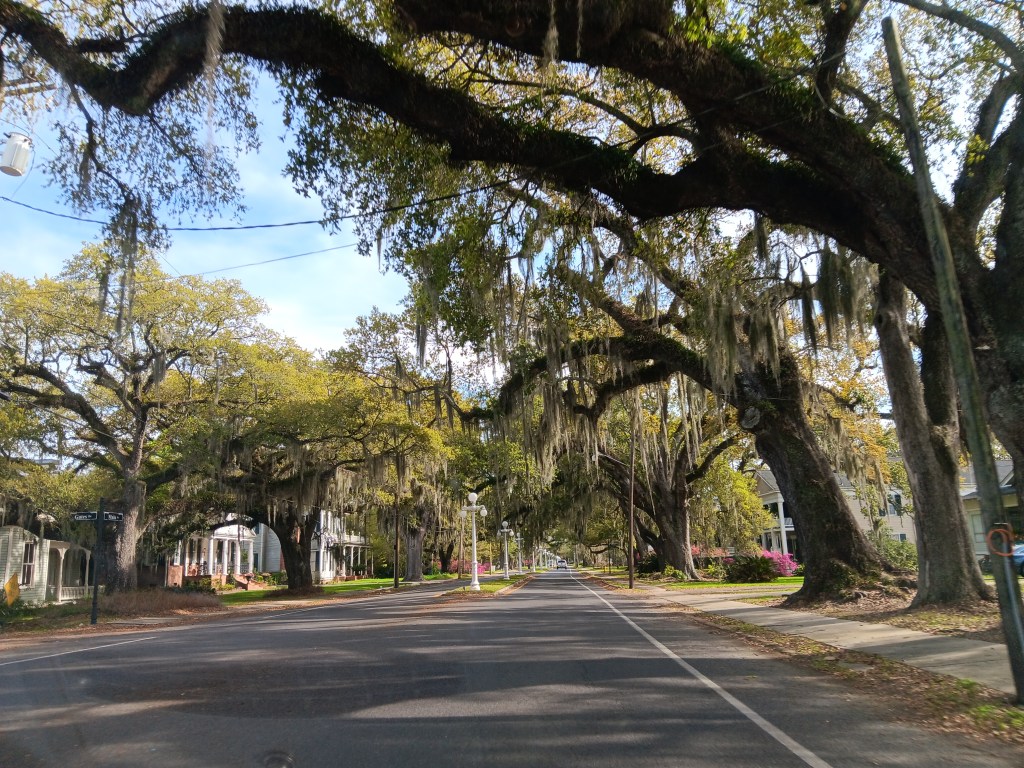
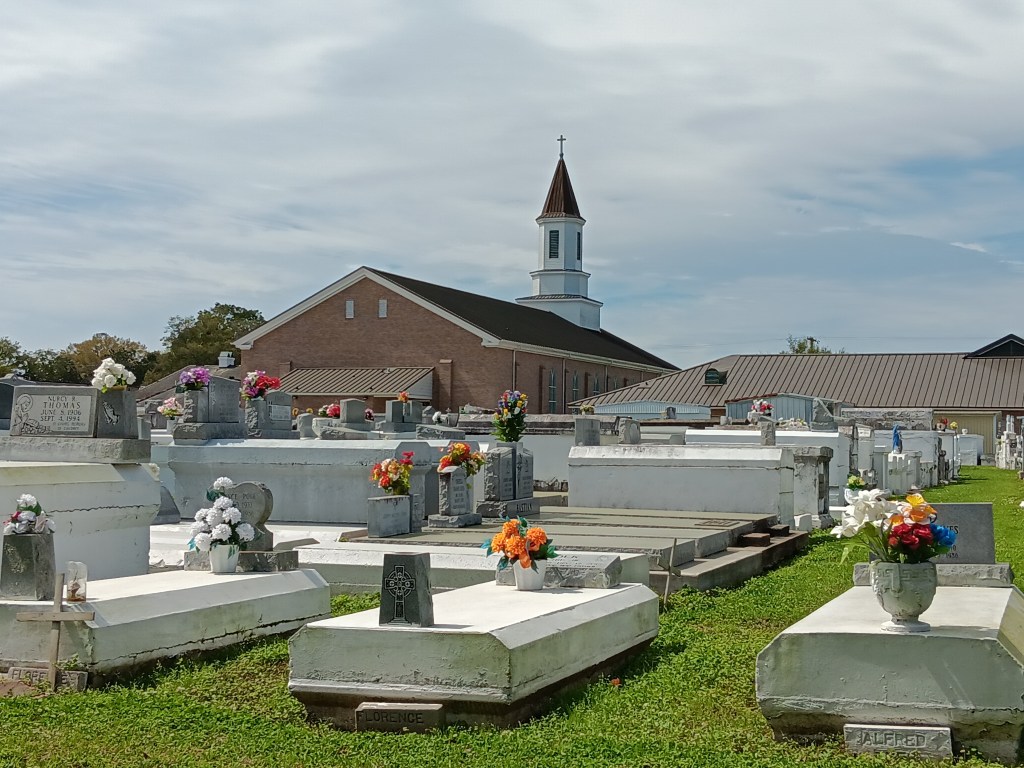
Two features really stood out for us as we drove around: the Giant Live Oak trees and the above-ground cemeteries. We’d seen this sort of cemetery during a visit to New Orleans years ago, but they still stand out as curiosities, especially as so many of them seem to be in the back end of nowhere, or smack in the middle of the city.
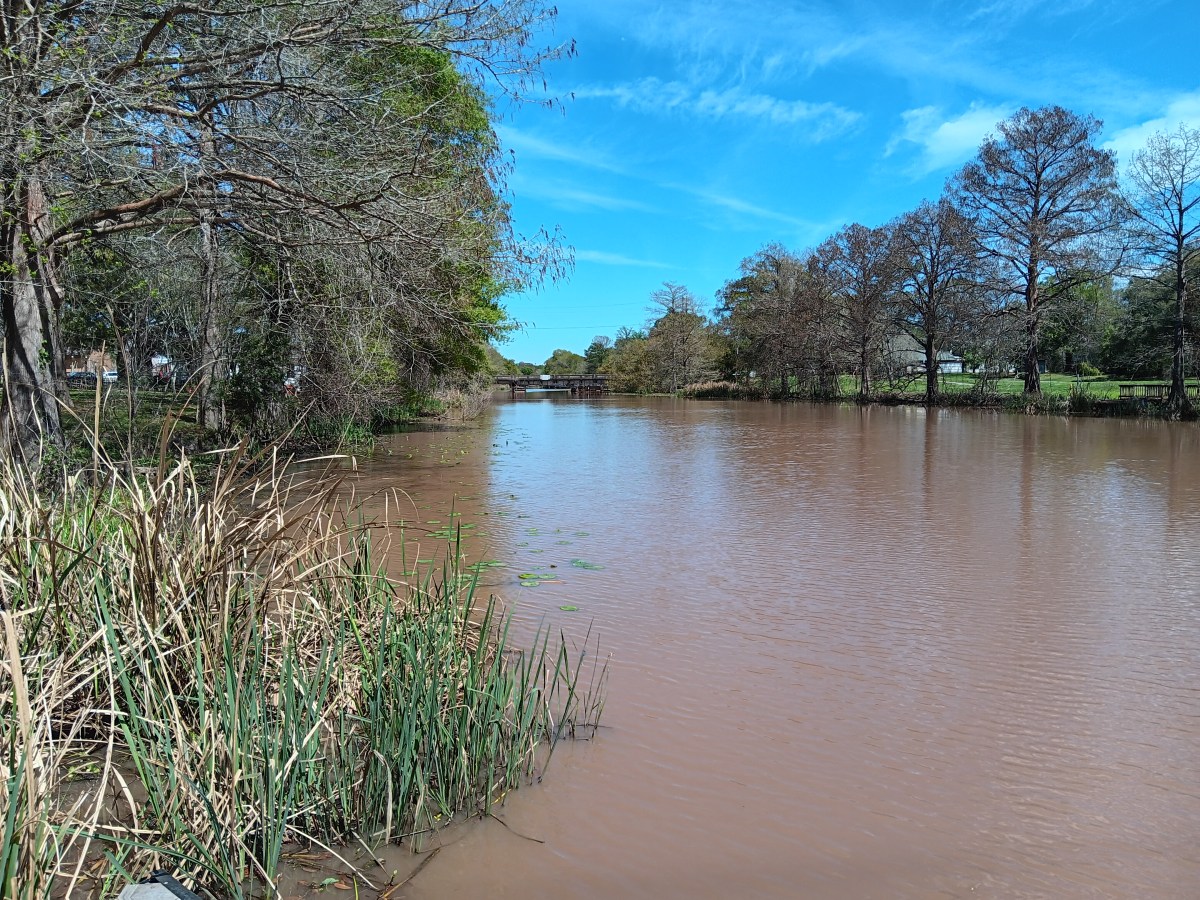
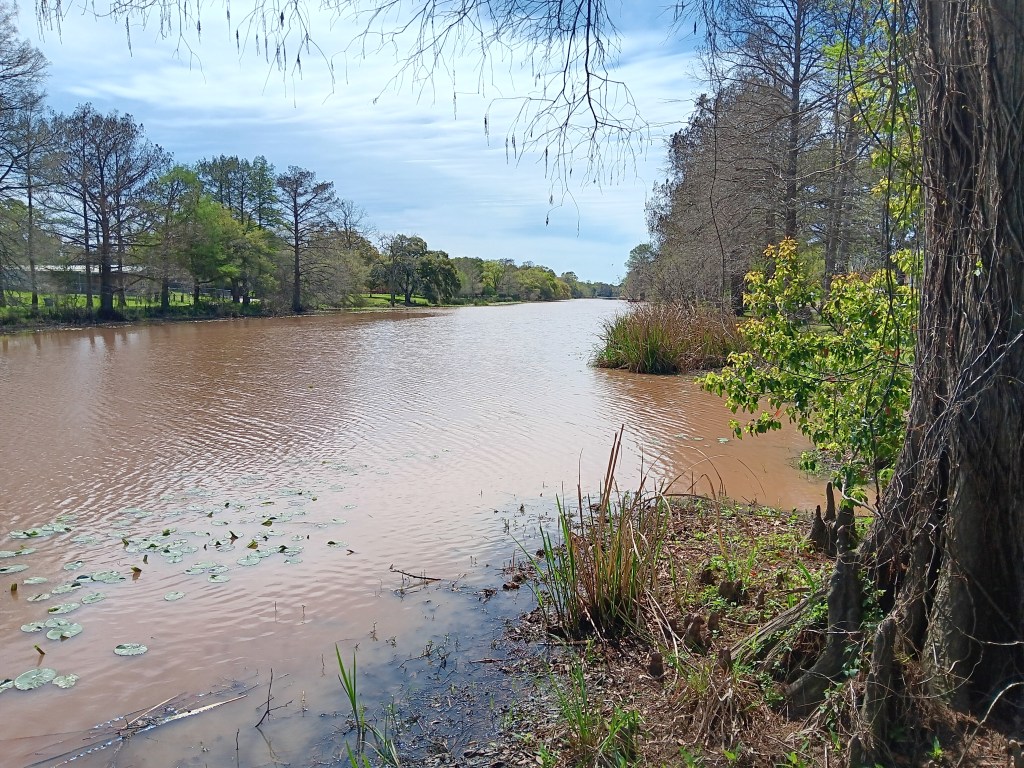
Susan had a little rally five days into it, so, with her fully masked up in an N95, we hit the road for the Bayou Teche National Byway to Morgan City. We had been wondering exactly what “bayou” meant, since we thought it meant a big, swampy waterway with cypress trees in and around it, but very back-woodsy, dark, and mysterious due to all the trees. The kind of place Huckleberry Finn would have been born and grown up, where ‘possum and squirrel were always on the menu.
Instead, it’s a French version of the Choctaw word “bayuk,” meaning (roughly) a creek or small river, which was what we were seeing every time we saw a marker for a bayou, including Bayou Teche (literally, river snake, or “snaking river”), which was once the original course of the mighty Mississippi River a few thousand years ago.
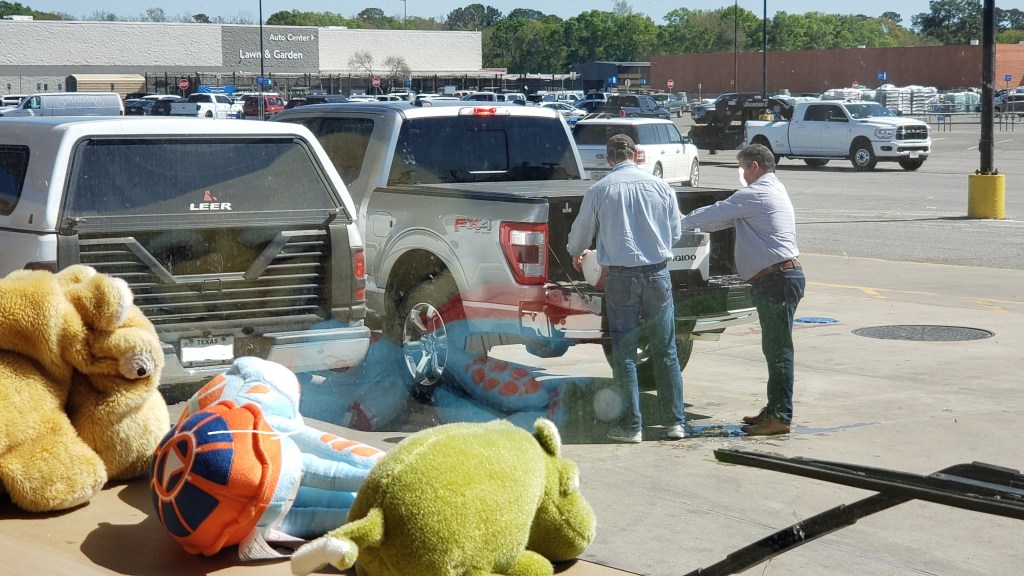
There may be those among you who have unexpectedly encountered the transfer of illegal goods from one car to another, as we have seen on occasion, but only in Louisiana would that transfer of goods involve crawfish and shrimp. And that’s exactly what we saw while waiting to gas up Fati at a Walmart. These two fellas negotiated the sale of crustation packages tucked in a cooler full of ice for quite some time, while holding up everyone in line behind them waiting to get gas.
The next day, Susan was free from the feeling of having been kicked in the face by a donkey, but still coughing and incredibly tired, so we opted for a drive along the Cajun Corridor Byway that runs between Delcambre and Kaplan, south of Lafayette.
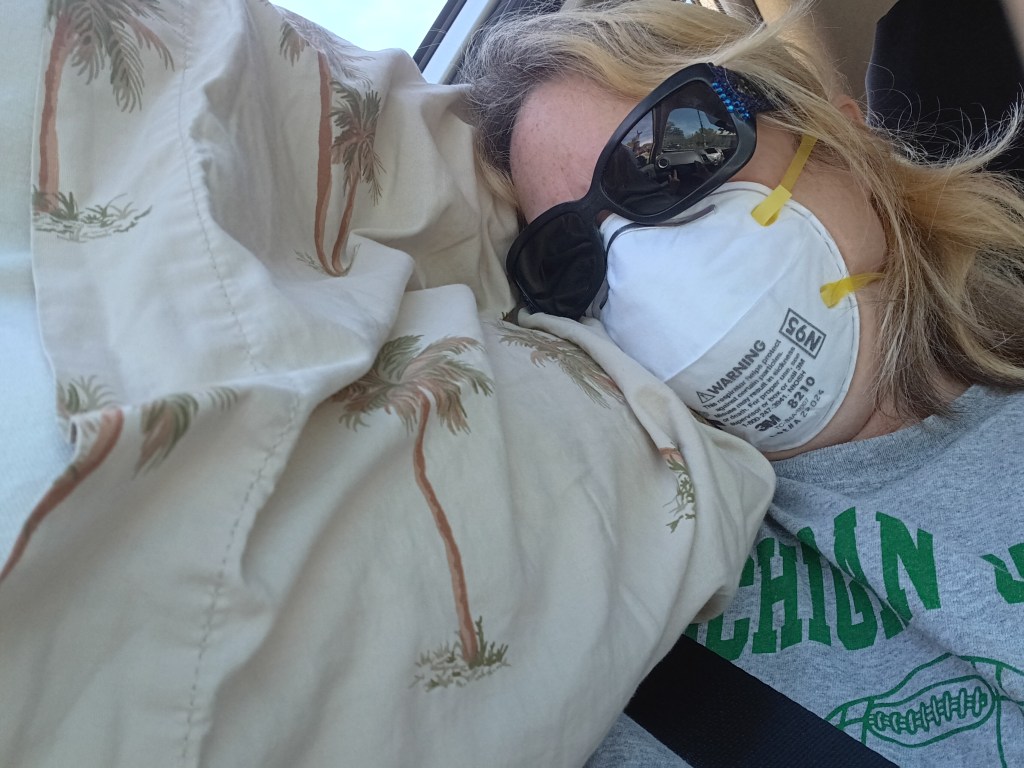
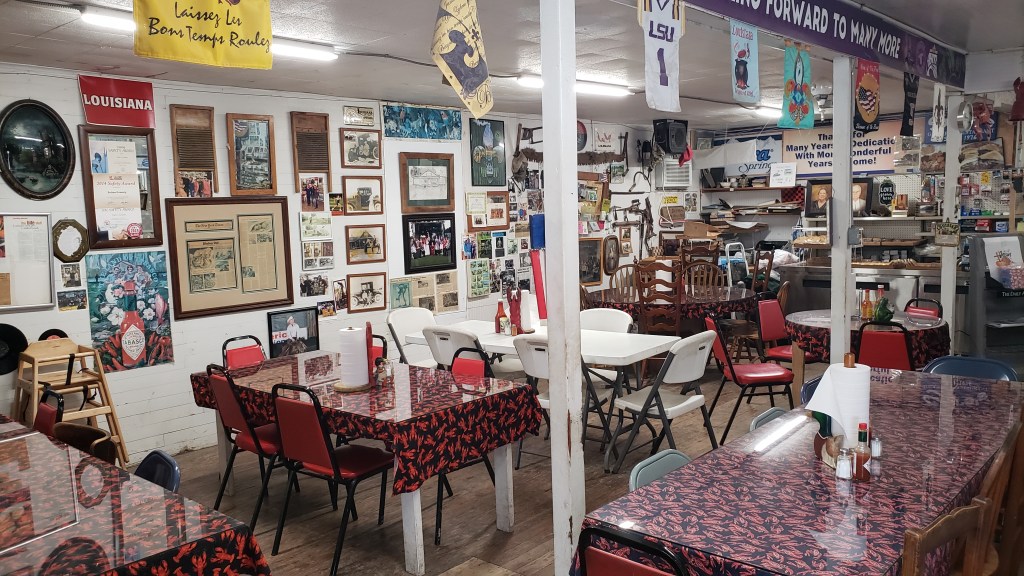
Simon’s appetite made up for Susan having none at all, so a visit to Suire’s Cajun Restaurant and Grocery Store for lunch was in order, being somewhat of a local institution. We knew before we even started the trip that Louisiana would be a non-starter for Susan, food-wise, due to a rather nasty shellfish allergy, so having no desire to eat was a blessing in disguise.
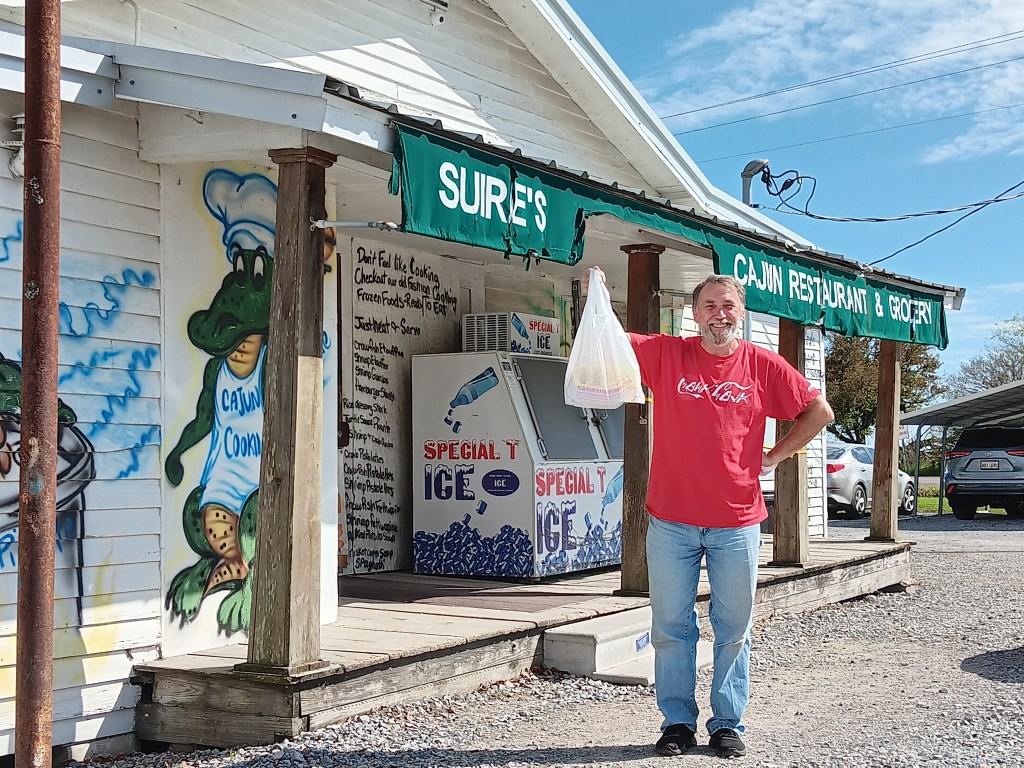
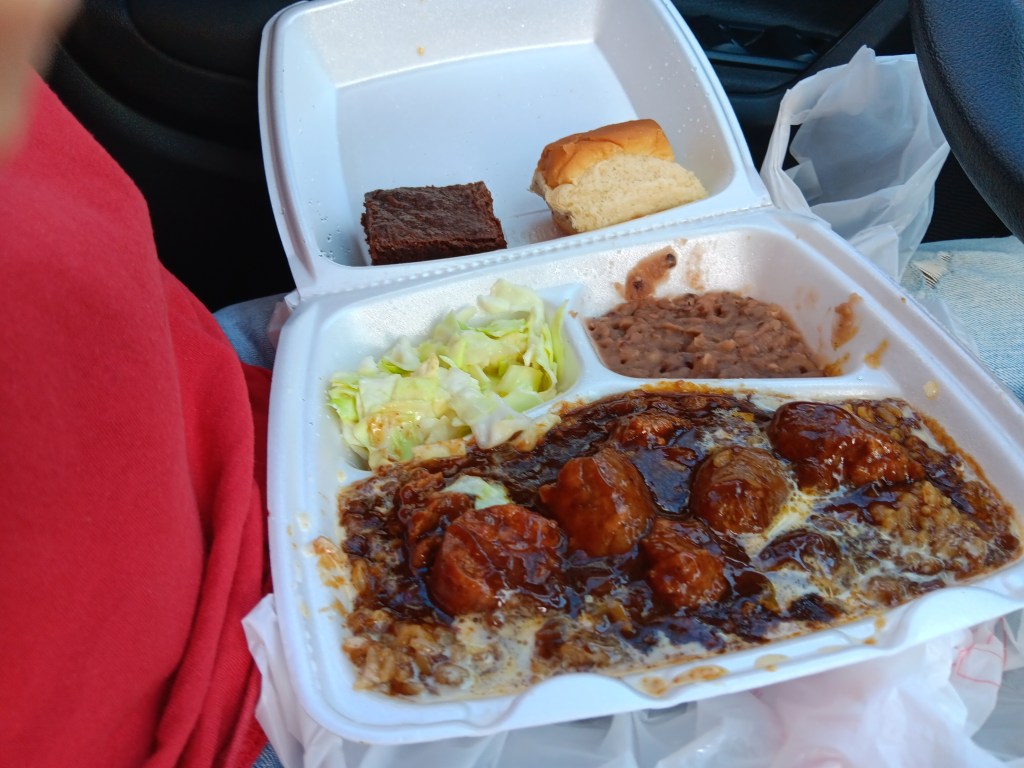
Simon had no such restrictions, and went for the Boudin Plate, a homey assemblage of Boudin sausage, rice, gravy, a dinner roll, slaw, beans, and a brownie. Delicious perfection!
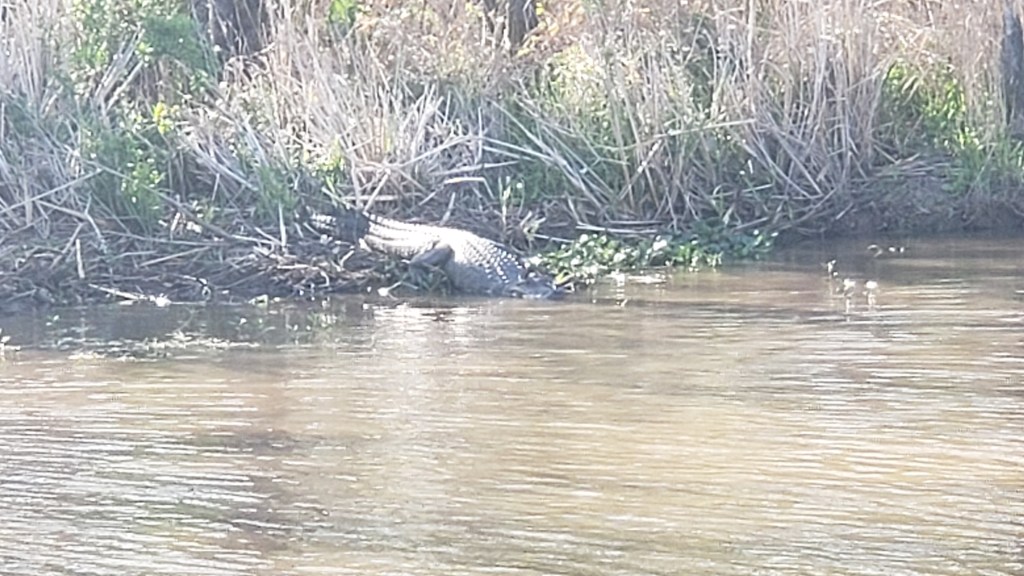
We detoured further south for a drive along the White Lake Birding Trail after lunch, and while we couldn’t do any of the walking trails, the road through it rewarded us with wildlife sightings and reminded us of our beloved Apopka Wildlife Drive in Florida. We saw lots of gators, some deer, hundreds of birds, and a mammal that was either a muskrat, a beaver, or a woodchuck. Probably a beaver, possibly a woodchuck, but we’ll never know for sure.
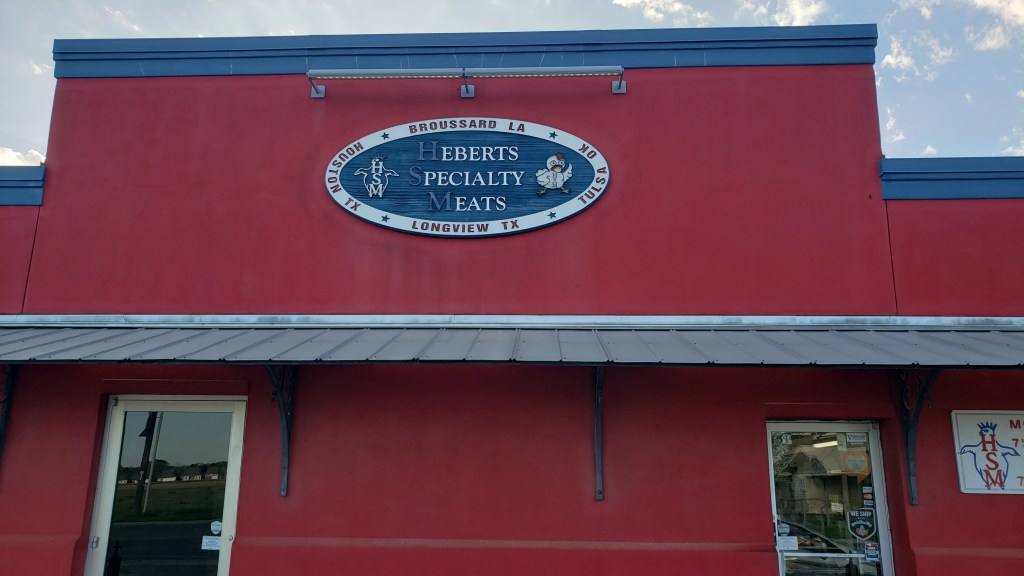
Cooking dinner was out of the question, so we made a quick stop at Hebert’s Meats for pre-made Etouffee and sausages, which Simon could dine on for the next couple of days. Somehow, we only have one photo of the outside of the store, and none of the fine offerings within.
Susan’s rally was short-lived. The next morning her oximeter was showing some worrying numbers, so it was off to Urgent Care, just a quarter-mile from our campground. Two chest X-rays later (mercifully, both clear), we were sent home with a six-day course of steroids, an antibiotic for a brewing secondary infection, and a coupon from the doctor to help us afford a $500 inhaler.
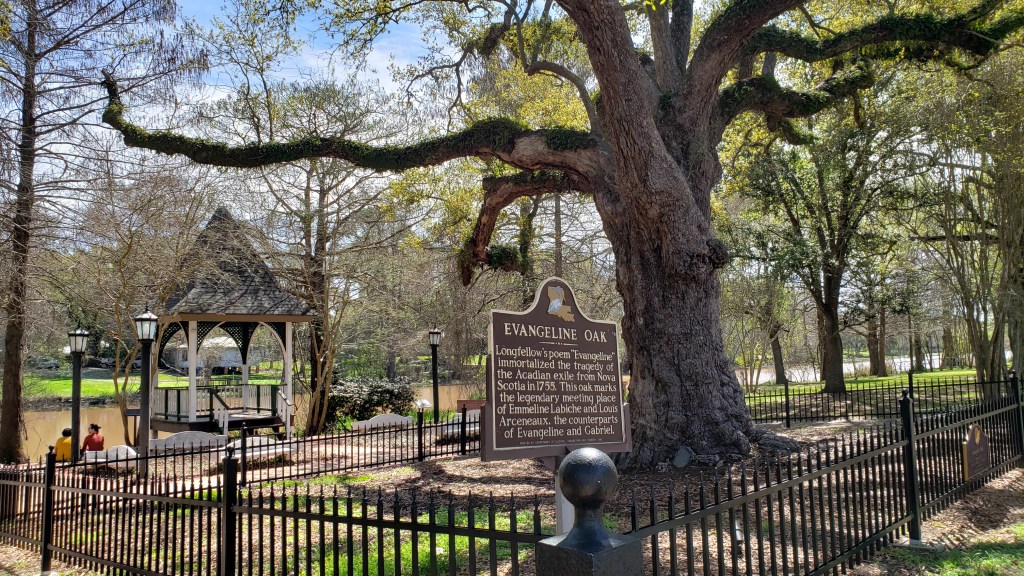
While Susan slept the rest of the day away, Simon went back to St. Martinville to see the Evangeline Monument and the Acadian Museum. The monument is a plaque in front of a massive Live Oak tree, the fourth representative of the original tree made famous in Henry Wadsworth Longfellow’s tragic poem, Evangeline: A Tale of Acadie about the exile of Acadians from Nova Scotia in 1755.
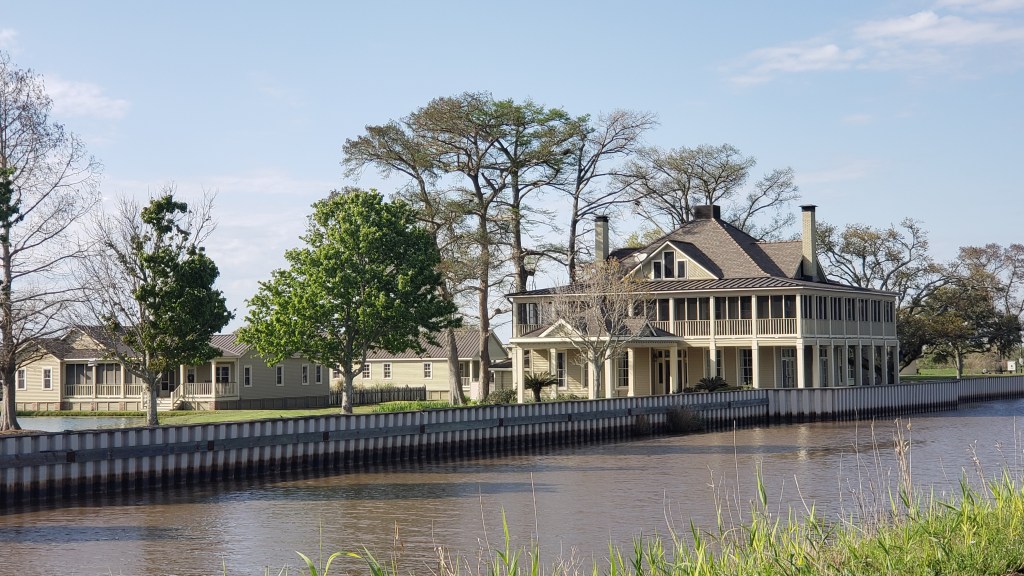
When we set out on this year-long adventure, our perception of Louisiana was that it was a less prosperous state, but as we drove around we began to see a pattern. Big houses and mini-mansions were rising up right next door to the most humble of homes, mobile homes, and RVs being used as homes, both in the towns and perhaps especially in the more rural areas. Something was clearly happening (gentrification; it’s gentrification), and when we arrived in Baton Rouge a week later, our curiosity about this trend kicked into high gear.
Our week in Broussard and Lafayette was far too short, especially given the days “wasted” by sleep, but we thoroughly enjoyed what we did see. Louisiana’s southern coast had definitely impressed us so far, as did the Southern kindness and generosity we’d encountered, and we were eager to see more.
 Veness Travel Media