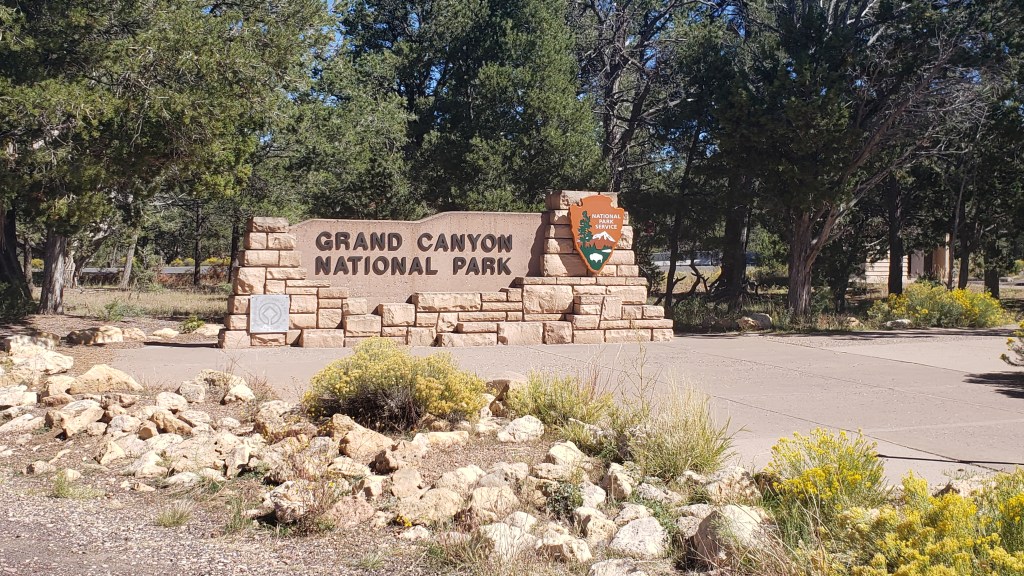
Grand Canyon’s South Rim made a convenient detour as we traveled north from Kingman to Monument Valley, and the view there was completely different to the North Rim. While North Rim is rustic and less visited, South Rim is iconic for a reason. Wider, more colorful, and much more approachable.
Simon had been to the South Rim before, but my first view of it was shocking, in a good way. It struck me as a grand amphitheater with a story to tell in each of its folds and crevices, and its sloping sides are so enormous no binoculars are necessary to see them, though we used ours anyway and were treated to intricate views of the canyon’s smaller details.

There was a little interpretive center not far from where we parked, with a panoramic view through its windows. Sitting right on the edge of the canyon, it offered an exceptional sight line right down to the bottom.
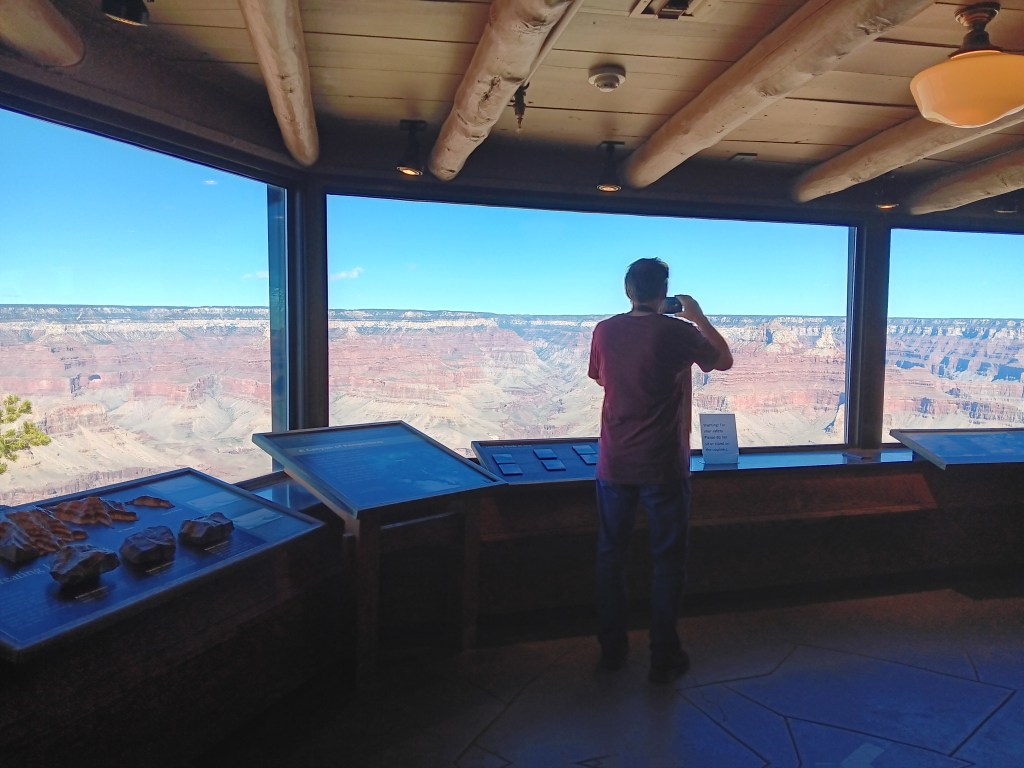
Among the displays were two panels that hit smack at the heart of what bothers those of us with a fear of heights. We’re thinkin’ it, Grand Canyon, we’re thinkin’ it!
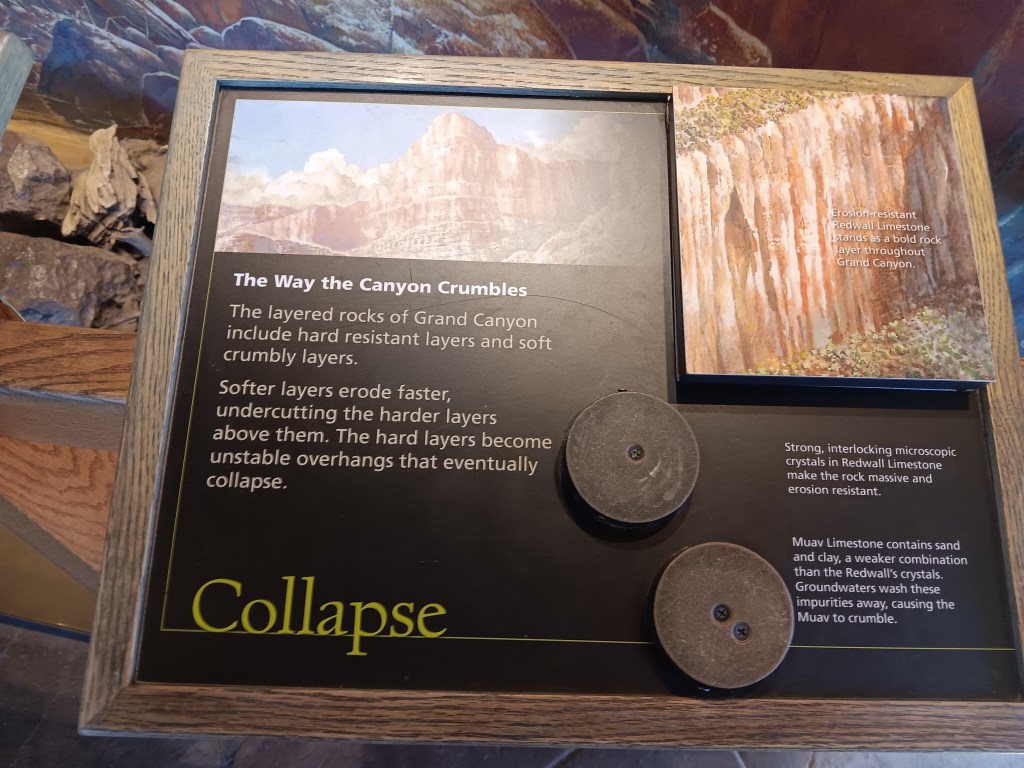
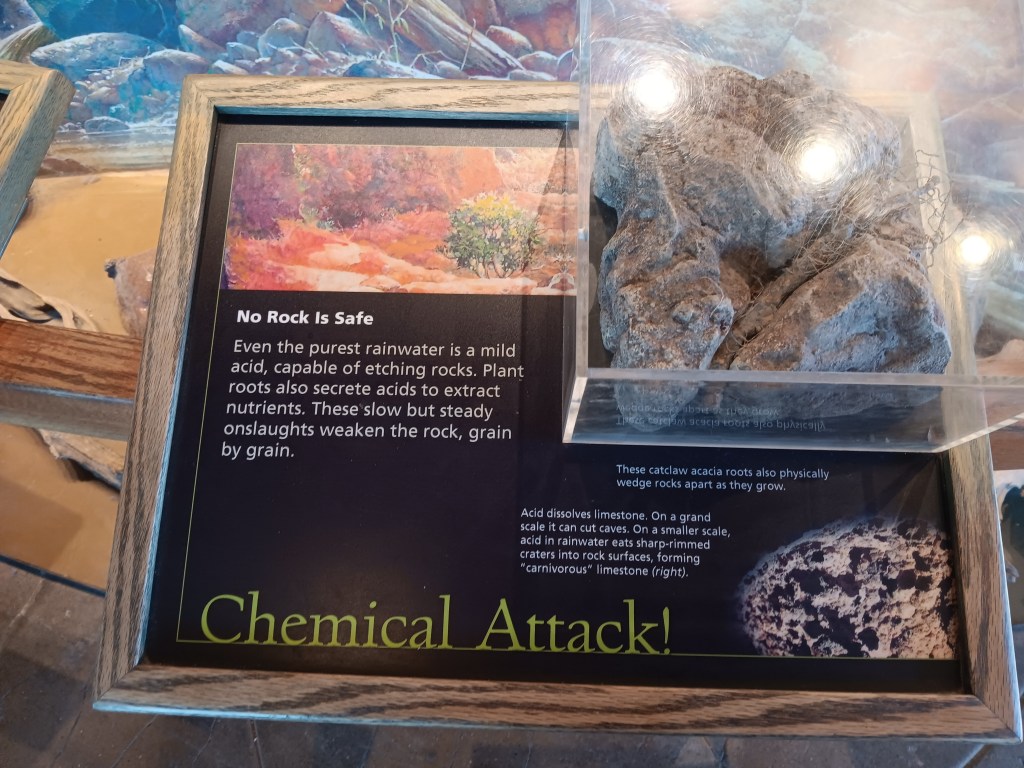
South Rim has three main areas that look into the widest part of the canyon, and we checked each of them out.

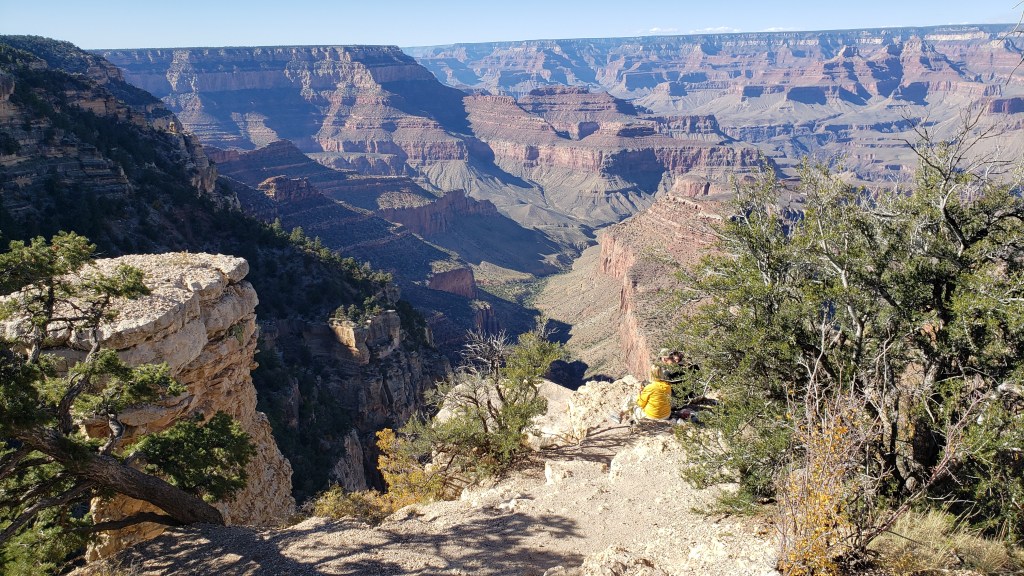
When we had our fill of the main overlooks, we continued along the spectacular East Rim drive, where several more turnouts provided views over the canyon’s less-visited eastern arm.
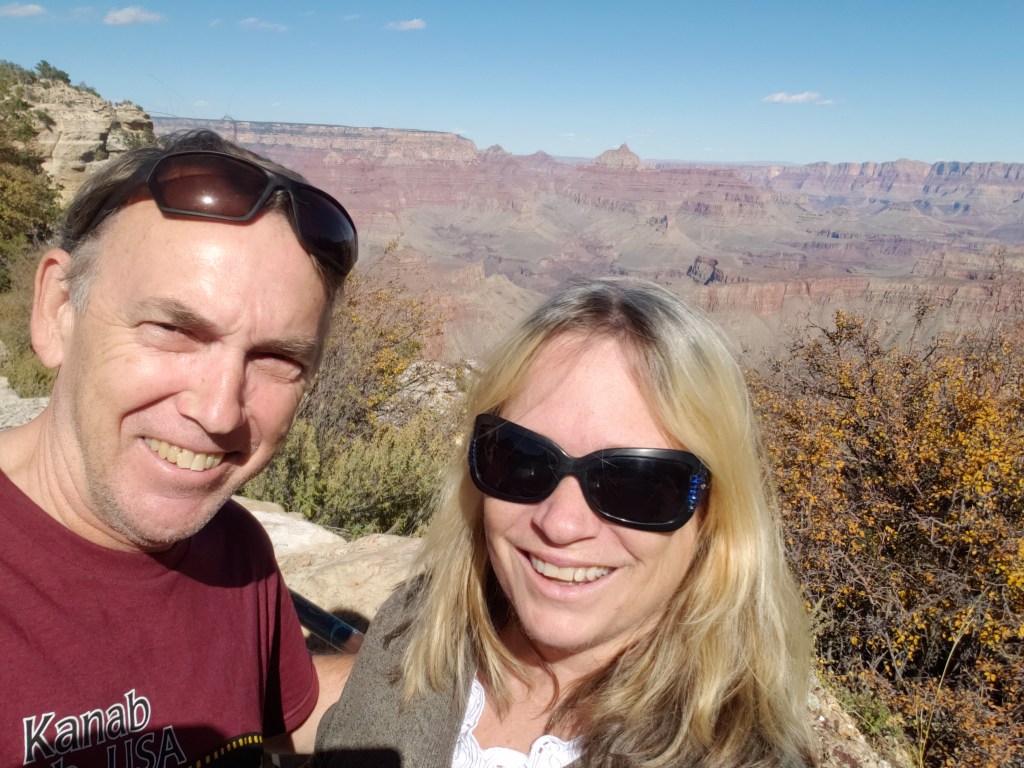
If you read our blog about Monument Valley, you know we had begun using a “points” system when it comes to things that challenge us as we travel, but we do them anyway. Simon cashed in some of his points to avoid driving the valley’s rough road, and I cashed in some of my points by asking to skip an overlook accessed via a steep, narrow road along the East Rim.
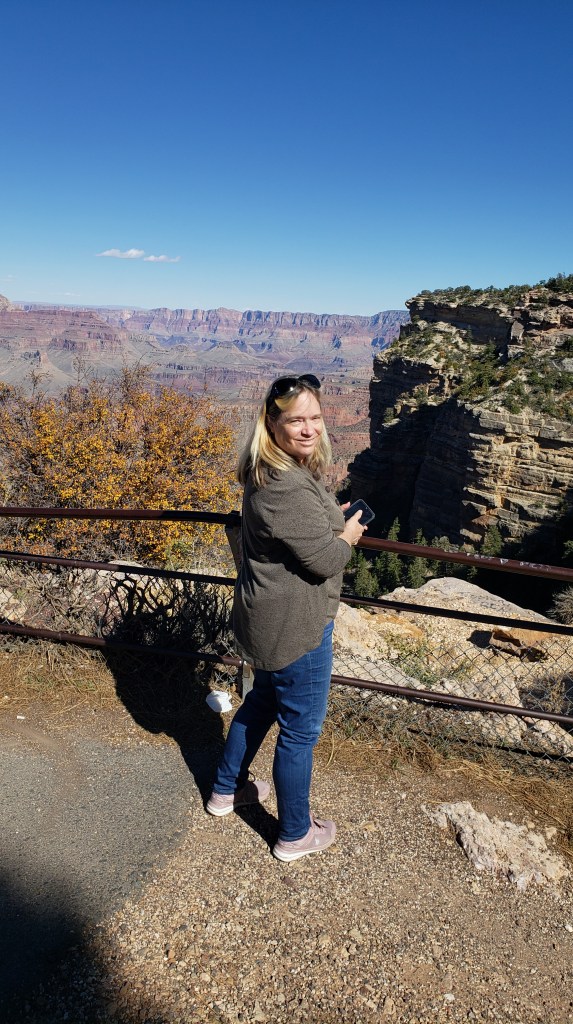
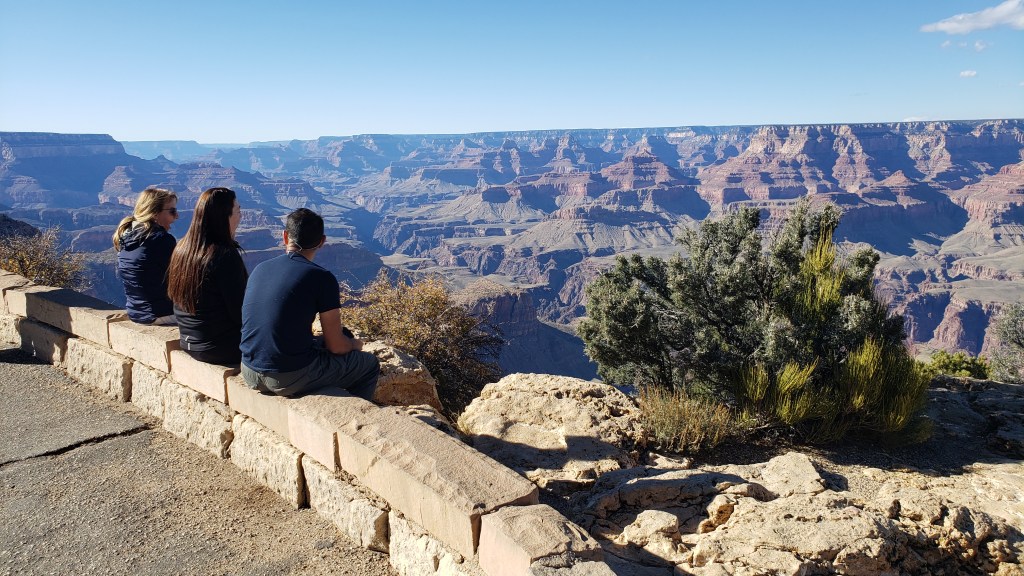
The rest of East Rim was spectacular, and it was also a convenient shortcut toward the road to Monument Valley, so the decision to head that way rather than backtrack to I-40 was a double win.


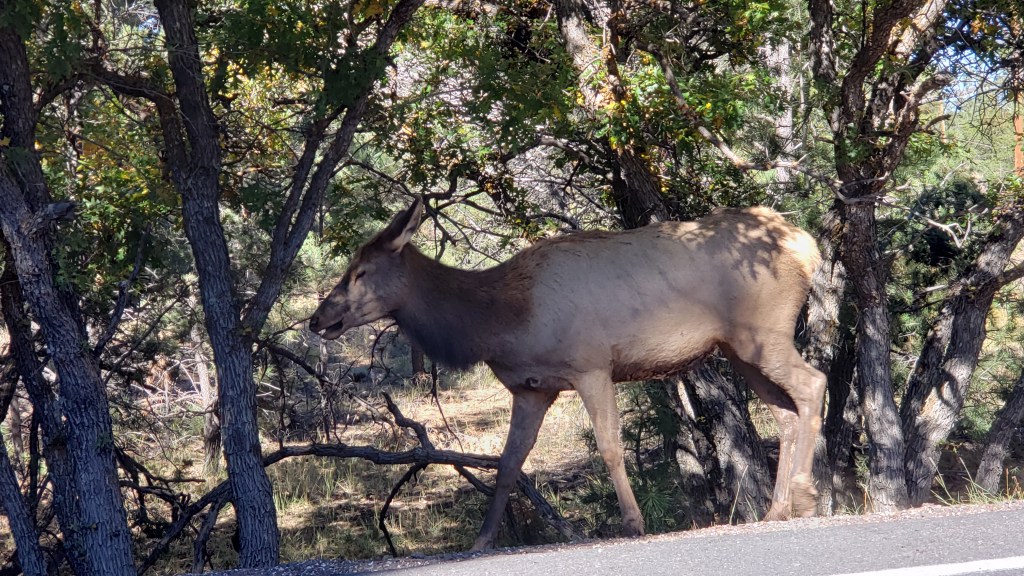
Skipping the steep road also led to our first wildlife sighting in a long time when we came upon five or six elk grazing along the East Rim road, which made for a happy sign-off to our visit.
We didn’t get a photo of the many people who were foraging for something in the forested area, but it looked like they were picking up small pine cones. During one of our turnout stops, my guess was confirmed; they were harvesting pine nuts from the mini pine cones. How cool is that?
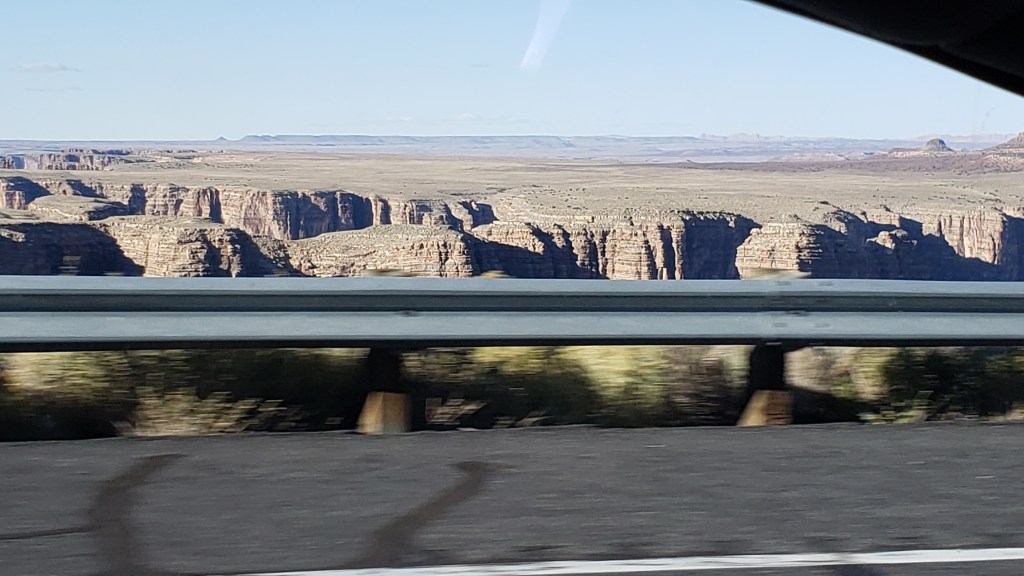
As we continued north after leaving the park, we came across one of the furthest reaches of the canyon, near where the Colorado River and the Little Colorado River meet. A huge fissure runs along the highway, and we stopped to have a look at a big parking area set up just for that purpose.
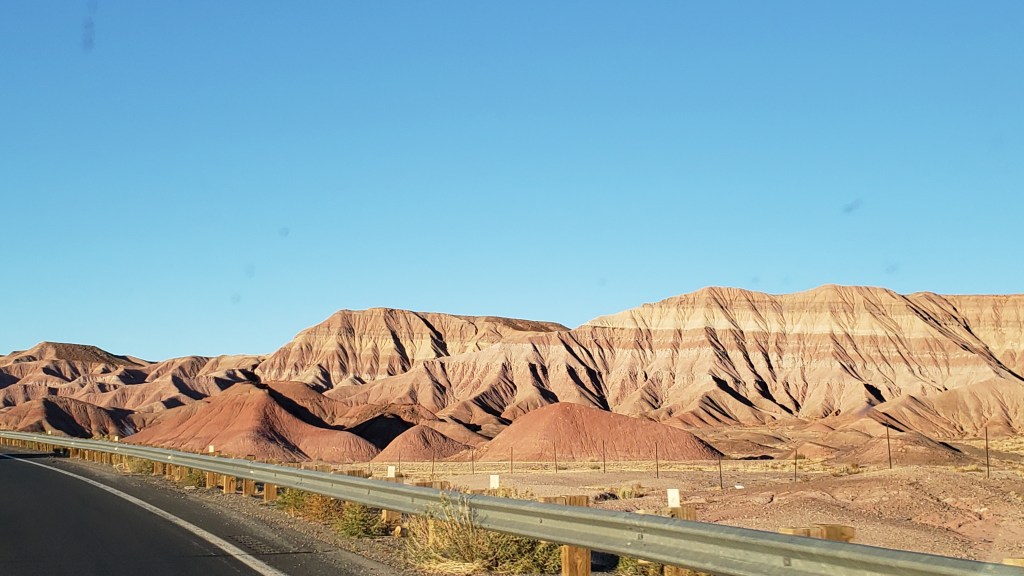
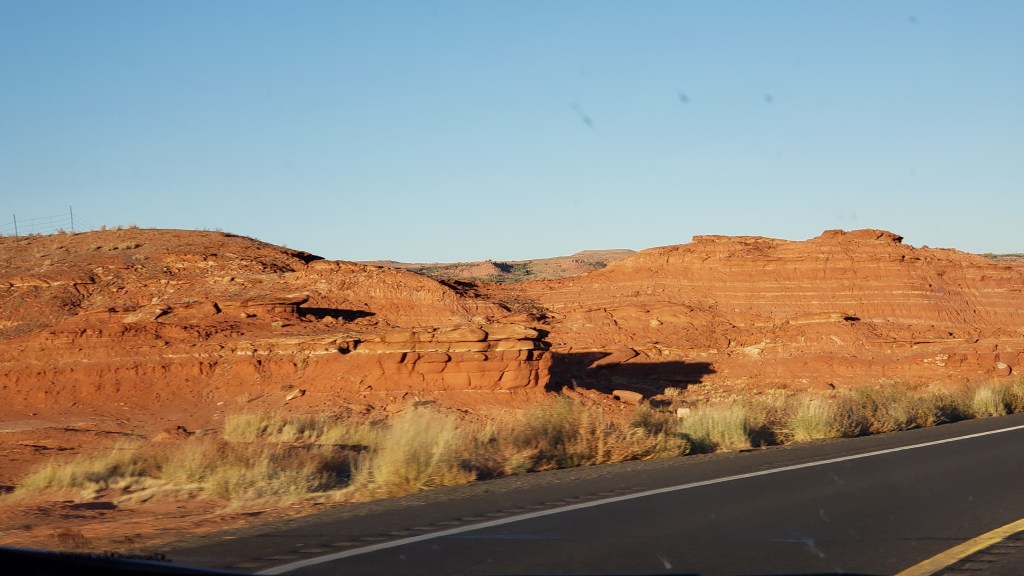
That night we stayed in Navajo Land Hotel in Tuba City, having driven into dusk through scenery lit by the fading sun. The name is an odd side-step meant to honor Hopi Chief Tuva, but the Mormons who were guided through the land by Tuva apparently had trouble pronouncing the letter “v” (but did they, really?) and simply replaced it with “b.” We’ll leave our comments at that, and instead revel in the glorious hillsides.
We were glad to have seen both sides of the Grand Canyon, with their distinct personalities that earn the National Park its place as one of the United States’ most iconic destinations.
 Veness Travel Media