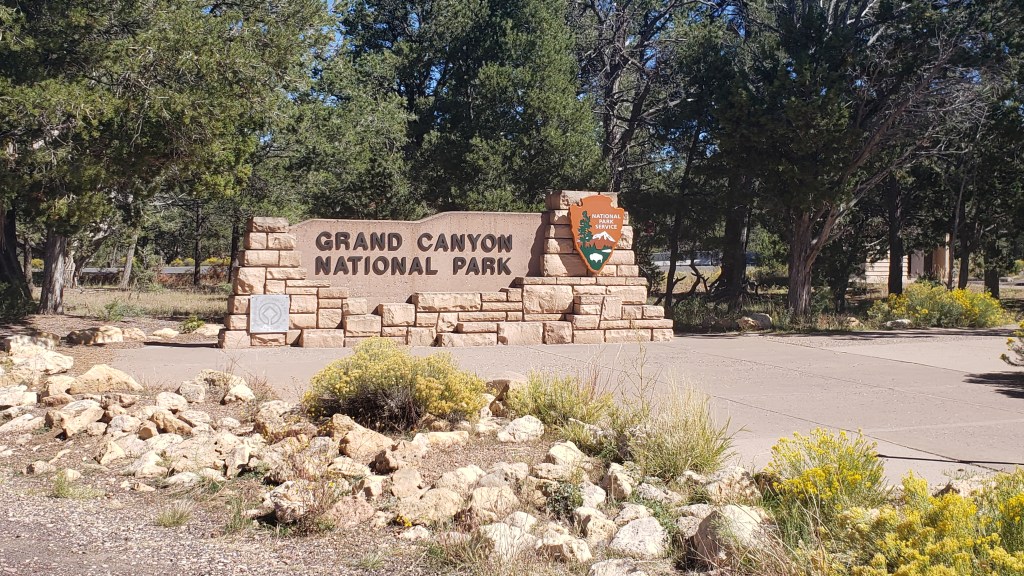
Grand Canyon’s South Rim made a convenient detour as we traveled north from Kingman to Monument Valley, and the view there was completely different to the North Rim. While North Rim is rustic and less visited, South Rim is iconic for a reason. Wider, more colorful, and much more approachable.
Simon had been to the South Rim before, but my first view of it was shocking, in a good way. It struck me as a grand amphitheater with a story to tell in each of its folds and crevices, and its sloping sides are so enormous no binoculars are necessary to see them, though we used ours anyway and were treated to intricate views of the canyon’s smaller details.
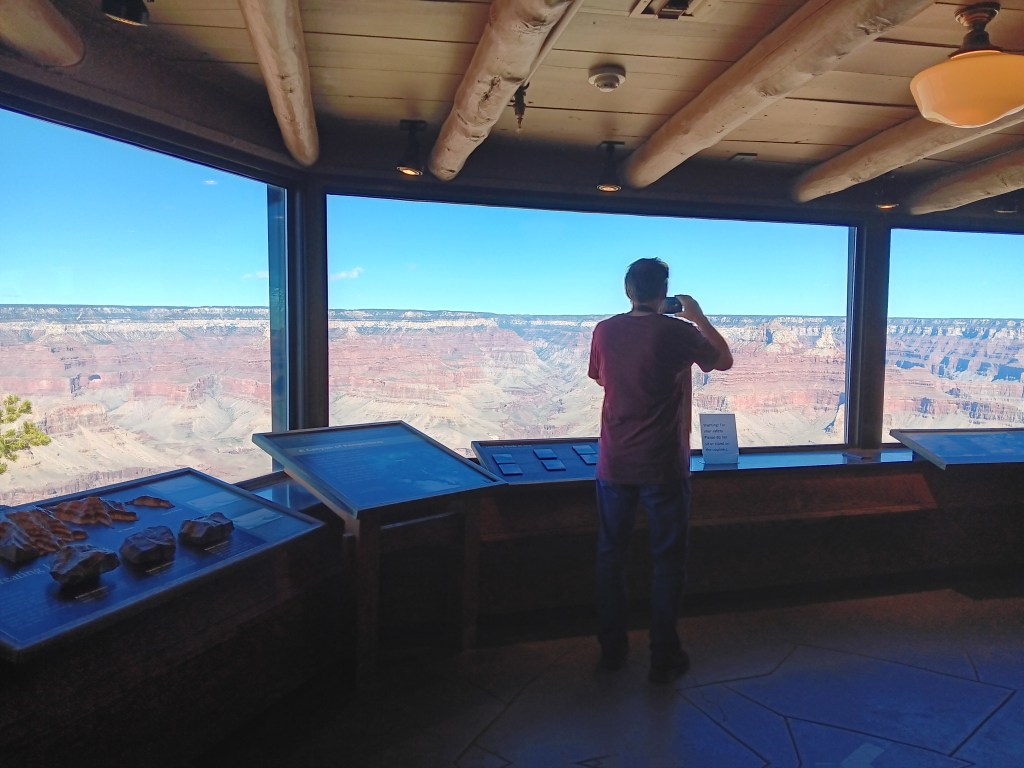
There was a little interpretive center not far from where we parked, with a panoramic view through its windows. Sitting right on the edge of the canyon, it offered an exceptional sight line right down to the bottom.
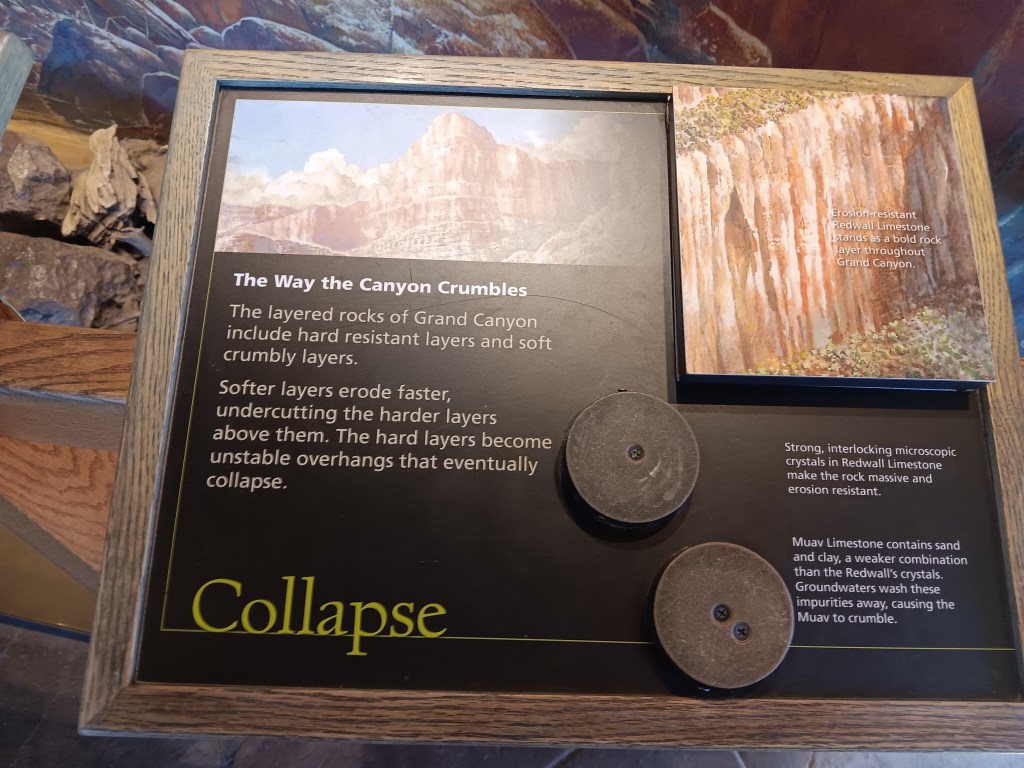
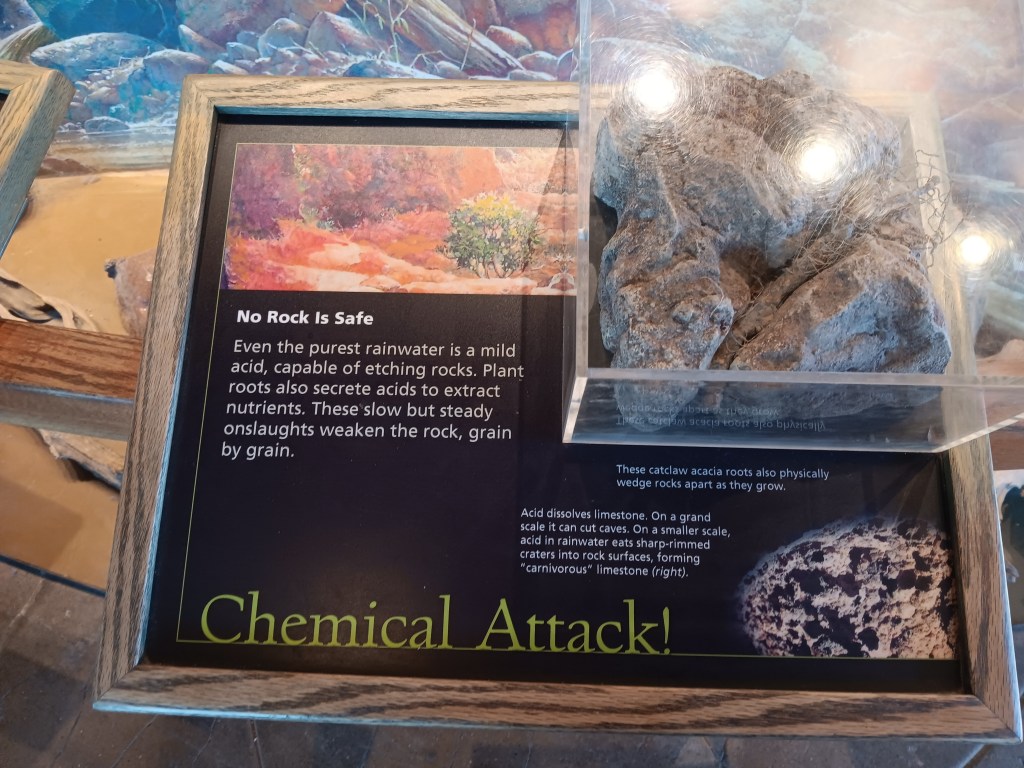
Among the displays were two panels that hit smack at the heart of what bothers those of us with a fear of heights. We’re thinkin’ it, Grand Canyon, we’re thinkin’ it!
Fear 1
Fear 2
South Rim has three main areas that look into the widest part of the canyon, and we checked each of them out.
When we had our fill of the main overlooks, we continued along the spectacular East Rim drive, where several more turnouts provided views over the canyon’s less-visited eastern arm.
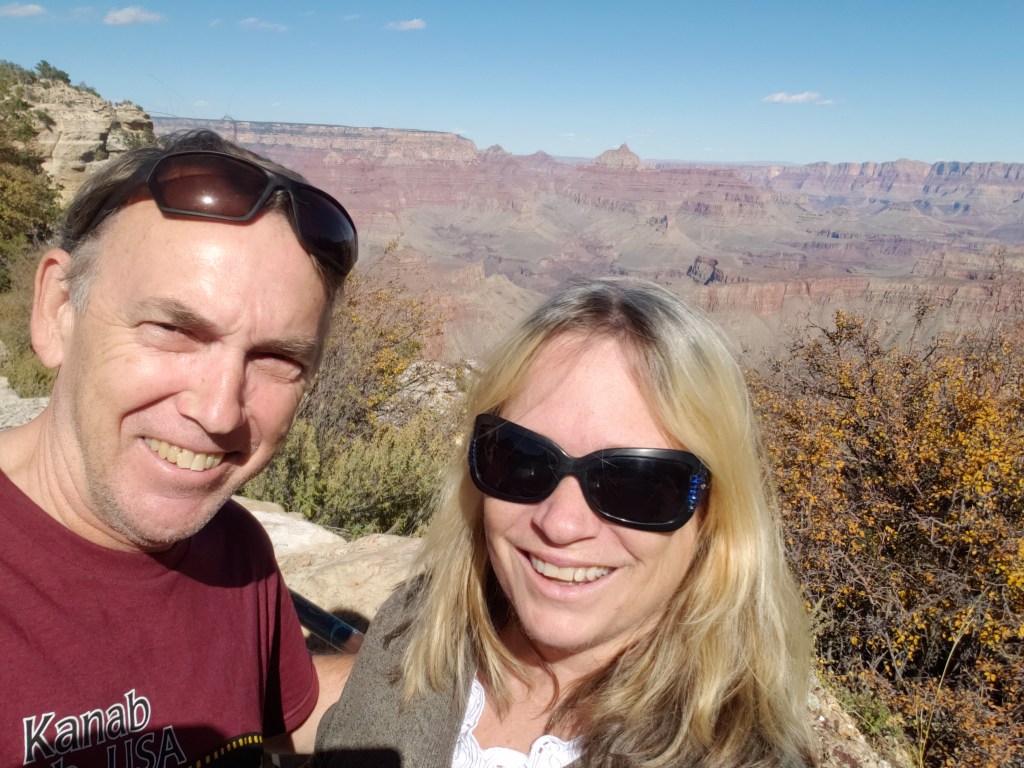
Obligatory Selfie.
If you read our blog about Monument Valley, you know we had begun using a “points” system when it comes to things that challenge us as we travel, but we do them anyway. Simon cashed in some of his points to avoid driving the valley’s rough road, and I cashed in some of my points by asking to skip an overlook accessed via a steep, narrow road along the East Rim.
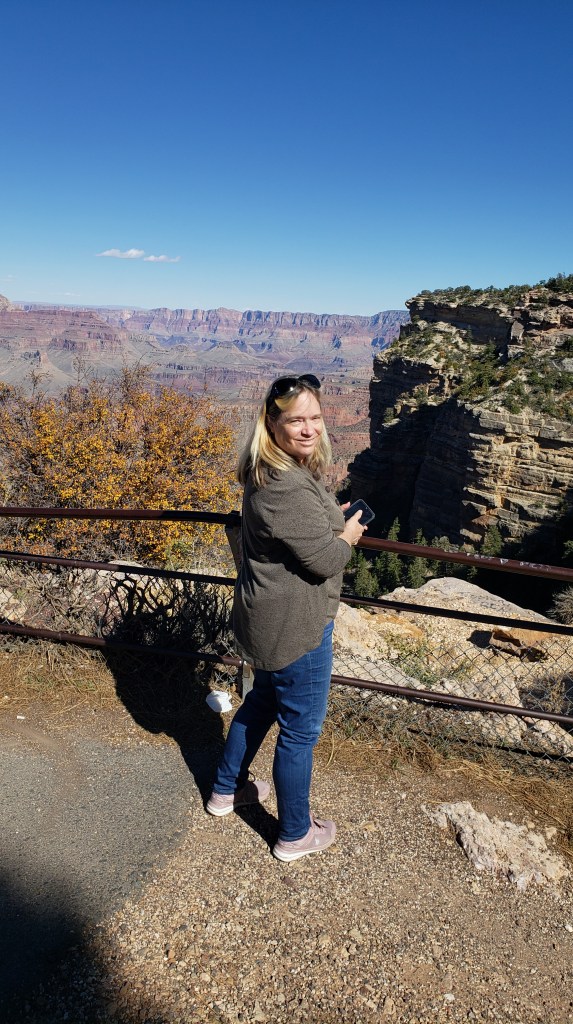
This is what a thousand points looks like.
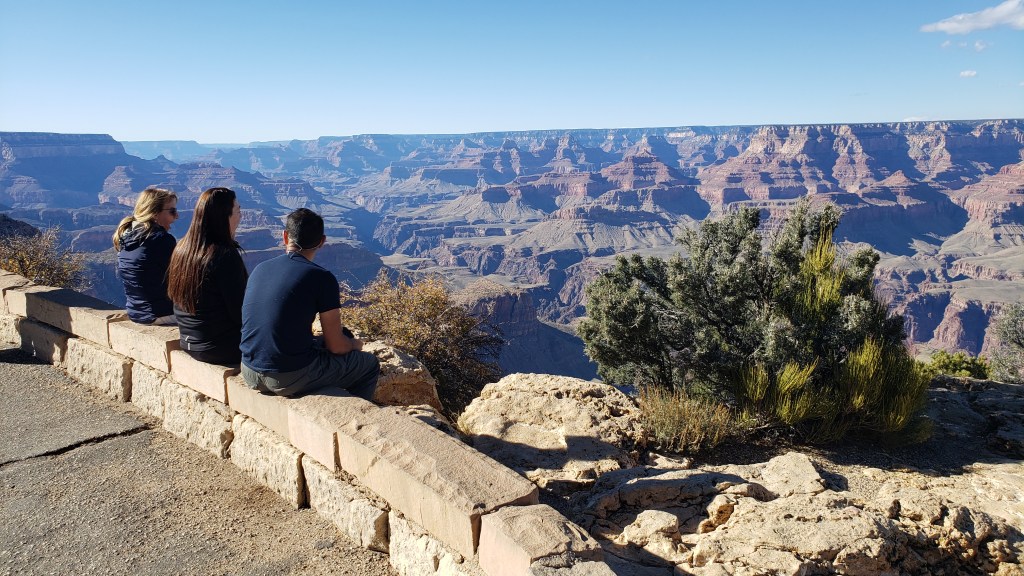
Standing on this wall earned me a billion points, but I can’t post the photo of that moment because you can see my mouth and it’s really obvious what word is coming out of it. Look at these happy people instead.
The rest of East Rim was spectacular, and it was also a convenient shortcut toward the road to Monument Valley, so the decision to head that way rather than backtrack to I-40 was a double win.
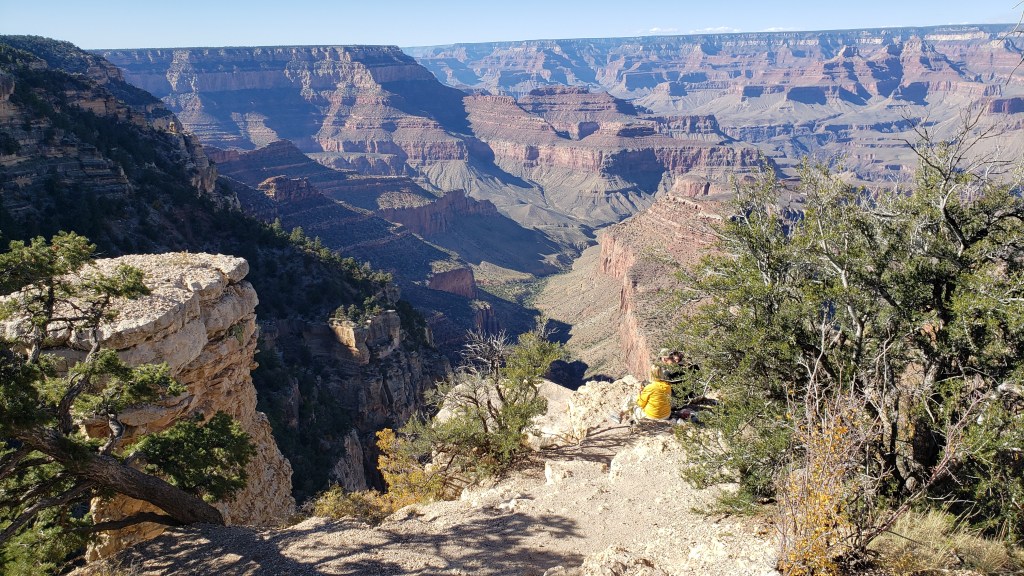
We saw quite a few people just hanging out on rocks near the edge of the canyon.
The main area only allows tiny glimpses of the Colorado River, but it’s much more visible from the East Rim.
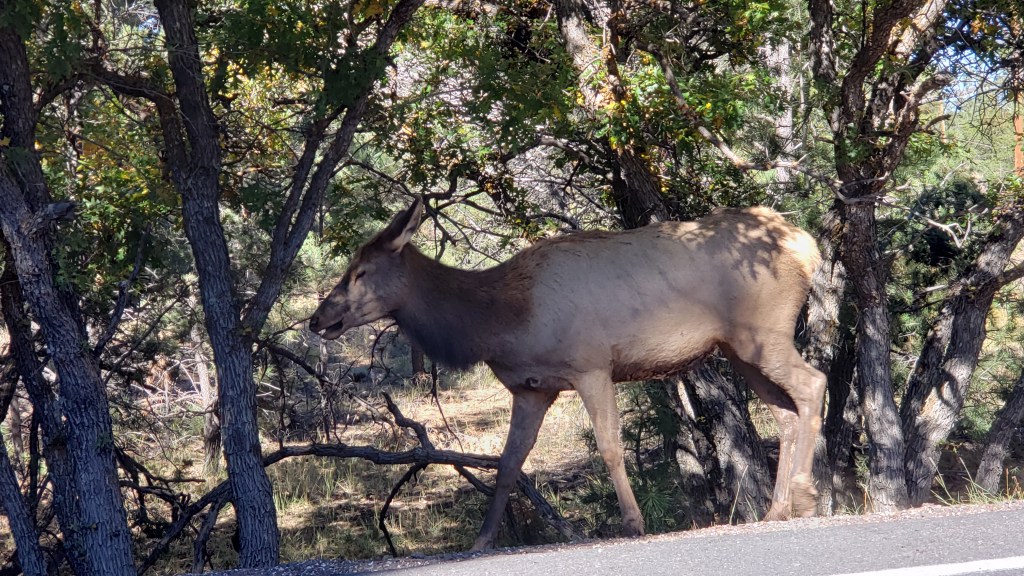
Skipping the steep road also led to our first wildlife sighting in a long time when we came upon five or six elk grazing along the East Rim road, which made for a happy sign-off to our visit.
We didn’t get a photo of the many people who were foraging for something in the forested area, but it looked like they were picking up small pine cones. During one of our turnout stops, my guess was confirmed; they were harvesting pine nuts from the mini pine cones. How cool is that?
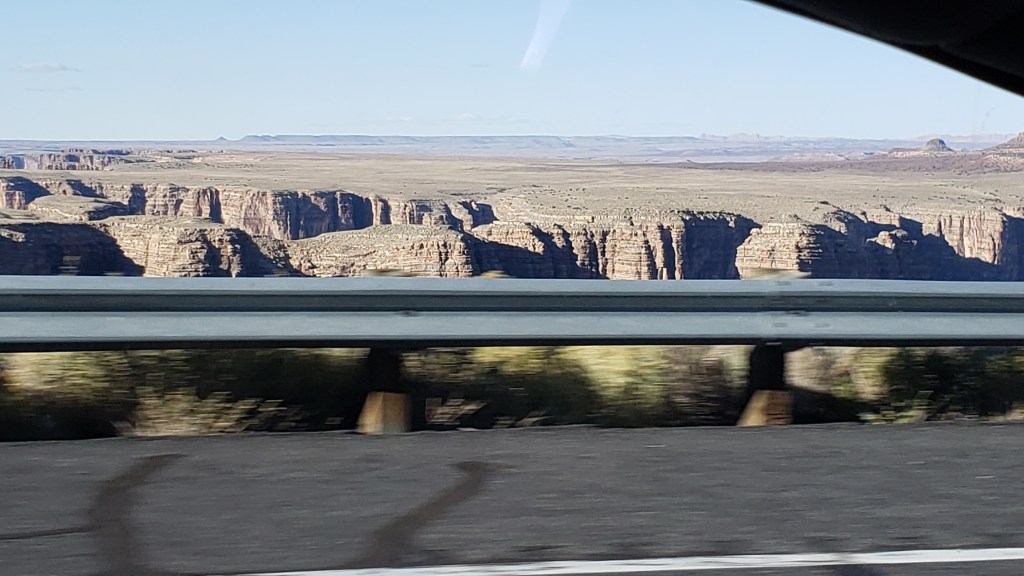
As we continued north after leaving the park, we came across one of the furthest reaches of the canyon, near where the Colorado River and the Little Colorado River meet. A huge fissure runs along the highway, and we stopped to have a look at a big parking area set up just for that purpose.
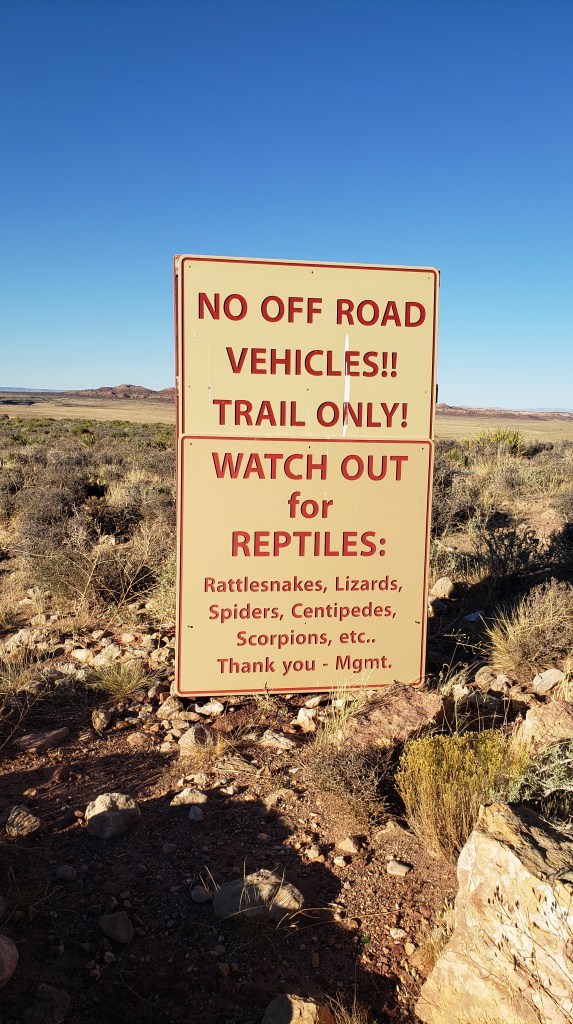
Etc? What the living hell could “etc” be?!
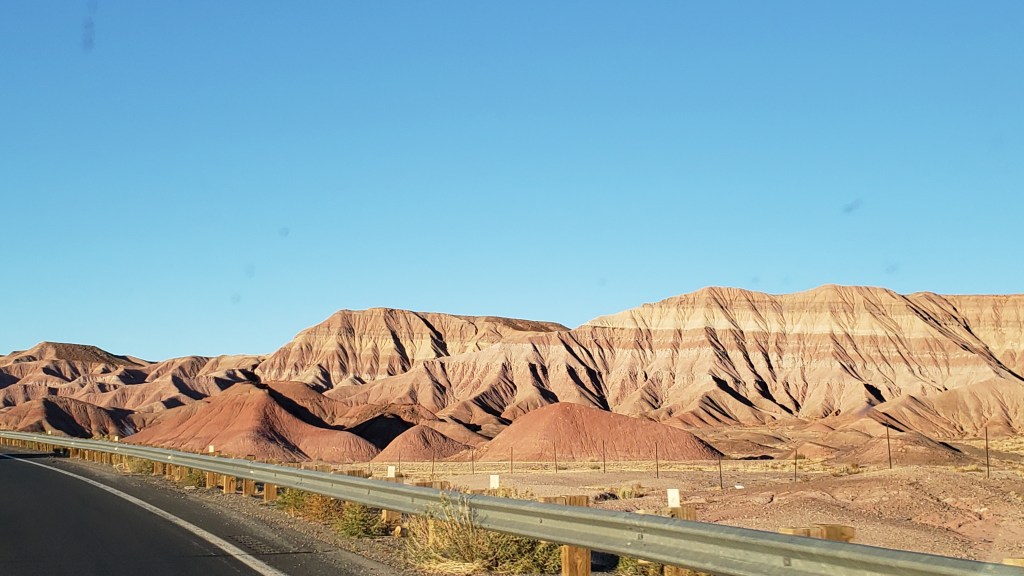
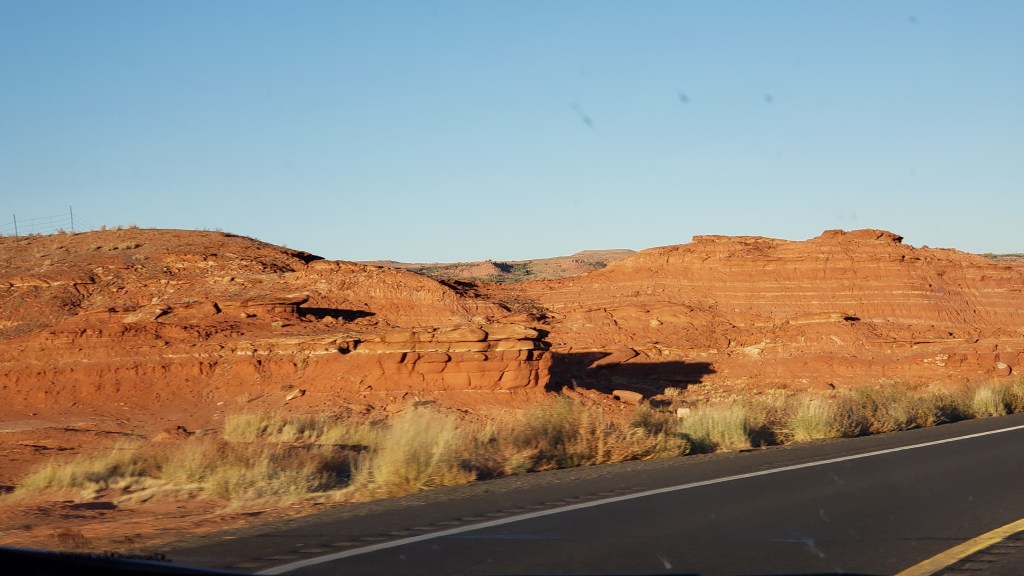
That night we stayed in Navajo Land Hotel in Tuba City, having driven into dusk through scenery lit by the fading sun. The name is an odd side-step meant to honor Hopi Chief Tuva, but the Mormons who were guided through the land by Tuva apparently had trouble pronouncing the letter “v” (but did they, really?) and simply replaced it with “b.” We’ll leave our comments at that, and instead revel in the glorious hillsides.
We were glad to have seen both sides of the Grand Canyon, with their distinct personalities that earn the National Park its place as one of the United States’ most iconic destinations.
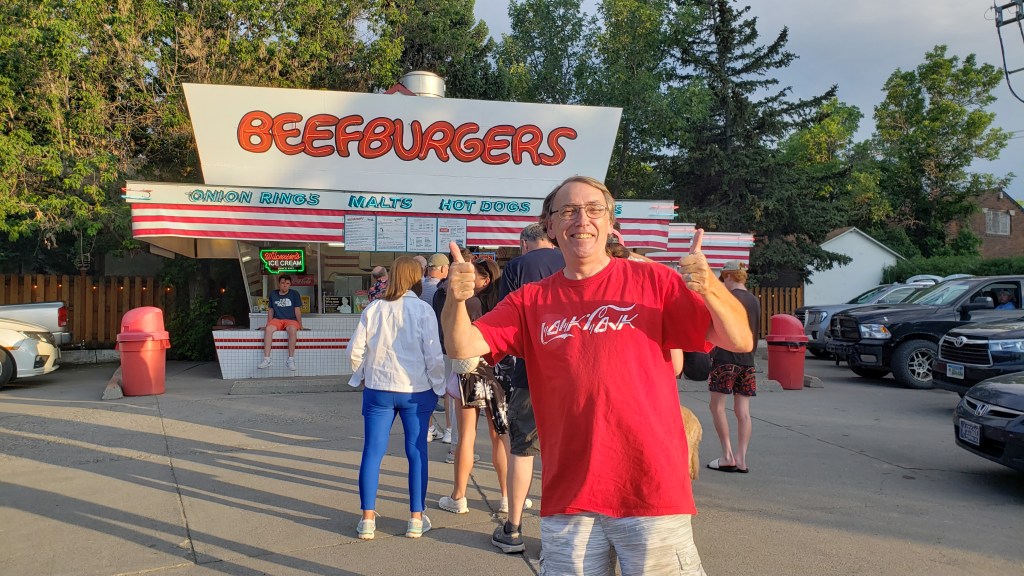
This was the easiest decision we had to make. And yes, that’s a long line ahead of Simon. A locals’ favorite!
Sometimes you have to make hard choices. While there are times when you have to take a leap of faith, our decisions over the next few days would be based on both local knowledge and hard-earned first-hand reconnaissance.
Billings, Montana was supposed to be our next stop, but since we were running a day late we pushed on to Columbus, which we planned to use as a base from which to see the Pryor Mountain wild horses, Devil’s Canyon Overlook, Cody, Beartooth Pass, and Chief Joseph Scenic Byway.
We ruled out Pryor Mountain, a 204 mile round-trip in Nippy that sounded long but oh-so-scenic from the comfort of our house when we were making plans, but sounded truly awful when reality hit, then ruled out Beartooth Pass when it became obvious the sharp drop-offs, cliffside driving without barriers, and the sheer terror of it all were going to do Susan’s head in. Instead, we opted for the still-very-high-up Chief Joseph Scenic Byway, which gave us plenty of spectacular views without the threat of death.
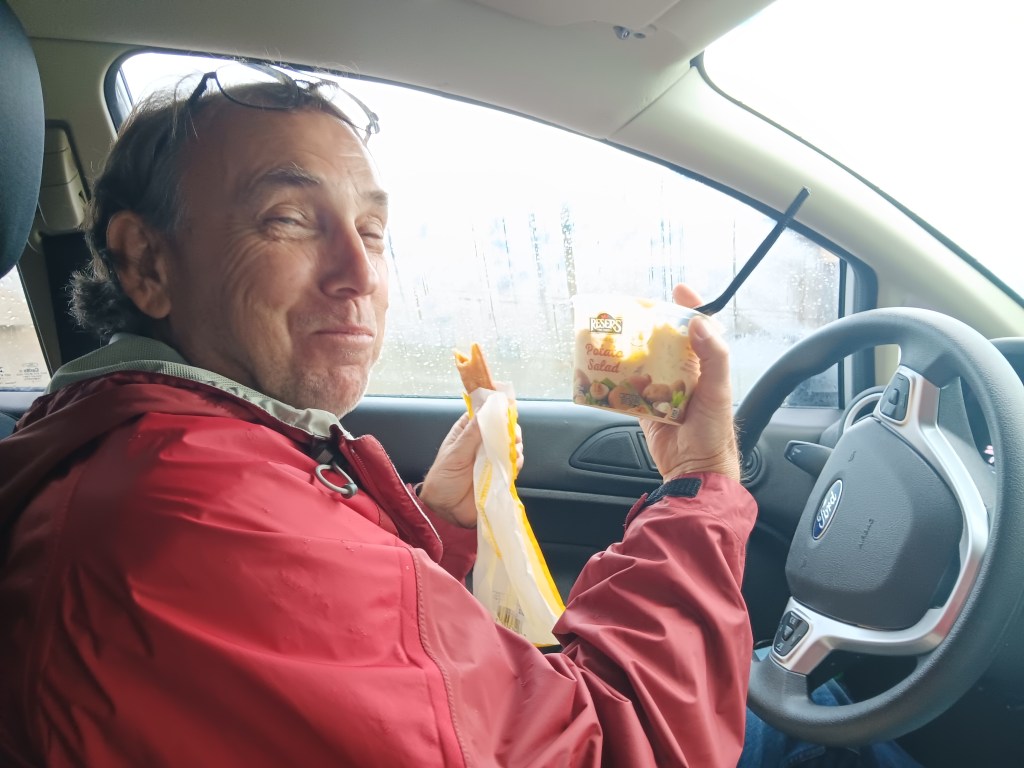
A quick stop in Absarokee’s little downtown market for a bite of take-away lunch (two pizza sticks for Simon, one chicken strip for Susan, and a pot of potato salad to split) gave us the fuel needed to start ascending the mountain to Red Lodge, Montana, which bills itself as “The Gateway to Yellowstone Park.”
Feasting in the car . Rainstorms make everything taste better!
And it is a gateway…if you’re willing to brave the Beartooth Highway, a 69-mile twisting, turning, sharp-drop-off road that tops out at 10,947 feet (that’s 3,337 meters for our UK friends).
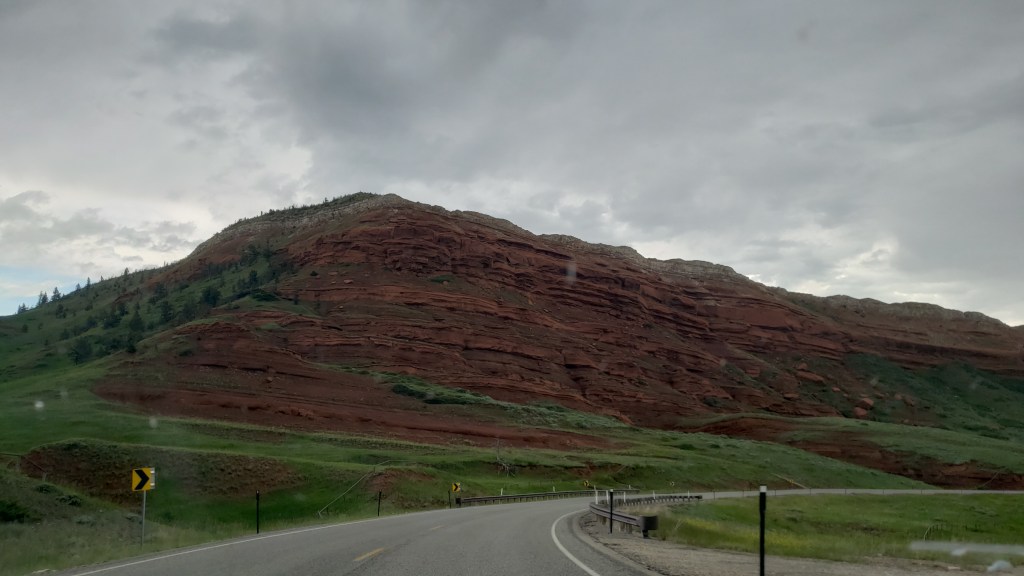
The trip to Red Lodge offered yet more rolling landscape dotted with green hills that led to sharp, craggy rock, and while the weather over the Beartooth mountains threatened a bit of rain, we only had a few spotty showers.
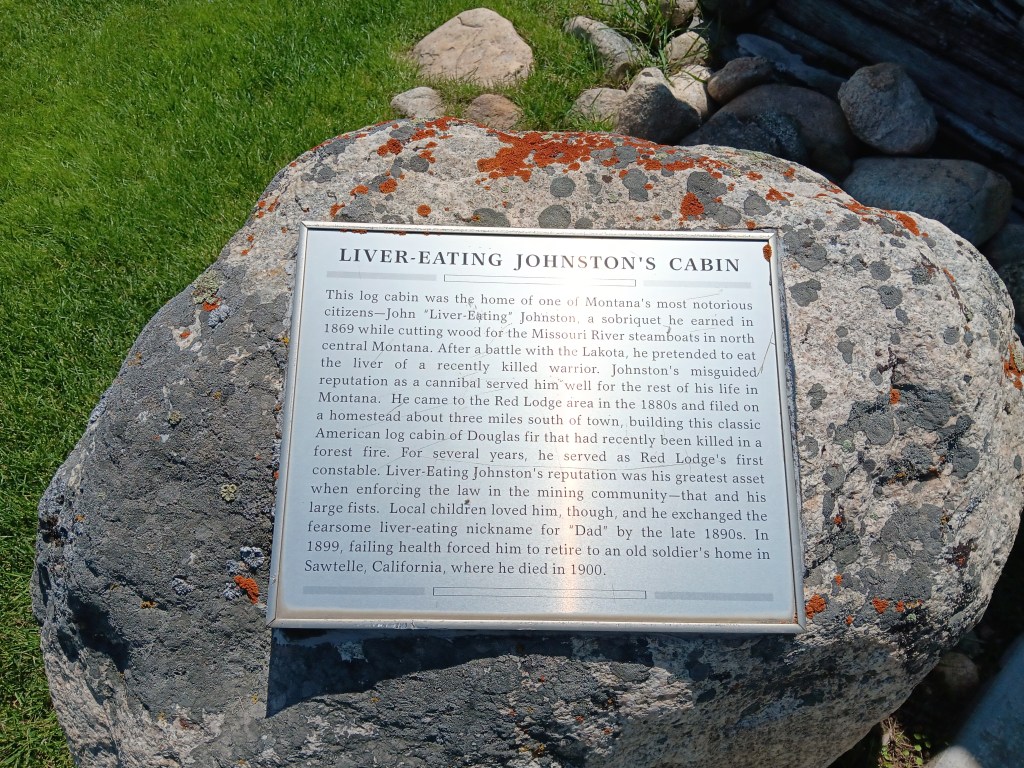
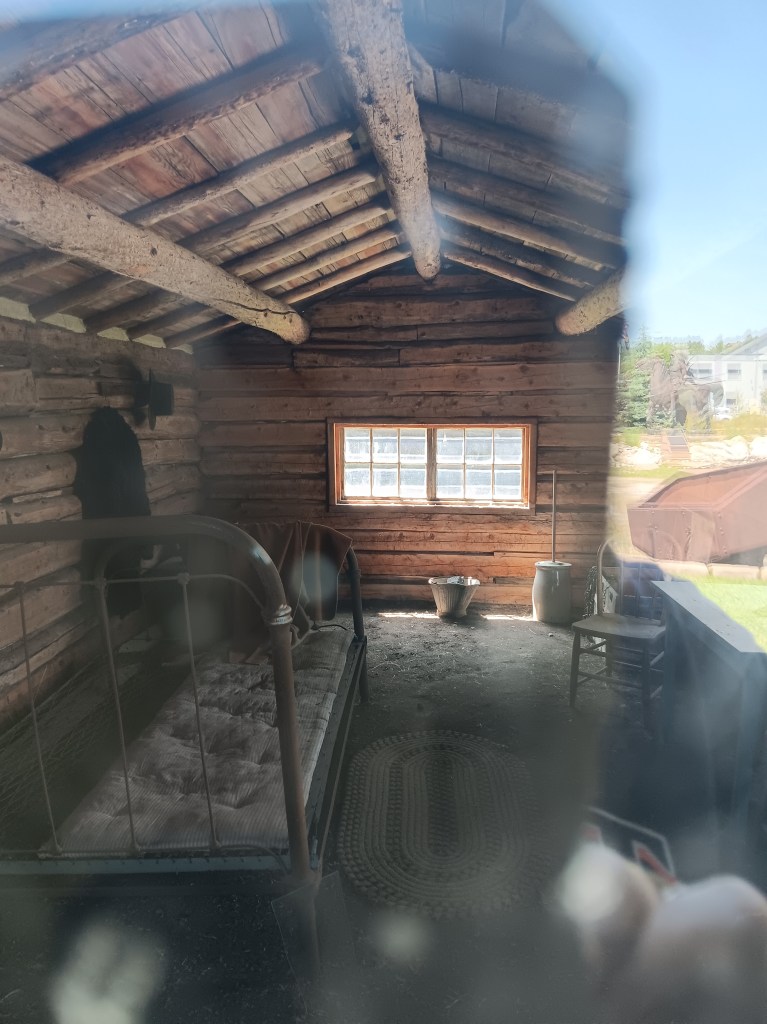
We stopped at the Visitor Center, which included a one-room cabin once owned by Liver Eating Johnston. There were people then and are people now who can live and thrive in a dirt-floor cabin, but we aren’t among them.
Photo taken through a glass door. Ignore the reflection on the right.
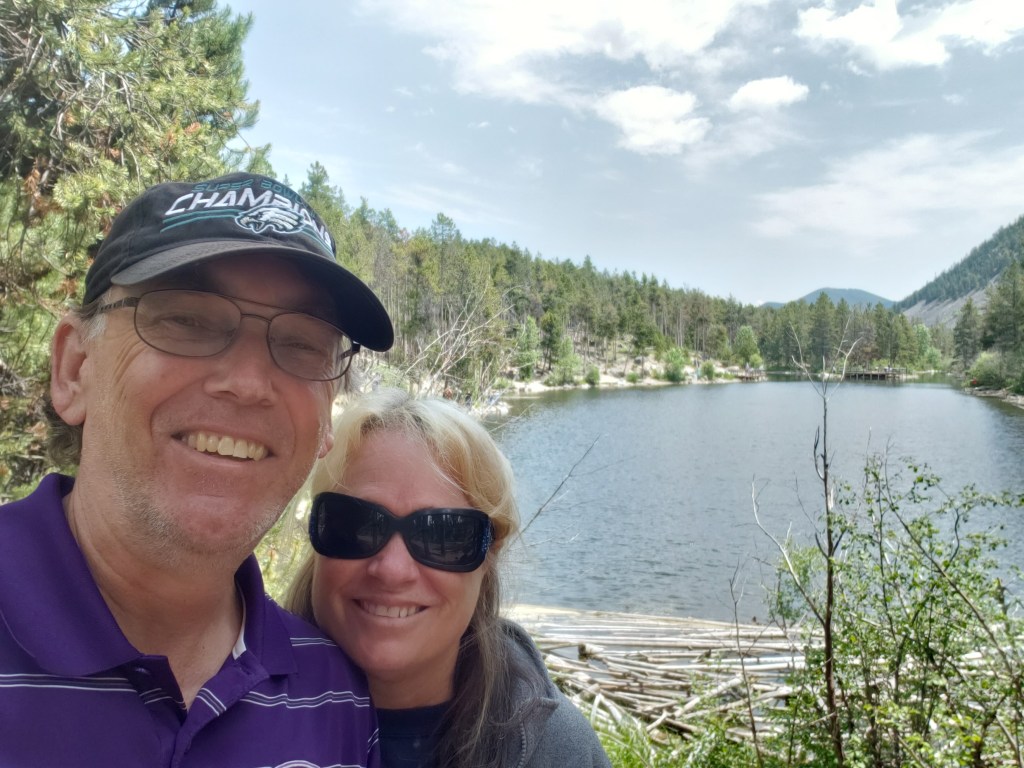
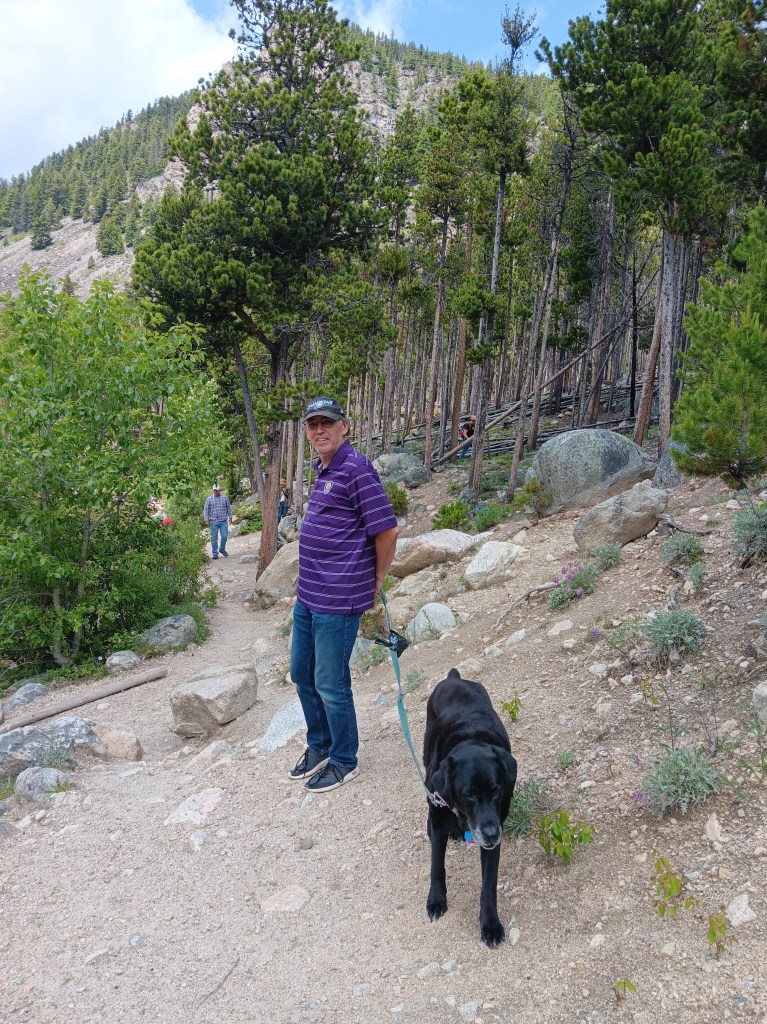
The Visitor Center host suggested we take a drive to Wild Bill Lake for a one-mile hike, then head up the Chief Joseph Scenic Byway, an alternative to the Beartooth Highway. The hike was a terrific suggestion, and we thoroughly enjoyed our walk, as did Ruthie, who got lots of love and attention from kids fishing along the lake.
Now, we’d been assured the Chief Joesph was tame, but over the course of the next week or so we’d learn that “tame” in Montana and Wyoming is not the same as “tame” in Michigan, Florida, or the UK. We would also learn that “rolling hills” mean something entirely different, too (steep grades both up and down, in quick succession).
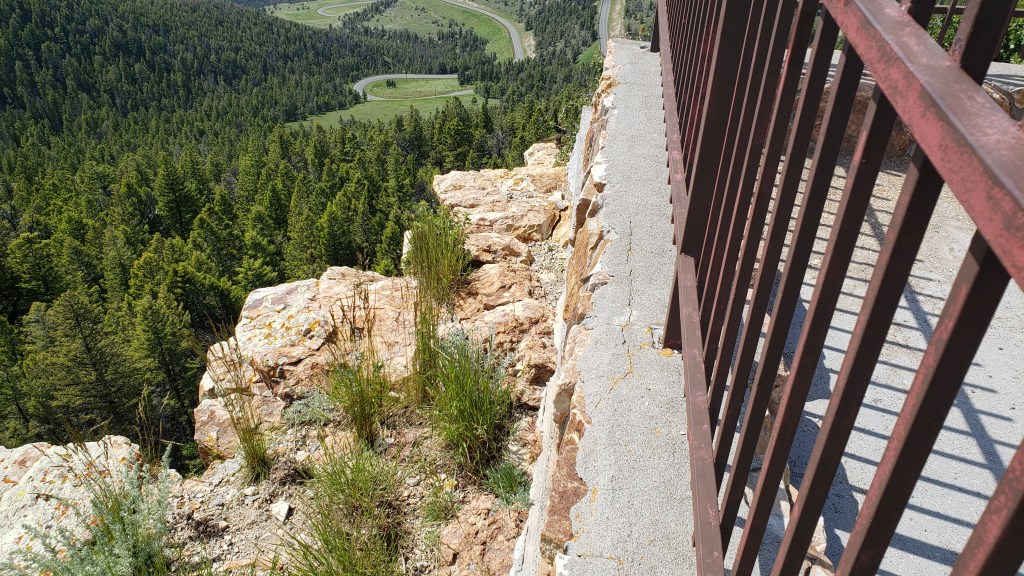
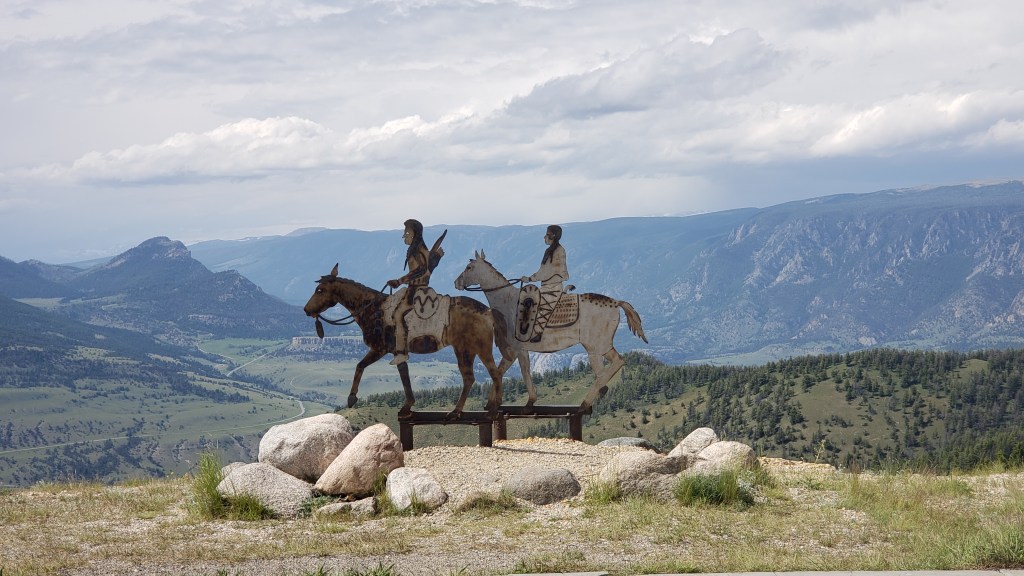
None of that mattered as we wound up the mountainside, stopping at markers for the likes of Bear Creek Hill and Dead Indian Pass (elevation 8,000 feet). Naturally, Simon had to find the most precarious place on the whole mountain to lean out and peek over the edge, while Susan very sensibly waited in the car.
See that little strip of pavement way, way down, in the middle of the photo? That’s the road.
A marker at the summit tells the story of 600 members of the Nez Perce tribe, led by Lean Elk and Chief Joseph, who used the pass to escape the U.S. Army in 1877. At this point in their retreat, they were forced to leave an injured warrior, who was subsequently killed by U.S. scouts.
The byway eventually hooks up with the Beartooth Highway, so we retraced our route for the return trip and veered off at WY-120 heading to Cody, just 18 miles away.
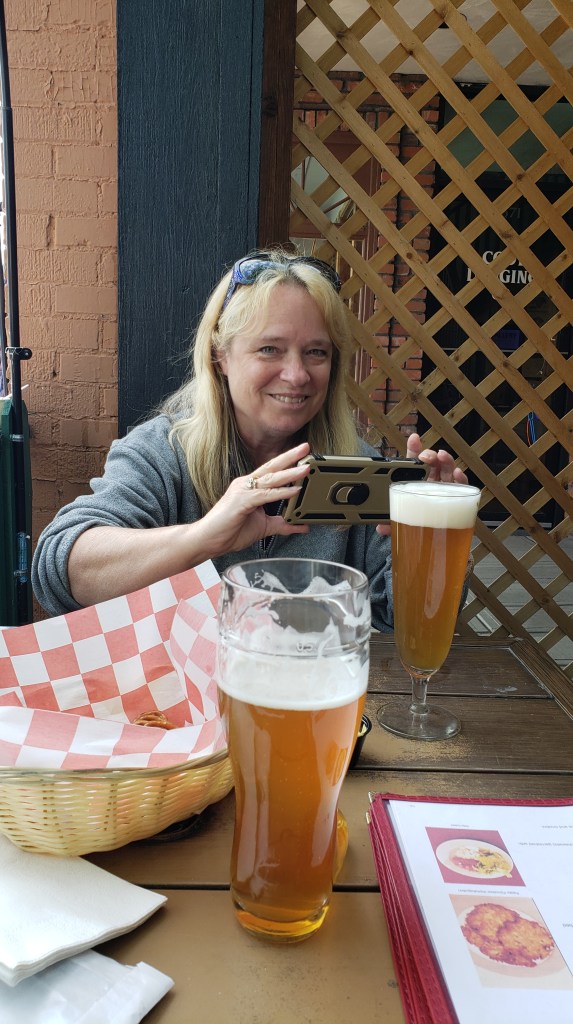
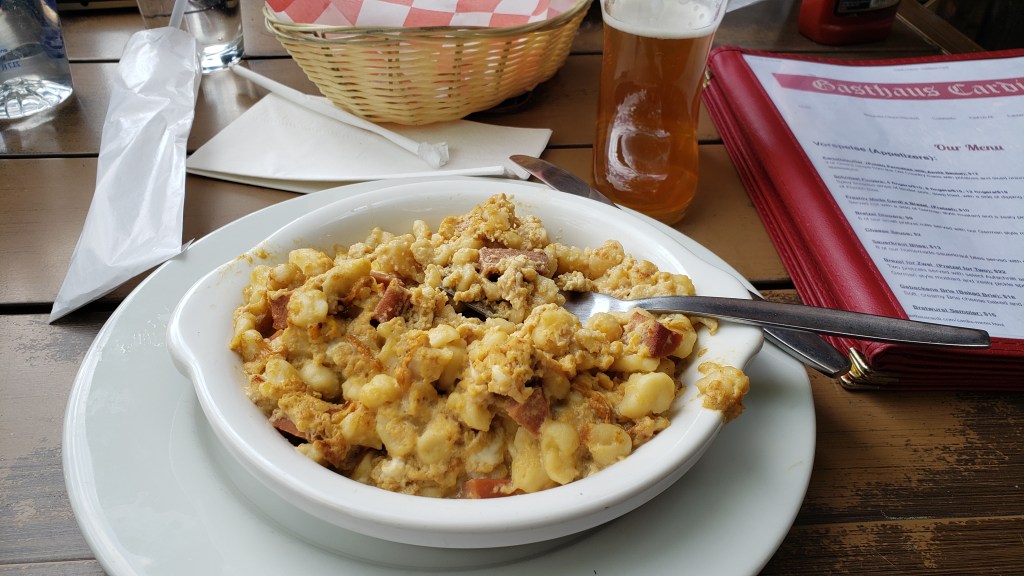
Cody was busy, as we’d expected, and, inexplicably, with thoughts of a big, juicy Wyoming steak on our minds, we ended up at a German restaurant eating a kid’s portion of schnitzel and some sort of noodle dish with eggs and cheese. They were out of nearly all of their interesting beers, so we ended up with brews neither of us can remember. Life is funny sometimes.
What is this noodle, egg, and cheese food? We don’t know.
Can you really go wrong with half a schnitzel?
Fati took us to Livingston the next day, which served the dual purpose of getting us closer to Yellowstone National Park while also giving us the opportunity to decide on our best route to the West Yellowstone entrance through real-life experience. We could take Highway 191 from Bozeman, or, as had been suggested by the campground host, take the longer route down the 287 through Ennis. Our trusty Mountain Directory West showed 191 as the better route, but was local knowledge the real story?
The next morning we took advantage of the opportunity to do some sightseeing south of the city, heading to Chico Hot Springs. It was probably just an excuse to get so close to the Gardiner entry into Yellowstone that we couldn’t pass it up and would have to pop in for a look.
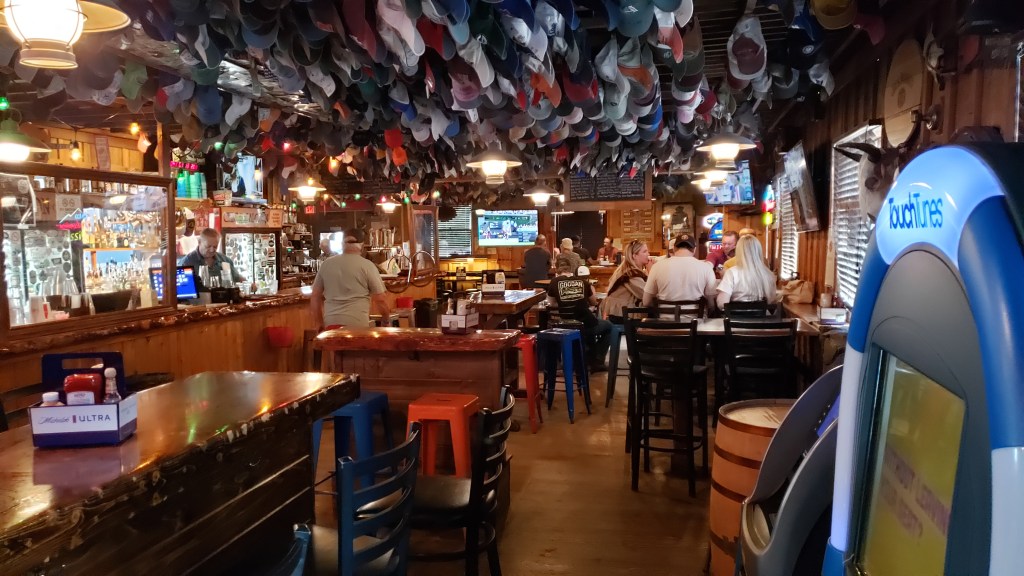
Cute little bar in Chico Hot Springs, but, of course, NO DOGS ALLOWED.
We’d been to Yellowstone before, and remembered the road from Gardiner into the park as being steep but nothing to bat an eye at in a car. In fact, it had been the only place we’d seen mountain goats the last time we were there, and we hoped to repeat that experience. What we hadn’t realized was, the road has been rebuilt in a new location since the flooding last year that washed out several roads in Yellowstone. Now it has such steep grades and such tight turns, even some of the park rangers would later tell us they preferred not to use it. We have no photos of this part of the journey, since Simon was gripping the steering wheel and Susan was white-knuckling Nippy’s armrests.
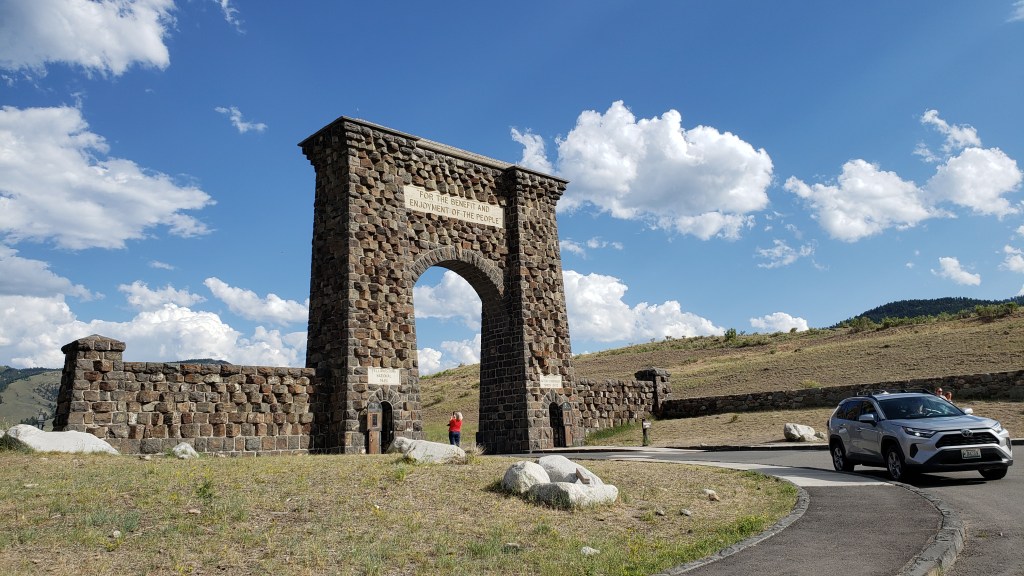
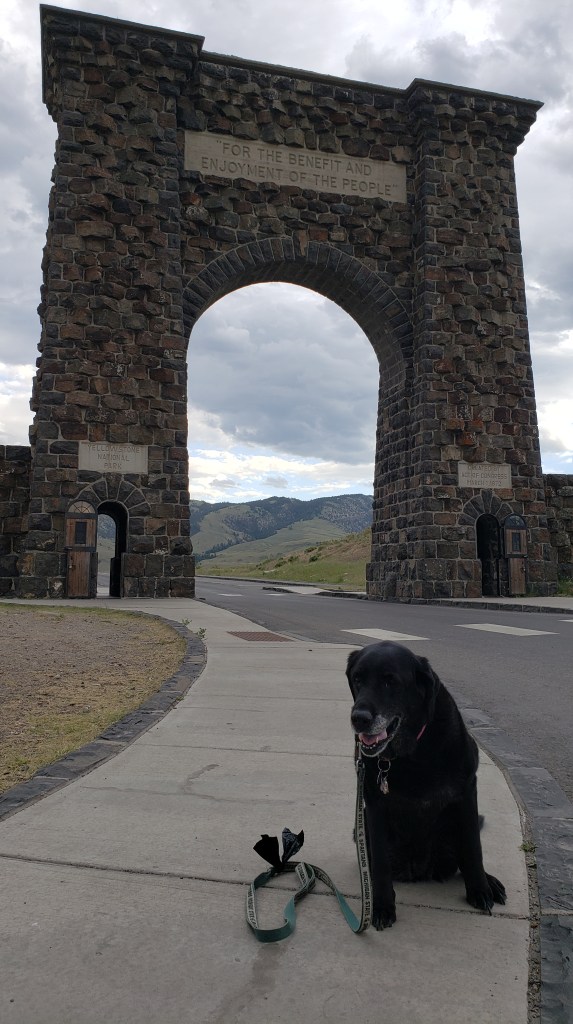
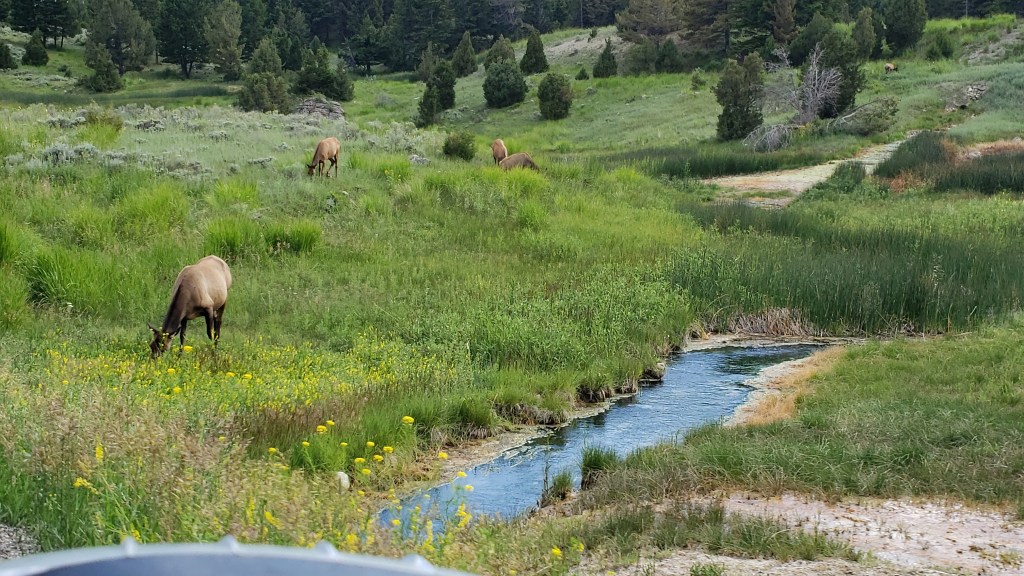
We were blissfully unaware of what lay ahead as we played around taking photos in front of the famous Arch, and when we did make the arduous climb up to Mammoth Hot Springs – punctuated by a few straggler elk – we were hugely relieved to reach the top, and not at all eager to make the trip back down.
It may have been a bit windy.
Why? Why do you people do this to me?
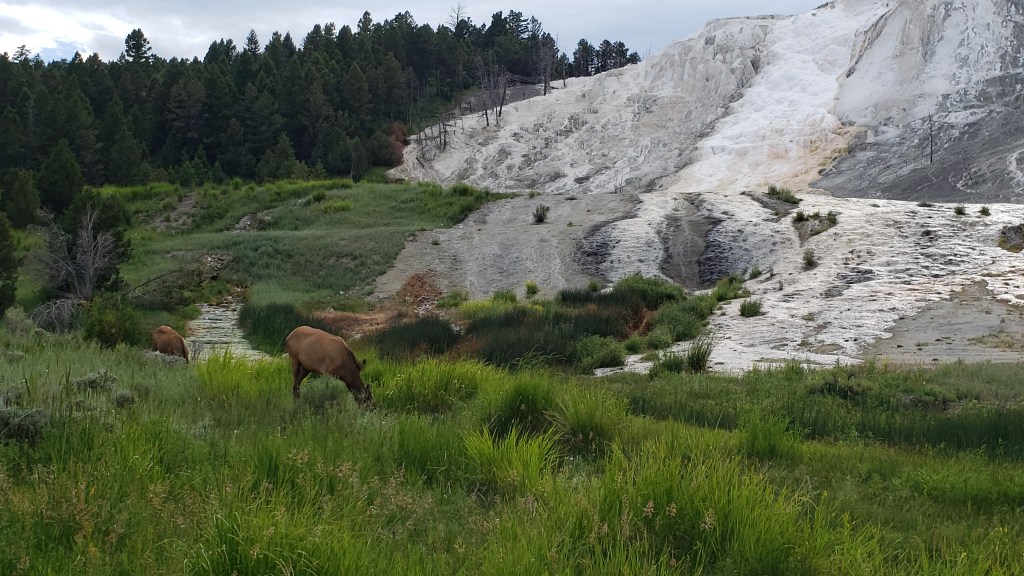
Still, there was no other choice, so down we went when we’d finished our nice little drive to view Mammoth’s glimmering travertine formations.
This isn’t travertine. This is elk.
This is elk and travertine.
This is us and travertine but no elk.
The next day, the 191 wound us through a valley in Gallatin National Forest and along the Gallatin River in Nippy, giving us the lay of the land. Simon was just slightly apprehensive about the drive when we’d have to make it with Fati, because of its sharp curves and very few passing lanes long enough for us to pull over and let other vehicles go by. Big benefit? No major grades. And what a road it turned out to be!
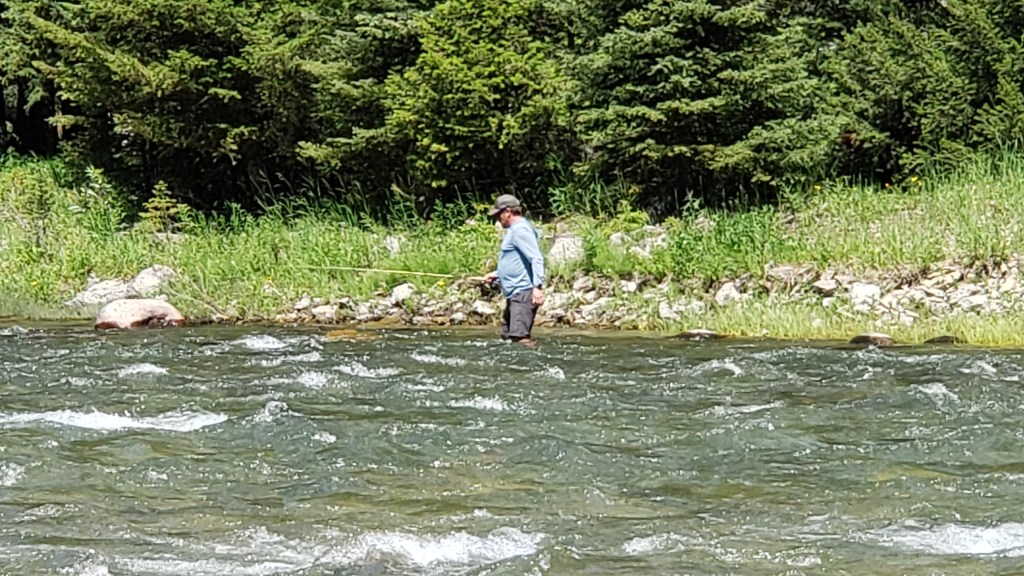
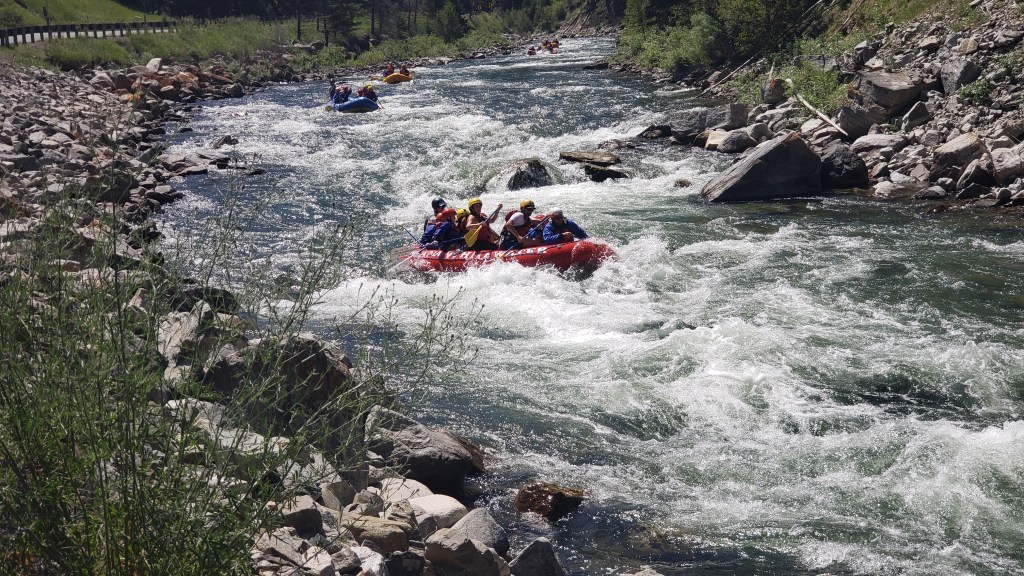
Every curve offered a view more superb than the next, and often we had river rafting tours and people out fly fishing alongside us.
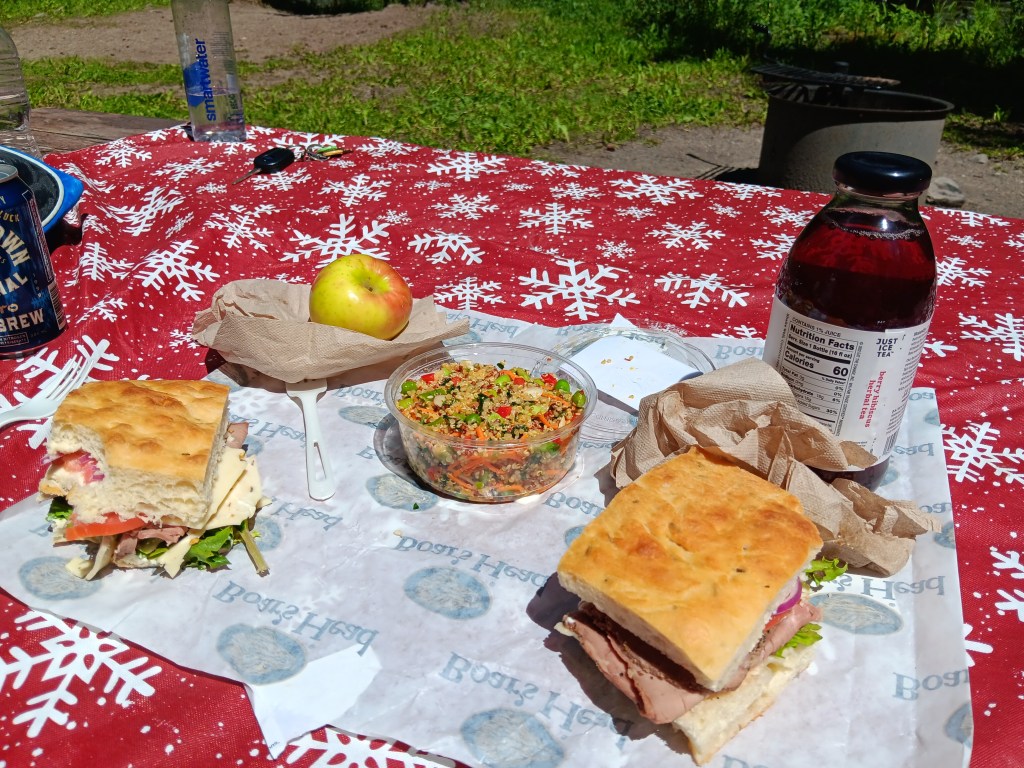
We stopped for a peaceful picnic lunch along the riverside, where four fishermen were grilling whatever it was they’d caught. The scent of pine trees made it an idyllic setting, and we spent a fair bit of time enjoying the serenity.
Our picnic lunch didn’t include fresh-caught fish, but it did include a hiking boot used to hold down one side of our Christmas tablecloth.
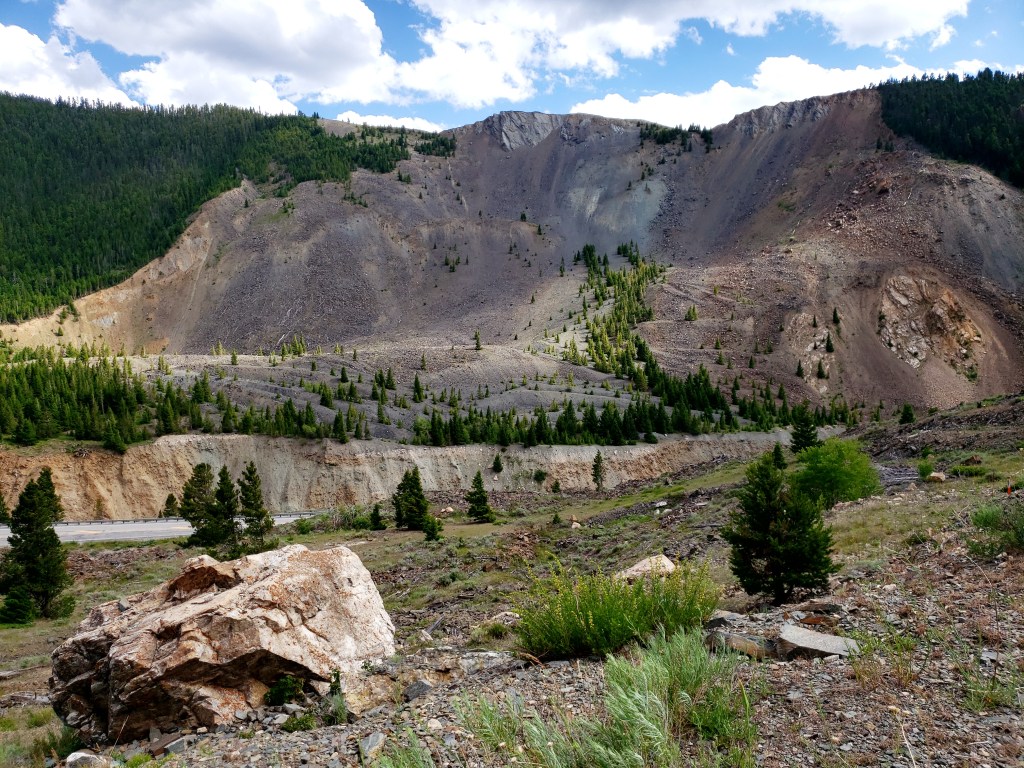
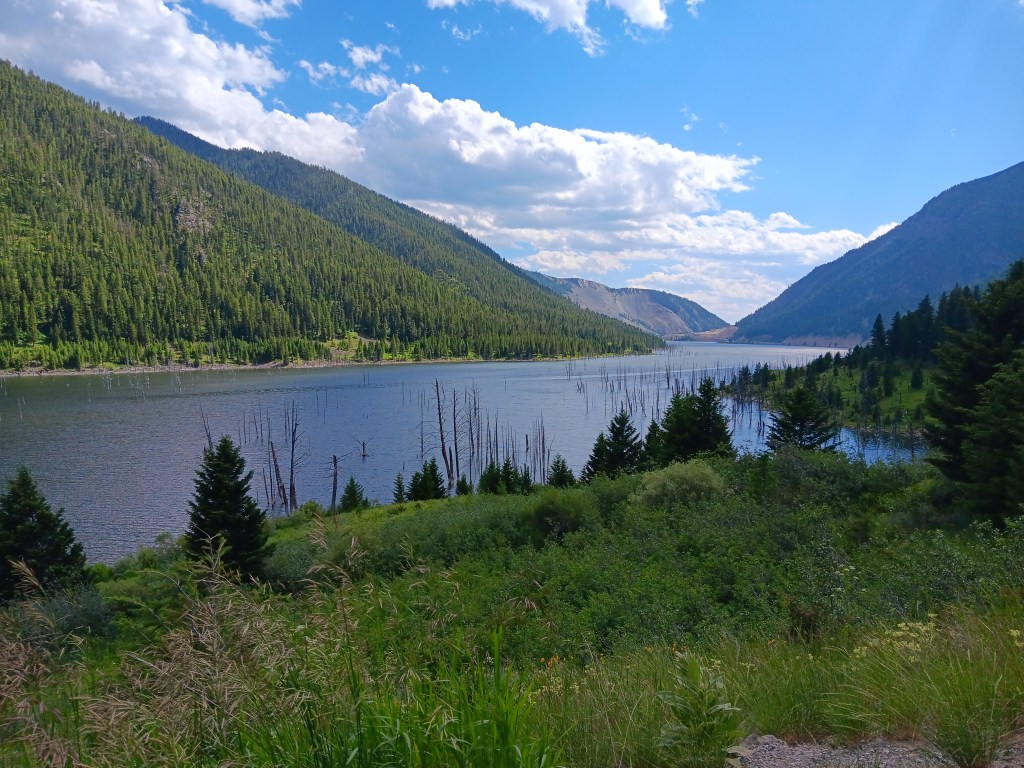
We then returned to Livingston via Highway 287, and were hugely surprised to see one of the mountainsides along the road had come down due to a 7.5 magnitude earthquake, leaving a massive scar and an even bigger pile of rubble.
Lucky for us, this all happened in 1959, and whoever takes care of these sorts of catastrophes had created a charming visitor center for Earthquake Lake on top of the rubble, and on top of 14 people whose bodies were never recovered.
Dead trees still stand in the lake, and the hosts at the visitor center told us the concussion from the landslide was heard all the way into Yellowstone.
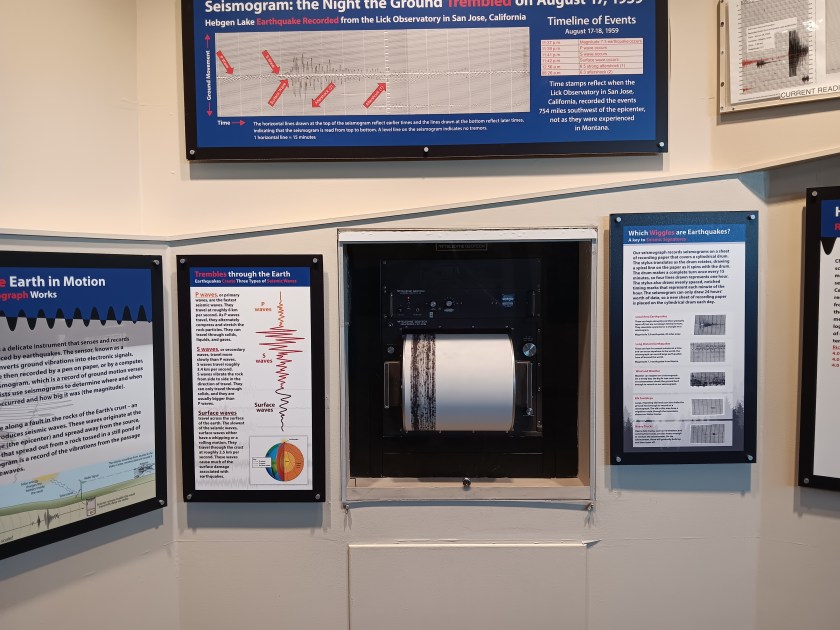
The visitor center monitors tremors, and we were told the seismograph is so sensitive it often records the footfalls of elk walking in the vicinity. The employees feel tremors several times a day, but they seemed happy with their jobs and their location, so nothing major appears to be on the horizon.
It was reassuring to hear, since we’d soon be spending a few days exploring Yellowstone.
In the end, we were glad we drove both highways to help our decision-making, and it turned out local knowledge didn’t stand up to the test. Highway 287 was gorgeous, but had so many long, steep grades that poor Simon was tuckered out by the time we returned to Fati that night.
Our decision had been made. Next stop, Fishing Bridge Campground in Yellowstone!














 Veness Travel Media