Saying Goodbye To The Chihuahuan Desert


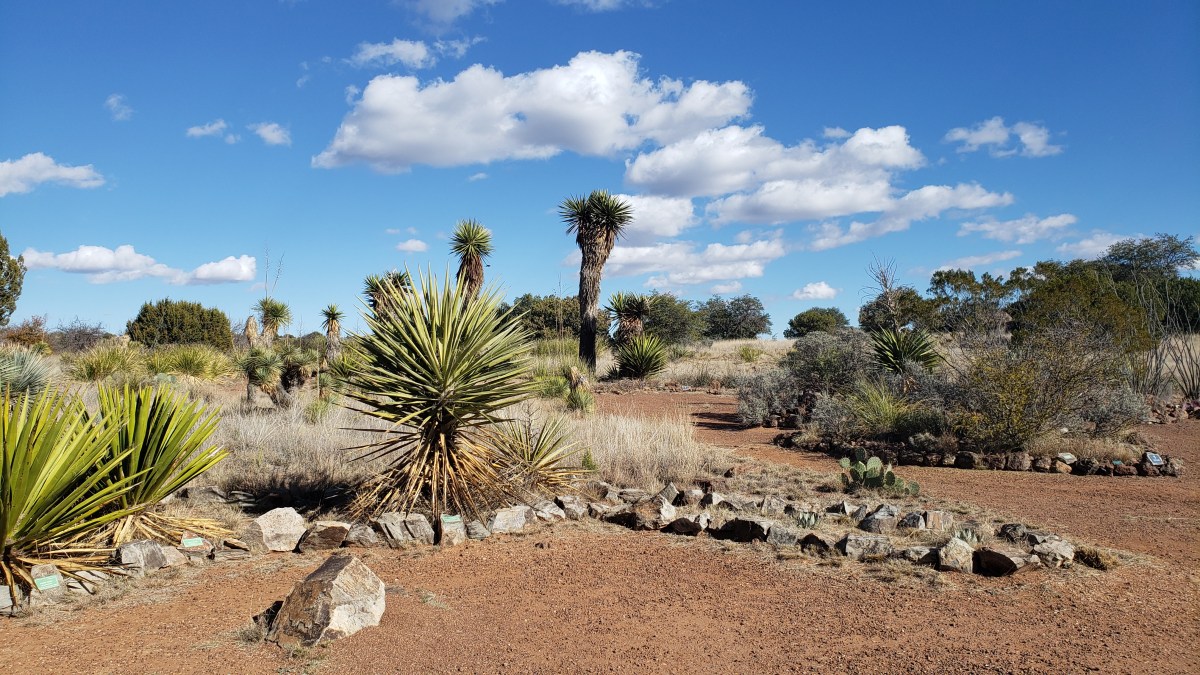
We’d been in North America’s largest desert for weeks, and in eight other deserts for the past six months. Cactus and pronghorn and the swirling dance of dust devils had been our near-constant companions. Our next destination would take us into the plains, then to the Gulf coast, so a final farewell to the arid wilderness was on our dance card.
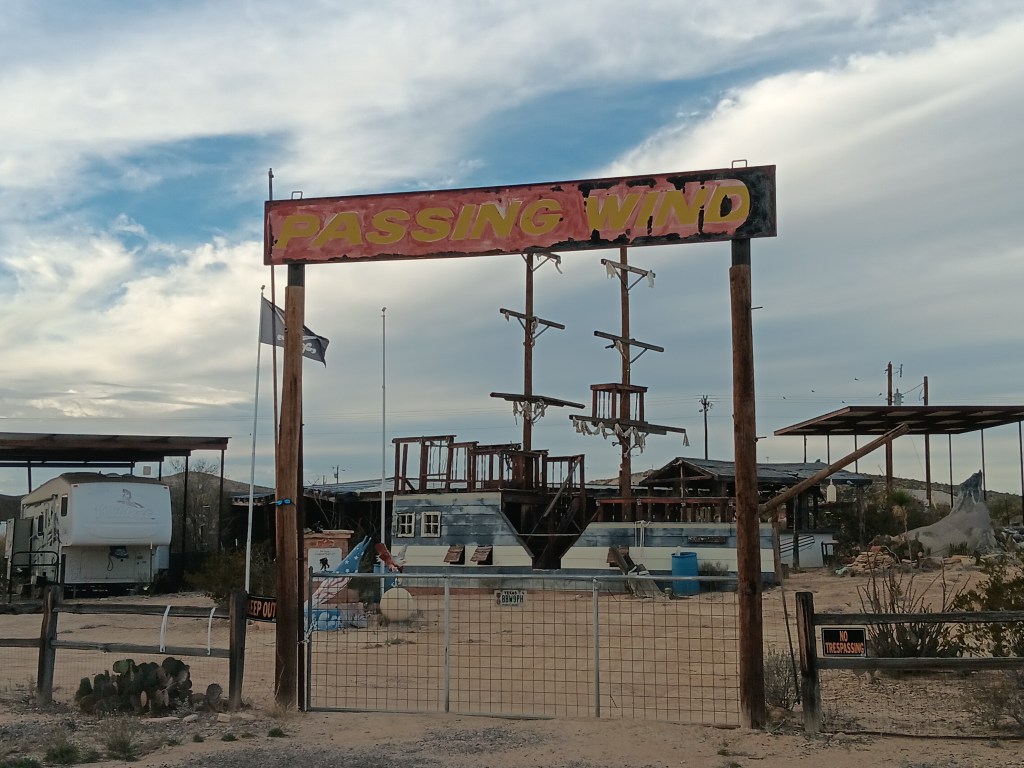
The things you see in the desert when you haven’t got your gun…

Ninety percent of the Chihuahuan Desert is in Mexico, but it also extends from Alamogordo, New Mexico to just beyond Alpine, Texas in the U.S.. Like a gateway to its northbound entry or southbound exit, the Chihuahuan Desert Nature Center was just up the road from our Alpine campground, so we paid a good-bye visit.
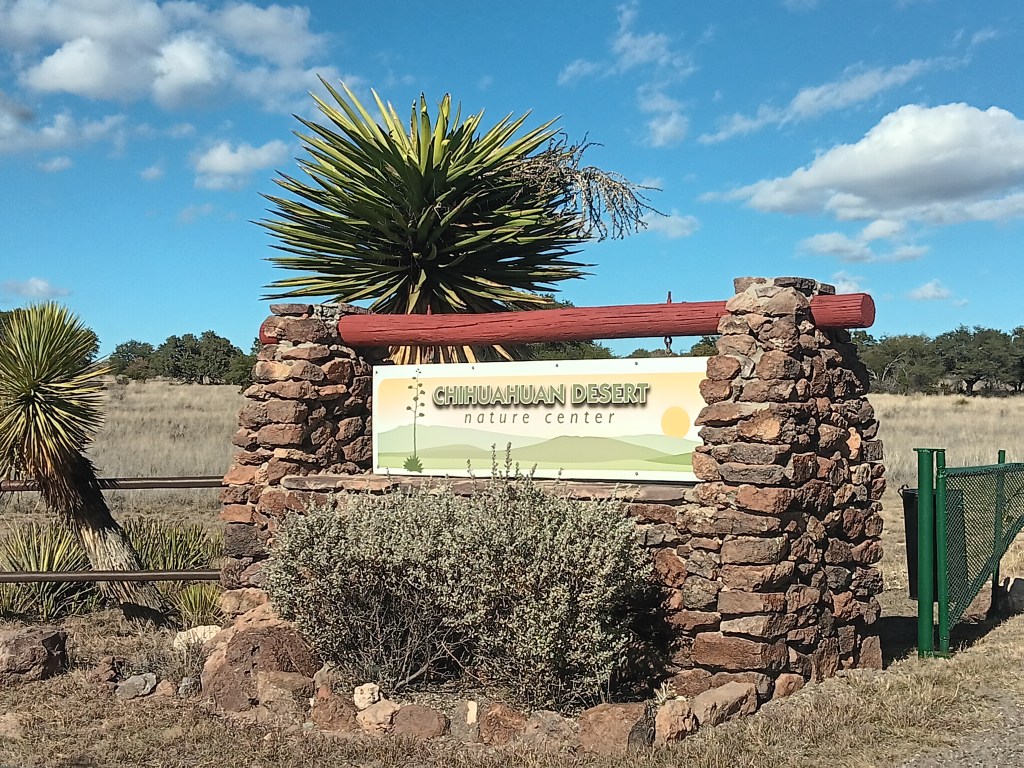

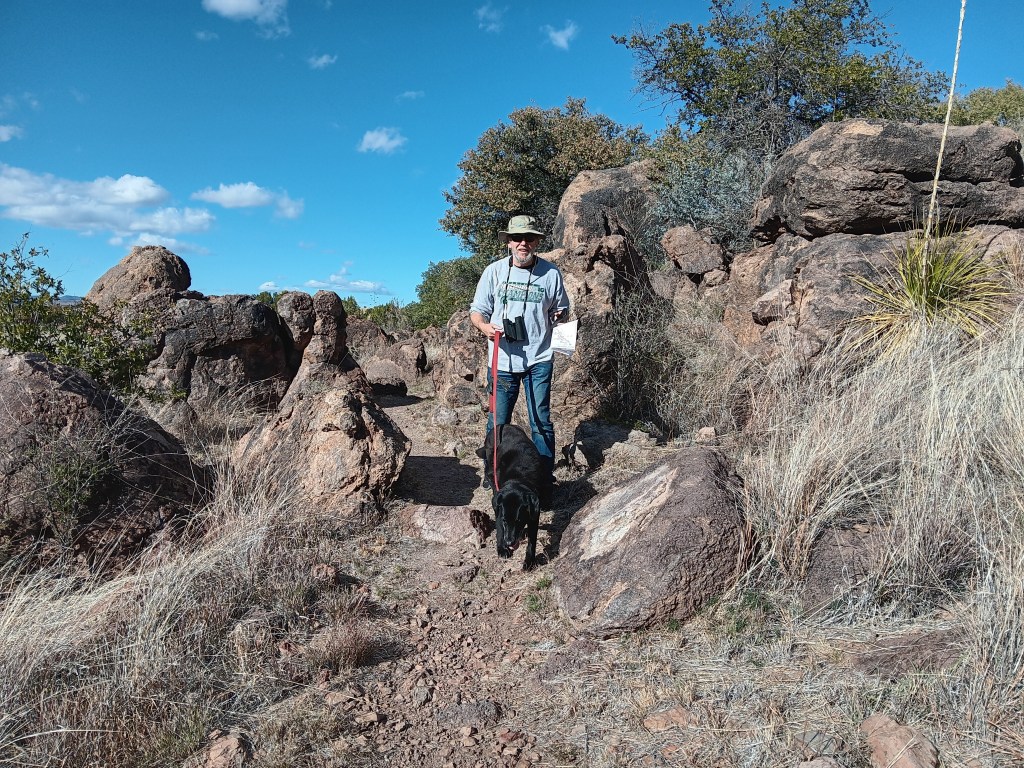
Really, this was the kind of place we should have been to months ago. All of our questions about “What’s THAT” would have been answered. Even so, we spent a happy hour wandering the pathways pointing at plants and remembering where we saw them in our travels.

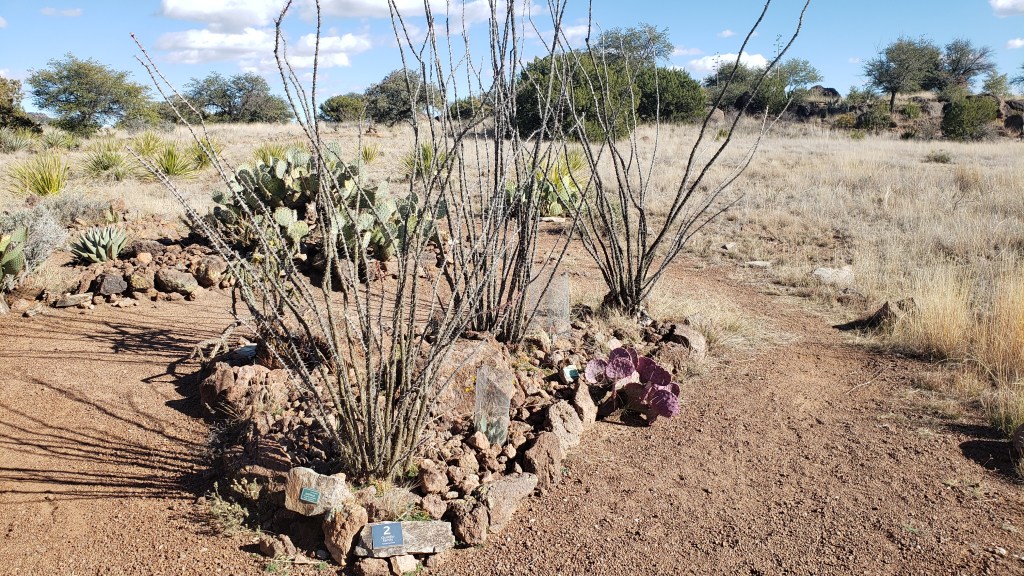
Ocotillo is used for building fences in the western U.S. in the same way thorny brush is used in places we visited in Africa. Fascinating.

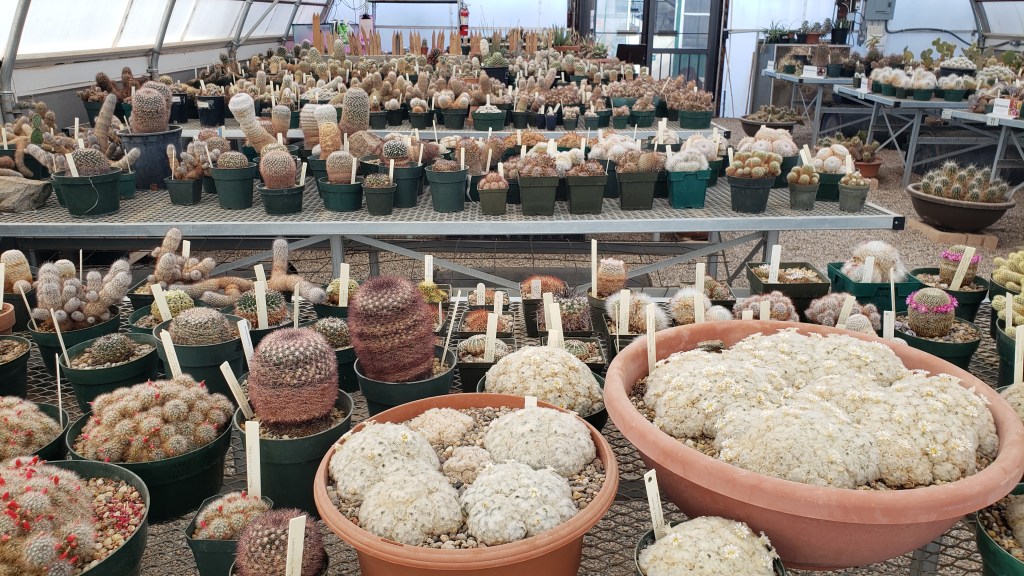
We knew most of the big cactuses and several types of agaves, but the Cactus Museum offered a trip down Memory Lane for Susan, whose parents were Master Gardeners and kept quite a few indoor cactuses over the years.
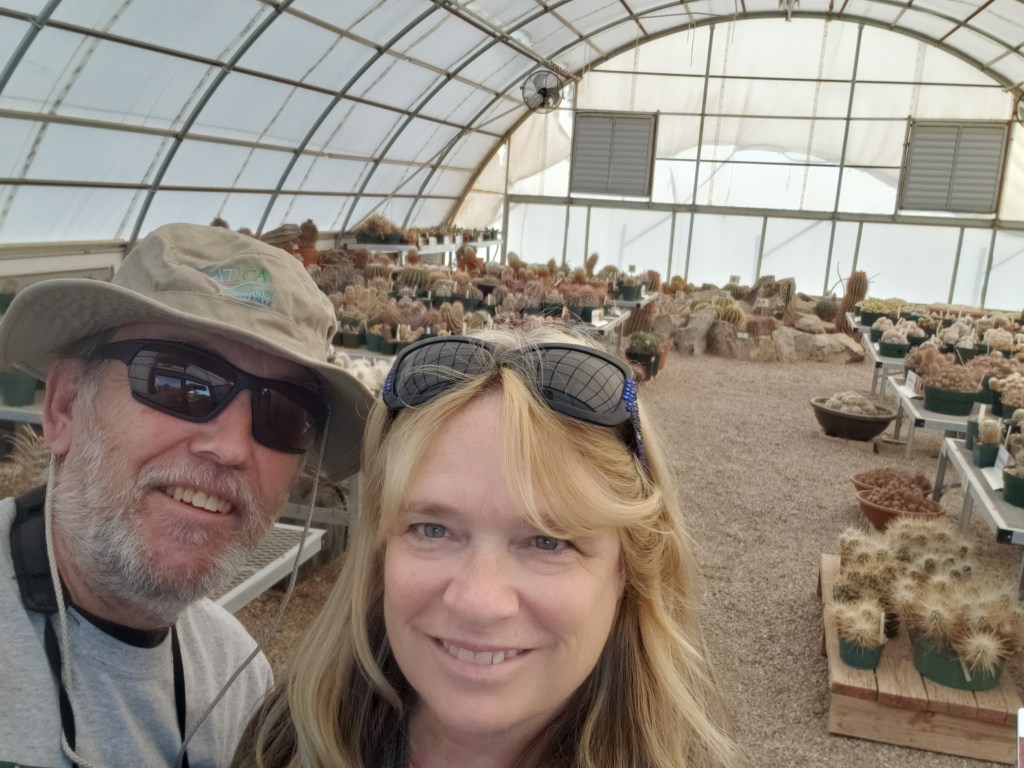

Ruthie had to wait outside the museum, and she wasn’t happy about it. At all.

Davis Mountains State Park in the town of Fort Davis was not far away, so Simon pointed Nippy in that direction the next day, for a low-key last-look at Texas’s mountainous landscape.

Primarily a spot for hiking and camping, this little state park also had two bird blinds, one of which was in the interpretive center. Here, we saw birds we’d never seen before, though we didn’t see the main draw for visitors, which is the elusive Montezuma quail. Apparently, we were so captivated by what bird life we did see that neither of us thought to take a photo.

Throughout our trip, we’d both been fascinated by the varying geology we were passing (you’ve guessed that if you’ve been following our blogs), and today there was a Ranger talk specific to the volcanic mountains we were in, so he joined the group while Susan continued to bird-watch and keep an eye on Ruthie.
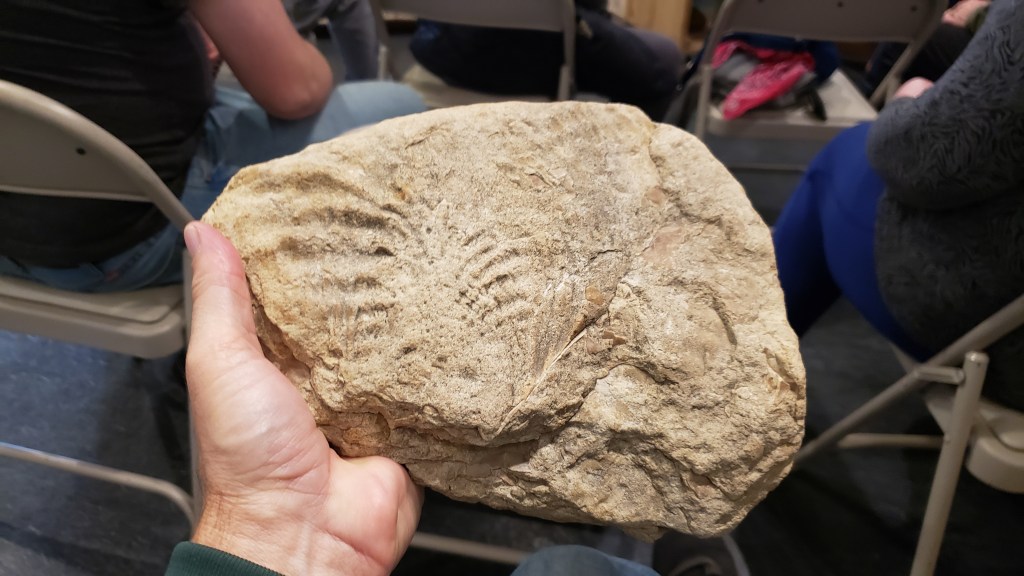
As with all of the southwest, the Alpine area has its share of fossils, this time imprinted in limestone.

This metamorphic rock has been molded and shaped by volcanic activity into a little work of art.

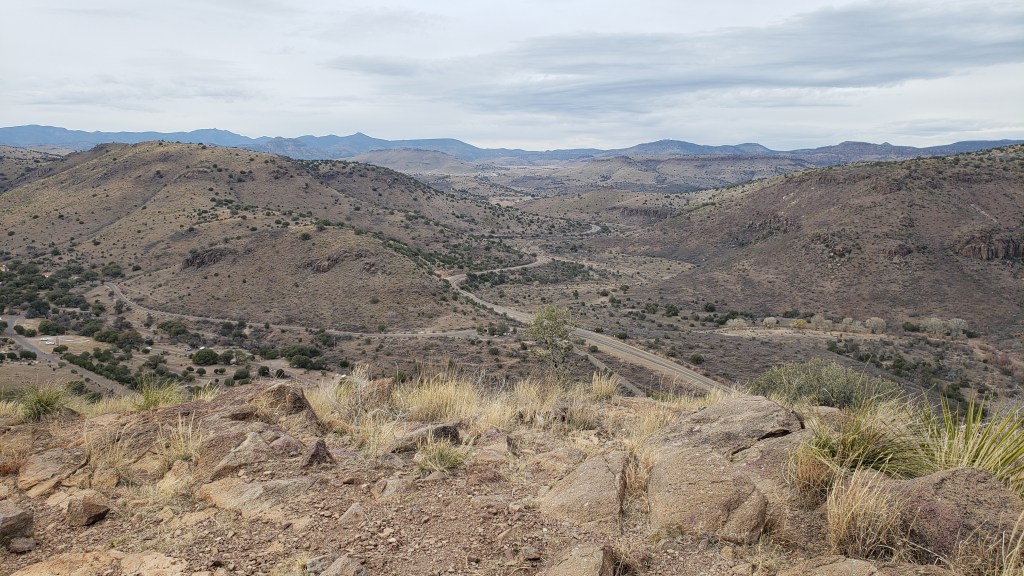
We then drove up the Davis Mountain to see some of the features the ranger spoke about, and to get a good view of the surrounding ranges.

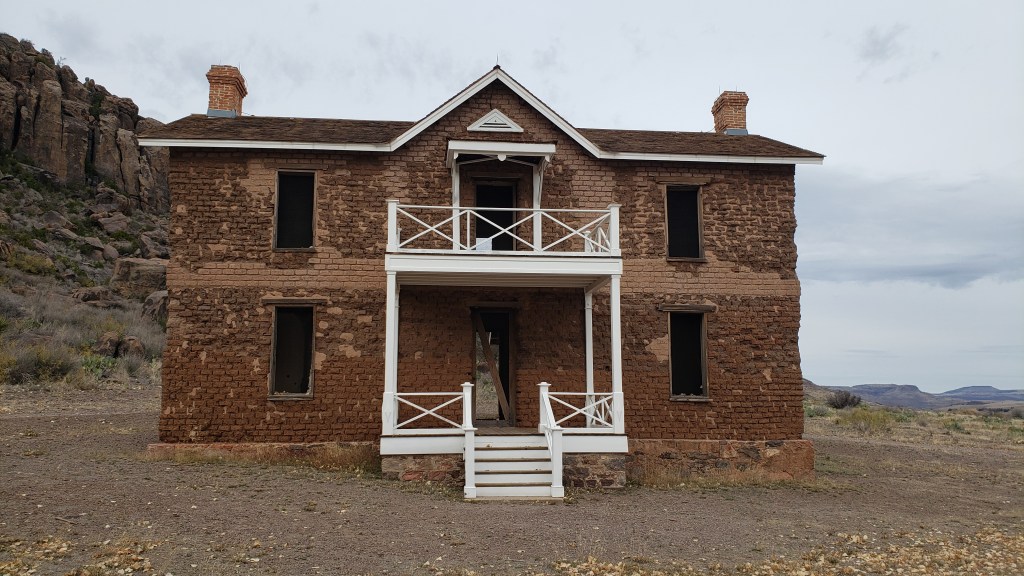
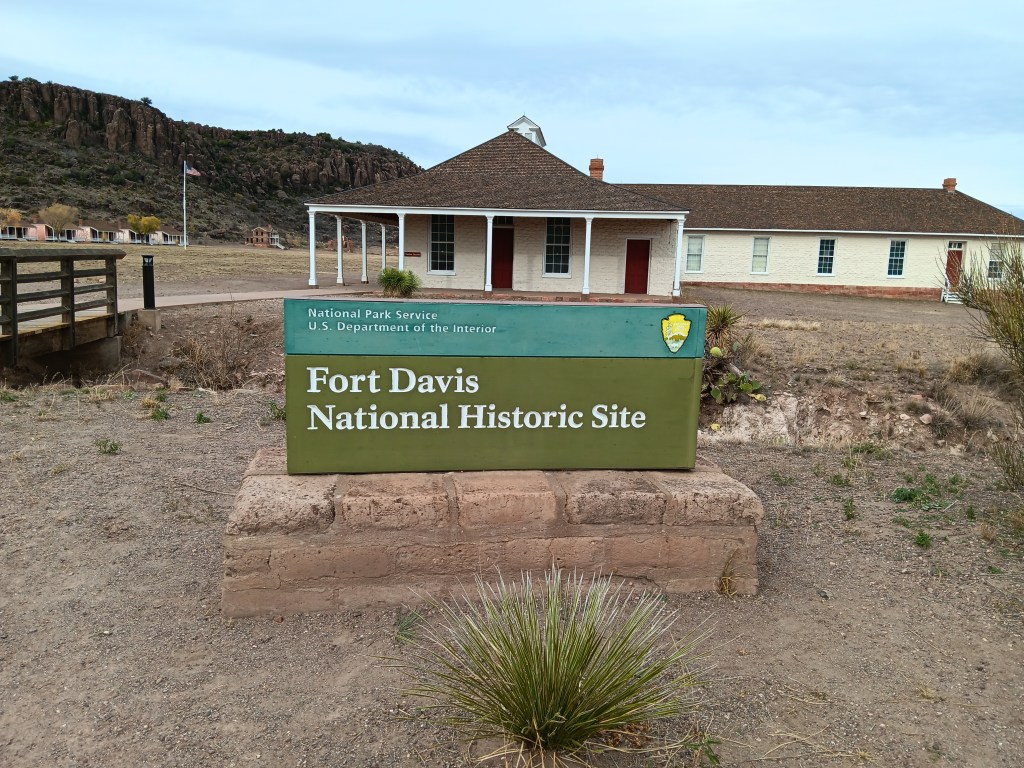
While we were in Fort Davis, a wander around Fort Davis National Historic Site was in order. The compound, established in 1854, wasn’t strictly a military outpost. It was also strategically placed to help protect the mail route and emigrants traveling through this part of Texas.

Several original buildings constructed from hand-made bricks are now in ruins, but many have been restored.
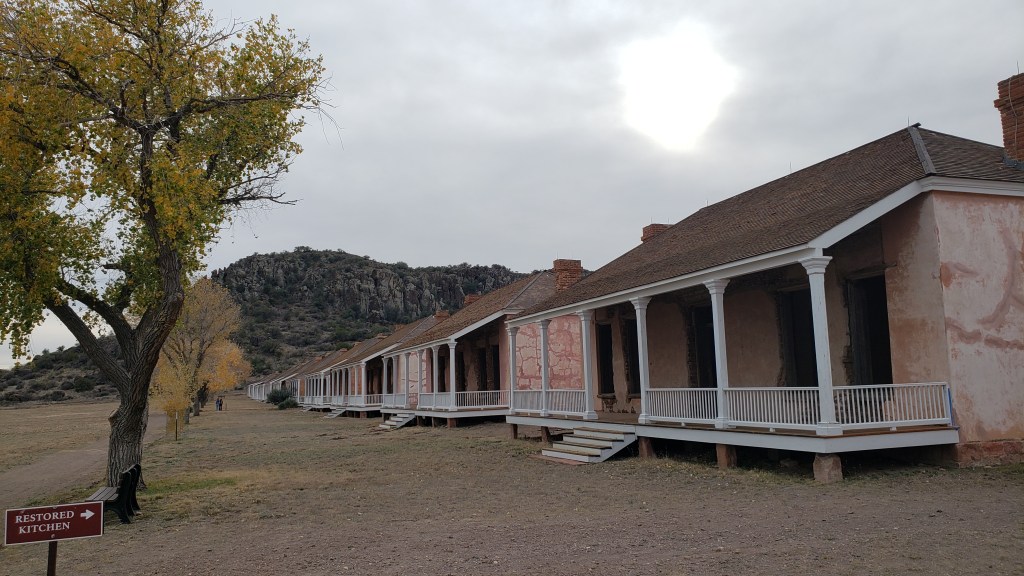
Officers’ homes.

Enlisted persons’ barracks.

Somebody fancy lived here.

A small museum told the area’s story, including the role of the “Buffalo Soldiers” who, among their other duties, were assigned to deal with Apache and Comanche tribes that were not amused by having their hunting grounds overtaken.


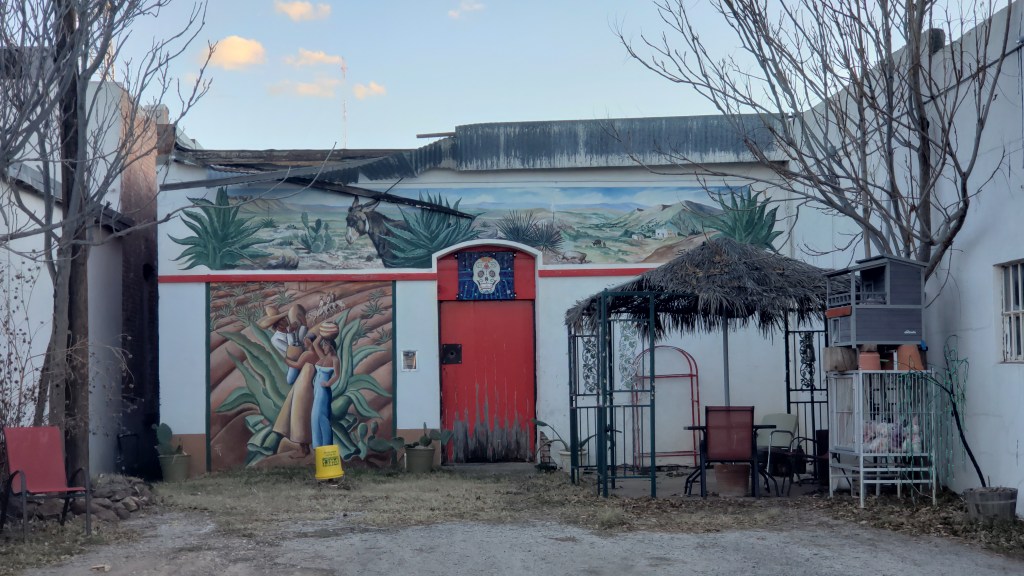
Road-weariness was catching up with us, so the next day we stayed local and did a tour of Alpine’s gorgeous murals.

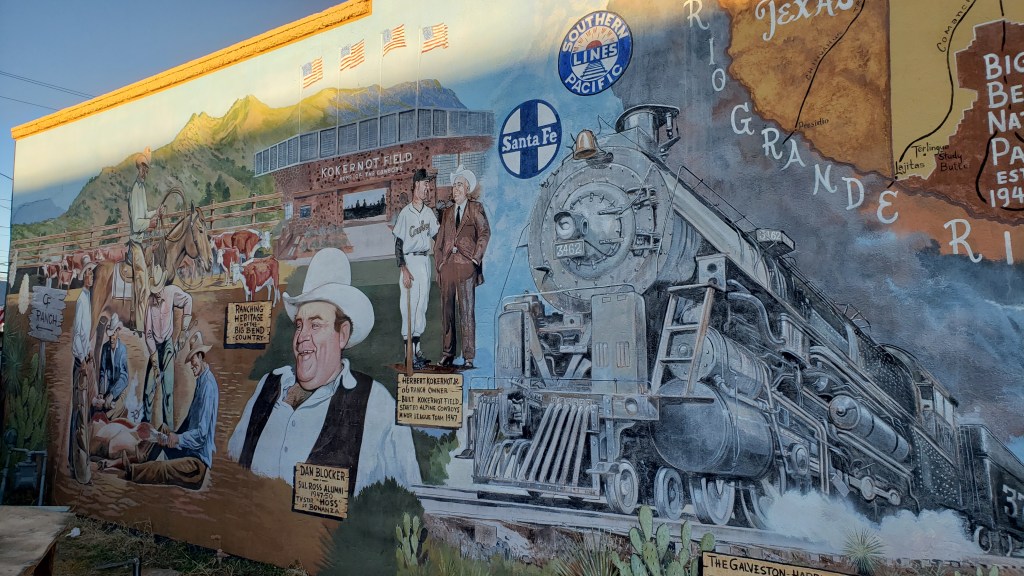
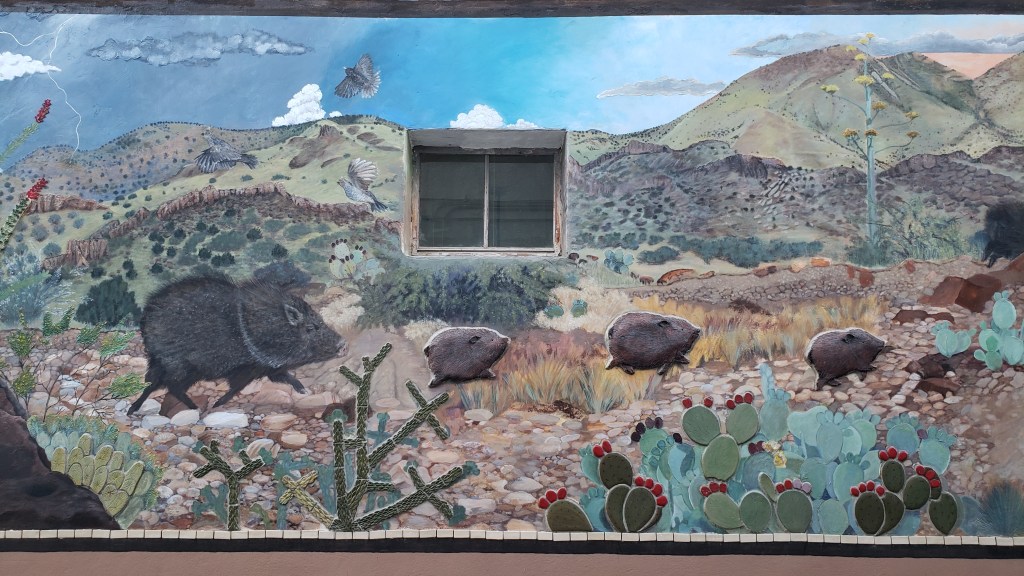
Susan has fond childhood memories of sitting on her Papa’s lap watching the TV show Bonanza, and her favorite character was Hoss. Who knew he came from tiny Alpine?

Lies!


With our evening free, we freshened up and put on real clothes for an elegant dinner at The Century Bar & Grill in the historic Holland Hotel, built in 1928. Knowing we had our pup with us, they reserved a private room for us, but someone arrived before we did and snuck in, so instead we had our own table in the hotel lobby.


It’s a big, comfy lobby.

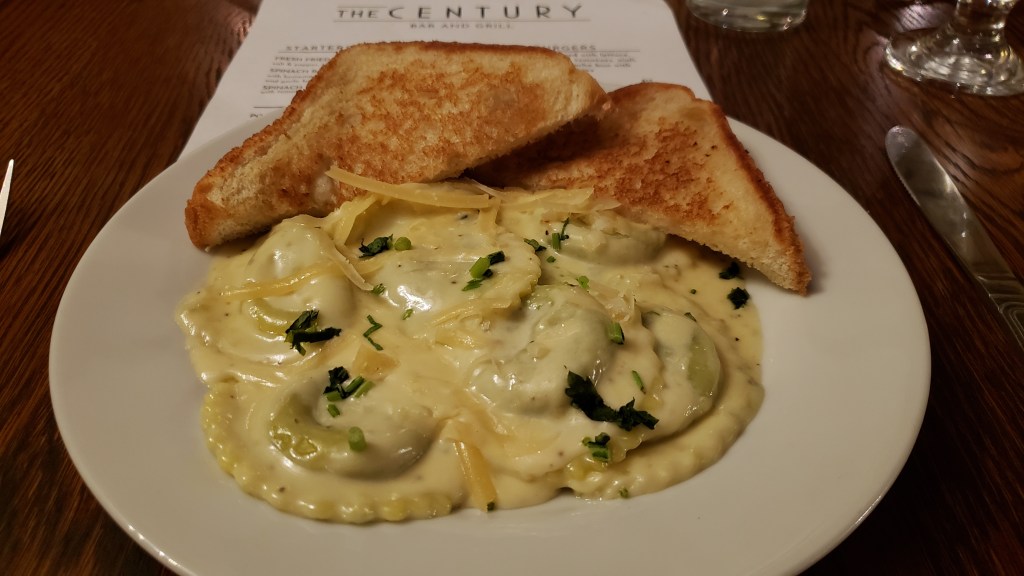
We started with the Alfredo Spinach Ravioli, which was so creamy and delicious we could easily have made it our entire meal.

While we were still making “Yummy” noises about the pasta, our entrees arrived. Simon opted for the Cajun Blackened Redfish served with vegetables, smashed potatoes, and house-made remoulade. He declared it one of the best pieces of fish he’d had in forever; nicely spicy without being overpowering, and oh, so succulent.

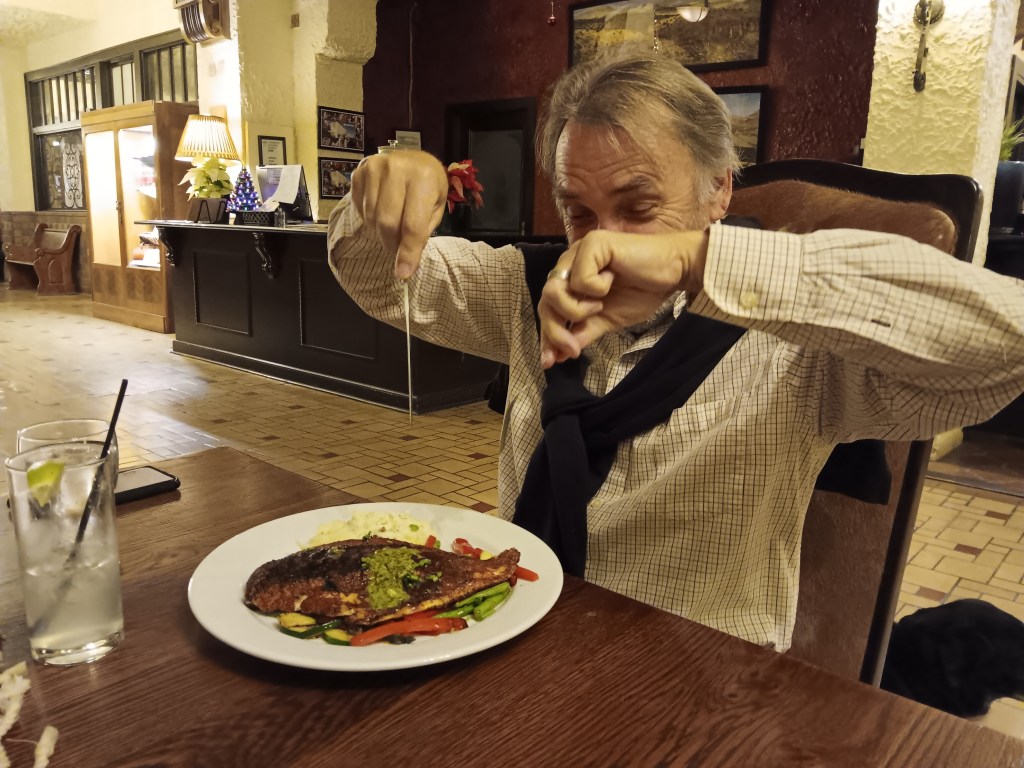
Let the devouring begin!

Unable to share in the delights of that spicy dish, which would have been her first choice, Susan went for the pork chops, knowing full well it would become three meals instead of one, since it was huge, with two chops and a mountain of potato. Indeed, the leftovers fed both of us the next day.
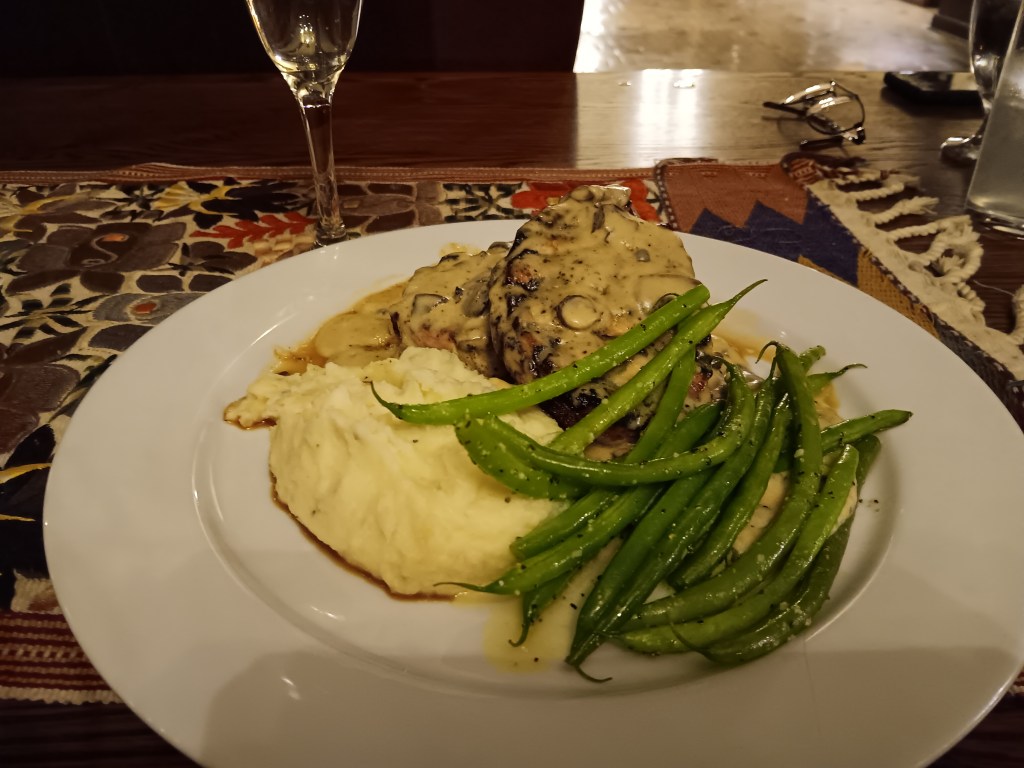

Someone wasn’t talking to us after she offered to eat anything we couldn’t finish, but was given NOTHING. Unthinkable!
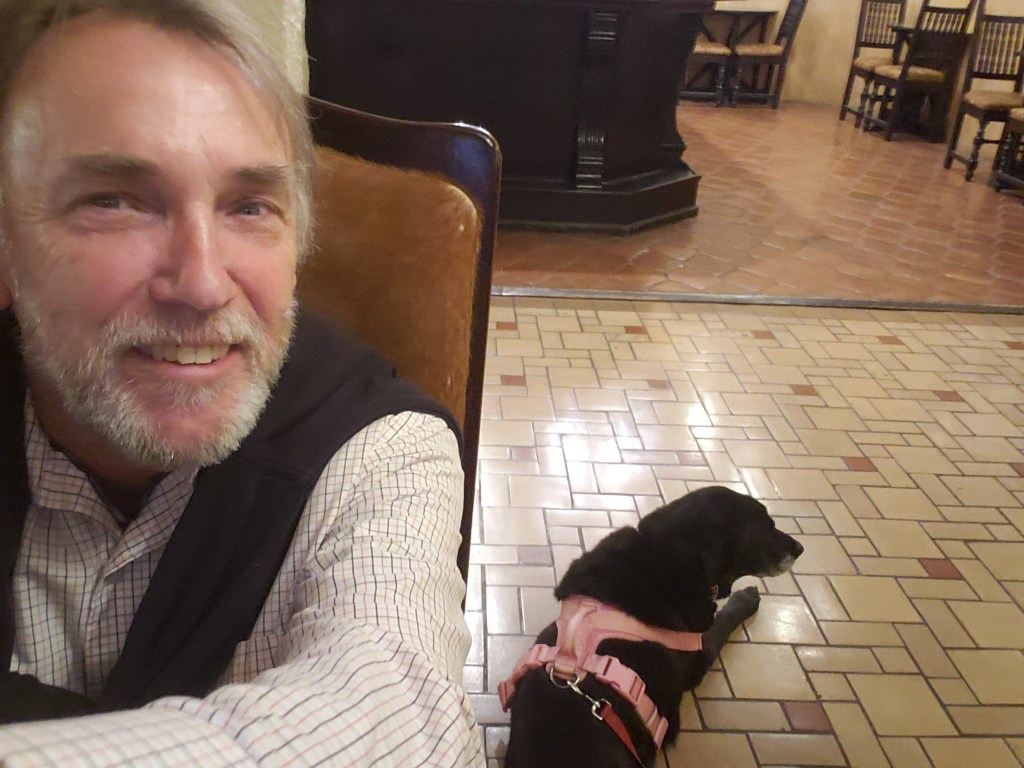

Finally, we had time to spare and were in an area where we could enjoy Dark Sky at our leisure. Alpine is known for it and we were blessed with a cloudless night, so we headed out after dinner with a view of the Milky Way on our minds. The full moon that shone like a beacon was both beautiful and our undoing. It was so bright, nary a star could be seen. We stood along the roadside in light so effective we could see sad tears rolling down each other’s cheeks (not really).

There would be other chances, and with Christmas fast approaching our moods remained festive in this surprising little town that had captured our hearts.
Welcome To Don’t Mess With Texas!


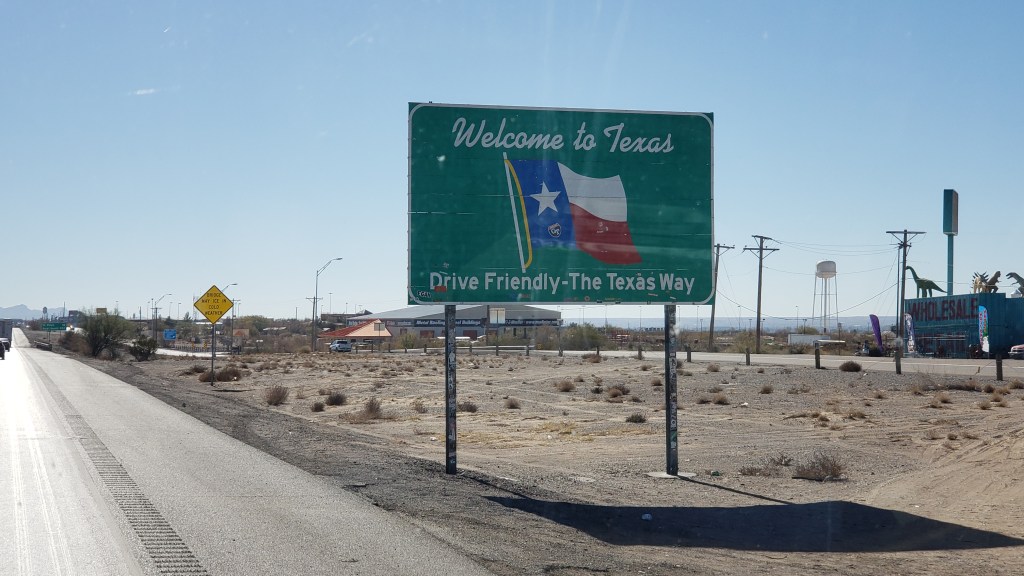
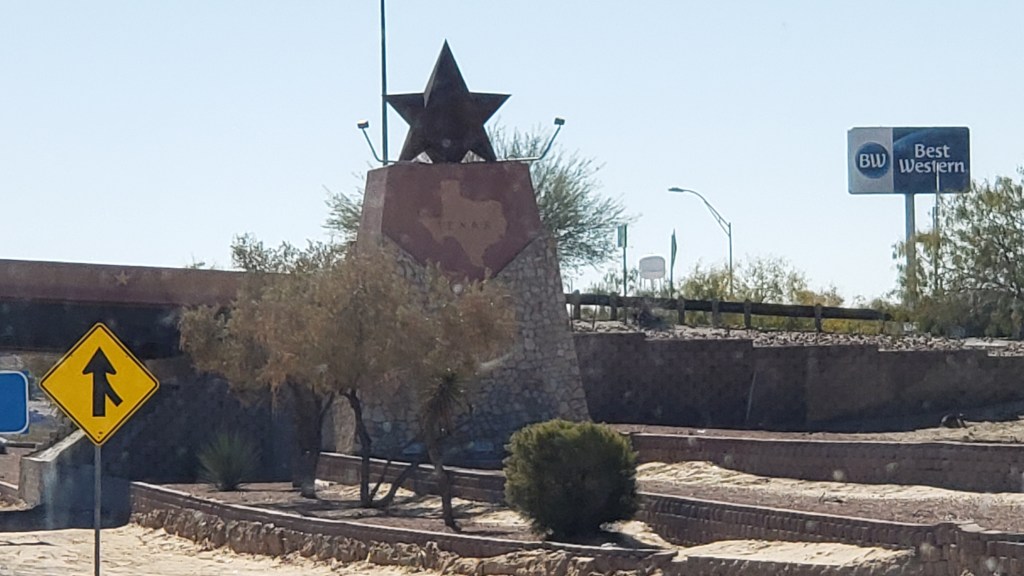
With its hidden state-border crossing sign and slightly aggressive motto, Texas loomed large in our front windshield as we left New Mexico behind for what will be nearly two months in the Lone Star State, waiting out winter.

You have to be right up on this sign before you can make out what it is.

It quickly got a bit less peevish, and this would be an ongoing theme that took us by surprise. We experienced so much kindness and generosity in our first week in Texas.

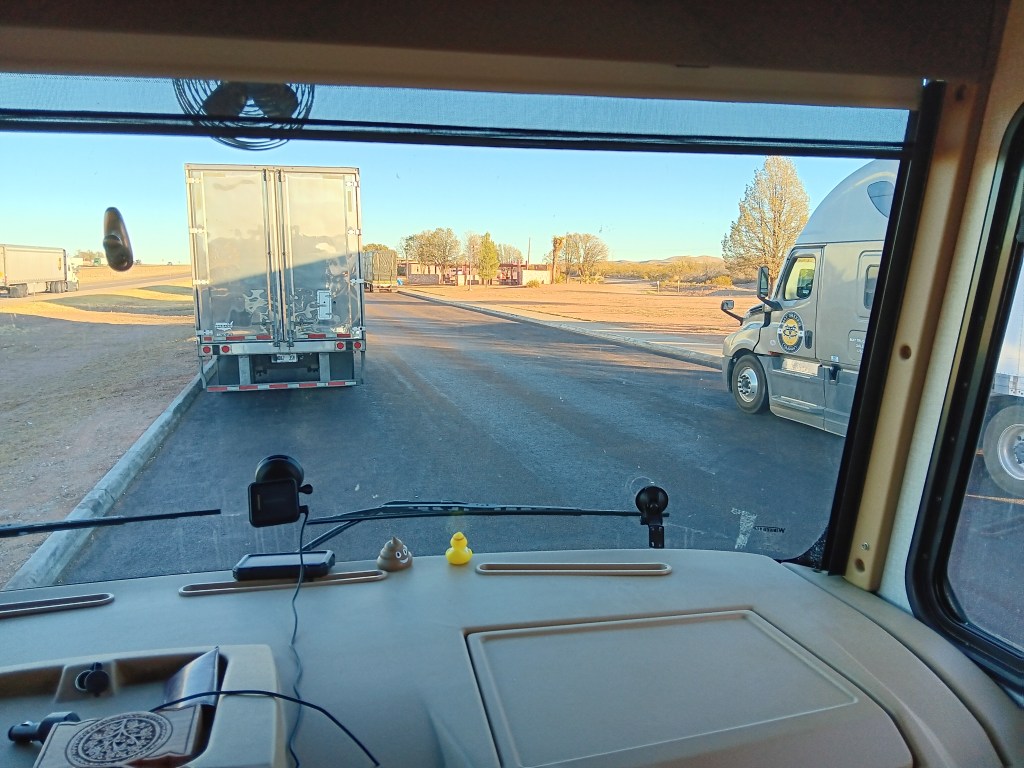
Everything is bigger in Texas, and that includes distances. We try to limit our driving in Fati to 200 miles or less per day, and it was 271 miles to our next campground, so we boondocked at a handy pull-out off I-10 in Van Horn, just a few yards off the highway. There is a long strip of road running parallel to the interstate where trucks and RVs can rest overnight. This was our view:


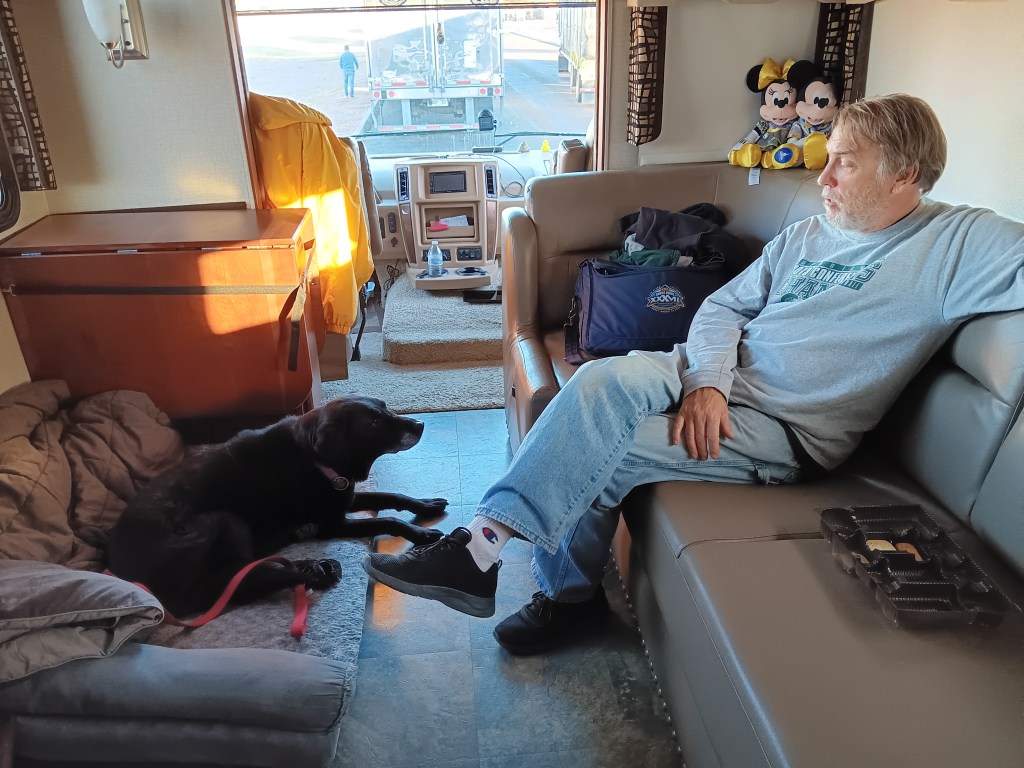
Simon and Ruthie having a discussion about where she was going to take a comfort break that evening, with no dog park in sight.

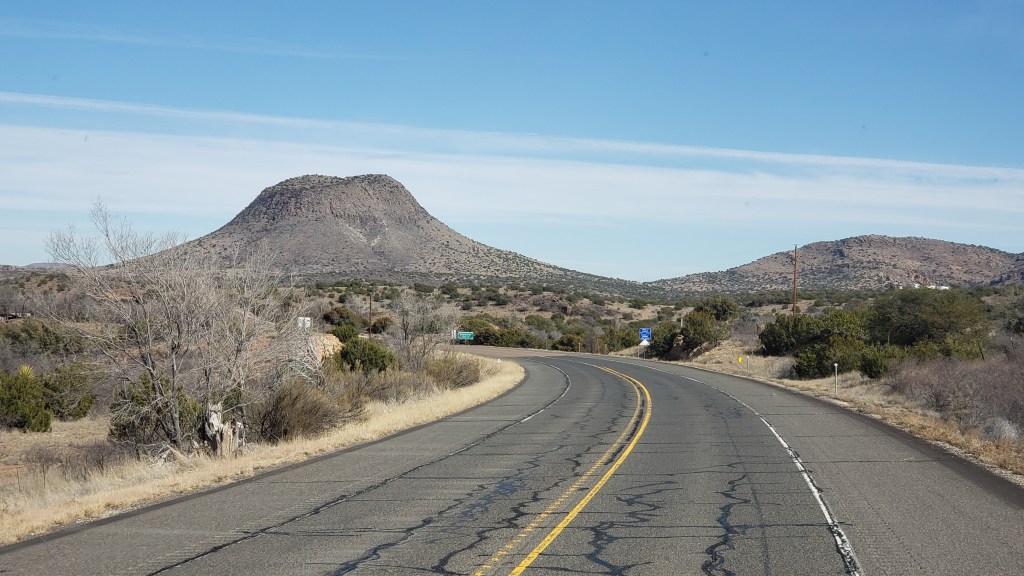
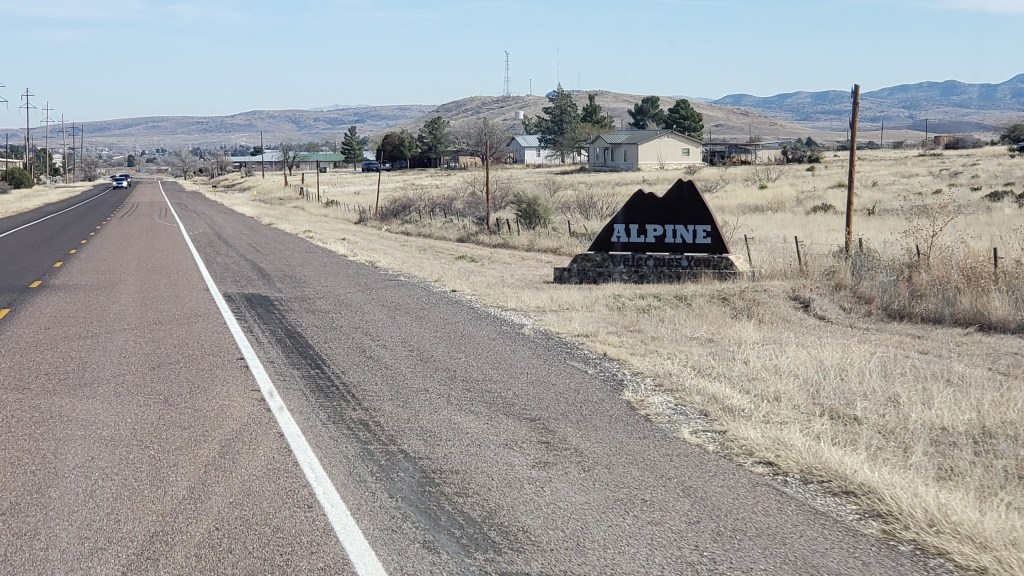
We pushed on to Alpine the next day, and while the name of this little town should have been a hint, we somehow didn’t expect to be surrounded by mountain ranges. Texas is flat, right?

Well, right, but not Northwestern Texas. Alpine is flanked by the Davis and Glass Mountains, and sits at 4,462 feet above sea level. Not exactly the Rockies, but pretty impressive for cattle country.

Volcanic much?

We saw roadkill not far from this sign that had us wondering if our theory that javelina are a lie was wrong. But it was practically the size of a bus, which (fake) javelina are not. We later found out it was a feral pig.

We didn’t expect so many mule deer just wandering around town.

The reason for our four-day stop in Alpine’s peaceful Lost Alaskan RV Park was Big Bend National Park, located in the Chisos Mountains 72 miles to the south. Our base kept us on track for easy access to US-90, without putting extra miles on Fati.

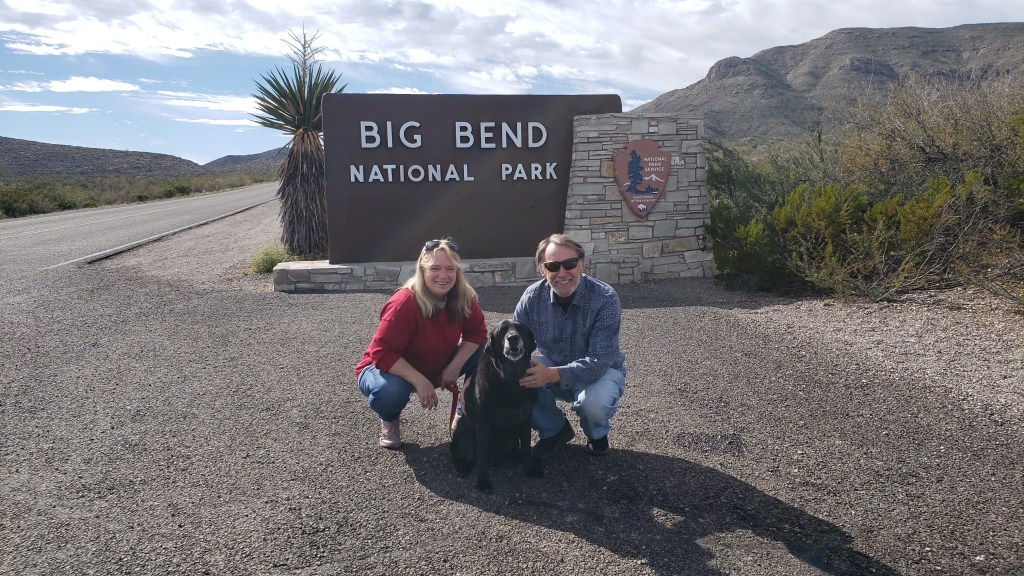
On our way in to the park we stopped at the entry sign, where a biker was taking a photo of another couple. He offered to take our picture, too, and then some genius happened. Ruthie looks away when anyone points a camera in her direction, but this guy stamped his feet over and over, prompting several little woof-etts from her, and produced photos that look like she’s smiling. Brilliant!


Big Bend launched straight into its prehistoric past, being a location where a great deal of fossilized diversity was discovered. A little exhibit and walking trail tell its 130-million-year story, from the time it was a sea to the time when volcanos shaped the land before woodlands took over; from the monstrous sea creature uncovered here to gigantic dinosaurs, Native peoples, spats with Mexico, and the eventual creation of a National Park.

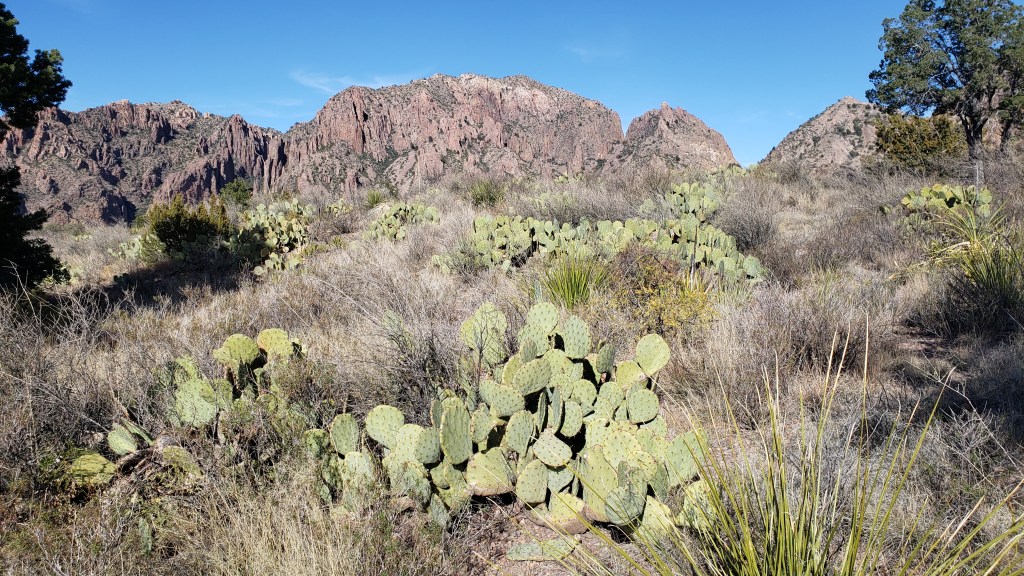
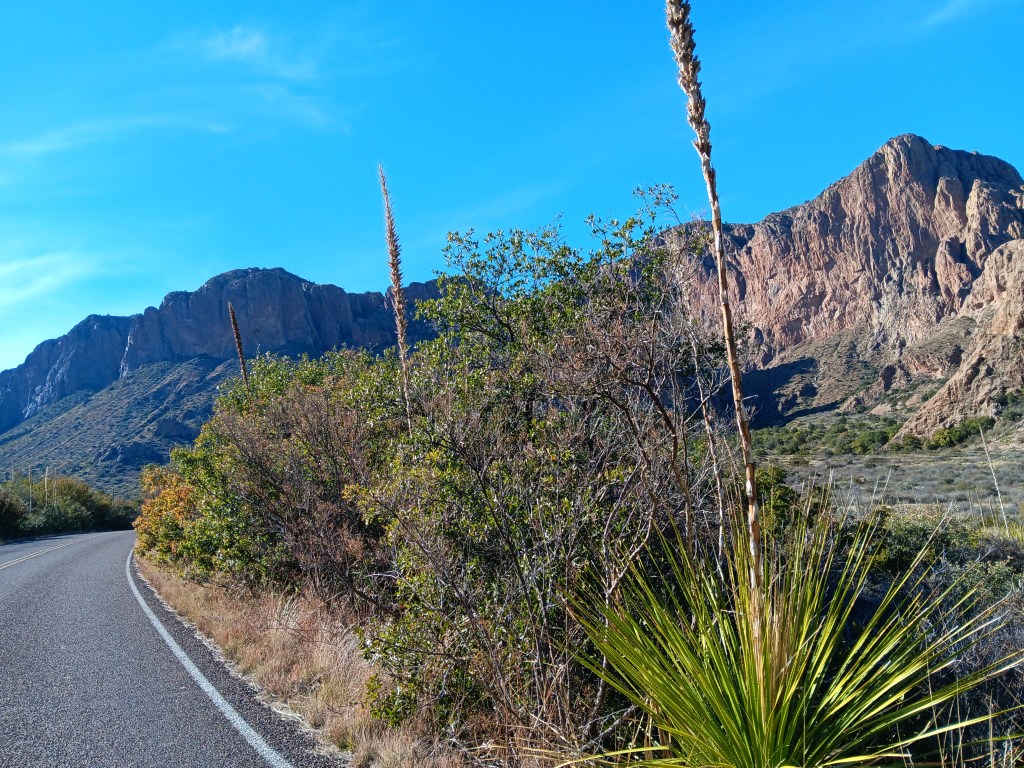
The landscape here is so changeable.

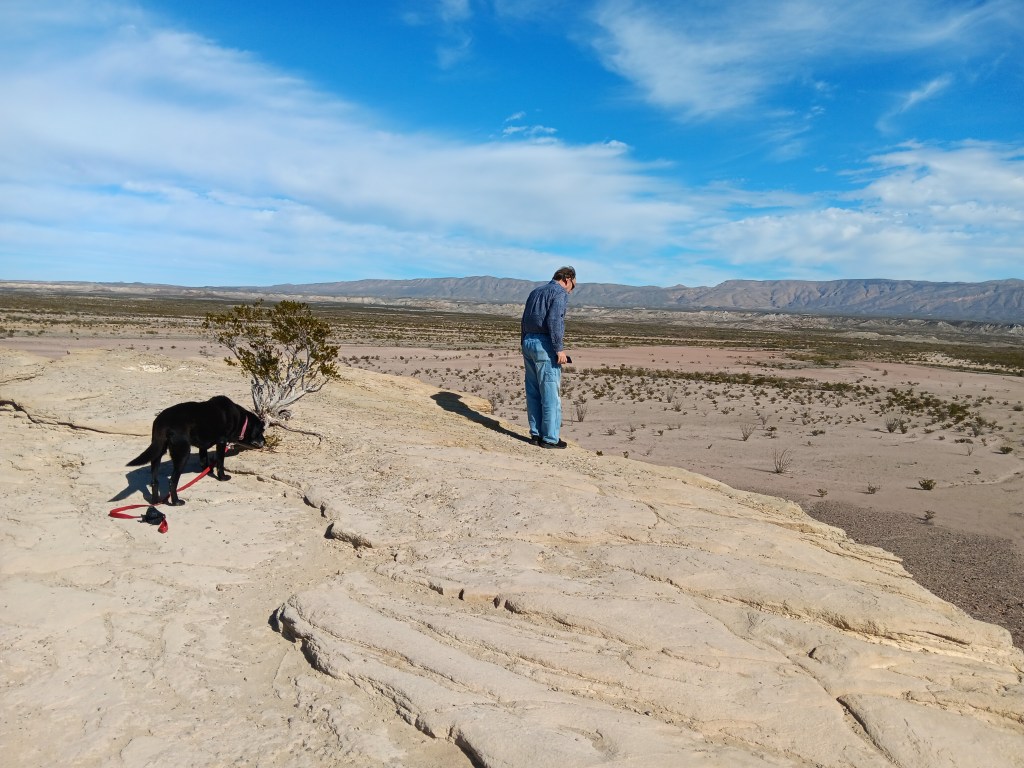
“Simon, NO! Don’t jump!”
This former mudflat was the site of some important fossil discoveries. Rhinos and camels once roamed the land. So did T-Rex.

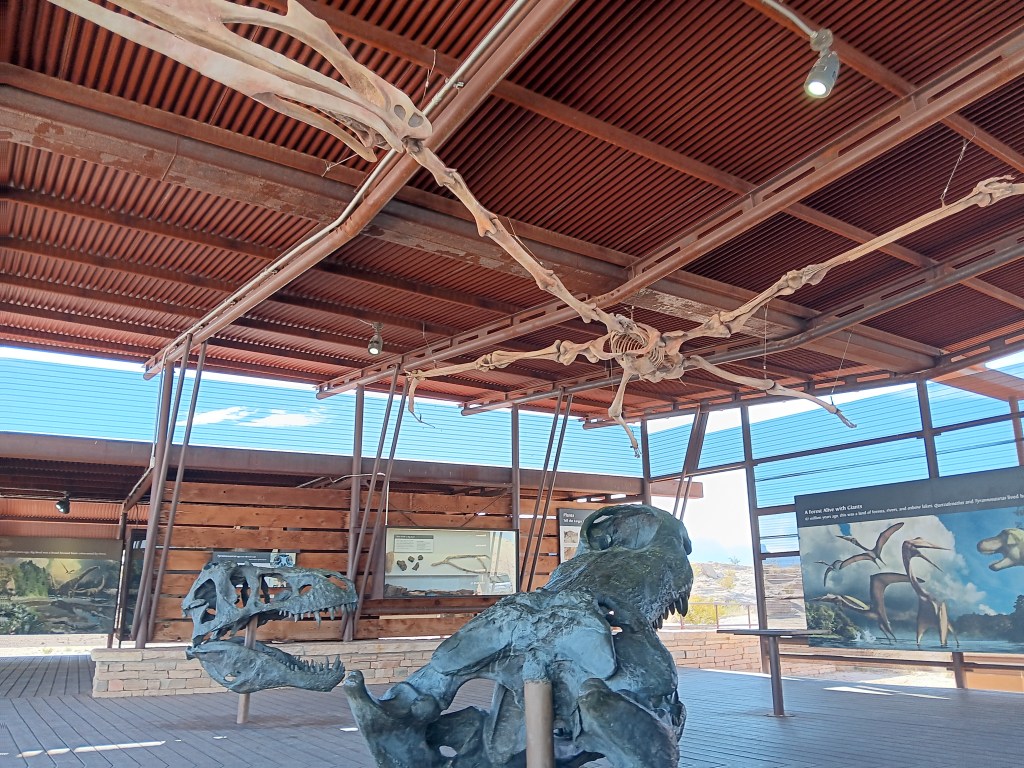
One of its claims to fame was the 35-foot-wing-spanned Quetzalcoatlus northropi, the largest flying creature discovered so far, among other dinosaurs that have not yet been found elsewhere.

The pale bones flying just below the ceiling are so long it’s hard to get them into one shot. The near end is its head.

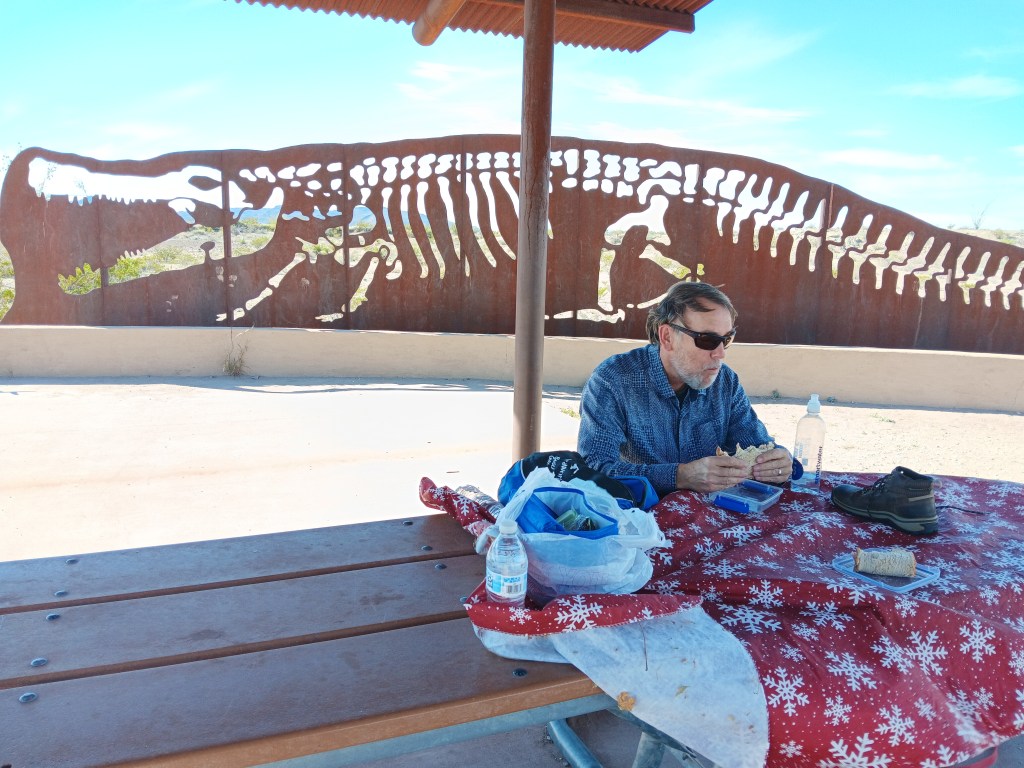
Coming from Florida, we were impressed by the park’s other reptilian claim to fame, clocking in at nearly 50-feet. Deinosuchus riograndens is a dinosaur-munching alligator big enough to take down giant herbivores that waded too close to its massive maw.

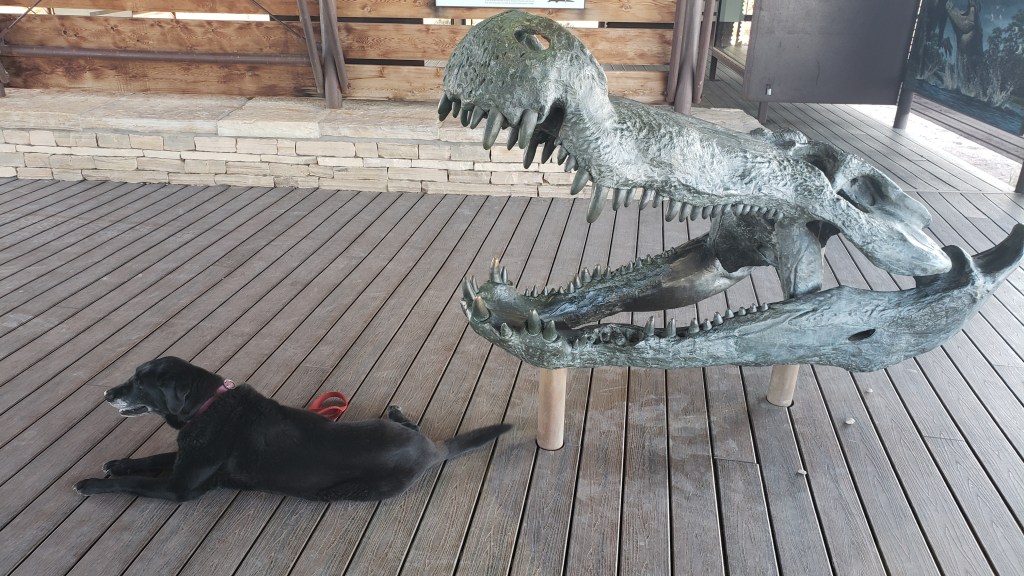
We had our picnic near a life-sized metal cutout of the gator.

Just to give a little perspective of the gator’s size. No dogs were harmed in the shooting of this photo.

Geologically, Big Bend is partially the result of the mother of all ka-blooeys. Visitors can drive into and hike all around the Chisos Basin, with an overlook smack in the remnants from an ancient volcano.

If you’ve been geology-ing along with us, you’ll know this is a volcanic plug.

Looking back at the volcanic bowl from a road outside the basin.

Breaking free from a larger continent, subsequent land-mass collisions that raised the land upward, the formation of Cretaceous Sea, and other complicated science-y stuff also contributed to the area’s geological face, and we did feel as if we were in some sort of strange jumble of landscapes; as if the planet had grabbed handfuls of topography from around the country and flung them willy-nilly into Big Bend and the surrounding area.

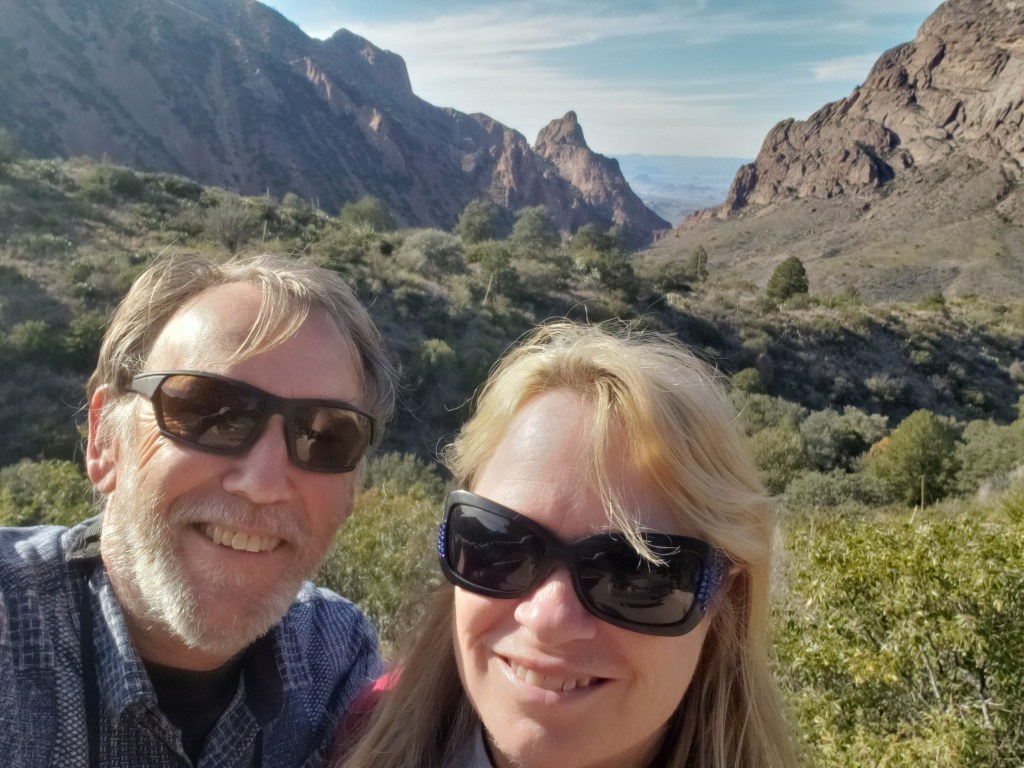
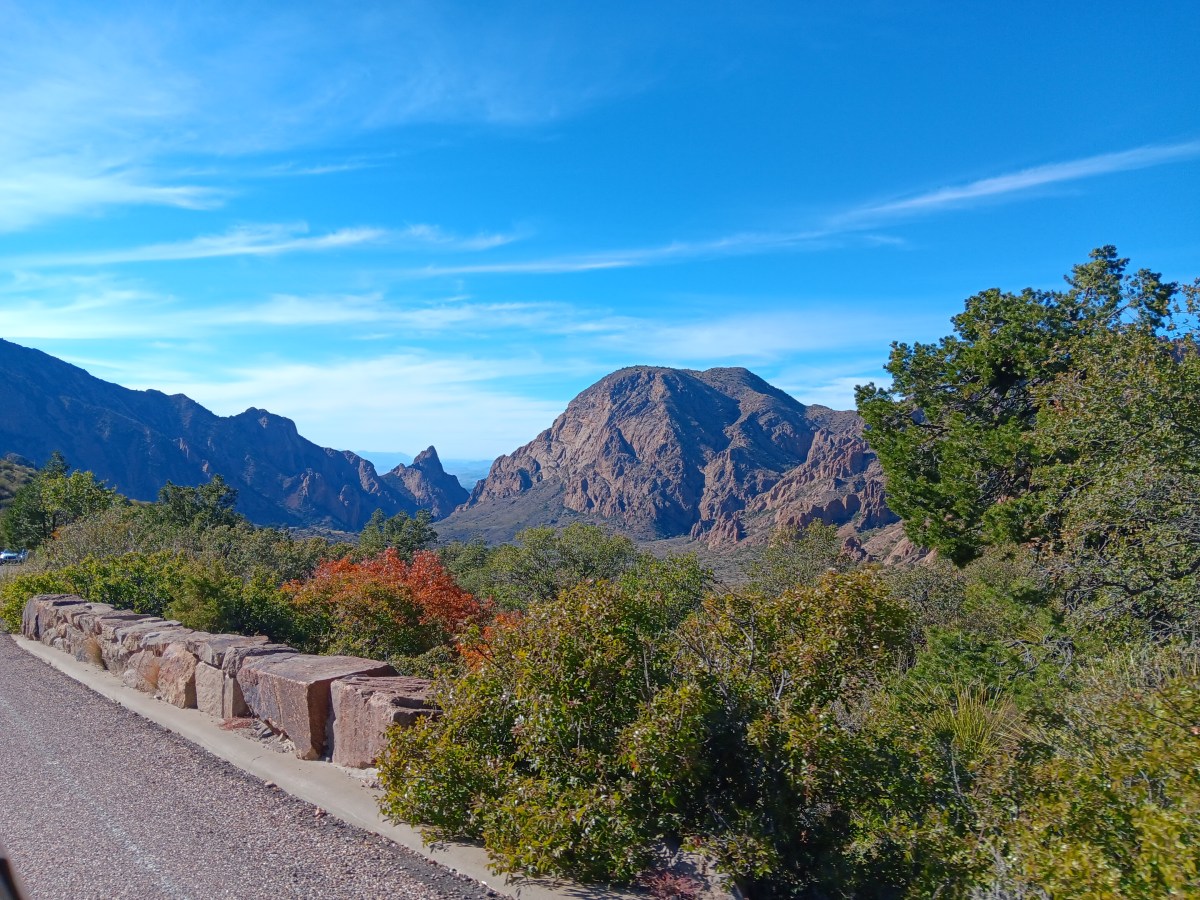
The wedge between the two mountains behind us is known as “The Window,” and it looks beyond the park into Mexico.


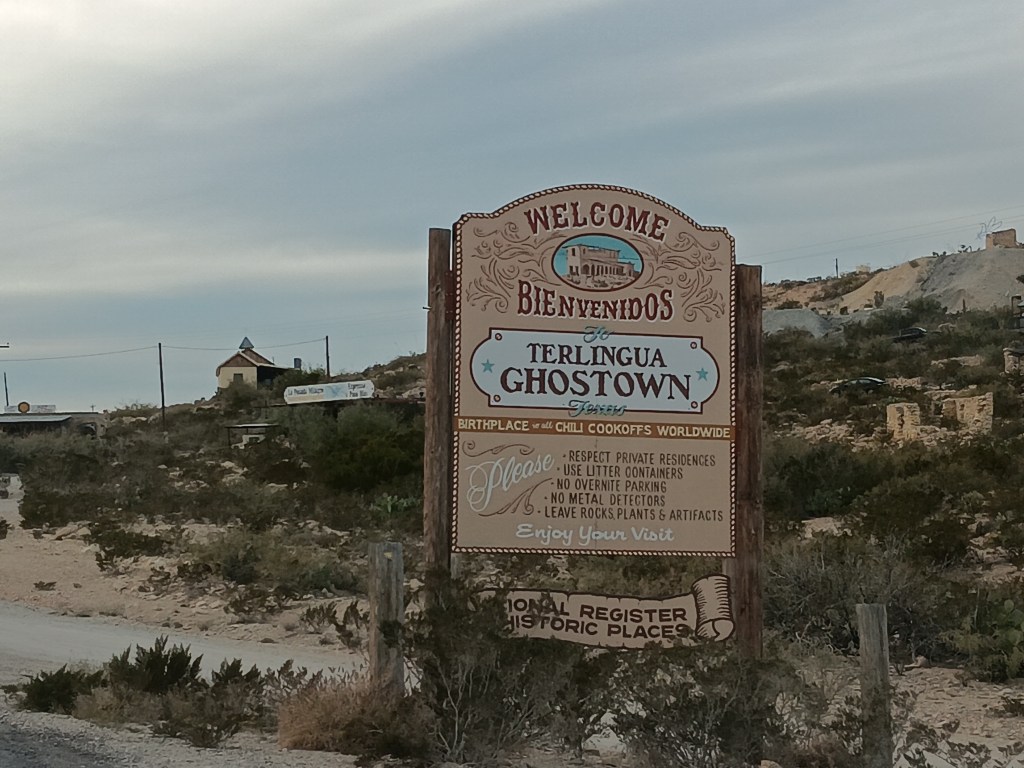
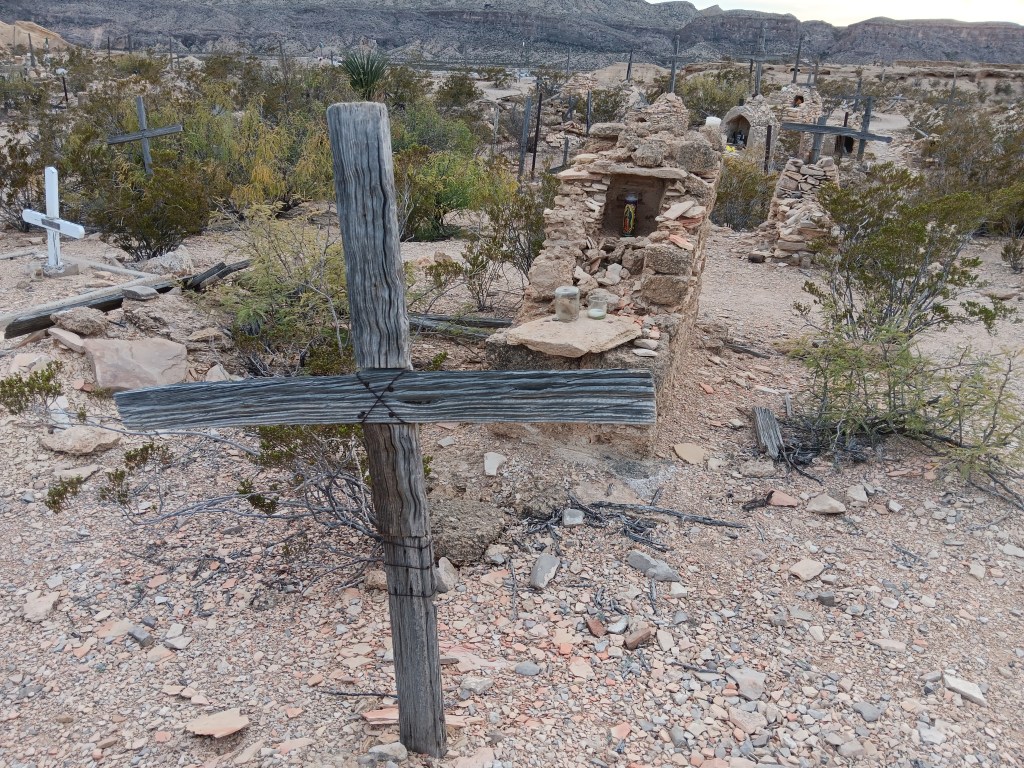
On the way back to Fati we detoured into Terlingua, a mining town turned ghost town. Very little is left here of the original structures, beyond a few crumbling buildings and a cemetery with a few old graves mixed in with the new.


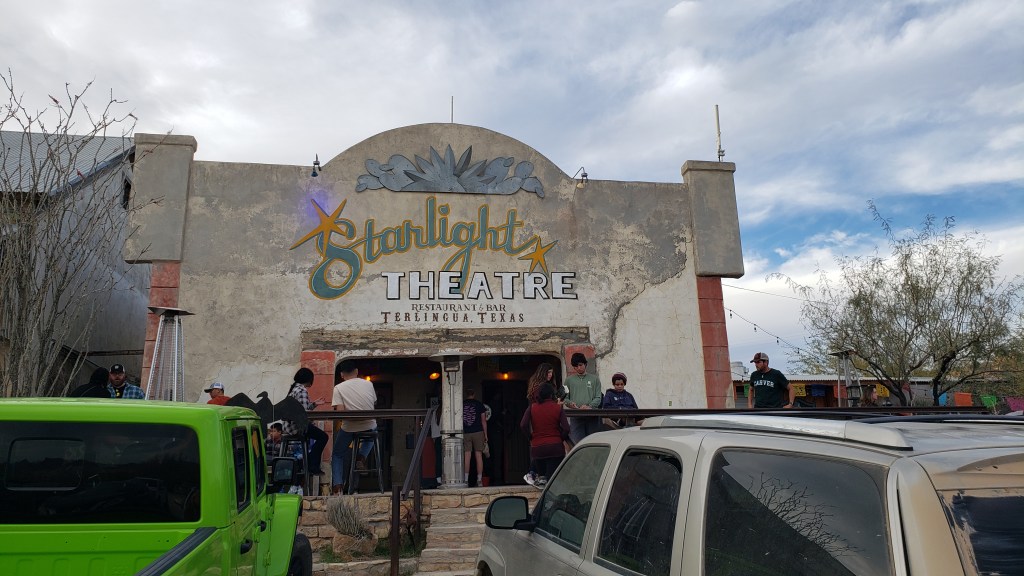
The big draw for tourists is the Starlight Theatre bar. We were going to pop in and be like the cool kids, but it wasn’t open yet. Simon was unceremoniously ordered to back out the door when he stuck his head in to find out when the pleasure of swilling one of their tourist-priced ales could begin.

Fair enough, we’re happy to comply, but also…really? Politeness is free, we’d been looking forward to visiting, and we had a little bit of cash burning a hole in our pockets. We decided not to be cool kids that day.

You can keep your fancy Day-Glo trucks and $14 Margaritas. Don’t Mess With Venesses.

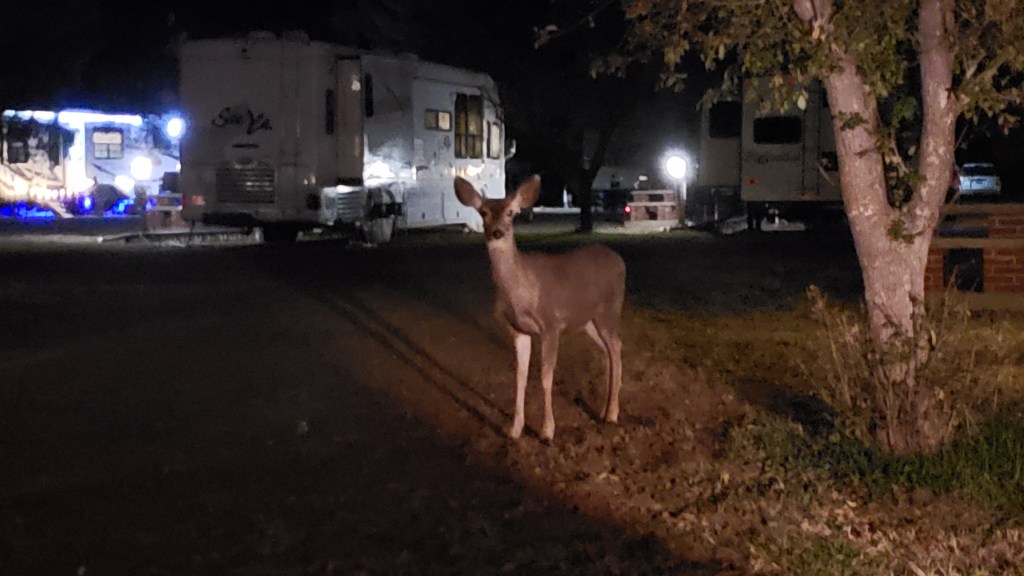
To confirm how right we were with our unreasonably bad attitudes, the Universe rewarded us with mule deer in the campground, not far from Fati, when we returned that evening. A day or so later karma rewarded us with a very sick dog. The two aren’t connected, but maybe we’ll be a bit more patient with our beer money next time.