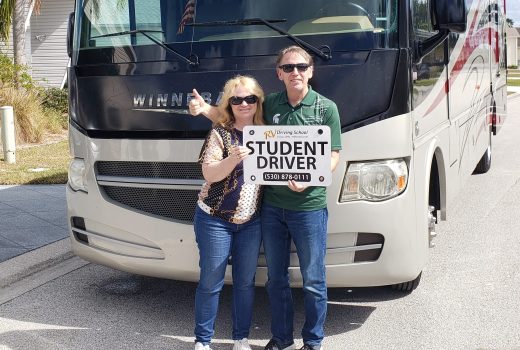

We have never had to pay to enter a city before, so the $2 toll to get into Galveston was a first for us. Passing through the tollway looks straightforward when you’re in a car, but less so in Fati. Is the lane wide enough? Will we hit the top of the toll booth? Is that barrier curb on the right too close? Was taking the coastal road instead of the highway a bad idea? How much does RV paint cost if we get a massive scrape down one side? A million thoughts went through our brains, except for the one that did catch us out.

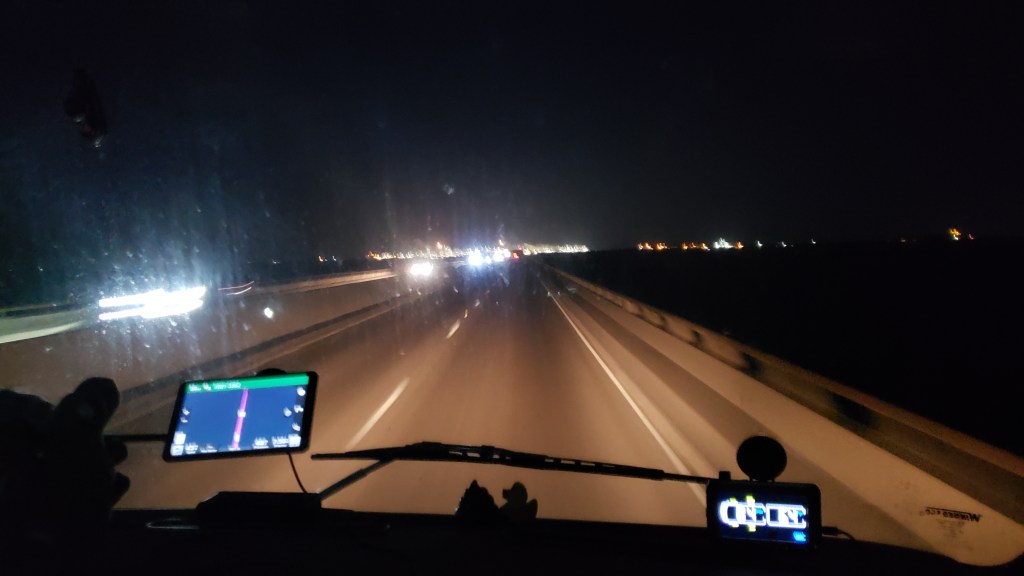
The issue we hadn’t factored in as we were approaching the tollbooth was that we had to put our two dollar bills under a rock in the booth’s sliding tray. There was no hand to reach up and meet Simon half-way, so this was my view while he tried to get the job done.

In the end, the toll booth attendant (who had done this before) came out of the booth to take our money. And yes, we did fit through that narrow lane without a scratch.
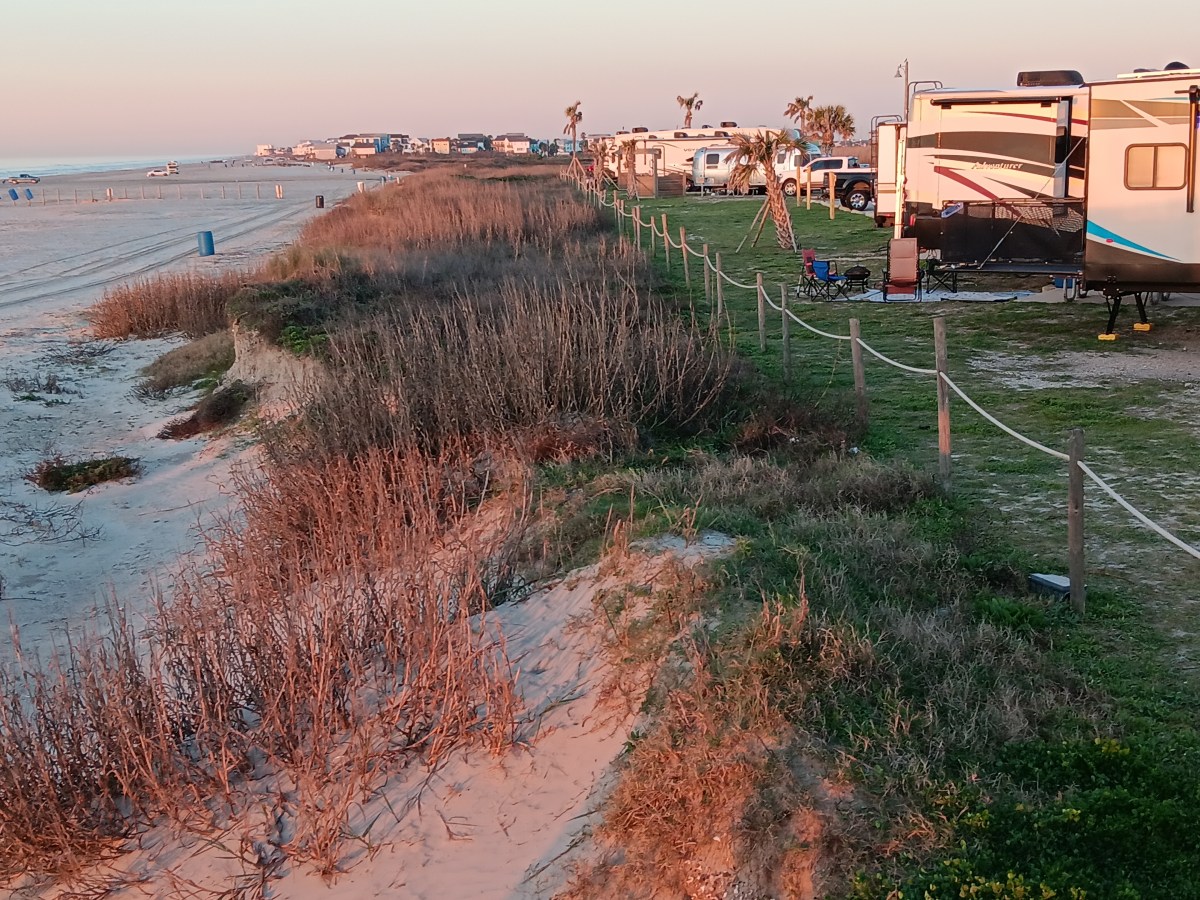
On our way to the campground, we passed massive homes along the Gulf side of the road, and it was obvious there was money in Galveston. Whether it was due to familiarity with the more city-like setting or just the glorious views of the Gulf of Mexico all along our right-hand side, we immediately felt comfortable, and took a real shine to our temporary island home.
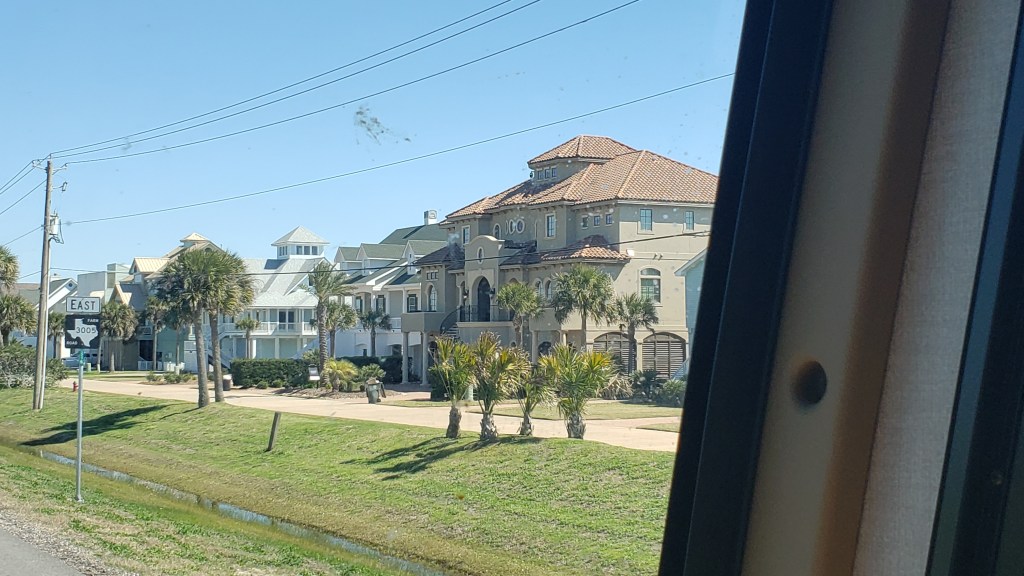
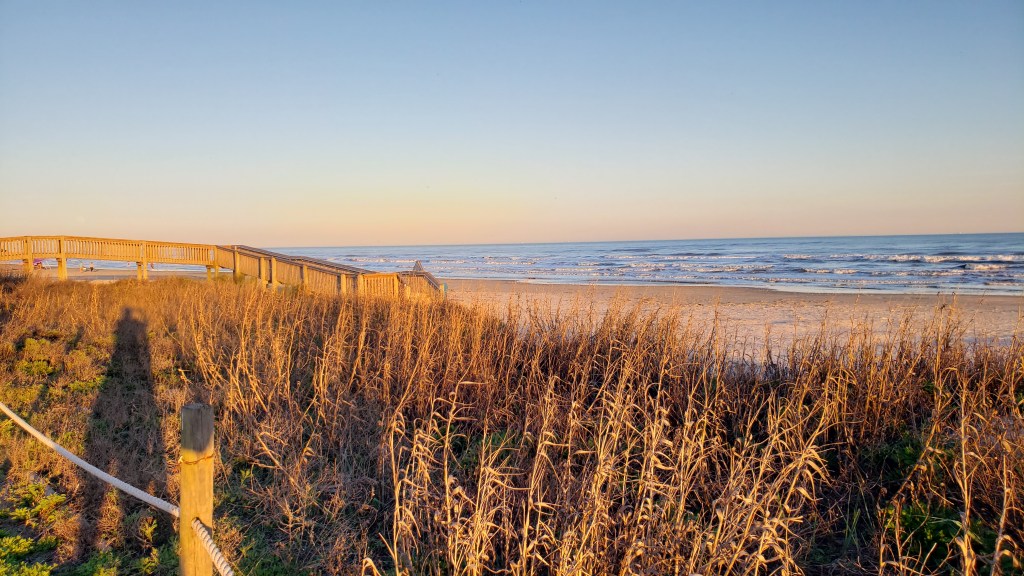
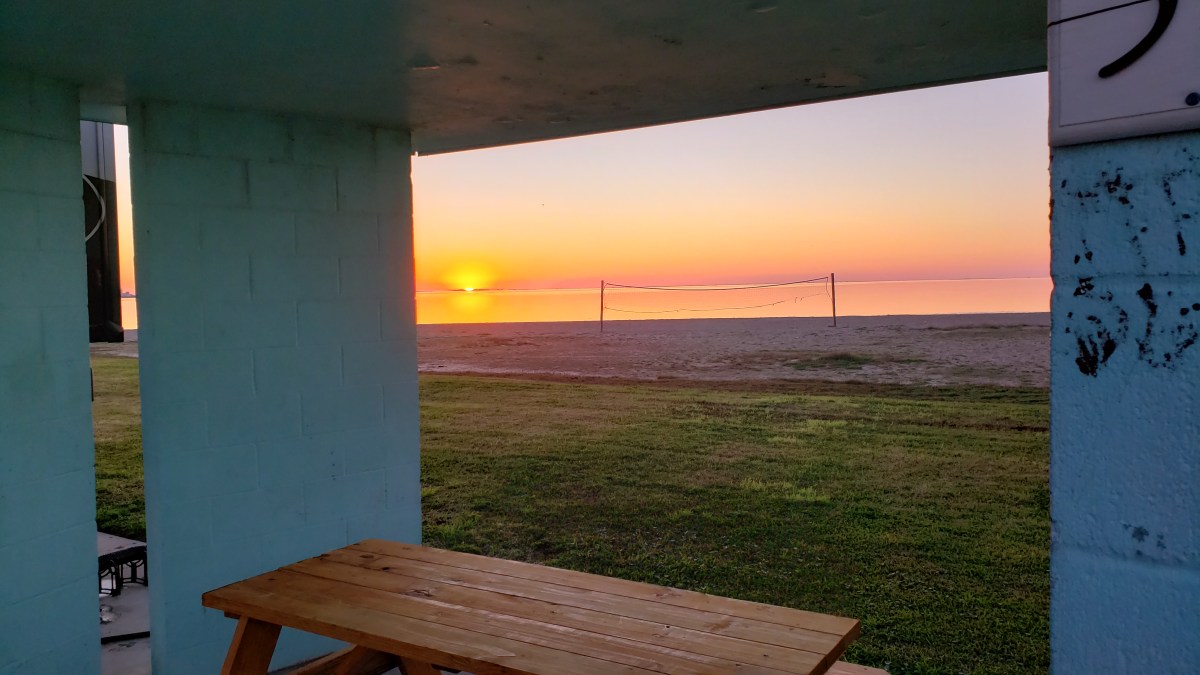
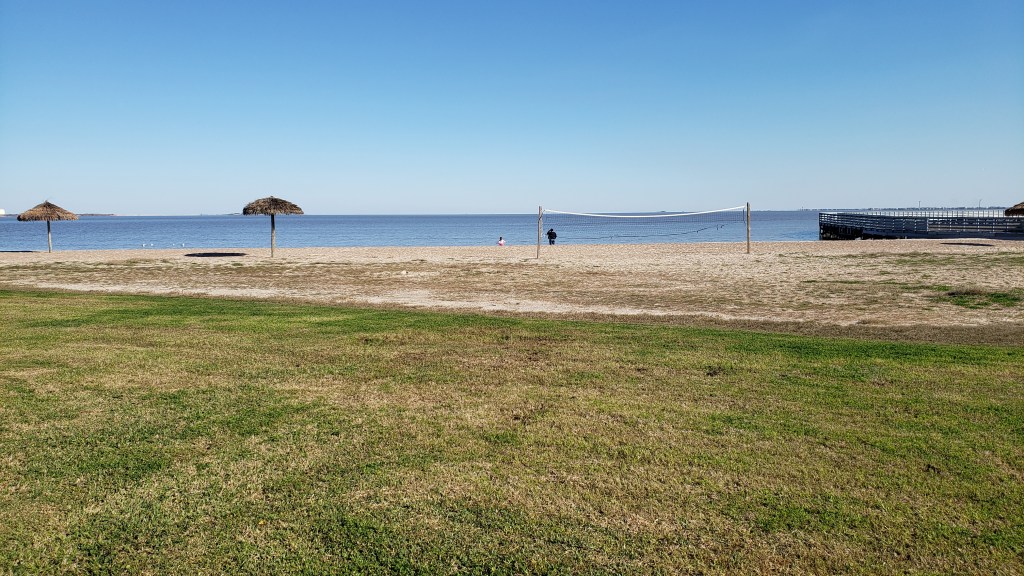
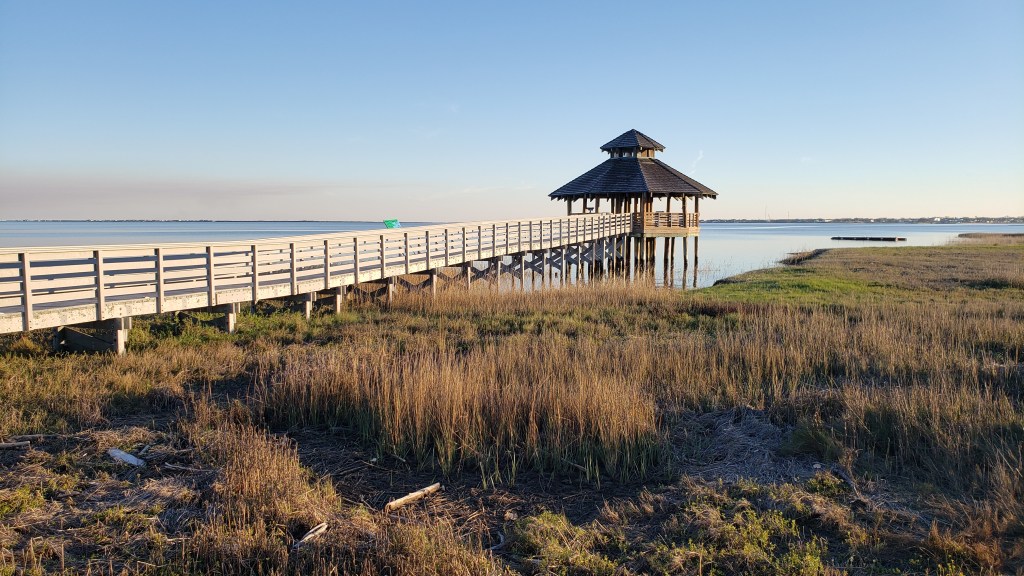
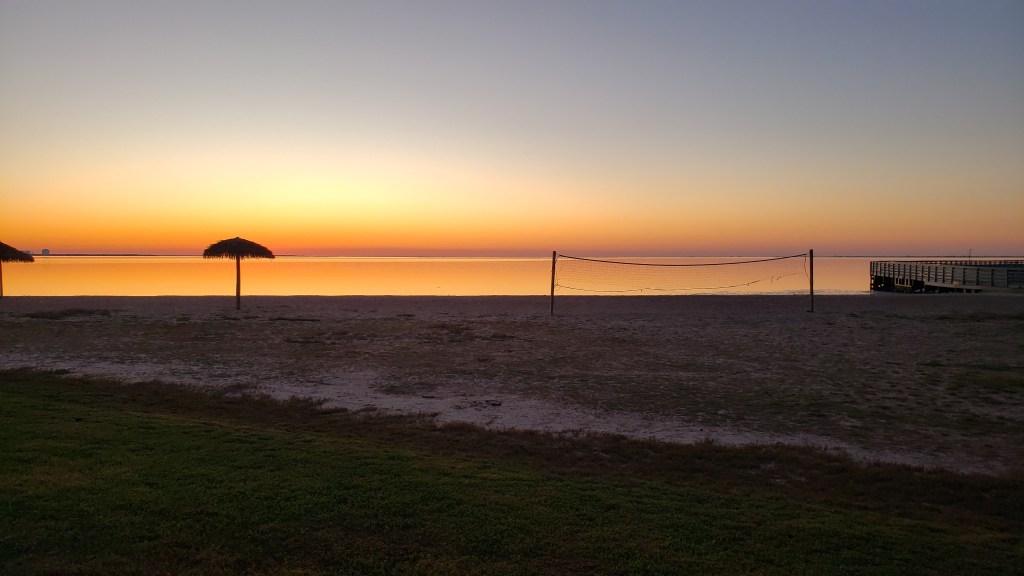
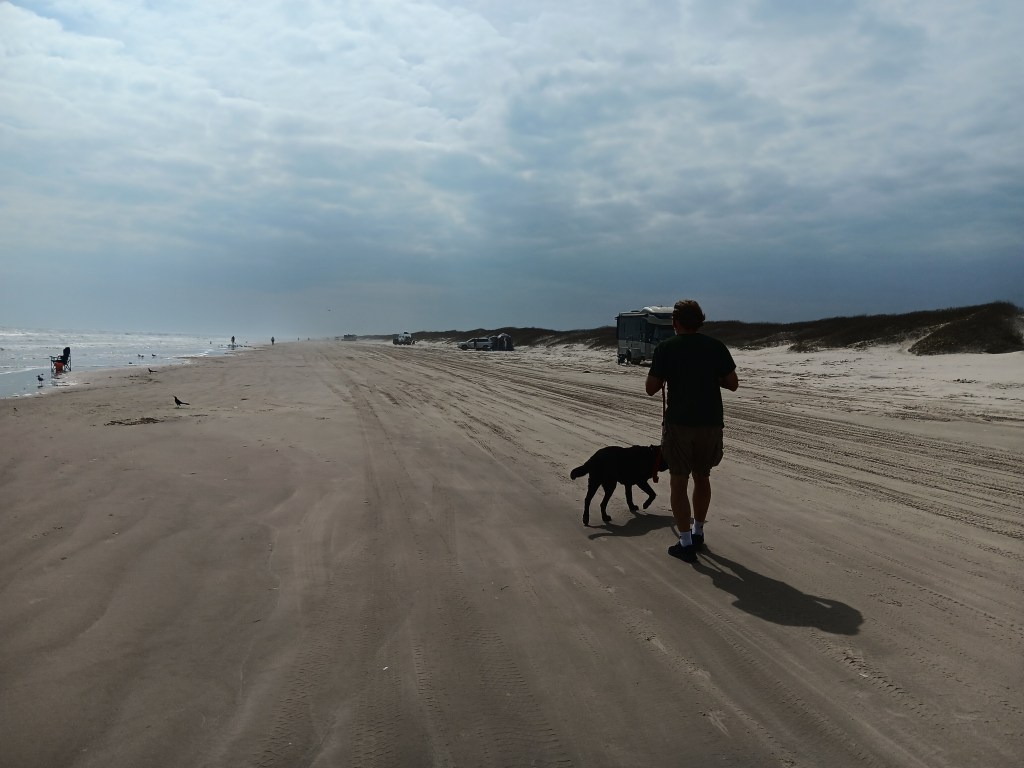
Once settled at the lovely Dellanera RV Resort, so close to the water we only had a 30-second walk to the beach, we took advantage of the nice weather and had a stroll. Like Galveston, the RV park felt comfortable right from the start, and we were delighted to have a full week to enjoy its seaside amenities. We could easily understand why “Winter Texans” made Dellanera their season-long stay.

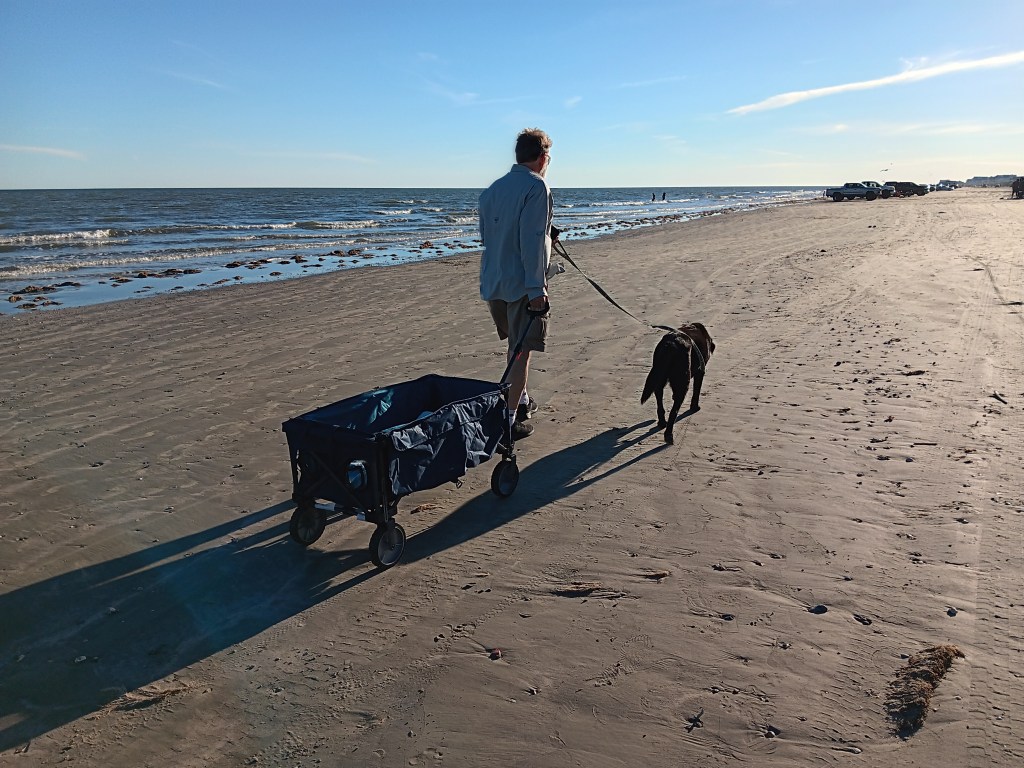
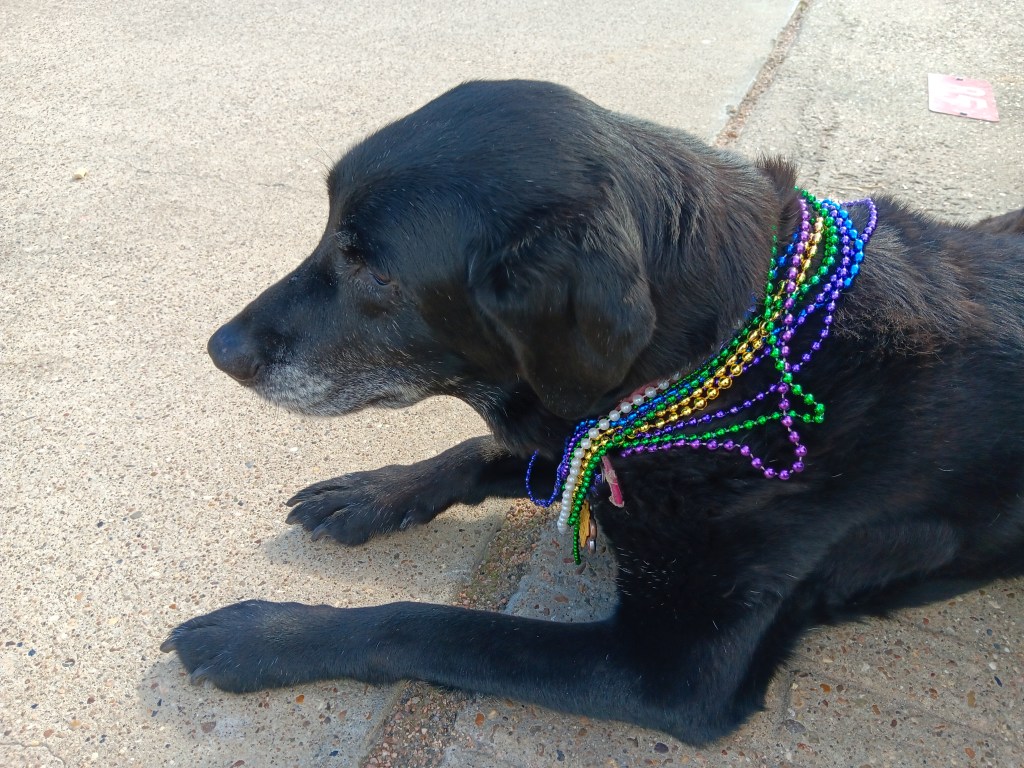
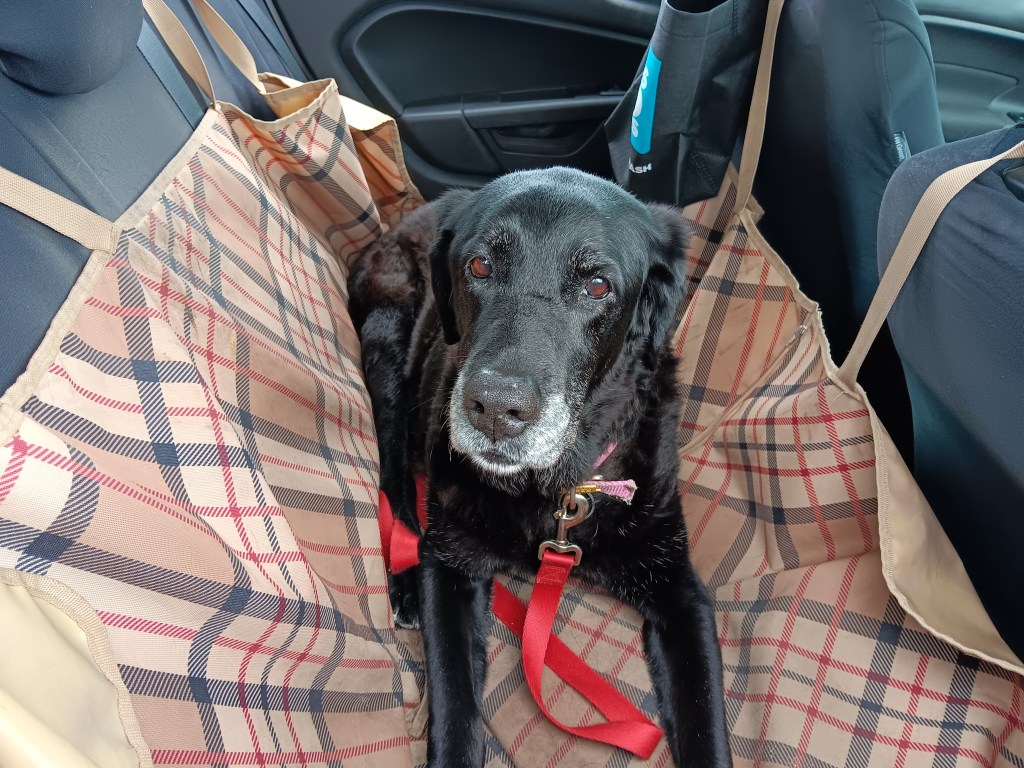
Ruthie now has her own vehicle. She can still take her walks for as long as she’s comfortable, then we drop the tailgate on her wagon and she can cozy down on a blanket and have a ride while we get more exercise. It’s been a boon for us – lots more walking! – and she’s getting used to it, though the movement feels a little bit odd at first.
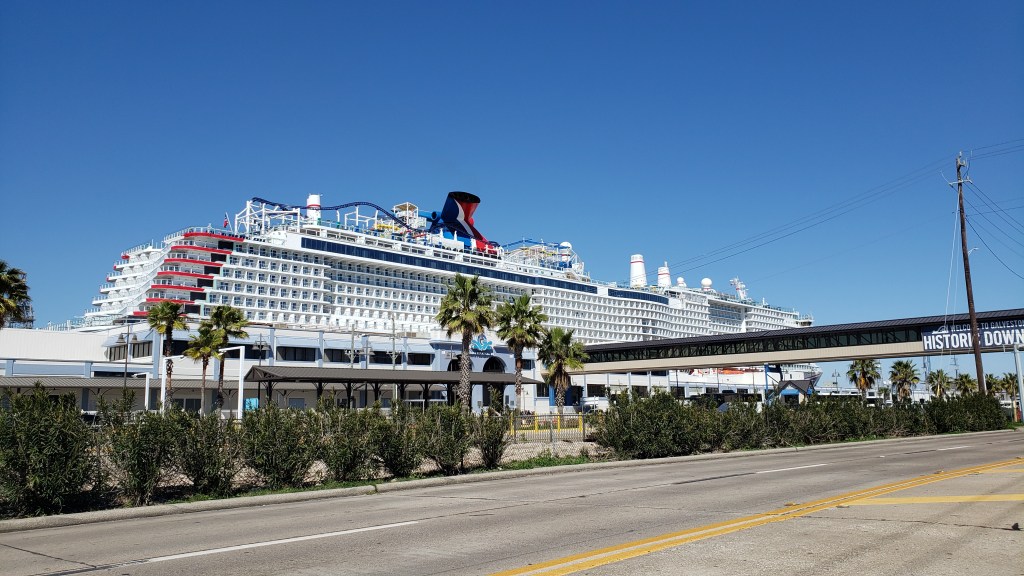
Galveston is the world’s ninth busiest cruise port, and there were two Carnival ships and one Royal Caribbean ship in port when we took a drive to the downtown area on our first full day.
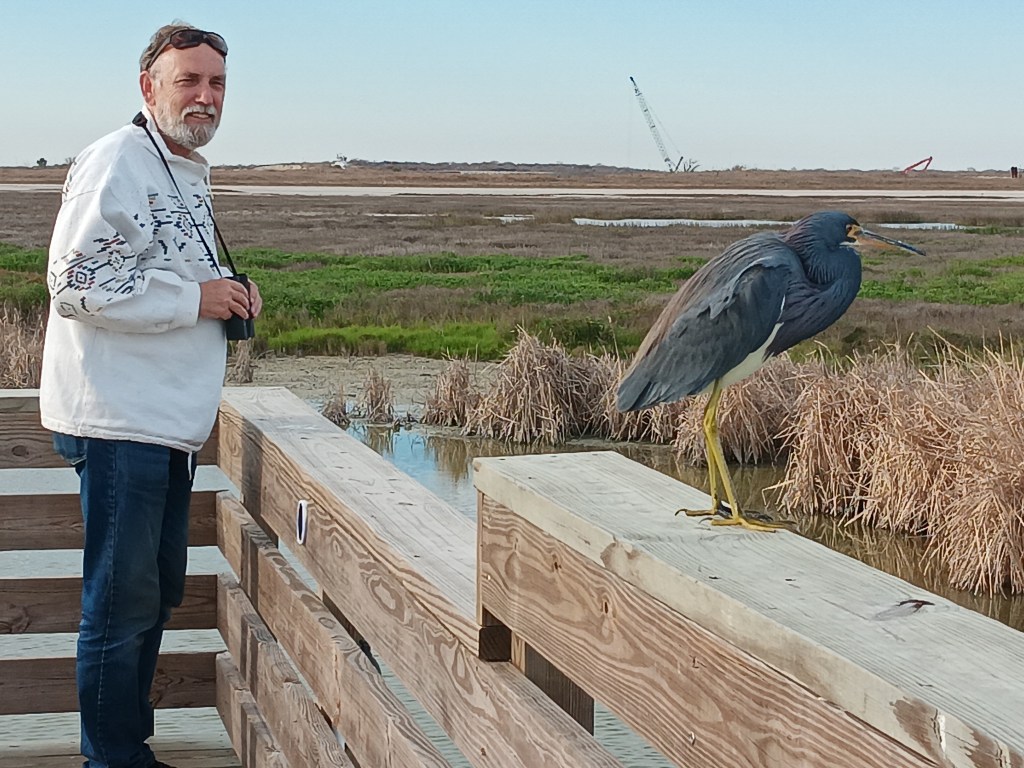
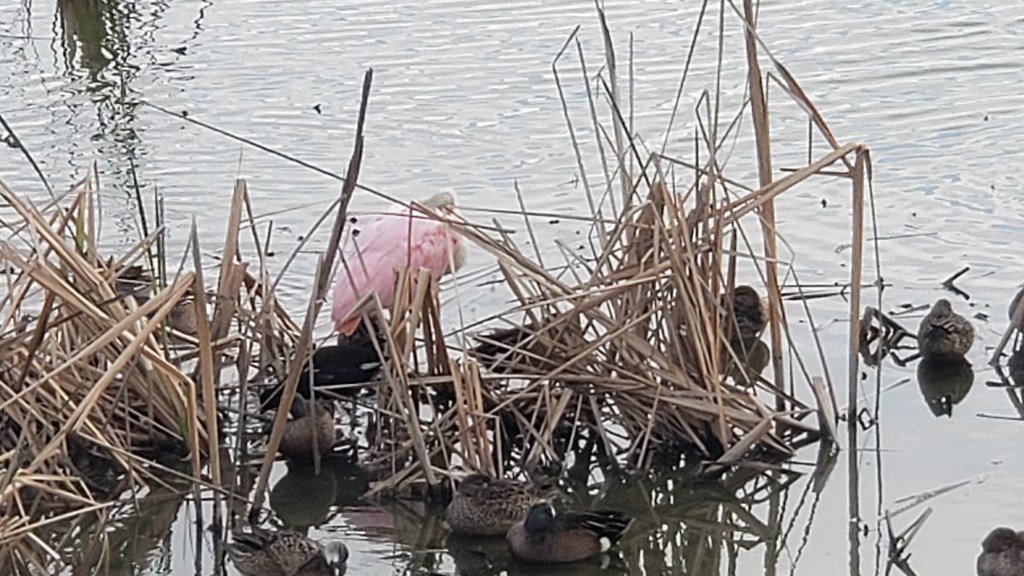
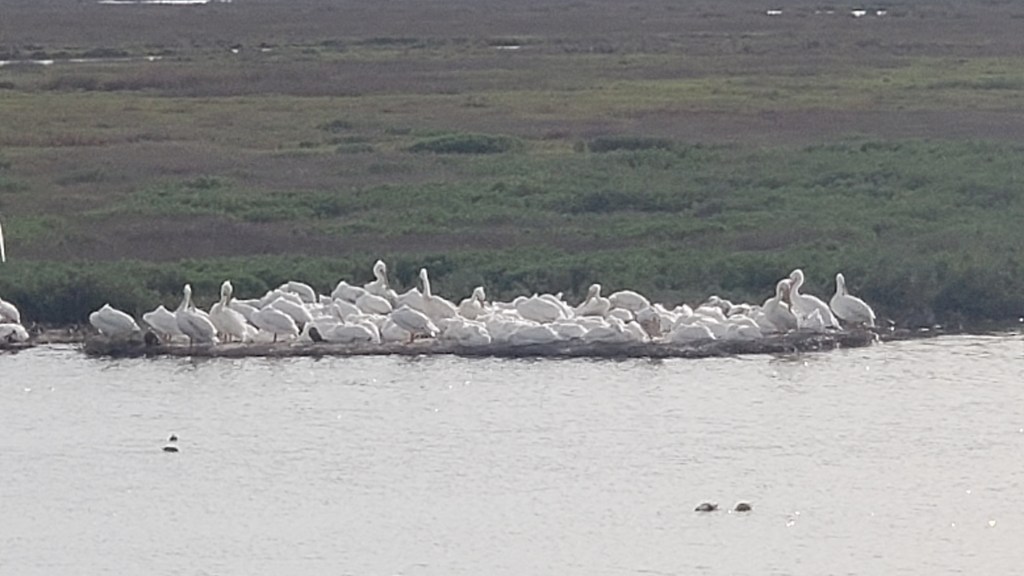
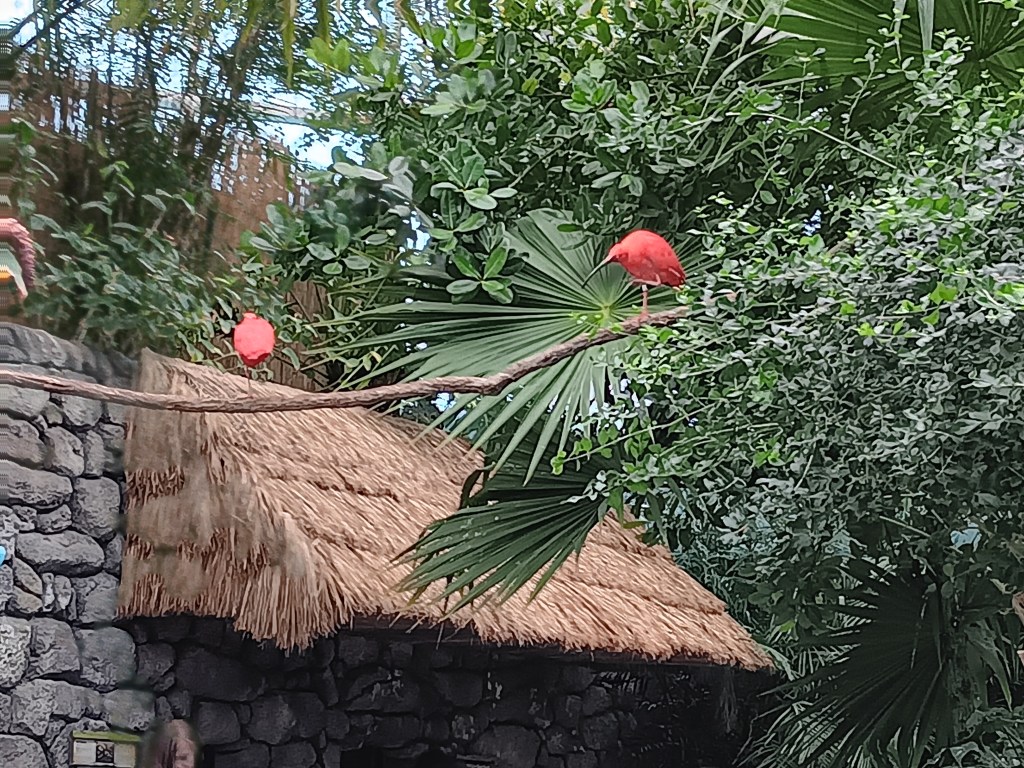
We also aimed to visit the area’s three wildlife reserves, but that term means something slightly different here to what we’ve come to expect. Here, it’s wetlands along the sides of some road, or, in one case, ponds in the middle of a brand new, upscale housing development, where we saw Roseate Spoonbills, lots of interesting ducks, some Snow Geese, and some sort of goose bird we’d never seen before, which turned out to be Black-bellied Whistling-Ducks. Who knew?


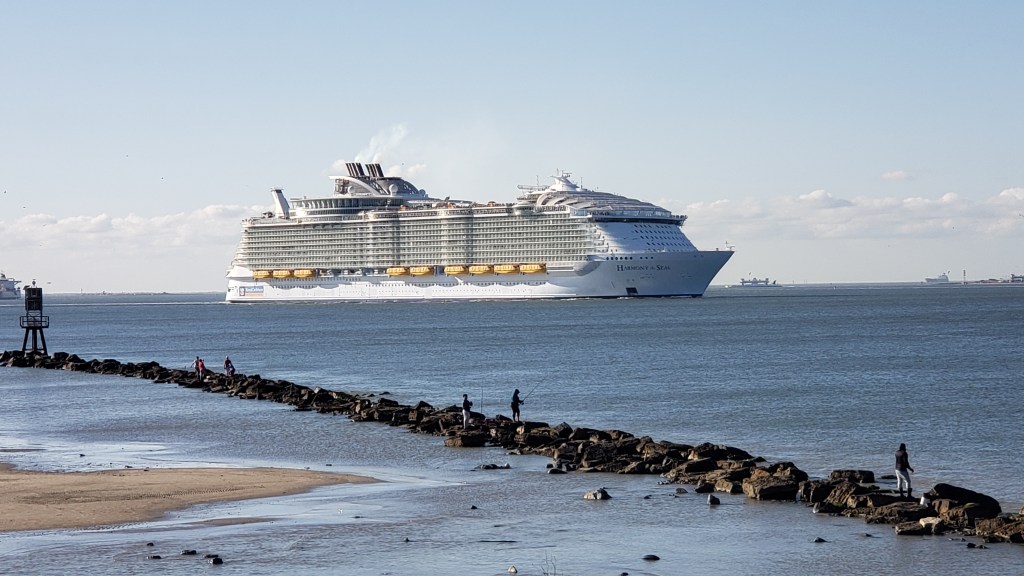
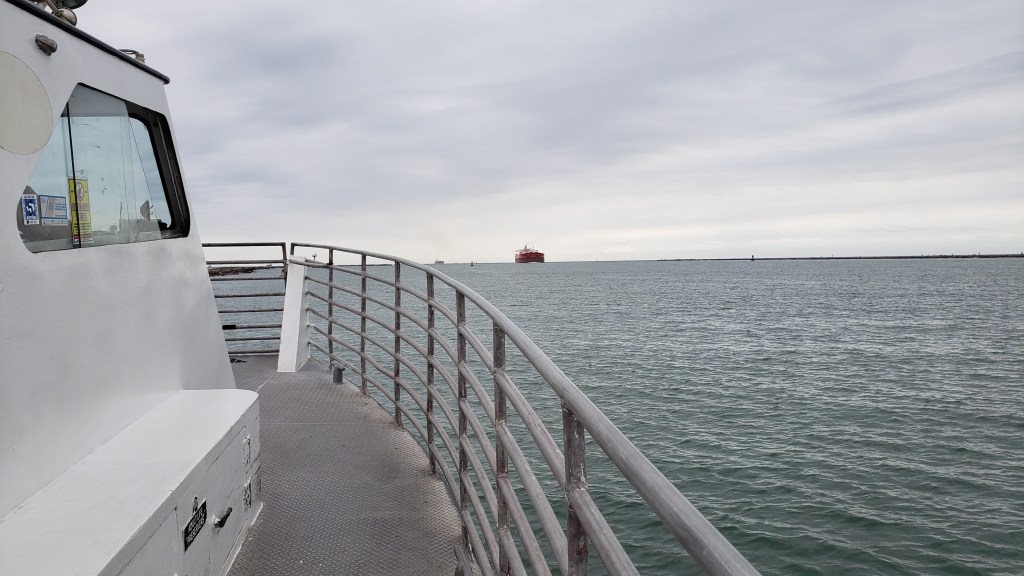
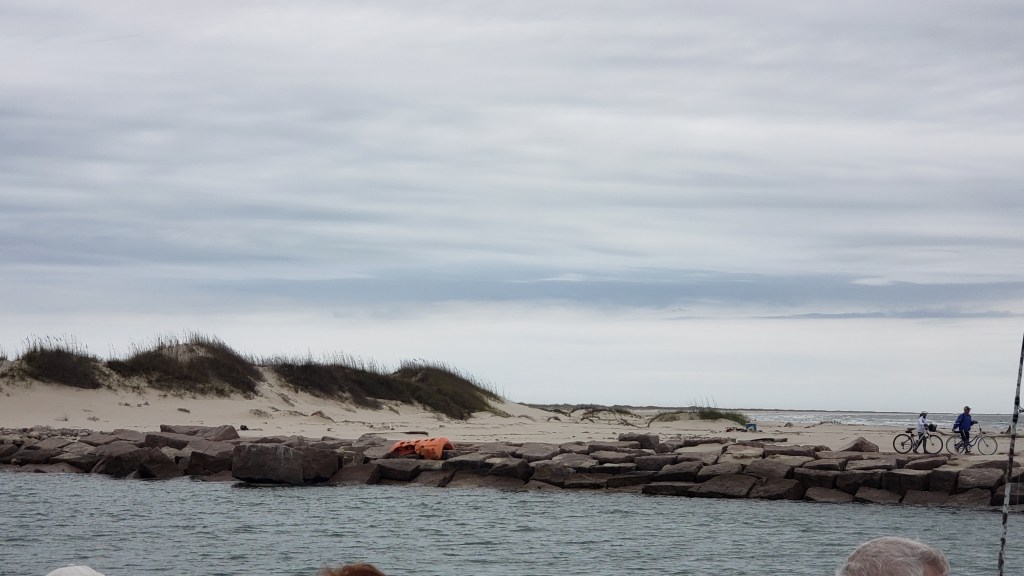
The next day, Royal Caribbean’s mega-ship, Harmony of the Seas, was just heading out of port as we were touring around, so we made a bee-line to Fort San Jacinto Point, where we joined lots of other spectators who were there to wave her off.
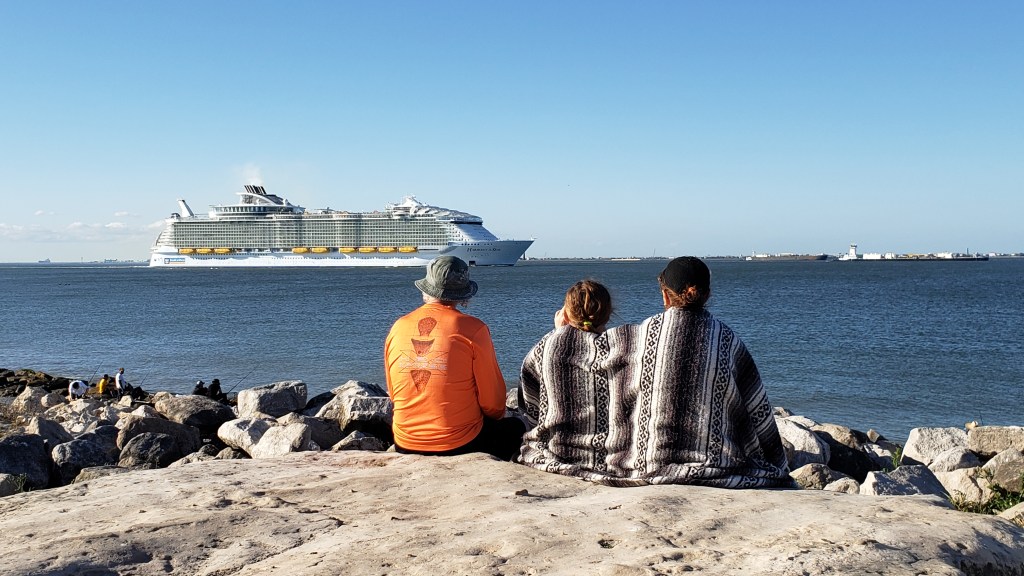
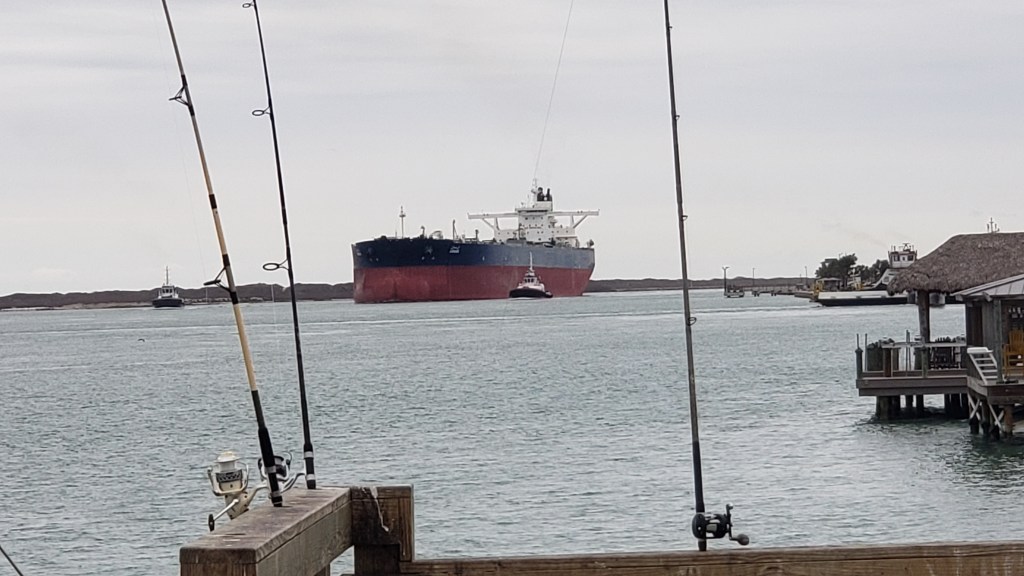
The people fishing in the foreground and the giant tankers in the channel in the following photo gives you some idea of how absolutely enormous Harmony is. We’ve sailed on her sister ships, Oasis of the Seas and Allure of the Seas, each during their media previews prior to their maiden voyages. They’re whompin’ great ships, so enormous it feels more like you’re in a shopping mall than on a cruise ship. Harmony is even bigger, with capacity for 7,084 guests and a crew of 2,369.
Our next two days were taken up with work while we waited for delivery of a new motor for our tilt bed. We’re not going to go into this story – at all – other than to say we’d been sleeping with the head of our bed semi-upright for nearly two weeks, and we both felt like we’d been thrown from a high building.
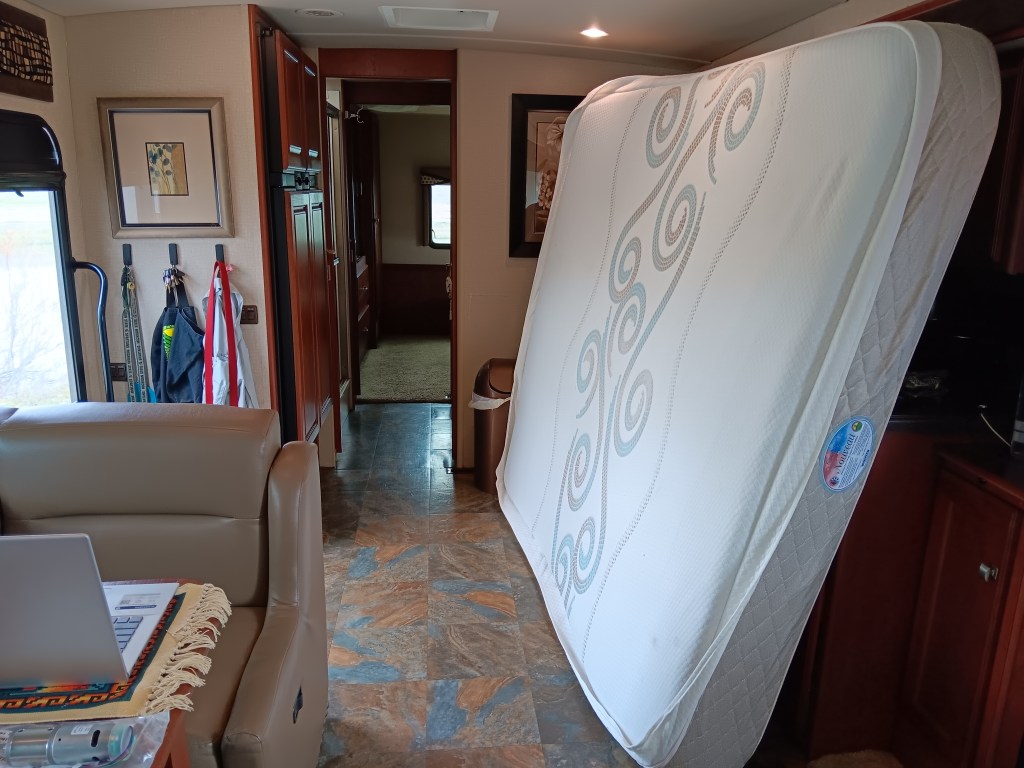
This little high-torque motor is the replacement for the rotten bastard of a motor under our great huge heavy bed frame that decided to stop communicating with the controllers that move the bed up and down. We appreciated the service it had given us, but couldn’t it go for just another 2.5 months? I mean, really!

We expected the motor to take about half an hour to replace, and the mobile tech expected that, too. Again, we’ll say no more than the final result was, the entire bed foundation had to be removed, as did part of the frame. The single set screw that was supposed to be all that held the motor in, wasn’t. Some damned fool put another screw in while the rig was being build, under a metal box that can’t be reached without dismantling much of the frame. It took the poor technician nearly four hours to complete the job.
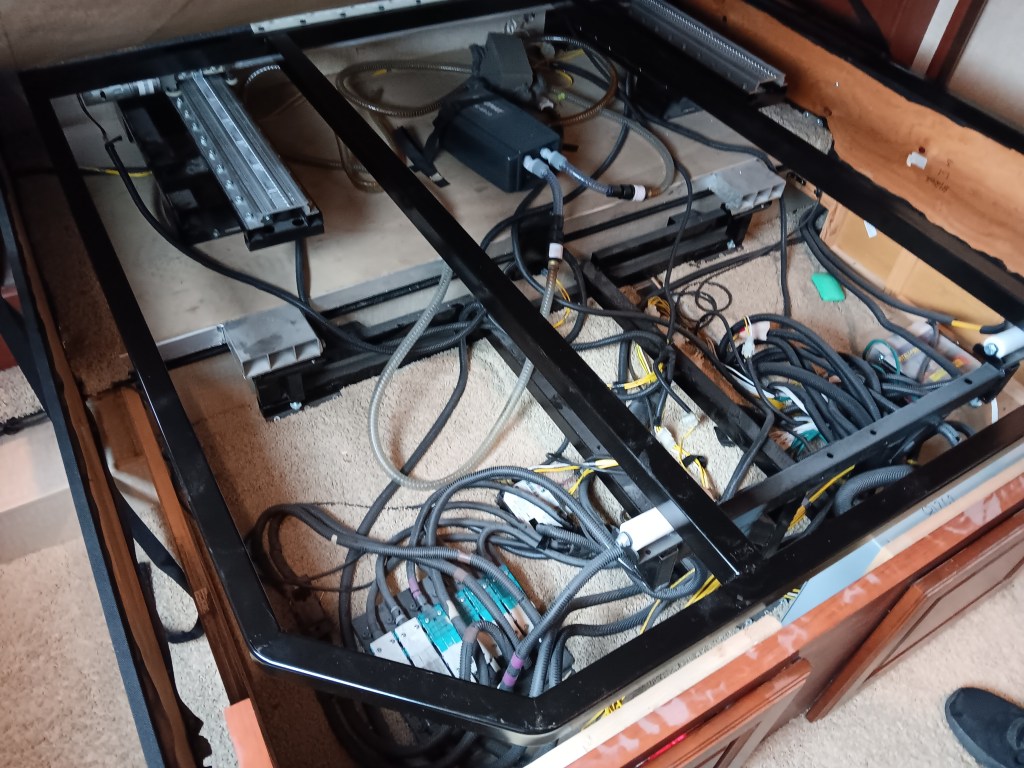
But we won’t talk about that. Because it’s awful and upsetting and we hated the world while it was going on. We hated the Lippert tech support people even more, when the first one said, “Yes, it’s just one set screw” and the second call resulted in, “I don’t know how you’ll reach the second screw. You’ll have to figure it out.”
But no more. It’s not something we’ll talk about. Because we’re not complainers.
Tonight, it’s “blowing a hooley,” (which is a British saying that sounds dirty but isn’t) and our rig is shaking with every massive gust of wind, but we’re going to be sleeping flat, so life is still worth living.

We don’t yet know what we’ll do with the last of our time in Galveston. We promised each other we’d get a really great steak while we’re here, which is a stupid idea after the expense of our repair but a great idea as a reward for all the heavy lifting we’d done and the massive amount of encouragement we gave our mobile tech when it all went to hell in a handbasket.













 Veness Travel Media