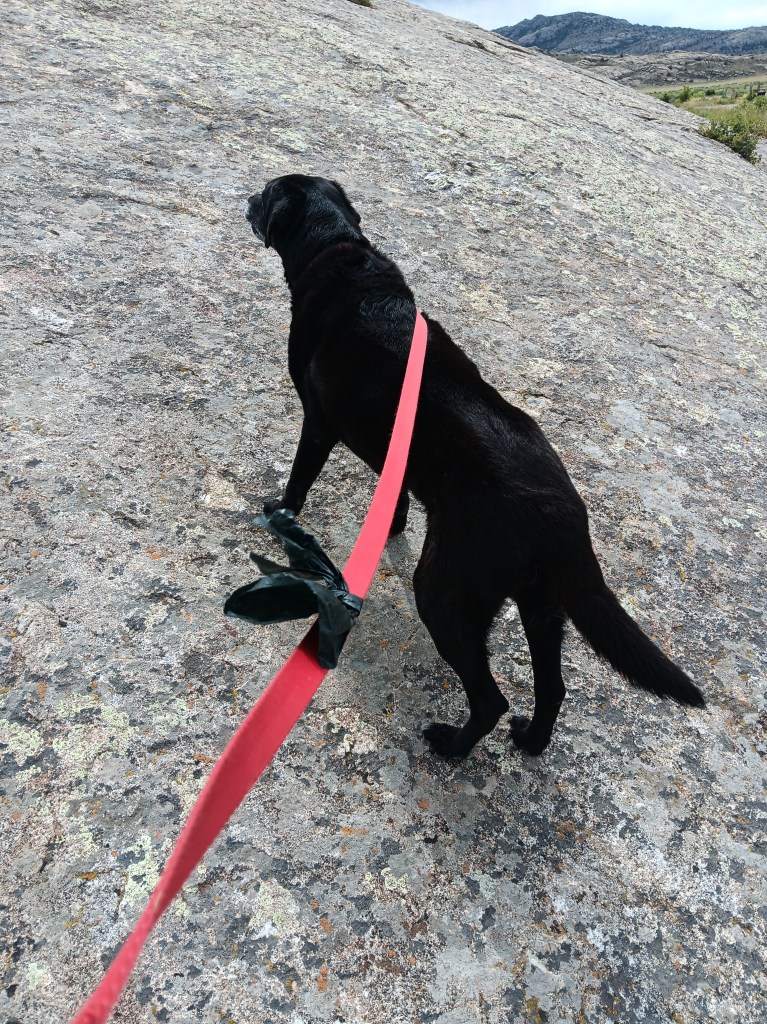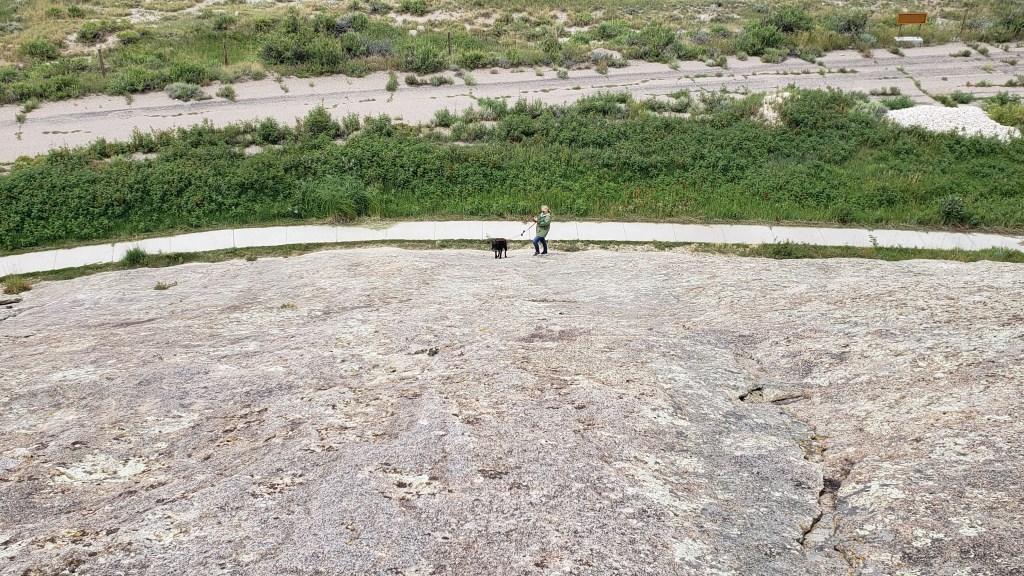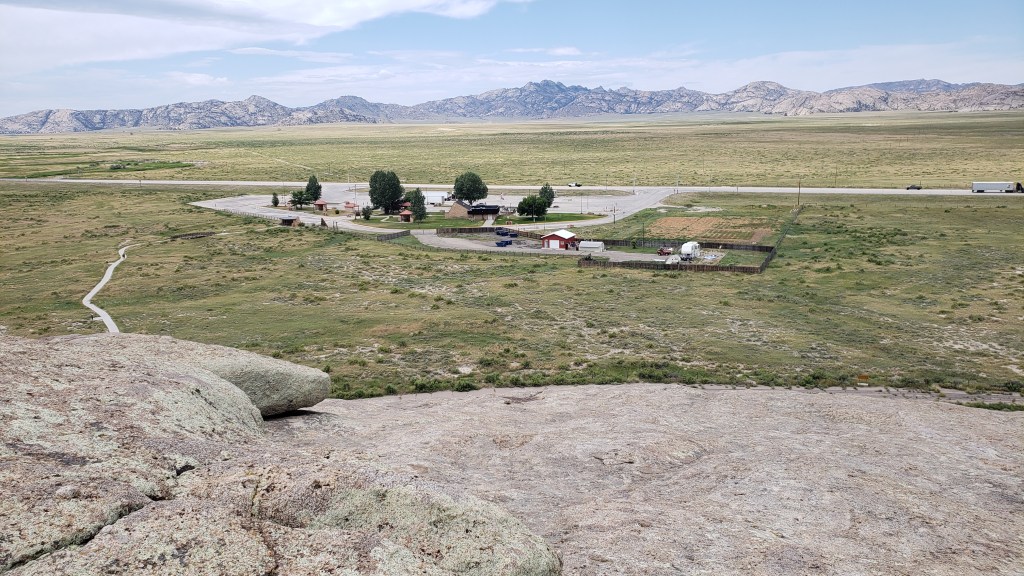
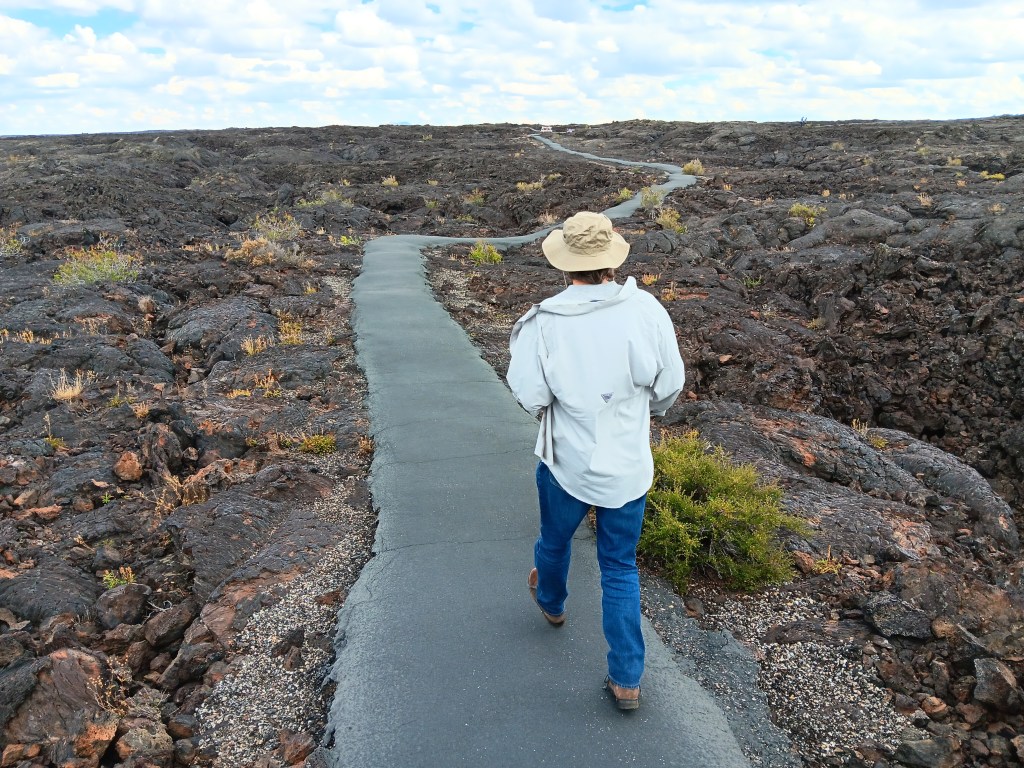
Walking On The Craters Of The Moon


Technically, Idaho wasn’t a new state for us. We’d flown in to Idaho Falls several years ago, and made the 108-mile drive to Yellowstone in Wyoming. But, clearly, we were new to Idaho, as evidenced by the Sheriff in Richfield who caught sight of our Florida license plate and “escorted” us out of town.

Our suspicious nature wasn’t helped by Susan taking random photos of weird road signs while the Sheriff was behind us, or Simon making an extremely abrupt turn onto a lonely back road, having nearly missed our GPS’s warning that the turn was coming up. Richfield’s Finest responded by following us all the way to his county’s border to see us off.
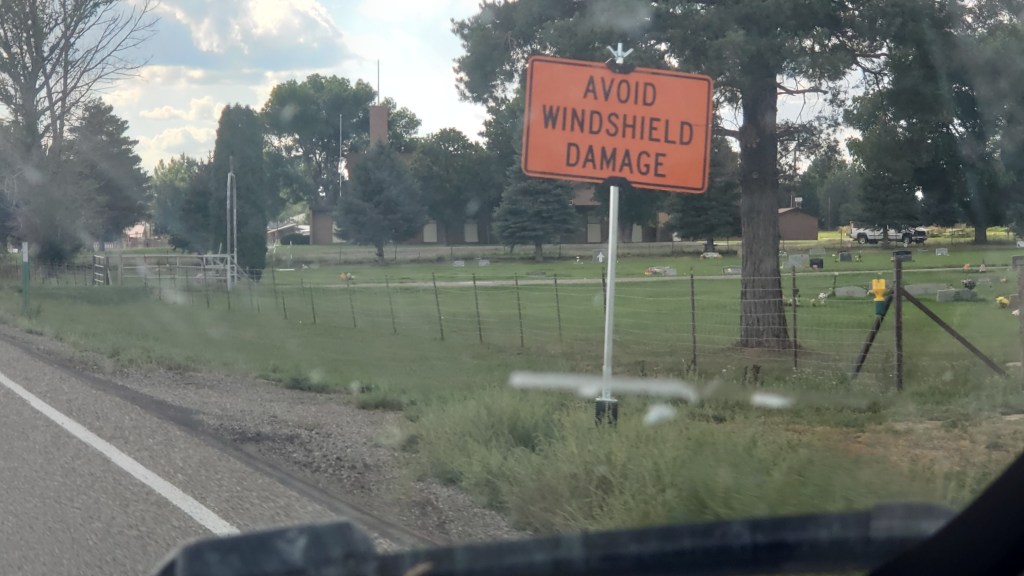
We don’t have a photo of the Sheriff, because we’re not crazy, but we did wonder about this sign. HOW do we avoid windshield damage, and damage from what? Pedestrians? Squirrels? What? Isn’t this something every driver wants to avoid from the moment they purchase their car?

The several-mile drama unfolded after our visit to Craters of the Moon National Monument and Preserve, the reason we were in Idaho in the first place. If you’ve been following along, you know we made a change to our original itinerary, and because of that our time in Idaho was in doubt. But both of us were eager to see the otherworldly park, so we booked a week in the area after our time near Salt Lake City, which opened up the opportunity to also see City of Rocks National Reserve, Shoshone Falls, and massive piles of the vegetable for which the state is famous.

City of Rocks is a world-class playground for rock climbers, but its history includes emigrants passing through on the California Trail from 1843-1882 and, prior to that, use by native peoples. Its oldest rocks date back 2.5 billion years.

Really old rocks.

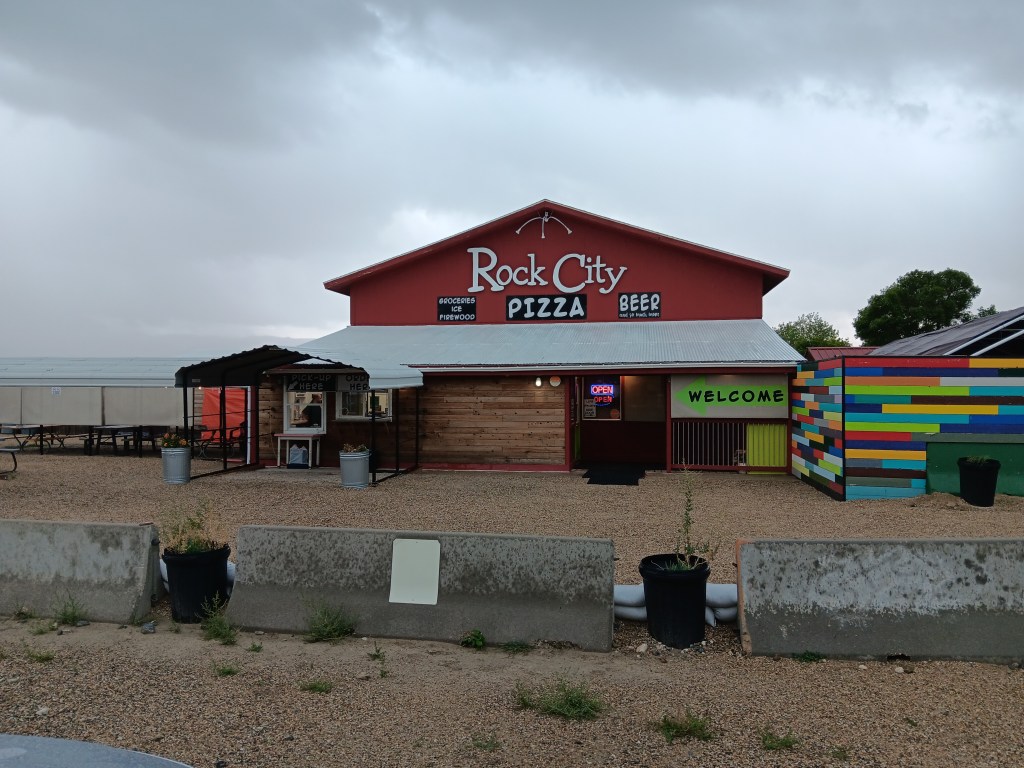
We were there for the scenery, though we didn’t know what to expect. A stop at the Visitor Center resulted in two useful suggestions from ranger Robb: Don’t take little Nippy on the rough road beyond the Bath Rock formation, and stop at Rock City for the best pizza you’ll ever eat and the only craft beers for a hundred miles.
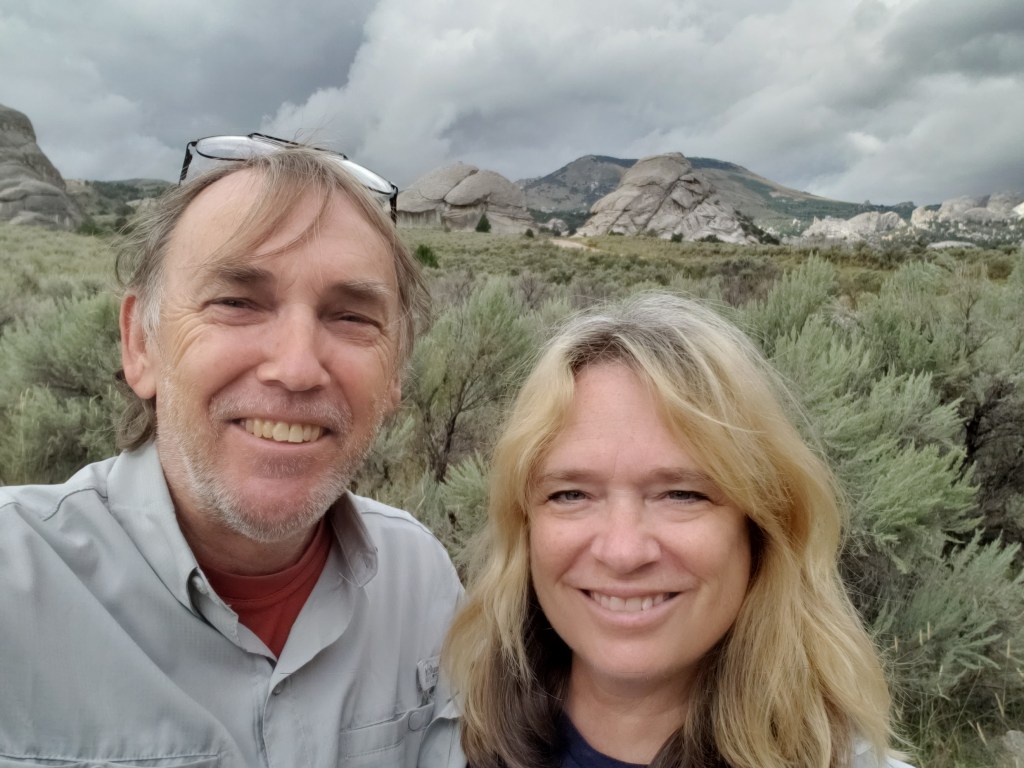
Obligatory selfie!

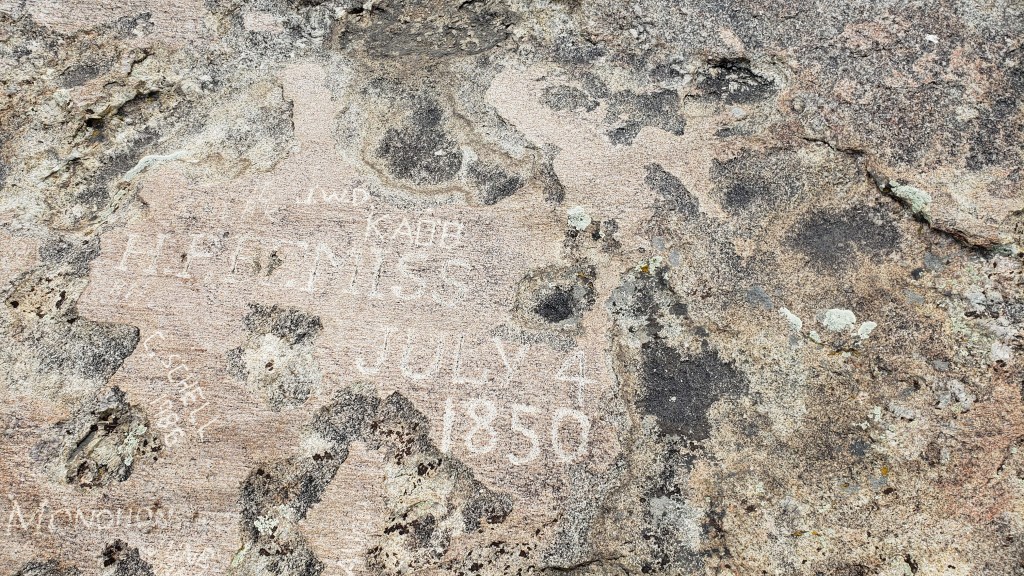
The park is entirely dog-friendly, with a handful of dramatic geological features, starting with Camp Rock (a.k.a. Register Rock). There, we found signatures and dates from emigrants who passed by, pausing to leave their names and sometimes a short message, written in axle grease.
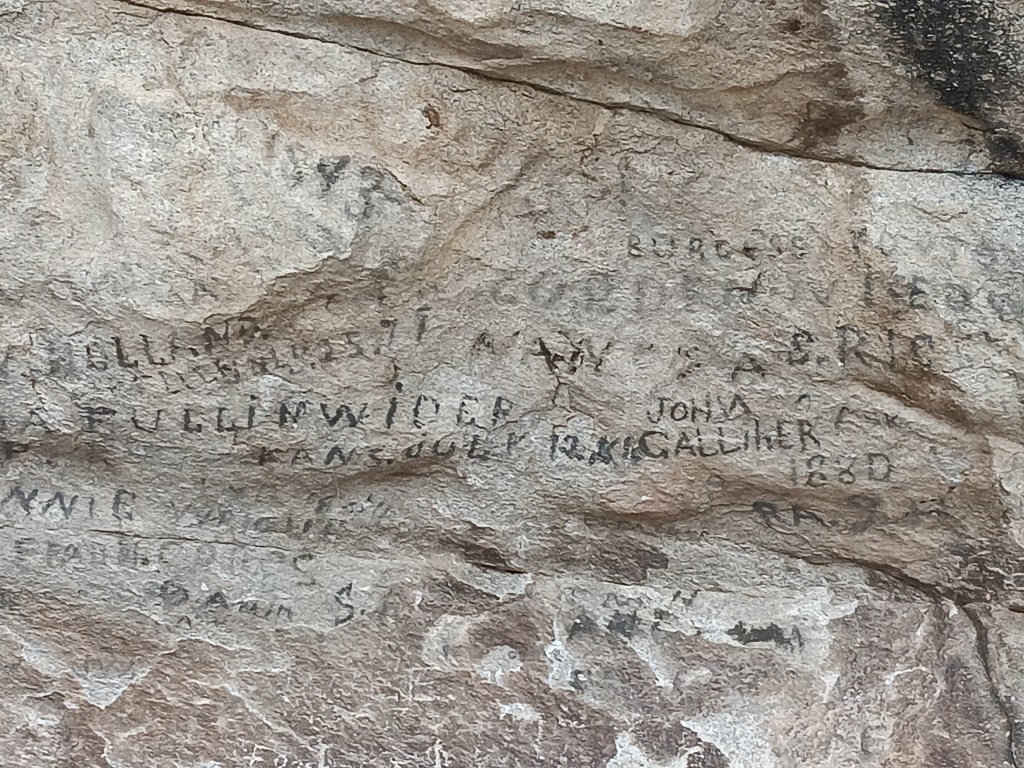
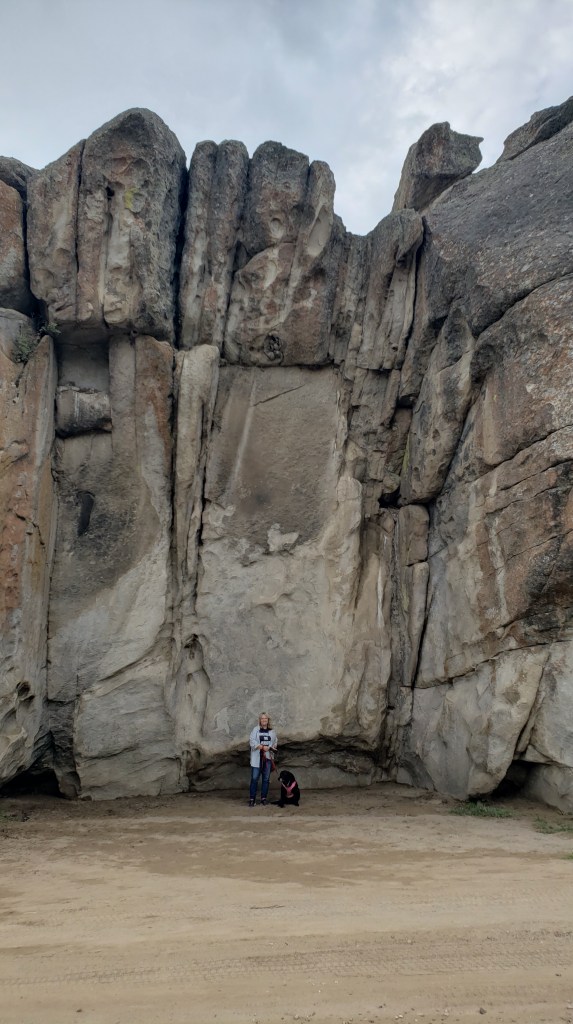
The rocks here are not small; this one was the smallest.

Next along the byway was Elephant Rock, and we were told it was a great place to see climbers. Sure enough, there were several making their way up (and down) the rock face.
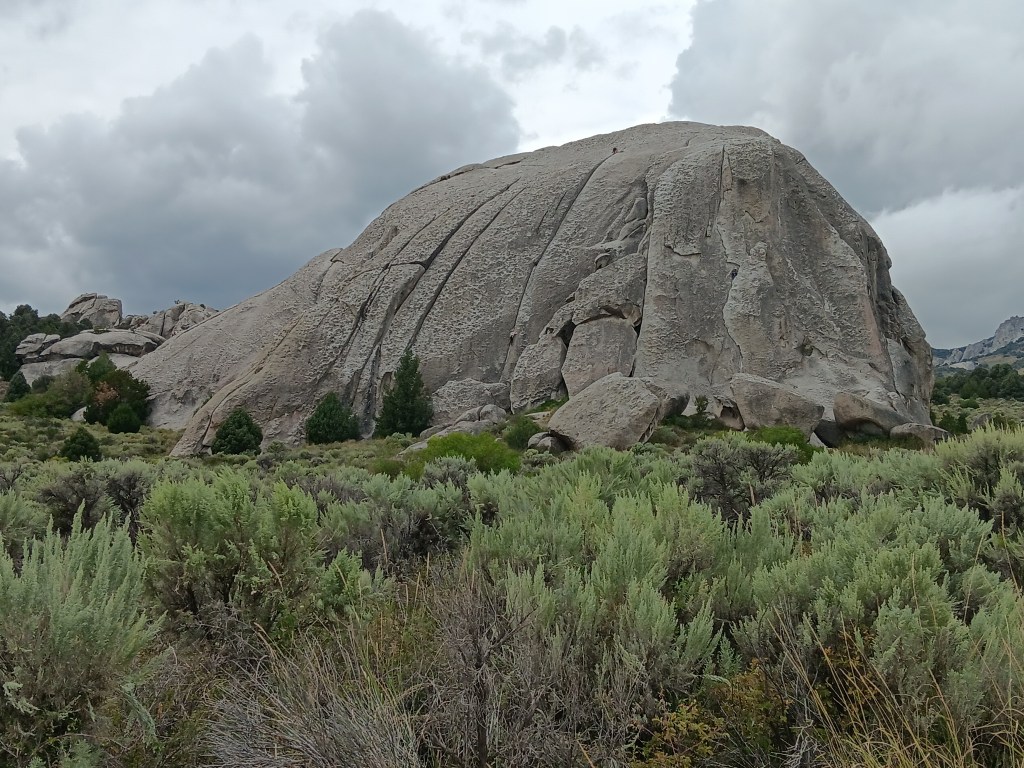
The “trunk” of the elephant is on the left, but you can’t see it in this photo.

Look carefully and you’ll see a climber just above the horizontal boulder on the ground (the third one to the left of the boulder in the foreground), and another climber near the top of the fissure the lower climber is scaling.

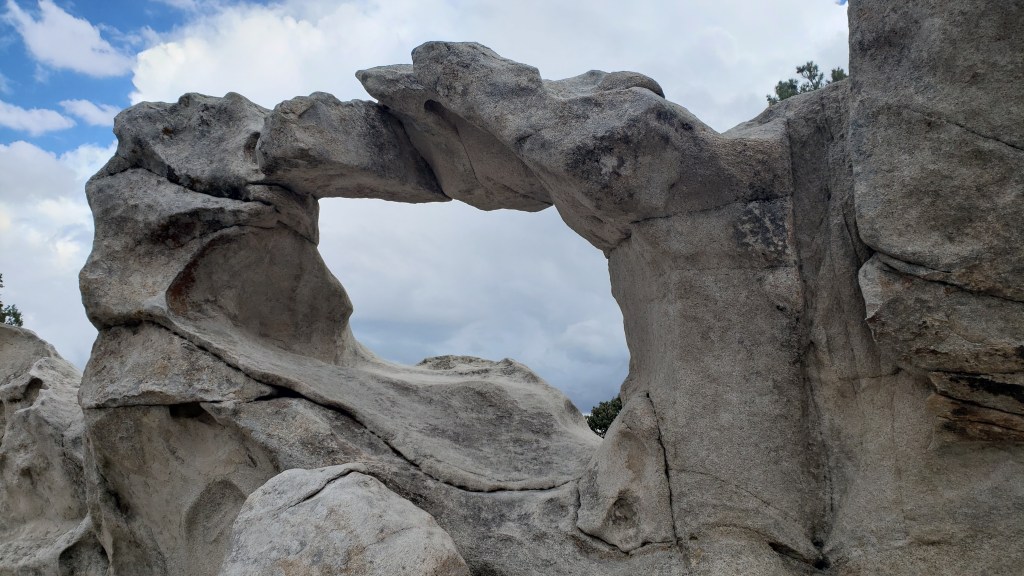
The trail to Window Arch, just beyond Elephant Rock, was only 250-feet long, but included some of the most dramatic views.


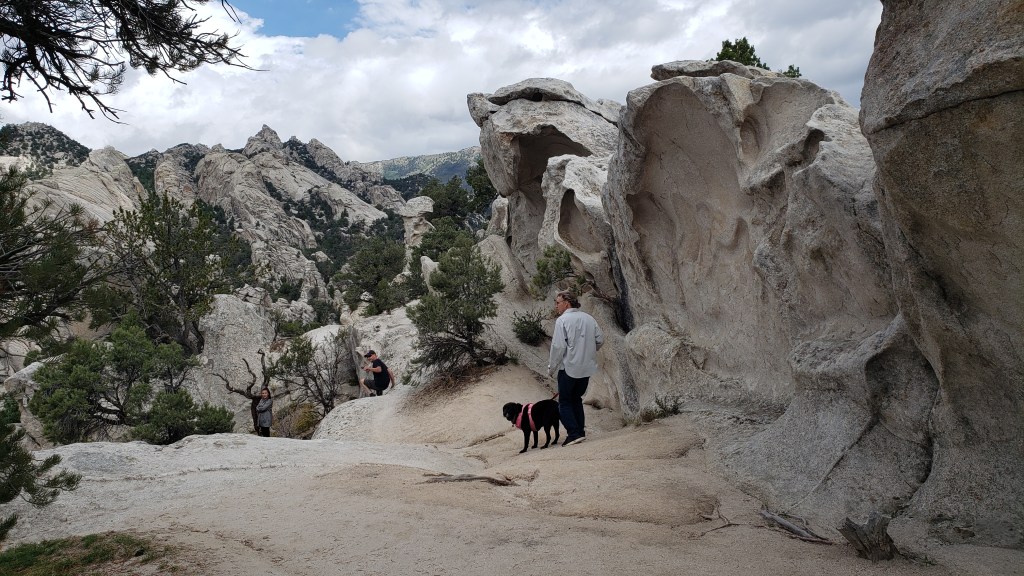
As with most photos, you can’t get the scale of this place.


We ended at Bath Rock, a spiritual place, Robb at the Visitor Center told us, where his grandmother used to take him and his sister when their parents were traveling, and she’d “bathe” in the positive energy to remove the negative energy she was covered in. Energy which, his sister told him, was all his fault.
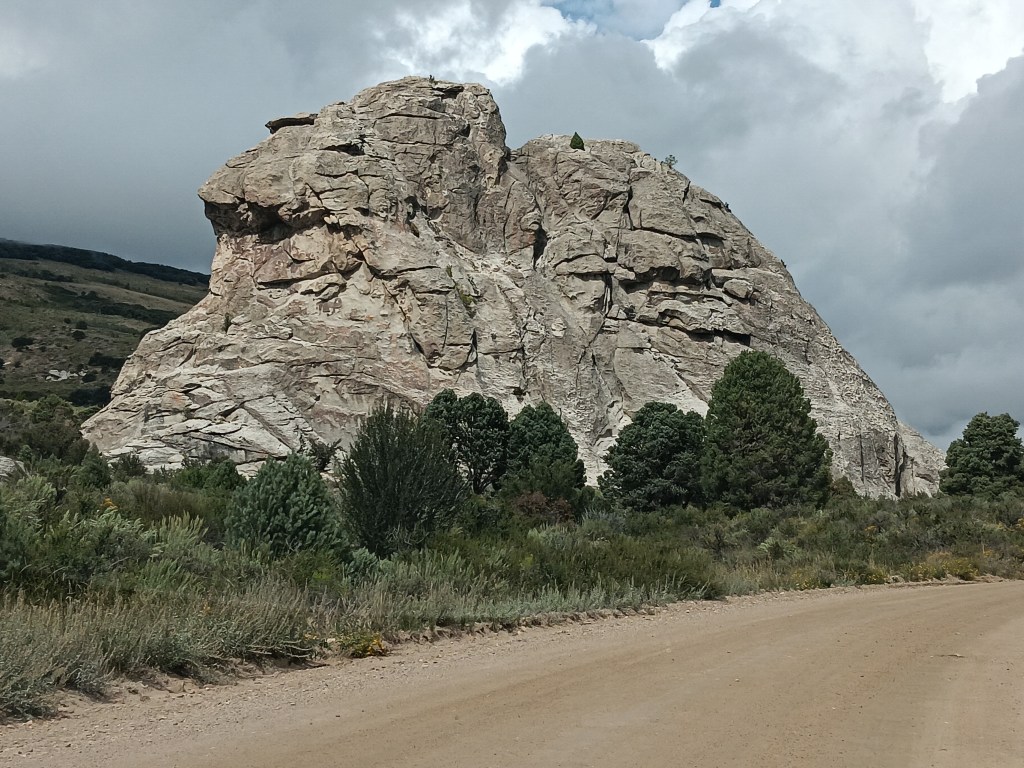
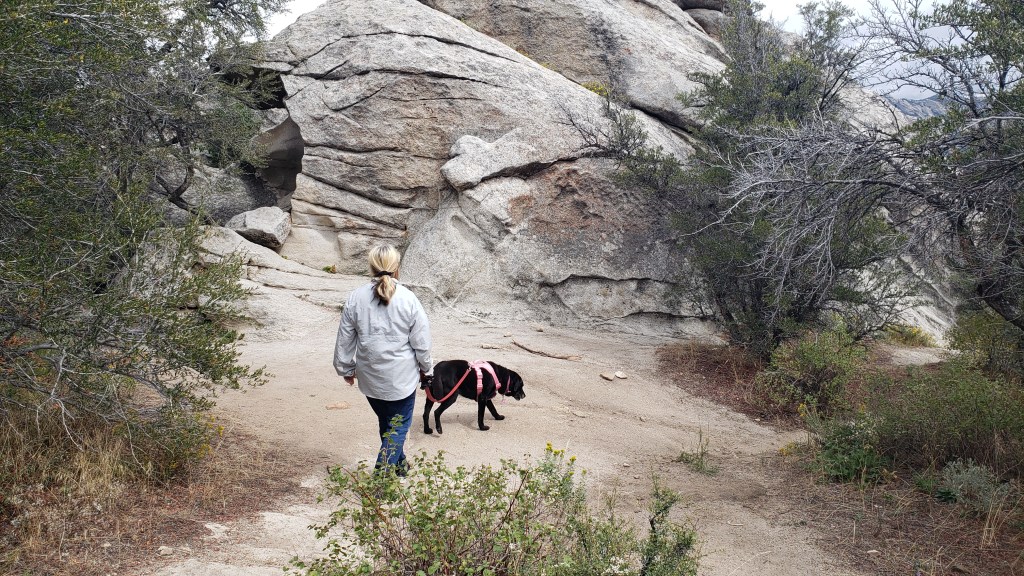
Bath Rock. Bathe in its healing powers!


Bath Rock was active with climbers, but a storm was brewing in the distance, so we enjoyed their activities for a while, took a little stroll along the trail, then headed out of the park for an al fresco pizza lunch.
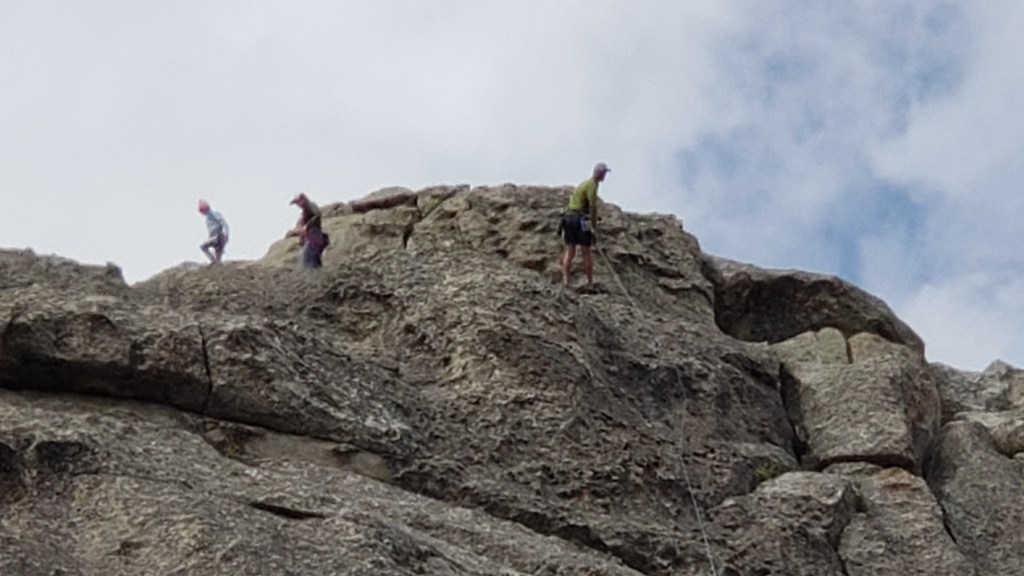
People who are braver than us.

The storm had other plans. It hammered down rain, sending bolts of lightning perilously close to the gravel we were standing on, directly under a metal roof.
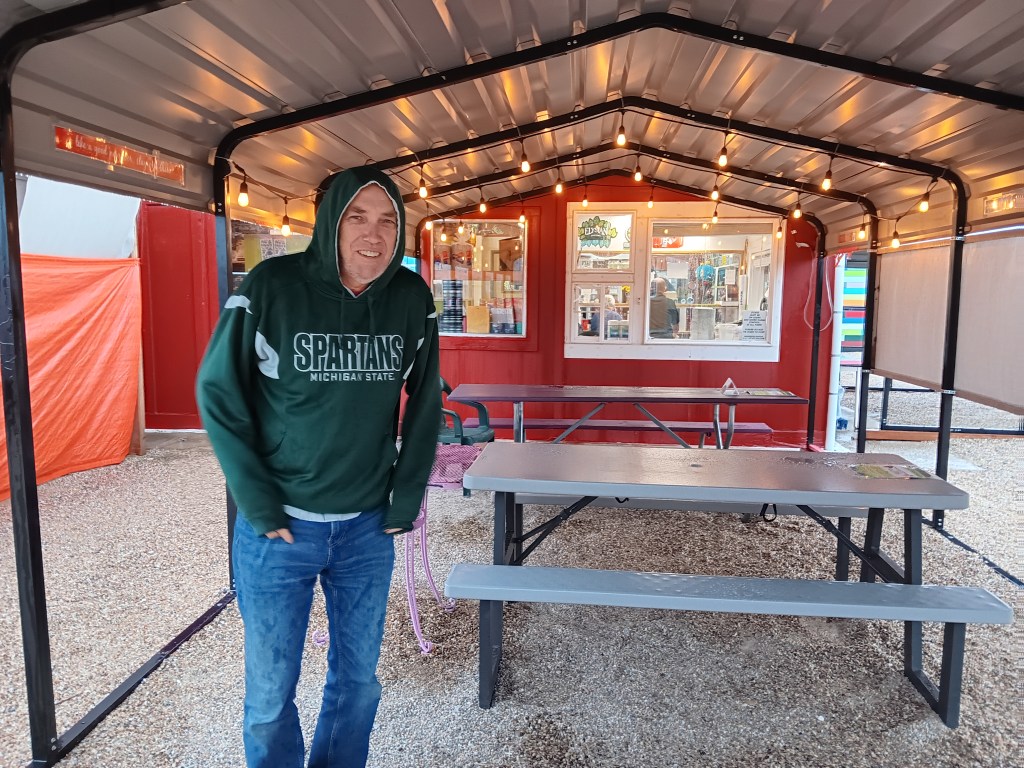
It was really cold, too.

We high-tailed it to the car, watching water pool alarmingly around the store and its picnic area, which added credibility to the Flash Flood warning we’d heard the store employees mention while we waited for our pie to bake.
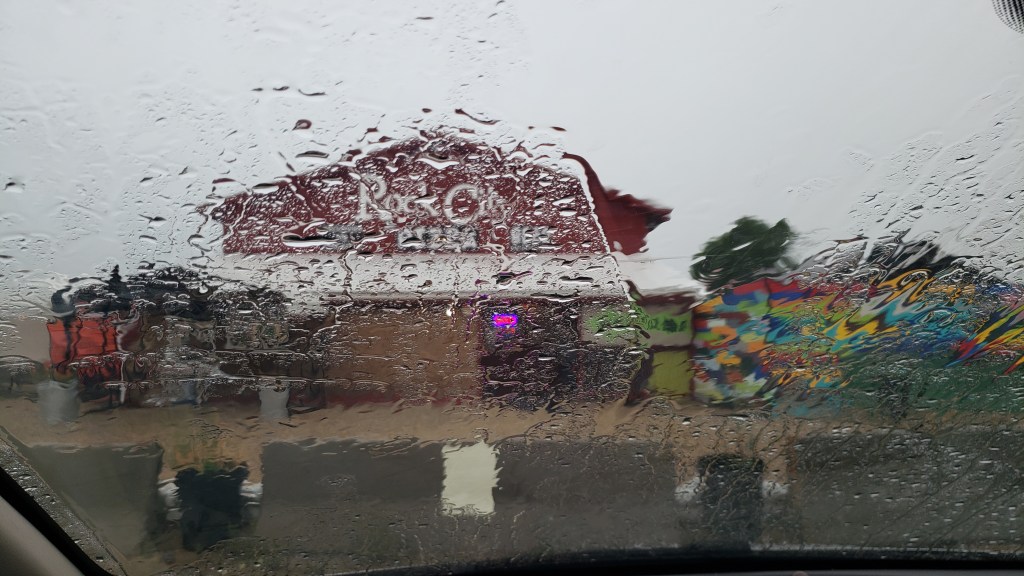
Our view.

City of Rocks made a terrific afternoon out, in spite of the rain, and we were even more excited for our trip to Craters of the Moon two days later.

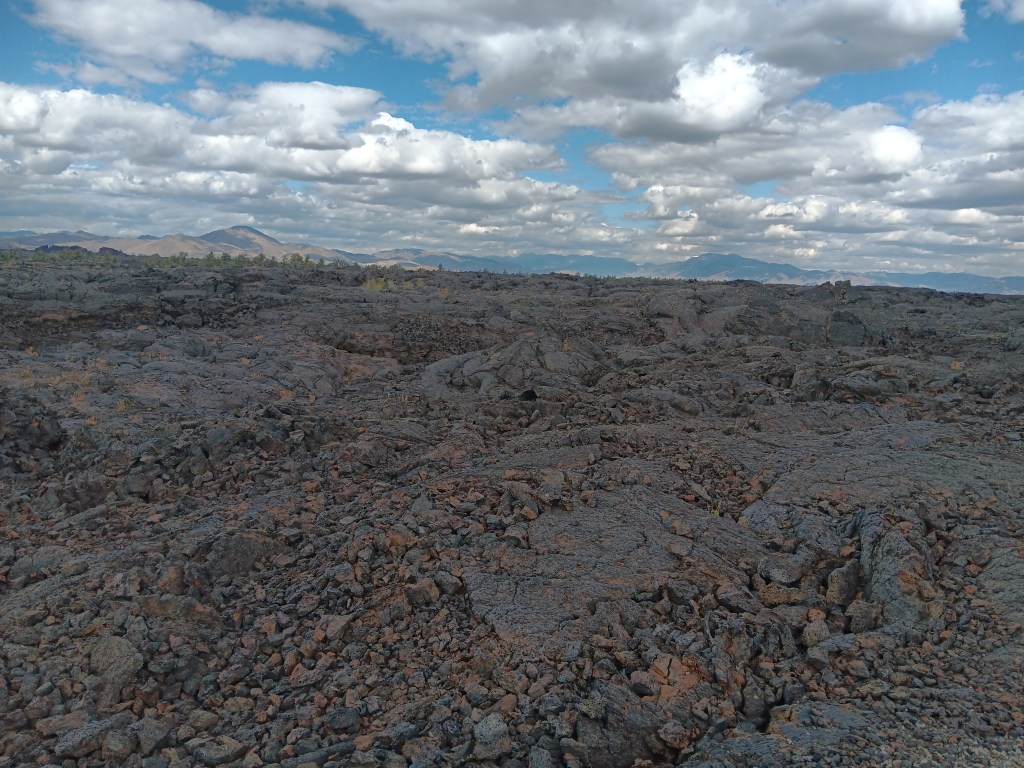
Our $20 America the Beautiful Senior Pass got us into the park for free (we’ll just add here that we’ve literally saved hundreds of dollars using this wonderful National Parks pass), and we marveled at the seemingly endless lava fields and features that were formed when molten lava oozed through cracks in the earth compliments of the 50-mile fissure known as the Great Rift.
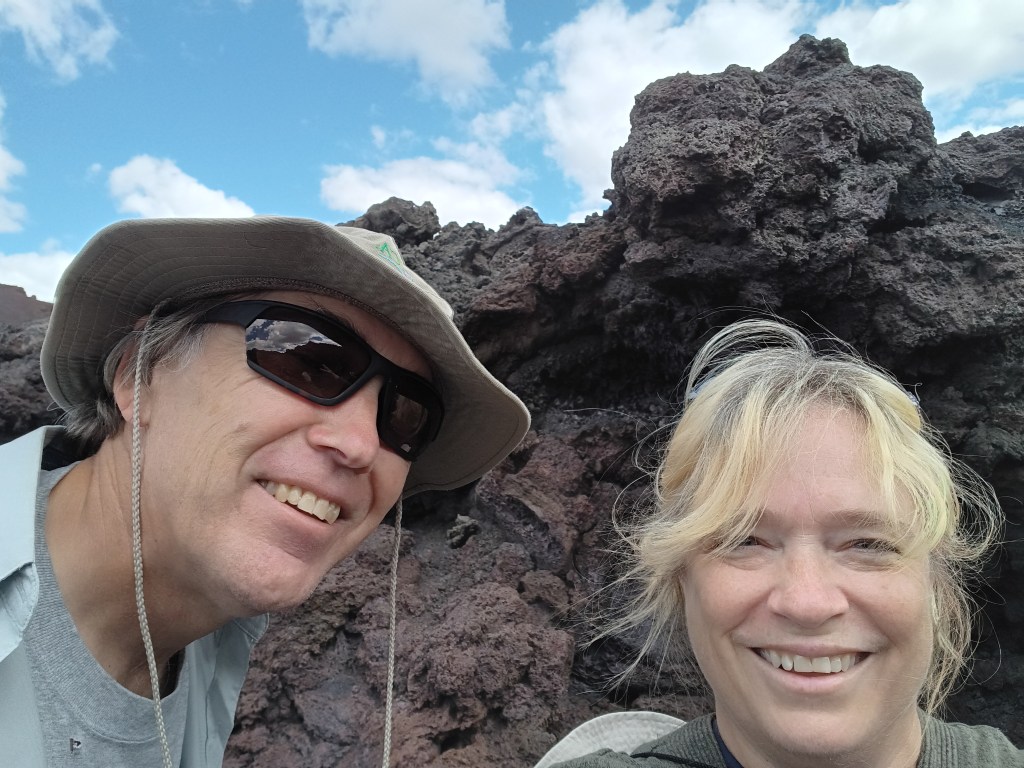
Who are these people, and why are they always laughing?

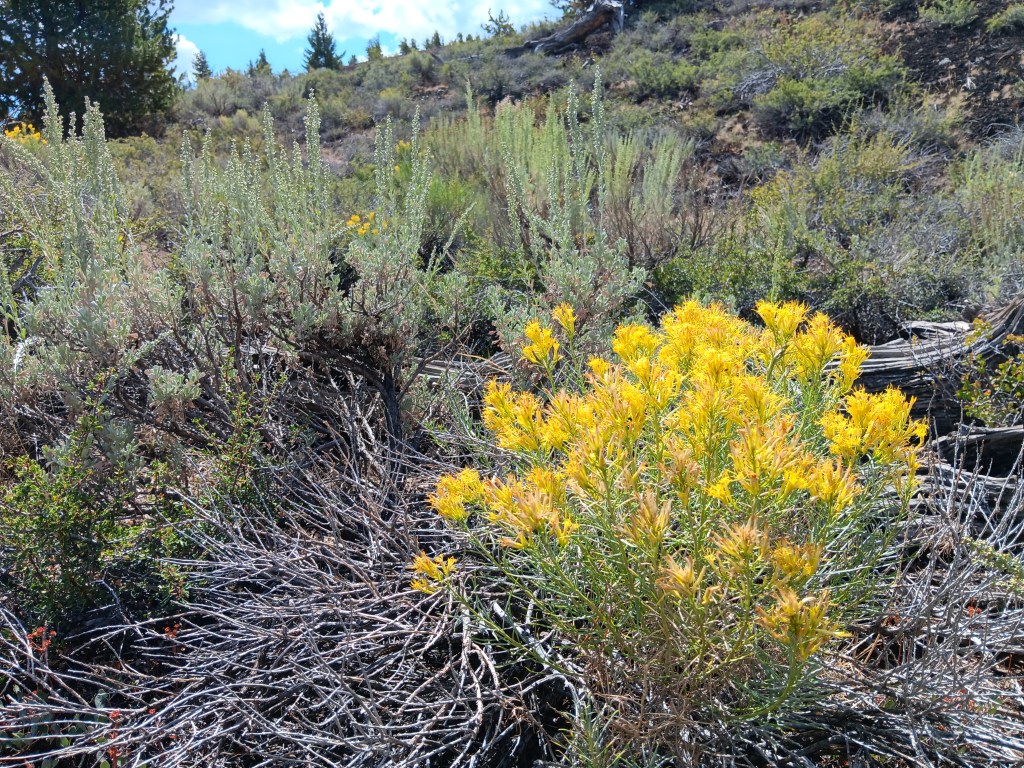
Our first stop along the seven-mile scenic loop was a hike up the powdery Devil’s Orchard cinder cone, a gentle start to our visit, punctuated by a surprising variety of flora.
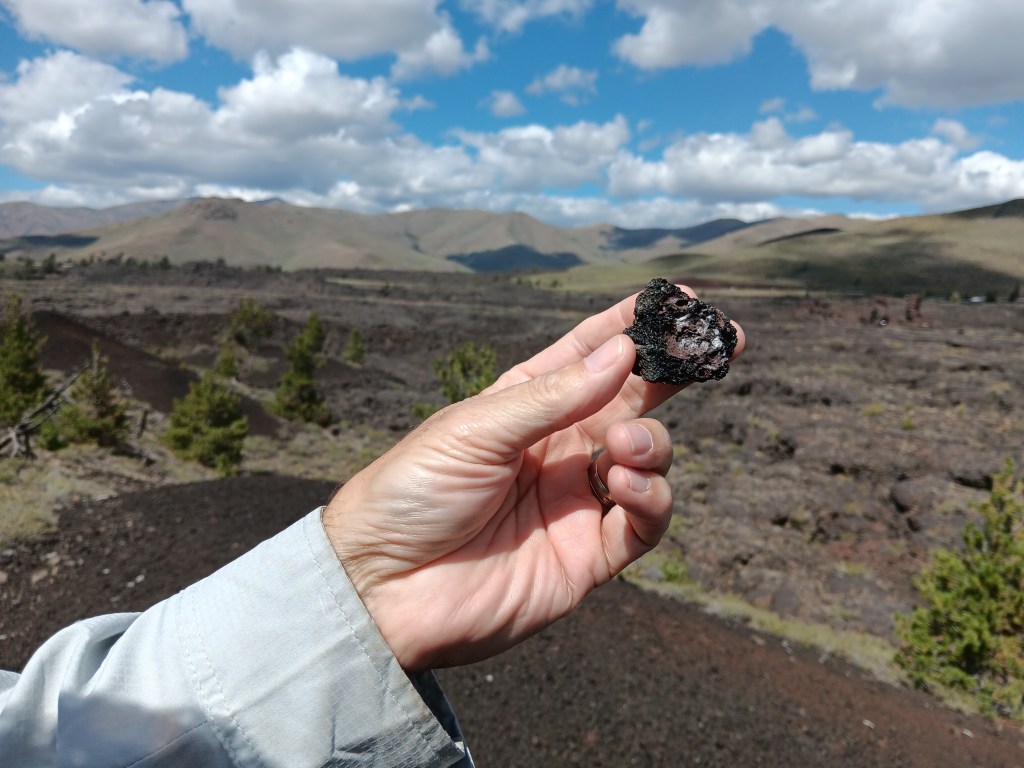
The volcanic rock here was feather-light.


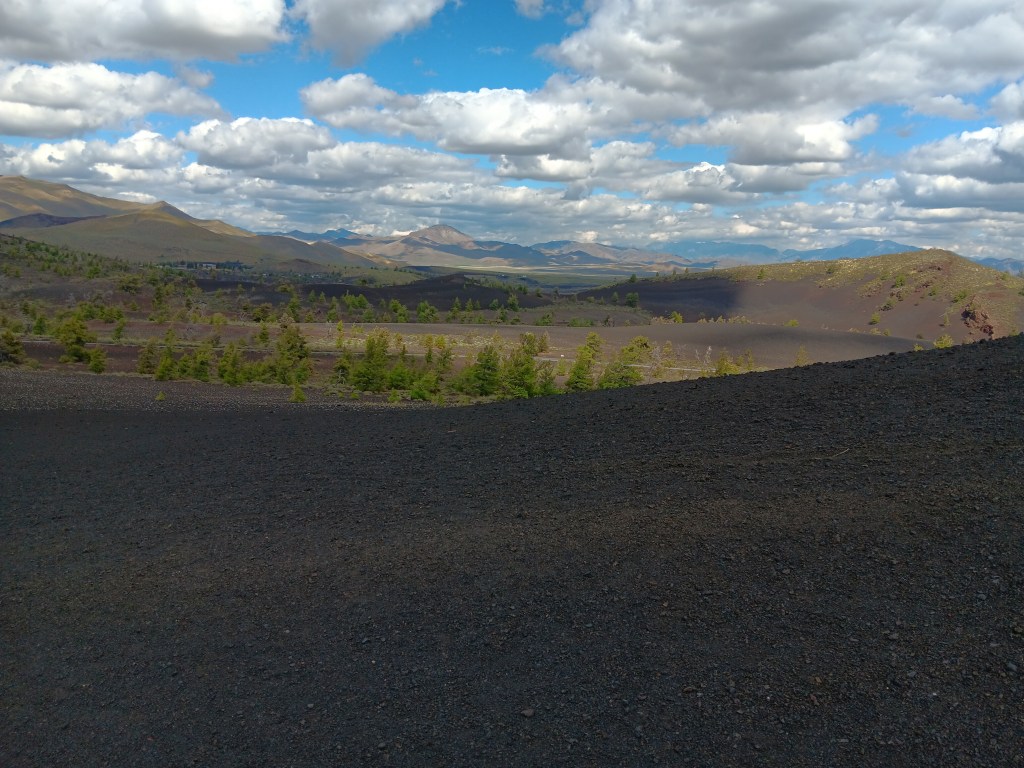
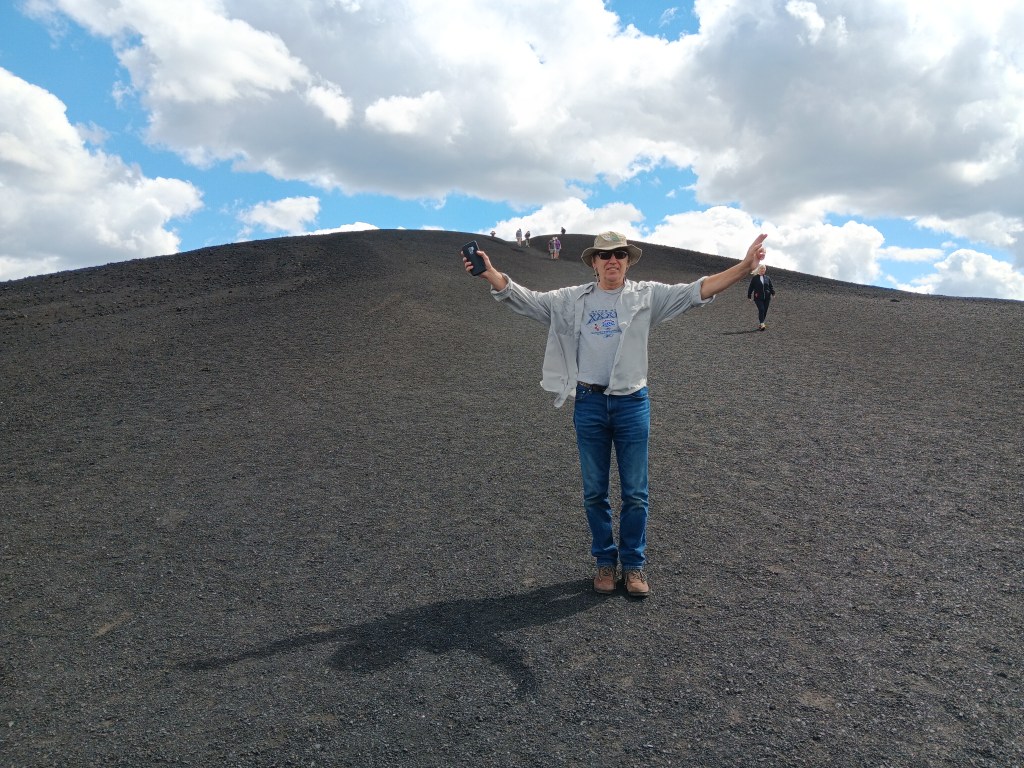
Inferno Cone was much higher, with a well-worn, crunchy path to the top of not one, but three rises with magnificent views over the valleys and to the mountain ranges beyond.

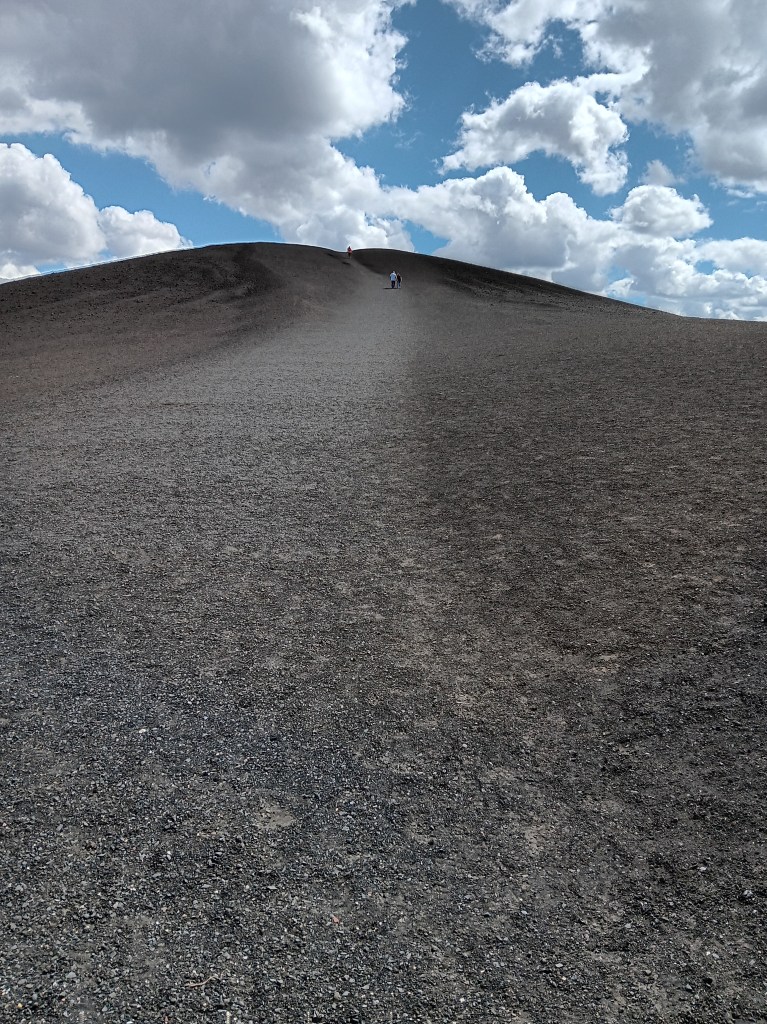
You can just make out the people climbing the hill.


The view from one of the rises. It’s way, way down.

Guess who made it up to the third rise? Him!

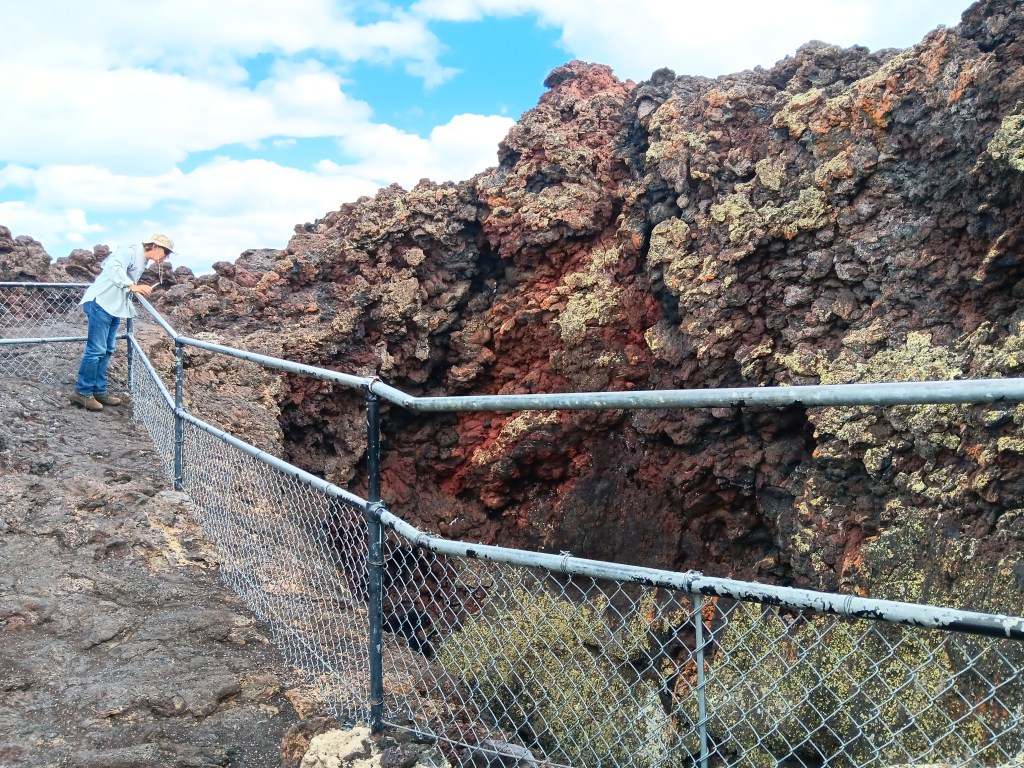
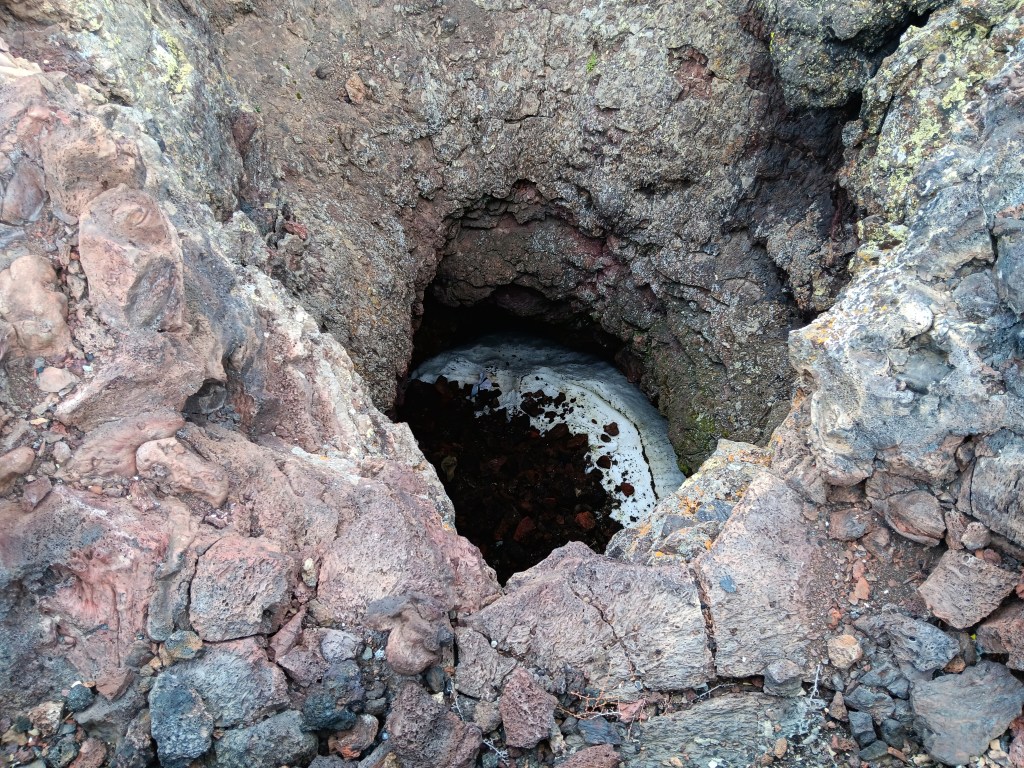
It felt fabulous to be out walking, and we were loving the interactive nature of the features. A second short hike of just a few hundred feet saw us looking into two Spatter Cones, the first of which still had ice at the bottom.
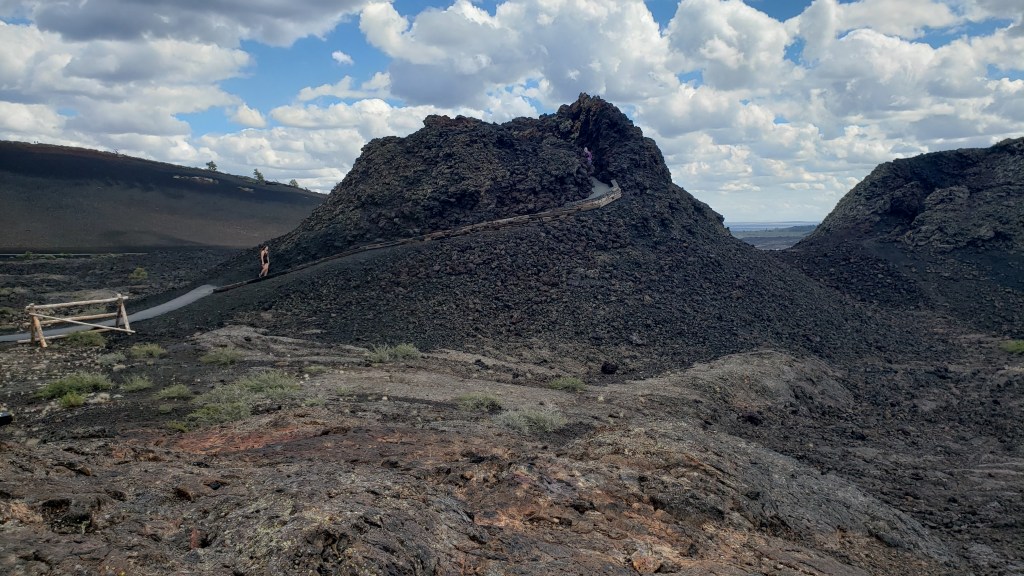
You can see the pathway leading up to the part of this splatter cone where you can look down into it.

That white stuff is ice. The second splatter cone had three or four hats in it.


We took all the side roads off the main loop, and had several WPM (Wows Per Minute) passing miles and miles of lava fields and curious “cinder gardens.”

But our absolute favorite WPM was the Caves Area, where visitors could descend into some of the caves that formed when lava tubes collapsed.
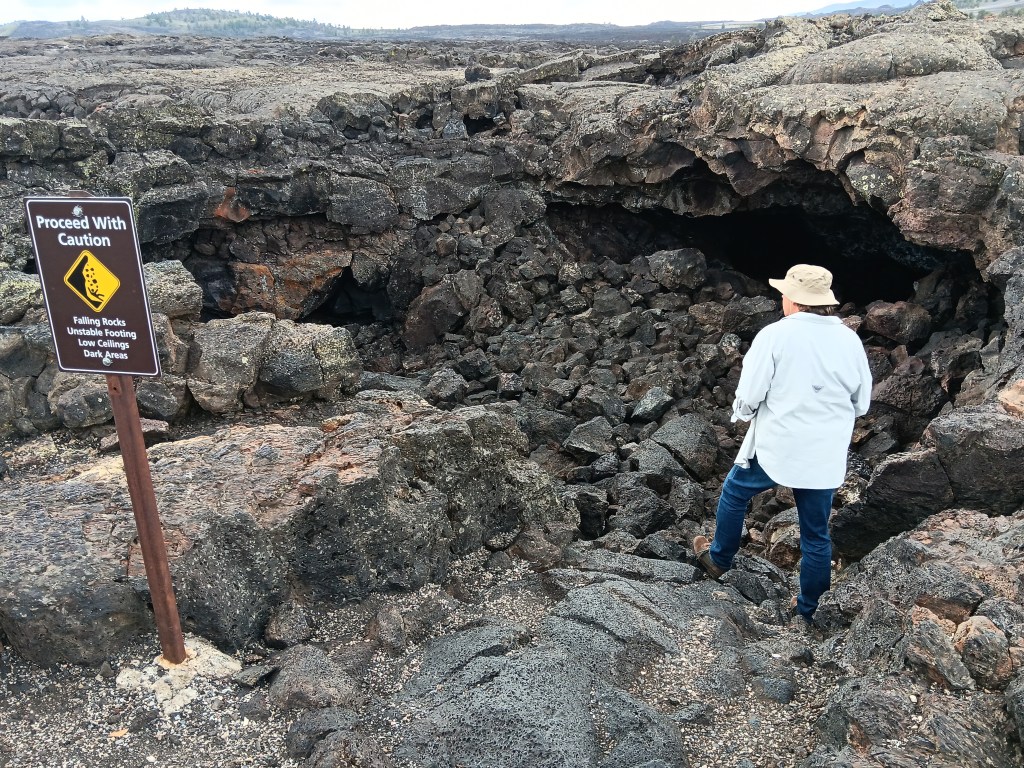

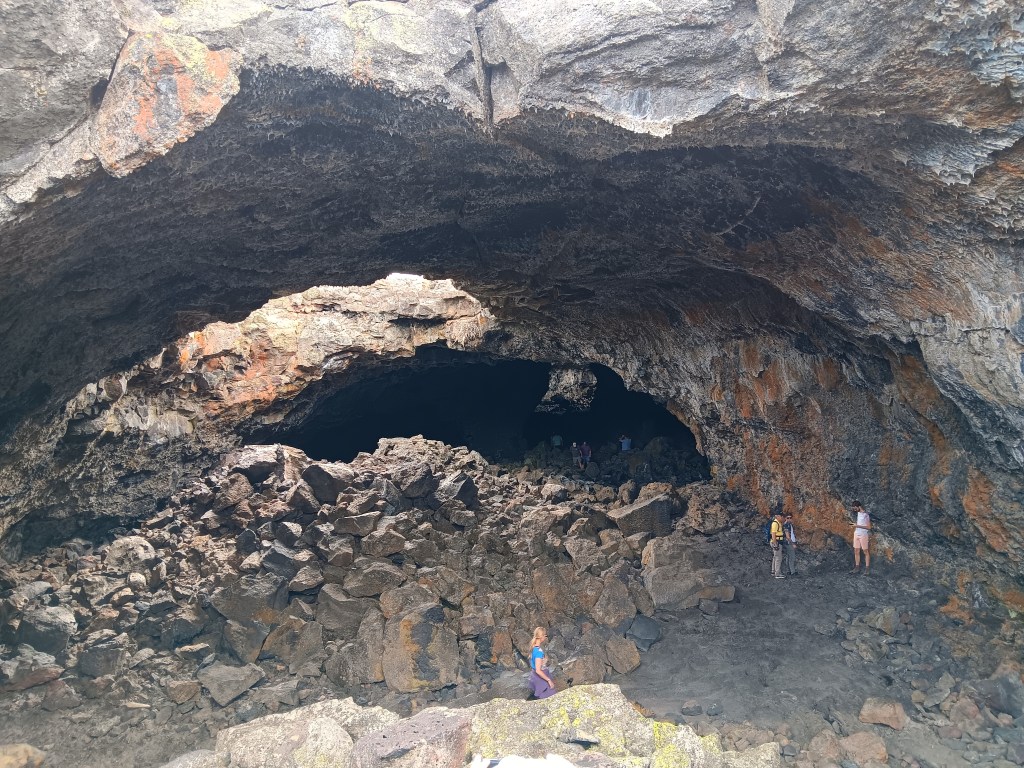
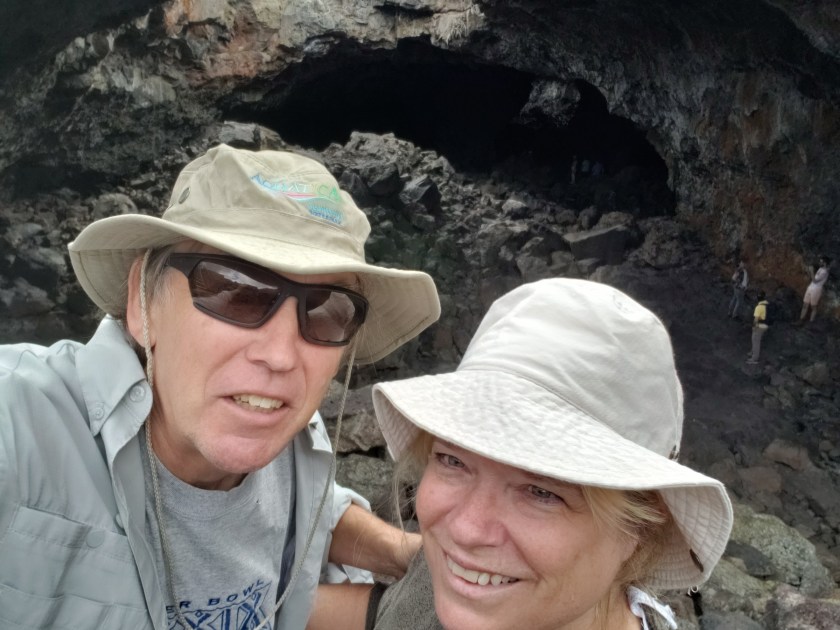
Precarious perch for a selfie inside the cave!

Sheriff of Richfield being the slightly humorous (if also slightly unnerving) exception, it had been a fantastic, unforgettable day. Our return trip to Village of Trees RV Park had one more surprise in store.

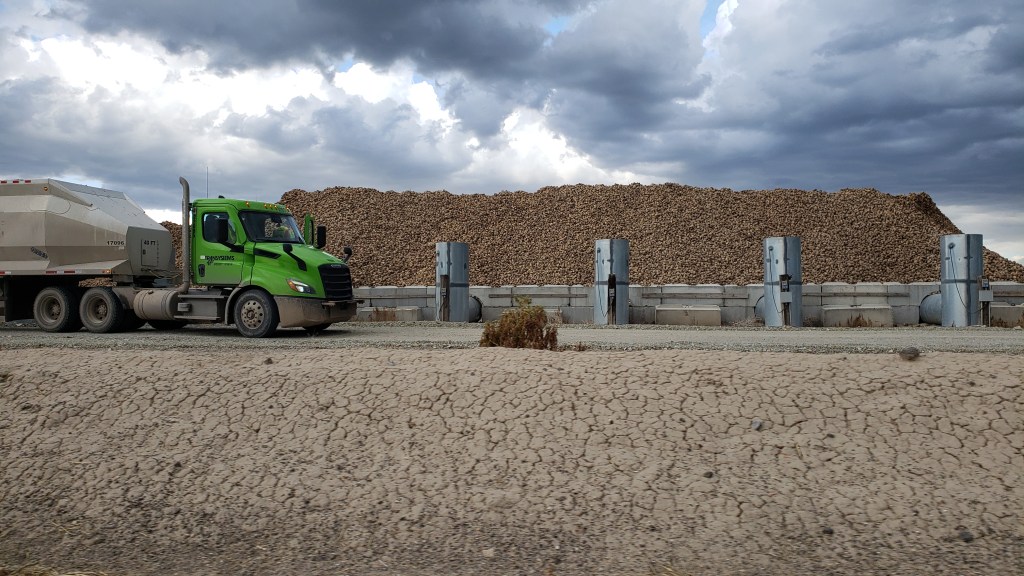
We’d been unreasonably excited by all the trucks we’d seen carrying Idaho potatoes from one place to another, but we didn’t expect the absolute thrill of two massive mounds of potatoes getting ready for transit. We shouted and pointed and laughed out loud at the piles and our incredible luck!
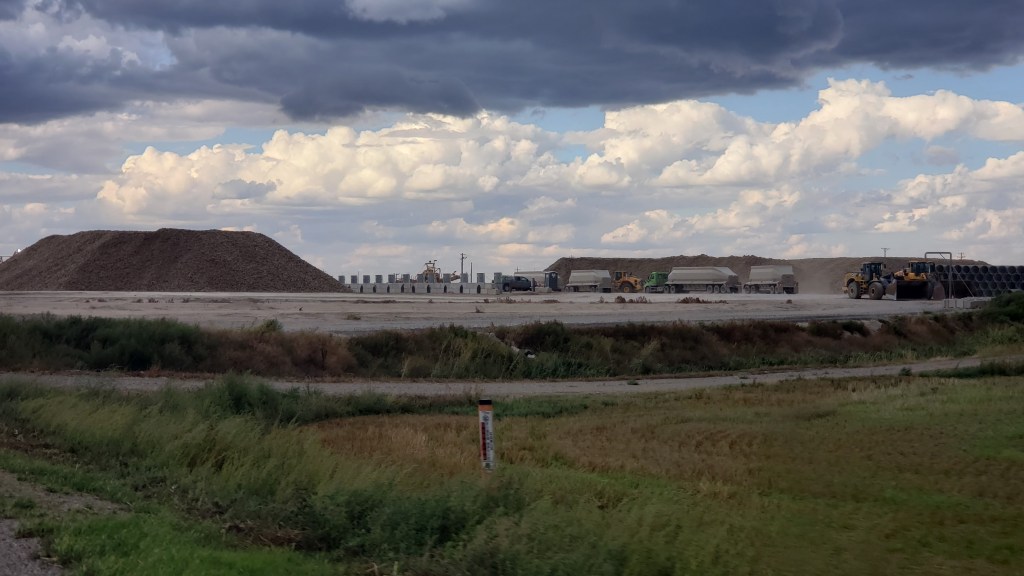
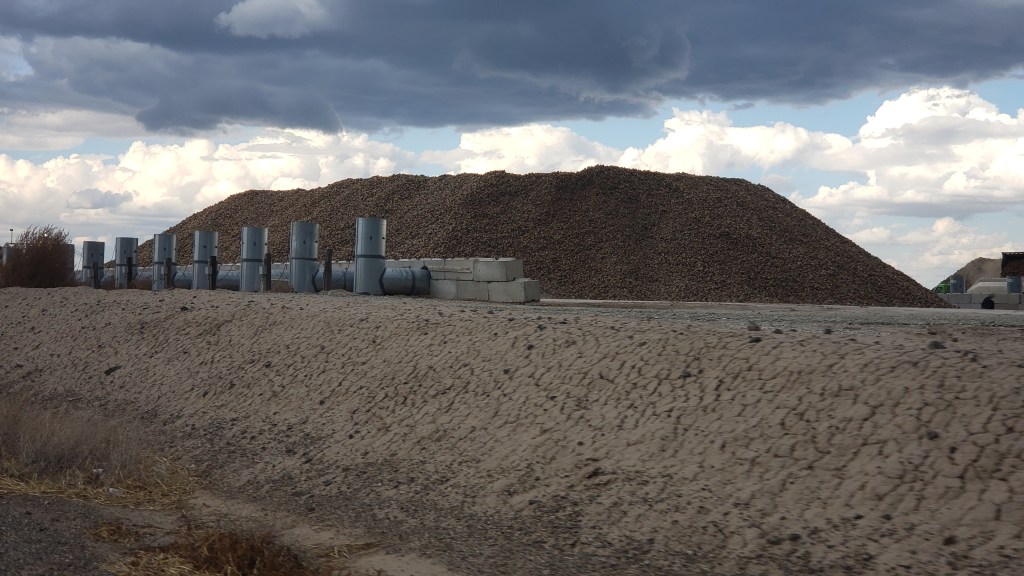
Those piles aren’t wood or sand or dirt. They’re potatoes! YAY!

One more potato photo.

Okay, last one, I promise!

We know that’s sad and maybe even worrisome, but we’re proud of our little quirks, and of our ability to find joy in the small stuff.

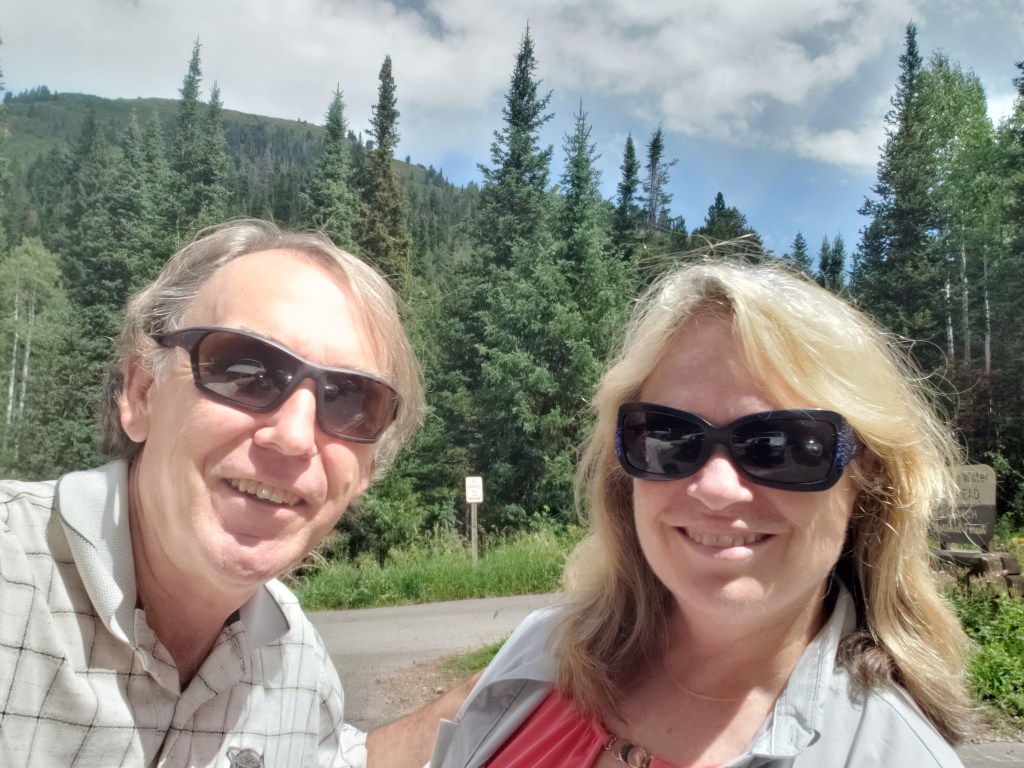
It may have been windy.

Pushing The Pause Button In The Beehive State


Utah is known as the “beehive state,” honoring that industrious bug’s reputation as a hard worker, and its state of mind unexpectedly became our state of mind, too, with a project that had us tied to our 36-foot home for several days. We took a breather from touring in Nippy, with a few breaks that saw us “hiking” in a mountain canyon and braving a gawd-awful stench to reach an island surrounded by a lake that’s nine times saltier than the ocean.


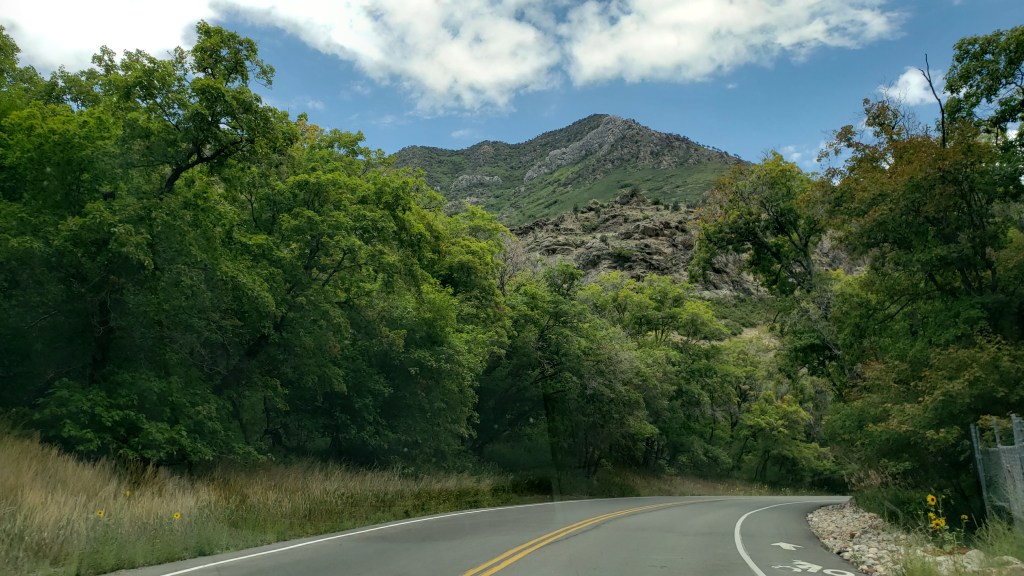
Layton, Utah, our base for eight days, was having a heat wave. Fati’s innards reached a temperature high enough to be uncomfortable in mid-afternoon, so we headed Nippy toward Salt Lake City for a drive up Millcreek Canyon in the Wasatch Mountains, the only canyon that allows dogs, we were told by the Visitor Center.

It was a scenic canyon, if somewhat unremarkable, unfortunately overshadowed by the immensity of the canyons we’d already toured in Montana and Wyoming, but the scent of pine trees and the cooler temperatures made it a perfect outing for a couple of hours.


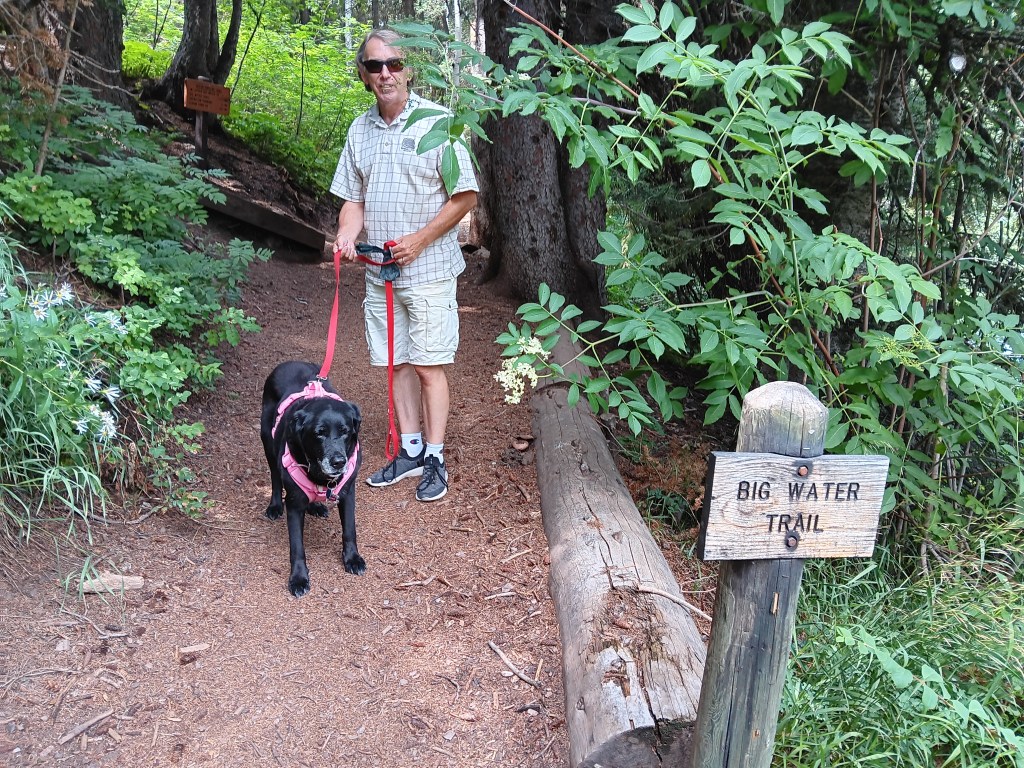
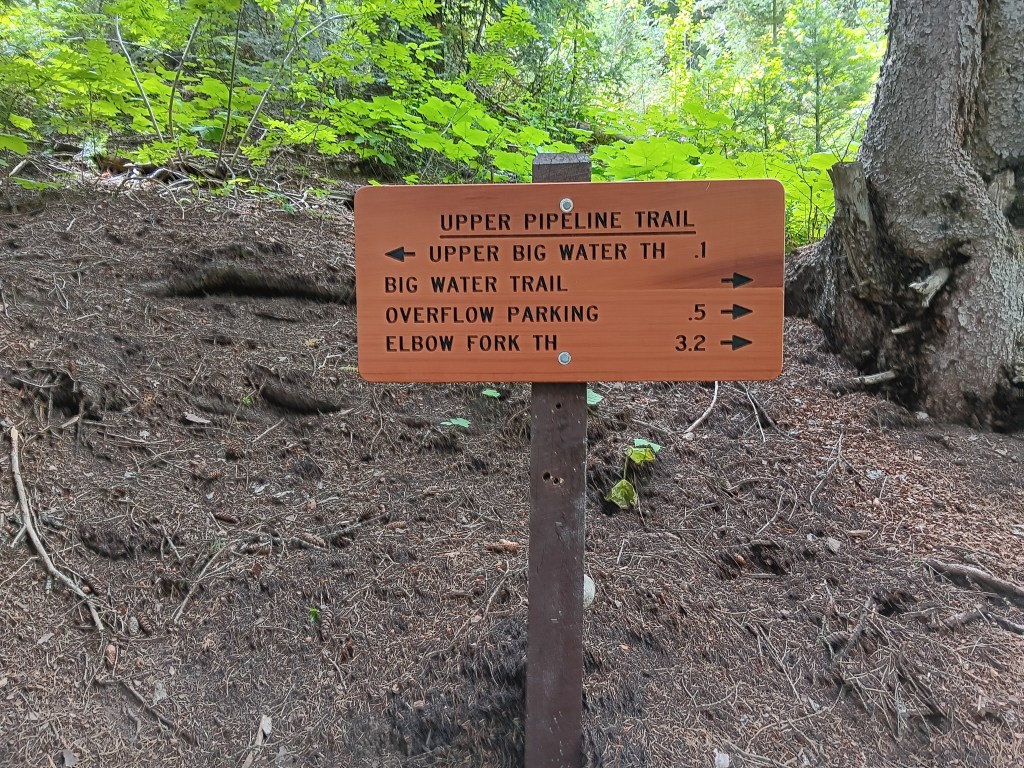
We stopped for a short hike near the top of the mountain, mainly to stretch our legs a bit. And short it was. We saw the sign indicating Big Water Trail (elevation 7,900 feet), which seemed to be just about right for Ruthie; a mile is pretty much her limit.


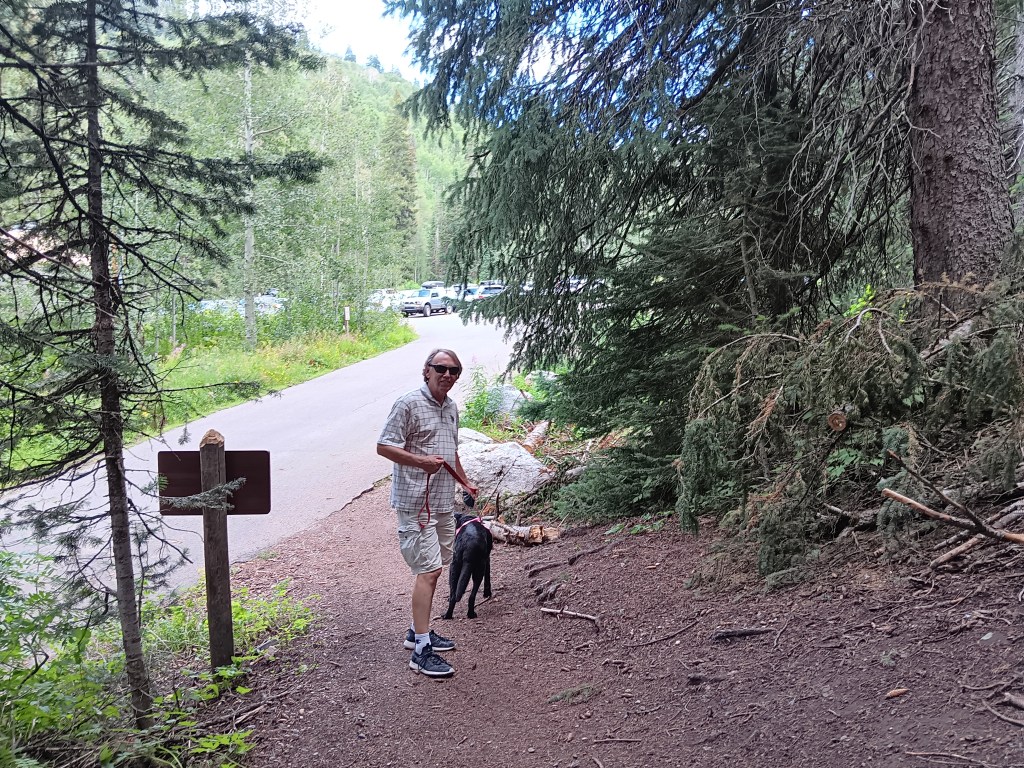
We started off, loving the sound of crunching pine needles under our feet.


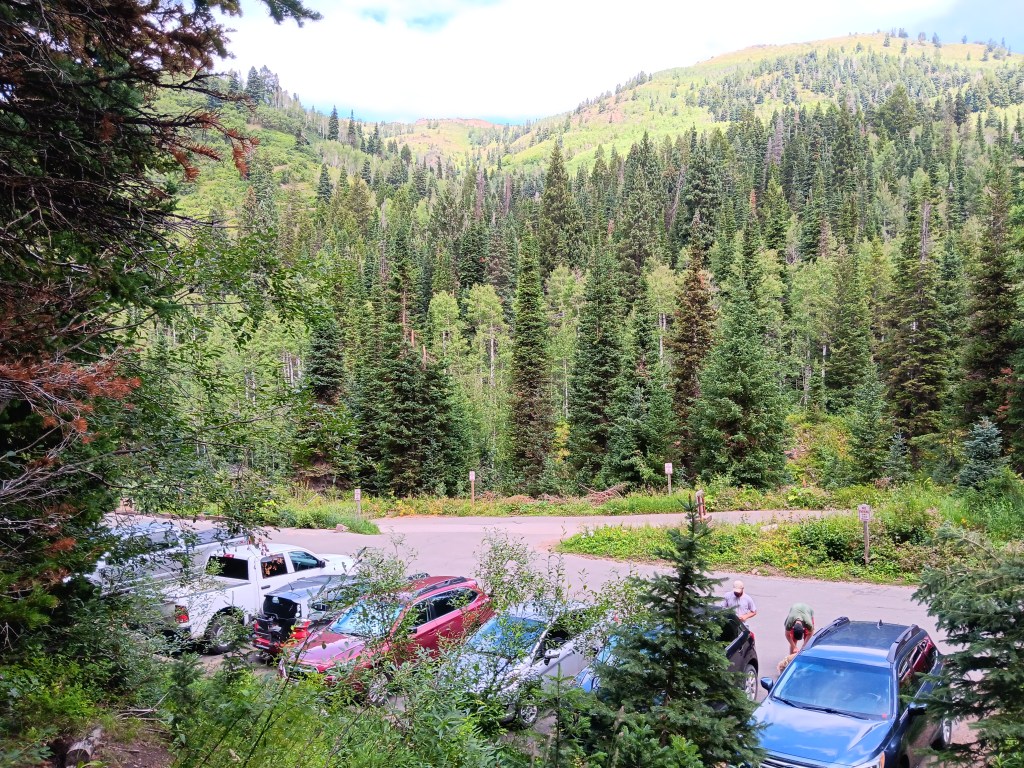
Within a few steps, the trees opened to reveal the parking lot where we’d just left Nippy, and the mountainside beyond.


Three minutes later we reached the end of the trail. What the…….!


Shortest hike in the history of hikes, and we should have noticed the sign indicated 1/10 of a mile, not 1 mile. But we’d been prepared to walk the full mile, so it still counts as healthy exercise, right?

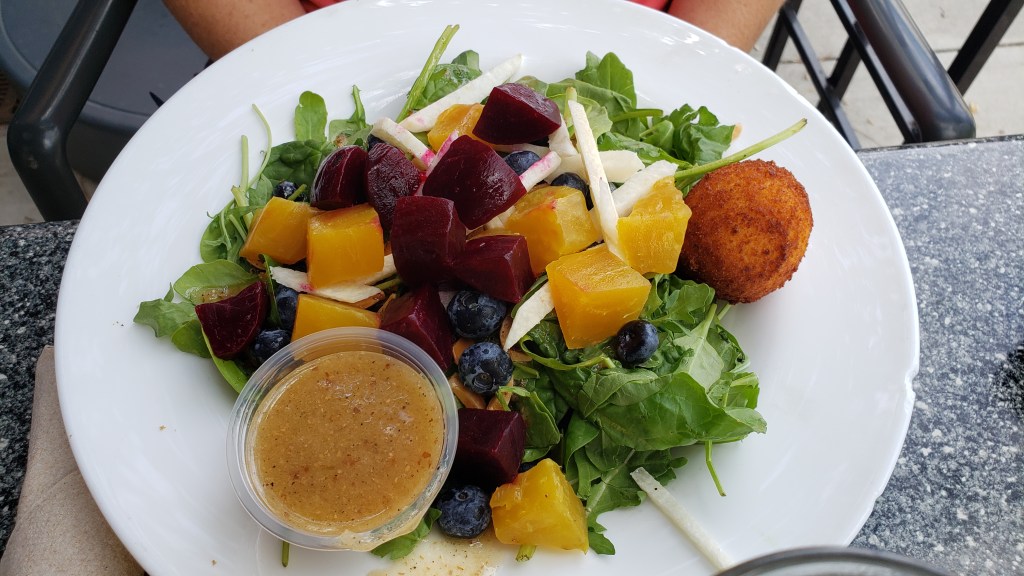
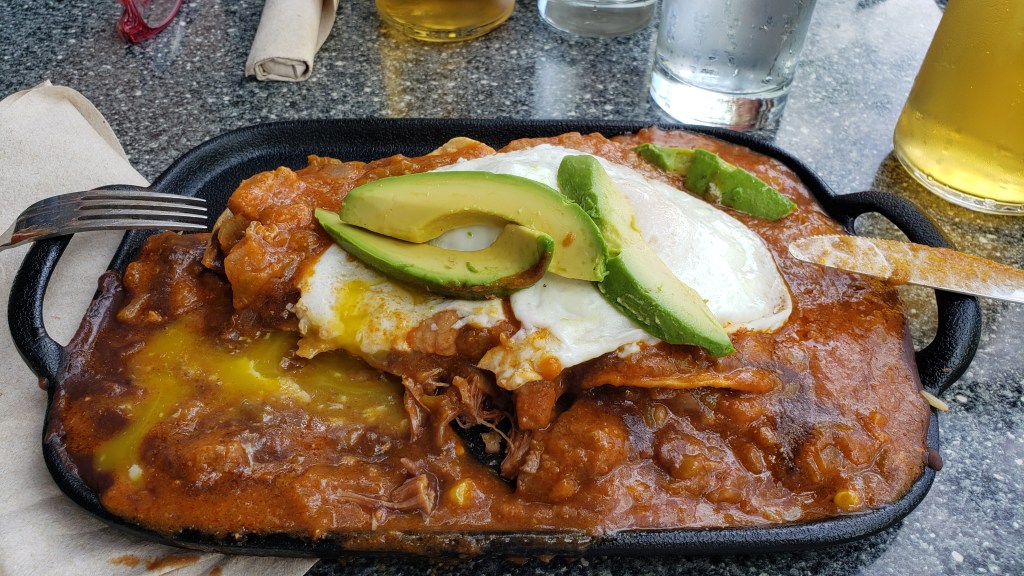
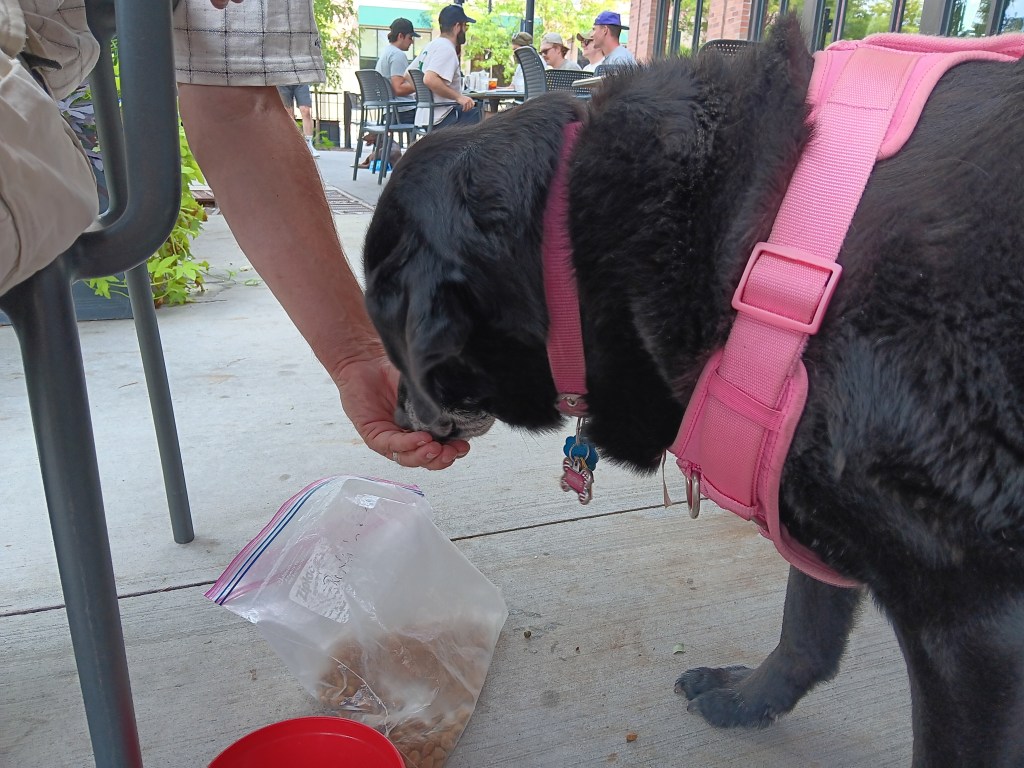
We toasted our athleticism with a visit to Wasatch Brew Pub, where Susan had the Superfood Beet Salad and Simon had the Huevos Rancheros, an unholy assemblage of pork chili, refried beans, queso fresco, lemon crema, and corn tortillas, with two eggs and fiesta rice. Ruthie had dog food.


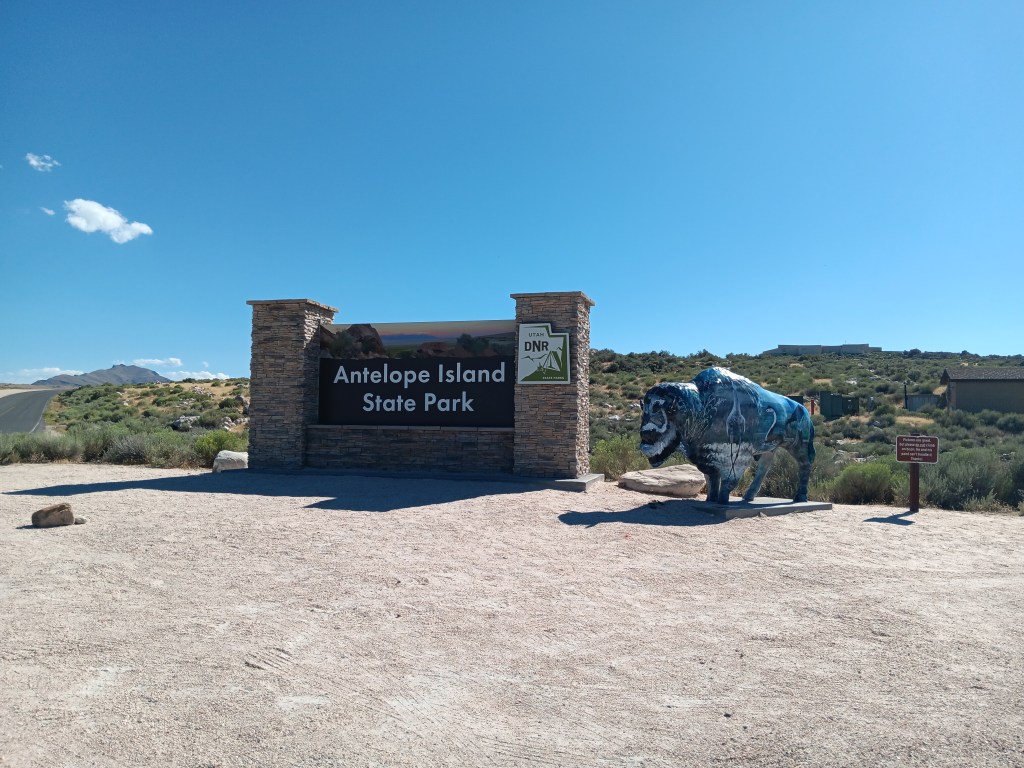
Another afternoon outing saw us taking the long Davis County Causeway out to Antelope Island State Park, situated in the Farmington Bay arm of the Great Salt Lake.


It was close enough to Layton for us to still have Nippy’s windows rolled up and the A/C on High when we arrived, but we soon had them rolled down, enjoying the small breeze wafting across the salt flats, where a billion birds were going about their daily bird stuff.
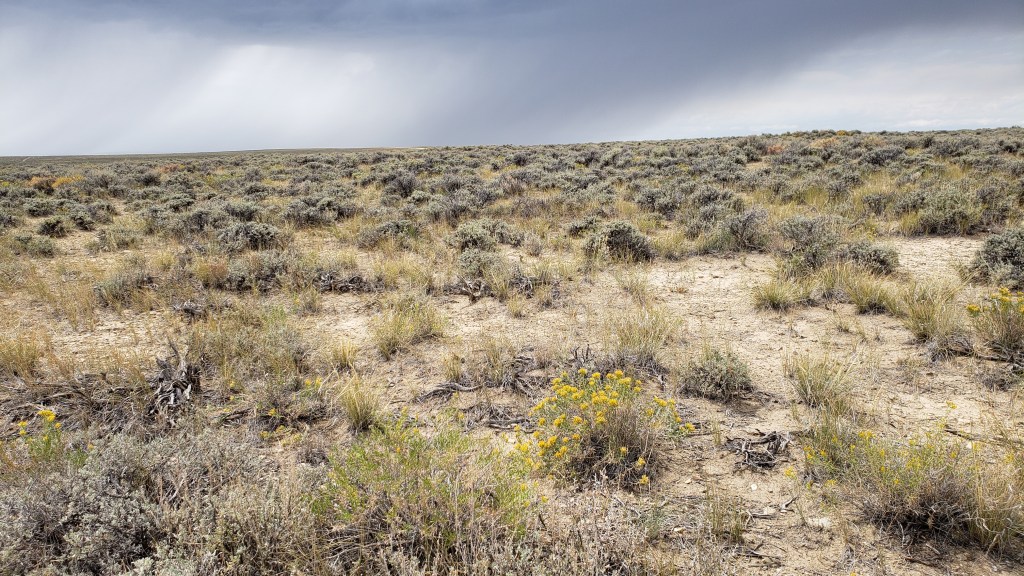
Click on photo for video

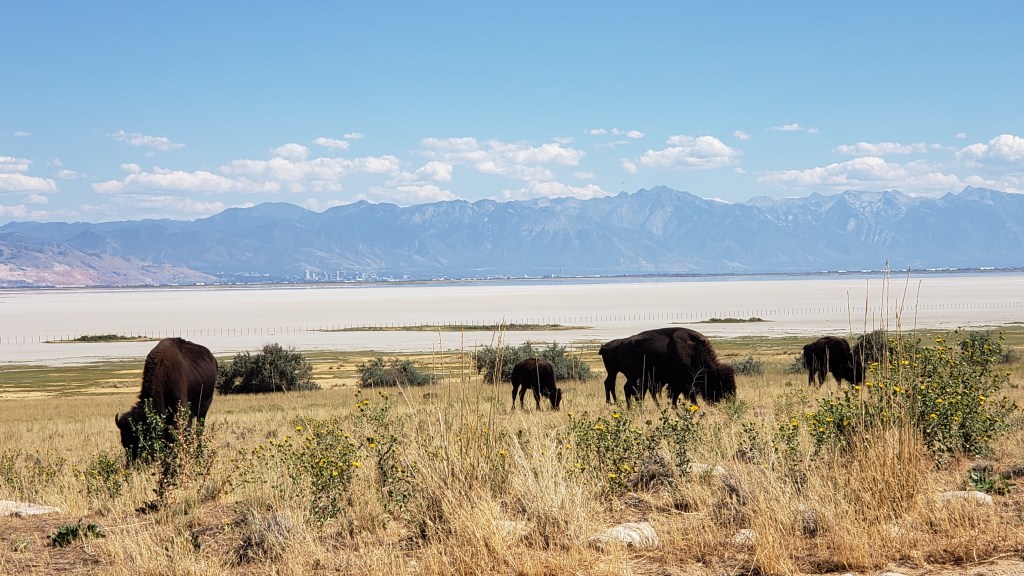
Although the island (really a peninsula) was (wrongly) named for its antelope (pronghorn) population, bison are the dominant mammal now, due to their importation thanks to a conservation effort, after wild horses, thousands of sheep, the Church of the Latter Day Saint’s grazing cattle, and a plague of grasshoppers ate up all the foliage.


It was fascinating looking out over the Great Salt Lake, marveling at how low the water was and how many migratory birds were filling up on brine flies and other bugs. It was no wonder the area was (or, at least, used to be) a sought-after birding spot.

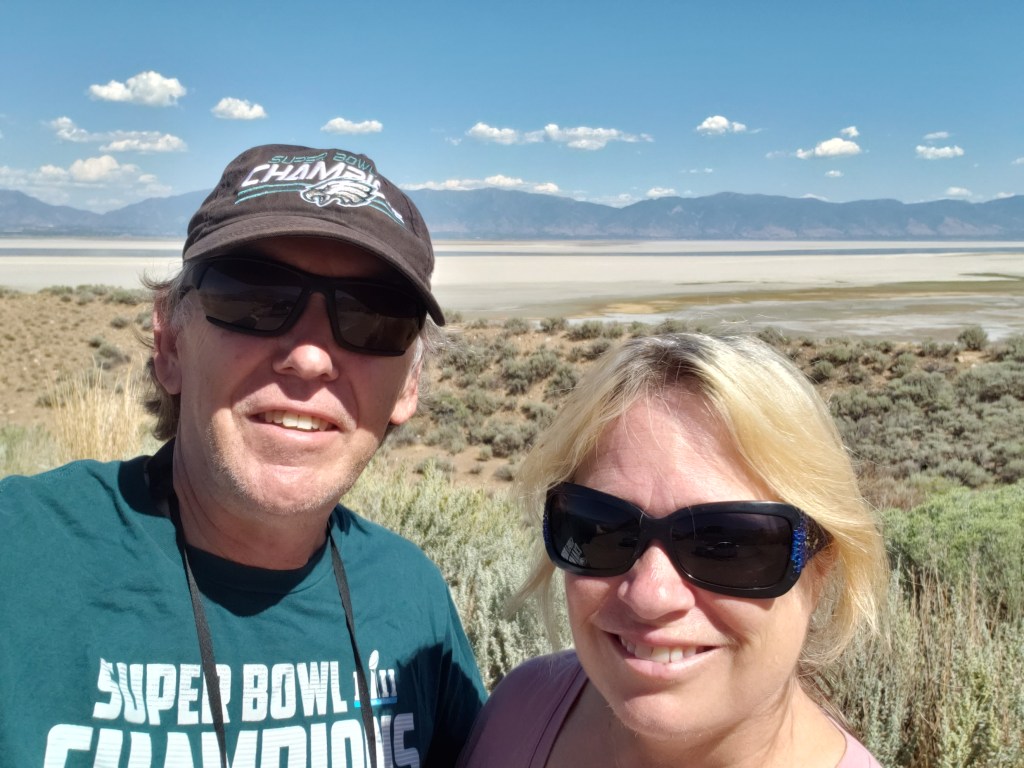
This isn’t birds or bugs. This is us, with the mostly-dried-up Great Salt Lake behind us.

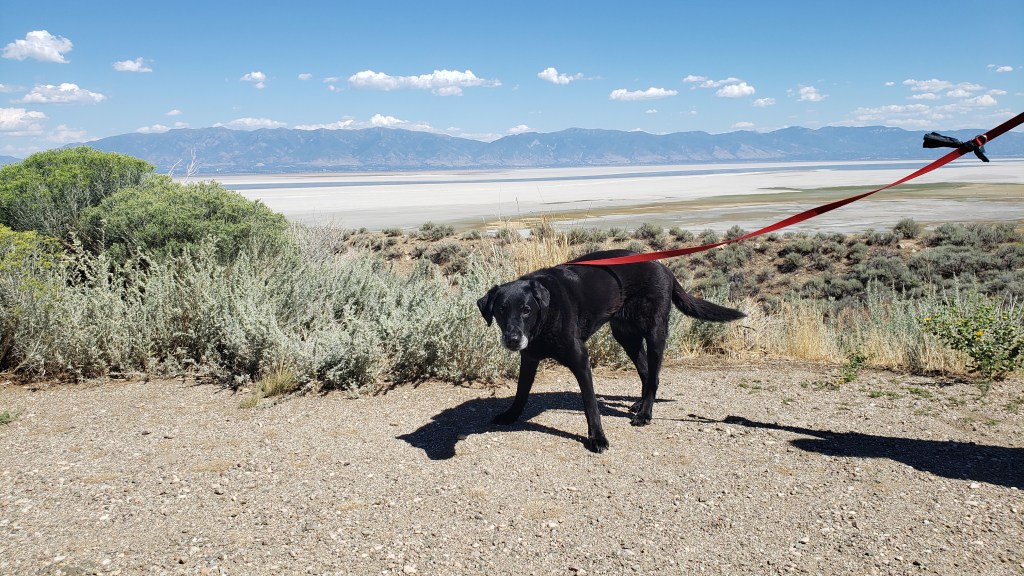
Before we left the island, Simon wanted to “have a paddle” in the water (for our U.S. readers, that’s “go in up to your ankles” in U.K.-speak), so we drank some water, gave Ruthie some water, felt the sand to be sure it wasn’t hot, and agreed we’d turn around if we thought it would be too much for our sweet old dog.


The water was much further away than it appeared from the parking lot, and it really was just too hot to be out in the sun for long, so about 2 minutes into it, we turned around and went back to the car.

Ruthie, pre-beach-walk, weighing up her options if she’s forced to hike on the sand.

It was then that Ruthie had a full-blown attack, flailing around the back seat, dropping to her belly, trying to jump back up but falling down again, and shaking her legs as if in agony. It looked like she was having some kind of seizure, and we were afraid her brain had fried from the heat.

We quickly felt her fur to see how hot it was, checked her paws for burns, looked between her toes to see if anything was lodged there, and reassured her again and again that she’d be okay and we were there for her. Then, we rushed her over to a hose at the nearby shower station and doused her with cold water in an attempt to cool her down quickly and save her life.

Once the sand was washed off her paws, she bounced around like a joyful puppy, skipping and smiling all the way back to the car. We gave each other looks that showed we both realized the diva side of her personality had come out, and she just didn’t like the sand on her feet.

Ruthie with a fancy hose-water hairdo.

As we crossed the causeway again, this time with our windows rolled down, the most nasal-nauseating smell wafted into poor Nippy. Like the seal-covered rocks we boated around in Chilean Patagonia, those billions of birds stank to high heaven, and we cried out in horror at the assault on our senses.


Ruthie’s dramatic spasms and the bird stink notwithstanding, it had been a fabulous afternoon, and a good way to say goodbye to Utah for a week while we explored what southern Idaho had to offer.

A Year On The Road in The Indy (Pt 2)

The second installment of our exclusive RV travel series for The Independent Travel has just been published, highlighting the second month of our ‘Year on the Road’ from Minnesota to Montana, and including the wildlife-rich Theodore Roosevelt National Park, eye-popping Badlands National Park, and extensive Custer State Park. Check it out on this link:

https://www.independent.co.uk/travel/north-america/usa/american-road-trip-usa-minnesota-montana-rv-b2398864.html

Custer State Park in South Dakota

The Flamin’ Gorgeous Flaming Gorge


We had two days left in Wyoming before heading into a brand-new state for Simon, and we were determined to end our time in the state of never-ending surprises on a high note. Little did we know how high we’d get!

Not THAT kind of high; this isn’t Colorado. But our final day’s trip did end with a long, long, drive at nearly 10,000 feet, with plenty of steep drop-offs, long ascents and descents, roads slick from the rain, and not a guardrail in sight.

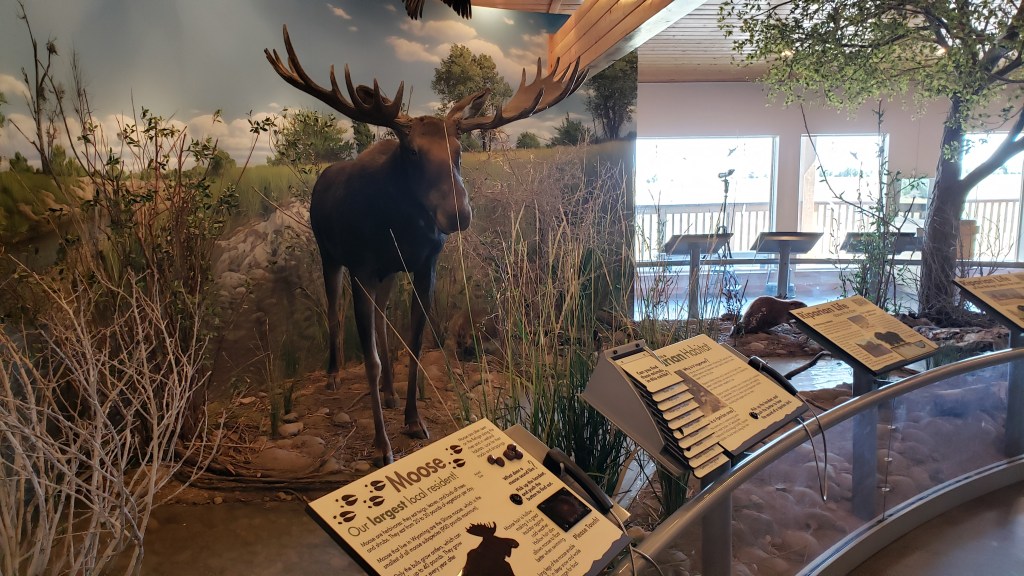
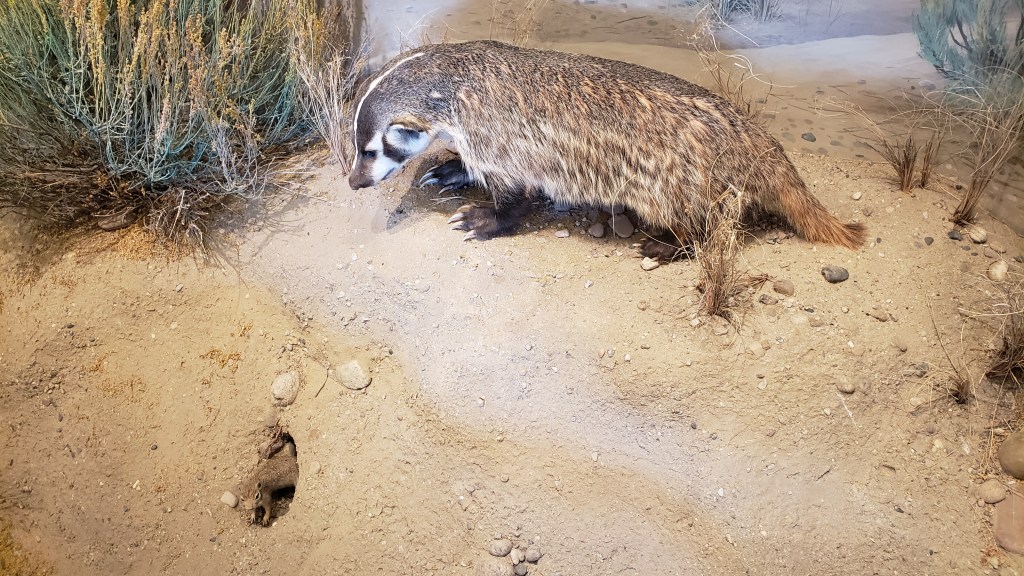
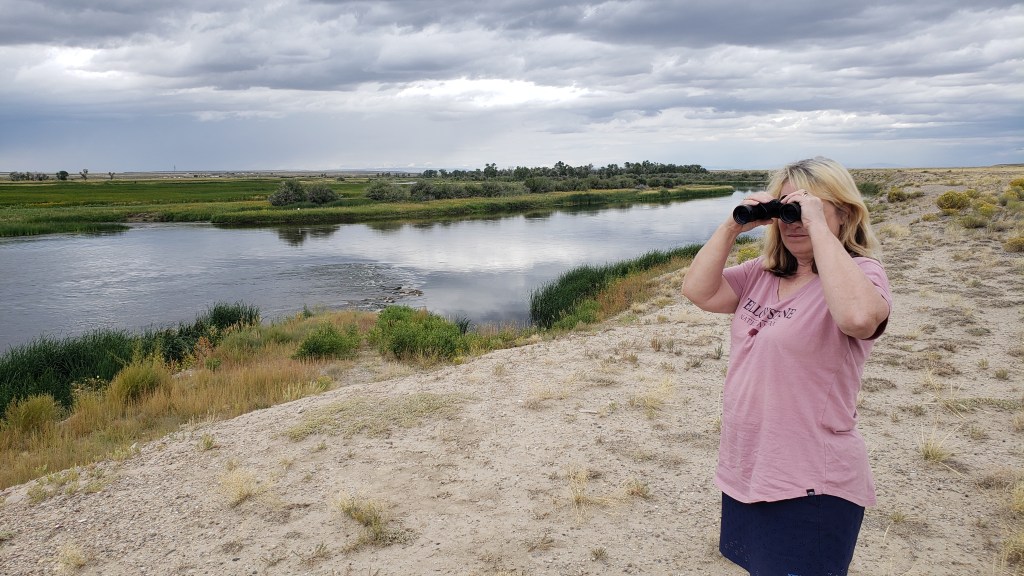
Let’s forget about that part and start with the drive we took out to the Seedskadee National Wildlife Refuge, with its tongue-twister of a name and its wonderful visitor center. The refuge claims to have more than 300 species of birds, mammals, and fish, some of which are taxidermized and on display so you get excited about what awaits.


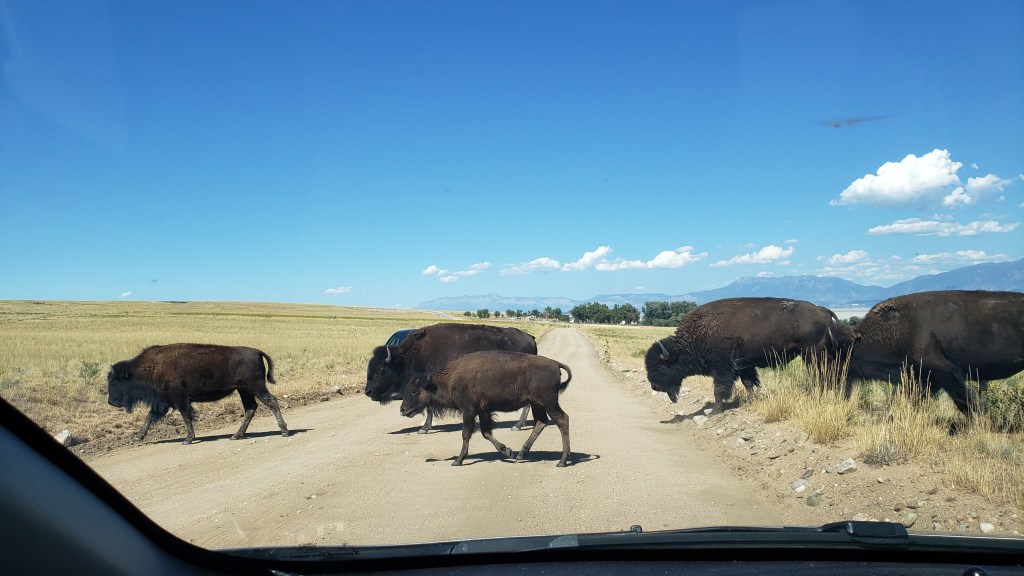
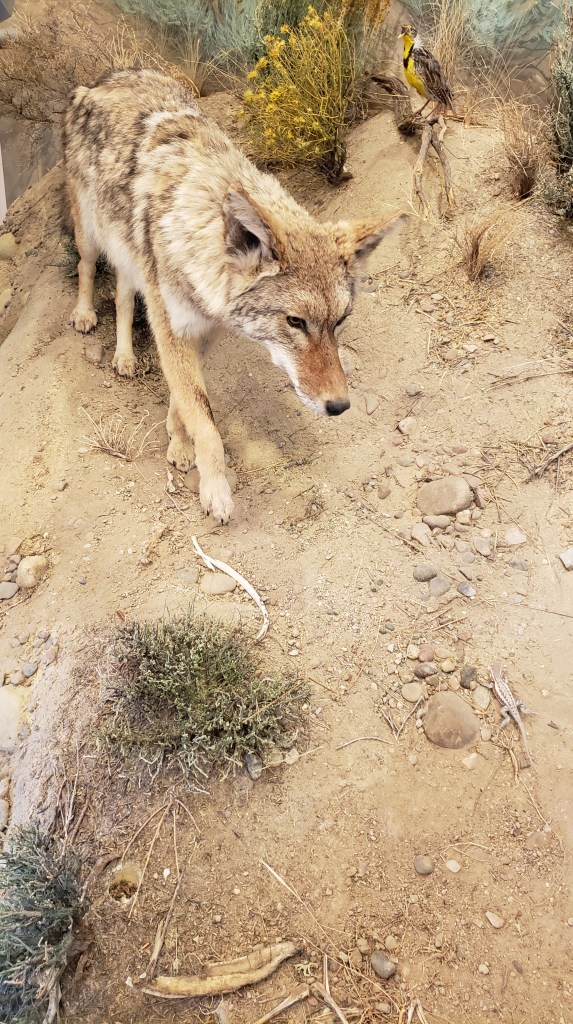
We saw exactly two eagles, a couple of trumpeter swans, one grouse, and a small handful of kangaroo rats (more appealingly called “gerbils” when you buy them at a pet shop). No moose, no coyote, no rabbits, no badgers, over the course of three passes along the main wildlife road (two during the day, one near dusk).

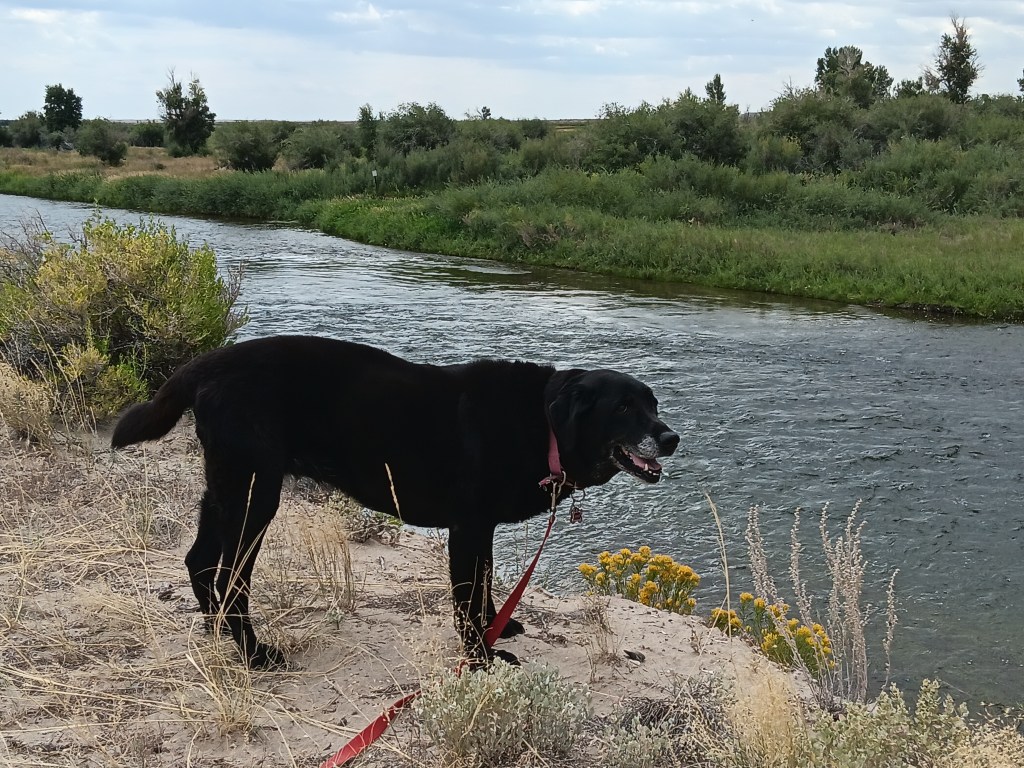
Ruthie found plenty to sniff, so she was happy.

It may have been just a bit windy.

After getting skunked (not by a skunk) during our first pass in mid-afternoon, we decided to head into Farson, where the visitor center guy told us we’d find the “best ice cream,” and a single-serving would be “enormous.”

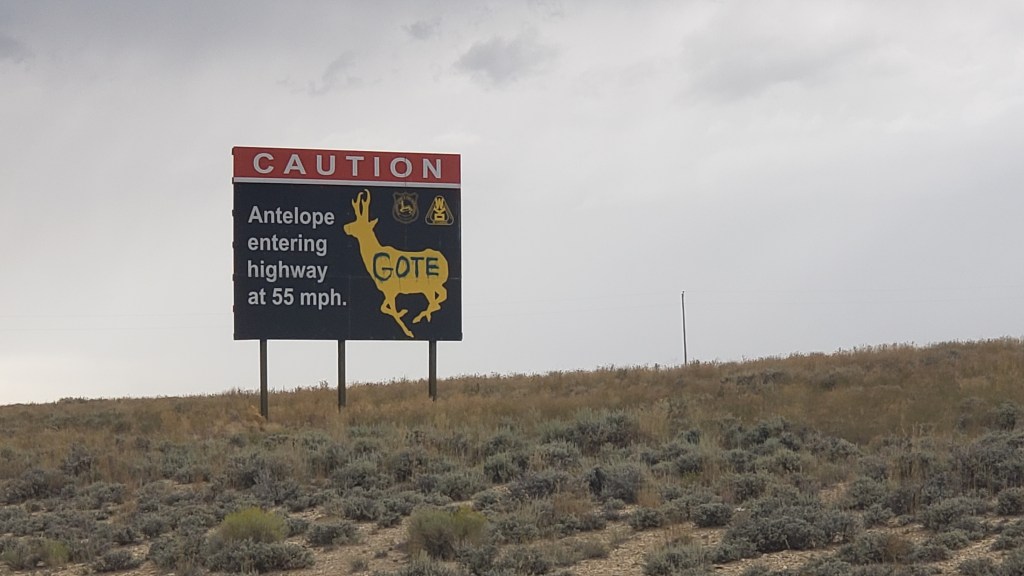
We saw lots of wacky signs warning of local dangers, such as cows and speedy “antelope,” (which aren’t antelope at all, they’re pronghorn, but that’s an argument for another day).

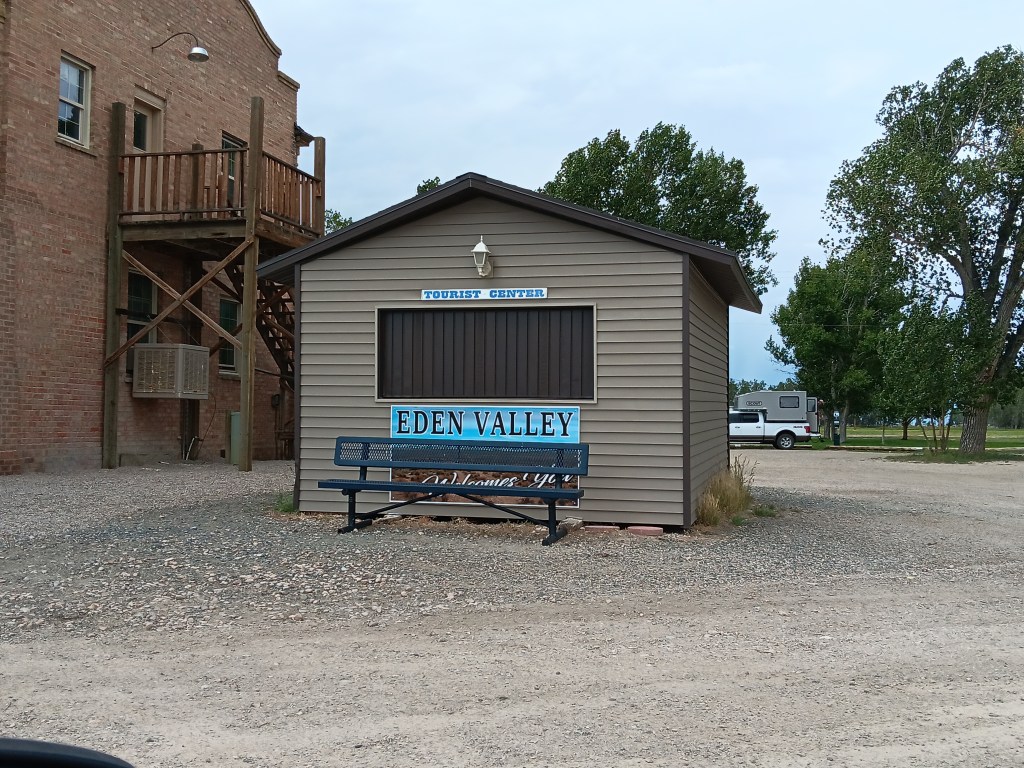
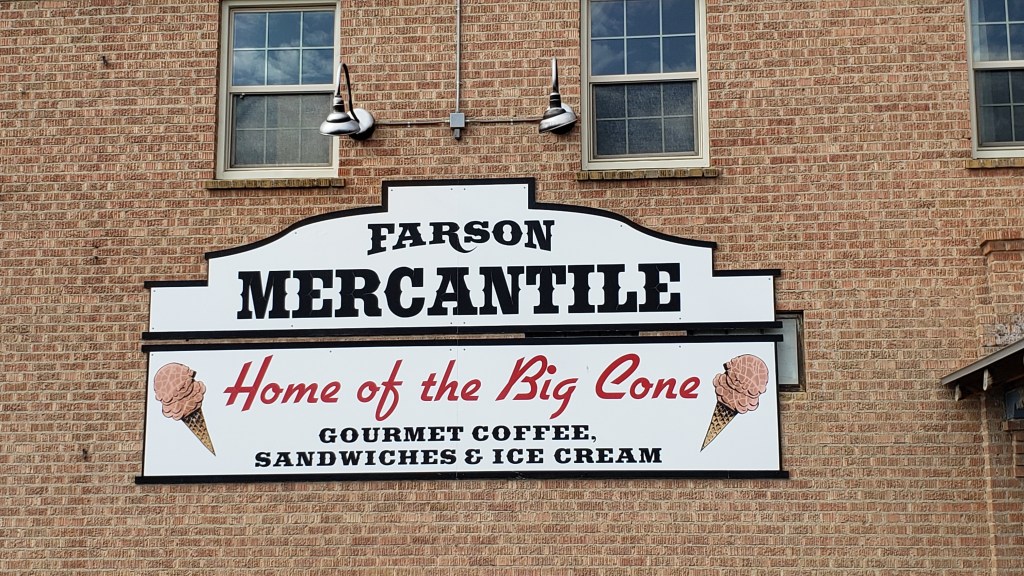
Farson’s Visitor Center, right next to the only other thing in town, the Mercantile, with its big ice cream cones.


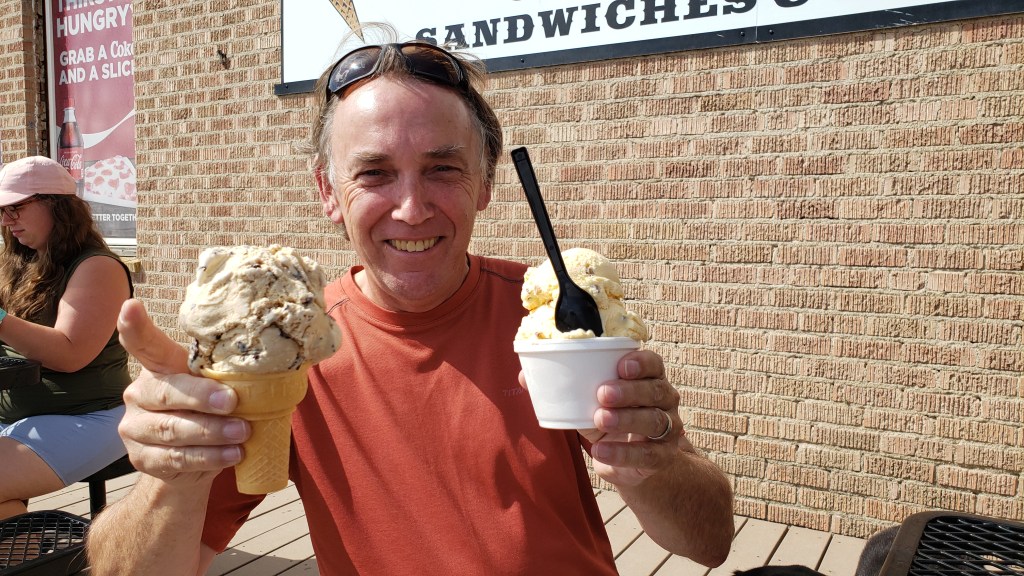
He wasn’t wrong. The place was hopping, and everyone was buying ice cream. We split a sandwich first, having skipped breakfast, and judging by the outrageous size of the ice creams we saw coming out of the building, we both opted for the Baby Scoop.

Turns out, that’s what nearly everyone else had, too.

Simon originally asked for a Single, but when the girl scooping it up started to mound a second massive scoop on top of the first massive scoop, he balked, and retreated to Baby Scoop.


Susan ate less than half of hers, Simon powered through his, and we spent a happy hour talking to the locals who joined us on the patio. One was a rancher having a treat with his grandson, and he told us all about his farm, and how he’d never been to Florida because he had no desire to “go to the other side of the world.” All the people we met were just passing through the tiny town, but insisted you “have to stop for an ice cream” when you’re here.

Our return trip to the wildlife refuge had the disadvantage of being right after a big rainstorm, and we were right in thinking we’d see less wildlife (meaning, none) because of it.

Lots and lots of looking, but not a lot of seeing.

Somewhere along the wildlife road we also missed our turn-off to the highway, and as darkness began to threaten, we had a choice to make. There had been no obvious roads turning off the wildlife road, so should we push on? Or should we go with a sure thing and make the many-miles trip back along the road we already knew would lead out of the refuge?

This is pretty much what we saw most of the way.

In this instance, we chose to backtrack, mainly because we’d passed a wreck of an RV that was camped on the side of the road, its owners were probably packing heat, and we’d be held captive if we didn’t get out before dark, since we’d been told the DNR closes the gates shortly after dusk.

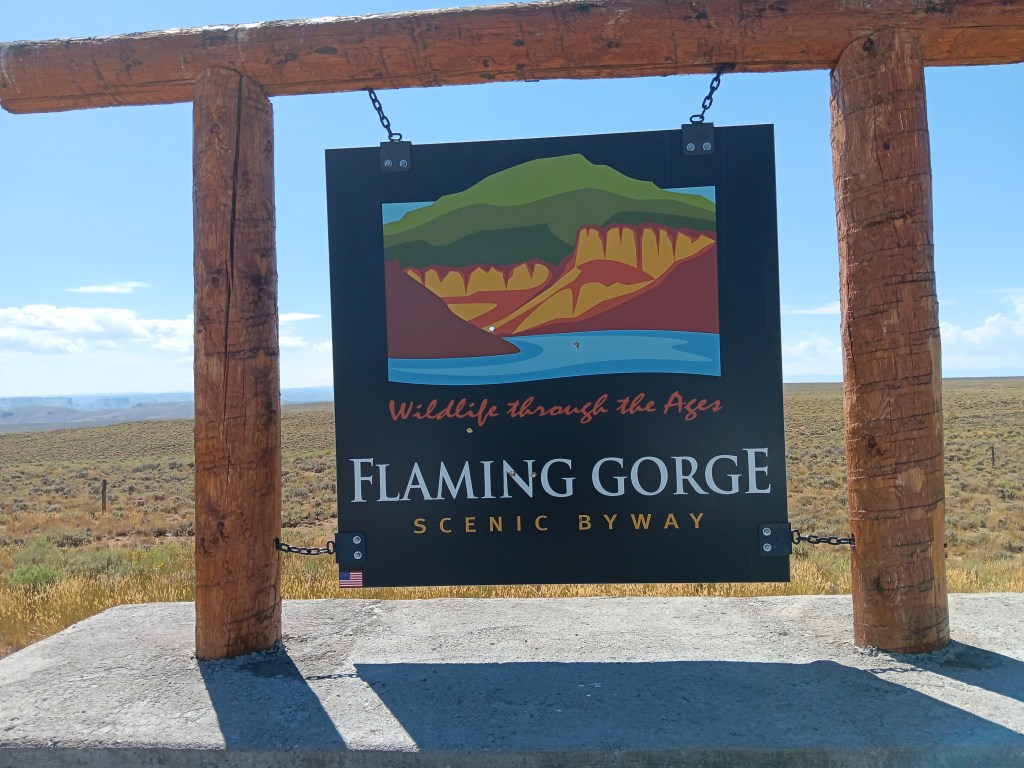
The next day made up for any small disappointment we’d had, as we pointed Nippy south out of Wyoming and into the Flaming Gorge in northern Utah.


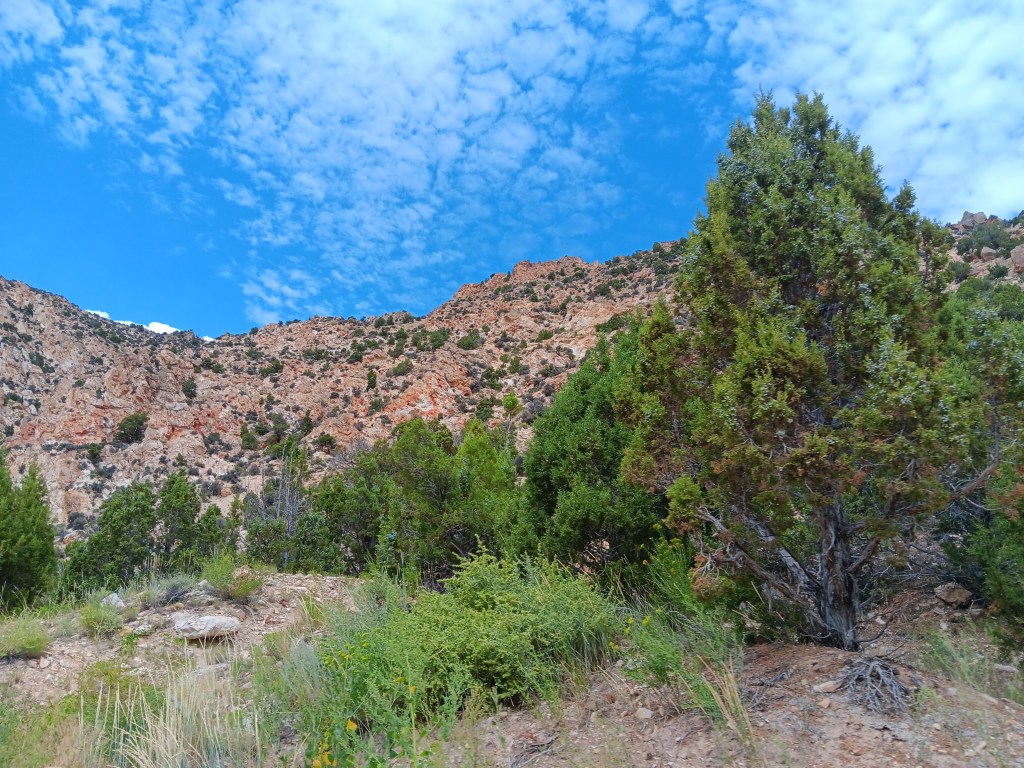
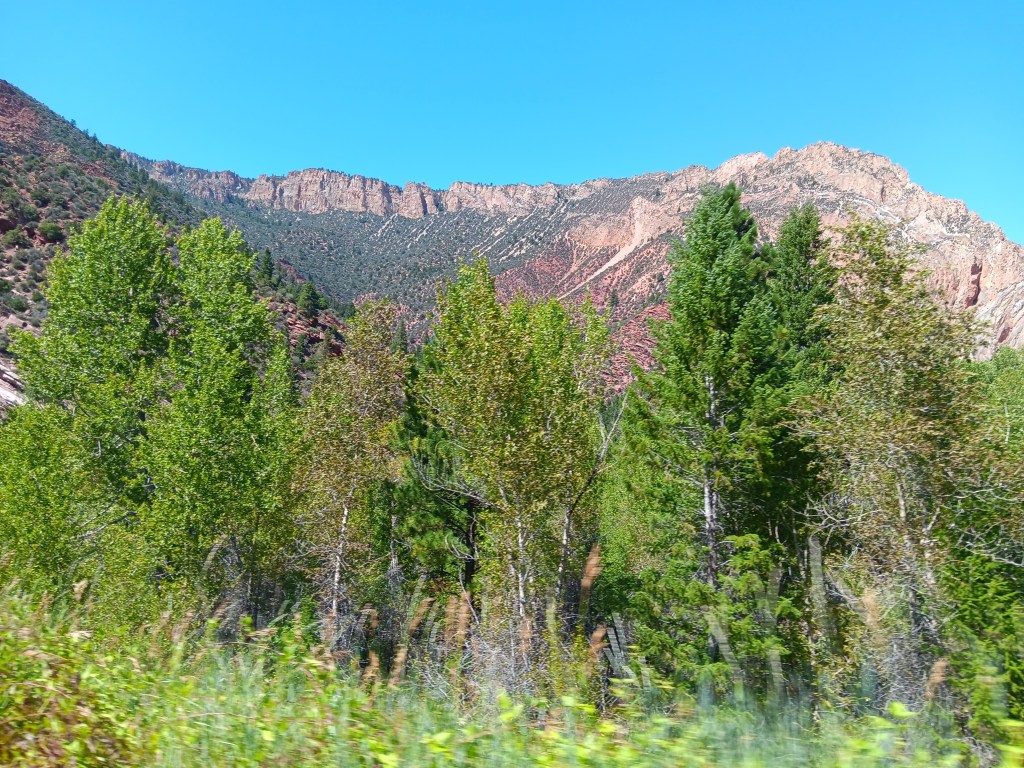
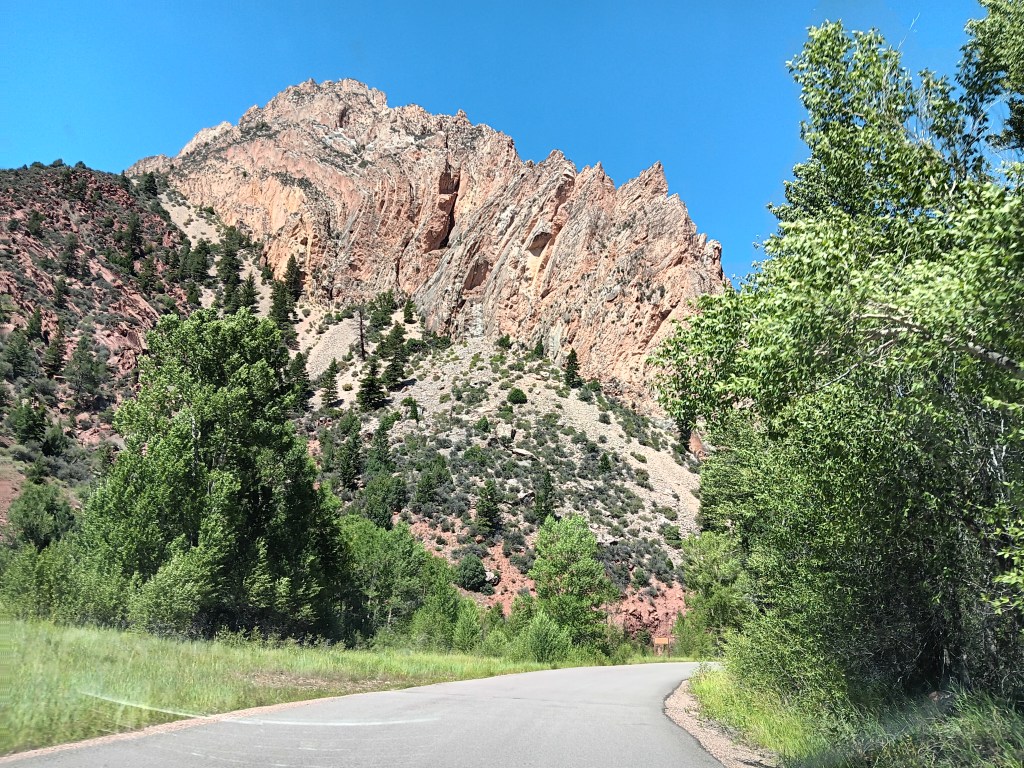
I’m a bit tired as I type this, both of us having been awake most of the night with a big thunderstorm and an antsy dog, so we’re going photo-heavy here, with captions that will do most of the work for me.

I’m putting this photo here first, and I’ll use it as a reference for how BIG the mountains we passed were, and how high the canyons walls were. This is nothing more than a large mound of rock, hardly worth noticing, but it gives you an idea of size.

On our way through Flaming Gorge National Recreation Area, we detoured down a road that led to the Sheep Creek Canyon Geological Area, a name that intrigued us, and we’re so glad it did. It turned out to be in our Top Two of astounding canyons.

It started slowly, but even so, that boulder with Nippy in front of it is about the size of a single rock at the top of this mountain.

You wouldn’t be able to see the boulder without binoculars if it were at the top of this mountain. It would just be too small.

A creek ran alongside the geological loop throughout our entire drive.

“How cool and babbling and refreshing on this hot summer’s day! Too bad I hate water so much.”

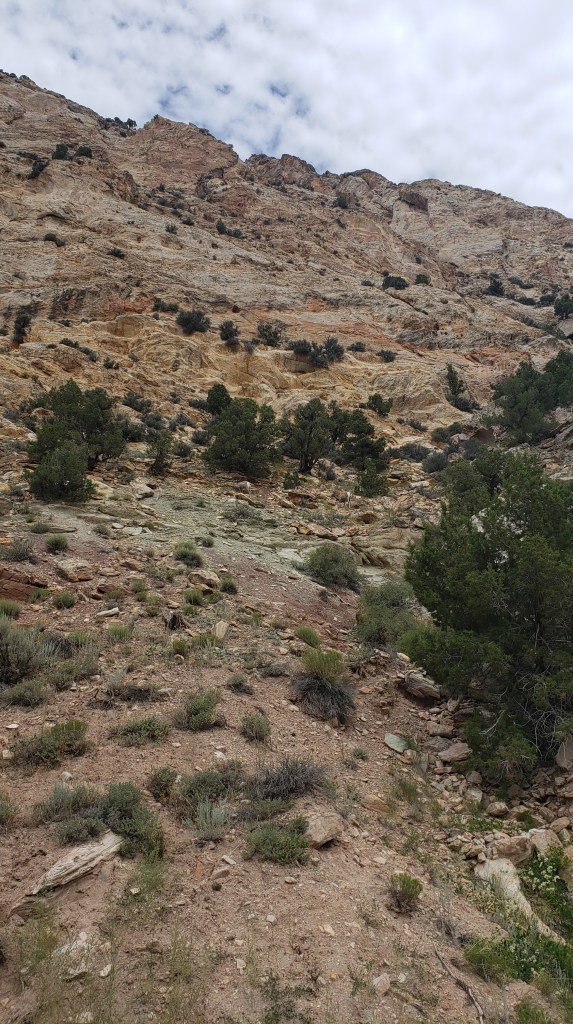
The tiny points at the top of this massive, massive mountain are enormous pine trees.

The smallest rocks sticking up at the top of this mountain – whose structure looks like it was bent in on itself – are about the size of the boulder.

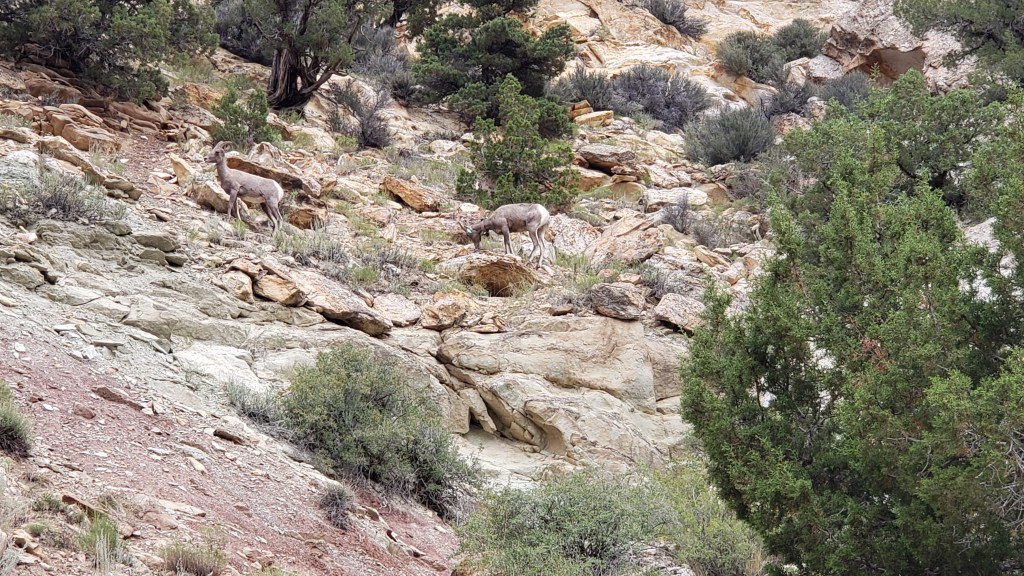
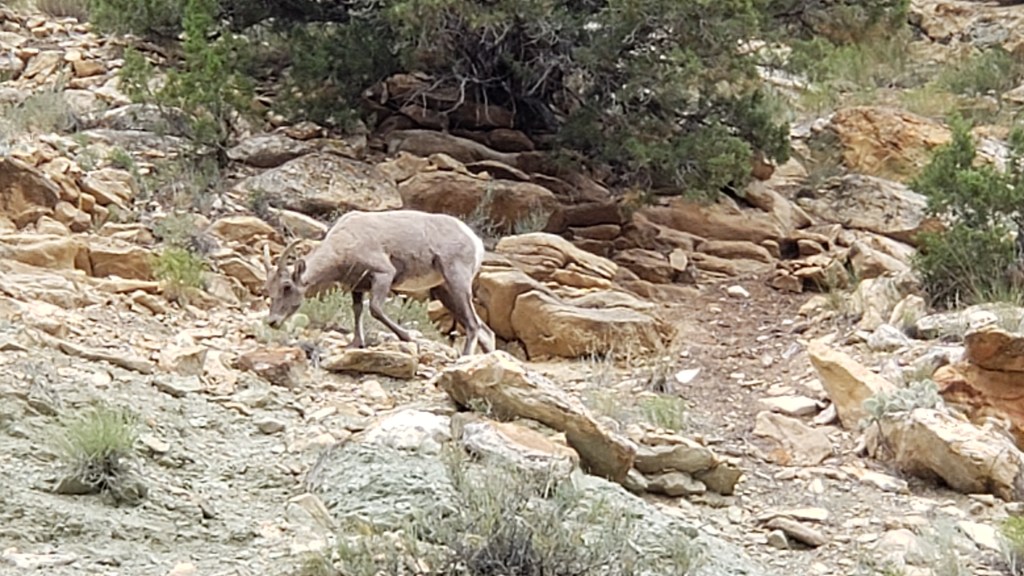
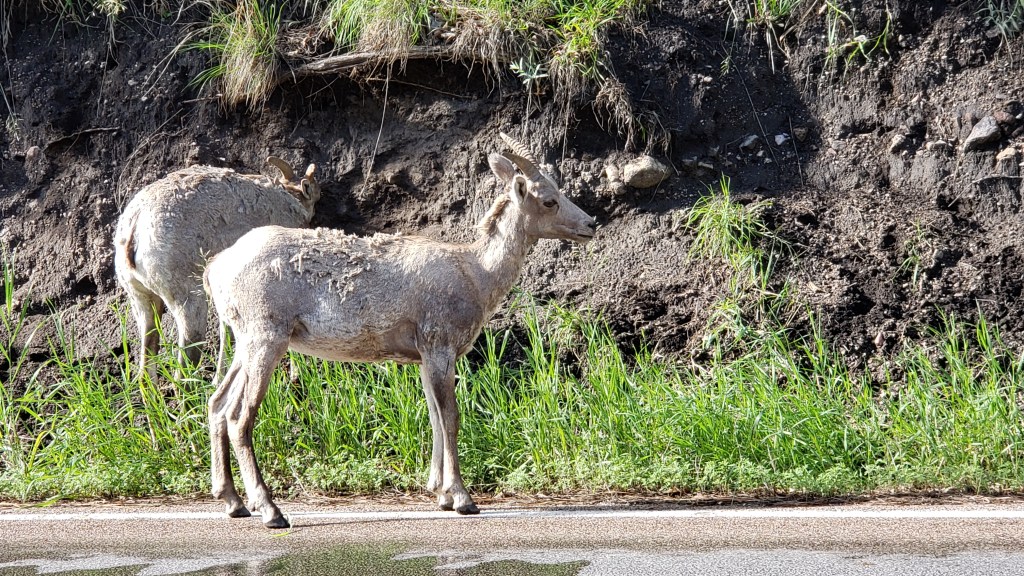
We took hundreds of mountain photos, as you can imagine, but we’ll stop there. Instead, enjoy these two Bighorn Sheep, who blend into the landscape so well it was surprising we saw them at all.


This is without zooming in. You can JUST make out their white butts below the trees in the middle of the photo. That’s how hard they are to see.

This is zoomed WAY in.

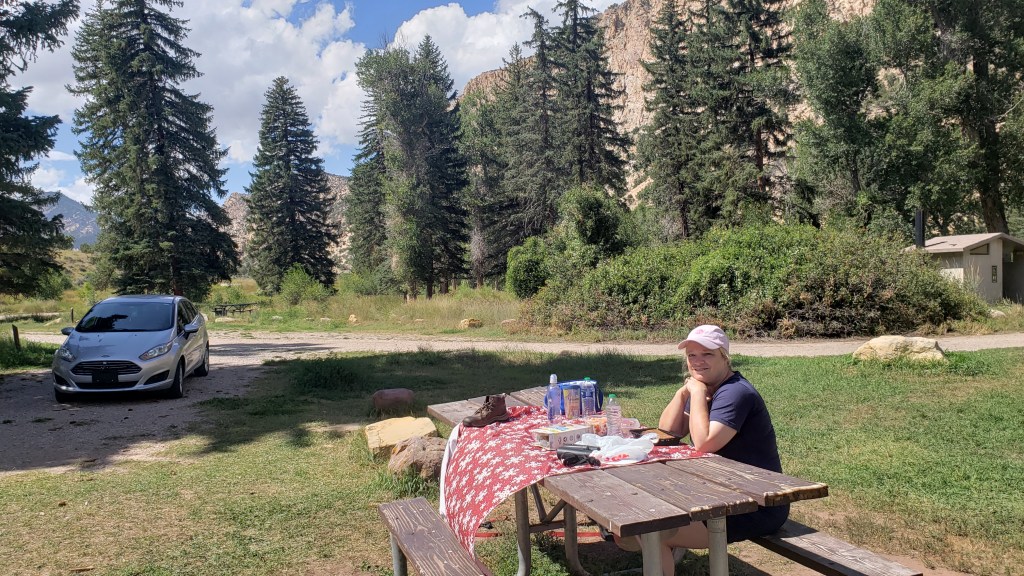
We pulled off into a tent-camping area before leaving the canyon, and had the kind of lunch we were growing used to (meaning, odd). This time it was frozen carrots, cherry tomatoes, Paul Newman Italian Dressing in a packet we picked up at the lodge in Yellowstone, Triscuits, bread, and sausages.

Why? Just, why?

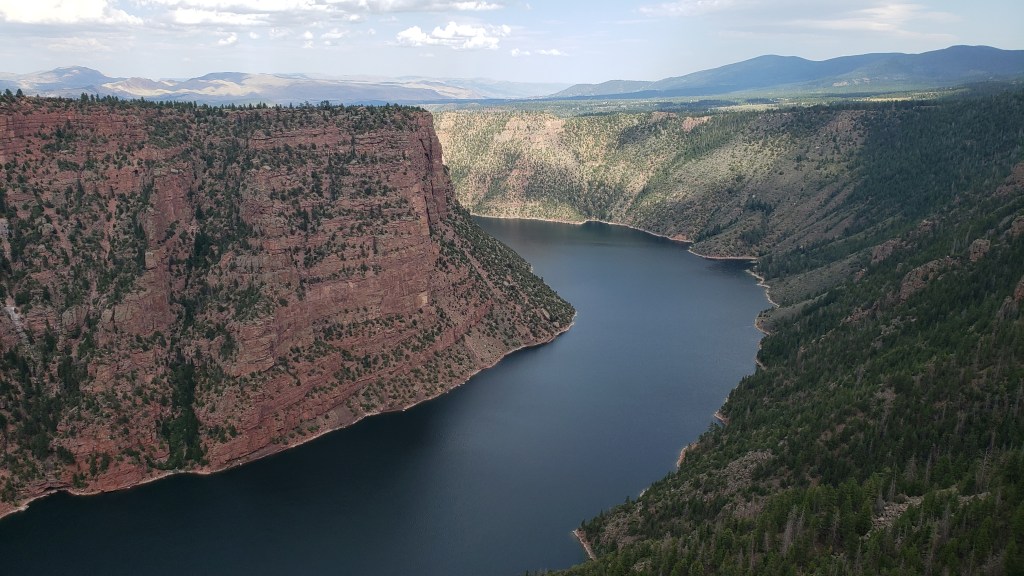
Finally, we reached the Red Canyon, and while we didn’t get the best light of the day, the deep red of the rock and the depth of the canyon were still incredibly impressive.

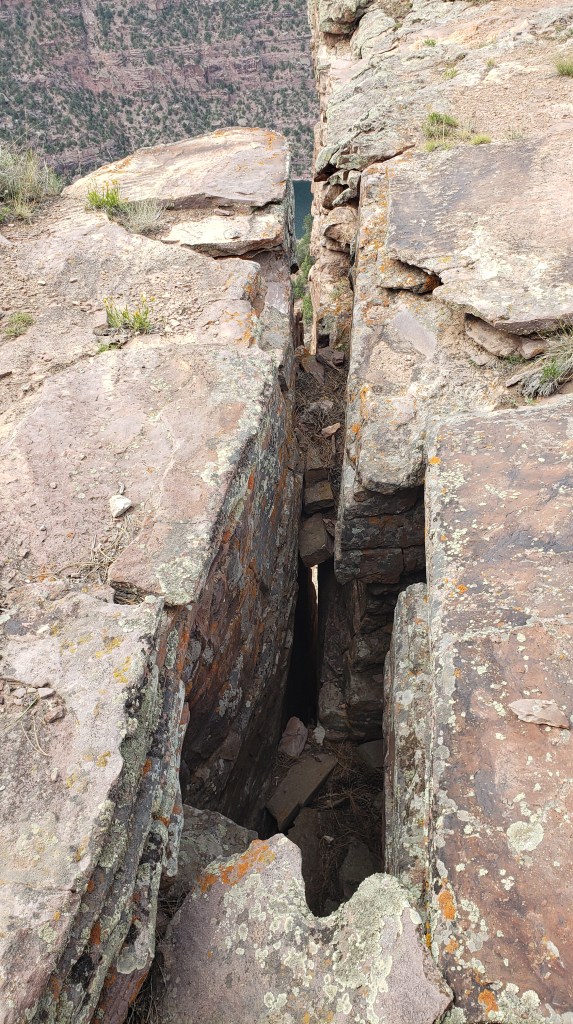
There are warnings to avoid the deep fissures all around the walkway that leads out to the overlooks.

You can just see two people on the ledge just past the small pine tree (the white dot is one person’s shirt), which gives you an idea of scale.


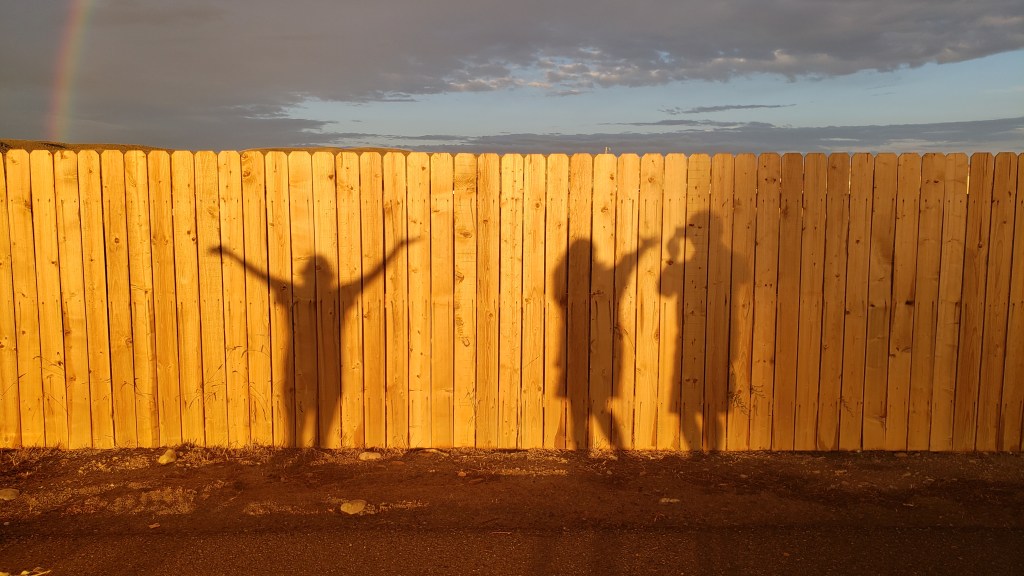
Our final evening in Wyoming was celebrated with a glorious, full rainbow, and some fun with a fellow camper when we noticed our shadows on the fence. Isn’t life great sometimes?

Click photo for video

On The Trail Of The Oregon Trail


Whenever we see a daunting mountain or endless rolling hills we think of the pioneers who made their way west with no smooth pavement to ease their rattling teeth and overworked horses or oxen. The Laramie Range at the southern edge of Casper, Wyoming was one such obstacle that proved the people who pushed westward let nothing stand in their way.

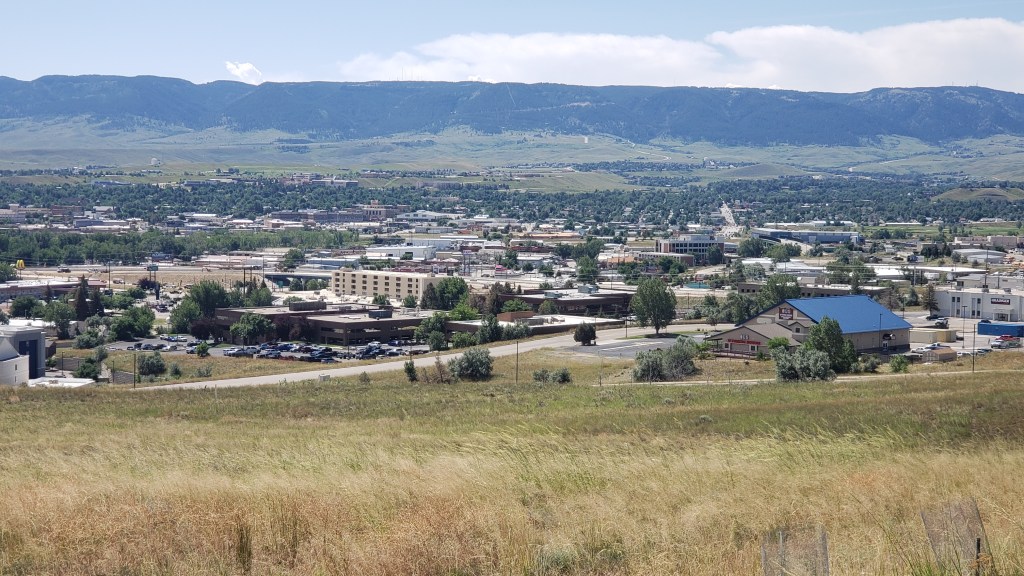
Present-day Casper, Wyoming, with the Laramie Range in the background

Two trails are famous in the U.S.: The Pony Express (Kansas City, Missouri to San Francisco, California) and the Oregon Trail (Independence, Missouri to the far reaches of Oregon). There were actually two more major trails, we came to find out, that cut their way through Wyoming: The Mormon Trail, which started in Illinois and ended in Salt Lake Valley, Utah, and the California Trail, from Kansas City, Missouri to many places in California). All of them passed through Casper.

The Pony Express isn’t on this map, but it ran roughly along the same route.

For some, it was a 2,000-mile journey from beginning to end, and it’s quite incredible that specific points along the way were used by all or nearly all of them. Independence Rock was one of the landmarks they looked for, and many left carvings on the hill that marked their passing.

Independence Rock was an importation milestone. Reach the huge granite mound by July 4 (hence, its name) and you’ve got a chance of surviving the rest of the trip. Arrive late, as part of the ill-fated Martin Company Morman handcart expedition did, and disaster is the likely result.

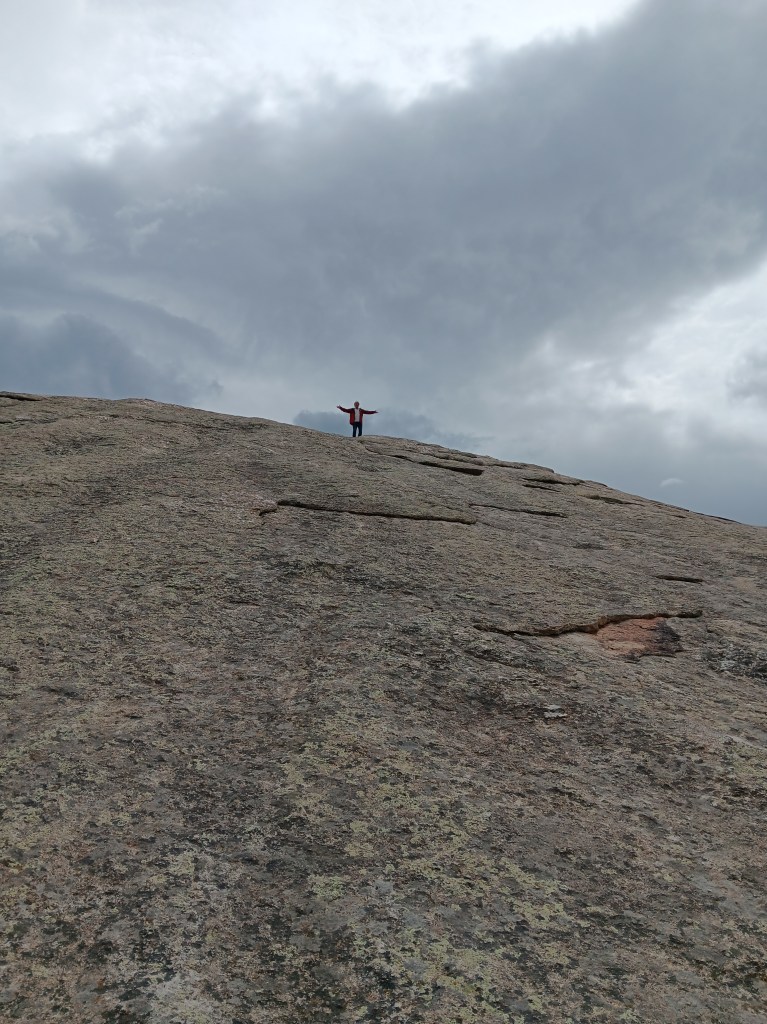
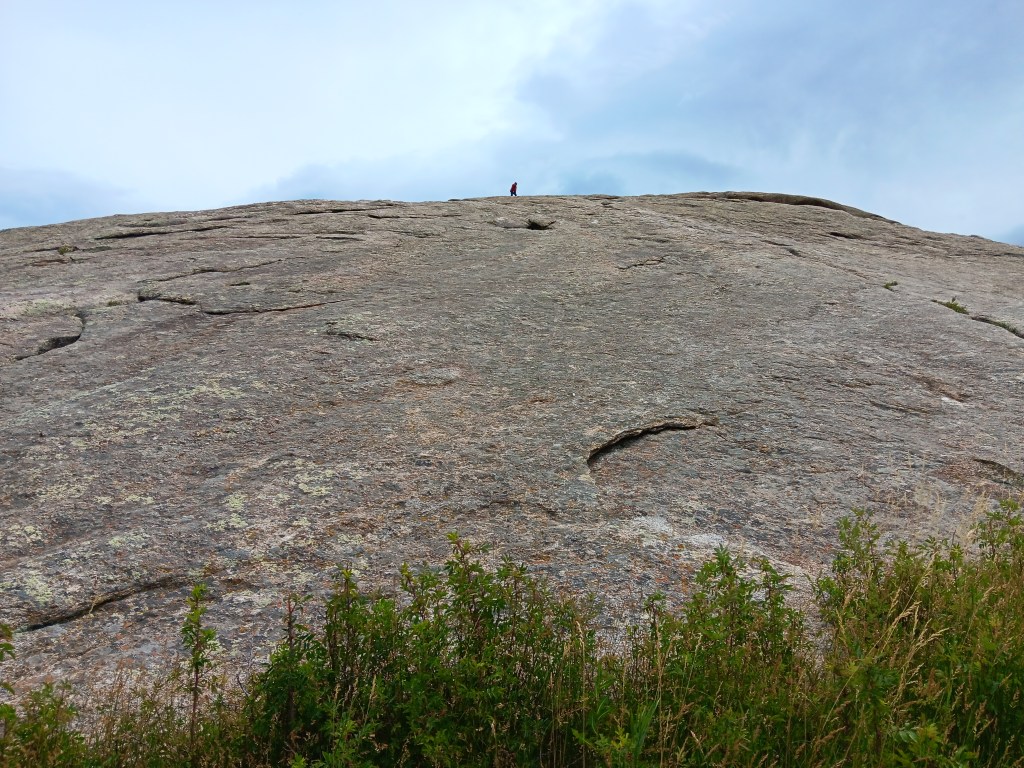
Simon, of course, had to climb to the top, as other visitors were doing.


Ruthie, of course, wanted to follow him. Her toenails insisted otherwise.


View from the top

Martin’s Cove, ten miles to the east, tells the 1856 Morman Handcart Disaster story. Under the guidance of the Edward Martin Handcart Company, the season’s final two (of five) English emigrant groups departed Iowa City, Iowa in late July. By mid-October, having been delayed by snowstorms and suffering from illness, fatigue, and malnourishment, 50 of them were dead. It became the greatest single-event loss of life of the country’s entire western migration.

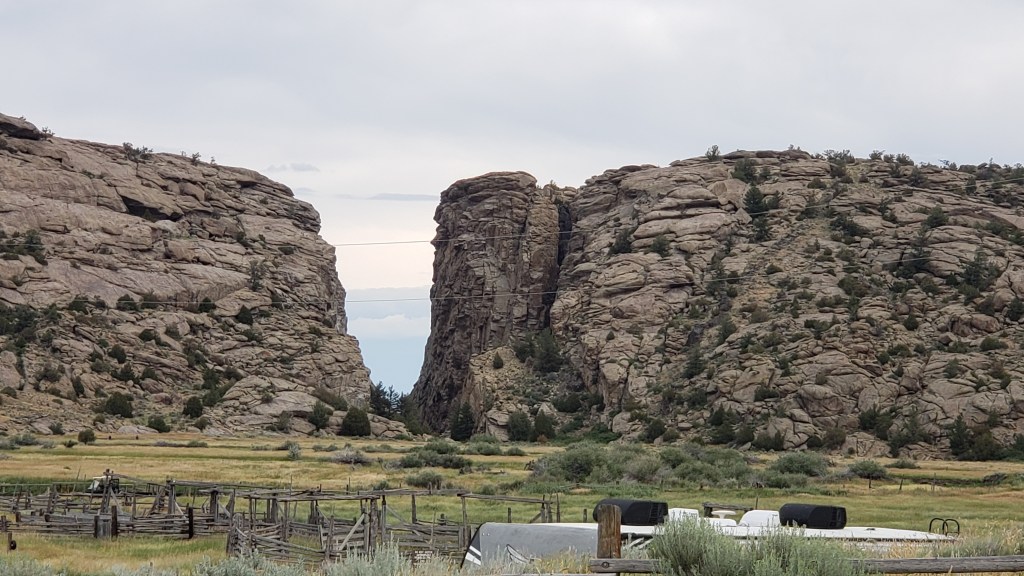
Another geological landmark the westward expeditions looked for was Devil’s Gate, near Martin’s Cove, a gap that allowed them to travel south of the area’s impassable river gorge. All four “trails” passed through this gap, and their wagon and handcart ruts are still visible. We couldn’t see them, nor the former Martin’s Cove camping site the travelers used, because (say it with me…) NO DOGS are allowed on the trails.


A third landmark was Split Rock, a camping and grazing site one-day’s travel (12 miles) from Devil’s Gate, distinctive for the enormous V-shaped “split” (more like a natural cut-out) at the top of the mountain. You’ll see it slightly to the left of the middle mountain’s center in this photo:

When we moved Fati to a new campground in Wheatland, Wyoming, north of Cheyenne, we made a day trip out to the Guernsey Ruts, Register Cliff, and Fort Laramie, also milestone locations on the trails.


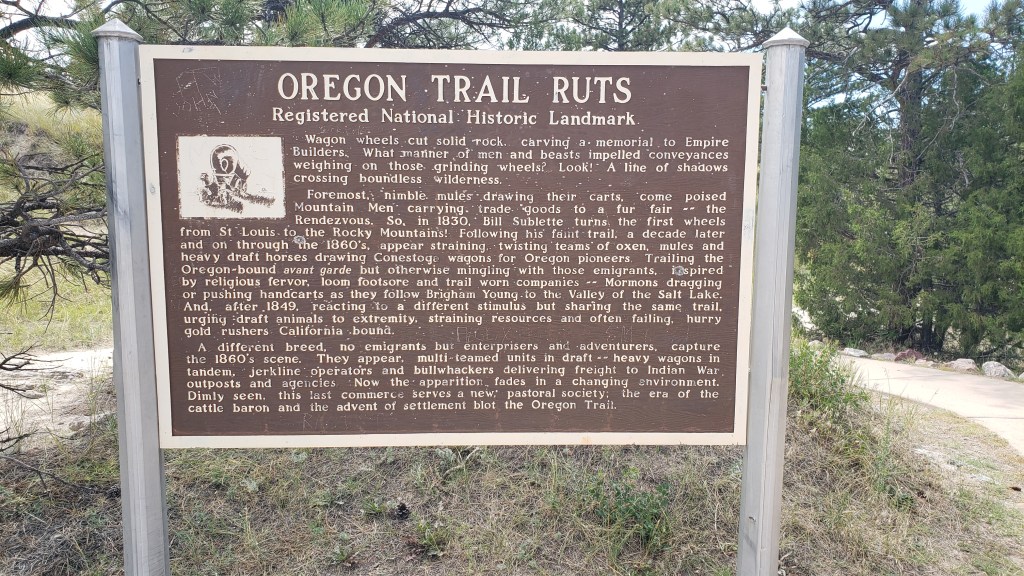
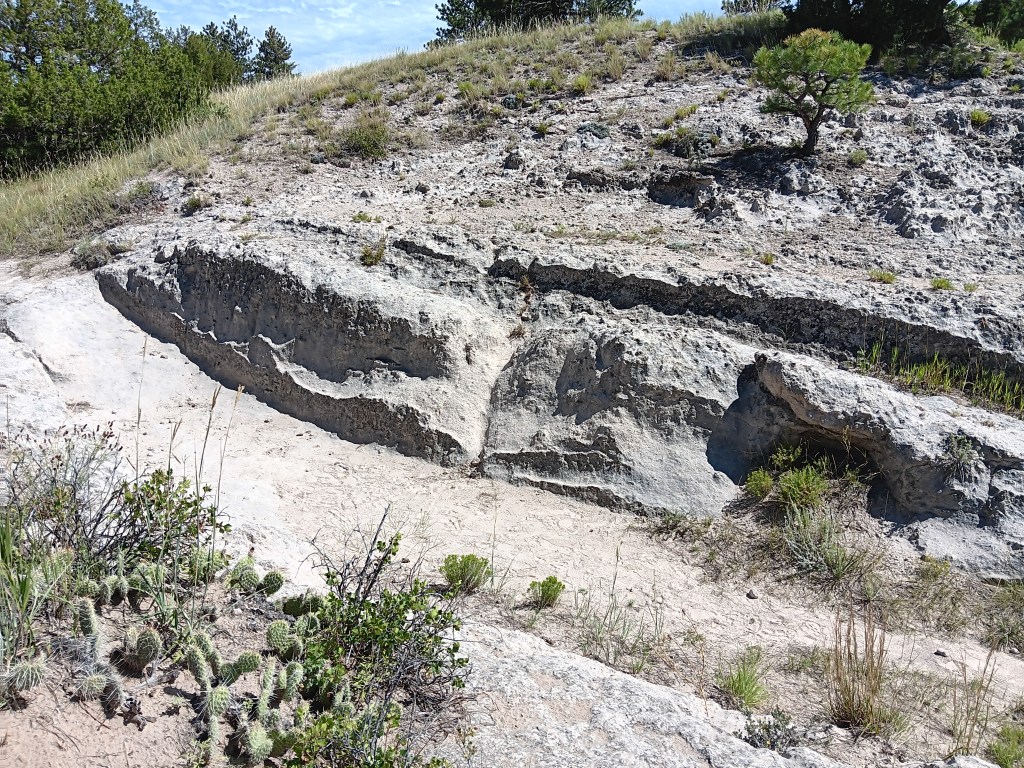
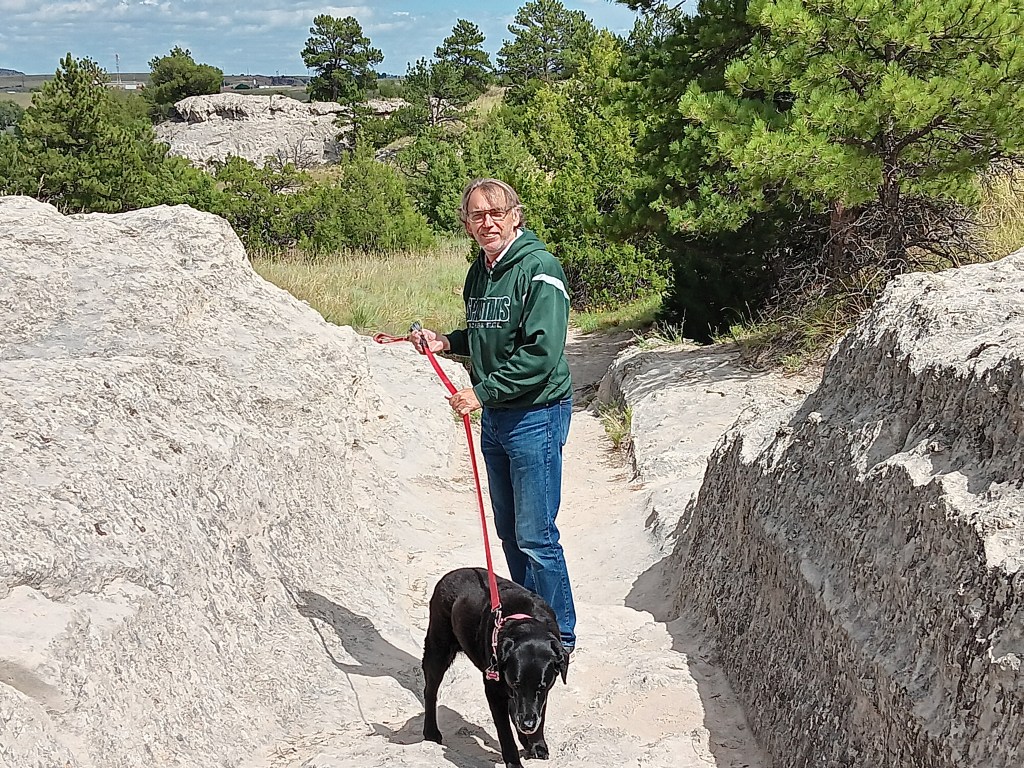
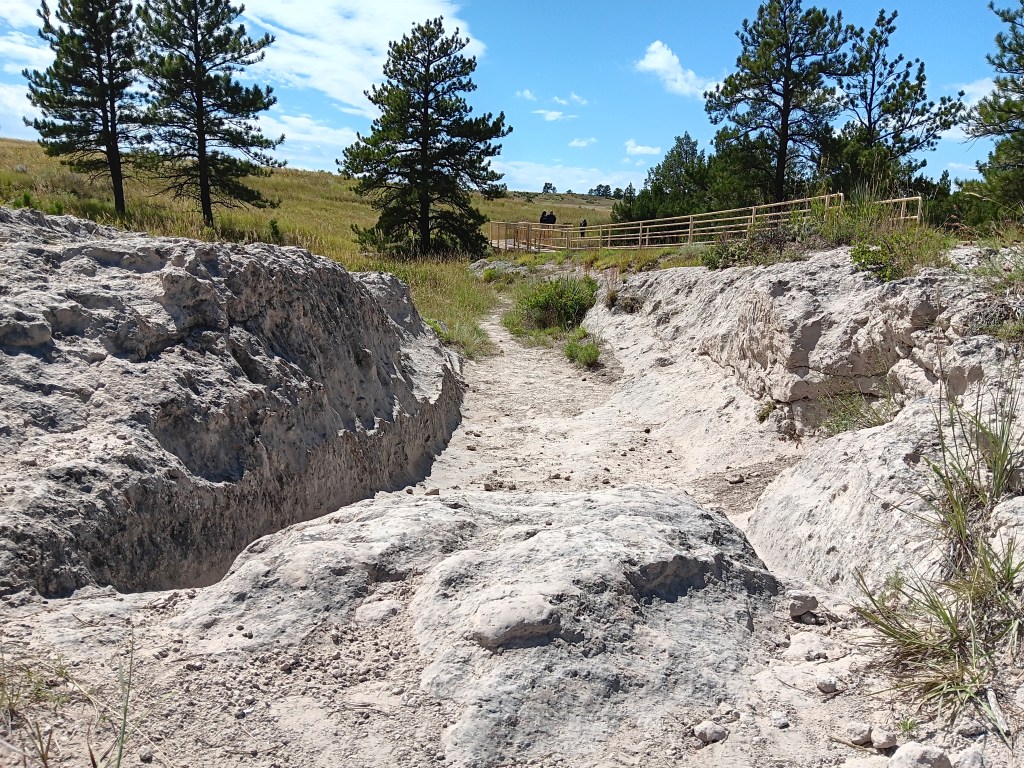
The Guernsey Ruts are located at Oregon Trail Ruts State Historic Site, where wheel tracks made by covered wagons and handcarts left deep gashes in the soft sandstone, which are now on protected land. Some are five feet deep, and it’s easy to see the wheels’ furrows and the deep pathway where people walked next to their wagon.

The ruts are at the bottom of the rocky side, and the walking trail is the deep gash just above it

Standing in one of the wheel-track ruts

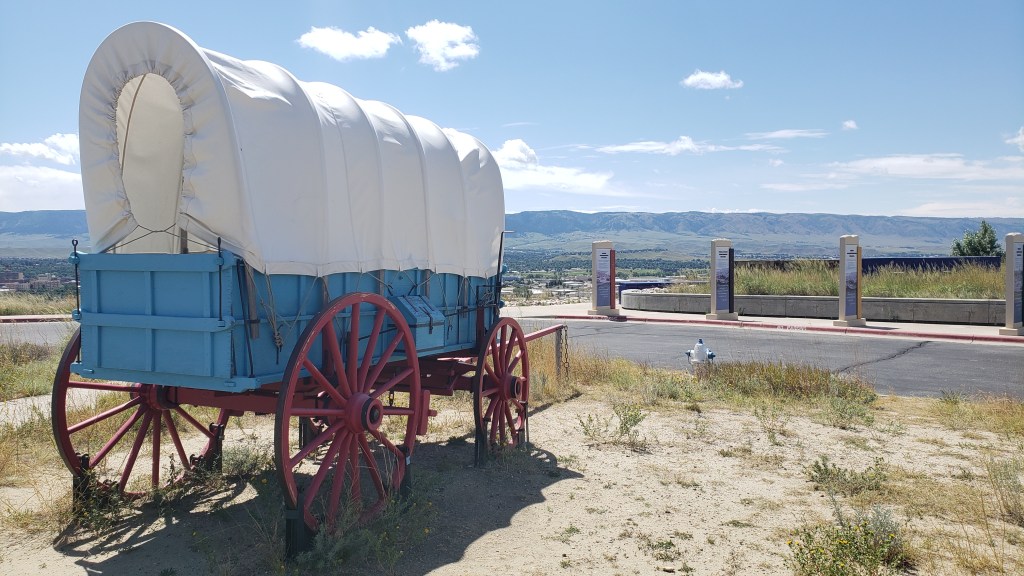
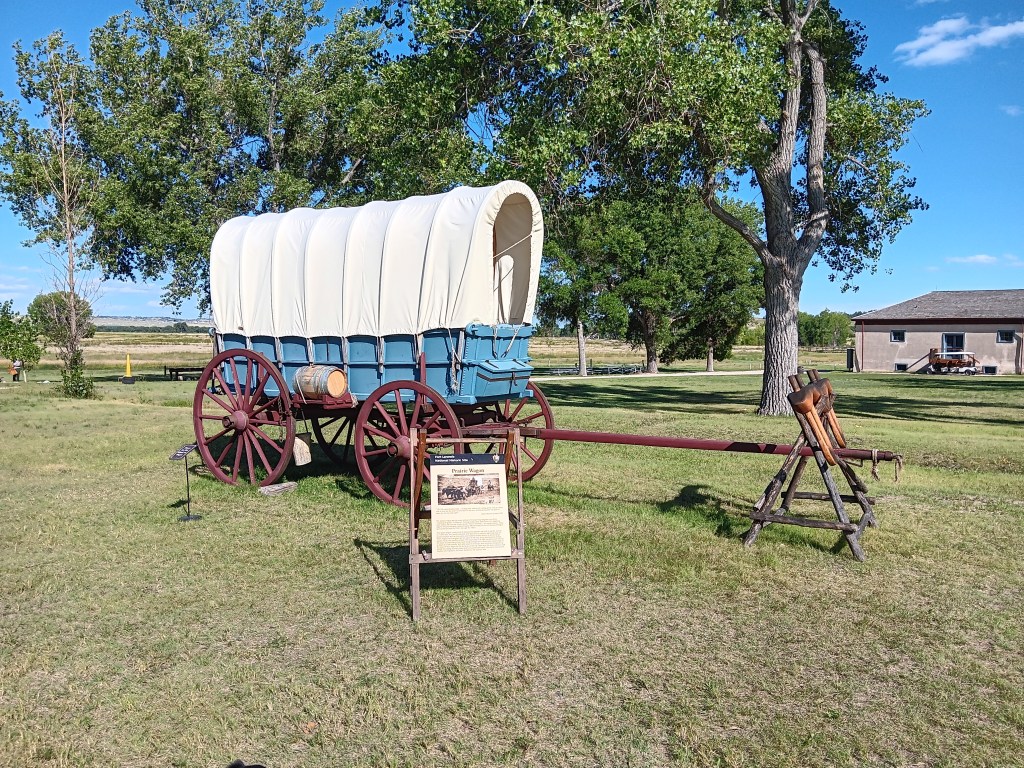
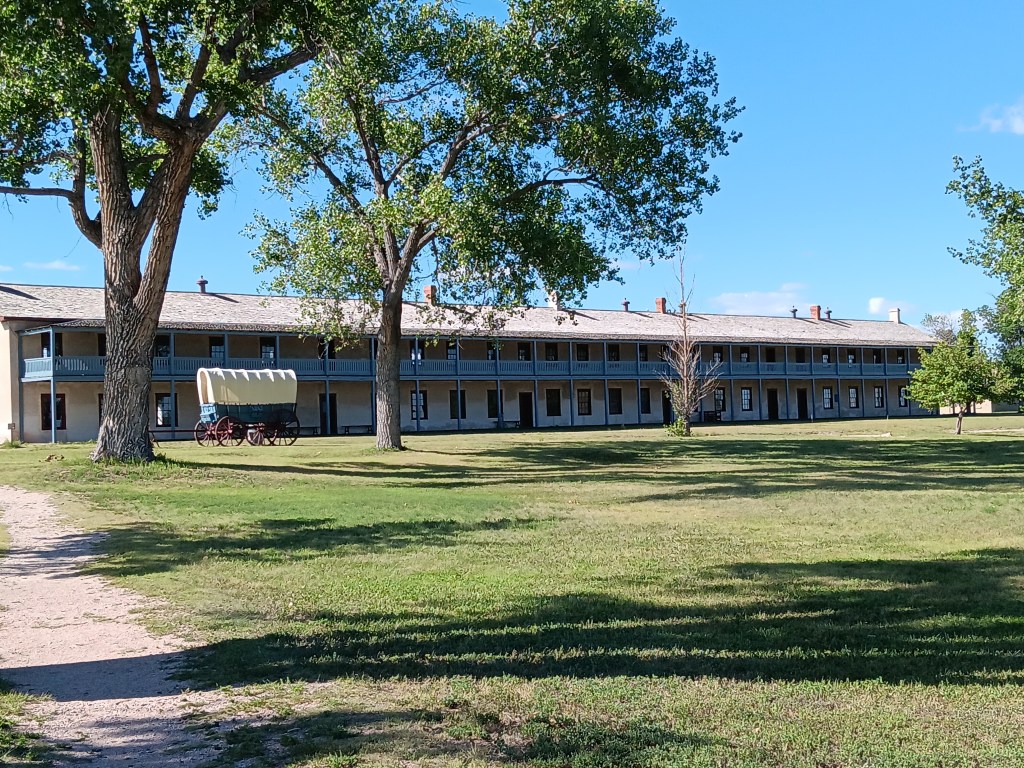
For reference, this is an example of a “prairie wagon.” This reproduction is located at Fort Laramie.

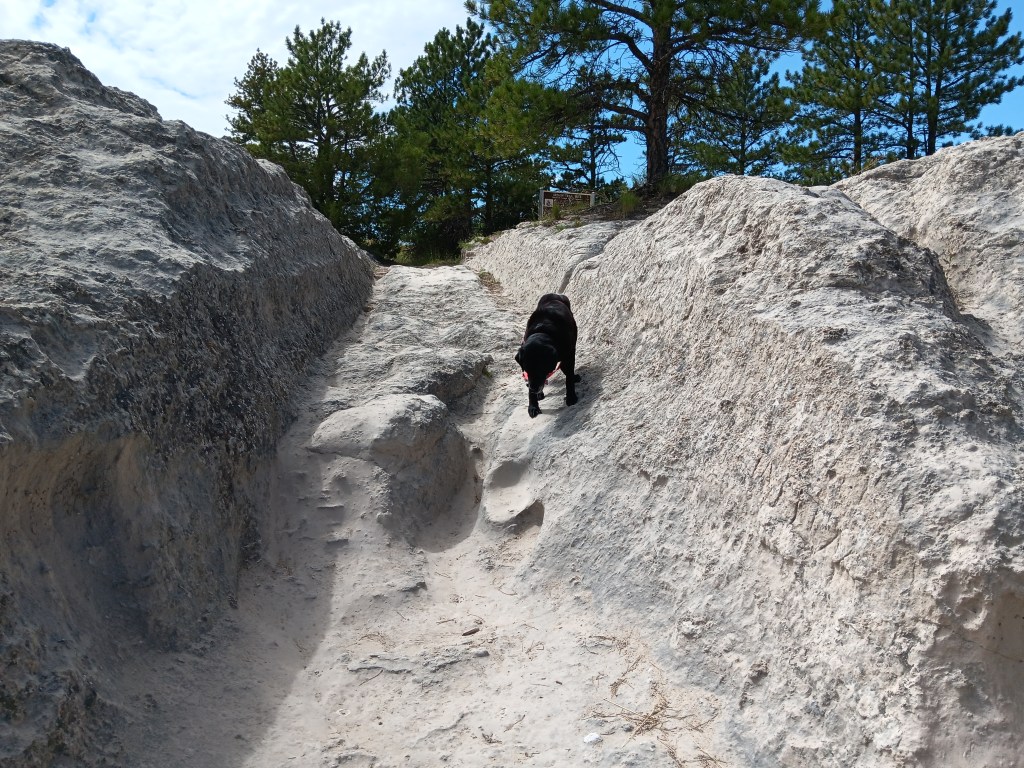
Visitors to the site are allowed to walk in the hard tracks, and we really felt a human connection to the slow, difficult climbs and drops the pioneers experienced as they plodded their way west. More than 500,000 pioneers crossed here due to the topography of the land, which is why the ruts are so deep.


Imagine having to get your wagon or handcart over this rock and into the established tracks

Even four-legged Ruthie needed a helping hand getting down the steep path

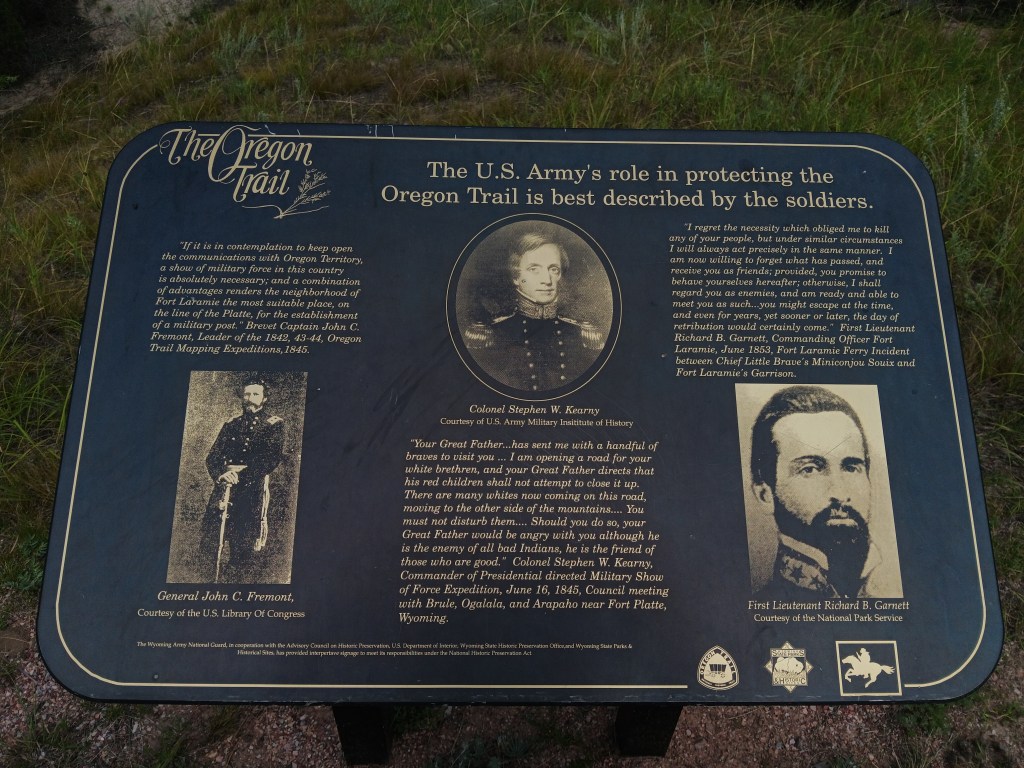
The one blot on this otherwise evocative site is the panels that tell the story of the trail only from the perspective of the soldiers tasked with “protecting” the emigrants’ passing through land that was home to native tribes. In a nutshell, the sentiment was that the tribes were hostile and it was perfectly fine to kill them “as needed.”


There are a few sites we’ve seen that give a nod to the people who actually lived on the land before white people came through, and their desire to continue living peaceful lives, but so far they’re certainly the exception. It’s impossible not to see these plaques’ quotes as a conscious choice.

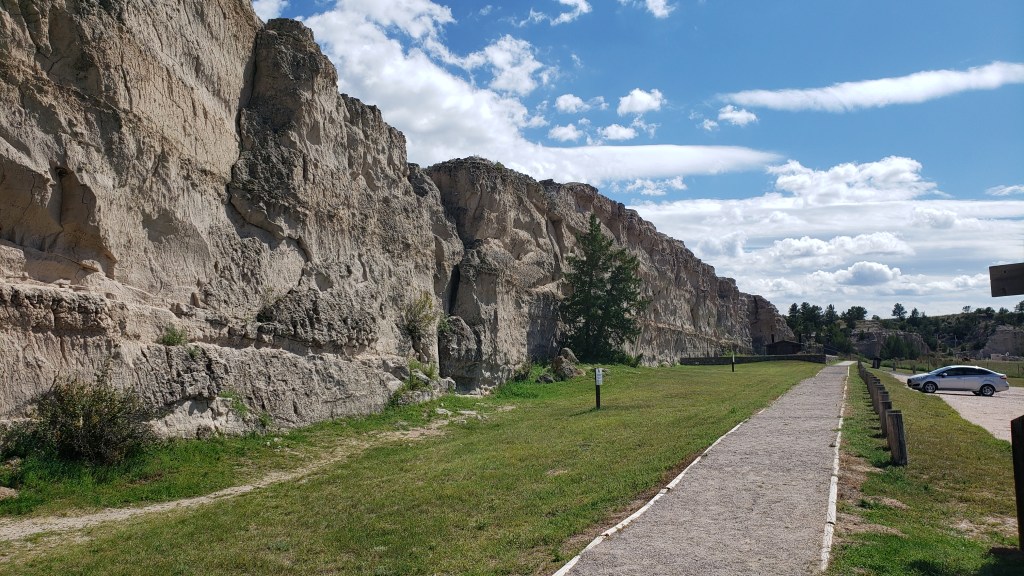
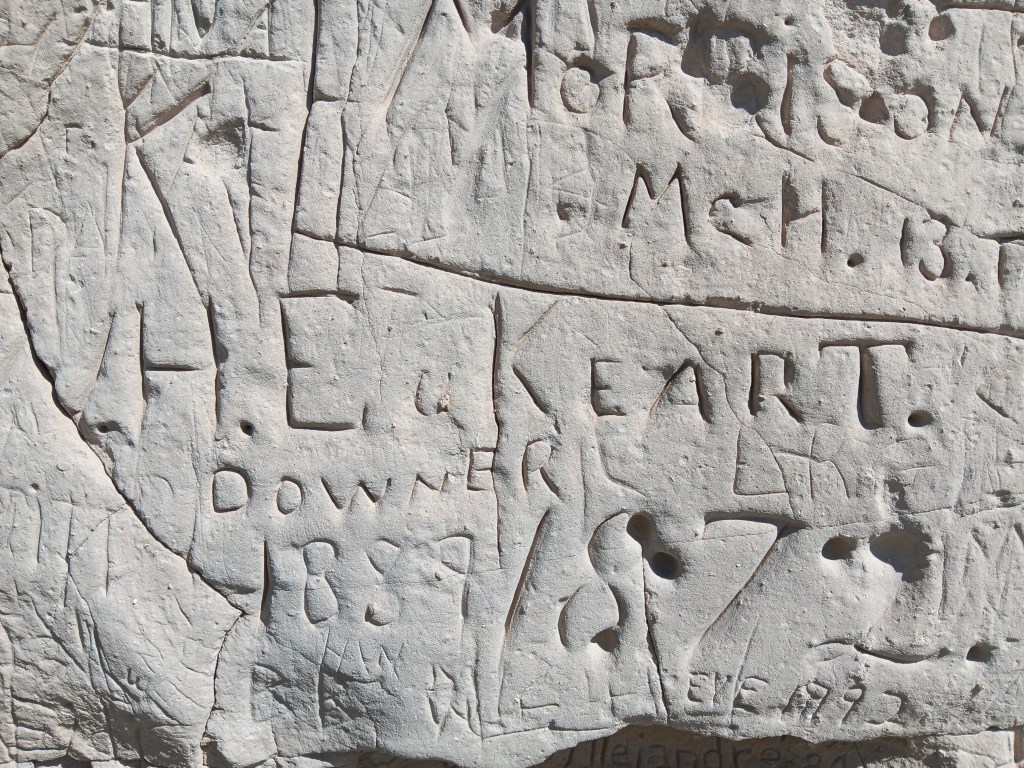
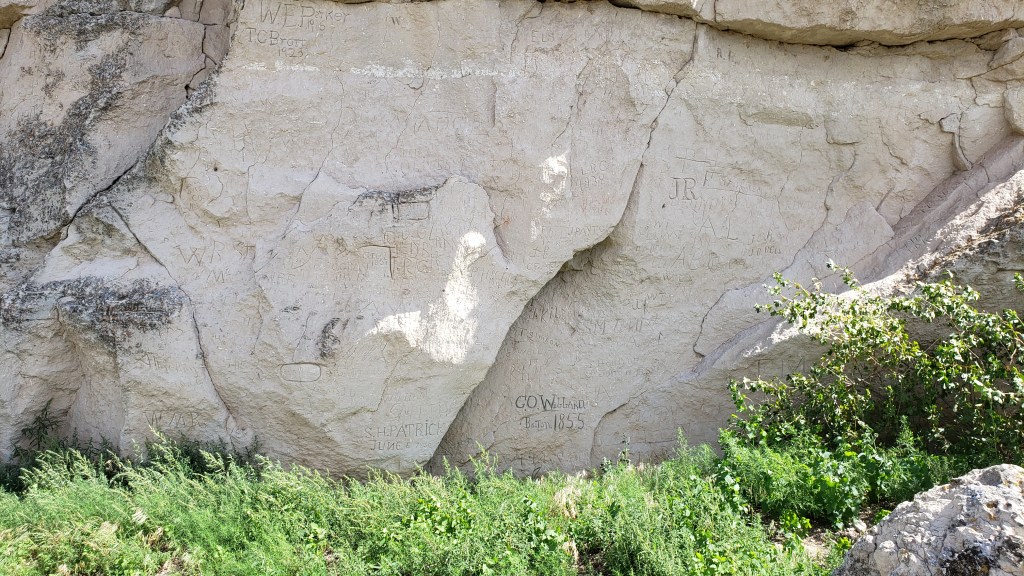
Register Cliff is about 12 miles east of the Guernsey Ruts, and it also holds the title of a State Historic Site. Here, trappers, fur traders, and emigrants rested during their journey west, and some carved their names and the date into the 100-foot-high limestone cliff.
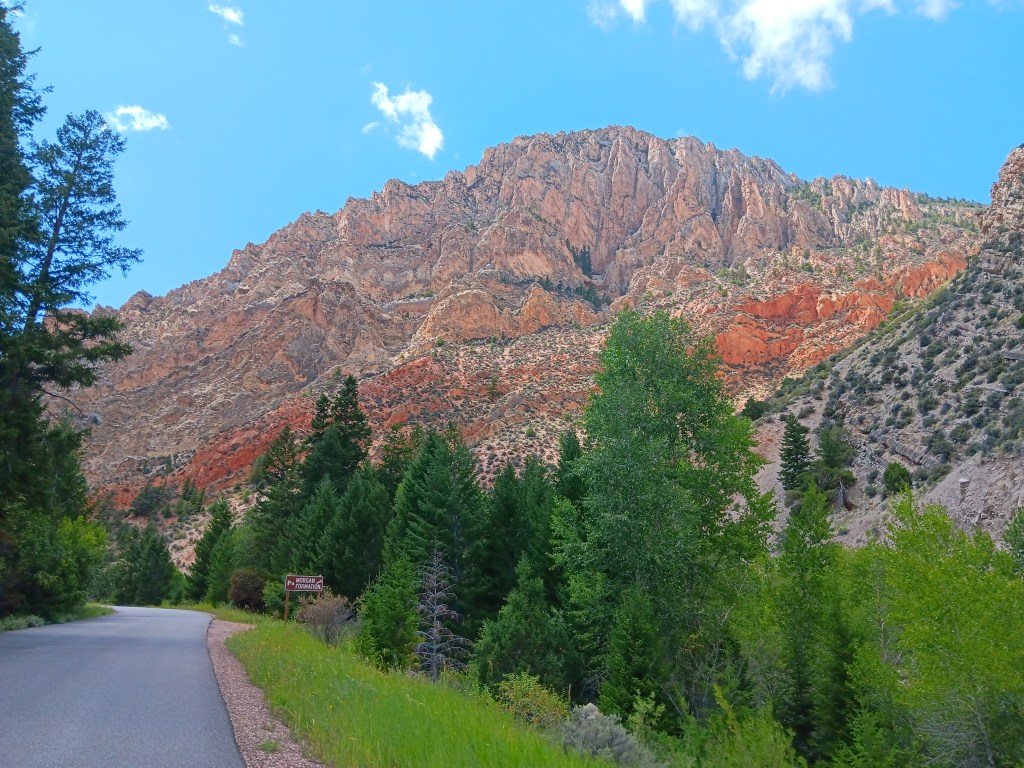

We didn’t see the earliest dates that have been identified on the cliff (1797 and 1829), nor did we see petroglyphs and pictographs made by the native people long before white people arrived, but we did see some carvings from the mid- to late-1800s, and many carvings behind a fenced area are from the time the Oregon trail was heavily used.


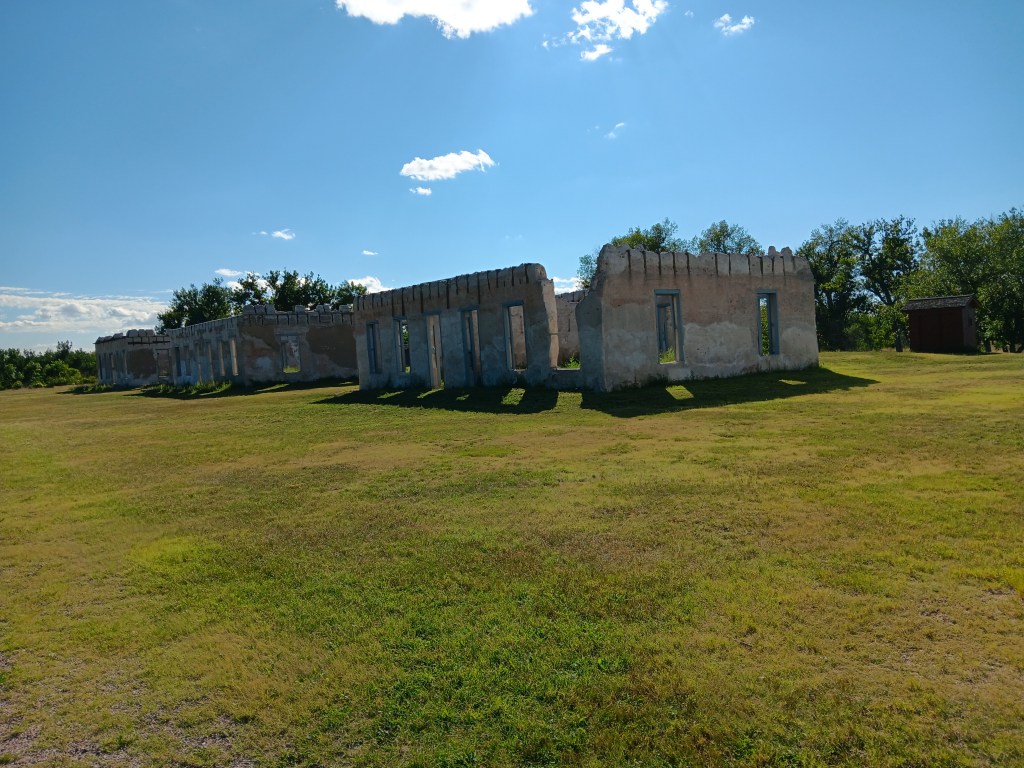
Fort Laramie – founded in 1834 as a trading post before evolving into a military post in 1849 – wasn’t the stockade-style fort we expected. Instead, it was more like a mini town, with necessities of daily living such as a bakery, a jail, a schoolhouse, barracks, and officer homes. It felt a lot like a military-specific version of Dearborn, Michigan’s wonderful Greenfield Village.

Barracks upstairs, living areas downstairs

Store

The officers’ homes were surprisingly luxurious

Some buildings are now just ruins

It was a place where emigrants stopped on their way to Oregon, Utah and California, as did some local tribes, to trade furs and hides for other goods. It was also a stop for the Pony Express from 1860-1861.

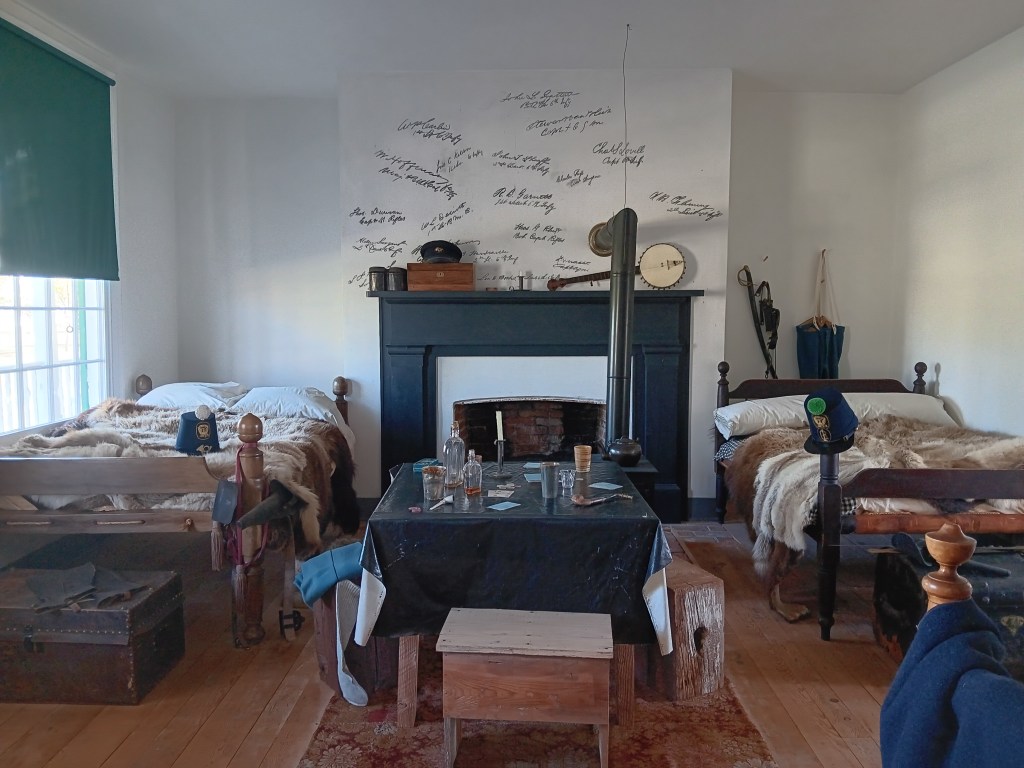
We don’t know what these signatures above the fireplace are all about, but they looked really cool and historical. A plaque wiht some context would have been nice.


We’re certain we’ll see a lot more sites having to do with the settling of this great, vast country, and when we do, we’ll be happy to share them with you.

Native Americans and Four Dead Presidents

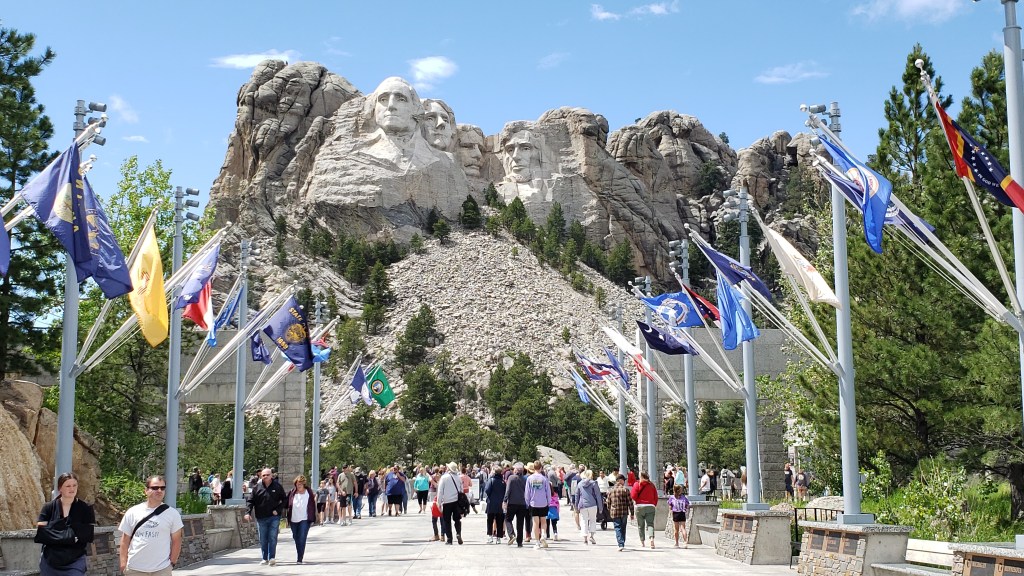
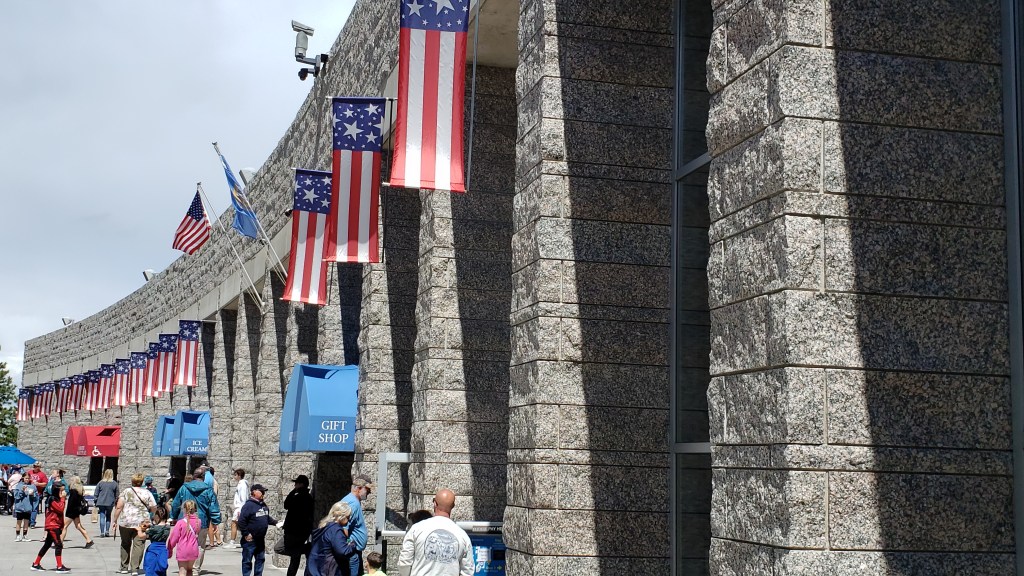
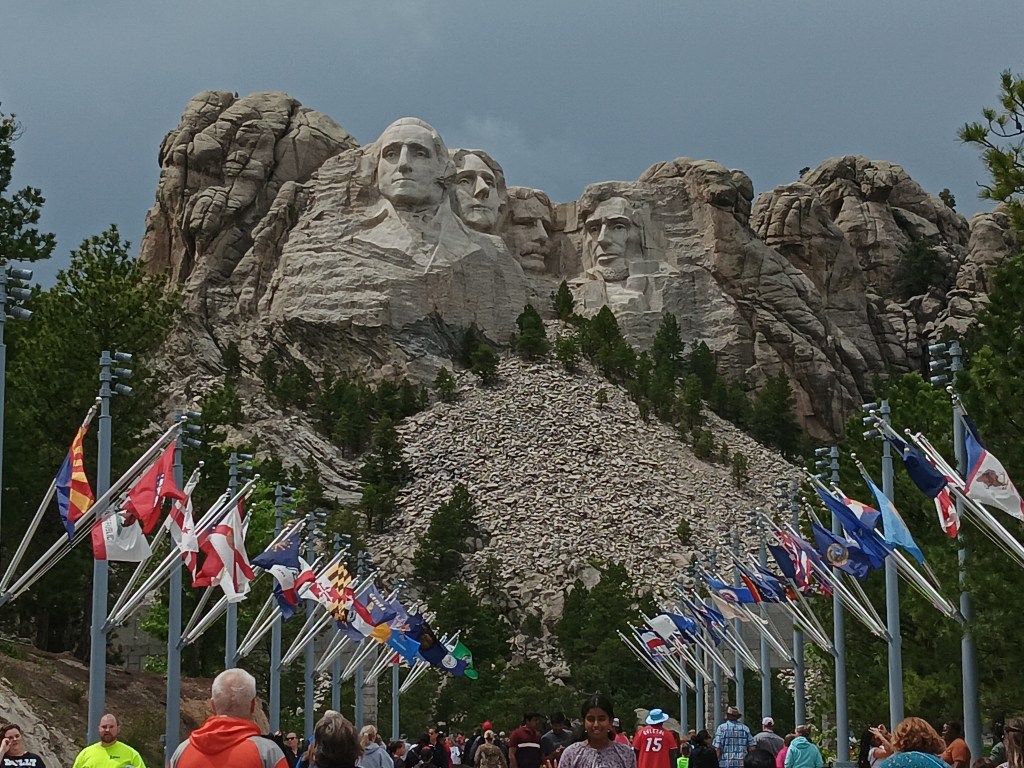
Mount Rushmore with entry plaza
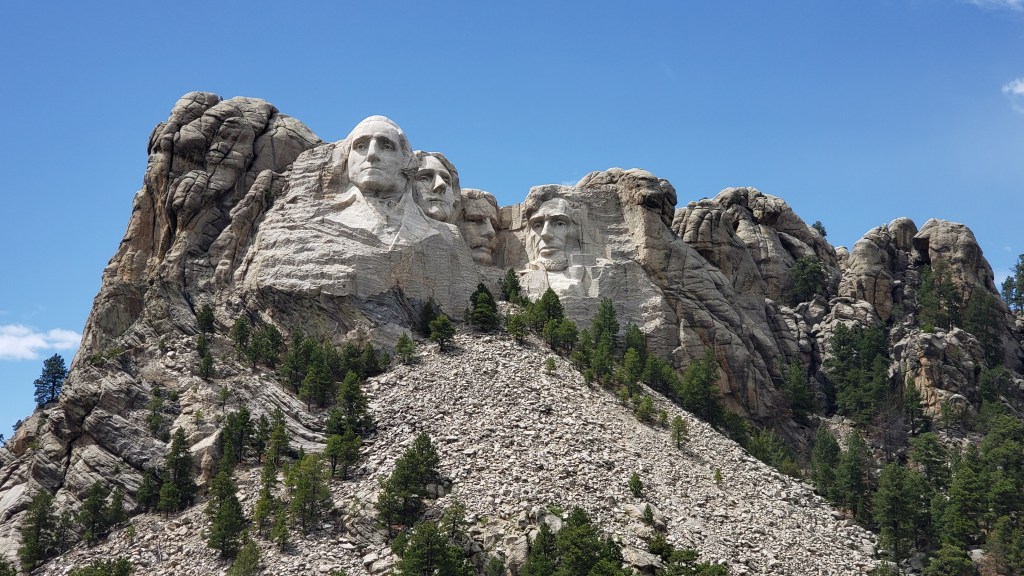
Mount Rushmore

The more we’ve toured, the more questions we’ve had, but that’s part of the point of travel, isn’t it? The boring stuff you learned in school was the hook on which you hung little bits of information that, hopefully, act as a starting point when you’re out in the world exploring.

Susan had constant flickers of those schooltime factoids when it came to places like South Dakota’s Wounded Knee and the events that happened all across this part of the country, but it was all told through the side that “won.” Simon’s point of reference was Westerns from television and movies. Neither of us felt we had a well-rounded story, and we were eager to learn more.

theater road sign
At times, things as simple as a sign had us scratching our heads. What the heck IS this? A roller coaster? A prisoner bus? What?!*

Our next-door neighbors from back home in Florida have a place in Rapid City, and they were there while we were in town and invited us over for dinner. They do a great deal of work with the tribes, teaching them how to play and appreciate music, and we spent several happy hours in their company, learning more about the local tribes and their history. They recommended a visit to The Journey Museum, and that was our next day’s morning stop.

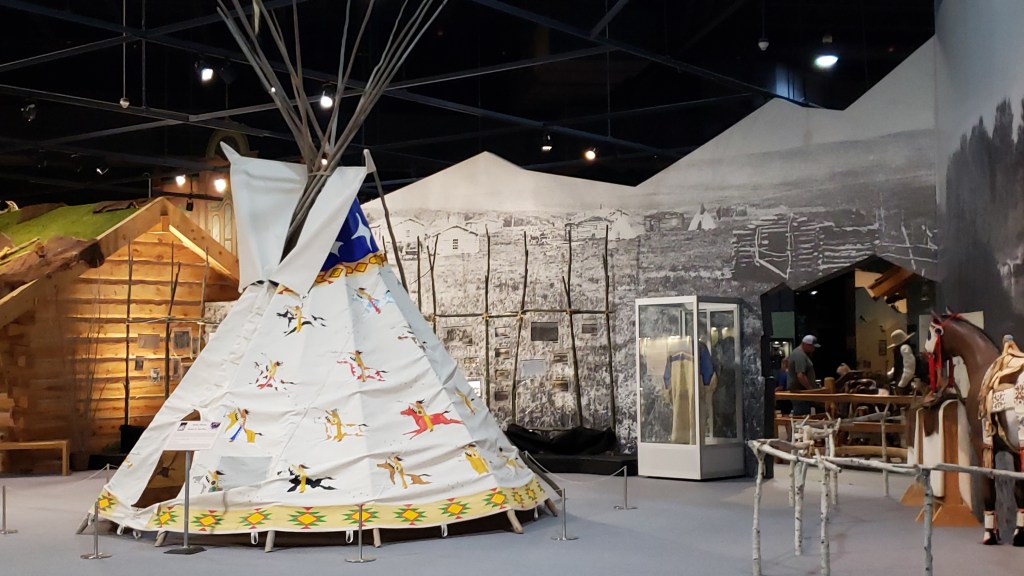
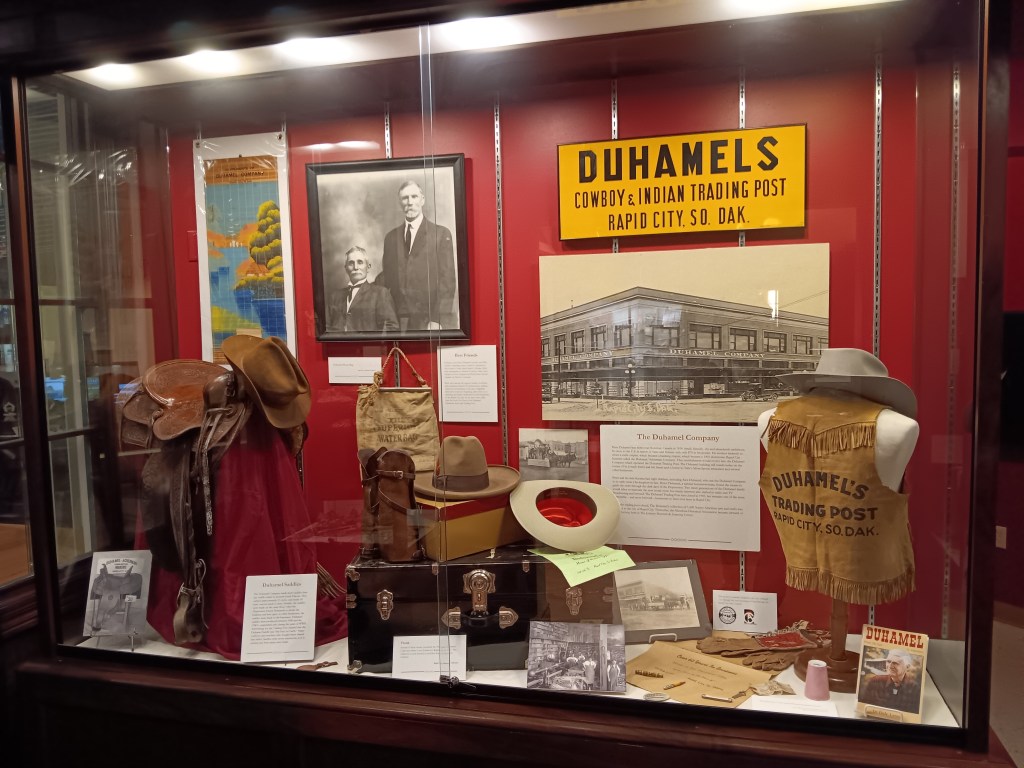
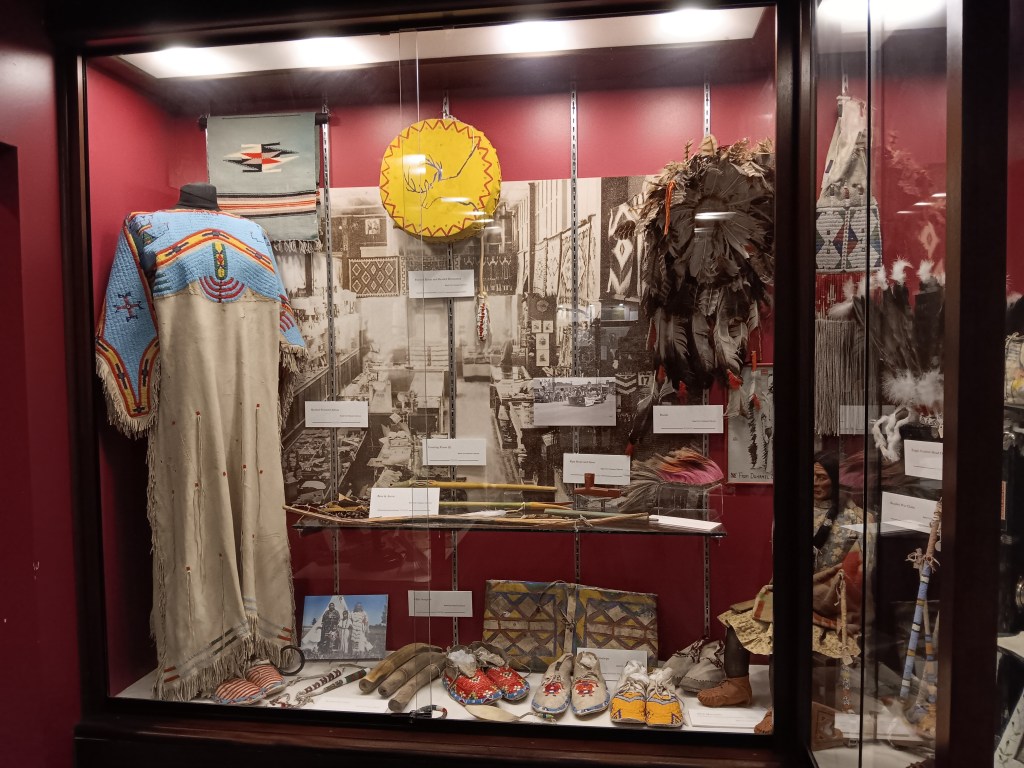
The museum is thoughtfully presented, and while it includes sections on paleontology, geology, and archeology, we were there primarily for the Native American exhibits.

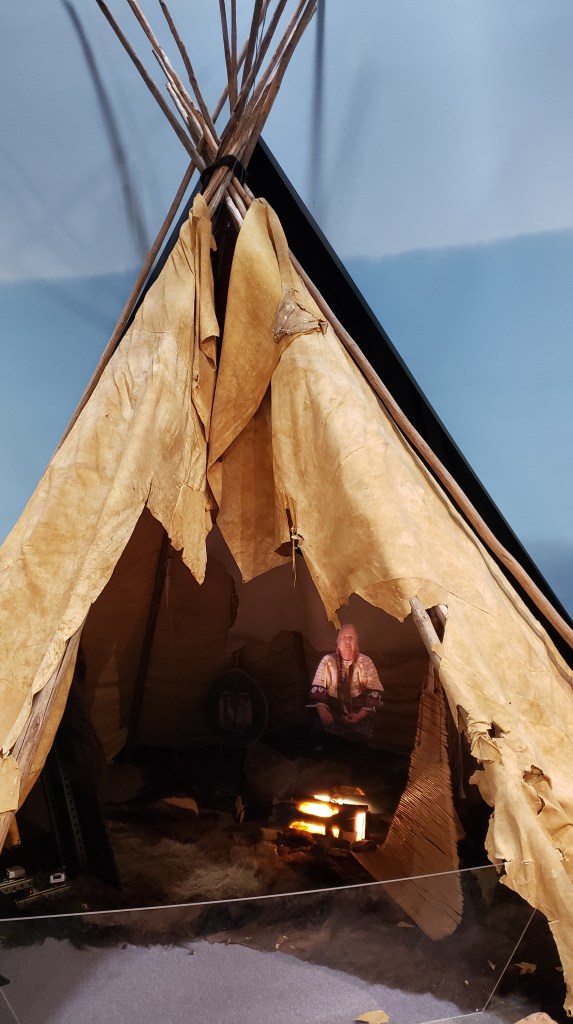
the journey museum tipi exhibit

We’d been told it was difficult to get any kind of reliable history, as the tribes tended not to keep written records in the past, and nobody seemed to agree on what really happened versus what is perceived or idealized to have happened.

Like much of the area’s history, the museum’s Native American and Pioneer sections intersect. It was difficult in most cases to get a well-rounded understanding of the two culture’s realities when they came together or clashed, when the focus is inevitably more on their separate experiences than on a realistic view of “how we got to now.”

the journey museum exhibit

the journey museum native american exhibit

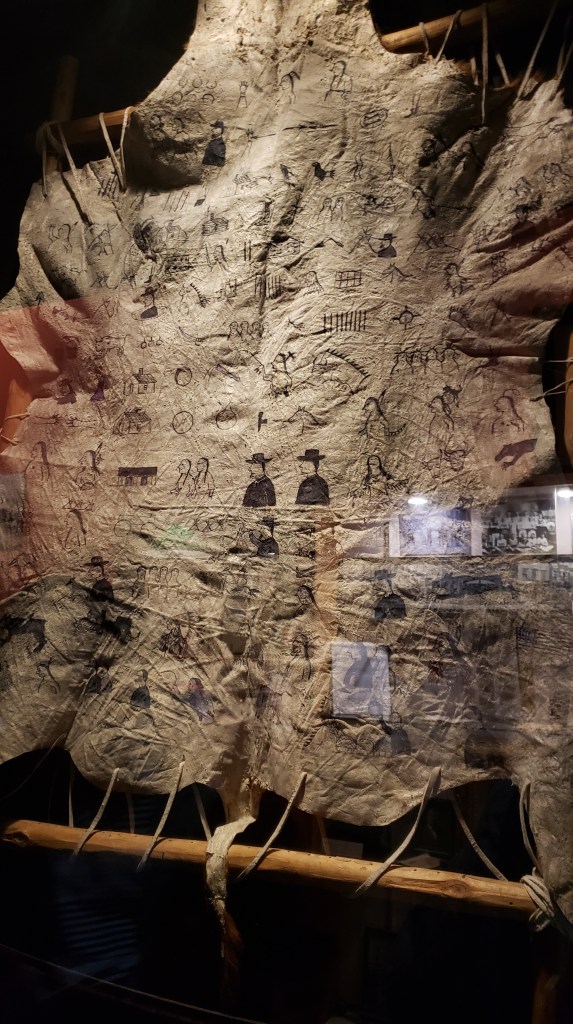
winter count buffalo hide journey museum
This is an example of a Native American “Winter Count,” which is a series of pictographs on buffalo hide that records important events that commemorate each year.

Even so, we really enjoyed the museum’s displays, and Susan was especially happy to see women represented as much as men (almost), with a heart-tugging exhibit that featured (in video style) an older woman talking about how girls were welcomed into womanhood within the tribe. She even sang a lullaby. So beautiful.

journey museum tipi with old womam

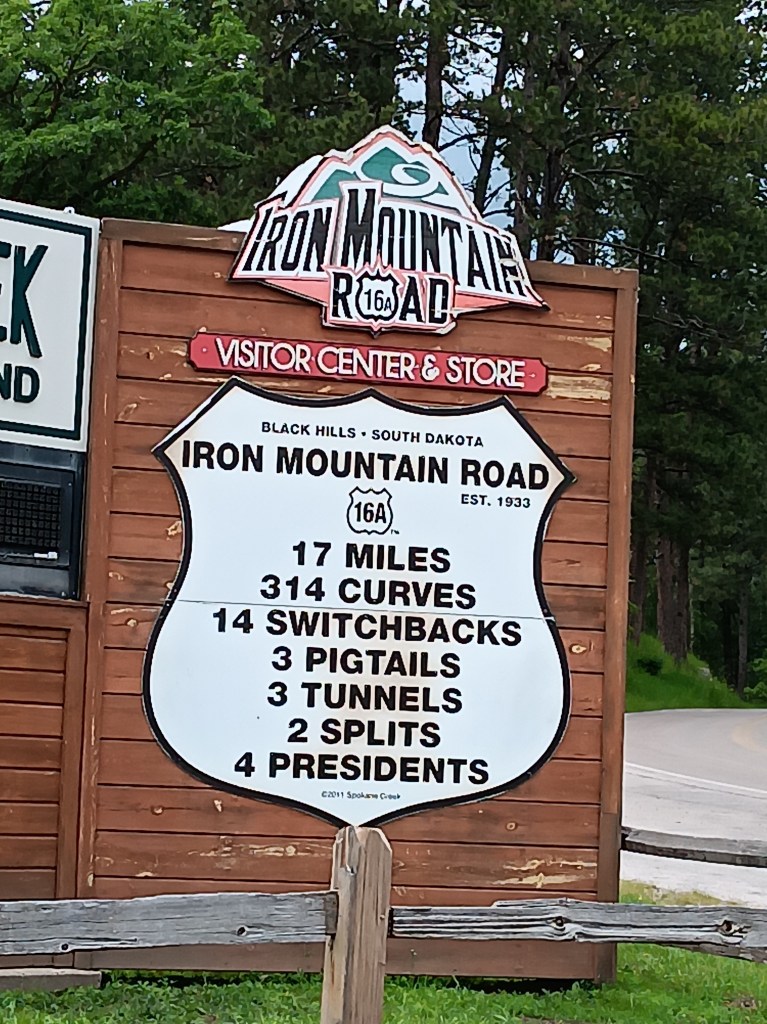
Today’s scenic drive was Iron Mountain Highway on our way to one of the country’s most iconic sites.

iron mountain highway statistics

We won’t bore you with the outrageous “shortcut” our GPS took us on to get to Iron Mountain Highway, which was so long we began to wonder if we were already on that highway. Instead, we’ll show you a couple of examples of the grand views we had once we were on the right path again.

iron mountain highway landscape

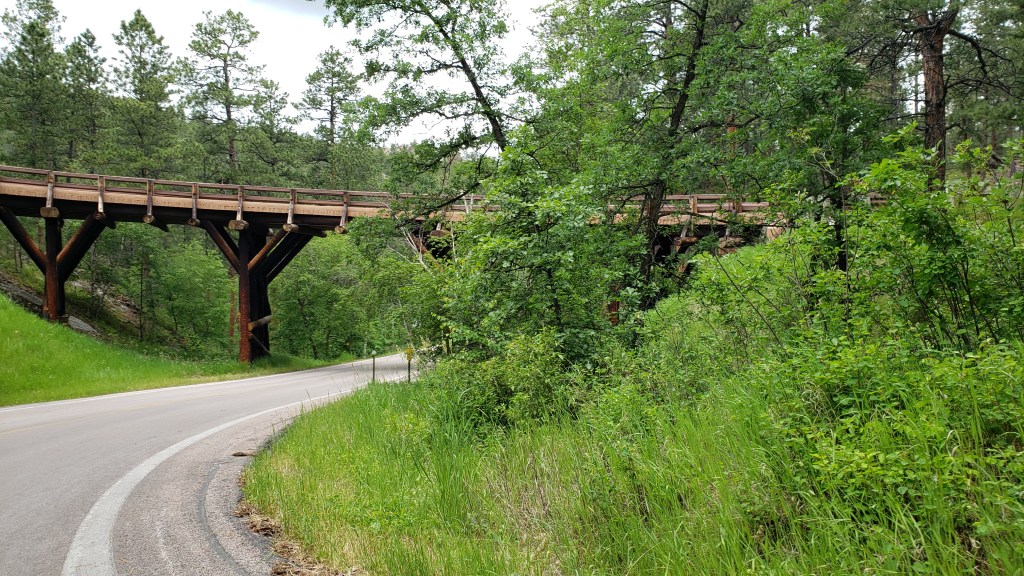
iron mountain highway pigtail
This is a small part of one of the “pigtail” bridges that wind you down the hillside. They’re shaped like…well…a curly pig tail.

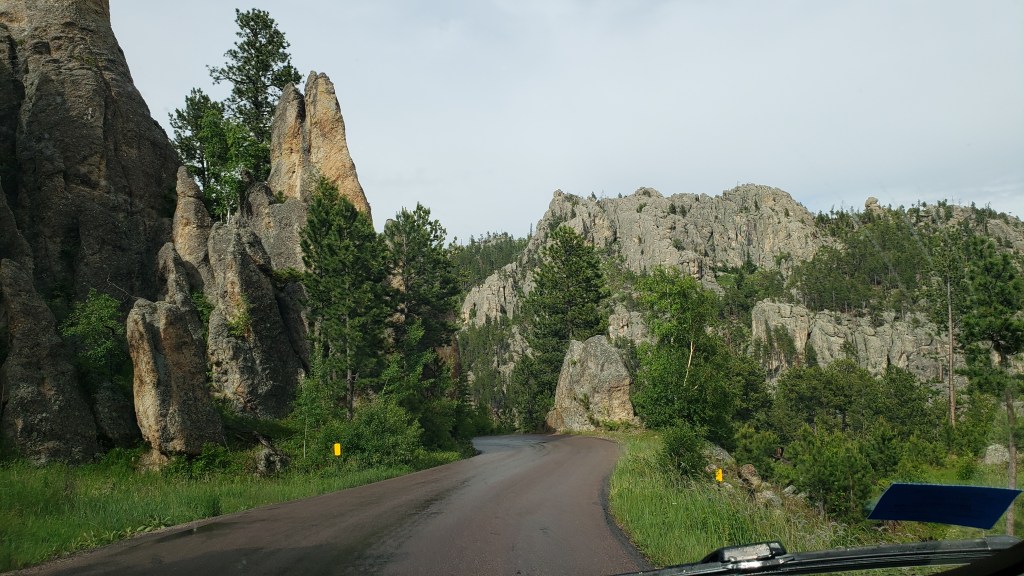
iron mountain highway rock formations

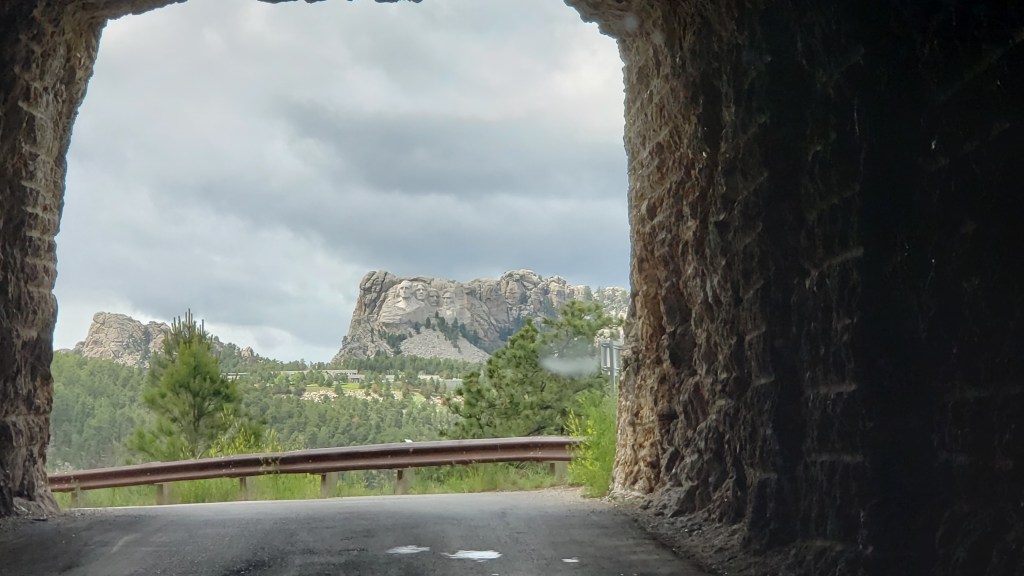
Iron Mountain Highway doesn’t end with the view you’re about to see, but WOW! What a spectacular “reveal” for our next destination!

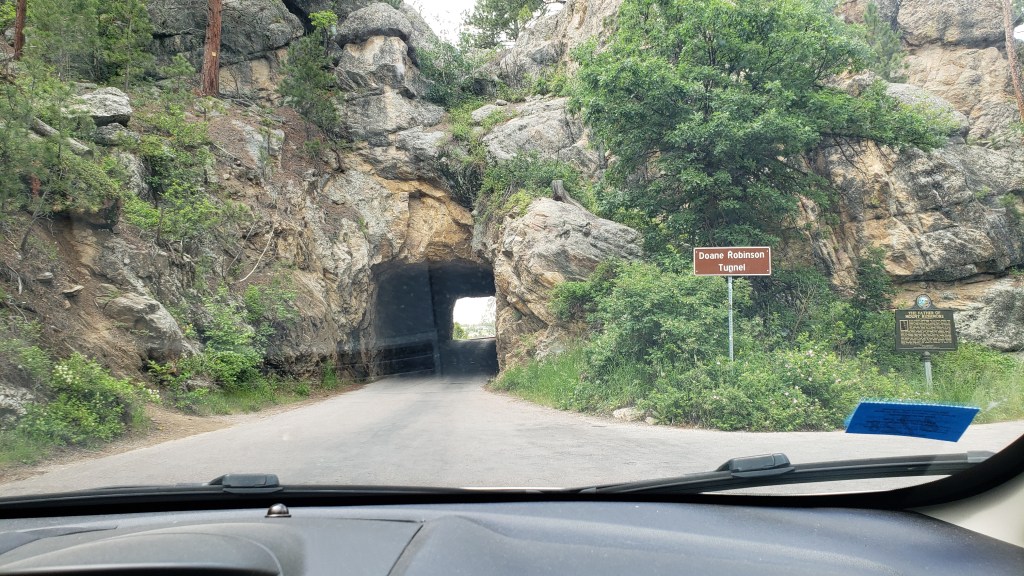
iron mountain highway tunnel
Can’t see it yet…

iron mountain highway tunnel mount rushmore reveal
Aaaannnndddd…NOW!

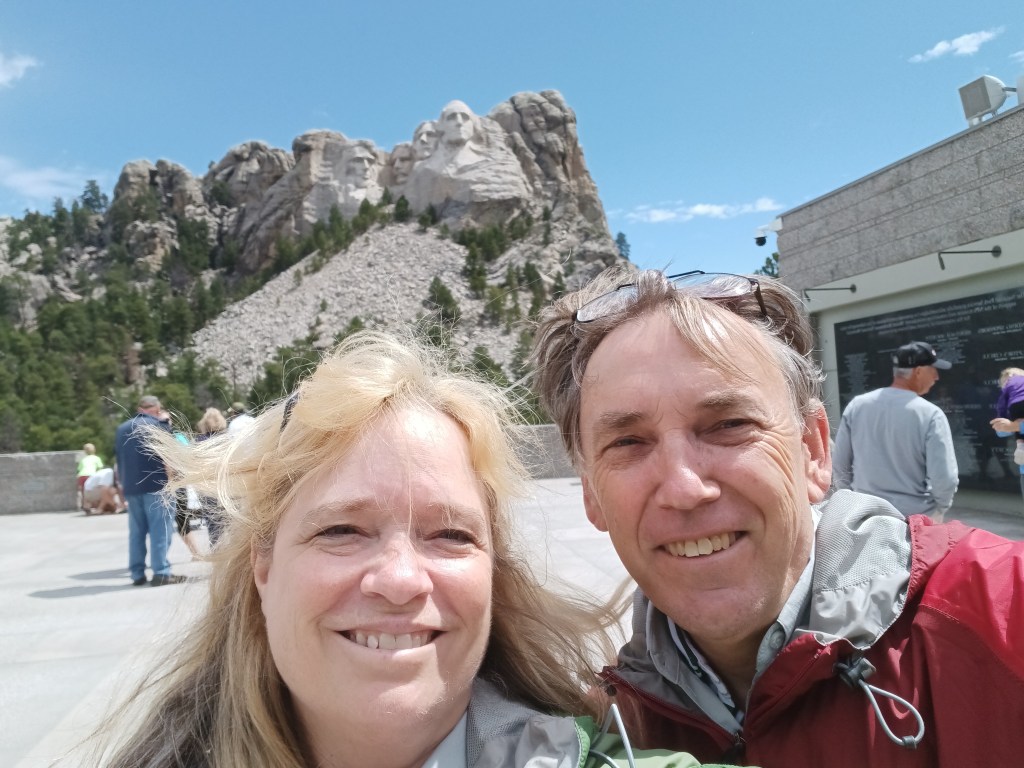
Neither of us ever thought we’d ever be in a position to see Mount Rushmore, and standing there in front of George, Tom, Teddy, and Abe felt just a bit surreal. Considering their human rights records (not you, Abe), we had some mixed feelings before we got there. Once there, we felt a surge of pride and patriotism (in the best sense of that word).

mount rushmore selfie

We probably took 40 or 50 photos of the monument itself, but we’ll just share a few here, including a side view of our first President taken from a cut-out along the road once we left the park.

mount rushmore plaza

mount rushmore 1

mount rushmore 2
The weather was, shall we say, changeable.

mount rushmore side view
That’s George, in the middle of the photo

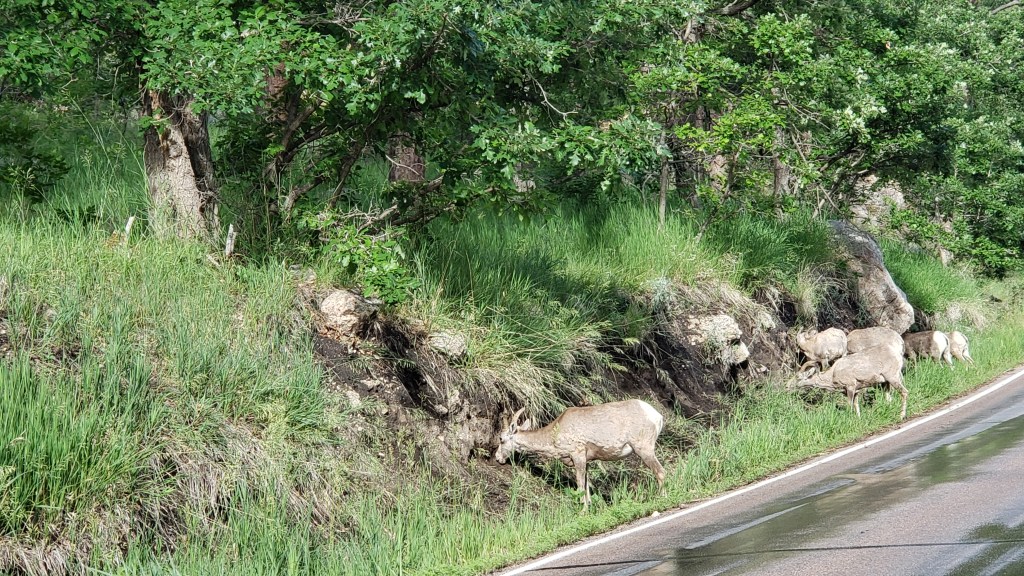
A second drive along Needles Highway was a welcome journey as we made our way down into Custer National Park again, with a stop at one of its visitor centers to get a steer on where to see Bighhorn Sheep (we’d nearly given up on the elk, who, we were told, were spooked by the last few evenings’ thunderstorms and were in hiding), and the docent was right on target with her suggestion.

custer state park bighorn sheep roadside

custer state park bighorn sheep

custer state park bighorn sheep closeup

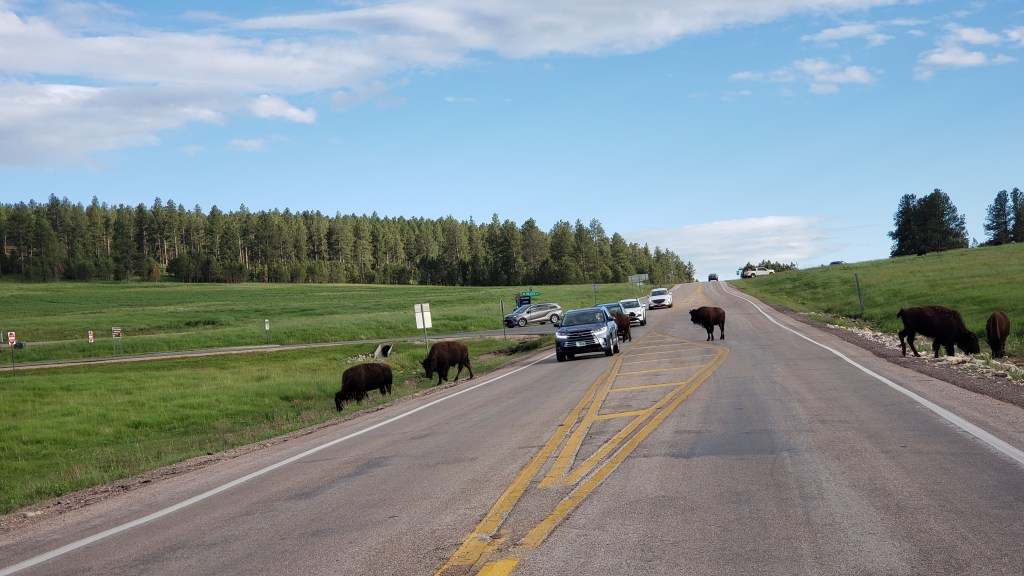
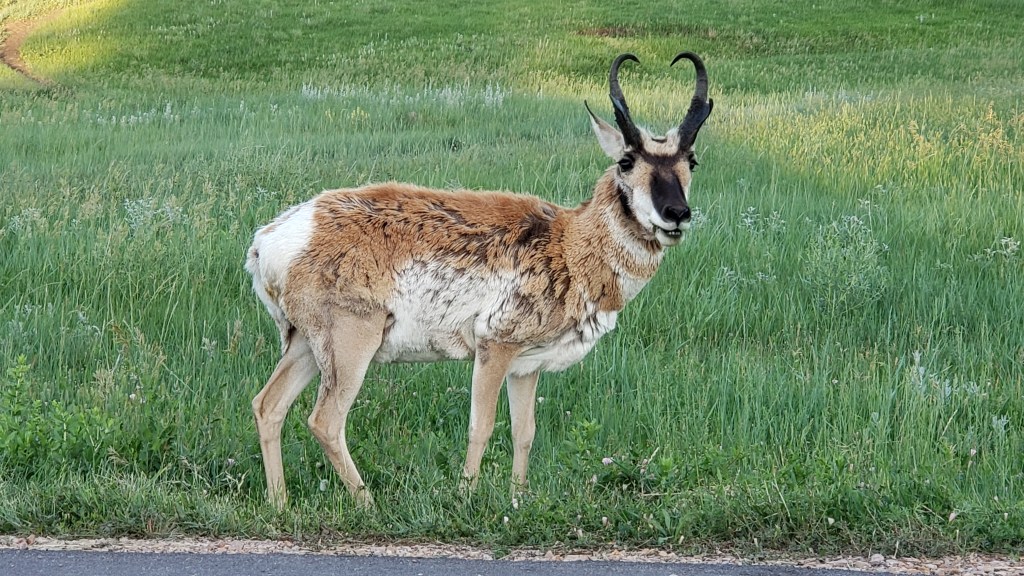
Squeezing the last drops out of Custer State Park, we drove one side of the Wildlife Loop again on our way back to Hermosa, and buffalo and pronghorn herds’ reliability held up.

custer state park bison in evening

custer state park pronghorn male closeup

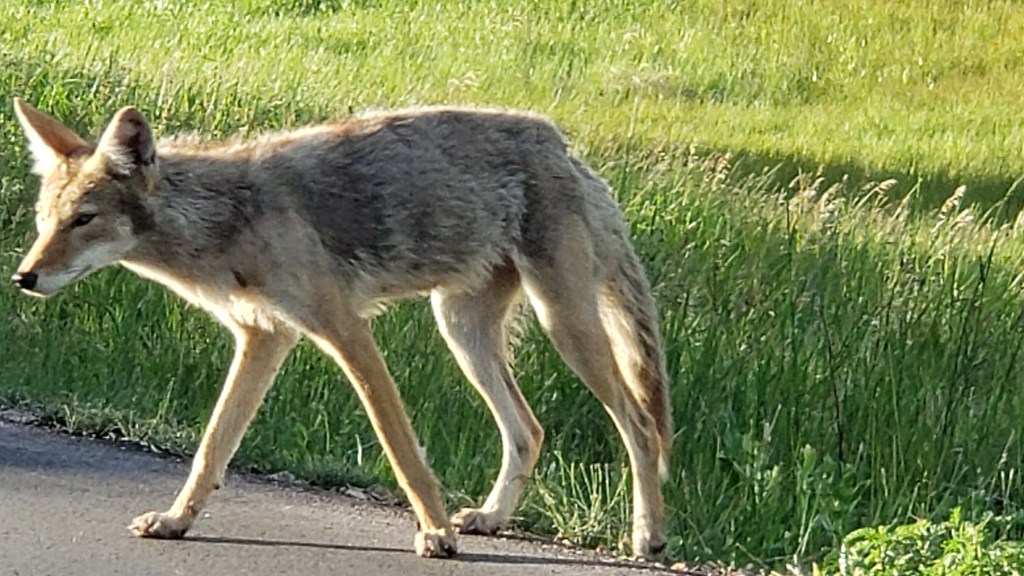
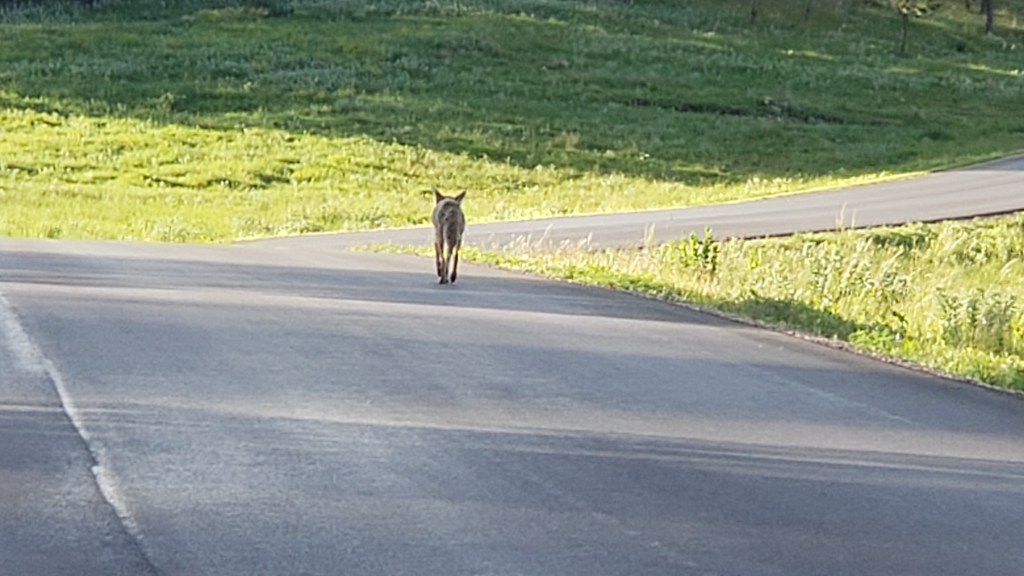
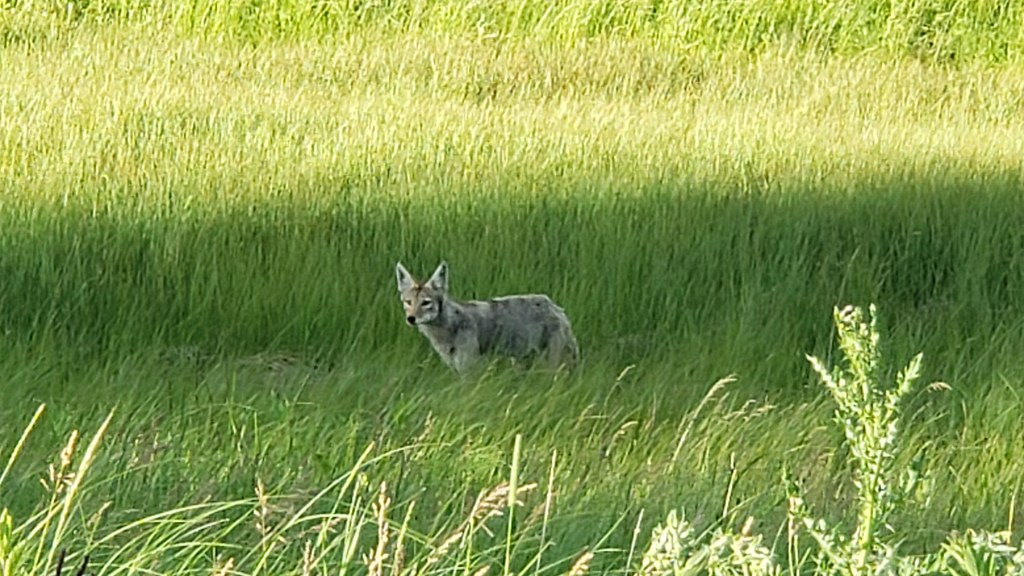
But tonight we were treated to a spotting we didn’t expect at all. We watched this coyote for about fifteen minutes as he/she/they hunted, and our patience was rewarded with an up-close view as the coyote came up to the road, gave us a good look, then trotted away.

custer state park coyote closeup
No zoom lens needed

It wasn’t an elk, but we felt, yet again, we’d been treated to something rare and special. What a great way to cap off a great day!

custer state park coyote walking away

*That sign that had us wondering what it was trying to communicate is for a little tiny theater in the middle of absolutely nowhere. Cute!

The Awesome Ruggedness of Custer State Park

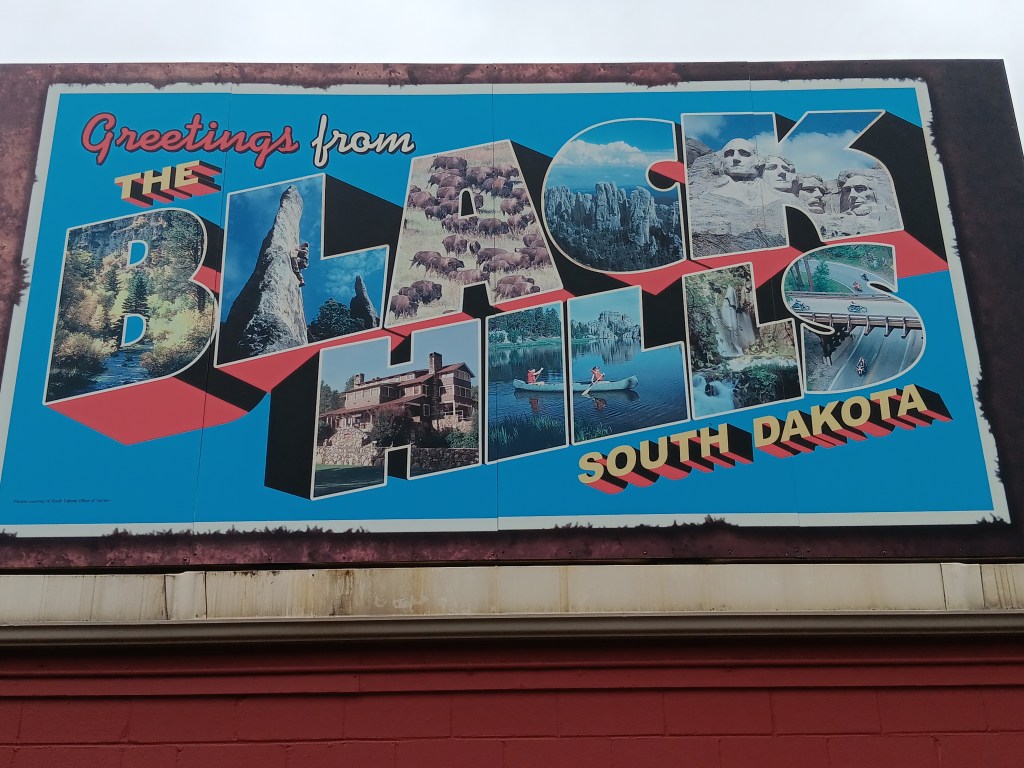
welcome to the black hills

Why were so many places across the country named after a man who lost one of history’s most infamous battles, a battle aimed at genocide of the native peoples? We don’t know, and we’re not in a position to right the historical wrong or re-frame the story, but we will say the State Park named for Lieutenant Colonel George A. Custer, better known as General Custer, is one hellofa fabulous park.

needles highway spires

We could yammer on about the rolling hills and the lush greens that splash across the landscape, as if some insane artist with a passion for the verdant is forever in the process of painting and repainting according to the whims of sunlight and clouds.

rolling hills in south dakota black hills

We could wax poetic about the Black Hills specifically, and we could throw in the fact that “hills that are black” is the English translation of “Pahá Sápa,” from the Lakota language of the Sioux people, and that the Black Hills rightful return to the Sioux Nation is a long-standing, contested issue the Sioux are currently losing.

If we really wanted to get all up in ourselves, we’d casually toss in the utterly self-promoting comment that the book, Paha Sapa: Land of the Gods, mysteriously made it into the queue for The Jungle Cruise at Walt Disney World’s Magic Kingdom park, and therefore into Susan’s third edition of The Hidden Magic of Walt Disney World.

But we won’t spend time on those topics, because on our second full day in Hermosa we were all about animal tracking from the comfort and convenience of our car.

We had been lucky enough to see bighorn sheep in the Badlands, and you’ve already read about our encounters with bison in Theodore Roosevelt National Park, so today we were on a mission to track down a herd of majestic elk.

pronghorn in badlands national park
This isn’t an elk

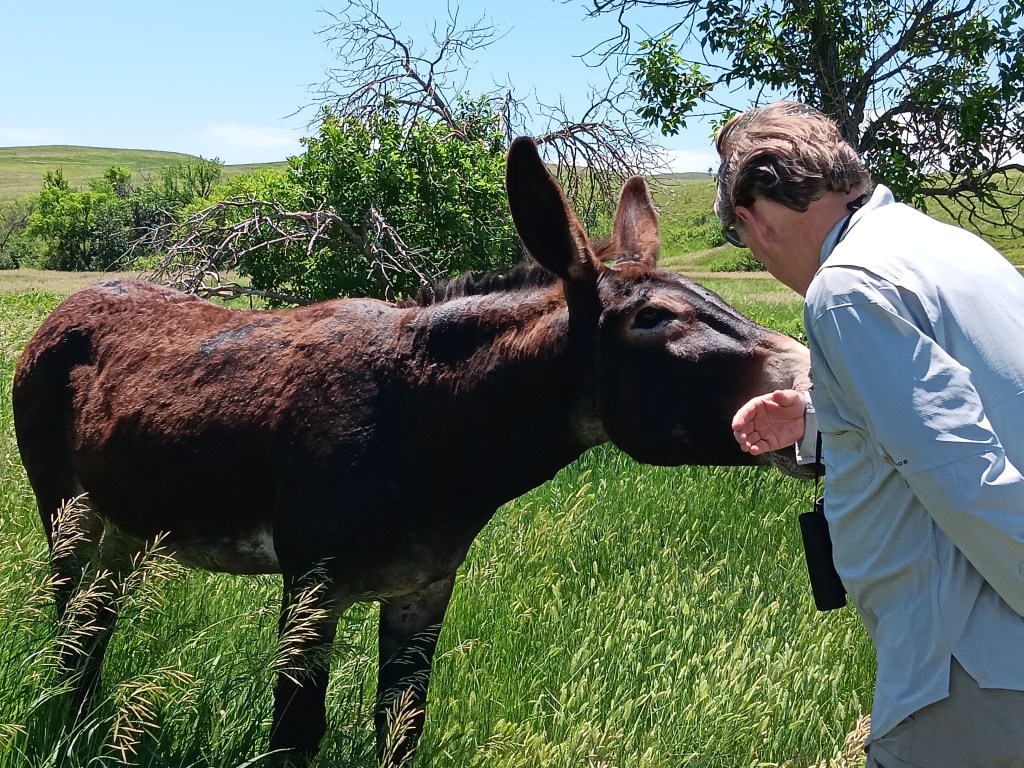
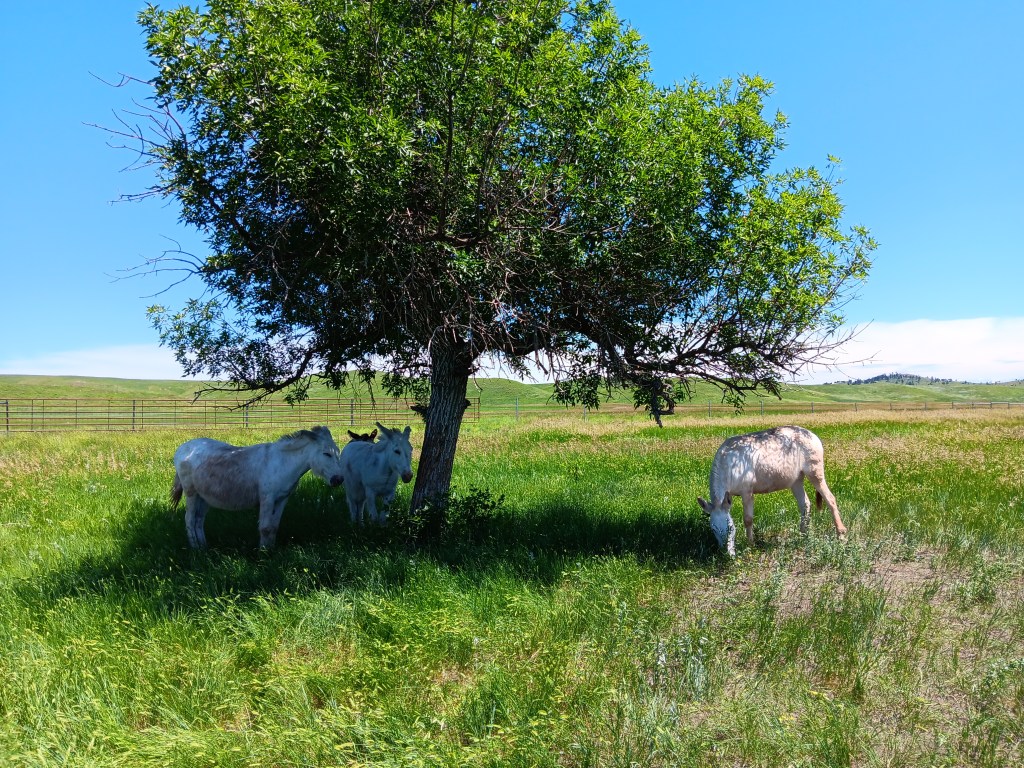
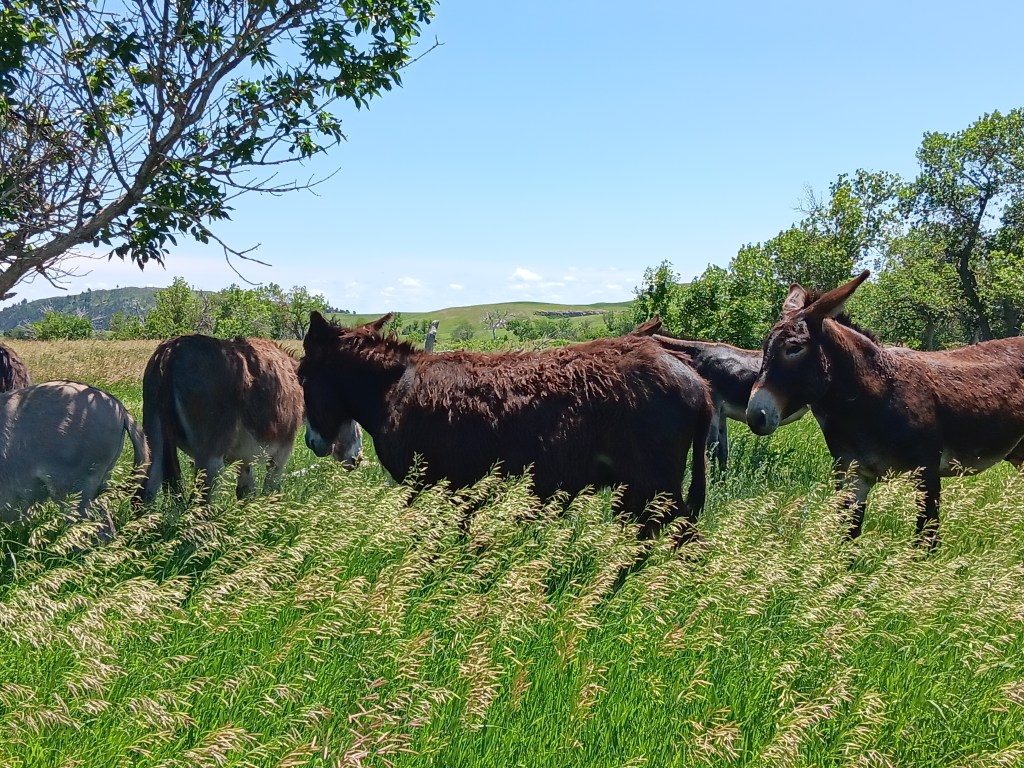
We entered the park’s Wildlife Loop not far from our campground, and first up on our sightings checklist were the burros, fondly nicknamed the “begging burros” for their willingness to eat whatever you’ve brought them (more accurate than “willingness” is “insistence”). Hence, they’re super friendly, and come right up to you rather than waiting for you to approach them.

simon and burro

burro herd custer state park

burros custer state park

Their hearty ancestors were pressed into service nearly a century ago, toting tourists and their paraphernalia up Black Elk Peak from the Sylvan Lake Lodge. Only a small herd is left, but they’ve been roaming wild ever since their forebearers’ tourism-based employment end. Most of them are descendants of the originals, but a few of the burros are donated newcomers.

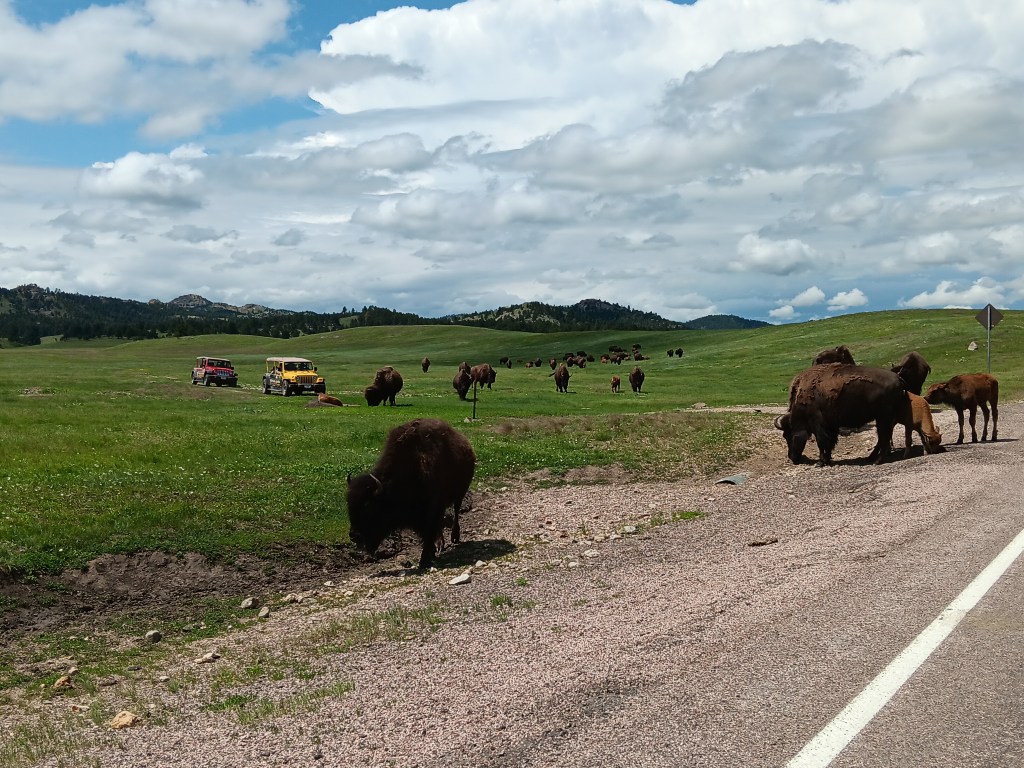
Having frittered away the morning working, it was well past lunchtime when we found ourselves caught up in another bison jam, so we got out our sandwiches and spent nearly an hour enjoying their wanderings, their playful calves, and one truly peevish specimen who wanted to pick a fight with everyone.

bison fighting custer state park

bison herd custer state park

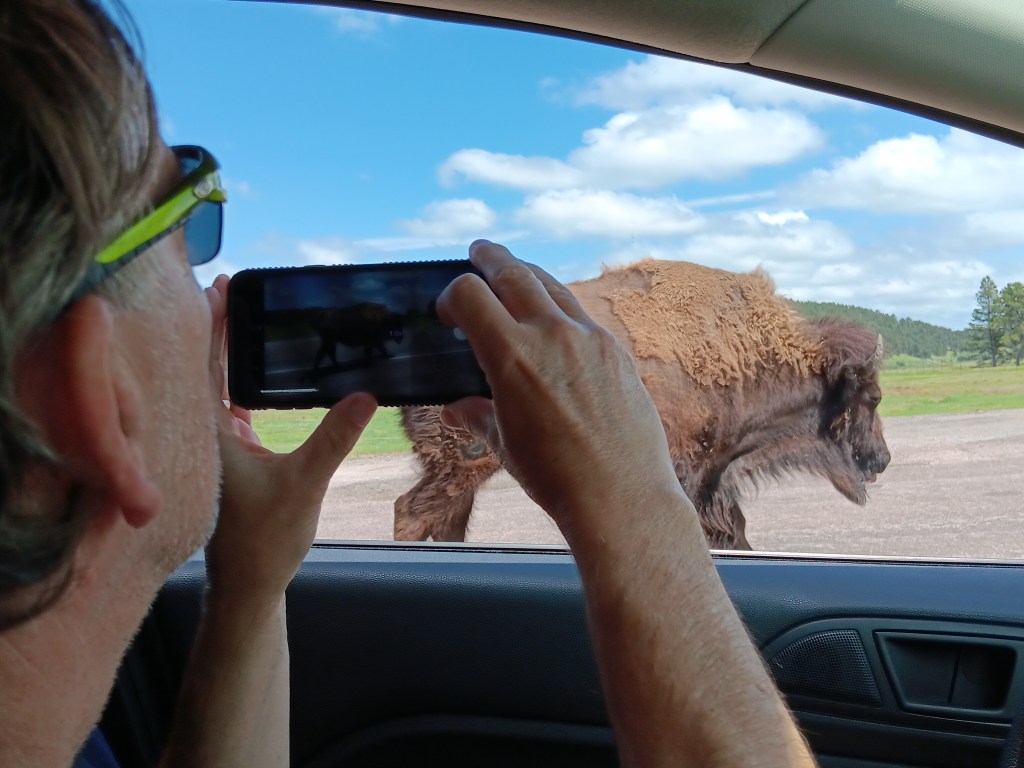
We don’t know what the deal is (probably salt from the roads?), but this herd also had a liking for licking cars, starting with the one parked in front of us. And again, one of the bison gave us the stink-eye through the front window, then spent about five long, long, long minutes alongside Nippy, deciding if it wanted to ram us or just move on.

simon viewing bison custer state park
Scary bison makes a decision

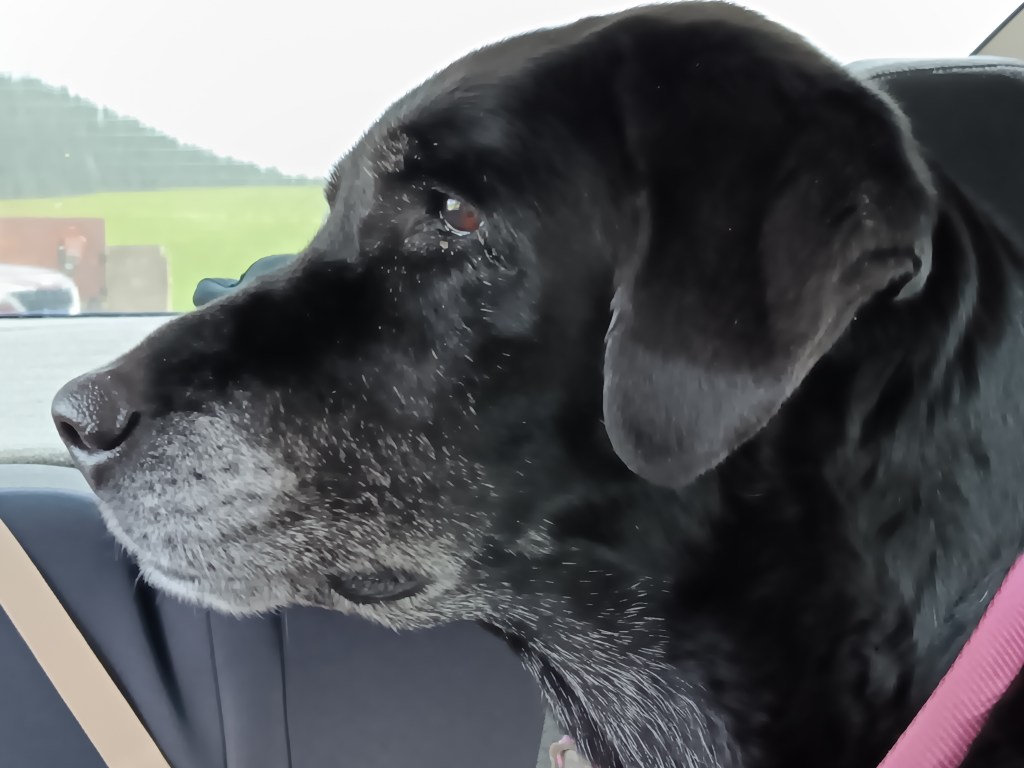
A certain dog in the back seat was riveted, but this time she didn’t bark. She just sat there making little huffing sounds, clearly aware now that the beasts surrounding us were much bigger than she is.

ruthie viewing bison custer state park
Must. Not. Bark!

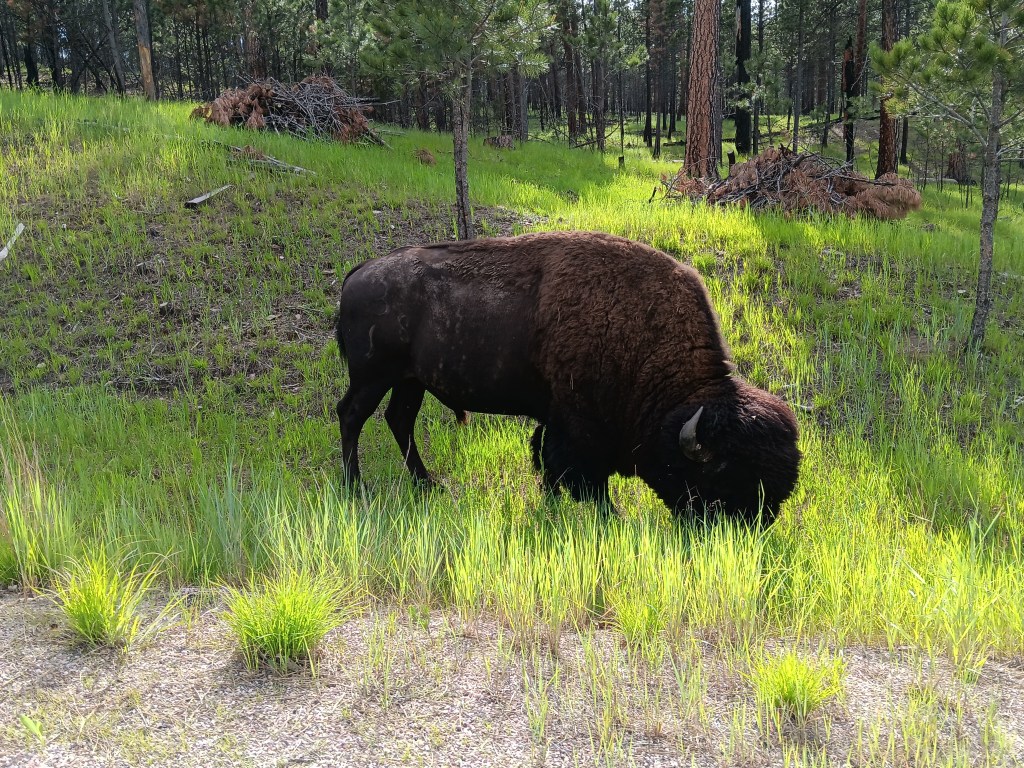
We moved on when they moved on, and had a lone male on a side road nearly to ourselves as we made our way to Custer, with Needles Highway as our next major adventure.

male bison custer state park

We did stop at Calamity Jane Coffee Shop in the cute town of Custer to help Simon deal with his lack of caffeine, and while I’m not usually a coffee drinker, I got one anyway and it was honestly the best cup of mocha and Joe I’ve ever had. Sadly, Jane wasn’t on hand that day, but her employee was friendly and the bathroom was clean. Score!

custer south dakota

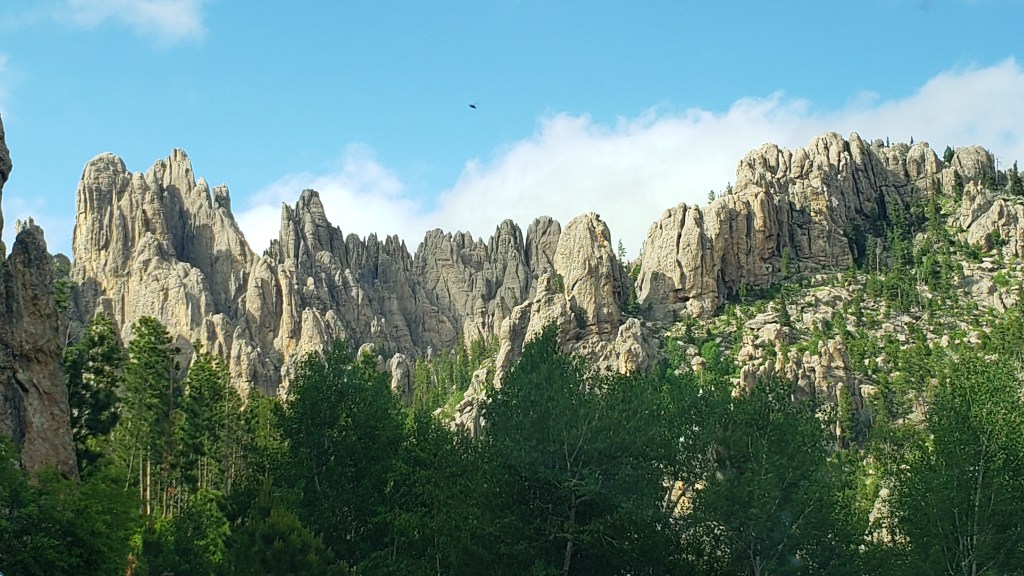
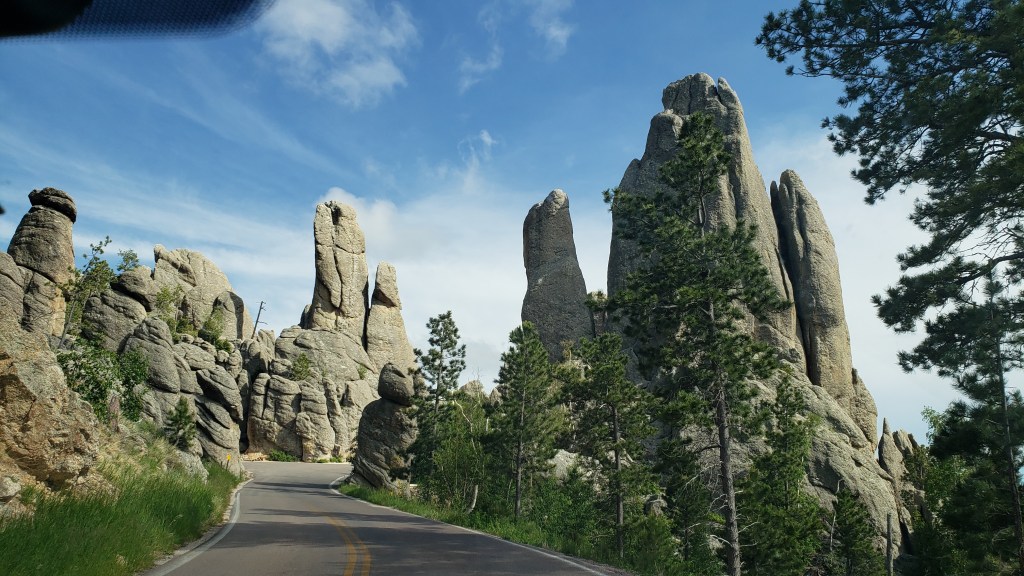
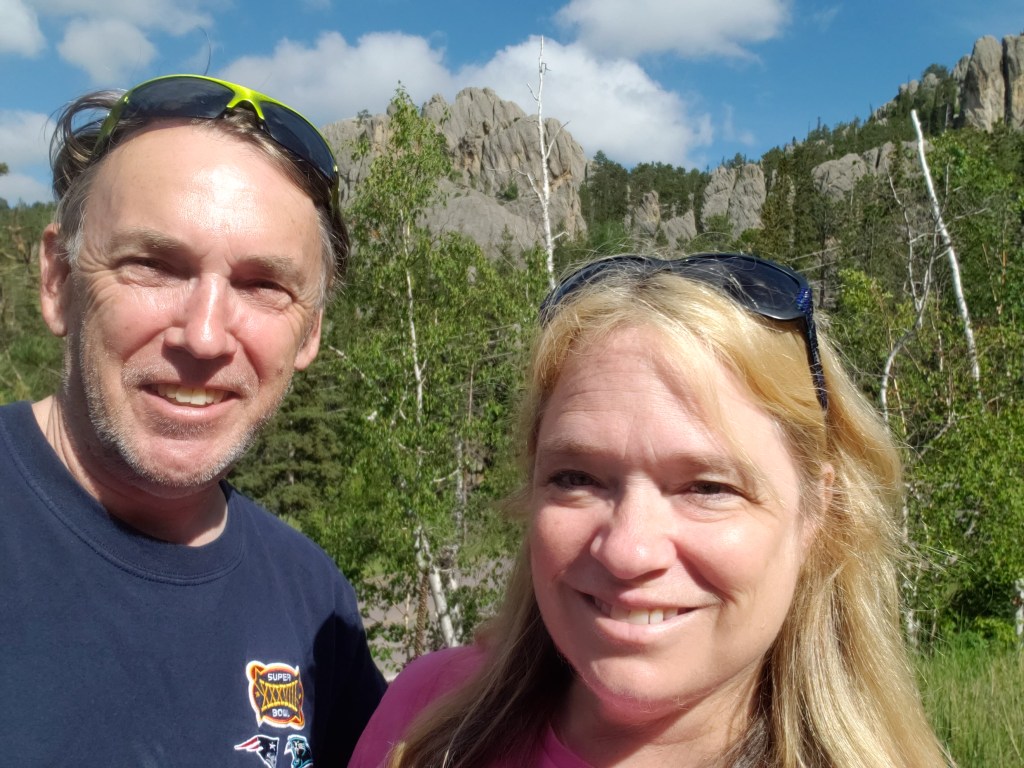
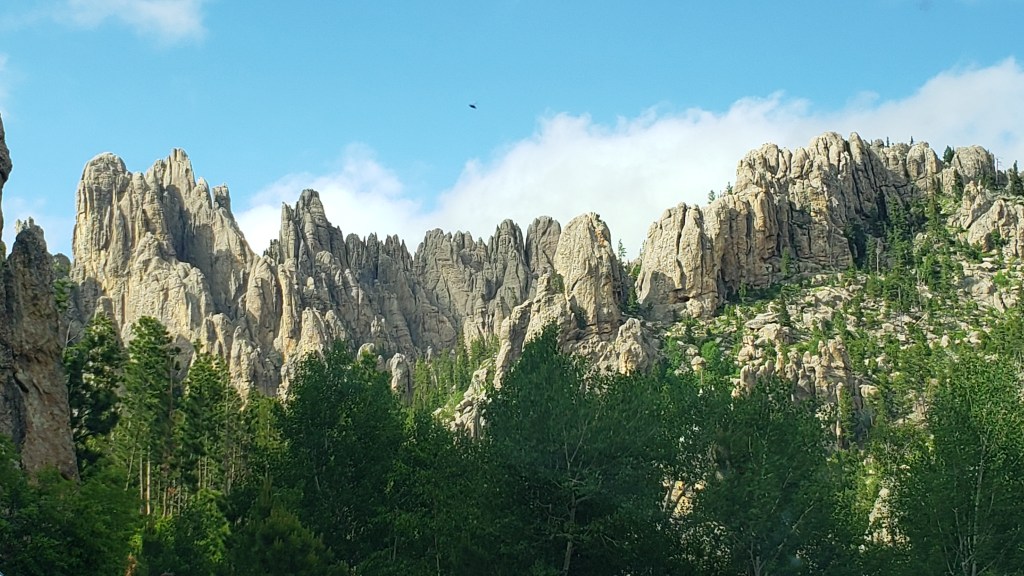
Needles Highway is a 14-mile scenic drive punctuated by the most outrageous granite spires that were pushed up sideways by the forces of nature. Every turn reveals a thrilling aspect, and we goggled at the magnificence and took selfies like the tourists we are.  

needles highway landscape

needles highway selfie

needles highway spires 2

South Dakota’s governor, Peter Norbeck, mapped out the entire trail that would become Needles Highway on foot and on horseback. It’s so winding, and has so many tight turns, it takes nearly an hour to drive just 14 miles, even longer with stops for panoramic photos. But you want to go slow, because this is prime elk territory, and we’re out for elk sightings today. Right?

There are three tunnels along the highway, carved through the rock by wind, rain, and the area’s harsh winter weather. Each tunnel is impressive, but we’ve never seen a tunnel more impressive than the Needle’s Eye. Nippy is small, but Simon could touch the side of the Eye as we drove through.

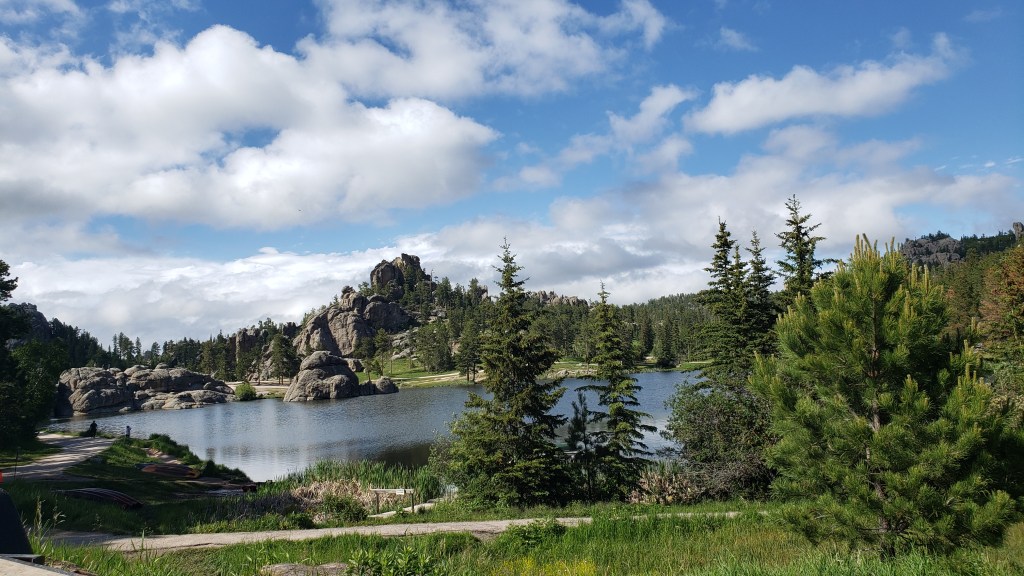
We agreed we’d have to come back and do Needles again, next time stopping at the lovely Sylvan Lake for a stroll and a picnic lunch. When we finally did that a couple of days later, the weather suddenly turned freezing cold, and was hammering down with rain and pounding with thunder and lightning, so we sat in the car and had lunch while feeling very, very sorry for a bridal party running through the storm to get to the lake’s reception hall, with all the girls in sheer, sleeveless formalwear and the bride’s veil whipping in the wind.

sylvan lake custer state park
This is what Sylvan Lake looked like three minutes before a massive thunderstorm hit

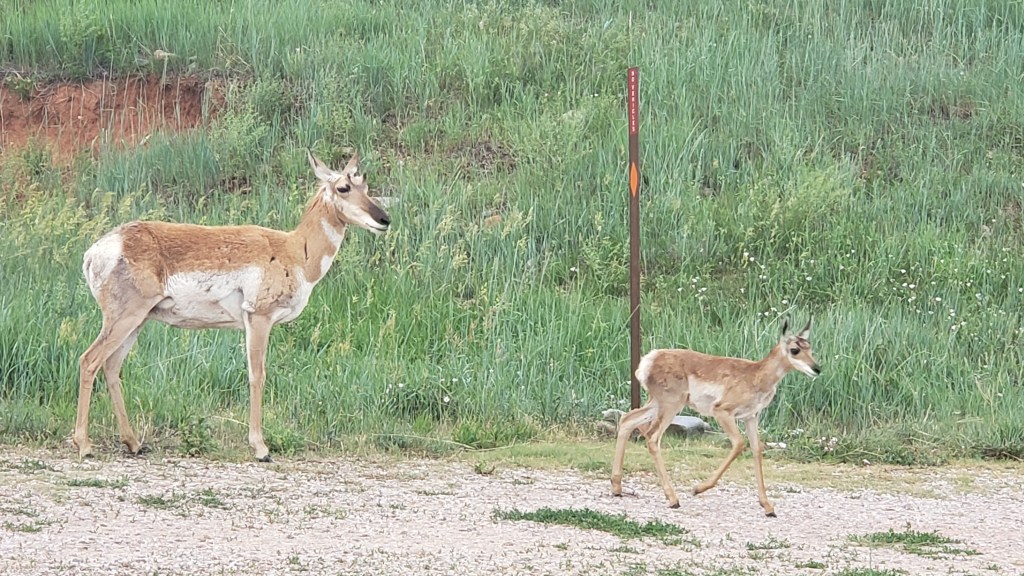
After Needles we went back to the Wildlife Loop, where the Visitor Center assured us we’d have a chance at spotting elk as dusk came on. Instead, we saw deer and lots of pronghorn, including the wonderful treat of a mama pronghorn and her baby, with daddy not far behind.

pronghorn mother and baby custer state park

pronghorn mother dad and baby custer state park

We made two more trips into Custer State Park after that, determined we’d see elk, but to no avail. To add insult to injury, a couple we got to chatting with at the campground said they’d seen a herd of elk right on the road the previous evening, at around 6:30 p.m., which was about 15 minutes before we arrived at the same spot that same evening.

Would it take until Yellowstone before we’d see elk, or would South Dakota be kinder to us than that? Either way, what a grand and exciting place for wildlife and for absolutely magnificent scenery. But Custer wasn’t done surprising us yet.

coyote custer state park

South Dakota’s Badlands And The Results Of Effective Billboard Marketing

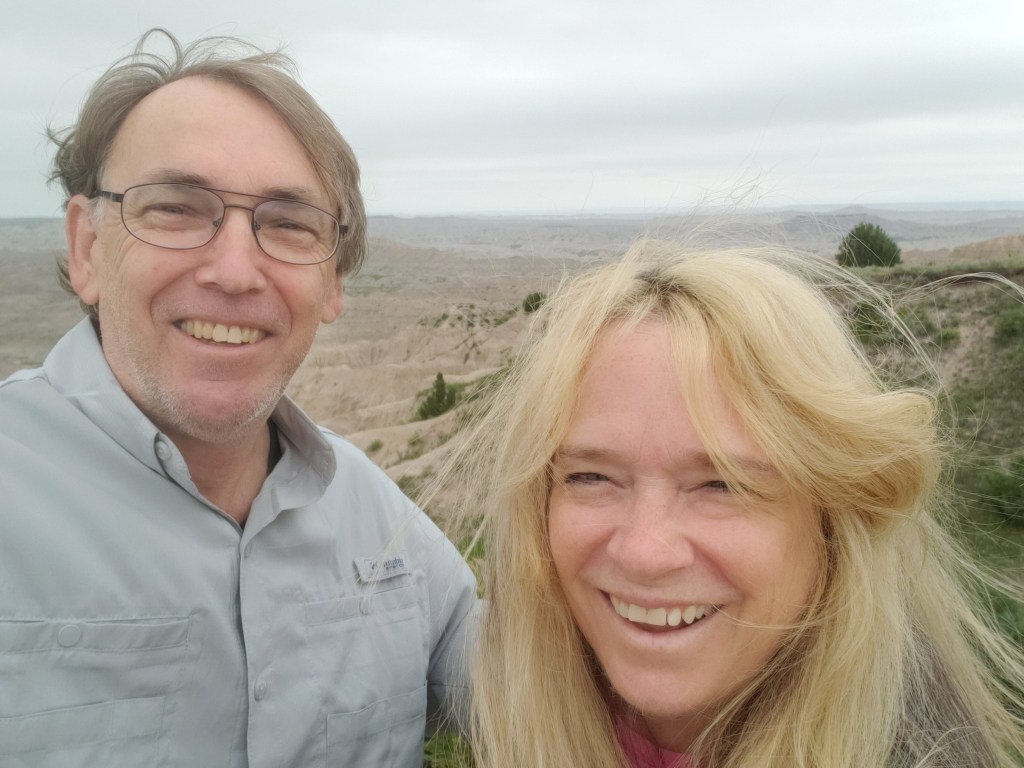
Badlands National Park selfie
South Dakota’s windy Badlands

We entered the new-to-us state of South Dakota on June 19, eager to see more of the Dakotas after a fantastic stay in the northernmost state in the Midwest. We’ve got a week in Hermosa, then 3 full days in Sturgis, to see Custer State Park, Crazy Horse, the town of Custer, Deadwood, Badlands National Park, Needles Highway, and Six Grandfathers, now known as Mount Rushmore.

To break up the long trip from Medora to Hermosa, we had an overnight stop at Harvest Host location, Belle Valley Ancient Grains in Newell, SD, which felt incredibly rural but was just minutes off the highway heading south.

Belle Valley Ancient Grains

We learned about the ancient grains owner Brian is farming, and came away with whole Spelt and White Sonora Wheat that we’ll make into grain bowls and hot cereal.

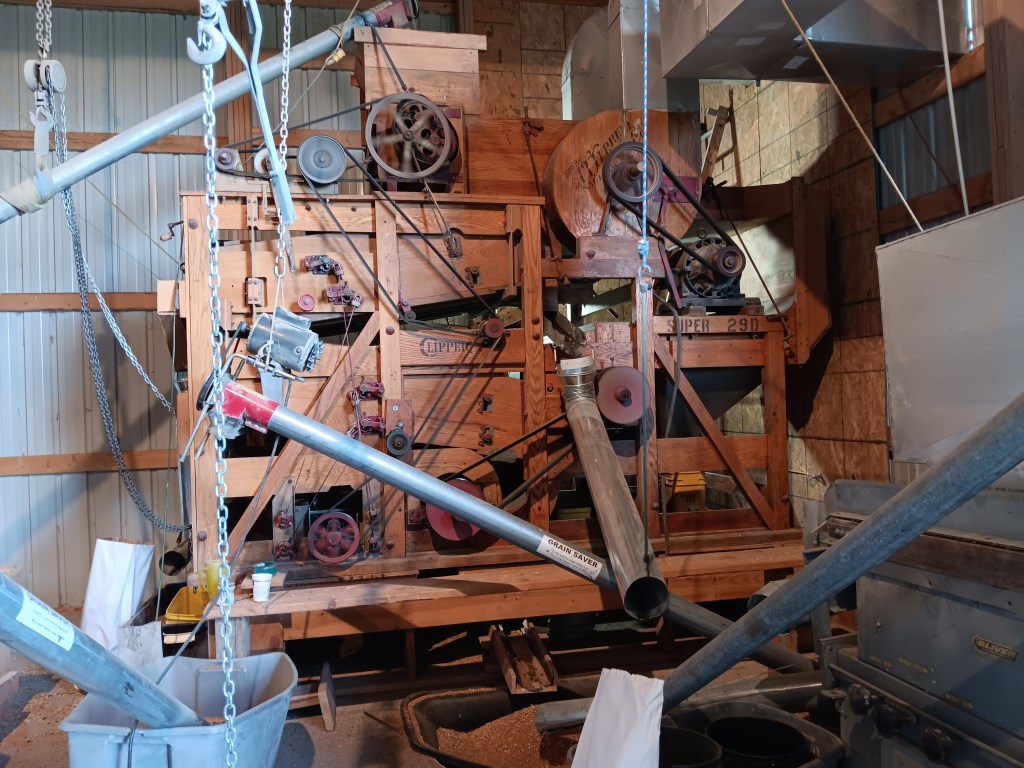
Belle Valley Ancient Grains grain machine
The 1950s machine Brian uses to separate the grain from the waste, before putting it through high-tech machines that finish the job.

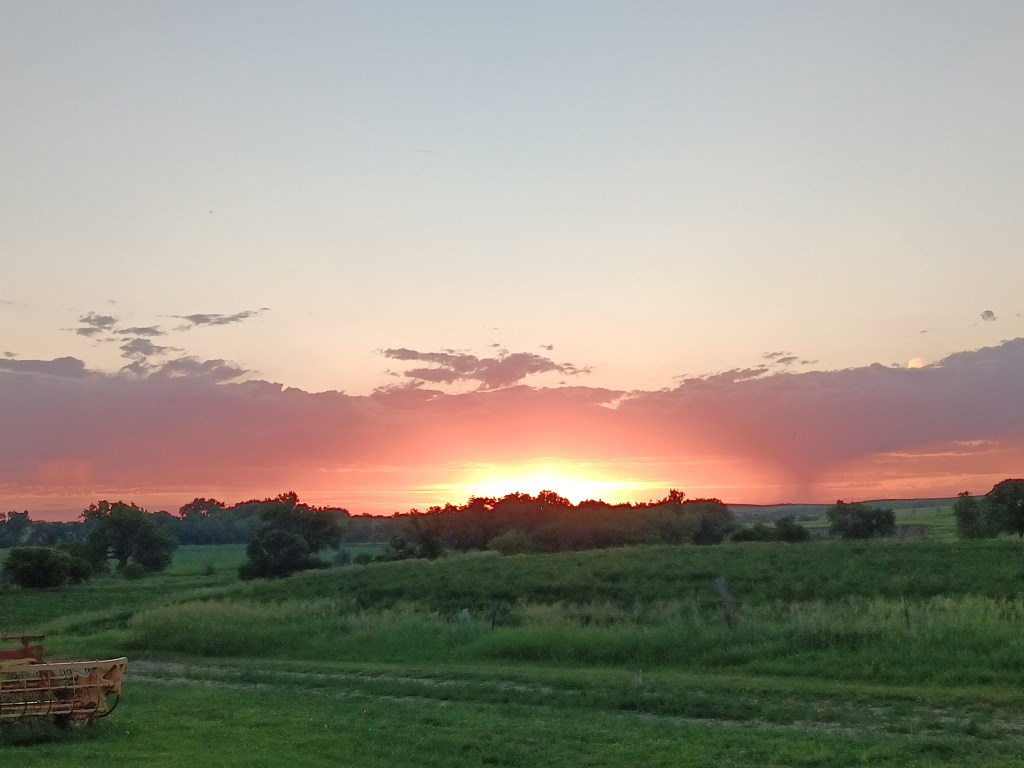
Belle Valley Ancient Grains sunset
It’s hard to beat a stunning sunset over pastoral land

Then it was on to Hermosa, with a butt-clenching 11 miles through construction cones on a highway with a speed limit of 75mph. You can imagine the number of cars that passed us after the construction zone ended. We’ve decided their honking and single-finger salutes are congratulatory celebrations of how well we navigated a tight lane with harrowing twists and turns, and we felt very special indeed.

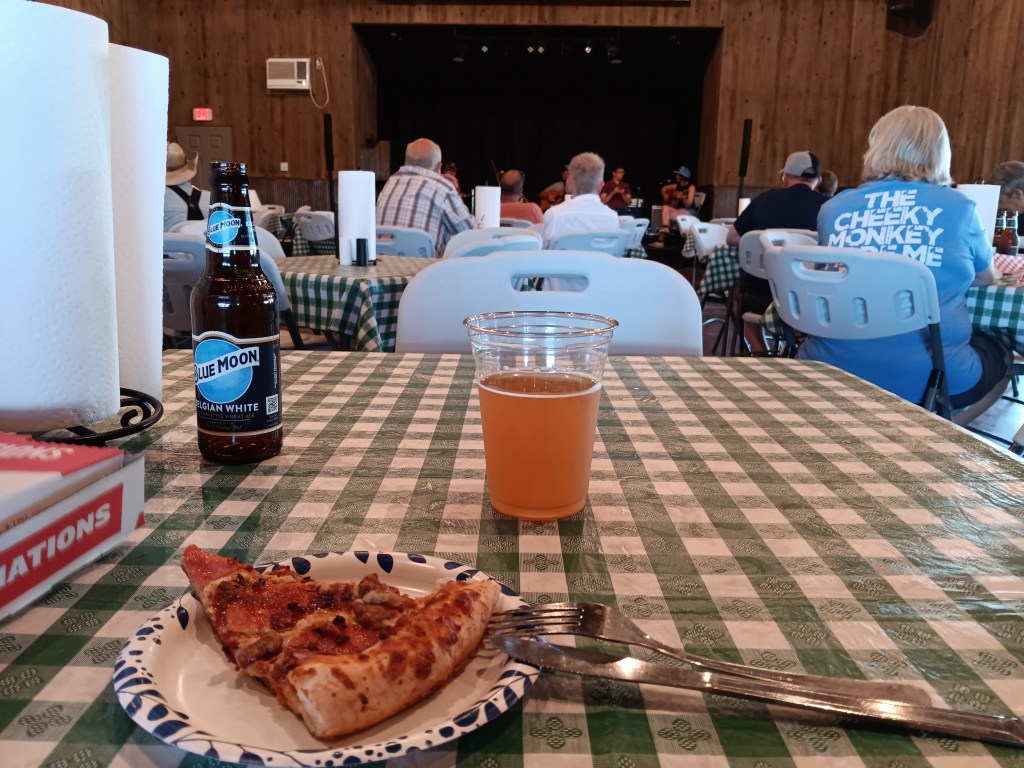
But enough of that, and on to the touring. We settled in at Heartland RV Park, enjoyed a pizza and live music at the campground’s event center, and had a relatively quiet night (rain is loud when you’re in a metal can), then made our way to Badlands National Park the next morning.


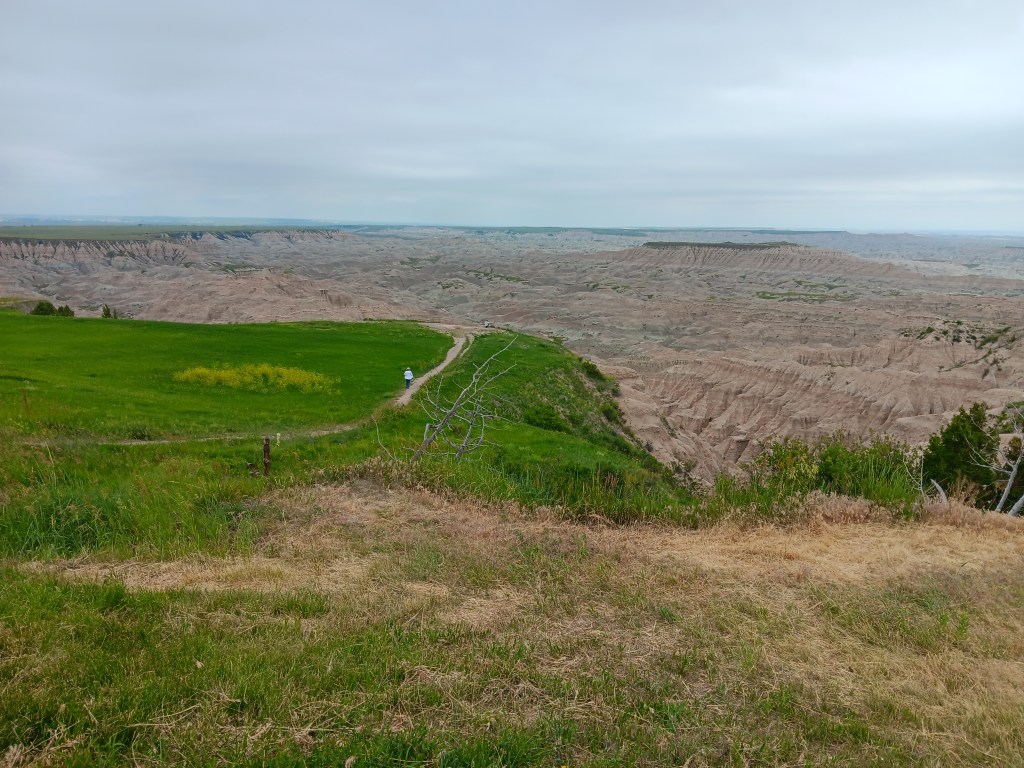
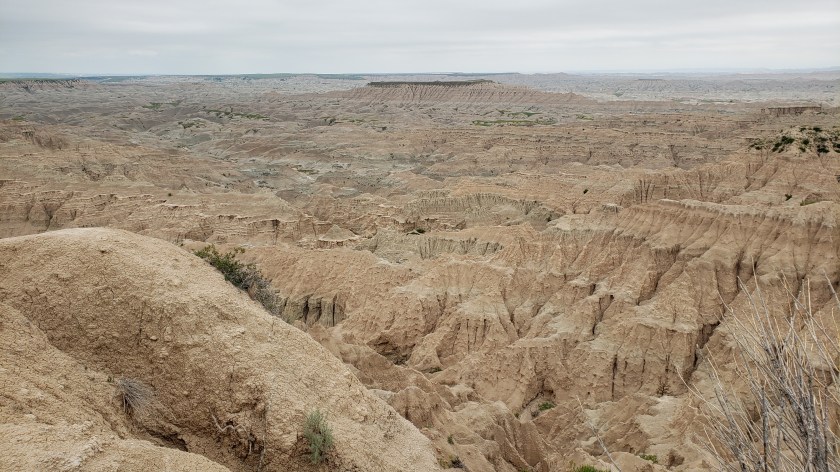
It was quite cloudy and windy all day, but that didn’t deter us.  We were on a mission to see something other than the rolling hills we’ve been driving over, and even before we reached the park, the landscaped changed. Immediately off the highway, the hillsides on either side of us opened to two massive valleys, with structures completely different to the ones we saw in Theodore Roosevelt.

Badlands National Park valley
For scale, that teeny tiny white dot you can barely see at the end of the dirt pathway on the far edge of the plateau is Simon, and a lady who had just come from the Black Hills is in the foreground.

Badlands National Park valley up close

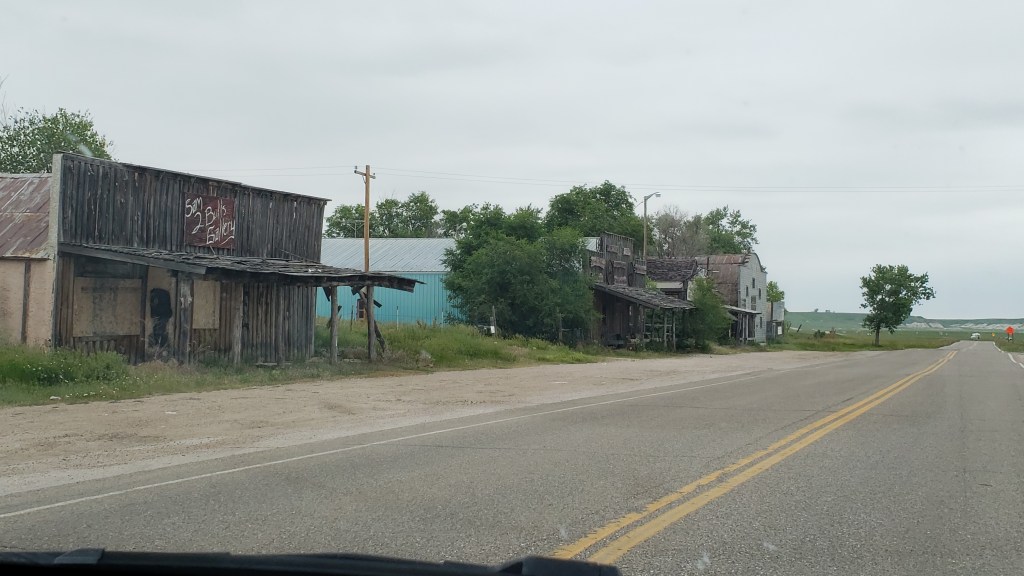
We made a quick stop at the Visitor Center, where they told us we could find gas in the appealingly-named town of Scenic if we needed any, but when we found it, it had obviously been a dead town for years. Decades maybe. The gas station had a price of $5.55 per gallon, so we’re guessing the place drew its last breath back when Jimmy Carter was President. Luckily, Nippy is very sippy, so we didn’t need to fill up until evening.

Scenic South Dakota
Is Scenic scenic? You decide!

Scenic South Dakota 2

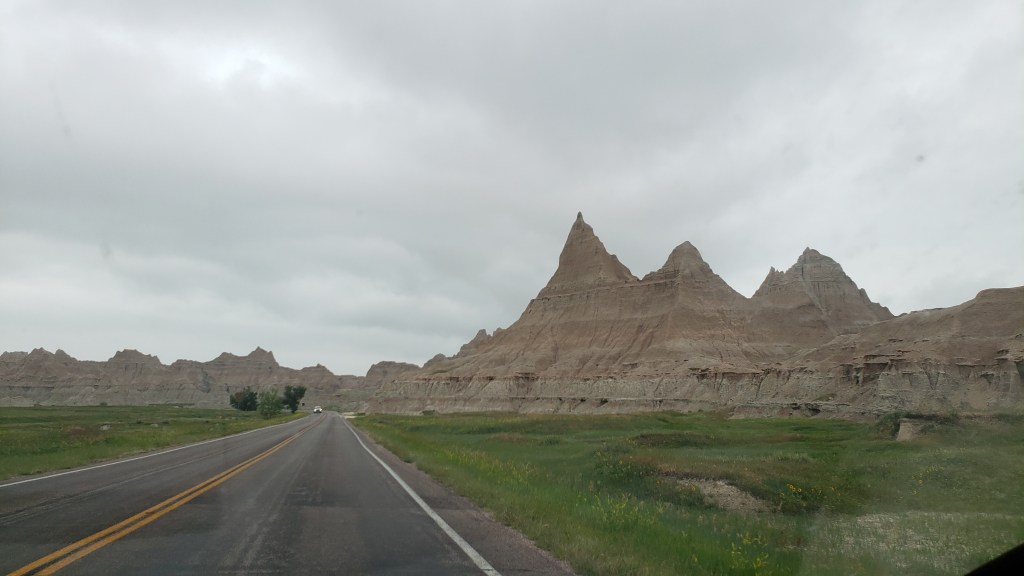
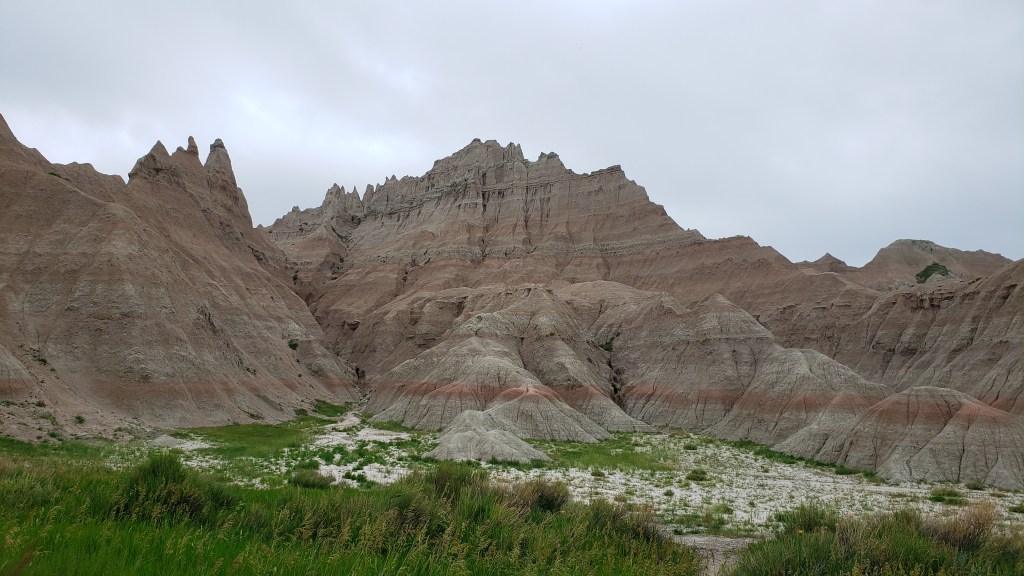
Once we reached the first outcroppings, it was obvious we were in an entirely new landscape. The peaks were sharper at the top and more angular as they descended, with a softer, more “melted” look when we got up close.

Badlands National Park peaks

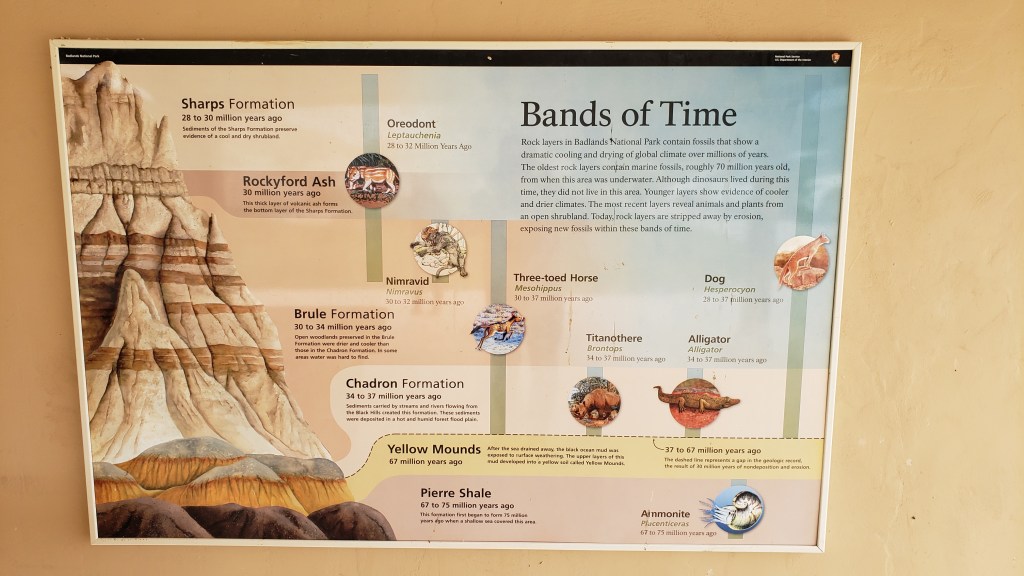
Badlands National Park Bands of Time
We were given a guide that showed what each later represented, moving from the oldest layers at the bottom to the youngest at the top.

Badlands National Park range

The badlands here were created by runoff that washed into an inland sea as Colorado’s Rocky Mountains rose into existence. We could see the layers when we took a short hike into a wide canyon, and the ground we were walking on was primarily the finest silt imaginable. Just like walking on talcum powder.

Badlands National Park simon and ruthie
The white pathway feels exactly like talcum powder

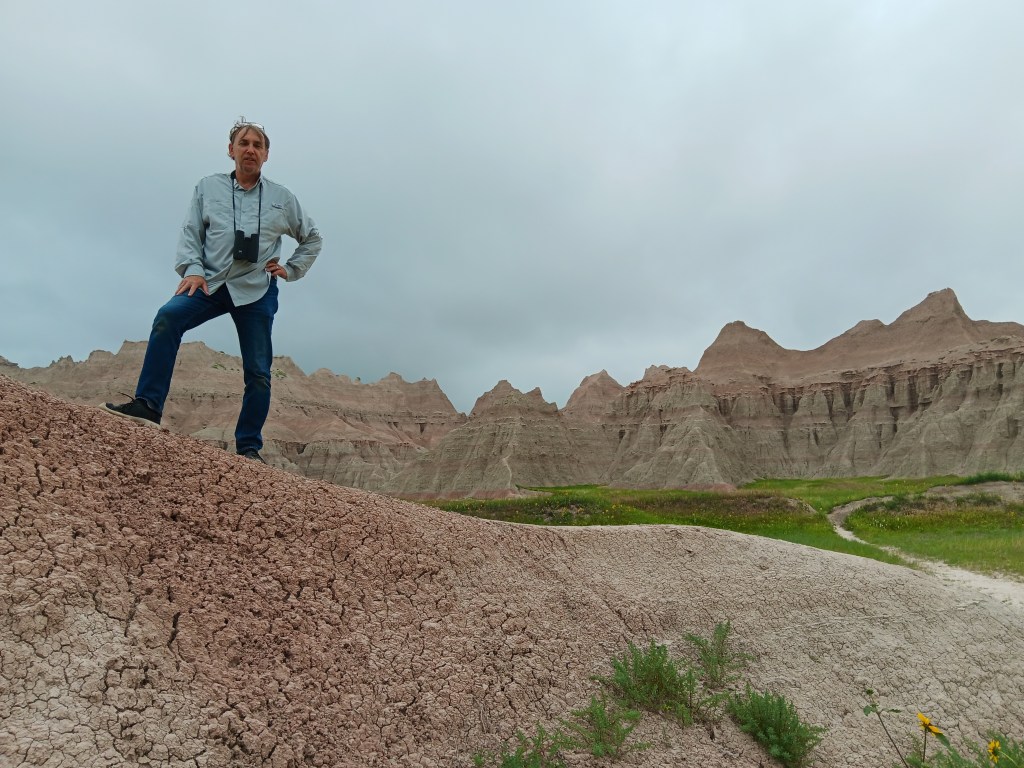
Other areas in the same canyon were like petrified mud, hard enough to create hills you could stand on but also dry and cracked on some surfaces.

Badlands National Park simon mud mound
This ancient sediment is described as “popcorn” rock

Badlands National Park flower
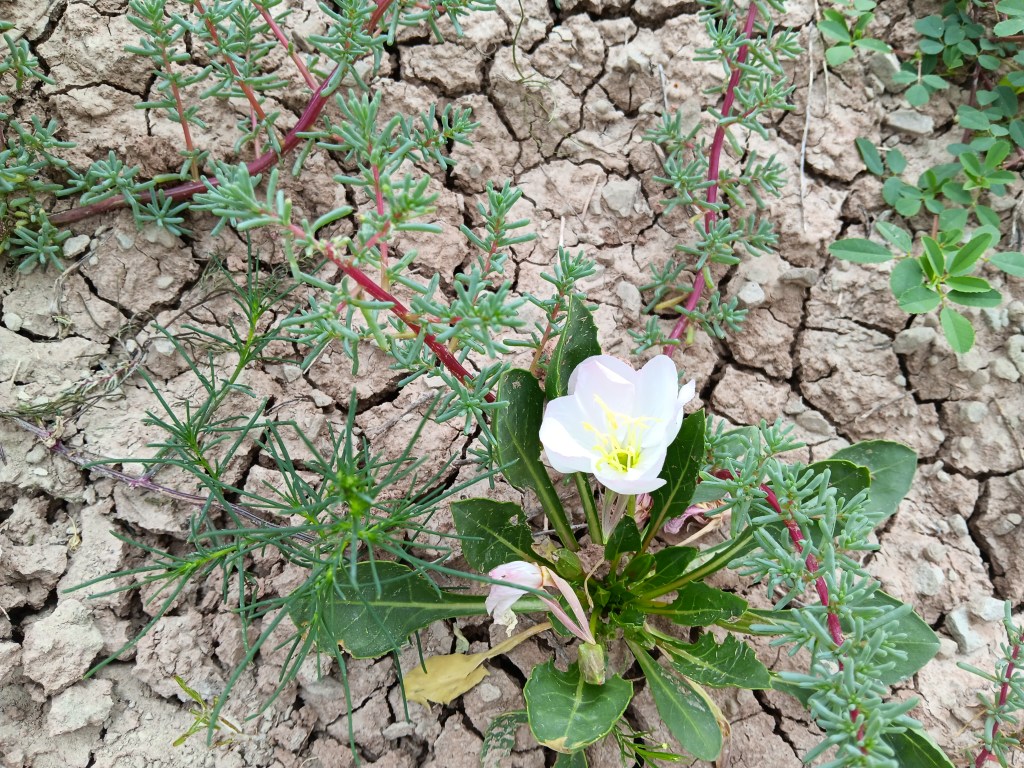
Even on that barren surface, the most delicate flowers have taken hold.

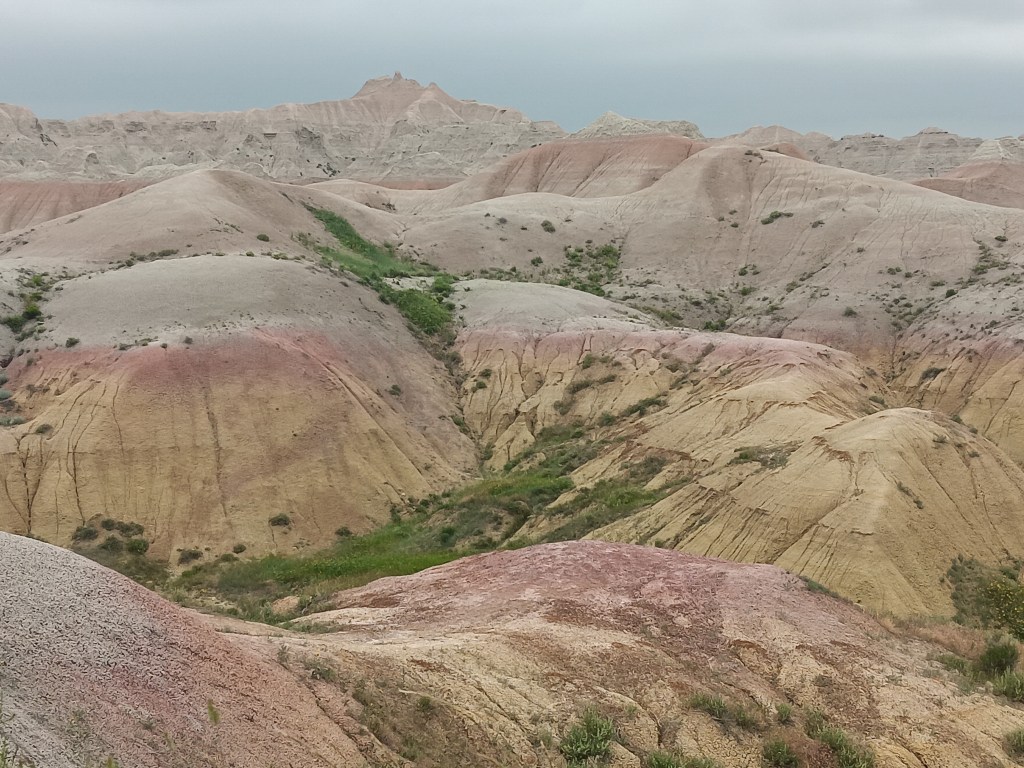
Another surprise were the “yellow mounds” (called paleosols) that were left when the inland sea drained away and chemicals from its plants left staining of yellow, red, purple, and gray. Against the cloudy sky, they’re less striking, but when sunlight hits them they positively shine.

Badlands National Park yellow mounds
Some yellow mounds we saw were only yellow, while most were multi-colored. We missed the sunlight photos, but you can imagine.

We could post a few hundred photos from the park, but we’ll spare you that and instead share a few from the absolutely bizarre town of Wall, our exit point from the park as we headed north to Hermosa.

Normally, commercials on TV and billboards along highways have zero impact on us. But Wall Drug Store is too smart for that, and the sheer number of billboards they’ve installed made it inevitable Simon would have to see what all the fuss was about.

Wall South Dakota
Our introduction to Wall

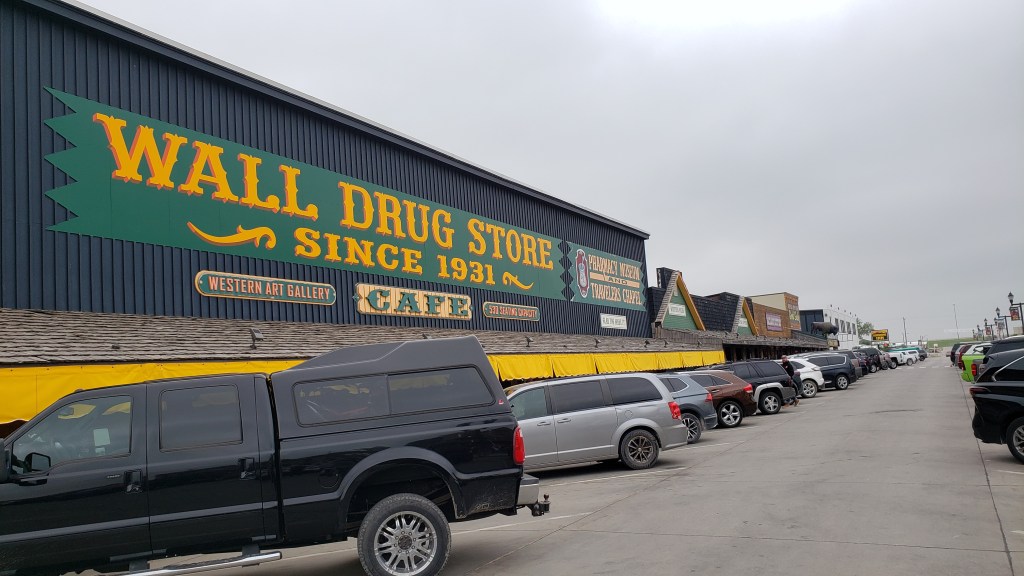
Like Buc-ee’s, if you’ve been there, you know. Wall Drug Store is just…massive. Like, a full city block massive.

Wall Drug Store facade
Not all of these storefronts are Wall Drug Store, but most of them are

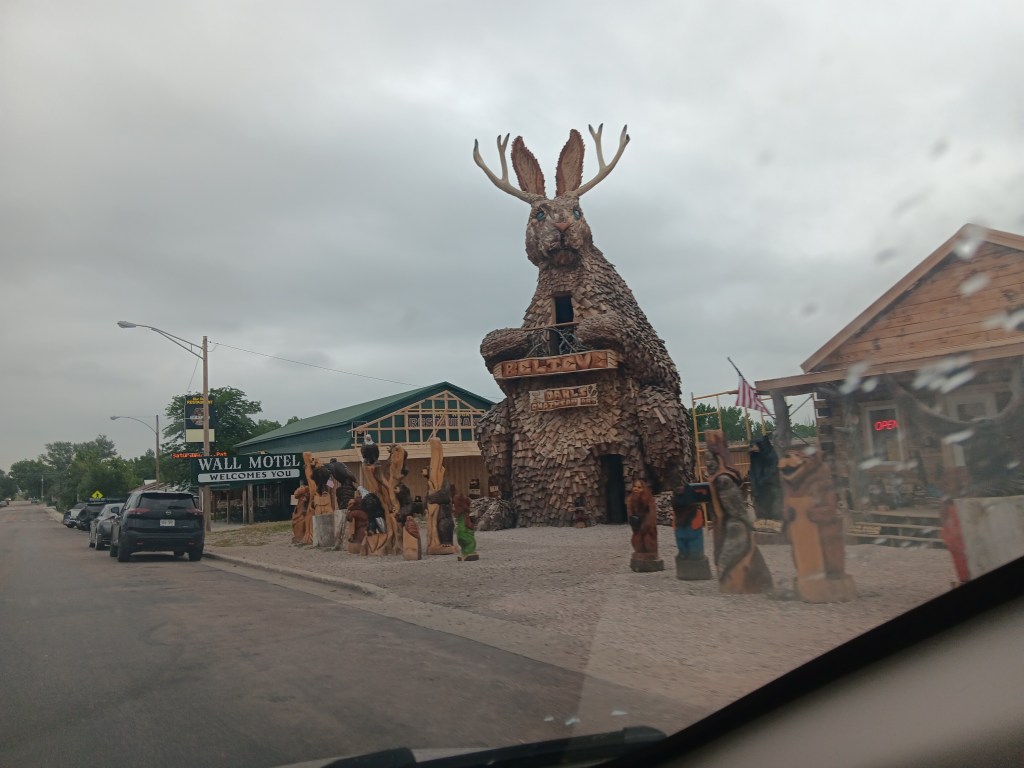
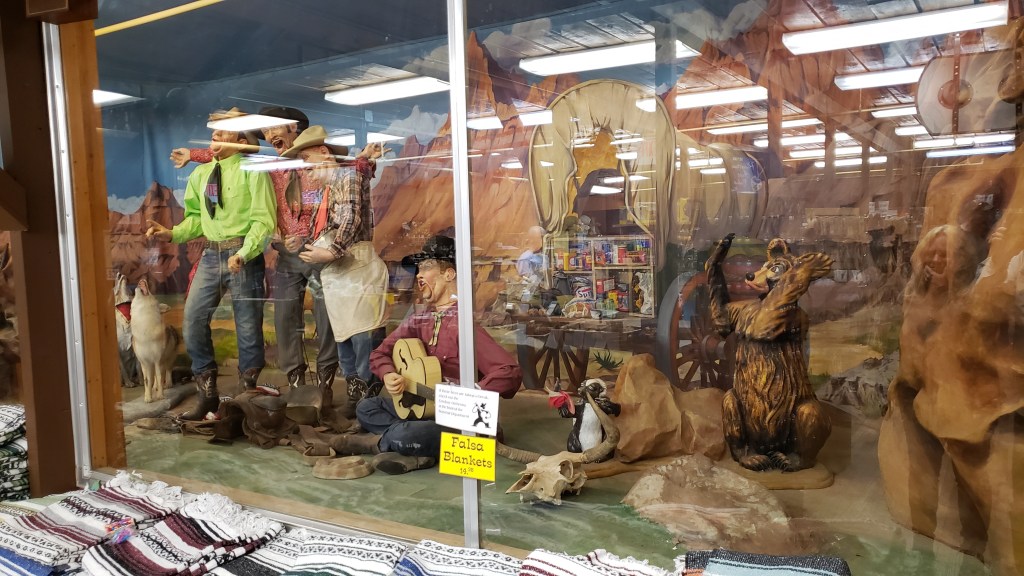
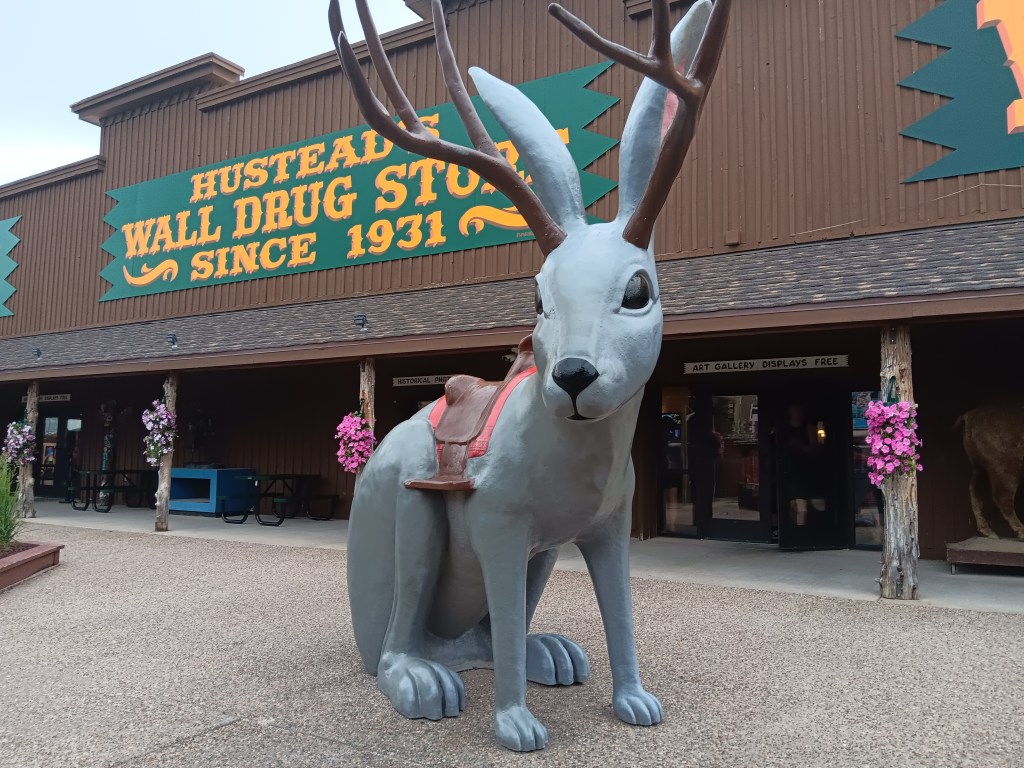
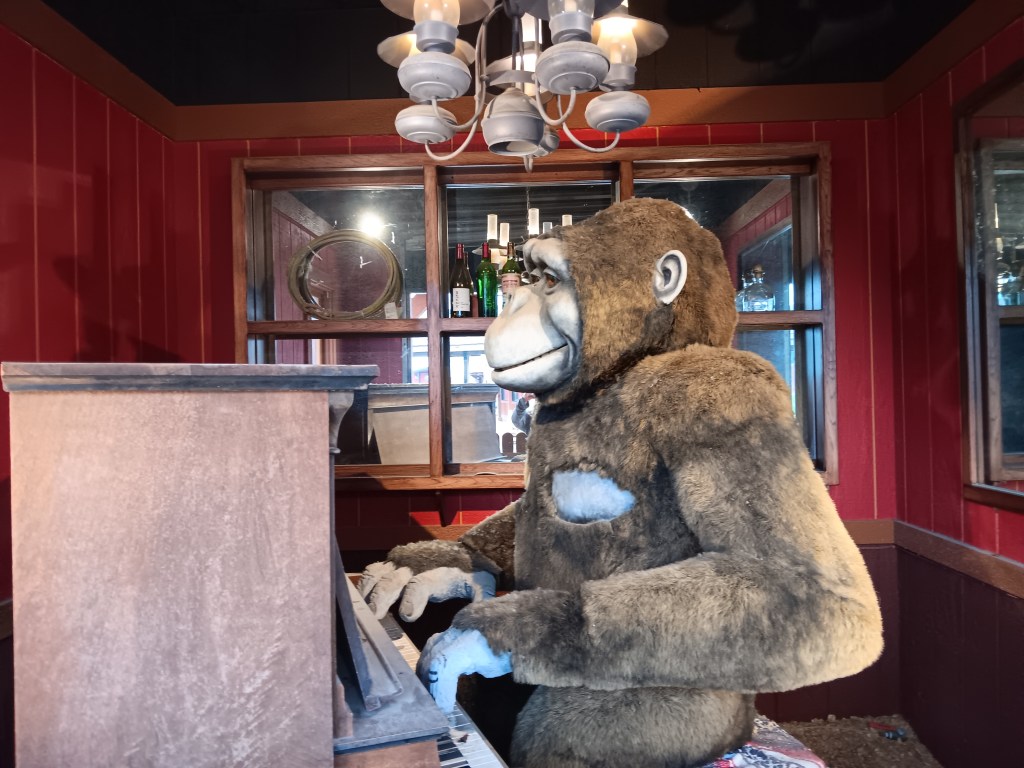
Want a billion shot glasses, T-shirts, cups, mugs, magnets, and every other form of tourist crap you can imagine, all wrapped up in interactive stuff that includes a jackalope the kiddies can sit on, a gorilla animatronic playing a piano, and an insane trio-plus-one of mechanical cowboys singing in a wild-west setting of howling coyotes and an upset bear? Wall Drug Store has all of it and much, much more.

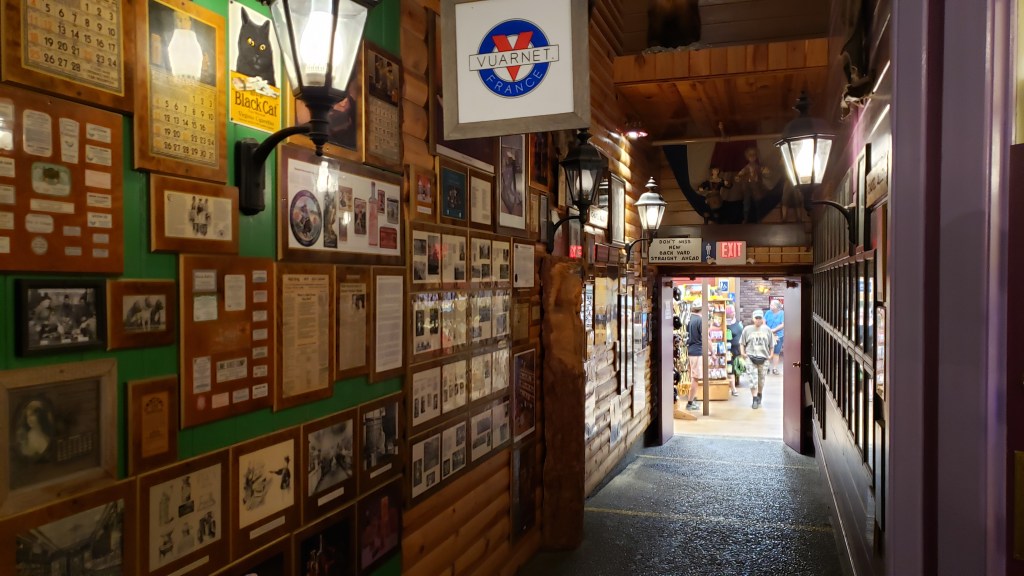
wall drug store interior

wall drug store mechanical band
This is a terrible photo, but there was no way to avoid the glare. Still, it softens the full horror.

wall drug store jackalope

wall drug store gorilla
Why?

We didn’t buy anything. We didn’t even try the “free water” the store so proudly advertises on the front façade. But we’ll remember Wall Drugs with the same fondness we remember that wacky gas station with a beaver as its mascot.

wall drug store front

Tomorrow (subject of our next blog) would see us making the first of many trips into Custer State Park, and we’ll just say that at $20 for a seven-day pass, we absolutely got our money’s worth.

Custer National Park male pronghorn
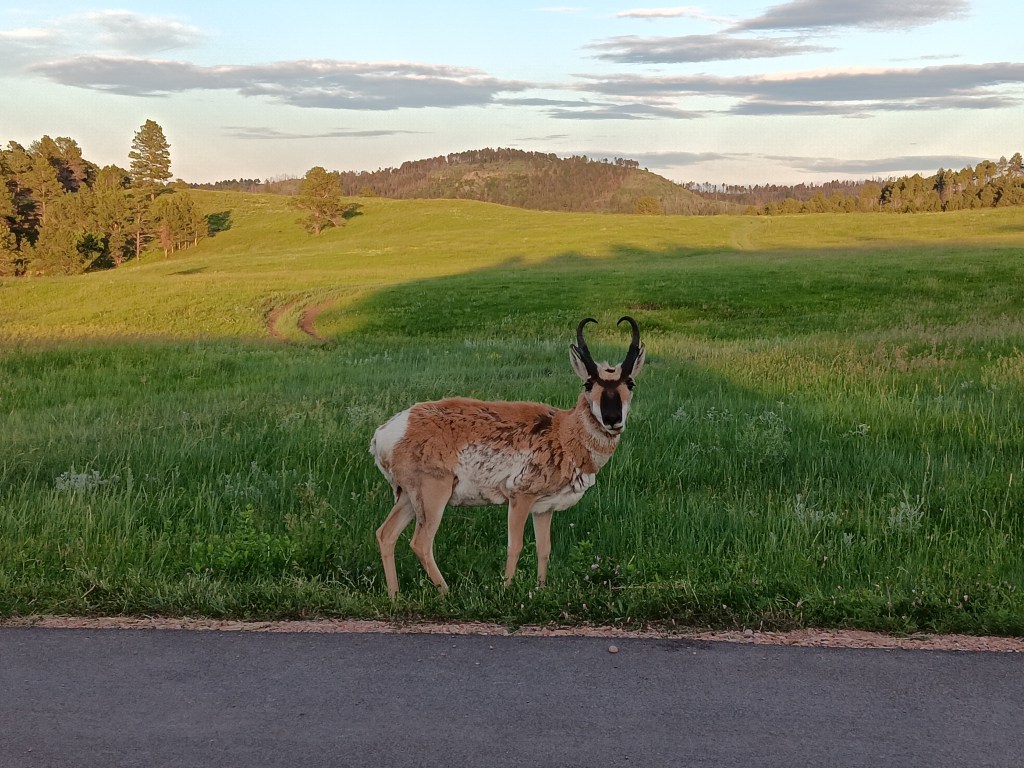
Hello, handsome!

A Year On The Road – Weeks 2-3; 691 miles

After our indecently hasty first-week charge through the center of the USA, our pace has (deliberately) slowed in weeks two and three. Instead of 1,289 miles in 7 days, we covered “just” 691 in 14 days; i.e. half the distance in twice the time. That’s still probably more than most dedicated RVers will travel in that time, but a better realization of what RV travel is all about.

We gave ourselves a day in Gaylord, three days in northern Michigan at Mackinaw City, seven in the Upper Peninsula in Munising for the superb Pictured Rocks National Lakeshore, one day in Crystal Falls, and then another seven as we crossed over into Minnesota at Duluth and pitched camp in Saginaw, just to the north-west.

The map of our route from Lansing, Michigan, to Saginaw, Minnesota, 14 days of excellent RV travel

That’s where we are right now, prior to our next major move – west through Minnesota and into the “undiscovered country” of North Dakota, Fargo, Bismarck and all. This will be entirely new territory for both of us, and we can’t wait to discover new adventures…

PS: The map shows it would take 11hr 33min (by car, non-stop) to cover the route that took us 2 weeks!

A Return to Ancestral Ground

Gooseberry Falls selfie

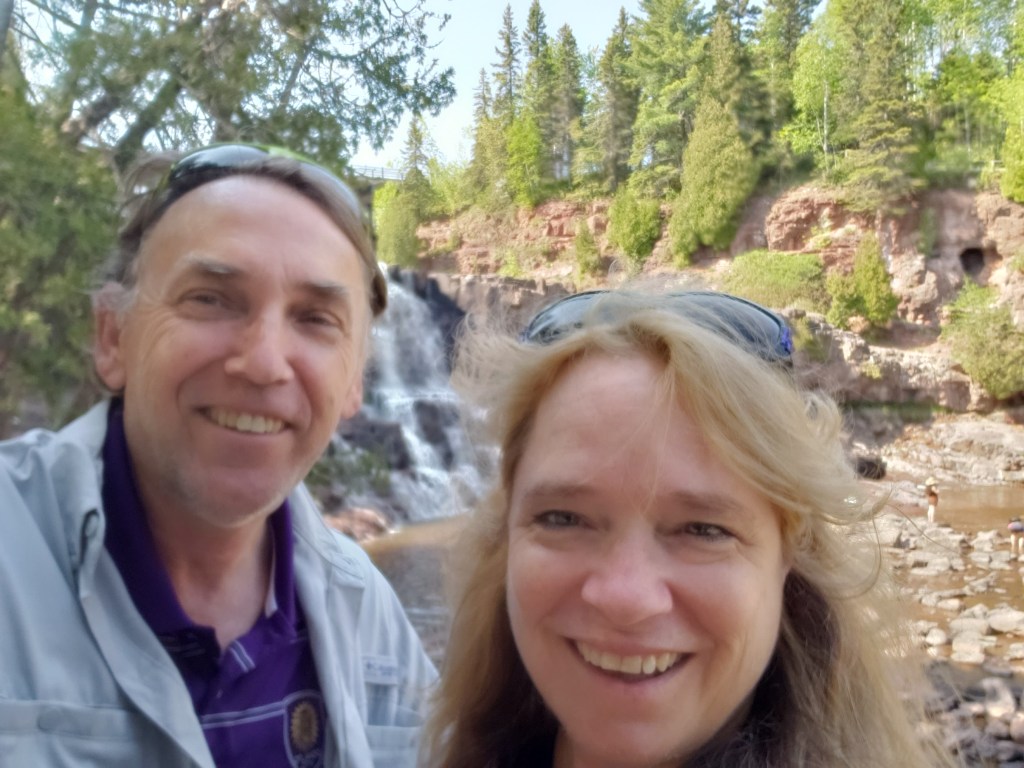
The Land of Ten Thousand Lakes. Home to wolves, bobcat, coyote, bears, and, a long time ago, woolly mammoths, Minnesota is also the birthplace of Susan’s grandfather, a descendant of Slovenian immigrants seeking life and work in a place similar to home. And that means mining, a distinct accent, and winters harsh enough to freeze your bollocks off.

But our arrival was much more temperate, once we got past Duluth.
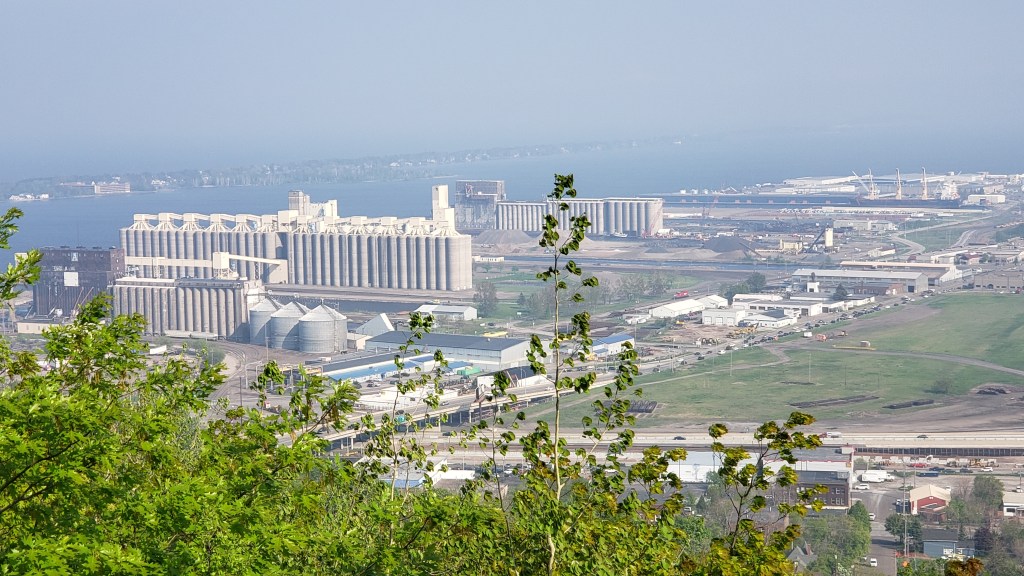
Duluth minnesota
Duluth, Minnesota

Those Steep Grade warnings on our GPS were the first test of our nerve before we head into mountain territory, and while Simon was eager to give it a try (with a healthy dose of respect), Susan was not so sure. Perhaps the person holding the steering wheel with their foot on the gas or the brake has a mental advantage over the helpless passenger.

Whatever the case, the downward grade proved to be a doddle. We’d had worse coming through the Appalachian foothills on our way up from Florida. The upward grade, however, would be a different matter.

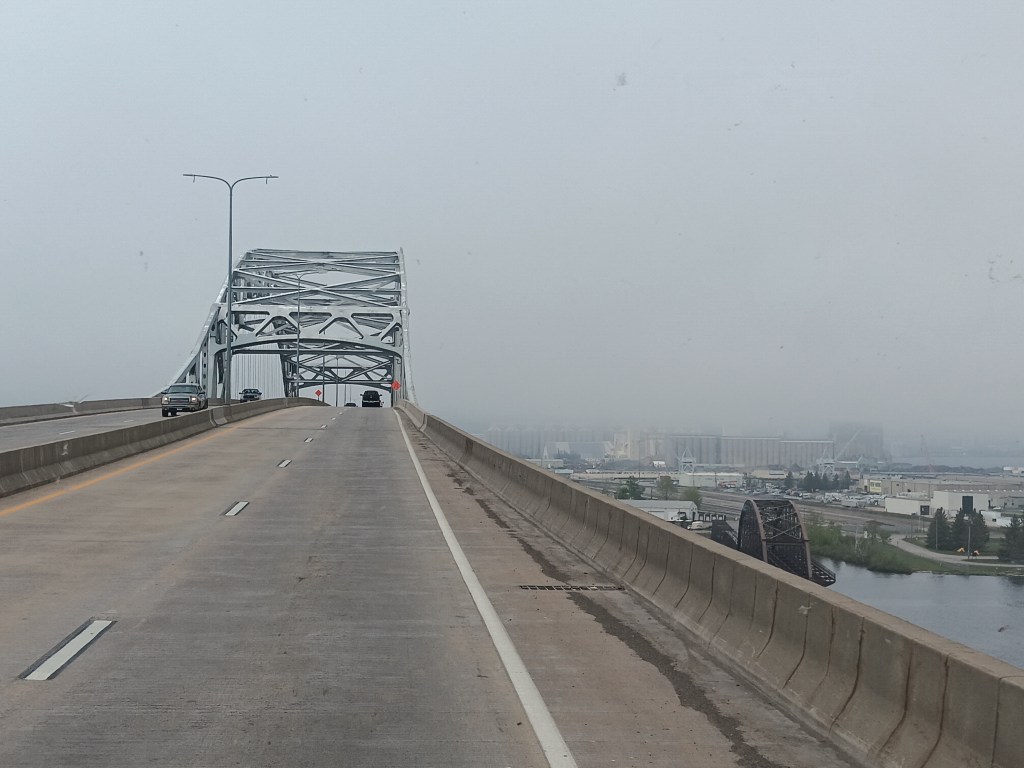
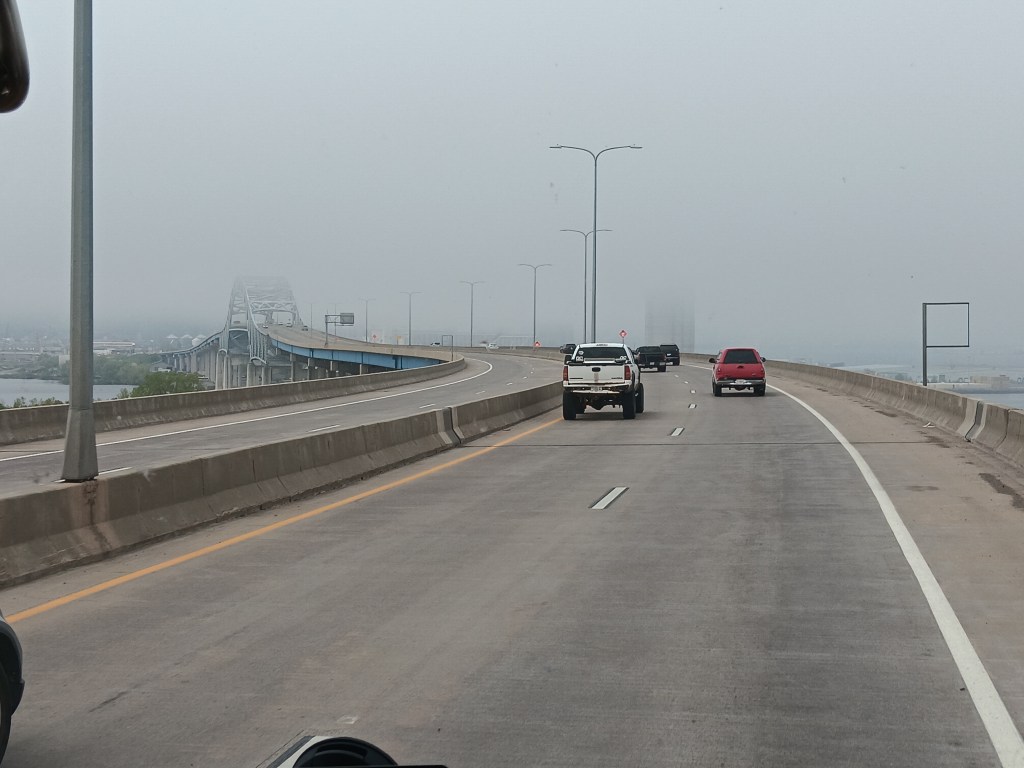
Leaving Wisconsin meant crossing the St. Louis River into Duluth, where the unexpected sight of the John A. Blatnik Memorial Bridge brought on the heart-pounding terror of the Mackinaw Bridge crossing for one of us (Susan, obviously), with its massive rise and certain death by drowning if the rig went over.

In the end, it was butt-clenching but do-able, much more so than the Mighty Mack due to its higher sidewall and less visibility straight down to the river.

We could see the uphill Steep Grade we’d been warned about when we reached the end of the bridge. From there, it looked incredibly daunting – a nearly straight-up pitch with its full horror hidden by sweeping upward curves. Simon downshifted into second gear, checked that we were already in Tow Haul mode, and let Fati’s engine take the brunt of it.

We have no photos of it, of course, since Simon’s hands were gripping the wheel and Susan’s hands were gripping the armrests.

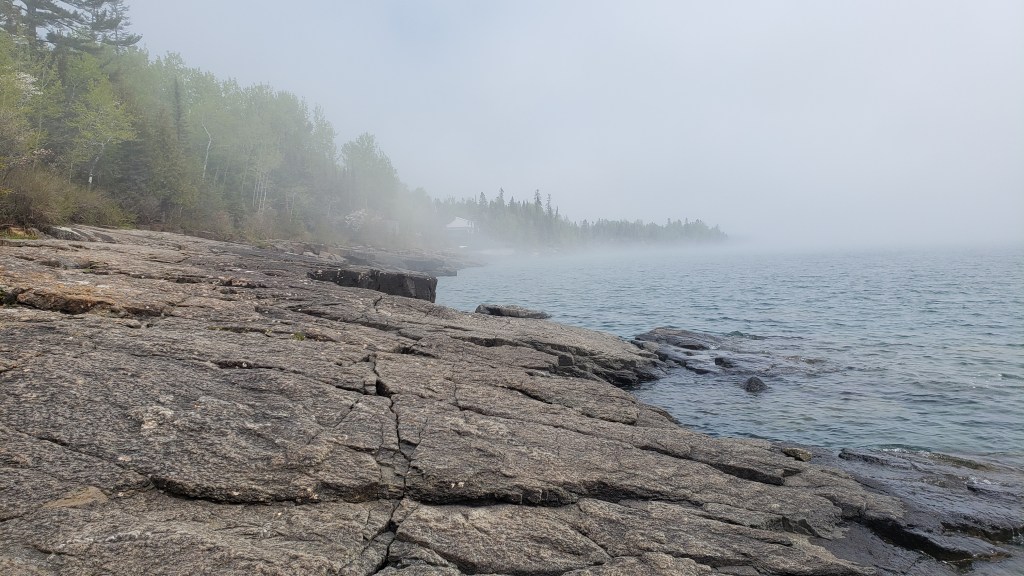
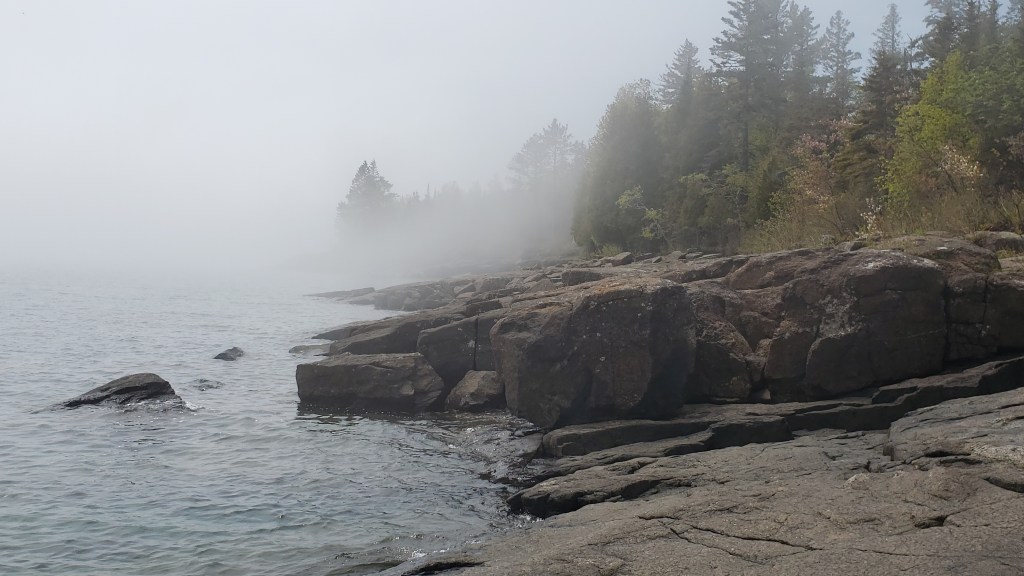
Our 11-ton rig performed magnificently, and once we were at the top of the hill we (and she) breathed a sigh of relief. The rest of the trip was pretty and uneventful, though we were immensely curious about the foggy pall that lay over Duluth, a meteorological phenomenon caused by air hitting the warm land after passing over Lake Superior’s deep, notoriously cold waters, which we’d encounter repeatedly over the next few days.
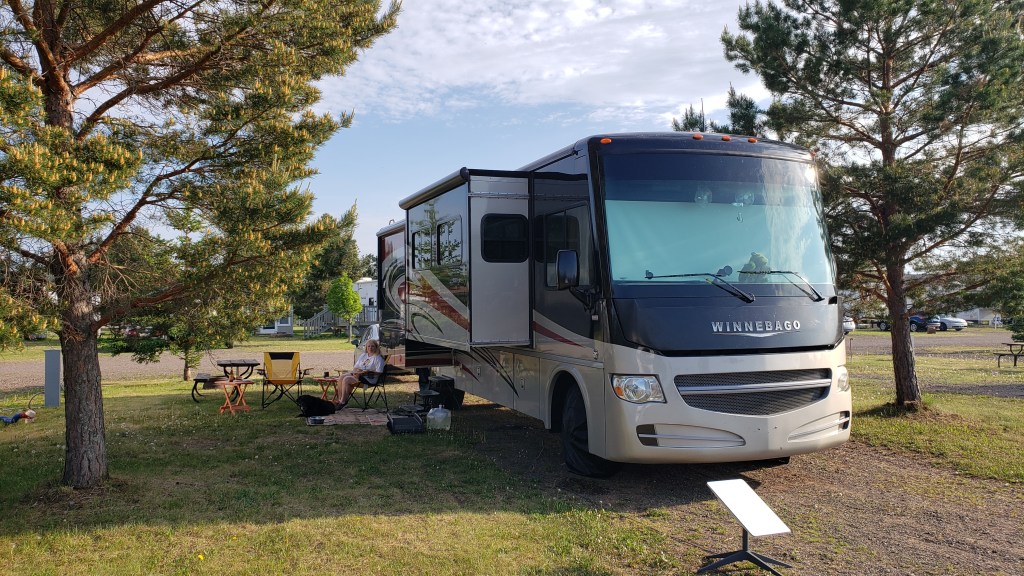
We were thrilled to be upgraded from a 30-amp back-in site to a 50-amp pull-thru when we checked in at Red Pine Campground in Saginaw, Minnesota, about 28 minutes north-west of Duluth. We parked between two fragrant pine trees with an Airstream RV on one side and nobody on the other, hooked up to water, electric, and sewer, then set off to see the sights.

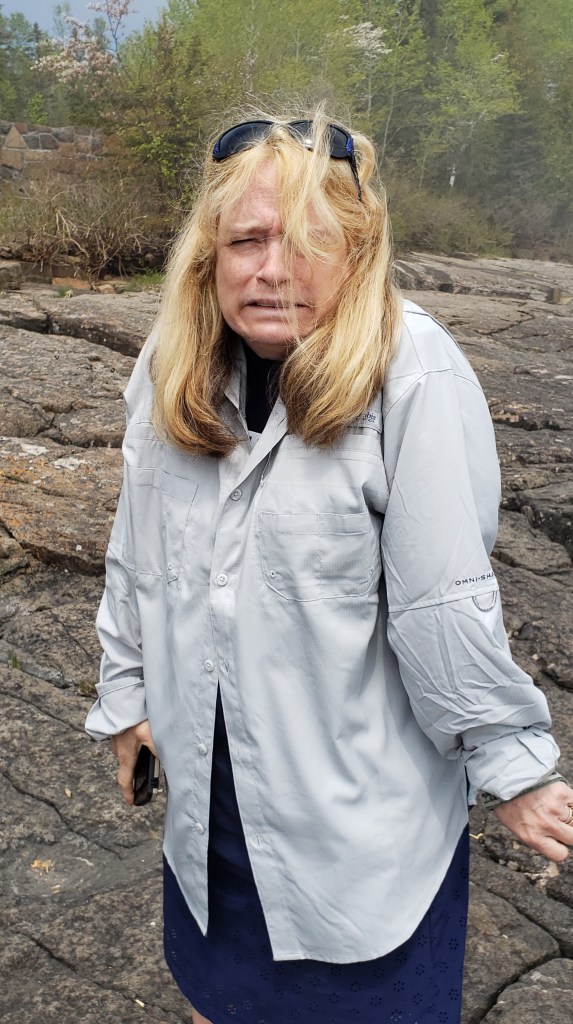
Having learned our lesson with a tick scare on Ruthie after hiking in Michigan, the first order of business was to find some hiking clothes, ideally the kind that has tick and bug repellant built in. Menards – that vast warehouse of all things outdoors in Michigan – wasn’t far away. It also wasn’t anything like the ones in Michigan, and was really a gigantic Home Depot. Strike One. Walmart was Strike Two. In the land of outdoor adventure, either the locals never went outdoors, were far heartier than us, or already had hiking clothes.

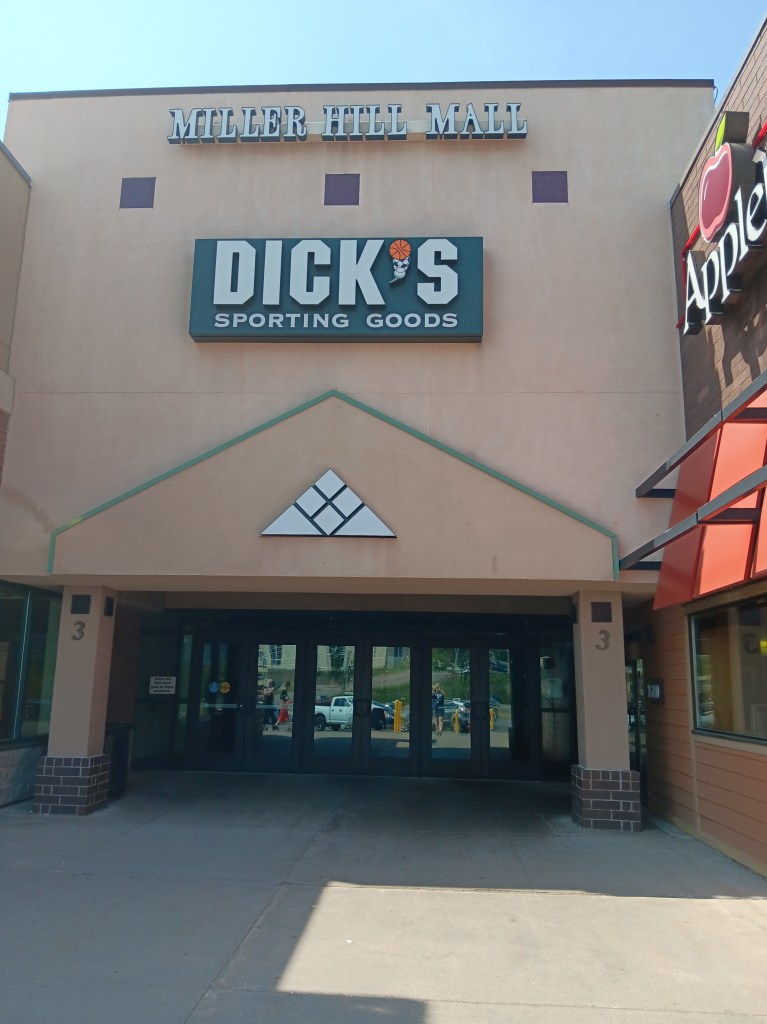
Susan refused to go into any more stores that didn’t have the words Sporting Goods on them, and to our great joy we came upon Dick’s. But this wasn’t a big Dick’s. It was a little Dick’s. And no offense intended to anyone, but we were pretty sure we’d hate little Dick’s.

Simon waited in the car with Ruthie (again), while Susan dealt with the little Dick’s. Long story short, it wasn’t a little Dick’s, it was a big shopping mall with a little Dick’s. Apparently, women don’t hike, so half an hour later we both had a set of men’s hiking pants and shirts (and a massive cha-ching on our credit card), and we were off to the North Shore Scenic Drive with Gooseberry Falls as our turn-around point.

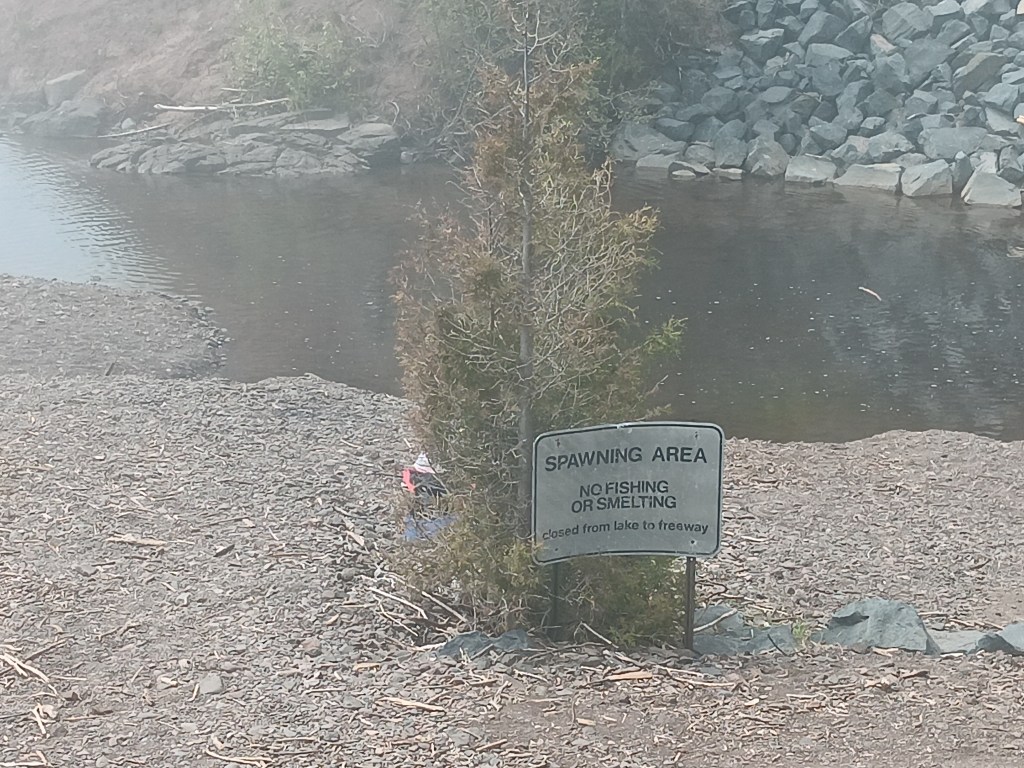
First up was a pull-off viewing area that led down to a small river that emptied into Lake Superior where, it seems, something spawns.

Roadside oddity Toms Logging Camp (no apostrophe needed, it seems) was our next discovery, and while they don’t allow dogs on the camp trail, we took a few minutes to explore the wacky gift shop and it’s homespun signs that explained the “décor” on the walls, from the type of timber used to build the shop to the mountain goat’s head and a grim description of how long it took to die after it was shot.

Simon in hat at Toms Logging Camp
The most gorgeous cowboy in Minnesota!

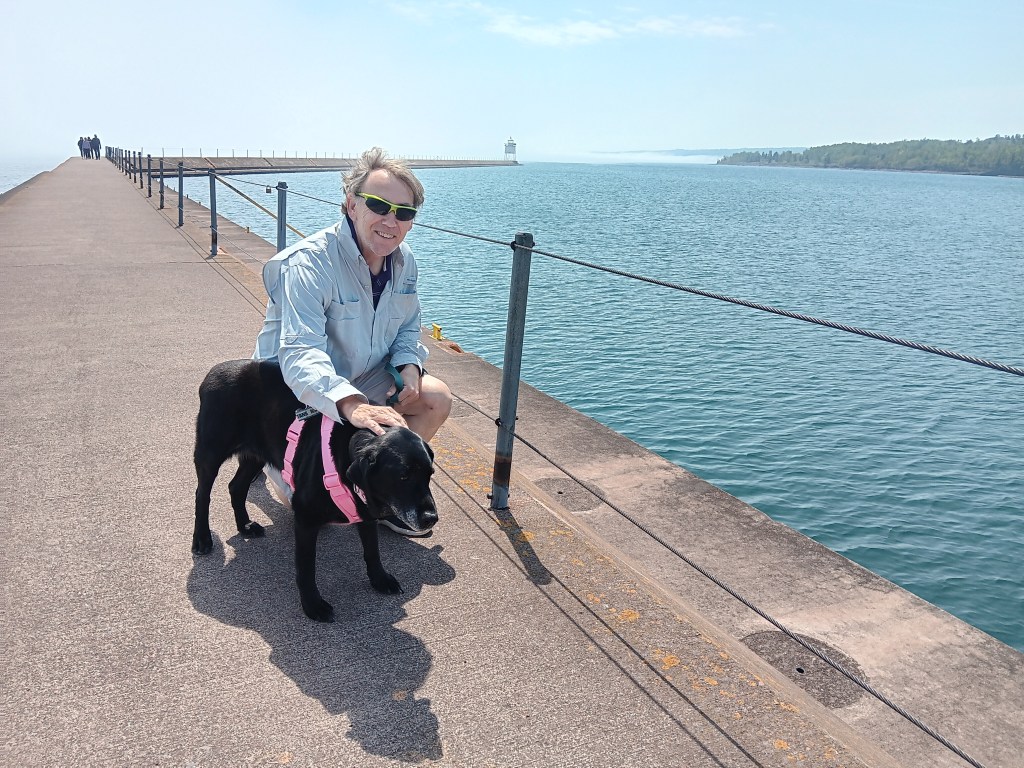
Susan had been hoping to find a small bag of long-grain wild rice, and we found it here, then we headed north again. Our packed-lunch stop was the lighthouse in Two Harbors, where the fog on Lake Superior was starting to roll in. We made it to the end and back, but during that walk the temperature dropped by about ten degrees, then rose again when we reached land.

Two Harbors Lighthouse
You can see the fog in the background, which would be in the foreground soon.

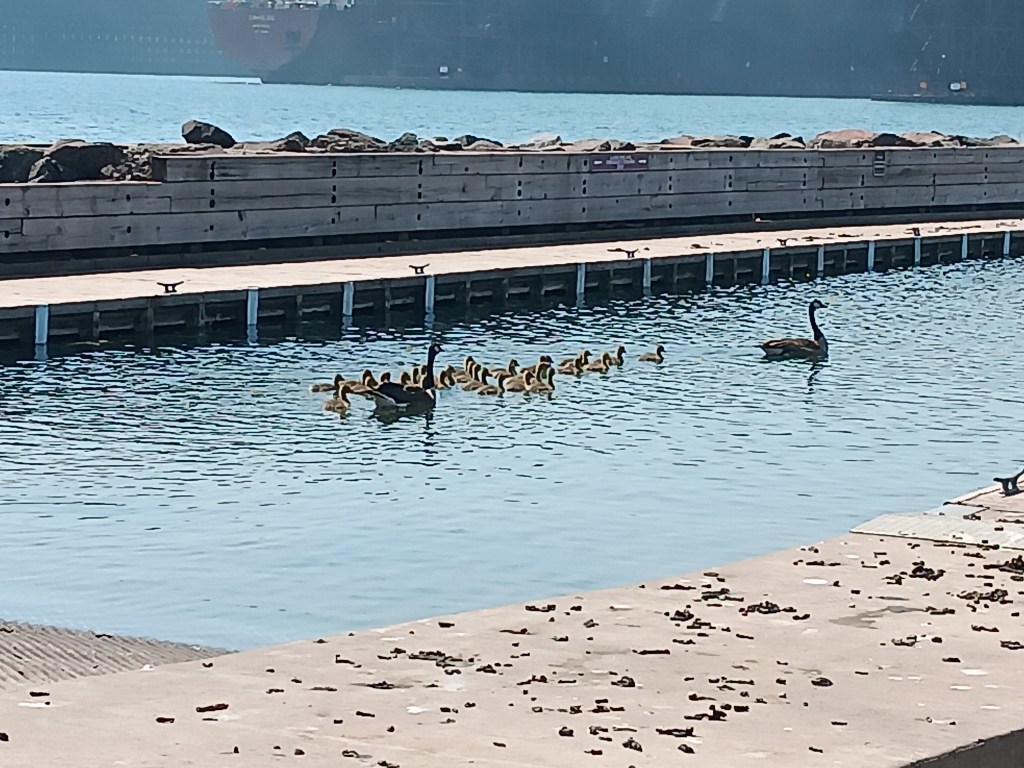
Even the over-achiever Canadian Goose couple with their 27 (!!) goslings were unimpressed.

Geese with goslings

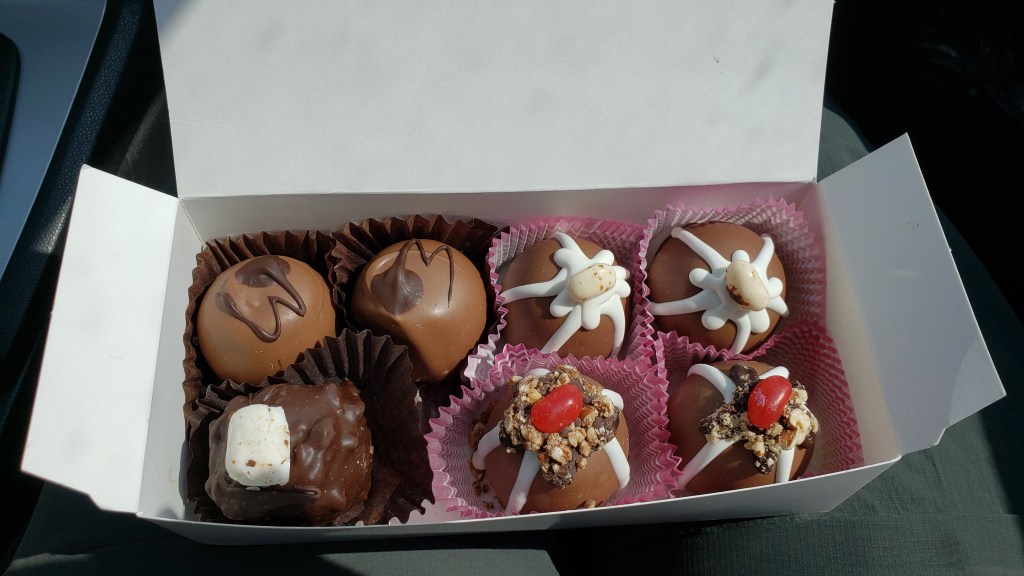
Simon had too much blood in his caffeine stream, and we seriously needed warming up, so we popped in at Burlington Station, where he added eight hand-made truffles to the bill without asking how much they were. The total for the truffles and two mocha coffees came to $46, and the look on his face was priceless as he tried to hide his shock and horror.

Truffles

In all fairness, they are absolutely scrummy, and we’re making them last as long as possible. But damn…that’s some serious cash for a couple of pounds of chocolate. You could buy a whole new check valve for your water pump for that price!

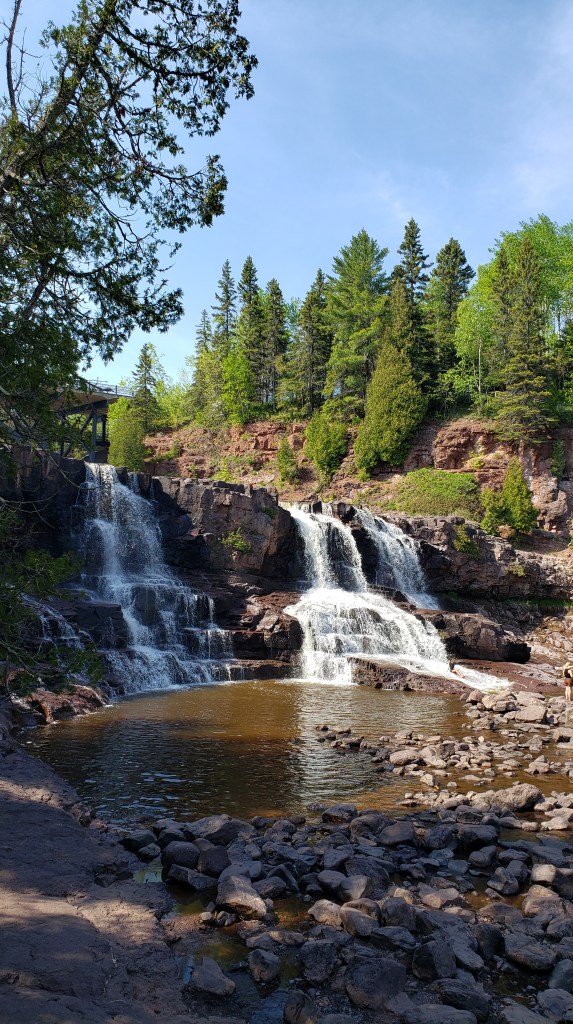
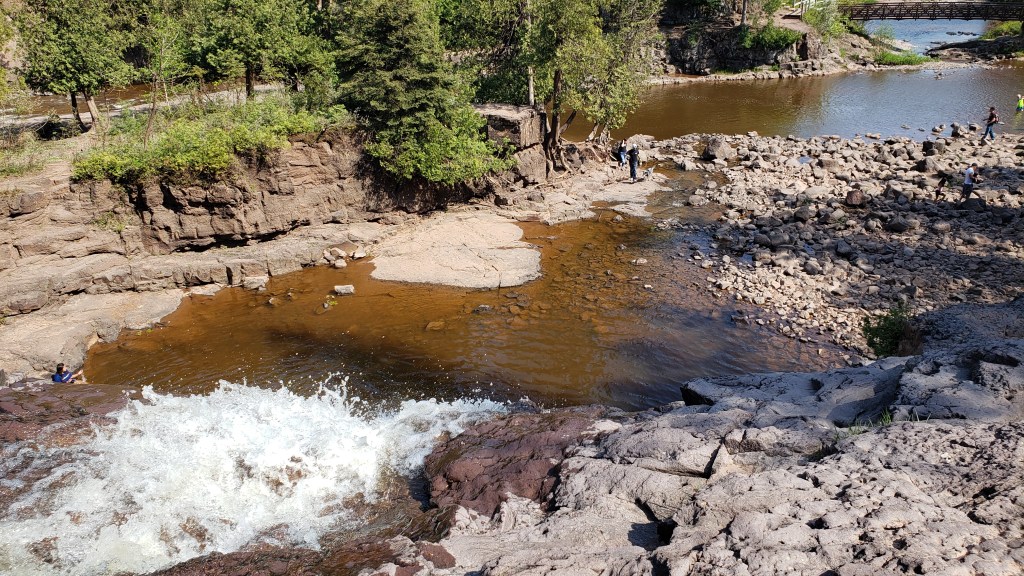
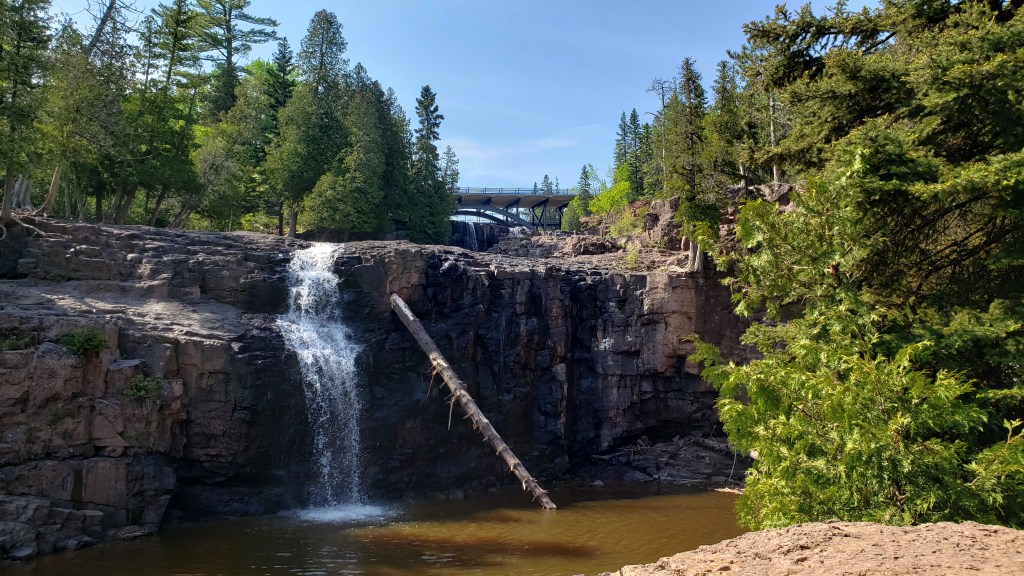
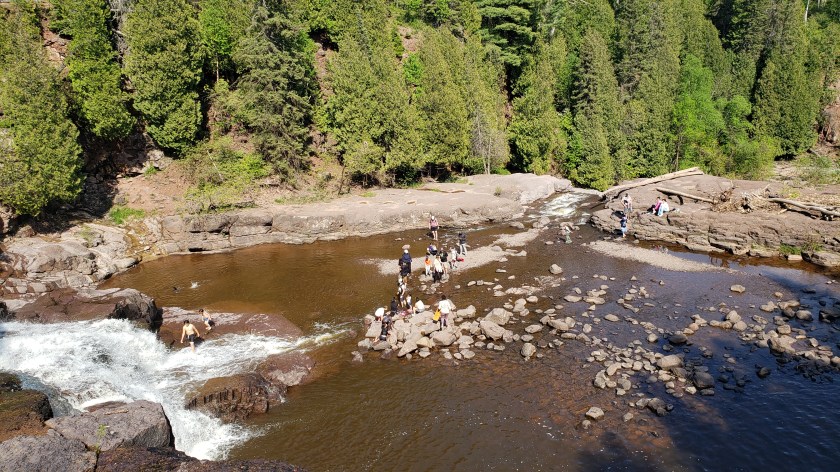
Gooseberry Falls was the most magnificent of all the falls we’d seen so far, so we’ll just let you enjoy them, as we did.

Gooseberry Falls 1
Gooseberry Falls 2
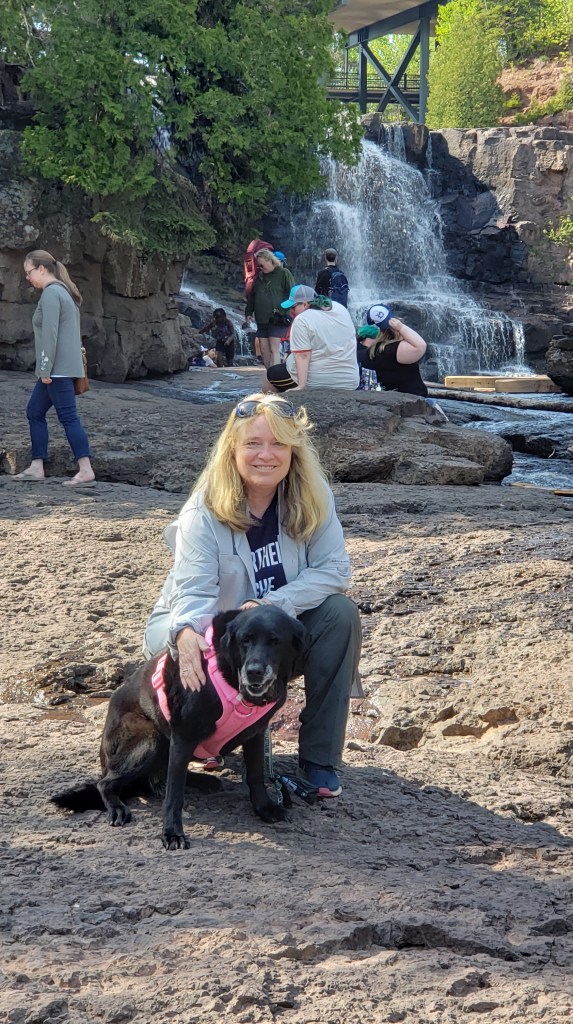
Susan and Ruthie at Gooseberry Falls
Gooseberry Falls 3
Gooseberry Falls 4
Gooseberry Falls 5

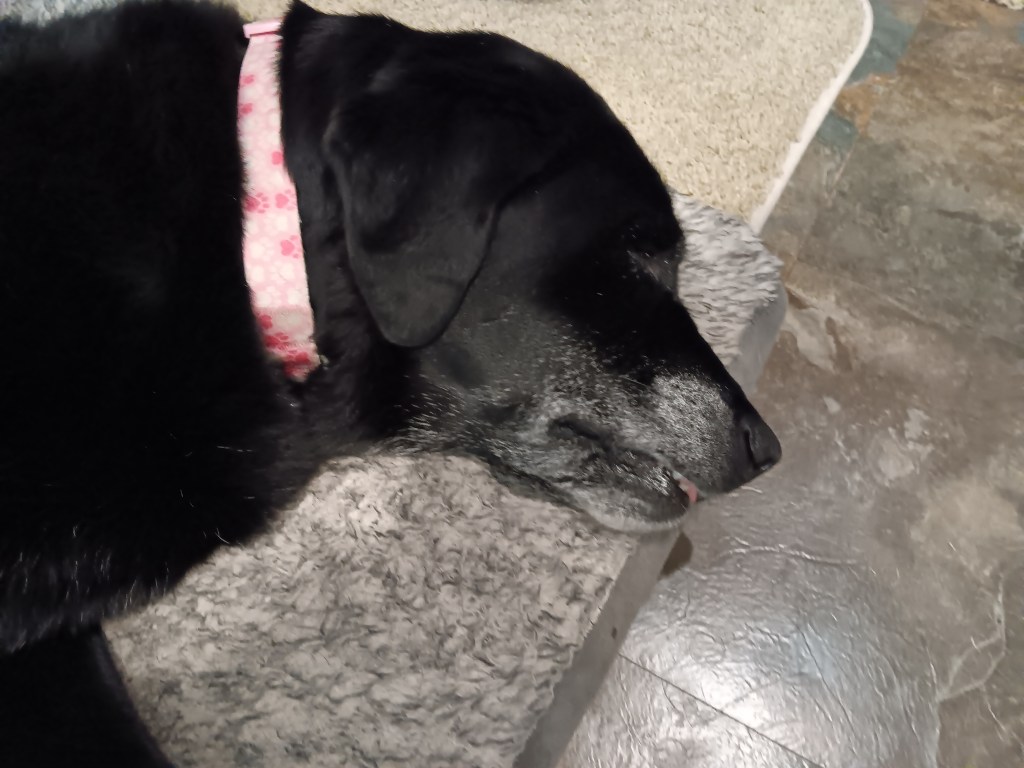
Fog followed us back along the coastline until we turned west and headed home again, where one of us flopped onto their bed, so exhausted by the day they couldn’t even close their mouth all the way before they fell into a deep, contented sleep.

Ruthie sleeping
That little tongue!

Next up: A surprising and sentimental discovery!