
Heading North Into The Great Southwest


Simon wanted a trip up to Sante Fe for its Western and cowboy-movie history, rich cultural reputation, and the chance to see northern New Mexico, which we’d heard was spectacular. Reusable canvas grocery bags packed (because we both thought we brought a carry-on bag for the occasional hotel stay, but didn’t), we locked up Fati and hit the road in Nippy for two days visiting Santa Fe, Taos Pueblo, and Albuquerque.

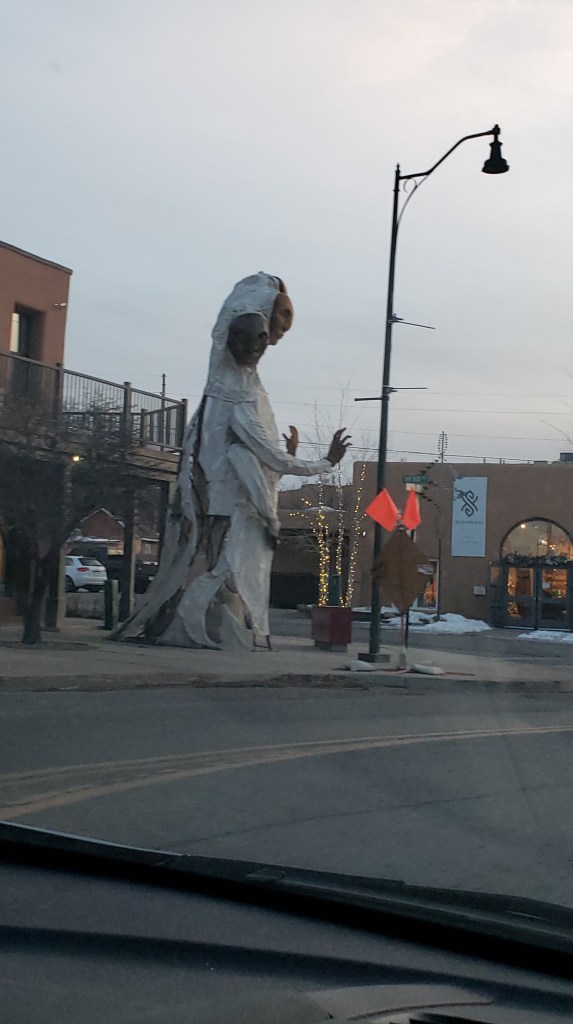
What we found when we got to Santa Fe was even more compelling than we expected. Adobe buildings, a billion restaurants, and art right out there on the street where anyone could swipe it, if they had a crane and a big truck.

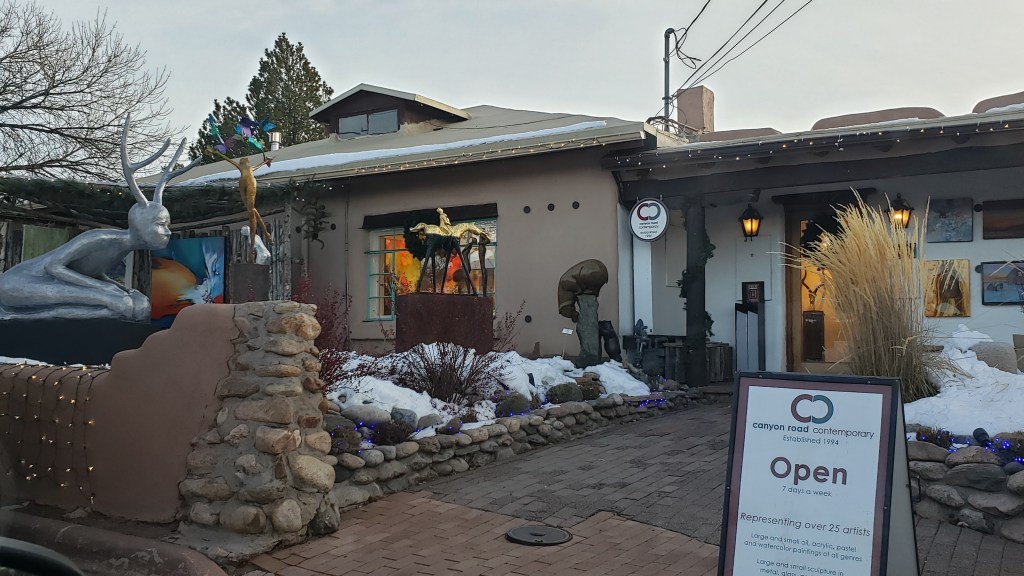

What is it about adobe houses? They’re so cute and different and Southwestern, and we were immediately smitten.
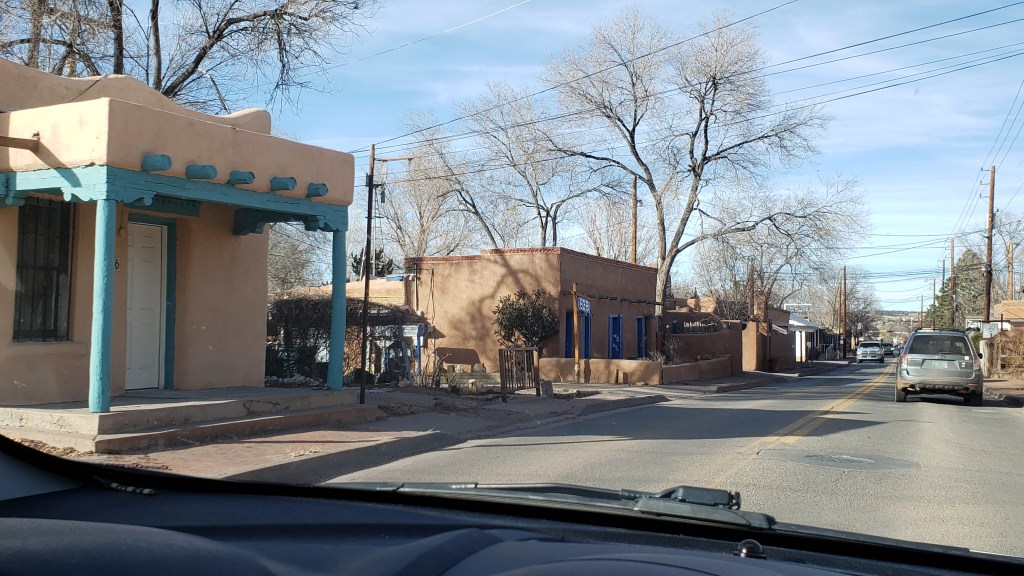

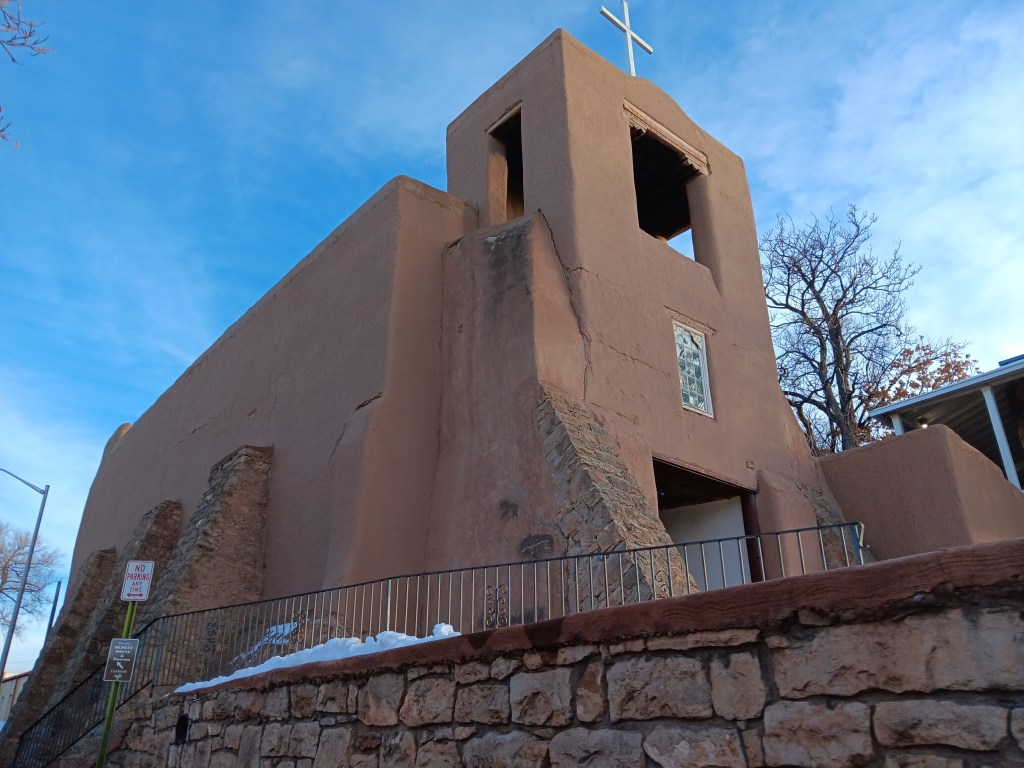
San Miguel Chapel, Santa Fe’s oldest church, dating to 1610 A.D.

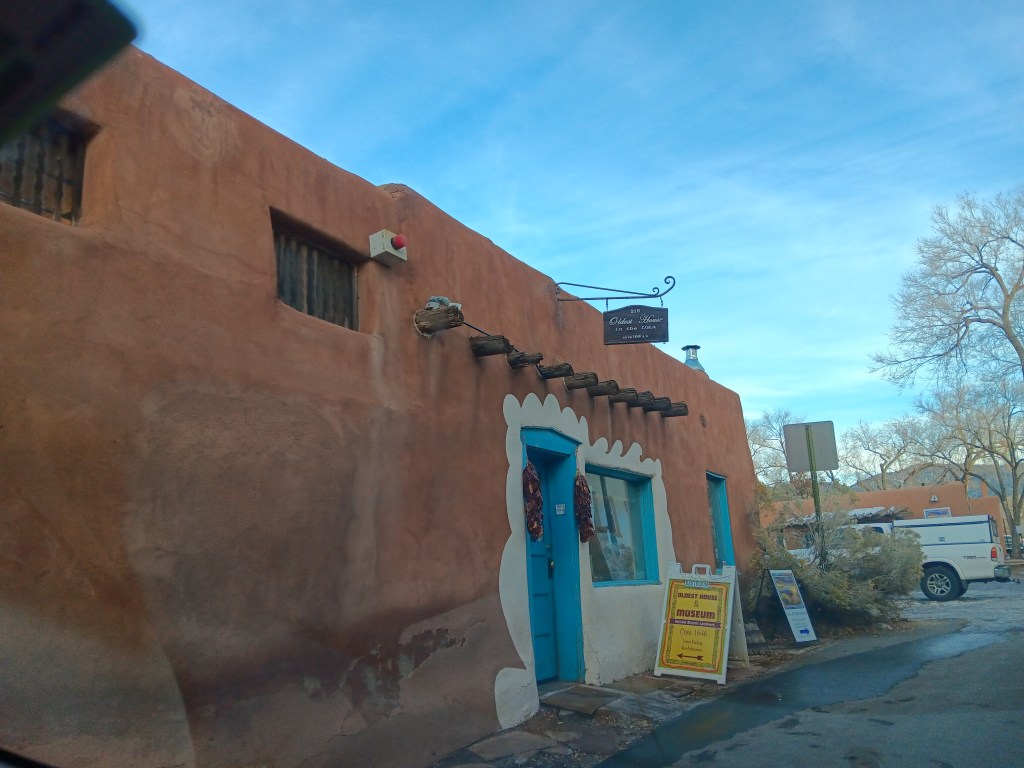
The oldest house in the U.S.A., dating back to 1646 A.D.

We’d been given several recommendations for great dining in the Old Town area. What we didn’t know was that New Mexico closes at 3:30pm. We arrived at our first choice at 3:29pm and got a hard “No” when we asked if they could at least do soup as a carry-out after our 4-plus hour journey.

The franchise-sounding Burrito and Co. was open, though, and we’re here to tell you their homemade Tortilla Soup with fresh tortillas and wedges of lime on the side was so warming and delicious, we were almost glad we didn’t have another choice. Oh, the heavenly lusciousness of it all!
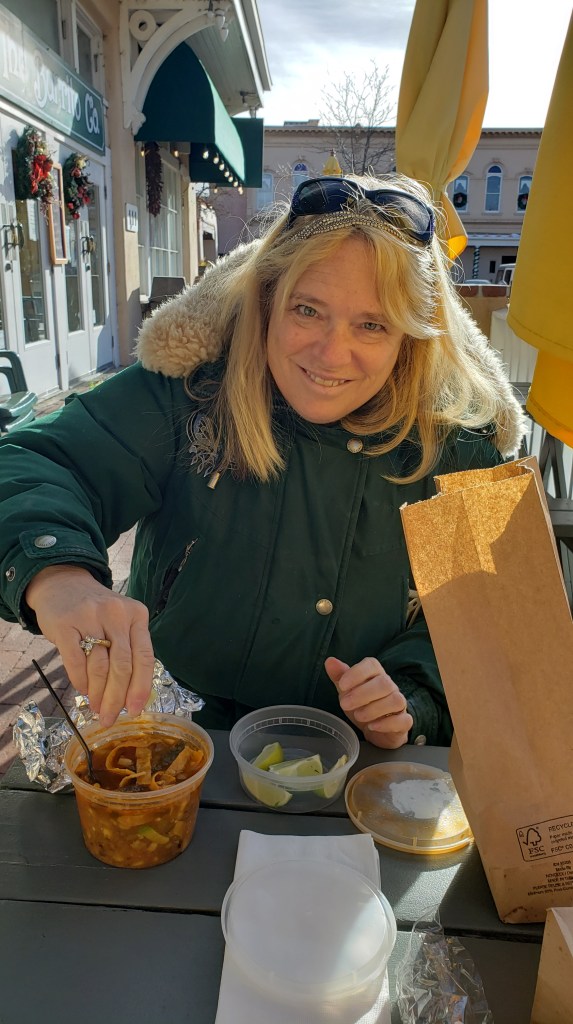

Ruthie saying, “Throw some in here!”

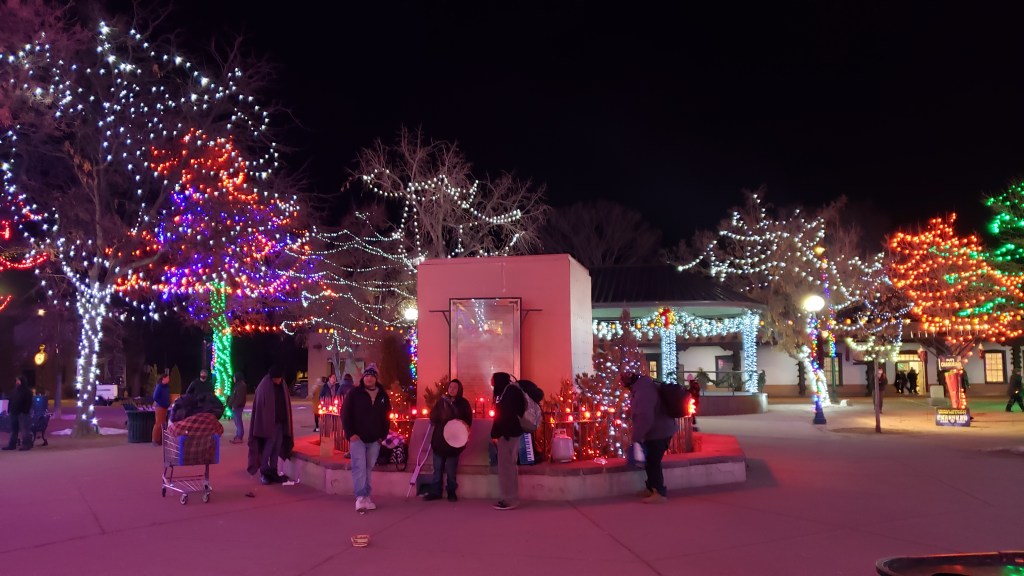
Old Town’s plaza was dressed up for Christmas, and a group of Native American guys were performing traditional chants that evening. They may have been doing it for weekend beer money, as young people are wont to do, but it set a tone so evocative we were spellbound for quite some time. It was the sort of cultural experience we’d been hoping for when we planned this trip, and put a human face on our upcoming visit to Taos Pueblo.

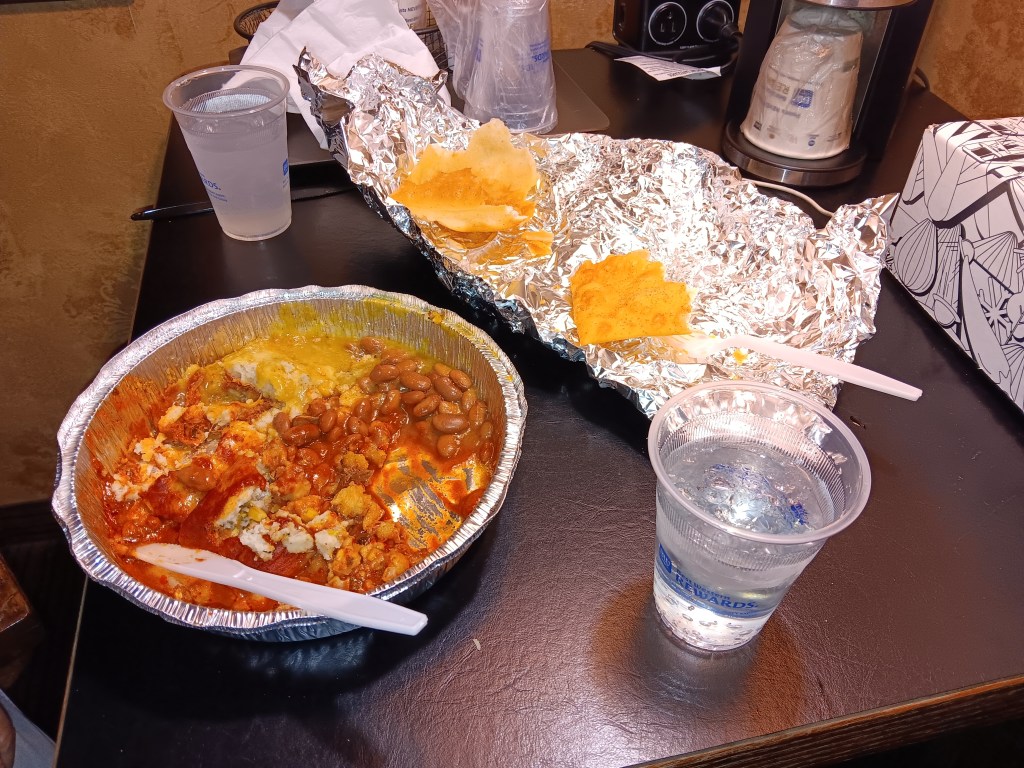
Restaurants reopened for dinner, so we got a carry-out from La Choza. We shared an order of tamales (one vegetarian, one shredded pork,) but Susan can’t do spicy food anymore, and these were up there a bit, so Simon ate most of it and Susan had a few little Biscochito, New Mexico’s official cookie.

The next morning, Ruthie helped Simon get a coffee from the hotel…


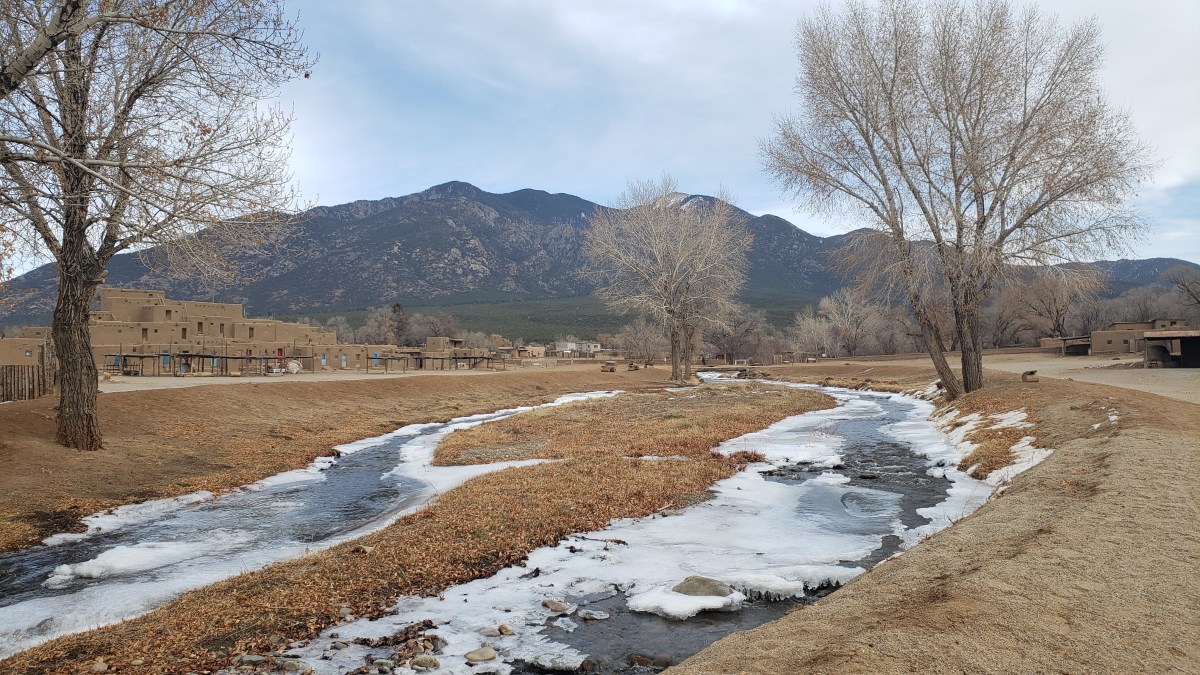
…then we set off for nearby Taos Pueblo. We knew it was a 1000-year-old “living village” with adobe buildings dating back to around 1400 A.D. and shops offering authentic Native American arts. There was a cost to get into the public areas and a code of conduct while visiting (basically, don’t be a jerk, and don’t take photos of residents without their permission).


Only a couple of shops were open, but we were primarily there to see the buildings, which have neither water nor electricity. Residents live in modern homes within the Restricted areas, and use their traditional homes during gatherings and events, and as a source of income from selling arts and crafts.
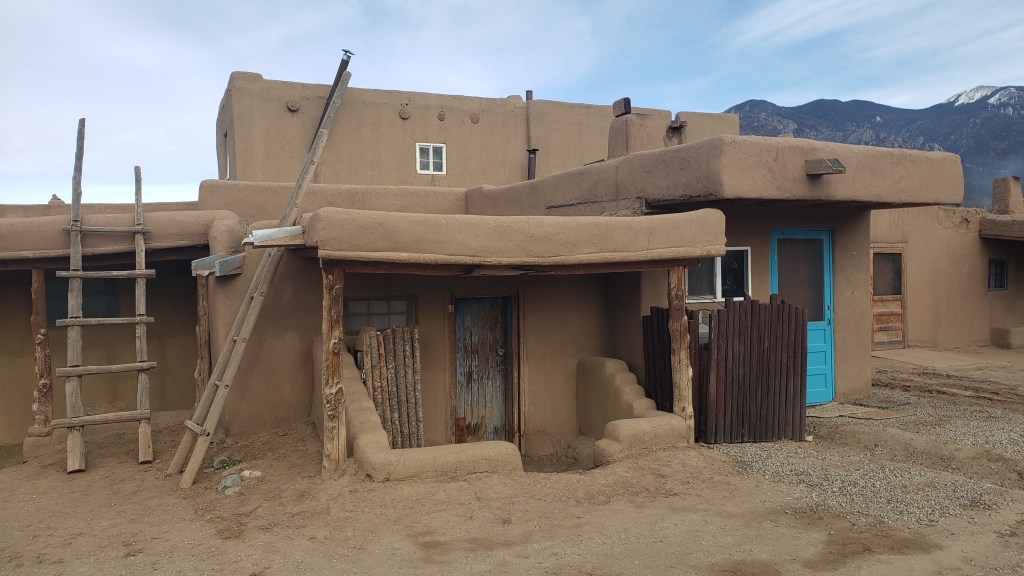

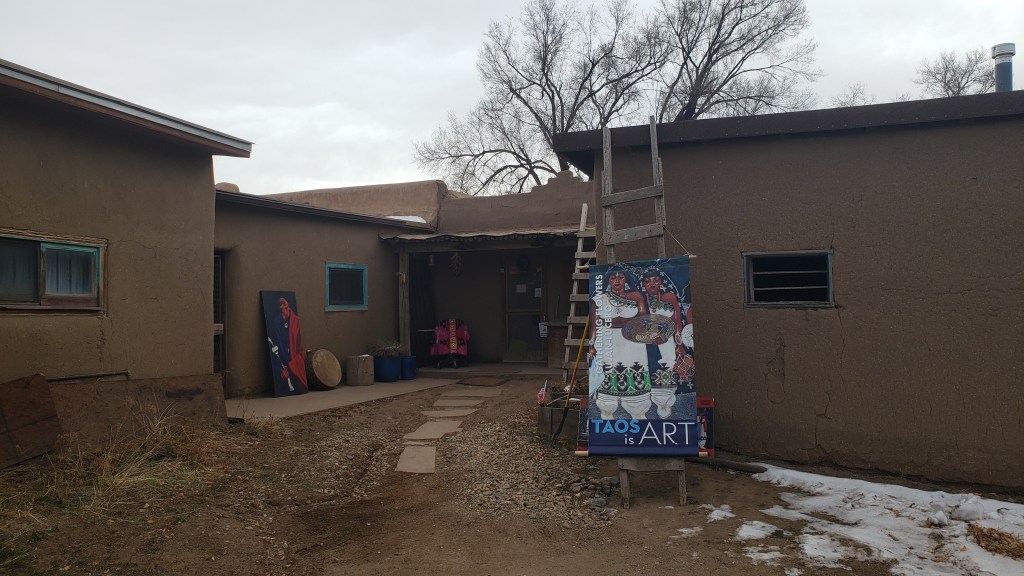

It was a fascinating window into a world that was chipped away so profoundly that what’s left of it in this country qualifies as a National Historical Landmark. That weird mix of awe and of despair for a lost way of life remained with us for some time afterwards.  

With a few hours of daylight left (it was getting dark around 5:30pm) we pointed Nippy to the Enchanted Circle Scenic Byway for some mountainous sight-seeing that would take us back to Santa Fe.
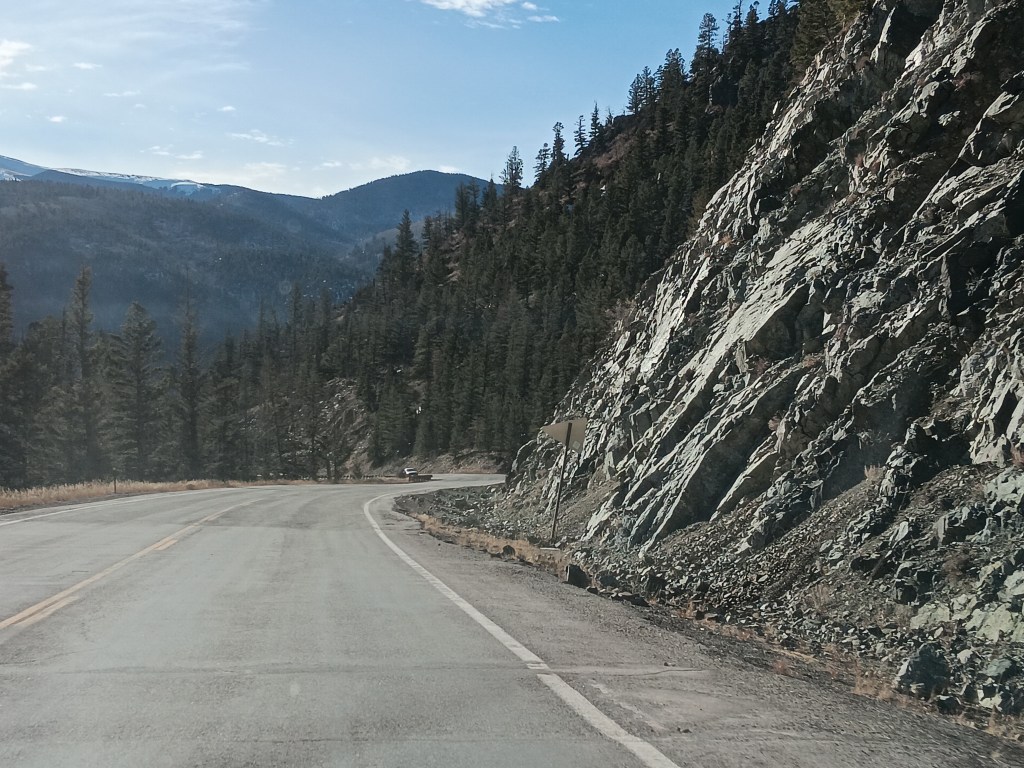
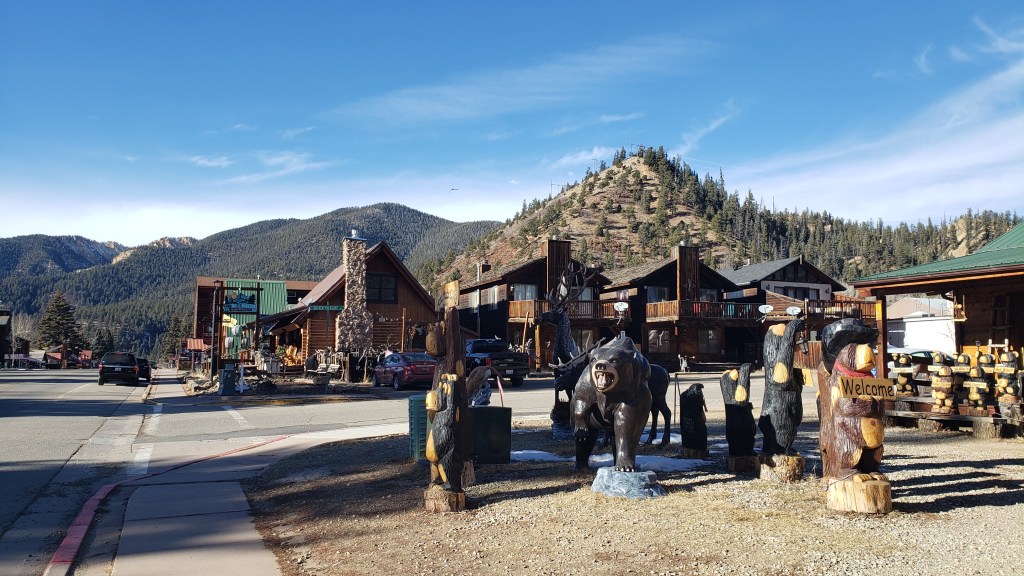
The cute little town of Eagle’s Nest. We stopped at a cafe here for hot drinks, which, I kid you not, took about half an hour to make.

That night we grabbed another carry-out for dinner, but this time we won’t mention the restaurant’s name, because it went pretty badly wrong. Susan worked in restaurants in her younger years and knows things happen, but it’s still disturbing when you get a whomping great shard of broken metal in your El Salvadoran Plate’s tamale.
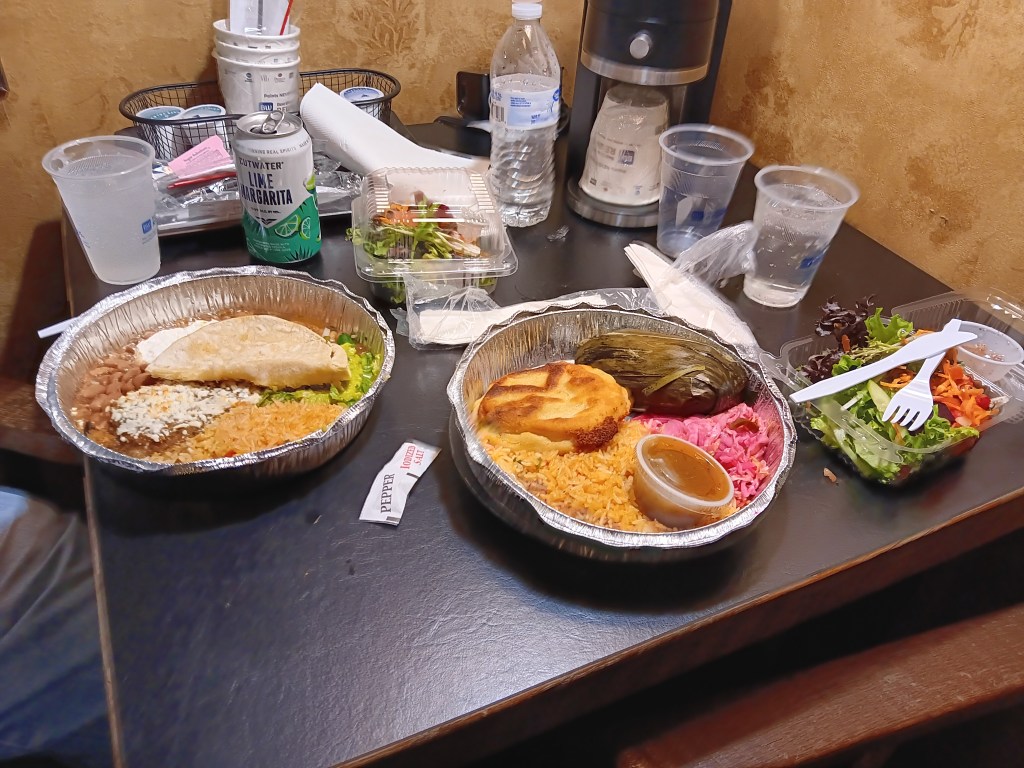

The photo we sent the restaurant so they knew what to look for. Penny was for size.

It was good while it lasted, but it was back to the biscochito for her. Simon was able to finish his Chili Relleno (just; Susan’s metal was off-putting), but he did place a call to the restaurant, who comped Susan’s meal and went out of their way to figure out where the metal came from (it was the tip of a knife, they later told us). They also threw out all their tamales that night, to save anyone else from a potential E.R. visit while they figured out what had gone wrong.

Before leaving town for Albuquerque on our return trip to Fati the next day, we popped into Loretto Chapel to see the “miraculous staircase” built in 1878 by an “unknown carpenter” using wood that is “not of this world.”
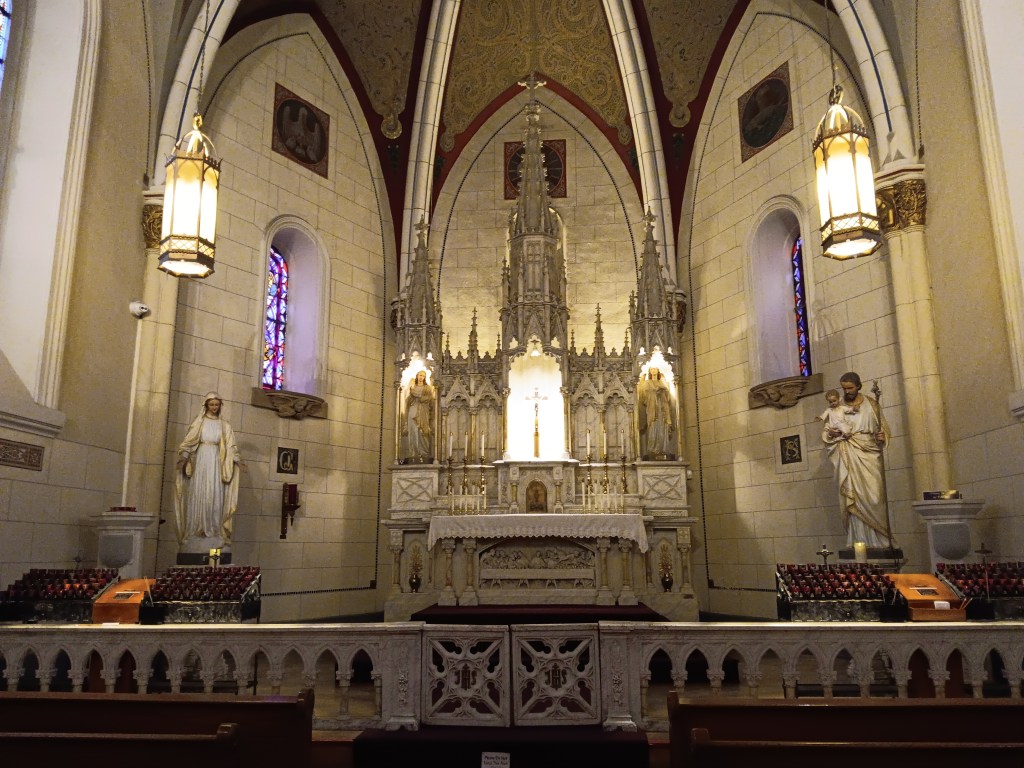
As legend has it, the chapel’s 22-foot-high choir loft was not accessible to the nuns running the place, who (presumably because they were wearing habits that anyone could look up) could not use a ladder. They made a novena to St. Joseph, the patron saint of carpenters, and soon a carpenter arrived on a burro with a toolbox and a solution.
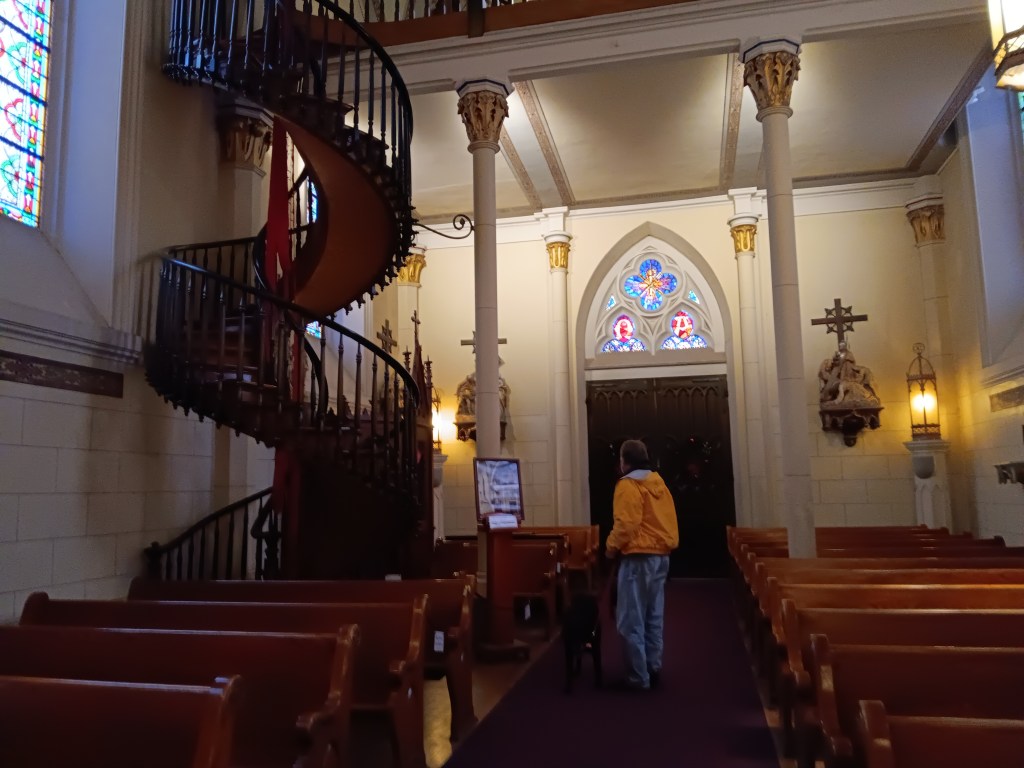
He worked for months, then disappeared without saying goodbye or asking for payment, leaving behind a magnificent circular staircase with no nails to hold it together and no visible central support to hold it up. And what the heck kind of wood was it? It certainly wasn’t wood that was available in Santa Fe. There were questions.

The work of Saint Joseph himself, some say. The wood is spruce, scientists insist. Nail-less construction was far from unknown. But it’s a great tale, and a gorgeous example of craftsmanship, wonky structural safety notwithstanding.
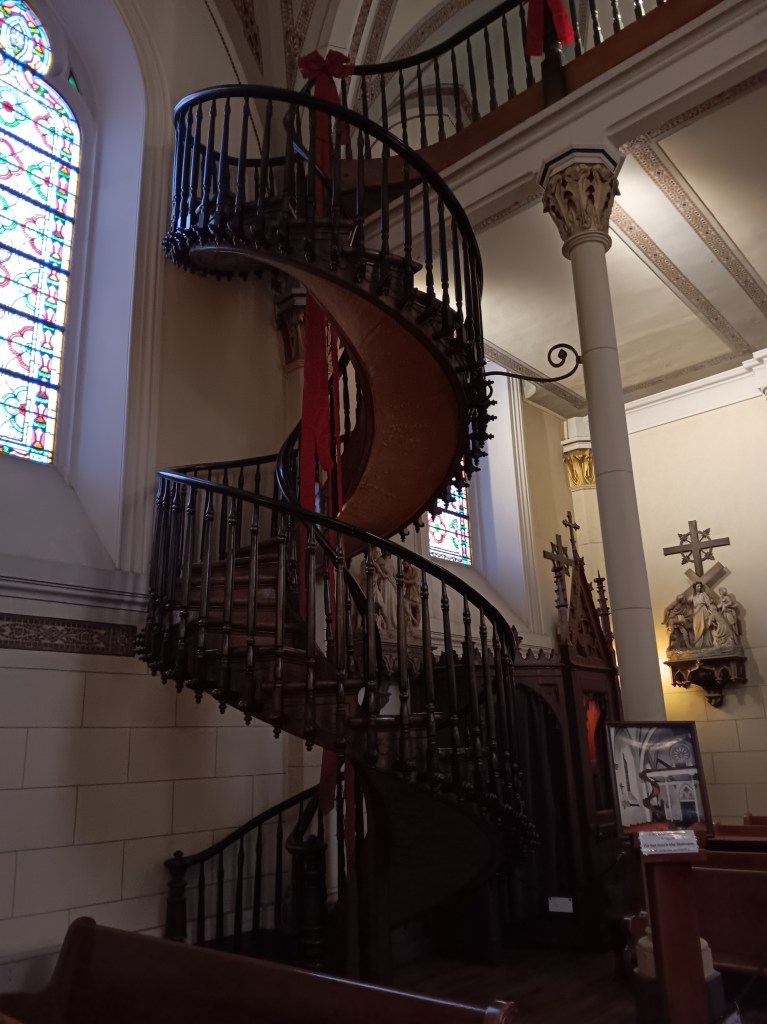
The railing wasn’t part of the original build. It was added later, for obvious safety reasons. Those nuns would have been bouncing precariously due to the double helix design (meaning: springy!), with nothing to hold on to.

We gabbed about theories and doubts and storytelling on the way to Albuquerque, but by the time we arrived a serious exhaustion had begun to creep in, and our hearts weren’t in it. It was time to return to Fati and let our brains cool down for 24 hours before making the two-day drive into Texas via an overnight at a Rest Area before reaching our Alpine campground retreat.
A Year On The Road – The 7-Month Map

Charting our “Year On The Road” RV adventure across America after Month 7

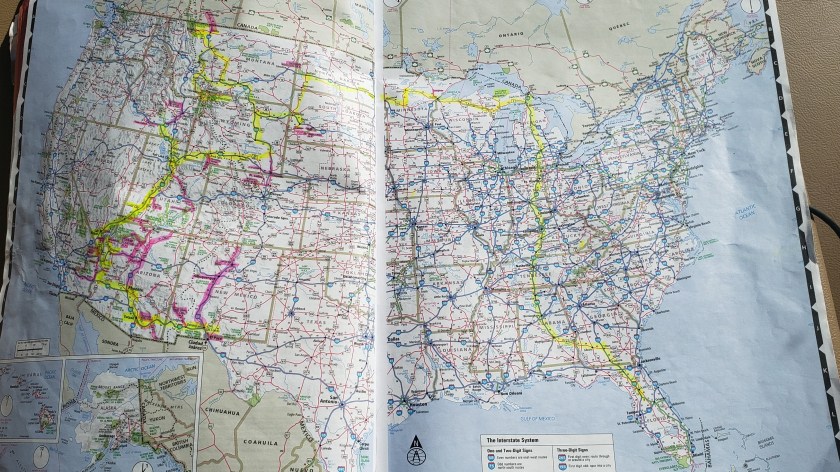
As another milestone rolls around, it’s time to update our ongoing Map of the whole trip and tot up our latest mileage chart.

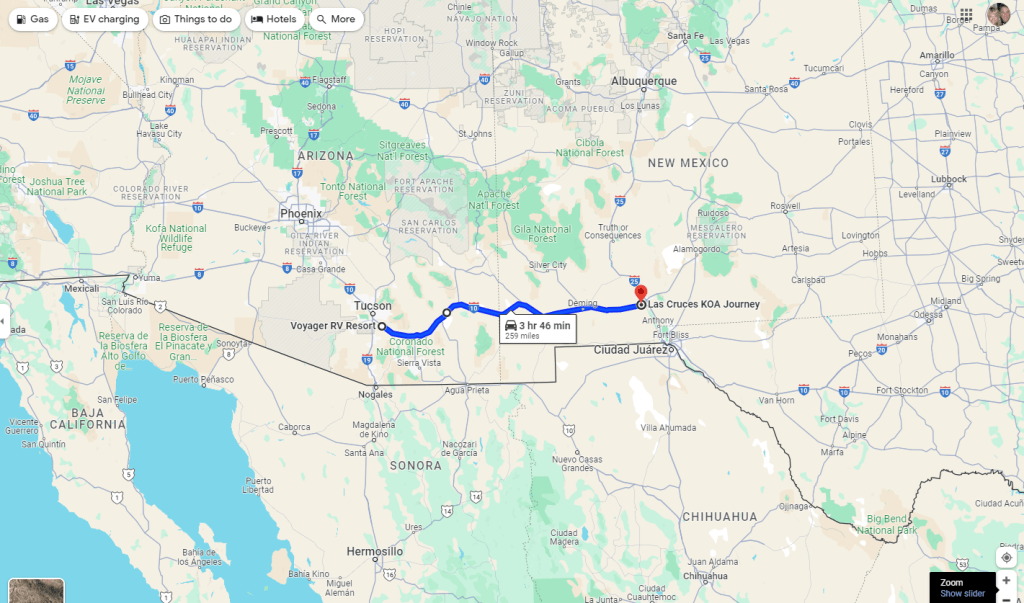
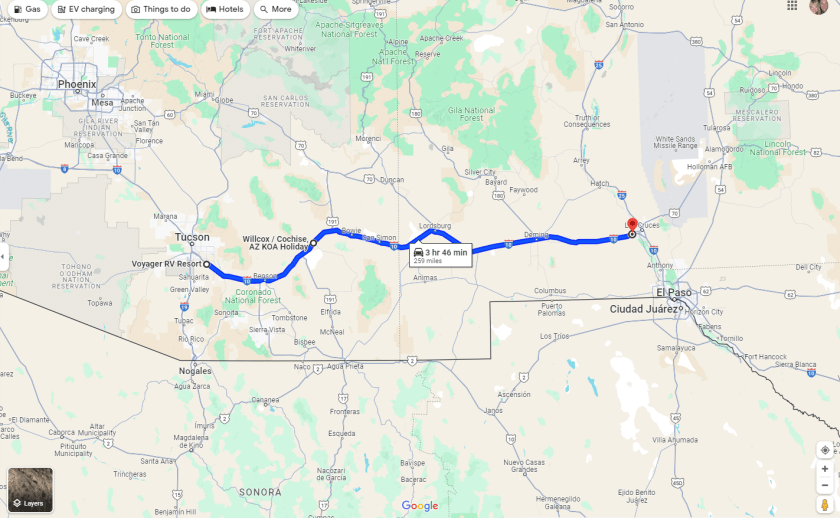
The 259-mile route from Tucson, Arizona, to Las Cruces, New Mexico

On face value, this has been our least-traveled month, at least in RV terms. We have driven a scant 259 miles in our Winnebago Indefatigable (or Fati for short), starting a month ago in Tucson, Arizona, and reaching Las Cruces in New Mexico, a simple journey almost entirely on Interstate 10. Not the stuff of traveling legend, especially compared to our hectic first two months, when we covered fully 3,849 miles from Florida to Wyoming.

How our Road Atlas looks after seven months of our RV adventure. Our overall route in Fati is shown in yellow, with all our various side-trips in Nippy show in pink

The larger view of the past month’s travels, showing our steady 259-mile easterly progress from Arizona into New Mexico

Even by the standards of the last 3 months (869, 579 and 545 miles respectively), it is a slim return. But the fact is we are now spending longer in specific places (like Tucson and Las Cruces) and doing more of our actual journeying by car (our faithful Ford Fiesta, Nippy). We learned our lesson several months ago, after Fati suffered several mechanical issues with our hectic pace, that it was better to reach a destination from which we could explore by car in all directions, and this last month has been the perfect example of that.
Because, while our RV mileage is WAY down, our travel in Nippy has increased substantially. In month 6, she chalked up a whopping 1,927 miles, and in month 7 we have added an even-more-whopping 2,884, which included long-distance trips to Silver City, White Sands and, especially, Santa Fe. But, with Nippy getting a good 45 miles to the gallon on longer drives, and gas prices in New Mexico the cheapest since we left home ($2.25/gallon on our most recent fill-up), it is an economical and strategic success.

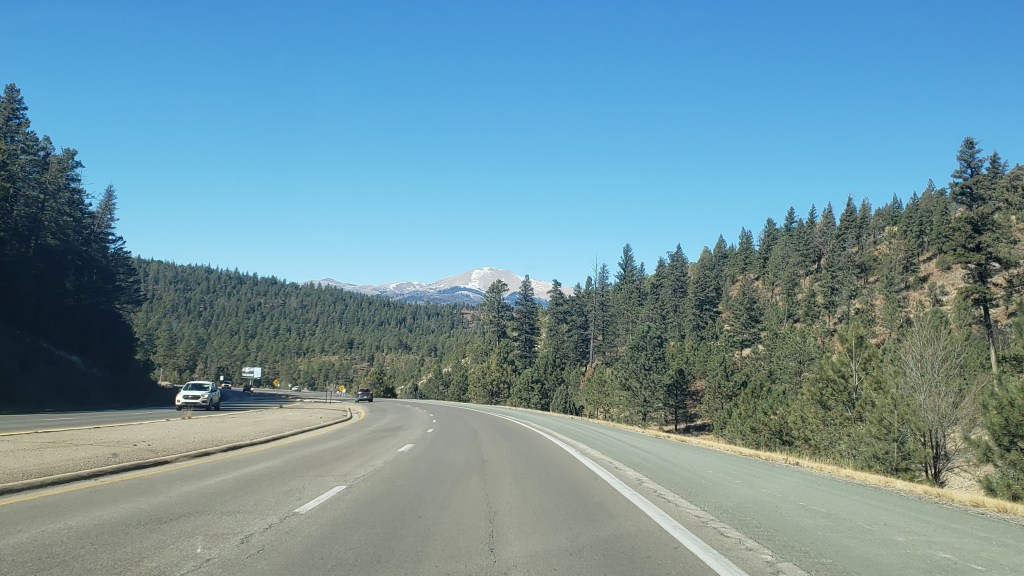
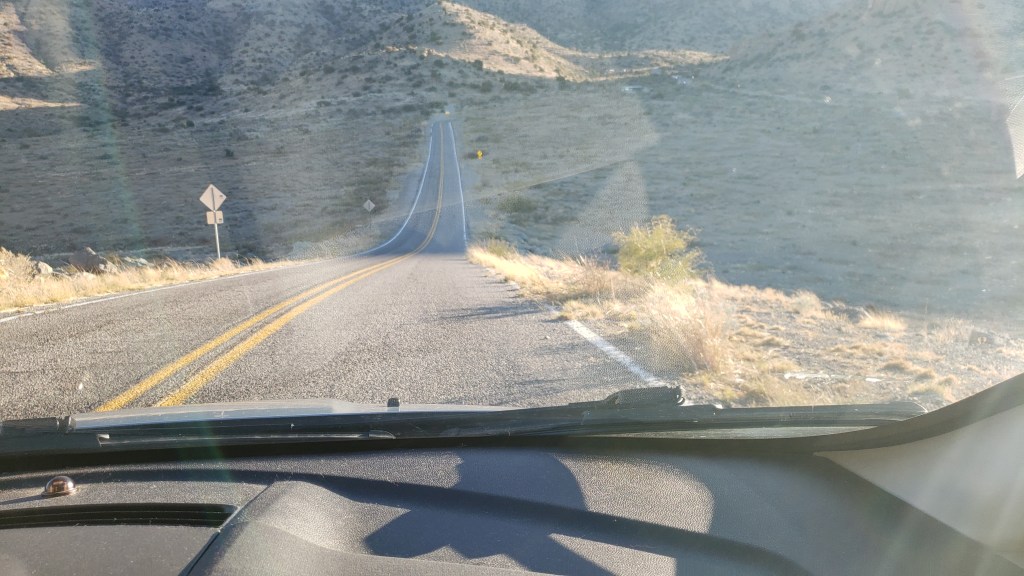
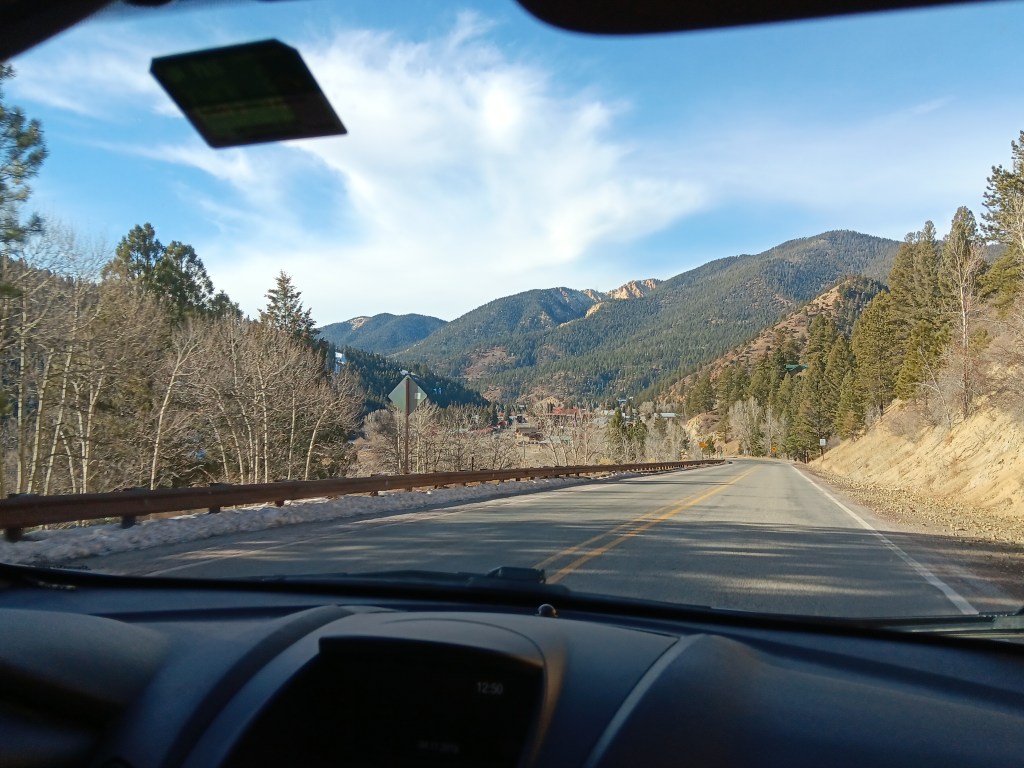
The wide, open and inviting mountain roads of New Mexico, as seen from Nippy’s front window!

What all this means is that we have now traveled 7,312 miles in Fati and a humongous 18,150 in Nippy, for a total of 25,462 miles since we left home.

Next up, we turn south for Texas and a long tour down the western half of the state as far as the Gulf Coast. Probably more miles for Fati than Nippy, but you never know…!

New Mexico In Bits And Pieces


A new day, a new state! We made our way into New Mexico just as the temperature began to plummet, but we had a lot of touring planned, so we added a third layer to our clothing and a fifth layer to our bedding, and made Deming our base for visiting Gila National Forest and a drive to the Mexico/U.S. border.
With a late start to our first full day, we chose San Lorenzo as our afternoon destination. We knew nothing about it except that it was a ghost town, but that was enough for us, and up the Whitehorse Mountain we went.

Deer and another deer. Such excitement!

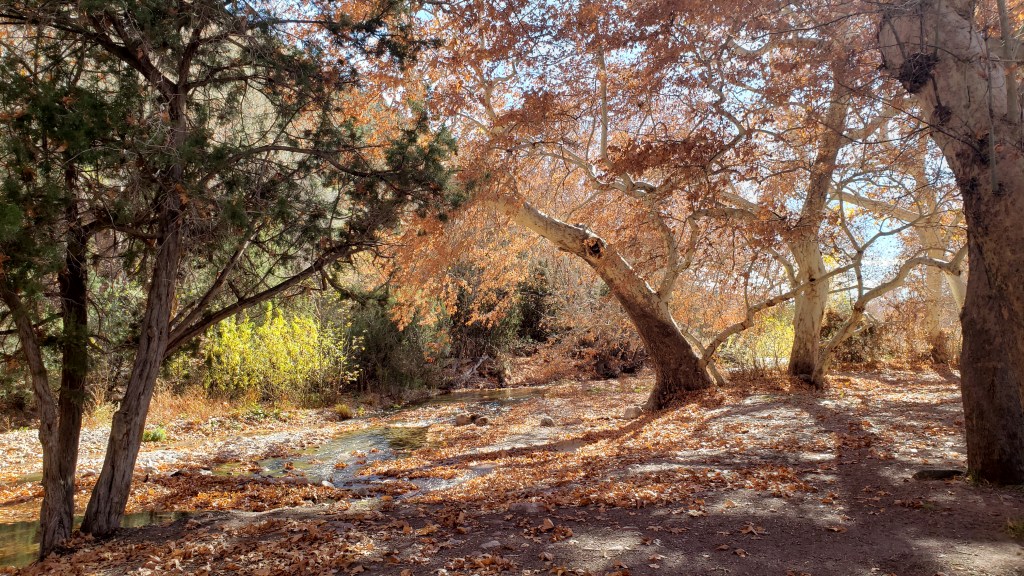
While the drive along the mountain was filled with trees gloriously changing color, grazing deer, and little glimpses of actual water in an actual river, the town itself was not exactly dynamic.

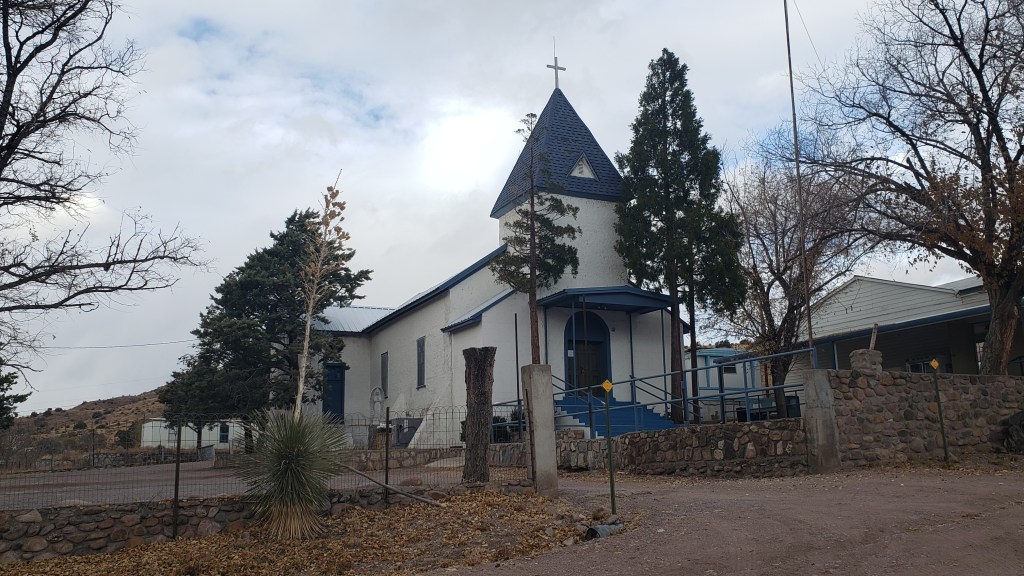
The area was originally home to the Apache Nation. Fewer than 100 people live there now, an adobe church whose original construction dates to 1899 sits at its heart, and an enormous horse ranch that looks like the only money in town takes up most of the land.


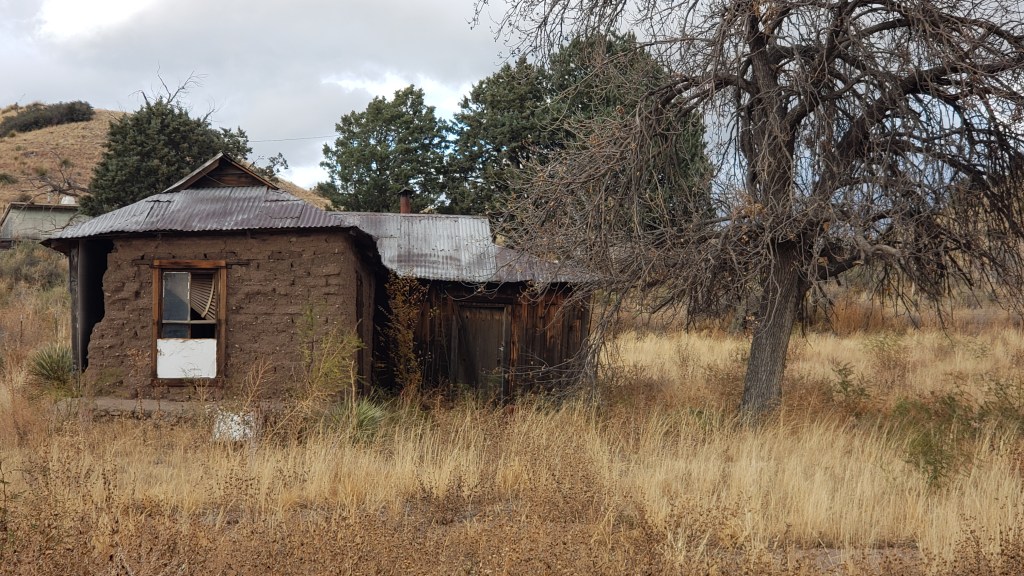
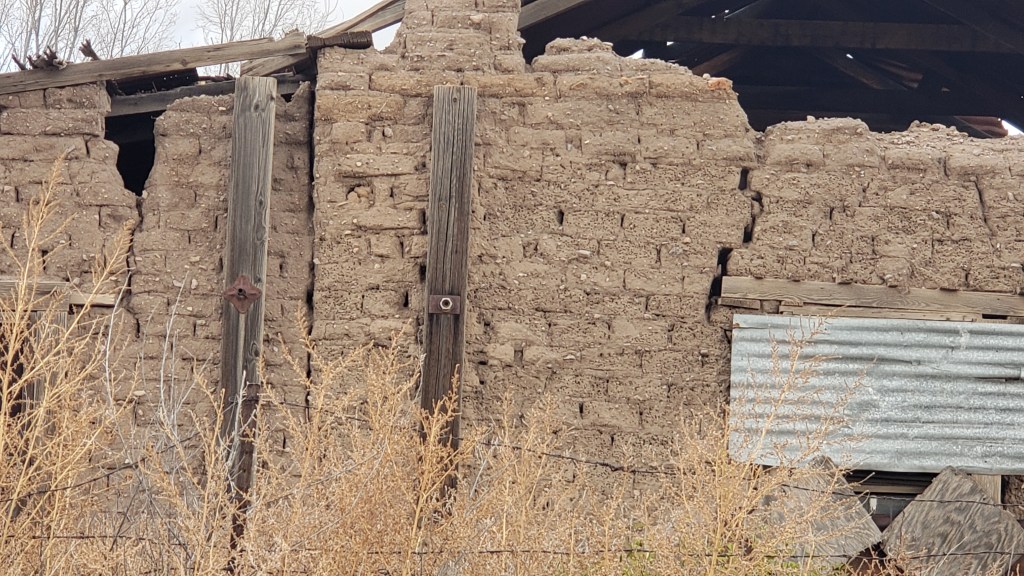
Miners from Silver City and Pino Altos founded the tiny town, and their hand-made brick structures still stand. Most of the buildings in town are abandoned, hence its “ghost town” fame, while the locals prefer (and achieved) the designation “Historic District.”


The hand-made bricks tell such a story. Fascinating to see bits of straw and little rocks in their construction.

We crossed the valley into the next small town because Simon was eager to find a Starbucks, or at least a decent coffee shop, but you already know the outcome of that forlorn hope.

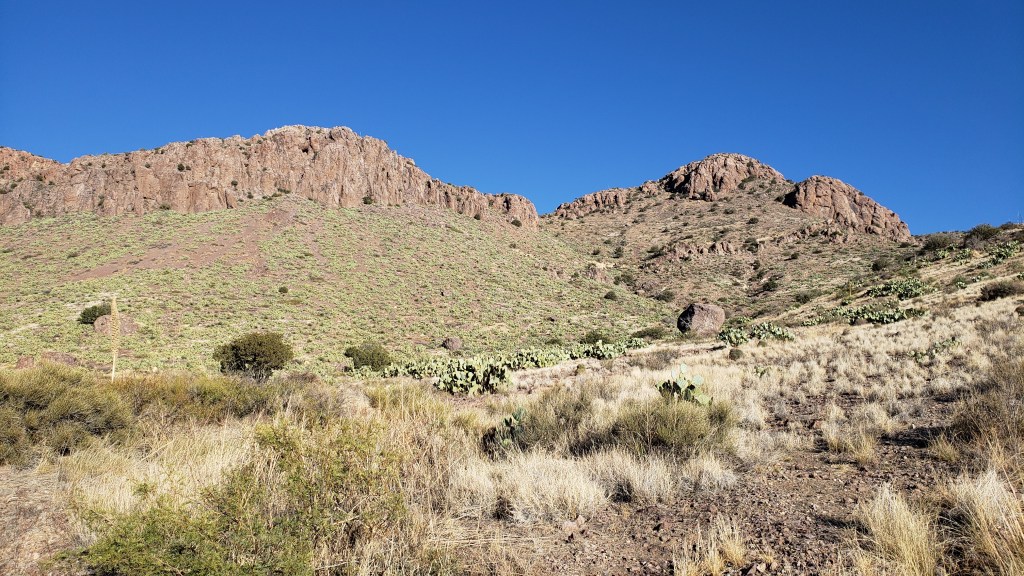
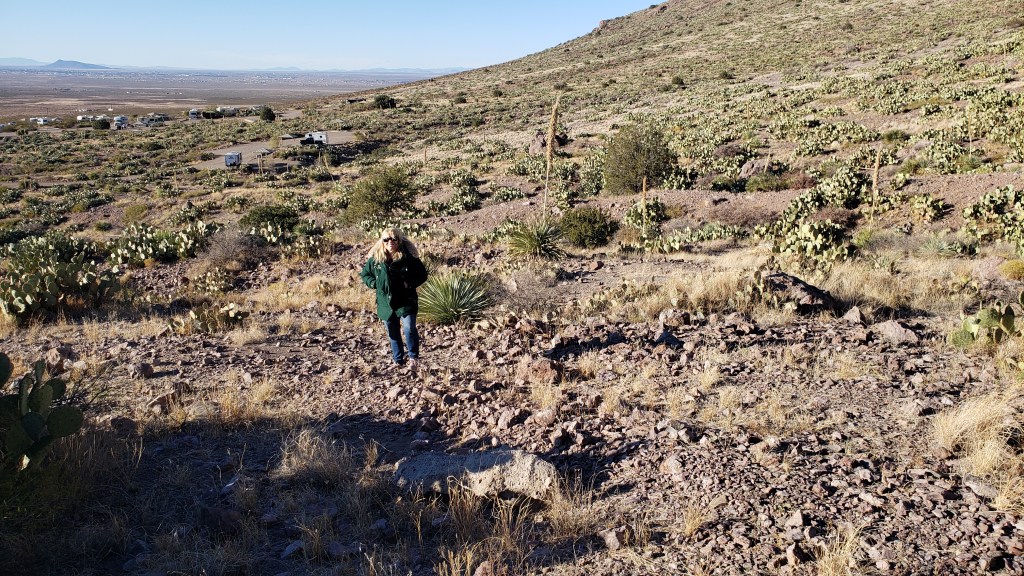
Our next excursion was Rockhound State Park in the Little Florida Mountains (here pronounced Flow-REED-uh from its Spanish influence) just south of Deming, and the park’s information center lady showed us the various rocks that visitors are allowed to collect, from obsidian and quartz to sparkly geodes and the wonderfully named “thunder eggs,” which, of course, Susan was determined to find.

For perspective, that boulder in the semi-foreground, on the right, is about as high as Ruthie would be if she stood on her hind legs on Simon’s shoulders.


Once we were in the dry wash where geodes and thunder eggs are typically found, we immediately realized all rocks look like rocks and we hadn’t a hope in hell of finding anything interesting without cracking them all open.

After a short wander, we drove over to next-door neighbor Spring Canyon Recreation Area, where we were told we might find gigantic-horned Persian Ibex, which were brought to the area from Iran way back when, and had recently been spotted. We didn’t see any (of course we didn’t!), but we did marvel at the 17% grade into and out of the park, which was like a roller coaster hill in Nippy, but would have been a horror in Fati.

The 17% grade doesn’t look nearly as daunting in a photo as it does in real life. It’s a LONG way down!

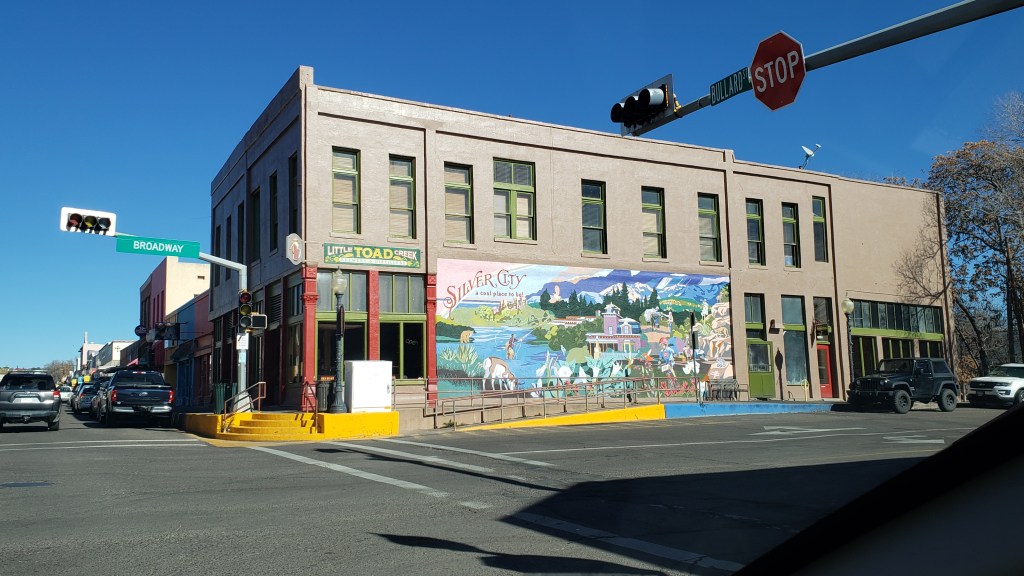
Minor attractions done, our next journey took us to Gila National Forest, the reason we were staying in Deming in the first place. It was a 236-mile round-trip drive, via Silver City, and the Visitor Center lady in Silver City told us we should not miss Catwalk Recreation Area on our way to the Gila Cliff Dwellings. Just head up U.S.-180 to the western side of Gila, and be ready for a short delay due to construction.

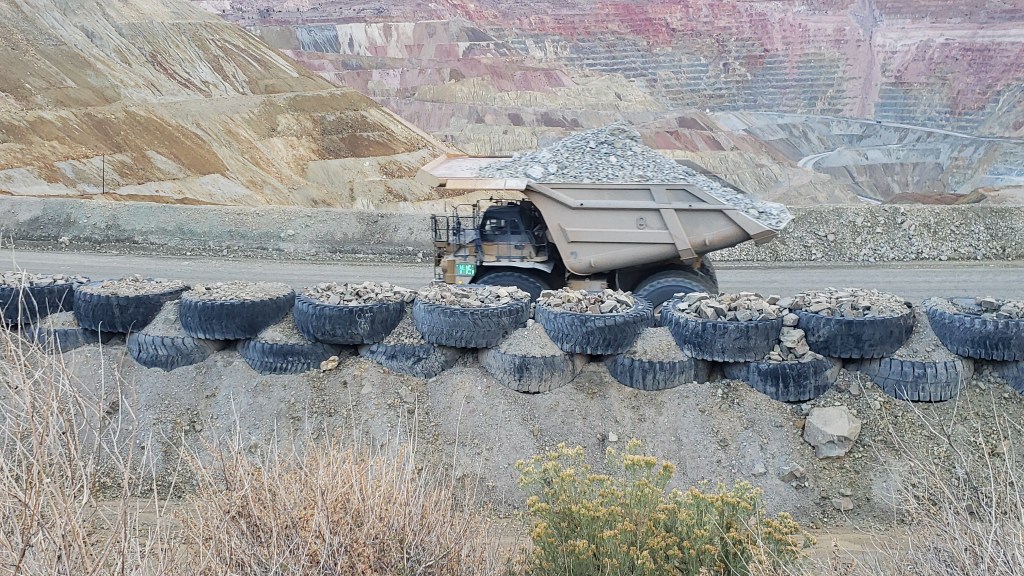
Silver City is a mining town, and that dump truck is gigantic. Its tires are 6 feet tall, maybe a bit taller.

We had already noted a sign in town that indicated the Cliff Dwellings were just 44 miles away, and our good lady mentioned Catwalk Recreation Area would come up first, so off we went.

New Mexico has to be the artsiest state we’ve been in so far. Even their license plates are pretty.

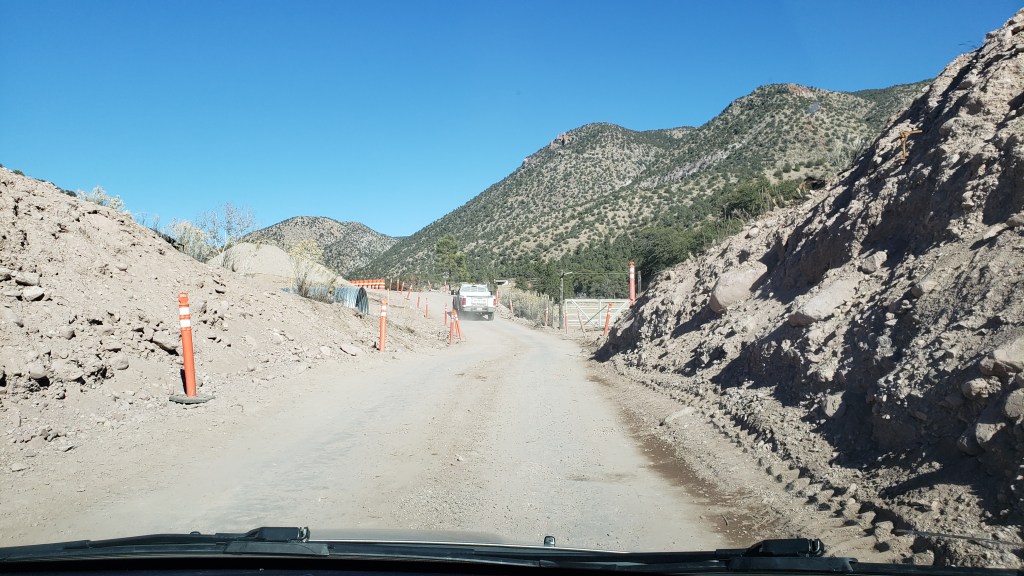
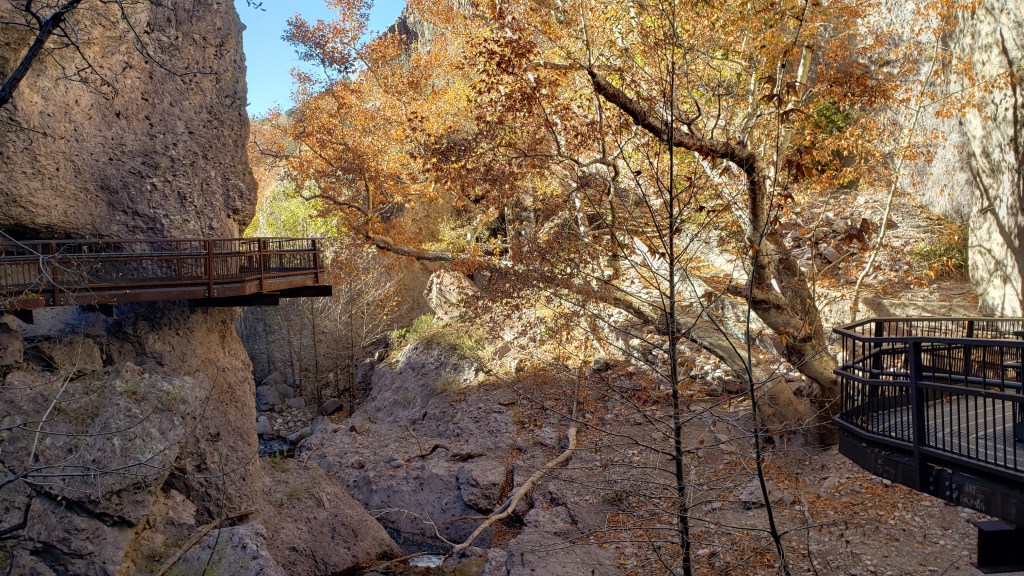
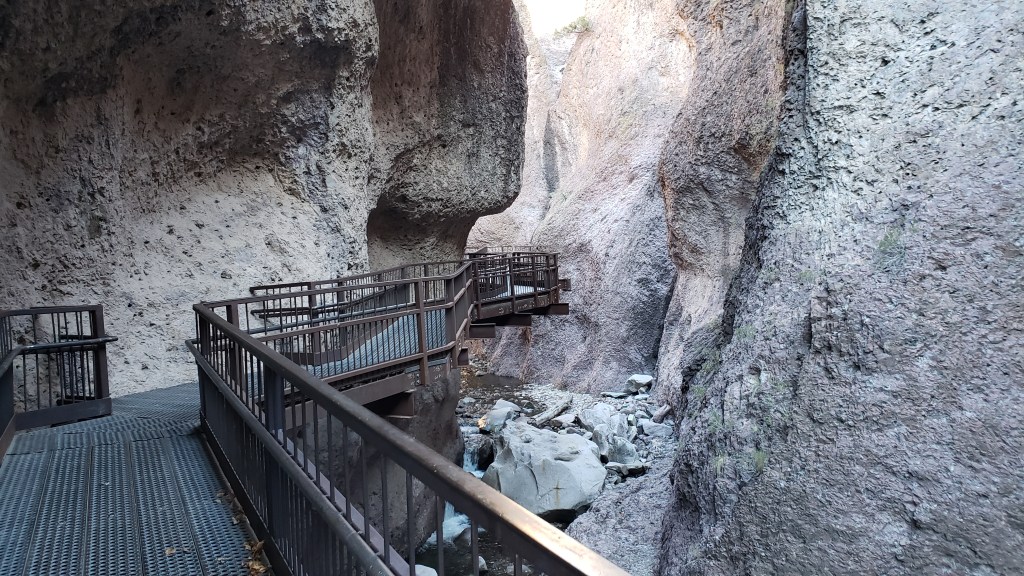
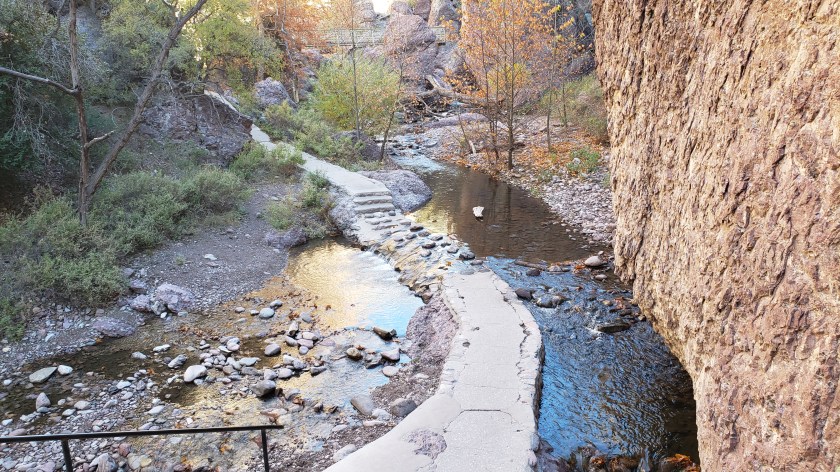
Sixty-five beautiful but confused miles later we saw the first sign for Catwalk, along with an extensive construction area that required us to follow a Pilot car along a couple of miles of torn-up road. Half an hour later we were walking through crunchy leaves along a fall-scented trail in Gila National Forest toward the metal catwalks that are the modern-day descendants of the original wooden planks over Whitewater Canyon creek, which gave the area its name.

Not Simon’s favorite kind of road.

But it would be worth it in a few minutes.

Silver and gold were discovered above the canyon, and mined for ten years, starting in the late 1890s. A pipe transporting water up to the processing plant ran through the canyon, and that’s the area visitors are now allowed to explore via catwalks.

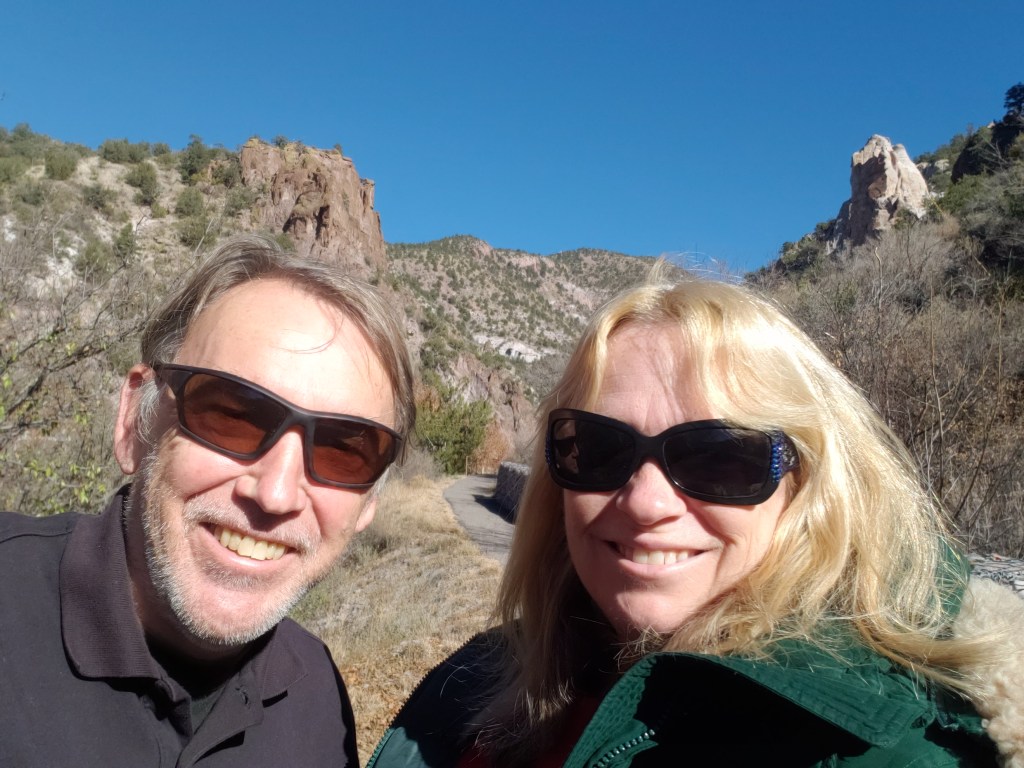
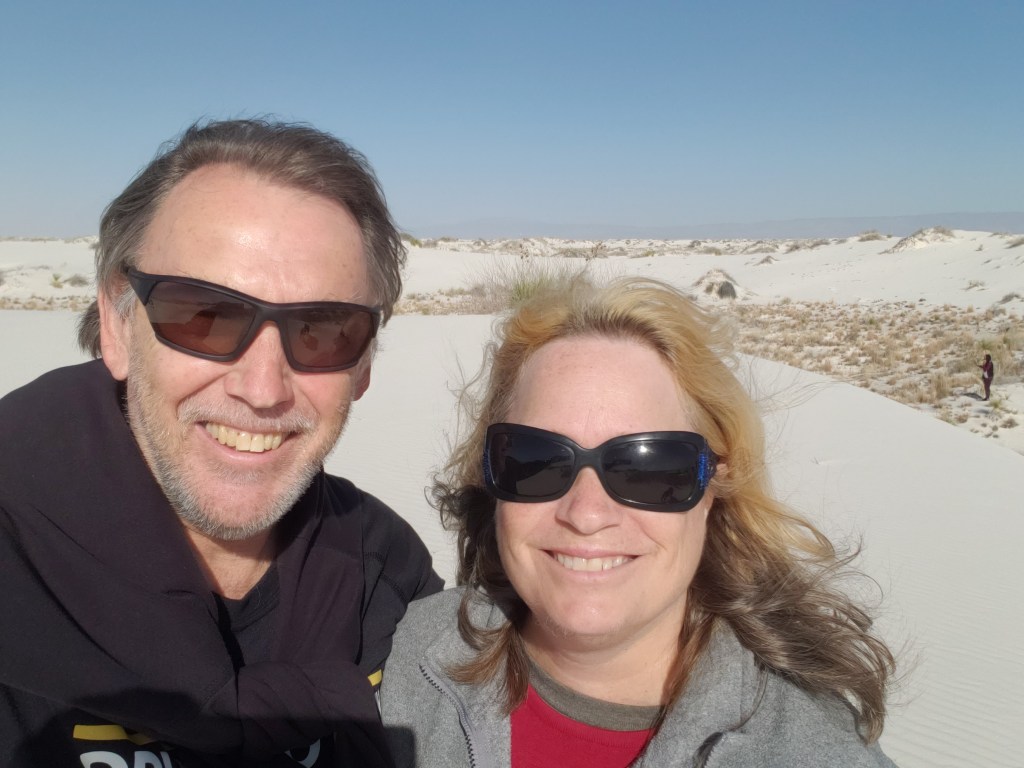
Obligatory Selfie

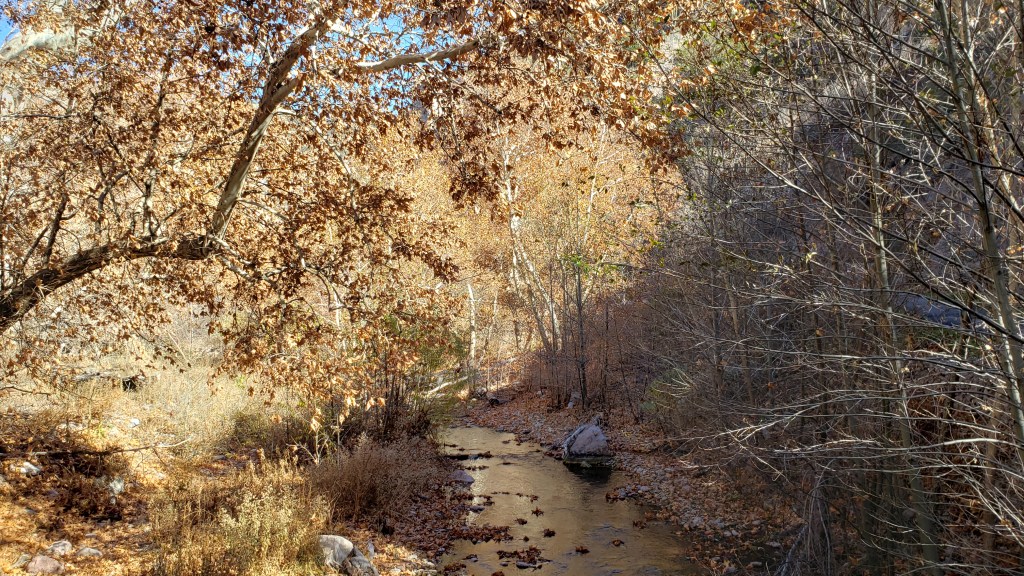
Catwalk starts with a trail along the river, and it was nice to see water, which is scarce around here.

Part of the walkway wound through rocky areas above the river.

Just beauty, everywhere.

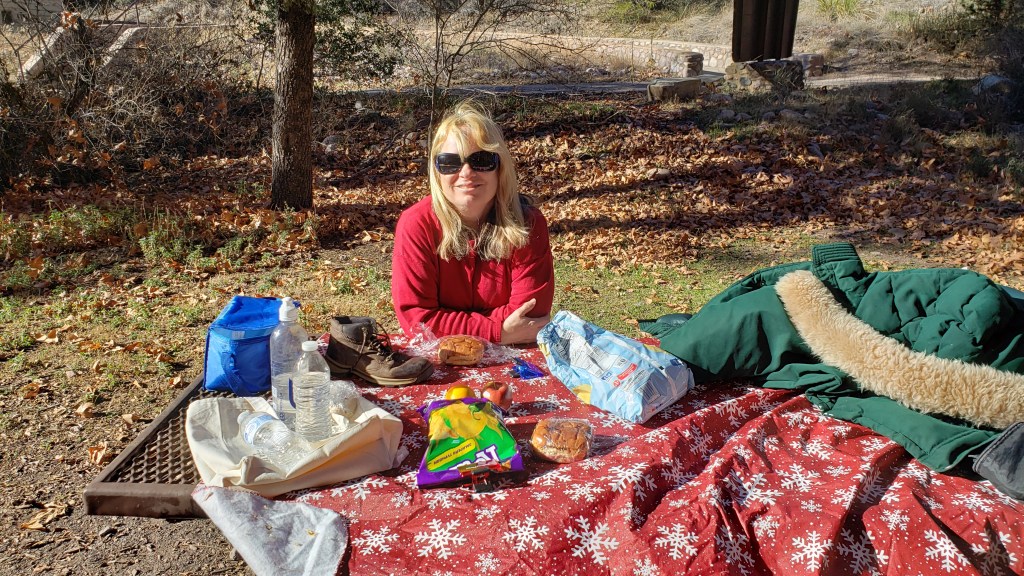
We spent more than an hour walking through the canyon and having a picnic lunch amid a scent that reminded us of Michigan in autumn. What an incredible surprise the experience had been, and how grateful we were for the recommendation. We absolutely would not have wanted to miss it.

It’s not a picnic without the Boot.

As we picnicked, we programmed Gila Cliff Dwellings into our GPS. It couldn’t be far away, since we’d already gone 21 miles further than that sign back in town indicated we would.

But wait. GPS showed another 111 miles to the dwellings. What the….?!

We were on the wrong road. U.S.-180 did indeed lead to Catwalk, but the cliff dwellings were up highway 15, on the eastern side of Gila National Park. We’ll say no more about the matter, other than that we consoled ourselves with the fact that dogs are not allowed on the trail to the dwellings, so we wouldn’t have to leave Ruthie in the car, and that we found superb dessert-flavored coffees at Javalina Coffee Shop back in Silver City to take the edge off our misery on the way back to Deming.

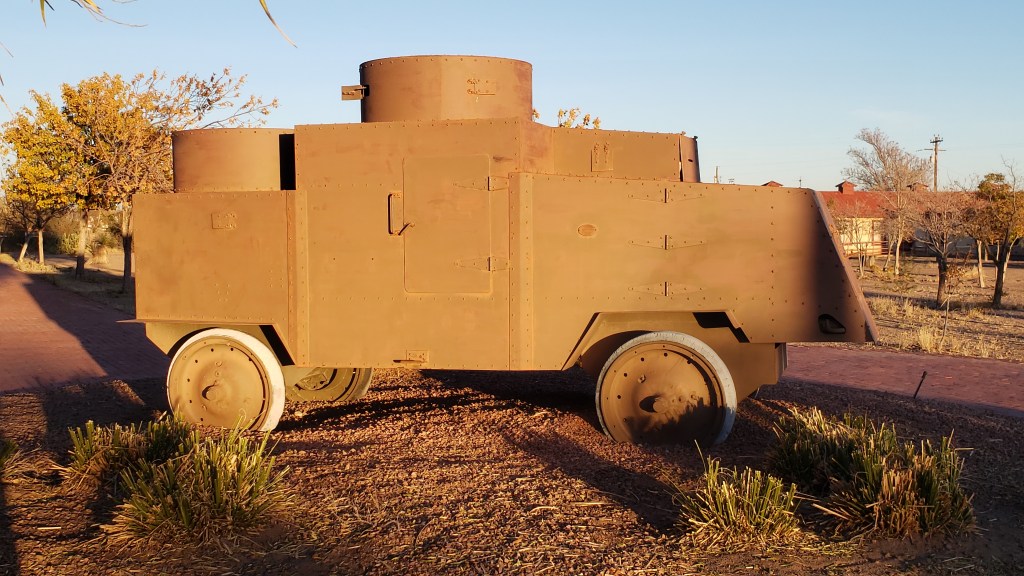
We were definitely on the right road when we made the trip south to Pancho Villa State Park, a little nod to America’s first (and only) armed invasion, compliments of General Francisco “Pancho” Villa, who ordered his soldiers to wreak havoc way back in 1916. General Pershing (of WWI fame) unleashed a massive can of whoop-ass, leading 3.000 soldiers 5,000 miles into Mexico in pursuit of Pancho Villa, only to fail miserably. Villa got his comeuppance a few years later, assassinated in an ambush in Chihuahua.

Tanks have evolved a bit since Pancho’s day.

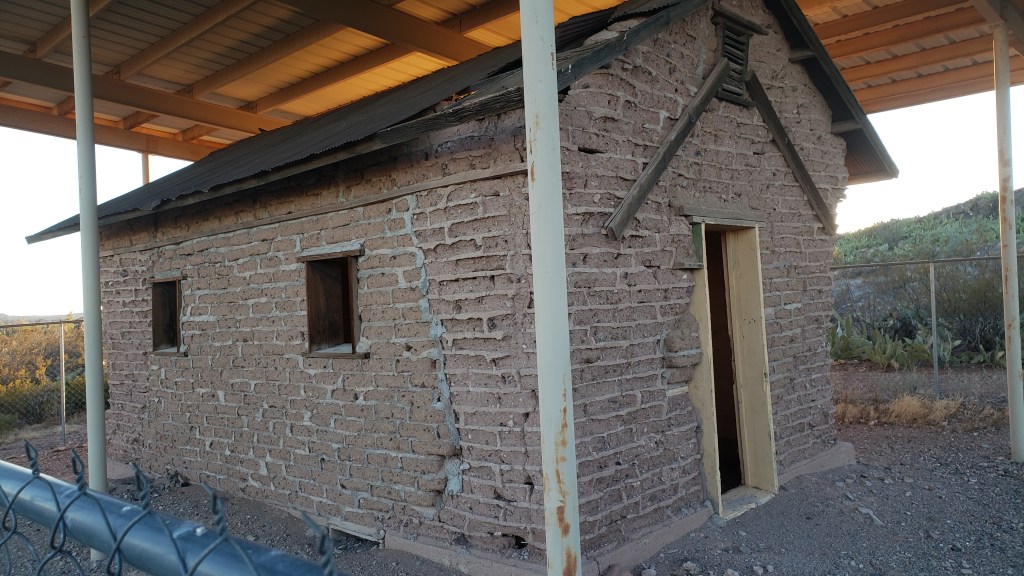
The last remaining homestead at the park. It’s pretty much the only thing here, besides the museum and the tank. And cactus. And rocks.

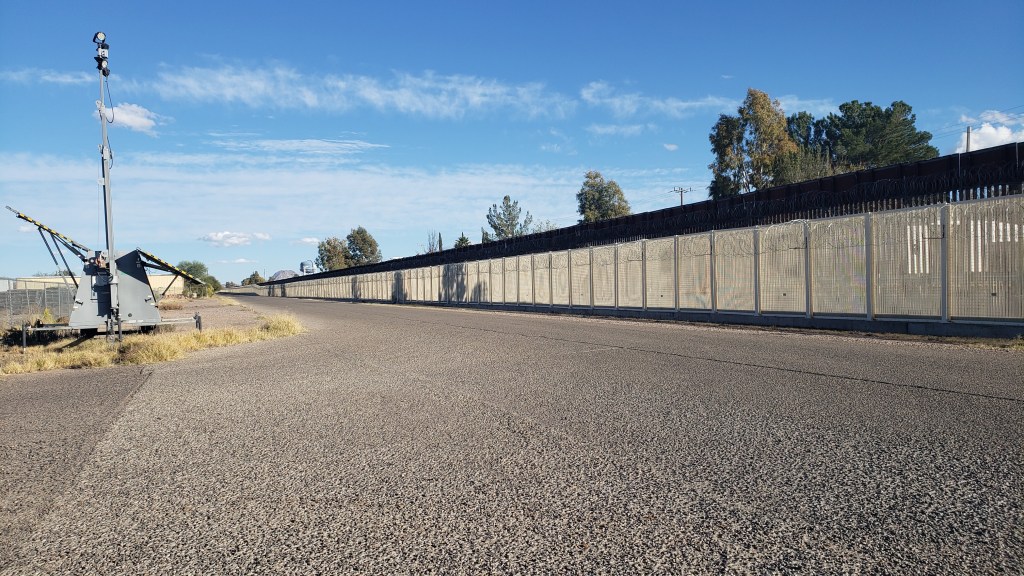
Deming claims the park as its own, but it’s really located in Columbus, smack on the border with Mexico. While we were there, why not take a look at the crossing? We’d seen it in Douglas, Arizona, while we were staying in Willcox, and in that instance we drove along the wall until we saw the crossing area, where a big gap was open in the wall to allow those working in the U.S. but living in Mexico to move between countries.

Here, the only road for 33 miles led directly to the crossing, which we obviously could not do, especially with a dog. We had no options other than turning around and heading back to Fati, and common sense told us not to take photos.

Instead, here are a few rather unusual sites in Douglas.

Ummmm…metal sculptures. Not sure why.

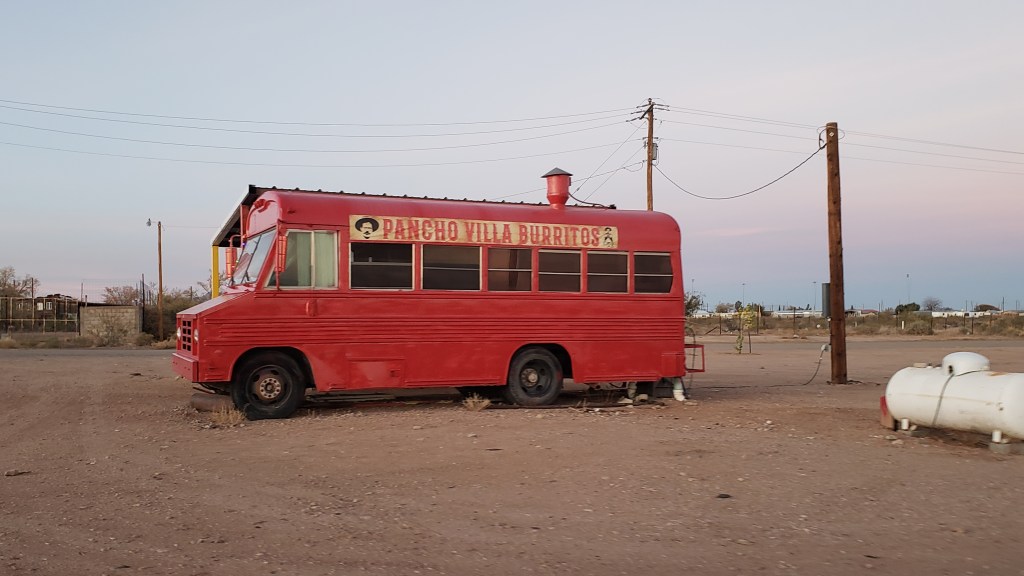
Hands up anyone who would order a burrito from a bus in the middle of nowhere!

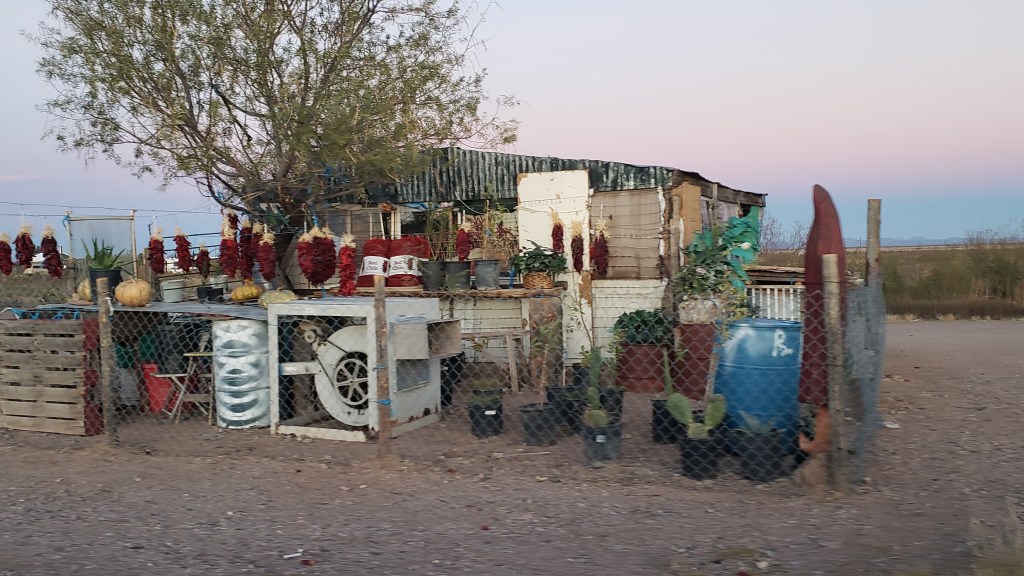
Strings of red chili peppers are such a wonderful constant in the places we’ve been. Susan’s parents brought one back from their travels to New Mexico and had it hanging next to the kitchen, so emotions were felt when we saw them.

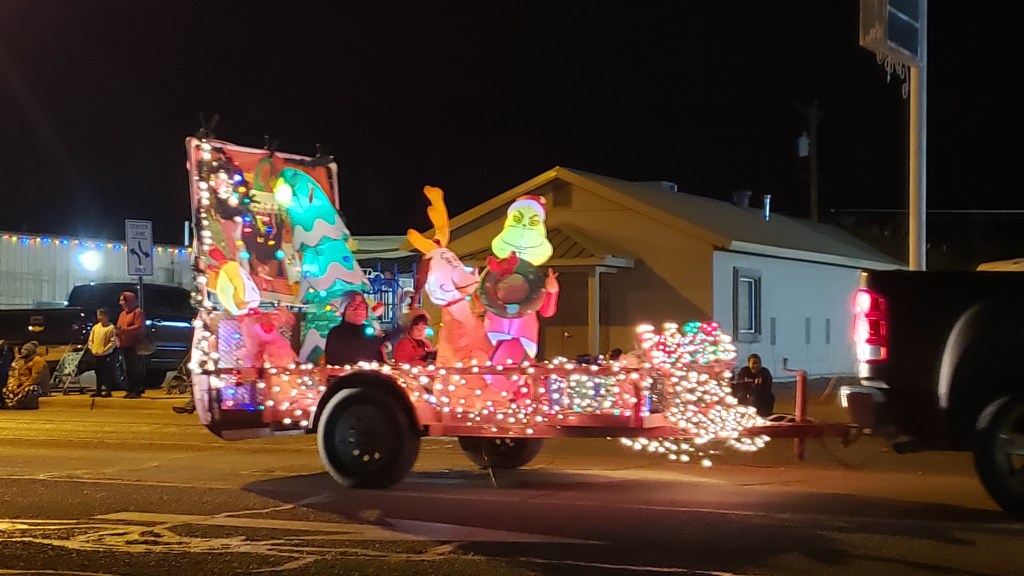
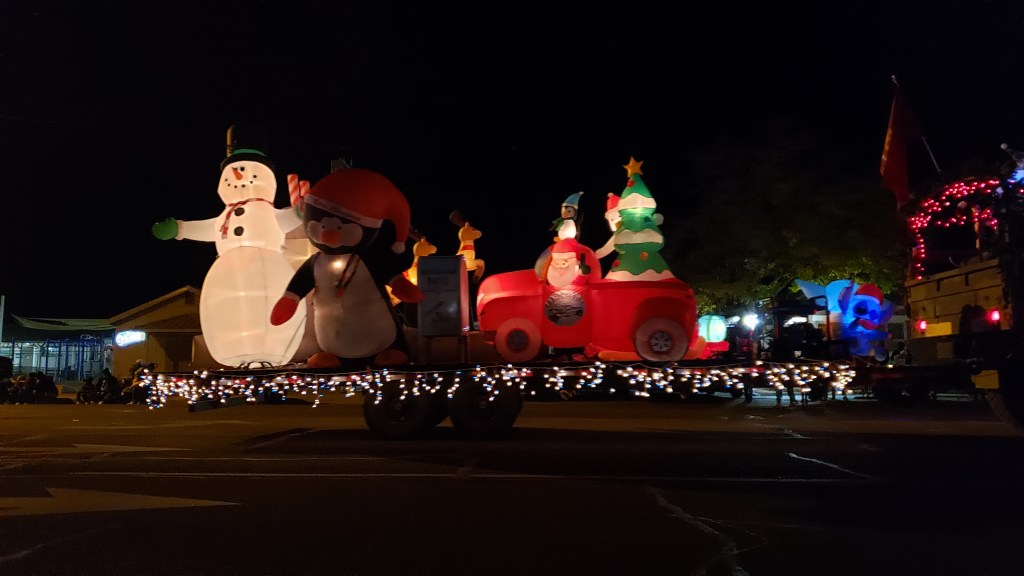
Deming had one more gift in store. Along with a string of multi-colored lights we bought at Walmart to decorate our fireplace in Fati, we got into the holiday spirit by attended the city’s Christmas Market in the afternoon (a short experience, with only a small handful of vendors and even fewer visitors) and attending the Christmas parade and Tree Lighting that evening.

Ruthie did some low-grade “wooooooo”-ing when the police car and fire engine sirens passed by, kicking off the parade.

The Grinch featured heavily. He was in the parade five or six times.


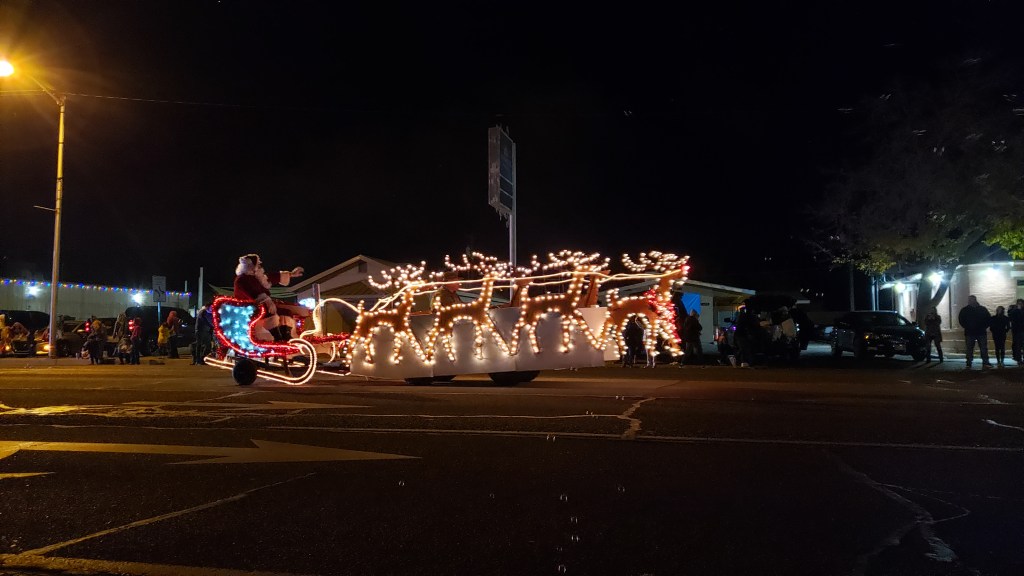
Santa was on hand to wish everyone a very Merry Christmas!

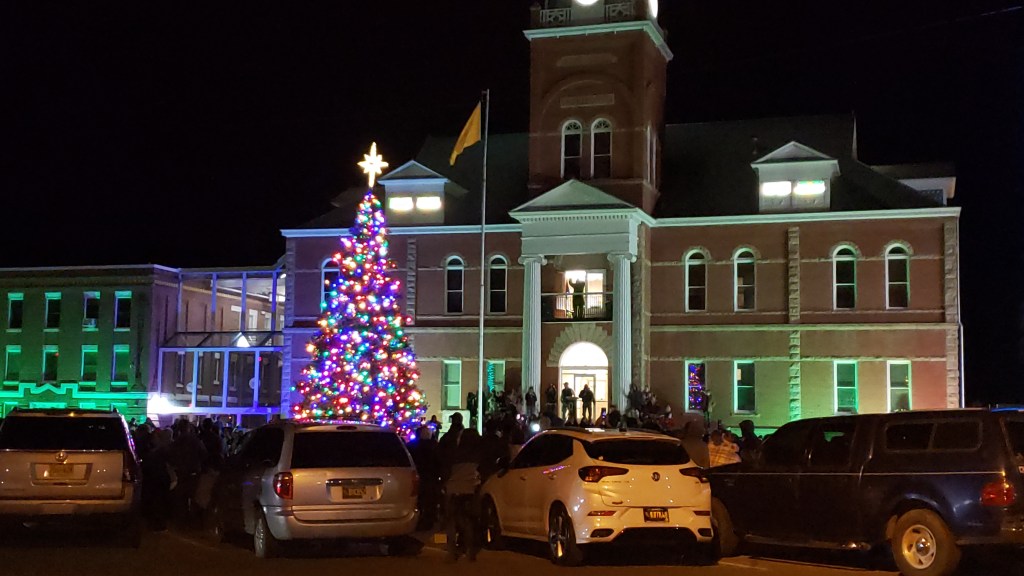
The parade was so charming and homespun and nostalgic, it may have been our favorite surprise of the whole week. We attended the Christmas Tree Lighting afterwards, and departed Deming the next day feeling very much in the holiday spirit.

What We Learned During Our Seventh Month On The Road


Today marks seven months since we locked the door to our house in Florida and set off for a year-long adventure in an RV. Here’s what we learned during the past month:

Time spent in the bathroom is sacred time, at home or in an RV. But if you’re really just sitting there playing Wordscape on the phone for forty minutes, you deserve the scorn you get when you’re found out.

Simon now knows the bathroom isn’t the right place to play Wordscape.

Get an electric skillet with a cover, and get it before you even set off on your trip. What strange and wonderful wizardry that allows you make an entire meal in one appliance! Gone are your days of flipping one burger or one pancake in the Instant Pot set to Saute. Life has meaning again!

You’ll never run out of conversation when you travel. The only time we’re quiet when we’re touring is when we’re burned out from so much talking. Some of the most compelling conversations we’ve had have come from seeing places – usually very small towns or areas where housing is spread far apart – that make us feel our privilege in ways we never did before. Not financial privilege, specifically, but the privilege of opportunity. And we wonder, are the people happy and content? Do they love their freedom and their solitude? Is this their desired life? Or has opportunity been denied to them? We come at it with our life-experience bias, and talk our way around to wider possibilities.

Visiting the desert during dry season is disorienting, and it’s hard to get used to seeing rivers and creeks with no water in them. As Mark Twain said, “Until I came to New Mexico I never realized how much beauty water adds to a river.”

Remember back in the early months, when you struggled to keep the fridge cold? Yeah, well, it’s winter now, and your fridge has become a freezer.

Literally (and we do mean literally) every restaurant in Hatch, New Mexico closes at 3 p.m. Plan accordingly or you’ll be eating “Mexican food” from the Village Market grocery store deli.

The Green Chili Stew from Village Market’s deli is pretty good!

Arizona and New Mexico have more mountains than we expected, and some of them are whoppers. Check your preconceptions at the border when you enter a new state. Surprises await!

We knew the desert gets cold at night, but really? 21F? That’s not cold, that’s Arctic! Unplug the water hose from spigot; drain water lines; wear a shirt, pants, and socks to bed; and add your robe to the five layers of blankets you already have on the bed. Oh, and your coffee or tea the next morning will be cold within three minutes. Welcome to winter.

Walmarts in New Mexico have loads of Mexican candy right before Christmas. Taste-testing results? Mixed.

With so much mountain driving behind us, Simon now has a quiet confidence while driving Fati, without relaxing his guard or taking safety for granted. Susan can sit in the passenger seat without gripping the arm rests for dear life. As of right now, this single minute, assuming nothing, travel is an absolute pleasure.

Posole (Mexican pork and hominy stew) is a gift from God. Eat it and know you are loved!

Farewell, Arizona


Willcox, Arizona offered a chance to catch our breath, keep our touring low-key, and end our time in the state on a relaxed note. We expected to spend most of our time “at home,” with a few afternoon jaunts before dinner and a movie each night in Fati. And while that was partially true, we all know what they say about the best-laid plans.

We started our five-day stay at the fabulous Willcox-Cochise AZ, KOA Holiday campground with dinner from the onsite Roadrunner Kafé, where the pizza we ordered was delivered right to our door, hot and delicious. We’d been excited to have a patio with a real table and chairs, an outdoor grill (oh, happy day!), and a fire pit. The unexpectedly cold weather had other ideas, but if we return to this area, we’ll make sure we do it when it’s sunny and pleasant so we can make full use of those fabulous amenities.


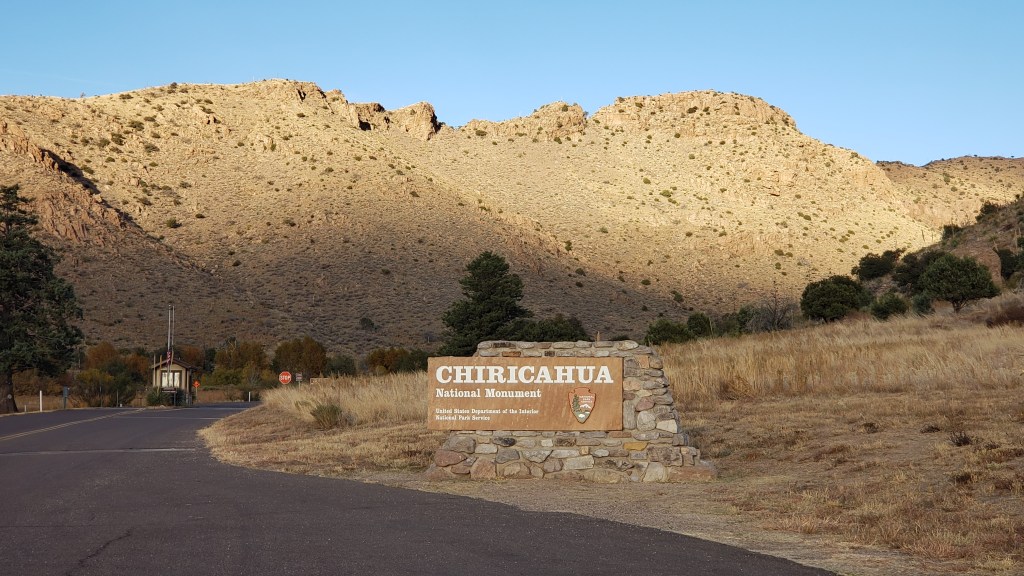
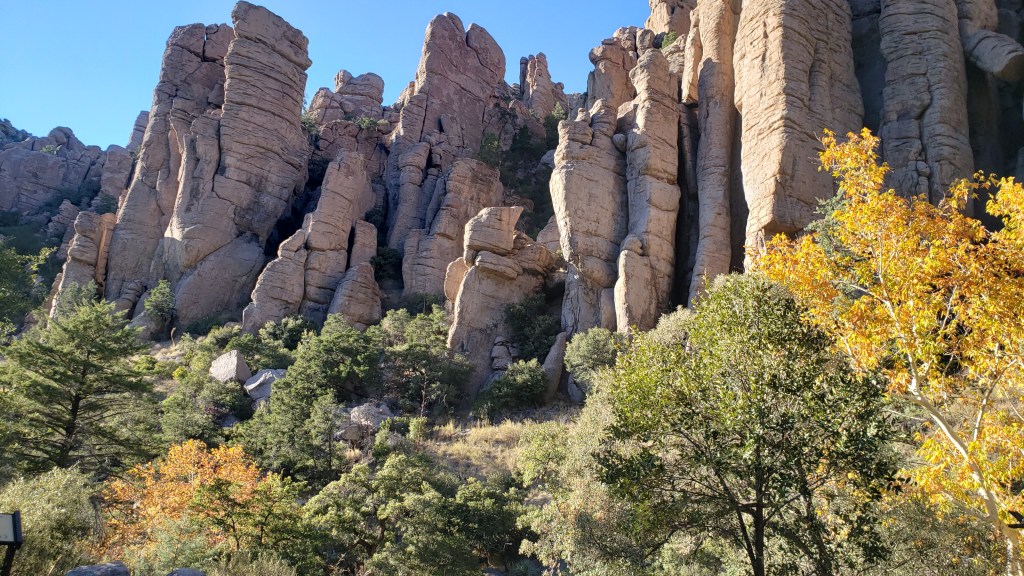
We didn’t really have plans for touring the area, but we did want to visit the “sky islands” of Chiricahua National Monument, where enormous rock formations tower high above Bonita Canyon. Apache – who at one time did not use that pejorative term (from the Spanish interpretation of the Zuni word meaning “enemy”) in reference to themselves, but instead use the name “Nde,” meaning “the people” – lived here while it was still a part of Mexico, prior to settlement by emigrant families from Canada, Ireland, and Sweden.


Looking down into the canyon from the top of the mountain, we wondered if this is what Bryce Canyon may have looked like at one point.

A band of coatimundi had been spotted that morning, so we should watch for them, said the woman at the Visitor Center. Black bear, rattlesnakes, whitetail deer, mountain lions, and other large mammals live here, too, but the only wildlife we saw was a lone deer.

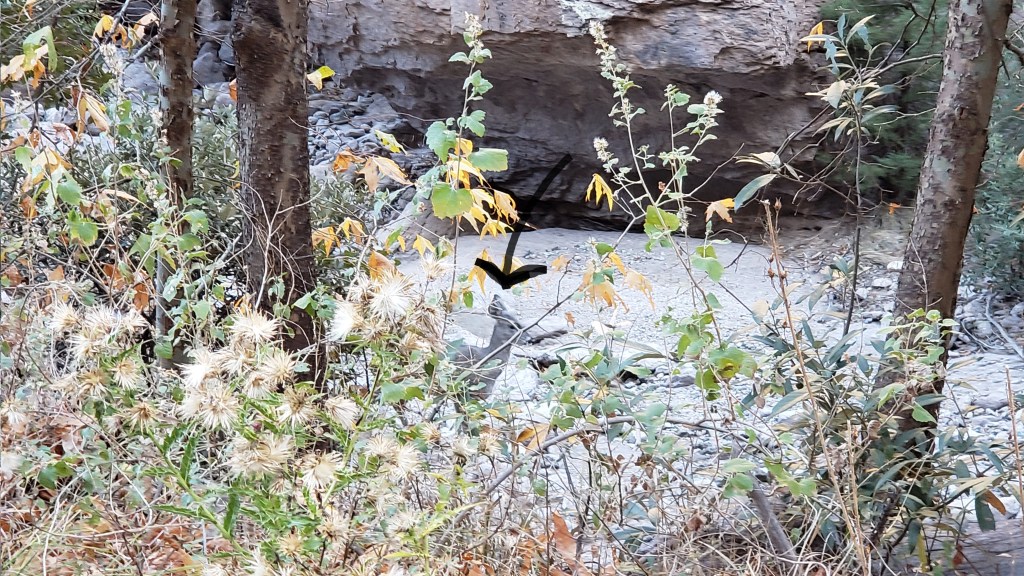
Lone deer here.

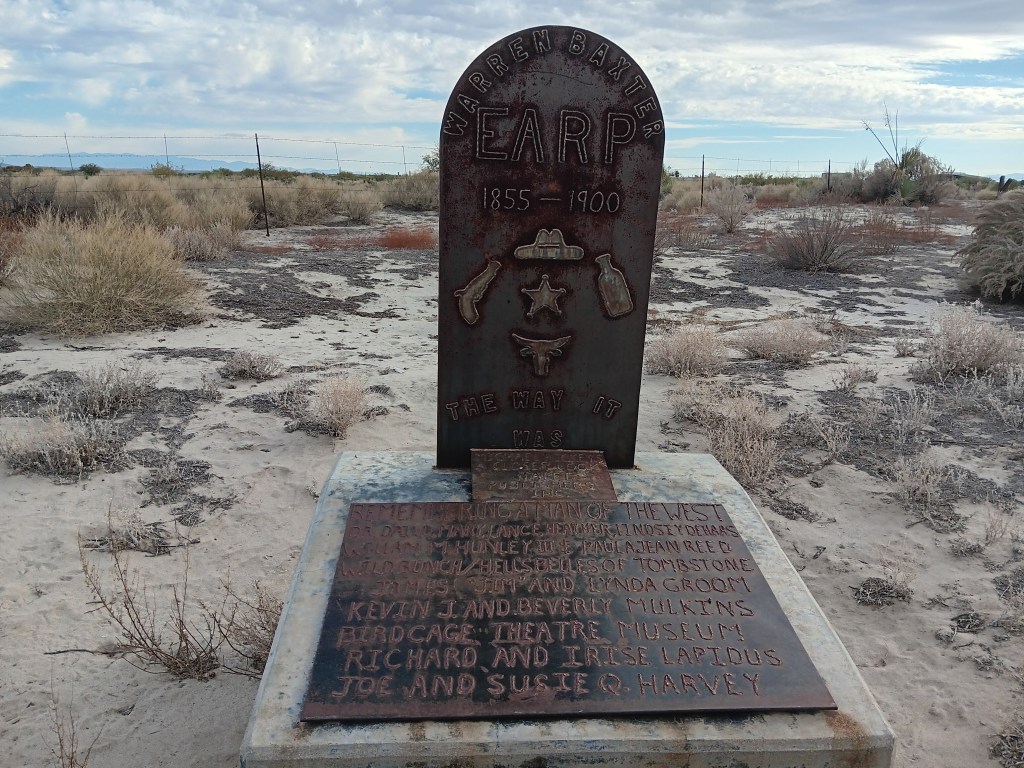
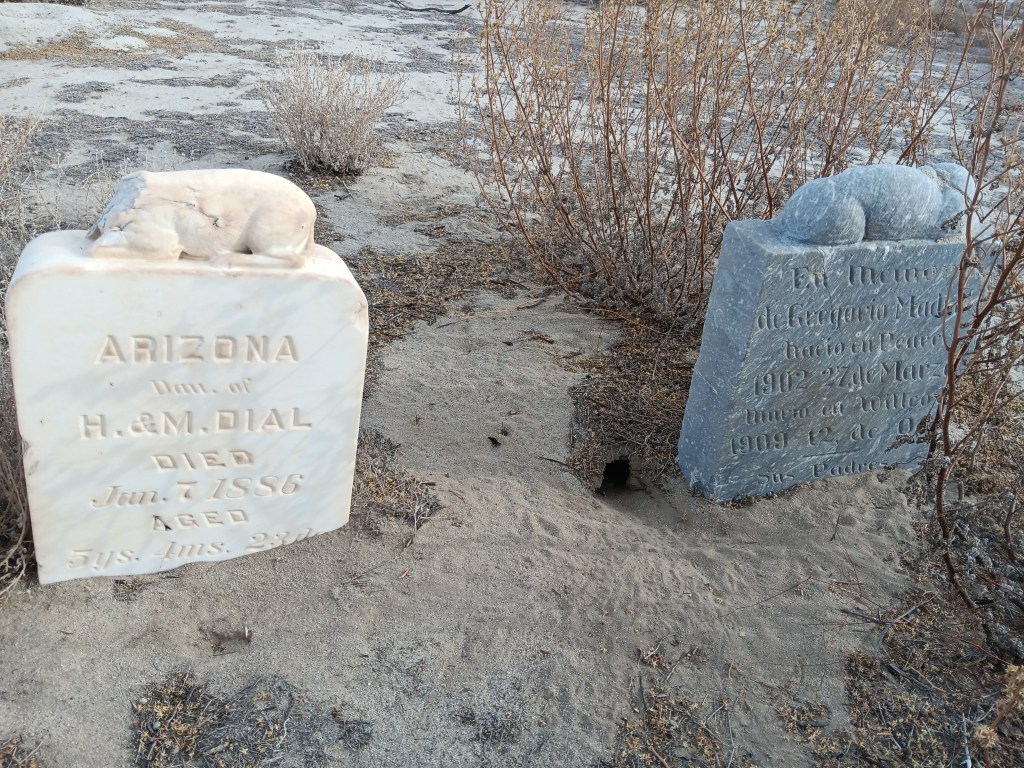
Driving around Willcox the next day, we braved a rough road that led to a derelict cemetery just outside town, where Warren Earp was buried.


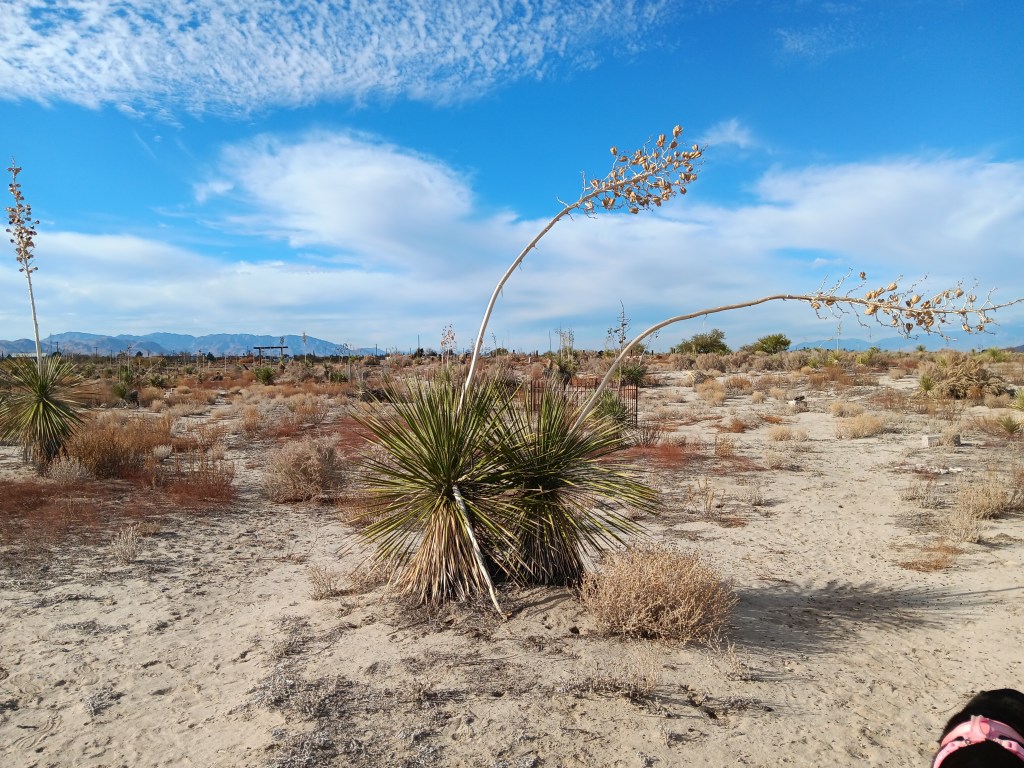
The desert is definitely taking back the cemetery grounds.

Warren was the youngest of the Earp brothers and, having avoided the shootout at the O.K. Corral in Tombstone, he jumped right in to help his brother Wyatt and their buddy Doc Holliday take revenge for the later killing of his brother Morgan before fleeing Arizona, only to land in Willcox years later, get stupid drunk, and take a bullet through the heart compliments of a patron of the saloon where Earp was over-imbibing. The shooter was acquitted on grounds of self-defense.


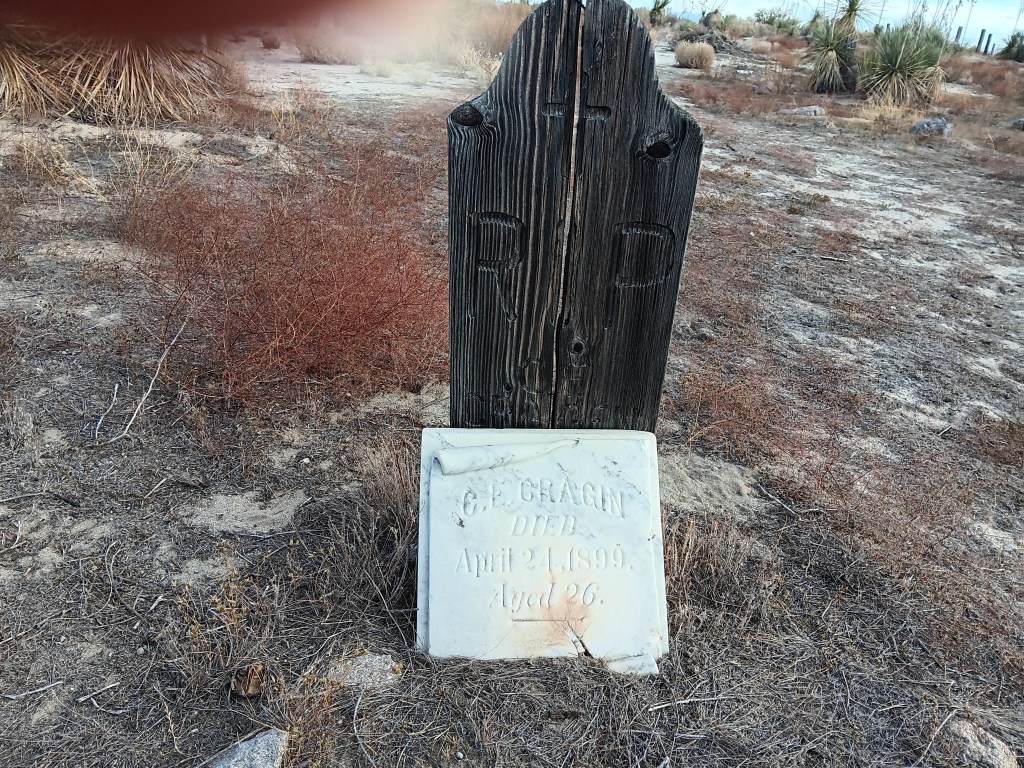
The nearly-forgotten cemetery told the story of Willcox’s early days, when people died too young; some far too young.


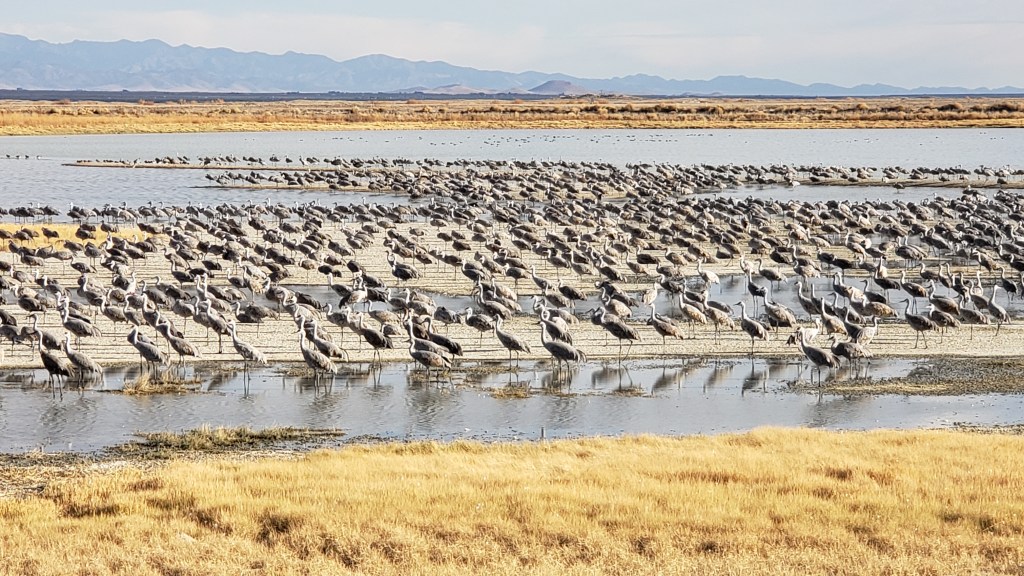
Also just outside town is the Willcox Playa Wildlife Area where, we’d heard, we might spot Sandhill Cranes arriving at their winter migration grounds. Understatement of the decade. There were thousands and thousands, with more arriving every minute. We spent two evenings at the wildlife area watching them flying in over the mountains in great, long lines.

One small section of birds!


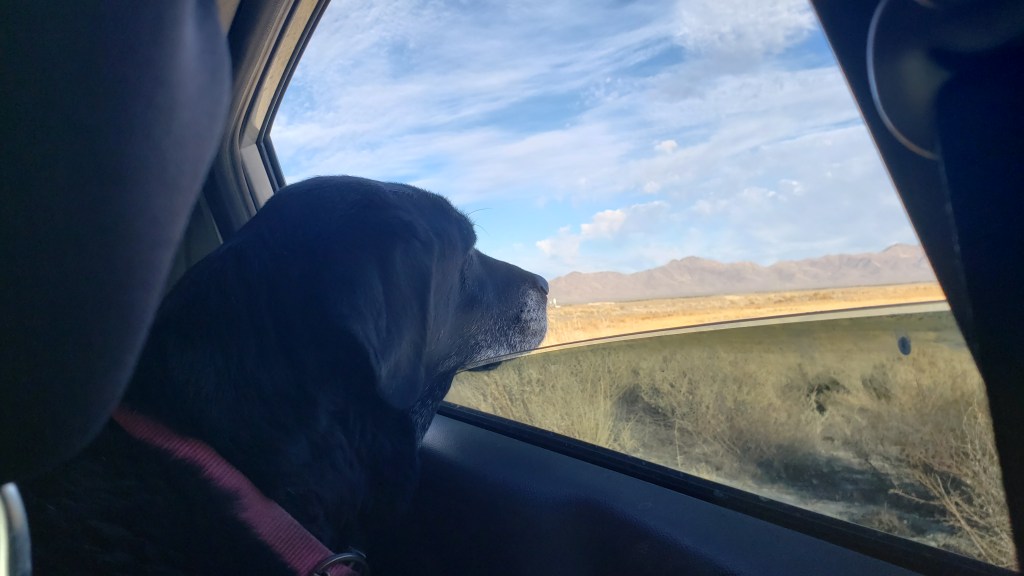
Even Ruthie was captivated.

Many of you have probably seen Simon’s videos of their arrival. If not, here are a couple of videos from our YouTube channel.


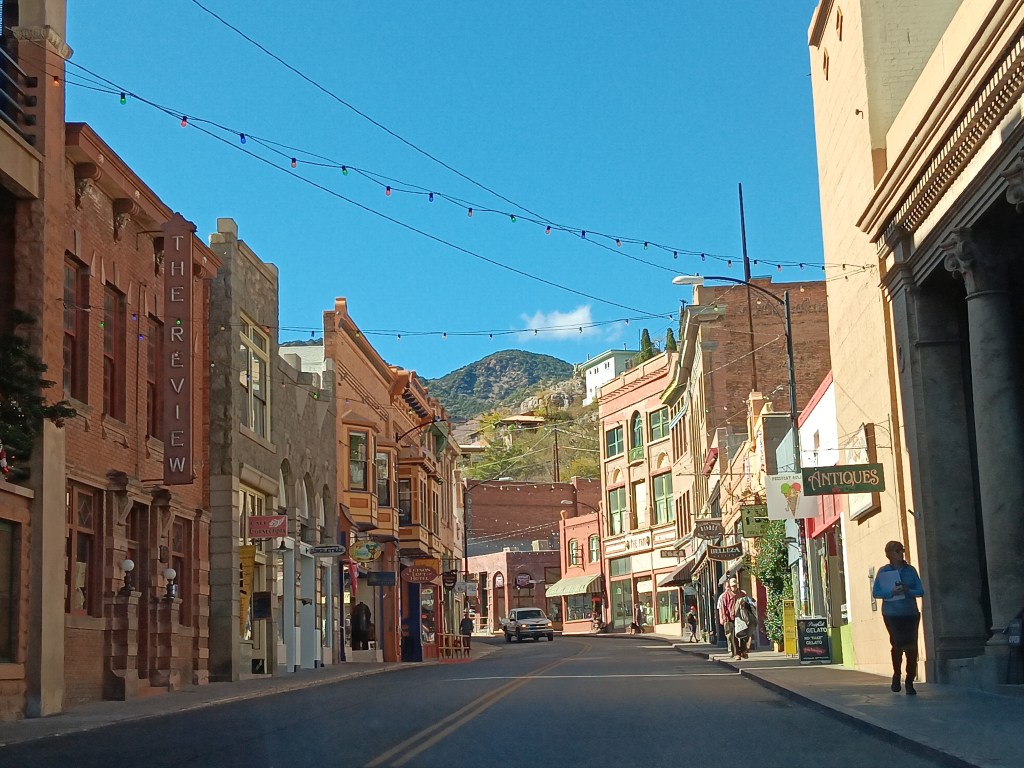
Then, because we can’t help ourselves when there is touring to be done, we paid a visit to Bisbee, on the border with Mexico, the day before leaving Willcox.


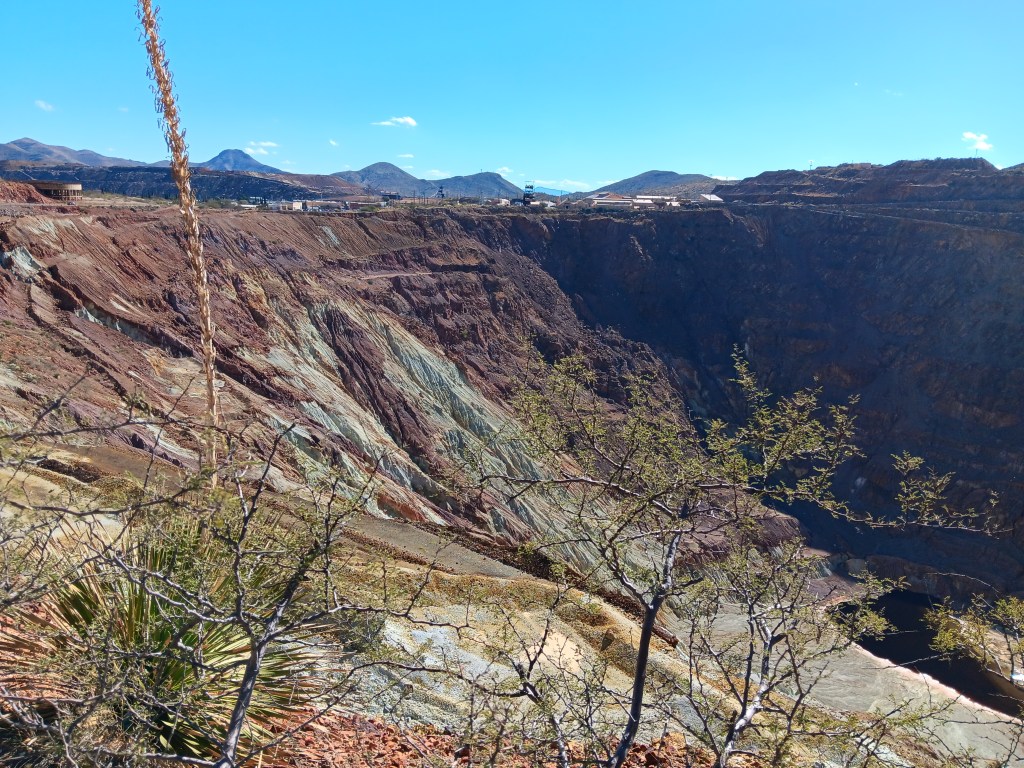
Bisbee was a mining town, and Simon spent a long time looking at the open mine while Susan mainly waited in the car.


That’s a small lake at the bottom, which gives you an idea of how huge the pit is.

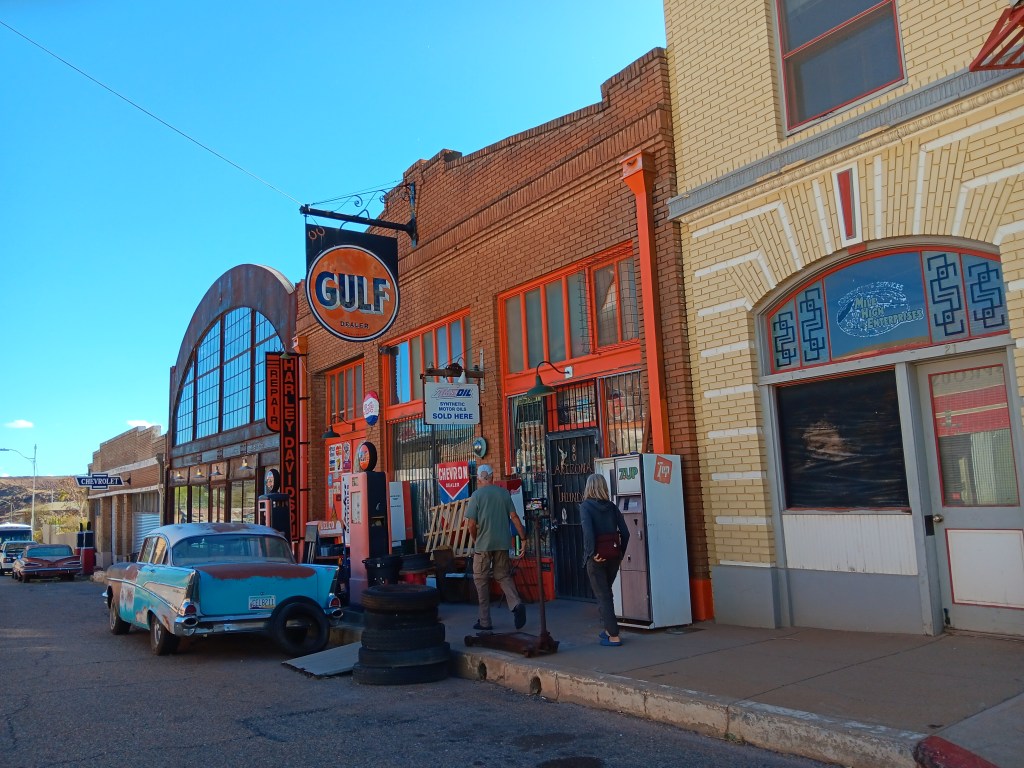
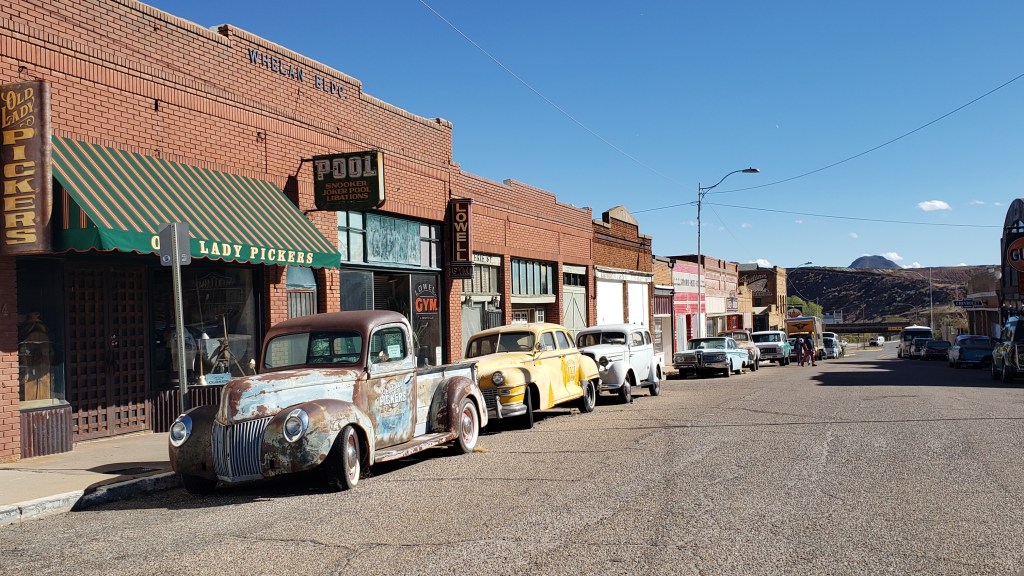
The semi-abandoned but totally adorable Lowell was just a couple of blocks away. It’s a tiny throwback to a kinder, gentler time, from the storefronts down to the old-timey cars parked along the curbs.


It was here that we also got our first look at the border wall between the U.S. and Mexico, just a few miles south of Bisbee, in Douglas.


On the way back to Willcox we stopped at Whitewater Draw, where some of the Sandhill Cranes spend the day before flying over the mountain range to Willcox. Here, we watched them take off and make that journey.

The marshy area is chock-full of Sandhill Cranes.

Ruthie seemed content to watch the birds prepare for their nightly migration.

We were ready to move on when morning came. We’d spent 49 days in Arizona – the most in any state so far – and we headed toward New Mexico feeling we’d learned so much about this part of the southwest, which had surprised and delighted us so often.

Air, Space, And The Silver Screen


Most of our touring focuses on natural areas, National Parks, small towns, history, and getting a flavor of how people really live in this country’s diverse landscapes. We do occasionally visit “attractions,” and Tucson had two Simon was eager to see.

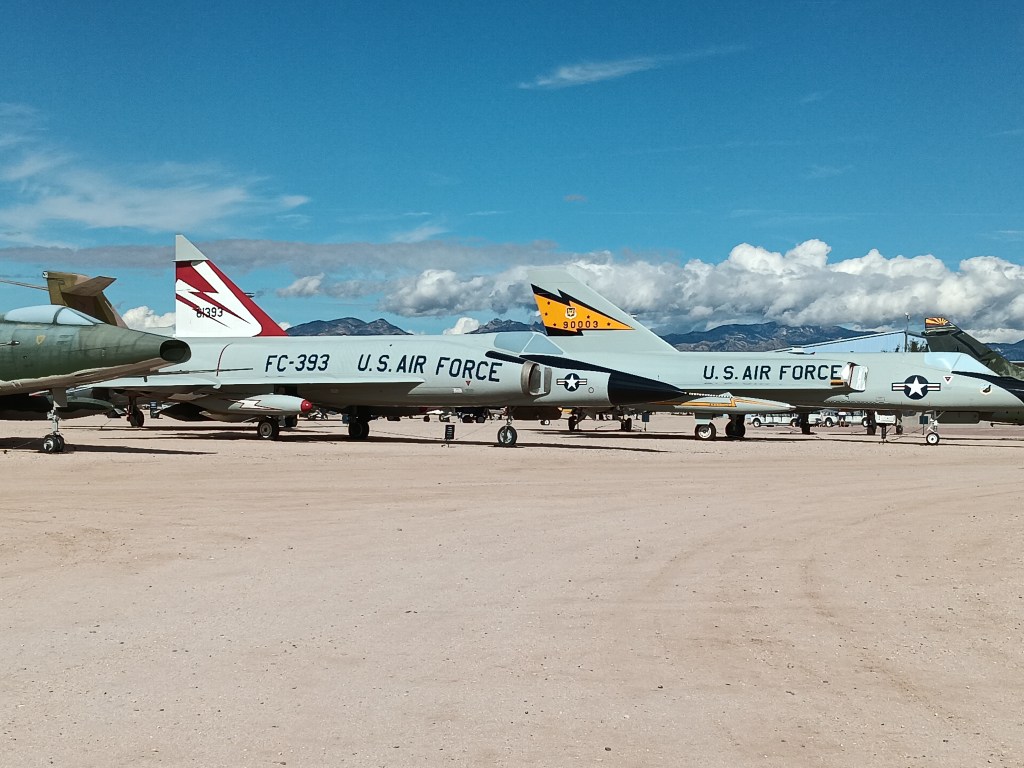
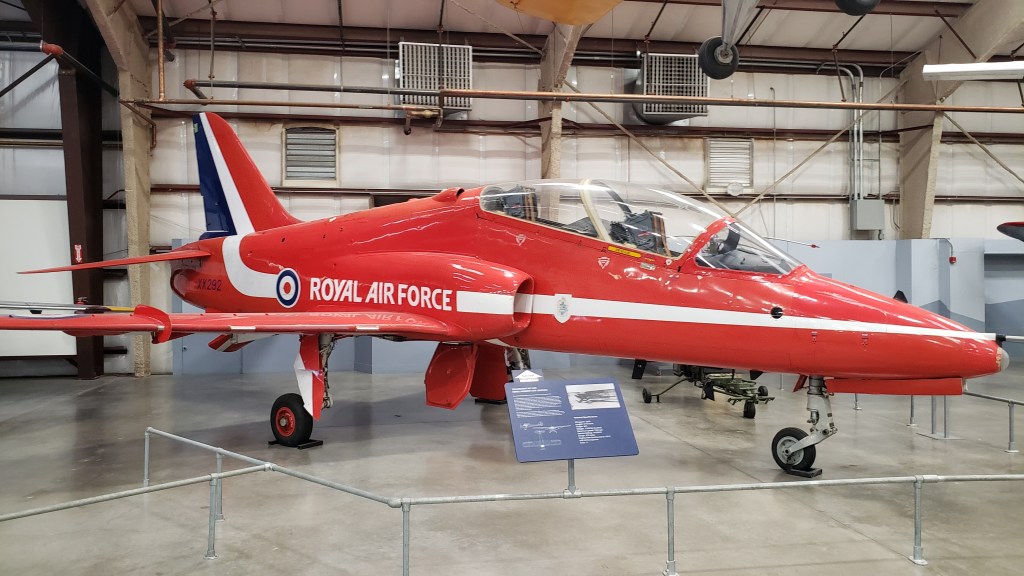
Pima Air and Space Museum features about 400 historical aircraft, and we spent about two hours wandering through the indoor and outdoor exhibits. We’ll just show you a few, though if you’re a fan of aircraft this is certainly a must-visit place.

Susan was delighted to see the exhibits began with suckers, squeezers, bangers, and blowers.

Blue Angels for Susan…

…Red Arrows for Simon.

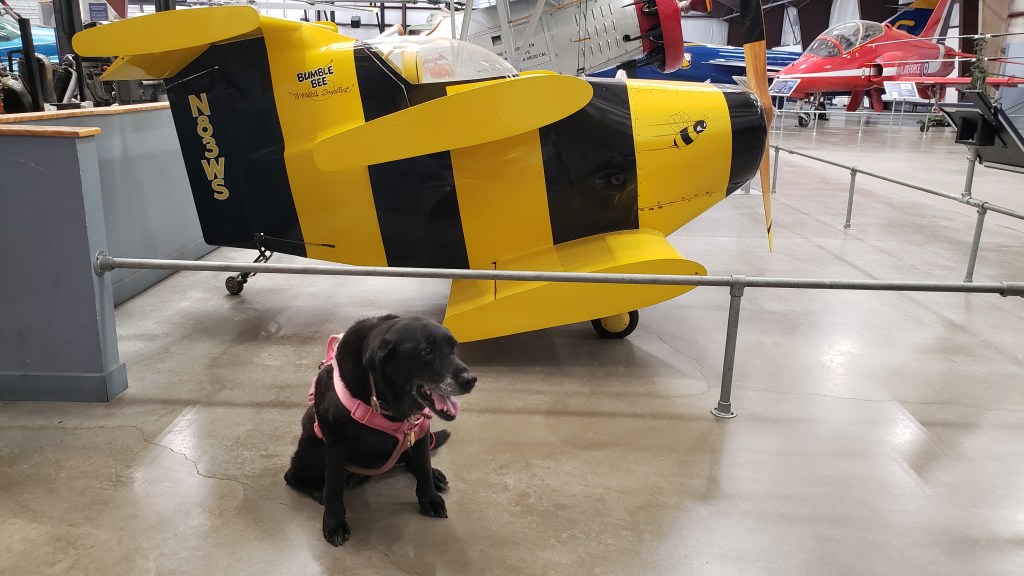
There was even one just the right size for Ruthie.

The museum extends outdoors, where a massive yard displays more than 100 aircraft.

Everyone wants to see the 377-SG “Super Guppy.” This freaky style of plane has been used to transport big, light cargo, including Saturn rocket parts during the Apollo Program.


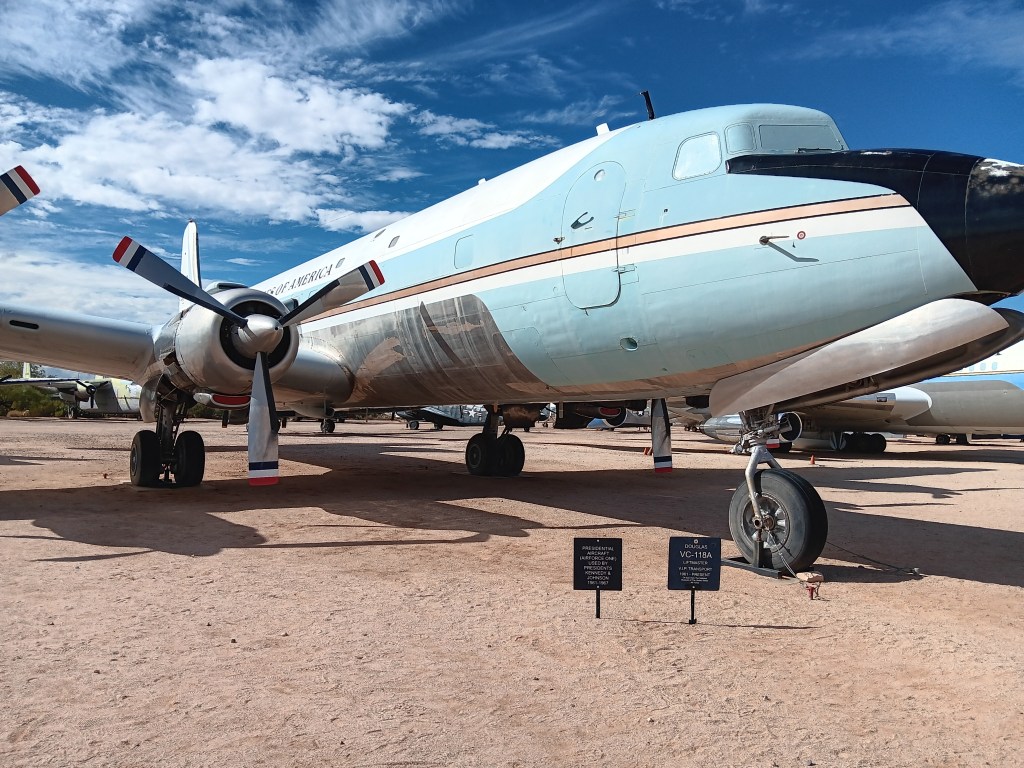
There were several versions of Air Force One, the airplane used by U.S. Presidents. This one was used by both President John F. Kennedy and his successor, President Lyndon B. Johnson.


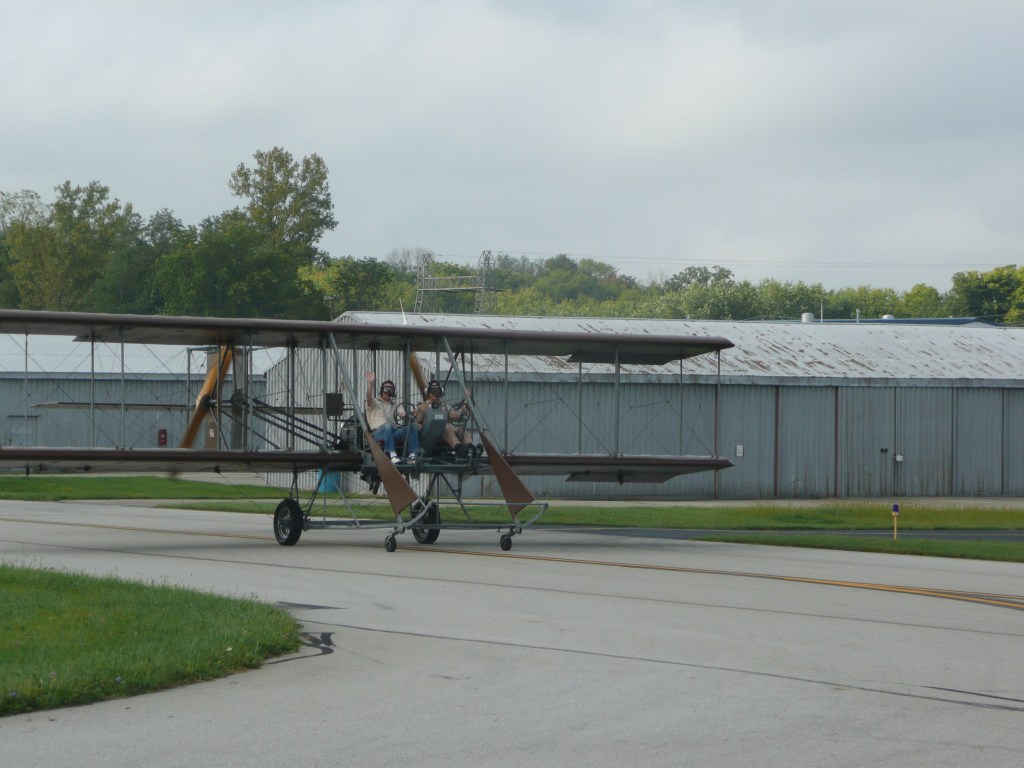
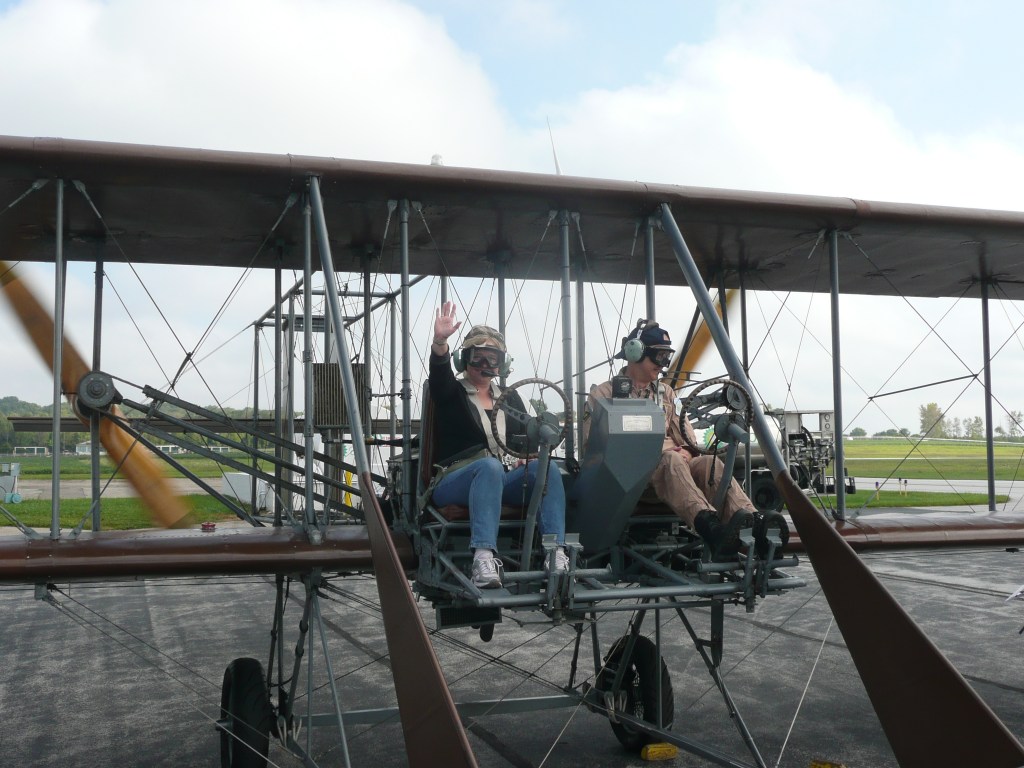
But our sentimental favorite was the Wright Flyer. We were fortunate enough to have been given a ride in the Wright B Flyer when we were in Dayton, Ohio, and during that visit we also spent time with the Wright brothers’ great grandniece Amanda, and their great grandnephew Stephen, who gave us a tour of Wilber and Orville’s home, Hawthorne Hill. With wine.

That thing above the sign that looks like a paper and balsa wood airplane is the Wright Flyer. Would you fly in it?

Simon back from his thrilling flight!

Susan just getting ready for take-off!

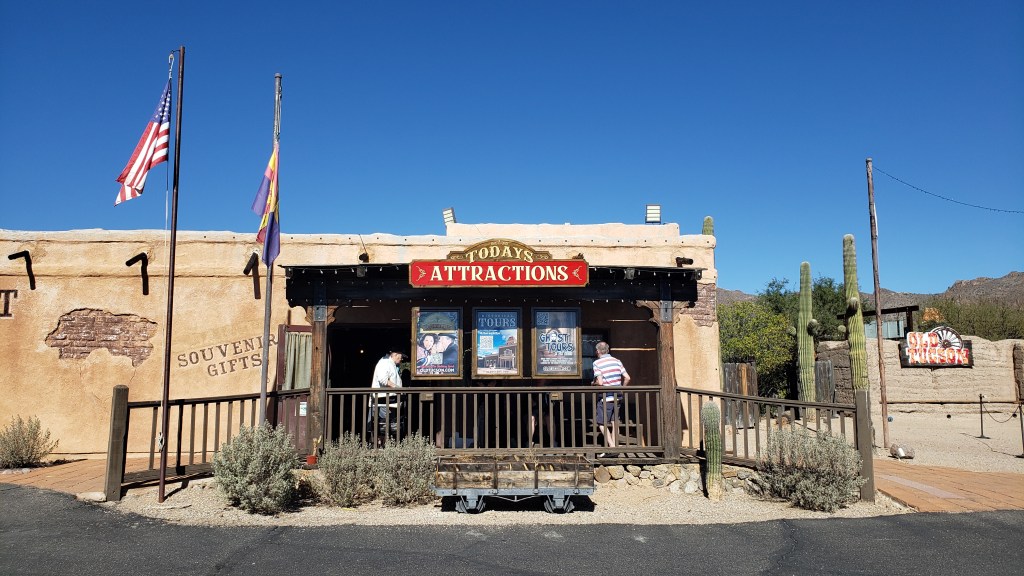
From the high-tech to the wild west, our next adventure was Old Tucson film set and “themed park.” Here, actors including John Wayne, Clint Eastwood, Jimmy Stewart, and even Frank Sinatra and Ronald Reagan acted in movie and television scenes that spanned hundreds of productions.

Old Tucson’s new management no longer allows dogs, so Susan and Ruthie headed back up the road for more time in Saguaro National Park. Simon will take over this part of the blog:

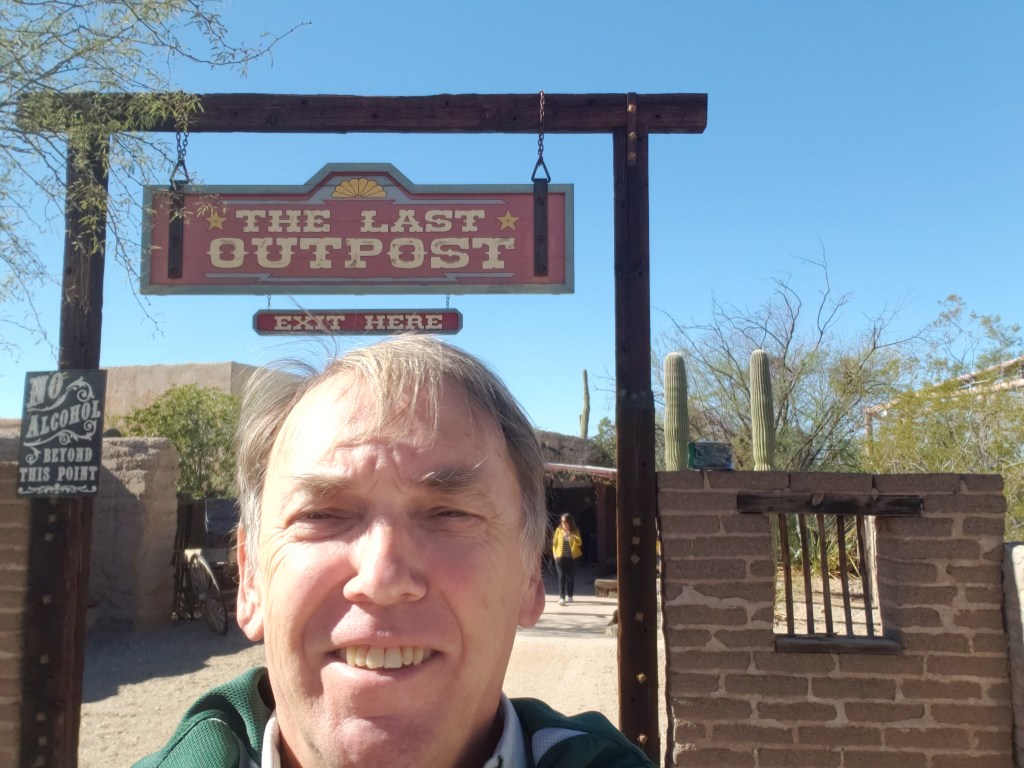
Old Tucson had been on my (Simon’s) radar since we first put Arizona on our 12-month map. If you were to put together the Top 5 of all-time Western settings, Tucson would be very close to the top, hence anywhere that celebrated that heritage was going to be high on my list of places to visit. And so it proved.


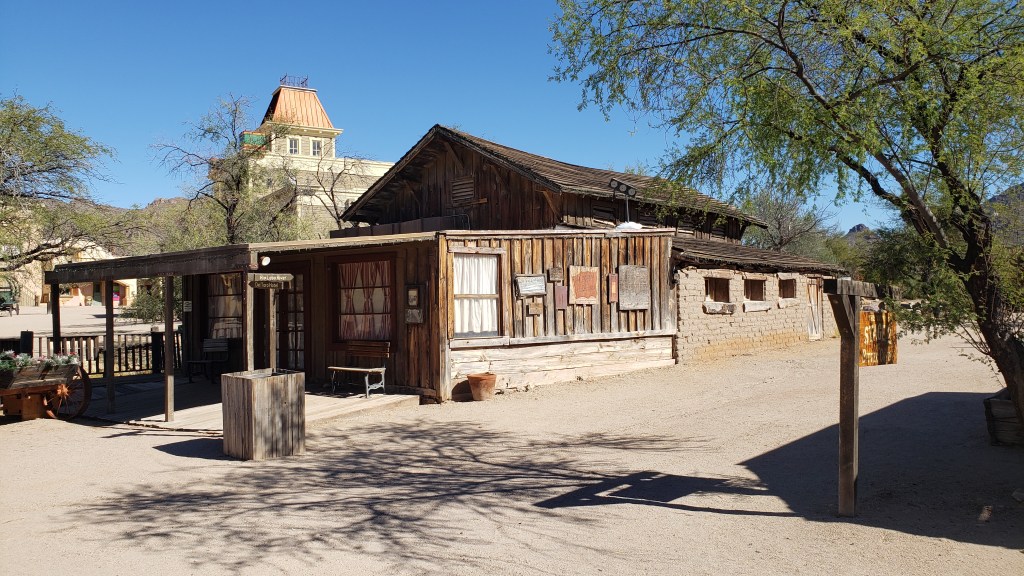
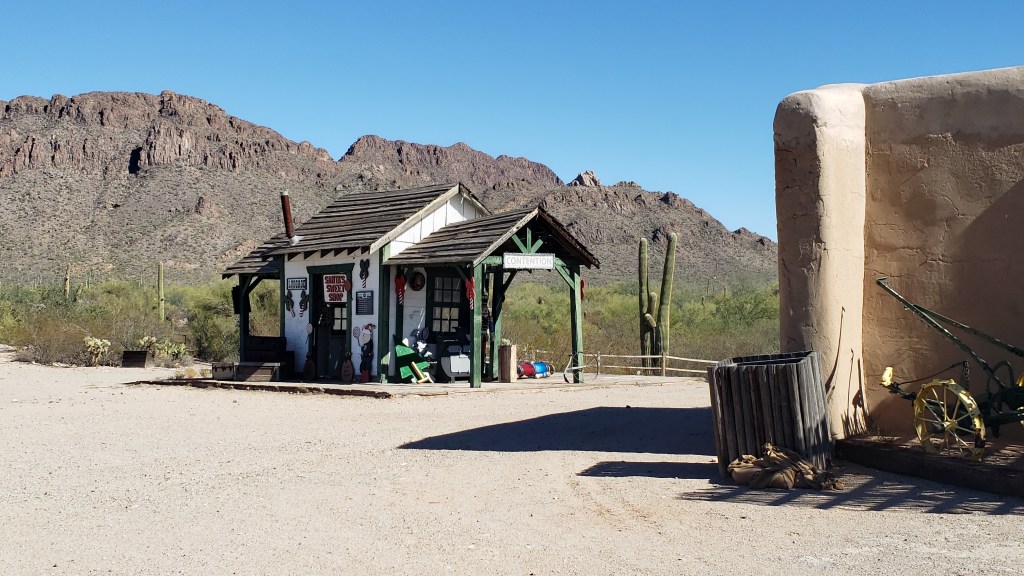
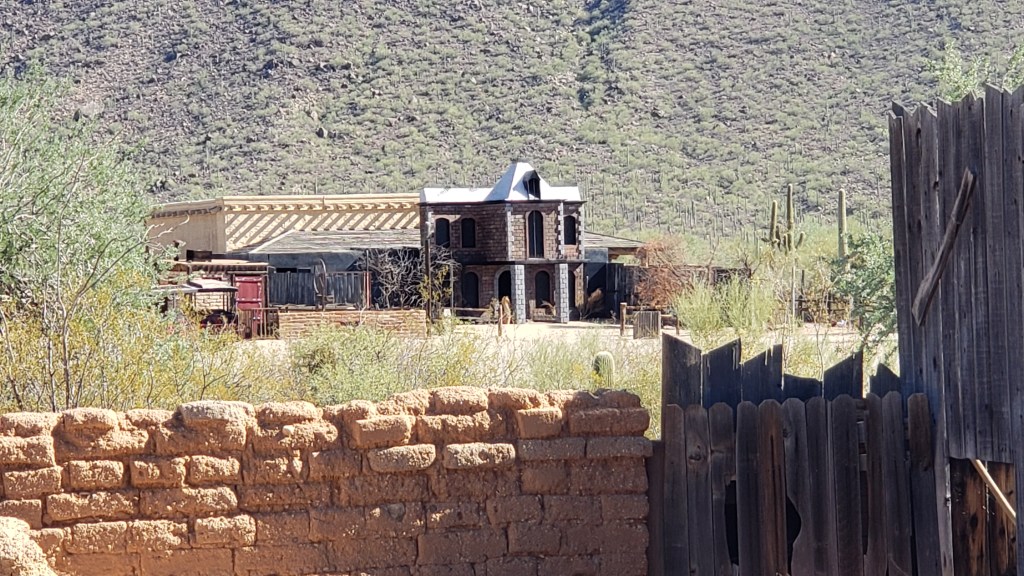
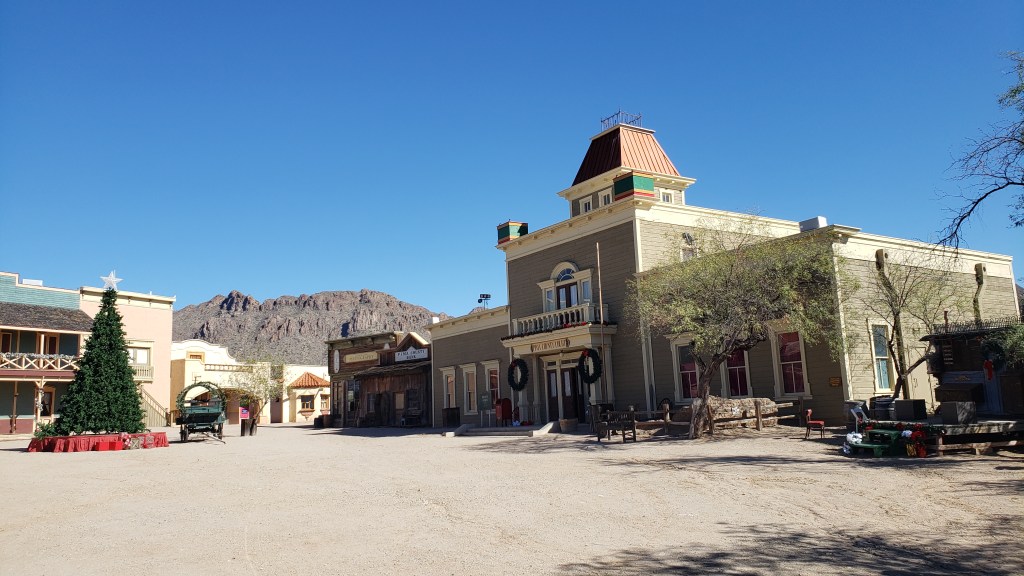
Old Tucson is both an attraction and a movie set; an amalgam of 84 years of acting as a time capsule of the 1860s. Since the first movie was filmed here in 1939, it has played host to dozens of other big-screen productions, as well as numerous TV shows, including Little House on the Prairie and The High Chaparral. It was a setting beloved by John Wayne and Robert Mitchum, as well as countless movie crews who adored its authentic period style. In the 1980s, it was second only to the Grand Canyon as Arizona’s main attraction.


It has been open to the public since 1960 as a themed attraction, and today it’s possible to take guided tours of the whole site, in addition to just visiting for their special events at different times of the year (notably for Halloween and the Holidays). And what a trip down Memory Lane it proved to be.

Having grown up on “cowboy films,” including all four Wayne movies that were shot here in the 1960s (McClintock, Rio Bravo, Rio Lobo, and El Dorado), it was like revisiting my childhood, seeing the iconic settings for that quartet, as well as many other visual references to the Western genre. Our tour guide was a non-stop source of info and anecdotes, including a series of continuity blunders and other errors made by the film-makers themselves!

Used in both Rio Lobo and Rio Bravo

The iconic mountains in the background showed up in two completely different geographic locations in the same movie.

The city of Tucson still has echoes of its 19th century roots in the Barrio Viejo section of the city, but it doesn’t come close to the three-dimensional reality and nostalgia of Old Tucson. The tour lasted almost 90 minutes from start to finish (it was listed as 45-60 minutes, but the tour guide growled, “I’ve never finished a tour in 45 minutes in my life!”), and it was a brilliant insight into the living history of the Western.


It is still being used as a movie and TV venue today, for Westerns and non-Westerns alike, hence you may see it in films such as Revenge of the Nerds, Terminal Velocity, and Nemesis, in addition to appearances on TV for programs like Good Morning America, various quiz shows, and others.

Exterior used in High Chaparral TV series

But it’s the Western back-drops that make Old Tucson special and, if you’re coming here for nostalgia and insight, you’re definitely on the right stagecoach!

Main plaza.

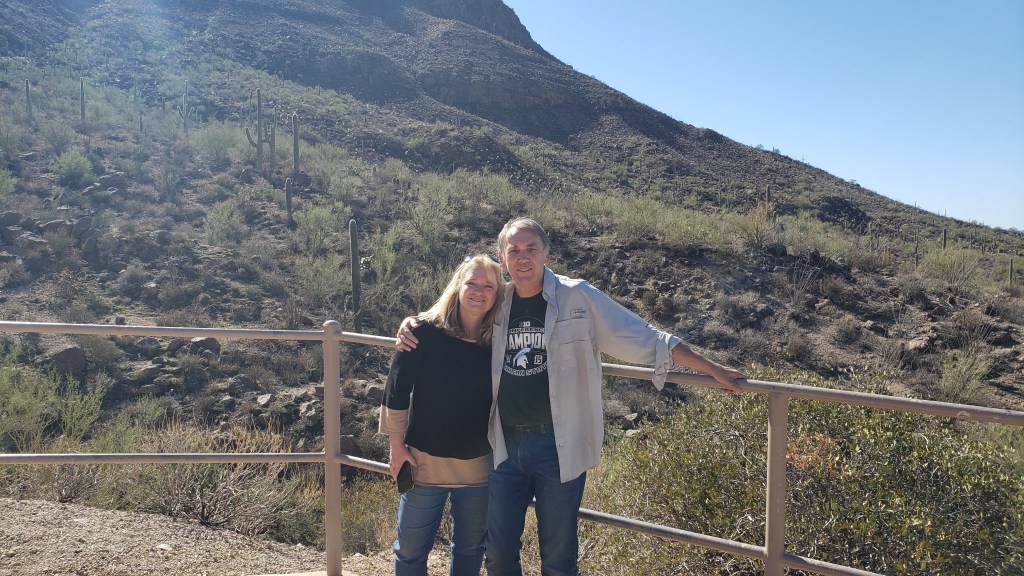
(Susan here again) On the way back to Tucson Simon wanted to recreate a photo he remembered from our first trip over the mountain pass on our way to Saguaro National Park. Simon remembered it well, describing the two of us smiling in front of a big saguaro cactus, and the railing near where we were standing. I didn’t remember it at all. I think you’ll agree we nailed it.

2023: The memory.

2008: The reality. Why is there a lake behind Simon? Because in reality, the photo he remembered was taken on the way to Tortilla Flat, not Saguaro National Park.

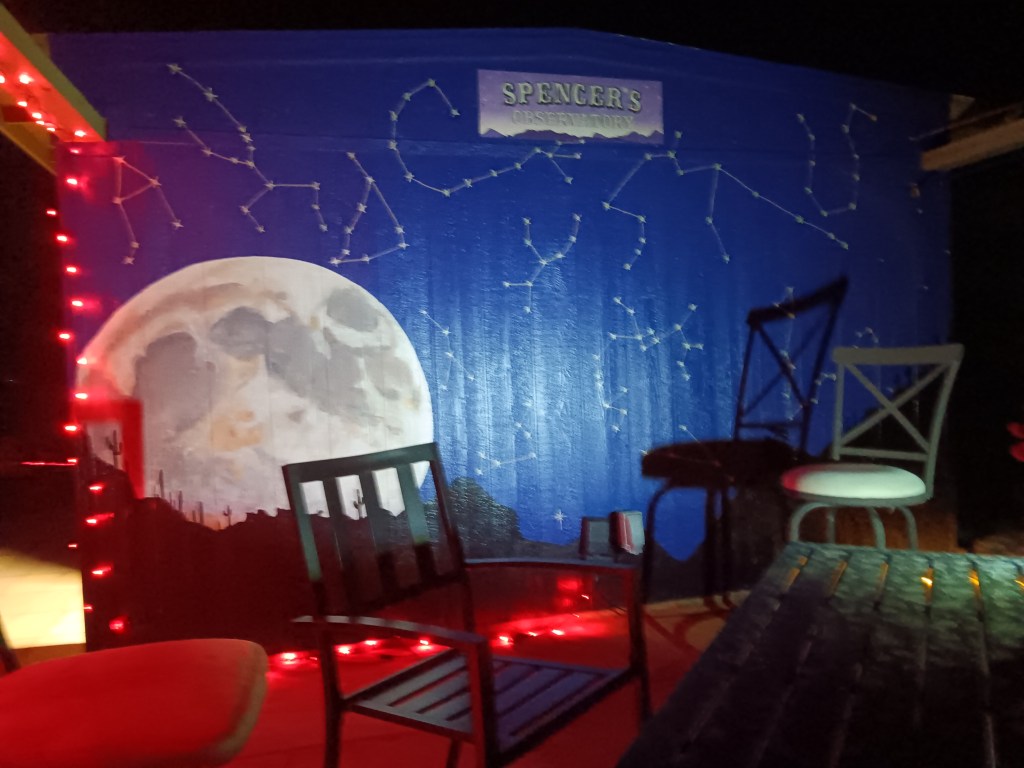
As our days in Tucson drew to a close, we also fulfilled another experience on Simon’s wish list (and mine) with a night-time visit to Spencer’s Observatory, where we had the small observatory and its resident astronomer to ourselves.

The observatory’s outdoor waiting area. Red lights help your eyes adjust to the darkness ahead of your viewing.

We so wish we had photos of the absolute magnificence we saw through the telescope. Saturn first, then the Moon, then Jupiter, each so clear we could hardly believe the images were real. Saturn’s rings were perfectly distinct. Three of Jupiter’s moons and its iconic red bands were easily visible. And the moon? You know it so well, from earliest childhood, but seeing each of its craters and mountains in sharp relief is next-level mind-blowing.

We’d been through 19 states, into Canada, along the border with Mexico, and now, 921.03 million miles into space. It was truly one of those experiences that burns into your brain and never leaves you.

Tucson On A Plate


Tucson offered a smorgasbord of culinary delights after months spent in places where restaurants are few and far between, and where our lunches often consisted of nothing more than a chewy bar to hold us until dinner. These are the standouts that made us feel human again.

Note, we didn’t use our camera’s flash because we didn’t want to disturb other diners, so most of our photos are dark. Consider it “ambiance.” We’ve added some media photos when ours were just TOO gloomy.

The Coronet


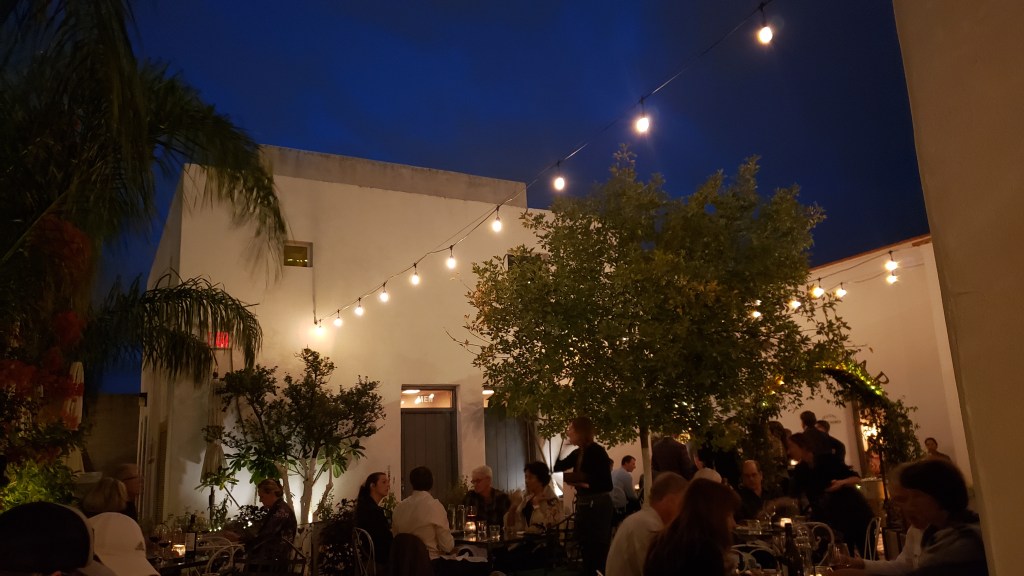
With Ruthie in tow, our meal was taken in the lovely courtyard at the back of the restaurant, where lush greenery and live music took us from the dry desert to a place of relaxed enchantment. It really did feel like an oasis in which to enjoy a superb meal.


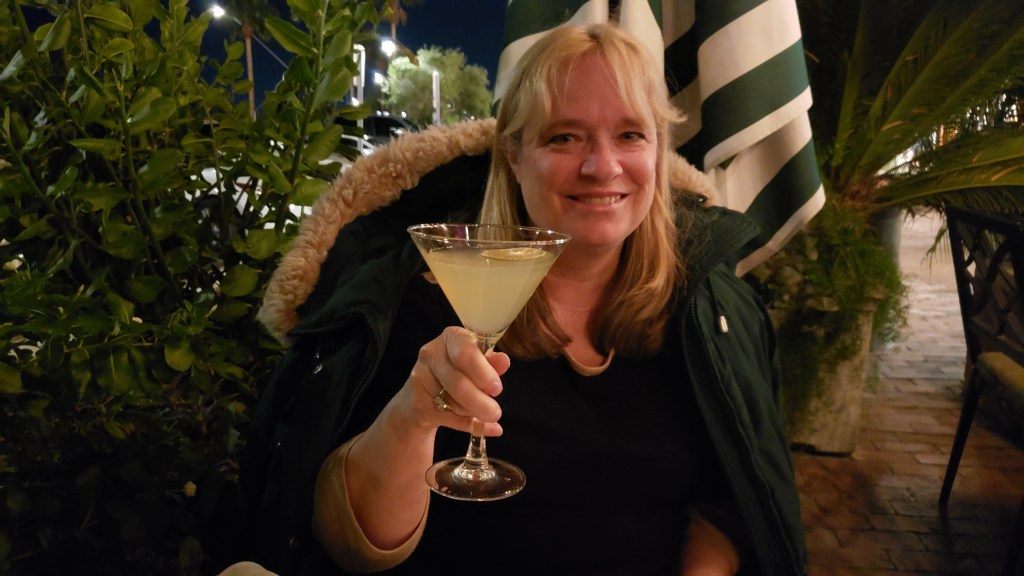
We started with cocktails – gin-based Occidental for Susan and Barrio Negroni for Simon – and paired them with a shared Oyster Mushroom Tempura, a plateful of big, beefy mushrooms with a delicate flavor, lightly coated in crisp-fried tempura, on a bed of pickled melon and green papaya salad.

Simon had the Herbs de Provance Crusted Sea Bass, featuring a lovely fish from the Sea of Cortez, with three sharp, briny mussels so soft they were almost like ceviche. Alongside was a single grilled corn panisse (like a polenta, deep fried and made with chickpea flour) which added a distinct, fresh flavor.


Susan opted for the vegetarian Glazed Delicata Squash, a succulent combination of one-half of the aforementioned squash, cut lengthwise and still in its rind, glazed with maple and pomegranate, generously topped with tiny black lentils and surrounded by a bed of red pepper ajvar and herbed lemon yoghurt. Half of a deep-fried artichoke heart added a crunchy counterpoint.


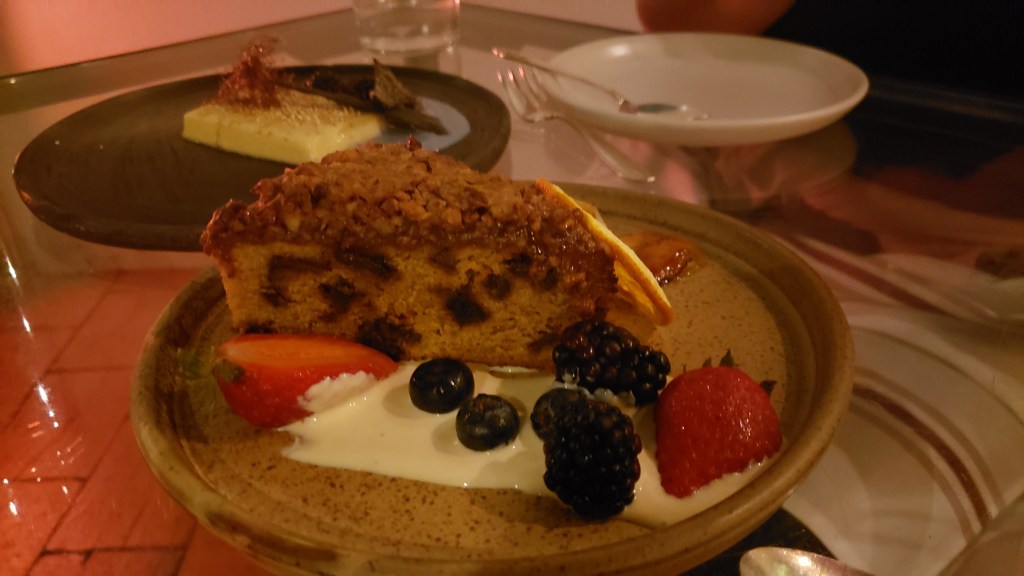
One of us can’t resist dessert after a great meal (Simon. It’s Simon), and in this instance he couldn’t decide between two: the Orange Date Cake (moist cake with a crumble top sitting on citrus cream, with smoked caramelized banana, and fresh fruits) or Every Part Of The Corn (pillowy corn flan, crisp blue masa atole, nixtamal cracker, caramelized corn silk, and mulberry gastrique), so he got both. Of the two, we agreed we could eat the Orange Date Cake every single day for the rest of our lives.


Cup Café at Hotel Congress


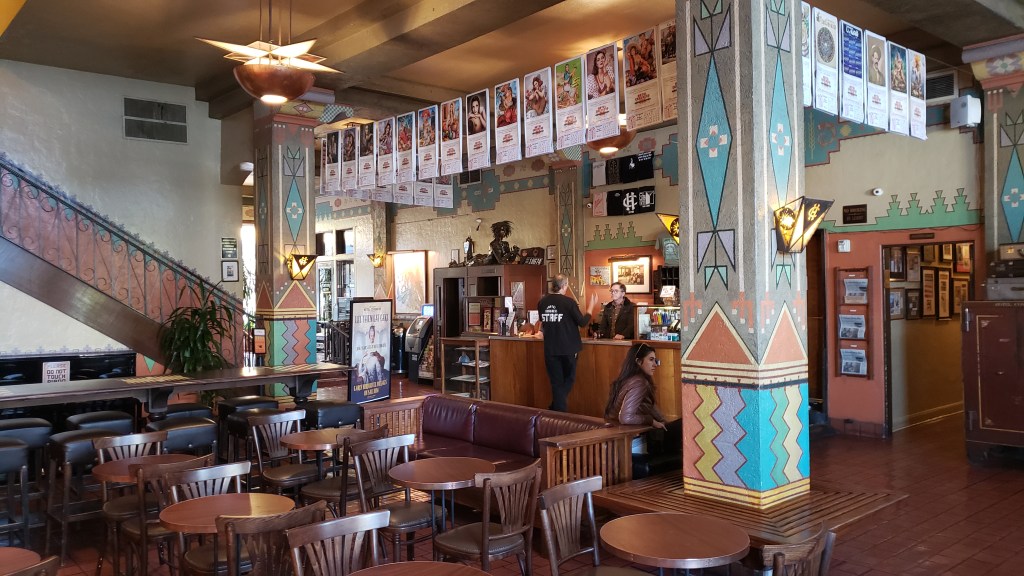
Simon loves a big breakfast. Susan prefers a light start to the day. Located in downtown Tucson’s Hotel Congress (built in 1919 and listed on the National Register of Historic Places), Cup Café delivered both, with reasonable portions of healthy food that didn’t overwhelm our digestive systems.

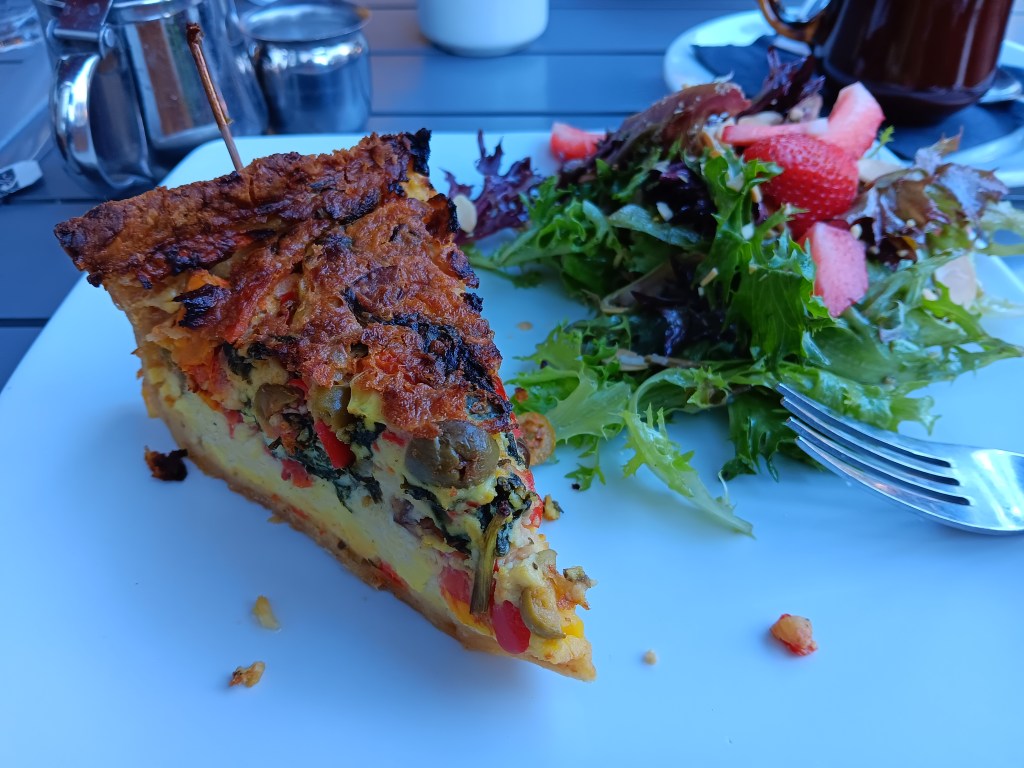
Susan had the Quiche du Jour, which delivered a power-packed punch of Mediterranean flavors through its blend of olives, feta, sweet peppers, onion, and spinach enveloped in soft, airy egg, with a crisp crust. Mixed greens in a tart vinaigrette, with sliced strawberries and slivered almonds, added a sharp contrast to the mellow quiche.


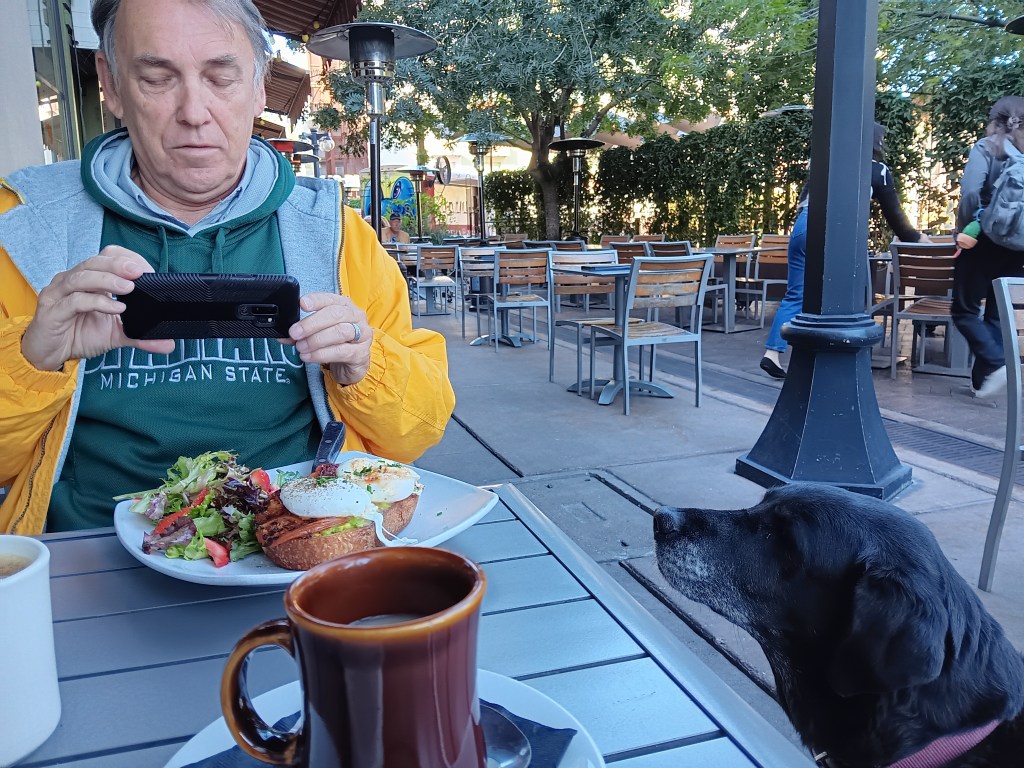
Simon opted for the luxury version of avocado toast with his order of Barrio Toast. Smashed avocado, grilled tomato, and two poached eggs topped toasted bread (locally sourced at Barrio Bread bakery), and the same mixed greens were served on the side.


We sat on the patio with our dog, but the restaurant inside is pleasant and sort of Aztec-ey. Under other circumstances, we would have planted there and lingered for quite some time.

Baja Café

Snickerdoodle Pancakes
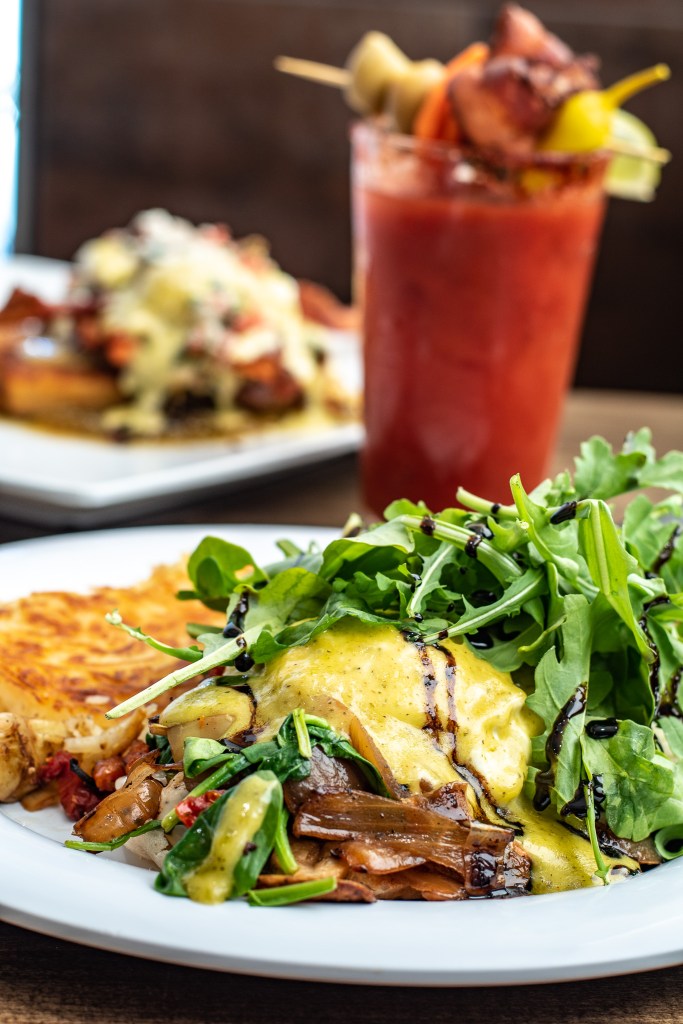
(Photo Credit: Jackie Tran, Baja Cafe)

When a restaurant’s signature dish is the Snickerdoodle Pancake, you know you’re in for some creative dining.

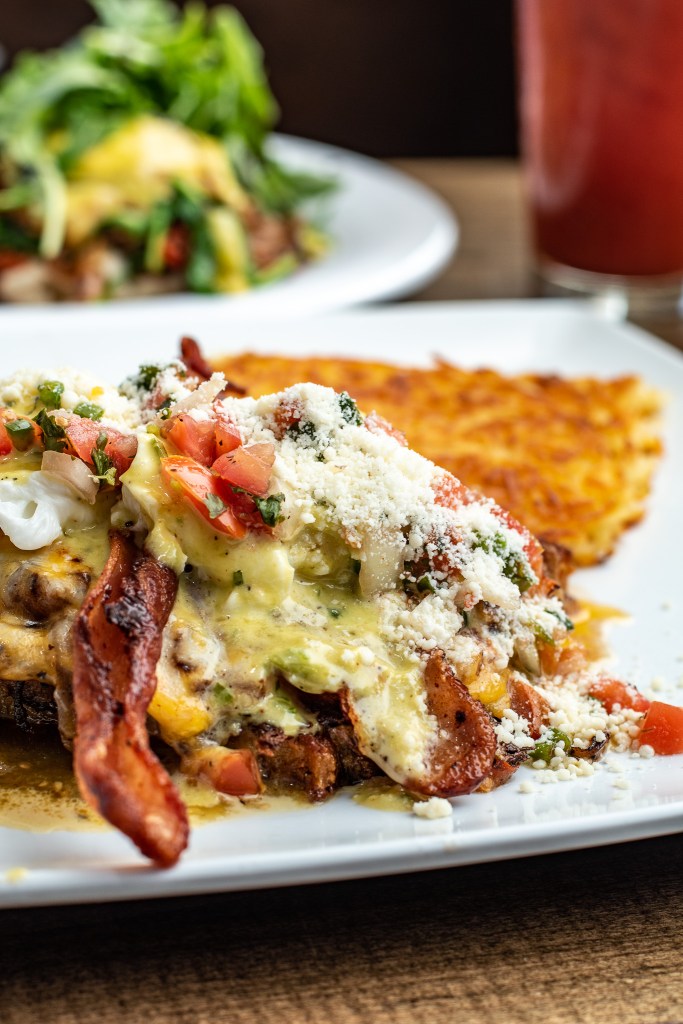
Simon went for the Classic Huevos Rancheros and Susan had another house specialty, Corned Beef and Eggs.

Corned Beef and Eggs
(Photo Credit: Jackie Tran, Baja Cafe)

The corned beef was actual chunks of meat, not the shredded stuff with machine-chopped potato squares, proving it was made in-house with the kind of love and attention that shows in its taste.

Huevos Classic
(Photo Credit: Jackie Tran, Baja Cafe)

Both dishes were so hearty we didn’t eat again until dinner at 7 p.m., and even then we only had bread and cheese. The breakfast of champions!

Wildflower American Café


After recovering for a few days from all the great food we’d eaten, we ventured out to this delightful establishment, having skipped lunch so we’d be ready for a big meal. We sat on the patio, but had we been dog-free we would have dined in the elegant, busy dining room, with its air of refinement we’d been missing from home.

Susan uncharacteristically ordered a starter when the smokey Grilled Artichoke with aioli proved too tempting. It was so beautifully charred, the aioli was left untouched. Simon went for cold smoked salmon with chive crème fraiche and potato galette.


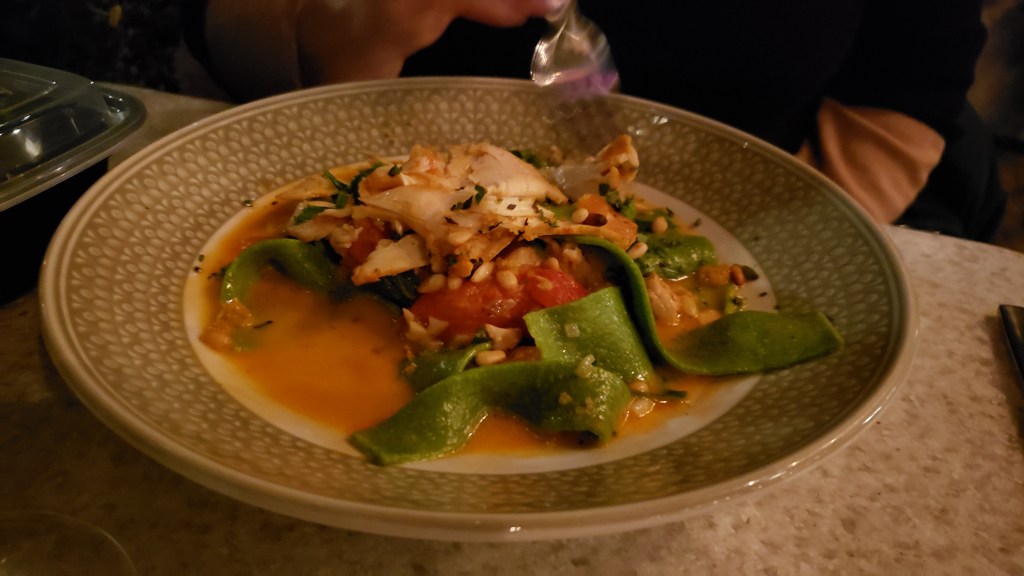
Pasta is pretty much a once-or-twice-a-year thing for Susan, but our server promised the Spinach Pappardelle (roasted chicken slices, melted tomato, pine nuts, grana Padano) would not be huge and overwhelming. Thank goodness, because, oh, the lusciousness of that nutty, tomatoey dish!


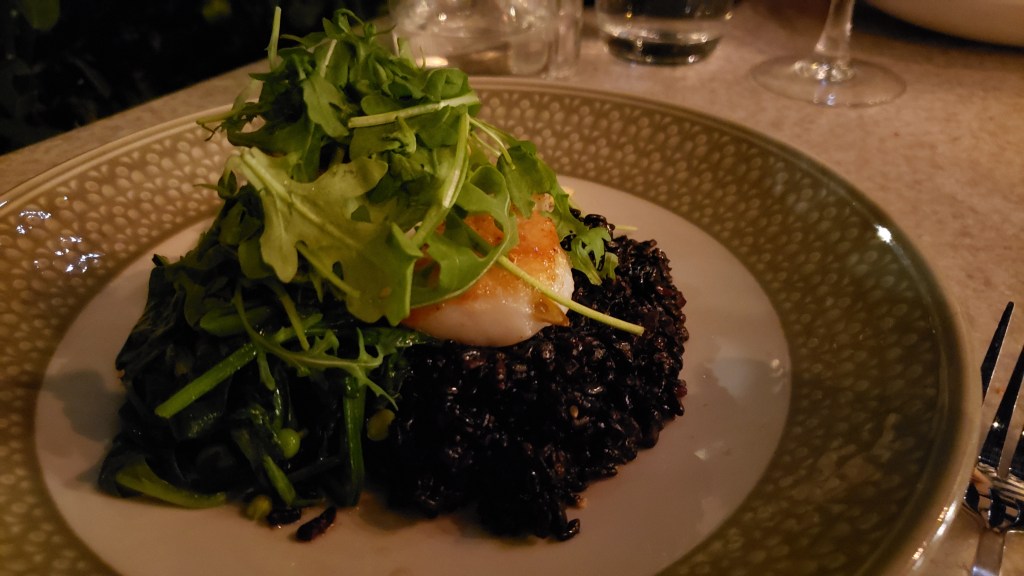
Simon was on a seafood kick, and chose Lemongrass Skewered Scallops on a bed of “forbidden” black rice, with sautéed snap peas and soy butter, which left room in his belly for sweet, silky Banoffee Trifle. We both left feeling we’d been royally treated.


Seis Kitchen


Everything we’d eaten so far was excellent, but our final day in Tucson hit every “right” note for us. We’d been wanting something authentically Mexican, and with a line out the door, Seis Kitchen was the perfect choice.

Diners place their orders at a window, then they’re directed to a table in the courtyard. When it’s ready, their meal is delivered to their table and the joy begins.

It will be obvious to those of you who know us that we didn’t order all of the food we tried. Let’s just say some kindness came into it via Visit Tucson, and the restaurant pulled out all the stops to ensure we had a taste of what they do best (cue the Garrison Keiler phrase, “All the women are strong, all the men are good-looking, and all the children are above average.” Everything Seis Kitchen does is “best”).


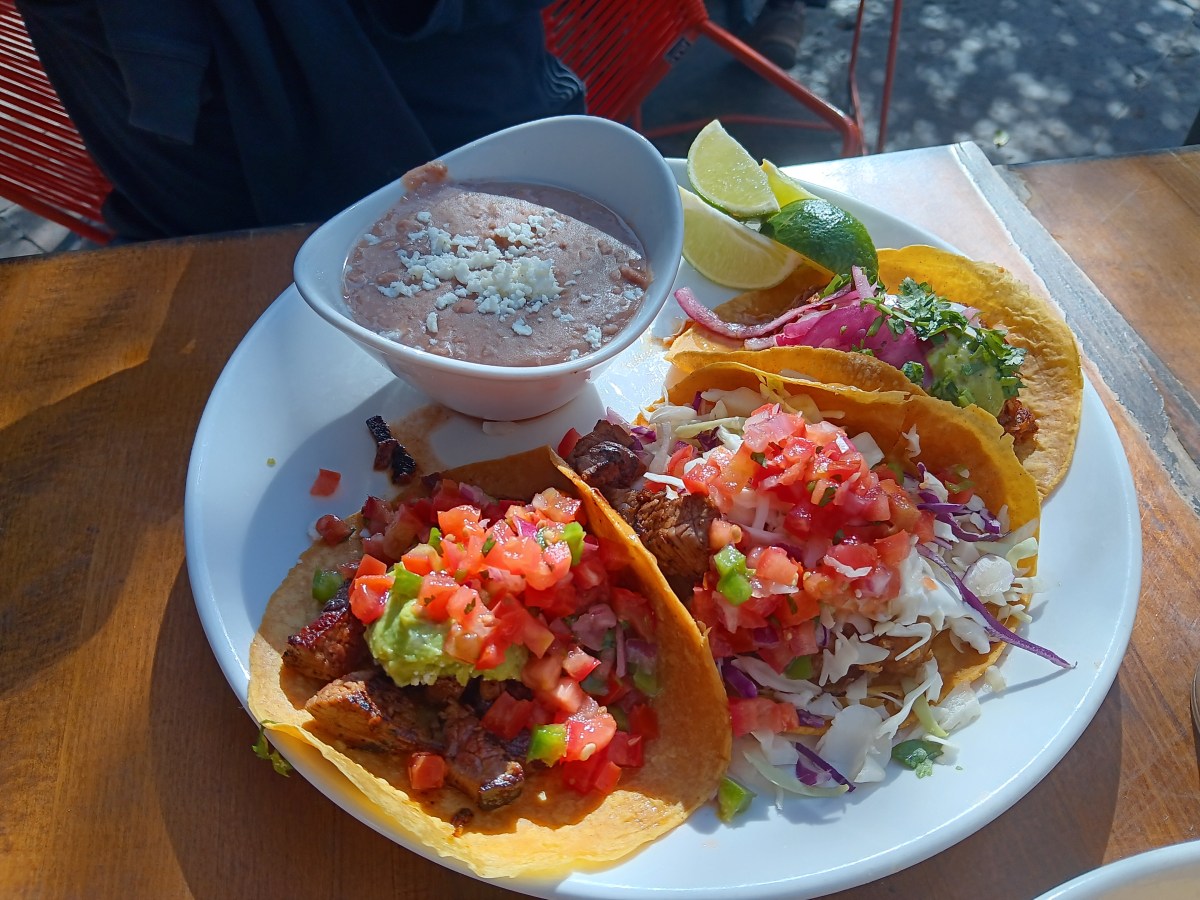
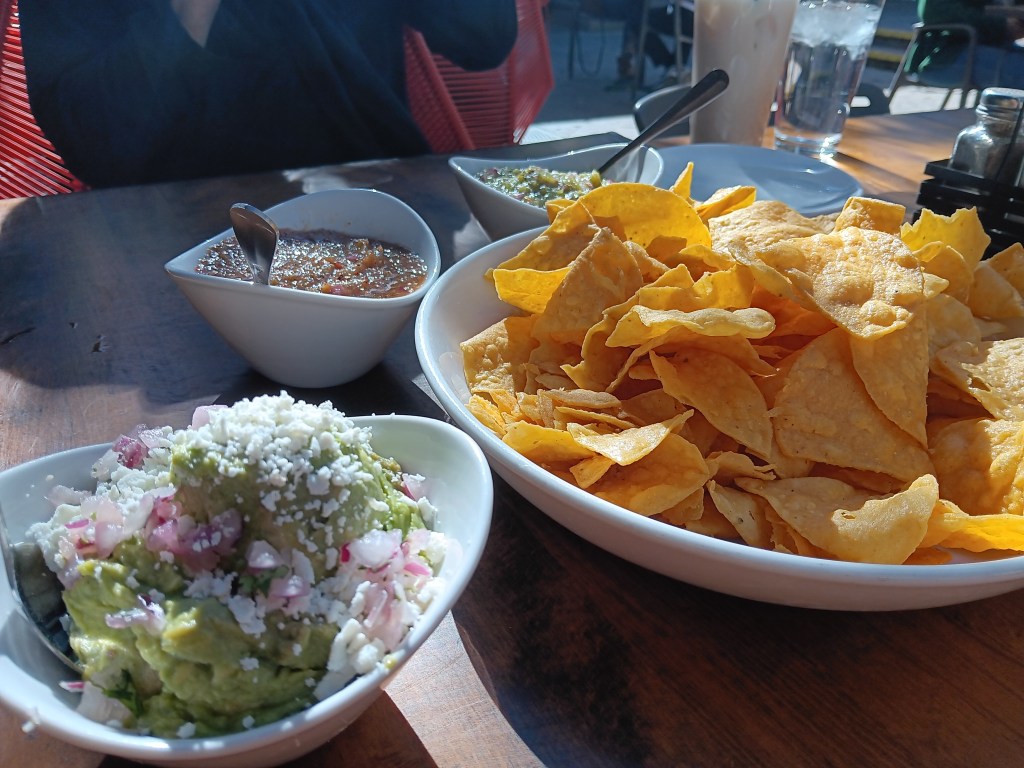
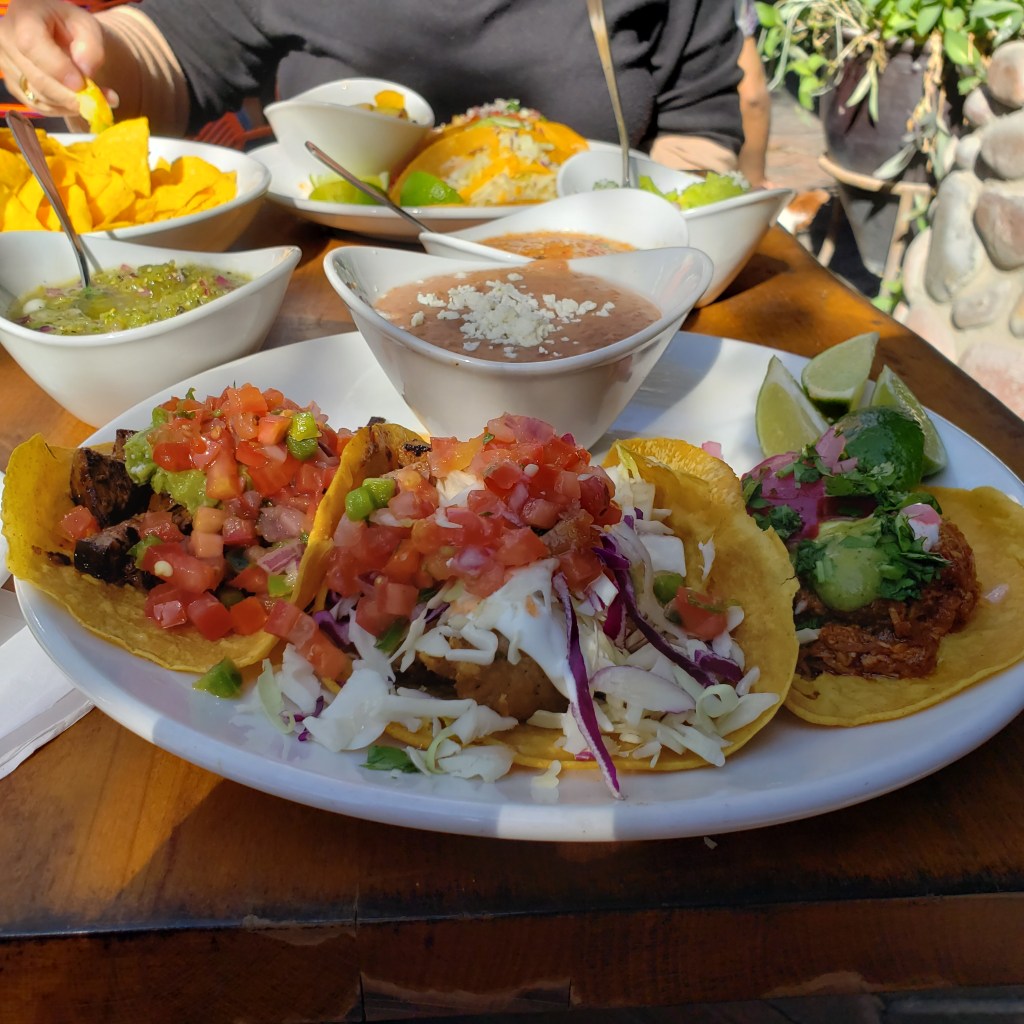
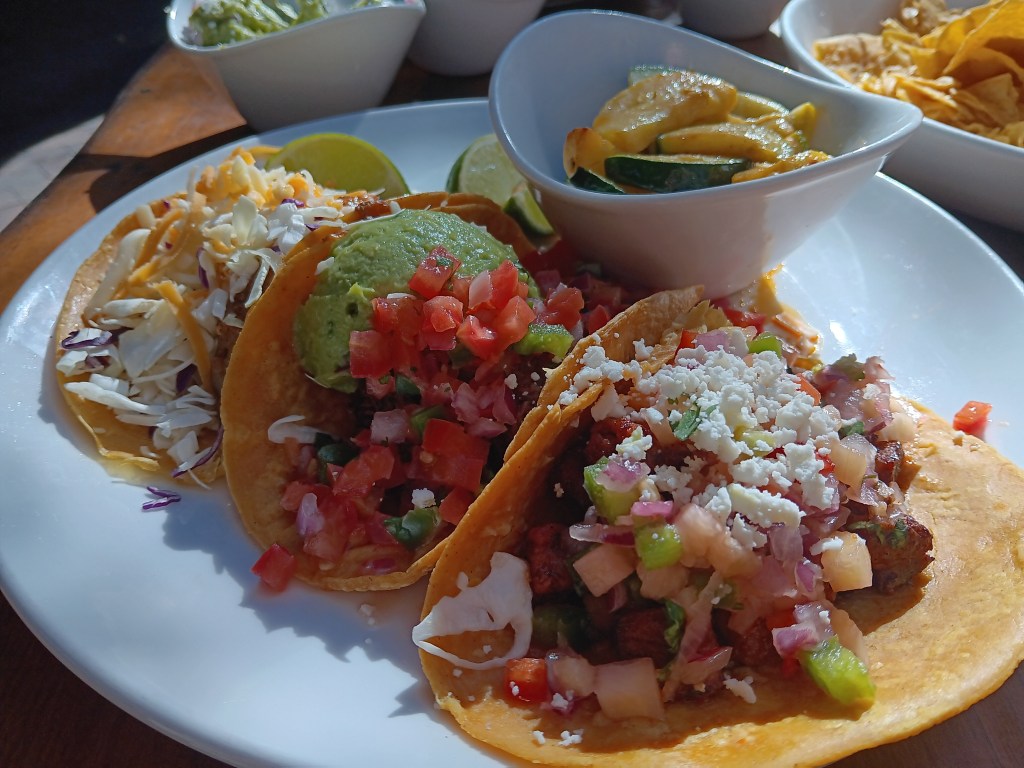
House-made tortilla chips with two fresh salsas and guacamole kicked things off, and then plates of tacos began to arrive. We sampled sweet chili-marinated pork with pineapple; smokey chipotle chicken with avocado, crema, cilantro and queso fresco; and marinated flank steak with pico de gallo and queso fresco.


Three more tacos showed up, one filled with beer-battered avocado, cilantro, cabbage, and cheese (don’t argue with me; get this one no matter what else you try); slow-cooked pork with pickled onion and avocado salsa curd; and Mexican beer-battered fish with the same toppings as the avocado.


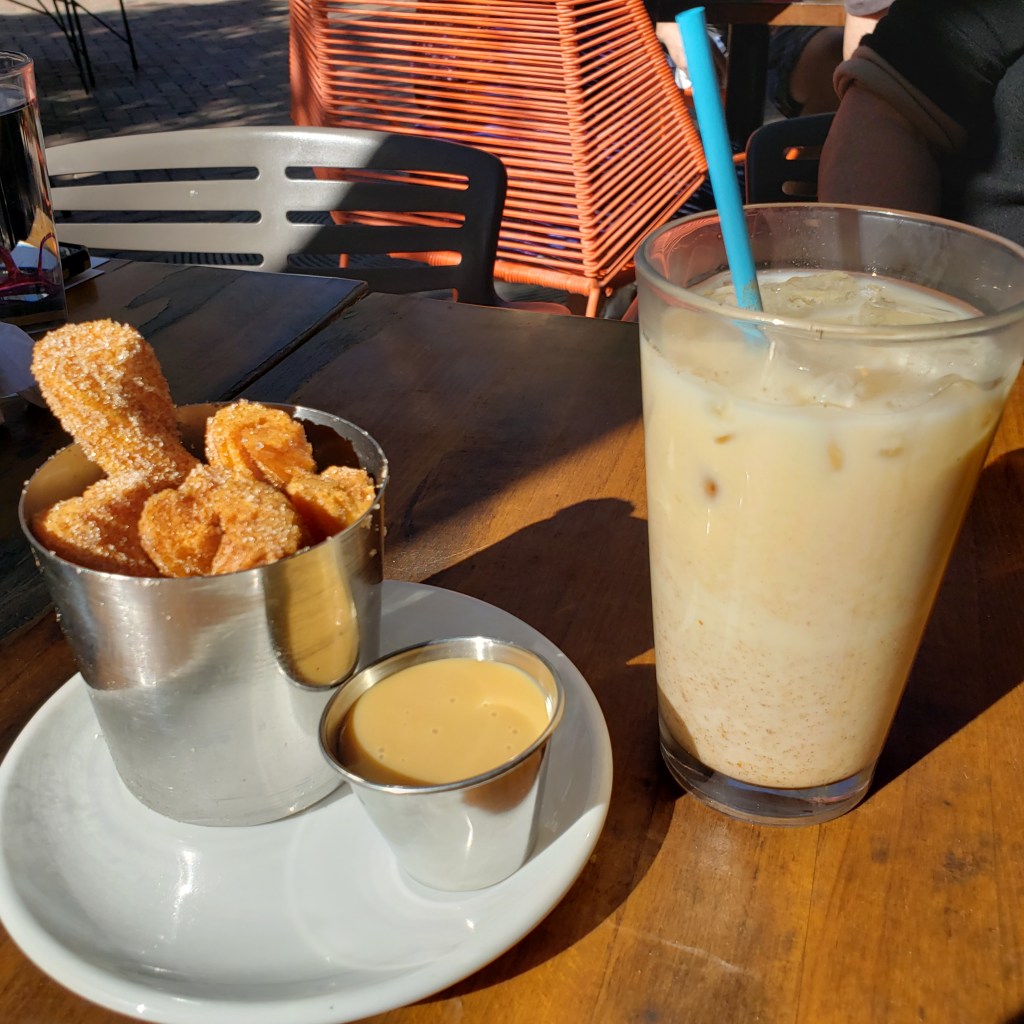
Strawberry-Lime Fresco and the creamy deliciousness of Horchata (with a seasonal Pumpkin Spice Horchata follow-up) washed it all down, the scrummiest churros we’ve ever had ended the meal, and oh my lord god sweet baby Jesus, did we enjoy every bite! If we lived in Tucson we’d each weigh five tons, because we’d eat there every day.


This is a long blog, and if you’ve made it this far you’ve done well. If you made it this far without heading to the kitchen for something wonderful to snack on as your belly rumbled, you’ve done even better.

Tucson is the place for a fine meal, and while our photos are lousy, our memories of those outstanding restaurants are brilliant.

A Year On The Road – The Half-Way Map

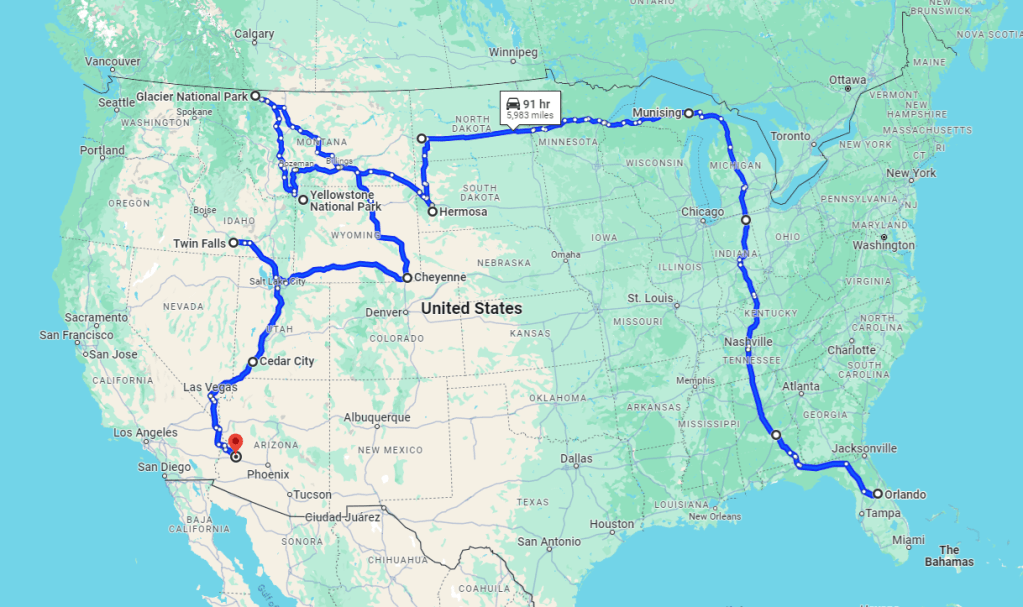
May 14, 2023 seems like a long time ago. In fact, it is just 7,053 miles ago. That’s the 6-month distance we have covered in our “A Year On The Road” RV adventure since leaving home in Florida.

From that original departure point to November 14, we have traveled through 18 states and totaled a mind-boggling 22,319 miles when you add in the mileage we have covered in our little Ford Fiesta, Nippy, as well as that 7,053 in RV Indefatigable (or Fati for short).

This isn’t quite 6 months, as Google won’t allow additional destinations after Lake Havasu in Arizona, but it should show the most recent part of the trip, to current spot Tucson (see below)

The last month has added 545 miles to Fati’s total but also 1,927 to Nippy’s. That means Nippy has now piled up a whopping 15,266 miles to date, so she is proving a real workhorse.

Of course, we should have gone even further afield, as we scrapped plans to head out to Washington and Oregon after reaching Glacier National Park in Montana, but we think that is still a pretty respectable total.

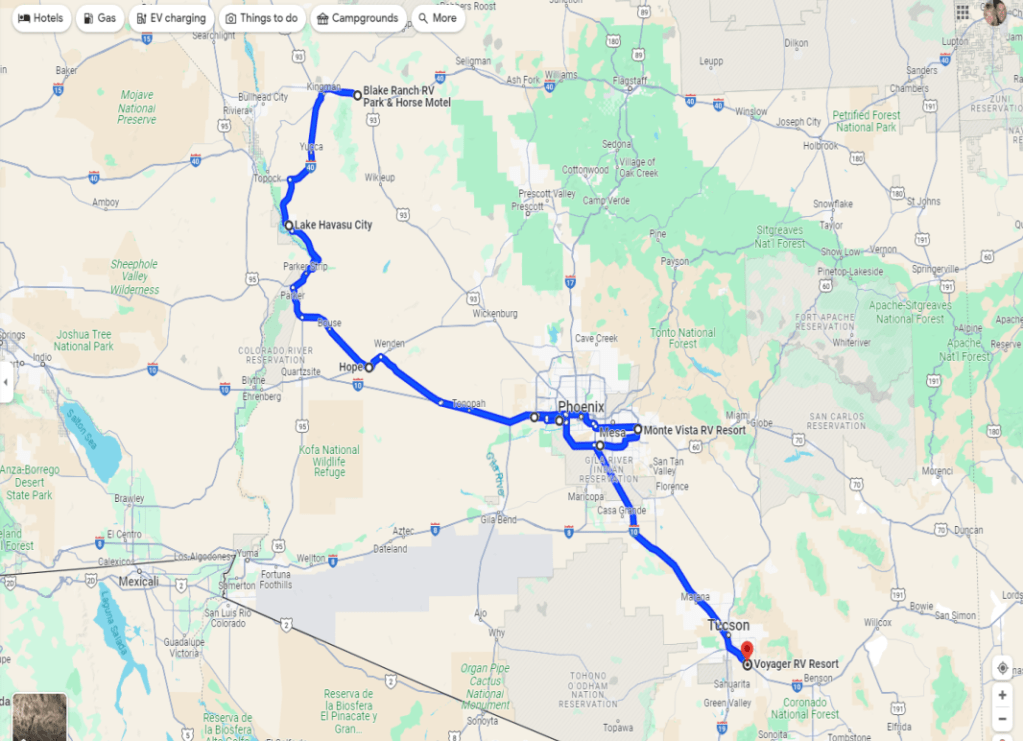
Below are two maps showing just the last month of our travels, from Kingman in Arizona to Tucson, via sparkling Lake Havasu City, Hope, Goodyear and Mesa (with 3 weeks in the greater Phoenix area in all):

From Kingman in northern Arizona, we traveled down the extreme west part of the state before reaching Interstate 10 and heading east to Mesa and then Tucson, with a week in between in Goodyear
And this shows the more detailed version, highlighting an overnight stop in tiny Hope and the (rather confusing) route through and around Phoenix before reaching the chic Voyager RV resort in east Tucson

The Town Too Tough To Die


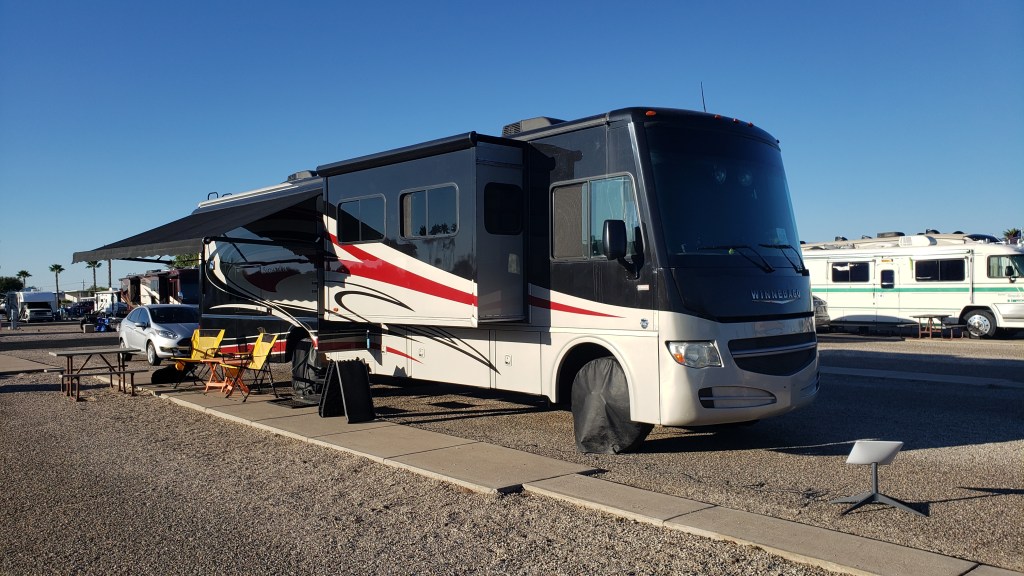
Monte Vista RV resort in Mesa had been so fantastic we could hardly wait for our visit to another resort within the Thousand Trails membership program once we arrived in Tucson. We’d spend two weeks venturing out to Tombstone, Saguaro National Park, Mount Lemmon, and Old Tucson, and devote an evening (finally!) to Arizona’s spectacular Dark Sky stargazing.


Fati in her natural habitat.
The resort is loaded with activities and conveniences, from pickleball and Amazon delivery and every type of class imaginable, plus the disquietingly-named Fat Willy’s grill. First night’s dinner, sorted!

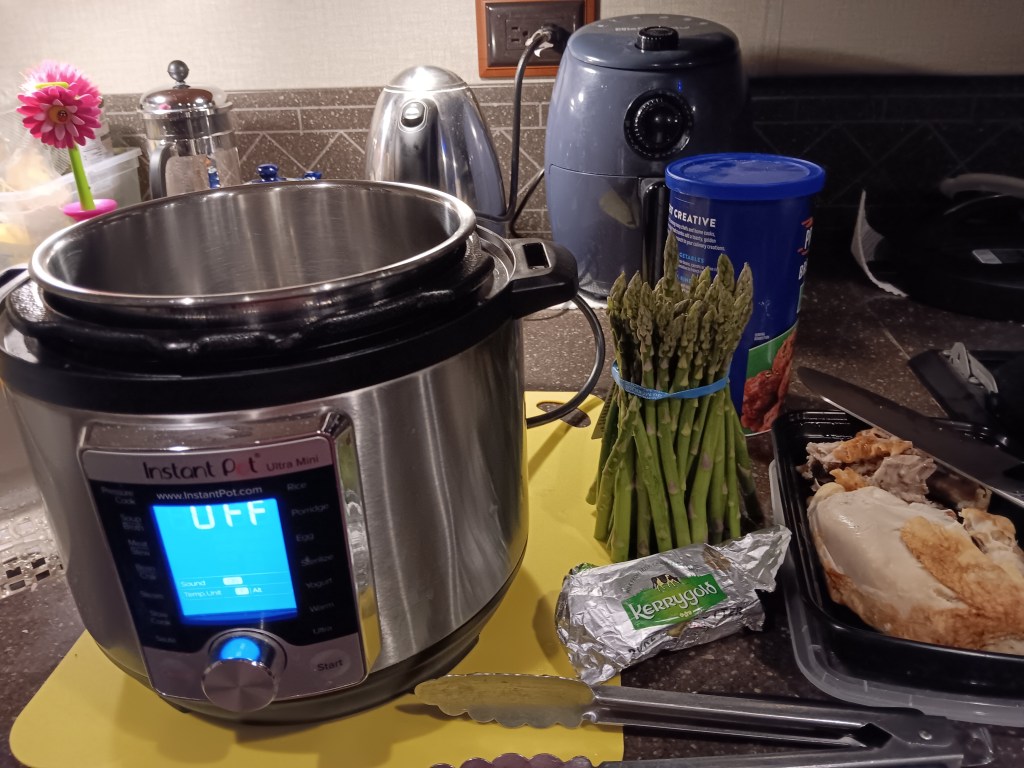
After settling in at our site, we strolled across the street to Willy’s and stood in the restaurant for nearly 20 minutes while no one took the slightest bit of notice. There appeared to be two servers, no host or hostess, and a whole lot of chaos, so we returned to Fati and made spaghetti and meatballs instead. Easy at home with a full-sized stove, it becomes an hour-long process when you have to cook the meatballs in the Instant Pot, then take them out, boil water in the Instant Pot, cook the spaghetti, drain it, and throw it all back into the Instant Pot to heat it up again with the sauce. Moving day is complicated, and all that fuss adds up.

The command center that turns out unbelievable meals!

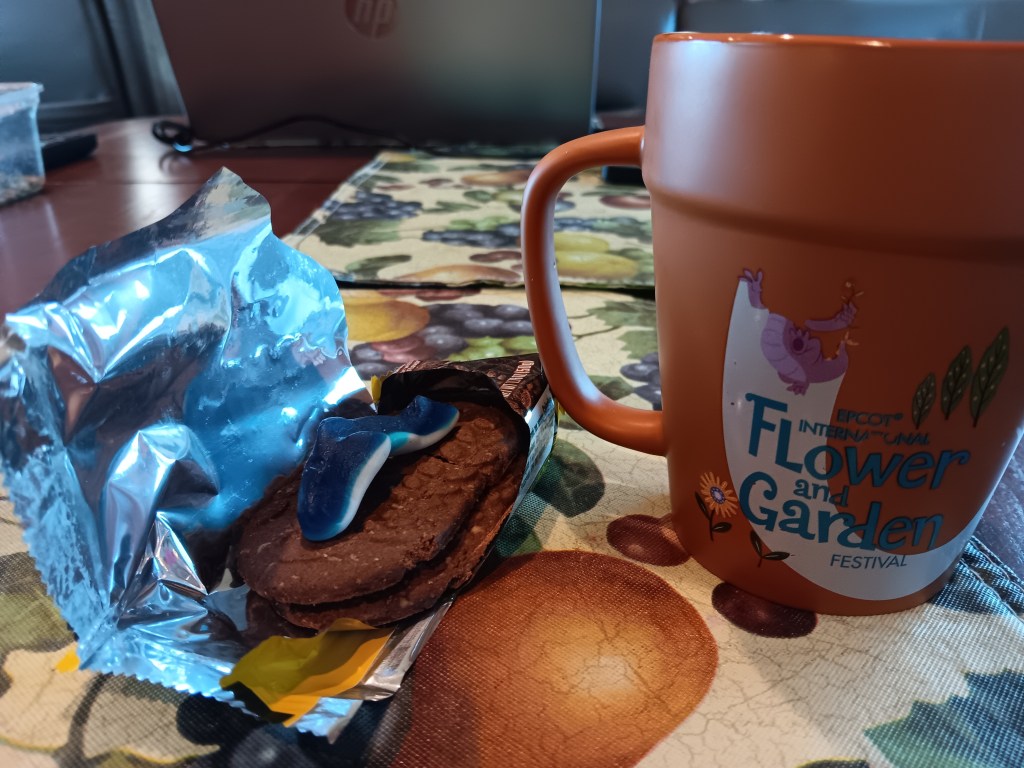
The next day was Susan’s birthday, so with next to nothing in the cupboards or fridge, Simon assembled two BelVita cookies into a “cake,” and topped them with a gummy shark. Happy birthday!

BelVita cake with gummy shark frosting.

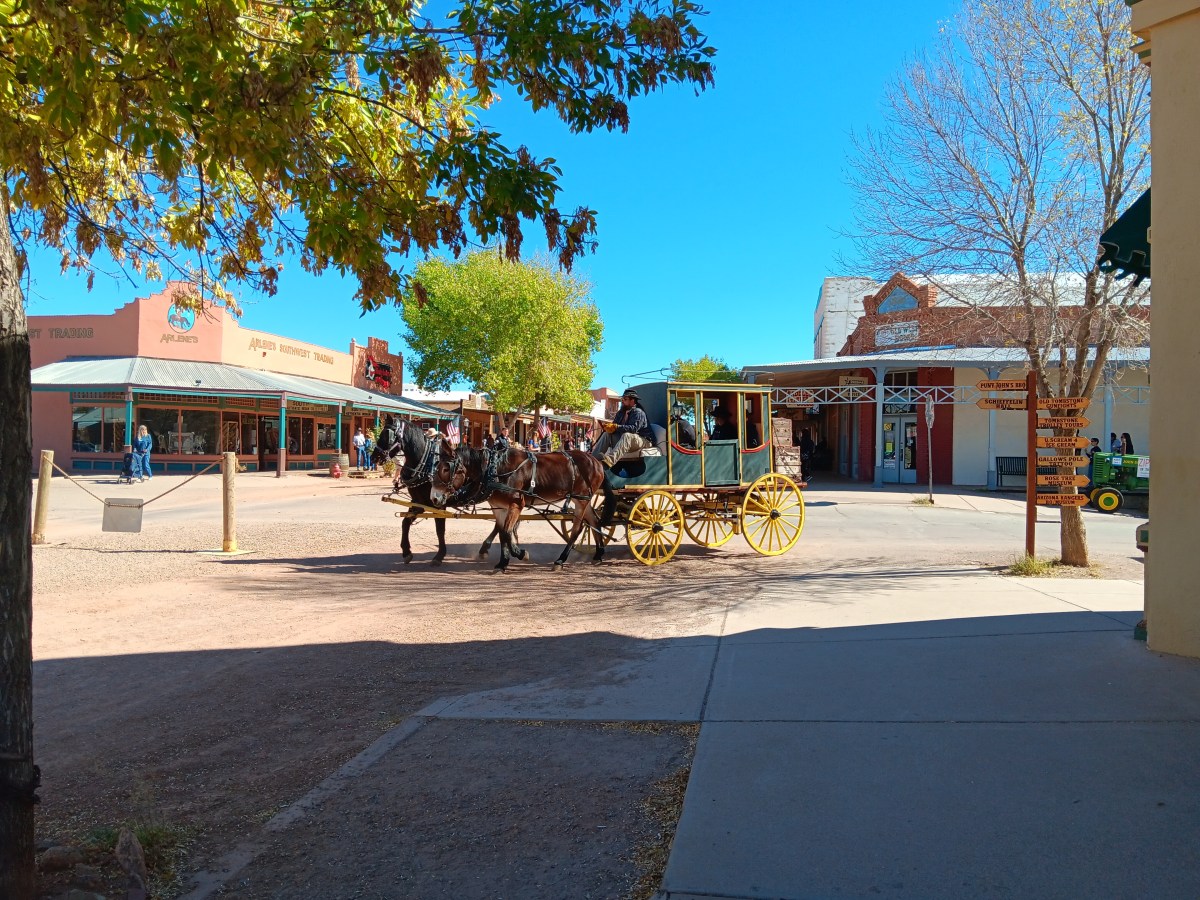
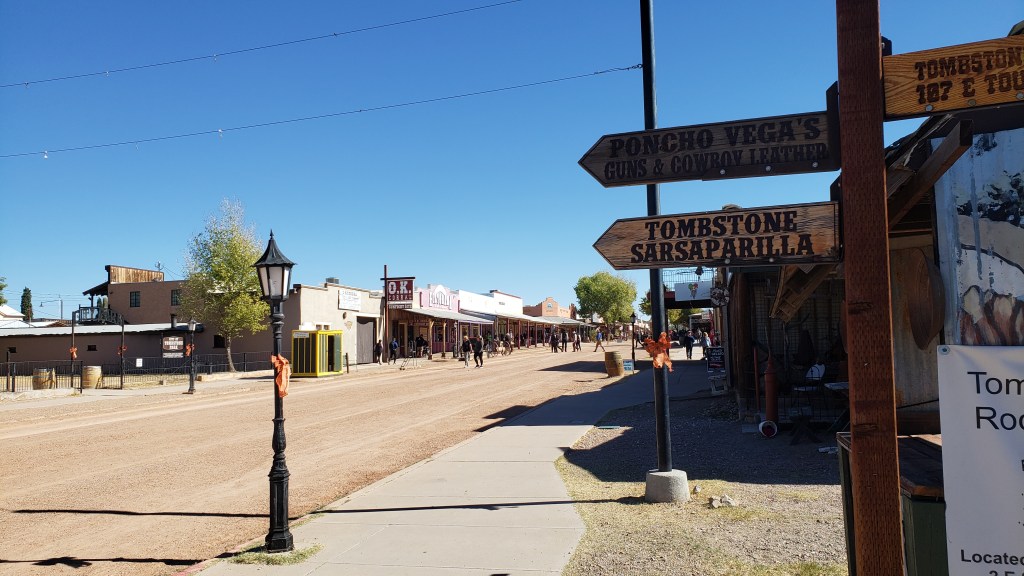
 With the promise of a super yummy dinner from a nice restaurant later that evening, we set off for Tombstone. We’d been there once before (twice, for Simon), but today would be different. Because today was Vigilante Day!
Some of that dust we mentioned in our What We Learned During Our Sixth Month On The Road blog.
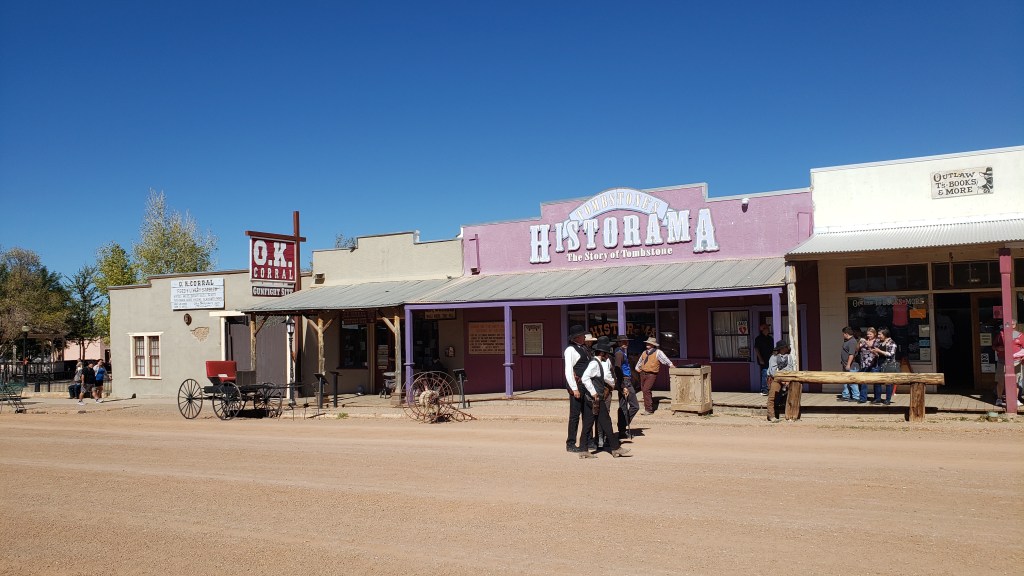
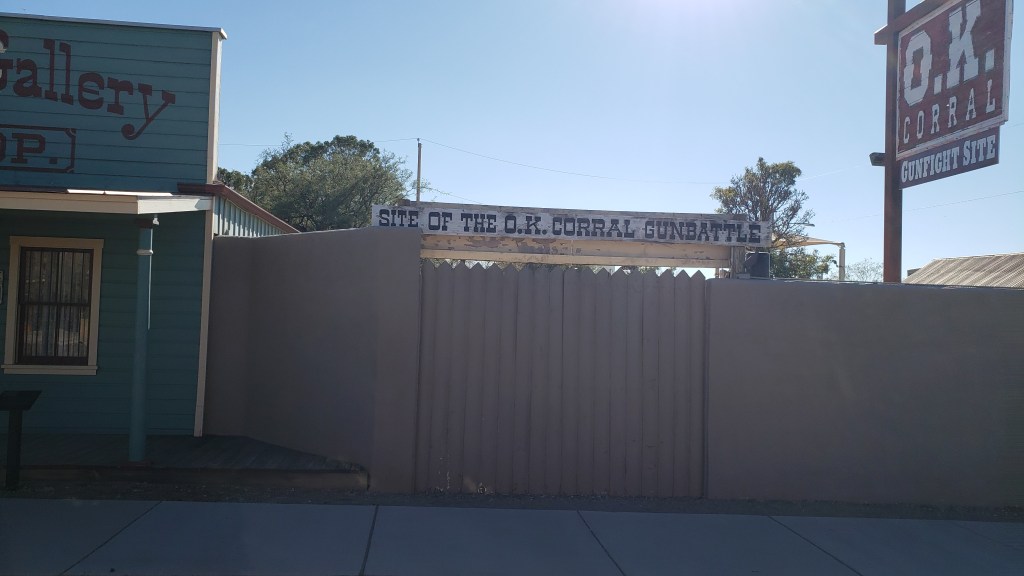
A little show happens each day recreating the gunfight at the O.K. Corral, near that small red sign. The real gunfight happened at the back of the building.

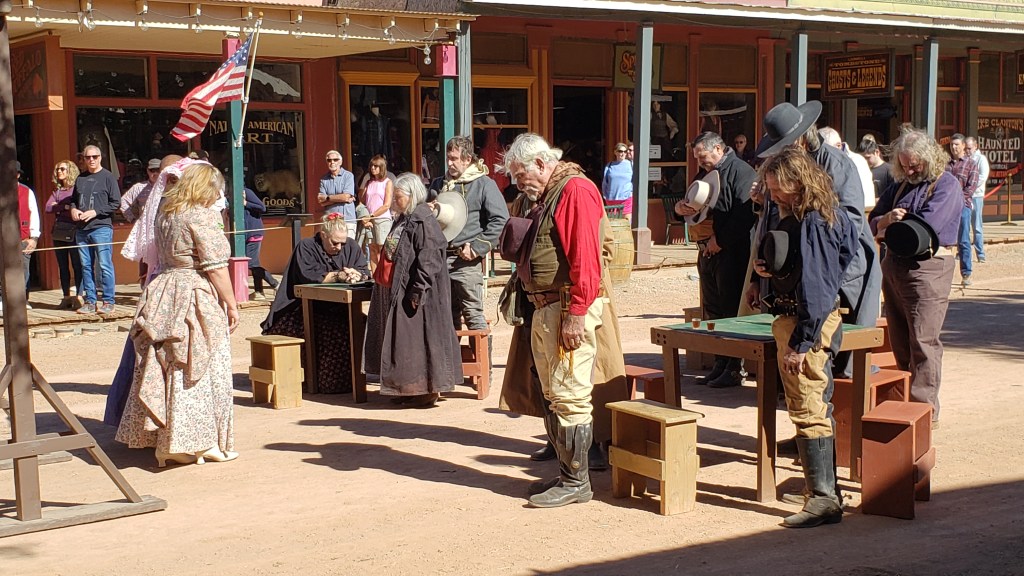
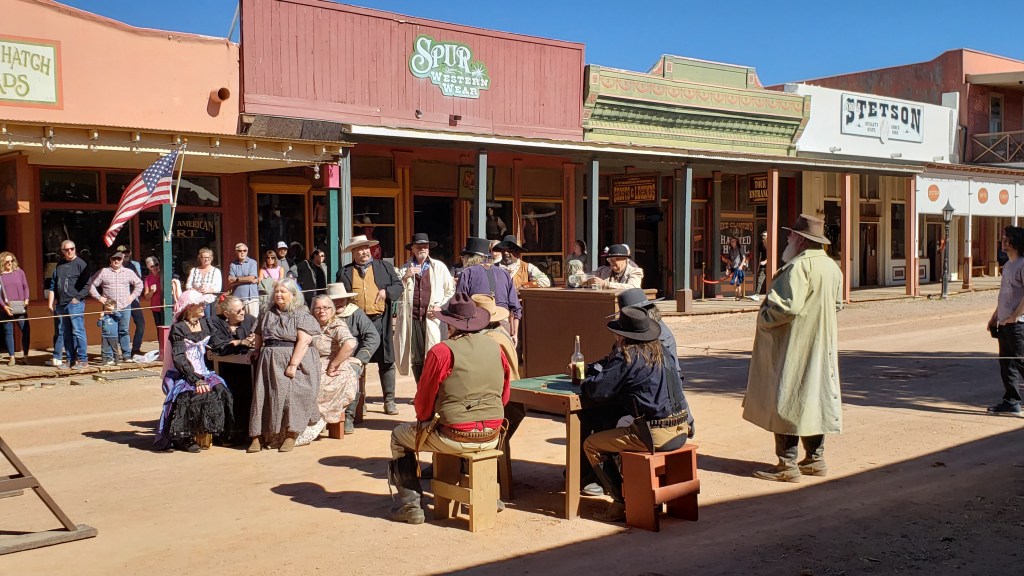
A little vigilante-inspired street skit was just about to commence when we arrived, and we scored a front-row view with Ruthie tucked between us. We’re not sure what the story was supposed to be, but as soon as the gunshots began Ruthie became seriously unnerved, and we knew it was time to move on.

The skit started with the National Anthem

Stuff is happening, but we’re not sure what.

We strolled down the boardwalk, looked in a few shops, stopped every ten steps or so for people to pet Ruthie, and marveled at how much Tombstoners seem to love dogs. She was definitely the star of the walkways, and we heard quite a few stories from locals who own or owned Labs, the “sweetest dogs on the planet.”


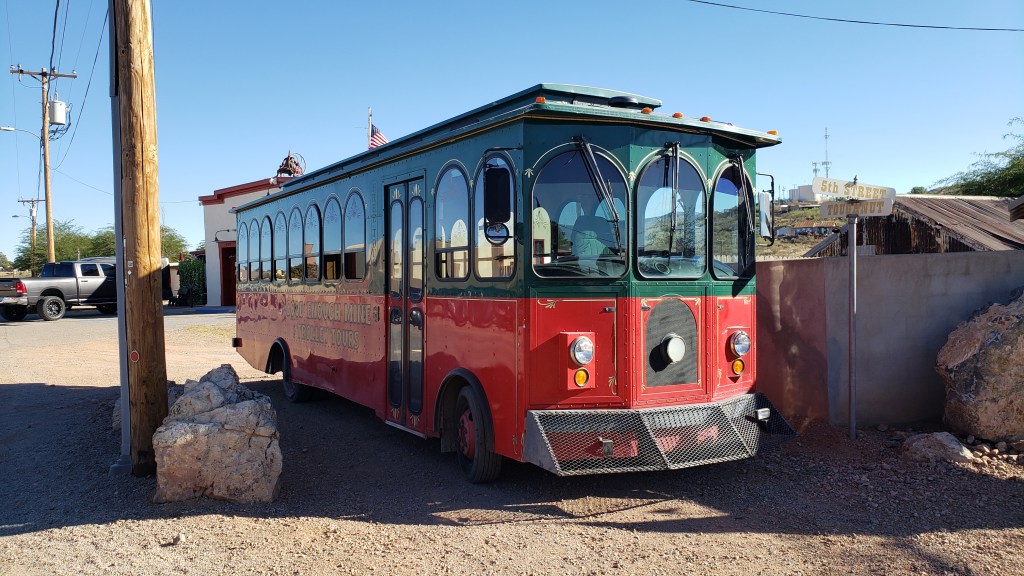
Our sweet dog is slowing down. A lot. But the Good Enough Mine Trolley welcomed her on a pet-friendly 40-minute tour, which would give her a rest and us a great overview of the town and its history.


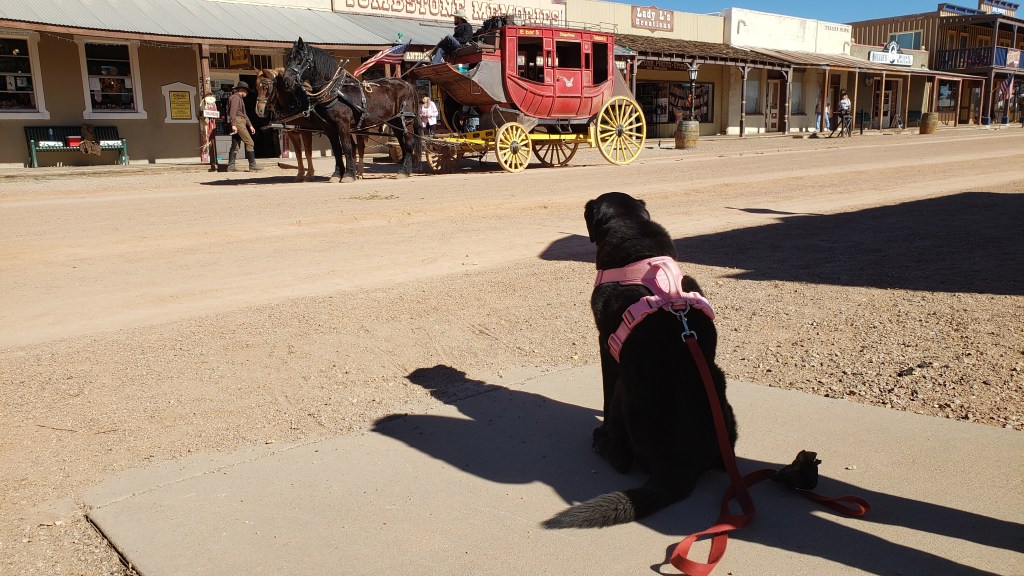
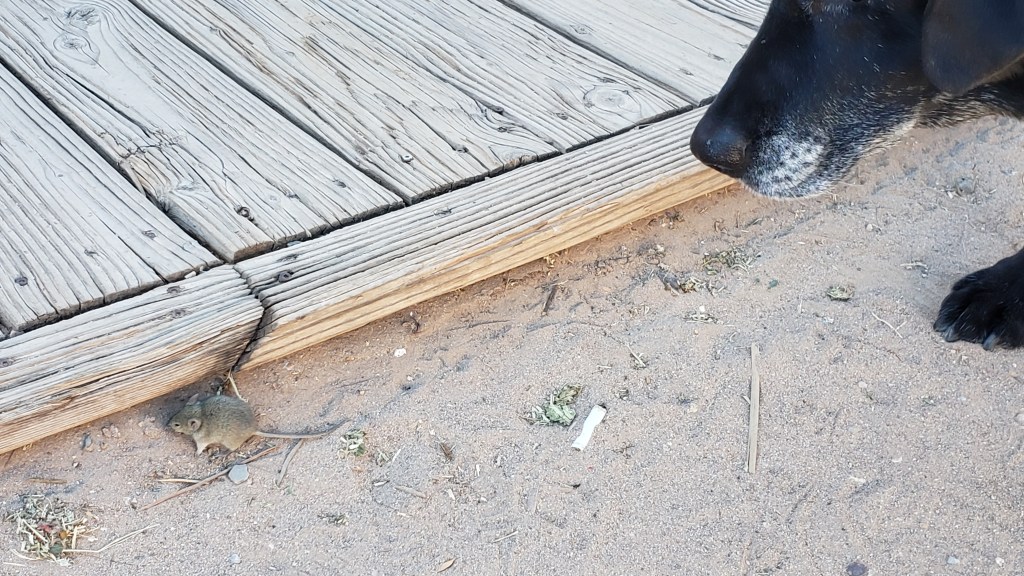
On the way to the boarding location she sniffed out a mouse and took an interest in the horses, then we embarked on what turned out to be a private tour with just us and our driver, George.

“Them’s big dogs.”

“That’s the tiniest puppy I’ve ever seen.”

Last time we were in Tombstone we didn’t make it beyond the main street, but this time we learned about the settlement’s two fires (which earned it the title “the town too tough to die”), its mining culture, its law and lawlessness, the uneasy relationship with the nearby Apache, and “two hundred ladies of negotiable affection” (in reality, mainly poor girls with no other options) who plied their trade in brothels on the opposite end of Allen Street to where the infamous gunfight at the O.K. Corral went down.

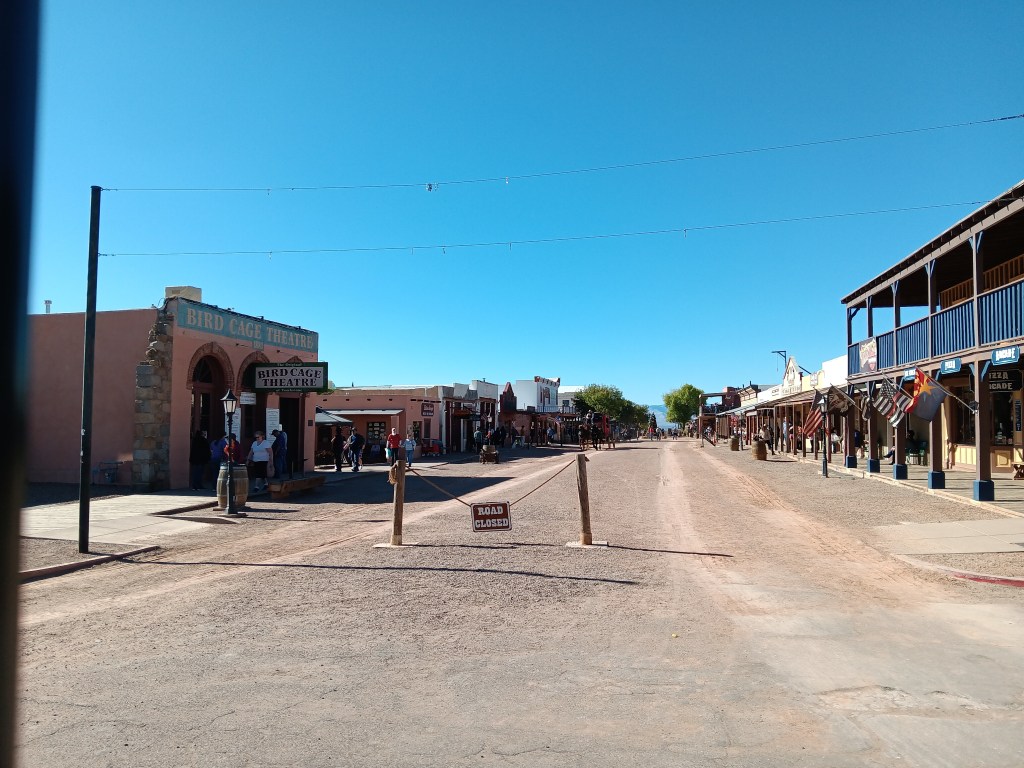
The main tourist street.

The back side of the O.K. Corral. This is where the gunfight took place.

The Bird Cage Theater is where many of Tombstone’s working women worked, at least some of the time. At other times, they worked in tiny “cribs” earning cowboys’ and miners’ cash in a manner deemed less moral than dancers’ revenue stream.

Today’s Tombstone as seen from up on a hill, with the Good Enough Mine (yes, it’s real name) under the ground between the town and the hill.

The tour was far more insightful and far more comprehensive than the mock gunfights in the main tourist district, and we appreciated discovering Tombstone’s history beyond shoot-‘em-ups. George has a website, Tombstone Silver, which has lots of great stories you may enjoy reading.

We’re not really sure what the deal is with this, but we admire the creativity.

It was an hour’s drive back to Fati after a long day, and we were ready for that special birthday dinner. I’ll condense the hour spent searching online to find a decent restaurant that was A) closer than 30 minutes away and 2) open, and simply say there wasn’t one. But Simon saved the day. We’d go to the grocery store and grab some soup and bread, then celebrate some other evening, when we were out touring near real restaurants.

While I was heating up the soup in the (say it with me…) Instant Pot, he slipped away into the night and returned with a birthday card, a Moon Pie, and some chocolate ice cream, all purchased at the resort’s tiny convenience store. And honestly? It made my day. He’s a keeper, this one!

“Cleo” is Simon’s name for me. Long, lovely story, perhaps for another time.

What We Learned During Our Sixth Month On The Road


Today marks six months since we locked the door to our house in Florida and set off for a year-long adventure in an RV. Here’s what we learned during the past month:

Know your limitations. No matter how much you want to camp overnight in the middle of the desert at Quartzsite, when the ground temperature is 107 and you don’t have the ability to run at least one air conditioner (never mind your fridge) it’s time to re-think things. The fact there’s no one else out there and the locals are complaining about the heat are hints, too. Find a way to get the “flavor” of the experience and book that night in a campground with hookups.

Know the difference between a true limitation and fear.

When you can’t change the situation, change the inner dialogue. Yeah, yeah, we’ve all heard that, but the worst that can happen if you give it a try is that you’ll be right where you were before you tried. Start with “You can do this! You’re awesome, and you’re going to feel fantastic about yourself when you get through it! Go you!” and add to it as needed. Be your own giddy cheerleader.

Have a dear friend who texts you and says, “YOU CAN DO HARD THINGS!” That reminder is priceless. (Thank you, Katie!)

You’re going to see a lot of signs in the Southwest that read, “Watch For Rattlesnakes.” It will occur to you at some point that you don’t actually know how to watch for rattlesnakes.

Sedona, Arizona will get straight to the heart of whatever you’re struggling with. Don’t believe in spiritualism or an afterlife or any of that crap? Too bad. Sedona, Arizona has news for you, and even though it might take months or years of sitting with what it’s telling you, Sedona is going to tell you. Do believe in all that crap? You’ll get there quicker.

There is so much more history in the American West than we ever imagined, especially in Arizona.  It’s astonishing to discover places like Tuzigoot and Casa Grande, which had vibrant, thriving communities more than a thousand years ago. It’s so much more than just “cowboys and Indians.”

If you clean up the dust in the morning, you won’t have to dust again until noon, and again before dinner, and once more before bedtime, and when you get up to pee at night, and it’s like that every single day, because there is so much more dust out West than we ever thought possible.

Your understanding of “be flexible” will change. At first, it meant you might drive further on any given day than you thought you would, or you’d have dinner out rather than cooking in, or you’d have to figure out how to stop that annoying whistling sound through the window when you move from one campground to the next. Now, it’s a philosophy for life. Combined with “forget about blame and focus only on a solution,” it’s pretty powerful.

Wave at everyone when you’re taking a stroll around the campground, and when one of them comes knocking on your door and asks you over for drinks, go. Oh, the happy evenings sharing travel stories! It’ll make leaving the campground very, very hard when it’s time to move on, and there will be tears, but those memories from the trip will be among your best.

When you hit that half-way mark in your Year on the Road, it’ll feel like you’ve been away from home forever, and also that it’s all gone so fast. On to the next six months!