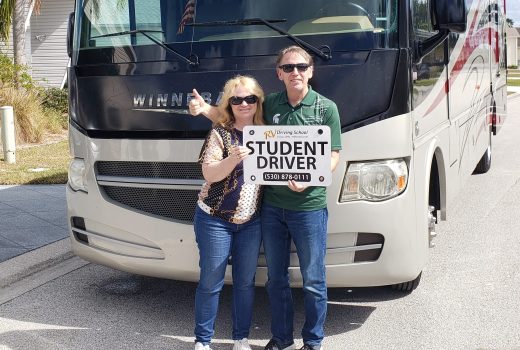
South Dakota is considered the Midwest, along with states like Michigan, Ohio, and Minnesota, but its relationship to those states ends at the invisible division. It’s not really the West, either, though larger-than-life historical characters spent an awful lot of time there. We were eager to get to know some of them, and to see their stomping grounds.
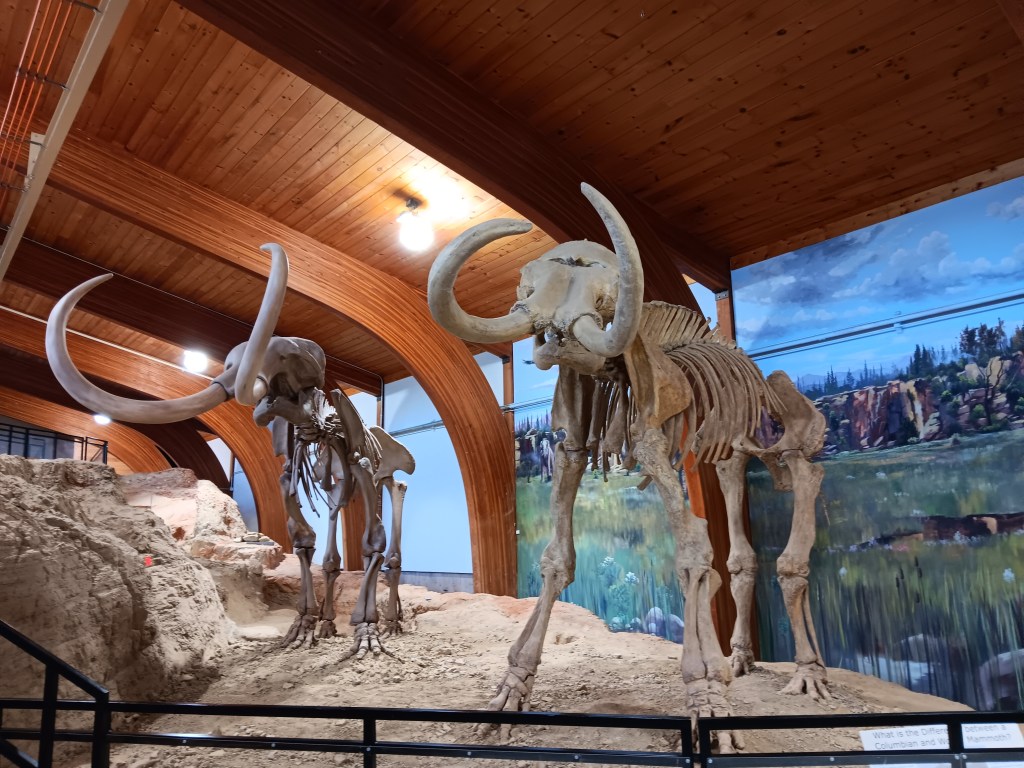
But first, we were off to discover the remains of the state’s long-gone wooly mammoths at the indoor museum and archeological dig, The Mammoth Site, home to the world’s largest collection of mammoth bones.
Originally, we weren’t going to bother, since Ruthie couldn’t go inside and the wild west was calling. But the day was plenty cool enough for her to spend a quick half-hour in the car with the windows rolled down, and the museum’s sign was very appealing.
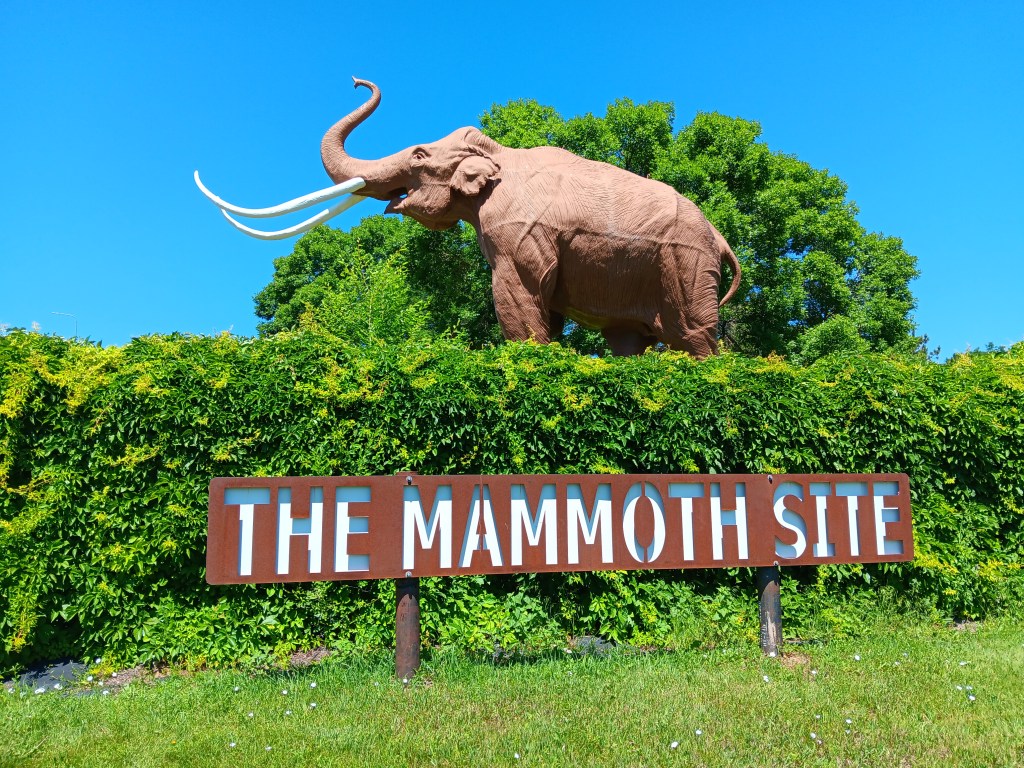
We’d heard the curators had all been very excited about a recent find among the bones already uncovered at the indoor dig site, and who doesn’t want to see something that’s just been unearthed after spending time underground since the last Ice Age?
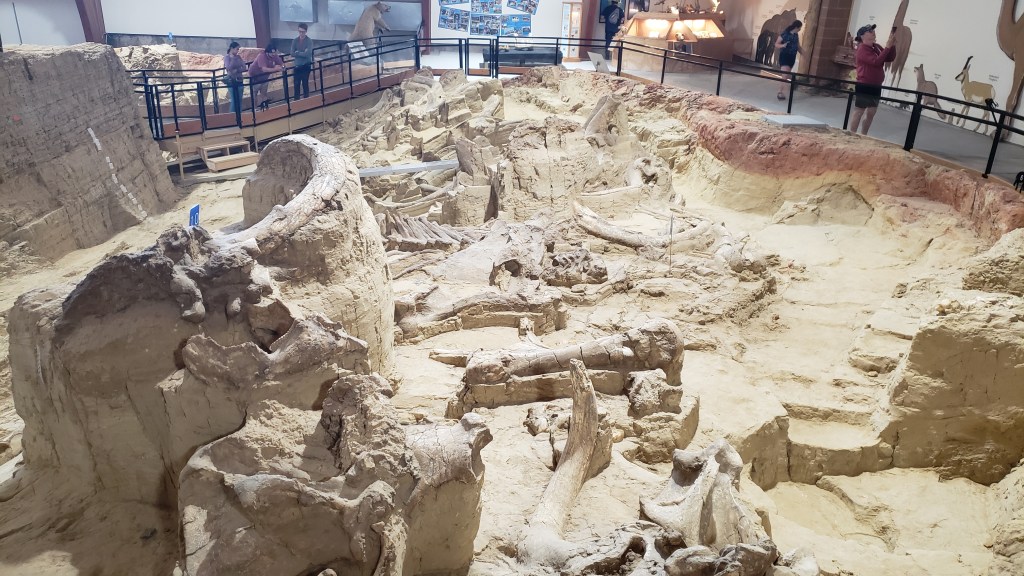
The bones are all in-situ, left in a sinkhole just as they were found so that they can tell the story of the animal just before and at the point of their death, along with how their bones rearranged as the earth moved and the ice retreated.
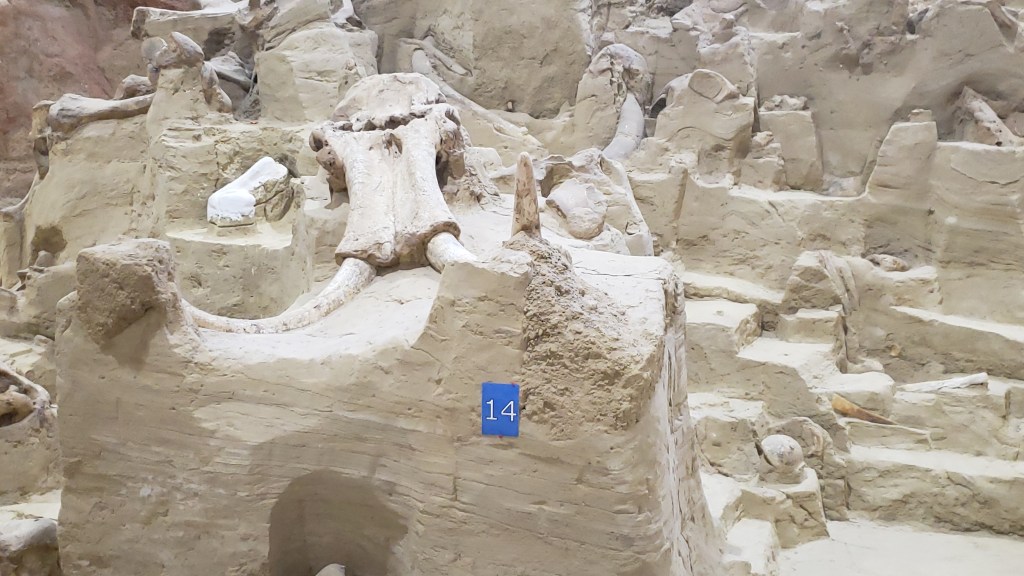
One such mammoth died with its head slumped against a hill, tusks up. When the wall collapsed, the mammoth’s bones disarticulated and moved backward, so that its head was now near its butt.
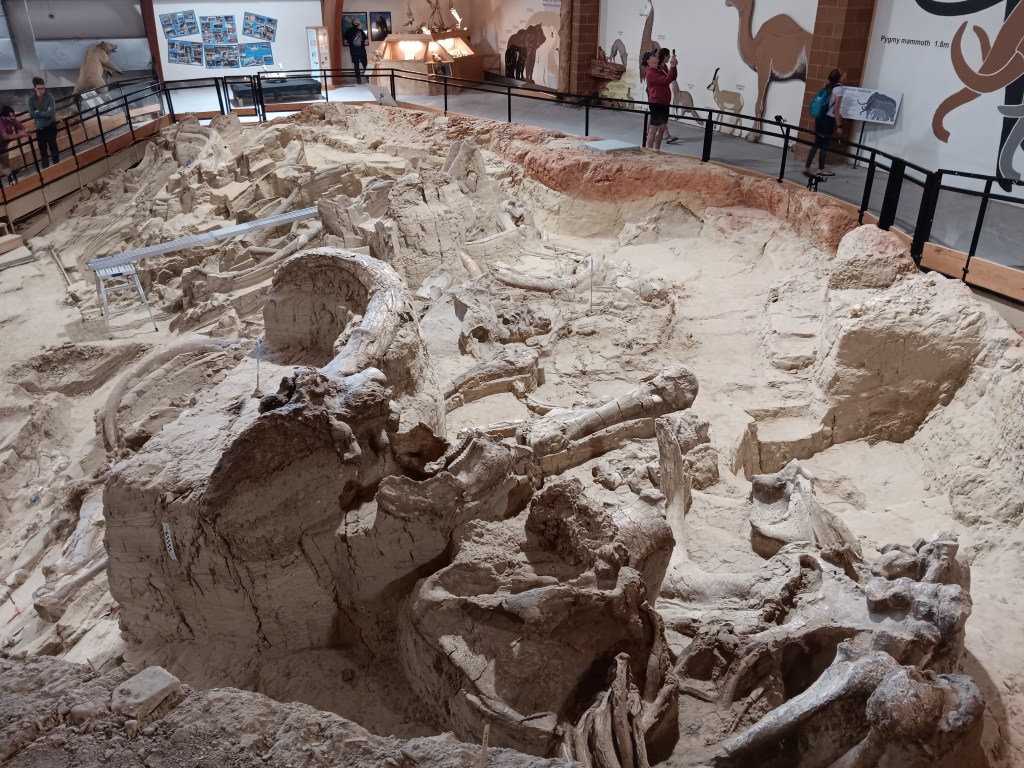
Another is Napoleon Bone-A-Part, the oldest mammoth in the sinkhole, as evidenced by his teeth and the depth at which he was found. He shuffled off this mortal coil at the age of 49, a relatively early demise for an animal that can live to age 60, but life was harsh then, so he may have been fairly lucky…until he fell into that sinkhole and his luck ran out.

The museum deserved more than 30 minutes of our time, but we wouldn’t leave Ruthie any longer, so we gave her a good walk around the grounds, then made our way toward Wind Cave National Park, which we’d missed when we got distracted by the bison herd along Custer State Park’s wildlife loop.
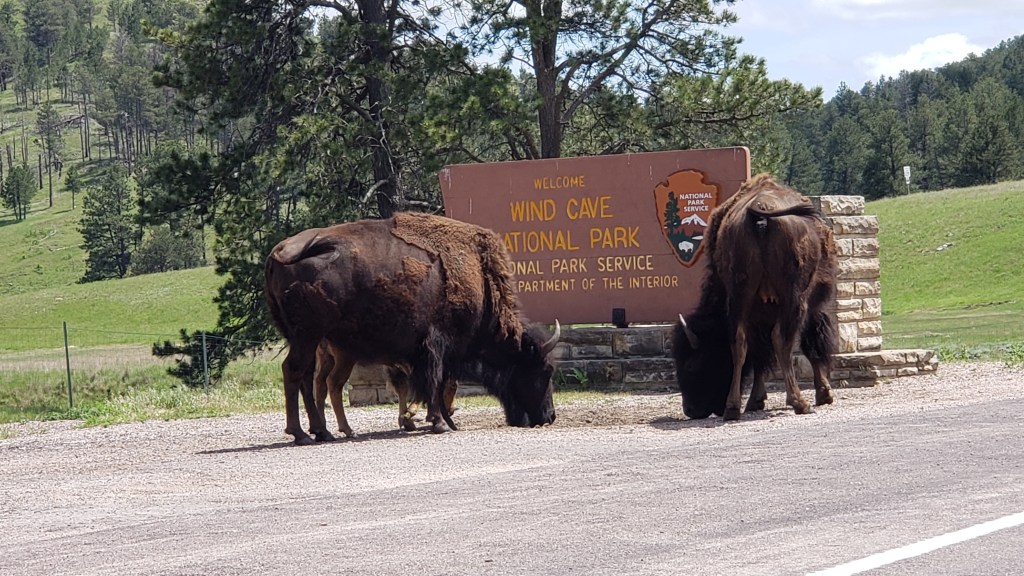
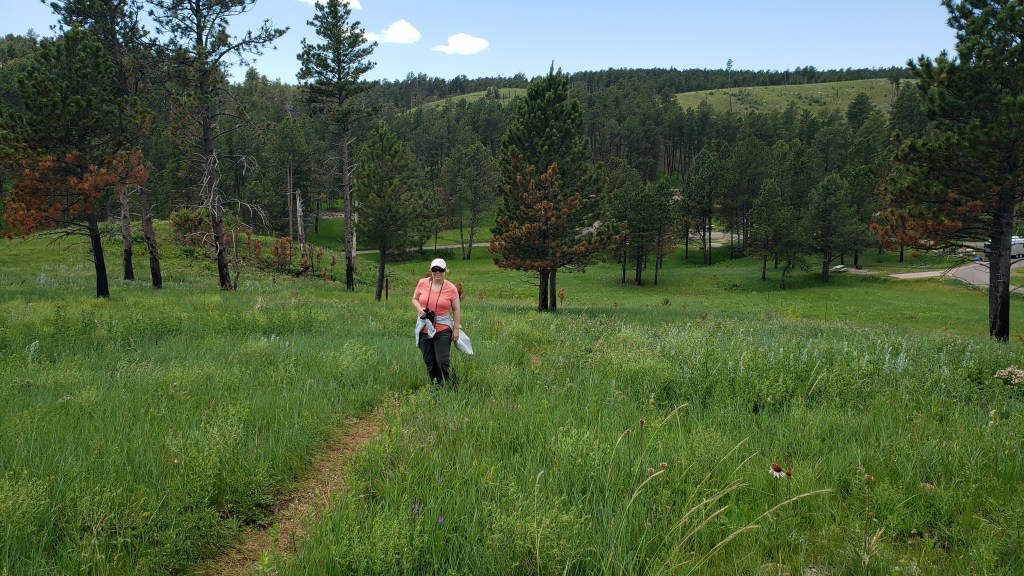
A visit to Wind Cave itself was not to be. The Visitor Center was packed, and the dog-friendly route we were told to take down to the cave was nowhere to be found. Instead, we took a one-mile hike up a hill, just to get some exercise, and hoped Wind Cave was boring enough that we hadn’t really missed anything.
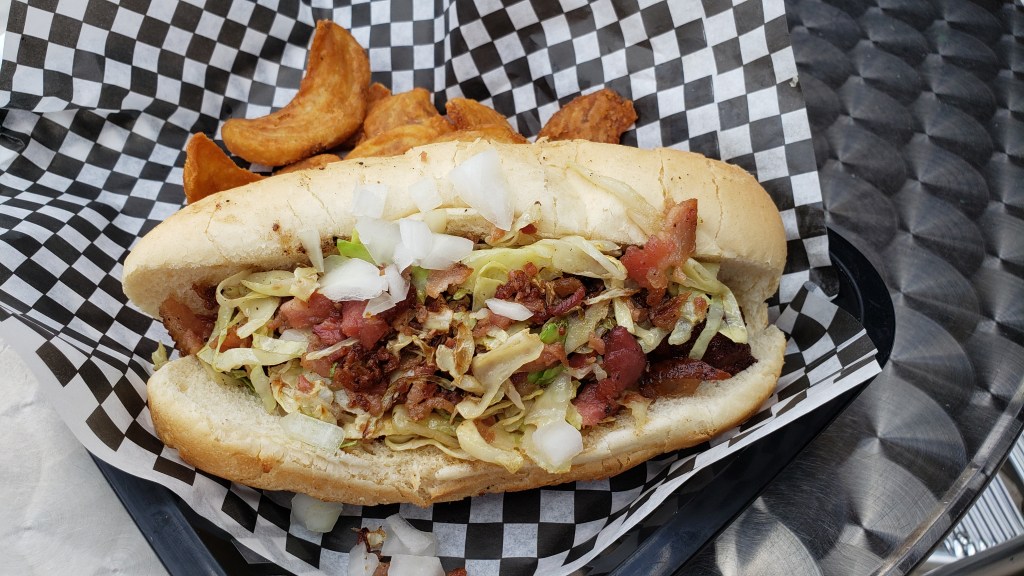
A brewery in Custer had our name on it for lunch, with a dog-friendly back porch and an interesting menu. Simon opted for the bratwurst made with rattlesnake, rabbit, and pork, and Susan chose the wedge salad. No one cares what a wedge salad tastes like, so I’ll get straight to the interesting part: the rattlesnake and bunny brat tasted “like chicken,” Simon joked, but admitted it really just tasted like a meaty sausage, with no odd flavors. “I’d have it again,” he insists.
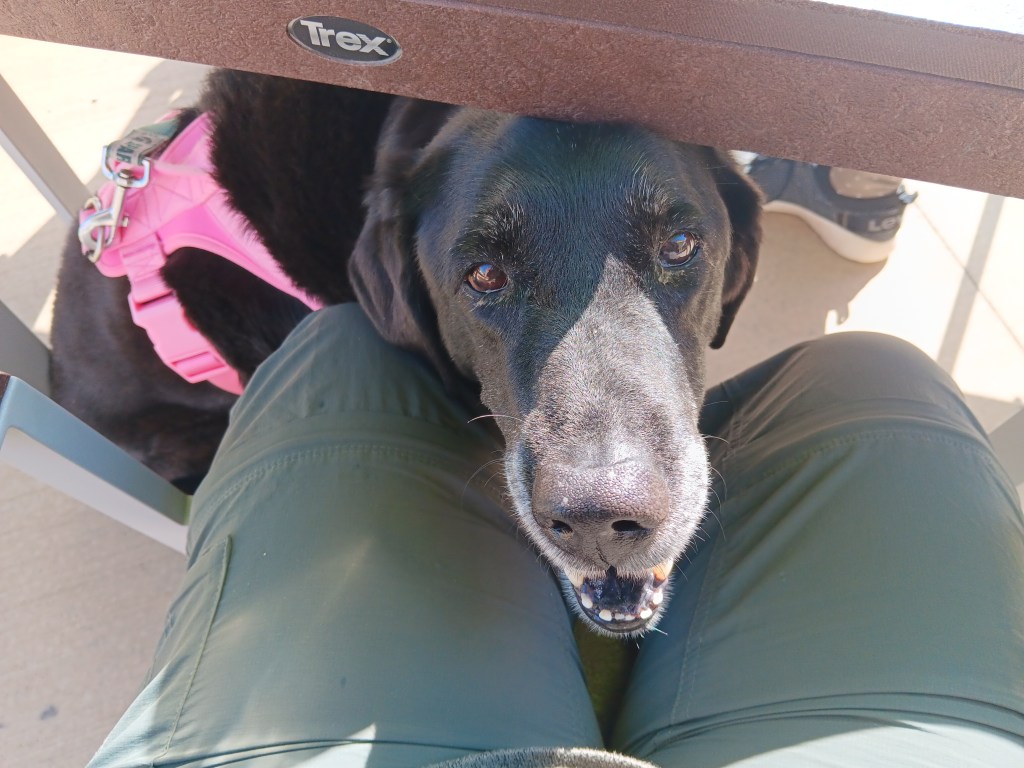
The town of Keystone held some appeal on paper, but the reality didn’t strike us as overly interesting when we arrived, so we drove around a little bit, then got some nice frozen coffee drinks, which captured the full attention of the family dog, who happens to be a whipped cream fanatic.
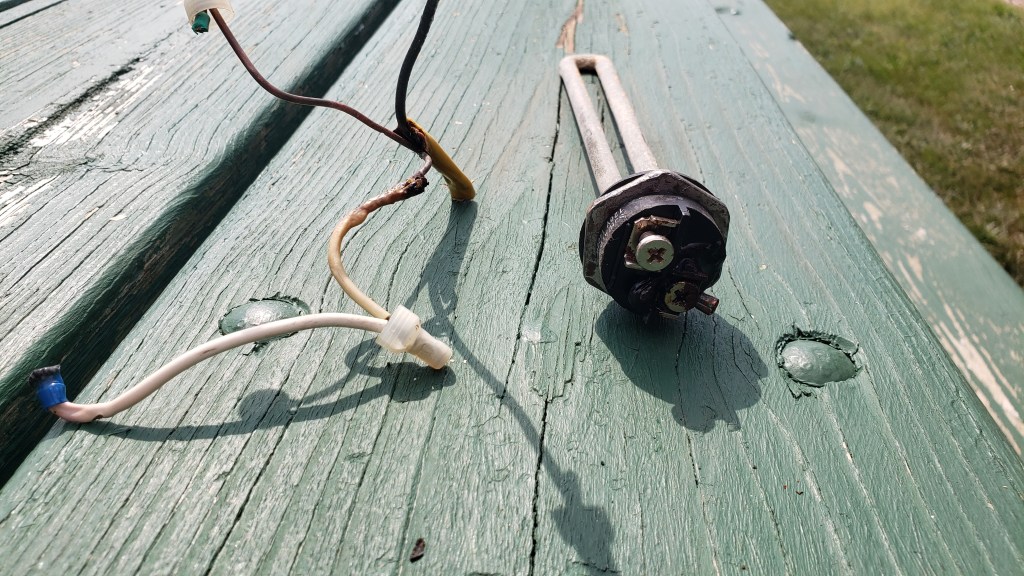
We would make a move to Sturgis Campground and RV Park in Sturgis, South Dakota, the next morning, just an hour or so drive up the highway. But not before a mobile tech showed up to fix our electric hot water situation. His comment, “You’re pretty lucky,” when he pulled out the charred remains of some wiring and the fried electric coil started a downward trend in our thinking, which would ramp up to 11 in the coming days.
But before that, we still had some interesting exploring to do, on the trail of long-gone wild west heroes.
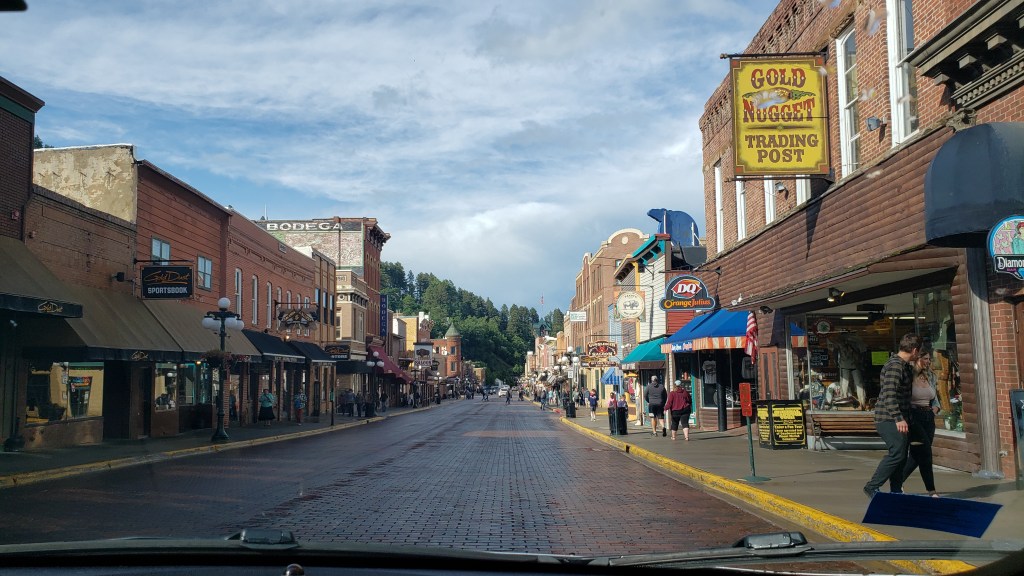
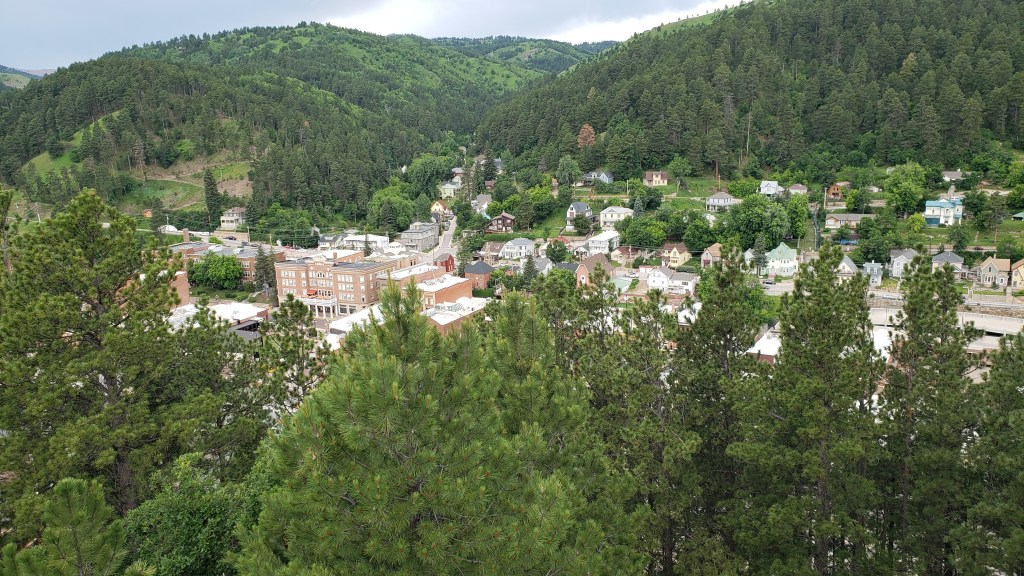
Deadwood is such an iconic name in U.S. history, and we were eager to see it. The modern version, however, is so filled with tourist shops and slot machines that we found no real reason to give it any more time than a quick walk around the main street before heading up a rather steep hill to the town’s cemetery.
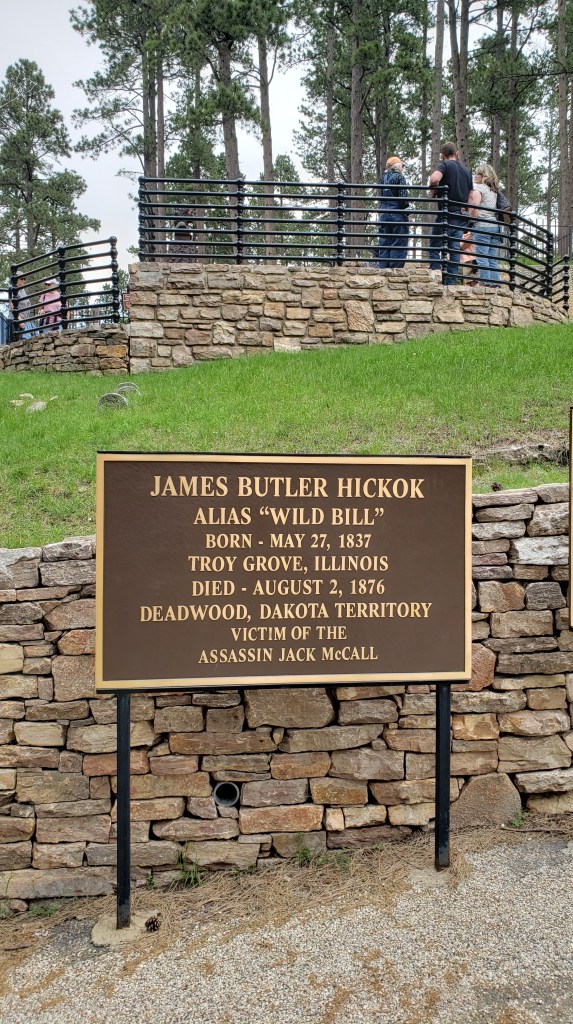
Now, it’s probably not normal, but Susan loves cemeteries. Each headstone tells a story in miniature, like the gargoyles on European churches, and they set off a spark in her brain that is both enjoyable and convoluted. The story of the two people whose gravesites we came to see needs no imagination. Wild Bill Hickock and Mrs. M. E. Burke, also known as Martha Jane Canary but best known as Calamity Jane, have gone down in U.S. history as well-known and beloved figures.
After paying a whopping Senior rate of $2 each to get into the Mount Moriah Cemetery, we hiked up the hill to find their grave sites.
Even without any real interpretation, it was fascinating to see the place in which they found final rest. The gunslinger Wild Bill was shot while gambling in Saloon #10, which is still in Deadwood (sort of), though the name of the bar has been transferred to another bar across the street from the original. The pairs of aces and eights he was holding in his hand when he was shot in the back of the head is now known as the “Deadman’s Hand.”

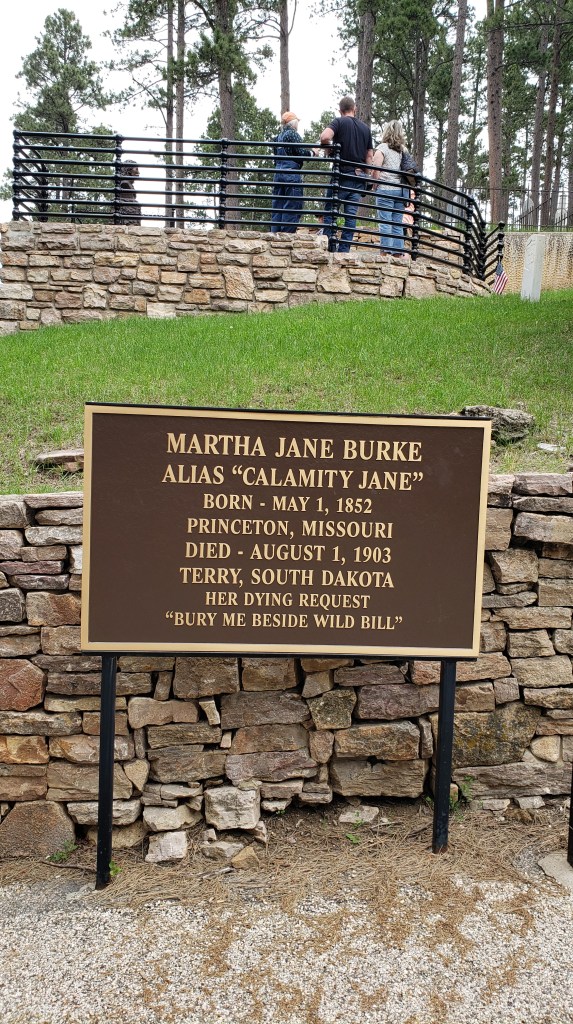
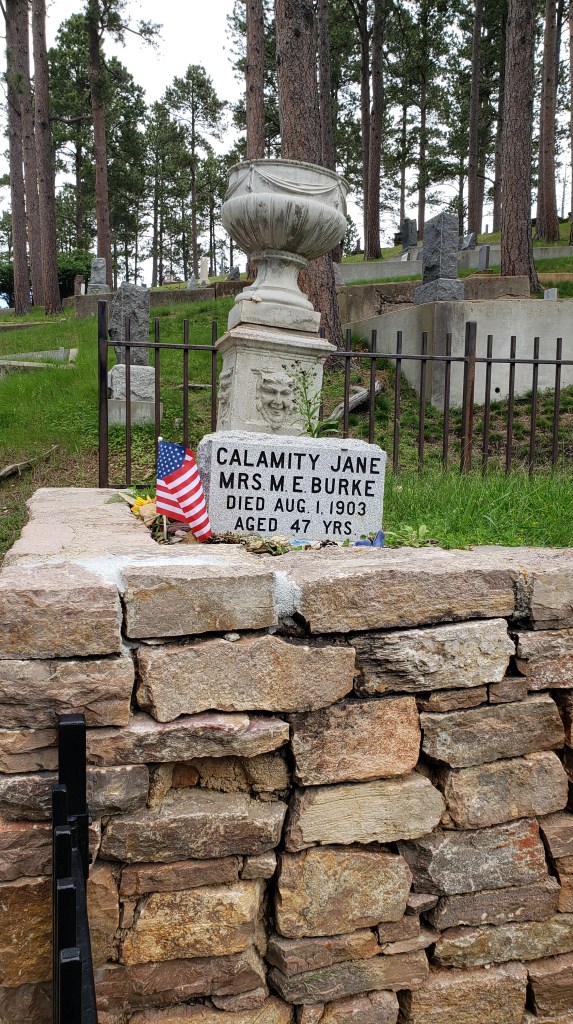
Frontierswoman and sharpshooter Calamity Jane died of pneumonia and bowel inflammation after a hard-living, hard-drinking life. Finding any two sources that agree on the facts of her life is a daunting task indeed.
A bit further along in the hilltop cemetery, we found the overview of Deadwood Gulch, and several headstones for babies who departed life far too soon, some at or just before birth.
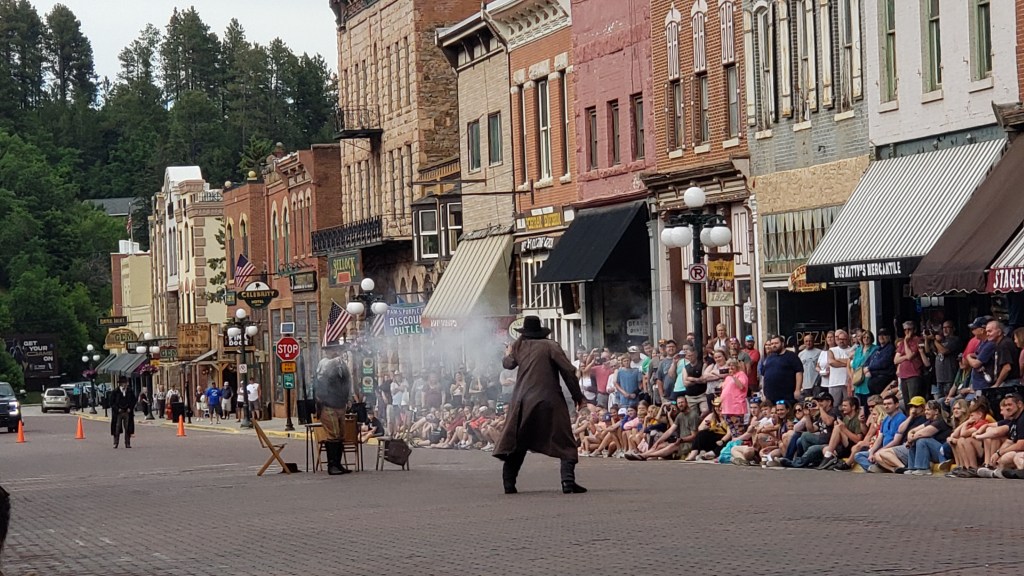
Sad as these tiny headstones’ stories were, another story of woe was about to play out back in town, and we grabbed a couple of curbside seats to watch it. I’m going to be very honest here and say I (Susan) have no idea at all what the story was about, beyond a little gunfight during which neither of the principles were hit, but the bartender took it in the leg. Still, the kids enjoyed it, and that’s what counts.
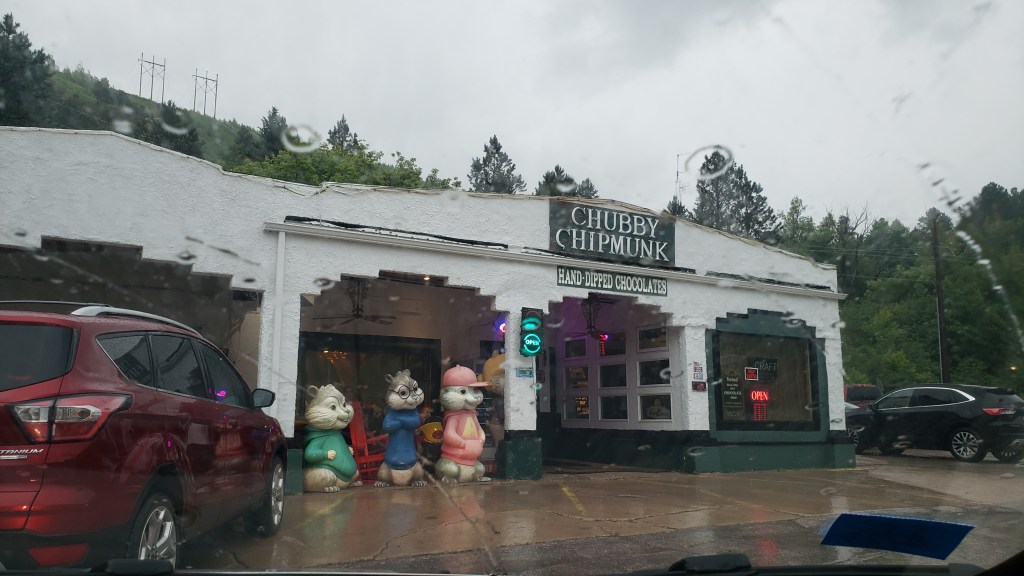
The real highlight of Deadwood, for us, was a visit to Chubby Chipmunk, recommended to us by our dear neighbors from back home. We did buy a six-pack, with Susan having reigned Simon in after his eye-wateringly expensive truffle debacle in Minnesota.
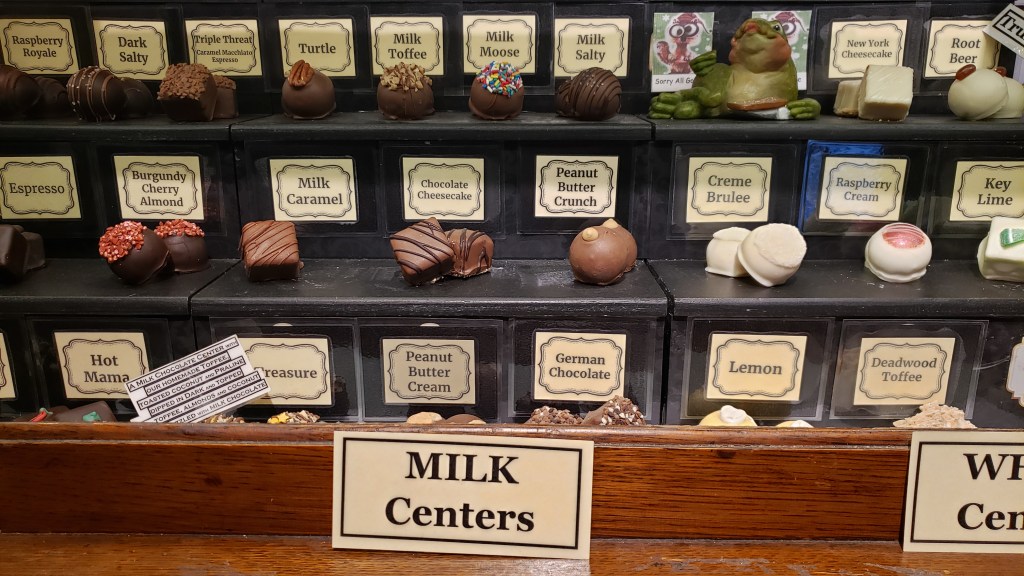
We devoured two of them right away, but doled out the rest over the course of a week. Truffles have never been a habit we want to get into, but so far, we appear to be failing miserably.

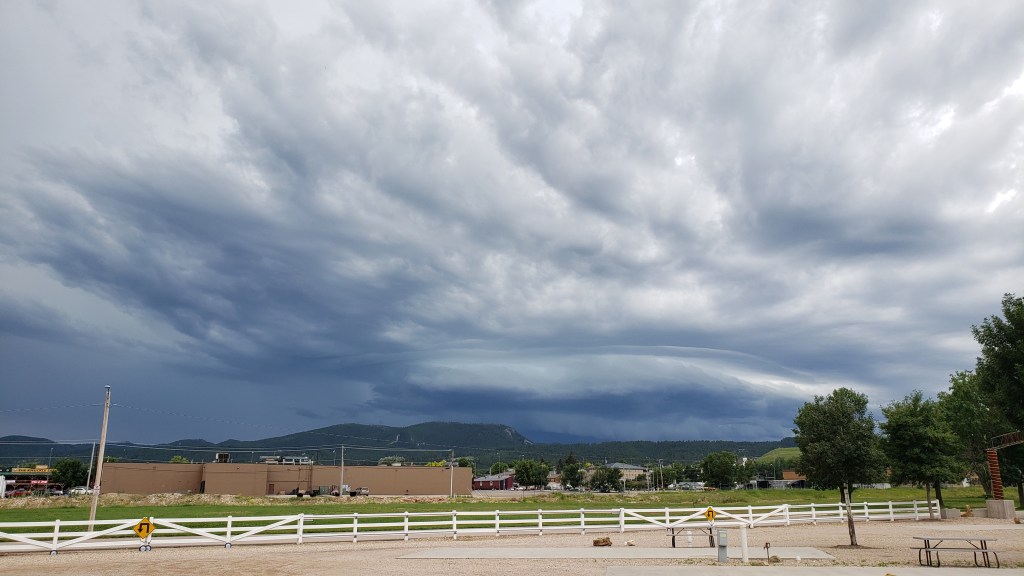
An enormous storm was rolling in as we departed Deadwood, but we’d gotten used to the changeable weather, and slept through the drama to awaken to the prospect of a fresh new day, and a whole new state.

 Veness Travel Media
Don’t think I fancy the rattlesnake sausage thanks. An interesting tour of the famous and infamous of American history in the bars and cemeteries. Poor Ruthie would have loved some more time with those mammoth bones 😀
LikeLike
It was all Susan could do to be at the same table with that rattlesnake brat. Not her kind of thing, either.
Ruthie would have lost her mind if she’d been let loose amongst the bones!
LikeLike
Being able to visit this mammoth dig site must have been such a treat.
I am not sure what to think about rattlesnake bratwurst.
I don‘t think there is anything unusual about enjoying visiting cemeteries. We have definitely visited a few in our travels and they are almost three dimensional history books.
LikeLiked by 1 person
Calling cemeteries “three dimensional history books” is such a great way to describe them! We agree, they’re like a trip back in time, and tell little stories that should not be forgotten. Lovely turn of phrase.
LikeLike